


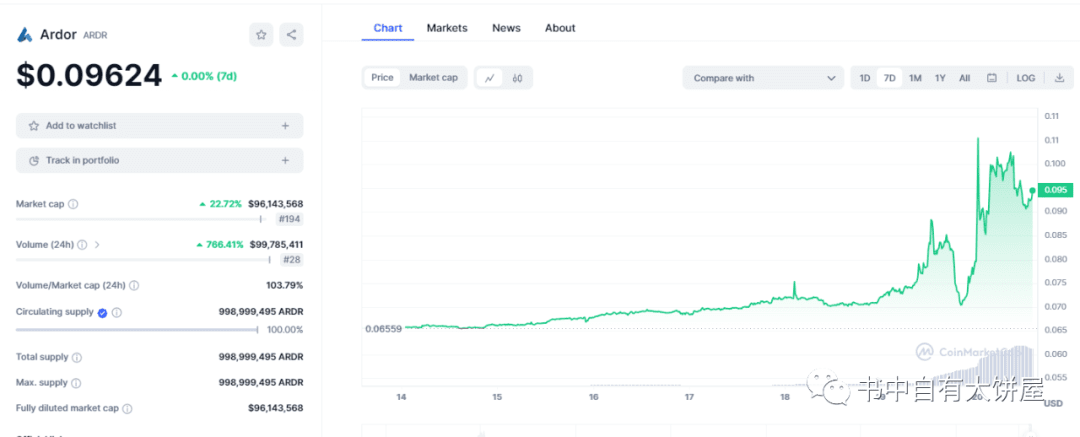
Today we continue to talk about a project that has skyrocketed in 2 days, which is Ardor. You can see that it has risen from 0.06 to the peak of 0.11 in 7 days, which is almost doubled. The current market value is close to 100 million US dollars. Ranking When it reaches 190+, then we will see if there is any chance for this project.
Introduction
Ardor is a scalable blockchain platform. Ardor solves the blockchain bloat problem by dividing Nxt into a main chain and prunable sub-chains. The Ardor main chain focuses on protecting all main chains and processing transactions without causing business conflicts with sub-chains. The scientific architecture makes Ardor the infrastructure of the entire NXT sub-chain ecosystem. Since it is built with Nxt technology and launched a multi-chain architecture on January 1, 2018, Nxt features such as asset exchange, dividend payments, messaging, voting, shuffling and currency systems will be on the child chains supply.
Additionally, users will be able to conduct certain cross-link transactions between sub-chains on the platform. Users can issue their own subchains, and people can use blockchain technology without having to build a framework from scratch. Fast, scalable, safe and reliable are the characteristics of Aduo, which opens the door to a new world for enterprise-level blockchain technology applications.
NXT2.0
The idea of the project is to develop a multi-chain based on NXT technology. There is a parent chain that uses Ardor tokens for consensus, and then there are child chains with their own tokens for specific applications. Therefore, anyone can launch their own blockchain without investing in deploying their own infrastructure.
For example, one of the child chains is Ignis. IGNIS is the name of the first sub-chain in ARDOR and its native cryptocurrency ($IGNIS). IGNIS allows anyone to launch and create their tokens and market them on its integrated DEX (decentralized exchange) without coding, just using an intuitive web wallet.
IGNIS helps non-technically savvy people use smart contracts. Everyone can enjoy powerful pre-programmed smart contracts on the platform with just a click of the mouse.
According to the Ardor platform’s white paper, its main goals are:
Solve the problem that end users must own the coins used as handling fees (Gas fees);
Coping with blockchain bloat (over time, blockchain data accumulates and nodes become bloated);
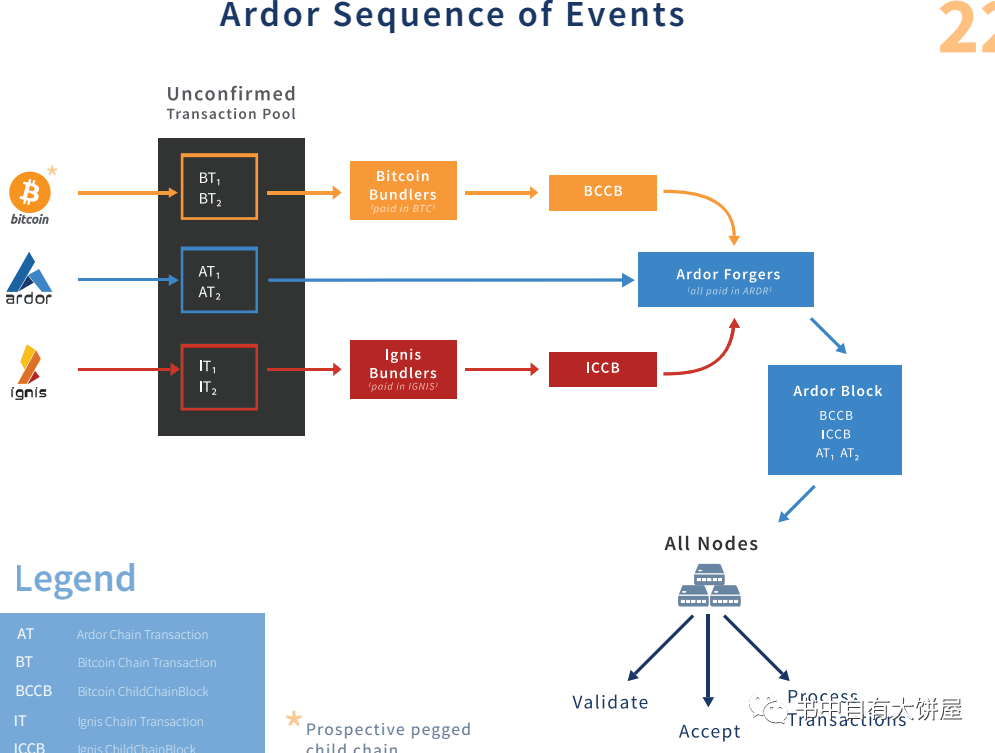
In order to solve the problem of difficult maintenance of blockchain applications, a unique Parent-Child architecture is used to solve these problems, dividing a single chain into a parent chain (Parent) responsible for security and multiple child chains (Child) responsible for the remaining functions.
Project Highlights
1. Advanced architecture
The unique parent-child architecture of the Ardor platform allows companies to build products and services using child chains while relying on the security provided by the parent chain.
2. High efficiency and energy saving
The Ardor platform uses a Proof-of-Stake consensus algorithm to eliminate mining competition so nodes can use low-energy and economical hardware.
3. Reliable and maintainable products
Ardor is built on NXT's four years of production experience and is the most popular development language for commercial applications developed in Java.
4. Fast
Each block containing all sub-chains is packaged in 60 seconds or less. Sub-chain transactions can be removed from the blockchain after confirmation to keep the actual blockchain lightweight and efficient.
5. Scalability
Subchain transaction data will be modified so that the block size is independent of all subchains.
6. Security
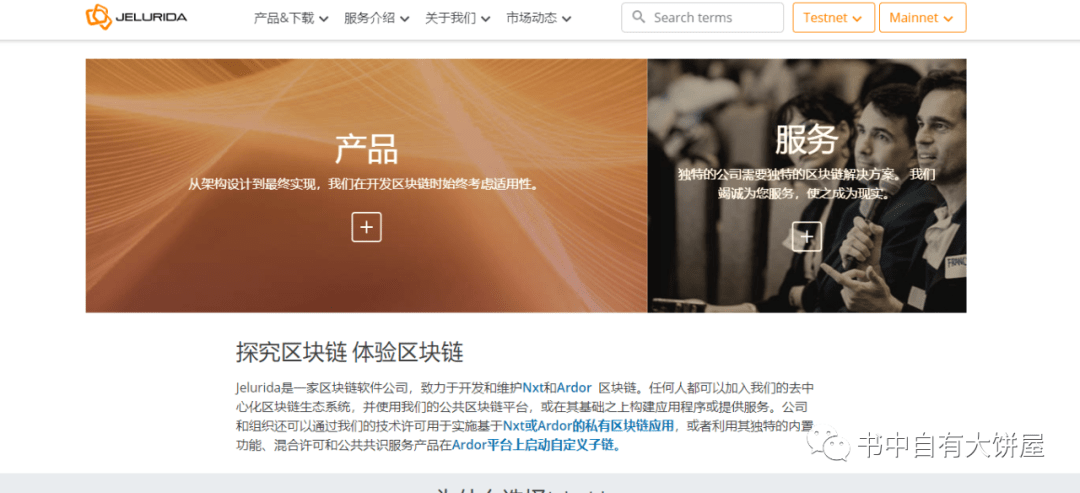
Aduo is developed by Jelurida, a company with the core development team of Future Coin. Future Coin is proven to be safe and stable.
Application scenarios
1. Provide blockchain services - Ardor will open the blockchain development platform to organizations and individuals around the world. The high barrier to entry for blockchain is about to disappear.
2. Manageable blockchain capacity size - By separating transactions and data that do not affect security, Ardor will solve the problem of scalability and move all those transactions and data that do not affect security to sub-chains superior. The Ardor team will create the first subchain to accommodate many of the Nxt 1.0 tools as well as future features. This small size also comes with short transaction times, so processes only take a fraction of the time to perform functions compared to Bitcoin.
3. Distributed asset exchange - By establishing an asset exchange on NXT, Ardor will be able to exchange the assets of any sub-chain token on any sub-chain. This allows subchains to interact with each other and opens up many collaboration opportunities and allows for cross-chain asset trading, a long-requested feature in the Nxt ecosystem.
4. Distributed voting and governance system - will become the core of decentralized consensus in the future. Secure and anonymous voting will be an available feature for all child chains on the Nxt platform.
5. Staged transactions - Users can set multiple conditions including a minimum number of votes and a set amount of time before executing a transaction. Like Nxt, Ardor will use intelligent transactions. Therefore, the user only needs to submit the parameters required for the transaction and the ID of the function to be used. The transaction process is also completely decentralized. There is no need for a centralized server, service or application like Ethereum’s Oracle.
Ecology/Application
Jelurida, the developer of the Ardor platform, is committed to providing the best blockchain solutions and educational services to different business groups, and has been providing consulting services to Henkel, Accenture, Correos and other companies.
Senator Logistics Project
Senator is a blockchain industry application jointly participated by the European Union, Jelurida, Accenture and Spain Post, aiming to develop governance solutions based on user demand planning, transport planning, freight and logistics planning, and urban infrastructure in order to manage cities in the best possible way planning policy.
Jelurida and Accenture are collaborating to build the necessary infrastructure to facilitate two specific applications (supply chain tracking and data management solutions) agreed upon by the EU and Correos team members. It is reported that the EU and Correos have a number of technical requirements, including public platforms, multi-chain operability, customizability, hybrid authorization functions, low power consumption and proof of rights. Jelurida’s Ardor blockchain 100% meets all these requirements, so was selected as a basic project.
Senator was carried out after receiving EU financial support. As a huge logistics project, the goal is to develop user demand plans, transportation plans, cargo and logistics plans, and governance systems for urban infrastructure. Accenture announced the operator of the public chain solution on this project led by the Spanish Post Office (Correos), and worked with Jelurida to propose a bidding plan using the Ardor platform, which was ultimately selected.
Game industry landing
Jelurida’s Korean representative Kim Cheol-young said at the BWB2022 blockchain event: “The potential of blockchain is endless, and P2E games should basically be interesting enough to attract users without involving native token price fluctuations. Jelurida is preparing a The online bridge game Bridge Champ provides a better UI/UX than the existing online bridge platform. Once the blockchain integration work is completed, online transactions within the Ardor platform can be increased, which is exciting."
Bridge Champ is a blockchain-based online version of a bridge game being developed on Jelurida that activates online transactions on the Ardor platform.
Token economy
The maximum issuance of Ardor's token (ARDR) is the same as the current circulation, which has the advantage of no inflation. However, since there is no separate block generation compensation pool, you only need to complete the number of transactions within the block to obtain compensation. In addition to the various enterprise/public use cases currently being developed, ARDR will be empowered by increasing POS participants through various games.
Ardor (English name ardor) is the token of the Future Coin 2.0 system. The Future Coin team released the Ado Project (i.e. Future Coin 2.0 token) in May 2016, and released the Future Coin blockchain system with new features in 2017. Aduo ARDR is generated from a 1:1 snapshot of the old future currency (NXT), with a total amount of 1 billion. The existing Aduo ARDR was generated from a snapshot of NXT from July to October 2016. All have been circulated now. The current currency price is 0.09 US dollars, and it was 2 US dollars at its peak in 2018. From this point of view, this project is actually a project that has basically returned to zero, with a drop of 99%. The token distribution has not yet been found because it is the old NXT Snapshot airdropped. Then TVL on the chain was not found, because it mainly works on private chain projects.
Finally, we summarize this project. The fundamentals are relatively average and there are no applications on the chain, so it has transitioned to some B-side businesses. Looking at the K-line for a year now, 0.9 has just returned to an annual average position, which is also It’s not a big hit, so there are still some opportunities. Then the strategy of tokens will still be mentioned in the planet. Recently, the planet will update the most complete classification of projects from various industries and leading projects in the history. The most complete series in the universe. Welcome to pay attention. !