


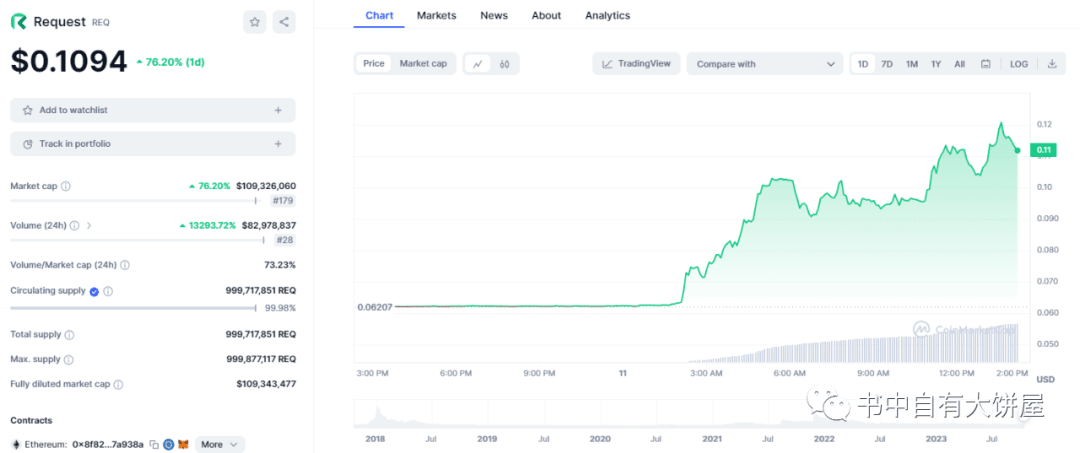
Today we are going to talk about a project that has skyrocketed by 80% today. You can see that from 3 am to noon Beijing time, it has increased by 80%, from 0.06 to 0.11, almost doubling. It is Request, a project for payment requests, with a current market value of 100 million US dollars and a market value ranking of 180+.
Project Introduction
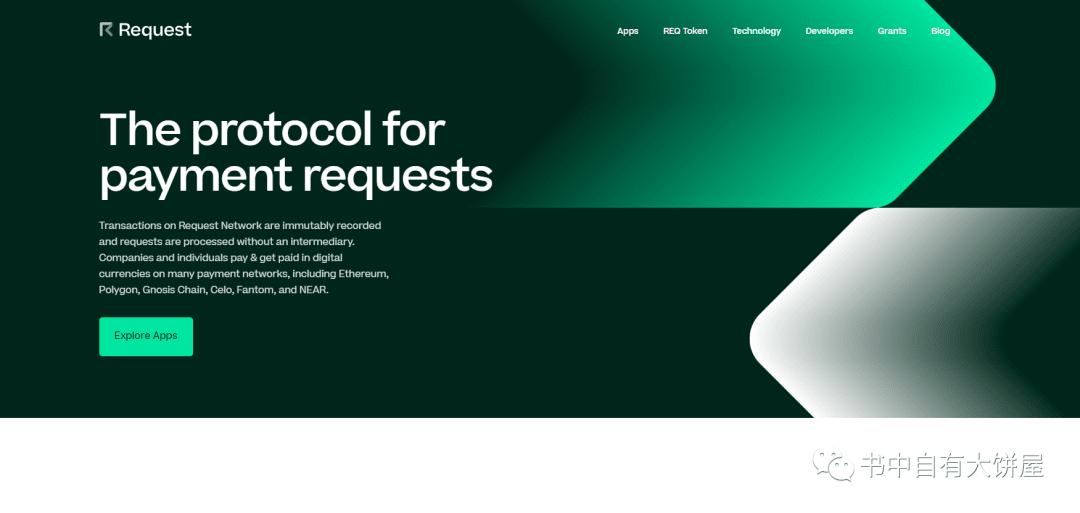
Request is a decentralized network that allows anyone to request payments (Request invoices), anyone can request payments and receive funds in a secure way. It eliminates the requirement for third parties to provide a cheaper and more secure payment solution that works in all global currencies.
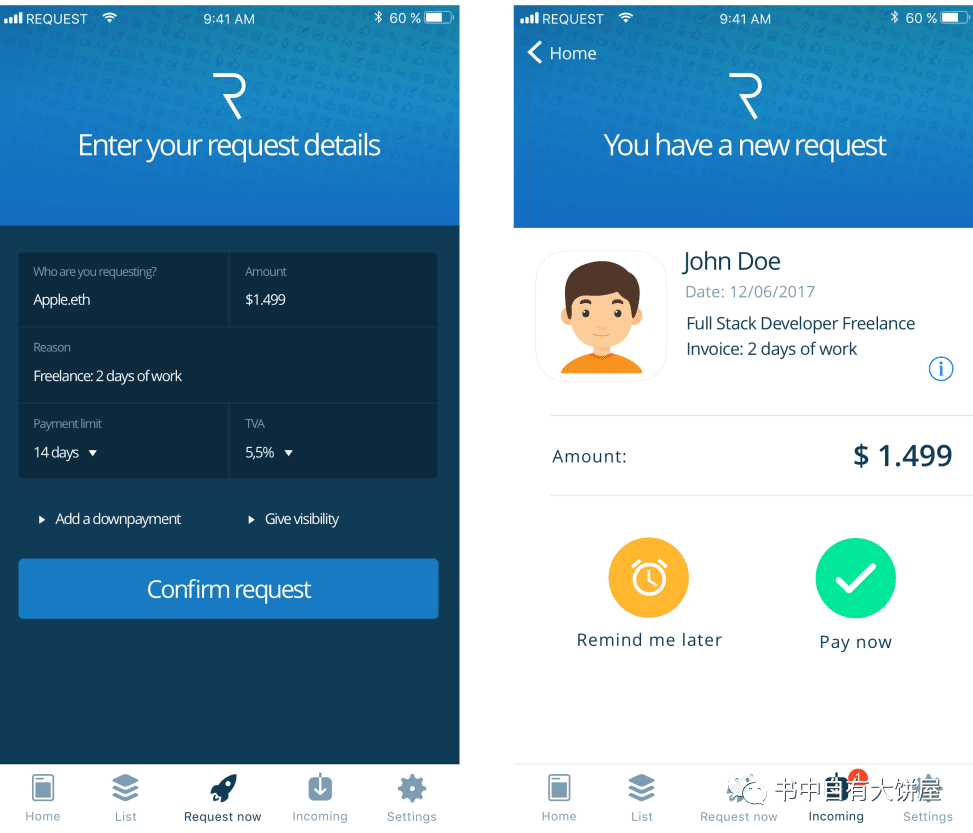
When a user creates a payment request, they define to which address the payment needs to be allocated and what the amount is. Users can also define the terms and conditions of the payment, upgrading a simple request to an invoice. Once completed, users can share their request to be paid by their counterparty.
All data is stored in a decentralized real-time ledger, creating a financial platform with asset invoicing, accounting, auditing and payment standards.
Technical Overview
Three-tier ecosystem:
Core Layer
The first layer manages the distributed ledger consensus and state transitions. It stores basic smart contracts that allow users to create different entities and payment requests. It is also used to detect when a payment is completed. The core layer is based on immutability (information never disappears), the openness of the system (the relevant information is available to all parties involved), and intelligence (the system "discovers" the rules of the bill and "knows" it). The core layer is placed on the Ethereum network. Other currencies use Oracles for automatic payment detection. The only transmission cost of this layer is for information storage.
Extension Layer
Most payment requests go beyond the basic smart contracts kept in the core layer. This layer allows some special features that don't even exist. One of the best examples is the possibility of "continuous billing", however, this layer is chargeable. The fee for each extension is paid to the token holder. The fee will decrease over time to discourage alternative systems and remain competitive. The cost forecast for an extension is 0.1% to 0.5%, which is enough to finance a network that pays $500 billion per day. This layer is 100% open and everyone can create their own extensions.
Application Layer
This layer is placed outside of the blockchain. Users can connect to the Request Network using multiple systems from different companies and create requests or access relevant data. Accounting, tax, auditing, recovery and collection, payment systems can all be connected. Once a payment system is connected to the Request Network (Coinbase, Mycellium, Bank of America), it will be able to access the user's bills and propose instant payments. The Request Network team will also develop applications, including APIs and interfaces for creation and evaluation. The application layer will also have a reputation system designed to protect users from bad payers and phishing attacks.
Request truly empowers people to pay.
Application Scenario
1. B2B Invoice
Billions of invoices are exchanged between companies every year, and most of them are still sent in physical form or by mail, which must be copied and kept on file. This leads to many errors, especially when using prepayment rules and tax conditions.
With Request, companies can share these bills directly through the ledger; there is no need to duplicate invoices, and accounting systems are instantly operational and updated instantly. Companies waiting to be paid will notice delays immediately, but this will become less and less common as the invoice payment system develops. Companies can choose the most appropriate date to pay after receiving the request.
2. Online payment
For example, you need to provide a credit/debit card to make a purchase on Amazon, which exposes sensitive information. Alternatively, you can choose Request when paying, and your data will be protected. Amazon will post a request on the Request network, and the request will be detected by the user's account and the user will confirm the payment. This minimizes transaction costs and does not expose payment information. It also helps people avoid hidden service fees that may be required during credit/debit card payments by providing a process to verify the payment before the payment occurs. Request truly gives people the power to pay.
Compared with the current system, Request has the following advantages:
• Secure: Payment information is not shared and there is no risk of someone else intercepting or stealing your bank information.
• Simple: Pay with one click, no manual entry errors possible.
• Low cost: No third party involved (such as Paypal, Bitpay or Stripe), these providers usually charge 1%-7% of the transaction amount as a handling fee. Request will reduce this cost.
Automation of tasks: accounting, auditing, expenses
Accounting:
Request will automate accounting processes in real time, reducing costs while providing better, faster financial management services and more information.
audit:
An important benefit of Request is that it can improve the efficiency of such audits. There is still a lot of room for improvement in accounting systems and company conditions in terms of digitalization.
With the help of blockchain technology, companies can keep their accounts in a decentralized, confidential, and shareable database, without the need to keep these internal accounts or publish annual reports after the annual audit. All entries will be registered, and there will be no way to backdate and falsify them. Annual adjustments will be more credible, and most importantly, such benefits will be applied to the company in real time. Shareholders and external entities can access information in real time. Audit costs will be drastically reduced, and accounting entries will no longer need to be repeatedly checked manually. Finally, when customers and suppliers connect to this system and use encrypted addresses, the authenticity of financial proofs will never be questioned.
Request is a distributed registry and source of confidence. It will eventually enable real-time "smart audits". This will include all the purchases and sales of a company. Instead of viewing these accounts individually in a double-entry accounting system, people can link purchase accounts with suppliers, payments and bank accounts in the blockchain. The system will provide traceability, stability and authenticity.
cost:
Request allows employees and businesses to easily share expense reports without misunderstandings or inconsistent versions. Employees can submit their expense claims in real time and receive remittances after their manager approves them.
Token Economy
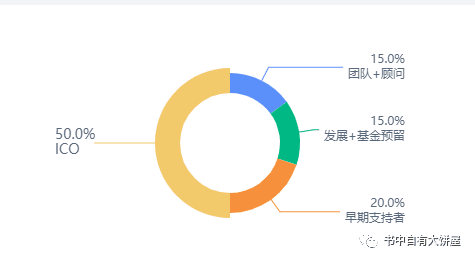
The current total amount of tokens is 999,877,117 REQ, all of which are in circulation. The current price is around 0.1 USD. In 2018, it was 1.1 USD, which is a 90% drop. In terms of token distribution, ICO took 50%, the team took 15%, and the development fund took 15%, which means the team took 30%.
To sum up, this project is also the leader in payment requests, but this demand is more web2, because payment in the web3 world is a natural thing, and does not require your payment interface, so it appeared to solve the problems in the web2 world, and this project is difficult to monetize. Then, some of the application scenarios mentioned, do they really need you? In fact, there are also good solutions in the web2 world, or government departments do not need something like you, so the positioning is rather awkward, and today's wave of rise is also due to institutions pulling the market, because other sectors have risen and cut a wave, so this is a new track, and we can do it again, so it is still very dangerous at present, and it is only suitable for shorting, and the token strategy is still placed in the planet.