


Carefully! Lots of text.
Base is a layer 2 solution based on Ethereum. It was created by cryptocurrency exchange Coinbase in partnership with Optimism to provide users with a secure, cost-effective and user-friendly environment for developing on-chain applications.
The Base network is compatible with all EVM wallets and the Coinbase wallet.
Base can be used for a variety of purposes, including integration with payment applications, token swaps, liquidity provision, token transfers via bridges, and running DAOs.
What is Base
Base is a second-layer (L2) blockchain based on Ethereum, launched on August 9, 2023 by the American cryptocurrency exchange Coinbase. Base attracted the attention of the cryptocurrency community for being the first blockchain to be launched by a publicly traded company.
Base was developed in partnership with Ethereum's layer 2 blockchain called Optimism, which runs on top of the OP stack (a standardized stack for open source developers). With Base, developers can build decentralized applications (DApps) with access to the Coinbase ecosystem, which has 110 million verified users and over $80 billion in assets.
Base's concept is to create a so-called superchain based on the Optimism protocol with the support of the developer community. The founders of Base have publicly stated that there are currently no plans to issue a new network token for Base, and users should be wary of scammers offering counterfeit Base tokens.
What is the second level
Layer 2 (L2) blockchains are secondary protocols or frameworks built on top of existing layer 1 (L1) blockchain networks such as Ethereum. Layer 2 solutions are created to increase the scalability, throughput and efficiency of the Layer 1 blockchain without compromising its security and decentralization.
There are several types of second-level blockchains: among them are state channels (Lightning networks for Bitcoin and Raiden networks for Ethereum), sidechains (Liquid networks for Bitcoin and Loom networks for Ethereum) and rollups (optimistic and ZK rollups).
Some of the most common second-layer blockchain networks include Optimism, Polygon, zkSync and Arbitrum.
What is Optimism
Optimism is a layer 2 solution built on top of the Ethereum network, designed to improve scalability and transaction throughput, as well as reduce fees. Optimism uses optimistic rollups: they aggregate multiple off-chain transactions, combine them into a single representation of on-chain data, and transmit them to the Ethereum main chain.
Optimism uses an anti-fraud system. Within this system, all transactions aggregated by rollup are initially considered valid. Users can challenge the authenticity of certain transactions by providing evidence of fraud over a period of time. If any fraudulent activity is detected during the specified period, the attacker will be punished and the transaction will be cancelled.
Use cases for Base
Like other layer 2 networks, Base can be used for a wide range of tasks. For example, you can create the following applications using Base:
1. Payment apps
Beam is a payments app where users can make transactions using both USDC stablecoins and the app's native token called Eco. Users log into the app using their Twitter accounts and pay for gas in USDC or Eco. In addition, Beam has an integrated gateway for converting fiat into cryptocurrencies and vice versa.
2. Token swaps
Using the token swap feature of decentralized exchanges (DEXs), Base users can trade a variety of cryptocurrencies. There are currently several decentralized exchanges running on Base, notably Uniswap, Maverick and Dackieswap.
3. Providing liquidity
Users can provide liquidity on the Base blockchain through various DApps (such as Uniswap, BaseSwap or Dackieswap). In these applications, liquidity providers earn fees on transactions in liquidity pools.
4. Transferring tokens using bridges
Blockchain Base has developed the official Base Bridge, compatible with most Ethereum wallets such as MetaMask and Coinbase Wallet. With it, users can transfer ERC-20 tokens from Base and Ethereum.
Moving tokens from Ethereum to Base using a bridge usually takes a couple of minutes, while from Base to Ethereum it takes about 7 days.
5. Launch DAO
A decentralized autonomous organization (DAO) is a blockchain-based organization governed by the community using smart contracts. Aragon, a protocol for creating DAOs, has introduced a DApp on the Base network that requires no programming skills and aims to simplify the process of creating DAOs.
Will the BASE token be released?
According to the roadmap and posts on Base's official Twitter account, the project has no plans to issue network tokens.
However, some projects initially declare no plans to issue tokens, and in the future conduct a sudden airdrop. This is usually done to reward early contributors for their contributions to the network and community building.
How to connect to the Base network and use the test network
Connecting to the Base network is quite simple and can be done using a Coinbase wallet or any other EVM-compatible wallet.
1. Connect to Base using Coinbase wallet
To use Base with Coinbase Wallet, you need to follow these steps:
1. Launch the Coinbase Wallet browser extension and log in.
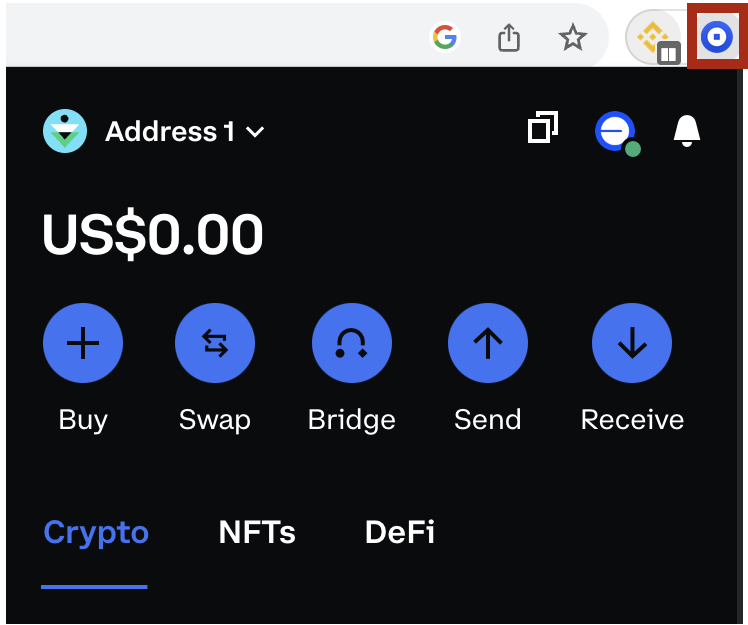
2. Connect to the app using your Coinbase wallet (we'll use BaseSwap in this example).

3. Open the network selection menu by clicking on the icon in the upper right corner.
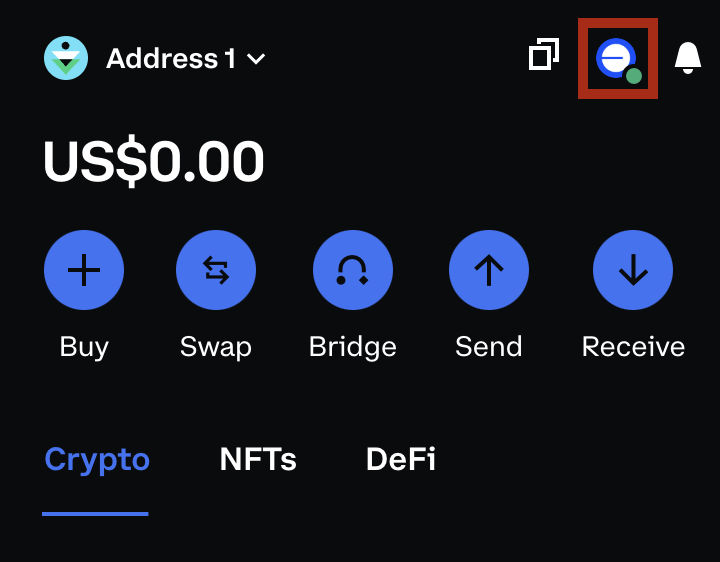
4. Select the Base network from the list.
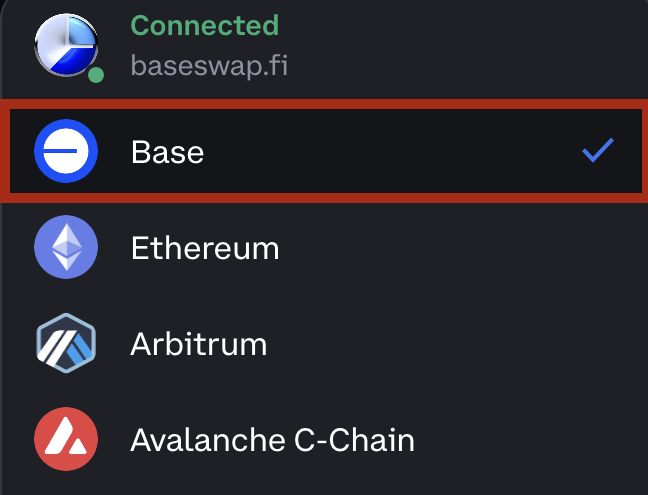
5. The active network will now be set to Base by default.
2. Connect to Base using MetaMask
Users can connect to Base using EVM wallets. Let's look at an example of connecting to the Base network using the MetaMask wallet.
1. Launch the MetaMask browser extension.

2. Open the network selection drop-down menu by clicking the button at the top of the extension window.

3. Click on the “Add network” button.
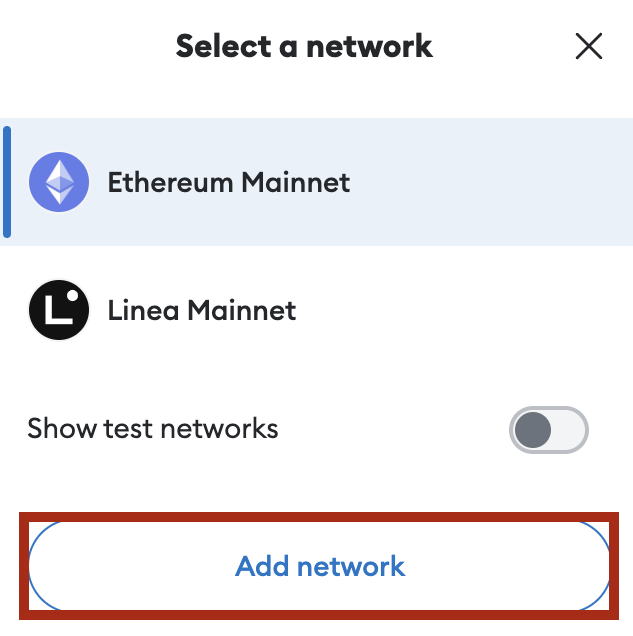
4. Select Add a network manually.
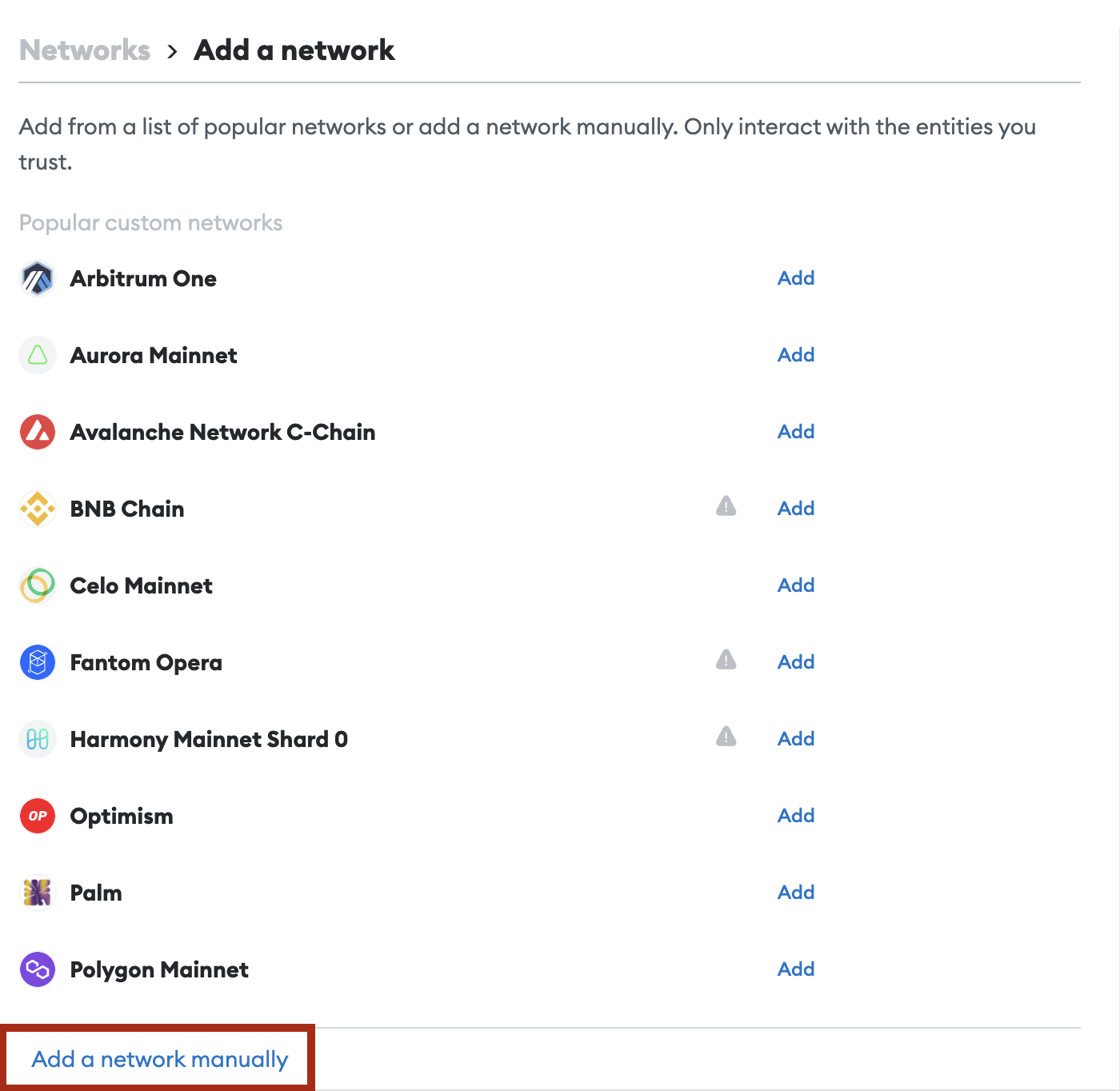
5. In the window that appears, enter the following data for the Base Goerli test network and click “Save”:

6. The option to connect to the Base network should now appear in the drop-down menu for selecting networks.

Benefits of the Base network
Among the main advantages of using the Base network are the following:
1. Low costs
Like other optimistic rollups, Base benefits from low gas fees, which significantly reduces transaction costs and increases network throughput. Cost reduction is achieved by processing transactions off-chain and combining them into a single proof.
2. Availability
EVM-compatible chains like Base increase accessibility by allowing developers to easily deploy and use existing Ethereum-based tools, frameworks, and smart contracts across multiple platforms.
3. Scalability
The scalability of layer 2 solutions provides important benefits by increasing the transaction throughput of blockchain networks. These benefits remove potential limitations and make the network faster and more efficient, reducing costs for users and developers.
Disadvantages of the Base network
Among the main limitations and disadvantages of Base are the following:
1. Centralization
One of Base's key problems is centralization. Coinbase operates as the only sequencer node on Base, which gives it significant control over transactions. A sequencer node is a specialized node in a blockchain network that is responsible for sequencing and completing transactions in a specific order, increasing the throughput of the network.
The presence of one sequencer node creates a centralized management authority, which concentrates all the processing and ordering capabilities of transactions. Additionally, this node can set and change fees associated with the Coinbase sequencer. The creators of Coinbase hinted at the possibility of integrating third-party nodes in the future.
2. Slow withdrawals
One of the main disadvantages of the Base blockchain is the long withdrawal period, which is about 7 days. This delay is due to the Optimism fraud protection system, which allows you to challenge transactions and provide evidence of possible fraud within a specified period.
For many users, long withdrawal periods can be a serious inconvenience.
3. Security
Base is a Layer 2 (L2) solution based on the OP stack and therefore comes with certain security risks. The first issue relates to the effectiveness of anti-fraud mechanisms as a security measure. Fraud protection relies on the diligence of network participants to monitor and challenge invalid off-chain transactions before they are completed on the main blockchain.
However, this mechanism is not without certain problems, including difficulties in incentivizing participants with rewards and vulnerability to data hiding attacks.
Conclusion
Since its inception, Base has attracted considerable interest from the community. As of September 7, 2023, the total number of users exceeds 1 million people, and the total value locked (TVL) is more than $385 million. This incredible achievement brought Base to 8th place in the ranking of chains by TVL, surpassing such popular blockchains as Cardano and Solana.
Base became the first blockchain to be launched by a publicly traded company. It opens up new opportunities to reach a wider audience and engage users in the Web3 world. Because the platform is still growing and evolving, users and developers should still exercise caution when making decisions about interacting with Base.
Recommended reading
Solutions for scaling the first and second levels of the blockchain
What is Polygon (MATIC)?
Differences between optimistic and ZK rollups
Предупреждение о рисках и отказ от ответственности: следующие материалы предоставляются на условиях «как есть» без каких-либо гарантий исключительно для общих справочных и образовательных целей. Эта информация не должна рассматриваться как финансовая, юридическая консультация или рекомендация по приобретению какого-либо конкретного продукта или услуги. Вам следует самостоятельно обратиться за советом к соответствующим профессиональным консультантам. Поскольку статья написана сторонним автором, обратите внимание, что высказанные мнения принадлежат стороннему автору и необязательно отражают точку зрения Binance Academy. Для получения более подробной информации перейдите по ссылке. Стоимость цифровых активов может быть волатильной. Стоимость инвестированных средств может увеличиваться и уменьшаться. Вы можете не вернуть инвестированные средства. Вы несете полную ответственность за свои инвестиционные решения. Binance Academy не несет ответственность за ваши возможные убытки. Данная информация не является финансовой, юридической или профессиональной рекомендацией. Чтобы узнать больше, ознакомьтесь с нашими Условиями использования и Предупреждением о рисках.