


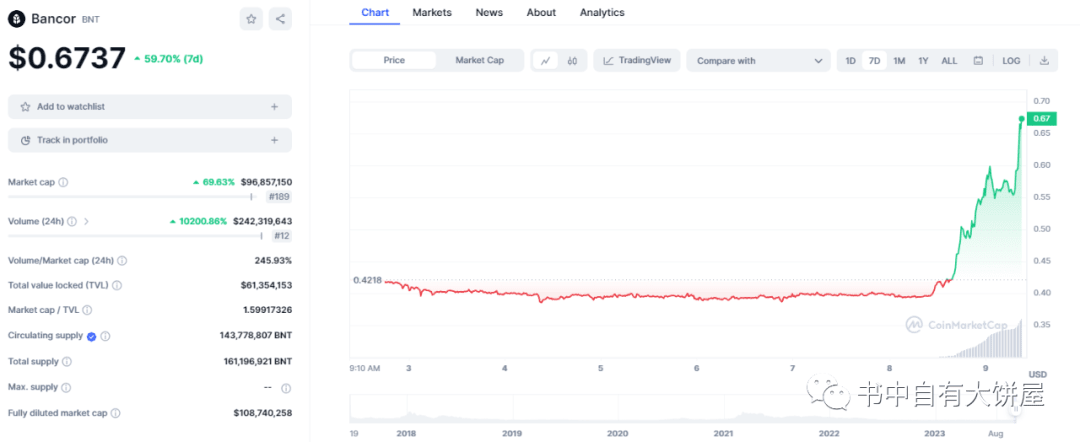
Today we continue to talk about a project that has skyrocketed recently. It is also a DEFI project, which is Bancor. The token name is BNT. You can see that it has increased from 0.4 to 0.67 today, an increase of 60% in half a day. Then the market value also reached 96 million US dollars, and the market value ranked 190+.
Introduction
Bancor is a system that provides liquidity for small-cap tokens with a built-in reserve of one or more ERC20 tokens that are tradable. New tokens are issued through smart contracts in exchange for reserve tokens. The price of new tokens is priced autonomously through smart contracts, allowing direct conversion between tokens without the need for an exchange, without the need for a second party to participate in the transaction, or a third party. Three parties come together to broker the deal. The network effect of the tokens created by the Bancor protocol lowers the barriers to market entry for these new currencies and effectively solves liquidity problems.
The new currency is backed by Bancor, which is backed by ETH, and Bancor’s constant reserve ratio (CRR) is set and maintained at 20%. BNT is issued by sending ETH to the smart contract where Bancor holds reserves, and the ETH sent becomes Bancor's endorsement. Under this setting, the user can send 20 ETH to this smart contract to purchase 100 BNT, and the 20 ETH will be forced into the reserve by this smart contract. Using the same method, BNT can be redeemed back to ETH, and as long as the user sends it to Bancor's smart contract, they will receive some ETH. The Bancor protocol allows users to generate or destroy BNT every time they deposit or withdraw reserve funds (ETH). If the price of ETH increases (due to the development of the Ethereum ecosystem), the price of BNT will also increase (because BNT and its reserve token ETH maintain a constant reserve ratio), and an increase in the price of BNT will also increase the price of new coins.
Project implementation mechanism
This protocol allows anyone to create a token that holds one or a few other tokens as its own reserve at a preset ratio. These reserve tokens can be fiat currencies, digital assets (such as gold) or other cryptocurrencies (such as Bitcoin, Ethereum or others). By using these reserves, newly created tokens gain value directly, regardless of trading volume. It also directly obtains the exchange rate between itself and reserve tokens, so it can redeem back its reserve tokens at any time, regardless of whether there is a buyer or not.
With the "constant reserve rate" guaranteed to remain unchanged, based on the matching of exchange transactions by smart contracts at every moment, the token price will change with the "reserve balance" (Reserve) and "token circulation" (Supply). Perform dynamic floating. When users use smart contracts to purchase "smart tokens", they need to deposit reserves into the smart contract based on the current market price. After completion, the user can obtain "smart tokens". During this process, although the "reserve balance" and "token circulation" have increased, in order to maintain the "constant reserve rate", the price of the "smart token" will rise accordingly. In the same way, when users destroy "smart tokens" through smart contracts and get back their reserves, the token price will drop. Through the above formula, the price of the token will be adjusted in time according to the latest matched transactions. Simply put, the market value of "smart tokens" is endorsed by the reserve in the smart contract. As the reserve balance increases, the price of the token will rise.
The biggest innovation of the Bancor protocol is that the value discovery of digital currencies on traditional exchanges is based on the real-time synchronous (Synchronous) matching of buy orders (BID) and sell orders (ASK). However, based on the Bancor protocol, the price of digital currencies depends on the reserve balance and token. The circulation of coins and the process of value discovery are asynchronous.
Bancor main advantages
1. Continuous liquidity
Even if there are few or no other buyers or sellers in the market, users can buy or sell Tokens directly in the network through smart contracts. Since the price will be adjusted according to the exchange size, there will always be a certain exchange price. The Bancor protocol effectively decouples liquidity from transaction volume.
2. Smart contracts do not charge fees for executed exchanges.
The only fees users incur are those required to interact with the underlying blockchain. While the redemption of some smart tokens may have optional usage fees set by the creator, these fees are generally very low because, due to the open source nature of the Bancor protocol, other users can easily create competing smart tokens to provide similar redemption services , effectively reducing costs.
3. Adjustable price sensitivity
The leverage generated by the large connector token reserves and relatively high CW makes the price of smart tokens less sensitive to sudden fluctuations caused by short-term speculation or large orders.
4. No price difference
The Bancor formula uses the same price calculation method when processing buy and sell orders, and there is no bid-ask spread, in contrast to traditional trading platforms where the buy price is always lower than the sell price.
5. Prices are predictable
Unlike traditional order book-based trading, the price algorithm of smart tokens is completely transparent, allowing users to pre-calculate the effective price of their exchange before executing the exchange, and provide early warning of price decline based on transaction volume before the transaction is executed.
Comparison of Bancor, KyberNetwork and 0x liquidity solutions:
1) The Bancor protocol’s solution to the liquidity problem is to use blockchain-based smart contracts and reserve currencies, so that smart Tokens can be exchanged for reserves at the corresponding exchange rate without the need for counterparties;
2) KyberNetwork provides liquidity through the reserve pool and reserve contributors. Kyber smart contracts provide the best reserve pool prices, and settlement can be quickly completed through smart contracts on the chain;
3) The order matching mechanism used in 0x cannot guarantee liquidity. The relayer hosts the order book on the chain, and the settlement is completed on the chain. The matching speed depends on the transaction volume.
Application scenarios
1. User Generated Currency This is also the first application product developed by the Bancor team. Users do not need any technical background to use a user interface similar to Facebook and use it through WhatsApp and Telegram (WeChat will be supported in the future) The intelligent chatbot (Chatbot) generates its own digital currency network. Users can also initiate token crowdsales with one click through this product.
2. Currency swapper (TokenChangers) When the user sets the "constant reserve rate" to 100% (meaning that the "reserve balance" is equal to the "token circulation") and puts two different numbers in the reserve Currency X and Y, the user has the ability to exchange these two currencies and is called a "currency swapper". For example, if the user wants to exchange currency X for currency Y, he only needs to deposit currency X into the reserve, and then destroy the "smart token" and withdraw currency Y from the reserve. It is worth mentioning that changing the "reserve balance" and "token circulation" of X and Y will affect their prices, and when there is a difference between the price of X and Y in the Bancor network and its price in the external exchange market Risk-free arbitrage opportunities arise. Currency swappers continuously discover arbitrage opportunities and effectively keep the price of each currency in the Bancor network consistent with the market price under economic incentives.
3. Decentralized Token Baskets In the same way as a "currency swapper", when a user sets the "constant reserve rate" to 100% and puts a variety of digital currencies in the reserve, he You can achieve similar functions of Exchange Traded Funds (ETF) or Index Fund (Index Fund). It is worth mentioning that the concept of Bancor was first proposed by John Maynard Keynes, an economist who was then a consultant to the British Treasury after World War II. He advocated the principle of overdraft and the establishment of a global central bank called the International Settlement Union. And issue a super-sovereign currency (Supranational Currency) called Bancor. In a sense, the Bancor team is paying tribute to Keynes and establishing the first true "network currency" (Network Currency) through the Bancor protocol.
Token economy
Bancor was co-founded by Guy and Galia Benartzi, and notable investors in the project include Tim Draper, a partner at investment firm Draper FisherJurvetson.
The project raised $153 million in a 2017 token sale managed by the Swiss non-profit Bprotocol Foundation. In total, funding was raised from nearly 11,000 investors, making it the largest deal of its kind at the time.
The total number of tokens is 142,943,759, and the current currency price is around US$0.6. At its peak in 2019, it was US$100.
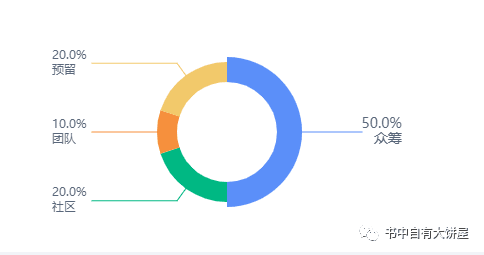
Half of the total token supply will be allocated to token sale participants, and the remainder will be allocated to the founding team for various operating budgets and grant programs. The team only took 10%, and 20% was reserved, which should also belong to the team. The 20% of the community, to put it bluntly, also belongs to them, so the team’s currency holding ratio is a bit high.
And the TVL on the chain also has 75 million US dollars, which is still reasonable. Compared to its market value, it can be regarded as 1:1.
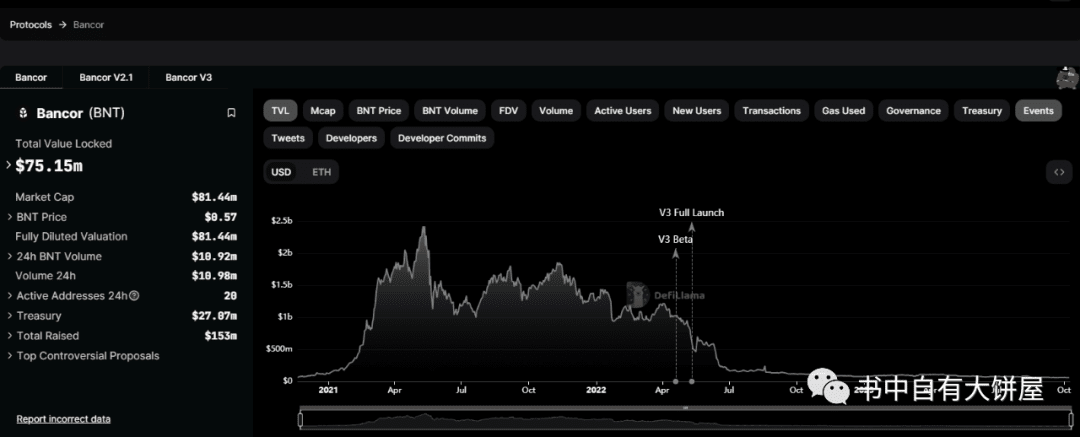
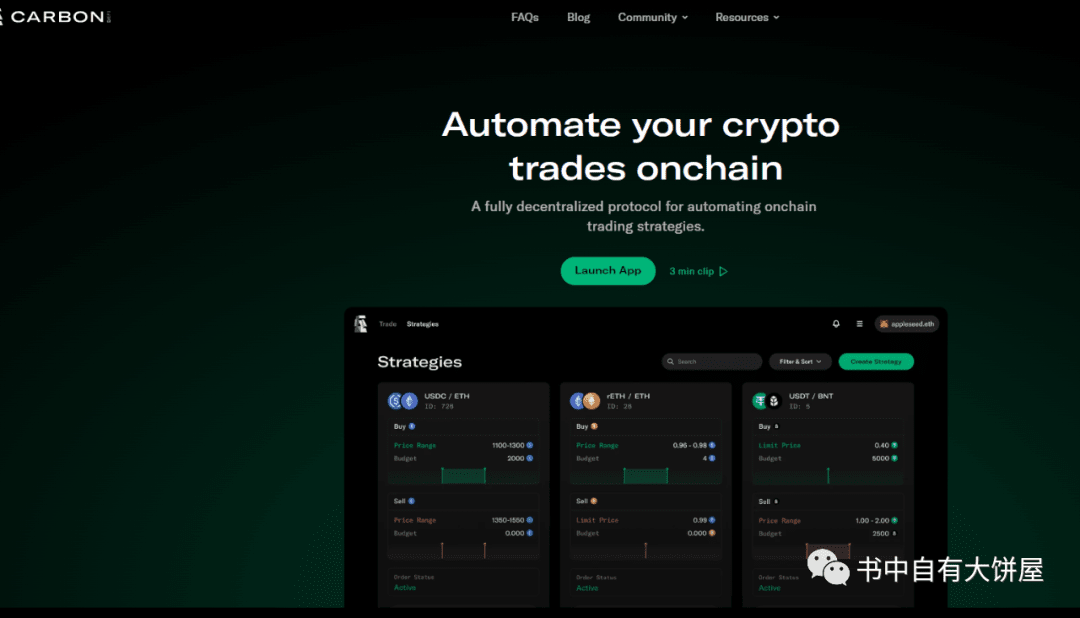
Finally, we summarize this project. There are also many DEFI projects. This project also breaks the traditional bidding strategy of buy and sell orders and uses an asynchronous value strategy. I personally think it is not necessarily a good thing. Why do most DEFI transactions All are the former solution, which shows that the former solution is a better solution. Although BNT can make small currencies high, its value is defined by most people. Most people think Bitcoin is valuable. , Bitcoin is valuable, and a small number of people think uni is valuable, then uni is not as valuable as Bitcoin. This is the consensus. It is true that this road is difficult to follow. In fact, you can see on the official website that their new exchange is called carbon. The advantage of this exchange is automated buying and selling strategies, so it has also begun a certain transformation. Generally speaking, this project is within the standards, relatively average, and innovative, but the innovation has not been realized.