

Original title: Chain Venturer: Jacob Ko of Superscrypt
Original article by: Marco Manoppo
Compiled by: Qianwen, ChainCatcher
Jacob Ko is a founding member and partner of Superscrypt, an early Web3 venture capital fund founded by Temasek. Superscrypt is committed to investing in and supporting innovative founders and projects across the ecosystem. According to the RootData page, the fund focuses on infrastructure, identity and credentials, Web3 services, and emerging use cases. It has invested in projects such as Aptos, Safe, LI.FI, OutDID, Kaito, etc.
Jacob Ko started his career at US management consulting firm Kearney as a strategy consultant and subsequently worked at Citi Investment Bank from 2010 to 2013. In 2013, he joined Temasek to help build Temasek’s Australia and New Zealand investment program and was responsible for deep technology and agri-tech investments.
In July 2022, he helped found Superscrypt. In addition to providing funding, Superscrypt works closely with portfolio companies to support them in strategy, product, GTM, marketing, community technical/developer relations, and recruiting.
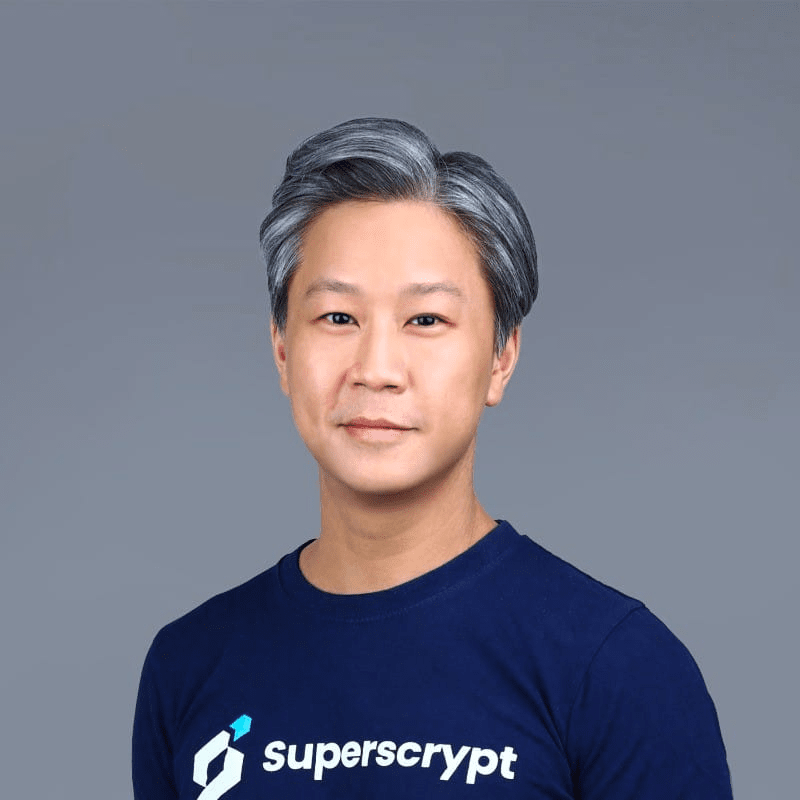
This interview covers the following contents:
Superscrypt believes that blockchain technology is the backbone of the new internet. Good infrastructure "just needs to work" and should fade out of people's sight.
Many people may not realize that the success of many current RWA protocols may be largely due to their decentralized nature, as this feature allows these protocols to facilitate low-threshold, barrier-free and seamless transactions. However, for platforms that process RWA, legal compliance requirements must be verified, which in turn limits the direct growth of the platform in terms of users, value and liquidity.
For asset classes that are not pegged to a physical counterpart, such as short-term Treasuries and private credit, RWA tokenization makes more sense.
One area that Web3 needs to tap into is identity, reputation, and credentials — which will provide users with greater control over their data.
Most investors investing in cryptocurrencies and venture capital do not fully understand whether a project needs a token and are only looking to realize the short-term price movements that a liquid token can provide rather than looking at the long-term benefits of building something new.
The following is the essence of the interview:
1. What was the defining moment that attracted Jacob to the world of crypto?
Jacob only started to get involved in cryptocurrencies in 2020. At that time, due to the global lockdown due to the epidemic, his entertainment options outside of work were limited, and he decided it was time to explore and study Bitcoin and Ethereum.
Bitcoin changed his perspective on the concept of money, while Ethereum and smart contracts opened up a whole new world of possibilities for anyone with an internet connection. He became actively involved in DeFi on Ethereum, Polygon, Binance Smart Chain, and Solana. On Solana, he explored further, got involved with NFTs, and participated in multiple community and ecosystem events.
2. What is Superscrypt? How is it related to Temasek?
After several years in the field, Jacob transitioned into crypto full-time and helped found Superscrypt, an early Web3 company seeded by Temasek.
Superscrypt is research-oriented, focusing on investing and supporting early Web3 builders in developing protocols, tools, and emerging applications. The team believes that deep user and community engagement is core to success and provides practical support to the companies it invests in.
Superscrypt believes that blockchain technology is infrastructure, the backbone of the new internet. Blockchain’s ability to assign ownership of nearly anything through a distributed ledger is a key innovation. Like most good infrastructure, blockchain technology should “just work” and fade into obscurity. Therefore, they invest in infrastructure solutions that make blockchain easier, faster, and more cost-effective to use. At the application layer, they are always looking for teams that can build great products that make life better or fun for users.
They believe a key area of untapped potential is identity, reputation, and credentials. This underdeveloped space is a key unlock for web3: solutions built with blockchain technology can give users more control over their data, drive product innovation, and create a better overall user experience.
3. What areas and types of projects are Jacob or Superscrypt currently interested in?
Superscrypt invests in Web3 infrastructure that helps blockchain scale, such as Rollup, Sorter, MEV, and interoperability solutions. They also make strategic investments in wallets and developer tools because they are the entry point for consumers and developers to interact and build with blockchain technology.
As mentioned earlier, identity, reputation, and credential solutions are of particular interest. Identity solutions can provide users with a more contextual identity based on their on-chain activities, and also allow users to control the data they want to share.
In terms of emerging use cases, the team has chosen to invest in the emerging areas of Web3 social and real-world asset tokenization. However, these are only preliminary plans, and the team will continue to conduct comprehensive research and monitoring before investing in these areas.
Superscrypt does not invest in the gaming sector. Although this sector has great prospects, it is not Superscrypt's main focus area because it is not always possible to select successful companies and it requires a lot of capital investment to produce successful projects.
Regarding DeFi, Superscrypt tends to selectively evaluate projects with unique innovative angles (such as cross-chain DeFi).
4. What details do people sometimes overlook when interacting with real-world assets?
Jacob observed that real world assets (RWA) are regaining popularity as institutions slowly adopt cryptocurrencies. However, he pointed out that the expected large-scale institutional adoption of cryptocurrencies may not have occurred due to the market crash, which may have hindered institutional participation. Nevertheless, people have recognized that blockchain can bring efficiency to trading and asset management.
As is often the case with emerging models, Jacob cautions that only certain RWAs currently make practical sense to integrate with blockchains due to technical, regulatory and practical considerations. However, this also presents opportunities for assets such as short-term government bonds and private credit, which are not tied to a tangible counterpart and seem more suitable for tokenization.
Many people may not realize that the success of many current RWA protocols may be largely due to their decentralized nature, as this feature allows these protocols to facilitate low-threshold, barrier-free and seamless transactions. However, for platforms that process RWA, legal compliance requirements must be verified, which in turn limits the direct growth of the platform in terms of users, value and liquidity.
He believes that RWA should not be hyped as the latest in the cryptocurrency space, but rather the asset should be evaluated within the context of fintech, as the asset class has inherent limitations and presents different opportunities.
5. What does Jacob think about the future of the RWA KYC system?
Jacob foresees a future where RWA KYC systems will be complex. At present, it seems unlikely that regulated RWAs will accept privacy-preserving cryptographic solutions like zkID as KYC standards. Ideally, regulators understand and accept these technologies as a way to verify an individual’s identity without revealing too many details.
However, there will be huge obstacles in gaining government trust in these emerging zero-knowledge proof (zk) solutions, as authorities may believe that there is no need to adopt new technologies if they can simply request personal information under existing systems. Although many teams are working on zero-knowledge proof (zk) solutions, they have not yet reached the level where governments will consider them as standard requirements.
Jacob foresees a continuous evolution of identity solutions. This range could range from more fuzzy identifiers (like attestations, profiles based on a user’s on-chain activity) to more math-based solutions (like zk technology) to the most rigorous identity solutions (traditional KYC and AML processes).
Depending on the product in question, any identity solution will satisfy regulators, with the most stringent solutions being used for securities, which require KYC. If regulators begin to better understand technologies and solutions such as zk, they may be sufficient to satisfy regulators. However, given that these technologies are just getting started, it may take decades to get to that point.
6. What does Jacob think about the best fund structure model for crypto assets?
Jacob shared his experience of transitioning from traditional venture capital to crypto investment, emphasizing the unique liquidity of tokens as investment tools. Compared with the 5-10 year cycle of venture capital, the cycle of tokens is much shorter (within a year). This dynamic sometimes causes early investors to focus only on short-term results, causing price fluctuations and affecting the public's perception of venture capital.
A popular investment structure is a combination of a SAFE (Standard Agreement for Future Equity) for initial seed rounds with a token warrant. This structure is consistent with Superscrypt’s long-term investment approach. While the company recognizes the early liquidity that comes with token issuance, its main focus is to support teams that can create long-term value, leading to the possibility of a trade sale or even an IPO.
Regarding investment strategies, Jacob emphasized the difference between venture capital and liquidity funds. The former are long-term backers who take risks for the ultimate return, while the latter requires different skills and is more focused on entry and exit points and liquidity management. Superscrypt mainly focuses on venture capital, but Jacob believes that liquidity strategies are also worth paying attention to, especially in bear markets, where sharp price drops can create attractive valuation opportunities for top teams and tokens.
Some quick questions
What is the one book any aspiring investment professional should read?
Anything that can help build a solid foundation and framework (about Bitcoin and Ethereum) is worth reading.
What was Jacob’s biggest investing mistake?
It is NFT, but it also gave Jacob a new understanding of more aspects and concepts such as cryptocurrency, Web3, and the impact that digital ownership can have on people.
What is the most underrated use of cryptocurrency?
Yes NFTs: NFTs are unpopular right now due to speculation and price fluctuations, but this technology for assigning property rights to intangible assets is a mechanism that can unlock more value creation and new business models.
Do you have a critical view on cryptocurrencies now?
Most investors investing in cryptocurrencies and venture capital do not fully understand whether a project needs a token and are only looking to capture the short-term price movement that a liquid token can provide rather than looking at the long-term benefits of building something new.
What are the biggest risks facing the cryptocurrency space?
Lack of supervision.
Note: The above text is not a verbatim quote, but is optimized in written form based on the conversation. In the process, some contexts and nuances cannot be properly expressed.


