
October 7 was a day that shocked the world. Hamas successfully raided Israel, breaking the peace in the Middle East and shocking the whole world.
This incident was not because Hamas did such a good job of keeping secrets, but rather because of the corruption and incompetence of Israel's Mossad and the US CIA. This war turned the US CIA into a "dry-eared" existence. Hamas successfully launched thousands of rockets to the Israeli-controlled homeland. For the Hamas organization, this war was a success and excellence. It was precisely because the Americans did not take Hamas seriously, seeing it as a clown who could not be on the stage and a "mob" of terrorism. Even tigers have their naps, and this time Hamas succeeded in doing it. In the information age, whether it is based on a thousand times more technology or weapons, it is actually very difficult to successfully organize such a large-scale action without leaking any wind.
●The trigger of the incident
Analysts pointed out that the recent Jewish provocations at the Al-Aqsa Mosque and the unprovoked killing of Palestinians in the West Bank have led to Hamas's crazy revenge. In its statement, Hamas mentioned that Israel "desecrated" the Al-Aqsa Mosque and killed Palestinian civilians. Hamas vowed to make its "enemies" understand that the era of "no accountability" is over.
● Origin of the feud
The origins of the Israeli-Palestinian conflict are very deep. As early as the 30th century BC, the ancestors of the Arabs were the Canaanite tribes of the Semitic people and became the first nation to settle in the Palestinian region.
The Jews did not settle in Palestine until the 20th century BC. In fact, the Jews were the first to immigrate to Palestine. At that time, under the leadership of the tribal leader Abraham, the Jews moved to this area after many twists and turns and finally settled down. After several centuries of reproduction and development, the Jews gradually grew stronger with their wisdom and intelligence.
In the 10th century BC, the Jews defeated the Canaanites and established the first Jewish Hebrew Kingdom in history. Later, the Palestinian region was invaded and occupied by foreign races such as the Persian Empire, the Roman Empire and the Ottoman Empire. Under the brutal rule of foreign races, the Jews launched an uprising again.
In 30 BC, Judaism rose vigorously and claimed that the Jews were God's "people" and Palestine was the "promised land" given by God. After that, the Jews organized three important uprisings, but all ended in failure. The Jews suffered an unprecedented large-scale massacre, Jesus was arrested and finally crucified by the Roman governor.
In 135 AD, the Jews were unwilling to be enslaved and launched an armed struggle again, but failed again. Since then, the Jews have been fleeing and displaced, and some of them have gradually drifted to Western Europe and other countries. Since then, the number of Jews in Palestine has dropped sharply, and they have lost their advantage in this region. In the 1st century AD, Christianity took Judaism as its foundation and developed rapidly. The believers regarded Jesus as the savior. There is a pessimistic legend that Jesus was betrayed by a Jewish disciple named Judas and then executed by the Roman governor at that time.
After the Middle Ages, the Jews experienced three larger-scale disasters.
The first catastrophe was in Europe. In order to divert class contradictions and social crises, the rulers of Western Europe in the Middle Ages used all kinds of lies to incite hatred and anti-Semitism. Against this background, many Jews were forced to flee from West Asia and Western Europe to Africa and Russia. According to historical records, there were about 1.6 million Jews in Western Europe at that time, but later the number dropped sharply to less than 300,000. Most of the Jews were either killed or fled.
The second disaster was in Russia. At the end of the 19th century and the beginning of the 20th century, the Tsar was assassinated and Russia was defeated in the Russo-Japanese War and World War I. In order to divert the attention of the people, the new Tsar imitated the rulers of Western Europe and began to incite anti-Semitism, saying that the reason for Russia's defeat was that the Jews acted as spies in the war. At that time, Russia successfully led the anti-Semitism frenzy, forcing most of the Jews in Russia to cross the ocean to the United States to make a living and disperse to various parts of America.
The third disaster was the well-known massacre of Jews by Germany during World War II. There were 9 million Jews in the area ruled by Hitler, and 6 million of them were killed. The means were so cruel and brutal that thousands of Jews became refugees again and fled.
After reading this, we sympathize with the unequal treatment of the Jews. It is this kind of suffering that has created the hardworking and wise character of the Jews. The Jews have gradually influenced the whole world. For example, Marx, Einstein, Beethoven, Picasso, etc. are all Jews, and have made great contributions to the history of world development. The Jews have always believed that Palestine is their "root" and the "promised land" that their ancestors got from "God". In the late 19th century and early 20th century, the Jews in Europe launched the road to "restoration of the nation" and established the "Zionist Organization" in 1897, claiming to establish a "legally protected" "Jewish home" in Palestine, which is today's Israel. Since then, Jews living all over the world have begun to migrate to Palestine to find a sense of belonging to their home. At one time, a large number of Jews gathered in the Palestinian region. Under the game of this region for their own interests, many countries such as Britain, the United States, France, and the Soviet Union jointly promulgated the "Palestine Partition Resolution". According to the resolution, two countries were established in Palestine, namely the "Arab State" and the "Jewish State". According to the resolution, the 600,000 Jews occupied 6% of the territory, but were entitled to 57% of the land, 15,200 square kilometers; while the more than 1.3 million Arabs occupied 94% of the territory, but were entitled to only 43% of the land, 11,150 square kilometers. The city of Jerusalem, which covers an area of about 176 square kilometers, was administered by the United Nations. The Jews were still dissatisfied with such unequal treatment. Instigated by some major powers, the Jews clamored to establish a "Great Israeli Empire" from the Euphrates River to the Nile River through conquest and diplomatic means. The Palestinian-Israeli conflict and even the Arab-Israeli conflict were inevitable.
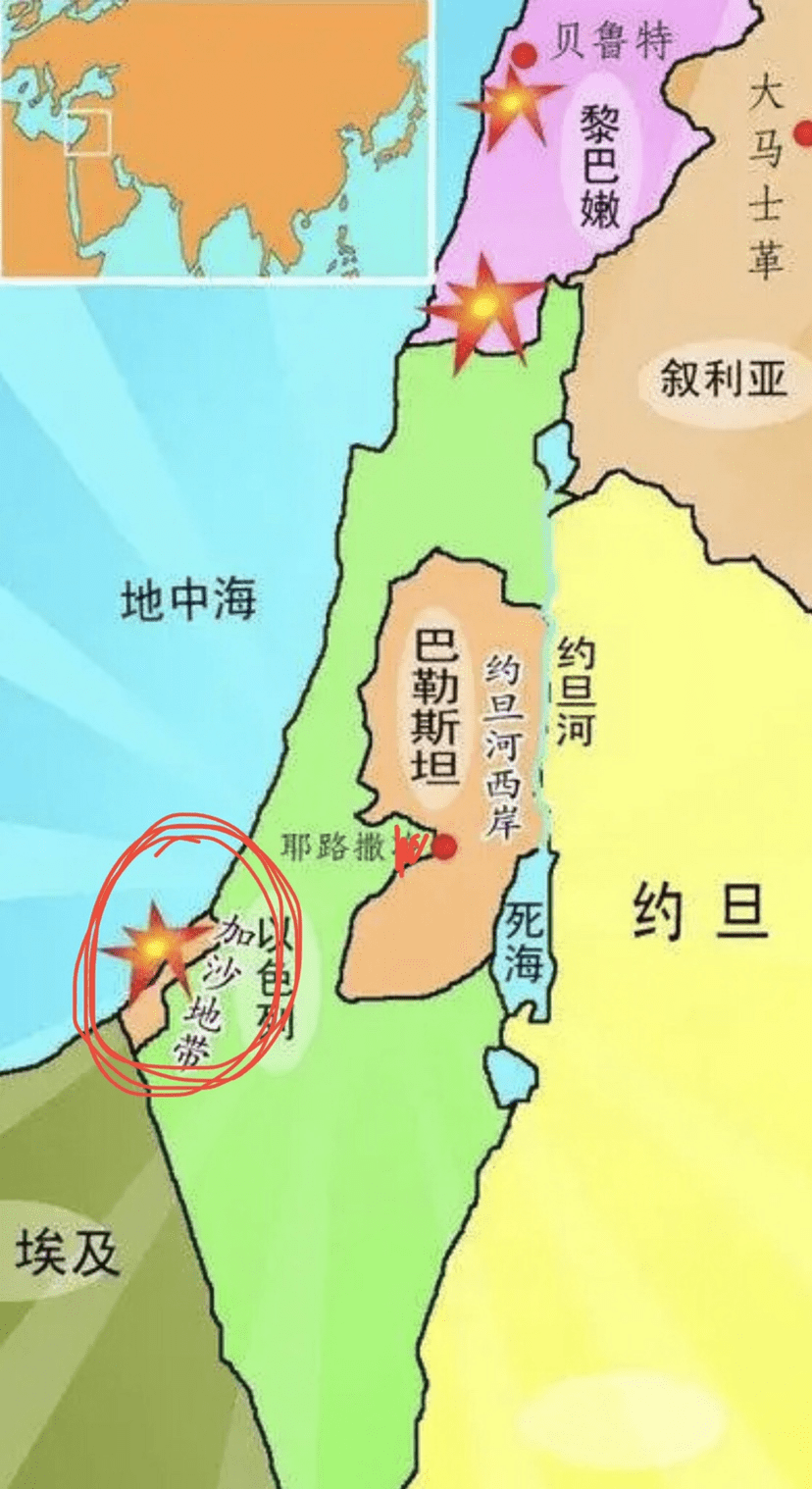
Therefore, on the second day after the founding of Israel in 1948, five Arab countries including Egypt, Jordan, Syria, Lebanon and Iraq began to attack Israel, and the first Middle East War broke out. In the end, Israel won a great victory. The war allowed Israel to occupy more than 6,000 square kilometers of Palestinian land, accounting for nearly 80% of the total area. Jordan controlled nearly 5,000 square kilometers of land in the West Bank of the Jordan River, and Egypt gained control of more than 250 square kilometers of the Gaza Strip. Since then, Palestine has been eroded by "heroes" from all sides, and there is little territory left, which has led to the inability to establish the "State of Palestine" and hundreds of thousands of Palestinian refugees becoming homeless.
On October 29, 1956, the Second Arab-Israeli War broke out over the issue of the right to operate the Suez Canal. At this time, the United States actively intervened to mediate for its own oil interests in the Middle East, and put pressure on Britain and France through the United Nations to demand an immediate ceasefire and withdrawal of troops. Faced with pressure, on December 22, without gaining any benefits, Britain, France and Israel were forced to withdraw their troops from Egypt and compensate Egypt with 28 million pounds.
On June 5, 1967, the third Arab-Israeli war broke out. This time, Israel launched a surprise attack on Egypt, Syria and Jordan alone. After six days of fierce fighting, Israel took back the West Bank of the Jordan River, which was controlled by Jordan in the first war, and the Gaza Strip, which was controlled by Egypt, and occupied the entire territory of Palestine. At the same time, it also invaded Egypt's Sinai Peninsula and Syria's Golan Heights through Palestine, a total of 65,000 square kilometers of land. Arab countries suffered heavy losses and the people were living in dire straits.
In October 1973, the fourth Arab-Israeli war broke out. The Arab nation united to jointly encircle and suppress Israel and launched a just war to recover lost territory. Through this war, Arab countries recovered about 3,000 square kilometers of land in the Sinai Peninsula, but the Golan Heights in Syria were recaptured by the Israeli army, and they also crossed the Golan Heights to occupy an additional 700 square kilometers of Syrian land. However, this war dealt a heavy blow to the Israeli army and boosted the morale of Arab countries.
After four wars, both sides gradually realized that war could not solve the fundamental problem. War would only make everyone overwhelmed and make people miserable. At this time, some Western countries also hoped to achieve peace in the Middle East for their own interests. Since then, the easing of relations between the United States and Egypt has provided conditions for the Middle East issue to move towards peace.
After that, there was the "Fifth Middle East War". Israel used the assassination of its ambassador to the UK as an excuse, suspecting that it was done by Arab countries, and then marched into Lebanon in a big way. In fact, the real intention of this war was to destroy the "PLO Headquarters" in Beirut, the capital of Lebanon. Through this war, the PLO armed forces suffered a serious setback, but the PLO guerrilla activities were still active, and the struggle against Israel has never stopped. It was not until 1992 that the "moderate" Israeli Labor Party of "Zionism" came to power in Israel. The new government headed by Rabin gradually adjusted its policies and abolished the ban on "no contact with the PLO" in January 1993. Since then, the Palestinian and Israeli sides have had high-level talks, and finally in September 1993, the two sides signed the first peace agreement, the "Declaration of Principles" on Palestinian autonomy. Then, the two sides reached a series of agreements on some specific issues. However, the agreement was extremely difficult to fully implement. After all, the grievances between the two sides had lasted for more than 40 years. The situation was complicated and there were often different political views between the two sides. In addition, factors such as the subsequent right-wing government coming to power in Israel resulted in the agreement never being fully implemented, and the Israeli-Palestinian negotiations were once again deadlocked.
Looking back at history, the Jews are unfortunate, and at the same time the Palestinians are also unfortunate, and the feud between Palestine and Israel will be difficult to resolve.
Today, more than 1.6 million Palestinians live in Israel. These people are called "1948 Palestinians". They are descendants of Palestinians who were driven out by the Zionist movement and remained in Israel. Although these Palestinians have Israeli citizenship, they do not receive fair treatment in education, housing and social activities. They are only employed as cleaners and builders at the bottom of society, serving as cheap labor for the Jews. In addition, Jerusalem, a religious entrepreneurial base, has also been completely split off.
Jerusalem was originally divided into two urban areas, East and West. West Jerusalem has been Israeli territory since 1948, and Jews make up the majority of the population. East Jerusalem belongs to the old city, where Palestinians make up the majority, and the Al-Aqsa Mosque, the third largest holy mosque in the Islamic world, is also located. However, since 1967, the Israeli government has started a forced demolition mode, forcing a large number of Palestinians to move to more marginal areas, and the remaining land has been taken over by Jews.
In the past decade or so, mass violence has frequently occurred in the Old City of Jerusalem, most of which were caused by violent demolitions.
In 1980, Israel passed a law declaring Jerusalem as the country's "eternal and indivisible capital". Then, in 1988, the Palestinian Authority announced that Jerusalem was the capital of the State of Palestine. Jerusalem is actually controlled by Israel.
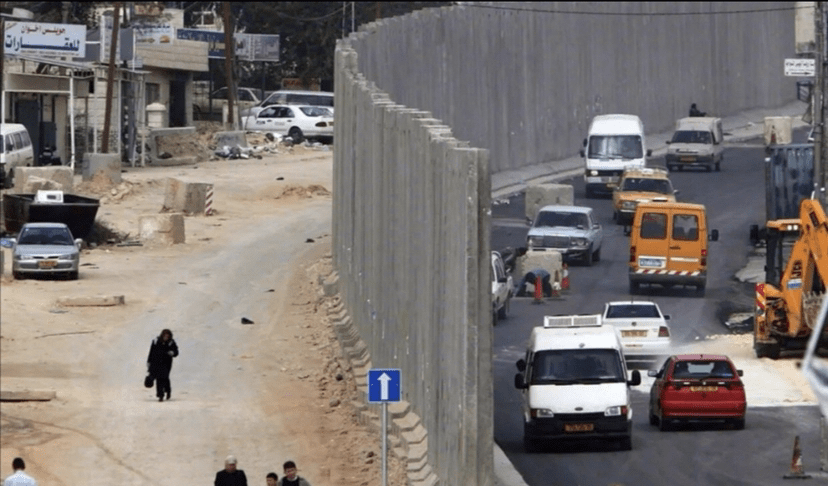
Although Israel claims that Jerusalem is its indivisible capital, it has secretly built a wall around the city. (See Figure 1)
The Gaza Strip is located on the Mediterranean coast, bordering Israel and Egypt, and its area is approximately 365 square kilometers. (See Figure 2)
But there are more than 4 million Palestinians here, making it one of the most densely populated areas in the world.
The Gaza Strip has been under a complete Israeli blockade by land, sea and air since 2007. There are no specialized hospitals, no foreign consulates and not even a bank, and it is completely isolated from the outside world. Despite this, Israel has launched four large-scale military operations against the Gaza Strip, killing thousands of people, most of them civilians.
In the Gaza Strip, almost 70% of Palestinians are refugees, with approximately 1.4 million people living in eight refugee camps around the Strip.
Therefore, the core contradiction of the Palestinian-Israeli conflict is not the ownership of Jerusalem, nor whether the border can return to that of 1967, but that the living space of the Palestinians is being squeezed to the limit, and they may very likely become the second wandering nation or disappear in the long river of history.
Hamas's sneak attacks on civilians are immoral, but how do we argue about Israel's invasion of territory and extreme exploitation of indigenous peoples?
Hamas is no match for Israel, so why did it resolutely attack Israel? Hamas had no choice but to strike back in desperation and seek a way to survive.
In recent times, the situation in the Middle East has apparently eased. With the mediation of external powers, several countries that once had blood feuds are actively negotiating or reconciling.
This trend is extremely unfavorable to Hamas.
Hamas has always believed that peace talks cannot resolve the Israeli-Palestinian conflict because they believe Israel will not make concessions.
Israel's recent efforts to normalize relations with Arab countries have aroused strong dissatisfaction from Hamas. Hamas is worried that Palestine will be isolated and eventually destroyed.
The Gaza Strip where Hamas is located is almost completely surrounded by Israel, with more than 300 square kilometers trapping 2.5 million Palestinians. Hamas has no economic power and relies entirely on the Palestinian-Israeli conflict to gain support from other countries. Its main financiers are Qatar, Saudi Arabia and Iran. If these financiers reach a reconciliation, then it is likely that Palestinian Hamas will be sacrificed and abandoned.
Israel will certainly launch a fierce retaliation against Hamas, and ground attacks are very likely to take place. Israeli Prime Minister Netanyahu has announced that "our enemies will pay an unprecedented price". It is not easy for Israel to accurately strike targets. Hamas is not the PLO of the past. They are better at urban guerrilla warfare, flexible and highly mobile. It will be difficult for Israel to encircle Hamas like it did in Lebanon in 1982. Indiscriminate bombing will hurt innocent people and trigger international condemnation. Therefore, how the Israeli army fights will be a challenge from design to execution.
It is hard to say whether this incident will lead to World War III. The relations between Middle Eastern countries are complicated, and they also have more interests involved with Western powers. If it is not handled properly, World War III is likely to occur.
Wall Street in the United States is half occupied by Jews. It is highly likely that funds will temporarily avoid risks when the U.S. stock market opens on Monday, which will also be good for BTC. I personally think that it is not difficult for BTC to take the opportunity to break through the 3w mark. According to the air force liquidation price, BTC is expected to go above 3w. Whether the currency circle can take this opportunity to break the weekly downward trend, next week is a critical week. I personally think that October will be a wide range of fluctuations, and it is particularly important to lock in profits.
In the event of war, one of the best choices for asset hedging is BTC. It is still unknown whether the escalation of this incident will trigger BTC to enter a bull market in advance. Personally, I hope that the market will fall so that I will have the motivation to buy at the bottom, and only by buying at the bottom will there be an opportunity for financial freedom!
#一起来跟单 #注意资金安全 #美联储是否加息? #带你看看币安Launchpad #DeFiChallenge