


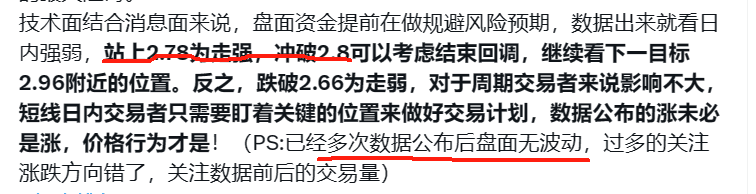
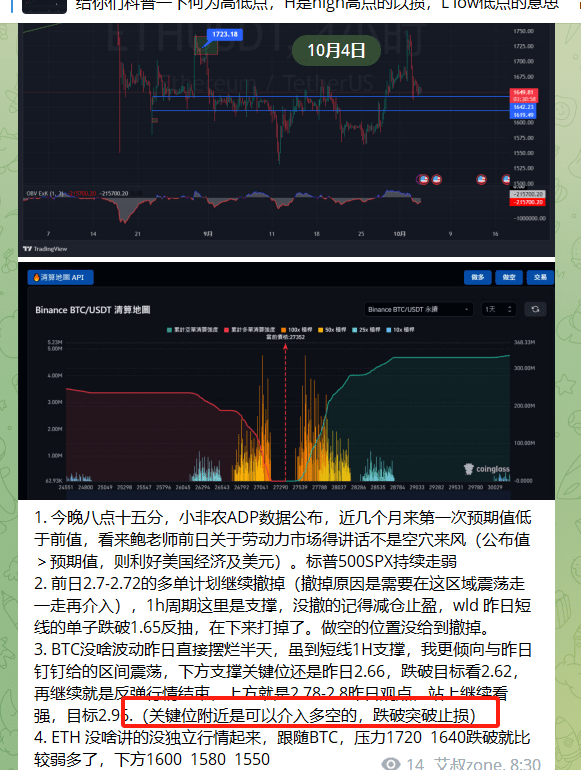
The release of the small non-farm ADP data, as mentioned yesterday, can only strengthen if it stands above 2.78. Through the data of the past six months, it is not difficult to find that when there is no substantial narrative on the data side, the market is not very volatile. As a participant in the secondary market, there is no need to pay attention to the direction of the rise and fall. Just focus on the price behavior of the trading volume at the key position. Short-term traders can intervene here.
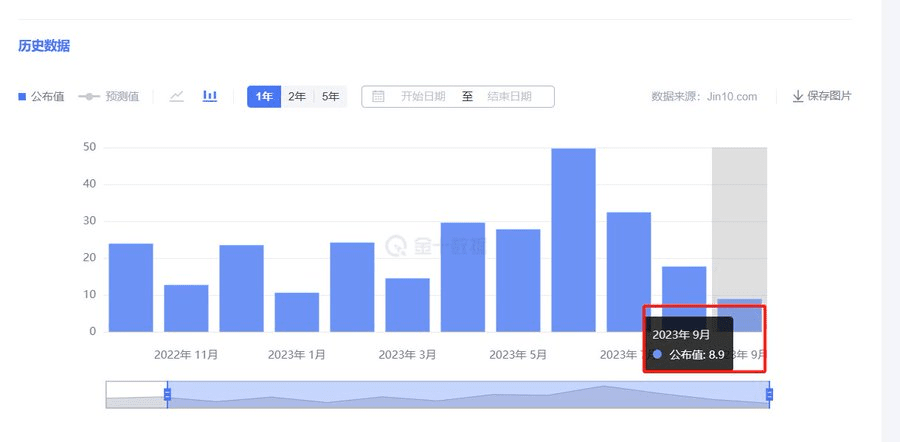
The small non-farm data was much lower than expected, setting the lowest number of new jobs in the United States since 2021. This data greatly reduced the market's expectation that the Federal Reserve may raise interest rates again. At the same time, it also has a strong correlation with Friday's large non-farm data. Both the U.S. stock market and the crypto market are more waiting for the release of official data.
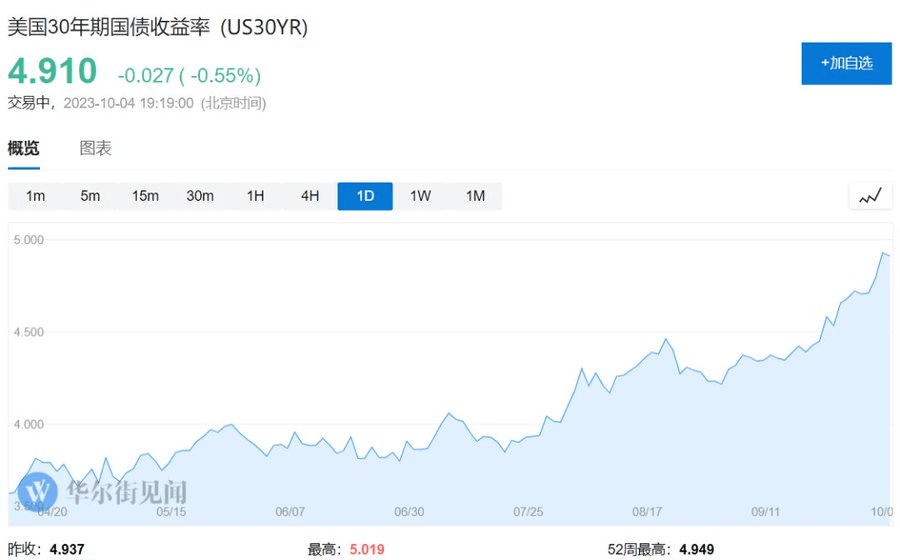
Regardless of whether there will be a 12th rate hike, investors have gradually come to believe that policy rates may remain high indefinitely, and the surge in long-term bond yields has already reflected this expectation.
This week, the 10-year Treasury yield rose 5 basis points to 4.848%, a 16-year high; on Wednesday, the 30-year Treasury yield rose to 5%, the first time since 2007. The Fed has a 40% chance of raising interest rates by another 25 basis points at its next meeting in November, and a 60% chance of raising interest rates before the end of the year. In addition, Fed officials are still repeatedly sending hawkish signals to the market.
Cleveland Fed President Loretta Mester on Tuesday agreed with the view that interest rates should be kept "higher for longer," while Atlanta Fed President Raphael Bostic also said the Fed should keep interest rates at a higher level for "a long time."
No one is sure where the decline in U.S. bonds will stop. Analysts across Wall Street are rethinking how high bond yields can go. Traders are setting hedges for the possibility that the 10-year U.S. bond yield will reach 5% in the coming weeks, showing that Wall Street is already like a frightened bird.
So what we are experiencing now is a global sell-off, not just in U.S. Treasuries, not just in gold, not just in global currencies.
For Friday’s options delivery, there was no change in the delivery pain points of BTC at 27,000 and Ethereum at 1,650.
Back to the beginning, as traders in the secondary market, we need to distinguish the trading cycle. As long-term traders, callbacks are always opportunities. It is not difficult for traders who pay attention to BTC for a long time to find that whether it is a bear market or the so-called bull market, it is not difficult to enter the market near 2.5 and build positions according to the pyramid. It is still necessary to layout more BTC instead of participating in too many copycat positions. Each round of market conversion eliminates a lot of coins, and many coins cannot return to the starting point. Of course, for short-term traders, there are not so many disturbances.