

On September 26, the AI&Web3.0 Investment Summit "EDGE Summit" hosted by Vertex Labs officially opened in Hong Kong. The opening ceremony of the summit was addressed by former Deputy Secretary for Innovation, Technology and Industry, Zhong Weiqiang, who delivered a speech on "Hong Kong Investment and Cross-border Data Policy Sharing". He mentioned: "In terms of investment innovation, Hong Kong has been committed to innovation in investment technology, digital banking, virtual assets and cross-border investment services. We aim to develop the digital economy and take the lead in the development of Web3.0 and artificial intelligence."
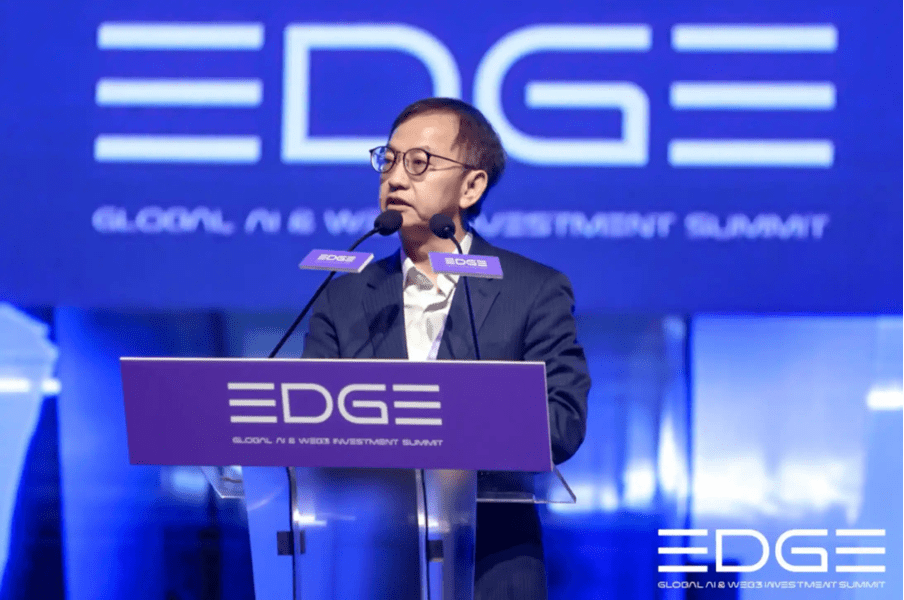
Former Deputy Secretary for Innovation, Technology and Industry Chung Wai Keung delivered the opening speech
During the summit, BlockBeats chatted with former Deputy Secretary for Innovation, Technology and Industry, Chung Wai-keung, to gain an in-depth understanding of his thoughts and views on Web3.0 in Hong Kong.
In January 2016, Chung Wai-keung was appointed by the Government as the Under Secretary for Innovation and Technology and took office on March 1 of the same year. As an IT professional, Chung Wai-keung is very active in the industry and has rich administrative experience, so he was invited by Secretary Nicholas Yang. In his early years, Chung Wai-keung devoted himself to IT management and entrepreneurship development and worked in many technology companies. In March 2004, he joined the Hong Kong Cyberport Management Company Limited, responsible for promoting IT infrastructure and nurturing entrepreneurs. He was promoted to Technical Director when he left in February 2016.
Before taking up the post of Under Secretary for Innovation and Technology, Chung Wai-keung worked with Secretary for Innovation and Technology Nicholas Yang at Cyberport for many years. Chung Wai-keung's technical background and industry image can play a positive role in the work of the Innovation and Technology Bureau. In August 2017, Chung Wai-keung was reappointed by the new government and continued his term as Under Secretary on the 2nd of the same month.
BlockBeats: Could you please introduce yourself and what you are working on recently?
Zhong Weiqiang: I was born and raised in Hong Kong. I worked in Beijing and Microsoft in the United States. After leaving Microsoft, I started my own business. I felt that starting my own business was not fun, so I worked in the government and public institutions for more than ten years. In recent years, I don’t want to retire. I still have the motivation to continue to start a business, so I returned to the market.
In fact, there are many companies in Hong Kong that produce very good products, but they are not very familiar with other cities in the Mainland. I used to work more in Beijing and the Mainland, so I have been traveling abroad for more than ten years. Before I joined the government, I was always involved in the field of innovation and technology, as well as financing. Now I am a consultant, helping different companies find market directions and sources.
BlockBeats: When did you first come into contact with concepts such as blockchain and Web3.0?
Zhong Weiqiang: It was very early. I was still working at Cyberport at that time and witnessed the very early Consensys conference. At that time, Bitcoin was less than 300 (US dollars). So I was relatively early. I am an IT person, and IT people will definitely touch Bitcoin. But to this day, I still feel it is unsafe and will not put a lot of assets in virtual currencies because there are many hackers and it is easy to be stolen.
Hong Kong Web3.0 is not comparable to Singapore
In mid-September, Vitalik Buterin spoke at Token 2049 in Singapore and said that although Hong Kong has turned to a cryptocurrency-friendly stance since the end of last year, cryptocurrency projects should consider the stability of its friendly policies when setting up offices in Hong Kong. Subsequently, Hong Kong Legislative Council member Wu Jiezhuang issued a statement in response to the question of "Vitalik said that project parties seeking to develop in Hong Kong should consider the continuity of local policies." He expressed respect for Vitalik's right to speak, but at the same time believed that he did not understand the specific situation in Hong Kong. He believes that "Hong Kong's policies and laws will not change overnight, and all relevant strategies and regulations have undergone major social consensus and complete procedures, so I can tell Mr. Vitalik that Hong Kong's policies are very stable."
BlockBeats: Ethereum founder Vitalik Buterin attended a meeting in Singapore some time ago. He said that projects seeking to develop in Hong Kong should consider the sustainability of local policies. What do you think of this?
Zhong Weiqiang: Vitalik actually came to Hong Kong a long time ago. I think we in Hong Kong have already thought clearly about what we can and cannot do, just like the Internet, which I just mentioned in my speech. I experienced the Internet bubble of Web 1.0. There were some bad actors who messed up the market. But if you are someone who builds and creates an overall architecture, Hong Kong will not forget you.
Hong Kong's strengths are free-flow of talents, free-flow of capital, and free-flow of information. These are our best things, and they can be transferred back and forth at any time. But look at Singapore. Can you take money from Singapore and transfer a lot of money out in one day? Can Japan do it? Can South Korea do it? Which country or region in Southeast Asia can have free-flow of capital like Hong Kong? Only the Hong Kong financial center can do it, so I think Hong Kong is a very beautiful place.
BlockBeats: But now some people say that Hong Kong has been issuing friendly policies for a long time and has promulgated some laws, but it still seems to be inferior to Singapore. For example, in terms of the number of guests attending the conference or the liveliness, some people think that Singapore is more lively than Hong Kong. What do you think?
Zhong Weiqiang: Really? I don’t agree. My friends said they only went for one day and left immediately. They thought it was very lively and they could talk about many things, but in the end, nothing happened. Token 2049 Everything is expensive, hotels are expensive, restaurants are expensive, everything is expensive, there is only one word - expensive. But Hong Kong is relatively good because we are pegged to the US dollar. Singapore is not pegged to the US dollar, it fluctuates at any time, so it will be expensive. This is a capacity problem. We can also overflow to Shenzhen and other places. In fact, many people come from Shenzhen today, and they don’t necessarily live in Hong Kong, but Singapore is not possible. So this volume problem, there are many other problems, such as the tax problem. Hong Kong’s tax is relatively low and very transparent.
BlockBeats: For example, in the next five years or so, how will Singapore compare to Hong Kong?
Zhong Weiqiang: I don’t think there is any comparison. We are so close to the mainland. Singapore is only a four-hour flight away. There is no comparison. Hong Kong is a financial center. I think this issue has been made very clear, especially in recent years.
In the past, people often said that Shanghai surpassed Hong Kong, Shenzhen surpassed Hong Kong, and Guangzhou surpassed Hong Kong. Who would say that now? Hong Kong people’s positioning is very important. We are an international window. So we have been working hard, including the government, including many people flying here today, people from all over the world. The forum is an international event, and we are very supportive. Look at the Asian Financial Forum in Hong Kong in January. Look at Singapore. Is there a conference as large as this?
But I don’t want to compare with them, because it’s hard to compare. Singapore is a country, and Hong Kong is a Chinese city. There is no comparison. We are an international financial center. Our recent problems are due to our peg to the US dollar. The interest rate is high, but this high is already called the “main high point”, so it will definitely decrease in the future.
BlockBeats: Is it possible for Hong Kong to create its own stablecoin, the Hong Kong dollar stablecoin?
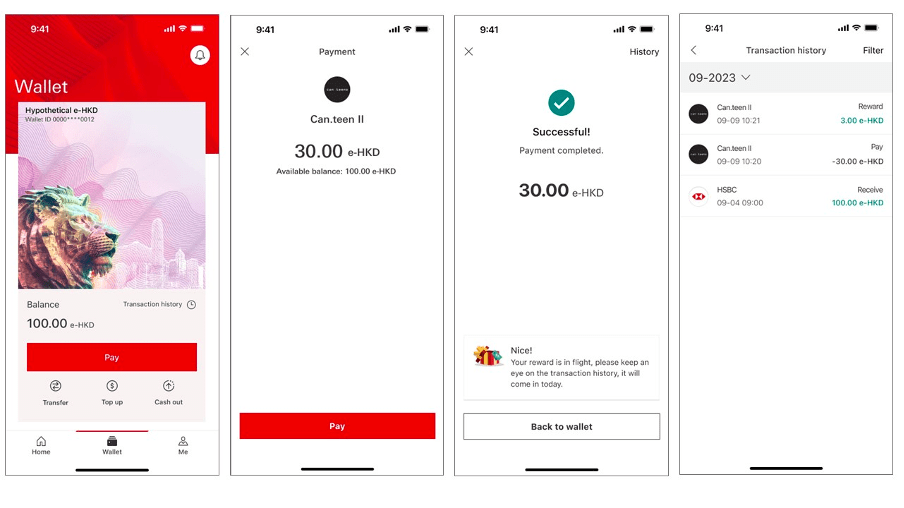
Zhong Weiqiang: We have a fixed-value currency "e-HKD", which is basically the same as e-CNY and the Hong Kong dollar, but it is a fixed-term currency. It was previously only used by banks, but now it has been made available to ordinary citizens.
Recently, HKUST and HSBC conducted a one-week e-HKD test. There was not much discussion because it is still in the testing phase. But there is indeed such a demand, and the roadmap is very clear.
e-HKD has different scenarios for testing. It is not a large-scale test, which is different from the mainland. The mainland may be a B2B or B2C test. We use scenario application scenarios for testing. Campus is a very good scenario. We cooperate with HSBC to test.
Hong Kong regulation under the JPEX incident
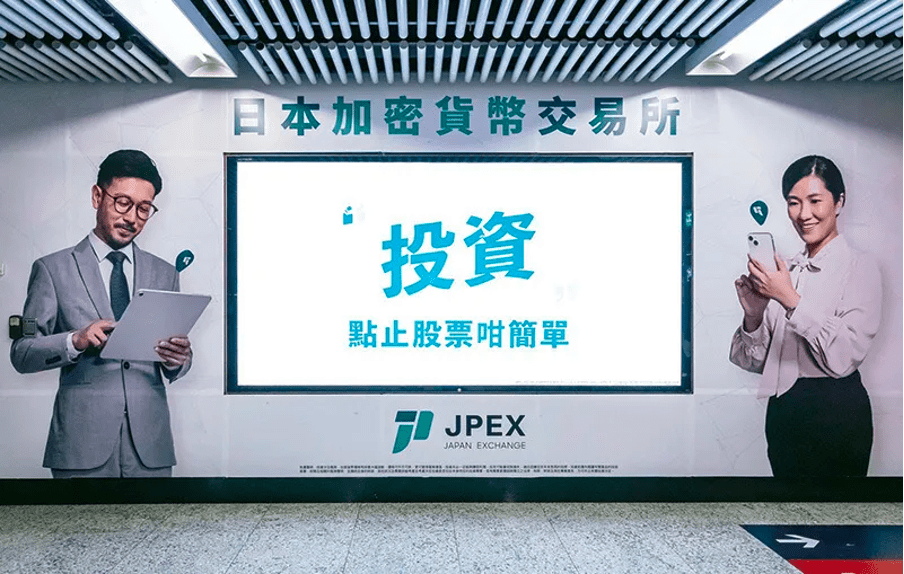
On September 15, Bitrace's on-chain fund audit showed that the addresses related to the virtual trading platform JPEX were seriously contaminated with funds, and one of its hot wallet recharge addresses had inflows of more than 190 million risky USDT in the past 20 months. According to Hong Kong media am730, the Hong Kong police confirmed to the media that they had received a notice from the Securities and Futures Commission that the Commercial Crime Investigation Department was following up and investigating whether the JPEX case involved criminal elements. Previously, the Hong Kong Securities and Futures Commission had issued a warning that JPEX was an unregulated virtual trading platform.
Subsequently, JPEX issued an announcement stating that due to negative news, the platform's third-party cooperative market makers temporarily locked funds. On September 19, the Hong Kong police stated at a briefing on the JPEX case that they had received 1,641 reports claiming that they were unable to withdraw assets from JPEX and suspected of being defrauded, involving approximately HK$1.2 billion.
BlockBeats: What do you think about the Hong Kong JPEX?
Zhong Weiqiang: There are always scams, such as the Y2K incident in 2000. Due to the design problems of the computer program in expressing the date at that time, the computer would misread some dates after 2000, which further led to computer problems caused by computer errors. At that time, computer programs generally used 6 digits to store the time and only displayed the two digits after the four digits, but this would cause the computer system to be disordered, making it unable to distinguish between 2000 and 1900, thus causing the misreading problem.
But at that time, there were really people looking for spray that could kill the Y2K bug on the streets, and they were deceived into buying insecticide spray. They didn't understand that the Y2K bug was a computer problem.
BlockBeats: So as a citizen or user, how can you determine whether this is a scam?
Zhong Weiqiang: Because I am a former official, what I said is only for reference. How to judge whether it is a scam, citizens can actually do very little. It still depends on supervision, so I think supervision is a good thing, and supervision can make the market more transparent. Let me use the example of a casino. If there is an underground casino and a legal casino, which one do you go to gamble? If you go to the former to gamble, they will not give you the money if you win, but the legal one will definitely give you the money, just like the Hong Kong Jockey Club. We are legal. If you buy a horse and win in the Jockey Club, you can win money, it is very transparent. If you buy this horse between friends as some people say, he will not compensate you, which is also a scam.
Hong Kong is an open and transparent market. Whether it is virtual currency, future tokenization, or NFT, this transaction must be at a loss. If it is not at a loss, it will be a lot of trouble that everyone cannot bear. As an international financial center, we must have a better way to do this.
But there are still some people who take advantage of legal loopholes. During the two or three-month policy window, they come out and disrupt the market all of a sudden, which has a great impact on many people doing legal business. For example, several people who have obtained licenses are legal, but this has a very bad impact on real investors.
This period is like the previous chapter. Hong Kong banks have many previous chapters 70 or 80 years ago. For every technology and every business behavior, everyone can basically do business legally if the policies are well done. But it would not be good if the control is too strict, right?
But we all know that being too strict is not good, we need to strike a balance, and a good balance is very important.
BlockBeats: I know you are also helping some projects now. Is it difficult for them to get a license in Hong Kong?
Zhong Weiqiang: The difficulty is actually that the investment amount is relatively large, and a large amount is required. But I think if we only do trading platforms and virtual currencies, the trading volume is still not enough, and we can't rely solely on virtual currencies. How much is the daily trading volume of virtual currencies? There are only one or two currencies, and it can't bear so much trading volume. We also have to do other businesses. So I think we still have to focus on the overall healthy development, such as NFT, GameFi, etc.
BlockBeats: But the current market for NFT and GameFi is not particularly good. What do you think?
Zhong Weiqiang: In the long run, it is like the Internet 1.0 era, but there is no so-called business behavior behind it, and it is not clear how to make money, just spend a lot of money. But then BAT came into being, so there is still a process. Now we are going through this process, but I think this cycle is shorter, because each technology cycle is getting shorter and shorter, and each cycle will be faster. Unlike AI, it is moving very fast. Last year, there were still many concepts, but this year AI came out. So I think this field is still very good for me to do technology, because I have found many opportunities.
BlockBeats: If AI develops, it will be of great help to the development of Web3.0, right?
Zhong Weiqiang: It is very helpful, and they must complement each other. But you can't interview it every day and it will answer a lot of questions for you. You can't program it only when you can't find the answer. If it can't do it by itself, you can program it again, answer it, and optimize it. So in the future, we really have the opportunity to pass on the data and knowledge in our brains to the next generation. Your son can not only talk to your database, but also call your database directly. I think Web3.0+AI is very powerful.
BlockBeats: What do you think of Worldcoin? Do you think Hong Kong will have someone like Sam who can combine AI with Crypto Web3.0?
Zhong Weiqiang: Worldcoin is basically a DID. I think Hong Kong is stronger in application scenarios. If you say that our innovation is application innovation, these infrastructure technologies require a lot of money, and other countries and regions can do better. But in terms of implementation and application scenarios, I believe Hong Kong is stronger. But this is just because everyone's roots are different and everyone's soil is different. Our city is relatively complex, and finance is already very developed. I think application scenarios are more effective. But we can attract these different companies to do this configuration in this field.
BlockBeats: I also want to know your opinion on FTX. After all, FTX also started in Hong Kong.
Zhong Weiqiang: This is a regulatory issue, or FTX’s risk management level is problematic. They used this money as collateral. The same logic applies to Lehman Brothers. A 200-year-old bank went bankrupt. Is there something wrong with the bank? I don’t think there is a problem. It’s just that they didn’t do a good job of risk management. But at that time, there was no very good conclusion or framework, so this problem arose.
But if we have a good fvirtual asset framework in Hong Kong today, then (FTX) may not be without problems, but the number of problems should be relatively small. Just like banks, banks also have problems. Investment banks in the United States have been operating for so many years, and some details still have problems. So I think it is still a problem of people, a problem of management. This is not only in the field of virtual assets, but also in software and electric vehicles. If there is no good risk management, this problem will almost always occur.
4 trading platforms applying for licenses
On September 25, as the JPEX fraud scandal in Hong Kong continued to ferment, the Hong Kong Securities and Futures Commission (SFC) held a press conference on the 25th and said that it would further strengthen the release of virtual asset investment information and investor education to enhance the public's understanding of virtual trading platforms. The SFC said it would publish the "List of Virtual Asset Trading Platform Applicants", and there are currently 4 institutions on the applicant list.
According to the Hong Kong Economic Journal, the four institutions are HKVAX, HKBitEx, Hong Kong BGE Limited and Victory Fintech Company Limited, all from Hong Kong.
Related reading: "What are the backgrounds of the four crypto trading platforms that the Hong Kong Securities Regulatory Commission has confirmed to apply for licenses?"
BlockBeats: Will Hong Kong intervene in risk management for licensed trading platforms?
Zhong Weiqiang: Actually, the overall supervision is very clear. For example, as for the risk management mentioned earlier, we certainly don’t do this every day, but they already have a so-called framework, and they are very clear about how to do this. Although we came relatively late, we thought very clearly. We learned from many cases in many places, including the UK, the US, Turkey, India, and Singapore. We were relatively late to set up a point, but now there are many problems, and we are still optimizing. But in the past few months, some have already obtained this license.
BlockBeats: Why did you suddenly announce the trading platforms applying for licenses?
Zhong Weiqiang: Because I am no longer in the government, I am not very clear about the specific situation, but their applications have been published. If this company has not applied, it can be more effectively supervised.
I think it was announced because of the JPEX incident. This incident involved a lot of money and affected a lot of people, because many of them bought from this KOL. Now these KOLs often take other people's money and then promote for others. This is also a problem of Web3.0. Sometimes I don't know if they are experts.
BlockBeats: So you are very optimistic about the current crypto market?
Zhong Weiqiang: In fact, I am optimistic about two areas overall, one is environmental protection technology, and the other is Web3.0. Environmental protection is definitely the future, and it is very important for our next generation. The other is financial technology, the next generation of new payment systems.