


Today we are going to talk about a DEFI project. The GMX we talked about before received a good response, and GMX does have ideas and innovations. GMX also supports up to 50 times leverage. The one we are talking about today is GMX on the BSC chain, which supports up to 750 times leverage, which is very exaggerated. It is ApolloX, which is also a decentralized derivatives exchange. The token is APX. The current market value is relatively low, only 9.5 million US dollars, ranking 700+, and the current price of the currency has fallen sharply.
Introduction
ApolloX is the world’s first CEX-DEX hybrid crypto derivatives exchange. The centralized exchange (CEX) was launched on September 1, 2021, and the decentralized exchange (DEX) was launched in November.
APX is the most important decentralized crypto derivatives exchange on the BNB chain. APX provides order books (BNB Chain, Ethereum, Arbitrum, zkSync) and on-chain perpetual trading (BNB Chain, Arbitrum), increasing trading leverage up to 500 times, the lowest slippage in the market (0.01%) and competitive fees. Among perpetual trading platforms, Amplify has the highest stablecoin percentage LP yield. There are currently two versions, one is V1, which is an order book model, and now V2 has just been released, which is similar to the GMX model. GMX is called GLP, a big pool, and it is called ALP. In fact, the essence is the same.
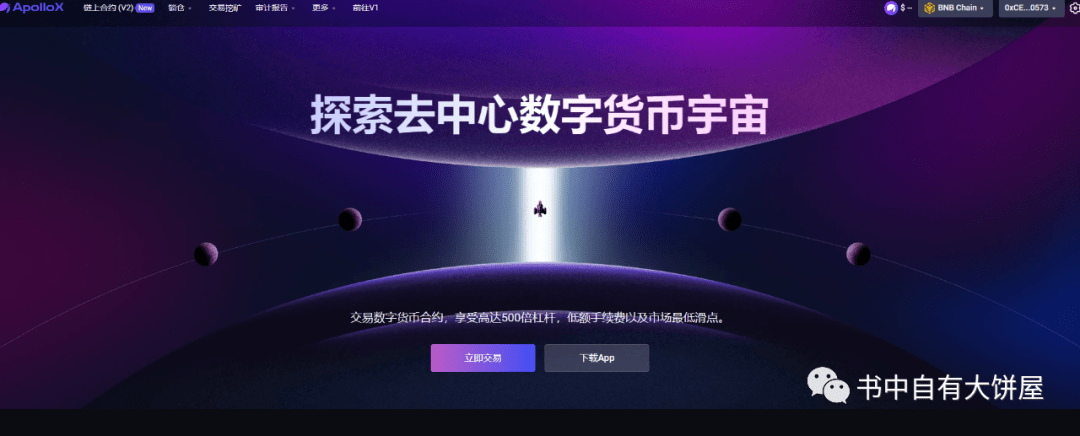
V1 Order Book Perp (BNB Chain, Ethereum, Arbitrum, zkSync)
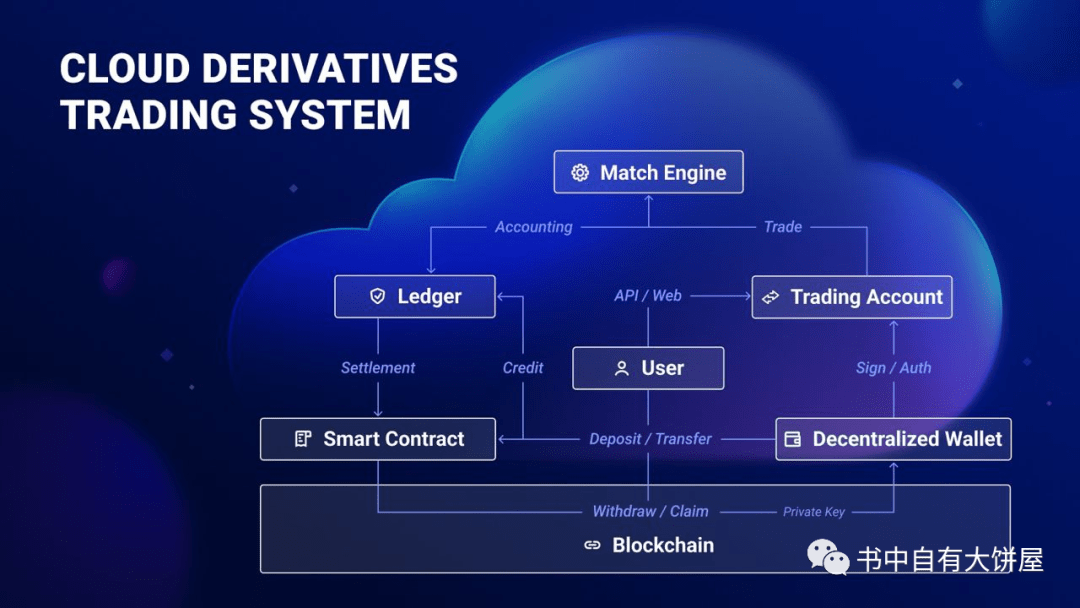
APX V1 Order Book Perp adopts the model of "off-chain transaction matching + on-chain fund settlement and custody", which ensures the safety of user funds while achieving high transaction performance and fast response speed. It trades in 75 markets with a leverage of up to 200x, with an ultra-low fee rate of 0.0200% for Maker (order placement) and 0.0700% for Taker.
Users connect their decentralized wallets to the exchange, then sign and verify the connection through the Web3 interface. They can then transfer (ERC-20/BEP-20) tokens to the smart contract for fund custody and settlement. Once the off-chain ledger is recorded, users can use these funds to trade off-chain derivatives, and PnL will be recorded in the ledger. After settlement, users can withdraw funds by calling the smart contract (except for margin occupied by open positions and pending orders).
V2 On-Chain Perp (BNB Chain, Arbitrum)
Utilizing an all-chain liquidity model, APX V2 on-chain Perp enables more transparent trading with minimal slippage. All V2 trades are executed against the ALP pool, which provides liquidity for all trading pairs to maximize capital efficiency. V2 uses a dual oracle model consisting of Binance oracle and Chainlink for the most accurate pricing. Trade multiple asset classes across 25+ markets with up to 200x leverage, low fees, and earn trading rewards. Trade with 500x leverage, 0 slippage, and 0 liquidation fees, especially in Degen mode.
The basic features of ApolloX V2 can be summarized as follows:
1. ALP is an index asset model similar to GLP, which makes the trading experience and risk control of mainstream crypto assets such as BTC/ETH reach the level of GMX
2. Consistent funding rates for both long and short positions similar to CEX experience, and dynamic slippage mechanism similar to GNS
3. Support synthetic asset trading and control capacity to control risks.
4 Close cooperation with Binance Oracle will facilitate flexible support for more asset transactions.
Next, let’s talk about the more distinctive aspects of Apollox V2.
A. Funding Rate Although the funding rate formula of Apollox V2 is very similar to that of GMX V2/GNS,
Both are priced based on the long-short ratio and volatility, but Apollox uses the same rate for both long and short sides.
Degen Mode
500x leverage, 750x leverage, 0 slippage, 0 opening fee. Currently this mode is only available in the V2 version. Click the Degen button to enter this mode.
The Degen trading mode offers traders an alternative way to trade compared to traditional trading methods. Traders who prefer to spend less screen time analyzing the market and be more hands-off can choose this trading mode. During high volatility periods, traders can maximize their gains with zero slippage, high leverage, and very low fees. During low volatility, traders can speculate on small price changes.
Currently only BTCUSD and ETHUSD Degen trading modes are supported, supporting long and short market orders with 500x leverage. Traders will need to enter the principal (collateral amount) before they can open a zero-slippage position. The system will automatically issue a profit order.
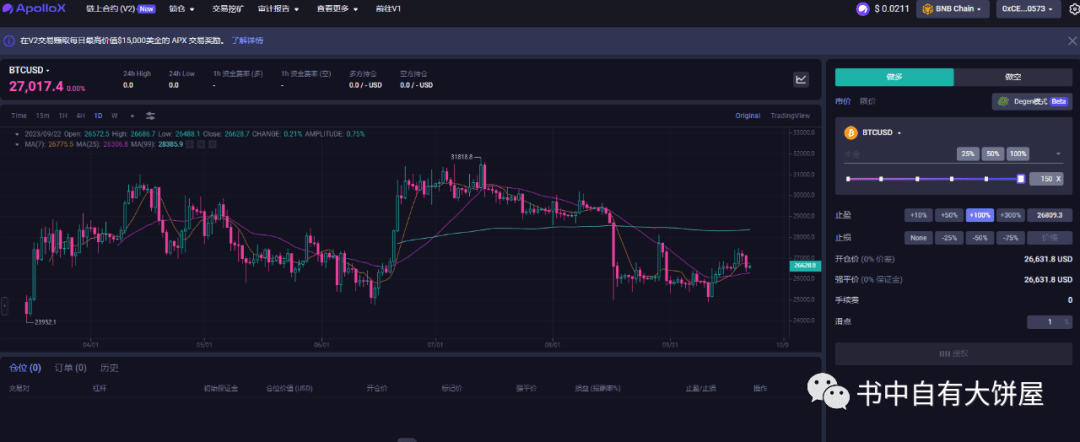
Product model display
In general, the product interface is very simple, supports many types of languages, and is very convenient to use.
Token Economy
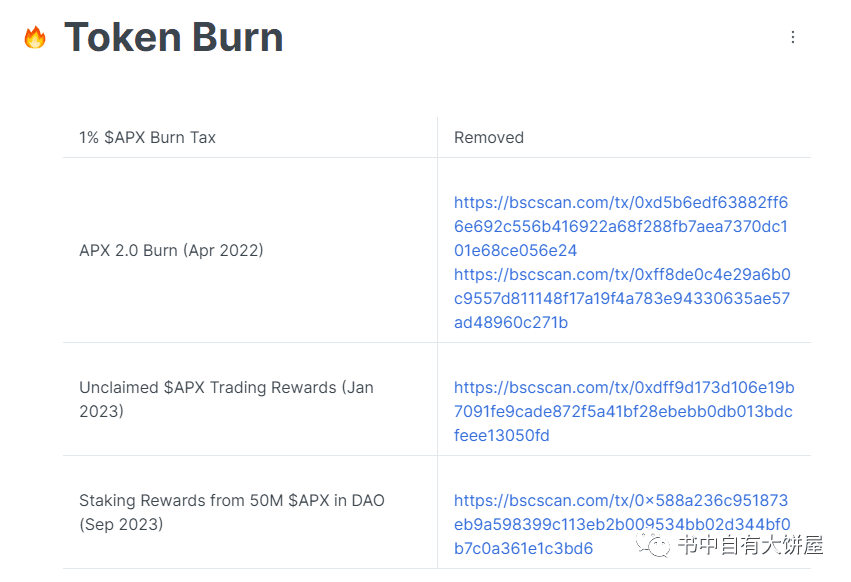
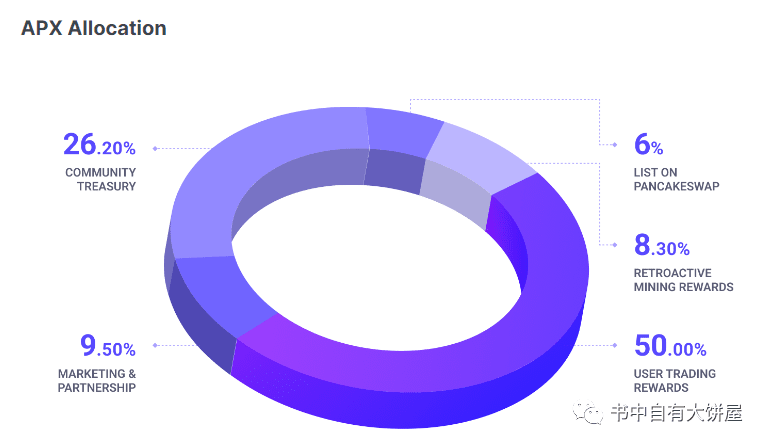
The first listing of tokens was on December 21, 2021, which is relatively new. The total amount is 10 billion. Before June 23, 2023, it also set a transaction tax. Each transaction must pay a 1% tax, and then the tax coins will be burned, that is, it has added a burn mechanism, so there is no 1% transaction tax at present. At present, 5,755,000,000 have been destroyed, that is, the current total amount should be only about 4.2 billion. The current unlocking amount should be relatively low. It has only been 1 year, and it has set a 10-year linear unlocking. So there are still a huge amount of tokens to be unlocked. In terms of token distribution, 50% is given to transaction rewards, 26 to the community, and 9.5% to the market. This part should be controlled by them themselves, so the team does not hold a high proportion of coins.
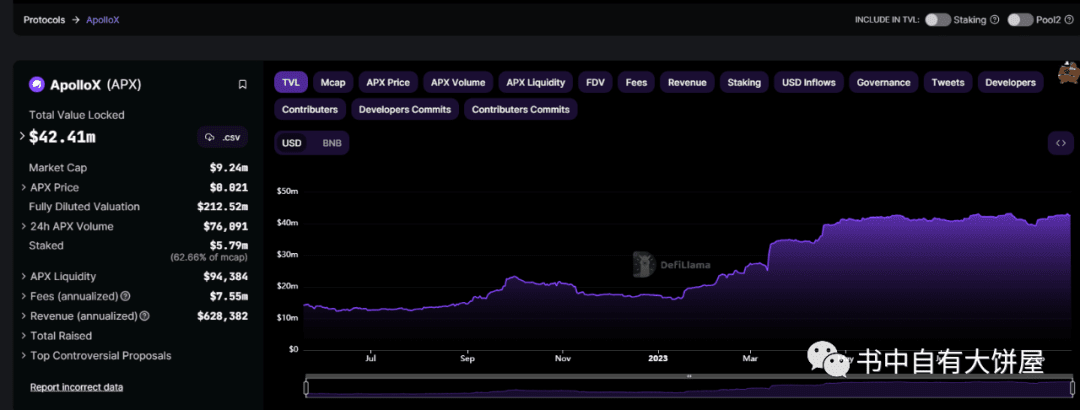
Then let’s look at the TVL on the chain. It is currently 42 million US dollars, which is not bad. Compared with its market value, it is good.
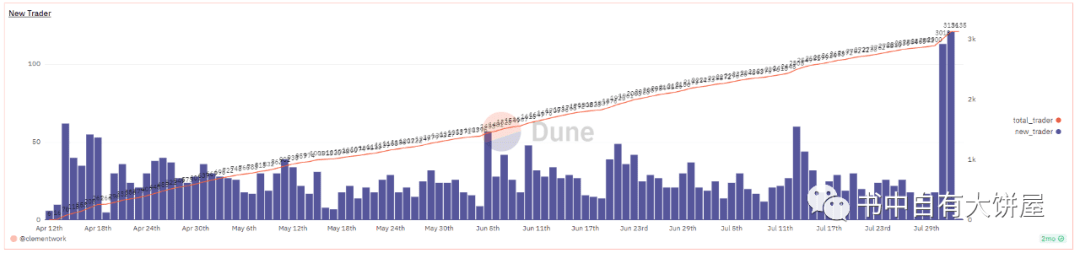
Then we use several other data to take a look at the exchange's performance. First of all, the number of new users of the exchange has been increasing, with about 50 new users every day. In recent days, the increase has been relatively large, with 100 new users every day.
Then let's look at the daily trading volume, which is the most important data for an exchange. You can see from the chart that the daily trading volume is over 10 million. When it's good, there are 40-60 million. Of course, I don't know if this takes into account leverage. If it does, then the data is very average.
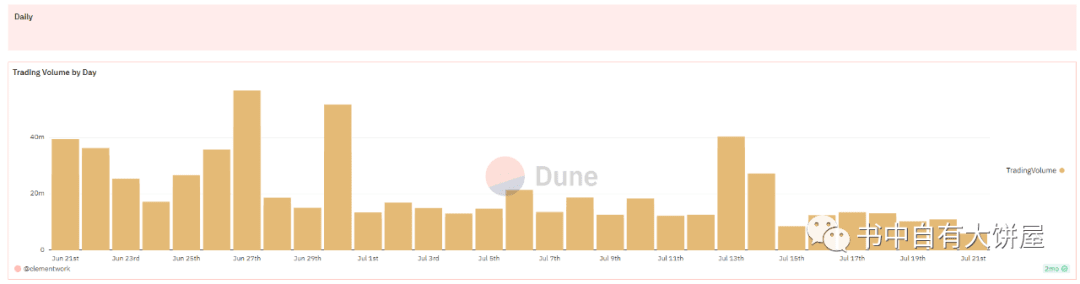
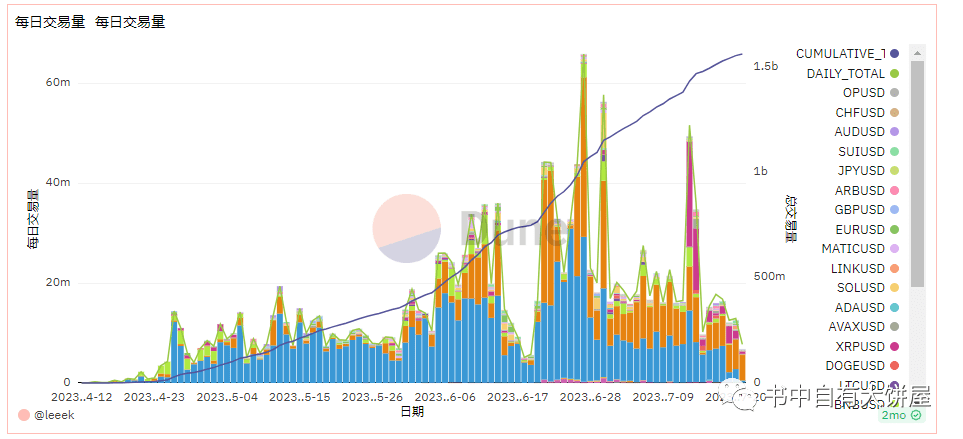
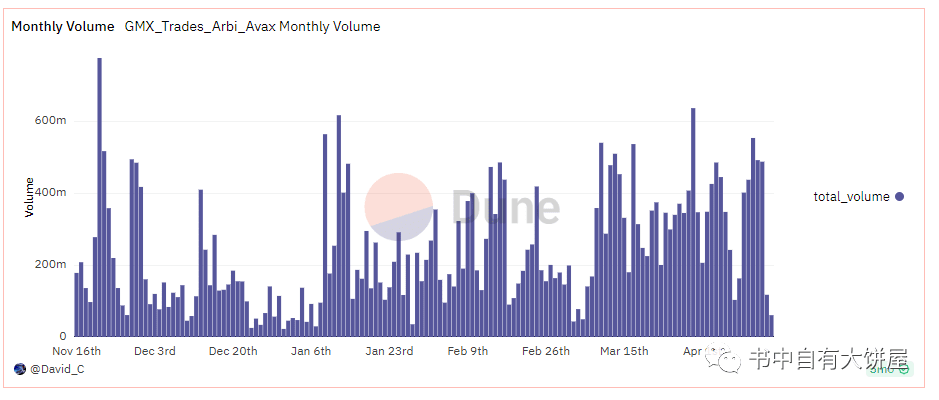
Then we compare the transaction volume of GMX. The difference in volume is about 20 times, but you have to know that the current market value of GMX is 300 million US dollars, while the current market value of APX is less than 10 million. By comparing like this, is there a 30-fold room for growth?
Finally, let's summarize. APX is currently the DEX exchange that supports the highest leverage ratio, and it is also the GMX on the Binance chain. We all know its innovation when we talked about GMX before. Although APX also imitated GMX, it is also a subsidiary of Binance, and Binance is also very large in size. Then from the subsequent data analysis, we can also see that it is growing, but there are currently a large number of coins that have not been unlocked, but the potential is still good, because with a leverage of 750 times, at least many gamblers will go up to play, and when the bull market starts, there will definitely be more players entering. Judging from the current market value ratio, there is still a lot of room for growth.