


Today we continue to talk about a more interesting project, which has been very popular in recent days. It can be seen that the increase in the past month has exceeded 50%, from 0.3 to 0.45 US dollars. It is Flux, a web3 cloud infrastructure, which is a bit similar to the AKT mentioned before, but not exactly the same. The current market value is about 130 million US dollars, and the market value ranks 170+.

Introduction
Flux is a decentralized Web3 cloud infrastructure consisting of user-operated, scalable and globally distributed computing nodes. It is a fork of Zcash (a privacy currency) and a consensus mechanism of PoW. Flux is the cryptocurrency that powers the Flux ecosystem and is used to purchase resources, pledge nodes and promote transactions on FluxOS, rewarding miners who verify transactions and FluxNode operators who provide computing resources.
It is a comprehensive set of decentralized computing services and blockchain-as-a-service solutions. The Flux ecosystem includes: the decentralized infrastructure of Fluxnodes, the FluxOS cloud operating system, the Zelcore self-custodial multi-asset wallet and blockchain application suite, and finally the Flux blockchain for on-chain governance, economy, and parallel assets to provide interoperability with other blockchain platforms and DeFi access.
Flux is an important part of a balanced distributed computing portfolio focused on the next generation Internet.

advantage
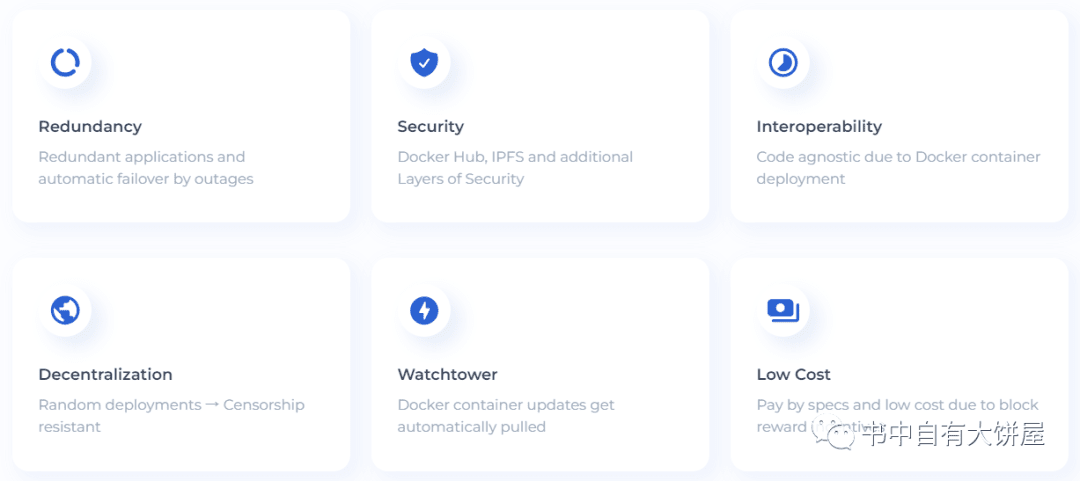
1. The system is stable and automatically fails over.
2. Security, based on Docker, IPFS security architecture
3. Interoperability, deployment based on Docker containers
4. Decentralization
5. Automatic monitoring
6. Low cost
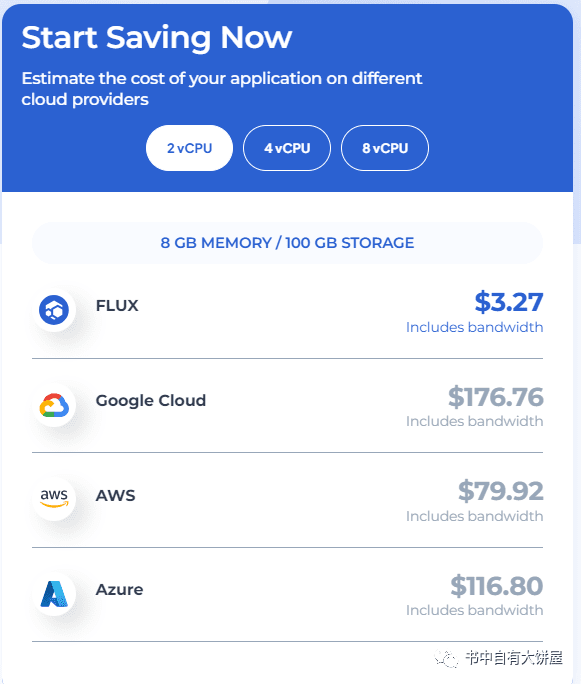
We can see the comparison between it and other cloud service providers, the price gap is very large. It can be said that this price completely beats other cloud service providers (Google, AWS, Auzre).
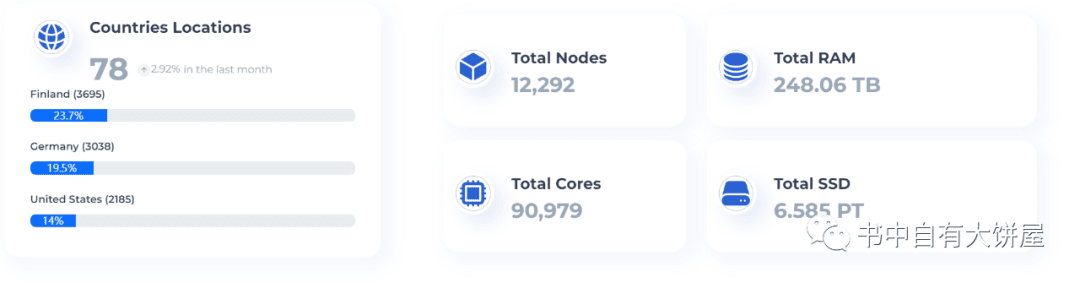
The official website also shows the resource situation of the entire project. There are nodes in 78 countries, with a total of 12,292 nodes, 248TB of RAM, 90,979 total cores, and 6.585PT of SSD.
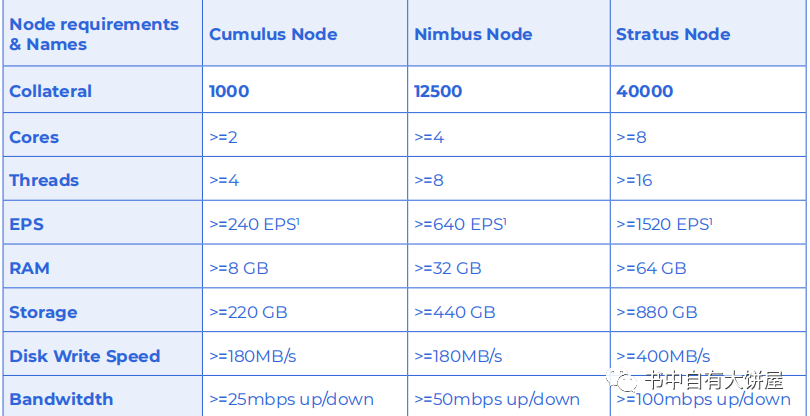
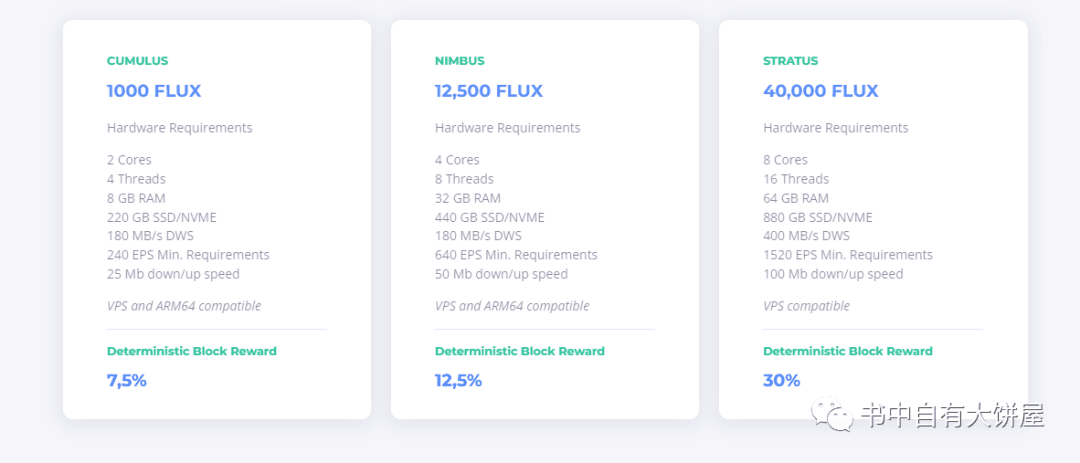
The Flux operating system runs on Linux, providing the network with proven enterprise-level computing power and using blockchain to ensure transparent governance operations. FLUX node operators can choose one of three hardware requirements and provide support to the entire node network. In this way, any node that runs a node and provides computing power to the network can be rewarded.
Flux is the cryptocurrency that powers the Flux ecosystem, including a massive decentralized computing network. Flux provides users with institutional and private control over their cloud infrastructure in a decentralized manner.
FluxOS
At the core of the network is FluxOS, a distributed chain-agnostic system that enables developers to build decentralized applications. As a fully open source protocol, it guarantees that their applications will always be up and running.
The various nodes in the network (called FluxNodes) are responsible for powering the applications and the network. If one or more of these nodes go offline, the activity and operation of the applications on the network will not be affected.
Developers can use the open source FluxOS platform to easily run their applications on any blockchain. Additionally, using “dockerization” allows them to deploy applications without requiring developers to learn a new programming language.
Developers can easily create and manage decentralized applications using the platform’s application programming interface (API) and user interface (UI). With this feature, they can seamlessly transition their applications to the Web3 internet. Unlike other platforms that require extensive backend work, the FluxOS platform’s user interface and API allow developers to focus on the front-end aspects of their dApps.
The FluxOS architecture leverages the latest open source JavaScript software stack while running on infrastructure that employs the MEVN stack (MongoDB, Express.js, Vue.js, Node.js). At the same time, FluxOS claims to have a wide range of use cases. This covers Blockchain as a Service (BaaS), which may involve hosting nodes or applications. In addition, FluxOS enables programmers to create oracles that collect distributed data sets. FluxOS also enables developers to easily install web servers and blockchain games.
On the FluxOS platform, users can vote in the Flux network’s decentralized autonomous organization (DAO), connect with global applications, and check resources and incentives.
Flux Node
In the open source project, community members run a FluxNode which is responsible for maintaining and upkeep the network of the company’s operating system, called FluxOS. However, running a high-end hardware platform like FluxNode requires a high uptime guarantee.
As part of the incentive to protect the network, there are various requirements that must be met to become a FluxNode. These include the type of node one wants to operate and the security measures required to maintain the network. This allows community members to provide computing resources to the system.
Although FluxNodes are divided into three levels, they all use the most advanced Proof-of-Work (PoW) hashing algorithm "FluxHash" (also known as "ZELHASH Equihash 125,4"). FluxHash is created by combining other "Equihash algorithms from ZCash(200,9) and ZHash(144,5)".
The result is a system that is resistant to application-specific integrated circuits. As a result, GPU miners are more likely to use Flux, which allows an equal mining pool without the danger of decentralization.
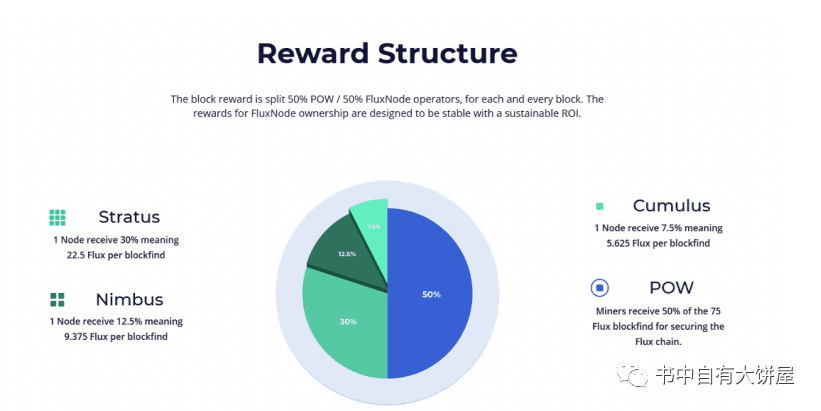
FLUX asset holders can run various types of nodes according to their needs. There are three main types of nodes: Cumulus, Nimbus, and Stratus. The minimum requirement is that Cumulus has at least 2 vCores, 4 GB RAM, and 50 GB HDD/SSD hardware. In return, nodes can earn 7.5% of the total FLUX block rewards (or 5.625 FLUX).
Nimbus FluxNodes require more hardware and collateral in exchange for a higher certainty block reward of 12.5%. (or 9.375 FLUX tokens). Stratus FluxNodes have even higher requirements. In addition to running hardware with at least 100,000 vCores and 8 GB of RAM, users must also stake at least 32 FLUX tokens. Stratus FluxNodes earn 22.5 FLUX tokens per block, or 30% of the FLUX block reward.
Core (DAPP)
Core is the leading decentralized application (dApp) currently running on the FluxOS platform. It features a multifunctional blockchain and crypto wallet. Through its platform, users can store over 380 different cryptocurrencies.
As a free app, users can easily exchange their existing fiat currencies for different types of cryptocurrencies. They can also purchase cryptocurrencies using a debit card. In addition, ZelCore has a two-factor authentication process called d2FA as the designated multi-asset portfolio management platform for Flux’s Network.
FLUX token holders can pay for premium features through ZelCore+, a subscription service that offers a variety of exclusive features. These include portfolio tracking, access to API integrations with major exchanges such as Kraken and Binance, and additional wallets for each asset.
With ZelCore+, users can easily access major exchanges and trade. It also features an aggregated feed of project and industry news, and syncs their exchange accounts. In addition, users can import private keys into their ZelCore lite wallet.
Users can use the ZelCore platform to access various applications, such as the Fusion app. This application allows users to easily transfer their FLUX coins and tokens between various blockchains.
The Fusion application allows users to distribute rewards and parallel assets in FLUX tokens. ZelCore is a decentralized application that users can use on desktop and mobile devices. Users can access it on all operating systems, including Windows, Linux, macOS, Android, and iOS.
XDAO
The governance of the project aims to build a decentralized internet and a Flux network, which is managed by the members of the Flux Governance (XDAO). To become a member of the DAO, one must own a certain number of FLUX tokens.
To view the activity of the project's governance committee, users can visit its main website, runonflux.io. They can also view the network's open, passed, and rejected proposals. Details about votes, such as end date, number of votes required, and submission date, are publicly available.
Token Allocation
The first issuance time was 2018-08-03, the maximum supply was 440,000,000 FLUX, the circulation volume was 317,567,452 FLUX, and the circulation rate was 70%. The current price is 0.36 USD, and the historical high was 3.3 USD (January 22), so it has also fallen by 90%. As for the token distribution, I have not found the specific data here.
Finally, let's summarize that this project is still in the conceptual stage and lacks practicality. Unlike AKASH, it provides three standard nodes and mainly serves corporate customers. Also, from its description, everything is handled by its own proxy, such as purchasing cloud resources. AKT can use other methods. In terms of practicality, it is not as good as AKT, but it is more inclined to the field of mining, etc. In general, its fundamentals are not as good as AKT.