

原文标题:Liquid staking is a huge opportunity on Solana. Why aren’t more doing it?
Original author: Aleks Gilbert, DL News
Compiled by: Felix, PANews
Liquidity staking is the largest sub-track on Ethereum, accounting for the largest share, and on other blockchains, it accounts for a rapidly growing share of the collateral used in DeFi protocols.
In the Solana ecosystem, developers and investors hope the same.
Ethereum, Solana, and other blockchains that rely on proof-of-stake technology rely on users locking up (or staking) their tokens to achieve a certain return.
These tokens are required to carry out the complex but critical work of ordering and validating transactions on blockchains that use proof-of-stake technology.
Although the staked tokens are actually locked, the liquidity staking protocol issues redeemable derivative tokens at a 1:1 ratio, allowing users to take advantage of the blockchain's staking yield (5% for Ethereum and 7% for Solana) while using them in other DeFi protocols for additional profits. This is called "liquidity staking derivatives" (LSD), but the term has not been actively mentioned by the project since then, possibly due to concerns about regulatory scrutiny.
Over 70% of Solana’s SOL tokens are delegated to individuals, businesses, and protocols that use them to order and validate transactions. However, less than 3% of them are delegated to projects that use Liquidity Staking Tokens (LST).
Ben Chow, founder of Solana protocols Meteora and Jupiter, said that of the more than $9 billion in staked SOL, only 3% is LST. "We have done a lot of work to increase the adoption of LST and release this capital, which will greatly increase TVL and trading volume."
Lucas Bruder, CEO of Jito Labs, agrees. “This is a huge opportunity to unlock the other 97% of stake on the network. I don’t think any LST protocol has figured out the right marketing and narrative yet, and we’re excited to try and figure it out.”
If this changes, it could drastically change the DeFi ecosystem on Solana. But that’s easier said than done.
low risk
Ethereum switched to proof-of-stake technology about a year ago, with only a fifth of all ETH (about 26 million) staked, according to data compiled by Hildobby, an anonymous data analyst at venture capital firm Dragonfly.
This is minuscule compared to other blockchains that have used proof-of-stake technology from the start, such as Solana.
But the difference is liquidity.
On Ethereum, a third of all tokens are delegated to the liquidity staking protocol Lido. In total, nearly 40% of all ETH has been deposited in Ethereum’s many liquidity staking protocols, according to Elias Simos of research firm Rated.
Meanwhile, less than 3% of SOL is deposited in Solana’s liquidity staking protocol, according to Solana Compass data.
According to data from data platform Spire, among Solana’s “big stakers”, 1,651 people have staked at least 5,000 SOL, of which only 152 hold liquid staked tokens.
In May, Solana co-founder Anatoly Yakovenko vented his frustration on Twitter (now known as X). “SOL is a very small percentage of liquidity staking and DeFi,” he wrote. “We need an industry-wide effort to change it.”
Additional risks
Alex Cerba, a core contributor to the liquidity staking protocol Marinade, said a survey of SOL stakers revealed two reasons for the relatively low usage.
Marinade is the largest liquidity staking protocol in the Solana ecosystem and issues the liquidity staking token mSOL.
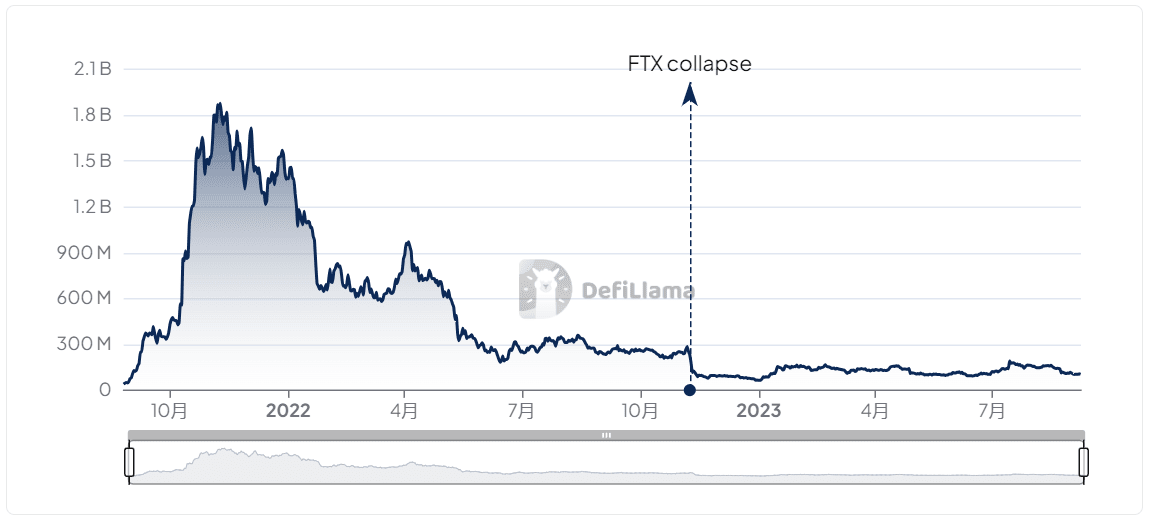
Marinade is Solana’s largest liquidity staking protocol by total cryptocurrency deposit value
The first is the potential taxation of staking. When a user deposits SOL and receives liquid staking tokens, is this a taxable event? When exactly do they pay taxes on the earnings from staking tokens?
Second, Solana is built to make staking simple, efficient, and risk-free. But stakers are not always convinced that the extra benefits Solana DeFi can bring are worth the effort and risk, as it requires entrusting millions of dollars to a protocol built by a third party, which carries certain risks.
“I don’t get the benefits in DeFi because I take on additional risk in mSOL to get a 9% annualized rate of return,” Cerba said in an interview. “I get a 7% annualized rate of return just by staking, and there’s no smart contract risk.”
Kel Eleje, a research analyst at Messari, agrees. Validators representing user interests are often free, Kel Eleje said. In addition, users can withdraw their stakes within two days, while those holding ETH will take two weeks. "This essentially feels like liquidity staking with a slightly lower risk," Eleje said. To this end, Marinad recently released its own version of Solana's built-in staking service, Marinade Native. We hope that people who have already staked SOL will use it and eventually transition to using Marinade for liquidity staking. According to DefiLlama data, the number of new liquidity staking protocols Jito and BlazeStake has skyrocketed this summer.
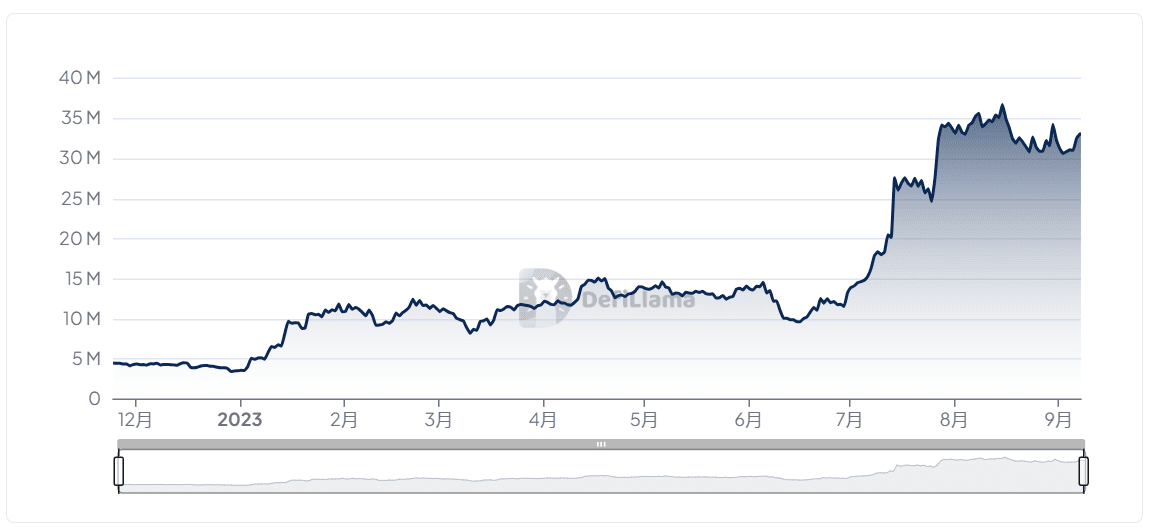
Liquid staking protocol Jito has seen rapid growth this summer
Eleje attributed the growth to airdrop speculation and the popularity of its liquid staking token on MarginFi, a lending protocol that is also growing in popularity.
But Bruder said users may be attracted by the innovation. "When you look at the usage of jitoSOL in DeFi, you'll find that the usage rate is much higher than other LSTs."
Ethereum is “a bit ahead”
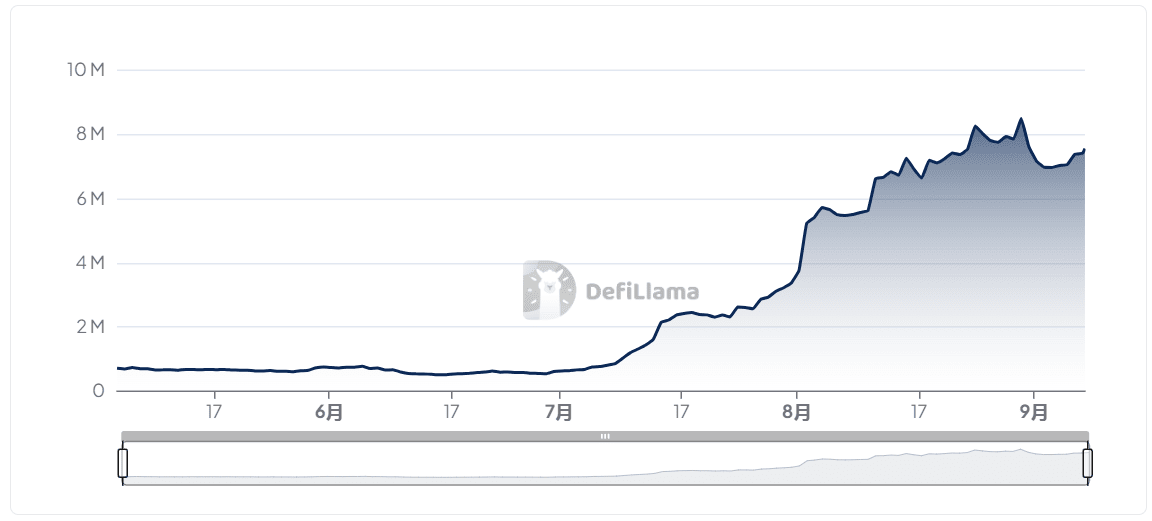
Liquid staking protocol BlazeStake has grown rapidly this summer
If another 4% of staked SOL is staked through protocols like Marinade or Jito, the total value of crypto in Solana DeFi will double. But Cerda is not sure Solana is ready. "Some people look at this a little naively because they just see it as an opportunity with so much money flowing into DeFi. Also, there are currently very few places where you can deposit a lot of DeFi money on Solana." Solana DeFi needs to grow to handle a lot of liquid tokens, which creates a chicken and egg problem. You also need DeFi protocols to run and have more use cases and more volume to basically absorb all the capital. And these are where Ethereum is ahead.