


This article briefly:
Web2 social media platforms like Facebook and Twitter rely on network effects that make it difficult for users to leave.
In contrast, Web3 introduces user ownership and interoperability through decentralization, allowing for cross-platform migration.
In this new paradigm, content can be transformed into permanent digital objects that are fully owned and controlled by the creator.
Migrating across social media platforms can be an impossible task. You risk losing your audience, your wider social network, and ultimately, your revenue stream.
It’s a harsh reality that puts the Web2 social media giants in complete control. But Ryan Li, co-founder of decentralized network CyberConnect, told the media that it doesn’t have to be this way.
Web2 social media relies on network effects
There was a time when social media sites changed very quickly. In the first decade or so of the 21st century, we saw the rise of many giants that no longer exist: Friendster, Myspace, Google+, and Bebo, to name a few.
But over the past 15 years, the tide has changed. Large international social media sites arrived, became giant global networks, and then stayed.
Twitter, founded in 2006 and now called X, may be going through a tough time, but few believed it would take off despite the funding issues it faces. Facebook, despite being unpopular with young people, remains a must-have social media for many. Snapchat, Instagram and TikTok are all popular platforms.
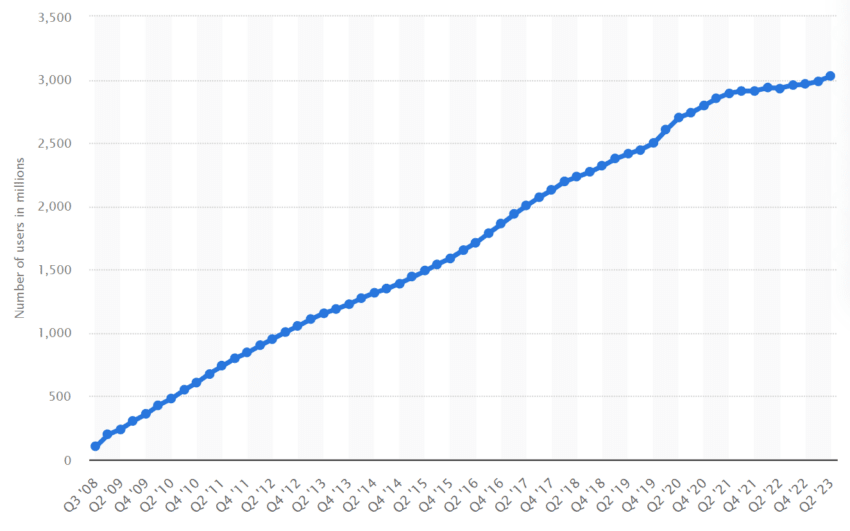
Number of monthly active Facebook users worldwide (in millions) as of the second quarter of 2023. Source: Statistica
Self-validation loop
So here’s the thing: once we’re on these giant social media platforms, we’re all victims of network effects — the phenomenon where the value of a product increases as more and more people use it, creating a positive feedback loop of adoption and usage.
Social media giants like Twitter, Instagram and Facebook all rely on this fact. That's why it's so hard to leave. But maybe we've been thinking this wrong all along, Li said.
“When creators decide to move their audience to a different platform, the switching costs can be very high. This migration is particularly difficult due to the lack of interoperability standards between platforms and the excessive control that centralized applications have over users’ personal social data.”
One example Li cited was PewDiePie (real name: Felix Kjellberg), the world’s most popular YouTuber in 2019. The social media giant decided to stream exclusively on DLive, which promises better prices for content creators. DLive is built on the Lino blockchain.
“Unfortunately, he was only able to bring part of his user base to the new platform,” Li recalls. “This led him to return to YouTube within a few months to reconnect with his audience.”
Leaving established social media is not easy
Different value systems also pose a challenge, Li explained. Each social media platform fosters a unique culture and preferred content style.
TikTok is centered around short, viral videos, while Twitter (now X) emphasizes text posts, and the best-performing formats vary between sites. He noted that tailoring content to take advantage of the platform’s strengths is critical to driving engagement.
“Creators may find it challenging to perform equally well across these different formats, and audiences may not engage equally with different types of content. An example of this is Threads, launched by Meta, which was intended to be a text-based extension app for Instagram. However, the lack of clear distinction between content and the social graph led to user disinterest and eventual abandonment of the app,” said Li.
But of course, if you are a business or content creator, one of your biggest concerns is discoverability. Large, established platforms have larger audiences and more sophisticated algorithms to promote content. This enables creators who understand these algorithms to optimize distribution, Li added.
“However, on new platforms, it may be difficult for these creators to gain a similar foothold due to different algorithms, requiring a lot of time and effort to guide their audiences,” he said.
Web3 Empowers Users
However, moving between platforms is not impossible. Li explained that Web3 technology introduces a transformative shift in social networking, emphasizing user ownership and interoperability.
He said decentralized protocols and blockchain technology give users and creators control over their social data. This allows for smooth migration across applications without sacrificing a given network.
“This freedom allows users to choose and utilize various platform features that suit their preferences and strengths, keeping their social graph intact,” Li said.
Li said the rise of Web3 provides content creators with the opportunity to build more engaged communities on decentralized platforms. Unlike traditional social media, Web3 uses tokenization and incentive mechanisms to enable creators to reward their followers.
“Content creators can use these tokens to incentivize their audiences and foster a stronger sense of community and loyalty,” Li explained. He asserted that through token-based incentives, creators can maintain or even increase their revenue during the migration, thereby encouraging their audiences to remain active.
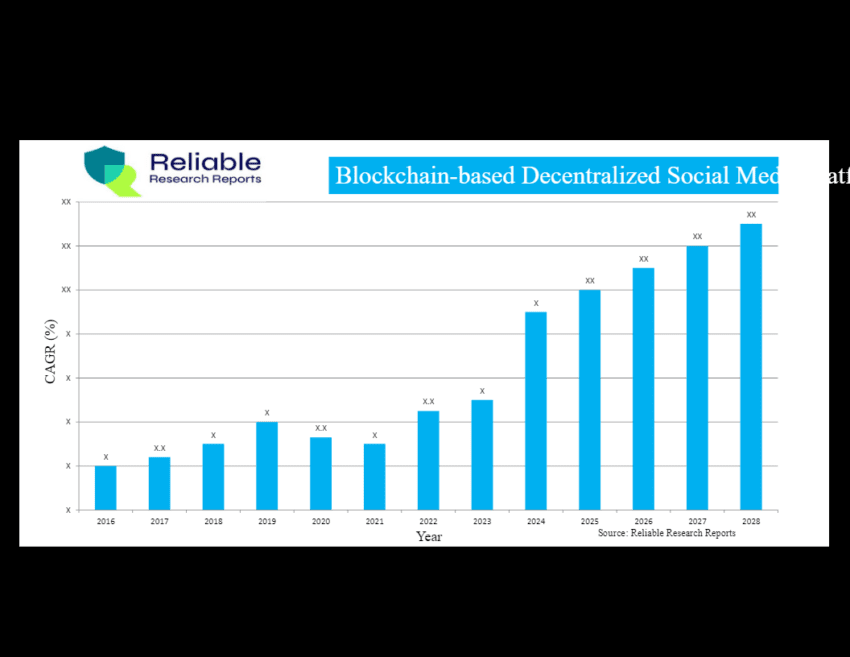
Estimated growth of blockchain-based social media: Source: Reliable Research Report
Additionally, Li highlighted how Web3 can integrate community governance, enabling users and creators to shape the evolution of the platform.
“This inclusive approach enables content creators to directly influence how the platform evolves, ensuring it meets their unique needs,” he said.
By enabling creators to participate in governance, Web3 platforms foster sustainable, creator-centric ecosystems.
Tokenization is a better model for the creator economy
The emergence of Web3 also brings new possibilities for content publishing and monetization. Li observed that unlike centralized platforms, on the blockchain of decentralized social networks, content can be tokenized as unique digital objects.
This makes content permanent and portable wherever users go, Li said, adding that this tokenized content unlocks the potential to “completely reimagine publishing, copyright, and the creator economy.”
“A piece of content in decentralized social can be owned, given or sold, quoted, referenced, and recreated, all with a verifiable record,” Li concluded. #社交媒体 #Web3