


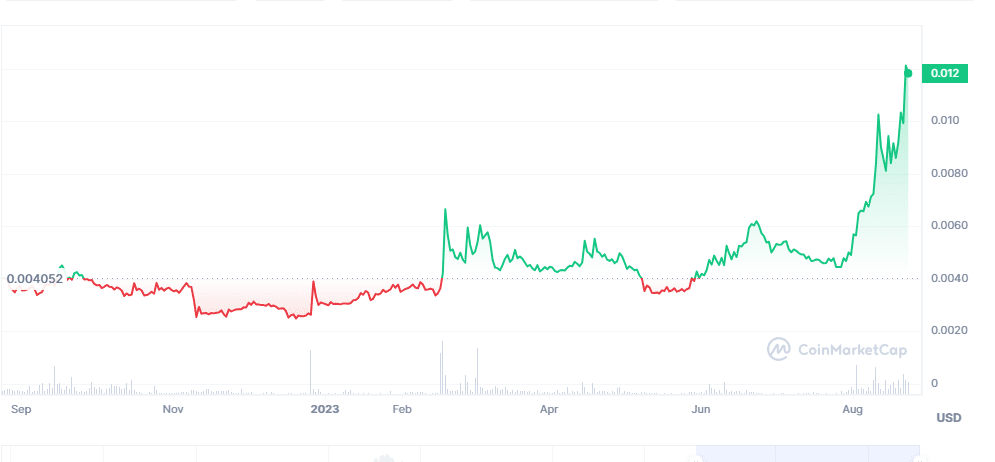
Today we are going to talk about a relatively popular project. It has increased five times since the beginning of this year. If we count it from May, it has also increased three times. So whether this project can become a hundred times coin in the future, we will look at it today. Next, there is Akropolis (AKRO).
Introduction
Akropolis is a distributed protocol built on Ethereum that aims to provide a framework and tools for building decentralized financial (DeFi) products to provide borrowing, lending and investment services. AKRO is the native governance token of Akropolis, used to vote in platform governance and collect dividends from Akropolis-based products. In the future, AKRO will also be used to participate in AkroChain's delegated proof-of-stake consensus mechanism.

Akropolis' mission is to provide everyone with secure, growing savings and tools without relying on centralized banks.
Akropolis' goal is to create yield-generating products that do not rely primarily on inflationary emissions as the primary source of yield, and that generate returns regardless of market conditions.
Current products include:
Vortex - an on-chain trading strategy designed to generate long-term, sustainable and beneficial gains.
yvault - Streamlined and simplified access to select source repositories to optimize output.
Akropolis is the one-stop solution for any investor seeking passive, efficient and sustainable income.
Advantages of using Vortex
Advantages of using Vortex (v1) include:
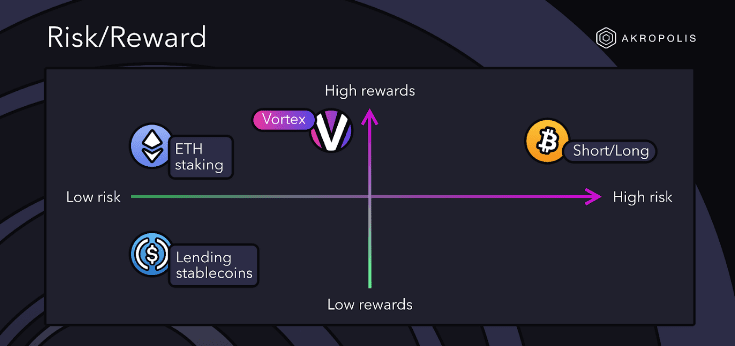
Market Neutral - Vortex allows users to generate returns without being exposed to directional price risk. Regardless of bull market, bear market or bull market, Vortex should be able to generate sustainable returns.
Return Yield - Vortex's underlying strategy has proven to be profitable in all market conditions and has historically outperformed many other market neutral strategies and high risk yield farms.
Single Asset - Vortex only requires users to deposit a single asset - USDC. This makes Vortex an effective alternative to lending or stablecoin farming.
Low Maintenance - Vortex is a passive strategy for our users, but maintenance and risk management are actively managed by our strategy staff. The returns generated by the vortex are also compounded regularly, further increasing returns.
Ecosystem Benefits – Vortex provides liquidity, which is critical for a decentralized derivatives exchange offering perpetual contracts.
working principle
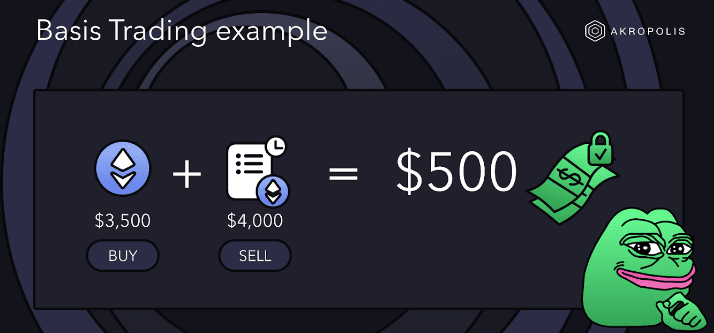
Users deposit 7,000 USDC into Vortex and receive a proportional share of the pool in the form of Vault tokens.
By then, Vortex’s basic strategy will be:
Send 3500 USDC to the decentralized exchange to purchase 1 “physical” ETH;
Send 3500 USDC to a decentralized derivatives exchange and use it as collateral to short a perpetual contract worth 1 ETH.
Vortex will automatically collect the funding rate and periodically compound and rebalance into both positions, increasing the value of the Vault token.
Project structure
Akropolis built the AkropolisOS framework, which consists of a set of modules that enable the establishment of various financial organizations such as savings pools, credit unions, investment funds, etc.
Sparta is the first Akropolis product built on the AkropolisOS framework and deployed on the Ethereum mainnet. It is a financial pool that provides access to unsecured loans and earns interest on the funds provided. Currently, it is expected to incorporate a rebalancing module to update the pool, allowing investors to get the most benefit from their investment compared to using other DeFi protocols.
The second product, Delphi, is an investment and savings pool built on an automated “dollar-cost averaging” model. Users can purchase BTC and ETH in selected amounts over specified time periods to diversify price risk in a long-term strategy. In addition, additional Yield Farming (liquidity mining) plans will be introduced in Delphi, allowing users to passively earn BAL, COMP, etc.
Features
AkropolisOS - a framework that supports the establishment of any type of financial organization.
Features:
1. Establish your own fund, bank or cooperative;
2. Agile framework based on module structure;
3. Audited open source solutions.
Sparta Pool – an undercollateralized pool that automatically generates yields.
Features:
1. Earn the maximum annual interest rate among other agreements;
2. Choose a profit strategy, actively participate or passively earn the maximum profit without taking any measures.
Delphi Pool - BTC & ETH purchase risk diversification & extra income pool.
Features:
1. Fully automatic cryptocurrency purchase;
2. The dollar cost averaging model helps users diversify risks in long-term strategies;
3. Additional income generated by liquidity mining (holding rewards).
Token economy
Two tokens, ASPT and AKRO, are included in the Akropolis protocol.
ASPT is the Akropolis Sparta capital pool token. It is an ERC-20 token that gives users voting rights in the capital pool and the right to obtain loans. AKRO is also used for system governance, and its currency holders have voting rights to modify the parameters of the fund pool. Unlike AKRO, the ASPT token cannot float freely on the exchange. Its price is linked to Sparta's bonding curve. In Sparta, stablecoins are used to repay loans, while ASPT is used to obtain these loans and manage the internal economy of the fund pool. .
ASPT is also completely Ul-extracted, so users won't have to deal with it within Sparta. However, borrowers are required to provide ASPT tokens equal to 50% of the loan amount as loan collateral. After this, the capital pool members who guarantee the user lock their ASPT as collateral. When the sum of the ASPT tokens of the borrower and the capital pool member is equal to the loan amount, the same amount of stablecoins will be sent to the borrower. When stablecoins are deposited into or withdrawn from the pool, ASPT is minted or burned, and its price is determined by the bonding curve. For pool members, rewards come from a percentage of the loan interest.
Finally, the AKRO token is used for governance. It functions similarly to MKR and COMP, with its primary utility being voting rights on protocol parameters and liquidity incentives. Additionally, there is a spread between the entry and exit prices of ASPT servicing loans, which provides Sparta with revenue, which is used to purchase and burn AKRO from the market.
Token distribution
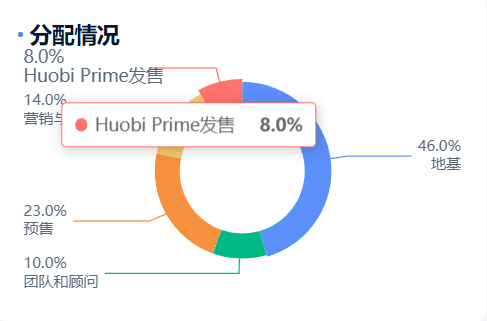
First issued on 2019-07-16, the crowdfunding price is $0.007500, the current supply is 5,000,000,000 AKRO, the annual inflation rate is 0.8608%, the current currency price is 0.011 US dollars, and the peak price was 0.078 US dollars (April 21). It is still the same at present. It fell by 90%, but the recent rebound has been pretty good. According to the current data on the official website, there are 1,500 active users, with a total locked position value of 880 million US dollars. Then in terms of token distribution, the team only took 10% and marketing 14%, which means that the team took 24%, which is not too much.
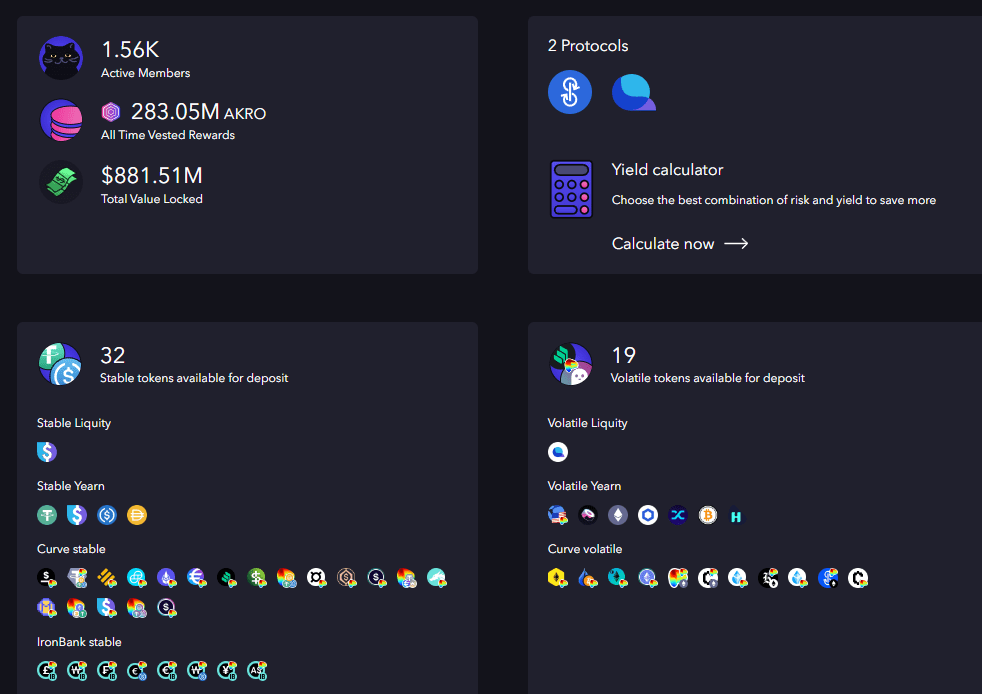
Finally, to summarize, this project is also a project in the DEFI field. It is equivalent to the financial management project of web3. It helps you choose products with good yields. However, I see many high-yield vaults that no one dares to be in. It was pledged because it seemed to have been hacked some time ago (20 years ago) and $2 million in assets was lost. Of course, 20 years is the first year of defi, which is considered normal. What’s more, I think this project is relatively average so far. It doesn’t have any special features. The pledged ARP of AKRO is just okay, with a 13.4% rate of return. Others are relatively average. Well, plus its recent The growth is pretty good, so the income should be pretty good. We’ll have to decide whether we can buy it in the end.