

This article was published in November 2017. The author is Tom Ding, co-founder and CEO of String Labs (Cryptography and Distributed Computing Laboratory). String Labs is a strategic partner and founding member of BCG Boston Consulting Group Dvolution and EEA Enterprise Ethereum Alliance. Its products include blockchain cloud computing system DFINITY and PHI (decentralized commercial bank). In 2019, Tom Ding withdrew from the DFINITY team. This article is based on the business thinking of blockchain, pointing out that blockchain, especially public chain, creates zero marginal cost liquidity and brings open and transparent trust relationships and business rules. Unlike traditional finance, which emphasizes relationship monopoly and maximization of middleman interests, the core of blockchain finance is openness and ecology.
Blockchain has become one of the hottest technology terms in the past two years, and traditional industries including the financial industry have been catching up. I have seen many common misunderstandings about its application. Today we will talk about the most core but less talked about business thinking change in the implementation of blockchain.

"After all, isn't it just a database?"
When communicating with many friends in traditional industries, I often hear a very common but overly narrow view: "The essence of blockchain is not just a distributed ledger technology. Many computers run a database, which improves security and reliability, reduces operation and maintenance costs, and makes data exchange between partners easier, but it is still essentially an IT tool."
With this in mind, the company's CEO found the VP or CIO in charge of innovation and R&D to quickly assign tasks, and the CIO arranged for several IT managers to quickly set up a blockchain research team. After several months of R&D and using a lot of budget, the company found that the computing efficiency was not as good as before, and the development encountered various difficulties. Soon, the management began to question whether this thing was similar to the big data trend in the past?
The idea of simply reducing blockchain to a cost center optimization tool is dangerous and misleading. Just like the transformation of Internet thinking, it is not just about building a website and developing a mobile app, but requires the entire enterprise to repeatedly and deeply rethink its own business logic and positioning when facing new changes in production relations.
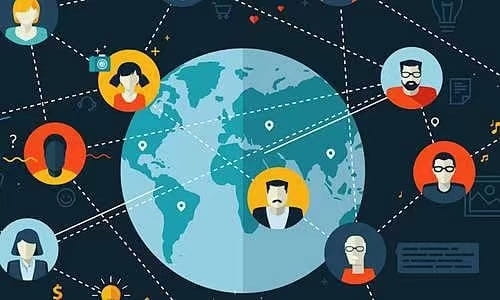
Accurately define the business paradigm revolution of public chains
If you come from a traditional industry, please put aside the familiar business processes that have been engraved in your mind and the assumptions about how blockchain can be incorporated into them.
Let’s first accurately define blockchain, especially the public blockchain, and the new business possibilities it provides:
1. Transparent and reliable business logic: This is the core of the entire blockchain technology, that is, all business logic is transparent on the chain and business rules cannot be tampered with.
2. Key industry data penetrates, transmits and crosses traditional trust boundaries, including industry - industry, government - industry and then consumer - industry.
3. Digital Bearer Instrument with zero marginal cost and self-ownership: It enables all commercial assets to be created extremely easily, permanently recorded and self-owned by users without any intermediaries (Self Sovereign).
4. The structure and marginal cost of the asset exchange approach zero. All assets on the chain can be traded freely (with the help of the decentralized exchange under construction), with zero marginal cost and no obstacles.
5. Global capital market integration (non-US dollar currency, no bank dependency).
6. Build a derivatives market with zero marginal cost.
In summary:
The first two points have brought about an unprecedented new business trust relationship - from the traditional cooperation network based on trust between acquaintances to an open cooperation based on transparent rules. This new business rule is different from the traditional one because it allows commercial organizations of any size to create a completely credible and fully executed rule system, flattening the gap in the ability of large and small organizations to build business trust.
The last four points completely subvert the basic structure of the traditional financial market with zero marginal cost, making liquidity almost ubiquitous. The circulation of new assets and services do not have to always rely on traditional commodity and financial intermediaries and exchanges to provide new products.
Let’s take a closer look at how these new attributes are reflected in changes in business thinking.

Shift from product thinking to blockchain ecosystem thinking
The core point that traditional product thinking focuses on or even only focuses on is the quality and brand of its own products. In the blockchain business world, as a traditional industrial enterprise, products and services are still important, but there is a new business dimension, that is, quasi-financial and ecological thinking. The essence of finance is to guide capital to where it is most needed, maximize liquidity, and provide tools to manage risks. This quasi-financial change is sometimes also a disruptive innovation because it may subvert the existing market structure.
However, we must point out in particular that the fundamental difference from general finance is that although both are about expanding capital and asset liquidity, the core of blockchain ecological thinking is open and transparent business rules, while the core of traditional finance is relationship monopoly and maximizing the interests of middlemen.
Taking traditional home appliance manufacturers as an example, from the perspective of product thinking, they mainly focus on the production and channel construction of high-quality and cost-effective color TVs, while ecological finance focuses on issues such as: how to use blockchain to introduce capital into high-quality IP content, how to share content revenue with users, how to share and bind the attention economy with users, and how to enable upstream and downstream and brands to have deeper economic participation.
The common problem of the above examples is that it requires the digitization, fragmentation, transaction liquidity and redistribution of benefit relations (such as consumer participation) of many intangible and tangible assets, which are the biggest breakthrough points of public blockchain.
The core functions of enterprises have shifted from directly providing services and products to creating new rules, participating in open rules, and introducing ecological partners.

Giving up control, gaining ecology
The ultimate profit of traditional product thinking comes from monopoly and control. The famous investor Peter Thiel’s summary is the most insightful:
Competition is a game for losers, and the highest level of enterprise is monopoly.
The biggest difference and the most difficult thing to overcome for traditional enterprises, including Internet companies, is blockchain thinking - letting go of control. The giving up of control we are talking about is not a formality, not the opening of some codes and designs based on public relations, not Tencent or Facebook selectively opening APIs, but a fundamental change in business concepts.
This openness spreads to every key node, from opening all source code, future product roadmaps, team organizational structure, establishing a non-profit foundation, open community discussion groups, most business strategies, to the business relationship between enterprises and other members of the ecosystem.
This radically open business strategy is scary or even ridiculous for most traditional companies. I am not simply advocating a business ideal that just sounds cool (even this may not be suitable for every traditional company), but each of us in the industry needs to think deeply about this question: if a new platform or market based on such an open concept appears in your industry tomorrow, even if you think it sounds like it can't make money at all, can it subvert the industry landscape?
I personally have a hypothesis and prediction that it is difficult for most Internet platform companies and companies with platform thinking to successfully transform into a blockchain model. They may deploy some local blockchain systems on one hand, but still stick to many traditional concepts on the other hand. On the contrary, traditional marginal companies and production service companies will be more likely to transform.
Because the former are vested interests of the controlling platform, it is difficult for them to accept a new model that may lose their control. This is also a major opportunity for traditional industries to achieve cross-generational industrial upgrading, although they may not have the foundation of the Internet era.
New flat open supply chain
Supply chain management is one of the most core links in traditional industries. However, in the application of blockchain, we should not limit our imagination to making the traditional three-body relationship between enterprises, suppliers and banks more automated, with faster payment and lower costs.
A more interesting future is to redefine the supply chain as a global open market, a market where anyone can participate in financing and investment. In this market, financial institutions are not the main body and are no longer controlled by them, but a set of decentralized protocols serve as intermediaries.
Imagine that a retail investor in the central United States has a savings of $1,000. Instead of putting the money in a US bank with an interest rate of 0%, he uses the blockchain to invest in a smart contract for a short-term loan for the supply chain inventory of a foundry in Shenzhen, China, to earn 10% interest.
The American investor does not even know what the factory is, because his investment is decentralized among different targets through a portfolio smart contract. However, the risk is highly controllable and transparent, because the penetration of blockchain makes this group of loans have clear on-chain assets as collateral, and the use of the funds is strictly limited to a specific purchase scope by a decentralized commercial identity verification system.
New supply chain structures like this will emerge in various industries in different forms. At this time, competition will change from pure product competition to competition between more rules and ecosystems, which can greatly improve the economic efficiency of the entire ecosystem, open up capital competition, and benefit manufacturers, various investors and end consumers.
Traditional enterprises can fully grasp the key stages of these new open supply chain forms and actively assume the roles of ecosystem builders, rule promoters or evangelists.
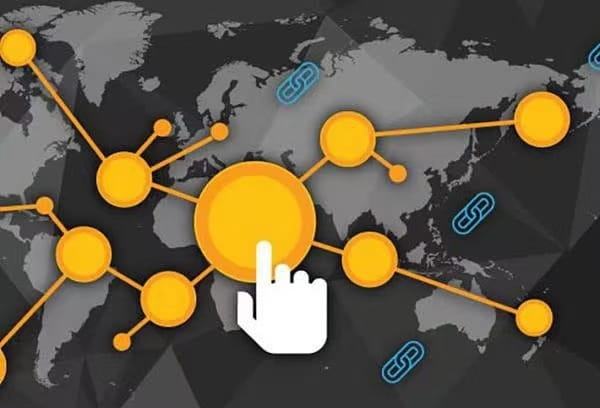
Short-term breakthrough point: deep commercial assets and long-tail assets grafted onto public chains (B2B2C)
Among the many blockchain applications currently in use, there are many application scenarios that seem very interesting, but most of them are just a lot of noise but little action. The reason is that today's blockchain infrastructure is still relatively backward and scarce, including extremely low performance, very difficult for users to use, lack of stable settlement currency and can only use digital tokens, etc., which makes most projects eventually stay in the Demo stage. After a round of media reports, very few have been implemented.
Many excellent teams are building various technical solutions to solve these basic problems. But before these solutions arrive and are fully deployed, I think the most interesting breakthrough in the blockchain world may be the B2B2C model with liquidity as the theme.
What is B2B2C? A large amount of business value, especially those that were originally hidden deep in the industry and inaccessible to the public, will be released through digital assets and markets on the public blockchain.
These interesting but previously inaccessible assets may be solar energy, supply chain credit, user in-depth business data, TV prime time, etc., that is, retail and fragmented B2B assets. They may also be assets that are not traditionally traded or specific trading pairs, such as exchanging contributions from specific organizations for expert time, reverse auctions for medical services, carbon emission credits, etc.
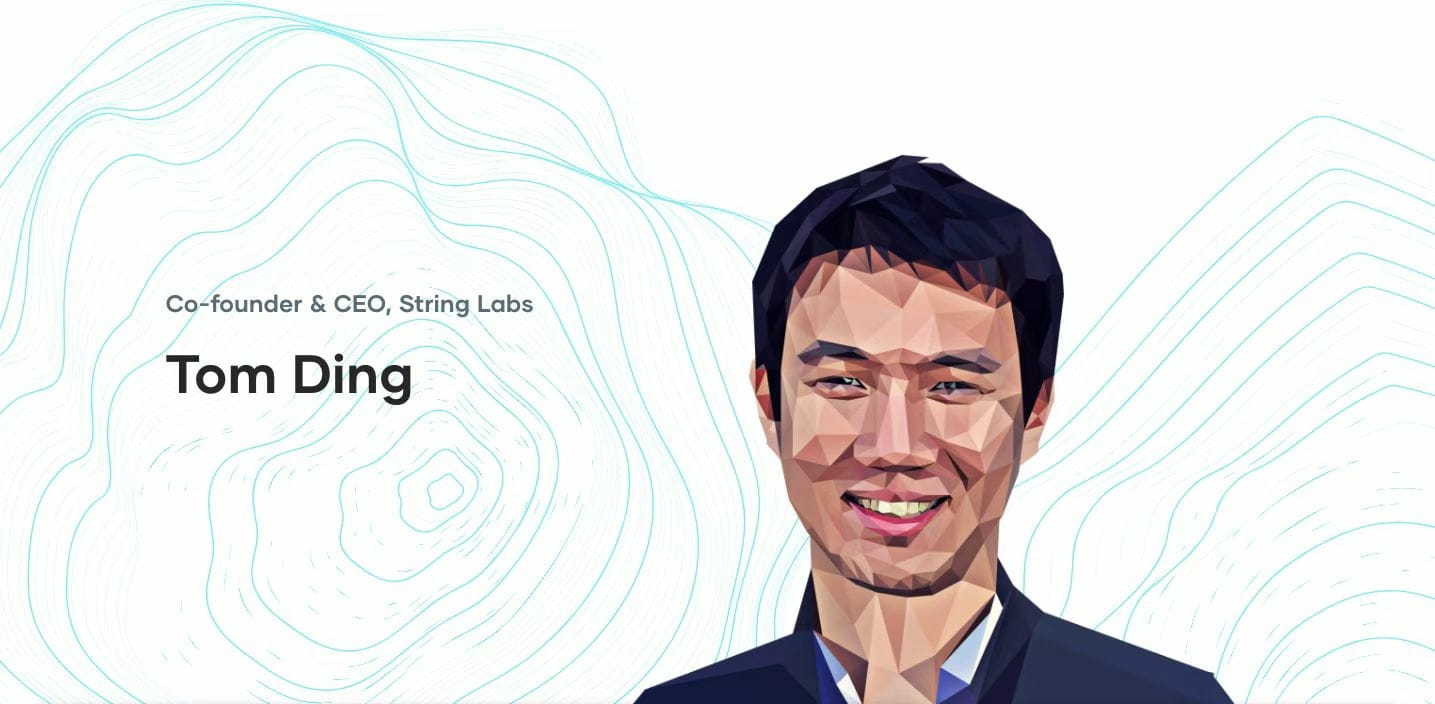
Author: Tom Ding
Layout: Catherine
IC content you care about
Technology Progress | Project Information | Global Activities
 Collect and follow IC Binance Channel
Answer your questions at any time