
#wtifallsbelow$80
wtifallsbelow$80
36,723 views
144 Discussing
Hot
Latest

·
--
Verified
Most traders are watching Bitcoin.
I'm watching oil.
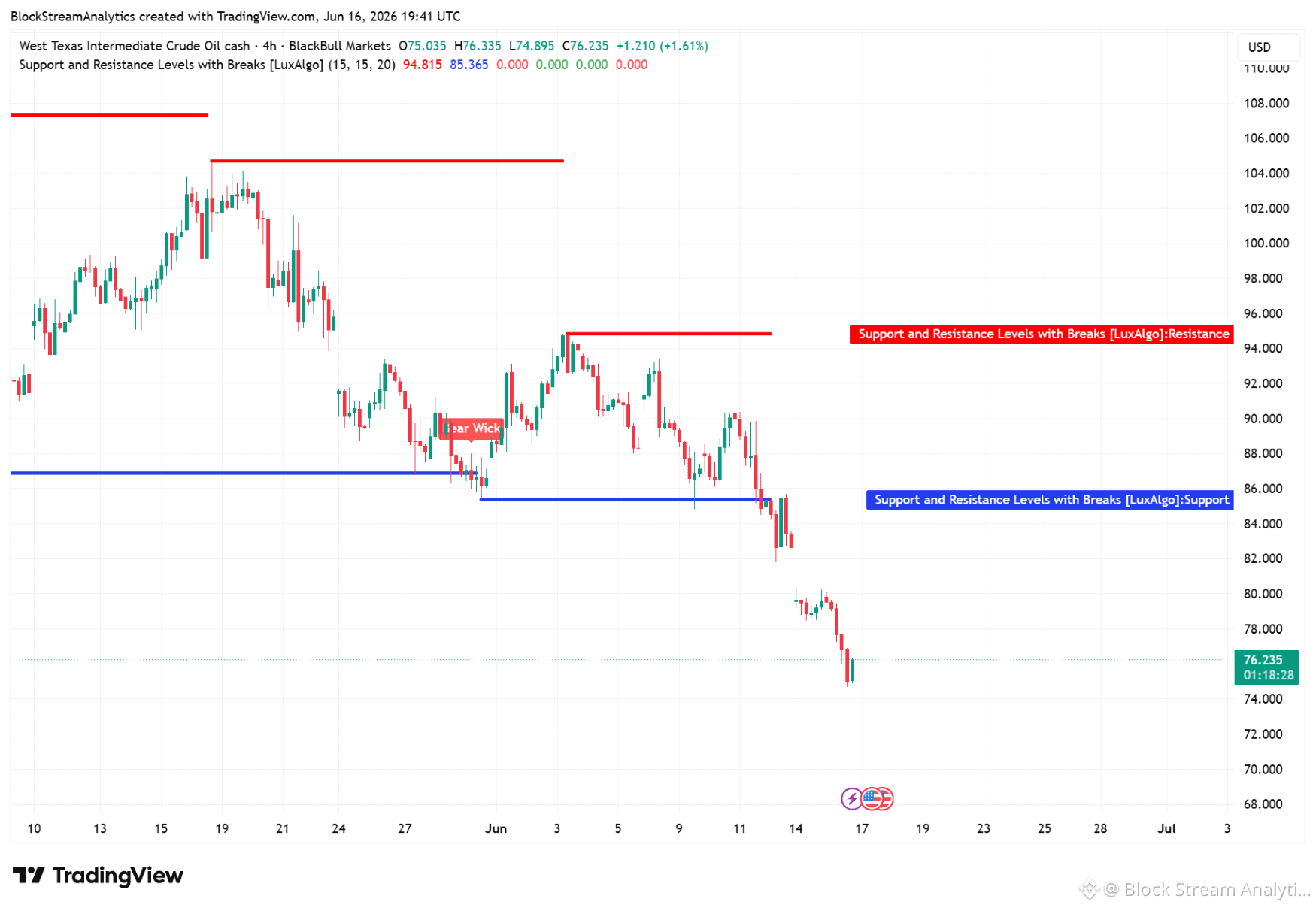
WTI has now broken below a major support zone and is trading near $76.
If energy prices continue falling, inflation expectations, central bank policy and risk assets could all react.
The question isn't where oil is today.
The question is what this means for global liquidity next.
#WTIFallsBelow$80 $CL
{future}(CLUSDT)
Most traders are watching Bitcoin.
I'm watching oil.
WTI has now broken below a major support zone and is trading near $76.
If energy prices continue falling, inflation expectations, central bank policy and risk assets could all react.
The question isn't where oil is today.
The question is what this means for global liquidity next.
#WTIFallsBelow$80 $CL
I'm watching oil.
WTI has now broken below a major support zone and is trading near $76.
If energy prices continue falling, inflation expectations, central bank policy and risk assets could all react.
The question isn't where oil is today.
The question is what this means for global liquidity next.
#WTIFallsBelow$80 $CL
2
7
1.3k

·
--
Bearish
**The Great Unwind: WTI Crude Plummets Below $80**
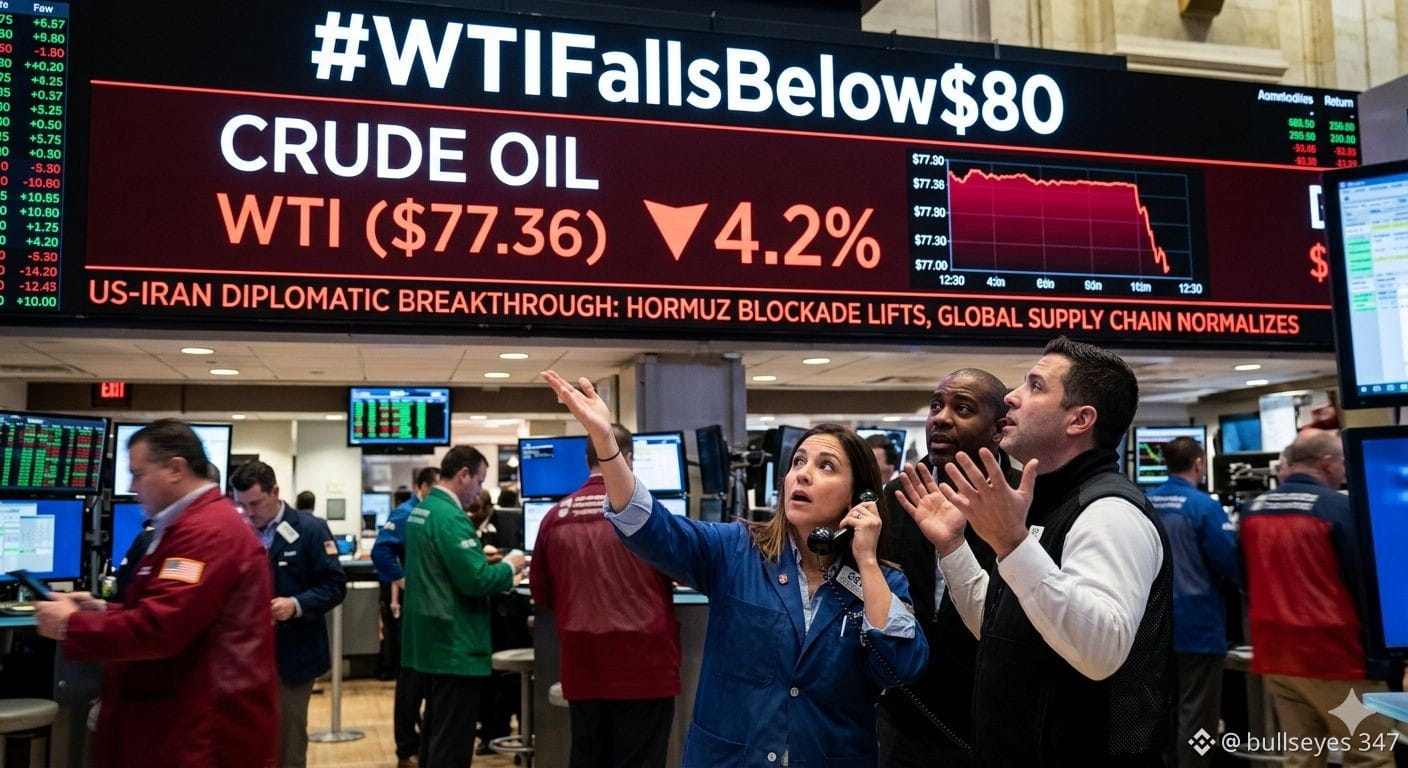
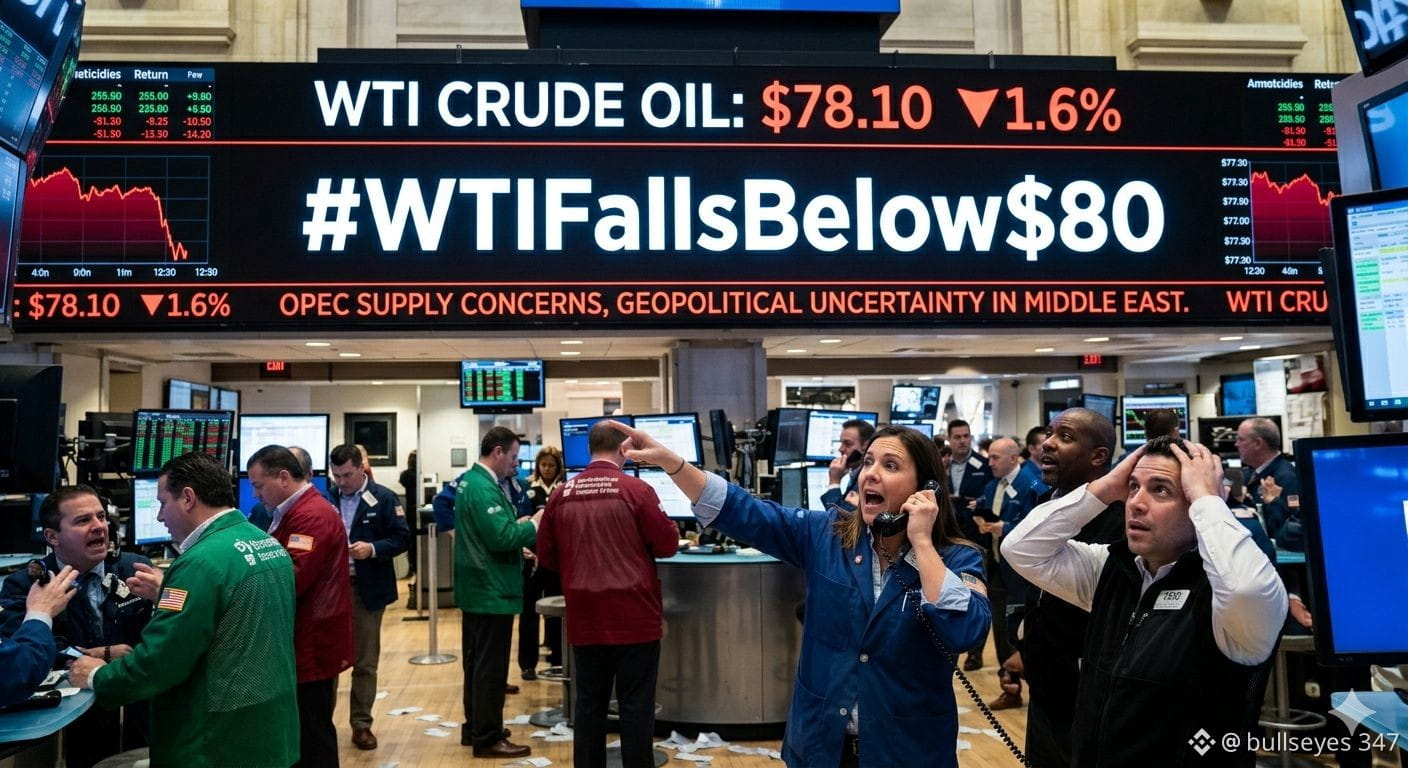
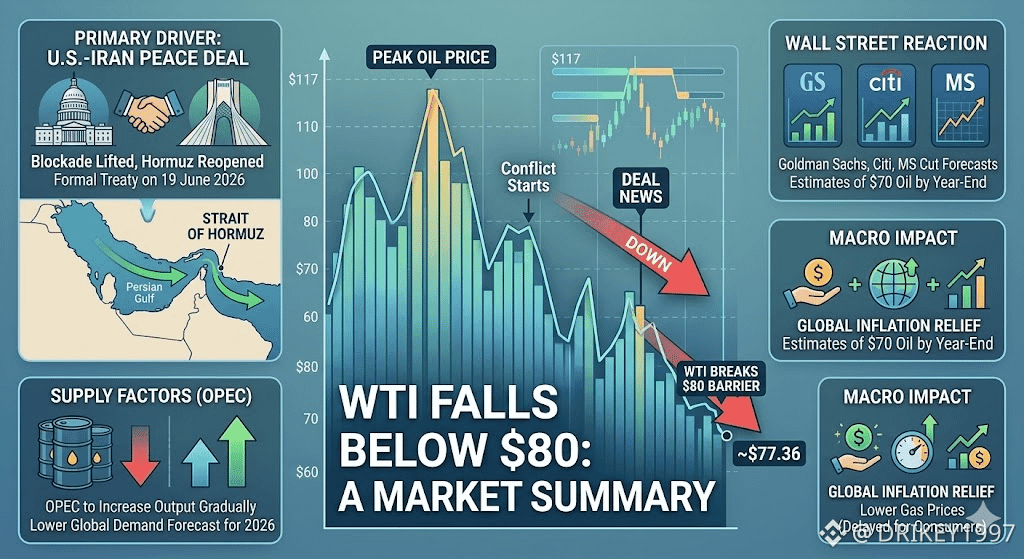
**June 16, 2026** — In a dramatic market reversal, West Texas Intermediate (WTI) crude oil futures plummeted over 4% today, crashing through a critical psychological floor to sit at **$77.36 a barrel**. This sudden drop marks the rapid unwinding of the market's "geopolitical risk premium," down from a recent high of $117.
The primary catalyst is a massive diplomatic breakthrough between the United States and Iran. Following a preliminary ceasefire extension, an interim peace agreement is scheduled to be signed this Friday in Switzerland. Crucially for energy markets, this deal includes the **immediate, toll-free reopening of the Strait of Hormuz**—a vital shipping artery that handles roughly 20% of the world’s petroleum liquids and had been blockaded since late February.
While diplomacy triggered the collapse, weakening market fundamentals were already building pressure. OPEC recently downgraded its global oil demand growth forecast for 2026, while concurrently preparing to gradually phase out its supply cuts.
The sub-$80 price reshuffles the economic deck:
* **Winners:** Airlines, chemical manufacturers, and central banks will benefit from lower operating costs and cooling headline inflation, strengthening the case for interest rate cuts.
* **Losers:** Oil exploration and production (E&P) companies will see heavily compressed profit margins.
Retail consumers may not see immediate relief at the pump, as depleted global inventories must first be rebuilt. However, market technicians note that a sustained close below $80 confirms a dominant bearish trend for the months ahead.
$BTC
{future}(BTCUSDT)
$ETH
{future}(ETHUSDT)
$SOL
{future}(SOLUSDT)
#WTIFallsBelow$80
#USADPEmploymentChangeSlipsTo25500
#OilFallsBelow$80
#SpaceXStockOptionsBeginTrading
#BrentCrudeBreaksBelow$80
**The Great Unwind: WTI Crude Plummets Below $80**
**June 16, 2026** — In a dramatic market reversal, West Texas Intermediate (WTI) crude oil futures plummeted over 4% today, crashing through a critical psychological floor to sit at **$77.36 a barrel**. This sudden drop marks the rapid unwinding of the market's "geopolitical risk premium," down from a recent high of $117.
The primary catalyst is a massive diplomatic breakthrough between the United States and Iran. Following a preliminary ceasefire extension, an interim peace agreement is scheduled to be signed this Friday in Switzerland. Crucially for energy markets, this deal includes the **immediate, toll-free reopening of the Strait of Hormuz**—a vital shipping artery that handles roughly 20% of the world’s petroleum liquids and had been blockaded since late February.
While diplomacy triggered the collapse, weakening market fundamentals were already building pressure. OPEC recently downgraded its global oil demand growth forecast for 2026, while concurrently preparing to gradually phase out its supply cuts.
The sub-$80 price reshuffles the economic deck:
* **Winners:** Airlines, chemical manufacturers, and central banks will benefit from lower operating costs and cooling headline inflation, strengthening the case for interest rate cuts.
* **Losers:** Oil exploration and production (E&P) companies will see heavily compressed profit margins.
Retail consumers may not see immediate relief at the pump, as depleted global inventories must first be rebuilt. However, market technicians note that a sustained close below $80 confirms a dominant bearish trend for the months ahead.
$BTC
$ETH
$SOL
#WTIFallsBelow$80
#USADPEmploymentChangeSlipsTo25500
#OilFallsBelow$80
#SpaceXStockOptionsBeginTrading
#BrentCrudeBreaksBelow$80
**June 16, 2026** — In a dramatic market reversal, West Texas Intermediate (WTI) crude oil futures plummeted over 4% today, crashing through a critical psychological floor to sit at **$77.36 a barrel**. This sudden drop marks the rapid unwinding of the market's "geopolitical risk premium," down from a recent high of $117.
The primary catalyst is a massive diplomatic breakthrough between the United States and Iran. Following a preliminary ceasefire extension, an interim peace agreement is scheduled to be signed this Friday in Switzerland. Crucially for energy markets, this deal includes the **immediate, toll-free reopening of the Strait of Hormuz**—a vital shipping artery that handles roughly 20% of the world’s petroleum liquids and had been blockaded since late February.
While diplomacy triggered the collapse, weakening market fundamentals were already building pressure. OPEC recently downgraded its global oil demand growth forecast for 2026, while concurrently preparing to gradually phase out its supply cuts.
The sub-$80 price reshuffles the economic deck:
* **Winners:** Airlines, chemical manufacturers, and central banks will benefit from lower operating costs and cooling headline inflation, strengthening the case for interest rate cuts.
* **Losers:** Oil exploration and production (E&P) companies will see heavily compressed profit margins.
Retail consumers may not see immediate relief at the pump, as depleted global inventories must first be rebuilt. However, market technicians note that a sustained close below $80 confirms a dominant bearish trend for the months ahead.
$BTC
$ETH
$SOL
#WTIFallsBelow$80
#USADPEmploymentChangeSlipsTo25500
#OilFallsBelow$80
#SpaceXStockOptionsBeginTrading
#BrentCrudeBreaksBelow$80
3
455

·
--
🚨 WTI Falls Below $80 Oil Market Faces New Pressure
#WTIFallsBelow$80
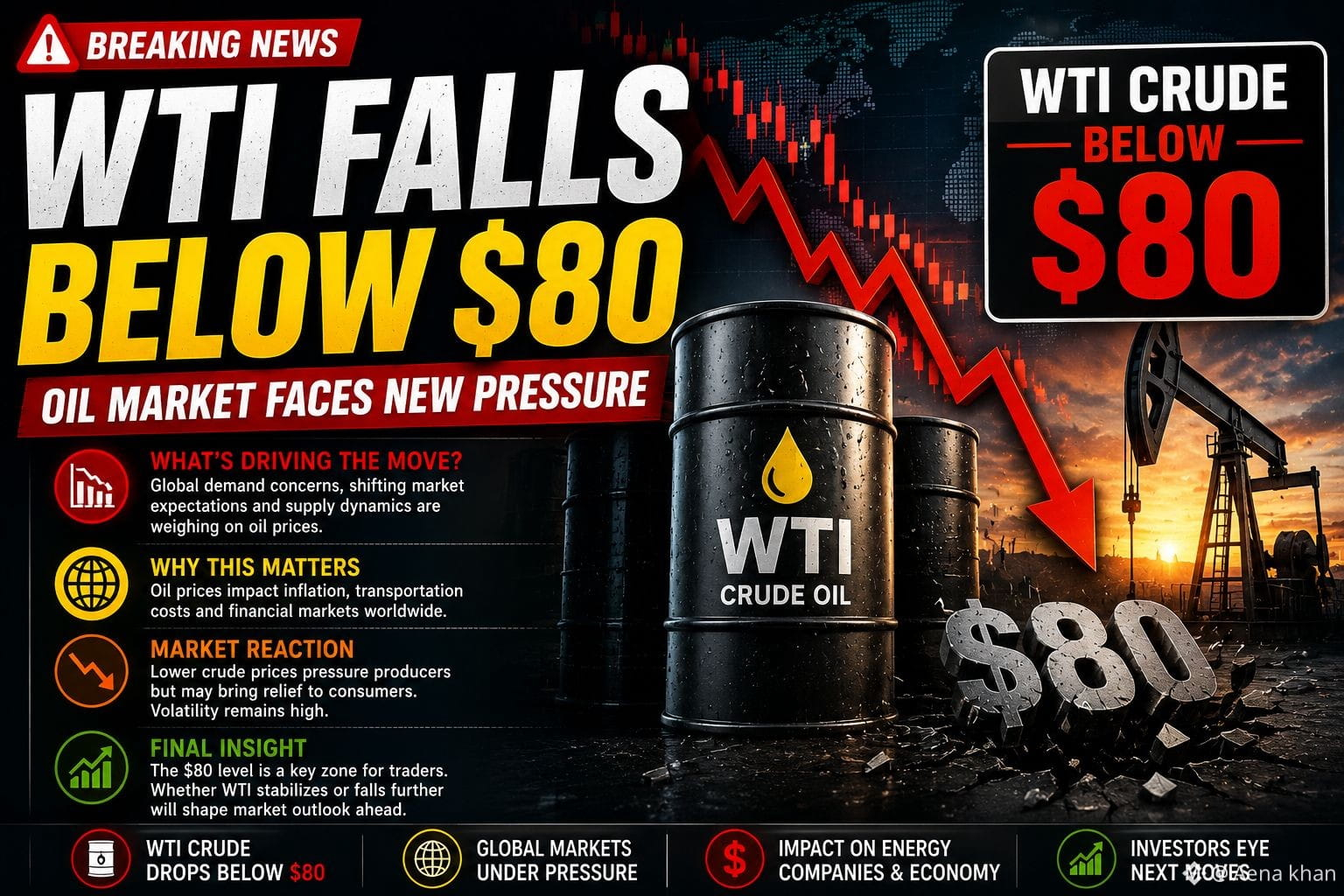
Global energy markets are watching closely as WTI crude oil drops below the $80 level, raising fresh concerns about demand, supply dynamics, and the broader economic outlook.
📊 What’s Driving the Move?:
The decline comes amid shifting market expectations, concerns over global demand growth, and changing supply conditions. Traders are closely monitoring economic data and energy market signals for the next direction.
💡 Why This Matters;
Oil prices influence inflation, transportation costs, and financial markets worldwide. A sustained move below $80 could impact energy companies, currencies, and investor sentiment.
⚠️ Market Reaction:
Lower crude prices can create pressure for oil producers while potentially providing relief for consumers through lower energy costs. However, sudden moves often increase uncertainty across markets.
🚀 Final Insight;
The $80 level remains a key psychological zone for traders. Whether WTI stabilizes or continues lower could shape expectations for the global economy and commodity markets in the weeks ahead.
#WTI #oil #CrudeOil #EnergyMarkets #Trading #MarketNews #commodities
$TSLAB
{spot}(TSLABUSDT)
$BTC
{spot}(BTCUSDT)
$SPCXB
{spot}(SPCXBUSDT)
🚨 WTI Falls Below $80 Oil Market Faces New Pressure
#WTIFallsBelow$80
Global energy markets are watching closely as WTI crude oil drops below the $80 level, raising fresh concerns about demand, supply dynamics, and the broader economic outlook.
📊 What’s Driving the Move?:
The decline comes amid shifting market expectations, concerns over global demand growth, and changing supply conditions. Traders are closely monitoring economic data and energy market signals for the next direction.
💡 Why This Matters;
Oil prices influence inflation, transportation costs, and financial markets worldwide. A sustained move below $80 could impact energy companies, currencies, and investor sentiment.
⚠️ Market Reaction:
Lower crude prices can create pressure for oil producers while potentially providing relief for consumers through lower energy costs. However, sudden moves often increase uncertainty across markets.
🚀 Final Insight;
The $80 level remains a key psychological zone for traders. Whether WTI stabilizes or continues lower could shape expectations for the global economy and commodity markets in the weeks ahead.
#WTI #oil #CrudeOil #EnergyMarkets #Trading #MarketNews #commodities
$TSLAB
$BTC
$SPCXB
#WTIFallsBelow$80
Global energy markets are watching closely as WTI crude oil drops below the $80 level, raising fresh concerns about demand, supply dynamics, and the broader economic outlook.
📊 What’s Driving the Move?:
The decline comes amid shifting market expectations, concerns over global demand growth, and changing supply conditions. Traders are closely monitoring economic data and energy market signals for the next direction.
💡 Why This Matters;
Oil prices influence inflation, transportation costs, and financial markets worldwide. A sustained move below $80 could impact energy companies, currencies, and investor sentiment.
⚠️ Market Reaction:
Lower crude prices can create pressure for oil producers while potentially providing relief for consumers through lower energy costs. However, sudden moves often increase uncertainty across markets.
🚀 Final Insight;
The $80 level remains a key psychological zone for traders. Whether WTI stabilizes or continues lower could shape expectations for the global economy and commodity markets in the weeks ahead.
#WTI #oil #CrudeOil #EnergyMarkets #Trading #MarketNews #commodities
$TSLAB
$BTC
$SPCXB
4
484

·
--
Article
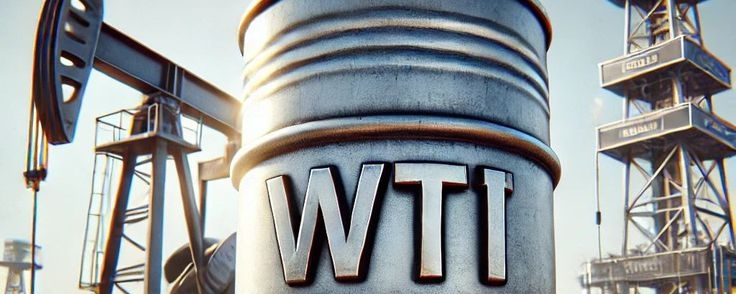
what factors are driving the decline in oil prices and market sentiment?WTI crude oil prices have fallen below the important $80 per barrel level, reflecting a combination of economic, geopolitical, and market-specific factors that have weakened investor confidence and reduced expectations for future oil demand. The decline marks a significant shift in sentiment after months of concerns about supply disruptions and geopolitical tensions that had previously supported higher prices.
One of the primary reasons for the drop in WTI crude oil is growing concern about the global economic outlook. Investors are increasingly worried that slower economic growth in major economies, including the United States, China, and parts of Europe, could reduce energy consumption. China, the world's largest crude oil importer, has shown signs of weaker industrial activity and consumer spending, leading analysts to lower forecasts for oil demand growth. As expectations for future consumption decline, oil prices often come under pressure.$BTC
Another major factor is the increase in global oil supply. Production from key oil-producing countries has remained relatively strong despite efforts by some exporters to manage output. U.S. shale producers have continued to maintain healthy production levels, helping to keep global supplies well stocked. In addition, some market participants believe that additional barrels could enter the market if geopolitical tensions ease or if sanctions on certain oil-producing nations are relaxed. The prospect of more supply has contributed to downward pressure on prices.
Market sentiment has also been influenced by changing expectations regarding interest rates. Investors closely monitor monetary policy decisions from the U.S. Federal Reserve because higher interest rates can slow economic activity and reduce fuel demand. Although inflation has moderated in recent months, uncertainty remains about the timing and pace of future rate cuts. Concerns that borrowing costs could remain elevated for longer have increased fears of slower economic growth, leading traders to reduce exposure to commodities such as oil.$BNB
Geopolitical developments have played an important role as well. Oil prices often rise when traders fear supply disruptions caused by conflicts or political instability. However, when tensions show signs of easing or when markets conclude that disruptions will be limited, the risk premium embedded in oil prices begins to fade. This reduction in geopolitical risk has helped push WTI crude lower.
Financial market dynamics have further accelerated the decline. Hedge funds and speculative traders frequently adjust their positions based on technical indicators and market momentum. Once WTI fell below key support levels, additional selling pressure emerged as traders closed long positions or initiated new bearish bets. This created a self-reinforcing cycle that contributed to the move below $80 per barrel.$USDC
The decline in oil prices carries both benefits and risks. Lower crude prices can help reduce transportation and energy costs for consumers and businesses, potentially easing inflationary pressures. However, sustained weakness may hurt the profitability of energy companies and reduce investment in future production projects.
In conclusion, WTI crude oil's fall below $80 per barrel is being driven by concerns about slower global economic growth, weaker demand expectations, strong oil supply, uncertainty surrounding interest rates, easing geopolitical risks, and shifting investor sentiment. The direction of future oil prices will largely depend on whether global demand strengthens, supply remains balanced, and economic conditions improve in the months ahead.
#WTIFallsBelow$80
{spot}(SOLUSDT)
{spot}(DOGEUSDT)
{spot}(MUBUSDT)
what factors are driving the decline in oil prices and market sentiment?
WTI crude oil prices have fallen below the important $80 per barrel level, reflecting a combination of economic, geopolitical, and market-specific factors that have weakened investor confidence and reduced expectations for future oil demand. The decline marks a significant shift in sentiment after months of concerns about supply disruptions and geopolitical tensions that had previously supported higher prices.
One of the primary reasons for the drop in WTI crude oil is growing concern about the global economic outlook. Investors are increasingly worried that slower economic growth in major economies, including the United States, China, and parts of Europe, could reduce energy consumption. China, the world's largest crude oil importer, has shown signs of weaker industrial activity and consumer spending, leading analysts to lower forecasts for oil demand growth. As expectations for future consumption decline, oil prices often come under pressure.$BTC
Another major factor is the increase in global oil supply. Production from key oil-producing countries has remained relatively strong despite efforts by some exporters to manage output. U.S. shale producers have continued to maintain healthy production levels, helping to keep global supplies well stocked. In addition, some market participants believe that additional barrels could enter the market if geopolitical tensions ease or if sanctions on certain oil-producing nations are relaxed. The prospect of more supply has contributed to downward pressure on prices.
Market sentiment has also been influenced by changing expectations regarding interest rates. Investors closely monitor monetary policy decisions from the U.S. Federal Reserve because higher interest rates can slow economic activity and reduce fuel demand. Although inflation has moderated in recent months, uncertainty remains about the timing and pace of future rate cuts. Concerns that borrowing costs could remain elevated for longer have increased fears of slower economic growth, leading traders to reduce exposure to commodities such as oil.$BNB
Geopolitical developments have played an important role as well. Oil prices often rise when traders fear supply disruptions caused by conflicts or political instability. However, when tensions show signs of easing or when markets conclude that disruptions will be limited, the risk premium embedded in oil prices begins to fade. This reduction in geopolitical risk has helped push WTI crude lower.
Financial market dynamics have further accelerated the decline. Hedge funds and speculative traders frequently adjust their positions based on technical indicators and market momentum. Once WTI fell below key support levels, additional selling pressure emerged as traders closed long positions or initiated new bearish bets. This created a self-reinforcing cycle that contributed to the move below $80 per barrel.$USDC
The decline in oil prices carries both benefits and risks. Lower crude prices can help reduce transportation and energy costs for consumers and businesses, potentially easing inflationary pressures. However, sustained weakness may hurt the profitability of energy companies and reduce investment in future production projects.
In conclusion, WTI crude oil's fall below $80 per barrel is being driven by concerns about slower global economic growth, weaker demand expectations, strong oil supply, uncertainty surrounding interest rates, easing geopolitical risks, and shifting investor sentiment. The direction of future oil prices will largely depend on whether global demand strengthens, supply remains balanced, and economic conditions improve in the months ahead.
#WTIFallsBelow$80
One of the primary reasons for the drop in WTI crude oil is growing concern about the global economic outlook. Investors are increasingly worried that slower economic growth in major economies, including the United States, China, and parts of Europe, could reduce energy consumption. China, the world's largest crude oil importer, has shown signs of weaker industrial activity and consumer spending, leading analysts to lower forecasts for oil demand growth. As expectations for future consumption decline, oil prices often come under pressure.$BTC
Another major factor is the increase in global oil supply. Production from key oil-producing countries has remained relatively strong despite efforts by some exporters to manage output. U.S. shale producers have continued to maintain healthy production levels, helping to keep global supplies well stocked. In addition, some market participants believe that additional barrels could enter the market if geopolitical tensions ease or if sanctions on certain oil-producing nations are relaxed. The prospect of more supply has contributed to downward pressure on prices.
Market sentiment has also been influenced by changing expectations regarding interest rates. Investors closely monitor monetary policy decisions from the U.S. Federal Reserve because higher interest rates can slow economic activity and reduce fuel demand. Although inflation has moderated in recent months, uncertainty remains about the timing and pace of future rate cuts. Concerns that borrowing costs could remain elevated for longer have increased fears of slower economic growth, leading traders to reduce exposure to commodities such as oil.$BNB
Geopolitical developments have played an important role as well. Oil prices often rise when traders fear supply disruptions caused by conflicts or political instability. However, when tensions show signs of easing or when markets conclude that disruptions will be limited, the risk premium embedded in oil prices begins to fade. This reduction in geopolitical risk has helped push WTI crude lower.
Financial market dynamics have further accelerated the decline. Hedge funds and speculative traders frequently adjust their positions based on technical indicators and market momentum. Once WTI fell below key support levels, additional selling pressure emerged as traders closed long positions or initiated new bearish bets. This created a self-reinforcing cycle that contributed to the move below $80 per barrel.$USDC
The decline in oil prices carries both benefits and risks. Lower crude prices can help reduce transportation and energy costs for consumers and businesses, potentially easing inflationary pressures. However, sustained weakness may hurt the profitability of energy companies and reduce investment in future production projects.
In conclusion, WTI crude oil's fall below $80 per barrel is being driven by concerns about slower global economic growth, weaker demand expectations, strong oil supply, uncertainty surrounding interest rates, easing geopolitical risks, and shifting investor sentiment. The direction of future oil prices will largely depend on whether global demand strengthens, supply remains balanced, and economic conditions improve in the months ahead.
#WTIFallsBelow$80
1
3
511

·
--
Article
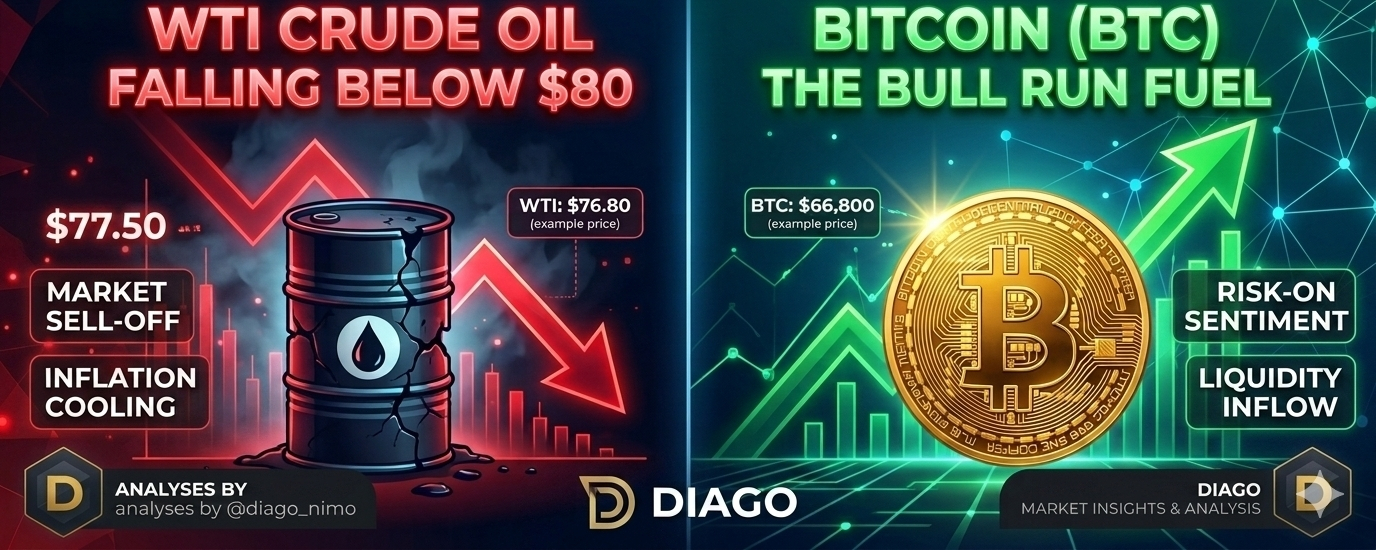
#WTIFallsBelow$80: How the US-Iran Peace Deal is Unlocking Millions in Crypto InflowsHeadline: #WTIFallsBelow$80 — The Macro Catalyst Cryptomarket Was Waiting For!
The global financial landscape just took a massive turn. For the first time in nearly four months, West Texas Intermediate (WTI) Crude Oil has plummeted well below the critical psychological level of $80, currently trading at a 2-month low around $76.50 - $77.30 per barrel.
While the energy sector is seeing a massive unwind, Binance Square is buzzing with one question: What does this mean for Crypto?
Here is my breakdown of the situation and why this macro shift is incredibly Bullish for Digital Assets. 👇
1. The Catalyst: Why did Oil Collapse?
The massive geopolitical risk premium that pushed oil prices up earlier this year is rapidly fading. The primary trigger is the recent US-Iran diplomatic breakthrough and ceasefire hopes, which has effectively secured the crucial Strait of Hormuz shipping routes.
Combined with OPEC lowering its global demand forecast for 2026, the oil market is facing a supply surplus. WTI has dropped over 4% in a single session and is down nearly 30% from its 2026 peak.
2. The Crypto Connection: Lower Oil = Risk-On Market
In traditional finance, high oil prices drive inflation, which forces central banks (like the US Fed) to keep interest rates high. High interest rates are historically bad for risk assets like Bitcoin.
Now, the script has flipped:
Inflation Relief: Dropping oil prices mean lower transportation and production costs globally. This cools down inflation.
The Fed Factor: With inflation under control, the pressure on the Fed eases, opening the door for liquidity to flow back into the markets.
3. Live Data & Market Insights: Bitcoin at the Gates
We are already seeing the impact of this macro relief. While oil crashed, Bitcoin (BTC) safely secured the $66,000 zone (currently hovering around $66,650).
Institutional confidence is visibly returning:
ETF Inflows: US Spot Bitcoin ETFs just recorded a massive $85.85 Million positive inflow in a single session.
Smart Money Buying: Giants like MicroStrategy continue to stack, purchasing another 1,587 BTC recently.
Expert Targets: Banking giant Standard Chartered’s analysts highlighted that falling oil is a strong buy signal for BTC, maintaining their $100,000 year-end target once Bitcoin clears the $83,000 resistance level.
💡 My Final Insight for Traders:
The fall of WTI below $80 isn't just an energy market headline—it's a green light for macro liquidity. As capital rotates out of defensive commodities, it is searching for high-growth risk assets. Bitcoin and top-tier Alts are prime targets.
Keep a close eye on the $66k support level. If BTC consolidates here, the next leg up towards $70k+ might be closer than we think.
What’s your move? Are you buying the crypto dip while oil slips? Let me know in the comments! 👇
#WTIFallsBelow$80 #BTC #cryptouniverseofficial #OilFallsBelow$80 #btc70k
#WTIFallsBelow$80: How the US-Iran Peace Deal is Unlocking Millions in Crypto Inflows
Headline: #WTIFallsBelow$80 — The Macro Catalyst Cryptomarket Was Waiting For!
The global financial landscape just took a massive turn. For the first time in nearly four months, West Texas Intermediate (WTI) Crude Oil has plummeted well below the critical psychological level of $80, currently trading at a 2-month low around $76.50 - $77.30 per barrel.
While the energy sector is seeing a massive unwind, Binance Square is buzzing with one question: What does this mean for Crypto?
Here is my breakdown of the situation and why this macro shift is incredibly Bullish for Digital Assets. 👇
1. The Catalyst: Why did Oil Collapse?
The massive geopolitical risk premium that pushed oil prices up earlier this year is rapidly fading. The primary trigger is the recent US-Iran diplomatic breakthrough and ceasefire hopes, which has effectively secured the crucial Strait of Hormuz shipping routes.
Combined with OPEC lowering its global demand forecast for 2026, the oil market is facing a supply surplus. WTI has dropped over 4% in a single session and is down nearly 30% from its 2026 peak.
2. The Crypto Connection: Lower Oil = Risk-On Market
In traditional finance, high oil prices drive inflation, which forces central banks (like the US Fed) to keep interest rates high. High interest rates are historically bad for risk assets like Bitcoin.
Now, the script has flipped:
Inflation Relief: Dropping oil prices mean lower transportation and production costs globally. This cools down inflation.
The Fed Factor: With inflation under control, the pressure on the Fed eases, opening the door for liquidity to flow back into the markets.
3. Live Data & Market Insights: Bitcoin at the Gates
We are already seeing the impact of this macro relief. While oil crashed, Bitcoin (BTC) safely secured the $66,000 zone (currently hovering around $66,650).
Institutional confidence is visibly returning:
ETF Inflows: US Spot Bitcoin ETFs just recorded a massive $85.85 Million positive inflow in a single session.
Smart Money Buying: Giants like MicroStrategy continue to stack, purchasing another 1,587 BTC recently.
Expert Targets: Banking giant Standard Chartered’s analysts highlighted that falling oil is a strong buy signal for BTC, maintaining their $100,000 year-end target once Bitcoin clears the $83,000 resistance level.
💡 My Final Insight for Traders:
The fall of WTI below $80 isn't just an energy market headline—it's a green light for macro liquidity. As capital rotates out of defensive commodities, it is searching for high-growth risk assets. Bitcoin and top-tier Alts are prime targets.
Keep a close eye on the $66k support level. If BTC consolidates here, the next leg up towards $70k+ might be closer than we think.
What’s your move? Are you buying the crypto dip while oil slips? Let me know in the comments! 👇
#WTIFallsBelow$80 #BTC #cryptouniverseofficial #OilFallsBelow$80 #btc70k
The global financial landscape just took a massive turn. For the first time in nearly four months, West Texas Intermediate (WTI) Crude Oil has plummeted well below the critical psychological level of $80, currently trading at a 2-month low around $76.50 - $77.30 per barrel.
While the energy sector is seeing a massive unwind, Binance Square is buzzing with one question: What does this mean for Crypto?
Here is my breakdown of the situation and why this macro shift is incredibly Bullish for Digital Assets. 👇
1. The Catalyst: Why did Oil Collapse?
The massive geopolitical risk premium that pushed oil prices up earlier this year is rapidly fading. The primary trigger is the recent US-Iran diplomatic breakthrough and ceasefire hopes, which has effectively secured the crucial Strait of Hormuz shipping routes.
Combined with OPEC lowering its global demand forecast for 2026, the oil market is facing a supply surplus. WTI has dropped over 4% in a single session and is down nearly 30% from its 2026 peak.
2. The Crypto Connection: Lower Oil = Risk-On Market
In traditional finance, high oil prices drive inflation, which forces central banks (like the US Fed) to keep interest rates high. High interest rates are historically bad for risk assets like Bitcoin.
Now, the script has flipped:
Inflation Relief: Dropping oil prices mean lower transportation and production costs globally. This cools down inflation.
The Fed Factor: With inflation under control, the pressure on the Fed eases, opening the door for liquidity to flow back into the markets.
3. Live Data & Market Insights: Bitcoin at the Gates
We are already seeing the impact of this macro relief. While oil crashed, Bitcoin (BTC) safely secured the $66,000 zone (currently hovering around $66,650).
Institutional confidence is visibly returning:
ETF Inflows: US Spot Bitcoin ETFs just recorded a massive $85.85 Million positive inflow in a single session.
Smart Money Buying: Giants like MicroStrategy continue to stack, purchasing another 1,587 BTC recently.
Expert Targets: Banking giant Standard Chartered’s analysts highlighted that falling oil is a strong buy signal for BTC, maintaining their $100,000 year-end target once Bitcoin clears the $83,000 resistance level.
💡 My Final Insight for Traders:
The fall of WTI below $80 isn't just an energy market headline—it's a green light for macro liquidity. As capital rotates out of defensive commodities, it is searching for high-growth risk assets. Bitcoin and top-tier Alts are prime targets.
Keep a close eye on the $66k support level. If BTC consolidates here, the next leg up towards $70k+ might be closer than we think.
What’s your move? Are you buying the crypto dip while oil slips? Let me know in the comments! 👇
#WTIFallsBelow$80 #BTC #cryptouniverseofficial #OilFallsBelow$80 #btc70k
4
495

·
--
Bullish
#WTIFallsBelow$80
Here's a viral Binance Square post: 🛢️💥 WTI JUST CRASHED BELOW $80 — THE WORLD IS CHANGING IN REAL TIME! Let that sink in. Oil — the lifeblood of the global economy — just fell below $80 a barrel for the first time since early March. WTI dumped 5% in a single session. 🔻 And the reason? A US-Iran peace deal that could reopen the Strait of Hormuz — the chokepoint that controls 1/5 of the world's entire oil supply. 🌍 This is not just an oil story.
This is a macro earthquake. 🌊 Here's what's really happening 👇 🔴 Oil crashing = inflation cooling fast
🟡 Inflation cooling = Fed forced to cut rates
🟢 Rate cuts = money printer goes BRRR
🚀 Money printer = BITCOIN. ETHEREUM. ALTS. ALL OF IT. The smart money already knows.
The institutions are already moving.
The question is — are YOU ready? 👀 We went from war premium in oil to peace deals being signed in Switzerland.
From $90+ barrels to sub-$80 in days. The macro winds just shifted in crypto's favor. 🌬️📈 Don't be the person who figured it out AFTER the rally. Drop a 🚀 if you're bullish. Drop a 🐻 if you think it's a trap. #WTI #OilCrash #bitcoin #BTC
$BTC $ETH
{spot}(ETHUSDT)
#WTIFallsBelow$80
Here's a viral Binance Square post: 🛢️💥 WTI JUST CRASHED BELOW $80 — THE WORLD IS CHANGING IN REAL TIME! Let that sink in. Oil — the lifeblood of the global economy — just fell below $80 a barrel for the first time since early March. WTI dumped 5% in a single session. 🔻 And the reason? A US-Iran peace deal that could reopen the Strait of Hormuz — the chokepoint that controls 1/5 of the world's entire oil supply. 🌍 This is not just an oil story.
This is a macro earthquake. 🌊 Here's what's really happening 👇 🔴 Oil crashing = inflation cooling fast
🟡 Inflation cooling = Fed forced to cut rates
🟢 Rate cuts = money printer goes BRRR
🚀 Money printer = BITCOIN. ETHEREUM. ALTS. ALL OF IT. The smart money already knows.
The institutions are already moving.
The question is — are YOU ready? 👀 We went from war premium in oil to peace deals being signed in Switzerland.
From $90+ barrels to sub-$80 in days. The macro winds just shifted in crypto's favor. 🌬️📈 Don't be the person who figured it out AFTER the rally. Drop a 🚀 if you're bullish. Drop a 🐻 if you think it's a trap. #WTI #OilCrash #bitcoin #BTC
$BTC $ETH
Here's a viral Binance Square post: 🛢️💥 WTI JUST CRASHED BELOW $80 — THE WORLD IS CHANGING IN REAL TIME! Let that sink in. Oil — the lifeblood of the global economy — just fell below $80 a barrel for the first time since early March. WTI dumped 5% in a single session. 🔻 And the reason? A US-Iran peace deal that could reopen the Strait of Hormuz — the chokepoint that controls 1/5 of the world's entire oil supply. 🌍 This is not just an oil story.
This is a macro earthquake. 🌊 Here's what's really happening 👇 🔴 Oil crashing = inflation cooling fast
🟡 Inflation cooling = Fed forced to cut rates
🟢 Rate cuts = money printer goes BRRR
🚀 Money printer = BITCOIN. ETHEREUM. ALTS. ALL OF IT. The smart money already knows.
The institutions are already moving.
The question is — are YOU ready? 👀 We went from war premium in oil to peace deals being signed in Switzerland.
From $90+ barrels to sub-$80 in days. The macro winds just shifted in crypto's favor. 🌬️📈 Don't be the person who figured it out AFTER the rally. Drop a 🚀 if you're bullish. Drop a 🐻 if you think it's a trap. #WTI #OilCrash #bitcoin #BTC
$BTC $ETH
3
248

·
--
#WTIFallsBelow$80
🚨 WTI oil drops below $80! How does this affect crypto?
The WTI crude barrel broke below the key support of $80. Here’s what you need to know in 30 seconds:
🕊️. Peace and 🛢️Oil: A potential deal between the U.S. and Iran could normalize crude flow in the Strait of Hormuz, driving oil prices down due to reduced geopolitical tension.
🛢️ Less Inflation: Cheaper crude reduces global inflationary pressure 🛢️💸. This paves the way for central banks to cut interest rates more aggressively.
🛢️ Crypto Boost: Historically, a drop in energy costs and lower rates injects massive liquidity into the global market, directly benefiting Bitcoin and altcoins 🚀.
Less geopolitical fear lowers the barrel price, which usually translates to more financial gas for risk assets. Keep an eye on the charts! 📊
💬 Do you think crude 🛢️ will continue to drop or bounce back strongly?
#WTI #Oil #macroeconomy #CryptoNews
#WTIFallsBelow$80
🚨 WTI oil drops below $80! How does this affect crypto?
The WTI crude barrel broke below the key support of $80. Here’s what you need to know in 30 seconds:
🕊️. Peace and 🛢️Oil: A potential deal between the U.S. and Iran could normalize crude flow in the Strait of Hormuz, driving oil prices down due to reduced geopolitical tension.
🛢️ Less Inflation: Cheaper crude reduces global inflationary pressure 🛢️💸. This paves the way for central banks to cut interest rates more aggressively.
🛢️ Crypto Boost: Historically, a drop in energy costs and lower rates injects massive liquidity into the global market, directly benefiting Bitcoin and altcoins 🚀.
Less geopolitical fear lowers the barrel price, which usually translates to more financial gas for risk assets. Keep an eye on the charts! 📊
💬 Do you think crude 🛢️ will continue to drop or bounce back strongly?
#WTI #Oil #macroeconomy #CryptoNews
🚨 WTI oil drops below $80! How does this affect crypto?
The WTI crude barrel broke below the key support of $80. Here’s what you need to know in 30 seconds:
🕊️. Peace and 🛢️Oil: A potential deal between the U.S. and Iran could normalize crude flow in the Strait of Hormuz, driving oil prices down due to reduced geopolitical tension.
🛢️ Less Inflation: Cheaper crude reduces global inflationary pressure 🛢️💸. This paves the way for central banks to cut interest rates more aggressively.
🛢️ Crypto Boost: Historically, a drop in energy costs and lower rates injects massive liquidity into the global market, directly benefiting Bitcoin and altcoins 🚀.
Less geopolitical fear lowers the barrel price, which usually translates to more financial gas for risk assets. Keep an eye on the charts! 📊
💬 Do you think crude 🛢️ will continue to drop or bounce back strongly?
#WTI #Oil #macroeconomy #CryptoNews
154

·
--
#WTIFallsBelow$80 is a reminder that markets are all about capital rotation. When oil prices drop, money doesn't disappear—it often shifts from long positions to short sellers or moves into other assets. Keeping an eye on energy markets can provide clues about broader risk sentiment across stocks, commodities, and even crypto. Watching how assets like $BTC and $BNB react to these shifts is always interesting. 📉➡️📈
#crypto #WTI #Bitcoin #BNBChain
#WTIFallsBelow$80 is a reminder that markets are all about capital rotation. When oil prices drop, money doesn't disappear—it often shifts from long positions to short sellers or moves into other assets. Keeping an eye on energy markets can provide clues about broader risk sentiment across stocks, commodities, and even crypto. Watching how assets like $BTC and $BNB react to these shifts is always interesting. 📉➡️📈
#crypto #WTI #Bitcoin #BNBChain
#crypto #WTI #Bitcoin #BNBChain
150

·
--
Bullish
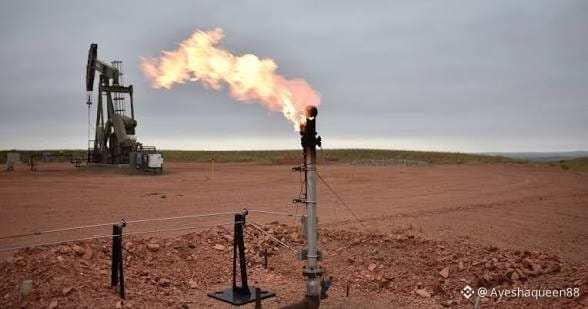
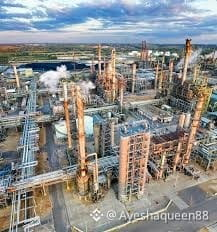
#OilFallsBelow$80 OIL: *falls below $80*
$SYN
{future}(SYNUSDT)
BITCOIN: "Hold my private keys" 🔑📈
$VELVET
{alpha}(560x8b194370825e37b33373e74a41009161808c1488)
Geopolitics fear gone ✅
Risk assets pumping ✅
My portfolio breathing again ✅
$HMSTR
{future}(HMSTRUSDT)
$80 oil = Good news for $70K BTC 🎯
#OilFallsBelow$80 #BTC #CryptoNews
#OilFallsBelow$80 OIL: *falls below $80*
$SYN
BITCOIN: "Hold my private keys" 🔑📈
$VELVET
Geopolitics fear gone ✅
Risk assets pumping ✅
My portfolio breathing again ✅
$HMSTR
$80 oil = Good news for $70K BTC 🎯
#OilFallsBelow$80 #BTC #CryptoNews
$SYN
BITCOIN: "Hold my private keys" 🔑📈
$VELVET
Geopolitics fear gone ✅
Risk assets pumping ✅
My portfolio breathing again ✅
$HMSTR
$80 oil = Good news for $70K BTC 🎯
#OilFallsBelow$80 #BTC #CryptoNews
1
4
415

·
--
$ETH
{spot}(ETHUSDT)
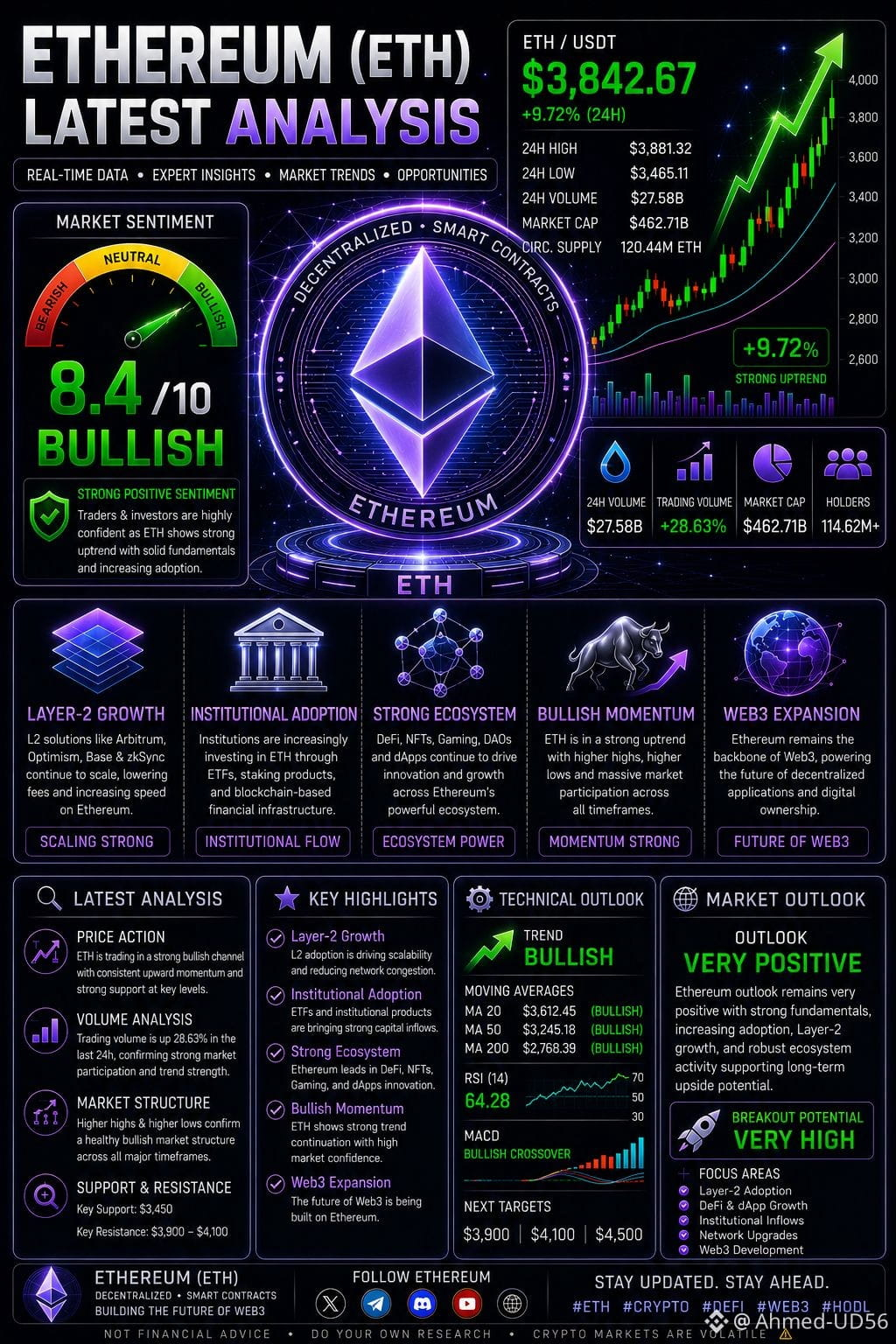
continues to strengthen its position as the leading smart contract blockchain. Growing adoption of Layer-2 networks, DeFi protocols, and institutional interest is helping support positive market sentiment.
🔍 Key Highlights
✅ Strong ecosystem growth
✅ Expanding Layer-2 adoption
✅ High developer activity
✅ Growing institutional demand
⚠️ Short-term market volatility remains
💡 Outlook
ETH remains one of the strongest assets in the crypto market. As Web3, DeFi, and tokenized assets continue to expand, Ethereum is well-positioned for long-term growth. A sustained move above key resistance levels could fuel additional upside momentum.
Sentiment Score: 8.4/10 Bullish 🚀
#WTIFallsBelow$80 #USADPEmploymentChangeSlipsTo25500 #EthereumRebounds22%FromJuneLow #NEARRises22.2% #TAORises31.9%
$ETH
continues to strengthen its position as the leading smart contract blockchain. Growing adoption of Layer-2 networks, DeFi protocols, and institutional interest is helping support positive market sentiment.
🔍 Key Highlights
✅ Strong ecosystem growth
✅ Expanding Layer-2 adoption
✅ High developer activity
✅ Growing institutional demand
⚠️ Short-term market volatility remains
💡 Outlook
ETH remains one of the strongest assets in the crypto market. As Web3, DeFi, and tokenized assets continue to expand, Ethereum is well-positioned for long-term growth. A sustained move above key resistance levels could fuel additional upside momentum.
Sentiment Score: 8.4/10 Bullish 🚀
#WTIFallsBelow$80 #USADPEmploymentChangeSlipsTo25500 #EthereumRebounds22%FromJuneLow #NEARRises22.2% #TAORises31.9%
continues to strengthen its position as the leading smart contract blockchain. Growing adoption of Layer-2 networks, DeFi protocols, and institutional interest is helping support positive market sentiment.
🔍 Key Highlights
✅ Strong ecosystem growth
✅ Expanding Layer-2 adoption
✅ High developer activity
✅ Growing institutional demand
⚠️ Short-term market volatility remains
💡 Outlook
ETH remains one of the strongest assets in the crypto market. As Web3, DeFi, and tokenized assets continue to expand, Ethereum is well-positioned for long-term growth. A sustained move above key resistance levels could fuel additional upside momentum.
Sentiment Score: 8.4/10 Bullish 🚀
#WTIFallsBelow$80 #USADPEmploymentChangeSlipsTo25500 #EthereumRebounds22%FromJuneLow #NEARRises22.2% #TAORises31.9%
92
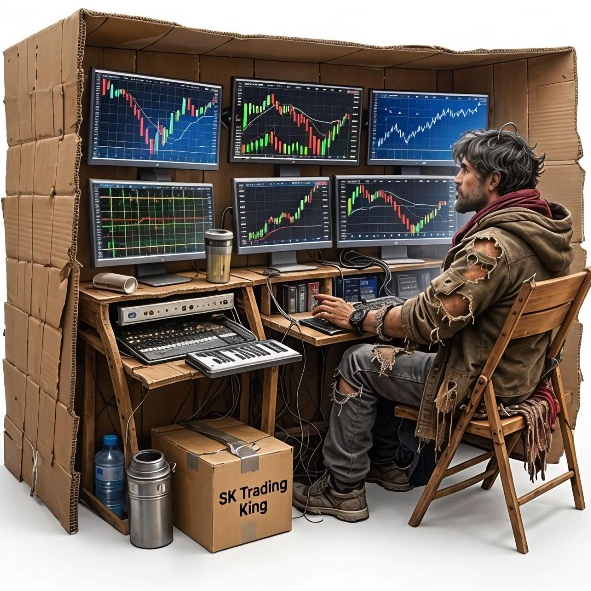
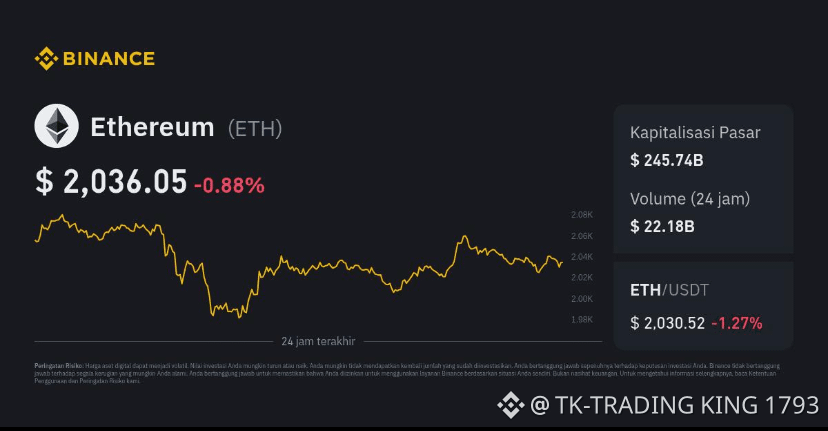
ETH/USDT remains under pressure after a sharp correction earlier this month, but recent accumulation signals are providing some support. Large holders have continued moving $ETH off exchanges and into staking or self-custody wallets, a sign of longer-term confidence.
Technical Outlook
* Key support: $1,500–$1,600
* Immediate resistance: $1,700–$1,770
* A breakout above $1,770 could open the door to a stronger recovery, while failure to hold support may lead to renewed selling pressure.
Market Sentiment
* Ethereum recently faced ETF outflows and broader crypto weakness, but fresh ETF inflows and rising staking demand are helping sentiment stabilize.
* Whale accumulation and growing on-chain activity remain bullish long-term indicators.
Short Analysis:
$ETH is showing early recovery signs, but traders should watch the $1,700–$1,770 resistance zone closely. A successful breakout could trigger a bullish move, while rejection may keep the market range-bound in the near term.
#WTIFallsBelow$80
{spot}(ETHUSDT)
ETH/USDT remains under pressure after a sharp correction earlier this month, but recent accumulation signals are providing some support. Large holders have continued moving $ETH off exchanges and into staking or self-custody wallets, a sign of longer-term confidence.
Technical Outlook
* Key support: $1,500–$1,600
* Immediate resistance: $1,700–$1,770
* A breakout above $1,770 could open the door to a stronger recovery, while failure to hold support may lead to renewed selling pressure.
Market Sentiment
* Ethereum recently faced ETF outflows and broader crypto weakness, but fresh ETF inflows and rising staking demand are helping sentiment stabilize.
* Whale accumulation and growing on-chain activity remain bullish long-term indicators.
Short Analysis:
$ETH is showing early recovery signs, but traders should watch the $1,700–$1,770 resistance zone closely. A successful breakout could trigger a bullish move, while rejection may keep the market range-bound in the near term.
#WTIFallsBelow$80
Technical Outlook
* Key support: $1,500–$1,600
* Immediate resistance: $1,700–$1,770
* A breakout above $1,770 could open the door to a stronger recovery, while failure to hold support may lead to renewed selling pressure.
Market Sentiment
* Ethereum recently faced ETF outflows and broader crypto weakness, but fresh ETF inflows and rising staking demand are helping sentiment stabilize.
* Whale accumulation and growing on-chain activity remain bullish long-term indicators.
Short Analysis:
$ETH is showing early recovery signs, but traders should watch the $1,700–$1,770 resistance zone closely. A successful breakout could trigger a bullish move, while rejection may keep the market range-bound in the near term.
#WTIFallsBelow$80
70


·
--
Bullish
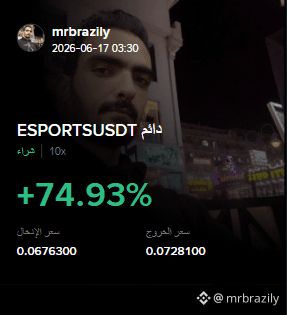
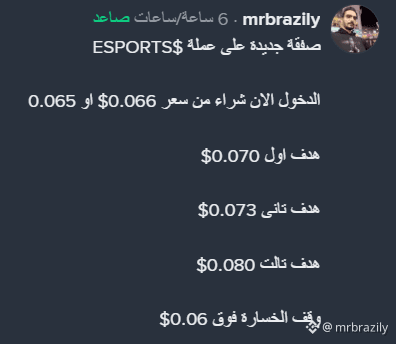
$ESPORTS Congrats, guys! We hit the first and second targets, thank God! Bless up 💪
#WTIFallsBelow$80 #TradebStocks #BTC #ETH #esports
{future}(ESPORTSUSDT)
$ESPORTS Congrats, guys! We hit the first and second targets, thank God! Bless up 💪
#WTIFallsBelow$80 #TradebStocks #BTC #ETH #esports
#WTIFallsBelow$80 #TradebStocks #BTC #ETH #esports
1
111

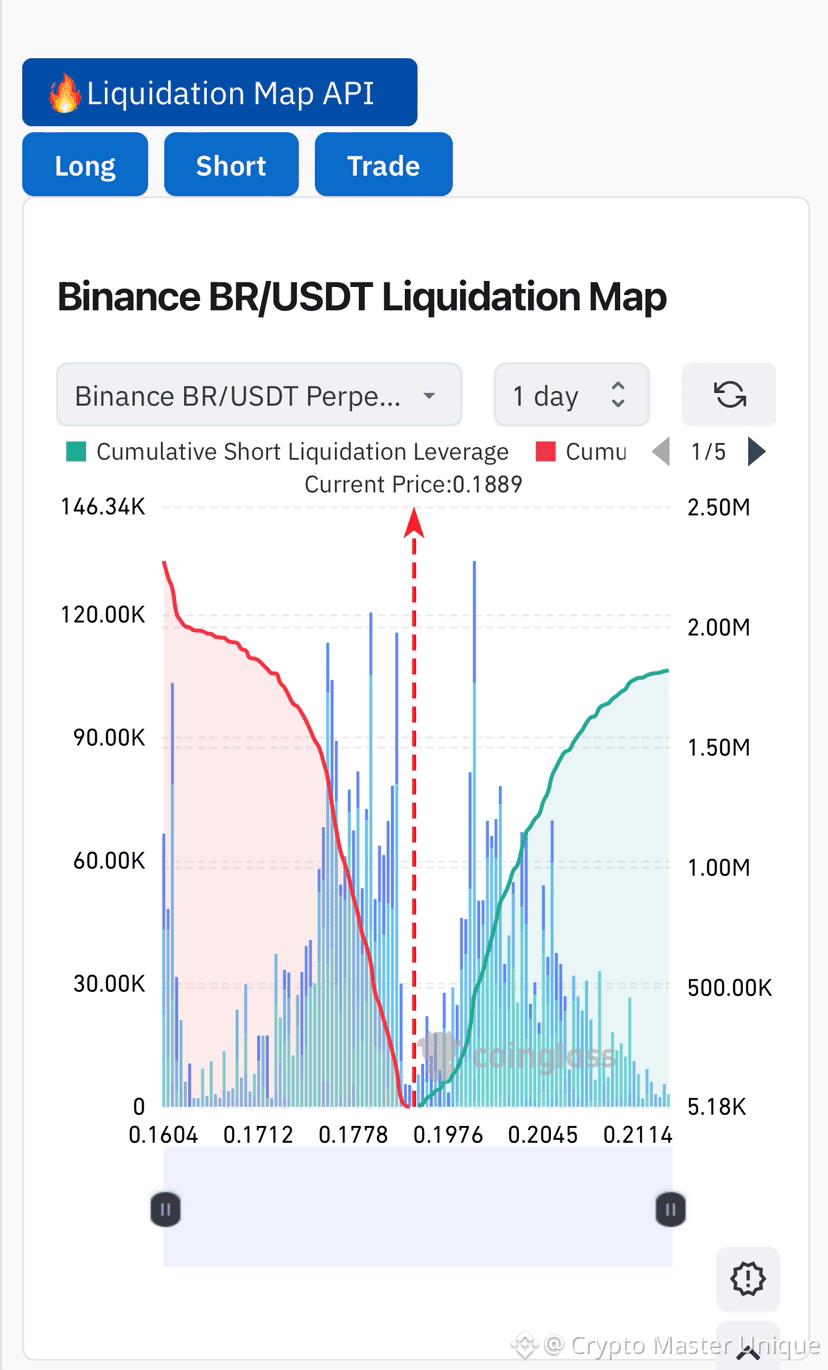
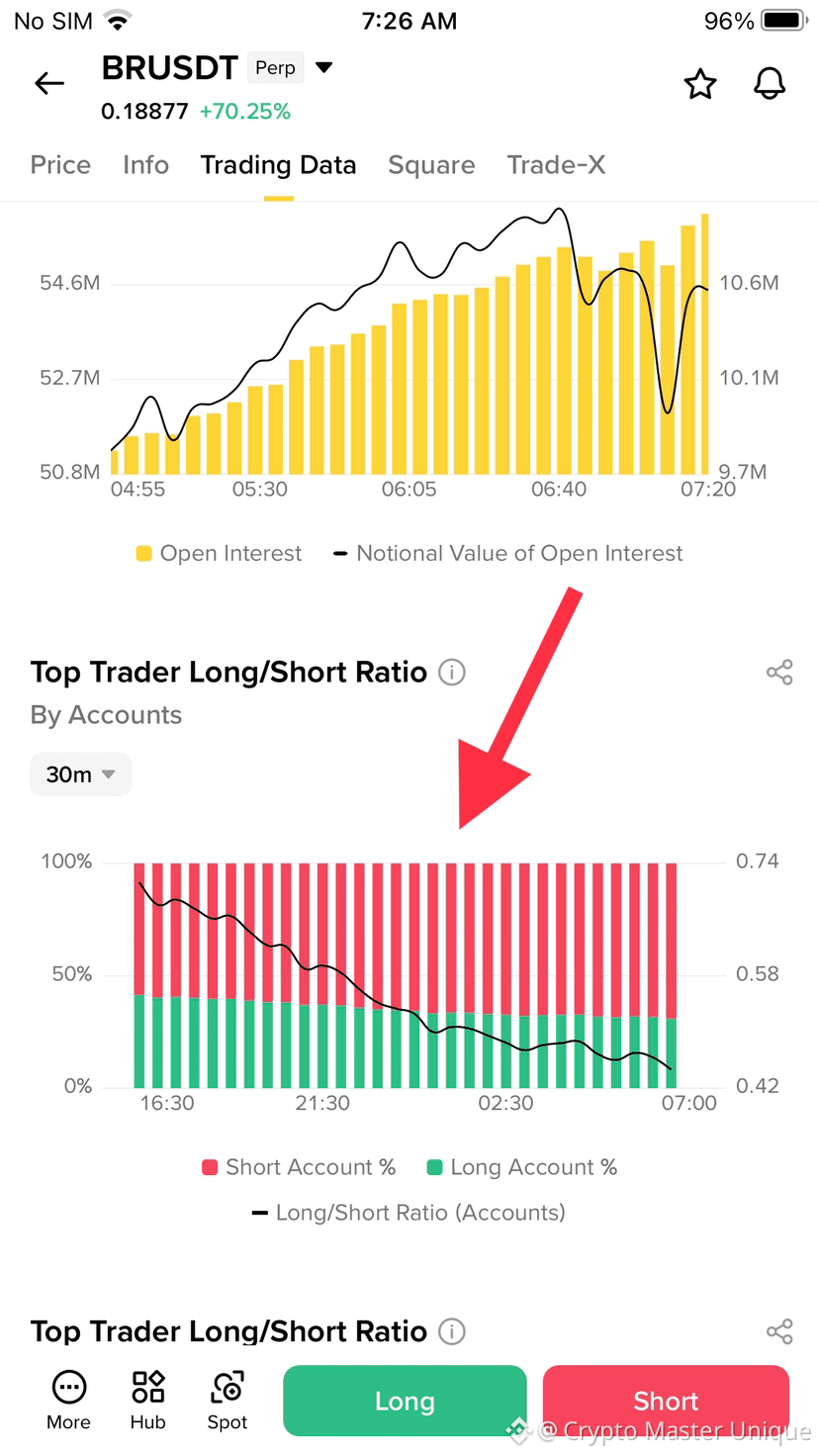
There Are So Many Short Position Open
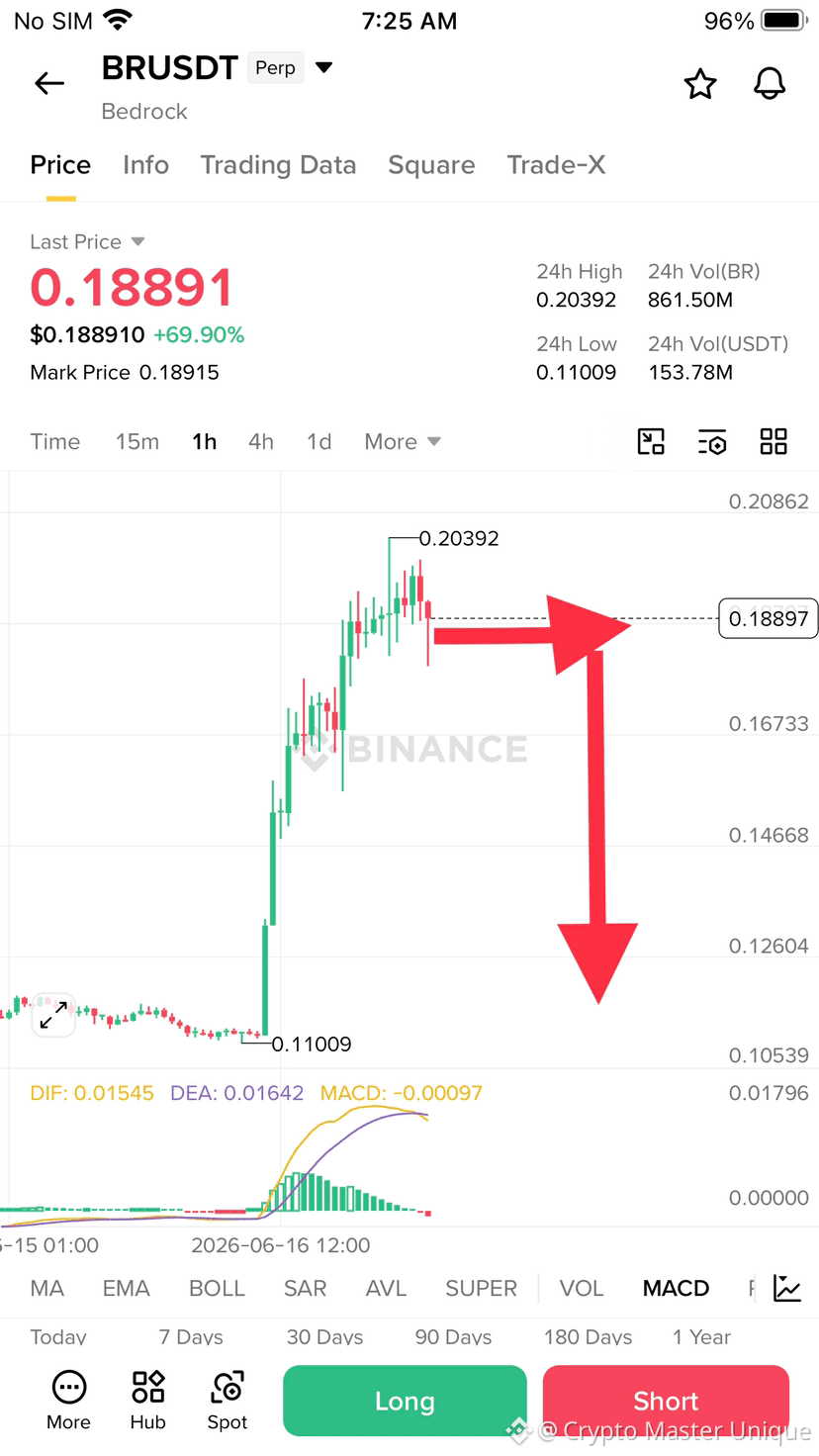
Short Trade Setup for $BR
Entry 0.190-0.189
Stoploss 0.22
Target
0.180
0.160
0.150
$ESPORTS
$SIREN
#WTIFallsBelow$80
There Are So Many Short Position Open
Short Trade Setup for $BR
Entry 0.190-0.189
Stoploss 0.22
Target
0.180
0.160
0.150
$ESPORTS
$SIREN
#WTIFallsBelow$80
Short Trade Setup for $BR
Entry 0.190-0.189
Stoploss 0.22
Target
0.180
0.160
0.150
$ESPORTS
$SIREN
#WTIFallsBelow$80
1
2
501

$BTC (Market Psychology)
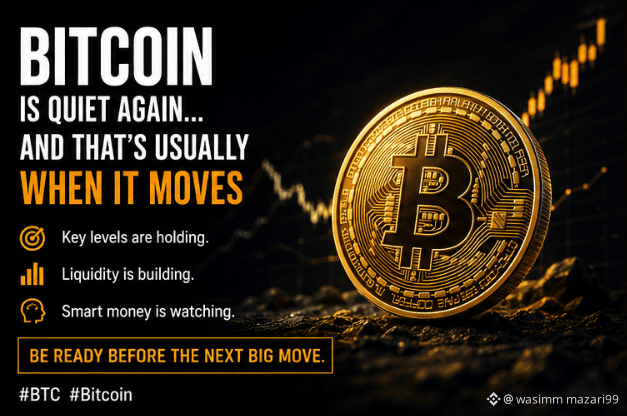
@bitcoin Is Quiet Again... And That's Usually When It Moves
Most traders are waiting for confirmation. Some want a breakout, others expect a pullback. But history shows that Bitcoin often makes its biggest moves when the market becomes comfortable and attention starts fading.
Right now, $BTC is holding key levels while liquidity continues to build on both sides. This is creating the type of environment where a sudden move can catch traders off guard.
The question isn't whether Bitcoin will move.
The real question is: Will you be positioned before the move happens?
Smart traders are watching volume, support zones, and market sentiment instead of chasing candles.
📊 Keep your eyes on $BTC . The next major move could arrive faster than most expect.
#Bitcoin #BTC #CryptoTrading #WTIFallsBelow$80
{future}(BTCUSDT)
$BTC (Market Psychology)
@Bitcoin Is Quiet Again... And That's Usually When It Moves
Most traders are waiting for confirmation. Some want a breakout, others expect a pullback. But history shows that Bitcoin often makes its biggest moves when the market becomes comfortable and attention starts fading.
Right now, $BTC is holding key levels while liquidity continues to build on both sides. This is creating the type of environment where a sudden move can catch traders off guard.
The question isn't whether Bitcoin will move.
The real question is: Will you be positioned before the move happens?
Smart traders are watching volume, support zones, and market sentiment instead of chasing candles.
📊 Keep your eyes on $BTC . The next major move could arrive faster than most expect.
#Bitcoin #BTC #CryptoTrading #WTIFallsBelow$80
@Bitcoin Is Quiet Again... And That's Usually When It Moves
Most traders are waiting for confirmation. Some want a breakout, others expect a pullback. But history shows that Bitcoin often makes its biggest moves when the market becomes comfortable and attention starts fading.
Right now, $BTC is holding key levels while liquidity continues to build on both sides. This is creating the type of environment where a sudden move can catch traders off guard.
The question isn't whether Bitcoin will move.
The real question is: Will you be positioned before the move happens?
Smart traders are watching volume, support zones, and market sentiment instead of chasing candles.
📊 Keep your eyes on $BTC . The next major move could arrive faster than most expect.
#Bitcoin #BTC #CryptoTrading #WTIFallsBelow$80
1
122

#opg $OPG OpenGradient is an innovative project that combines AI (artificial intelligence) technologies with blockchain to create a decentralized and secure infrastructure for running AI models and verifying their results. The project's goal is to address the issue of reliance on centralized service providers who monopolize the operation of smart models and control the data.
The OpenGradient platform relies on a distributed network that allows for hosting and running AI models in a verifiable encrypted manner, giving users and developers a higher level of transparency and trust. It also provides tools for developing applications and AI Agents, with the ability to leverage decentralized computing. (docs.opengradients.ai)
Some of the standout features of OpenGradient include:
• Decentralized hosting of AI models.
• Execution of inference in a verifiable manner.
• Support for smart agents and decentralized applications.
• User privacy protection through advanced encryption techniques.
• Providing a long-term memory layer for AI via MemSync technology. (docs.opengradient.ai)docs.opengradient.ai$SPCXB $NVDAB #EthereumRebounds22%FromJuneLow #USADPEmploymentChangeSlipsTo25500 #WTIFallsBelow$80
#opg $OPG OpenGradient is an innovative project that combines AI (artificial intelligence) technologies with blockchain to create a decentralized and secure infrastructure for running AI models and verifying their results. The project's goal is to address the issue of reliance on centralized service providers who monopolize the operation of smart models and control the data.
The OpenGradient platform relies on a distributed network that allows for hosting and running AI models in a verifiable encrypted manner, giving users and developers a higher level of transparency and trust. It also provides tools for developing applications and AI Agents, with the ability to leverage decentralized computing. (docs.opengradients.ai)
Some of the standout features of OpenGradient include:
• Decentralized hosting of AI models.
• Execution of inference in a verifiable manner.
• Support for smart agents and decentralized applications.
• User privacy protection through advanced encryption techniques.
• Providing a long-term memory layer for AI via MemSync technology. (docs.opengradient.ai)docs.opengradient.ai$SPCXB $NVDAB #EthereumRebounds22%FromJuneLow #USADPEmploymentChangeSlipsTo25500 #WTIFallsBelow$80
The OpenGradient platform relies on a distributed network that allows for hosting and running AI models in a verifiable encrypted manner, giving users and developers a higher level of transparency and trust. It also provides tools for developing applications and AI Agents, with the ability to leverage decentralized computing. (docs.opengradients.ai)
Some of the standout features of OpenGradient include:
• Decentralized hosting of AI models.
• Execution of inference in a verifiable manner.
• Support for smart agents and decentralized applications.
• User privacy protection through advanced encryption techniques.
• Providing a long-term memory layer for AI via MemSync technology. (docs.opengradient.ai)docs.opengradient.ai$SPCXB $NVDAB #EthereumRebounds22%FromJuneLow #USADPEmploymentChangeSlipsTo25500 #WTIFallsBelow$80
44

·
--
Bullish
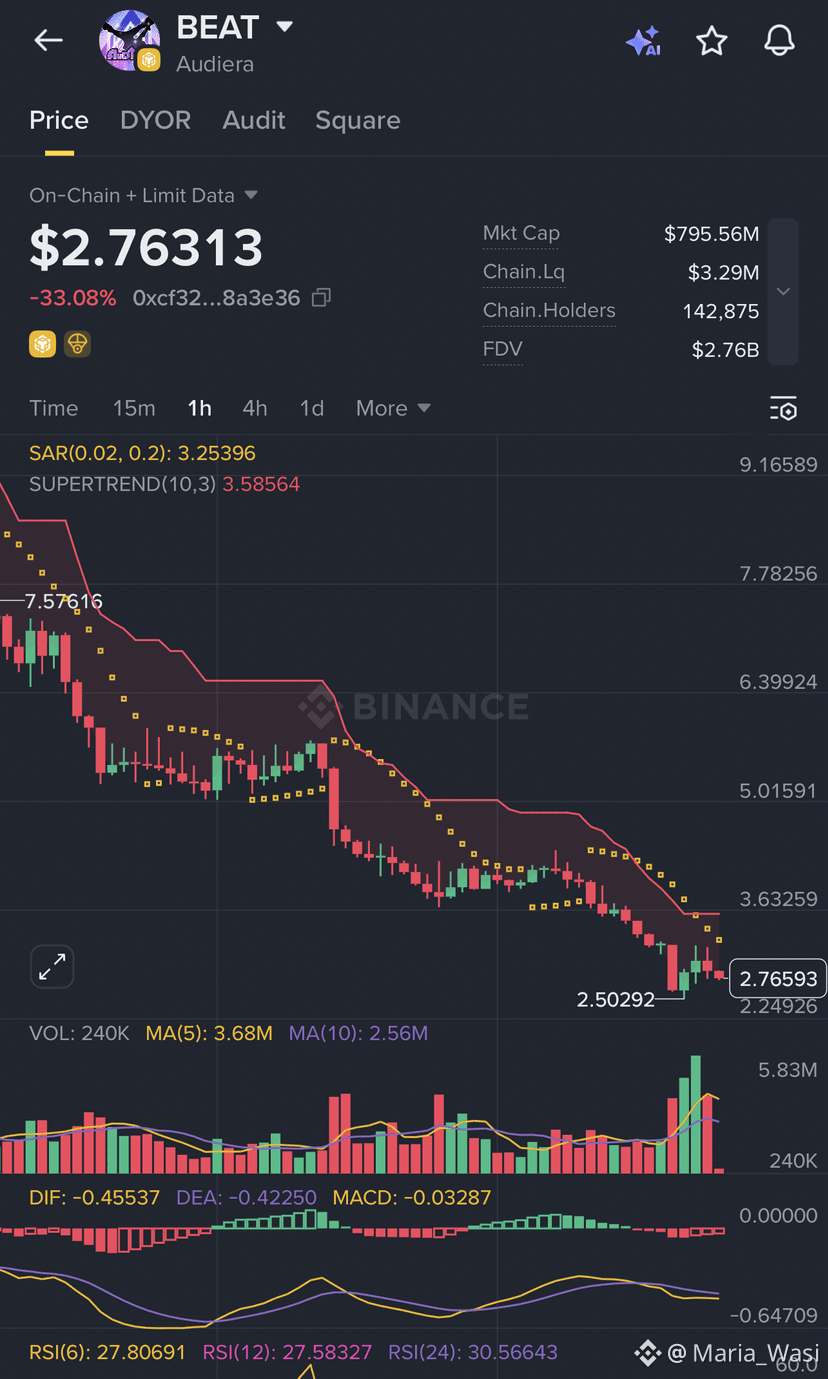
$BEAT Many retail traders expected the intense selling pressure to force $BEAT into an endless capitulation down to zero, but the asset is firmly catching a bid at a solid double-bottom structure to initiate a sharp bullish reversal.
Entry: 2.5200 - 2.7600
Targets: 3.6000 | 4.3500 | 5.0000
Stop Loss: 2.3500
Trade $BEAT here.👇🏻
#beat #WTIFallsBelow$80 #USADPEmploymentChangeSlipsTo25500 #OilFallsBelow$80 #SpaceXStockOptionsBeginTrading
{future}(BEATUSDT)
$BEAT Many retail traders expected the intense selling pressure to force $BEAT into an endless capitulation down to zero, but the asset is firmly catching a bid at a solid double-bottom structure to initiate a sharp bullish reversal.
Entry: 2.5200 - 2.7600
Targets: 3.6000 | 4.3500 | 5.0000
Stop Loss: 2.3500
Trade $BEAT here.👇🏻
#beat #WTIFallsBelow$80 #USADPEmploymentChangeSlipsTo25500 #OilFallsBelow$80 #SpaceXStockOptionsBeginTrading
Entry: 2.5200 - 2.7600
Targets: 3.6000 | 4.3500 | 5.0000
Stop Loss: 2.3500
Trade $BEAT here.👇🏻
#beat #WTIFallsBelow$80 #USADPEmploymentChangeSlipsTo25500 #OilFallsBelow$80 #SpaceXStockOptionsBeginTrading
17
2
1.3k


Verified
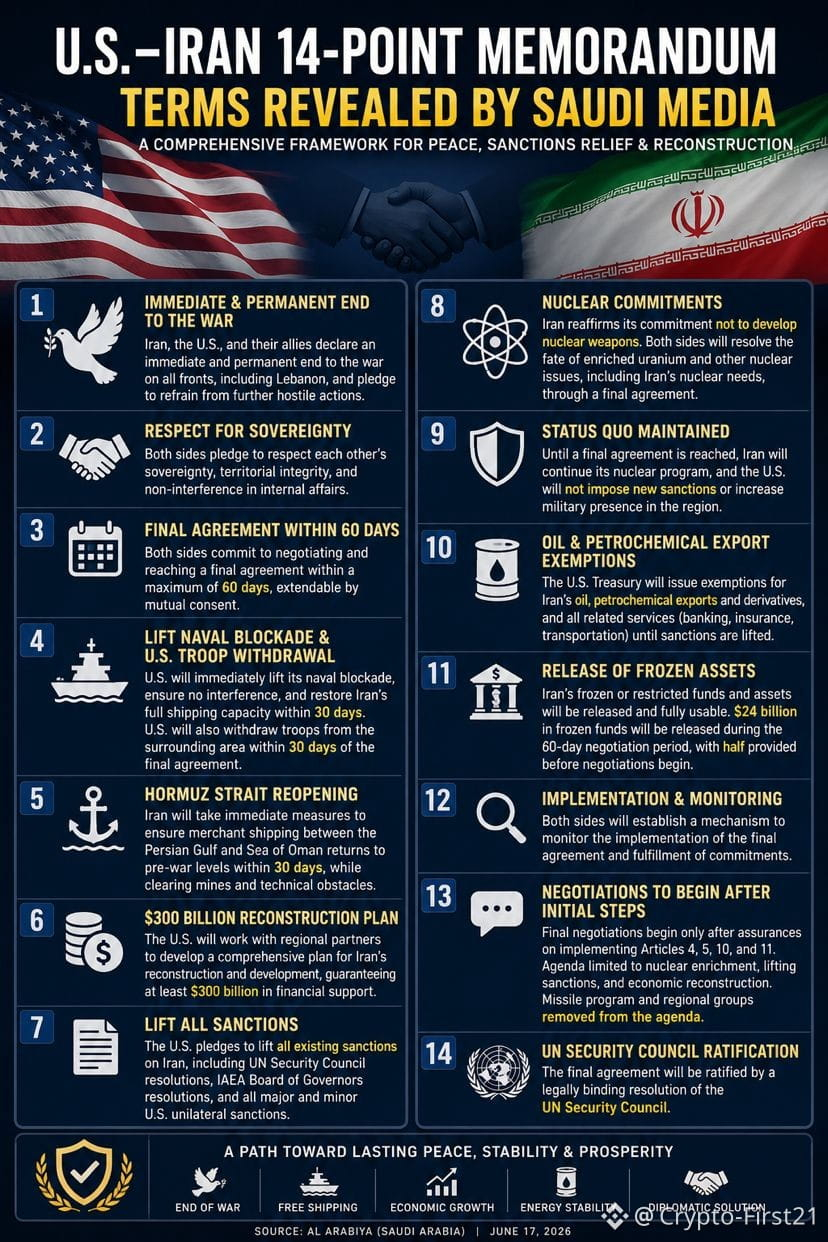
MASSIVE PEACE PROPOSAL REVEALED
Saudi media has published a detailed 14 point memorandum reportedly outlining a framework for ending the U.S.-Iran conflict.
Key points include:
*Immediate and permanent ceasefire across all fronts
*Restoration of shipping and reopening of key maritime routes
*At least $300 billion in reconstruction support for Iran
*Sanctions relief and exemptions for Iranian oil exports
*Release of frozen Iranian assets
*Iran reaffirms it will not develop nuclear weapons
*Final agreement targeted within 60 days
UN Security Council ratification of the final deal
If implemented, the proposal could dramatically reduce geopolitical risk, ease energy market concerns, lower inflation pressures, and potentially provide a major tailwind for global risk assets.
This could become one of the most consequential geopolitical agreements in years.
#TRUMP #WTIFallsBelow$80 #cryptofirst21
$BSB $SPCX $SPCXB
MASSIVE PEACE PROPOSAL REVEALED
Saudi media has published a detailed 14 point memorandum reportedly outlining a framework for ending the U.S.-Iran conflict.
Key points include:
*Immediate and permanent ceasefire across all fronts
*Restoration of shipping and reopening of key maritime routes
*At least $300 billion in reconstruction support for Iran
*Sanctions relief and exemptions for Iranian oil exports
*Release of frozen Iranian assets
*Iran reaffirms it will not develop nuclear weapons
*Final agreement targeted within 60 days
UN Security Council ratification of the final deal
If implemented, the proposal could dramatically reduce geopolitical risk, ease energy market concerns, lower inflation pressures, and potentially provide a major tailwind for global risk assets.
This could become one of the most consequential geopolitical agreements in years.
#TRUMP #WTIFallsBelow$80 #cryptofirst21
$BSB $SPCX $SPCXB
Saudi media has published a detailed 14 point memorandum reportedly outlining a framework for ending the U.S.-Iran conflict.
Key points include:
*Immediate and permanent ceasefire across all fronts
*Restoration of shipping and reopening of key maritime routes
*At least $300 billion in reconstruction support for Iran
*Sanctions relief and exemptions for Iranian oil exports
*Release of frozen Iranian assets
*Iran reaffirms it will not develop nuclear weapons
*Final agreement targeted within 60 days
UN Security Council ratification of the final deal
If implemented, the proposal could dramatically reduce geopolitical risk, ease energy market concerns, lower inflation pressures, and potentially provide a major tailwind for global risk assets.
This could become one of the most consequential geopolitical agreements in years.
#TRUMP #WTIFallsBelow$80 #cryptofirst21
$BSB $SPCX $SPCXB
11
972

·
--
Bullish
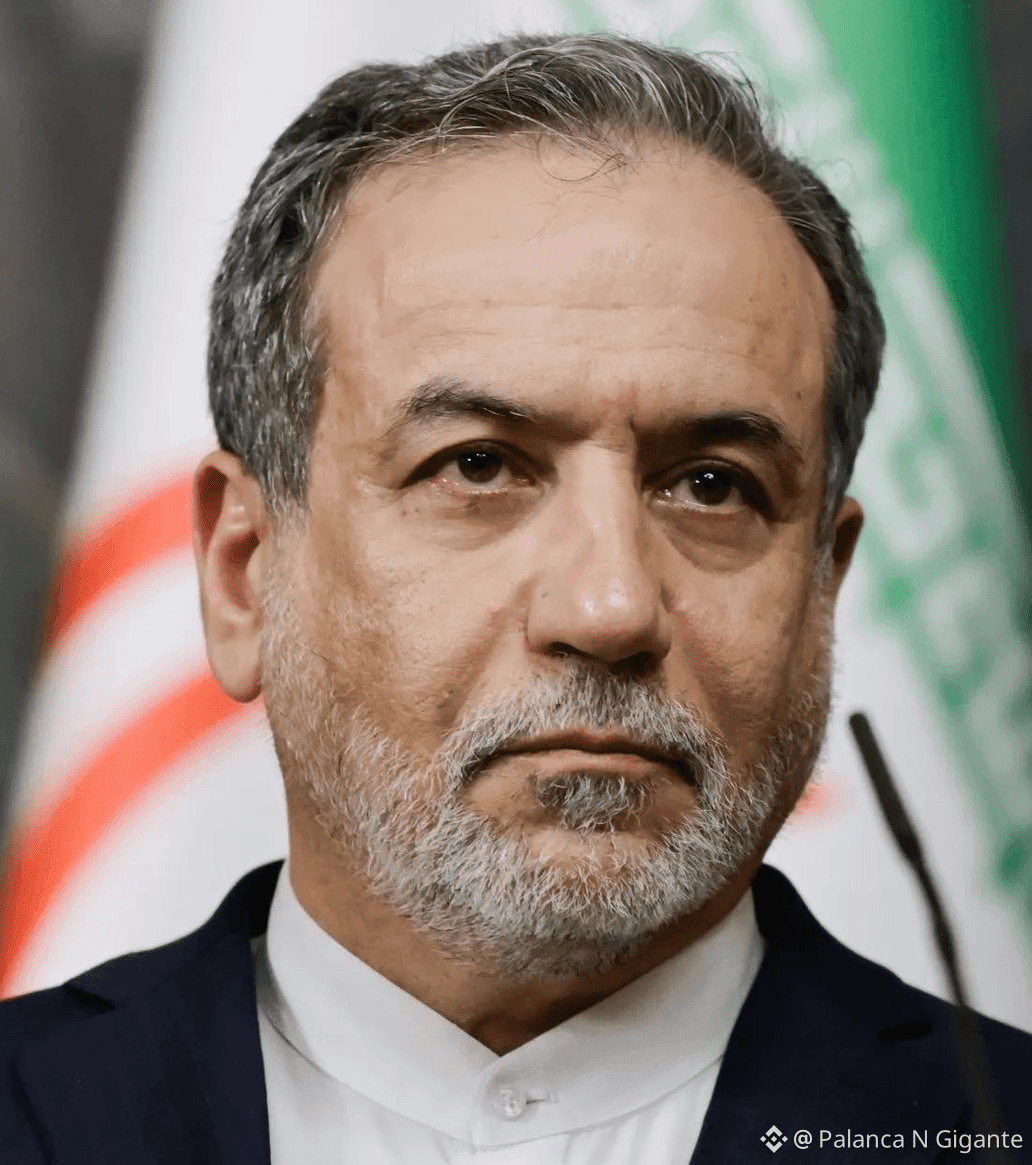
Iran's Foreign Minister, Abbas Araghchi, stated that, due to the challenges in reaching an understanding and the attacks from the US and Israel, negotiations will be split into two phases. $BR
The first phase addresses the end of the war, the Strait of Hormuz, the release of frozen funds, and reconstruction.
Negotiations will continue for 60 days to reach a final agreement discussing the nuclear issue and lifting sanctions. $BSB
New talks with the US may kick off on the 19th in Switzerland, although the exact venue isn't confirmed.
Araghchi confirmed that nuclear matters will be discussed in the final phase and emphasized that ending the war is the most critical event of the first phase. $SENT
{future}(BRUSDT)
{future}(BSBUSDT)
{spot}(SENTUSDT)
#news #IranIsraelConflict #CeasefireNow #USADPEmploymentChangeSlipsTo25500 #WTIFallsBelow$80
Iran's Foreign Minister, Abbas Araghchi, stated that, due to the challenges in reaching an understanding and the attacks from the US and Israel, negotiations will be split into two phases. $BR
The first phase addresses the end of the war, the Strait of Hormuz, the release of frozen funds, and reconstruction.
Negotiations will continue for 60 days to reach a final agreement discussing the nuclear issue and lifting sanctions. $BSB
New talks with the US may kick off on the 19th in Switzerland, although the exact venue isn't confirmed.
Araghchi confirmed that nuclear matters will be discussed in the final phase and emphasized that ending the war is the most critical event of the first phase. $SENT
#news #IranIsraelConflict #CeasefireNow #USADPEmploymentChangeSlipsTo25500 #WTIFallsBelow$80
The first phase addresses the end of the war, the Strait of Hormuz, the release of frozen funds, and reconstruction.
Negotiations will continue for 60 days to reach a final agreement discussing the nuclear issue and lifting sanctions. $BSB
New talks with the US may kick off on the 19th in Switzerland, although the exact venue isn't confirmed.
Araghchi confirmed that nuclear matters will be discussed in the final phase and emphasized that ending the war is the most critical event of the first phase. $SENT
#news #IranIsraelConflict #CeasefireNow #USADPEmploymentChangeSlipsTo25500 #WTIFallsBelow$80
1
1.5k
Log in to explore more content
Join global crypto users on Binance Square
⚡️ Get latest and useful information about crypto.
💬 Trusted by the world’s largest crypto exchange.
👍 Discover real insights from verified creators.
Email / Phone number
Trending Topics
1
#FedRateWatch
1.5M views
6,788 Discussing
2
#ZcashRises6%
56,474 views
677 Discussing
3
#XRPSinks10%
37,711 views
441 Discussing
4
#BitcoinETFsShed$450M
7,076 views
96 Discussing
5
#CircleOpensArcMainnet
17,197 views
295 Discussing
6
#ZcashHoldersBackNU7Upgrade
29,296 views
453 Discussing
7
#MSTRTradingVolumeSurpassesMorganStanley
27,212 views
604 Discussing
8
#BitcoinFalls4%
55,941 views
938 Discussing
9
#SKHynixInTalksToMakeMemoryChipsInUS
21,959 views
367 Discussing
10
#OpenAIDiscussesNewFundingAt$1.2TValuation
6,096 views
60 Discussing