
#wavetheory
wavetheory
6,242 views
23 Discussing
Hot
Latest

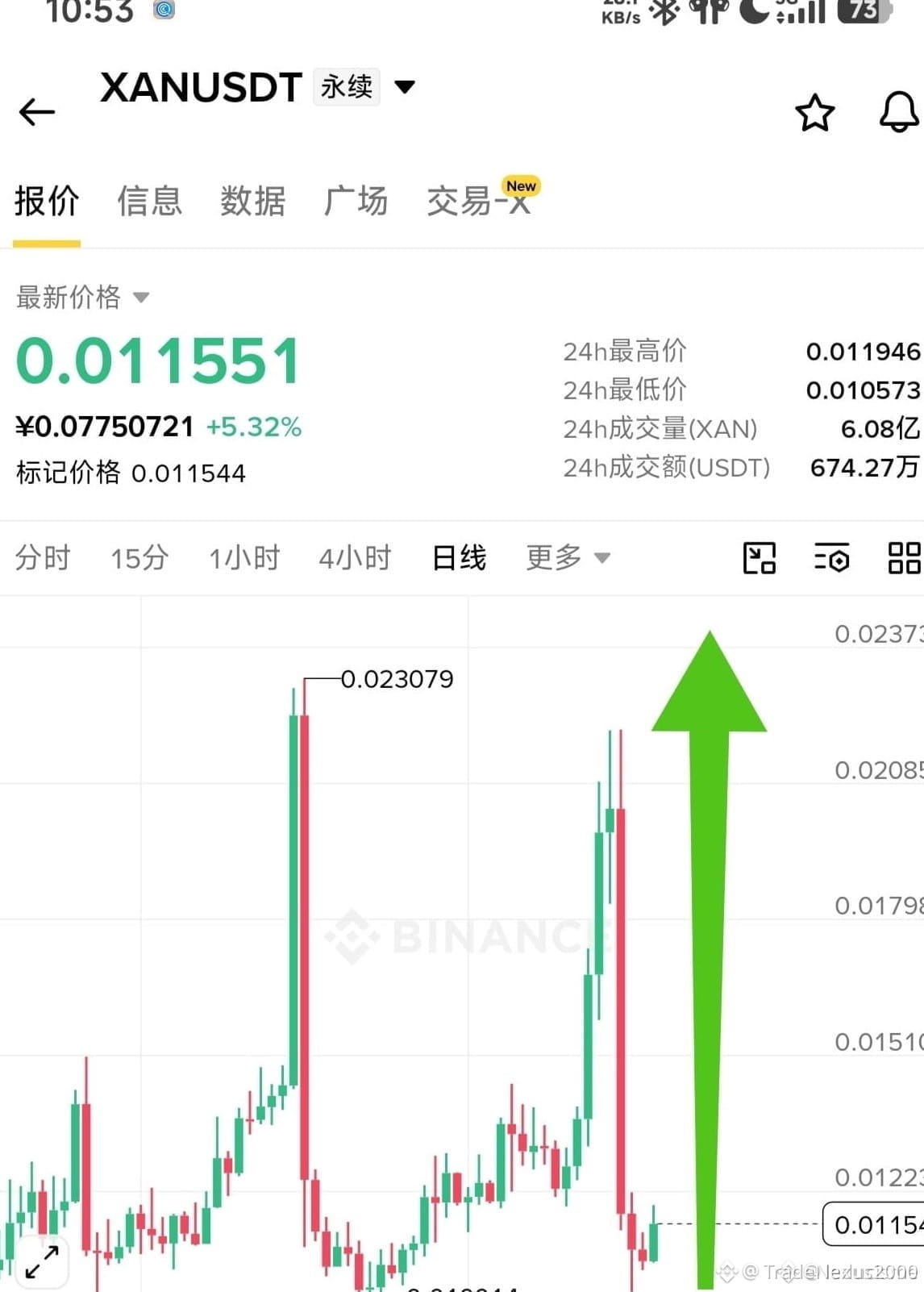
🚨 $XAN SHOWING WAVE 3 EXPANSION SIGNALS OFF MAJOR LIQUIDITY RECLAIM! 🟢
Entry: Current Price ⚡
Stop Loss: 0.01 ⚠️
$XAN has successfully defended its structural demand base, printing a sharp rejection tail that signals institutional absorption. The immediate sweep of sell-side liquidity has cleared the path for a high-velocity Wave 3 impulse phase. 📊
Previous expansion legs off this exact structure delivered rapid repricing cycles once order flow flipped bullish. 🔍 With buyers re-establishing control on lower timeframes, the risk profile favors systematic position building ahead of momentum continuation. 💡
💬 Are you capitalizing on this structural reclaim or waiting for higher timeframe confirmation? 👇
⚠️ Not financial advice. Always manage your risk. 🛡️
🏷️ #XAN #Crypto #TechnicalAnalysis #MarketStructure #WaveTheory
🎯 🦈
🚨 $XAN SHOWING WAVE 3 EXPANSION SIGNALS OFF MAJOR LIQUIDITY RECLAIM! 🟢
Entry: Current Price ⚡
Stop Loss: 0.01 ⚠️
$XAN has successfully defended its structural demand base, printing a sharp rejection tail that signals institutional absorption. The immediate sweep of sell-side liquidity has cleared the path for a high-velocity Wave 3 impulse phase. 📊
Previous expansion legs off this exact structure delivered rapid repricing cycles once order flow flipped bullish. 🔍 With buyers re-establishing control on lower timeframes, the risk profile favors systematic position building ahead of momentum continuation. 💡
💬 Are you capitalizing on this structural reclaim or waiting for higher timeframe confirmation? 👇
⚠️ Not financial advice. Always manage your risk. 🛡️
🏷️ #XAN #Crypto #TechnicalAnalysis #MarketStructure #WaveTheory
🎯 🦈
Entry: Current Price ⚡
Stop Loss: 0.01 ⚠️
$XAN has successfully defended its structural demand base, printing a sharp rejection tail that signals institutional absorption. The immediate sweep of sell-side liquidity has cleared the path for a high-velocity Wave 3 impulse phase. 📊
Previous expansion legs off this exact structure delivered rapid repricing cycles once order flow flipped bullish. 🔍 With buyers re-establishing control on lower timeframes, the risk profile favors systematic position building ahead of momentum continuation. 💡
💬 Are you capitalizing on this structural reclaim or waiting for higher timeframe confirmation? 👇
⚠️ Not financial advice. Always manage your risk. 🛡️
🏷️ #XAN #Crypto #TechnicalAnalysis #MarketStructure #WaveTheory
🎯 🦈
71

$BTC 'S FINAL MAJOR DROP? ANALYST POINTS TO $43K BOTTOM 📉
Liquid Capital founder Li Huayi identifies Bitcoin's third wave of decline since 1011, calling it possibly the final major drop based on wave theory and cyclical patterns. Projections from a $126K peak suggest a 60% drop to $51K or 66% drop to $43K.
The analyst notes July and August as the best window to buy the dip, citing U.S. stock risk and missing black swan events. This is the most worthwhile opportunity in three years if the bottom holds. Are you positioning for a Q3 bottom or waiting for confirmation?
Not financial advice. Always manage your risk.
#BTC #CryptoAnalysis #MarketCycle #BuyTheDip #WaveTheory
💎
$BTC 'S FINAL MAJOR DROP? ANALYST POINTS TO $43K BOTTOM 📉
Liquid Capital founder Li Huayi identifies Bitcoin's third wave of decline since 1011, calling it possibly the final major drop based on wave theory and cyclical patterns. Projections from a $126K peak suggest a 60% drop to $51K or 66% drop to $43K.
The analyst notes July and August as the best window to buy the dip, citing U.S. stock risk and missing black swan events. This is the most worthwhile opportunity in three years if the bottom holds. Are you positioning for a Q3 bottom or waiting for confirmation?
Not financial advice. Always manage your risk.
#BTC #CryptoAnalysis #MarketCycle #BuyTheDip #WaveTheory
💎
Liquid Capital founder Li Huayi identifies Bitcoin's third wave of decline since 1011, calling it possibly the final major drop based on wave theory and cyclical patterns. Projections from a $126K peak suggest a 60% drop to $51K or 66% drop to $43K.
The analyst notes July and August as the best window to buy the dip, citing U.S. stock risk and missing black swan events. This is the most worthwhile opportunity in three years if the bottom holds. Are you positioning for a Q3 bottom or waiting for confirmation?
Not financial advice. Always manage your risk.
#BTC #CryptoAnalysis #MarketCycle #BuyTheDip #WaveTheory
💎
21


𝐁𝐈𝐓𝐂𝐎𝐈𝐍’𝐒 𝐌𝐀𝐂𝐑𝐎 𝐑𝐎𝐀𝐃𝐌𝐀𝐏 — 𝐖𝐇𝐀𝐓 𝐓𝐇𝐈𝐒 𝐂𝐇𝐀𝐑𝐓 𝐈𝐒 𝐒𝐇𝐎𝐖𝐈𝐍𝐆 📊
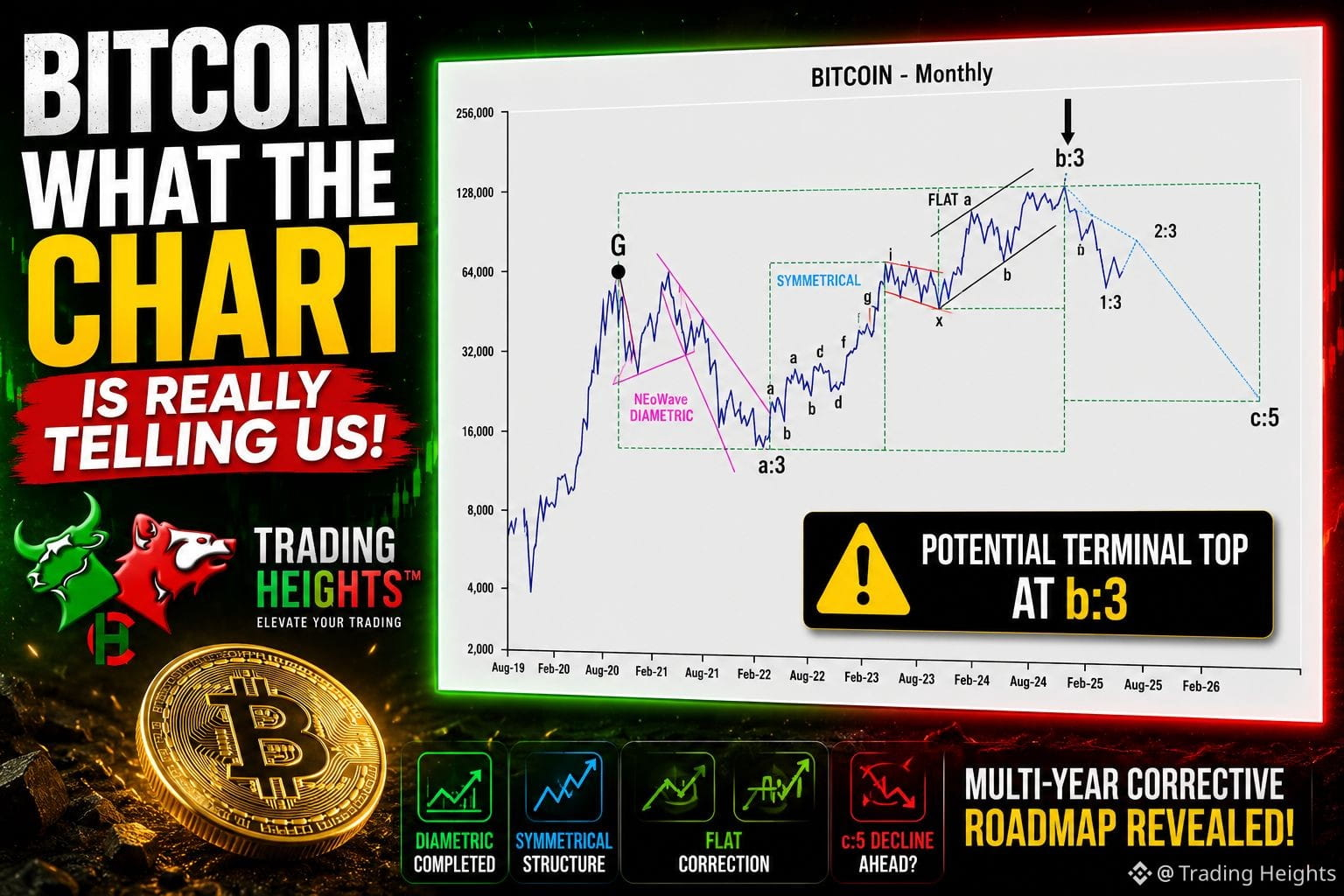
This monthly Bitcoin chart presents a long-term corrective structure based on advanced Wave Theory concepts.
According to this interpretation, the 2021 top near $69K completed a major “G” phase, after which Bitcoin entered a large corrective environment instead of a fresh impulsive supercycle.
🔶 The structure is divided into:
▫️ Diametric phase
▫️ Symmetrical continuation
▫️ Flat correction
▫️ Terminal setup near “b:3”
The black arrow near the “b:3” region is the most important part of the chart.
That zone is being treated as:
➡️ a potential terminal top
➡️ a late-stage corrective expansion
➡️ a possible exhaustion area before a larger decline
𝐖𝐇𝐀𝐓 𝐃𝐎𝐄𝐒 “𝐂:𝟓” 𝐌𝐄𝐀𝐍? ⚠️
The blue dotted projection toward the downside represents the expected “c:5” phase.
That scenario suggests:
🔶 Bitcoin could eventually lose major support levels
🔶 wave-1 lows may become vulnerable
🔶 a multi-year corrective decline may develop later
However, this chart is NOT predicting an immediate collapse.
Wave structures often evolve through: ▫️ overlapping price action
▫️ time complexity
▫️ emotional extremes
▫️ continuation traps
That means terminal environments can continue expanding longer than most traders expect.
𝐓𝐑𝐀𝐃𝐈𝐍𝐆 𝐇𝐄𝐈𝐆𝐇𝐓𝐒™ 𝐕𝐄𝐑𝐃𝐈𝐂𝐓 🚨
The real message behind this chart is simple:
👉 Bitcoin may still be bullish locally, but structurally the market could still be developing inside a giant corrective formation before the next major macro move.
$BTC #Bitcoin #WaveTheory
𝐁𝐈𝐓𝐂𝐎𝐈𝐍’𝐒 𝐌𝐀𝐂𝐑𝐎 𝐑𝐎𝐀𝐃𝐌𝐀𝐏 — 𝐖𝐇𝐀𝐓 𝐓𝐇𝐈𝐒 𝐂𝐇𝐀𝐑𝐓 𝐈𝐒 𝐒𝐇𝐎𝐖𝐈𝐍𝐆 📊
This monthly Bitcoin chart presents a long-term corrective structure based on advanced Wave Theory concepts.
According to this interpretation, the 2021 top near $69K completed a major “G” phase, after which Bitcoin entered a large corrective environment instead of a fresh impulsive supercycle.
🔶 The structure is divided into:
▫️ Diametric phase
▫️ Symmetrical continuation
▫️ Flat correction
▫️ Terminal setup near “b:3”
The black arrow near the “b:3” region is the most important part of the chart.
That zone is being treated as:
➡️ a potential terminal top
➡️ a late-stage corrective expansion
➡️ a possible exhaustion area before a larger decline
𝐖𝐇𝐀𝐓 𝐃𝐎𝐄𝐒 “𝐂:𝟓” 𝐌𝐄𝐀𝐍? ⚠️
The blue dotted projection toward the downside represents the expected “c:5” phase.
That scenario suggests:
🔶 Bitcoin could eventually lose major support levels
🔶 wave-1 lows may become vulnerable
🔶 a multi-year corrective decline may develop later
However, this chart is NOT predicting an immediate collapse.
Wave structures often evolve through: ▫️ overlapping price action
▫️ time complexity
▫️ emotional extremes
▫️ continuation traps
That means terminal environments can continue expanding longer than most traders expect.
𝐓𝐑𝐀𝐃𝐈𝐍𝐆 𝐇𝐄𝐈𝐆𝐇𝐓𝐒™ 𝐕𝐄𝐑𝐃𝐈𝐂𝐓 🚨
The real message behind this chart is simple:
👉 Bitcoin may still be bullish locally, but structurally the market could still be developing inside a giant corrective formation before the next major macro move.
$BTC #Bitcoin #WaveTheory
This monthly Bitcoin chart presents a long-term corrective structure based on advanced Wave Theory concepts.
According to this interpretation, the 2021 top near $69K completed a major “G” phase, after which Bitcoin entered a large corrective environment instead of a fresh impulsive supercycle.
🔶 The structure is divided into:
▫️ Diametric phase
▫️ Symmetrical continuation
▫️ Flat correction
▫️ Terminal setup near “b:3”
The black arrow near the “b:3” region is the most important part of the chart.
That zone is being treated as:
➡️ a potential terminal top
➡️ a late-stage corrective expansion
➡️ a possible exhaustion area before a larger decline
𝐖𝐇𝐀𝐓 𝐃𝐎𝐄𝐒 “𝐂:𝟓” 𝐌𝐄𝐀𝐍? ⚠️
The blue dotted projection toward the downside represents the expected “c:5” phase.
That scenario suggests:
🔶 Bitcoin could eventually lose major support levels
🔶 wave-1 lows may become vulnerable
🔶 a multi-year corrective decline may develop later
However, this chart is NOT predicting an immediate collapse.
Wave structures often evolve through: ▫️ overlapping price action
▫️ time complexity
▫️ emotional extremes
▫️ continuation traps
That means terminal environments can continue expanding longer than most traders expect.
𝐓𝐑𝐀𝐃𝐈𝐍𝐆 𝐇𝐄𝐈𝐆𝐇𝐓𝐒™ 𝐕𝐄𝐑𝐃𝐈𝐂𝐓 🚨
The real message behind this chart is simple:
👉 Bitcoin may still be bullish locally, but structurally the market could still be developing inside a giant corrective formation before the next major macro move.
$BTC #Bitcoin #WaveTheory
1
1
240
Log in to explore more content
Join global crypto users on Binance Square
⚡️ Get latest and useful information about crypto.
💬 Trusted by the world’s largest crypto exchange.
👍 Discover real insights from verified creators.
Email / Phone number
Trending Topics
1
#BitcoinReboundsTo$79K
15,954 views
144 Discussing
2
#SouthKoreaCryptoTaxDelayPetitionTops50000
2,118 views
90 Discussing
3
#SolanaTransactionV1GoesLiveOnMainnet
1,131 views
61 Discussing
4
#RussianCentralBankFlagsCryptoAsFinancialRisk
2,728 views
118 Discussing
5
#GrayscalePutsXRPAt26.11%InAdvisorPortfolio
8,476 views
203 Discussing
6
#PhiladelphiaSemiconductorIndexFalls5.9%
3,338 views
134 Discussing
7
#SECChairUrgesCongressToAdvanceClarityAct
8,962 views
127 Discussing
8
#FedHikeOddsRiseTo89%
93,988 views
1,131 Discussing
9
#RLUSDSupplyHitsRecord$2.442B
7,067 views
66 Discussing
10
#AvalancheIntegratesIntoUAEPassDigitalVault
82,623 views
1,049 Discussing