Binance Square

walrus

8.9M views
363,564 Discussing
Mohsin goraya Trader
·
--
Bullish
$WAL Sharing my honest thoughts on @WalrusProtocol 🌊 What stands out to me is the clear focus on real decentralized data infrastructure, not just hype. Projects that solve storage, scalability, and usability challenges quietly become the backbone of Web3 adoption. Watching how $WAL grows with builders, community strength, and long-term vision. Feels like an ecosystem worth following closely. #walrus {future}(WALUSDT)
$WAL Sharing my honest thoughts on @Walrus 🦭/acc 🌊
What stands out to me is the clear focus on real decentralized data infrastructure, not just hype. Projects that solve storage, scalability, and usability challenges quietly become the backbone of Web3 adoption.
Watching how $WAL grows with builders, community strength, and long-term vision. Feels like an ecosystem worth following closely.
#walrus
·
--
Walrus Protocol is redefining decentralized storage by focusing on scalability, efficiency, and real data availability. What I find compelling is how it optimizes blob storage for Web3 applications, making large-scale data more practical and cost-effective. The WAL token powers the ecosystem through staking and network incentives, aligning participants with long-term growth. As data becomes the backbone of blockchain utility, Walrus is positioning itself as critical infrastructure for the next wave of decentralized innovation. @WalrusProtocol #walrus #Walrus $WAL
Walrus Protocol is redefining decentralized storage by focusing on scalability, efficiency, and real data availability. What I find compelling is how it optimizes blob storage for Web3 applications, making large-scale data more practical and cost-effective. The WAL token powers the ecosystem through staking and network incentives, aligning participants with long-term growth. As data becomes the backbone of blockchain utility, Walrus is positioning itself as critical infrastructure for the next wave of decentralized innovation.
@Walrus 🦭/acc #walrus #Walrus $WAL
Walrus (WAL): The Storage Beast Quietly Taking Over Web3 in 2026Walrus is a decentralized storage project built on the Sui blockchain, and its main goal is simple: store data faster, cheaper, and more securely without depending on big centralized companies. It’s designed for modern Web3 needs like AI datasets, NFTs, media files, apps, and anything that requires heavy data. The idea is that developers can build on Walrus using easy APIs and smart contract features, while users get storage that is verifiable, protected, and made for the future. The WAL token is what powers the whole system. People use WAL to pay storage fees, and those fees help fund rewards for storage nodes over time. WAL is also used for staking, meaning token holders can delegate their WAL to support storage nodes and earn rewards. Governance is another major part, where WAL holders will eventually vote on important decisions like economic rules and network upgrades. On top of that, Walrus includes a burn system in some transactions, which is meant to slowly reduce supply and add long-term deflation pressure. In terms of token supply, WAL has a maximum supply of 5 billion tokens. As of early 2026, the circulating supply is estimated to be around 1.25 to 1.60 billion. A huge portion of the supply, more than 60%, is reserved for community rewards, incentives, grants, airdrops, and overall ecosystem growth. That’s one of the main reasons why the community side of Walrus keeps expanding fast. Right now, WAL is actively traded on major platforms, and the price usually moves around the $0.08 range, sometimes slightly higher depending on the day. The market cap is around $125 to $135 million, with a circulating supply close to 1.6 billion. The all-time high is still far above current price levels, going past $0.75 at its peak. Since prices and rankings change constantly, most traders check CoinGecko or CoinMarketCap to see the latest live updates. Walrus has also been moving quickly in development. Its mainnet officially launched on March 27, 2025, after reportedly raising around $140 million from major investors like a16z and Electric Capital. Since then, the project has continued to ship updates and expand its storage features, including programmable storage and tools for secrets management. It’s not just “another storage coin” anymore it’s becoming an actual infrastructure layer for Web3 and AI-based applications. On the exchange side, WAL has been listed on major platforms including Binance Spot and Binance Alpha since around October 2025. The project has also been gaining more attention lately because of rumors and market movement around potential additional listings in February 2026. Whether that happens or not, WAL has clearly become one of the most watched storage projects in this cycle. One of the biggest community drivers right now is the Binance Square CreatorPad campaign. This campaign launched around January to February 2026 and offers a total of 300,000 WAL in rewards. The system works like a competition where the top 100 creators split 70% of the reward pool, while the remaining eligible participants share the other 30%. Binance also mentioned that leaderboard points are being updated with delays, and activity is calculated on a rolling basis. Users earn points by completing tasks like following official Walrus accounts, posting Walrus-related content, and engaging with the campaign. The ecosystem side is also heating up. More developers and brands are building on Walrus for AI storage, NFTs, and even larger enterprise-level use cases. Community programs like hackathons, incentives, and builder grants have also played a big role in keeping momentum alive. There’s also growing institutional interest, with some financial products and trust-style vehicles reportedly being created around WAL, which is usually a sign that bigger players are starting to pay attention. Overall, Walrus is not just hype it’s a working storage protocol with real token utility, active trading, and an expanding ecosystem. The WAL token is used for payments, staking, and governance, and the community growth is being boosted heavily through rewards and campaigns. With Binance CreatorPad pushing creator attention and more partnerships forming, Walrus is quietly building the kind of foundation that can explode when the market fully wakes up. @WalrusProtocol $WAL #walrus {spot}(WALUSDT)

Walrus (WAL): The Storage Beast Quietly Taking Over Web3 in 2026

Walrus is a decentralized storage project built on the Sui blockchain, and its main goal is simple: store data faster, cheaper, and more securely without depending on big centralized companies. It’s designed for modern Web3 needs like AI datasets, NFTs, media files, apps, and anything that requires heavy data. The idea is that developers can build on Walrus using easy APIs and smart contract features, while users get storage that is verifiable, protected, and made for the future.

The WAL token is what powers the whole system. People use WAL to pay storage fees, and those fees help fund rewards for storage nodes over time. WAL is also used for staking, meaning token holders can delegate their WAL to support storage nodes and earn rewards. Governance is another major part, where WAL holders will eventually vote on important decisions like economic rules and network upgrades. On top of that, Walrus includes a burn system in some transactions, which is meant to slowly reduce supply and add long-term deflation pressure.

In terms of token supply, WAL has a maximum supply of 5 billion tokens. As of early 2026, the circulating supply is estimated to be around 1.25 to 1.60 billion. A huge portion of the supply, more than 60%, is reserved for community rewards, incentives, grants, airdrops, and overall ecosystem growth. That’s one of the main reasons why the community side of Walrus keeps expanding fast.

Right now, WAL is actively traded on major platforms, and the price usually moves around the $0.08 range, sometimes slightly higher depending on the day. The market cap is around $125 to $135 million, with a circulating supply close to 1.6 billion. The all-time high is still far above current price levels, going past $0.75 at its peak. Since prices and rankings change constantly, most traders check CoinGecko or CoinMarketCap to see the latest live updates.

Walrus has also been moving quickly in development. Its mainnet officially launched on March 27, 2025, after reportedly raising around $140 million from major investors like a16z and Electric Capital. Since then, the project has continued to ship updates and expand its storage features, including programmable storage and tools for secrets management. It’s not just “another storage coin” anymore it’s becoming an actual infrastructure layer for Web3 and AI-based applications.

On the exchange side, WAL has been listed on major platforms including Binance Spot and Binance Alpha since around October 2025. The project has also been gaining more attention lately because of rumors and market movement around potential additional listings in February 2026. Whether that happens or not, WAL has clearly become one of the most watched storage projects in this cycle.

One of the biggest community drivers right now is the Binance Square CreatorPad campaign. This campaign launched around January to February 2026 and offers a total of 300,000 WAL in rewards. The system works like a competition where the top 100 creators split 70% of the reward pool, while the remaining eligible participants share the other 30%. Binance also mentioned that leaderboard points are being updated with delays, and activity is calculated on a rolling basis. Users earn points by completing tasks like following official Walrus accounts, posting Walrus-related content, and engaging with the campaign.

The ecosystem side is also heating up. More developers and brands are building on Walrus for AI storage, NFTs, and even larger enterprise-level use cases. Community programs like hackathons, incentives, and builder grants have also played a big role in keeping momentum alive. There’s also growing institutional interest, with some financial products and trust-style vehicles reportedly being created around WAL, which is usually a sign that bigger players are starting to pay attention.

Overall, Walrus is not just hype it’s a working storage protocol with real token utility, active trading, and an expanding ecosystem. The WAL token is used for payments, staking, and governance, and the community growth is being boosted heavily through rewards and campaigns. With Binance CreatorPad pushing creator attention and more partnerships forming, Walrus is quietly building the kind of foundation that can explode when the market fully wakes up.

@Walrus 🦭/acc $WAL #walrus
Walrus (WAL) in 2026: The Quiet Infrastructure Bet Behind Sui’s Data LayerMost traders look at charts first. But sometimes the real story sits underneath the price. Walrus (WAL) is one of those projects. At a glance, it looks like another token tied to a Layer 1 ecosystem. It runs on Sui. It has a storage narrative. It talks about AI, data, and Web3. Nothing new, right? Look closer. Walrus is not trying to be the next hype cycle token. It is building something more basic and more important: decentralized data storage and data availability for large files. Videos. Images. AI datasets. Blockchain archives. The heavy stuff most chains do not want to handle directly. That difference matters. Because infrastructure behaves differently from speculation. Walrus launched its mainnet in 2025 and focused on tight integration with the Sui ecosystem. Instead of competing with Sui, it extends it. Sui handles execution and smart contracts. Walrus handles large-scale data storage. Think of it like this. If Sui is the operating system, Walrus is the hard drive layer optimized for Web3. And that framing changes how you look at WAL as a token. Walrus stores “blobs.” Large pieces of unstructured data. The protocol splits files into pieces using erasure coding. That means even if some nodes go offline, the data can still be reconstructed. It is a reliability-first design. For developers, that means they can store large media or AI-related data without trusting a single centralized cloud provider. For the network, it means storage becomes a paid service. This is where WAL comes in. WAL is used to pay for storage. When users store data, they pay in WAL. The protocol distributes those tokens over time to storage node operators and stakers. That creates a circular flow: Users pay for storage. Nodes provide storage and earn rewards. Stakers help secure the network. Governance decisions shape incentives. It is not just a governance token. It is tied directly to usage. Now, from a trader’s mindset, the first question is simple. Is there real demand for storage? Decentralized storage has existed for years. Projects like Filecoin and Arweave have already tested this model. So Walrus is not inventing the category. The difference is context. Walrus is built natively around Sui. That gives it a focused ecosystem instead of trying to serve the entire crypto market at once. If Sui apps grow, Walrus benefits structurally. It is a dependency play. If more Sui-based games, social apps, AI tools, or NFT platforms need large file storage, Walrus becomes a backend requirement. Not optional. Required. And required infrastructure often creates sticky demand. Another detail stands out. Walrus aims to stabilize storage costs in fiat terms instead of making them purely token-price dependent. That reduces volatility risk for developers. If you are building an app, you do not want your storage bill to double just because the token pumps. That kind of design signals long-term thinking. From a data perspective, 2025 was the building year. Mainnet went live. Ecosystem integrations started. Binance ran campaigns supporting WAL. Community allocations emphasized users and developers rather than concentrating supply heavily with insiders. Market pricing has been volatile, as expected. WAL has traded at modest levels with the usual cycle swings. Like most infrastructure tokens, it does not always move on headlines. It moves when the broader market turns risk-on, or when ecosystem traction becomes visible. As a trader, that means timing matters. Infrastructure tokens often lag during hype phases driven by memes or AI narratives. But when capital rotates toward “real utility,” they can catch bids fast. The key question is usage. Is stored data growing? Are Sui apps actually integrating Walrus? Are storage providers active and incentivized? These are not flashy metrics. But they matter more than short-term price spikes. There is also the AI angle. AI models and datasets require large storage. Not kilobytes. Gigabytes. Sometimes terabytes. If AI-native applications want verifiable, tamper-resistant storage, decentralized layers like Walrus become relevant. Still, it is important to stay grounded. Just because AI is growing does not mean every storage protocol wins. Execution matters. Developer adoption matters. Ecosystem fit matters. Walrus does not position itself as a universal storage layer for the entire internet. It focuses on being programmable and verifiable within Web3, especially inside the Sui stack. That narrower focus may be an advantage. Broad ambition can dilute resources. Tight integration can create depth. From a risk perspective, competition is real. Centralized cloud providers are cheap and fast. Decentralized storage must justify its cost through censorship resistance, transparency, and trust minimization. So who really needs Walrus? Apps that care about data integrity. Apps that want long-term availability guarantees. Apps operating in crypto-native environments. If Sui continues to grow as a Layer 1, Walrus rides that growth. If Sui stagnates, Walrus faces a headwind. That is the structural bet. As a trader, you do not just ask, “Is WAL good?” You ask, “Is Sui gaining momentum?” Because infrastructure tokens are leverage plays on ecosystem growth. Token distribution also shapes the long-term chart. Reports suggest a strong allocation toward community and ecosystem participants. That can support decentralization, but it also means emissions and unlocks must be watched carefully. Supply overhang can pressure price if demand does not scale fast enough. On the positive side, tying rewards to actual storage activity creates a usage-driven emission model. If network activity grows, token distribution aligns with real economic output. That is healthier than purely inflationary reward systems disconnected from demand. In simple terms: More storage = more fees. More fees = more meaningful token flow. More meaningful flow = stronger foundation. But again, that depends on adoption. Right now, Walrus sits in an interesting position. It is not overexposed to retail hype. It is not trending daily on social media. It is quietly building inside a growing ecosystem. For long-term holders, that can be attractive. For short-term traders, it requires patience. The best setups often come when infrastructure is undervalued during quiet phases and then re-rated during ecosystem expansions. Still, discipline matters. WAL is part of a competitive category. It depends on Sui’s growth. It operates in a market where capital rotates quickly. None of these are guarantees. So how should you think about it? Not as a lottery ticket. Not as a meme. Think of it as digital storage rails for Web3 applications on Sui. If you believe in Sui’s long-term expansion, Walrus becomes part of that thesis. If you are skeptical of Sui’s adoption curve, you should factor that into your risk model. In 2026, the story of Walrus is not about hype. It is about structure. It is about whether decentralized storage becomes embedded in everyday crypto applications. It is about whether developers choose programmable, verifiable storage over convenience. And it is about whether WAL, as a token, can capture enough of that value to justify its market position. For now, Walrus looks like a quiet infrastructure play with real utility design, ecosystem alignment, and a usage-linked token model. That does not make it risk-free. But it does make it worth watching. Because in crypto, the loudest projects are not always the ones that last. Sometimes, the hard drive matters more than the headline. @WalrusProtocol #walrus $WAL {spot}(WALUSDT)

Walrus (WAL) in 2026: The Quiet Infrastructure Bet Behind Sui’s Data Layer

Most traders look at charts first.
But sometimes the real story sits underneath the price.
Walrus (WAL) is one of those projects.
At a glance, it looks like another token tied to a Layer 1 ecosystem. It runs on Sui. It has a storage narrative. It talks about AI, data, and Web3.
Nothing new, right?
Look closer.
Walrus is not trying to be the next hype cycle token. It is building something more basic and more important: decentralized data storage and data availability for large files. Videos. Images. AI datasets. Blockchain archives. The heavy stuff most chains do not want to handle directly.
That difference matters.
Because infrastructure behaves differently from speculation.
Walrus launched its mainnet in 2025 and focused on tight integration with the Sui ecosystem. Instead of competing with Sui, it extends it. Sui handles execution and smart contracts. Walrus handles large-scale data storage.
Think of it like this.
If Sui is the operating system, Walrus is the hard drive layer optimized for Web3.
And that framing changes how you look at WAL as a token.
Walrus stores “blobs.” Large pieces of unstructured data. The protocol splits files into pieces using erasure coding. That means even if some nodes go offline, the data can still be reconstructed. It is a reliability-first design.
For developers, that means they can store large media or AI-related data without trusting a single centralized cloud provider.
For the network, it means storage becomes a paid service.
This is where WAL comes in.
WAL is used to pay for storage. When users store data, they pay in WAL. The protocol distributes those tokens over time to storage node operators and stakers.
That creates a circular flow:
Users pay for storage.
Nodes provide storage and earn rewards.
Stakers help secure the network.
Governance decisions shape incentives.
It is not just a governance token. It is tied directly to usage.
Now, from a trader’s mindset, the first question is simple.
Is there real demand for storage?
Decentralized storage has existed for years. Projects like Filecoin and Arweave have already tested this model. So Walrus is not inventing the category.
The difference is context.
Walrus is built natively around Sui. That gives it a focused ecosystem instead of trying to serve the entire crypto market at once. If Sui apps grow, Walrus benefits structurally.
It is a dependency play.
If more Sui-based games, social apps, AI tools, or NFT platforms need large file storage, Walrus becomes a backend requirement.
Not optional. Required.
And required infrastructure often creates sticky demand.
Another detail stands out.
Walrus aims to stabilize storage costs in fiat terms instead of making them purely token-price dependent. That reduces volatility risk for developers. If you are building an app, you do not want your storage bill to double just because the token pumps.
That kind of design signals long-term thinking.
From a data perspective, 2025 was the building year. Mainnet went live. Ecosystem integrations started. Binance ran campaigns supporting WAL. Community allocations emphasized users and developers rather than concentrating supply heavily with insiders.
Market pricing has been volatile, as expected.
WAL has traded at modest levels with the usual cycle swings. Like most infrastructure tokens, it does not always move on headlines. It moves when the broader market turns risk-on, or when ecosystem traction becomes visible.
As a trader, that means timing matters.
Infrastructure tokens often lag during hype phases driven by memes or AI narratives. But when capital rotates toward “real utility,” they can catch bids fast.
The key question is usage.
Is stored data growing?
Are Sui apps actually integrating Walrus?
Are storage providers active and incentivized?
These are not flashy metrics. But they matter more than short-term price spikes.
There is also the AI angle.
AI models and datasets require large storage. Not kilobytes. Gigabytes. Sometimes terabytes. If AI-native applications want verifiable, tamper-resistant storage, decentralized layers like Walrus become relevant.
Still, it is important to stay grounded.
Just because AI is growing does not mean every storage protocol wins. Execution matters. Developer adoption matters. Ecosystem fit matters.
Walrus does not position itself as a universal storage layer for the entire internet. It focuses on being programmable and verifiable within Web3, especially inside the Sui stack.
That narrower focus may be an advantage.
Broad ambition can dilute resources. Tight integration can create depth.
From a risk perspective, competition is real. Centralized cloud providers are cheap and fast. Decentralized storage must justify its cost through censorship resistance, transparency, and trust minimization.
So who really needs Walrus?
Apps that care about data integrity.
Apps that want long-term availability guarantees.
Apps operating in crypto-native environments.
If Sui continues to grow as a Layer 1, Walrus rides that growth. If Sui stagnates, Walrus faces a headwind.
That is the structural bet.
As a trader, you do not just ask, “Is WAL good?”
You ask, “Is Sui gaining momentum?”
Because infrastructure tokens are leverage plays on ecosystem growth.
Token distribution also shapes the long-term chart. Reports suggest a strong allocation toward community and ecosystem participants. That can support decentralization, but it also means emissions and unlocks must be watched carefully.
Supply overhang can pressure price if demand does not scale fast enough.
On the positive side, tying rewards to actual storage activity creates a usage-driven emission model. If network activity grows, token distribution aligns with real economic output.
That is healthier than purely inflationary reward systems disconnected from demand.
In simple terms:
More storage = more fees.
More fees = more meaningful token flow.
More meaningful flow = stronger foundation.
But again, that depends on adoption.
Right now, Walrus sits in an interesting position. It is not overexposed to retail hype. It is not trending daily on social media. It is quietly building inside a growing ecosystem.
For long-term holders, that can be attractive.
For short-term traders, it requires patience.
The best setups often come when infrastructure is undervalued during quiet phases and then re-rated during ecosystem expansions.
Still, discipline matters.
WAL is part of a competitive category. It depends on Sui’s growth. It operates in a market where capital rotates quickly. None of these are guarantees.
So how should you think about it?
Not as a lottery ticket.
Not as a meme.
Think of it as digital storage rails for Web3 applications on Sui.
If you believe in Sui’s long-term expansion, Walrus becomes part of that thesis. If you are skeptical of Sui’s adoption curve, you should factor that into your risk model.
In 2026, the story of Walrus is not about hype. It is about structure.
It is about whether decentralized storage becomes embedded in everyday crypto applications.
It is about whether developers choose programmable, verifiable storage over convenience.
And it is about whether WAL, as a token, can capture enough of that value to justify its market position.
For now, Walrus looks like a quiet infrastructure play with real utility design, ecosystem alignment, and a usage-linked token model.
That does not make it risk-free.
But it does make it worth watching.
Because in crypto, the loudest projects are not always the ones that last.
Sometimes, the hard drive matters more than the headline.
@Walrus 🦭/acc #walrus $WAL
🔥 *WAL/USDT Pro‑Trader Update* 🔥 $WAL 🚀 *Market Overview* WAL is trading at *0.0801 USDT* (≈ Rs22.39) with a 24‑hour gain of *+3.09%*. The pair shows a bullish rebound after dipping to 0.0756, backed by a 24‑h volume of *465,572 USDT* (5.79 M WAL). The chart displays a clear swing from a low to a fresh high of 0.0838, indicating strong buying pressure. *Key Levels* - *Support*: 0.0788 (immediate) → 0.0772 (strong base). - *Resistance*: 0.0824 (near‑term cap) → 0.0843 (major ceiling). *Next Move Expectation* The price is breaking above the 7‑MA (0.0807) and testing the 25‑MA (0.0803). Expect a consolidation above 0.0801, then a push toward the next resistance zone. *Trade Targets* - *TG1*: 0.0824 (quick scalp). - *TG2*: 0.0838 (swing high). - *TG3*: 0.0850 (extended bullish target). *Short‑Term Insight* (next 1‑4 h) - Watch the 5‑minute MA(7) crossover with MA(25) for entry signals. - If volume spikes above 700k, ride the momentum to TG1. *Mid‑Term Insight* (1‑day to 1‑week) - The 99‑MA (0.0805) acts as a dynamic support for a sustained uptrend. - Break of 0.0843 could trigger a 5‑7% run, positioning WAL for a longer bullish phase. *Pro Tip* Set a tight stop‑loss just below 0.0788 (support) and scale‑out at each target to lock profits. Use the volume‑weighted MA(5) on the lower panel to confirm entry/exit on intraday moves. $WAL #walrus
🔥 *WAL/USDT Pro‑Trader Update* 🔥
$WAL

🚀 *Market Overview*

WAL is trading at *0.0801 USDT* (≈ Rs22.39) with a 24‑hour gain of *+3.09%*. The pair shows a bullish rebound after dipping to 0.0756, backed by a 24‑h volume of *465,572 USDT* (5.79 M WAL). The chart displays a clear swing from a low to a fresh high of 0.0838, indicating strong buying pressure.

*Key Levels*
- *Support*: 0.0788 (immediate) → 0.0772 (strong base).
- *Resistance*: 0.0824 (near‑term cap) → 0.0843 (major ceiling).

*Next Move Expectation*
The price is breaking above the 7‑MA (0.0807) and testing the 25‑MA (0.0803). Expect a consolidation above 0.0801, then a push toward the next resistance zone.

*Trade Targets*
- *TG1*: 0.0824 (quick scalp).
- *TG2*: 0.0838 (swing high).
- *TG3*: 0.0850 (extended bullish target).

*Short‑Term Insight* (next 1‑4 h)
- Watch the 5‑minute MA(7) crossover with MA(25) for entry signals.
- If volume spikes above 700k, ride the momentum to TG1.

*Mid‑Term Insight* (1‑day to 1‑week)
- The 99‑MA (0.0805) acts as a dynamic support for a sustained uptrend.
- Break of 0.0843 could trigger a 5‑7% run, positioning WAL for a longer bullish phase.

*Pro Tip*
Set a tight stop‑loss just below 0.0788 (support) and scale‑out at each target to lock profits. Use the volume‑weighted MA(5) on the lower panel to confirm entry/exit on intraday moves.
$WAL #walrus
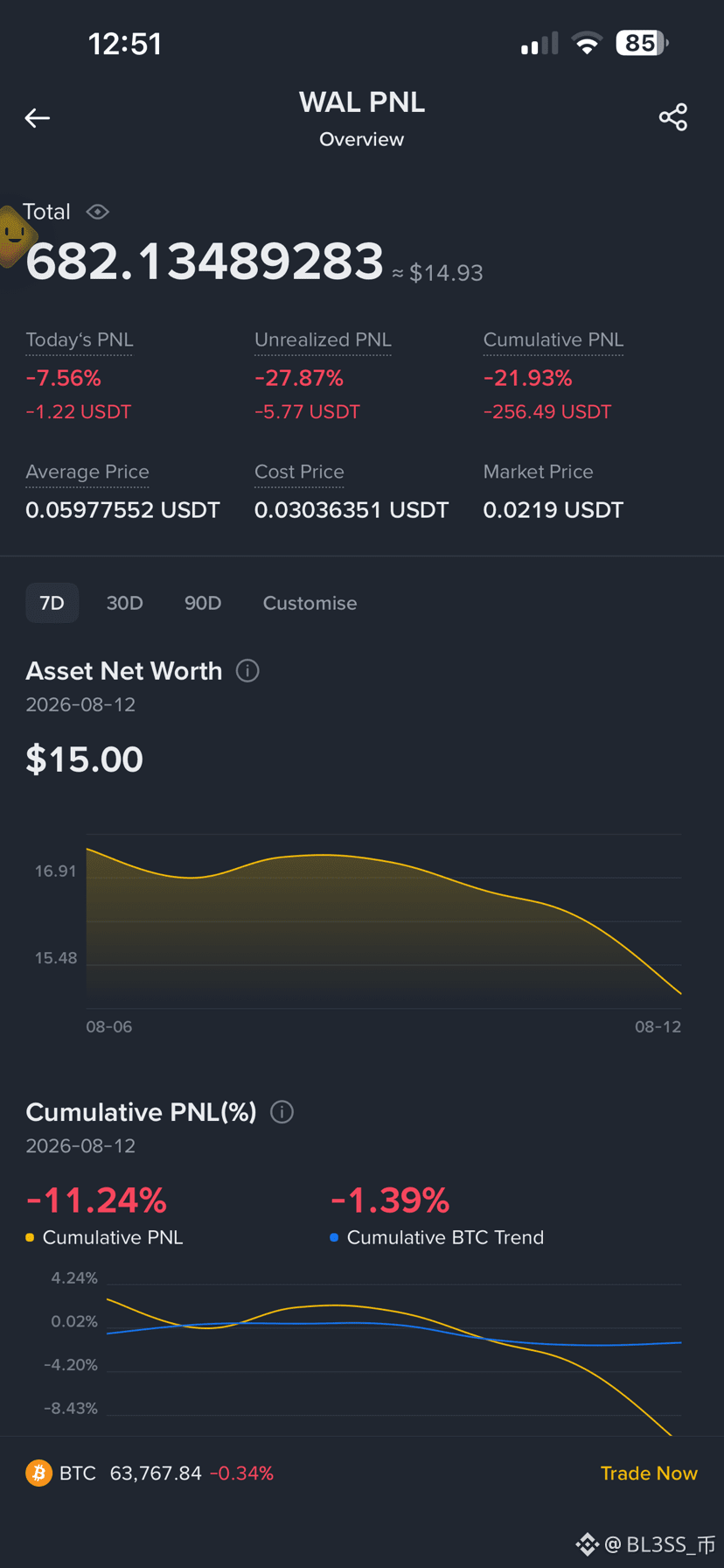
Convert 0.75471173 WAL to 0.06319658 USDT
Walrus Powering the Future of Decentralized Storage #walrus @WalrusProtocol $WAL Walrus is building a powerful decentralized storage layer designed for speed, security, and scalability. It helps Web3 apps store large amounts of data efficiently without relying on centralized servers. With strong infrastructure and real utility, Walrus is positioning itself as a key backbone for the next wave of blockchain innovation 🚀 #walrus @WalrusProtocol $WAL {spot}(WALUSDT)
Walrus Powering the Future of Decentralized Storage
#walrus @Walrus 🦭/acc $WAL
Walrus is building a powerful decentralized storage layer designed for speed, security, and scalability. It helps Web3 apps store large amounts of data efficiently without relying on centralized servers.

With strong infrastructure and real utility, Walrus is positioning itself as a key backbone for the next wave of blockchain innovation 🚀
#walrus @Walrus 🦭/acc $WAL
Walrus Protocol ($WAL) Building the Storage Backbone for a Decentralized Future@walrusprotocol | $WAL | #walrus In Web3, data is just as valuable as digital assets. As decentralized applications expand, the need for secure, scalable, and censorship-resistant storage becomes critical. This is where @walrusprotocol enters the conversation with a clear focus: building infrastructure that supports long-term decentralized data availability. Traditional storage systems rely on centralized servers, which introduce risks such as downtime, censorship, and single points of failure. Walrus Protocol aims to solve this by distributing data across a decentralized network, improving resilience while maintaining efficiency. With increasing demand from DeFi, NFTs, gaming, and AI-powered applications, reliable storage layers are no longer optional they are foundational. The role of $WAL within this ecosystem is essential. It powers network incentives, supports participation, and aligns contributors with the protocol’s long-term growth. Sustainable tokenomics combined with real utility can create a strong feedback loop between users, builders, and validators. As blockchain adoption accelerates, projects focusing on infrastructure rather than hype cycles often become the hidden pillars of the ecosystem. Decentralized storage is a major piece of that puzzle. Watching how @walrusprotocol evolves its network performance, partnerships, and adoption metrics will be key in understanding its future trajectory. In my view, WAL represents exposure to a critical Web3 sector that will only grow as data demand increases globally. Strong infrastructure always outlives short-term narratives. @walrusprotocol | $WAL | #walrus

Walrus Protocol ($WAL) Building the Storage Backbone for a Decentralized Future

@walrusprotocol | $WAL | #walrus
In Web3, data is just as valuable as digital assets. As decentralized applications expand, the need for secure, scalable, and censorship-resistant storage becomes critical. This is where @walrusprotocol enters the conversation with a clear focus: building infrastructure that supports long-term decentralized data availability.
Traditional storage systems rely on centralized servers, which introduce risks such as downtime, censorship, and single points of failure. Walrus Protocol aims to solve this by distributing data across a decentralized network, improving resilience while maintaining efficiency. With increasing demand from DeFi, NFTs, gaming, and AI-powered applications, reliable storage layers are no longer optional they are foundational.
The role of $WAL within this ecosystem is essential. It powers network incentives, supports participation, and aligns contributors with the protocol’s long-term growth. Sustainable tokenomics combined with real utility can create a strong feedback loop between users, builders, and validators.
As blockchain adoption accelerates, projects focusing on infrastructure rather than hype cycles often become the hidden pillars of the ecosystem. Decentralized storage is a major piece of that puzzle. Watching how @walrusprotocol evolves its network performance, partnerships, and adoption metrics will be key in understanding its future trajectory.
In my view, WAL represents exposure to a critical Web3 sector that will only grow as data demand increases globally. Strong infrastructure always outlives short-term narratives.
@walrusprotocol | $WAL | #walrus
Danny Tarin:
This post is well written and useful
Walrus is shaping the future of decentralized storage 🦭 Walrus is building a fast, secure, and scalable storage layer for Web3. It allows apps to store large amounts of data efficiently — without depending on centralized servers. With strong infrastructure and real-world use cases, Walrus is aiming to become a core backbone for the next generation of blockchain innovation 🚀 #walrus @WalrusProtocol $WAL {future}(WALUSDT)
Walrus is shaping the future of decentralized storage 🦭

Walrus is building a fast, secure, and scalable storage layer for Web3. It allows apps to store large amounts of data efficiently — without depending on centralized servers.

With strong infrastructure and real-world use cases, Walrus is aiming to become a core backbone for the next generation of blockchain innovation 🚀

#walrus @Walrus 🦭/acc $WAL
Decentralized Governance in DeFi: How WAL Token Empowers Users.@WalrusProtocol WAL Token is a key player in decentralized finance (DeFi), serving not just as a cryptocurrency but as a governance tool that empowers users. In traditional financial systems, decisions are often made by central authorities. However, DeFi platforms, including those using WAL token, break away from this model by giving users the power to influence decisions about the protocol’s future. In my research, I have found that WAL Token stands out because it provides a decentralized governance model. This means token holders can vote on important issues like protocol upgrades and fund allocation. Unlike centralized systems where decisions are made by a small group, WAL allows a broad community of users to participate, ensuring that the platform evolves according to the needs of its users. @WalrusProtocol WAL Token also plays an economic role by incentivizing users to hold and participate in governance. Beyond just voting, token holders can stake their WAL tokens or participate in liquidity mining, which adds more utility to the token. By aligning the interests of both the platform and its users, WAL ensures long-term growth and sustainability. Furthermore, decentralized decision-making ensures that WAL’s community has a genuine influence. Every token holder has a say, making the platform more responsive and transparent. Over time, as more users engage, they gain a deeper understanding of the ecosystem, creating a more informed and effective decision-making process. The future of WAL Token in DeFi governance looks promising. As DeFi continues to grow, WAL’s model of decentralized governance may become a blueprint for other projects. It is clear that WAL Token’s role in decentralizing decision-making is essential for the continued success of the DeFi movement. @WalrusProtocol #walrus $WAL

Decentralized Governance in DeFi: How WAL Token Empowers Users.

@Walrus 🦭/acc WAL Token is a key player in decentralized finance (DeFi), serving not just as a cryptocurrency but as a governance tool that empowers users. In traditional financial systems, decisions are often made by central authorities. However, DeFi platforms, including those using WAL token, break away from this model by giving users the power to influence decisions about the protocol’s future.
In my research, I have found that WAL Token stands out because it provides a decentralized governance model. This means token holders can vote on important issues like protocol upgrades and fund allocation. Unlike centralized systems where decisions are made by a small group, WAL allows a broad community of users to participate, ensuring that the platform evolves according to the needs of its users.
@Walrus 🦭/acc WAL Token also plays an economic role by incentivizing users to hold and participate in governance. Beyond just voting, token holders can stake their WAL tokens or participate in liquidity mining, which adds more utility to the token. By aligning the interests of both the platform and its users, WAL ensures long-term growth and sustainability.
Furthermore, decentralized decision-making ensures that WAL’s community has a genuine influence. Every token holder has a say, making the platform more responsive and transparent. Over time, as more users engage, they gain a deeper understanding of the ecosystem, creating a more informed and effective decision-making process.

The future of WAL Token in DeFi governance looks promising. As DeFi continues to grow, WAL’s model of decentralized governance may become a blueprint for other projects. It is clear that WAL Token’s role in decentralizing decision-making is essential for the continued success of the DeFi movement.
@Walrus 🦭/acc #walrus $WAL
🌊 Dive into the world of Walrus Coin! 🪙 Walrus Coin is making waves in the crypto sea with its unique ecosystem and community-driven approach. Designed for both traders and enthusiasts, Walrus Coin emphasizes transparency, sustainability, and rewarding holders. Whether you're a long-term investor or just exploring the crypto world, Walrus Coin brings fun, innovation, and growth potential together in one package. 💡 Key Points: Community-focused & transparent Rewarding holding mechanism#walrus Designed for long-term growth Join the tide and see why everyone’s talking about Walrus Coin! 🌊🦭#walrus
🌊 Dive into the world of Walrus Coin! 🪙
Walrus Coin is making waves in the crypto sea with its unique ecosystem and community-driven approach. Designed for both traders and enthusiasts, Walrus Coin emphasizes transparency, sustainability, and rewarding holders. Whether you're a long-term investor or just exploring the crypto world, Walrus Coin brings fun, innovation, and growth potential together in one package.
💡 Key Points:
Community-focused & transparent
Rewarding holding mechanism#walrus
Designed for long-term growth
Join the tide and see why everyone’s talking about Walrus Coin! 🌊🦭#walrus
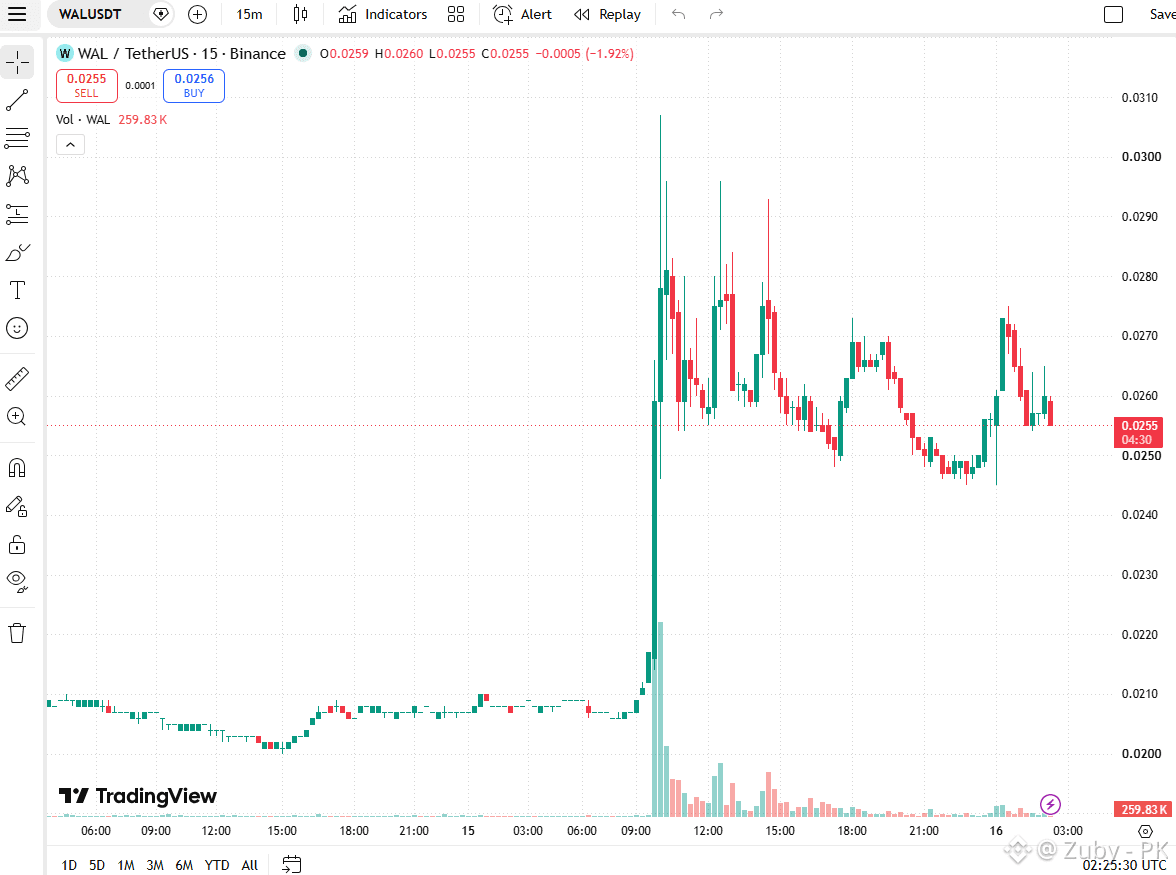
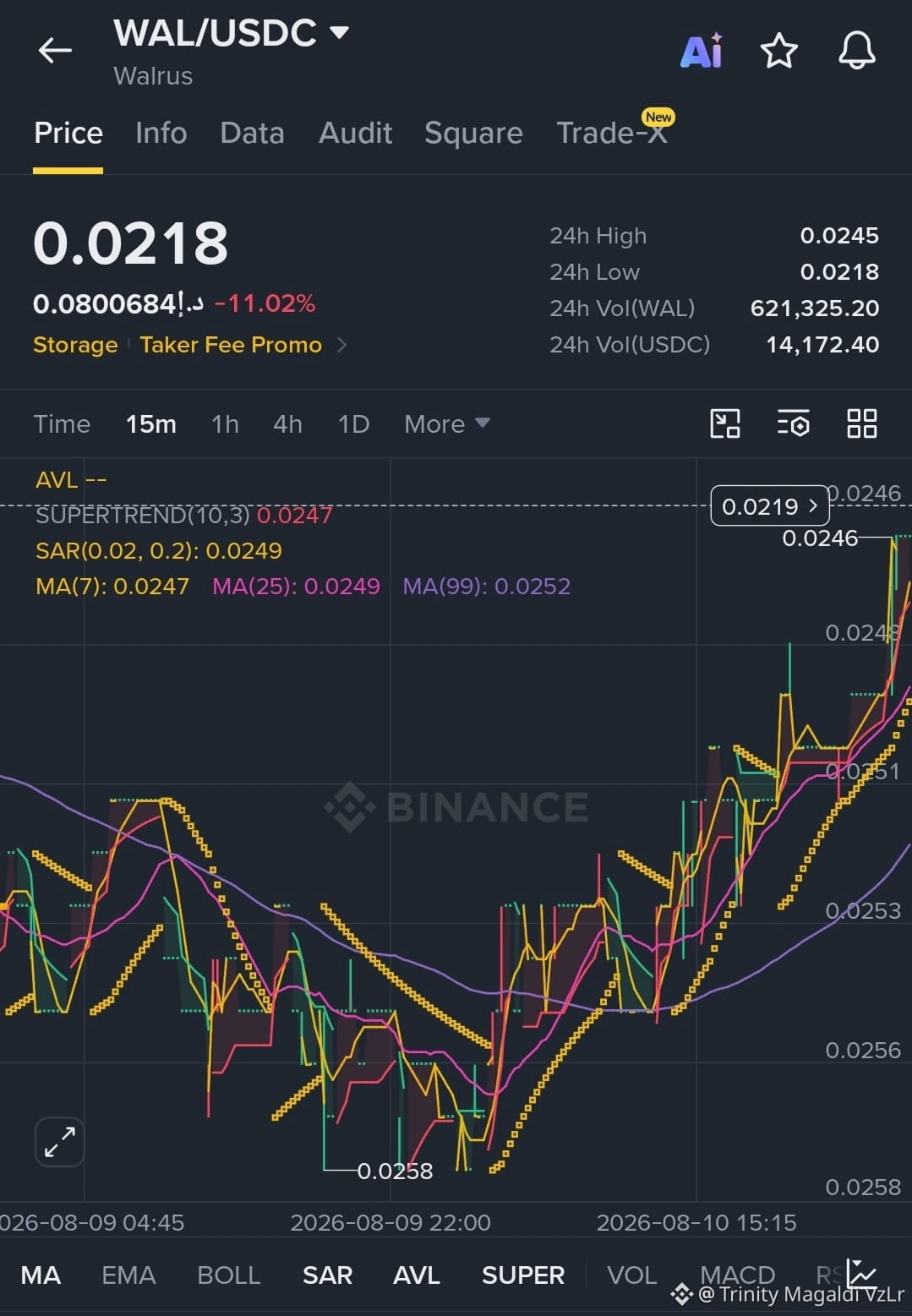
Holding the Line? $WAL Walrus (WAL) is currently trading around 0.0794 USDT, hovering right at a critical pivot point. After the volatile spike to 0.0804 earlier today, we are seeing the price consolidate. The 15m chart shows a "higher low" structure trying to take hold, but the bulls need to defend this level to avoid a slip back to the weekly lows. 📊 Key Levels to Watch: • Support Zone: 0.0756 – 0.0780 (The recent bottom that must hold). • Immediate Resistance: 0.0804 (24h High). •Major Target: 0.0835 – 0.0845 (Breakout territory). The Outlook: The 24h volume is steady at ~6.30M WAL. If we see a successful bounce from this 0.0790 area with increasing volume, a retest of the 0.0820+ zone is the next logical step. However, if we lose 0.0790, we might see a quick re-test of the 0.0756 floor. 🐂 @WalrusProtocol #walrus $WAL {future}(WALUSDT)
Holding the Line?
$WAL
Walrus (WAL) is currently trading around 0.0794 USDT, hovering right at a critical pivot point. After the volatile spike to 0.0804 earlier today, we are seeing the price consolidate. The 15m chart shows a "higher low" structure trying to take hold, but the bulls need to defend this level to avoid a slip back to the weekly lows.

📊 Key Levels to Watch:
• Support Zone: 0.0756 – 0.0780 (The recent bottom that must hold).
• Immediate Resistance: 0.0804 (24h High).
•Major Target: 0.0835 – 0.0845 (Breakout territory).

The Outlook: The 24h volume is steady at ~6.30M WAL. If we see a successful bounce from this 0.0790 area with increasing volume, a retest of the 0.0820+ zone is the next logical step. However, if we lose 0.0790, we might see a quick re-test of the 0.0756 floor. 🐂
@Walrus 🦭/acc #walrus $WAL
“Sometimes the market doesn’t need speed — it needs control. This video clip captures that mindset perfectly. Walrus moves like a classic ride: steady, deliberate, built to last. While short-term traders chase noise, real infrastructure keeps building in the background. Strong fundamentals, real enterprise use cases, and resilience under pressure are what matter long term. Volatility comes and goes, but systems designed for scale don’t rush. This isn’t about hype or quick flips — it’s about patience, execution, and staying power in Web3.” #mindset #Binance #walrus #writetoearn $BTC #crypto 💥
“Sometimes the market doesn’t need speed — it needs control.
This video clip captures that mindset perfectly. Walrus moves like a classic ride: steady, deliberate, built to last. While short-term traders chase noise, real infrastructure keeps building in the background. Strong fundamentals, real enterprise use cases, and resilience under pressure are what matter long term. Volatility comes and goes, but systems designed for scale don’t rush. This isn’t about hype or quick flips — it’s about patience, execution, and staying power in Web3.” #mindset #Binance #walrus #writetoearn $BTC #crypto 💥
It Didn’t Start With Code. It Started With ExperienceMost blockchain stories begin with developers trying to solve technical puzzles. Vanar’s story feels different. It began in digital worlds filled with fans, gamers, creators, and brands experimenting with new forms of interaction. Before Vanar became its own Layer 1 blockchain, the team was already building virtual experiences through what became the Virtua Metaverse and the VGN games network. They weren’t just studying user behavior — they were living inside it. They saw the excitement when someone truly owned a digital collectible. They saw how brands wanted deeper, more interactive relationships with their audiences. But they also saw the friction. Slow transactions. Confusing wallets. Unpredictable fees. Moments where the magic of the experience was interrupted by the mechanics of blockchain. That frustration became the seed of Vanar. The team asked a simple question: what if blockchain didn’t feel like blockchain? What if it simply worked — quietly, smoothly, almost invisibly — while people focused on playing, creating, and exploring? That question shaped everything. Why Build Another Layer 1? In crypto, building a new Layer 1 is not a small decision. It takes resources, risk, and long-term belief. Vanar wasn’t created to chase trends. It was created because existing infrastructure didn’t fully match the demands of entertainment-scale platforms. Gaming is not patient. Players expect instant feedback. Brands expect reliability. Communities expect smooth interaction. A lag of even a few seconds can break immersion. High fees can destroy micro-transactions that make digital economies work. So Vanar was designed from the ground up with those realities in mind. It focuses on handling large numbers of small, frequent transactions — the kind that happen constantly inside games and metaverse environments. It aims to keep fees predictable and performance stable, even when activity rises. Instead of building an app on someone else’s foundation and hoping it holds, the team decided to pour their own concrete. At the center of this foundation is VANRY, the token that powers the ecosystem. VANRY fuels transactions, supports staking, rewards validators, and acts as the economic heartbeat of the network. It is listed on Binance, giving it global access and liquidity. But beyond trading, its real role is functional. It keeps the system alive. What Happens Behind the Scenes To most users, the best technology feels simple. You tap, swipe, or click — and it works. Behind that simplicity, though, is careful engineering. Vanar operates as a decentralized Layer 1 blockchain secured by validators. These validators confirm transactions and protect the integrity of the network. Users can stake VANRY to support the system, creating an alignment between long-term participants and network stability. But the real design philosophy goes deeper than consensus mechanisms. Vanar is built with the belief that mainstream adoption requires abstraction. People should not need to understand private keys or gas fees to enjoy a digital experience. When someone interacts inside the Virtua Metaverse or plays within the VGN games network, the blockchain is there — recording ownership, verifying assets, securing transactions — but it stays in the background. It does its job quietly. That invisibility is intentional. The team understands that billions of people will not suddenly become blockchain experts. Instead, blockchain must adapt to them. Where Vanar Stands Today Right now, Vanar sits in a phase that feels both promising and demanding. The infrastructure exists. The ecosystem is active. There are live applications, real users, and an expanding network of creators and brands exploring what’s possible. VANRY circulates as the core utility token, and its presence on Binance offers broader exposure. But the project’s real test is not exchange listings or short-term price movement. It is whether the ecosystem continues to grow with real engagement. Can it keep onboarding new users without friction? Can it maintain speed and stability as activity increases? Can it build trust over time? These questions matter more than hype. Measuring Success Beyond the Charts In crypto, it is easy to focus only on price. But Vanar’s long-term success will depend on deeper signals. Active users inside games and metaverse platforms. Consistent transaction volume tied to real activity. Developers building on the chain. Brands returning for more than a single campaign. These are the quiet metrics that reveal whether a network has true purpose. Resilience also matters. Markets rise and fall. Sentiment shifts. A strong ecosystem survives volatility because it is rooted in utility, not just speculation. Vanar’s strategy appears to lean toward building durable foundations rather than chasing short bursts of attention. The Risks No One Can Ignore Of course, the path is not smooth. The Layer 1 landscape is crowded. Many chains promise scalability and adoption. Competition is constant. Regulation remains uncertain. As governments shape policies around digital assets and gaming tokens, projects operating in this space must remain adaptable and compliant without losing their core vision. And adoption itself is unpredictable. Convincing billions of people to trust blockchain-powered systems takes time. Trust is built slowly, and it can be lost quickly. Even VANRY, despite its listing on Binance, is subject to market volatility like every other crypto asset. Long-term value must come from sustained ecosystem growth, not speculation alone. The Bigger Picture If Vanar succeeds, its impact may not look dramatic at first. There may not be a single moment where the world suddenly notices. Instead, it may unfold quietly. More users. More creators. More brands. More seamless experiences. The real victory would be a world where people own digital assets without confusion. Where creators are rewarded directly. Where entertainment platforms integrate blockchain without users even realizing it. Vanar is trying to make blockchain human. Not by simplifying the technology itself, but by simplifying how people experience it. And maybe that is what real adoption looks like. Not loud. Not technical. Not intimidating. Just simple, secure, and natural. If the team continues to build with patience, if the ecosystem grows with authenticity, and if users keep finding value in what it offers, Vanar may become something more than a blockchain. It may become part of the invisible infrastructure of digital life. A quiet engine beneath virtual worlds. A steady foundation beneath creative dreams. A bridge between imagination and ownership. And in that quiet persistence, there is hope — that the next generation of the internet will not feel complicated or exclusive, but open, welcoming, and beautifully human @walrusprotoco#Walrus $WAL {spot}(WALUSDT)

It Didn’t Start With Code. It Started With Experience

Most blockchain stories begin with developers trying to solve technical puzzles. Vanar’s story feels different. It began in digital worlds filled with fans, gamers, creators, and brands experimenting with new forms of interaction. Before Vanar became its own Layer 1 blockchain, the team was already building virtual experiences through what became the Virtua Metaverse and the VGN games network. They weren’t just studying user behavior — they were living inside it.

They saw the excitement when someone truly owned a digital collectible. They saw how brands wanted deeper, more interactive relationships with their audiences. But they also saw the friction. Slow transactions. Confusing wallets. Unpredictable fees. Moments where the magic of the experience was interrupted by the mechanics of blockchain.

That frustration became the seed of Vanar.

The team asked a simple question: what if blockchain didn’t feel like blockchain? What if it simply worked — quietly, smoothly, almost invisibly — while people focused on playing, creating, and exploring?

That question shaped everything.

Why Build Another Layer 1?

In crypto, building a new Layer 1 is not a small decision. It takes resources, risk, and long-term belief. Vanar wasn’t created to chase trends. It was created because existing infrastructure didn’t fully match the demands of entertainment-scale platforms.

Gaming is not patient. Players expect instant feedback. Brands expect reliability. Communities expect smooth interaction. A lag of even a few seconds can break immersion. High fees can destroy micro-transactions that make digital economies work.

So Vanar was designed from the ground up with those realities in mind. It focuses on handling large numbers of small, frequent transactions — the kind that happen constantly inside games and metaverse environments. It aims to keep fees predictable and performance stable, even when activity rises.

Instead of building an app on someone else’s foundation and hoping it holds, the team decided to pour their own concrete.

At the center of this foundation is VANRY, the token that powers the ecosystem. VANRY fuels transactions, supports staking, rewards validators, and acts as the economic heartbeat of the network. It is listed on Binance, giving it global access and liquidity. But beyond trading, its real role is functional. It keeps the system alive.

What Happens Behind the Scenes

To most users, the best technology feels simple. You tap, swipe, or click — and it works. Behind that simplicity, though, is careful engineering.

Vanar operates as a decentralized Layer 1 blockchain secured by validators. These validators confirm transactions and protect the integrity of the network. Users can stake VANRY to support the system, creating an alignment between long-term participants and network stability.

But the real design philosophy goes deeper than consensus mechanisms. Vanar is built with the belief that mainstream adoption requires abstraction. People should not need to understand private keys or gas fees to enjoy a digital experience.

When someone interacts inside the Virtua Metaverse or plays within the VGN games network, the blockchain is there — recording ownership, verifying assets, securing transactions — but it stays in the background. It does its job quietly.

That invisibility is intentional.

The team understands that billions of people will not suddenly become blockchain experts. Instead, blockchain must adapt to them.

Where Vanar Stands Today

Right now, Vanar sits in a phase that feels both promising and demanding. The infrastructure exists. The ecosystem is active. There are live applications, real users, and an expanding network of creators and brands exploring what’s possible.

VANRY circulates as the core utility token, and its presence on Binance offers broader exposure. But the project’s real test is not exchange listings or short-term price movement. It is whether the ecosystem continues to grow with real engagement.

Can it keep onboarding new users without friction?

Can it maintain speed and stability as activity increases?

Can it build trust over time?

These questions matter more than hype.

Measuring Success Beyond the Charts

In crypto, it is easy to focus only on price. But Vanar’s long-term success will depend on deeper signals.

Active users inside games and metaverse platforms.

Consistent transaction volume tied to real activity.

Developers building on the chain.

Brands returning for more than a single campaign.

These are the quiet metrics that reveal whether a network has true purpose.

Resilience also matters. Markets rise and fall. Sentiment shifts. A strong ecosystem survives volatility because it is rooted in utility, not just speculation.

Vanar’s strategy appears to lean toward building durable foundations rather than chasing short bursts of attention.

The Risks No One Can Ignore

Of course, the path is not smooth. The Layer 1 landscape is crowded. Many chains promise scalability and adoption. Competition is constant.

Regulation remains uncertain. As governments shape policies around digital assets and gaming tokens, projects operating in this space must remain adaptable and compliant without losing their core vision.

And adoption itself is unpredictable. Convincing billions of people to trust blockchain-powered systems takes time. Trust is built slowly, and it can be lost quickly.

Even VANRY, despite its listing on Binance, is subject to market volatility like every other crypto asset. Long-term value must come from sustained ecosystem growth, not speculation alone.

The Bigger Picture

If Vanar succeeds, its impact may not look dramatic at first. There may not be a single moment where the world suddenly notices. Instead, it may unfold quietly. More users. More creators. More brands. More seamless experiences.

The real victory would be a world where people own digital assets without confusion. Where creators are rewarded directly. Where entertainment platforms integrate blockchain without users even realizing it.

Vanar is trying to make blockchain human. Not by simplifying the technology itself, but by simplifying how people experience it.

And maybe that is what real adoption looks like.

Not loud. Not technical. Not intimidating.

Just simple, secure, and natural.

If the team continues to build with patience, if the ecosystem grows with authenticity, and if users keep finding value in what it offers, Vanar may become something more than a blockchain. It may become part of the invisible infrastructure of digital life.

A quiet engine beneath virtual worlds.

A steady foundation beneath creative dreams.

A bridge between imagination and ownership.

And in that quiet persistence, there is hope — that the next generation of the internet will not feel complicated or exclusive, but open, welcoming, and beautifully human
@walrusprotoco#Walrus $WAL
·
--
Bullish
🔥 $WAL {future}(WALUSDT) USDT ALERT – Walrus is WAKING UP! 🚀 After holding the $0.08 lifeline like a boss, volume is exploding + price just pumped +8% in 24h! Bulls are loading up on this Sui storage beast – AI data narrative is ON FIRE! Next stops if we break free? 🎯 Immediate: $0.10 – $0.12 (quick flip zone!) 🎯 Bigger targets: $0.15 → $0.23+ (full send mode if momentum sticks) Who's riding this wave with me? 💪 Sui ecosystem gems like $WAL don't stay quiet long... DYOR, NFA – but this feels like early vibes! Drop your targets below 👇 #WAL #Walrus #Sui #Crypto #BinanceSquare $SUI {future}(SUIUSDT)
🔥 $WAL
USDT ALERT – Walrus is WAKING UP! 🚀

After holding the $0.08 lifeline like a boss, volume is exploding + price just pumped +8% in 24h! Bulls are loading up on this Sui storage beast – AI data narrative is ON FIRE!

Next stops if we break free? 🎯 Immediate: $0.10 – $0.12 (quick flip zone!) 🎯 Bigger targets: $0.15 → $0.23+ (full send mode if momentum sticks)

Who's riding this wave with me? 💪 Sui ecosystem gems like $WAL don't stay quiet long... DYOR, NFA – but this feels like early vibes!

Drop your targets below 👇 #WAL #Walrus #Sui #Crypto #BinanceSquare

$SUI
Campaigns Hello everyone. I want to ask about your experience in participating in campaigns. I participated in #Plasma @Plasma $XPL , @Dusk_Foundation #dusk $DUSK and @WalrusProtocol #walrus $WAL and at first I found unfair changing the rules during the campaign. that's why I was active first about 2-3 weeks, and also saw that no matter that every day I had a post or article, only small part of them are calculated on the leaderboard. So after disappointment I stop posting and now My positions are between 3118th and 4771st place. From more experienced people I want to ask will I get anything as a reward ? Thanks and have good day (or night )
Campaigns
Hello everyone. I want to ask about your experience in participating in campaigns.
I participated in #Plasma @Plasma $XPL , @Dusk #dusk $DUSK and @Walrus 🦭/acc #walrus $WAL and at first I found unfair changing the rules during the campaign. that's why I was active first about 2-3 weeks, and also saw that no matter that every day I had a post or article, only small part of them are calculated on the leaderboard. So after disappointment I stop posting and now My positions are between 3118th and 4771st place. From more experienced people I want to ask will I get anything as a reward ? Thanks and have good day (or night )
How Walrus Protocol Building the Backbone of Decentralized Data When evolving landscape of decentralized infrastructure Walrus Protocol stands out as a blueprint for resilience reliability, and responsibility. This design ensures that even if some fragments are lost or corrupted, the original data remains recoverable. It is a system engineered not just for storage, but for durability and availability under pressure. Walrus moves beyond the paradigm of simple file storage. By embedding programmable logic directly into the data layer enables archives content delivery networks and financial backbones to operate with immutability and resilience. This means that applications built on Walrus can codify rules for access, compliance, and redundancy into the very structure of their data. The result is infrastructure that feels less like a passive repository and more like an active, self‑governing backbone for critical digital systems. @WalrusProtocol #walrus $WAL
How Walrus Protocol Building the Backbone of Decentralized Data

When evolving landscape of decentralized infrastructure Walrus Protocol stands out as a blueprint for resilience reliability, and responsibility.

This design ensures that even if some fragments are lost or corrupted, the original data remains recoverable. It is a system engineered not just for storage, but for durability and availability under pressure.

Walrus moves beyond the paradigm of simple file storage.

By embedding programmable logic directly into the data layer enables archives content delivery networks and financial backbones to operate with immutability and resilience.

This means that applications built on Walrus can codify rules for access, compliance, and redundancy into the very structure of their data. The result is infrastructure that feels less like a passive repository and more like an active, self‑governing backbone for critical digital systems.

@Walrus 🦭/acc #walrus $WAL
Exploring decentralized storage innovations lately, and @walrusprotocol is seriously pushing boundaries with scalable on-chain data solutions. With $WAL powering the ecosystem, the future of efficient, verifiable storage looks promising. Keeping a close eye on how #Walrus reshapes Web3 infrastructure 🚀
Rethinking Durability in Decentralized Storage: Lessons from Walrus in PracticeWorking with decentralized storage systems quickly teaches you that durability is not just a technical problem. It is an economic one, a network one, and often a human one. The moment you remove central control, assumptions that worked fine in data centers start breaking down. Walrus Protocol stood out to me because it does not try to patch these cracks with more rules or more replication. It questions the model itself. 1. Why decentralization makes durability harder than it looks In a decentralized environment, storage nodes are not owned by a single operator. They are run by independent participants who are incentivized economically but not inherently trustworthy. From experience, this raises an immediate question. How do you ensure nodes actually keep the data once they are paid? Most existing systems answer this with continuous challenges and proofs of storage. Nodes must regularly prove they still hold the data. On paper, this sounds reasonable. In practice, it creates a fragile system. 2. The hidden cost of constant verification Frequent proofs of storage assume a lot about the network. They assume low latency, frequent connectivity, and relatively synchronous behavior. Anyone who has operated systems across continents knows how unrealistic this is. These mechanisms also consume bandwidth continuously, even when nothing is going wrong. Over time, the verification traffic can rival or exceed the cost of storing the data itself. This leads to another uncomfortable question. Are we building storage systems, or are we building monitoring systems that happen to store data on the side? 3. The replication mindset and its limitations Most decentralized systems still treat durability as a quantity problem. The logic is simple. More copies mean more safety. But in real deployments, replication brings its own problems. More replicas mean higher storage costs for node operators. Higher costs mean higher incentives are required. Higher incentives attract participants, but not necessarily reliable ones. This feedback loop often results in systems that are expensive to maintain and difficult to reason about at scale. 4. Walrus asks a different question What caught my attention with Walrus was that it does not start by asking how many copies of the data exist. Instead, it asks how much information is actually required to recover the data. This shift sounds subtle, but it changes everything. Durability stops being about duplication and starts being about information theory. 5. Erasure coding as a first-class design choice Walrus replaces heavy replication with advanced erasure coding. Data is encoded into fragments in such a way that the original content can be reconstructed even if a large portion of those fragments disappears. From hands-on experience, this has two major implications. The system no longer depends on any specific node. Temporary or permanent node failures become expected, not catastrophic. Durability is enforced mathematically, not socially or operationally. 6. Reduced reliance on constant challenges Because Walrus does not require every fragment to remain available at all times, it reduces the pressure to constantly check every node. The system tolerates loss by design. This raises an important question. If data recovery does not depend on perfect behavior, how often do we really need to verify storage? In practice, this leads to fewer challenges, lower bandwidth consumption, and a system that is better aligned with real-world network conditions. 7. Trustlessness without fragility One of the hardest things to balance in decentralized systems is trustlessness without overengineering. Walrus manages this by accepting that nodes will fail, disconnect, or behave unpredictably. Instead of trying to force ideal behavior through constant proofs, it designs around imperfect behavior. This is closer to how global networks actually operate. 8. Economic implications for node operators Another aspect that becomes clear over time is the economic impact. Storing erasure-coded fragments is cheaper than storing full replicas. Lower storage overhead means lower operating costs for nodes. Lower costs reduce the pressure to extract maximum short-term profit, which in turn improves long-term participation. This is not a guarantee, but it is a healthier starting point. 9. A durability model built for reality Walrus does not claim that decentralization is easy or that failures disappear. What it does is align durability with reality instead of fighting it. By focusing on how little information is required to recover data, rather than how many copies exist, Walrus reframes durability as an information problem. From real experience, this approach feels more sustainable, more scalable, and more honest about how distributed systems actually behave over time. @WalrusProtocol #Walrus $WAL {spot}(WALUSDT)

Rethinking Durability in Decentralized Storage: Lessons from Walrus in Practice

Working with decentralized storage systems quickly teaches you that durability is not just a technical problem. It is an economic one, a network one, and often a human one. The moment you remove central control, assumptions that worked fine in data centers start breaking down. Walrus Protocol stood out to me because it does not try to patch these cracks with more rules or more replication. It questions the model itself.

1. Why decentralization makes durability harder than it looks
In a decentralized environment, storage nodes are not owned by a single operator. They are run by independent participants who are incentivized economically but not inherently trustworthy.

From experience, this raises an immediate question. How do you ensure nodes actually keep the data once they are paid?

Most existing systems answer this with continuous challenges and proofs of storage. Nodes must regularly prove they still hold the data. On paper, this sounds reasonable. In practice, it creates a fragile system.

2. The hidden cost of constant verification
Frequent proofs of storage assume a lot about the network. They assume low latency, frequent connectivity, and relatively synchronous behavior. Anyone who has operated systems across continents knows how unrealistic this is.

These mechanisms also consume bandwidth continuously, even when nothing is going wrong. Over time, the verification traffic can rival or exceed the cost of storing the data itself.

This leads to another uncomfortable question. Are we building storage systems, or are we building monitoring systems that happen to store data on the side?

3. The replication mindset and its limitations
Most decentralized systems still treat durability as a quantity problem. The logic is simple. More copies mean more safety.

But in real deployments, replication brings its own problems.
More replicas mean higher storage costs for node operators.
Higher costs mean higher incentives are required.
Higher incentives attract participants, but not necessarily reliable ones.

This feedback loop often results in systems that are expensive to maintain and difficult to reason about at scale.

4. Walrus asks a different question
What caught my attention with Walrus was that it does not start by asking how many copies of the data exist. Instead, it asks how much information is actually required to recover the data.

This shift sounds subtle, but it changes everything. Durability stops being about duplication and starts being about information theory.

5. Erasure coding as a first-class design choice
Walrus replaces heavy replication with advanced erasure coding. Data is encoded into fragments in such a way that the original content can be reconstructed even if a large portion of those fragments disappears.

From hands-on experience, this has two major implications.
The system no longer depends on any specific node.
Temporary or permanent node failures become expected, not catastrophic.

Durability is enforced mathematically, not socially or operationally.

6. Reduced reliance on constant challenges
Because Walrus does not require every fragment to remain available at all times, it reduces the pressure to constantly check every node. The system tolerates loss by design.

This raises an important question. If data recovery does not depend on perfect behavior, how often do we really need to verify storage?

In practice, this leads to fewer challenges, lower bandwidth consumption, and a system that is better aligned with real-world network conditions.

7. Trustlessness without fragility
One of the hardest things to balance in decentralized systems is trustlessness without overengineering. Walrus manages this by accepting that nodes will fail, disconnect, or behave unpredictably.

Instead of trying to force ideal behavior through constant proofs, it designs around imperfect behavior. This is closer to how global networks actually operate.

8. Economic implications for node operators
Another aspect that becomes clear over time is the economic impact. Storing erasure-coded fragments is cheaper than storing full replicas. Lower storage overhead means lower operating costs for nodes.

Lower costs reduce the pressure to extract maximum short-term profit, which in turn improves long-term participation. This is not a guarantee, but it is a healthier starting point.

9. A durability model built for reality
Walrus does not claim that decentralization is easy or that failures disappear. What it does is align durability with reality instead of fighting it.

By focusing on how little information is required to recover data, rather than how many copies exist, Walrus reframes durability as an information problem. From real experience, this approach feels more sustainable, more scalable, and more honest about how distributed systems actually behave over time.

@Walrus 🦭/acc #Walrus $WAL
The 2026 Macro-Squeeze: Why I’m Hedging with Walrus ($WAL) and SAFUAs we navigate through February 2026, the market is sending mixed signals. While Bitcoin ($BTC ) holds steady near $71,000, we are seeing a massive #WhaleDeRiskETH trend as large holders move Ethereum to exchanges amid regulatory uncertainty. Why Walrus ($WAL) is the Real Play Right Now In this "risk-off" environment, projects with real-world infrastructure are outperforming. Built on the Sui blockchain, @walrusprotocol is no longer just a "storage coin"—it’s the data backbone for the AI super-cycle. Enterprise Proof: The migration of Team Liquid’s 250TB content library to Walrus remains the biggest DePIN (Decentralized Physical Infrastructure) milestone of the year. Smart Accumulation: While RSI shows an oversold position near $0.08, "smart money" is looking at the long-term ROI as the protocol moves toward USD-anchored pricing for developers. The Safety Net: Binance SAFU Fund The recent news of the #BinanceBitcoinSAFUFund rebalancing to its $1 billion target provides much-needed confidence. Even as retail sales data misses forecasts, this insurance fund ensures that our ecosystem remains resilient. My Strategy: I’m participating in the 300,000 WAL CreatorPad pool because utility-driven DePIN assets are the best hedge against macro volatility. What’s your move? Are you de-risking or filling your bags with $WAL ? 👇 #walrus $WAL @WalrusProtocol #DePIN #Crypto2026 #BinanceSquareCreator {alpha}(CT_7840x356a26eb9e012a68958082340d4c4116e7f55615cf27affcff209cf0ae544f59::wal::WAL) {spot}(BTCUSDT)

The 2026 Macro-Squeeze: Why I’m Hedging with Walrus ($WAL) and SAFU

As we navigate through February 2026, the market is sending mixed signals. While Bitcoin ($BTC ) holds steady near $71,000, we are seeing a massive #WhaleDeRiskETH trend as large holders move Ethereum to exchanges amid regulatory uncertainty.
Why Walrus ($WAL ) is the Real Play Right Now
In this "risk-off" environment, projects with real-world infrastructure are outperforming. Built on the Sui blockchain, @walrusprotocol is no longer just a "storage coin"—it’s the data backbone for the AI super-cycle.
Enterprise Proof: The migration of Team Liquid’s 250TB content library to Walrus remains the biggest DePIN (Decentralized Physical Infrastructure) milestone of the year.
Smart Accumulation: While RSI shows an oversold position near $0.08, "smart money" is looking at the long-term ROI as the protocol moves toward USD-anchored pricing for developers.
The Safety Net: Binance SAFU Fund
The recent news of the #BinanceBitcoinSAFUFund rebalancing to its $1 billion target provides much-needed confidence. Even as retail sales data misses forecasts, this insurance fund ensures that our ecosystem remains resilient.
My Strategy: I’m participating in the 300,000 WAL CreatorPad pool because utility-driven DePIN assets are the best hedge against macro volatility.
What’s your move? Are you de-risking or filling your bags with $WAL ? 👇
#walrus $WAL @Walrus 🦭/acc #DePIN #Crypto2026 #BinanceSquareCreator
Login to explore more contents
Explore the latest crypto news
⚡️ Be a part of the latests discussions in crypto
💬 Interact with your favorite creators
👍 Enjoy content that interests you
Email / Phone number