
#usd1
usd1
7.1M views
10,118 Discussing
Hot
Latest

·
--
$USD1 +0.02% | $U +0.02% | $EURI +0.00%
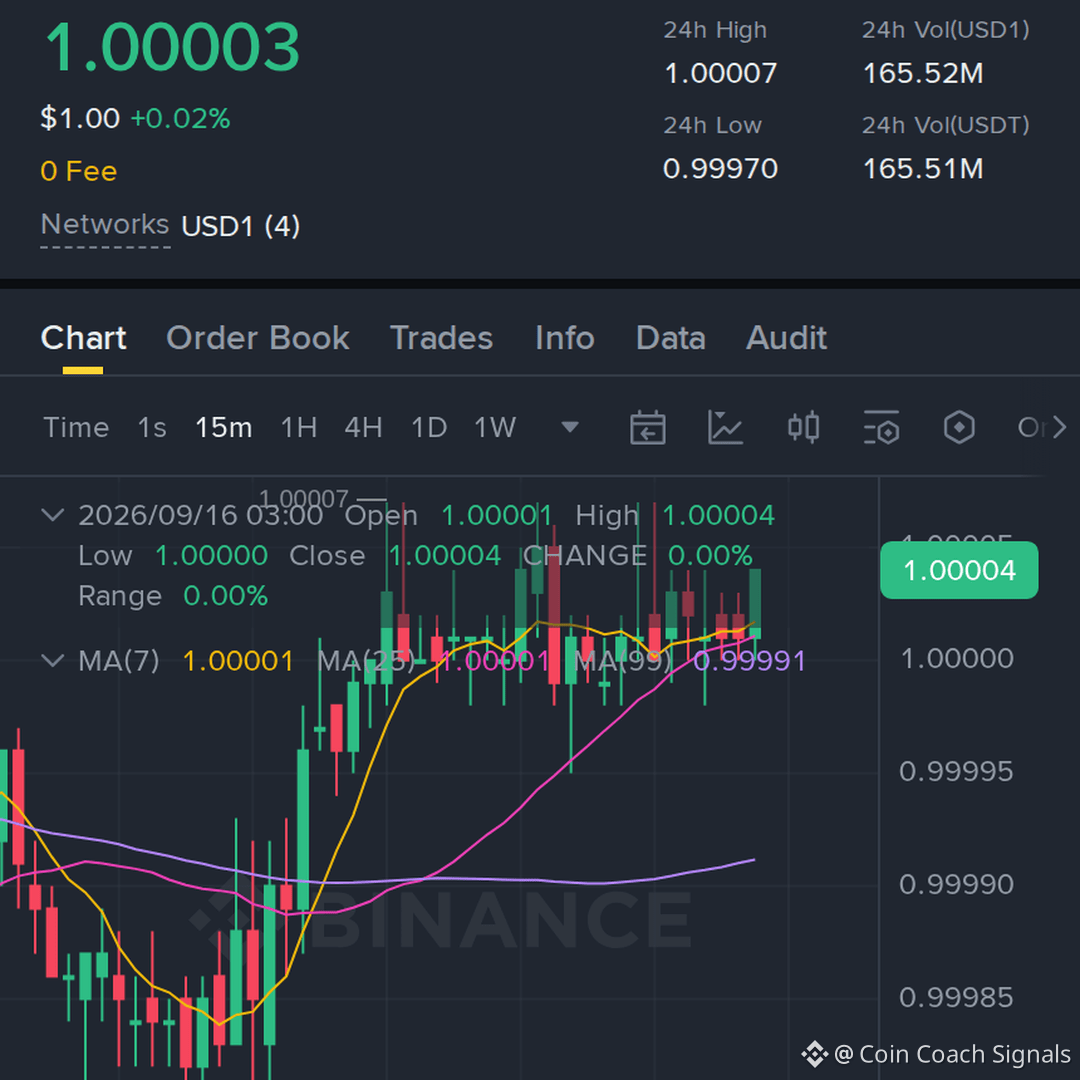
#USD1 barely nudged higher to $1.00, up +0.02% on a hefty $164.2 M of volume, hinting at steady demand around the peg.
#U also ticked up to $1.00, matching USD1’s +0.02% gain with $48.7 M changing hands, showing consistent modest buying.
#EURI held steady at $1.16, unchanged at +0.00% while $1.4 M traded, reflecting little movement in the euro‑linked token.
📊 Keep an eye on whether the modest upticks for these stablecoins can translate into broader market confidence, especially if volume patterns shift.
#Write2Earn #Binance
$USD1 +0.02% | $U +0.02% | $EURI +0.00%
#USD1 barely nudged higher to $1.00, up +0.02% on a hefty $164.2 M of volume, hinting at steady demand around the peg.
#U also ticked up to $1.00, matching USD1’s +0.02% gain with $48.7 M changing hands, showing consistent modest buying.
#EURI held steady at $1.16, unchanged at +0.00% while $1.4 M traded, reflecting little movement in the euro‑linked token.
📊 Keep an eye on whether the modest upticks for these stablecoins can translate into broader market confidence, especially if volume patterns shift.
#Write2Earn #Binance
#USD1 barely nudged higher to $1.00, up +0.02% on a hefty $164.2 M of volume, hinting at steady demand around the peg.
#U also ticked up to $1.00, matching USD1’s +0.02% gain with $48.7 M changing hands, showing consistent modest buying.
#EURI held steady at $1.16, unchanged at +0.00% while $1.4 M traded, reflecting little movement in the euro‑linked token.
📊 Keep an eye on whether the modest upticks for these stablecoins can translate into broader market confidence, especially if volume patterns shift.
#Write2Earn #Binance
3


🚨 FOCUS NOW:
Video: Scott Coker press conference live stream to unveil new MMA promotion
Scott Coker will unveil details of his new promotion at a Monday press conference in New York
$USD1 is coming back into focus as the market reacts to this fresh headline.
This is the kind of headline that can pull fast attention if price starts reacting in the same direction.
Crowd attention can shift fast here, which is why traders will be watching this move closely.
Are you watching $USD1 now, or waiting for confirmation?
Watch $USD1 here 👇
#USD1 #NewsFlow #MarketMomentum
🚨 FOCUS NOW:
Video: Scott Coker press conference live stream to unveil new MMA promotion
Scott Coker will unveil details of his new promotion at a Monday press conference in New York
$USD1 is coming back into focus as the market reacts to this fresh headline.
This is the kind of headline that can pull fast attention if price starts reacting in the same direction.
Crowd attention can shift fast here, which is why traders will be watching this move closely.
Are you watching $USD1 now, or waiting for confirmation?
Watch $USD1 here 👇
#USD1 #NewsFlow #MarketMomentum
Video: Scott Coker press conference live stream to unveil new MMA promotion
Scott Coker will unveil details of his new promotion at a Monday press conference in New York
$USD1 is coming back into focus as the market reacts to this fresh headline.
This is the kind of headline that can pull fast attention if price starts reacting in the same direction.
Crowd attention can shift fast here, which is why traders will be watching this move closely.
Are you watching $USD1 now, or waiting for confirmation?
Watch $USD1 here 👇
#USD1 #NewsFlow #MarketMomentum
3

·
--
$USD1 +0.00% | $BFUSD +0.00% | $XAUT -0.01%
#USD1 is holding at $1.0000 with no change and $167.9 M of volume, showing the typical stability of a peg.
#BFUSD sits just under $1 at $0.9999, also flat, but its $2.0 M turnover is modest compared with the larger stablecoin flow.
#XAUT slipped to $4,307.02, down 0.01% on $15.1 M of trades, a tiny move for a gold‑backed token.
The contrast between massive stablecoin volume and the near‑static prices suggests liquidity is being shuffled rather than driving price action.
#Write2Earn #Binance
$USD1 +0.00% | $BFUSD +0.00% | $XAUT -0.01%
#USD1 is holding at $1.0000 with no change and $167.9 M of volume, showing the typical stability of a peg.
#BFUSD sits just under $1 at $0.9999, also flat, but its $2.0 M turnover is modest compared with the larger stablecoin flow.
#XAUT slipped to $4,307.02, down 0.01% on $15.1 M of trades, a tiny move for a gold‑backed token.
The contrast between massive stablecoin volume and the near‑static prices suggests liquidity is being shuffled rather than driving price action.
#Write2Earn #Binance
#USD1 is holding at $1.0000 with no change and $167.9 M of volume, showing the typical stability of a peg.
#BFUSD sits just under $1 at $0.9999, also flat, but its $2.0 M turnover is modest compared with the larger stablecoin flow.
#XAUT slipped to $4,307.02, down 0.01% on $15.1 M of trades, a tiny move for a gold‑backed token.
The contrast between massive stablecoin volume and the near‑static prices suggests liquidity is being shuffled rather than driving price action.
#Write2Earn #Binance
1
20

·
--
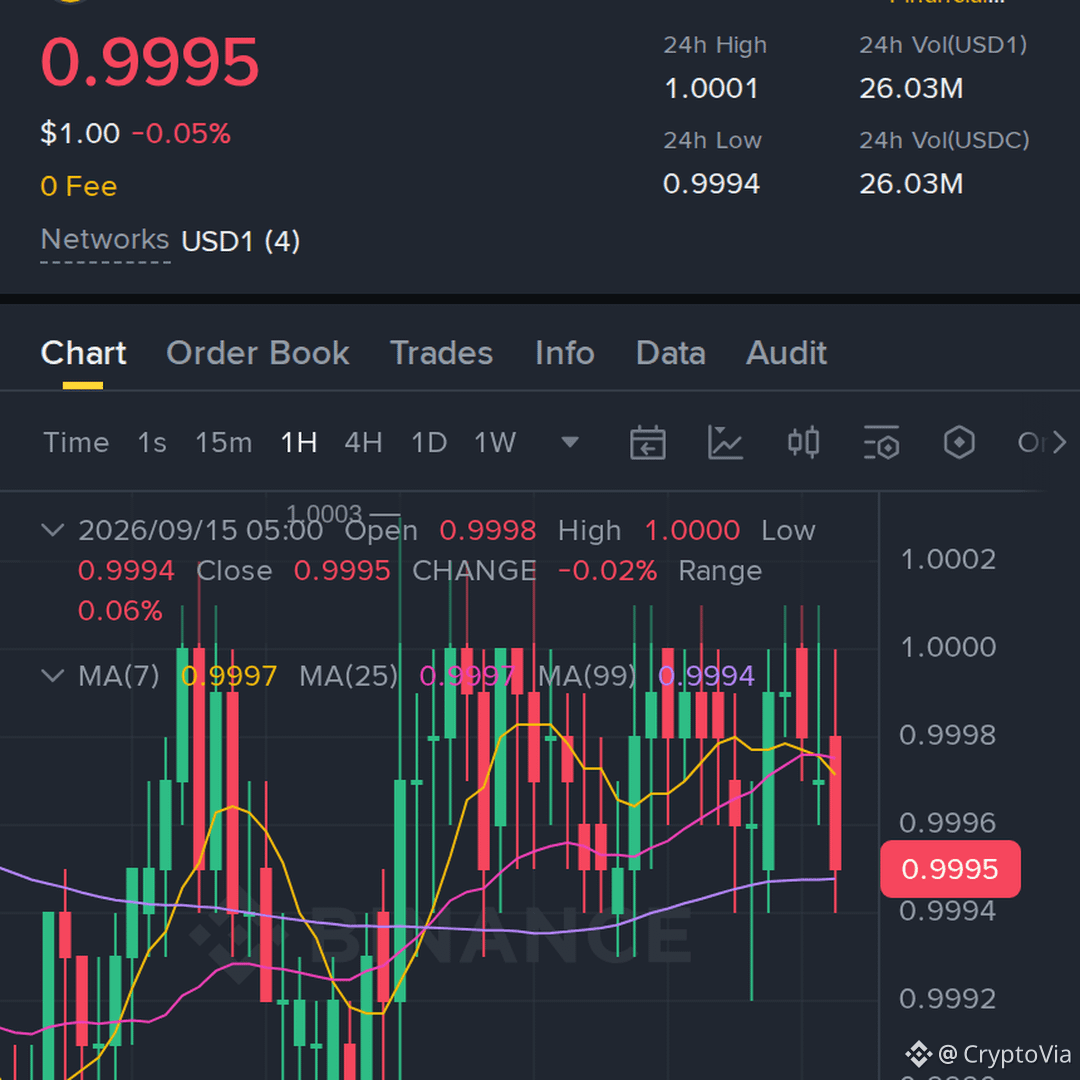
keeping an eye on $USD1, with a 47x leverage plan, bounced into resistance and sellers showed up again
Entry: 0.9995–0.9995 • Stop Loss: 1.0155
TP1: 0.9754 | TP2: 0.9579 | TP3: 0.9305
#USD1 #Crypto #Write2Earn #Binance
keeping an eye on $USD1 , with a 47x leverage plan, bounced into resistance and sellers showed up again
Entry: 0.9995–0.9995 • Stop Loss: 1.0155
TP1: 0.9754 | TP2: 0.9579 | TP3: 0.9305
#USD1 #Crypto #Write2Earn #Binance
Entry: 0.9995–0.9995 • Stop Loss: 1.0155
TP1: 0.9754 | TP2: 0.9579 | TP3: 0.9305
#USD1 #Crypto #Write2Earn #Binance
28

·
--
Is $USD1 volume telling us the real story today?
With $180.67M in 24h volume against a flat $1.00 price, market participation remains high despite the lack of directional momentum.
* **Bullish Trigger:** A sustained volume spike above current averages could signal institutional absorption near $1.00.
* **Risk Signal:** Should volume dry up while the price fails to hold current levels, expect potential liquidity exhaustion.
* **The Insight:** High volume without price movement suggests an ongoing battle between buyers and sellers.
Are we seeing accumulation or distribution at this parity level? Share your thoughts below and track the…
Tap $USD1 for the live chart. #USD1 #BinanceSquare
Is $USD1 volume telling us the real story today?
With $180.67M in 24h volume against a flat $1.00 price, market participation remains high despite the lack of directional momentum.
* **Bullish Trigger:** A sustained volume spike above current averages could signal institutional absorption near $1.00.
* **Risk Signal:** Should volume dry up while the price fails to hold current levels, expect potential liquidity exhaustion.
* **The Insight:** High volume without price movement suggests an ongoing battle between buyers and sellers.
Are we seeing accumulation or distribution at this parity level? Share your thoughts below and track the…
Tap $USD1 for the live chart. #USD1 #BinanceSquare
With $180.67M in 24h volume against a flat $1.00 price, market participation remains high despite the lack of directional momentum.
* **Bullish Trigger:** A sustained volume spike above current averages could signal institutional absorption near $1.00.
* **Risk Signal:** Should volume dry up while the price fails to hold current levels, expect potential liquidity exhaustion.
* **The Insight:** High volume without price movement suggests an ongoing battle between buyers and sellers.
Are we seeing accumulation or distribution at this parity level? Share your thoughts below and track the…
Tap $USD1 for the live chart. #USD1 #BinanceSquare
73
·
--
Price stability often masks the real story behind $USD1 volume.
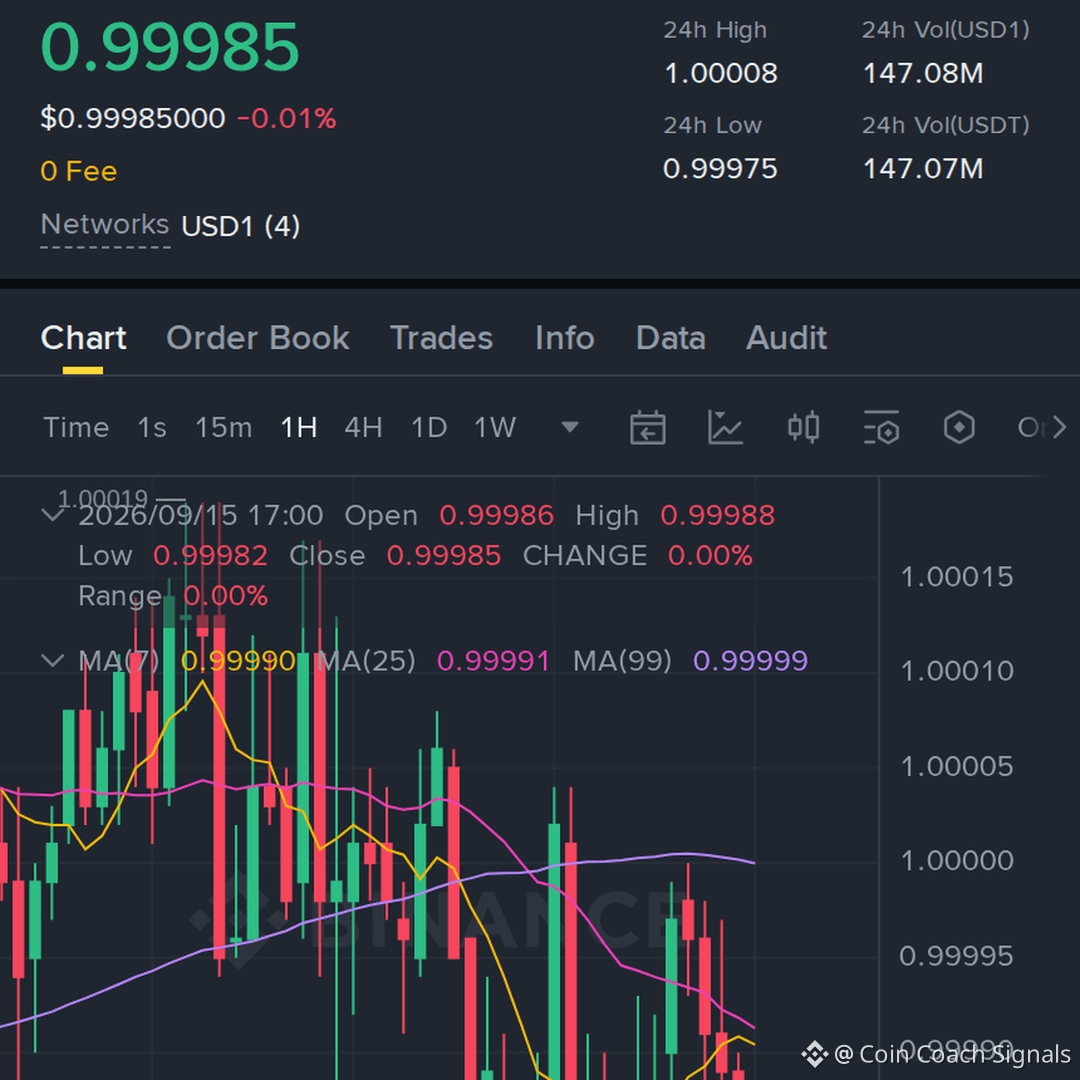
While the price remains flat at $0.999850, the $177.14M in 24h volume suggests high participation despite the lack of net movement. This suggests significant liquidity is being absorbed rather than exhausted.
Watch for a sustained volume surge above current levels to confirm a shift in sentiment. Conversely, if volume dries up while the price slips, it may signal waning interest.
Does this heavy turnover suggest institutional accumulation or retail fatigue in USD1?
Check the live chart for USD1 to see how these participants are positioning. 📊
Tap $USD1 for the live chart. #USD1 #BinanceSquare
Price stability often masks the real story behind $USD1 volume.
While the price remains flat at $0.999850, the $177.14M in 24h volume suggests high participation despite the lack of net movement. This suggests significant liquidity is being absorbed rather than exhausted.
Watch for a sustained volume surge above current levels to confirm a shift in sentiment. Conversely, if volume dries up while the price slips, it may signal waning interest.
Does this heavy turnover suggest institutional accumulation or retail fatigue in USD1?
Check the live chart for USD1 to see how these participants are positioning. 📊
Tap $USD1 for the live chart. #USD1 #BinanceSquare
While the price remains flat at $0.999850, the $177.14M in 24h volume suggests high participation despite the lack of net movement. This suggests significant liquidity is being absorbed rather than exhausted.
Watch for a sustained volume surge above current levels to confirm a shift in sentiment. Conversely, if volume dries up while the price slips, it may signal waning interest.
Does this heavy turnover suggest institutional accumulation or retail fatigue in USD1?
Check the live chart for USD1 to see how these participants are positioning. 📊
Tap $USD1 for the live chart. #USD1 #BinanceSquare
40
·
--
Volume is telling a specific story for $USD1 today.
With $182.56M in 24h volume against a flat -0.03% move, USD1 is currently consolidating. High liquidity usually signals a tug-of-war between buyers and sellers, suggesting a breakout or breakdown is imminent.
Momentum shifts higher if increased volume accompanies a sustained move above current levels. Conversely, the bullish thesis loses support if USD1 sees a high-volume drop that fails to reclaim recent ranges.
Are you viewing this volume as institutional accumulation or distribution?
Track the live liquidity shifts on USD1 here: [Link/Button]
Tap $USD1 for the live chart. #USD1 #BinanceSquare
Volume is telling a specific story for $USD1 today.
With $182.56M in 24h volume against a flat -0.03% move, USD1 is currently consolidating. High liquidity usually signals a tug-of-war between buyers and sellers, suggesting a breakout or breakdown is imminent.
Momentum shifts higher if increased volume accompanies a sustained move above current levels. Conversely, the bullish thesis loses support if USD1 sees a high-volume drop that fails to reclaim recent ranges.
Are you viewing this volume as institutional accumulation or distribution?
Track the live liquidity shifts on USD1 here: [Link/Button]
Tap $USD1 for the live chart. #USD1 #BinanceSquare
With $182.56M in 24h volume against a flat -0.03% move, USD1 is currently consolidating. High liquidity usually signals a tug-of-war between buyers and sellers, suggesting a breakout or breakdown is imminent.
Momentum shifts higher if increased volume accompanies a sustained move above current levels. Conversely, the bullish thesis loses support if USD1 sees a high-volume drop that fails to reclaim recent ranges.
Are you viewing this volume as institutional accumulation or distribution?
Track the live liquidity shifts on USD1 here: [Link/Button]
Tap $USD1 for the live chart. #USD1 #BinanceSquare
21
·
--
Flat volume often signals exhaustion, yet $USD1 is holding firm today.
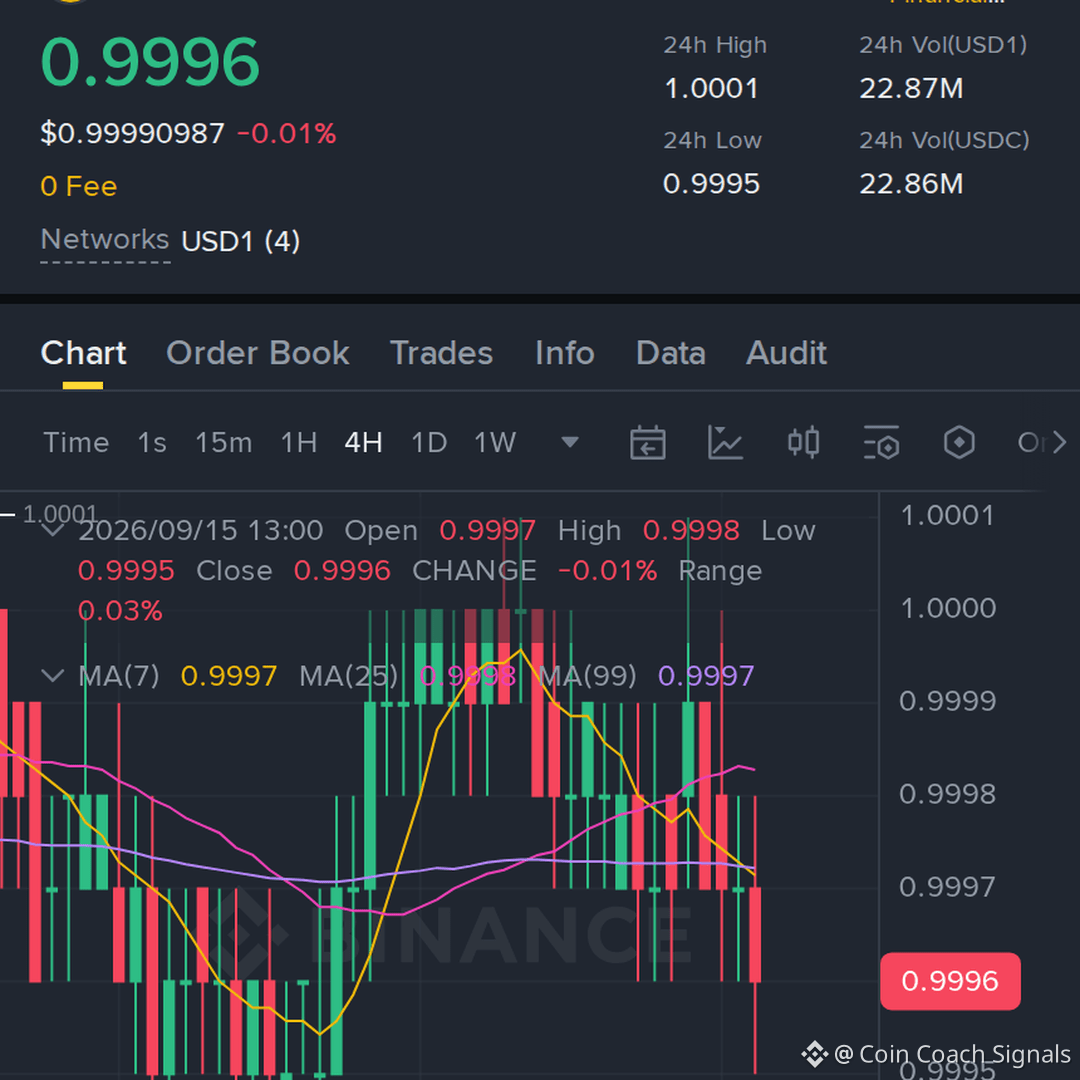
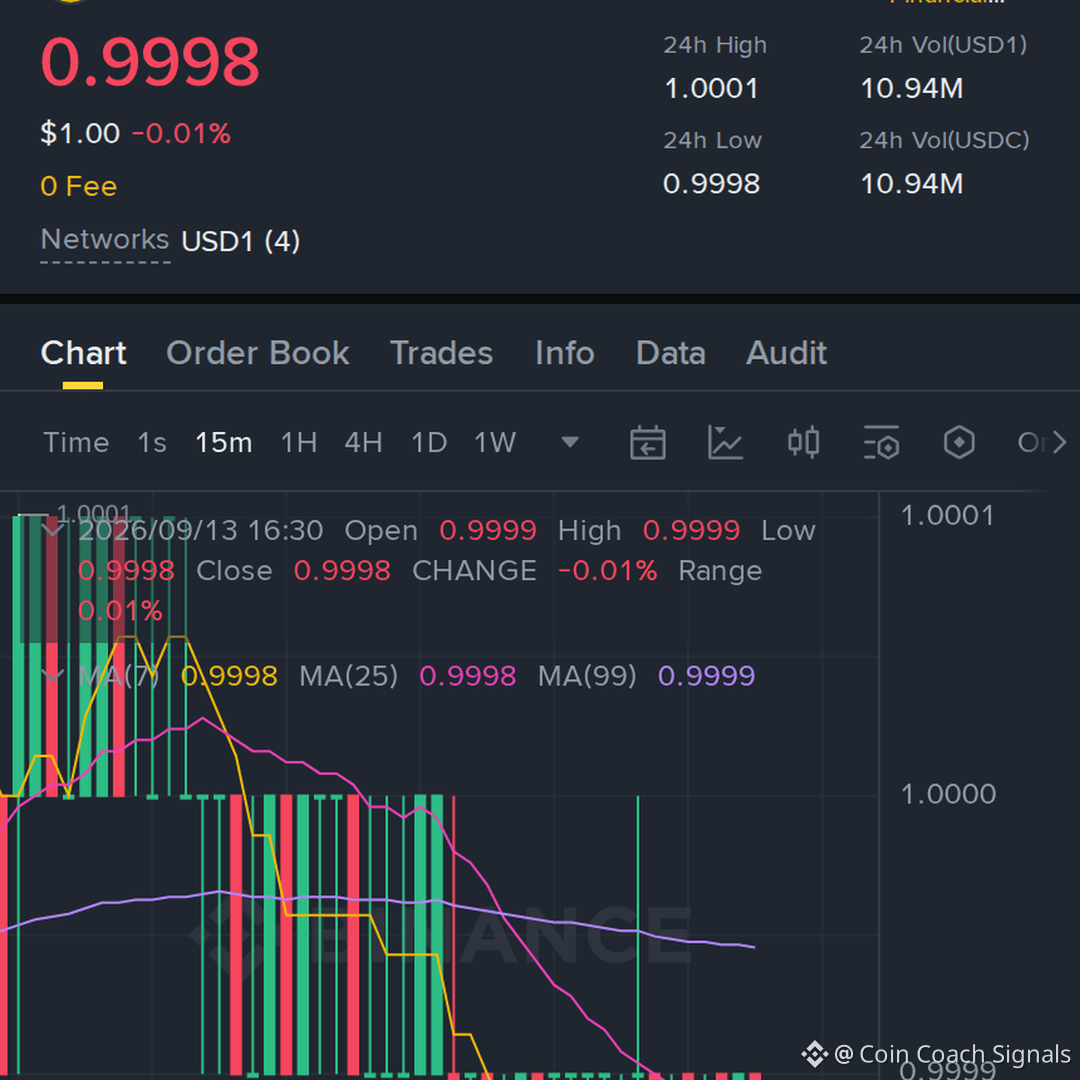
Despite a negligible -0.02% shift, USD1 has sustained $184.22M in 24h volume. This level of participation at the $0.999830 mark suggests buyers are defending the status quo rather than capitulating.
Watch for a sustained volume spike above current levels to confirm a potential bullish breakout. Conversely, a sharp volume drop coupled with a price slide would suggest exhaustion of the current support.
Is this heavy volume a sign of quiet accumulation or a looming distribution phase?
Check the live chart for USD1 here
Tap $USD1 for the live chart. #USD1 #BinanceSquare
Flat volume often signals exhaustion, yet $USD1 is holding firm today.
Despite a negligible -0.02% shift, USD1 has sustained $184.22M in 24h volume. This level of participation at the $0.999830 mark suggests buyers are defending the status quo rather than capitulating.
Watch for a sustained volume spike above current levels to confirm a potential bullish breakout. Conversely, a sharp volume drop coupled with a price slide would suggest exhaustion of the current support.
Is this heavy volume a sign of quiet accumulation or a looming distribution phase?
Check the live chart for USD1 here
Tap $USD1 for the live chart. #USD1 #BinanceSquare
Despite a negligible -0.02% shift, USD1 has sustained $184.22M in 24h volume. This level of participation at the $0.999830 mark suggests buyers are defending the status quo rather than capitulating.
Watch for a sustained volume spike above current levels to confirm a potential bullish breakout. Conversely, a sharp volume drop coupled with a price slide would suggest exhaustion of the current support.
Is this heavy volume a sign of quiet accumulation or a looming distribution phase?
Check the live chart for USD1 here
Tap $USD1 for the live chart. #USD1 #BinanceSquare
15
·
--
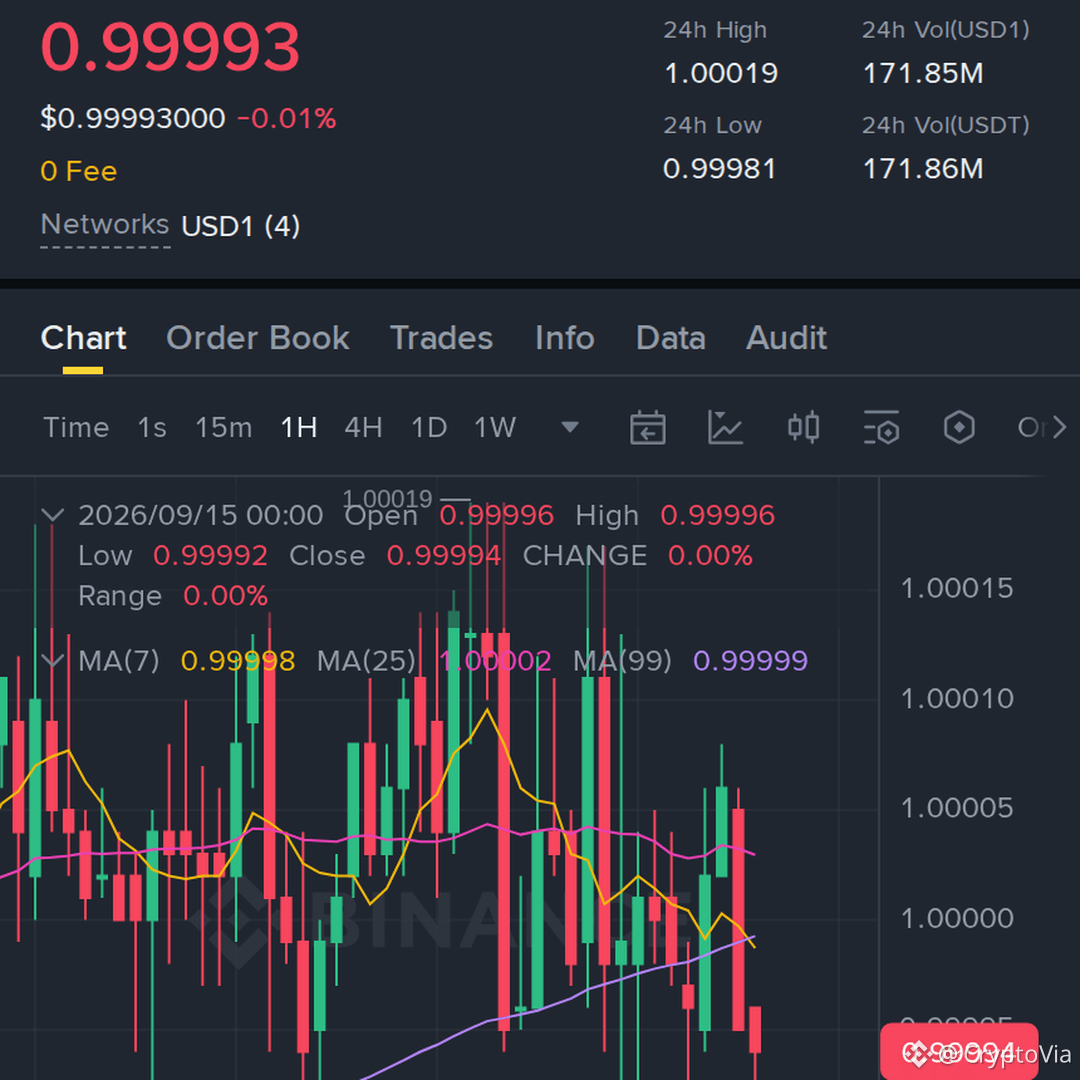
Volume is outpacing price action for $USD1 right now.
With $163.81M in 24h volume despite a flat -0.00% change, the market is currently in a high-interest consolidation phase. This heavy liquidity suggests traders are positioning ahead of a breakout.
Bullish momentum is likely if volume continues to climb alongside price. Conversely, should volume fade while the price drops below current levels, it may signal an exhaustion of buying interest, serving as an invalidation of the current consolidation structure.
Is this heavy USD1 volume a sign of accumulation or distribution before the next move?
Check the live chart for USD1 here
Tap $USD1 for the live chart. #USD1 #BinanceSquare
Volume is outpacing price action for $USD1 right now.
With $163.81M in 24h volume despite a flat -0.00% change, the market is currently in a high-interest consolidation phase. This heavy liquidity suggests traders are positioning ahead of a breakout.
Bullish momentum is likely if volume continues to climb alongside price. Conversely, should volume fade while the price drops below current levels, it may signal an exhaustion of buying interest, serving as an invalidation of the current consolidation structure.
Is this heavy USD1 volume a sign of accumulation or distribution before the next move?
Check the live chart for USD1 here
Tap $USD1 for the live chart. #USD1 #BinanceSquare
With $163.81M in 24h volume despite a flat -0.00% change, the market is currently in a high-interest consolidation phase. This heavy liquidity suggests traders are positioning ahead of a breakout.
Bullish momentum is likely if volume continues to climb alongside price. Conversely, should volume fade while the price drops below current levels, it may signal an exhaustion of buying interest, serving as an invalidation of the current consolidation structure.
Is this heavy USD1 volume a sign of accumulation or distribution before the next move?
Check the live chart for USD1 here
Tap $USD1 for the live chart. #USD1 #BinanceSquare
22

{spot}(USD1USDT)
$USD1 is emerging as a notable stablecoin, designed to maintain a 1:1 value with the U.S. dollar.
Built to bridge traditional finance and digital assets, it focuses on stability, liquidity, and compliance.
With growing ecosystem adoption, USD1 could become an important player in the stablecoin market.
#USD1
#Stablecoin
$USD1 is emerging as a notable stablecoin, designed to maintain a 1:1 value with the U.S. dollar.
Built to bridge traditional finance and digital assets, it focuses on stability, liquidity, and compliance.
With growing ecosystem adoption, USD1 could become an important player in the stablecoin market.
#USD1
#Stablecoin
Built to bridge traditional finance and digital assets, it focuses on stability, liquidity, and compliance.
With growing ecosystem adoption, USD1 could become an important player in the stablecoin market.
#USD1
#Stablecoin

97
·
--
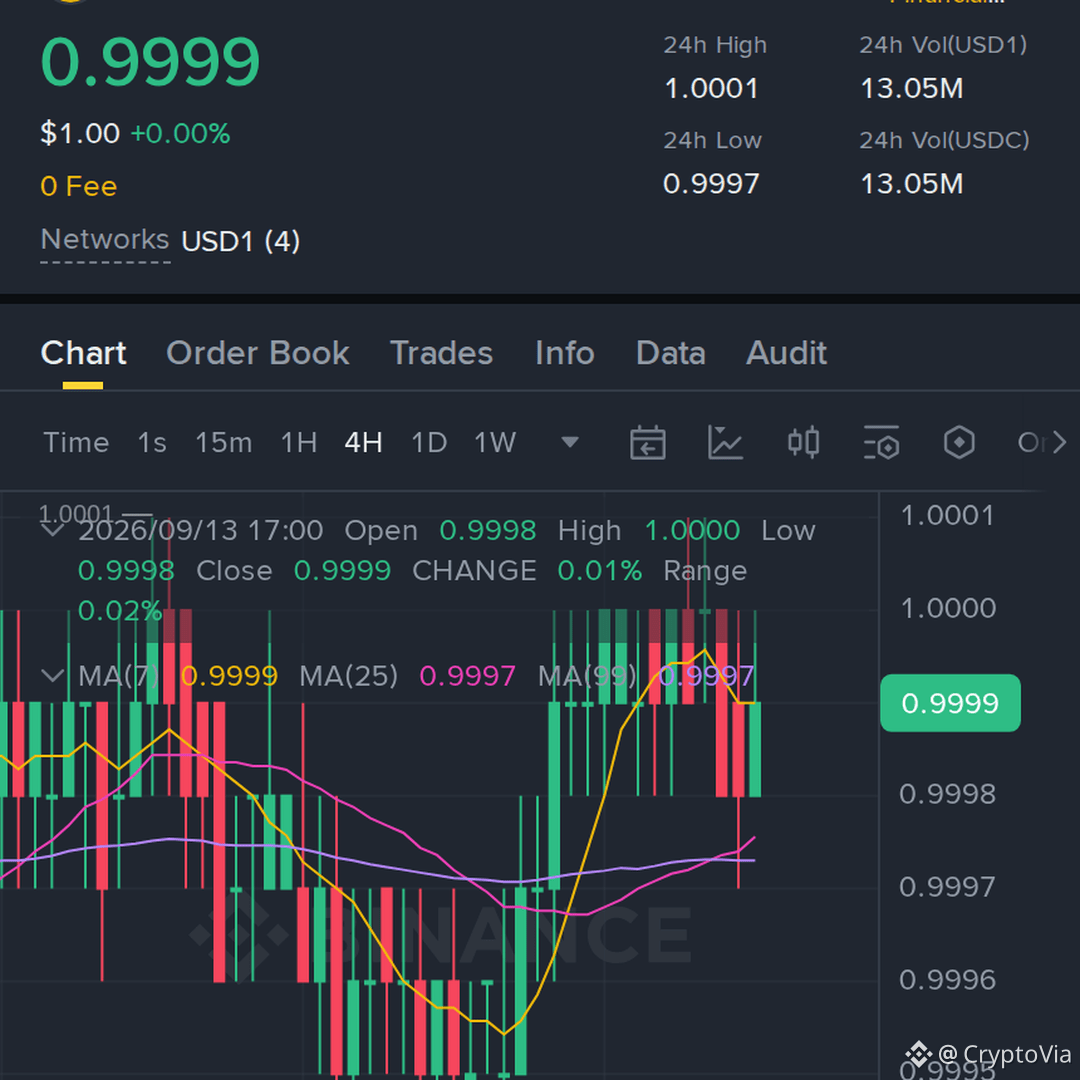
Is current $USD1 volume fueling a breakout or just noise?
With $85.25M in 24h volume against a flat +0.01% price move, liquidity is high but directional conviction remains absent. Here is what matters now:
* **Bullish Signal:** A sustained volume spike alongside a clear breakout above current consolidation could signal institutional accumulation.
* **Risk Invalidation:** If volume dries up while the price slips below the $1.00 support, expect a potential test of lower liquidity zones.
* **Market Reality:** High volume without price momentum often indicates a fierce battle between buyers and sellers.
Are you seeing more aggressive…
Tap $USD1 for the live chart. #USD1 #BinanceSquare
Is current $USD1 volume fueling a breakout or just noise?
With $85.25M in 24h volume against a flat +0.01% price move, liquidity is high but directional conviction remains absent. Here is what matters now:
* **Bullish Signal:** A sustained volume spike alongside a clear breakout above current consolidation could signal institutional accumulation.
* **Risk Invalidation:** If volume dries up while the price slips below the $1.00 support, expect a potential test of lower liquidity zones.
* **Market Reality:** High volume without price momentum often indicates a fierce battle between buyers and sellers.
Are you seeing more aggressive…
Tap $USD1 for the live chart. #USD1 #BinanceSquare
With $85.25M in 24h volume against a flat +0.01% price move, liquidity is high but directional conviction remains absent. Here is what matters now:
* **Bullish Signal:** A sustained volume spike alongside a clear breakout above current consolidation could signal institutional accumulation.
* **Risk Invalidation:** If volume dries up while the price slips below the $1.00 support, expect a potential test of lower liquidity zones.
* **Market Reality:** High volume without price momentum often indicates a fierce battle between buyers and sellers.
Are you seeing more aggressive…
Tap $USD1 for the live chart. #USD1 #BinanceSquare
32

·
--
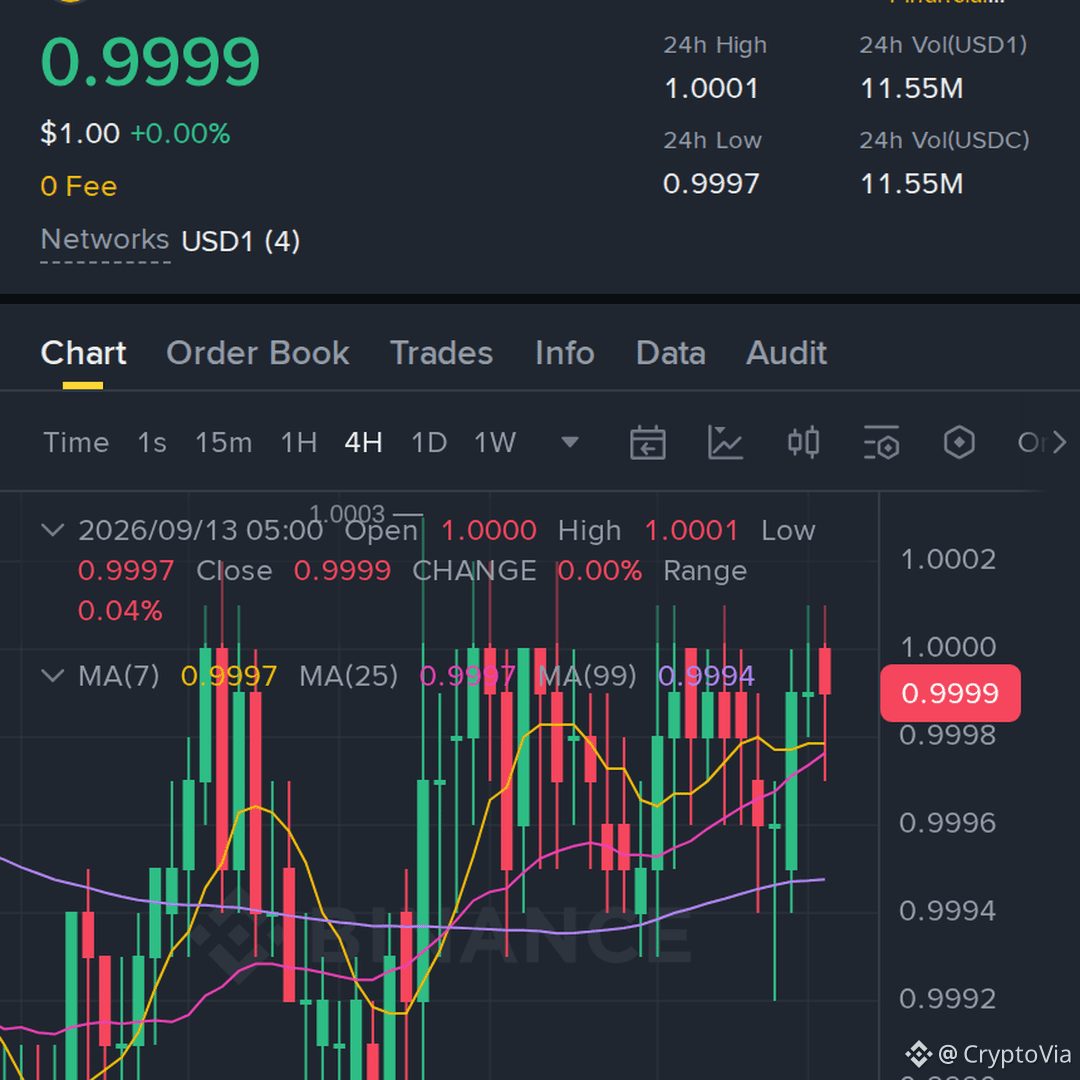
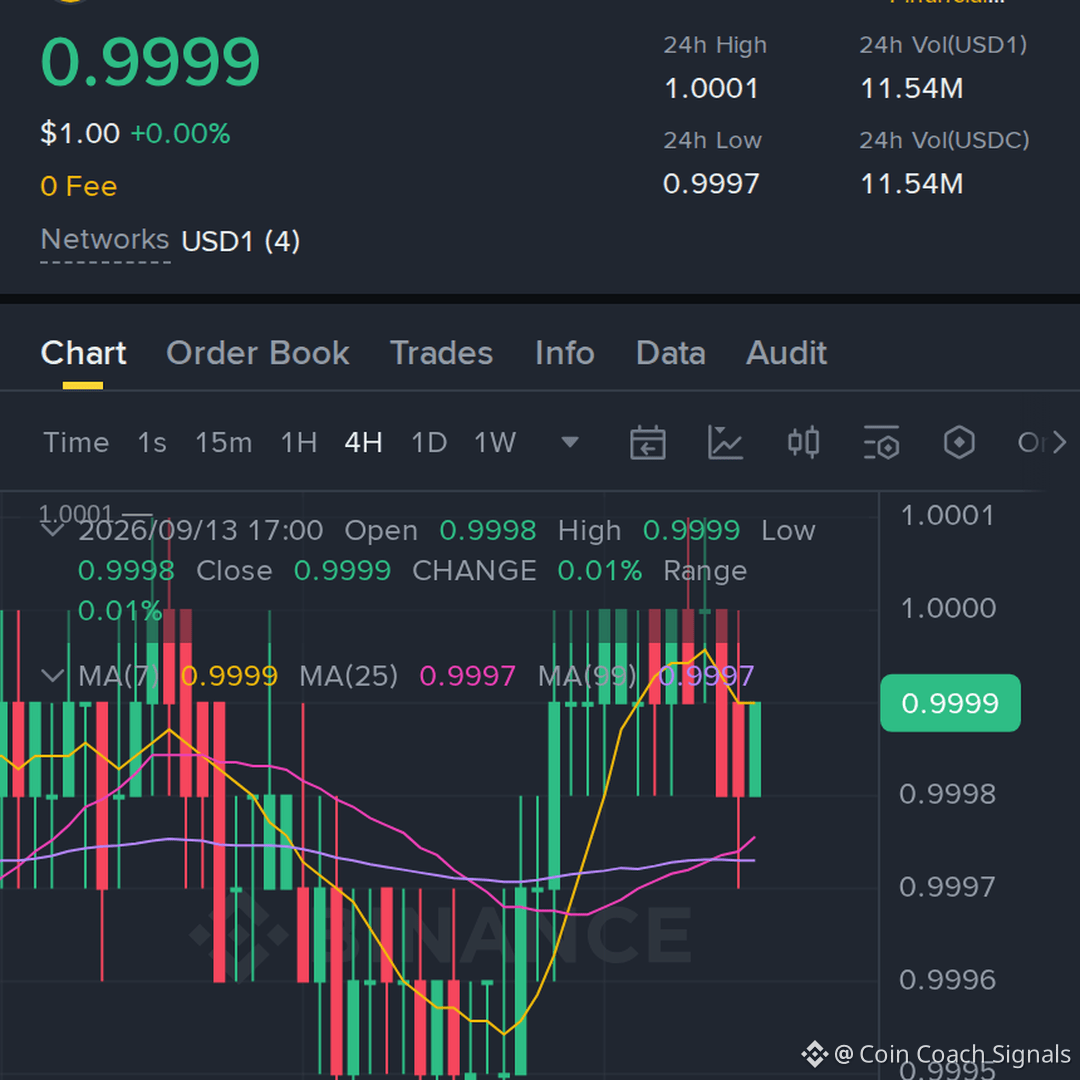
Is current $USD1 volume sustainable for a real breakout?
With $84.31M in 24h volume against a flat price of $1.00, market participation remains steady but directionless. Here is what to watch:
* **Bullish Trigger:** A sustained volume spike accompanying a move above $1.00 could signal fresh institutional interest.
* **Risk Signal:** Should volume dry up while price trends lower, it may indicate a lack of conviction from current holders.
* **The Reality:** Volume is the engine of price discovery; without it, the current level acts more like a magnet than a launchpad.
Are you seeing enough conviction in the order books to support a…
Tap $USD1 for the live chart. #USD1 #BinanceSquare
Is current $USD1 volume sustainable for a real breakout?
With $84.31M in 24h volume against a flat price of $1.00, market participation remains steady but directionless. Here is what to watch:
* **Bullish Trigger:** A sustained volume spike accompanying a move above $1.00 could signal fresh institutional interest.
* **Risk Signal:** Should volume dry up while price trends lower, it may indicate a lack of conviction from current holders.
* **The Reality:** Volume is the engine of price discovery; without it, the current level acts more like a magnet than a launchpad.
Are you seeing enough conviction in the order books to support a…
Tap $USD1 for the live chart. #USD1 #BinanceSquare
With $84.31M in 24h volume against a flat price of $1.00, market participation remains steady but directionless. Here is what to watch:
* **Bullish Trigger:** A sustained volume spike accompanying a move above $1.00 could signal fresh institutional interest.
* **Risk Signal:** Should volume dry up while price trends lower, it may indicate a lack of conviction from current holders.
* **The Reality:** Volume is the engine of price discovery; without it, the current level acts more like a magnet than a launchpad.
Are you seeing enough conviction in the order books to support a…
Tap $USD1 for the live chart. #USD1 #BinanceSquare
18
Log in to explore more content
Join global crypto users on Binance Square
⚡️ Get latest and useful information about crypto.
💬 Trusted by the world’s largest crypto exchange.
👍 Discover real insights from verified creators.
Email / Phone number
Trending Topics
1
#FedRateWatch
639,407 views
2,976 Discussing
2
#EthereumFallsBelow$2400
86 views
25 Discussing
3
#USSenateBlocksClarityAct
736 views
53 Discussing
4
#BitcoinSlidesTo$76000
26,336 views
130 Discussing
5
#BitcoinReboundsTo$79K
63,643 views
408 Discussing
6
#StrategyMarketCapPassesFord
45,796 views
727 Discussing
7
#ClarityActOddsHalveOnPolymarket
73,987 views
609 Discussing
8
#US30YTreasuryYieldTops5.40%
39,375 views
408 Discussing
9
#BessentEndorsesFinalClarityActDraft
61,715 views
785 Discussing
10
#ZamaOpens16ConfidentialMorphoVaults
21,674 views
384 Discussing