
#satoshi
satoshi
1.9M views
1,927 Discussing
Hot
Latest

·
--
CZ on Satoshi’s Bitcoin and Quantum Risk💌
Binance founder CZ has floated the idea that if Bitcoin ever undergoes a quantum-resistant fork, the community could give dormant addresses -including those linked to Satoshi- a migration window of roughly one year.
If the coins remain unmoved after that period, he suggested the network could consider freezing them at the protocol level rather than leaving them vulnerable to future quantum attacks.
CZ framed it as a community decision, not a personal or Binance-led action, emphasizing that doing nothing could effectively hand those coins to the first actor able to break the old cryptography.
$BTC $BNB $USDT #CoinVahini #CZ #Quantum #Satoshi #CryptoWorld
CZ on Satoshi’s Bitcoin and Quantum Risk💌
Binance founder CZ has floated the idea that if Bitcoin ever undergoes a quantum-resistant fork, the community could give dormant addresses -including those linked to Satoshi- a migration window of roughly one year.
If the coins remain unmoved after that period, he suggested the network could consider freezing them at the protocol level rather than leaving them vulnerable to future quantum attacks.
CZ framed it as a community decision, not a personal or Binance-led action, emphasizing that doing nothing could effectively hand those coins to the first actor able to break the old cryptography.
$BTC $BNB $USDT #CoinVahini #CZ #Quantum #Satoshi #CryptoWorld
Binance founder CZ has floated the idea that if Bitcoin ever undergoes a quantum-resistant fork, the community could give dormant addresses -including those linked to Satoshi- a migration window of roughly one year.
If the coins remain unmoved after that period, he suggested the network could consider freezing them at the protocol level rather than leaving them vulnerable to future quantum attacks.
CZ framed it as a community decision, not a personal or Binance-led action, emphasizing that doing nothing could effectively hand those coins to the first actor able to break the old cryptography.
$BTC $BNB $USDT #CoinVahini #CZ #Quantum #Satoshi #CryptoWorld
101


·
--
Satoshi Holds Around 1 Million Bitcoin And Hasn't Touched A Single One In 15 Years.Somewhere on the Bitcoin blockchain there's a pile of coins that could shake the entire market in a single transaction. Nobody has touched it since the early days, and nobody knows for sure if anyone ever will.
Researchers who studied the earliest blocks noticed a pattern in how one miner was producing them. That pattern, often called the Patoshi pattern, suggests a single entity mined a huge share of Bitcoin's first year. The usual estimate lands somewhere around 1.1 million BTC. It's an estimate, not a proven number, and people who study this still argue about the details.
At $77,266 per coin, you can do the maths on what that pile represents. It's one of the largest single stacks of Bitcoin in existence, and it has sat completely still.
Satoshi's last widely known messages date to around 2011. After that, silence. No interviews, no sales, no victory lap after Bitcoin went from worthless to one of the biggest assets in the world.
Think about how strange that is. Almost every founder in this industry has sold something at some point. Team tokens unlock, early investors take profits, insiders diversify. It's normal and mostly expected. The person who created Bitcoin did none of it, at least not from those coins.
There are a few theories people keep coming back to.
The first is that Satoshi simply lost access. Keys get lost. Hard drives get thrown out. It happened to plenty of early miners who never imagined their coins would be worth much.
The second is that Satoshi is no longer alive. That one gets talked about a lot, and there's no way to confirm it.
The third is that the silence is deliberate. If the creator could dump a million coins at any moment, Bitcoin would always carry that risk. By never moving them, Satoshi turned the founder's stack into something closer to a permanent burn. Whether that was the plan or not, it's how the market has come to treat it.
People have claimed to be Satoshi over the years. The most famous case, Craig Wright, ended up in a UK court, and in 2024 the judge ruled that he isn't Satoshi and didn't write the whitepaper. The simplest proof anyone could offer would be to move one coin from those early addresses. Nobody has.
What I keep coming back to is the supply side. Bitcoin is capped at 21 million, and about 20 million already exist. If you treat Satoshi's coins as gone, plus all the coins lost in forgotten wallets over the years, the amount that can actually trade is a lot smaller than the headline number.
That doesn't mean the price has to go anywhere. Scarcity only matters if people want the thing. But it's a detail most newer holders have never thought about.
And it cuts the other way too. If those coins ever did move, even one of them, the reaction would probably be chaotic. Not because selling a million coins is likely, but because nobody would know what comes next.
So the biggest holder in Bitcoin is a ghost, and the market has quietly priced that ghost as permanent.
Do you think those coins will ever move, and what do you think would happen if they did?
Follow me for more deep dives like this one.
Personal view, not advice. Do your own research and make your own decisions.
#Bitcoin #Satoshi
Satoshi Holds Around 1 Million Bitcoin And Hasn't Touched A Single One In 15 Years.
Somewhere on the Bitcoin blockchain there's a pile of coins that could shake the entire market in a single transaction. Nobody has touched it since the early days, and nobody knows for sure if anyone ever will.
Researchers who studied the earliest blocks noticed a pattern in how one miner was producing them. That pattern, often called the Patoshi pattern, suggests a single entity mined a huge share of Bitcoin's first year. The usual estimate lands somewhere around 1.1 million BTC. It's an estimate, not a proven number, and people who study this still argue about the details.
At $77,266 per coin, you can do the maths on what that pile represents. It's one of the largest single stacks of Bitcoin in existence, and it has sat completely still.
Satoshi's last widely known messages date to around 2011. After that, silence. No interviews, no sales, no victory lap after Bitcoin went from worthless to one of the biggest assets in the world.
Think about how strange that is. Almost every founder in this industry has sold something at some point. Team tokens unlock, early investors take profits, insiders diversify. It's normal and mostly expected. The person who created Bitcoin did none of it, at least not from those coins.
There are a few theories people keep coming back to.
The first is that Satoshi simply lost access. Keys get lost. Hard drives get thrown out. It happened to plenty of early miners who never imagined their coins would be worth much.
The second is that Satoshi is no longer alive. That one gets talked about a lot, and there's no way to confirm it.
The third is that the silence is deliberate. If the creator could dump a million coins at any moment, Bitcoin would always carry that risk. By never moving them, Satoshi turned the founder's stack into something closer to a permanent burn. Whether that was the plan or not, it's how the market has come to treat it.
People have claimed to be Satoshi over the years. The most famous case, Craig Wright, ended up in a UK court, and in 2024 the judge ruled that he isn't Satoshi and didn't write the whitepaper. The simplest proof anyone could offer would be to move one coin from those early addresses. Nobody has.
What I keep coming back to is the supply side. Bitcoin is capped at 21 million, and about 20 million already exist. If you treat Satoshi's coins as gone, plus all the coins lost in forgotten wallets over the years, the amount that can actually trade is a lot smaller than the headline number.
That doesn't mean the price has to go anywhere. Scarcity only matters if people want the thing. But it's a detail most newer holders have never thought about.
And it cuts the other way too. If those coins ever did move, even one of them, the reaction would probably be chaotic. Not because selling a million coins is likely, but because nobody would know what comes next.
So the biggest holder in Bitcoin is a ghost, and the market has quietly priced that ghost as permanent.
Do you think those coins will ever move, and what do you think would happen if they did?
Follow me for more deep dives like this one.
Personal view, not advice. Do your own research and make your own decisions.
#Bitcoin #Satoshi
Researchers who studied the earliest blocks noticed a pattern in how one miner was producing them. That pattern, often called the Patoshi pattern, suggests a single entity mined a huge share of Bitcoin's first year. The usual estimate lands somewhere around 1.1 million BTC. It's an estimate, not a proven number, and people who study this still argue about the details.
At $77,266 per coin, you can do the maths on what that pile represents. It's one of the largest single stacks of Bitcoin in existence, and it has sat completely still.
Satoshi's last widely known messages date to around 2011. After that, silence. No interviews, no sales, no victory lap after Bitcoin went from worthless to one of the biggest assets in the world.
Think about how strange that is. Almost every founder in this industry has sold something at some point. Team tokens unlock, early investors take profits, insiders diversify. It's normal and mostly expected. The person who created Bitcoin did none of it, at least not from those coins.
There are a few theories people keep coming back to.
The first is that Satoshi simply lost access. Keys get lost. Hard drives get thrown out. It happened to plenty of early miners who never imagined their coins would be worth much.
The second is that Satoshi is no longer alive. That one gets talked about a lot, and there's no way to confirm it.
The third is that the silence is deliberate. If the creator could dump a million coins at any moment, Bitcoin would always carry that risk. By never moving them, Satoshi turned the founder's stack into something closer to a permanent burn. Whether that was the plan or not, it's how the market has come to treat it.
People have claimed to be Satoshi over the years. The most famous case, Craig Wright, ended up in a UK court, and in 2024 the judge ruled that he isn't Satoshi and didn't write the whitepaper. The simplest proof anyone could offer would be to move one coin from those early addresses. Nobody has.
What I keep coming back to is the supply side. Bitcoin is capped at 21 million, and about 20 million already exist. If you treat Satoshi's coins as gone, plus all the coins lost in forgotten wallets over the years, the amount that can actually trade is a lot smaller than the headline number.
That doesn't mean the price has to go anywhere. Scarcity only matters if people want the thing. But it's a detail most newer holders have never thought about.
And it cuts the other way too. If those coins ever did move, even one of them, the reaction would probably be chaotic. Not because selling a million coins is likely, but because nobody would know what comes next.
So the biggest holder in Bitcoin is a ghost, and the market has quietly priced that ghost as permanent.
Do you think those coins will ever move, and what do you think would happen if they did?
Follow me for more deep dives like this one.
Personal view, not advice. Do your own research and make your own decisions.
#Bitcoin #Satoshi
1
1k
Did you know who created Bitcoin? 🪙 In 2008, a mysterious person or group named 'Satoshi Nakamoto' published the Bitcoin whitepaper. To this day, nobody knows their real identity! Another amazing fact is that there will only ever be 21 million Bitcoins in existence. More than 19.7 million have already been mined. This limited supply is why many people call it 'Digital Gold'. What do you think about Satoshi's mystery? Let me know!" #Write2Earn #bitcoin #CryptoFacts #Satoshi
Did you know who created Bitcoin? 🪙 In 2008, a mysterious person or group named 'Satoshi Nakamoto' published the Bitcoin whitepaper. To this day, nobody knows their real identity! Another amazing fact is that there will only ever be 21 million Bitcoins in existence. More than 19.7 million have already been mined. This limited supply is why many people call it 'Digital Gold'. What do you think about Satoshi's mystery? Let me know!" #Write2Earn #bitcoin #CryptoFacts #Satoshi
1
148
·
--
Bullish
Verified
🔥🔥🔥🔥🔥🔥🔥🔥🔥🔥🔥🔥
Satoshi’s wealth has surged
Satoshi Nakamoto’s holdings increased by $15 billion following the Bitcoin spike on August 25.
📊 According to Arkham, associated addresses hold approximately 1.096 million BTC.
Satoshi’s coins, untouched for years, remain one of the market’s key symbols.
#satoshiNakamato #BTC #Satoshi
$BTC
{future}(BTCUSDT)
🔥🔥🔥🔥🔥🔥🔥🔥🔥🔥🔥🔥
Satoshi’s wealth has surged
Satoshi Nakamoto’s holdings increased by $15 billion following the Bitcoin spike on August 25.
📊 According to Arkham, associated addresses hold approximately 1.096 million BTC.
Satoshi’s coins, untouched for years, remain one of the market’s key symbols.
#satoshiNakamato #BTC #Satoshi
$BTC
Satoshi’s wealth has surged
Satoshi Nakamoto’s holdings increased by $15 billion following the Bitcoin spike on August 25.
📊 According to Arkham, associated addresses hold approximately 1.096 million BTC.
Satoshi’s coins, untouched for years, remain one of the market’s key symbols.
#satoshiNakamato #BTC #Satoshi
$BTC
7
427

·
--
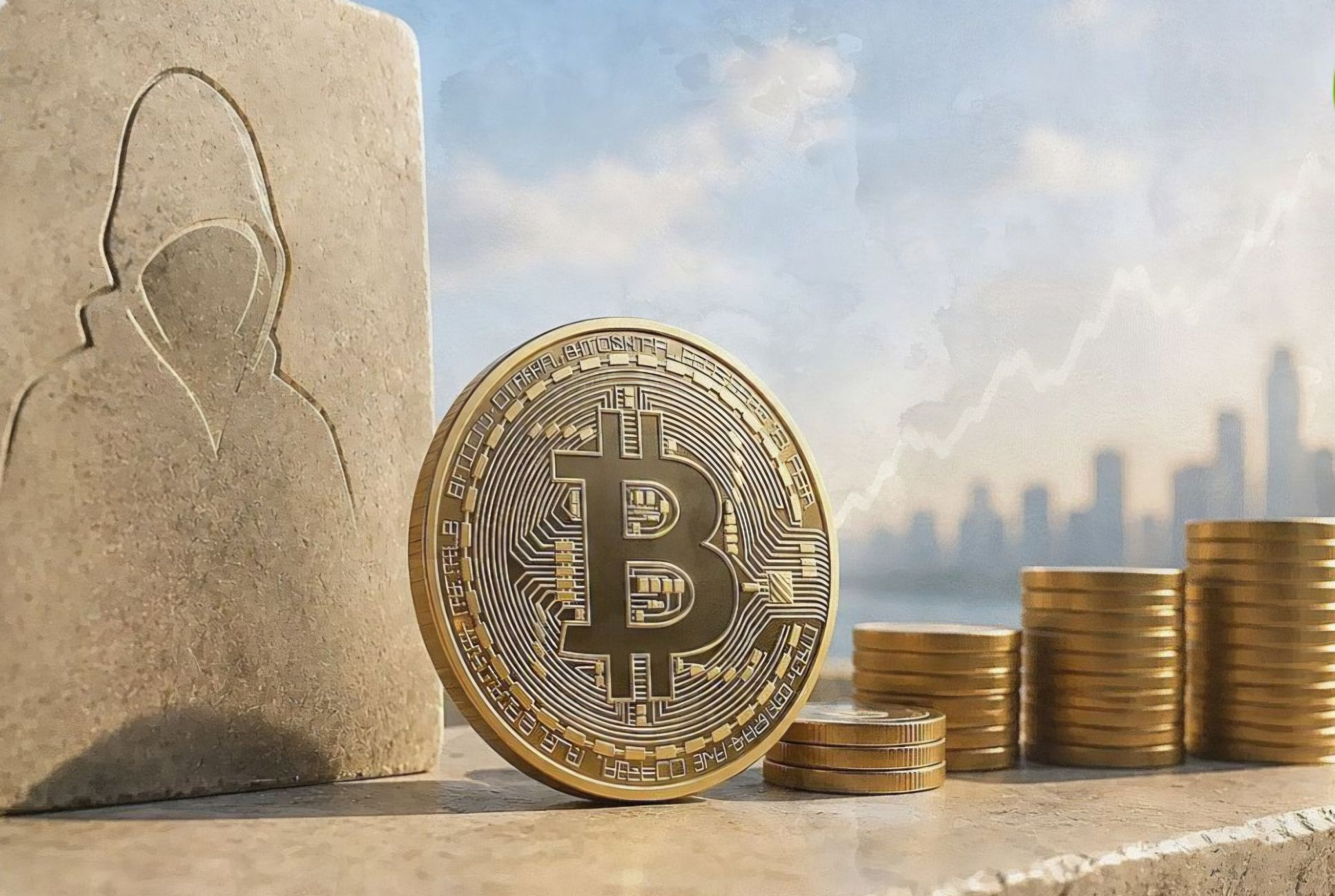
🟠 ENJOY THE $BTC PUMP. BUT DON’T FORGET THE ULTIMATE WILDCARD. 💀
Bitcoin is pumping. The charts look beautiful. Everyone is suddenly bullish again. 😂
Enjoy it.
Respect the momentum.
But there’s one thing about Bitcoin that will always be different…
Satoshi.
Millions of dormant $BTC are still associated with wallets believed to belong to Bitcoin’s creator.
Imagine waking up tomorrow and seeing:
“Satoshi moved 1,000 BTC.” 💀
The entire market would probably lose its mind in seconds.
So yes…
Enjoy the pump.
$ONG
Celebrate the green candles.
But never forget:
One day Satoshi could wake up and choose violence. 💀
#Bitcoin #BTC #Crypto #Satoshi
{future}(ONGUSDT)
{future}(BTCUSDT)
🟠 ENJOY THE $BTC PUMP. BUT DON’T FORGET THE ULTIMATE WILDCARD. 💀
Bitcoin is pumping. The charts look beautiful. Everyone is suddenly bullish again. 😂
Enjoy it.
Respect the momentum.
But there’s one thing about Bitcoin that will always be different…
Satoshi.
Millions of dormant $BTC are still associated with wallets believed to belong to Bitcoin’s creator.
Imagine waking up tomorrow and seeing:
“Satoshi moved 1,000 BTC.” 💀
The entire market would probably lose its mind in seconds.
So yes…
Enjoy the pump.
$ONG
Celebrate the green candles.
But never forget:
One day Satoshi could wake up and choose violence. 💀
#Bitcoin #BTC #Crypto #Satoshi
Bitcoin is pumping. The charts look beautiful. Everyone is suddenly bullish again. 😂
Enjoy it.
Respect the momentum.
But there’s one thing about Bitcoin that will always be different…
Satoshi.
Millions of dormant $BTC are still associated with wallets believed to belong to Bitcoin’s creator.
Imagine waking up tomorrow and seeing:
“Satoshi moved 1,000 BTC.” 💀
The entire market would probably lose its mind in seconds.
So yes…
Enjoy the pump.
$ONG
Celebrate the green candles.
But never forget:
One day Satoshi could wake up and choose violence. 💀
#Bitcoin #BTC #Crypto #Satoshi
3
213

·
--
Bullish
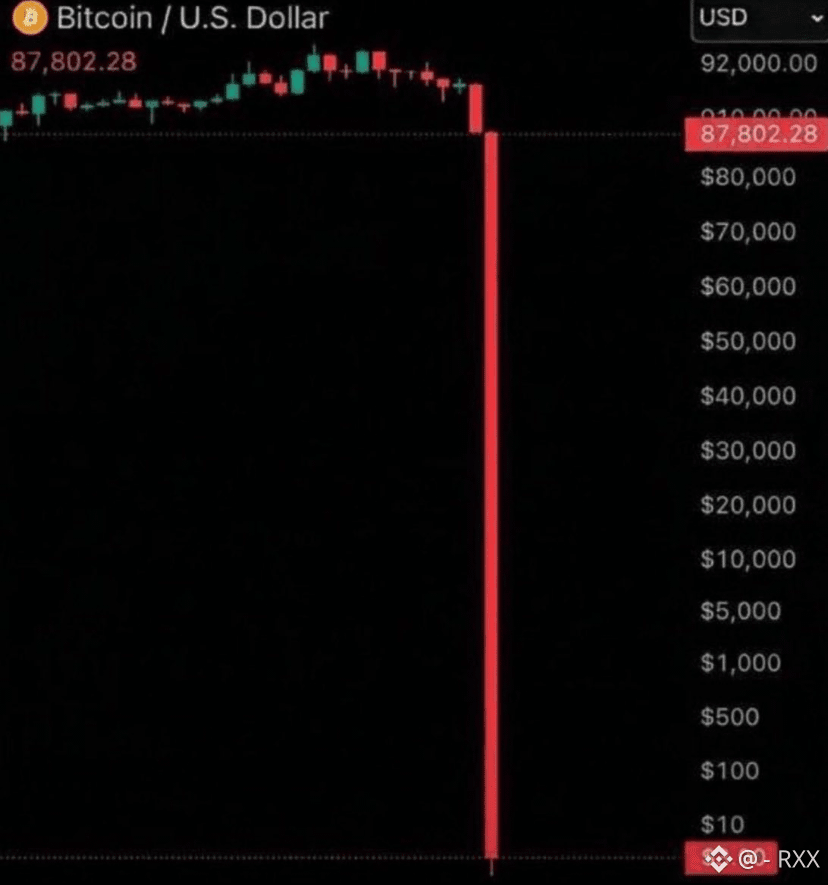
Satoshi never dumped a single $BTC on you. 🔥
Never launched a presale. 🚫
Never asked for a single dollar. 💀
Just wrote the code. Dropped it like a bomb. 💣 And ghosted the entire world. 👻
No VCs. No shills. No masters. 👑 Just pure decentralized FREEDOM. ⚡
21 million. Fixed. Forever. 🔒
The greatest revolution in history — and he kept NOTHING for himself. 🤯
Thank you, Satoshi. 🙏🧡
#Bitcoin #Satoshi #BTC #Crypto #HODL
Satoshi never dumped a single $BTC on you. 🔥
Never launched a presale. 🚫
Never asked for a single dollar. 💀
Just wrote the code. Dropped it like a bomb. 💣 And ghosted the entire world. 👻
No VCs. No shills. No masters. 👑 Just pure decentralized FREEDOM. ⚡
21 million. Fixed. Forever. 🔒
The greatest revolution in history — and he kept NOTHING for himself. 🤯
Thank you, Satoshi. 🙏🧡
#Bitcoin #Satoshi #BTC #Crypto #HODL
Never launched a presale. 🚫
Never asked for a single dollar. 💀
Just wrote the code. Dropped it like a bomb. 💣 And ghosted the entire world. 👻
No VCs. No shills. No masters. 👑 Just pure decentralized FREEDOM. ⚡
21 million. Fixed. Forever. 🔒
The greatest revolution in history — and he kept NOTHING for himself. 🤯
Thank you, Satoshi. 🙏🧡
#Bitcoin #Satoshi #BTC #Crypto #HODL
1
3
277

Satoshi’s vault for 70 billion — $BTC — protected by only 24 random words! 💥
Let’s think about the cynical reality of our market: $BTC worth $70 billion is inside Satoshi’s wallet, sealed exclusively by 24 words from the dictionary in the exact order. 🔒 Pure mathematical engineering that cannot be shaken by any brute-force attack in the digital age.
While over-leveraged traders liquidate their accounts searching for tiny fluctuations in smaller timeframes, the grand prize remains untouched on-chain. 📊 The odds of guessing the seed phrase are far too low to be struck by lightning a thousand times, yet the restraining encryption for this case provides a solid foundation for the entire market. 💡
💬 Do you trust pure mathematics to protect your entire net worth, or do you still prefer traditional castles? 👇
⚠️ Not financial advice. Always consider your risks. 🛡️
🏷️ #BTC #Bitcoin #CryptoMarket #Blockchain #Satoshi
Satoshi’s vault for 70 billion — $BTC — protected by only 24 random words! 💥
Let’s think about the cynical reality of our market: $BTC worth $70 billion is inside Satoshi’s wallet, sealed exclusively by 24 words from the dictionary in the exact order. 🔒 Pure mathematical engineering that cannot be shaken by any brute-force attack in the digital age.
While over-leveraged traders liquidate their accounts searching for tiny fluctuations in smaller timeframes, the grand prize remains untouched on-chain. 📊 The odds of guessing the seed phrase are far too low to be struck by lightning a thousand times, yet the restraining encryption for this case provides a solid foundation for the entire market. 💡
💬 Do you trust pure mathematics to protect your entire net worth, or do you still prefer traditional castles? 👇
⚠️ Not financial advice. Always consider your risks. 🛡️
🏷️ #BTC #Bitcoin #CryptoMarket #Blockchain #Satoshi
Let’s think about the cynical reality of our market: $BTC worth $70 billion is inside Satoshi’s wallet, sealed exclusively by 24 words from the dictionary in the exact order. 🔒 Pure mathematical engineering that cannot be shaken by any brute-force attack in the digital age.
While over-leveraged traders liquidate their accounts searching for tiny fluctuations in smaller timeframes, the grand prize remains untouched on-chain. 📊 The odds of guessing the seed phrase are far too low to be struck by lightning a thousand times, yet the restraining encryption for this case provides a solid foundation for the entire market. 💡
💬 Do you trust pure mathematics to protect your entire net worth, or do you still prefer traditional castles? 👇
⚠️ Not financial advice. Always consider your risks. 🛡️
🏷️ #BTC #Bitcoin #CryptoMarket #Blockchain #Satoshi
46

·
--
🚨 THE GHOST OF BITCOIN JUST GOT A MONUMENT IN TOKYO — SATOSHI'S STATUE IS REAL! 🗿
📌 Japan — the land that birthed crypto's greatest mystery — now honors the anonymous architect who changed how money moves forever. 🇯🇵 No name on the plaque. No face to celebrate. Just a presence that echoes across every block mined since January 2009. 👁️
💡 Bitcoin never needed a leader. It needed a proof-of-work system that outlived its creator — and that's exactly what we got. While institutions scramble for regulation and retail hunts for the next 100x, the real flex is that one entity set a protocol so sound it still runs without permission, without a CEO, without mercy. ⚡
🌊 Think about this: the hardest money ever created was born from absolute anonymity. No exit scam. No token unlock. No whitepaper royalties. The masterpiece walked away and let the market decide its value — and we've been pricing it ever since. 💎
💬 If Satoshi showed up tomorrow at Shinjuku station, what's the ONE question you'd ask first — about the whitepaper or the wallet keys? 👇
⚠️ Not financial advice. Always manage your risk. 🛡️
🏷️ #Bitcoin #Satoshi #CryptoHistory #Blockchain #Tokyo
🌕 🦈
🚨 THE GHOST OF BITCOIN JUST GOT A MONUMENT IN TOKYO — SATOSHI'S STATUE IS REAL! 🗿
📌 Japan — the land that birthed crypto's greatest mystery — now honors the anonymous architect who changed how money moves forever. 🇯🇵 No name on the plaque. No face to celebrate. Just a presence that echoes across every block mined since January 2009. 👁️
💡 Bitcoin never needed a leader. It needed a proof-of-work system that outlived its creator — and that's exactly what we got. While institutions scramble for regulation and retail hunts for the next 100x, the real flex is that one entity set a protocol so sound it still runs without permission, without a CEO, without mercy. ⚡
🌊 Think about this: the hardest money ever created was born from absolute anonymity. No exit scam. No token unlock. No whitepaper royalties. The masterpiece walked away and let the market decide its value — and we've been pricing it ever since. 💎
💬 If Satoshi showed up tomorrow at Shinjuku station, what's the ONE question you'd ask first — about the whitepaper or the wallet keys? 👇
⚠️ Not financial advice. Always manage your risk. 🛡️
🏷️ #Bitcoin #Satoshi #CryptoHistory #Blockchain #Tokyo
🌕 🦈
📌 Japan — the land that birthed crypto's greatest mystery — now honors the anonymous architect who changed how money moves forever. 🇯🇵 No name on the plaque. No face to celebrate. Just a presence that echoes across every block mined since January 2009. 👁️
💡 Bitcoin never needed a leader. It needed a proof-of-work system that outlived its creator — and that's exactly what we got. While institutions scramble for regulation and retail hunts for the next 100x, the real flex is that one entity set a protocol so sound it still runs without permission, without a CEO, without mercy. ⚡
🌊 Think about this: the hardest money ever created was born from absolute anonymity. No exit scam. No token unlock. No whitepaper royalties. The masterpiece walked away and let the market decide its value — and we've been pricing it ever since. 💎
💬 If Satoshi showed up tomorrow at Shinjuku station, what's the ONE question you'd ask first — about the whitepaper or the wallet keys? 👇
⚠️ Not financial advice. Always manage your risk. 🛡️
🏷️ #Bitcoin #Satoshi #CryptoHistory #Blockchain #Tokyo
🌕 🦈
40

·
--
Bullish
🚨 BREAKING: SATOSHI-ERA BITCOIN WALLET MOVES AFTER 14 YEARS OF SILENCE! 🚨
₿👀 One of Bitcoin's oldest wallets has suddenly come back to life after 14 years, sending shockwaves across the crypto community.
💰 The wallet is reportedly linked to a staggering $285 billion lawsuit, making this one of the most closely watched Bitcoin addresses in history.
🤯 The address had previously received a legal notice through Bitcoin's blockchain, demanding proof of ownership. Now, after years of inactivity, movement has finally been detected.
⚡ Whenever Satoshi-era coins move, speculation explodes. Traders immediately begin asking whether early holders are preparing to sell, transfer assets, or respond to legal claims.
🔥 A dormant giant has awakened.
👀 The big question: Who controls this legendary wallet... and what happens next?
$BTC $ETH $XRP
#bitcoin #Satoshi #CryptoNews #pullback
🚨 BREAKING: SATOSHI-ERA BITCOIN WALLET MOVES AFTER 14 YEARS OF SILENCE! 🚨
₿👀 One of Bitcoin's oldest wallets has suddenly come back to life after 14 years, sending shockwaves across the crypto community.
💰 The wallet is reportedly linked to a staggering $285 billion lawsuit, making this one of the most closely watched Bitcoin addresses in history.
🤯 The address had previously received a legal notice through Bitcoin's blockchain, demanding proof of ownership. Now, after years of inactivity, movement has finally been detected.
⚡ Whenever Satoshi-era coins move, speculation explodes. Traders immediately begin asking whether early holders are preparing to sell, transfer assets, or respond to legal claims.
🔥 A dormant giant has awakened.
👀 The big question: Who controls this legendary wallet... and what happens next?
$BTC $ETH $XRP
#bitcoin #Satoshi #CryptoNews #pullback
₿👀 One of Bitcoin's oldest wallets has suddenly come back to life after 14 years, sending shockwaves across the crypto community.
💰 The wallet is reportedly linked to a staggering $285 billion lawsuit, making this one of the most closely watched Bitcoin addresses in history.
🤯 The address had previously received a legal notice through Bitcoin's blockchain, demanding proof of ownership. Now, after years of inactivity, movement has finally been detected.
⚡ Whenever Satoshi-era coins move, speculation explodes. Traders immediately begin asking whether early holders are preparing to sell, transfer assets, or respond to legal claims.
🔥 A dormant giant has awakened.
👀 The big question: Who controls this legendary wallet... and what happens next?
$BTC $ETH $XRP
#bitcoin #Satoshi #CryptoNews #pullback
1
176

·
--
🟢 The Birth of Bitcoin: A Response to the Financial Crisis of 2008 and the Printing of Money by Central Banks
The collapse of the dot-com bubble in 2000 and the attacks of September 11 shattered the markets, forcing the Fed to cut rates and flood the system with cheap credit. This didn’t fix the underlying problems; it only inflated the housing market bubble, which ultimately burst in 2007–2008.
When the financial system was on the brink of collapse, governments and central banks rescued institutions by “printing” electronic money. This devalued the existing currency, benefiting those who received the new money first—banks, shareholders, and asset holders—while simultaneously diluting the value for everyone else.
This era of unchecked central bank intervention and systemic risk created a perfect storm for a radical new idea. Distrust in traditional finance and the obvious consequences of currency devaluation created fertile ground for the emergence of Bitcoin.
Satoshi Nakamoto’s white paper, published in October 2008 amid the chaos, proposed a decentralized peer-to-peer electronic payment system. It was a direct challenge to the established order, offering an alternative free from control and the inflationary tendencies of central authorities.
📊 This historical context strengthens the narrative of Bitcoin as digital gold and a hedge against inflation, which can boost long-term demand and adoption—especially during periods of macroeconomic uncertainty.
Was Bitcoin inevitable, given the crisis of 2008, or was it a fortunate coincidence? 👇
#bitcoin #satoshi #nakamoto #2008 #crisis
🟢 The Birth of Bitcoin: A Response to the Financial Crisis of 2008 and the Printing of Money by Central Banks
The collapse of the dot-com bubble in 2000 and the attacks of September 11 shattered the markets, forcing the Fed to cut rates and flood the system with cheap credit. This didn’t fix the underlying problems; it only inflated the housing market bubble, which ultimately burst in 2007–2008.
When the financial system was on the brink of collapse, governments and central banks rescued institutions by “printing” electronic money. This devalued the existing currency, benefiting those who received the new money first—banks, shareholders, and asset holders—while simultaneously diluting the value for everyone else.
This era of unchecked central bank intervention and systemic risk created a perfect storm for a radical new idea. Distrust in traditional finance and the obvious consequences of currency devaluation created fertile ground for the emergence of Bitcoin.
Satoshi Nakamoto’s white paper, published in October 2008 amid the chaos, proposed a decentralized peer-to-peer electronic payment system. It was a direct challenge to the established order, offering an alternative free from control and the inflationary tendencies of central authorities.
📊 This historical context strengthens the narrative of Bitcoin as digital gold and a hedge against inflation, which can boost long-term demand and adoption—especially during periods of macroeconomic uncertainty.
Was Bitcoin inevitable, given the crisis of 2008, or was it a fortunate coincidence? 👇
#bitcoin #satoshi #nakamoto #2008 #crisis
The collapse of the dot-com bubble in 2000 and the attacks of September 11 shattered the markets, forcing the Fed to cut rates and flood the system with cheap credit. This didn’t fix the underlying problems; it only inflated the housing market bubble, which ultimately burst in 2007–2008.
When the financial system was on the brink of collapse, governments and central banks rescued institutions by “printing” electronic money. This devalued the existing currency, benefiting those who received the new money first—banks, shareholders, and asset holders—while simultaneously diluting the value for everyone else.
This era of unchecked central bank intervention and systemic risk created a perfect storm for a radical new idea. Distrust in traditional finance and the obvious consequences of currency devaluation created fertile ground for the emergence of Bitcoin.
Satoshi Nakamoto’s white paper, published in October 2008 amid the chaos, proposed a decentralized peer-to-peer electronic payment system. It was a direct challenge to the established order, offering an alternative free from control and the inflationary tendencies of central authorities.
📊 This historical context strengthens the narrative of Bitcoin as digital gold and a hedge against inflation, which can boost long-term demand and adoption—especially during periods of macroeconomic uncertainty.
Was Bitcoin inevitable, given the crisis of 2008, or was it a fortunate coincidence? 👇
#bitcoin #satoshi #nakamoto #2008 #crisis
105

An interesting behind-the-scenes story has been dug up.
Lighter founder Vladimir Novakovski reveals that as early as 2023, he and Liquid founder Franklyn Wang tried to “pin down” Satoshi Nakamoto’s real identity together by using GPT-4’s text-style analysis.
The conclusion was—AI couldn’t provide answers with high enough confidence, and the attempt ended in failure.
A few things worth pondering:
First, not long after GPT-4 first went mainstream, these two tech-minded founders put it to work for stylometry (style measurement) comparisons. The idea was actually quite forward-thinking—it was just that the model’s capabilities hadn’t reached that level yet.
Second, the publicly available text samples Satoshi left behind are themselves limited, and on top of that, he deliberately muddied his wording habits. As a result, any inference based on style is unlikely to cross the line of “reasonable doubt.”
Third, viewed from today, with the next generation of models like Claude and GPT-5, long-text understanding and style recognition are far stronger by more than an order of magnitude. But if you were to redo this today, most people in the circle would probably hesitate—because Satoshi’s anonymity is already one of Bitcoin narrative’s most important assets, and uncovering it might be a kind of disruption.
From another angle, this also reminds us that the focus of founders behind on-chain projects is often more “geeky” than what you see on the surface. Lighter builds a perpetual DEX, Liquid builds liquidity infrastructure—but what they tinker with in private is the most original mystery in the crypto world.
Some mysteries, maybe, are meant to be left alone.
#Satoshi #Lighter #Bitcoin
An interesting behind-the-scenes story has been dug up.
Lighter founder Vladimir Novakovski reveals that as early as 2023, he and Liquid founder Franklyn Wang tried to “pin down” Satoshi Nakamoto’s real identity together by using GPT-4’s text-style analysis.
The conclusion was—AI couldn’t provide answers with high enough confidence, and the attempt ended in failure.
A few things worth pondering:
First, not long after GPT-4 first went mainstream, these two tech-minded founders put it to work for stylometry (style measurement) comparisons. The idea was actually quite forward-thinking—it was just that the model’s capabilities hadn’t reached that level yet.
Second, the publicly available text samples Satoshi left behind are themselves limited, and on top of that, he deliberately muddied his wording habits. As a result, any inference based on style is unlikely to cross the line of “reasonable doubt.”
Third, viewed from today, with the next generation of models like Claude and GPT-5, long-text understanding and style recognition are far stronger by more than an order of magnitude. But if you were to redo this today, most people in the circle would probably hesitate—because Satoshi’s anonymity is already one of Bitcoin narrative’s most important assets, and uncovering it might be a kind of disruption.
From another angle, this also reminds us that the focus of founders behind on-chain projects is often more “geeky” than what you see on the surface. Lighter builds a perpetual DEX, Liquid builds liquidity infrastructure—but what they tinker with in private is the most original mystery in the crypto world.
Some mysteries, maybe, are meant to be left alone.
#Satoshi #Lighter #Bitcoin
Lighter founder Vladimir Novakovski reveals that as early as 2023, he and Liquid founder Franklyn Wang tried to “pin down” Satoshi Nakamoto’s real identity together by using GPT-4’s text-style analysis.
The conclusion was—AI couldn’t provide answers with high enough confidence, and the attempt ended in failure.
A few things worth pondering:
First, not long after GPT-4 first went mainstream, these two tech-minded founders put it to work for stylometry (style measurement) comparisons. The idea was actually quite forward-thinking—it was just that the model’s capabilities hadn’t reached that level yet.
Second, the publicly available text samples Satoshi left behind are themselves limited, and on top of that, he deliberately muddied his wording habits. As a result, any inference based on style is unlikely to cross the line of “reasonable doubt.”
Third, viewed from today, with the next generation of models like Claude and GPT-5, long-text understanding and style recognition are far stronger by more than an order of magnitude. But if you were to redo this today, most people in the circle would probably hesitate—because Satoshi’s anonymity is already one of Bitcoin narrative’s most important assets, and uncovering it might be a kind of disruption.
From another angle, this also reminds us that the focus of founders behind on-chain projects is often more “geeky” than what you see on the surface. Lighter builds a perpetual DEX, Liquid builds liquidity infrastructure—but what they tinker with in private is the most original mystery in the crypto world.
Some mysteries, maybe, are meant to be left alone.
#Satoshi #Lighter #Bitcoin
43

·
--
#BitcoinPlansECashHardFork
# What is #BitcoinPlansECashHardFork? 🚨
The crypto world is buzzing about a planned Bitcoin hard fork on **August 21, 2026**. If you’ve been seeing the hashtag **#BitcoinPlansECashHardFork** and wondering what it actually means for your portfolio, here is the quick, no-BS breakdown.
---
### 1. What is actually happening?
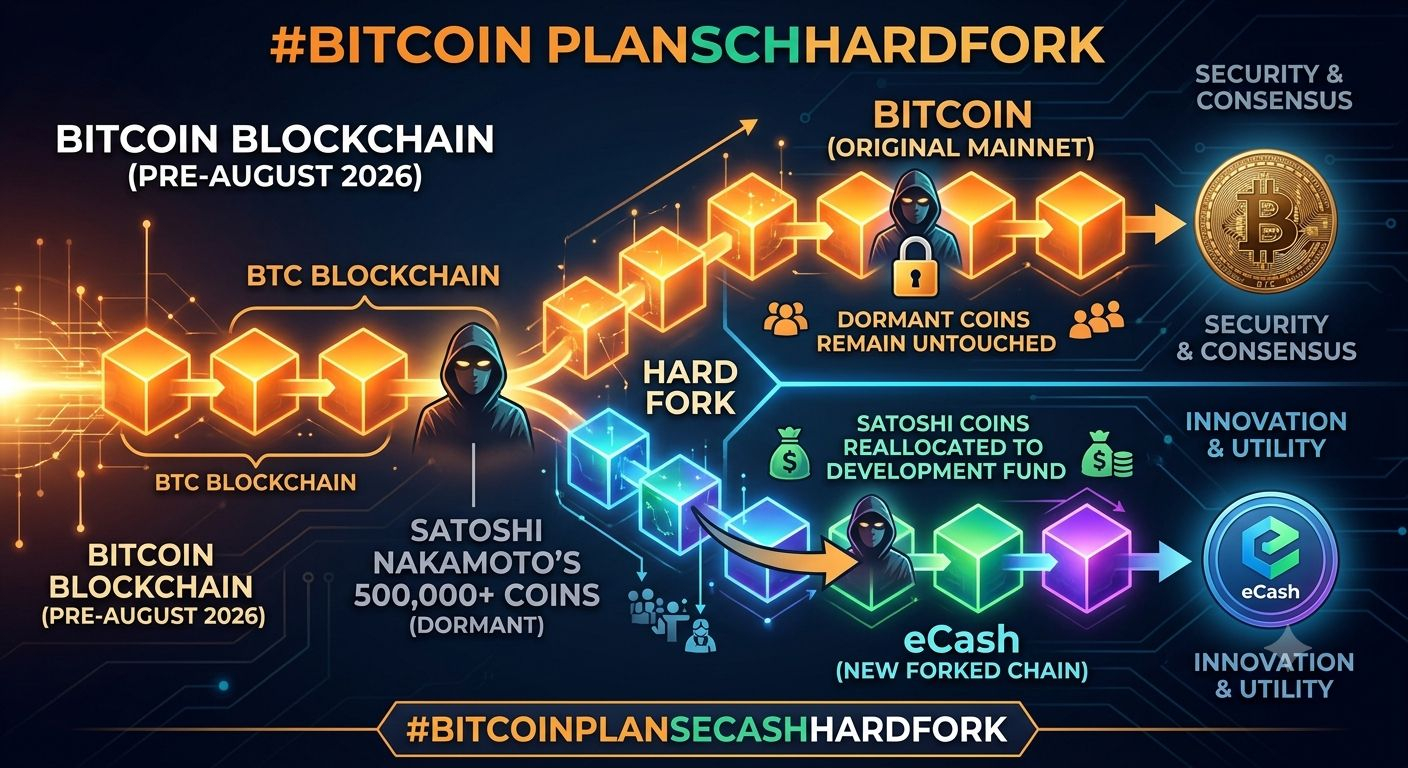
Bitcoin developer Paul Sztorc is launching **eCash** (a new layer-1 network) via a "hard fork." Think of it as a clone of the Bitcoin blockchain, but with a major upgrade: it integrates **Drivechains** to make transactions lightning-fast, cheap, and capable of running smart contracts (like Ethereum).
### 2. The "Free Money" Angle 🪂
Because it’s a direct clone of the BTC blockchain, if you hold Bitcoin in a self-custody wallet at the time of the fork, you will get a **1:1 match of the new eCash tokens for free**.
> *Note: If your BTC is on an exchange, it’s up to the exchange whether they will support and distribute the new token to you.*
### 3. The Big Drama (The Satoshi Controversy) 🤬
Unlike past forks, this one has a massive catch. The creators plan to **confiscate roughly 500,000 to 600,000 of Satoshi Nakamoto’s dormant Bitcoins** on the new chain to fund their own development and early investors.
* **The Pros:** They argue Satoshi is never coming back, and using these dead coins can fund massive innovation.
* **The Cons:** Purists are furious. They call it digital theft and a violation of crypto’s core rule: *your keys, your coins—no exceptions.*
---
### What should you do?
* **Your actual BTC is safe.** This fork happens on a *new, separate network*. Your original Bitcoin on the main network remains completely untouched.
* **Expect market volatility** as we get closer to August.
* **Self-custody is key** if you want to claim the free eCash tokens directly.
*What’s your take? Is confiscating Satoshi's coins on a fork genius funding or a massive red flag? Let’s discuss below! 👇*
#Bitcoin #eCash #HardFork #CryptoNews #Satoshi
$BTC
#BitcoinPlansECashHardFork
# What is #BitcoinPlansECashHardFork? 🚨
The crypto world is buzzing about a planned Bitcoin hard fork on **August 21, 2026**. If you’ve been seeing the hashtag **#BitcoinPlansECashHardFork** and wondering what it actually means for your portfolio, here is the quick, no-BS breakdown.
---
### 1. What is actually happening?
Bitcoin developer Paul Sztorc is launching **eCash** (a new layer-1 network) via a "hard fork." Think of it as a clone of the Bitcoin blockchain, but with a major upgrade: it integrates **Drivechains** to make transactions lightning-fast, cheap, and capable of running smart contracts (like Ethereum).
### 2. The "Free Money" Angle 🪂
Because it’s a direct clone of the BTC blockchain, if you hold Bitcoin in a self-custody wallet at the time of the fork, you will get a **1:1 match of the new eCash tokens for free**.
> *Note: If your BTC is on an exchange, it’s up to the exchange whether they will support and distribute the new token to you.*
### 3. The Big Drama (The Satoshi Controversy) 🤬
Unlike past forks, this one has a massive catch. The creators plan to **confiscate roughly 500,000 to 600,000 of Satoshi Nakamoto’s dormant Bitcoins** on the new chain to fund their own development and early investors.
* **The Pros:** They argue Satoshi is never coming back, and using these dead coins can fund massive innovation.
* **The Cons:** Purists are furious. They call it digital theft and a violation of crypto’s core rule: *your keys, your coins—no exceptions.*
---
### What should you do?
* **Your actual BTC is safe.** This fork happens on a *new, separate network*. Your original Bitcoin on the main network remains completely untouched.
* **Expect market volatility** as we get closer to August.
* **Self-custody is key** if you want to claim the free eCash tokens directly.
*What’s your take? Is confiscating Satoshi's coins on a fork genius funding or a massive red flag? Let’s discuss below! 👇*
#Bitcoin #eCash #HardFork #CryptoNews #Satoshi
$BTC
# What is #BitcoinPlansECashHardFork? 🚨
The crypto world is buzzing about a planned Bitcoin hard fork on **August 21, 2026**. If you’ve been seeing the hashtag **#BitcoinPlansECashHardFork** and wondering what it actually means for your portfolio, here is the quick, no-BS breakdown.
---
### 1. What is actually happening?
Bitcoin developer Paul Sztorc is launching **eCash** (a new layer-1 network) via a "hard fork." Think of it as a clone of the Bitcoin blockchain, but with a major upgrade: it integrates **Drivechains** to make transactions lightning-fast, cheap, and capable of running smart contracts (like Ethereum).
### 2. The "Free Money" Angle 🪂
Because it’s a direct clone of the BTC blockchain, if you hold Bitcoin in a self-custody wallet at the time of the fork, you will get a **1:1 match of the new eCash tokens for free**.
> *Note: If your BTC is on an exchange, it’s up to the exchange whether they will support and distribute the new token to you.*
### 3. The Big Drama (The Satoshi Controversy) 🤬
Unlike past forks, this one has a massive catch. The creators plan to **confiscate roughly 500,000 to 600,000 of Satoshi Nakamoto’s dormant Bitcoins** on the new chain to fund their own development and early investors.
* **The Pros:** They argue Satoshi is never coming back, and using these dead coins can fund massive innovation.
* **The Cons:** Purists are furious. They call it digital theft and a violation of crypto’s core rule: *your keys, your coins—no exceptions.*
---
### What should you do?
* **Your actual BTC is safe.** This fork happens on a *new, separate network*. Your original Bitcoin on the main network remains completely untouched.
* **Expect market volatility** as we get closer to August.
* **Self-custody is key** if you want to claim the free eCash tokens directly.
*What’s your take? Is confiscating Satoshi's coins on a fork genius funding or a massive red flag? Let’s discuss below! 👇*
#Bitcoin #eCash #HardFork #CryptoNews #Satoshi
$BTC
3
2
353

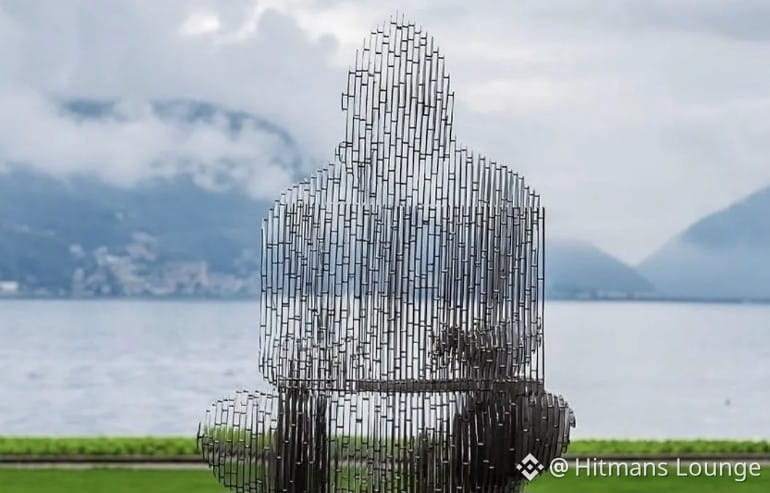
🕯️ In memory of Satoshi Nakamoto. A legend that didn't fade away but became eternal 👤
He gifted the world Bitcoin - and quietly slipped into silence.
No awards, no statues, no interviews. Just code, genius, and 1 000 000 $BTC that remain untouched.
Satoshi didn't seek glory. He wanted power to belong to the people, not banks.
Today, every transaction on the network, every block, every node - is a living memory of Him.
Thanks to His vision, we have - a home for millions of crypto enthusiasts.
Thank you, Satoshi. You may be gone, but your legacy keeps growing.
As long as blocks are being mined - you live on.
🟡 "If you don't believe it or don't get it, I don't have the time to try to convince you, sorry." — S.N.
$BNB $XRP #Satoshi #Satoshi_Nakamoto
🕯️ In memory of Satoshi Nakamoto. A legend that didn't fade away but became eternal 👤
He gifted the world Bitcoin - and quietly slipped into silence.
No awards, no statues, no interviews. Just code, genius, and 1 000 000 $BTC that remain untouched.
Satoshi didn't seek glory. He wanted power to belong to the people, not banks.
Today, every transaction on the network, every block, every node - is a living memory of Him.
Thanks to His vision, we have - a home for millions of crypto enthusiasts.
Thank you, Satoshi. You may be gone, but your legacy keeps growing.
As long as blocks are being mined - you live on.
🟡 "If you don't believe it or don't get it, I don't have the time to try to convince you, sorry." — S.N.
$BNB $XRP #Satoshi #Satoshi_Nakamoto
He gifted the world Bitcoin - and quietly slipped into silence.
No awards, no statues, no interviews. Just code, genius, and 1 000 000 $BTC that remain untouched.
Satoshi didn't seek glory. He wanted power to belong to the people, not banks.
Today, every transaction on the network, every block, every node - is a living memory of Him.
Thanks to His vision, we have - a home for millions of crypto enthusiasts.
Thank you, Satoshi. You may be gone, but your legacy keeps growing.
As long as blocks are being mined - you live on.
🟡 "If you don't believe it or don't get it, I don't have the time to try to convince you, sorry." — S.N.
$BNB $XRP #Satoshi #Satoshi_Nakamoto
1
11
5.7k

Verified
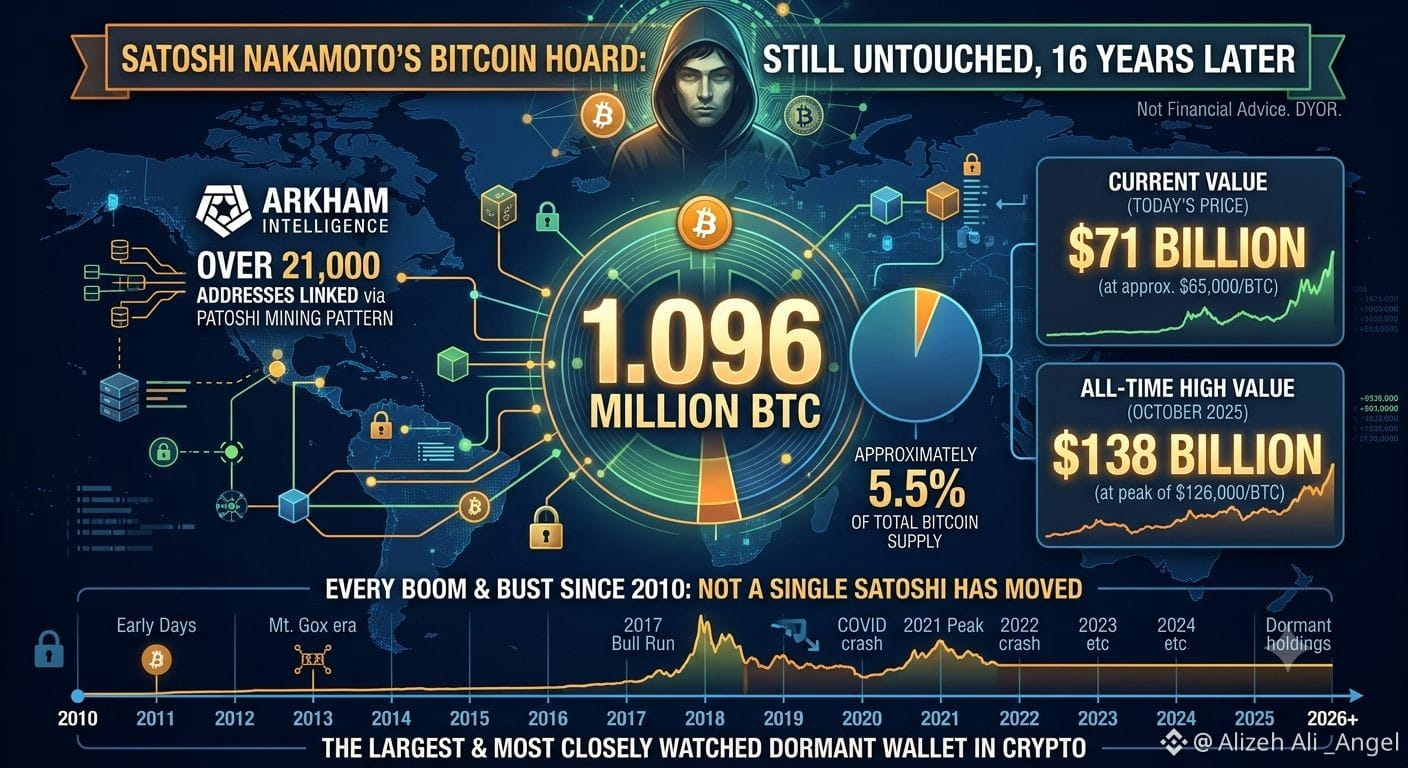
Satoshi Nakamoto's Bitcoin hoard: still untouched, 16 years later
Arkham Intelligence tracks over 21,000 addresses linked to Satoshi Nakamoto via the Patoshi mining pattern, together holding roughly 1.096 million BTC — about 5.5% of Bitcoin's total supply.
At today's price near $65,000, that stash is worth approximately $71 billion. At Bitcoin's October 2025 all-time high of $126,000, it briefly topped $138 billion. Through every boom and bust since 2010, not a single satoshi has moved — making it the largest and most closely watched dormant wallet in crypto.
Not financial advice. DYOR.
#Bitcoin #Satoshi #crypto #Write2Earn
#satoshiNakamato
$BTC $COOKIE $BEAT
Satoshi Nakamoto's Bitcoin hoard: still untouched, 16 years later
Arkham Intelligence tracks over 21,000 addresses linked to Satoshi Nakamoto via the Patoshi mining pattern, together holding roughly 1.096 million BTC — about 5.5% of Bitcoin's total supply.
At today's price near $65,000, that stash is worth approximately $71 billion. At Bitcoin's October 2025 all-time high of $126,000, it briefly topped $138 billion. Through every boom and bust since 2010, not a single satoshi has moved — making it the largest and most closely watched dormant wallet in crypto.
Not financial advice. DYOR.
#Bitcoin #Satoshi #crypto #Write2Earn
#satoshiNakamato
$BTC $COOKIE $BEAT
Arkham Intelligence tracks over 21,000 addresses linked to Satoshi Nakamoto via the Patoshi mining pattern, together holding roughly 1.096 million BTC — about 5.5% of Bitcoin's total supply.
At today's price near $65,000, that stash is worth approximately $71 billion. At Bitcoin's October 2025 all-time high of $126,000, it briefly topped $138 billion. Through every boom and bust since 2010, not a single satoshi has moved — making it the largest and most closely watched dormant wallet in crypto.
Not financial advice. DYOR.
#Bitcoin #Satoshi #crypto #Write2Earn
#satoshiNakamato
$BTC $COOKIE $BEAT
399

·
--
🟢 Birth of Bitcoin: A Response to the 2008 Financial Crisis and Central Bank Money Printing
The dot-com bubble burst in 2000 and the 9/11 attacks plunged markets, forcing the Fed to slash rates and flood the system with cheap credit. This didn't fix the underlying issues; it just inflated a housing bubble that eventually imploded in 2007-2008.
When the financial system teetered on collapse, governments and central banks bailed out institutions by printing electronic money. This debased existing currency, benefiting those who received the new money first – banks, shareholders, and asset holders – while diluting the value for everyone else.
This era of unchecked central bank intervention and systemic risk created the perfect storm for a radical new idea. The inherent distrust in traditional finance and the observable consequences of monetary debasement provided the fertile ground for Bitcoin's emergence.
Satoshi Nakamoto's whitepaper, published in October 2008 amidst this chaos, proposed a decentralized, peer-to-peer electronic cash system. It was a direct challenge to the established order, offering an alternative free from the control and inflationary tendencies of central authorities.
📊 This historical context reinforces Bitcoin's narrative as digital gold and a hedge against inflation, potentially driving long-term demand and adoption, especially during periods of macro uncertainty.
Was Bitcoin inevitable given the 2008 crisis, or a lucky accident? 👇
#bitcoin #satoshi #nakamoto #2008 #crisis
🟢 Birth of Bitcoin: A Response to the 2008 Financial Crisis and Central Bank Money Printing
The dot-com bubble burst in 2000 and the 9/11 attacks plunged markets, forcing the Fed to slash rates and flood the system with cheap credit. This didn't fix the underlying issues; it just inflated a housing bubble that eventually imploded in 2007-2008.
When the financial system teetered on collapse, governments and central banks bailed out institutions by printing electronic money. This debased existing currency, benefiting those who received the new money first – banks, shareholders, and asset holders – while diluting the value for everyone else.
This era of unchecked central bank intervention and systemic risk created the perfect storm for a radical new idea. The inherent distrust in traditional finance and the observable consequences of monetary debasement provided the fertile ground for Bitcoin's emergence.
Satoshi Nakamoto's whitepaper, published in October 2008 amidst this chaos, proposed a decentralized, peer-to-peer electronic cash system. It was a direct challenge to the established order, offering an alternative free from the control and inflationary tendencies of central authorities.
📊 This historical context reinforces Bitcoin's narrative as digital gold and a hedge against inflation, potentially driving long-term demand and adoption, especially during periods of macro uncertainty.
Was Bitcoin inevitable given the 2008 crisis, or a lucky accident? 👇
#bitcoin #satoshi #nakamoto #2008 #crisis
The dot-com bubble burst in 2000 and the 9/11 attacks plunged markets, forcing the Fed to slash rates and flood the system with cheap credit. This didn't fix the underlying issues; it just inflated a housing bubble that eventually imploded in 2007-2008.
When the financial system teetered on collapse, governments and central banks bailed out institutions by printing electronic money. This debased existing currency, benefiting those who received the new money first – banks, shareholders, and asset holders – while diluting the value for everyone else.
This era of unchecked central bank intervention and systemic risk created the perfect storm for a radical new idea. The inherent distrust in traditional finance and the observable consequences of monetary debasement provided the fertile ground for Bitcoin's emergence.
Satoshi Nakamoto's whitepaper, published in October 2008 amidst this chaos, proposed a decentralized, peer-to-peer electronic cash system. It was a direct challenge to the established order, offering an alternative free from the control and inflationary tendencies of central authorities.
📊 This historical context reinforces Bitcoin's narrative as digital gold and a hedge against inflation, potentially driving long-term demand and adoption, especially during periods of macro uncertainty.
Was Bitcoin inevitable given the 2008 crisis, or a lucky accident? 👇
#bitcoin #satoshi #nakamoto #2008 #crisis
77

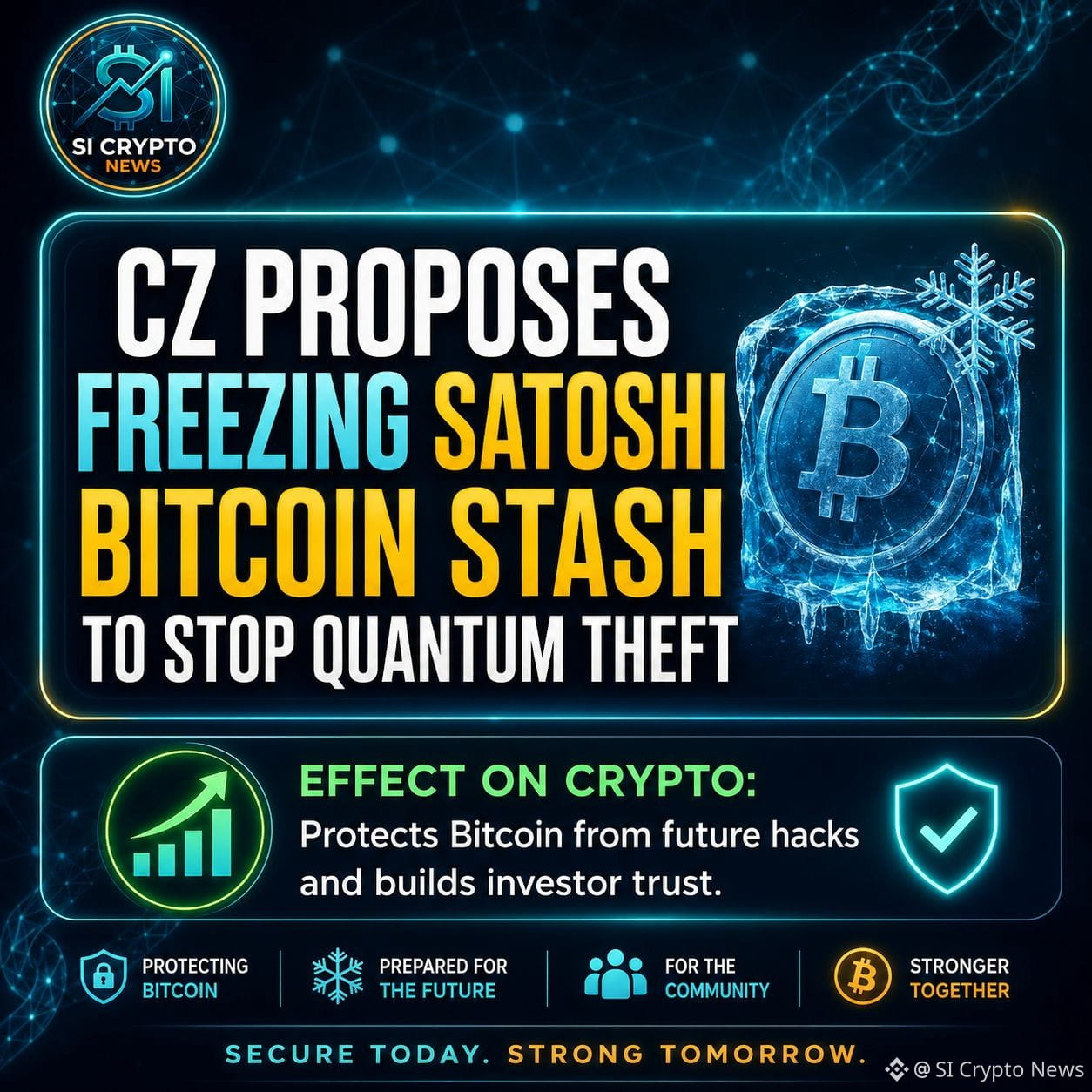
CZ Suggests Freezing Satoshi’s Bitcoin: A New Debate for the Crypto World
A new discussion is gaining attention across the cryptocurrency industry after Binance founder Changpeng Zhao (CZ) proposed a controversial idea regarding Bitcoin's future security.
Speaking during a recent podcast appearance, CZ explained that while quantum computers are not currently a threat to Bitcoin, the industry should start thinking about how to prepare for that possibility in the future. If Bitcoin eventually transitions to quantum-resistant cryptography, he believes users should be given a limited period to move their coins to upgraded and secure addresses.
#SICryptoNews #bitcoin $BTC #Satoshi
{future}(BTCUSDT)
CZ Suggests Freezing Satoshi’s Bitcoin: A New Debate for the Crypto World
A new discussion is gaining attention across the cryptocurrency industry after Binance founder Changpeng Zhao (CZ) proposed a controversial idea regarding Bitcoin's future security.
Speaking during a recent podcast appearance, CZ explained that while quantum computers are not currently a threat to Bitcoin, the industry should start thinking about how to prepare for that possibility in the future. If Bitcoin eventually transitions to quantum-resistant cryptography, he believes users should be given a limited period to move their coins to upgraded and secure addresses.
#SICryptoNews #bitcoin $BTC #Satoshi
A new discussion is gaining attention across the cryptocurrency industry after Binance founder Changpeng Zhao (CZ) proposed a controversial idea regarding Bitcoin's future security.
Speaking during a recent podcast appearance, CZ explained that while quantum computers are not currently a threat to Bitcoin, the industry should start thinking about how to prepare for that possibility in the future. If Bitcoin eventually transitions to quantum-resistant cryptography, he believes users should be given a limited period to move their coins to upgraded and secure addresses.
#SICryptoNews #bitcoin $BTC #Satoshi
61

·
--
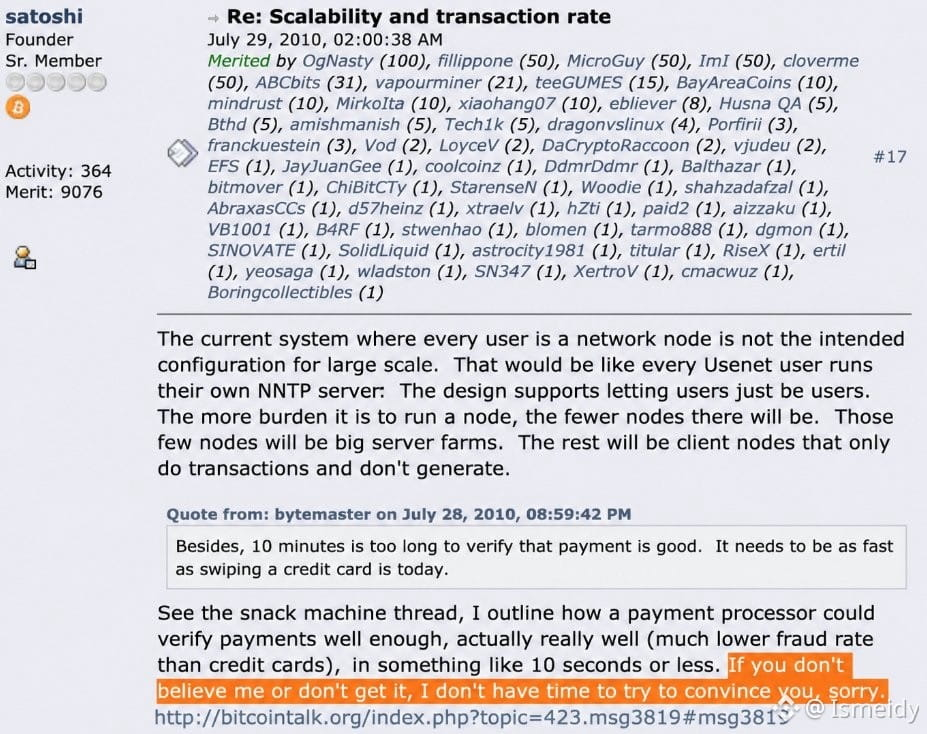
"I don't have time to convince you"
At 16 years old, from the phrase of #Satoshi that today trades above $63,000
Exactly sixteen years ago, at the dawn of a digital experiment that most dismissed as a mere computer-tech chimera, Satoshi Nakamoto ended a debate on the Bitcointalk forum with a line that today echoes as one of the most iconic in financial history: "If you don't believe me or don't get it, I don't have time to try to convince you, sorry". Back then, a lonely #bitcoin was worth just $0.06 and its survival depended on a handful of enthusiasts on underground forums.
Today, reality has rewritten the rules of that skepticism. With a price comfortably above $63,000, the market took it upon itself to respond to those who doubted the anonymous creator. Satoshi's lack of time to convince the skeptics became, over the years, the definitive reminder that major technological revolutions don't ask permission or seek approval from the masses before changing the world.
#BTC #satoshiNakamato
$BTC
{spot}(BTCUSDT)
$ETH
{spot}(ETHUSDT)
$XRP
{spot}(XRPUSDT)
"I don't have time to convince you"
At 16 years old, from the phrase of #Satoshi that today trades above $63,000
Exactly sixteen years ago, at the dawn of a digital experiment that most dismissed as a mere computer-tech chimera, Satoshi Nakamoto ended a debate on the Bitcointalk forum with a line that today echoes as one of the most iconic in financial history: "If you don't believe me or don't get it, I don't have time to try to convince you, sorry". Back then, a lonely #bitcoin was worth just $0.06 and its survival depended on a handful of enthusiasts on underground forums.
Today, reality has rewritten the rules of that skepticism. With a price comfortably above $63,000, the market took it upon itself to respond to those who doubted the anonymous creator. Satoshi's lack of time to convince the skeptics became, over the years, the definitive reminder that major technological revolutions don't ask permission or seek approval from the masses before changing the world.
#BTC #satoshiNakamato
$BTC
$ETH
$XRP
At 16 years old, from the phrase of #Satoshi that today trades above $63,000
Exactly sixteen years ago, at the dawn of a digital experiment that most dismissed as a mere computer-tech chimera, Satoshi Nakamoto ended a debate on the Bitcointalk forum with a line that today echoes as one of the most iconic in financial history: "If you don't believe me or don't get it, I don't have time to try to convince you, sorry". Back then, a lonely #bitcoin was worth just $0.06 and its survival depended on a handful of enthusiasts on underground forums.
Today, reality has rewritten the rules of that skepticism. With a price comfortably above $63,000, the market took it upon itself to respond to those who doubted the anonymous creator. Satoshi's lack of time to convince the skeptics became, over the years, the definitive reminder that major technological revolutions don't ask permission or seek approval from the masses before changing the world.
#BTC #satoshiNakamato
$BTC
$ETH
$XRP
2
12
12.9k

·
--
Article
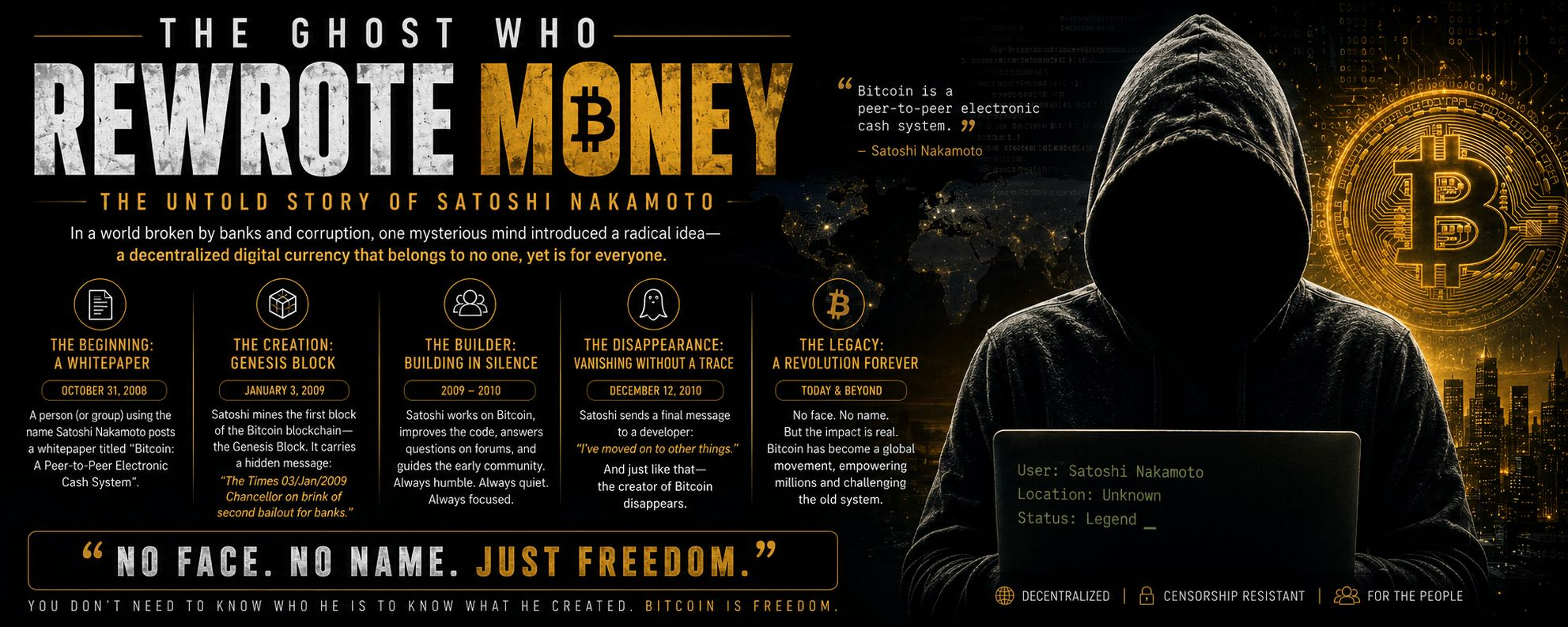
The Ghost Who Rewrote MoneyIn 2008, when the world was losing trust in banks and financial systems, a mysterious name appeared online — #BTC creator #Satoshi . No one knew if #Satoshi was one person or a group, but one thing was clear: the idea would change the world forever. A simple whitepaper introduced a new kind of money — decentralized, borderless, and controlled by the people instead of governments or banks.
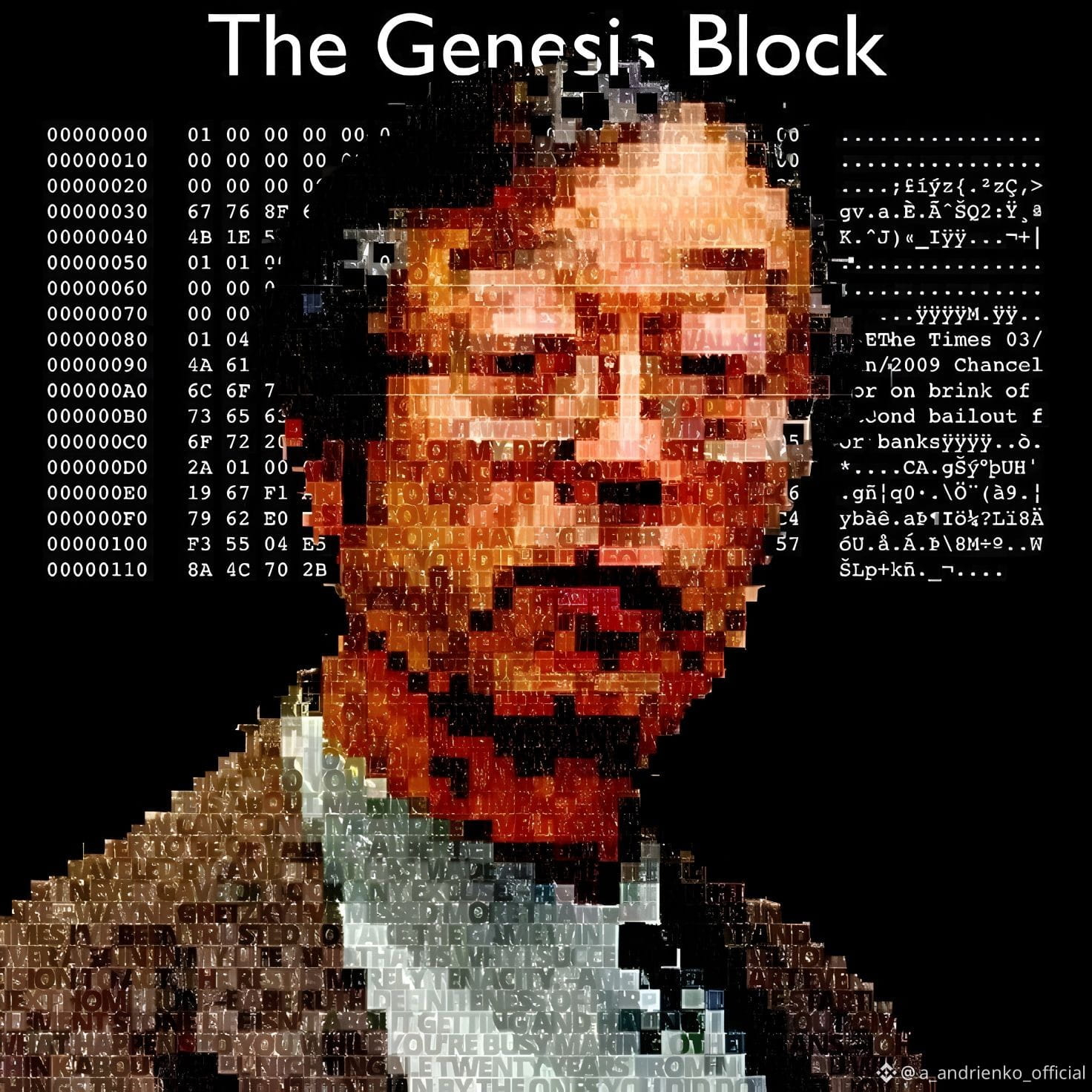
In January 2009, the first #BTC block was mined, carrying a hidden message about the global financial crisis. Then, after helping build the early Bitcoin community, #Satoshi disappeared without revealing their identity. No interviews. No face. No proof. Yet today, #BTC has become a global revolution, inspiring millions and creating a new era of digital finance. The mystery remains unsolved — and that only makes the legend bigger.
“No face. No name. Just freedom.”
#TrumpSaysIranDealLargelyNegotiated
#BitcoinRisesOnIranPeaceDeal
The Ghost Who Rewrote Money
In 2008, when the world was losing trust in banks and financial systems, a mysterious name appeared online — #BTC creator #Satoshi . No one knew if #Satoshi was one person or a group, but one thing was clear: the idea would change the world forever. A simple whitepaper introduced a new kind of money — decentralized, borderless, and controlled by the people instead of governments or banks.
In January 2009, the first #BTC block was mined, carrying a hidden message about the global financial crisis. Then, after helping build the early Bitcoin community, #Satoshi disappeared without revealing their identity. No interviews. No face. No proof. Yet today, #BTC has become a global revolution, inspiring millions and creating a new era of digital finance. The mystery remains unsolved — and that only makes the legend bigger.
“No face. No name. Just freedom.”
#TrumpSaysIranDealLargelyNegotiated
#BitcoinRisesOnIranPeaceDeal
In January 2009, the first #BTC block was mined, carrying a hidden message about the global financial crisis. Then, after helping build the early Bitcoin community, #Satoshi disappeared without revealing their identity. No interviews. No face. No proof. Yet today, #BTC has become a global revolution, inspiring millions and creating a new era of digital finance. The mystery remains unsolved — and that only makes the legend bigger.
“No face. No name. Just freedom.”
#TrumpSaysIranDealLargelyNegotiated
#BitcoinRisesOnIranPeaceDeal
229

·
--
Bullish
🚨 Imagine This...
What if Satoshi Nakamoto suddenly sold just 32 $BTC ? 👀
Not because of the amount... But because of who is selling.
The market would explode with speculation. Panic. Headlines. Volatility.
Sometimes, it's not the size of the trade that moves the market— it's the name behind it.
#Bitcoin #BTC #Satoshi #crypto
🚨 Imagine This...
What if Satoshi Nakamoto suddenly sold just 32 $BTC ? 👀
Not because of the amount... But because of who is selling.
The market would explode with speculation. Panic. Headlines. Volatility.
Sometimes, it's not the size of the trade that moves the market— it's the name behind it.
#Bitcoin #BTC #Satoshi #crypto
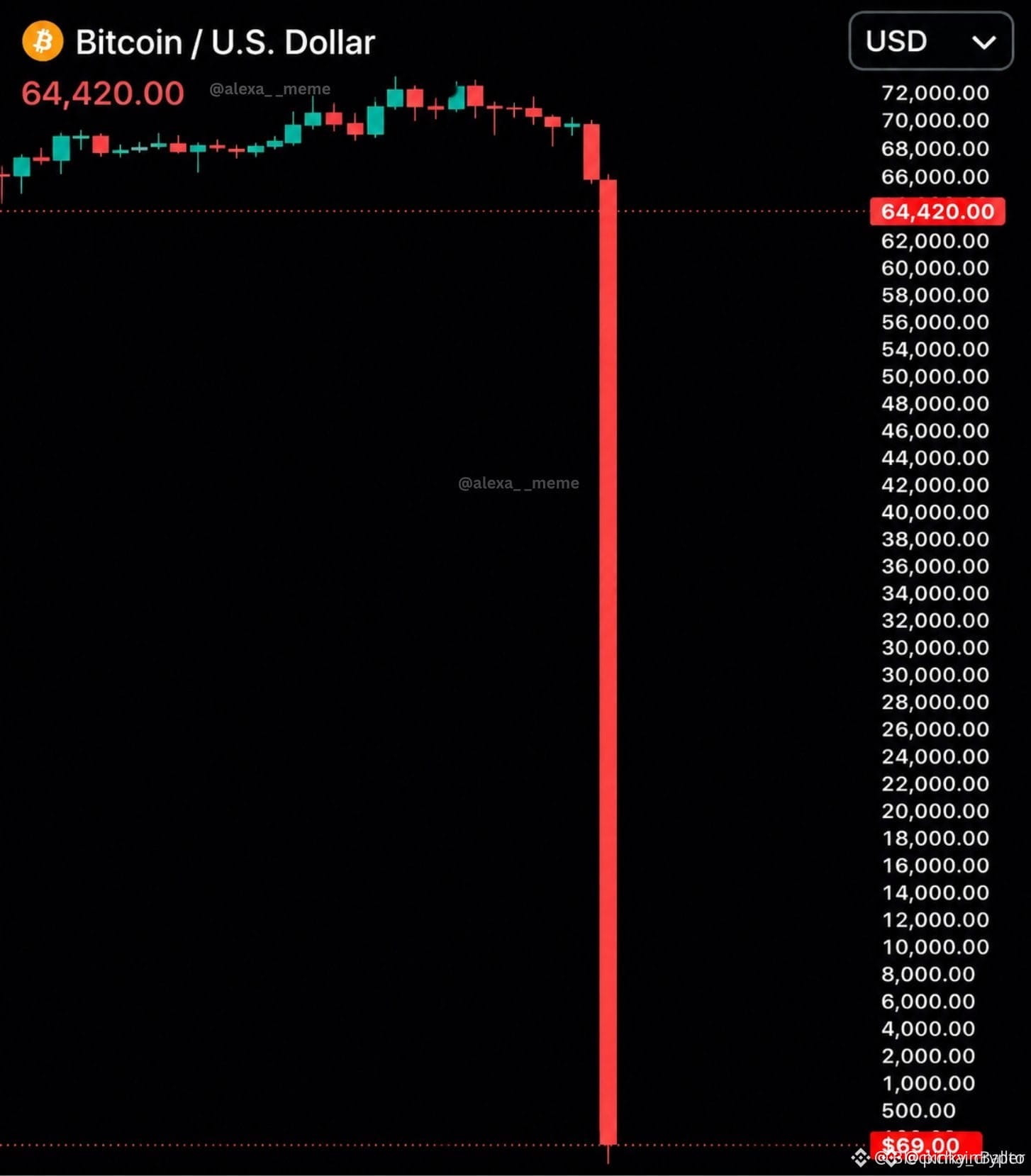
What if Satoshi Nakamoto suddenly sold just 32 $BTC ? 👀
Not because of the amount... But because of who is selling.
The market would explode with speculation. Panic. Headlines. Volatility.
Sometimes, it's not the size of the trade that moves the market— it's the name behind it.
#Bitcoin #BTC #Satoshi #crypto
109

·
--
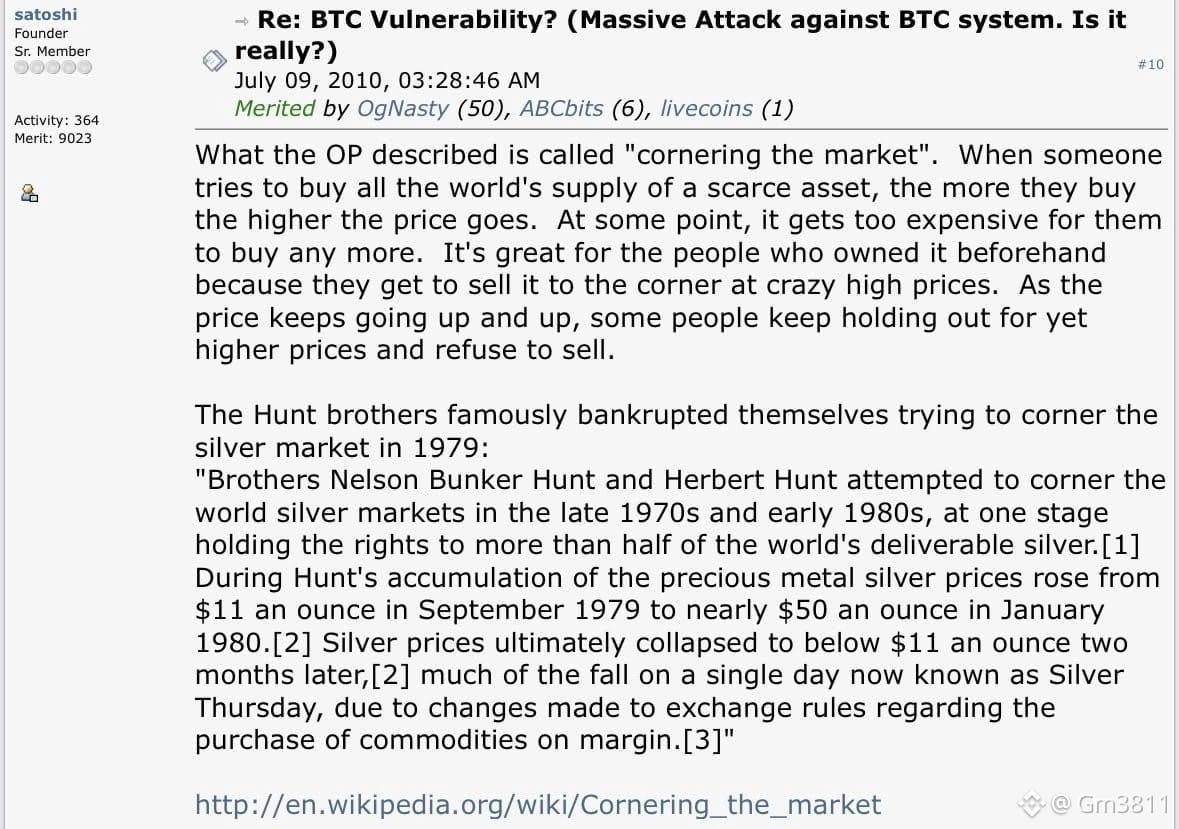
$BTC 🔥HISTORY: Satoshi's Scarcity Thesis, 16 Years Later
On July 9, 2010, Satoshi Nakamoto posted a reply on BitcoinTalk addressing a fear that still comes up today: what happens if a deep-pocketed buyer tries to corner the entire Bitcoin supply? His answer: it's self-defeating. The more someone buys, the higher the price climbs, and the fewer people are willing to sell the same dynamic that broke the Hunt brothers' attempt to corner the silver market in 1979-80.
Sixteen years later, that thesis is playing out in real time. Public companies now hold roughly 1.27 million BTC over 6% of total supply across nearly 200 firms. Corporate buyers absorbed BTC at nearly 2.8x the rate of new mining supply in Q1 2026 alone. Add in the estimated 6M+ coins that haven't moved in 7+ years, and you get exactly what Satoshi described: persistent demand meeting a supply that refuses to loosen.
Same math, 16 years later. Just bigger buyers.
#bitcoin #Satoshi #BTC
$TAC $LAB
$BTC 🔥HISTORY: Satoshi's Scarcity Thesis, 16 Years Later
On July 9, 2010, Satoshi Nakamoto posted a reply on BitcoinTalk addressing a fear that still comes up today: what happens if a deep-pocketed buyer tries to corner the entire Bitcoin supply? His answer: it's self-defeating. The more someone buys, the higher the price climbs, and the fewer people are willing to sell the same dynamic that broke the Hunt brothers' attempt to corner the silver market in 1979-80.
Sixteen years later, that thesis is playing out in real time. Public companies now hold roughly 1.27 million BTC over 6% of total supply across nearly 200 firms. Corporate buyers absorbed BTC at nearly 2.8x the rate of new mining supply in Q1 2026 alone. Add in the estimated 6M+ coins that haven't moved in 7+ years, and you get exactly what Satoshi described: persistent demand meeting a supply that refuses to loosen.
Same math, 16 years later. Just bigger buyers.
#bitcoin #Satoshi #BTC
$TAC $LAB
On July 9, 2010, Satoshi Nakamoto posted a reply on BitcoinTalk addressing a fear that still comes up today: what happens if a deep-pocketed buyer tries to corner the entire Bitcoin supply? His answer: it's self-defeating. The more someone buys, the higher the price climbs, and the fewer people are willing to sell the same dynamic that broke the Hunt brothers' attempt to corner the silver market in 1979-80.
Sixteen years later, that thesis is playing out in real time. Public companies now hold roughly 1.27 million BTC over 6% of total supply across nearly 200 firms. Corporate buyers absorbed BTC at nearly 2.8x the rate of new mining supply in Q1 2026 alone. Add in the estimated 6M+ coins that haven't moved in 7+ years, and you get exactly what Satoshi described: persistent demand meeting a supply that refuses to loosen.
Same math, 16 years later. Just bigger buyers.
#bitcoin #Satoshi #BTC
$TAC $LAB
402
Log in to explore more content
Join global crypto users on Binance Square
⚡️ Get latest and useful information about crypto.
💬 Trusted by the world’s largest crypto exchange.
👍 Discover real insights from verified creators.
Email / Phone number
Trending Topics
1
#FedRateWatch
999,199 views
4,744 Discussing
2
#ZcashHoldersBackNU7Upgrade
288 views
19 Discussing
3
#MSTRTradingVolumeSurpassesMorganStanley
7,340 views
262 Discussing
4
#BitcoinFalls4%
18,654 views
521 Discussing
5
#SKHynixInTalksToMakeMemoryChipsInUS
8,125 views
214 Discussing
6
#OpenAIDiscussesNewFundingAt$1.2TValuation
2,276 views
40 Discussing
7
#ArgentinaCommitsToOECDCryptoReportingBy2029
17,535 views
388 Discussing
8
#EthereumFallsBelow$2400
6,966 views
91 Discussing
9
#USDTLaunchesOnZamaPrivacyProtocol
7,311 views
217 Discussing
10
#USSenateBlocksClarityAct
59,004 views
510 Discussing