
#rsi
rsi
1.5M views
4,471 Discussing
Hot
Latest

·
--
🚨 Has the correction started in $BR?
The RSI on the hourly timeframe reached 90.6, which is an extremely overbought area.
There is no strong bullish rejection signal yet, so confirmation remains important.
📊 Probability of a correction or decline: 52%
Watch the current high and wait for a clear bearish signal with proper risk management.
Price may continue to rise temporarily, so it’s not recommended to sell immediately. The better confirmation is when signs of a drop appear.
Price at the time of monitoring: 0.37107
👈 Press $BR to follow the coin
Fish Hunter
Disclaimer: The probability score is an estimate and not a guarantee of price movement.
$BR #BR #RSI #Futures #BinanceSquare
🚨 Has the correction started in $BR ?
The RSI on the hourly timeframe reached 90.6, which is an extremely overbought area.
There is no strong bullish rejection signal yet, so confirmation remains important.
📊 Probability of a correction or decline: 52%
Watch the current high and wait for a clear bearish signal with proper risk management.
Price may continue to rise temporarily, so it’s not recommended to sell immediately. The better confirmation is when signs of a drop appear.
Price at the time of monitoring: 0.37107
👈 Press $BR to follow the coin
Fish Hunter
Disclaimer: The probability score is an estimate and not a guarantee of price movement.
$BR #BR #RSI #Futures #BinanceSquare
The RSI on the hourly timeframe reached 90.6, which is an extremely overbought area.
There is no strong bullish rejection signal yet, so confirmation remains important.
📊 Probability of a correction or decline: 52%
Watch the current high and wait for a clear bearish signal with proper risk management.
Price may continue to rise temporarily, so it’s not recommended to sell immediately. The better confirmation is when signs of a drop appear.
Price at the time of monitoring: 0.37107
👈 Press $BR to follow the coin
Fish Hunter
Disclaimer: The probability score is an estimate and not a guarantee of price movement.
$BR #BR #RSI #Futures #BinanceSquare
34
·
--
📊 Quick technical read for the $POWER coin
• RSI (1 hour): 90.3
• Price at the time of observation: 0.10525
• Market condition: extremely overbought
• Likelihood of correction or a drop: 71%
There is currently no strong upper rejection signal, so confirmation remains important.
The price may continue rising temporarily, so it’s not recommended to sell immediately. The best confirmation is when signs of a downturn appear.
Price at the time of observation: 0.10525
👈 Press $POWER to follow the coin
Fisherman
Note: The probability score is an estimate and not a guarantee of price movement.
$POWER #POWER #RSI #Futures #BinanceSquare
📊 Quick technical read for the $POWER coin
• RSI (1 hour): 90.3
• Price at the time of observation: 0.10525
• Market condition: extremely overbought
• Likelihood of correction or a drop: 71%
There is currently no strong upper rejection signal, so confirmation remains important.
The price may continue rising temporarily, so it’s not recommended to sell immediately. The best confirmation is when signs of a downturn appear.
Price at the time of observation: 0.10525
👈 Press $POWER to follow the coin
Fisherman
Note: The probability score is an estimate and not a guarantee of price movement.
$POWER #POWER #RSI #Futures #BinanceSquare
• RSI (1 hour): 90.3
• Price at the time of observation: 0.10525
• Market condition: extremely overbought
• Likelihood of correction or a drop: 71%
There is currently no strong upper rejection signal, so confirmation remains important.
The price may continue rising temporarily, so it’s not recommended to sell immediately. The best confirmation is when signs of a downturn appear.
Price at the time of observation: 0.10525
👈 Press $POWER to follow the coin
Fisherman
Note: The probability score is an estimate and not a guarantee of price movement.
$POWER #POWER #RSI #Futures #BinanceSquare
209
·
--
🎓 What happens when RSI exceeds 90?
This is what’s happening now with $ILV, where RSI has reached 93.9.
So far, there is no strong upper rejection signal, so confirmation remains important.
An increase in RSI doesn’t mean the price will fall immediately, but it makes watching for signs of a correction important.
📊 Probability of a correction or drop: 61%
The price may continue rising temporarily, so selling directly isn’t recommended. The better confirmation is when signs of a decline appear.
Price at the time of observation: 3.976
👈 Press $ILV to follow the coin
Fish hunter
Alert: The probability rating is an estimate and not a guarantee of price movement.
$ILV #ILV #RSI #Futures #BinanceSquare
🎓 What happens when RSI exceeds 90?
This is what’s happening now with $ILV , where RSI has reached 93.9.
So far, there is no strong upper rejection signal, so confirmation remains important.
An increase in RSI doesn’t mean the price will fall immediately, but it makes watching for signs of a correction important.
📊 Probability of a correction or drop: 61%
The price may continue rising temporarily, so selling directly isn’t recommended. The better confirmation is when signs of a decline appear.
Price at the time of observation: 3.976
👈 Press $ILV to follow the coin
Fish hunter
Alert: The probability rating is an estimate and not a guarantee of price movement.
$ILV #ILV #RSI #Futures #BinanceSquare
This is what’s happening now with $ILV , where RSI has reached 93.9.
So far, there is no strong upper rejection signal, so confirmation remains important.
An increase in RSI doesn’t mean the price will fall immediately, but it makes watching for signs of a correction important.
📊 Probability of a correction or drop: 61%
The price may continue rising temporarily, so selling directly isn’t recommended. The better confirmation is when signs of a decline appear.
Price at the time of observation: 3.976
👈 Press $ILV to follow the coin
Fish hunter
Alert: The probability rating is an estimate and not a guarantee of price movement.
$ILV #ILV #RSI #Futures #BinanceSquare
241
·
--
👀 A movement worth watching on $ARPA
RSI recorded a level of 91.0 on the hourly timeframe, indicating extreme overbought conditions.
So far, there is no strong upside rejection signal, so confirmation remains important.
📊 Correction or dip probability score: 56%
Buy momentum is strong, but these levels increase the importance of monitoring profit-taking.
Price may continue rising temporarily, so selling directly isn’t recommended. Better confirmation would be when early signs of a decline appear.
Price at the time of observation: 0.01068
👈 Press $ARPA to follow the coin
Fisherman
Note: The probability score is an estimate and not a guarantee of price movement.
$ARPA #ARPA #RSI #Futures #BinanceSquare
👀 A movement worth watching on $ARPA
RSI recorded a level of 91.0 on the hourly timeframe, indicating extreme overbought conditions.
So far, there is no strong upside rejection signal, so confirmation remains important.
📊 Correction or dip probability score: 56%
Buy momentum is strong, but these levels increase the importance of monitoring profit-taking.
Price may continue rising temporarily, so selling directly isn’t recommended. Better confirmation would be when early signs of a decline appear.
Price at the time of observation: 0.01068
👈 Press $ARPA to follow the coin
Fisherman
Note: The probability score is an estimate and not a guarantee of price movement.
$ARPA #ARPA #RSI #Futures #BinanceSquare
RSI recorded a level of 91.0 on the hourly timeframe, indicating extreme overbought conditions.
So far, there is no strong upside rejection signal, so confirmation remains important.
📊 Correction or dip probability score: 56%
Buy momentum is strong, but these levels increase the importance of monitoring profit-taking.
Price may continue rising temporarily, so selling directly isn’t recommended. Better confirmation would be when early signs of a decline appear.
Price at the time of observation: 0.01068
👈 Press $ARPA to follow the coin
Fisherman
Note: The probability score is an estimate and not a guarantee of price movement.
$ARPA #ARPA #RSI #Futures #BinanceSquare
1
124
·
--
⚠️ Quick warning about $龙虾
The RSI on the 1-hour chart has reached 90.2, which is an extremely overbought zone.
There is no strong upside rejection signal yet, so confirmation remains important.
📊 Probability of a correction or drop: 54%
The momentum is strong, but this area may see sudden profit-taking.
Price may continue rising temporarily, so it’s not recommended to sell directly. The better confirmation is when signs of a downturn appear.
Price at the time of observation: 0.083623
👈 Press $龙虾 to follow the coin
Fish hunter
Note: The probability score is an estimate and not a guarantee of price movement.
$龙虾 #龙虾 #RSI #Futures #BinanceSquare
⚠️ Quick warning about $龙虾
The RSI on the 1-hour chart has reached 90.2, which is an extremely overbought zone.
There is no strong upside rejection signal yet, so confirmation remains important.
📊 Probability of a correction or drop: 54%
The momentum is strong, but this area may see sudden profit-taking.
Price may continue rising temporarily, so it’s not recommended to sell directly. The better confirmation is when signs of a downturn appear.
Price at the time of observation: 0.083623
👈 Press $龙虾 to follow the coin
Fish hunter
Note: The probability score is an estimate and not a guarantee of price movement.
$龙虾 #龙虾 #RSI #Futures #BinanceSquare
The RSI on the 1-hour chart has reached 90.2, which is an extremely overbought zone.
There is no strong upside rejection signal yet, so confirmation remains important.
📊 Probability of a correction or drop: 54%
The momentum is strong, but this area may see sudden profit-taking.
Price may continue rising temporarily, so it’s not recommended to sell directly. The better confirmation is when signs of a downturn appear.
Price at the time of observation: 0.083623
👈 Press $龙虾 to follow the coin
Fish hunter
Note: The probability score is an estimate and not a guarantee of price movement.
$龙虾 #龙虾 #RSI #Futures #BinanceSquare
693

Technical Analysis: The RSI indicator and divergence
Title: How to spot a trend reversal using RSI divergences 📈📉
Content:
The Relative Strength Index (RSI) is one of the most widely used momentum indicators.
📊 Bullish Divergence:
When the price of an asset makes lower and lower lows, but the RSI records higher and higher lows, the selling pressure weakens. This is often a sign of an imminent rebound!
📊 Bearish Divergence:
The price sets a new high, but the RSI fails to make a higher high. Caution: buying pressure is running out.
Never forget to confirm a divergence with graphical support/resistance levels!
#RSI #TechnicalAnalysis #Chartism #TradingKnowledge #Binance
Technical Analysis: The RSI indicator and divergence
Title: How to spot a trend reversal using RSI divergences 📈📉
Content:
The Relative Strength Index (RSI) is one of the most widely used momentum indicators.
📊 Bullish Divergence:
When the price of an asset makes lower and lower lows, but the RSI records higher and higher lows, the selling pressure weakens. This is often a sign of an imminent rebound!
📊 Bearish Divergence:
The price sets a new high, but the RSI fails to make a higher high. Caution: buying pressure is running out.
Never forget to confirm a divergence with graphical support/resistance levels!
#RSI #TechnicalAnalysis #Chartism #TradingKnowledge #Binance
Title: How to spot a trend reversal using RSI divergences 📈📉
Content:
The Relative Strength Index (RSI) is one of the most widely used momentum indicators.
📊 Bullish Divergence:
When the price of an asset makes lower and lower lows, but the RSI records higher and higher lows, the selling pressure weakens. This is often a sign of an imminent rebound!
📊 Bearish Divergence:
The price sets a new high, but the RSI fails to make a higher high. Caution: buying pressure is running out.
Never forget to confirm a divergence with graphical support/resistance levels!
#RSI #TechnicalAnalysis #Chartism #TradingKnowledge #Binance
22

·
--
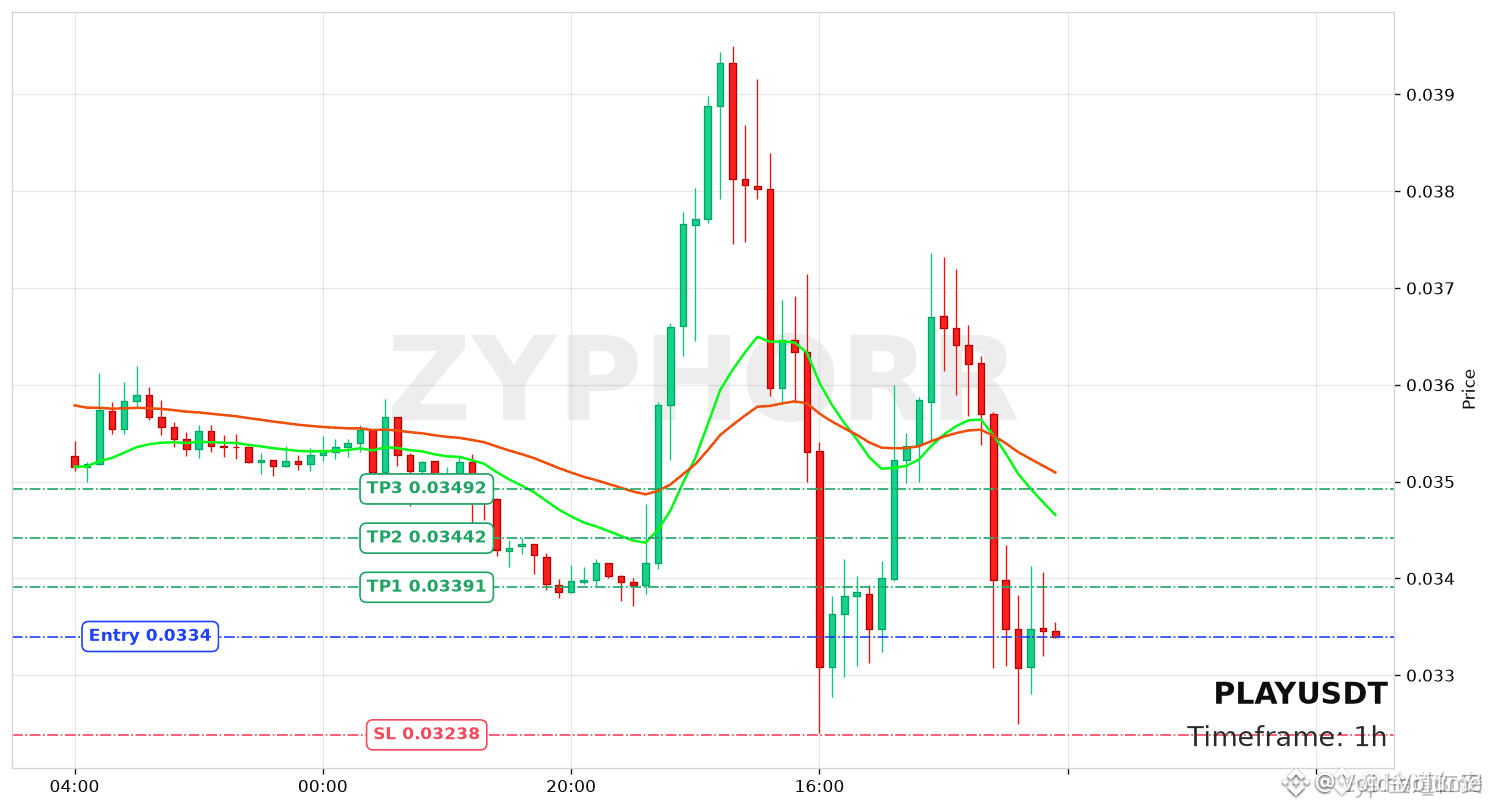
🚀 $PLAY RISING ON RSI REBOUND BEYOND 38.6 🟢
Entry: 0.0334 ⚡
Target: 0.03391-0.03492 🚀
Stop Loss: 0.03238 ⚠️
📊 RSI has just crossed the 38.6 threshold, unlocking a latent bullish pressure zone that smart money has been quietly defending. 🦈 The demand block at 0.0334 has absorbed sell‑side liquidity three times this week, and volume on the 4H chart is expanding into a clear upward thrust. 📈 With the next wave of buying likely to target the 0.0344‑0.0349 corridor, the risk‑reward profile is sharply in our favor.
💬 Do you see this as the catalyst for a sustained upside swing, or are you waiting for a confirming break above the next resistance? 👇
⚠️ Not financial advice. Always manage your risk. 🛡️
🏷️ #PLAY #LongSetup #RSI #Crypto
🔥 💎
🚀 $PLAY RISING ON RSI REBOUND BEYOND 38.6 🟢
Entry: 0.0334 ⚡
Target: 0.03391-0.03492 🚀
Stop Loss: 0.03238 ⚠️
📊 RSI has just crossed the 38.6 threshold, unlocking a latent bullish pressure zone that smart money has been quietly defending. 🦈 The demand block at 0.0334 has absorbed sell‑side liquidity three times this week, and volume on the 4H chart is expanding into a clear upward thrust. 📈 With the next wave of buying likely to target the 0.0344‑0.0349 corridor, the risk‑reward profile is sharply in our favor.
💬 Do you see this as the catalyst for a sustained upside swing, or are you waiting for a confirming break above the next resistance? 👇
⚠️ Not financial advice. Always manage your risk. 🛡️
🏷️ #PLAY #LongSetup #RSI #Crypto
🔥 💎
Entry: 0.0334 ⚡
Target: 0.03391-0.03492 🚀
Stop Loss: 0.03238 ⚠️
📊 RSI has just crossed the 38.6 threshold, unlocking a latent bullish pressure zone that smart money has been quietly defending. 🦈 The demand block at 0.0334 has absorbed sell‑side liquidity three times this week, and volume on the 4H chart is expanding into a clear upward thrust. 📈 With the next wave of buying likely to target the 0.0344‑0.0349 corridor, the risk‑reward profile is sharply in our favor.
💬 Do you see this as the catalyst for a sustained upside swing, or are you waiting for a confirming break above the next resistance? 👇
⚠️ Not financial advice. Always manage your risk. 🛡️
🏷️ #PLAY #LongSetup #RSI #Crypto
🔥 💎
79
·
--
📊 Quick technical read for $G
• Hourly RSI: 90.5
• Price at the time of observation: 0.00455
• Market status: extremely overbought
• Probability of a pullback or drop: 57%
No strong upper rejection signal is present yet, so confirmation remains important.
The price may continue rising temporarily, so it’s not recommended to sell right away. The best confirmation is when signs of a potential decline appear.
Price at the time of observation: 0.00455
👈 Press $G to follow the coin
Fish hunter
Notice: The probability level is an estimate and not a guarantee of price movement.
$G #G #RSI #Futures #BinanceSquare
📊 Quick technical read for $G
• Hourly RSI: 90.5
• Price at the time of observation: 0.00455
• Market status: extremely overbought
• Probability of a pullback or drop: 57%
No strong upper rejection signal is present yet, so confirmation remains important.
The price may continue rising temporarily, so it’s not recommended to sell right away. The best confirmation is when signs of a potential decline appear.
Price at the time of observation: 0.00455
👈 Press $G to follow the coin
Fish hunter
Notice: The probability level is an estimate and not a guarantee of price movement.
$G #G #RSI #Futures #BinanceSquare
• Hourly RSI: 90.5
• Price at the time of observation: 0.00455
• Market status: extremely overbought
• Probability of a pullback or drop: 57%
No strong upper rejection signal is present yet, so confirmation remains important.
The price may continue rising temporarily, so it’s not recommended to sell right away. The best confirmation is when signs of a potential decline appear.
Price at the time of observation: 0.00455
👈 Press $G to follow the coin
Fish hunter
Notice: The probability level is an estimate and not a guarantee of price movement.
$G #G #RSI #Futures #BinanceSquare
135
Technical Analysis: RSI Indicator and Oversold Condition
📊 How to use the RSI to spot a trend reversal?
The Relative Strength Index (RSI) measures the speed and magnitude of price changes on a scale from 0 to 100.
💡 Key areas to remember:
Overbought (> 70): Buying pressure is strong, but the market may experience a short-term correction.
Oversold (< 30): Selling pressure is exhausting. This is often a potential rebound zone (Dead Cat Bounce or bullish recovery).
Divergences: If the price makes a lower low while the RSI makes a higher high, a bullish reversal is being prepared.
⚠️ Tip: Never trade the RSI alone. Always combine it with support/resistance levels and volume.
Do you use the RSI on your usual Spot pairs?
#TechnicalAnalysis #RSI @Dusk_Foundation @binance_south_africa
Technical Analysis: RSI Indicator and Oversold Condition
📊 How to use the RSI to spot a trend reversal?
The Relative Strength Index (RSI) measures the speed and magnitude of price changes on a scale from 0 to 100.
💡 Key areas to remember:
Overbought (> 70): Buying pressure is strong, but the market may experience a short-term correction.
Oversold (< 30): Selling pressure is exhausting. This is often a potential rebound zone (Dead Cat Bounce or bullish recovery).
Divergences: If the price makes a lower low while the RSI makes a higher high, a bullish reversal is being prepared.
⚠️ Tip: Never trade the RSI alone. Always combine it with support/resistance levels and volume.
Do you use the RSI on your usual Spot pairs?
#TechnicalAnalysis #RSI @Dusk @Binance South Africa Official
📊 How to use the RSI to spot a trend reversal?
The Relative Strength Index (RSI) measures the speed and magnitude of price changes on a scale from 0 to 100.
💡 Key areas to remember:
Overbought (> 70): Buying pressure is strong, but the market may experience a short-term correction.
Oversold (< 30): Selling pressure is exhausting. This is often a potential rebound zone (Dead Cat Bounce or bullish recovery).
Divergences: If the price makes a lower low while the RSI makes a higher high, a bullish reversal is being prepared.
⚠️ Tip: Never trade the RSI alone. Always combine it with support/resistance levels and volume.
Do you use the RSI on your usual Spot pairs?
#TechnicalAnalysis #RSI @Dusk @Binance South Africa Official
126

·
--
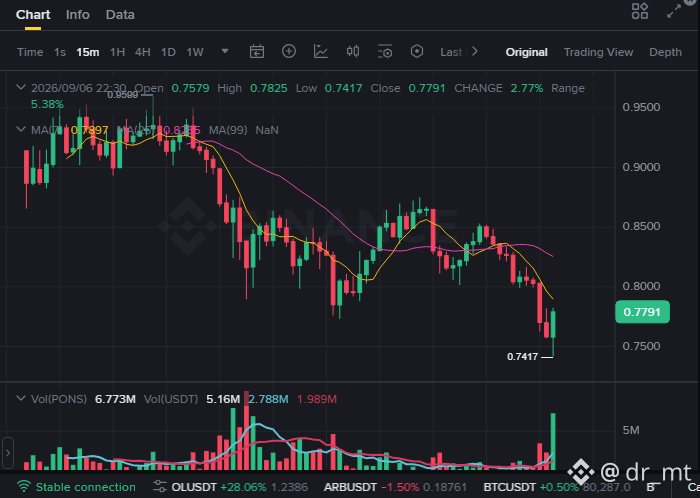
$PONS just bounced hard from the lows — oversold conditions are finally getting a reaction ⚡
The 15M chart still carries a broader bearish structure, so this is a tactical LONG for a recovery move, not a signal to chase blindly. Price rejected the visible 0.7417 low and printed a strong follow-up candle with increased activity, giving the RSI oversold reading some real chart context.
Trade plan:
ENTRY:
0.776600
TP1:
0.784366
TP2:
0.792132
TP3:
0.799898
STOP LOSS:
0.761068
The key now is whether buyers can keep price above the recent rebound area and build continuation. If momentum fades and the stop is lost, the oversold-bounce thesis is invalidated.
Take partials into strength, size the position responsibly, and remember: no setup guarantees profit. Protect capital first 🛡️
Can $PONS extend this rebound toward TP3? 👀
#PONS #CryptoTrading #RSI #BinanceSquare
$PONS just bounced hard from the lows — oversold conditions are finally getting a reaction ⚡
The 15M chart still carries a broader bearish structure, so this is a tactical LONG for a recovery move, not a signal to chase blindly. Price rejected the visible 0.7417 low and printed a strong follow-up candle with increased activity, giving the RSI oversold reading some real chart context.
Trade plan:
ENTRY:
0.776600
TP1:
0.784366
TP2:
0.792132
TP3:
0.799898
STOP LOSS:
0.761068
The key now is whether buyers can keep price above the recent rebound area and build continuation. If momentum fades and the stop is lost, the oversold-bounce thesis is invalidated.
Take partials into strength, size the position responsibly, and remember: no setup guarantees profit. Protect capital first 🛡️
Can $PONS extend this rebound toward TP3? 👀
#PONS #CryptoTrading #RSI #BinanceSquare
The 15M chart still carries a broader bearish structure, so this is a tactical LONG for a recovery move, not a signal to chase blindly. Price rejected the visible 0.7417 low and printed a strong follow-up candle with increased activity, giving the RSI oversold reading some real chart context.
Trade plan:
ENTRY:
0.776600
TP1:
0.784366
TP2:
0.792132
TP3:
0.799898
STOP LOSS:
0.761068
The key now is whether buyers can keep price above the recent rebound area and build continuation. If momentum fades and the stop is lost, the oversold-bounce thesis is invalidated.
Take partials into strength, size the position responsibly, and remember: no setup guarantees profit. Protect capital first 🛡️
Can $PONS extend this rebound toward TP3? 👀
#PONS #CryptoTrading #RSI #BinanceSquare
131


·
--
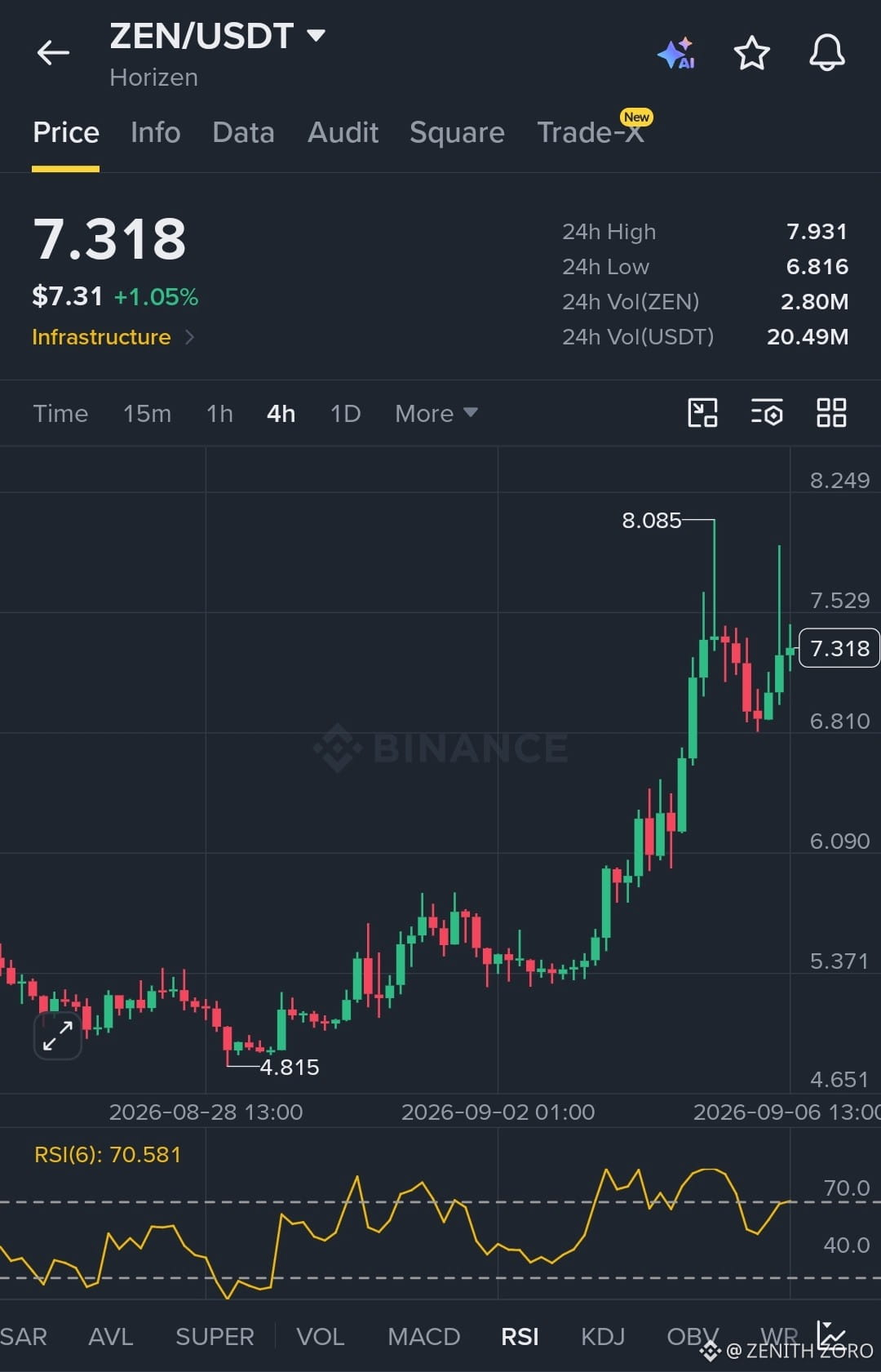
$ZEN /USDT — LONG SETUP 📈
RSI is around 70.5, so ZEN is strong but already entering the overbought area. Price also pulled back from 8.08 and held around 6.81, then started moving up again. The important level now is 7.52 — a clean break and hold above it can give the next move toward 8.08+.
LONG ENTRY: 7.20–7.35
TP1: 7.52
TP2: 7.90
TP3: 8.08
SL: 6.80
#BTC走势分析 #RSI
$ZEN /USDT — LONG SETUP 📈
RSI is around 70.5, so ZEN is strong but already entering the overbought area. Price also pulled back from 8.08 and held around 6.81, then started moving up again. The important level now is 7.52 — a clean break and hold above it can give the next move toward 8.08+.
LONG ENTRY: 7.20–7.35
TP1: 7.52
TP2: 7.90
TP3: 8.08
SL: 6.80
#BTC走势分析 #RSI
RSI is around 70.5, so ZEN is strong but already entering the overbought area. Price also pulled back from 8.08 and held around 6.81, then started moving up again. The important level now is 7.52 — a clean break and hold above it can give the next move toward 8.08+.
LONG ENTRY: 7.20–7.35
TP1: 7.52
TP2: 7.90
TP3: 8.08
SL: 6.80
#BTC走势分析 #RSI
428
·
--
🚨 Has the correction in $ASTR begun?
The RSI on the hourly timeframe reached 91.6, which is an extremely overbought area.
There is still no strong upper rejection signal yet, so confirmation remains important.
📊 Probability score of a correction or drop: 55%
Watch the current peak and wait for a clear bearish signal with risk management.
The price may continue rising temporarily, so selling immediately is not preferred. The best confirmation comes when signs of a decline appear.
Price at the time of monitoring: 0.006578
👈 Click on $ASTR to follow the coin
Fish Hunter
Note: The probability score is an estimate and not a guarantee of price movement.
$ASTR #ASTR #RSI #Futures #BinanceSquare
🚨 Has the correction in $ASTR begun?
The RSI on the hourly timeframe reached 91.6, which is an extremely overbought area.
There is still no strong upper rejection signal yet, so confirmation remains important.
📊 Probability score of a correction or drop: 55%
Watch the current peak and wait for a clear bearish signal with risk management.
The price may continue rising temporarily, so selling immediately is not preferred. The best confirmation comes when signs of a decline appear.
Price at the time of monitoring: 0.006578
👈 Click on $ASTR to follow the coin
Fish Hunter
Note: The probability score is an estimate and not a guarantee of price movement.
$ASTR #ASTR #RSI #Futures #BinanceSquare
The RSI on the hourly timeframe reached 91.6, which is an extremely overbought area.
There is still no strong upper rejection signal yet, so confirmation remains important.
📊 Probability score of a correction or drop: 55%
Watch the current peak and wait for a clear bearish signal with risk management.
The price may continue rising temporarily, so selling immediately is not preferred. The best confirmation comes when signs of a decline appear.
Price at the time of monitoring: 0.006578
👈 Click on $ASTR to follow the coin
Fish Hunter
Note: The probability score is an estimate and not a guarantee of price movement.
$ASTR #ASTR #RSI #Futures #BinanceSquare
201
·
--
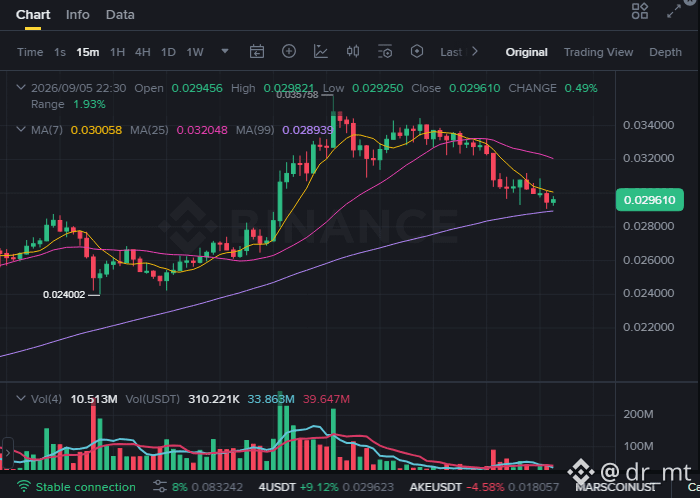
$4 TP1 HIT ✅
Entry: 0.029438
TP1: 0.029732
Current price: 0.029735
The first target is reached. Nice work to everyone who caught the RSI setup.
Now protect the profit—consider securing partials and managing the remaining position carefully. TP2 is 0.030027, with TP3 at 0.030321.
Keep risk controlled. No need to get greedy...
Follow dr_mt for the next update and drop a 🔥 if you’re still holding.
#CryptoTrading #Binance #RSI
$4 TP1 HIT ✅
Entry: 0.029438
TP1: 0.029732
Current price: 0.029735
The first target is reached. Nice work to everyone who caught the RSI setup.
Now protect the profit—consider securing partials and managing the remaining position carefully. TP2 is 0.030027, with TP3 at 0.030321.
Keep risk controlled. No need to get greedy...
Follow dr_mt for the next update and drop a 🔥 if you’re still holding.
#CryptoTrading #Binance #RSI
Entry: 0.029438
TP1: 0.029732
Current price: 0.029735
The first target is reached. Nice work to everyone who caught the RSI setup.
Now protect the profit—consider securing partials and managing the remaining position carefully. TP2 is 0.030027, with TP3 at 0.030321.
Keep risk controlled. No need to get greedy...
Follow dr_mt for the next update and drop a 🔥 if you’re still holding.
#CryptoTrading #Binance #RSI
365

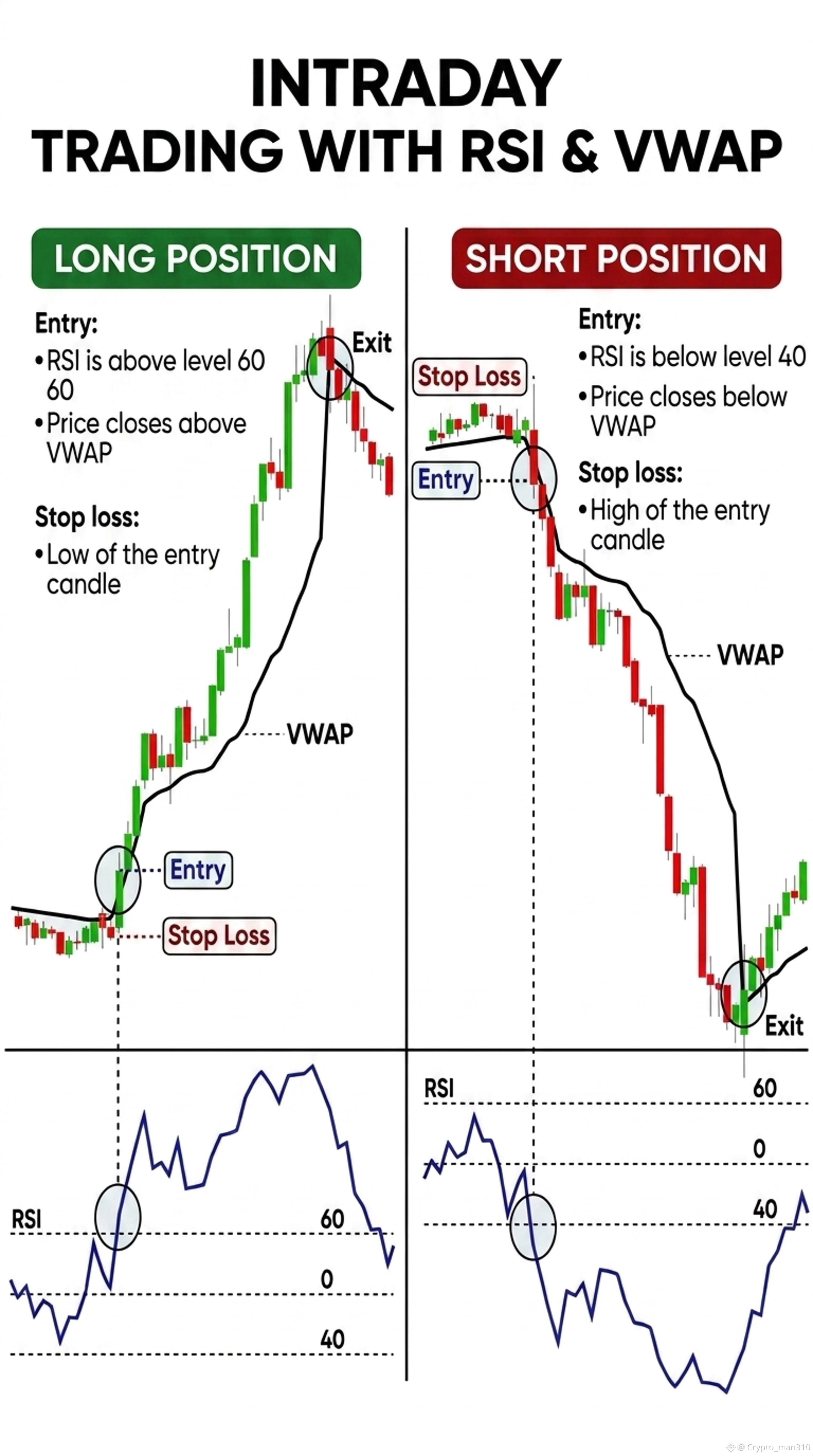
📊 RSI + VWAP: A Simple Intraday Trading Framework
RSI tells you about momentum. VWAP tells you where price is trading relative to the session’s volume-weighted average.
🟢 LONG BIAS
RSI moves above 60 + price holds above VWAP
→ Momentum and price positioning align bullishly.
🔴 SHORT BIAS
RSI moves below 40 + price stays below VWAP
→ Momentum and price positioning align bearishly.
🎯 Entry: Wait for confirmation rather than entering on the first signal.
🛑 Stop-Loss: Keep the invalidation level clearly defined.
📈 Exit: Manage the position as momentum weakens or price reverses.
🧠 TRADER TIP
Don't use RSI or VWAP alone.
RSI = Momentum
VWAP = Intraday Trend/Positioning
Price Action = Confirmation
⚠️ This is an educational framework, not a guaranteed trading strategy. Always manage risk.
#RSI #Learn #Crypto_Jobs🎯 #learn2earn
$ZEC
{spot}(ZECUSDT)
📊 RSI + VWAP: A Simple Intraday Trading Framework
RSI tells you about momentum. VWAP tells you where price is trading relative to the session’s volume-weighted average.
🟢 LONG BIAS
RSI moves above 60 + price holds above VWAP
→ Momentum and price positioning align bullishly.
🔴 SHORT BIAS
RSI moves below 40 + price stays below VWAP
→ Momentum and price positioning align bearishly.
🎯 Entry: Wait for confirmation rather than entering on the first signal.
🛑 Stop-Loss: Keep the invalidation level clearly defined.
📈 Exit: Manage the position as momentum weakens or price reverses.
🧠 TRADER TIP
Don't use RSI or VWAP alone.
RSI = Momentum
VWAP = Intraday Trend/Positioning
Price Action = Confirmation
⚠️ This is an educational framework, not a guaranteed trading strategy. Always manage risk.
#RSI #Learn #Crypto_Jobs🎯 #learn2earn
$ZEC
RSI tells you about momentum. VWAP tells you where price is trading relative to the session’s volume-weighted average.
🟢 LONG BIAS
RSI moves above 60 + price holds above VWAP
→ Momentum and price positioning align bullishly.
🔴 SHORT BIAS
RSI moves below 40 + price stays below VWAP
→ Momentum and price positioning align bearishly.
🎯 Entry: Wait for confirmation rather than entering on the first signal.
🛑 Stop-Loss: Keep the invalidation level clearly defined.
📈 Exit: Manage the position as momentum weakens or price reverses.
🧠 TRADER TIP
Don't use RSI or VWAP alone.
RSI = Momentum
VWAP = Intraday Trend/Positioning
Price Action = Confirmation
⚠️ This is an educational framework, not a guaranteed trading strategy. Always manage risk.
#RSI #Learn #Crypto_Jobs🎯 #learn2earn
$ZEC
316
·
--
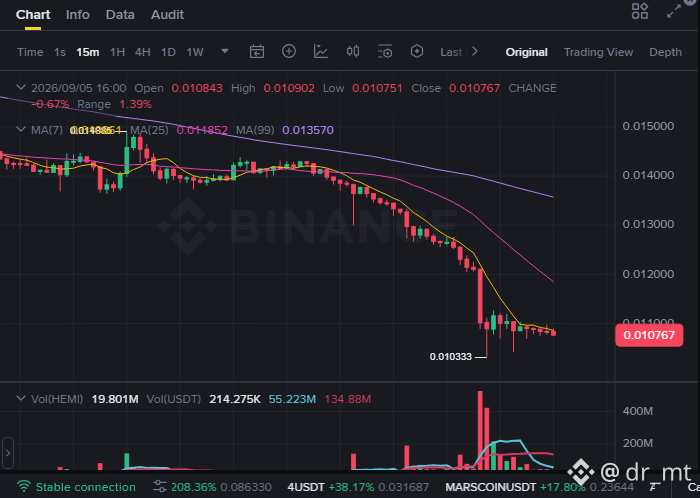
$HEMI is deeply stretched on the 15M chart... RSI(6) is sitting at 19.93. 🔍
That is a clear oversold reading, and it puts a bounce scenario on the radar. Oversold does NOT guarantee a reversal, but when momentum gets this compressed, I want defined levels ready rather than chasing later.
There’s also $55.54M in 24h quote volume behind $HEMI, so this isn’t a pair to ignore when volatility wakes up.
🎯 LONG $HEMI
ENTRY: 0.010777
TP1: 0.010885
TP2: 0.010993
TP3: 0.011100
STOP LOSS: 0.010561
TP1 maps to +1.0%, with TP3 extending to +3.0%. The stop is fixed at -2.0% — simple risk framework, no guesswork.
This is an oversold reaction play, not a certainty. Keep position size sensible and respect the invalidation if price loses the stop.
Are you watching $HEMI for a 15M relief bounce? Drop a ⚡ if it’s on your screen.
#HEMI #CryptoTrading #RSI #BinanceSquare
$HEMI is deeply stretched on the 15M chart... RSI(6) is sitting at 19.93. 🔍
That is a clear oversold reading, and it puts a bounce scenario on the radar. Oversold does NOT guarantee a reversal, but when momentum gets this compressed, I want defined levels ready rather than chasing later.
There’s also $55.54M in 24h quote volume behind $HEMI , so this isn’t a pair to ignore when volatility wakes up.
🎯 LONG $HEMI
ENTRY: 0.010777
TP1: 0.010885
TP2: 0.010993
TP3: 0.011100
STOP LOSS: 0.010561
TP1 maps to +1.0%, with TP3 extending to +3.0%. The stop is fixed at -2.0% — simple risk framework, no guesswork.
This is an oversold reaction play, not a certainty. Keep position size sensible and respect the invalidation if price loses the stop.
Are you watching $HEMI for a 15M relief bounce? Drop a ⚡ if it’s on your screen.
#HEMI #CryptoTrading #RSI #BinanceSquare
That is a clear oversold reading, and it puts a bounce scenario on the radar. Oversold does NOT guarantee a reversal, but when momentum gets this compressed, I want defined levels ready rather than chasing later.
There’s also $55.54M in 24h quote volume behind $HEMI , so this isn’t a pair to ignore when volatility wakes up.
🎯 LONG $HEMI
ENTRY: 0.010777
TP1: 0.010885
TP2: 0.010993
TP3: 0.011100
STOP LOSS: 0.010561
TP1 maps to +1.0%, with TP3 extending to +3.0%. The stop is fixed at -2.0% — simple risk framework, no guesswork.
This is an oversold reaction play, not a certainty. Keep position size sensible and respect the invalidation if price loses the stop.
Are you watching $HEMI for a 15M relief bounce? Drop a ⚡ if it’s on your screen.
#HEMI #CryptoTrading #RSI #BinanceSquare
137
·
--
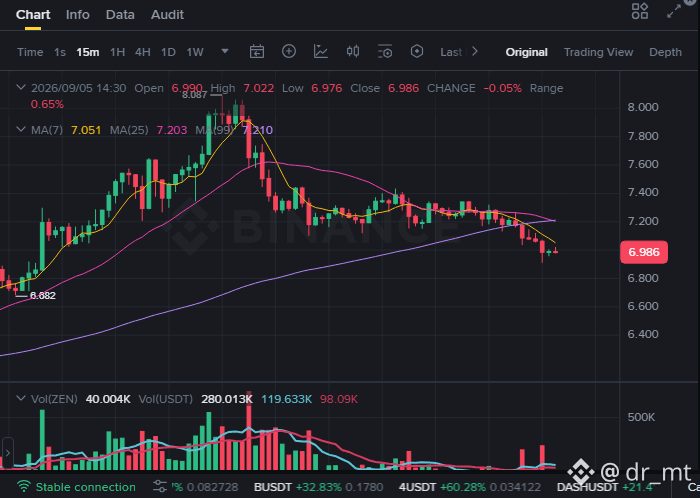
$ZEN is deeply stretched on the 15M... RSI(6) has dropped to 18.56. 👀
That’s firmly oversold territory, and it puts a bounce attempt on the radar. Oversold does NOT guarantee a reversal, but when momentum gets this compressed, clean risk-defined longs become worth tracking.
$ZEN has also printed $130.45M in 24h quote volume, so this market can move fast once buyers step in. Patience matters here — no chasing, just execute the levels.
LONG plan 📈
ENTRY: 6.9820
TP1: 7.0518
TP2: 7.1216
TP3: 7.1915
STOP LOSS: 6.8424
Targets are set at +1%, +2%, and +3%, with risk capped by the -2% stop. A 15M oversold reading can stay oversold longer than expected, so keep sizing controlled and respect the STOP LOSS.
Watching $ZEN closely... are you taking the oversold bounce or waiting for more price confirmation? Drop your view below.
#ZEN #RSI #CryptoTrading #BinanceSquare
{future}(ZENUSDT)
$ZEN is deeply stretched on the 15M... RSI(6) has dropped to 18.56. 👀
That’s firmly oversold territory, and it puts a bounce attempt on the radar. Oversold does NOT guarantee a reversal, but when momentum gets this compressed, clean risk-defined longs become worth tracking.
$ZEN has also printed $130.45M in 24h quote volume, so this market can move fast once buyers step in. Patience matters here — no chasing, just execute the levels.
LONG plan 📈
ENTRY: 6.9820
TP1: 7.0518
TP2: 7.1216
TP3: 7.1915
STOP LOSS: 6.8424
Targets are set at +1%, +2%, and +3%, with risk capped by the -2% stop. A 15M oversold reading can stay oversold longer than expected, so keep sizing controlled and respect the STOP LOSS.
Watching $ZEN closely... are you taking the oversold bounce or waiting for more price confirmation? Drop your view below.
#ZEN #RSI #CryptoTrading #BinanceSquare
That’s firmly oversold territory, and it puts a bounce attempt on the radar. Oversold does NOT guarantee a reversal, but when momentum gets this compressed, clean risk-defined longs become worth tracking.
$ZEN has also printed $130.45M in 24h quote volume, so this market can move fast once buyers step in. Patience matters here — no chasing, just execute the levels.
LONG plan 📈
ENTRY: 6.9820
TP1: 7.0518
TP2: 7.1216
TP3: 7.1915
STOP LOSS: 6.8424
Targets are set at +1%, +2%, and +3%, with risk capped by the -2% stop. A 15M oversold reading can stay oversold longer than expected, so keep sizing controlled and respect the STOP LOSS.
Watching $ZEN closely... are you taking the oversold bounce or waiting for more price confirmation? Drop your view below.
#ZEN #RSI #CryptoTrading #BinanceSquare
165

·
--
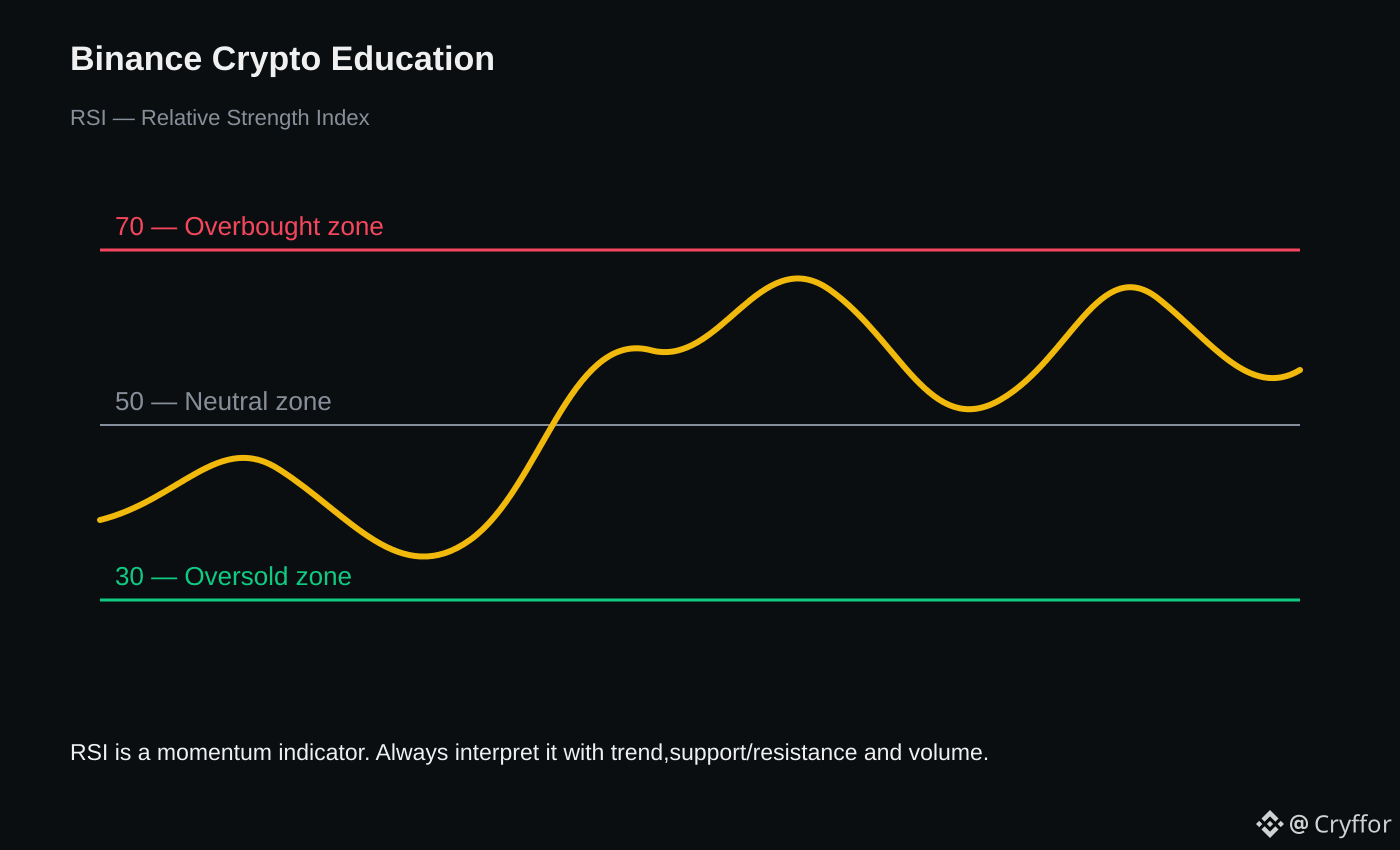
📚 Crypto Education — RSI
⚡ RSI measures momentum.
🟢 Above 70: strong momentum / potentially overextended
🟡 Around 50: balanced momentum
🔴 Below 30: weak momentum / potentially oversold
📊 RSI should not be used alone.
🔎 Price structure, volume and trend can provide confirmation.
👀 Context matters.
🤔 Do you combine RSI with another indicator?
#CryptoEducation #Binance #RSI #TechnicalAnalysis
📚 Crypto Education — RSI
⚡ RSI measures momentum.
🟢 Above 70: strong momentum / potentially overextended
🟡 Around 50: balanced momentum
🔴 Below 30: weak momentum / potentially oversold
📊 RSI should not be used alone.
🔎 Price structure, volume and trend can provide confirmation.
👀 Context matters.
🤔 Do you combine RSI with another indicator?
#CryptoEducation #Binance #RSI #TechnicalAnalysis
⚡ RSI measures momentum.
🟢 Above 70: strong momentum / potentially overextended
🟡 Around 50: balanced momentum
🔴 Below 30: weak momentum / potentially oversold
📊 RSI should not be used alone.
🔎 Price structure, volume and trend can provide confirmation.
👀 Context matters.
🤔 Do you combine RSI with another indicator?
#CryptoEducation #Binance #RSI #TechnicalAnalysis
3
·
--
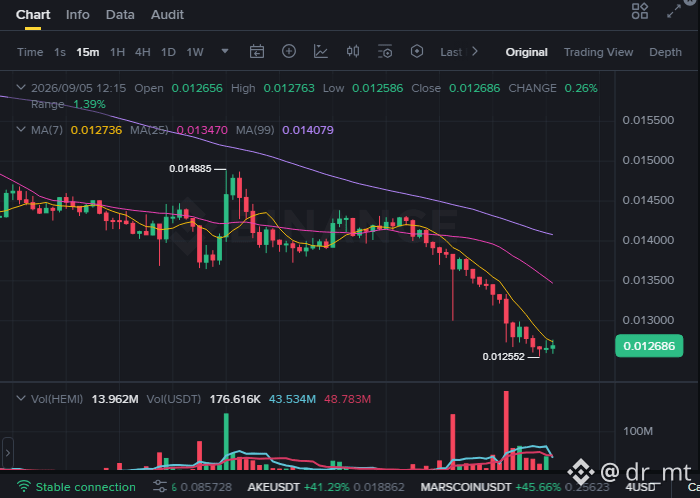
$HEMI looks stretched on the 15M... and that’s exactly why it has my attention. 👀
RSI(6) is sitting at 14.9, placing $HEMI in a deeply oversold 15-minute condition. That does NOT promise an instant reversal, but it puts a relief bounce firmly on the table if buyers step in.
There’s also $36.71M in 24h quote volume, so this isn’t a sleepy chart. Price can move fast around these levels—stay precise.
LONG setup 📈
ENTRY: 0.012691
TP1: 0.012818
TP2: 0.012945
TP3: 0.013072
STOP LOSS: 0.012437
The upside path is mapped at +1%, +2%, and +3% from entry. Simple plan: execute at the level, scale responsibly if price reacts, and let the stop define the risk.
Risk reminder: oversold RSI can remain oversold longer than expected. Keep sizing controlled and respect STOP LOSS.
Watching $HEMI for the bounce? Hit like if it’s on your radar and tell me how you’d manage the targets. 🔥
#HEMI #RSI #CryptoTrading #BinanceSquare
{future}(HEMIUSDT)
$HEMI looks stretched on the 15M... and that’s exactly why it has my attention. 👀
RSI(6) is sitting at 14.9, placing $HEMI in a deeply oversold 15-minute condition. That does NOT promise an instant reversal, but it puts a relief bounce firmly on the table if buyers step in.
There’s also $36.71M in 24h quote volume, so this isn’t a sleepy chart. Price can move fast around these levels—stay precise.
LONG setup 📈
ENTRY: 0.012691
TP1: 0.012818
TP2: 0.012945
TP3: 0.013072
STOP LOSS: 0.012437
The upside path is mapped at +1%, +2%, and +3% from entry. Simple plan: execute at the level, scale responsibly if price reacts, and let the stop define the risk.
Risk reminder: oversold RSI can remain oversold longer than expected. Keep sizing controlled and respect STOP LOSS.
Watching $HEMI for the bounce? Hit like if it’s on your radar and tell me how you’d manage the targets. 🔥
#HEMI #RSI #CryptoTrading #BinanceSquare
RSI(6) is sitting at 14.9, placing $HEMI in a deeply oversold 15-minute condition. That does NOT promise an instant reversal, but it puts a relief bounce firmly on the table if buyers step in.
There’s also $36.71M in 24h quote volume, so this isn’t a sleepy chart. Price can move fast around these levels—stay precise.
LONG setup 📈
ENTRY: 0.012691
TP1: 0.012818
TP2: 0.012945
TP3: 0.013072
STOP LOSS: 0.012437
The upside path is mapped at +1%, +2%, and +3% from entry. Simple plan: execute at the level, scale responsibly if price reacts, and let the stop define the risk.
Risk reminder: oversold RSI can remain oversold longer than expected. Keep sizing controlled and respect STOP LOSS.
Watching $HEMI for the bounce? Hit like if it’s on your radar and tell me how you’d manage the targets. 🔥
#HEMI #RSI #CryptoTrading #BinanceSquare
233
·
--
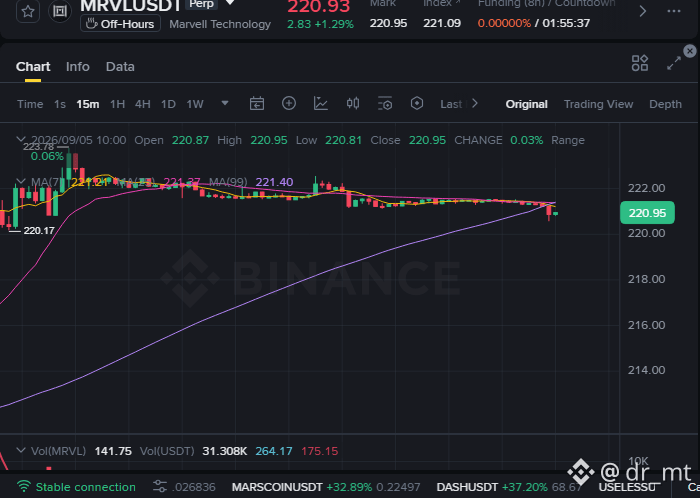
$MRVL is stretched hard on the 15M chart... and that’s exactly why this LONG idea is on the radar. ⚡
RSI(6) is sitting at 10.84, placing $MRVL in deeply oversold territory on the 15-minute timeframe.
That does NOT guarantee an immediate reversal. But when momentum gets this compressed, a measured bounce setup becomes worth tracking rather than chasing blindly.
There’s also $47.3M in 24h quote volume behind $MRVL, so this is not a chart to ignore.
LONG plan 📈
ENTRY: 220.9400
TP1: 223.1494
TP2: 225.3588
TP3: 227.5682
STOP LOSS: 216.5212
The play is simple: respect the entry, take profits methodically if price responds, and keep the invalidation fixed.
Risk reminder: oversold can stay oversold longer than expected—use controlled size and honor the stop.
Would you take the RSI bounce on $MRVL, or wait for more confirmation? Comment your approach and follow dr_mt for more live setups. 🔥
#MRVL #CryptoTrading #RSI #BinanceSquare
{future}(MRVLUSDT)
$MRVL is stretched hard on the 15M chart... and that’s exactly why this LONG idea is on the radar. ⚡
RSI(6) is sitting at 10.84, placing $MRVL in deeply oversold territory on the 15-minute timeframe.
That does NOT guarantee an immediate reversal. But when momentum gets this compressed, a measured bounce setup becomes worth tracking rather than chasing blindly.
There’s also $47.3M in 24h quote volume behind $MRVL , so this is not a chart to ignore.
LONG plan 📈
ENTRY: 220.9400
TP1: 223.1494
TP2: 225.3588
TP3: 227.5682
STOP LOSS: 216.5212
The play is simple: respect the entry, take profits methodically if price responds, and keep the invalidation fixed.
Risk reminder: oversold can stay oversold longer than expected—use controlled size and honor the stop.
Would you take the RSI bounce on $MRVL , or wait for more confirmation? Comment your approach and follow dr_mt for more live setups. 🔥
#MRVL #CryptoTrading #RSI #BinanceSquare
RSI(6) is sitting at 10.84, placing $MRVL in deeply oversold territory on the 15-minute timeframe.
That does NOT guarantee an immediate reversal. But when momentum gets this compressed, a measured bounce setup becomes worth tracking rather than chasing blindly.
There’s also $47.3M in 24h quote volume behind $MRVL , so this is not a chart to ignore.
LONG plan 📈
ENTRY: 220.9400
TP1: 223.1494
TP2: 225.3588
TP3: 227.5682
STOP LOSS: 216.5212
The play is simple: respect the entry, take profits methodically if price responds, and keep the invalidation fixed.
Risk reminder: oversold can stay oversold longer than expected—use controlled size and honor the stop.
Would you take the RSI bounce on $MRVL , or wait for more confirmation? Comment your approach and follow dr_mt for more live setups. 🔥
#MRVL #CryptoTrading #RSI #BinanceSquare
77
·
--
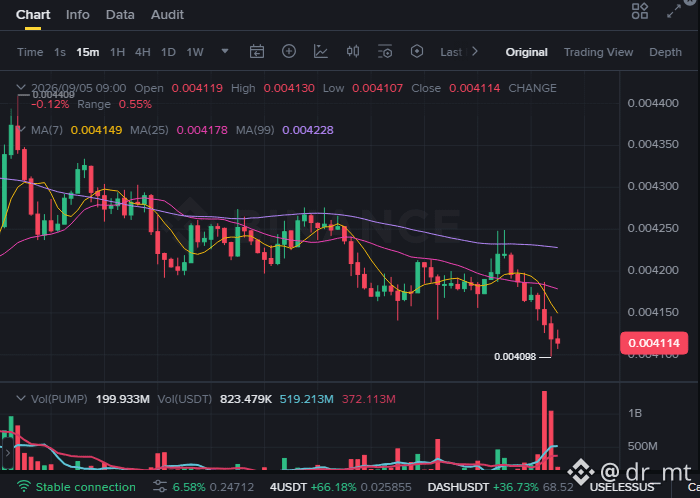
$PUMP is stretched hard on the 15M chart — and that is exactly why this long is on the radar. 🔍
The 15-minute RSI(6) is sitting at 17.63, firmly in oversold territory.
That does not guarantee an instant bounce. Oversold can stay oversold when momentum is heavy. But it does flag a market that has already pushed aggressively to the downside, making a controlled rebound worth watching.
There is also real activity behind the chart: $PUMP has recorded 127.43M in 24h quote volume.
📈 LONG SETUP — $PUMP
ENTRY: 0.0041100
TP1: 0.0041511
TP2: 0.0041922
TP3: 0.0042333
STOP LOSS: 0.0040278
The plan is simple: respect the defined entry, let price prove the bounce, and avoid chasing if it runs away first.
Risk reminder: oversold readings are not a promise of reversal—use the stop and keep sizing disciplined.
Are you watching $PUMP for a quick RSI bounce? Hit like, share your take, and follow dr_mt for more trade ideas.
#PUMP #CryptoTrading #RSI #BinanceSquare
{future}(PUMPUSDT)
$PUMP is stretched hard on the 15M chart — and that is exactly why this long is on the radar. 🔍
The 15-minute RSI(6) is sitting at 17.63, firmly in oversold territory.
That does not guarantee an instant bounce. Oversold can stay oversold when momentum is heavy. But it does flag a market that has already pushed aggressively to the downside, making a controlled rebound worth watching.
There is also real activity behind the chart: $PUMP has recorded 127.43M in 24h quote volume.
📈 LONG SETUP — $PUMP
ENTRY: 0.0041100
TP1: 0.0041511
TP2: 0.0041922
TP3: 0.0042333
STOP LOSS: 0.0040278
The plan is simple: respect the defined entry, let price prove the bounce, and avoid chasing if it runs away first.
Risk reminder: oversold readings are not a promise of reversal—use the stop and keep sizing disciplined.
Are you watching $PUMP for a quick RSI bounce? Hit like, share your take, and follow dr_mt for more trade ideas.
#PUMP #CryptoTrading #RSI #BinanceSquare
The 15-minute RSI(6) is sitting at 17.63, firmly in oversold territory.
That does not guarantee an instant bounce. Oversold can stay oversold when momentum is heavy. But it does flag a market that has already pushed aggressively to the downside, making a controlled rebound worth watching.
There is also real activity behind the chart: $PUMP has recorded 127.43M in 24h quote volume.
📈 LONG SETUP — $PUMP
ENTRY: 0.0041100
TP1: 0.0041511
TP2: 0.0041922
TP3: 0.0042333
STOP LOSS: 0.0040278
The plan is simple: respect the defined entry, let price prove the bounce, and avoid chasing if it runs away first.
Risk reminder: oversold readings are not a promise of reversal—use the stop and keep sizing disciplined.
Are you watching $PUMP for a quick RSI bounce? Hit like, share your take, and follow dr_mt for more trade ideas.
#PUMP #CryptoTrading #RSI #BinanceSquare
248
Log in to explore more content
Join global crypto users on Binance Square
⚡️ Get latest and useful information about crypto.
💬 Trusted by the world’s largest crypto exchange.
👍 Discover real insights from verified creators.
Email / Phone number
Trending Topics
1
#AnthropicCEOCallsForAISlowdown
66,583 views
924 Discussing
2
#BitcoinThirdSingleBlockReorgInFourWeeks
2,946 views
151 Discussing
3
#EthereumFallsBelow$2500
25 views
23 Discussing
4
#BitcoinDropsToIntradayLow$76367
127 views
4 Discussing
5
#LSKSurgesOver515%In24Hours
2,863 views
118 Discussing
6
#ClarityActLawIn2026OddsRiseTo30%
758 views
29 Discussing
7
#KoreaCryptoTaxDelayPetitionMeetsReviewThreshold
116 views
19 Discussing
8
#EURequiresWalletMakersReportFlawsIn24Hours
587 views
35 Discussing
9
#ZcashNU7VoteEndsSeptember14
2,366 views
55 Discussing
10
#AnthropicChoosesNasdaqForPotentialIPO
33,110 views
373 Discussing