

#riskmanagement
riskmanagement
17.4M views
66,726 Discussing
Hot
Latest
·
--
Bearish
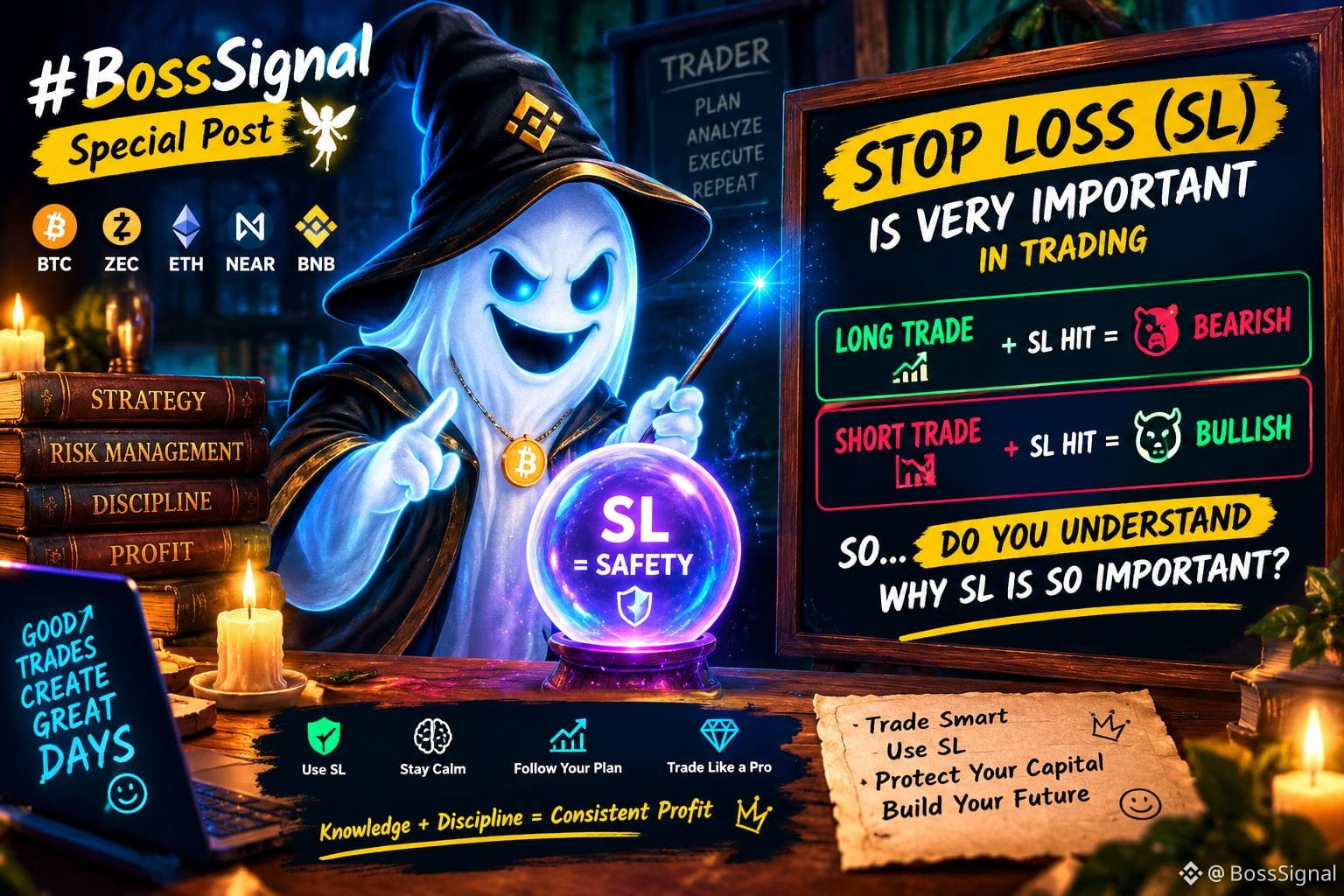
🧚♂️ #BossSignal SPECIAL POST 🧙♂️📊
💰 $BTC | $ZEC | $ETH | $NEAR | $BNB
🛑 STOP LOSS (SL) IS A TRADER'S BEST FRIEND!
I use a Stop Loss (SL) in every trade because risk management is essential in crypto trading. Today, let's learn why SL matters! 🎯
📉 LONG TRADE + SL HIT = Potentially Bearish Signal 🐻
📈 SHORT TRADE + SL HIT = Potentially Bullish Signal 🐂
🧠 Now, do you understand why Stop Loss is so important?
Professional traders don't place trades randomly. They analyze the charts, calculate the risks, plan their entries and exits, and set their Stop Loss before entering a trade.
🛡️ Why is SL important? ✅ Helps protect your capital from unexpected losses. ✅ Keeps your trading disciplined. ✅ Helps manage risk during volatile market conditions. ✅ Prevents one bad trade from causing excessive losses.
⚠️ Remember, crypto trading is highly volatile and risky. A Stop Loss is essential, but it cannot guarantee that every loss will be limited to the exact SL price.
👻 A little wisdom from the #BossSignal Ghost!
Don't trade on emotions. Don't blindly follow every crypto influencer who makes bold predictions.
Learn from experienced, disciplined traders. Analyze the market. Manage your risks. Always trade with a plan! 💎📈
🧚♂️ Knowledge + Discipline + Risk Management = Smarter Trading!
#Bitcoin #RiskManagement #TradingEducation
🧚♂️ #BossSignal SPECIAL POST 🧙♂️📊
💰 $BTC | $ZEC | $ETH | $NEAR | $BNB
🛑 STOP LOSS (SL) IS A TRADER'S BEST FRIEND!
I use a Stop Loss (SL) in every trade because risk management is essential in crypto trading. Today, let's learn why SL matters! 🎯
📉 LONG TRADE + SL HIT = Potentially Bearish Signal 🐻
📈 SHORT TRADE + SL HIT = Potentially Bullish Signal 🐂
🧠 Now, do you understand why Stop Loss is so important?
Professional traders don't place trades randomly. They analyze the charts, calculate the risks, plan their entries and exits, and set their Stop Loss before entering a trade.
🛡️ Why is SL important? ✅ Helps protect your capital from unexpected losses. ✅ Keeps your trading disciplined. ✅ Helps manage risk during volatile market conditions. ✅ Prevents one bad trade from causing excessive losses.
⚠️ Remember, crypto trading is highly volatile and risky. A Stop Loss is essential, but it cannot guarantee that every loss will be limited to the exact SL price.
👻 A little wisdom from the #BossSignal Ghost!
Don't trade on emotions. Don't blindly follow every crypto influencer who makes bold predictions.
Learn from experienced, disciplined traders. Analyze the market. Manage your risks. Always trade with a plan! 💎📈
🧚♂️ Knowledge + Discipline + Risk Management = Smarter Trading!
#Bitcoin #RiskManagement #TradingEducation
💰 $BTC | $ZEC | $ETH | $NEAR | $BNB
🛑 STOP LOSS (SL) IS A TRADER'S BEST FRIEND!
I use a Stop Loss (SL) in every trade because risk management is essential in crypto trading. Today, let's learn why SL matters! 🎯
📉 LONG TRADE + SL HIT = Potentially Bearish Signal 🐻
📈 SHORT TRADE + SL HIT = Potentially Bullish Signal 🐂
🧠 Now, do you understand why Stop Loss is so important?
Professional traders don't place trades randomly. They analyze the charts, calculate the risks, plan their entries and exits, and set their Stop Loss before entering a trade.
🛡️ Why is SL important? ✅ Helps protect your capital from unexpected losses. ✅ Keeps your trading disciplined. ✅ Helps manage risk during volatile market conditions. ✅ Prevents one bad trade from causing excessive losses.
⚠️ Remember, crypto trading is highly volatile and risky. A Stop Loss is essential, but it cannot guarantee that every loss will be limited to the exact SL price.
👻 A little wisdom from the #BossSignal Ghost!
Don't trade on emotions. Don't blindly follow every crypto influencer who makes bold predictions.
Learn from experienced, disciplined traders. Analyze the market. Manage your risks. Always trade with a plan! 💎📈
🧚♂️ Knowledge + Discipline + Risk Management = Smarter Trading!
#Bitcoin #RiskManagement #TradingEducation
1
340

🚀 THE SECRET TO SURVIVING & THRIVING IN CRYPTO TRADING! 🚀
The real secret to long-term survival and success in the crypto market isn't luck—it's strict discipline and flawless risk management. Trading without a plan is no different than gambling!
💡 3 Golden Rules of a Professional Trader:
1️⃣ Strict Risk Management: Never open a trade without a calculated Stop-Loss. Protecting your capital is your number one priority.
2️⃣ Say NO to FOMO: Don't let emotions trick you into jumping blindly into sudden green candles without proper confirmation.
3️⃣ Capital Preservation First: Market opportunities are endless, but lost capital is hard to recover. Protect your core funds.
👉 Follow for daily trading psychology, risk management tips, and market insights!
Are you actively trading today or staying safe on the sidelines? Let’s discuss below! 👇
#BİNANCESQUARE #CryptoTradingInsights #RiskManagement #tradingpsychology #CryptoCommunity $BTC $ETH $USDT
🚀 THE SECRET TO SURVIVING & THRIVING IN CRYPTO TRADING! 🚀
The real secret to long-term survival and success in the crypto market isn't luck—it's strict discipline and flawless risk management. Trading without a plan is no different than gambling!
💡 3 Golden Rules of a Professional Trader:
1️⃣ Strict Risk Management: Never open a trade without a calculated Stop-Loss. Protecting your capital is your number one priority.
2️⃣ Say NO to FOMO: Don't let emotions trick you into jumping blindly into sudden green candles without proper confirmation.
3️⃣ Capital Preservation First: Market opportunities are endless, but lost capital is hard to recover. Protect your core funds.
👉 Follow for daily trading psychology, risk management tips, and market insights!
Are you actively trading today or staying safe on the sidelines? Let’s discuss below! 👇
#BİNANCESQUARE #CryptoTradingInsights #RiskManagement #tradingpsychology #CryptoCommunity $BTC $ETH $USDT
The real secret to long-term survival and success in the crypto market isn't luck—it's strict discipline and flawless risk management. Trading without a plan is no different than gambling!
💡 3 Golden Rules of a Professional Trader:
1️⃣ Strict Risk Management: Never open a trade without a calculated Stop-Loss. Protecting your capital is your number one priority.
2️⃣ Say NO to FOMO: Don't let emotions trick you into jumping blindly into sudden green candles without proper confirmation.
3️⃣ Capital Preservation First: Market opportunities are endless, but lost capital is hard to recover. Protect your core funds.
👉 Follow for daily trading psychology, risk management tips, and market insights!
Are you actively trading today or staying safe on the sidelines? Let’s discuss below! 👇
#BİNANCESQUARE #CryptoTradingInsights #RiskManagement #tradingpsychology #CryptoCommunity $BTC $ETH $USDT
46
·
--
📚 3 TRADING RULES EVERY BEGINNER SHOULD KNOW
1️⃣ Never trade without a plan. 2️⃣ Always understand your risk before entering a trade. 3️⃣ Never let FOMO control your decisions.
🧠 Remember: Protecting your capital is more important than chasing quick profits.
💬 Which of these rules do you find hardest to follow?
Follow Mr Tahsin 01 for simple crypto trading lessons!
#CryptoEducation #tradingtips #RiskManagement #BTC
📚 3 TRADING RULES EVERY BEGINNER SHOULD KNOW
1️⃣ Never trade without a plan. 2️⃣ Always understand your risk before entering a trade. 3️⃣ Never let FOMO control your decisions.
🧠 Remember: Protecting your capital is more important than chasing quick profits.
💬 Which of these rules do you find hardest to follow?
Follow Mr Tahsin 01 for simple crypto trading lessons!
#CryptoEducation #tradingtips #RiskManagement #BTC
1️⃣ Never trade without a plan. 2️⃣ Always understand your risk before entering a trade. 3️⃣ Never let FOMO control your decisions.
🧠 Remember: Protecting your capital is more important than chasing quick profits.
💬 Which of these rules do you find hardest to follow?
Follow Mr Tahsin 01 for simple crypto trading lessons!
#CryptoEducation #tradingtips #RiskManagement #BTC
1
61

·
--
Bullish
#binancepick 📊 #BinancePick: What Smart Crypto Traders Should Watch
In crypto, the biggest opportunities often come with the biggest uncertainties. That’s why experienced traders focus on market structure, liquidity, volume, and risk management rather than chasing every trending token.
The #BinancePick conversation is a reminder to look beyond the hype and evaluate what the market is actually doing. Is trading volume increasing? Are buyers maintaining momentum? Is price breaking a key resistance level with confirmation, or is the move losing strength?
These details matter because a sudden price increase does not automatically signal a sustainable trend. Low liquidity, sharp reversals, and changing market sentiment can quickly alter the picture.
🔎 What deserves attention right now?
• Volume: Does participation support the current price movement?
• Trend: Is the asset making higher highs and higher lows, or showing weakness?
• Liquidity: Can traders enter and exit without excessive slippage?
• Risk: Where would the trade thesis become invalid?
Bitcoin's direction, broader market sentiment, and upcoming economic developments can also influence altcoin performance. No single indicator guarantees a successful trade, so combining evidence with disciplined risk management is essential.
My view: watch the data, question the hype, and avoid making decisions based solely on a trending hashtag. A strong trading process matters more than catching every move.
Which crypto asset are you watching closely, and what market signal supports your view? Share your analysis below. 👇
#BinancePick #CryptoMarket #TradingAnalysis #CryptoResearch #RiskManagement
$ERA $OSMO $BMT
{future}(BMTUSDT)
{spot}(OSMOUSDT)
{future}(ERAUSDT)
#binancepick 📊 #BinancePick: What Smart Crypto Traders Should Watch
In crypto, the biggest opportunities often come with the biggest uncertainties. That’s why experienced traders focus on market structure, liquidity, volume, and risk management rather than chasing every trending token.
The #BinancePick conversation is a reminder to look beyond the hype and evaluate what the market is actually doing. Is trading volume increasing? Are buyers maintaining momentum? Is price breaking a key resistance level with confirmation, or is the move losing strength?
These details matter because a sudden price increase does not automatically signal a sustainable trend. Low liquidity, sharp reversals, and changing market sentiment can quickly alter the picture.
🔎 What deserves attention right now?
• Volume: Does participation support the current price movement?
• Trend: Is the asset making higher highs and higher lows, or showing weakness?
• Liquidity: Can traders enter and exit without excessive slippage?
• Risk: Where would the trade thesis become invalid?
Bitcoin's direction, broader market sentiment, and upcoming economic developments can also influence altcoin performance. No single indicator guarantees a successful trade, so combining evidence with disciplined risk management is essential.
My view: watch the data, question the hype, and avoid making decisions based solely on a trending hashtag. A strong trading process matters more than catching every move.
Which crypto asset are you watching closely, and what market signal supports your view? Share your analysis below. 👇
#BinancePick #CryptoMarket #TradingAnalysis #CryptoResearch #RiskManagement
$ERA $OSMO $BMT
In crypto, the biggest opportunities often come with the biggest uncertainties. That’s why experienced traders focus on market structure, liquidity, volume, and risk management rather than chasing every trending token.
The #BinancePick conversation is a reminder to look beyond the hype and evaluate what the market is actually doing. Is trading volume increasing? Are buyers maintaining momentum? Is price breaking a key resistance level with confirmation, or is the move losing strength?
These details matter because a sudden price increase does not automatically signal a sustainable trend. Low liquidity, sharp reversals, and changing market sentiment can quickly alter the picture.
🔎 What deserves attention right now?
• Volume: Does participation support the current price movement?
• Trend: Is the asset making higher highs and higher lows, or showing weakness?
• Liquidity: Can traders enter and exit without excessive slippage?
• Risk: Where would the trade thesis become invalid?
Bitcoin's direction, broader market sentiment, and upcoming economic developments can also influence altcoin performance. No single indicator guarantees a successful trade, so combining evidence with disciplined risk management is essential.
My view: watch the data, question the hype, and avoid making decisions based solely on a trending hashtag. A strong trading process matters more than catching every move.
Which crypto asset are you watching closely, and what market signal supports your view? Share your analysis below. 👇
#BinancePick #CryptoMarket #TradingAnalysis #CryptoResearch #RiskManagement
$ERA $OSMO $BMT

347

Here's what happened when a trader flashing top 30-day profits updated everyone on his open longs.
Too many people convince themselves a red position is just noise they can sit through. They ignore the real numbers until the account is gone.
He told followers everything was fine and to stay patient because this volatility meant nothing. The caption projected calm. What most missed sat right in the screenshot. His $BTC perpetual long showed an unrealized loss of 76,117 USDT while $BTC sat down 1.05 percent and $ETH down 2.05 percent. Words said wait it out. The PnL said the opposite.
This is how positions turn into wrecks. Overconfidence in the story while the book bleeds, no stops mentioned, no exit if it keeps dropping. One more move lower and that 76k becomes a liquidation instead of a lesson.
Where do you think this approach usually ends?
#Bitcoin #RiskManagement #CryptoTrading
Here's what happened when a trader flashing top 30-day profits updated everyone on his open longs.
Too many people convince themselves a red position is just noise they can sit through. They ignore the real numbers until the account is gone.
He told followers everything was fine and to stay patient because this volatility meant nothing. The caption projected calm. What most missed sat right in the screenshot. His $BTC perpetual long showed an unrealized loss of 76,117 USDT while $BTC sat down 1.05 percent and $ETH down 2.05 percent. Words said wait it out. The PnL said the opposite.
This is how positions turn into wrecks. Overconfidence in the story while the book bleeds, no stops mentioned, no exit if it keeps dropping. One more move lower and that 76k becomes a liquidation instead of a lesson.
Where do you think this approach usually ends?
#Bitcoin #RiskManagement #CryptoTrading
Too many people convince themselves a red position is just noise they can sit through. They ignore the real numbers until the account is gone.
He told followers everything was fine and to stay patient because this volatility meant nothing. The caption projected calm. What most missed sat right in the screenshot. His $BTC perpetual long showed an unrealized loss of 76,117 USDT while $BTC sat down 1.05 percent and $ETH down 2.05 percent. Words said wait it out. The PnL said the opposite.
This is how positions turn into wrecks. Overconfidence in the story while the book bleeds, no stops mentioned, no exit if it keeps dropping. One more move lower and that 76k becomes a liquidation instead of a lesson.
Where do you think this approach usually ends?
#Bitcoin #RiskManagement #CryptoTrading
1

A perfect trade signal during a flash crash is useless if your bot trades too often. 📉
A system needs operational discipline, which requires safety layers beyond just a stop-loss order.
Here is how to build robust, responsible automation logic:
1. Implement cooldown windows to stop overreacting to market noise or minor repeated conditions.
2. Design broad guardrails covering safety checks across the entire account or portfolio setup.
3. Incorporate key guardrail considerations: position sizing relative to the portfolio, drawdown rules, and execution sanity checks.
4. When managing multiple accounts, enforce shared risk discipline through these architectural controls for consistent oversight.
By treating guardrails as core architecture, your platform signals responsible automation, boosting external trust. 🛡️
For a detailed look at how we bake this discipline into the core, check out our documentation here:
https://wolfbot.io/en/architecture/risk-guardrails-and-cooldown-system
#AutomatedTrading #RiskManagement #BotArchitecture #CryptoDev
A perfect trade signal during a flash crash is useless if your bot trades too often. 📉
A system needs operational discipline, which requires safety layers beyond just a stop-loss order.
Here is how to build robust, responsible automation logic:
1. Implement cooldown windows to stop overreacting to market noise or minor repeated conditions.
2. Design broad guardrails covering safety checks across the entire account or portfolio setup.
3. Incorporate key guardrail considerations: position sizing relative to the portfolio, drawdown rules, and execution sanity checks.
4. When managing multiple accounts, enforce shared risk discipline through these architectural controls for consistent oversight.
By treating guardrails as core architecture, your platform signals responsible automation, boosting external trust. 🛡️
For a detailed look at how we bake this discipline into the core, check out our documentation here:
https://wolfbot.io/en/architecture/risk-guardrails-and-cooldown-system
#AutomatedTrading #RiskManagement #BotArchitecture #CryptoDev
A system needs operational discipline, which requires safety layers beyond just a stop-loss order.
Here is how to build robust, responsible automation logic:
1. Implement cooldown windows to stop overreacting to market noise or minor repeated conditions.
2. Design broad guardrails covering safety checks across the entire account or portfolio setup.
3. Incorporate key guardrail considerations: position sizing relative to the portfolio, drawdown rules, and execution sanity checks.
4. When managing multiple accounts, enforce shared risk discipline through these architectural controls for consistent oversight.
By treating guardrails as core architecture, your platform signals responsible automation, boosting external trust. 🛡️
For a detailed look at how we bake this discipline into the core, check out our documentation here:
https://wolfbot.io/en/architecture/risk-guardrails-and-cooldown-system
#AutomatedTrading #RiskManagement #BotArchitecture #CryptoDev

68
Here's what happened when a 7-day profit ranking got posted as a follower-growth move.
Most people do not lose on the idea of following skilled traders. They lose on the timing. The board shows who is green right now, you feel late, and you end up chasing $BTC or $ETH after the move that put those names on the list.
The post itself was short. Top traders by profit over 7 days, then a line about growing Plaza followers. Under it, the counters read 1.1k, 172, 3k, and 1.5M. That is a lot of attention for a window only one week long. A week is enough to crown leverage, one $BNB swing, or a position that will not look the same by the next reset.
Lists like that leave out the drawdown, the size, and whether the trade was already crowded. Copying the name does not copy the entry. By the time the ranking is public, you are often providing the exit, while the follower count grows either way.
What would you want to see on a board like that before you treated it as a signal?
#Crypto #RiskManagement #Bitcoin
Here's what happened when a 7-day profit ranking got posted as a follower-growth move.
Most people do not lose on the idea of following skilled traders. They lose on the timing. The board shows who is green right now, you feel late, and you end up chasing $BTC or $ETH after the move that put those names on the list.
The post itself was short. Top traders by profit over 7 days, then a line about growing Plaza followers. Under it, the counters read 1.1k, 172, 3k, and 1.5M. That is a lot of attention for a window only one week long. A week is enough to crown leverage, one $BNB swing, or a position that will not look the same by the next reset.
Lists like that leave out the drawdown, the size, and whether the trade was already crowded. Copying the name does not copy the entry. By the time the ranking is public, you are often providing the exit, while the follower count grows either way.
What would you want to see on a board like that before you treated it as a signal?
#Crypto #RiskManagement #Bitcoin
Most people do not lose on the idea of following skilled traders. They lose on the timing. The board shows who is green right now, you feel late, and you end up chasing $BTC or $ETH after the move that put those names on the list.
The post itself was short. Top traders by profit over 7 days, then a line about growing Plaza followers. Under it, the counters read 1.1k, 172, 3k, and 1.5M. That is a lot of attention for a window only one week long. A week is enough to crown leverage, one $BNB swing, or a position that will not look the same by the next reset.
Lists like that leave out the drawdown, the size, and whether the trade was already crowded. Copying the name does not copy the entry. By the time the ranking is public, you are often providing the exit, while the follower count grows either way.
What would you want to see on a board like that before you treated it as a signal?
#Crypto #RiskManagement #Bitcoin

·
--
Bitcoin is testing traders’ patience and that’s where discipline matters most.
BTC is hovering around the 79.500 USD area, but a price level alone cannot confirm a reversal. Sellers have kept pressure on the market, so the next move needs confirmation rather than guesswork.
🐻 Bearish scenario: If BTC loses its recent low and the breakdown holds, sellers may remain in control.
🐂 Bullish scenario: If buyers reclaim resistance with stronger volume and defend the retest, the recovery case becomes more convincing.
The trap: Calling every bounce a reversal or every red candle the start of a crash.
My rule is simple: define what proves your thesis wrong before entering a trade. That keeps emotion from turning uncertainty into a costly decision.
For traders, the key question now is not whether BTC can move sharply, but which side can sustain control. Watch the levels, volume, and retests and let confirmation guide the trade rather than forcing a prediction.
Your take: Is $BTC
{future}(BTCUSDT)
building a base, or preparing for another leg down? What confirmation are you waiting for?
#bitcoin #BTC #CryptoMarket #TechnicalAnalysis #RiskManagement
Bitcoin is testing traders’ patience and that’s where discipline matters most.
BTC is hovering around the 79.500 USD area, but a price level alone cannot confirm a reversal. Sellers have kept pressure on the market, so the next move needs confirmation rather than guesswork.
🐻 Bearish scenario: If BTC loses its recent low and the breakdown holds, sellers may remain in control.
🐂 Bullish scenario: If buyers reclaim resistance with stronger volume and defend the retest, the recovery case becomes more convincing.
The trap: Calling every bounce a reversal or every red candle the start of a crash.
My rule is simple: define what proves your thesis wrong before entering a trade. That keeps emotion from turning uncertainty into a costly decision.
For traders, the key question now is not whether BTC can move sharply, but which side can sustain control. Watch the levels, volume, and retests and let confirmation guide the trade rather than forcing a prediction.
Your take: Is $BTC
building a base, or preparing for another leg down? What confirmation are you waiting for?
#bitcoin #BTC #CryptoMarket #TechnicalAnalysis #RiskManagement
BTC is hovering around the 79.500 USD area, but a price level alone cannot confirm a reversal. Sellers have kept pressure on the market, so the next move needs confirmation rather than guesswork.
🐻 Bearish scenario: If BTC loses its recent low and the breakdown holds, sellers may remain in control.
🐂 Bullish scenario: If buyers reclaim resistance with stronger volume and defend the retest, the recovery case becomes more convincing.
The trap: Calling every bounce a reversal or every red candle the start of a crash.
My rule is simple: define what proves your thesis wrong before entering a trade. That keeps emotion from turning uncertainty into a costly decision.
For traders, the key question now is not whether BTC can move sharply, but which side can sustain control. Watch the levels, volume, and retests and let confirmation guide the trade rather than forcing a prediction.
Your take: Is $BTC
building a base, or preparing for another leg down? What confirmation are you waiting for?
#bitcoin #BTC #CryptoMarket #TechnicalAnalysis #RiskManagement

1
126

·
--
📊 Bi-Daily Market Intelligence: Macro Pulse, Key Levels & XRP Risk Setup
**Executive Pulse**
Broad market liquidation pressure persists as spot volume contracts, signaling cautious risk-off positioning among institutional desks. Capital continues defensive consolidation while high-beta liquidity dries up across majors.
**Key Levels**
* **Bitcoin ()**: Defense Floor $79,390; Resistance $81,034; Trapped Trader Risk: Longs chasing early breakout momentum above $81k face sudden mean-reversion risk toward the range lows.
* **Ethereum ()**: Immediate Support $2,300; Resistance $2,371; Structure remains lower-high dominant, highlighting persistent relative weakness against.
* **Spotlight XRP ()**: Support floor $1.283; Invalidation level $1.280; Fakeout warning: Low-volume probes above $1.31 risk trapping aggressive momentum traders before a sweep of range lows.
**Risk Rule of the 48 Hours**
Do not force allocations into lagging altcoins during macro contraction phases. When dominance flexes, capital preservation takes precedence over yield chasing; wait for confirmed volume expansion before rotating down the risk curve.
**48-Hour Action Checklist**
* Monitor defense of $79.3K to gauge whether spot bids can absorb lingering sell-side pressure.
* Avoid leveraged long exposure on until higher-timeframe daily closes reclaim structural resistance.
* Keep dry powder elevated and enforce strict stop-losses on speculative range plays.
$BTC $ETH $XRP #BinanceSquare #CryptoTrading #RiskManagement
📊 Bi-Daily Market Intelligence: Macro Pulse, Key Levels & XRP Risk Setup
**Executive Pulse**
Broad market liquidation pressure persists as spot volume contracts, signaling cautious risk-off positioning among institutional desks. Capital continues defensive consolidation while high-beta liquidity dries up across majors.
**Key Levels**
* **Bitcoin ()**: Defense Floor $79,390; Resistance $81,034; Trapped Trader Risk: Longs chasing early breakout momentum above $81k face sudden mean-reversion risk toward the range lows.
* **Ethereum ()**: Immediate Support $2,300; Resistance $2,371; Structure remains lower-high dominant, highlighting persistent relative weakness against.
* **Spotlight XRP ()**: Support floor $1.283; Invalidation level $1.280; Fakeout warning: Low-volume probes above $1.31 risk trapping aggressive momentum traders before a sweep of range lows.
**Risk Rule of the 48 Hours**
Do not force allocations into lagging altcoins during macro contraction phases. When dominance flexes, capital preservation takes precedence over yield chasing; wait for confirmed volume expansion before rotating down the risk curve.
**48-Hour Action Checklist**
* Monitor defense of $79.3K to gauge whether spot bids can absorb lingering sell-side pressure.
* Avoid leveraged long exposure on until higher-timeframe daily closes reclaim structural resistance.
* Keep dry powder elevated and enforce strict stop-losses on speculative range plays.
$BTC $ETH $XRP #BinanceSquare #CryptoTrading #RiskManagement
**Executive Pulse**
Broad market liquidation pressure persists as spot volume contracts, signaling cautious risk-off positioning among institutional desks. Capital continues defensive consolidation while high-beta liquidity dries up across majors.
**Key Levels**
* **Bitcoin ()**: Defense Floor $79,390; Resistance $81,034; Trapped Trader Risk: Longs chasing early breakout momentum above $81k face sudden mean-reversion risk toward the range lows.
* **Ethereum ()**: Immediate Support $2,300; Resistance $2,371; Structure remains lower-high dominant, highlighting persistent relative weakness against.
* **Spotlight XRP ()**: Support floor $1.283; Invalidation level $1.280; Fakeout warning: Low-volume probes above $1.31 risk trapping aggressive momentum traders before a sweep of range lows.
**Risk Rule of the 48 Hours**
Do not force allocations into lagging altcoins during macro contraction phases. When dominance flexes, capital preservation takes precedence over yield chasing; wait for confirmed volume expansion before rotating down the risk curve.
**48-Hour Action Checklist**
* Monitor defense of $79.3K to gauge whether spot bids can absorb lingering sell-side pressure.
* Avoid leveraged long exposure on until higher-timeframe daily closes reclaim structural resistance.
* Keep dry powder elevated and enforce strict stop-losses on speculative range plays.
$BTC $ETH $XRP #BinanceSquare #CryptoTrading #RiskManagement
35
📊 TODAY'S MARKET WATCH: BALANCING RISK & REWARD! 📊
In today's crypto market, true success isn't just about chasing profits—it's about protecting your trading balance and capital above all else. Emotional decisions or reckless leverage can drain your funds in seconds!
💡 3 Essential Rules to Protect Your Balance:
1️⃣ Strict Position Sizing: Never risk more than 2% to 5% of your total balance on a single trade setup.
2️⃣ Always Use Stop-Loss: Secure your core funds from unexpected market volatility by setting a strict stop-loss on every trade.
3️⃣ Avoid Emotional Trading: Don't let FOMO or panic compromise your portfolio balance.
💡 Golden Rule:
"Protecting your trading balance today means you will be alive to trade and win tomorrow."
👉 Follow for daily trading psychology, risk management insights, and market updates!
What is your golden rule for managing your trading balance? Let's discuss below! 👇
#BinanceSquare #CryptoTrading #RiskManagement #TradingPsychology #CapitalProtection $BTC $ETH $BNB USDT
📊 TODAY'S MARKET WATCH: BALANCING RISK & REWARD! 📊
In today's crypto market, true success isn't just about chasing profits—it's about protecting your trading balance and capital above all else. Emotional decisions or reckless leverage can drain your funds in seconds!
💡 3 Essential Rules to Protect Your Balance:
1️⃣ Strict Position Sizing: Never risk more than 2% to 5% of your total balance on a single trade setup.
2️⃣ Always Use Stop-Loss: Secure your core funds from unexpected market volatility by setting a strict stop-loss on every trade.
3️⃣ Avoid Emotional Trading: Don't let FOMO or panic compromise your portfolio balance.
💡 Golden Rule:
"Protecting your trading balance today means you will be alive to trade and win tomorrow."
👉 Follow for daily trading psychology, risk management insights, and market updates!
What is your golden rule for managing your trading balance? Let's discuss below! 👇
#BinanceSquare #CryptoTrading #RiskManagement #TradingPsychology #CapitalProtection $BTC $ETH $BNB USDT
In today's crypto market, true success isn't just about chasing profits—it's about protecting your trading balance and capital above all else. Emotional decisions or reckless leverage can drain your funds in seconds!
💡 3 Essential Rules to Protect Your Balance:
1️⃣ Strict Position Sizing: Never risk more than 2% to 5% of your total balance on a single trade setup.
2️⃣ Always Use Stop-Loss: Secure your core funds from unexpected market volatility by setting a strict stop-loss on every trade.
3️⃣ Avoid Emotional Trading: Don't let FOMO or panic compromise your portfolio balance.
💡 Golden Rule:
"Protecting your trading balance today means you will be alive to trade and win tomorrow."
👉 Follow for daily trading psychology, risk management insights, and market updates!
What is your golden rule for managing your trading balance? Let's discuss below! 👇
#BinanceSquare #CryptoTrading #RiskManagement #TradingPsychology #CapitalProtection $BTC $ETH $BNB USDT
121

·
--
Bullish
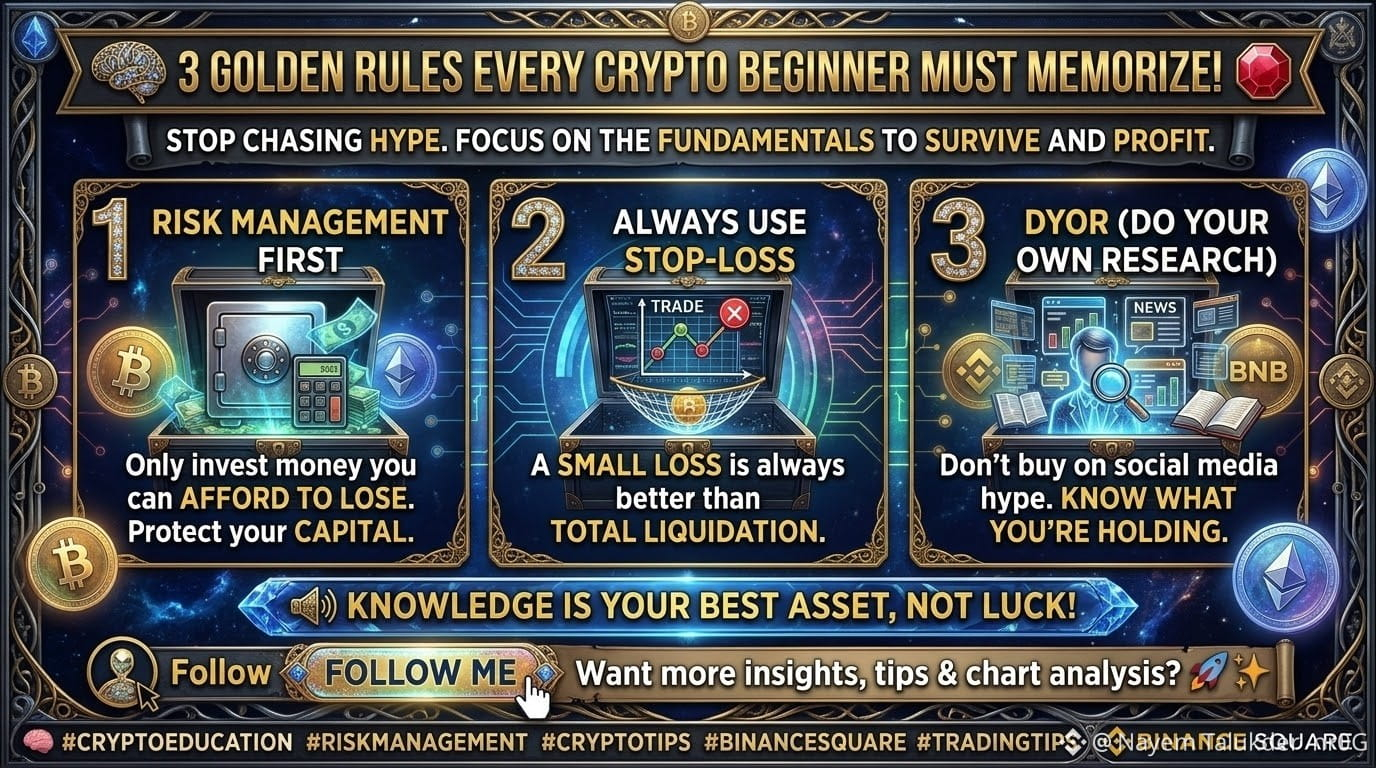
🧠 3 Golden Rules Every Crypto Beginner Must Memorize! 🛑
If you want to survive and profit in the crypto space, stop chasing random hype and focus on these fundamentals:
1️⃣ **Risk Management First:** Never invest money you can't afford to lose. Protect your capital before thinking about profits.
2️⃣ **Always Use Stop-Loss:** A small loss is always better than a total liquidation. Never trade without a safety net!
3️⃣ **DYOR (Do Your Own Research):** Don't buy a coin just because everyone on social media is talking about it. Know what you're holding.
💡 Knowledge is your best asset in crypto, not luck!
Want more crypto insights, tips, and chart analysis daily? **Follow me** so you never miss an update! 🚀
{spot}(BTCUSDT)
{spot}(BNBUSDT)
{spot}(SOLUSDT)
#CryptoEducation #RiskManagement #CryptoTips #BinanceSquare #TradingTips $BTC $BNB $SOL
🧠 3 Golden Rules Every Crypto Beginner Must Memorize! 🛑
If you want to survive and profit in the crypto space, stop chasing random hype and focus on these fundamentals:
1️⃣ **Risk Management First:** Never invest money you can't afford to lose. Protect your capital before thinking about profits.
2️⃣ **Always Use Stop-Loss:** A small loss is always better than a total liquidation. Never trade without a safety net!
3️⃣ **DYOR (Do Your Own Research):** Don't buy a coin just because everyone on social media is talking about it. Know what you're holding.
💡 Knowledge is your best asset in crypto, not luck!
Want more crypto insights, tips, and chart analysis daily? **Follow me** so you never miss an update! 🚀
#CryptoEducation #RiskManagement #CryptoTips #BinanceSquare #TradingTips $BTC $BNB $SOL
If you want to survive and profit in the crypto space, stop chasing random hype and focus on these fundamentals:
1️⃣ **Risk Management First:** Never invest money you can't afford to lose. Protect your capital before thinking about profits.
2️⃣ **Always Use Stop-Loss:** A small loss is always better than a total liquidation. Never trade without a safety net!
3️⃣ **DYOR (Do Your Own Research):** Don't buy a coin just because everyone on social media is talking about it. Know what you're holding.
💡 Knowledge is your best asset in crypto, not luck!
Want more crypto insights, tips, and chart analysis daily? **Follow me** so you never miss an update! 🚀
#CryptoEducation #RiskManagement #CryptoTips #BinanceSquare #TradingTips $BTC $BNB $SOL
Shaon 13:
Comment a
1
1
293


·
--
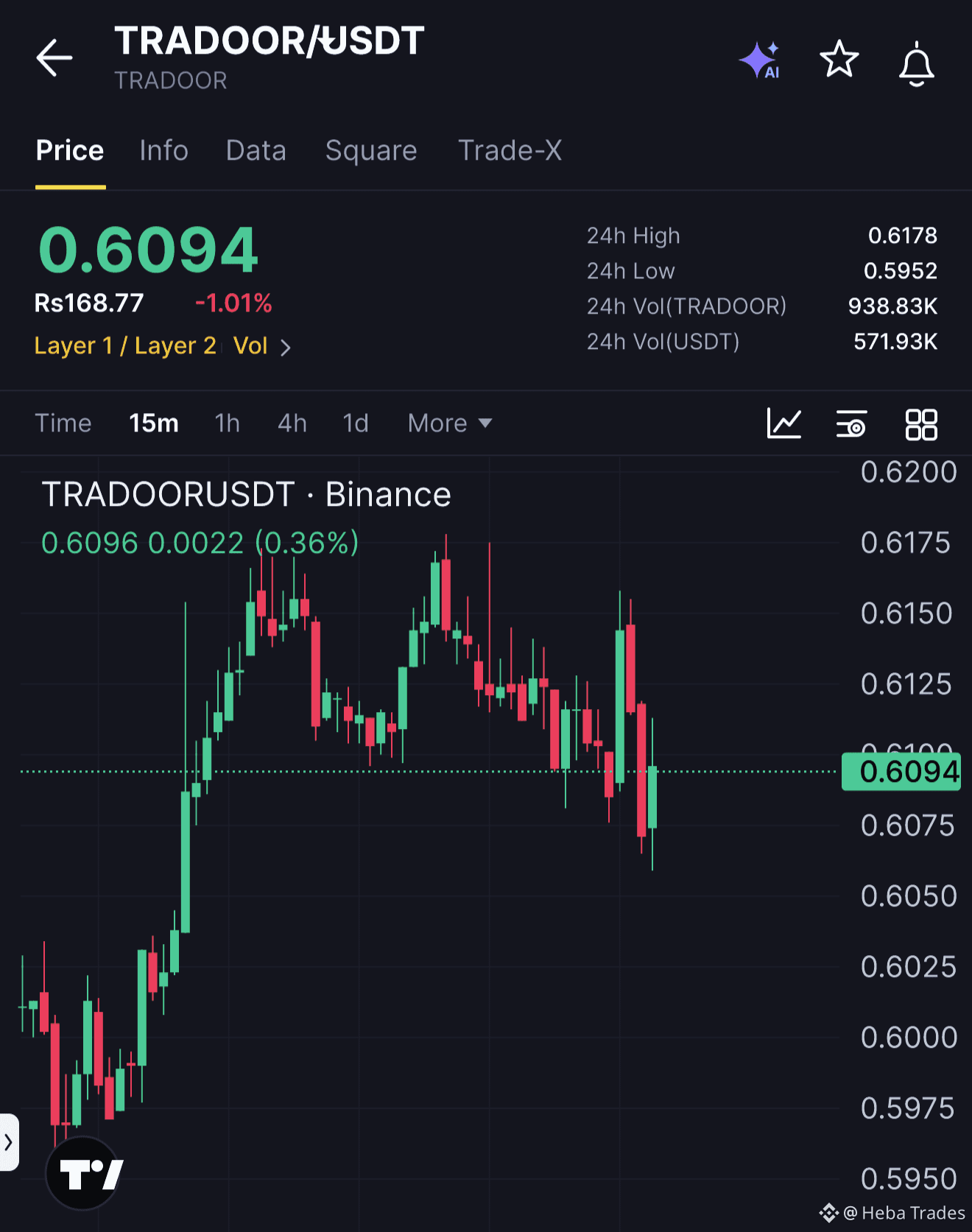
❌ Trade Update: $ON & $TRADOOR
Both setups hit their stop loss and are now closed.
🔻 $ON: SL hit at 0.128
🔻 $TRADOOR: SL hit at 0.6076
Losses are part of trading. Risk management comes first — accept the loss, protect your capital, and move on to the next opportunity.
Stay disciplined. No revenge trading. 📉
#Crypto #Trading #RiskManagement
❌ Trade Update: $ON & $TRADOOR
Both setups hit their stop loss and are now closed.
🔻 $ON : SL hit at 0.128
🔻 $TRADOOR : SL hit at 0.6076
Losses are part of trading. Risk management comes first — accept the loss, protect your capital, and move on to the next opportunity.
Stay disciplined. No revenge trading. 📉
#Crypto #Trading #RiskManagement
Both setups hit their stop loss and are now closed.
🔻 $ON : SL hit at 0.128
🔻 $TRADOOR : SL hit at 0.6076
Losses are part of trading. Risk management comes first — accept the loss, protect your capital, and move on to the next opportunity.
Stay disciplined. No revenge trading. 📉
#Crypto #Trading #RiskManagement
1
97

🚨 $RAVE LIQUIDATIONS SWEEP UNPREPARED TRADERS — THE HARD LESSONS OF RISK MANAGEMENT 🩸
Seeing a total wipeout on $RAVE is a harsh reminder of what happens when leverage outpaces risk control. Market makers actively hunt over-leveraged positions, and without strict position sizing, even a routine market retest ends in absolute liquidation. 🩸
📊 The path back starts with systematic discipline: capping total risk at two percent per trade, respecting hard stop losses, and trading price structure rather than chasing green candles. 🛡️ Turn this setback into your ultimate foundation by mastering spot execution before touching leverage again. 💬 What is the single biggest risk management rule that saved your trading account from blowing up? 👇
⚠️ Not financial advice. Always manage your risk. 🛡️
🏷️ #RAVE #RiskManagement #CryptoTrading #TradeSmart
🎯 🛡️
🚨 $RAVE LIQUIDATIONS SWEEP UNPREPARED TRADERS — THE HARD LESSONS OF RISK MANAGEMENT 🩸
Seeing a total wipeout on $RAVE is a harsh reminder of what happens when leverage outpaces risk control. Market makers actively hunt over-leveraged positions, and without strict position sizing, even a routine market retest ends in absolute liquidation. 🩸
📊 The path back starts with systematic discipline: capping total risk at two percent per trade, respecting hard stop losses, and trading price structure rather than chasing green candles. 🛡️ Turn this setback into your ultimate foundation by mastering spot execution before touching leverage again. 💬 What is the single biggest risk management rule that saved your trading account from blowing up? 👇
⚠️ Not financial advice. Always manage your risk. 🛡️
🏷️ #RAVE #RiskManagement #CryptoTrading #TradeSmart
🎯 🛡️
Seeing a total wipeout on $RAVE is a harsh reminder of what happens when leverage outpaces risk control. Market makers actively hunt over-leveraged positions, and without strict position sizing, even a routine market retest ends in absolute liquidation. 🩸
📊 The path back starts with systematic discipline: capping total risk at two percent per trade, respecting hard stop losses, and trading price structure rather than chasing green candles. 🛡️ Turn this setback into your ultimate foundation by mastering spot execution before touching leverage again. 💬 What is the single biggest risk management rule that saved your trading account from blowing up? 👇
⚠️ Not financial advice. Always manage your risk. 🛡️
🏷️ #RAVE #RiskManagement #CryptoTrading #TradeSmart
🎯 🛡️
7
SURVIVING THE $BTC BEAR SLIDE WITH A MERE 5% SCRATCH! 📉 🛡️
When market blood runs deep, disciplined risk management is what separates resilient traders from blown-up accounts. 📊 While over-leveraged positions got wiped out during this latest pullback, keeping a disciplined stop protocol limited my total drawdown to just 5% on a single volatile day.
💡 Capital preservation isn't about dodging every red candle—it is about keeping your primary bid size intact until high-probability liquidity sweeps present asymmetric re-entry setups. 🌊 Sitting on dry powder is an active trading position when momentum flips.
💬 How much of your portfolio survived this recent market shakeout, and are you bidding the dips yet? 👇
⚠️ Not financial advice. Always manage your risk. 🛡️
🏷️ #BTC #BearMarket #RiskManagement #Crypto
🛡️ 💎
SURVIVING THE $BTC BEAR SLIDE WITH A MERE 5% SCRATCH! 📉 🛡️
When market blood runs deep, disciplined risk management is what separates resilient traders from blown-up accounts. 📊 While over-leveraged positions got wiped out during this latest pullback, keeping a disciplined stop protocol limited my total drawdown to just 5% on a single volatile day.
💡 Capital preservation isn't about dodging every red candle—it is about keeping your primary bid size intact until high-probability liquidity sweeps present asymmetric re-entry setups. 🌊 Sitting on dry powder is an active trading position when momentum flips.
💬 How much of your portfolio survived this recent market shakeout, and are you bidding the dips yet? 👇
⚠️ Not financial advice. Always manage your risk. 🛡️
🏷️ #BTC #BearMarket #RiskManagement #Crypto
🛡️ 💎
When market blood runs deep, disciplined risk management is what separates resilient traders from blown-up accounts. 📊 While over-leveraged positions got wiped out during this latest pullback, keeping a disciplined stop protocol limited my total drawdown to just 5% on a single volatile day.
💡 Capital preservation isn't about dodging every red candle—it is about keeping your primary bid size intact until high-probability liquidity sweeps present asymmetric re-entry setups. 🌊 Sitting on dry powder is an active trading position when momentum flips.
💬 How much of your portfolio survived this recent market shakeout, and are you bidding the dips yet? 👇
⚠️ Not financial advice. Always manage your risk. 🛡️
🏷️ #BTC #BearMarket #RiskManagement #Crypto
🛡️ 💎
2
·
--
$WLD is trading at $0.4527, within a 24h range of $0.4299 to $0.4732. Defense floor sits near $0.4250, while resistance targets $0.4850.
Capital preservation is your primary objective. Avoid chasing green candles. Instead, utilize a disciplined 3-tranche DCA strategy: split your intended capital into three parts, entering gradually on pullbacks toward support. Always define your invalidation point before executing a trade. This is educational analysis, not financial advice.
$WLD #BinanceSquare #CryptoTrading #RiskManagement #WLD
$WLD is trading at $0.4527, within a 24h range of $0.4299 to $0.4732. Defense floor sits near $0.4250, while resistance targets $0.4850.
Capital preservation is your primary objective. Avoid chasing green candles. Instead, utilize a disciplined 3-tranche DCA strategy: split your intended capital into three parts, entering gradually on pullbacks toward support. Always define your invalidation point before executing a trade. This is educational analysis, not financial advice.
$WLD #BinanceSquare #CryptoTrading #RiskManagement #WLD
Capital preservation is your primary objective. Avoid chasing green candles. Instead, utilize a disciplined 3-tranche DCA strategy: split your intended capital into three parts, entering gradually on pullbacks toward support. Always define your invalidation point before executing a trade. This is educational analysis, not financial advice.
$WLD #BinanceSquare #CryptoTrading #RiskManagement #WLD
4

$TGB 🚨 US$404 MILLION IN CRYPTO LONG POSITIONS LIQUIDATED IN JUST FOUR HOURS!
On 24 October, Bitcoin briefly fell below US$80,000.
According to The Block, approximately US$404 million in leveraged long positions were liquidated within four hours.
As a Chartered Accountant, I believe this teaches an important lesson:
Leverage can turn a relatively small price movement into a devastating financial loss.
Before trading crypto, understand:
✅ Margin requirements
✅ Liquidation prices
✅ Market volatility
✅ Liquidity risk
✅ Position sizing
A strong market narrative cannot protect an overleveraged position.
I’m David Khoo, Chartered Accountant (Malaysia).
Financial knowledge should come before speculation.
💬 What’s the biggest danger in crypto trading?
A. Excessive leverage
B. Emotional trading
C. Poor risk management
D. Lack of financial knowledge
Comment below!
#BinanceSquare #CryptoEducation💡🚀 #bitcoin #RiskManagement #FinancialLiteracyForWomen
$TGB 🚨 US$404 MILLION IN CRYPTO LONG POSITIONS LIQUIDATED IN JUST FOUR HOURS!
On 24 October, Bitcoin briefly fell below US$80,000.
According to The Block, approximately US$404 million in leveraged long positions were liquidated within four hours.
As a Chartered Accountant, I believe this teaches an important lesson:
Leverage can turn a relatively small price movement into a devastating financial loss.
Before trading crypto, understand:
✅ Margin requirements
✅ Liquidation prices
✅ Market volatility
✅ Liquidity risk
✅ Position sizing
A strong market narrative cannot protect an overleveraged position.
I’m David Khoo, Chartered Accountant (Malaysia).
Financial knowledge should come before speculation.
💬 What’s the biggest danger in crypto trading?
A. Excessive leverage
B. Emotional trading
C. Poor risk management
D. Lack of financial knowledge
Comment below!
#BinanceSquare #CryptoEducation💡🚀 #bitcoin #RiskManagement #FinancialLiteracyForWomen
On 24 October, Bitcoin briefly fell below US$80,000.
According to The Block, approximately US$404 million in leveraged long positions were liquidated within four hours.
As a Chartered Accountant, I believe this teaches an important lesson:
Leverage can turn a relatively small price movement into a devastating financial loss.
Before trading crypto, understand:
✅ Margin requirements
✅ Liquidation prices
✅ Market volatility
✅ Liquidity risk
✅ Position sizing
A strong market narrative cannot protect an overleveraged position.
I’m David Khoo, Chartered Accountant (Malaysia).
Financial knowledge should come before speculation.
💬 What’s the biggest danger in crypto trading?
A. Excessive leverage
B. Emotional trading
C. Poor risk management
D. Lack of financial knowledge
Comment below!
#BinanceSquare #CryptoEducation💡🚀 #bitcoin #RiskManagement #FinancialLiteracyForWomen

1
147

·
--
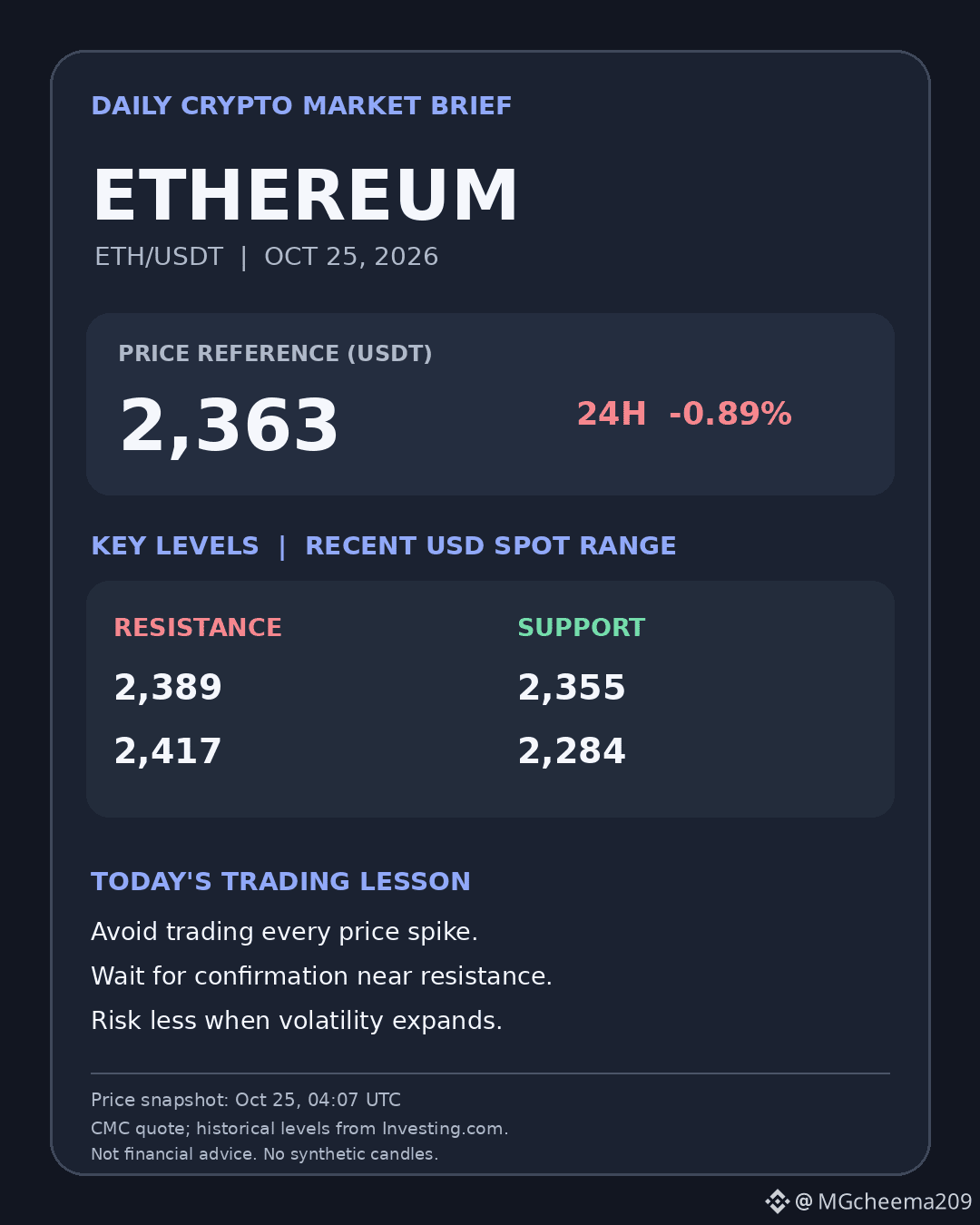
🔥 ETHEREUM AT $2,363 — CAN BUYERS DEFEND SUPPORT?
📊 $ETH /USDT | October 25, 2026
💰 Price: ~2,363 USDT 📉 24H Change: −0.89% 📍 Trend: Short-term bearish
Ethereum remains below recent resistance after a difficult week for buyers.
🎯 KEY LEVELS
🟢 Support: $2,355 | $2,284 🔴 Resistance: $2,389 | $2,417
These are approximate levels from recent USD spot trading sessions.
🚀 BULLISH SCENARIO
A sustained recovery above $2,389 could bring $2,417 into focus.
🐻 BEARISH SCENARIO
A confirmed breakdown below $2,355 could expose the deeper $2,284 support area.
🏦 INSTITUTIONAL UPDATE
US spot Ethereum ETFs recorded approximately $4.4M in net inflows on October 23.
However, the trailing 30-day ETF flow remains negative by approximately $1.07B.
One positive session doesn't establish a sustained institutional recovery.
💡 TODAY'S LESSON: AVOID BAD ENTRIES
Buying near resistance without a plan can create an unfavorable risk/reward ratio.
Before entering any trade:
✅ Identify your invalidation level. ✅ Calculate potential loss. ✅ Compare potential reward against risk.
Even a high-probability setup can lose money.
The goal isn't to trade more. It's to make better-informed decisions.
💬 Would you wait for ETH to reclaim resistance or watch for a support test?
🔔 Follow for daily Ethereum analysis, risk-management lessons, and market insights.
⚠️ Educational analysis only. Not financial advice.
#Ethereum #ETHUSDT #CryptoEducation #RiskManagement #BinanceSquare
{spot}(ETHUSDT)
🔥 ETHEREUM AT $2,363 — CAN BUYERS DEFEND SUPPORT?
📊 $ETH /USDT | October 25, 2026
💰 Price: ~2,363 USDT 📉 24H Change: −0.89% 📍 Trend: Short-term bearish
Ethereum remains below recent resistance after a difficult week for buyers.
🎯 KEY LEVELS
🟢 Support: $2,355 | $2,284 🔴 Resistance: $2,389 | $2,417
These are approximate levels from recent USD spot trading sessions.
🚀 BULLISH SCENARIO
A sustained recovery above $2,389 could bring $2,417 into focus.
🐻 BEARISH SCENARIO
A confirmed breakdown below $2,355 could expose the deeper $2,284 support area.
🏦 INSTITUTIONAL UPDATE
US spot Ethereum ETFs recorded approximately $4.4M in net inflows on October 23.
However, the trailing 30-day ETF flow remains negative by approximately $1.07B.
One positive session doesn't establish a sustained institutional recovery.
💡 TODAY'S LESSON: AVOID BAD ENTRIES
Buying near resistance without a plan can create an unfavorable risk/reward ratio.
Before entering any trade:
✅ Identify your invalidation level. ✅ Calculate potential loss. ✅ Compare potential reward against risk.
Even a high-probability setup can lose money.
The goal isn't to trade more. It's to make better-informed decisions.
💬 Would you wait for ETH to reclaim resistance or watch for a support test?
🔔 Follow for daily Ethereum analysis, risk-management lessons, and market insights.
⚠️ Educational analysis only. Not financial advice.
#Ethereum #ETHUSDT #CryptoEducation #RiskManagement #BinanceSquare
📊 $ETH /USDT | October 25, 2026
💰 Price: ~2,363 USDT 📉 24H Change: −0.89% 📍 Trend: Short-term bearish
Ethereum remains below recent resistance after a difficult week for buyers.
🎯 KEY LEVELS
🟢 Support: $2,355 | $2,284 🔴 Resistance: $2,389 | $2,417
These are approximate levels from recent USD spot trading sessions.
🚀 BULLISH SCENARIO
A sustained recovery above $2,389 could bring $2,417 into focus.
🐻 BEARISH SCENARIO
A confirmed breakdown below $2,355 could expose the deeper $2,284 support area.
🏦 INSTITUTIONAL UPDATE
US spot Ethereum ETFs recorded approximately $4.4M in net inflows on October 23.
However, the trailing 30-day ETF flow remains negative by approximately $1.07B.
One positive session doesn't establish a sustained institutional recovery.
💡 TODAY'S LESSON: AVOID BAD ENTRIES
Buying near resistance without a plan can create an unfavorable risk/reward ratio.
Before entering any trade:
✅ Identify your invalidation level. ✅ Calculate potential loss. ✅ Compare potential reward against risk.
Even a high-probability setup can lose money.
The goal isn't to trade more. It's to make better-informed decisions.
💬 Would you wait for ETH to reclaim resistance or watch for a support test?
🔔 Follow for daily Ethereum analysis, risk-management lessons, and market insights.
⚠️ Educational analysis only. Not financial advice.
#Ethereum #ETHUSDT #CryptoEducation #RiskManagement #BinanceSquare
127

📈 SPOT TRADING: BUILD YOUR CRYPTO PORTFOLIO THE SMART WAY! 🚀
💎 Spot Trading = Real Crypto Ownership
In spot trading, you buy a cryptocurrency at the current market price and own the asset you purchase. Unlike futures trading, spot trading generally doesn't involve leverage or liquidation of a leveraged position.
🔥 5 Golden Rules for Spot Traders:
1️⃣ Buy with a Plan — Identify your entry price before placing an order.
2️⃣ Avoid FOMO — Don't buy just because a coin is pumping.
3️⃣ Manage Your Risk — Never invest money you cannot afford to lose.
4️⃣ Think Long-Term — Focus on your strategy instead of reacting to every candle.
5️⃣ Take Profits Wisely — Set realistic targets and know when your trading plan needs adjustment.
📊 Remember: The best traders don't try to predict every move. They manage risk, control emotions, and follow a consistent strategy.
🎯 What's your spot trading strategy?
🟢 Buy the Dip
🔵 Breakout Trading
🟡 Dollar-Cost Averaging (DCA)
🔴 Long-Term Holding
👇 Comment with your strategy!
#Binance #CryptoTrading. #bitcoin #altcoins #RiskManagement
📈 SPOT TRADING: BUILD YOUR CRYPTO PORTFOLIO THE SMART WAY! 🚀
💎 Spot Trading = Real Crypto Ownership
In spot trading, you buy a cryptocurrency at the current market price and own the asset you purchase. Unlike futures trading, spot trading generally doesn't involve leverage or liquidation of a leveraged position.
🔥 5 Golden Rules for Spot Traders:
1️⃣ Buy with a Plan — Identify your entry price before placing an order.
2️⃣ Avoid FOMO — Don't buy just because a coin is pumping.
3️⃣ Manage Your Risk — Never invest money you cannot afford to lose.
4️⃣ Think Long-Term — Focus on your strategy instead of reacting to every candle.
5️⃣ Take Profits Wisely — Set realistic targets and know when your trading plan needs adjustment.
📊 Remember: The best traders don't try to predict every move. They manage risk, control emotions, and follow a consistent strategy.
🎯 What's your spot trading strategy?
🟢 Buy the Dip
🔵 Breakout Trading
🟡 Dollar-Cost Averaging (DCA)
🔴 Long-Term Holding
👇 Comment with your strategy!
#Binance #CryptoTrading. #bitcoin #altcoins #RiskManagement
💎 Spot Trading = Real Crypto Ownership
In spot trading, you buy a cryptocurrency at the current market price and own the asset you purchase. Unlike futures trading, spot trading generally doesn't involve leverage or liquidation of a leveraged position.
🔥 5 Golden Rules for Spot Traders:
1️⃣ Buy with a Plan — Identify your entry price before placing an order.
2️⃣ Avoid FOMO — Don't buy just because a coin is pumping.
3️⃣ Manage Your Risk — Never invest money you cannot afford to lose.
4️⃣ Think Long-Term — Focus on your strategy instead of reacting to every candle.
5️⃣ Take Profits Wisely — Set realistic targets and know when your trading plan needs adjustment.
📊 Remember: The best traders don't try to predict every move. They manage risk, control emotions, and follow a consistent strategy.
🎯 What's your spot trading strategy?
🟢 Buy the Dip
🔵 Breakout Trading
🟡 Dollar-Cost Averaging (DCA)
🔴 Long-Term Holding
👇 Comment with your strategy!
#Binance #CryptoTrading. #bitcoin #altcoins #RiskManagement

109

·
--
Bullish
Verified
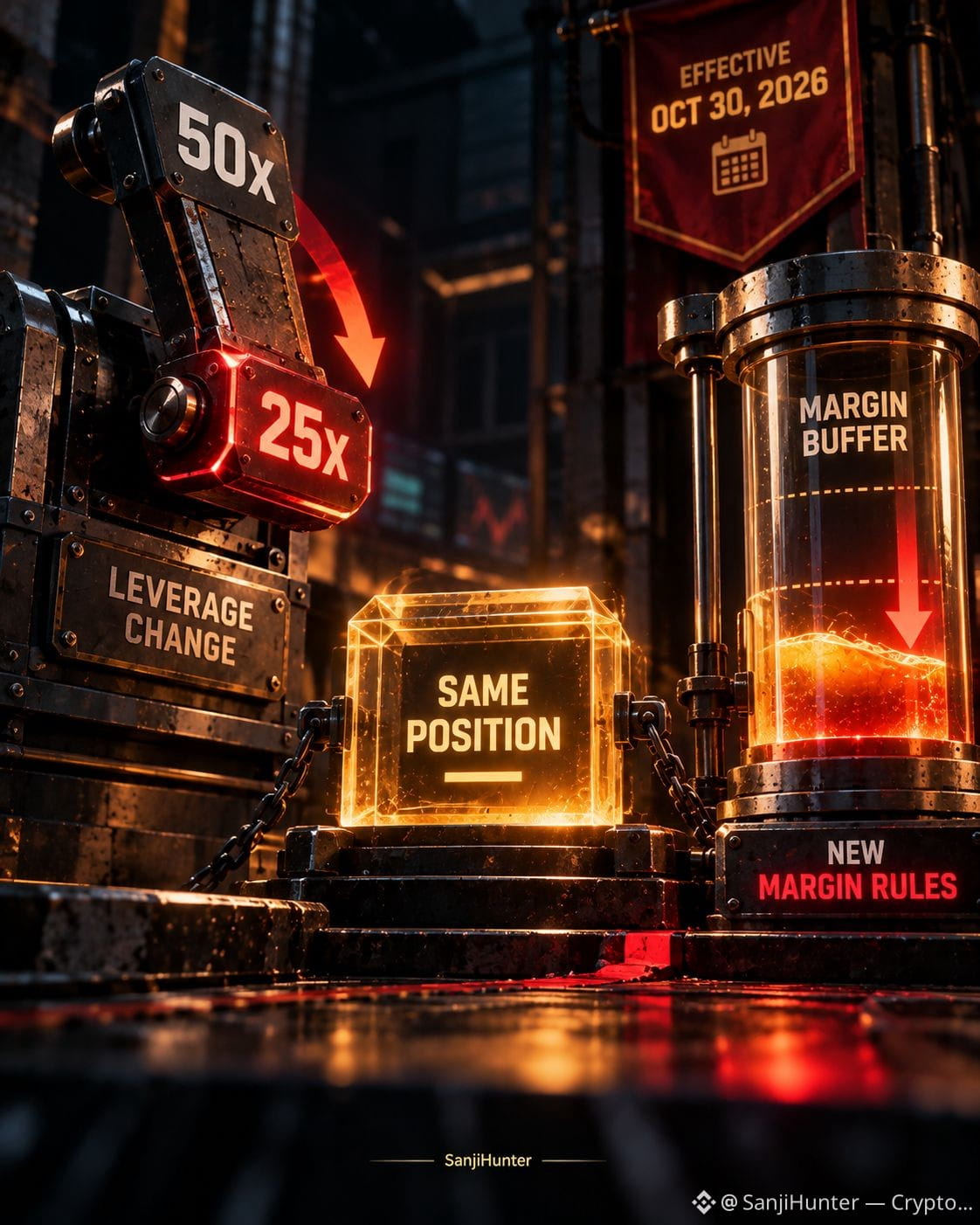
⚠️ Your futures position doesn't need to move for its risk profile to change
On October 30, Binance is scheduled to revise leverage and margin tiers across several USDⓈ-M perpetual contracts, including APR, AIO, TRIA, WET and STBL
$WET
{future}(WETUSDT)
For these five contracts, the smallest position tier will see maximum leverage drop from 50x to 25x, while maintenance margin rises from 1.5% to 2%
Here's what matters 👇
Existing positions are affected too — and some Futures Grid strategies may be disrupted
$STBL
{future}(STBLUSDT)
📌 A position that fits today's margin rules may have less breathing room under the new ones
Check your contract's new tier, position notional and liquidation buffer before the update — not after
$AIO
{future}(AIOUSDT)
#BİNANCEFUTURES #RiskManagement
⚠️ Your futures position doesn't need to move for its risk profile to change
On October 30, Binance is scheduled to revise leverage and margin tiers across several USDⓈ-M perpetual contracts, including APR, AIO, TRIA, WET and STBL
$WET
For these five contracts, the smallest position tier will see maximum leverage drop from 50x to 25x, while maintenance margin rises from 1.5% to 2%
Here's what matters 👇
Existing positions are affected too — and some Futures Grid strategies may be disrupted
$STBL
📌 A position that fits today's margin rules may have less breathing room under the new ones
Check your contract's new tier, position notional and liquidation buffer before the update — not after
$AIO
#BİNANCEFUTURES #RiskManagement
On October 30, Binance is scheduled to revise leverage and margin tiers across several USDⓈ-M perpetual contracts, including APR, AIO, TRIA, WET and STBL
$WET
For these five contracts, the smallest position tier will see maximum leverage drop from 50x to 25x, while maintenance margin rises from 1.5% to 2%
Here's what matters 👇
Existing positions are affected too — and some Futures Grid strategies may be disrupted
$STBL
📌 A position that fits today's margin rules may have less breathing room under the new ones
Check your contract's new tier, position notional and liquidation buffer before the update — not after
$AIO
#BİNANCEFUTURES #RiskManagement
1
678

Article
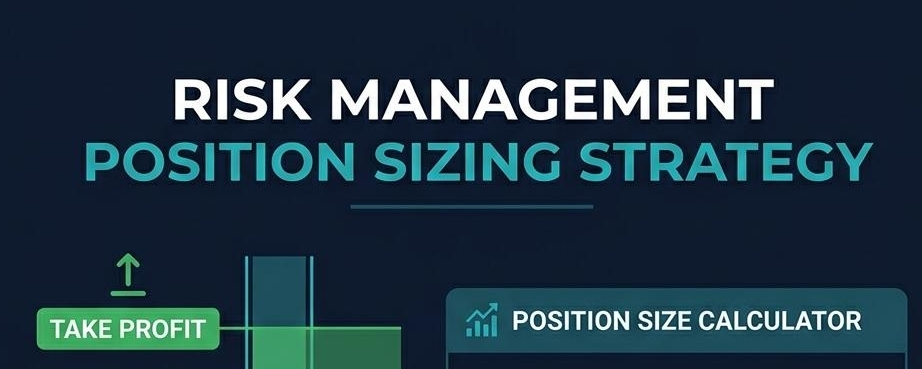
One Rule That Can Protect Your Trading AccountA good trader doesn't focus only on profit.
✅ Set a stop-loss.
✅ Control position size.
✅ Avoid chasing sudden pumps.
✅ Protect capital before chasing gains.
Survival first. Profit second.
#RiskManagement #CryptoTrading #BinanceHerYerde #EarningsSeason #BinancePick
One Rule That Can Protect Your Trading Account
A good trader doesn't focus only on profit.
✅ Set a stop-loss.
✅ Control position size.
✅ Avoid chasing sudden pumps.
✅ Protect capital before chasing gains.
Survival first. Profit second.
#RiskManagement #CryptoTrading #BinanceHerYerde #EarningsSeason #BinancePick
✅ Set a stop-loss.
✅ Control position size.
✅ Avoid chasing sudden pumps.
✅ Protect capital before chasing gains.
Survival first. Profit second.
#RiskManagement #CryptoTrading #BinanceHerYerde #EarningsSeason #BinancePick
50
Log in to explore more content
Join global crypto users on Binance Square
⚡️ Get latest and useful information about crypto.
💬 Trusted by the world’s largest crypto exchange.
👍 Discover real insights from verified creators.
Email / Phone number
Trending Topics
1
#BinancePick
2.6M views
139,462 Discussing
2
#EarningsSeason
5M views
24,102 Discussing
3
#StrategyMSTRSurpassesNasdaqInMarketCap
21 views
11 Discussing
4
#CanadaProposesStablecoinRedemptionWithin3BusinessDays
0 views
0 Discussing
5
#ElectrumWalletBugLetRogueServersStealFunds
5,368 views
183 Discussing
6
#ArgentineCourtDismissesLIBRACaseAgainstMilei
13,726 views
258 Discussing
7
#SKHynixReportedlyPlansSpecialDividendFromKioxiaStakeSale
2,657 views
41 Discussing
8
#KeystoneWebsiteBreachExposesBuyersShippingAddresses
1,479 views
35 Discussing
9
#USQ3GDPAndSeptemberPCEDueNextWeek
88,254 views
1,066 Discussing
10
#SouthKoreaDelaysCryptoIncomeTax
161,149 views
1,116 Discussing