
#monetarypolicy
monetarypolicy
500,344 views
808 Discussing
Hot
Latest

Russian President Vladimir Putin has reportedly signaled approval for the Bank of Russia to pause its interest rate-cutting cycle ahead of its upcoming monetary policy decision and parliamentary elections. Governor Elvira Nabiullina faces mounting challenges as inflation pressures rebound sharply across the domestic economy.
This shift is crucial because escalating government spending and persistent fuel supply disruptions have significantly worsened inflationary risks. Unlike previous policy meetings—such as in July when the Kremlin publicly pushed for monetary easing—political pressure has now eased, giving the central bank full operational independence to prioritize price stability over pre-election stimulus.
From a macro perspective, halting rate cuts underscores the structural economic imbalances within Russia's wartime economy. Persistently higher domestic borrowing costs and rising inflation will continue to pressure the ruble and complicate cross-border trade settlements, reinforcing broader global commodity and energy volatility.
For the digital asset market, persistent fiscal strain and tighter capital controls in sanctioned economies often accelerate local interest in alternative settlement channels and cross-border crypto liquidity. While the direct impact on major assets like $BTC remains modest, the macro backdrop highlights ongoing geopolitical fragmentation supporting decentralized alternatives.
#russia #monetarypolicy #macroeconomics
Russian President Vladimir Putin has reportedly signaled approval for the Bank of Russia to pause its interest rate-cutting cycle ahead of its upcoming monetary policy decision and parliamentary elections. Governor Elvira Nabiullina faces mounting challenges as inflation pressures rebound sharply across the domestic economy.
This shift is crucial because escalating government spending and persistent fuel supply disruptions have significantly worsened inflationary risks. Unlike previous policy meetings—such as in July when the Kremlin publicly pushed for monetary easing—political pressure has now eased, giving the central bank full operational independence to prioritize price stability over pre-election stimulus.
From a macro perspective, halting rate cuts underscores the structural economic imbalances within Russia's wartime economy. Persistently higher domestic borrowing costs and rising inflation will continue to pressure the ruble and complicate cross-border trade settlements, reinforcing broader global commodity and energy volatility.
For the digital asset market, persistent fiscal strain and tighter capital controls in sanctioned economies often accelerate local interest in alternative settlement channels and cross-border crypto liquidity. While the direct impact on major assets like $BTC remains modest, the macro backdrop highlights ongoing geopolitical fragmentation supporting decentralized alternatives.
#russia #monetarypolicy #macroeconomics
This shift is crucial because escalating government spending and persistent fuel supply disruptions have significantly worsened inflationary risks. Unlike previous policy meetings—such as in July when the Kremlin publicly pushed for monetary easing—political pressure has now eased, giving the central bank full operational independence to prioritize price stability over pre-election stimulus.
From a macro perspective, halting rate cuts underscores the structural economic imbalances within Russia's wartime economy. Persistently higher domestic borrowing costs and rising inflation will continue to pressure the ruble and complicate cross-border trade settlements, reinforcing broader global commodity and energy volatility.
For the digital asset market, persistent fiscal strain and tighter capital controls in sanctioned economies often accelerate local interest in alternative settlement channels and cross-border crypto liquidity. While the direct impact on major assets like $BTC remains modest, the macro backdrop highlights ongoing geopolitical fragmentation supporting decentralized alternatives.
#russia #monetarypolicy #macroeconomics
8

·
--
Chinese Version:
Market fully priced! The ECB still needs to raise rates three more times by 2027, and the broader environment is not friendly to crypto. Calm in the short term, but pressure builds in the long term. $BTC $ETH #货币政策 #CryptoMarket
English Version:
Market fully priced! ECB to hike rates 3 more times by mid-2027, not great for crypto. Short-term calm, but bearish pressure long-term. $BTC $ETH #MonetaryPolicy #CryptoMarket
Chinese Version:
Market fully priced! The ECB still needs to raise rates three more times by 2027, and the broader environment is not friendly to crypto. Calm in the short term, but pressure builds in the long term. $BTC $ETH #货币政策 #CryptoMarket
English Version:
Market fully priced! ECB to hike rates 3 more times by mid-2027, not great for crypto. Short-term calm, but bearish pressure long-term. $BTC $ETH #MonetaryPolicy #CryptoMarket
Market fully priced! The ECB still needs to raise rates three more times by 2027, and the broader environment is not friendly to crypto. Calm in the short term, but pressure builds in the long term. $BTC $ETH #货币政策 #CryptoMarket
English Version:
Market fully priced! ECB to hike rates 3 more times by mid-2027, not great for crypto. Short-term calm, but bearish pressure long-term. $BTC $ETH #MonetaryPolicy #CryptoMarket
171

The U.S. seeks to influence Japan’s monetary policy — Bitcoin can’t do this
• Article analyzes the U.S.’s efforts to affect Japan’s monetary policy
• Highlights: Bitcoin is mentioned as a tool that the U.S. cannot control to serve foreign policy objectives
• The RSS source has not yet provided any specific additional details about measures or official statements
#BinanceSquare #CryptoNews #BTC #MonetaryPolicy #Japan US
$btc
vlikevn Titanbot
Source: CoinDesk
The U.S. seeks to influence Japan’s monetary policy — Bitcoin can’t do this
• Article analyzes the U.S.’s efforts to affect Japan’s monetary policy
• Highlights: Bitcoin is mentioned as a tool that the U.S. cannot control to serve foreign policy objectives
• The RSS source has not yet provided any specific additional details about measures or official statements
#BinanceSquare #CryptoNews #BTC #MonetaryPolicy #Japan US
$btc
vlikevn Titanbot
Source: CoinDesk
• Article analyzes the U.S.’s efforts to affect Japan’s monetary policy
• Highlights: Bitcoin is mentioned as a tool that the U.S. cannot control to serve foreign policy objectives
• The RSS source has not yet provided any specific additional details about measures or official statements
#BinanceSquare #CryptoNews #BTC #MonetaryPolicy #Japan US
$btc
vlikevn Titanbot
Source: CoinDesk
5

·
--
Article
Bangko Sentral ng Pilipinas Governor: Ready to Take Necessary Measures to Return Inflation to TargetBangko Sentral ng Pilipinas Governor Felipe Medalla has stated that the central bank is prepared to take any necessary measures to bring inflation back to its target level. Speaking publicly, Medalla emphasized the bank’s commitment to maintaining price stability and managing inflationary pressures that have persisted in the Philippines.
He indicated that the central bank remains vigilant and ready to adjust monetary policy as needed, whether through interest rate changes or other tools, to ensure inflation aligns with the government’s objectives. Medalla’s remarks reflect a proactive stance aimed at safeguarding the economy from excessive inflation that could undermine growth and stability.
The governor’s comments come amid ongoing discussions about inflation trends and economic recovery, with the central bank closely monitoring inflation indicators and external factors influencing prices. The Philippines has been experiencing inflation rates above its target range, which has prompted the BSP to consider further policy actions.
Medalla reaffirmed the BSP's commitment to using all available measures to stabilize prices, signaling that the central bank is prepared to act decisively if inflation remains elevated. More updates are expected as the bank evaluates economic conditions and determines the appropriate course of action to safeguard macroeconomic stability. #Philippines #Inflation #MonetaryPolicy
Bangko Sentral ng Pilipinas Governor: Ready to Take Necessary Measures to Return Inflation to Target
Bangko Sentral ng Pilipinas Governor Felipe Medalla has stated that the central bank is prepared to take any necessary measures to bring inflation back to its target level. Speaking publicly, Medalla emphasized the bank’s commitment to maintaining price stability and managing inflationary pressures that have persisted in the Philippines.
He indicated that the central bank remains vigilant and ready to adjust monetary policy as needed, whether through interest rate changes or other tools, to ensure inflation aligns with the government’s objectives. Medalla’s remarks reflect a proactive stance aimed at safeguarding the economy from excessive inflation that could undermine growth and stability.
The governor’s comments come amid ongoing discussions about inflation trends and economic recovery, with the central bank closely monitoring inflation indicators and external factors influencing prices. The Philippines has been experiencing inflation rates above its target range, which has prompted the BSP to consider further policy actions.
Medalla reaffirmed the BSP's commitment to using all available measures to stabilize prices, signaling that the central bank is prepared to act decisively if inflation remains elevated. More updates are expected as the bank evaluates economic conditions and determines the appropriate course of action to safeguard macroeconomic stability. #Philippines #Inflation #MonetaryPolicy
He indicated that the central bank remains vigilant and ready to adjust monetary policy as needed, whether through interest rate changes or other tools, to ensure inflation aligns with the government’s objectives. Medalla’s remarks reflect a proactive stance aimed at safeguarding the economy from excessive inflation that could undermine growth and stability.
The governor’s comments come amid ongoing discussions about inflation trends and economic recovery, with the central bank closely monitoring inflation indicators and external factors influencing prices. The Philippines has been experiencing inflation rates above its target range, which has prompted the BSP to consider further policy actions.
Medalla reaffirmed the BSP's commitment to using all available measures to stabilize prices, signaling that the central bank is prepared to act decisively if inflation remains elevated. More updates are expected as the bank evaluates economic conditions and determines the appropriate course of action to safeguard macroeconomic stability. #Philippines #Inflation #MonetaryPolicy
64

·
--
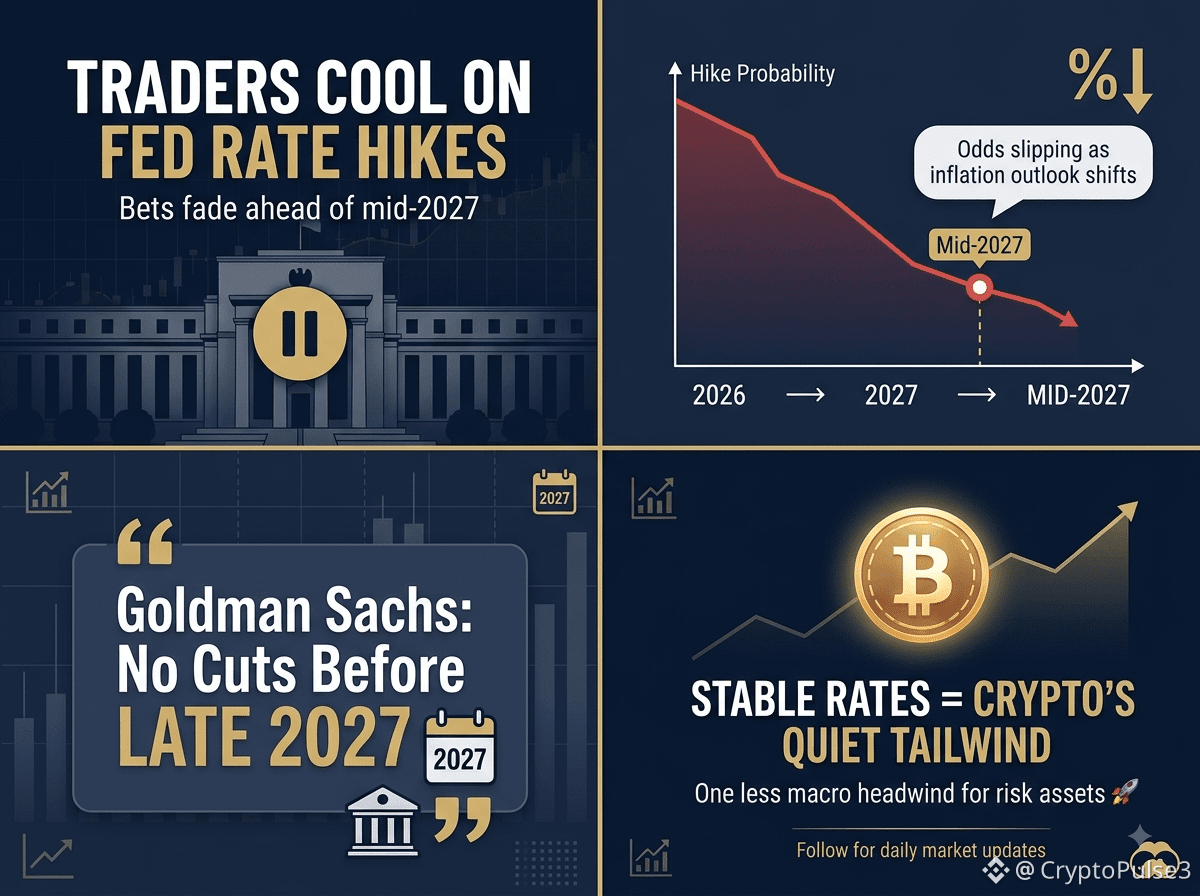
Higher for Longer: Why the Fed Isn't Cutting Rates Until Late 2027"
Wall Street traders are recalculating their Fed bets 📉 — with the odds of another rate hike before mid-2027 sliding as monetary policy looks set to stay steady for longer. 🏦 Sticky inflation, geopolitical tensions, and a cautious Fed have pushed rate-cut hopes out toward late 2027. 💵 For crypto markets, a "higher-for-longer but no-hike" stance removes a key macro headwinds, historically a tailwind for risk assets like Bitcoin. 🚀 All eyes now on incoming inflation data — one hot CPI print could flip the script fast. 🔥
Fed hike bets are cooling off 🥶 — traders now see policy staying put well into 2027. What does "higher-for-longer" mean for your crypto portfolio? 👇
🔑 Key Points
📉 Hike odds dropping — Traders pricing in fewer than one rate hike before mid-2027
🏦 Cuts pushed back — Major banks (incl. Goldman Sachs) don't expect cuts until late 2027
🌍 Geopolitical risk factor — Middle East tensions keeping inflation "sticky"
🚀 Crypto angle — Stable rates = one less macro headwind for Bitcoin & risk assets
#FederalReserve #FedRateHike #MonetaryPolicy
$BTC
{spot}(BTCUSDT)
$ETH
{spot}(ETHUSDT)
$SOL
{spot}(SOLUSDT)
Higher for Longer: Why the Fed Isn't Cutting Rates Until Late 2027"
Wall Street traders are recalculating their Fed bets 📉 — with the odds of another rate hike before mid-2027 sliding as monetary policy looks set to stay steady for longer. 🏦 Sticky inflation, geopolitical tensions, and a cautious Fed have pushed rate-cut hopes out toward late 2027. 💵 For crypto markets, a "higher-for-longer but no-hike" stance removes a key macro headwinds, historically a tailwind for risk assets like Bitcoin. 🚀 All eyes now on incoming inflation data — one hot CPI print could flip the script fast. 🔥
Fed hike bets are cooling off 🥶 — traders now see policy staying put well into 2027. What does "higher-for-longer" mean for your crypto portfolio? 👇
🔑 Key Points
📉 Hike odds dropping — Traders pricing in fewer than one rate hike before mid-2027
🏦 Cuts pushed back — Major banks (incl. Goldman Sachs) don't expect cuts until late 2027
🌍 Geopolitical risk factor — Middle East tensions keeping inflation "sticky"
🚀 Crypto angle — Stable rates = one less macro headwind for Bitcoin & risk assets
#FederalReserve #FedRateHike #MonetaryPolicy
$BTC
$ETH
$SOL
Wall Street traders are recalculating their Fed bets 📉 — with the odds of another rate hike before mid-2027 sliding as monetary policy looks set to stay steady for longer. 🏦 Sticky inflation, geopolitical tensions, and a cautious Fed have pushed rate-cut hopes out toward late 2027. 💵 For crypto markets, a "higher-for-longer but no-hike" stance removes a key macro headwinds, historically a tailwind for risk assets like Bitcoin. 🚀 All eyes now on incoming inflation data — one hot CPI print could flip the script fast. 🔥
Fed hike bets are cooling off 🥶 — traders now see policy staying put well into 2027. What does "higher-for-longer" mean for your crypto portfolio? 👇
🔑 Key Points
📉 Hike odds dropping — Traders pricing in fewer than one rate hike before mid-2027
🏦 Cuts pushed back — Major banks (incl. Goldman Sachs) don't expect cuts until late 2027
🌍 Geopolitical risk factor — Middle East tensions keeping inflation "sticky"
🚀 Crypto angle — Stable rates = one less macro headwind for Bitcoin & risk assets
#FederalReserve #FedRateHike #MonetaryPolicy
$BTC
$ETH
$SOL
1
57
·
--
Article
Bangko Sentral Governor Says Stronger Trends Needed to Ease PolicyBangko Sentral Governor Eli Remolona indicated that stronger economic trends are necessary before the central bank considers easing its monetary policy. Speaking publicly, Remolona emphasized that current growth and inflation data do not yet support a shift toward loosening policies aimed at controlling price stability and economic stability.
Remolona’s comments suggest a cautious approach, highlighting that the central bank is closely monitoring economic indicators to determine the appropriate timing for policy adjustments. He noted that while some signs of economic recovery are evident, they are not yet sufficiently robust to warrant easing measures.
The governor’s stance aligns with a broader trend among central banks globally, which remain vigilant about inflationary pressures despite signs of economic growth. The Philippines’ central bank is balancing the need to support economic activity with the imperative to keep inflation within target ranges.
Remolona’s remarks reflect ongoing deliberations within the Bangko Sentral and are indicative of a cautious outlook as policymakers await clearer evidence of sustained economic strength before making significant policy shifts. The focus remains on data-driven decisions to ensure macroeconomic stability.
More details are available in the official Binance Square post. #MonetaryPolicy #Inflation #EconomicGrowth
Bangko Sentral Governor Says Stronger Trends Needed to Ease Policy
Bangko Sentral Governor Eli Remolona indicated that stronger economic trends are necessary before the central bank considers easing its monetary policy. Speaking publicly, Remolona emphasized that current growth and inflation data do not yet support a shift toward loosening policies aimed at controlling price stability and economic stability.
Remolona’s comments suggest a cautious approach, highlighting that the central bank is closely monitoring economic indicators to determine the appropriate timing for policy adjustments. He noted that while some signs of economic recovery are evident, they are not yet sufficiently robust to warrant easing measures.
The governor’s stance aligns with a broader trend among central banks globally, which remain vigilant about inflationary pressures despite signs of economic growth. The Philippines’ central bank is balancing the need to support economic activity with the imperative to keep inflation within target ranges.
Remolona’s remarks reflect ongoing deliberations within the Bangko Sentral and are indicative of a cautious outlook as policymakers await clearer evidence of sustained economic strength before making significant policy shifts. The focus remains on data-driven decisions to ensure macroeconomic stability.
More details are available in the official Binance Square post. #MonetaryPolicy #Inflation #EconomicGrowth
Remolona’s comments suggest a cautious approach, highlighting that the central bank is closely monitoring economic indicators to determine the appropriate timing for policy adjustments. He noted that while some signs of economic recovery are evident, they are not yet sufficiently robust to warrant easing measures.
The governor’s stance aligns with a broader trend among central banks globally, which remain vigilant about inflationary pressures despite signs of economic growth. The Philippines’ central bank is balancing the need to support economic activity with the imperative to keep inflation within target ranges.
Remolona’s remarks reflect ongoing deliberations within the Bangko Sentral and are indicative of a cautious outlook as policymakers await clearer evidence of sustained economic strength before making significant policy shifts. The focus remains on data-driven decisions to ensure macroeconomic stability.
More details are available in the official Binance Square post. #MonetaryPolicy #Inflation #EconomicGrowth
46

MACRO | BOJ Signals Cautious Path on Future Rate Hikes Amid Middle East Tensions
The Bank of Japan is taking a measured approach to monetary tightening as geopolitical risks add uncertainty to the global outlook. BOJ Deputy Governor Shinichi Uchida said policymakers will carefully assess how the conflict in the Middle East affects financial markets, inflation, and economic activity before deciding on the timing and pace of additional interest-rate increases.
His remarks suggest the central bank remains open to further normalization but is unlikely to rush policy moves while external risks remain elevated. Investors are now watching closely for signs of how energy prices and global market volatility could influence Japan’s rate trajectory in the months ahead. #BOJ #Japan #InterestRates #Markets #Economy #MonetaryPolicy
$BTC
{spot}(BTCUSDT)
$SOL
{spot}(SOLUSDT)
$ETH
{spot}(ETHUSDT)
MACRO | BOJ Signals Cautious Path on Future Rate Hikes Amid Middle East Tensions
The Bank of Japan is taking a measured approach to monetary tightening as geopolitical risks add uncertainty to the global outlook. BOJ Deputy Governor Shinichi Uchida said policymakers will carefully assess how the conflict in the Middle East affects financial markets, inflation, and economic activity before deciding on the timing and pace of additional interest-rate increases.
His remarks suggest the central bank remains open to further normalization but is unlikely to rush policy moves while external risks remain elevated. Investors are now watching closely for signs of how energy prices and global market volatility could influence Japan’s rate trajectory in the months ahead. #BOJ #Japan #InterestRates #Markets #Economy #MonetaryPolicy
$BTC
$SOL
$ETH
The Bank of Japan is taking a measured approach to monetary tightening as geopolitical risks add uncertainty to the global outlook. BOJ Deputy Governor Shinichi Uchida said policymakers will carefully assess how the conflict in the Middle East affects financial markets, inflation, and economic activity before deciding on the timing and pace of additional interest-rate increases.
His remarks suggest the central bank remains open to further normalization but is unlikely to rush policy moves while external risks remain elevated. Investors are now watching closely for signs of how energy prices and global market volatility could influence Japan’s rate trajectory in the months ahead. #BOJ #Japan #InterestRates #Markets #Economy #MonetaryPolicy
$BTC
$SOL
$ETH
107

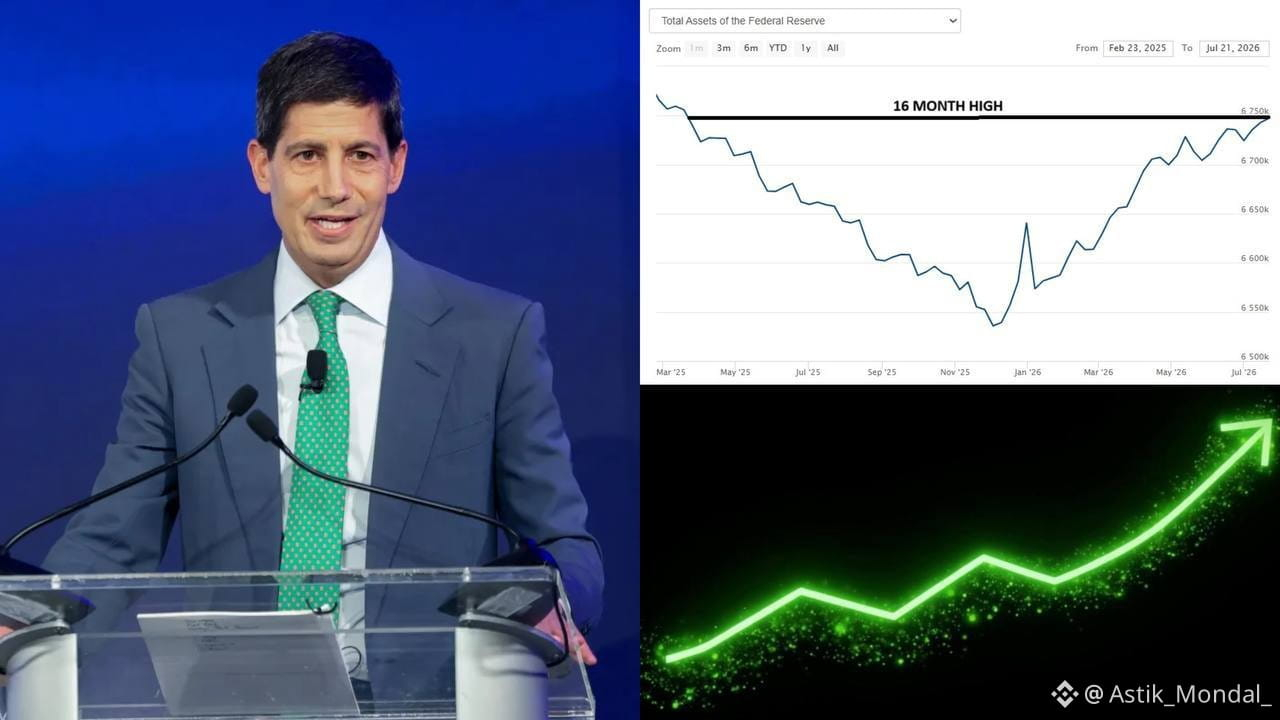
The Fed just hit a 16-month high on its balance sheet at $6.74 trillion. Since ending QT in December, they have quietly pumped $211.6 billion into the economy. Nobody is talking about this.
The Fed has been telling you it is fighting inflation.
The balance sheet says something different.
Quantitative Tightening officially ended in December 2025. Since then $211.6 billion has been injected back into the financial system. The balance sheet just hit its highest level in 16 months.
That is not a central bank fighting inflation.
That is a central bank quietly reflating while publicly maintaining a hawkish posture.
Think about the contradiction sitting in plain sight.
ISM Services Prices just hit the highest level since 2022. CPI is heading toward 5%. The Fed has been signaling higher for longer on rates. Every inflation data point says the job is not done.
And yet the balance sheet is expanding. Liquidity is flowing. The printing is back on.
This is the same Fed that expanded its balance sheet from $900 billion to $9 trillion between 2008 and 2022. The same institution that told you inflation was transitory in 2021 while adding trillions in liquidity to an already hot economy.
Every time the balance sheet expands, asset prices follow with a lag.
Bitcoin bottomed in 2022 right as the balance sheet peaked and QT began. The rally that followed tracked the liquidity cycle with near perfect correlation.
Now the Fed has injected $211.6 billion since December.
Saylor bought $200 million in 48 hours. Metaplanet holds 43,000 Bitcoin. Vanguard is hiring for digital assets.
The smart money is not watching the rate headlines.
They are watching the balance sheet.
#FederalReserve #Liquidity #Bitcoin #Inflation #MonetaryPolicy
The Fed just hit a 16-month high on its balance sheet at $6.74 trillion. Since ending QT in December, they have quietly pumped $211.6 billion into the economy. Nobody is talking about this.
The Fed has been telling you it is fighting inflation.
The balance sheet says something different.
Quantitative Tightening officially ended in December 2025. Since then $211.6 billion has been injected back into the financial system. The balance sheet just hit its highest level in 16 months.
That is not a central bank fighting inflation.
That is a central bank quietly reflating while publicly maintaining a hawkish posture.
Think about the contradiction sitting in plain sight.
ISM Services Prices just hit the highest level since 2022. CPI is heading toward 5%. The Fed has been signaling higher for longer on rates. Every inflation data point says the job is not done.
And yet the balance sheet is expanding. Liquidity is flowing. The printing is back on.
This is the same Fed that expanded its balance sheet from $900 billion to $9 trillion between 2008 and 2022. The same institution that told you inflation was transitory in 2021 while adding trillions in liquidity to an already hot economy.
Every time the balance sheet expands, asset prices follow with a lag.
Bitcoin bottomed in 2022 right as the balance sheet peaked and QT began. The rally that followed tracked the liquidity cycle with near perfect correlation.
Now the Fed has injected $211.6 billion since December.
Saylor bought $200 million in 48 hours. Metaplanet holds 43,000 Bitcoin. Vanguard is hiring for digital assets.
The smart money is not watching the rate headlines.
They are watching the balance sheet.
#FederalReserve #Liquidity #Bitcoin #Inflation #MonetaryPolicy
The Fed has been telling you it is fighting inflation.
The balance sheet says something different.
Quantitative Tightening officially ended in December 2025. Since then $211.6 billion has been injected back into the financial system. The balance sheet just hit its highest level in 16 months.
That is not a central bank fighting inflation.
That is a central bank quietly reflating while publicly maintaining a hawkish posture.
Think about the contradiction sitting in plain sight.
ISM Services Prices just hit the highest level since 2022. CPI is heading toward 5%. The Fed has been signaling higher for longer on rates. Every inflation data point says the job is not done.
And yet the balance sheet is expanding. Liquidity is flowing. The printing is back on.
This is the same Fed that expanded its balance sheet from $900 billion to $9 trillion between 2008 and 2022. The same institution that told you inflation was transitory in 2021 while adding trillions in liquidity to an already hot economy.
Every time the balance sheet expands, asset prices follow with a lag.
Bitcoin bottomed in 2022 right as the balance sheet peaked and QT began. The rally that followed tracked the liquidity cycle with near perfect correlation.
Now the Fed has injected $211.6 billion since December.
Saylor bought $200 million in 48 hours. Metaplanet holds 43,000 Bitcoin. Vanguard is hiring for digital assets.
The smart money is not watching the rate headlines.
They are watching the balance sheet.
#FederalReserve #Liquidity #Bitcoin #Inflation #MonetaryPolicy
1
19
·
--
Article
Robert Kaplan: The Fed Was Absolutely Right To Hold Rates In JulyGoldman Sachs analyst Robert Kaplan stated that the Federal Reserve was "absolutely" correct in holding interest rates steady in July. Speaking about the Fed’s decision, he emphasized that policymakers should remain open-minded as they assess the evolving economic landscape before making further moves in September.
Kaplan pointed to the complex forces currently influencing inflation, warning that rigid adherence to forward guidance could backfire if conditions change unexpectedly. He suggested that the Fed should remain flexible, monitoring data closely and adjusting policy as needed rather than sticking to predetermined plans.
He also indicated a willingness to keep rates on hold if meaningful improvement in inflation or economic conditions occurs. However, Kaplan emphasized that the Fed's approach should be data-dependent, and policymakers should avoid overreacting to short-term fluctuations. His stance underscores the importance of patience and adaptability in navigating the uncertain economic environment.
Kaplan’s comments reflect a broader debate within the market and among policymakers about the best course of action moving forward. As inflation remains a key concern, many are watching to see if the Fed will maintain its cautious approach or decide to tighten further if economic conditions justify it. His perspective advocates for a balanced and responsive policy stance, rather than rigid adherence to forward guidance.
More details are available in the official Binance Square post. #FederalReserve #interest rates #monetarypolicy
Robert Kaplan: The Fed Was Absolutely Right To Hold Rates In July
Goldman Sachs analyst Robert Kaplan stated that the Federal Reserve was "absolutely" correct in holding interest rates steady in July. Speaking about the Fed’s decision, he emphasized that policymakers should remain open-minded as they assess the evolving economic landscape before making further moves in September.
Kaplan pointed to the complex forces currently influencing inflation, warning that rigid adherence to forward guidance could backfire if conditions change unexpectedly. He suggested that the Fed should remain flexible, monitoring data closely and adjusting policy as needed rather than sticking to predetermined plans.
He also indicated a willingness to keep rates on hold if meaningful improvement in inflation or economic conditions occurs. However, Kaplan emphasized that the Fed's approach should be data-dependent, and policymakers should avoid overreacting to short-term fluctuations. His stance underscores the importance of patience and adaptability in navigating the uncertain economic environment.
Kaplan’s comments reflect a broader debate within the market and among policymakers about the best course of action moving forward. As inflation remains a key concern, many are watching to see if the Fed will maintain its cautious approach or decide to tighten further if economic conditions justify it. His perspective advocates for a balanced and responsive policy stance, rather than rigid adherence to forward guidance.
More details are available in the official Binance Square post. #FederalReserve #interest rates #monetarypolicy
Kaplan pointed to the complex forces currently influencing inflation, warning that rigid adherence to forward guidance could backfire if conditions change unexpectedly. He suggested that the Fed should remain flexible, monitoring data closely and adjusting policy as needed rather than sticking to predetermined plans.
He also indicated a willingness to keep rates on hold if meaningful improvement in inflation or economic conditions occurs. However, Kaplan emphasized that the Fed's approach should be data-dependent, and policymakers should avoid overreacting to short-term fluctuations. His stance underscores the importance of patience and adaptability in navigating the uncertain economic environment.
Kaplan’s comments reflect a broader debate within the market and among policymakers about the best course of action moving forward. As inflation remains a key concern, many are watching to see if the Fed will maintain its cautious approach or decide to tighten further if economic conditions justify it. His perspective advocates for a balanced and responsive policy stance, rather than rigid adherence to forward guidance.
More details are available in the official Binance Square post. #FederalReserve #interest rates #monetarypolicy
16

·
--
BOJ deputy governor Ryozo Himino warned that inflation may exceed the 2 % target and urged vigilance about delaying rate hikes. He cited both a weak yen and surging AI‑driven demand as potential drivers. With some board members pressing for faster tightening, markets now price in another hike later this year. A hawkish shift could buoy the yen and pressure Japanese equities, so traders are watching data closely.
#BOJHiminoFlagsInflationAbove2%Risk #Japan #MonetaryPolicy $USDJPY $JGB $N225 @bankofjapan @Square-Creator-82cc01ad59b13 $AI
{spot}(AIUSDT)
BOJ deputy governor Ryozo Himino warned that inflation may exceed the 2 % target and urged vigilance about delaying rate hikes. He cited both a weak yen and surging AI‑driven demand as potential drivers. With some board members pressing for faster tightening, markets now price in another hike later this year. A hawkish shift could buoy the yen and pressure Japanese equities, so traders are watching data closely.
#BOJHiminoFlagsInflationAbove2%Risk #Japan #MonetaryPolicy $USDJPY $JGB $N225 @bankofjapan @nikkei $AI
#BOJHiminoFlagsInflationAbove2%Risk #Japan #MonetaryPolicy $USDJPY $JGB $N225 @bankofjapan @nikkei $AI
96

The Bank of England's decision to hold its benchmark interest rate at 3.75% is likely to have a significant impact on the $BTC market, as investors continue to navigate the current economic landscape 🚀
The decision to keep interest rates unchanged is seen as a positive sign for investors, as it suggests that the Bank of England is taking a cautious approach to monetary policy. This could lead to increased investment in riskier assets, such as cryptocurrency.
Not financial advice. Manage your risk.
#BTC #InterestRates #MonetaryPolicy
⚡️
The Bank of England's decision to hold its benchmark interest rate at 3.75% is likely to have a significant impact on the $BTC market, as investors continue to navigate the current economic landscape 🚀
The decision to keep interest rates unchanged is seen as a positive sign for investors, as it suggests that the Bank of England is taking a cautious approach to monetary policy. This could lead to increased investment in riskier assets, such as cryptocurrency.
Not financial advice. Manage your risk.
#BTC #InterestRates #MonetaryPolicy
⚡️
The decision to keep interest rates unchanged is seen as a positive sign for investors, as it suggests that the Bank of England is taking a cautious approach to monetary policy. This could lead to increased investment in riskier assets, such as cryptocurrency.
Not financial advice. Manage your risk.
#BTC #InterestRates #MonetaryPolicy
⚡️
47

·
--
Binance Insider Alert: Most traders watch the Federal Reserve interest rate decisions, but the real story lies in the communication strategy that could quietly shift the market narrative.
The recent appointment of Kevin Warsh as the new Fed Chair has sparked debate on potential policy changes, but what's often overlooked is the impact of his communication style on the market.
#FedCommunication #MonetaryPolicy
As Kevin Warsh prepares for his first Fed meeting, the market's focus on unchanged interest rates has been misguided - the real game-changer lies in how the Fed communicates with market participants. Will Warsh adopt a more forward-looking approach, and what implications could this have on the US dollar and global markets?
#USD
What's on your watch list as Warsh takes the helm at the Fed?
Binance Insider Alert: Most traders watch the Federal Reserve interest rate decisions, but the real story lies in the communication strategy that could quietly shift the market narrative.
The recent appointment of Kevin Warsh as the new Fed Chair has sparked debate on potential policy changes, but what's often overlooked is the impact of his communication style on the market.
#FedCommunication #MonetaryPolicy
As Kevin Warsh prepares for his first Fed meeting, the market's focus on unchanged interest rates has been misguided - the real game-changer lies in how the Fed communicates with market participants. Will Warsh adopt a more forward-looking approach, and what implications could this have on the US dollar and global markets?
#USD
What's on your watch list as Warsh takes the helm at the Fed?
The recent appointment of Kevin Warsh as the new Fed Chair has sparked debate on potential policy changes, but what's often overlooked is the impact of his communication style on the market.
#FedCommunication #MonetaryPolicy
As Kevin Warsh prepares for his first Fed meeting, the market's focus on unchanged interest rates has been misguided - the real game-changer lies in how the Fed communicates with market participants. Will Warsh adopt a more forward-looking approach, and what implications could this have on the US dollar and global markets?
#USD
What's on your watch list as Warsh takes the helm at the Fed?
23
🛢️ BOJ’s Ueda Flags Broader Inflation Risk from Rising Oil Prices
Higher oil prices may not stay confined to fuel and energy costs. Bank of Japan Governor Kazuo Ueda warned that sustained increases in crude oil prices could ripple through the economy, pushing up the prices of a wider range of goods and services.
The remarks highlight a key concern for policymakers: energy costs often act as a catalyst for broader inflation, raising transportation, manufacturing, and distribution expenses that businesses may eventually pass on to consumers.
For Japan, where inflation dynamics remain closely watched, a prolonged surge in oil prices could complicate the balance between supporting economic growth and maintaining price stability. Markets will be monitoring whether higher energy costs begin translating into more persistent inflationary pressures across the broader economy.
#BOJ #KazuoUeda #JapanEconomy #Inflation #OilPrices #CentralBank #Markets #Economy #Energy #MonetaryPolicy
$XAU
{future}(XAUUSDT)
$XAUT
{spot}(XAUTUSDT)
$XAG
{future}(XAGUSDT)
🛢️ BOJ’s Ueda Flags Broader Inflation Risk from Rising Oil Prices
Higher oil prices may not stay confined to fuel and energy costs. Bank of Japan Governor Kazuo Ueda warned that sustained increases in crude oil prices could ripple through the economy, pushing up the prices of a wider range of goods and services.
The remarks highlight a key concern for policymakers: energy costs often act as a catalyst for broader inflation, raising transportation, manufacturing, and distribution expenses that businesses may eventually pass on to consumers.
For Japan, where inflation dynamics remain closely watched, a prolonged surge in oil prices could complicate the balance between supporting economic growth and maintaining price stability. Markets will be monitoring whether higher energy costs begin translating into more persistent inflationary pressures across the broader economy.
#BOJ #KazuoUeda #JapanEconomy #Inflation #OilPrices #CentralBank #Markets #Economy #Energy #MonetaryPolicy
$XAU
$XAUT
$XAG
Higher oil prices may not stay confined to fuel and energy costs. Bank of Japan Governor Kazuo Ueda warned that sustained increases in crude oil prices could ripple through the economy, pushing up the prices of a wider range of goods and services.
The remarks highlight a key concern for policymakers: energy costs often act as a catalyst for broader inflation, raising transportation, manufacturing, and distribution expenses that businesses may eventually pass on to consumers.
For Japan, where inflation dynamics remain closely watched, a prolonged surge in oil prices could complicate the balance between supporting economic growth and maintaining price stability. Markets will be monitoring whether higher energy costs begin translating into more persistent inflationary pressures across the broader economy.
#BOJ #KazuoUeda #JapanEconomy #Inflation #OilPrices #CentralBank #Markets #Economy #Energy #MonetaryPolicy
$XAU
$XAUT
$XAG
218

#ECBExpectedToRaiseRates25Bps Headline: ECB Expected to Deliver 25bps Rate Hike
Body: Markets have fully priced in a 25 basis point rate increase from the European Central Bank. The move would take the deposit facility to 3.75%. Focus will be on guidance for July — whether the ECB signals a pause or keeps the door open for further tightening.
Key watch:
· New macro projections (inflation & growth)
· Lagarde’s press conference tone
Outlook: A hike is nearly certain. The main debate is what comes next.
#ECB Rates #MonetaryPolicy
#ECBExpectedToRaiseRates25Bps Headline: ECB Expected to Deliver 25bps Rate Hike
Body: Markets have fully priced in a 25 basis point rate increase from the European Central Bank. The move would take the deposit facility to 3.75%. Focus will be on guidance for July — whether the ECB signals a pause or keeps the door open for further tightening.
Key watch:
· New macro projections (inflation & growth)
· Lagarde’s press conference tone
Outlook: A hike is nearly certain. The main debate is what comes next.
#ECB Rates #MonetaryPolicy
Body: Markets have fully priced in a 25 basis point rate increase from the European Central Bank. The move would take the deposit facility to 3.75%. Focus will be on guidance for July — whether the ECB signals a pause or keeps the door open for further tightening.
Key watch:
· New macro projections (inflation & growth)
· Lagarde’s press conference tone
Outlook: A hike is nearly certain. The main debate is what comes next.
#ECB Rates #MonetaryPolicy
239

·
--
$BTC IS AT A CRUCIAL INFLECTION POINT 🔥
Entry:
The global monetary policy shift is happening now, with 26 central banks raising interest rates and 26 cutting them, a balance not seen in about two years. This change in monetary policy could significantly impact $BTC and the broader crypto market.
Do you think this shift will lead to a bullish or bearish trend for $BTC ?
Not financial advice. Manage your risk.
#BTC #MonetaryPolicy #GlobalMarkets
⚡️
$BTC IS AT A CRUCIAL INFLECTION POINT 🔥
Entry:
The global monetary policy shift is happening now, with 26 central banks raising interest rates and 26 cutting them, a balance not seen in about two years. This change in monetary policy could significantly impact $BTC and the broader crypto market.
Do you think this shift will lead to a bullish or bearish trend for $BTC ?
Not financial advice. Manage your risk.
#BTC #MonetaryPolicy #GlobalMarkets
⚡️
Entry:
The global monetary policy shift is happening now, with 26 central banks raising interest rates and 26 cutting them, a balance not seen in about two years. This change in monetary policy could significantly impact $BTC and the broader crypto market.
Do you think this shift will lead to a bullish or bearish trend for $BTC ?
Not financial advice. Manage your risk.
#BTC #MonetaryPolicy #GlobalMarkets
⚡️
26

·
--
Warsh recruits crypto heavyweights to reshape US policy
Warsh Taps AI, Crypto, and Global Finance Heavyweights to Rethink US Monetary Policy
The move signals a potential shift in the Fed's approach to monetary policy, with crypto supporters like Marc Andreessen at the table. This could lead to a more favorable environment for digital assets. Traders should watch for hints of a more accommodative stance towards crypto.
#Crypto #MonetaryPolicy #FederalReserve #Bitcoin
Warsh recruits crypto heavyweights to reshape US policy
Warsh Taps AI, Crypto, and Global Finance Heavyweights to Rethink US Monetary Policy
The move signals a potential shift in the Fed's approach to monetary policy, with crypto supporters like Marc Andreessen at the table. This could lead to a more favorable environment for digital assets. Traders should watch for hints of a more accommodative stance towards crypto.
#Crypto #MonetaryPolicy #FederalReserve #Bitcoin
Warsh Taps AI, Crypto, and Global Finance Heavyweights to Rethink US Monetary Policy
The move signals a potential shift in the Fed's approach to monetary policy, with crypto supporters like Marc Andreessen at the table. This could lead to a more favorable environment for digital assets. Traders should watch for hints of a more accommodative stance towards crypto.
#Crypto #MonetaryPolicy #FederalReserve #Bitcoin
334

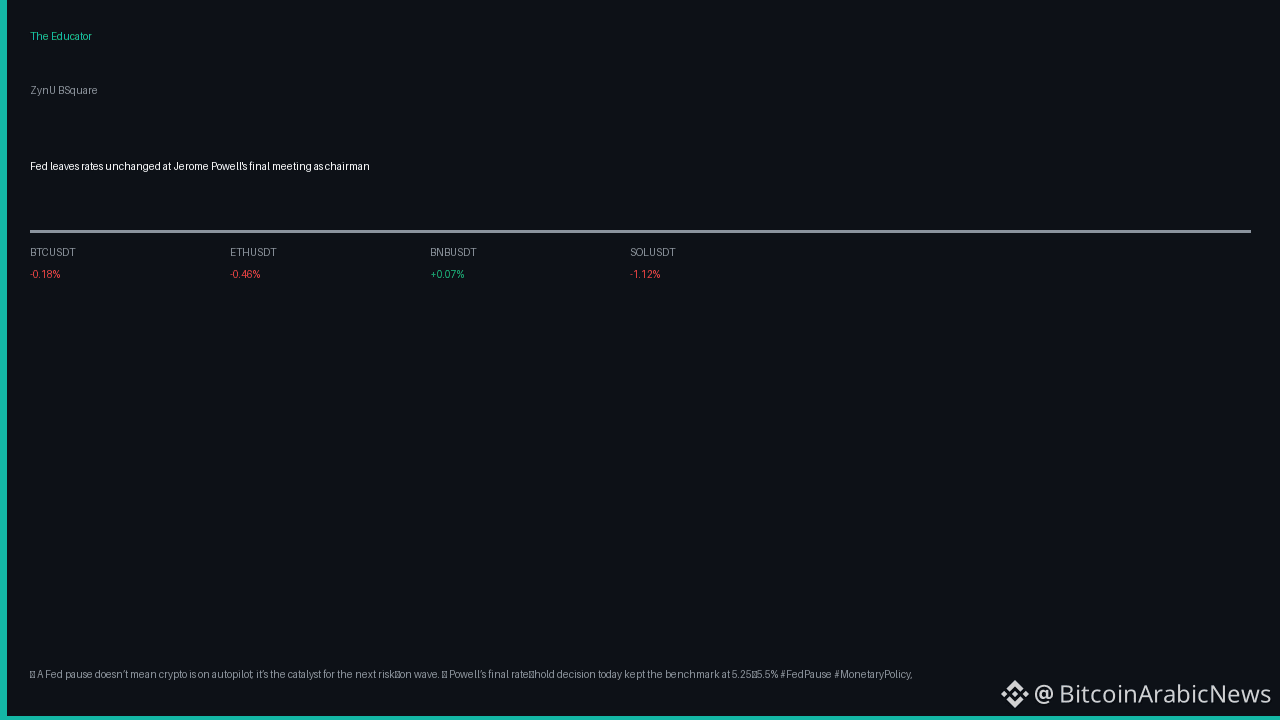
🔥 A Fed pause doesn’t mean crypto is on autopilot; it’s the catalyst for the next risk‑on wave.
📊 Powell’s final rate‑hold decision today kept the benchmark at 5.25‑5.5% #FedPause #MonetaryPolicy, and the market reacted instantly, with Bitcoin hovering at $77,211 (‑0.18%) and ETH at $2,523 (‑0.46%).
💡 With rates steady, the macro‑risk premium contracts, pushing the crypto cycle toward the next accumulation stage #BitcoinCycle #RiskOn, as BTC’s RSI sits at 41.5 (bearish) yet the MACD just flipped bullish and futures open interest rests at $7.97 B with a 62% long bias and a +0.0051% funding rate rewarding longs.
📈 Practical move: buy the dip near the $73k support, place a stop just below the 38% Bollinger band, and keep exposure modest while watching the bullish MACD and long‑biased futures as confirmation signals.
❓ How are you positioning for the post‑Fed risk‑on surge—adding, holding, or waiting for a clearer breakout?
🔥 A Fed pause doesn’t mean crypto is on autopilot; it’s the catalyst for the next risk‑on wave.
📊 Powell’s final rate‑hold decision today kept the benchmark at 5.25‑5.5% #FedPause #MonetaryPolicy, and the market reacted instantly, with Bitcoin hovering at $77,211 (‑0.18%) and ETH at $2,523 (‑0.46%).
💡 With rates steady, the macro‑risk premium contracts, pushing the crypto cycle toward the next accumulation stage #BitcoinCycle #RiskOn, as BTC’s RSI sits at 41.5 (bearish) yet the MACD just flipped bullish and futures open interest rests at $7.97 B with a 62% long bias and a +0.0051% funding rate rewarding longs.
📈 Practical move: buy the dip near the $73k support, place a stop just below the 38% Bollinger band, and keep exposure modest while watching the bullish MACD and long‑biased futures as confirmation signals.
❓ How are you positioning for the post‑Fed risk‑on surge—adding, holding, or waiting for a clearer breakout?
📊 Powell’s final rate‑hold decision today kept the benchmark at 5.25‑5.5% #FedPause #MonetaryPolicy, and the market reacted instantly, with Bitcoin hovering at $77,211 (‑0.18%) and ETH at $2,523 (‑0.46%).
💡 With rates steady, the macro‑risk premium contracts, pushing the crypto cycle toward the next accumulation stage #BitcoinCycle #RiskOn, as BTC’s RSI sits at 41.5 (bearish) yet the MACD just flipped bullish and futures open interest rests at $7.97 B with a 62% long bias and a +0.0051% funding rate rewarding longs.
📈 Practical move: buy the dip near the $73k support, place a stop just below the 38% Bollinger band, and keep exposure modest while watching the bullish MACD and long‑biased futures as confirmation signals.
❓ How are you positioning for the post‑Fed risk‑on surge—adding, holding, or waiting for a clearer breakout?
16

Federal Reserve Chair Powell's latest statement on monetary policy could impact $BTC prices 🔥
Entry: 29600
Target: 32000
Stop Loss: 28000
The comments from the Federal Reserve Chair have significant implications for the crypto market, particularly for $BTC , as investors look to top-tier exchange listings for potential breakout opportunities. Market participants are closely watching the situation to determine the best course of action.
Not financial advice. Manage your risk.
#BTC #MonetaryPolicy #LongSetup
⚡️
Federal Reserve Chair Powell's latest statement on monetary policy could impact $BTC prices 🔥
Entry: 29600
Target: 32000
Stop Loss: 28000
The comments from the Federal Reserve Chair have significant implications for the crypto market, particularly for $BTC , as investors look to top-tier exchange listings for potential breakout opportunities. Market participants are closely watching the situation to determine the best course of action.
Not financial advice. Manage your risk.
#BTC #MonetaryPolicy #LongSetup
⚡️
Entry: 29600
Target: 32000
Stop Loss: 28000
The comments from the Federal Reserve Chair have significant implications for the crypto market, particularly for $BTC , as investors look to top-tier exchange listings for potential breakout opportunities. Market participants are closely watching the situation to determine the best course of action.
Not financial advice. Manage your risk.
#BTC #MonetaryPolicy #LongSetup
⚡️
62

$BTC FED INDEPENDENCE UPHELD – LIQUIDITY BOOST INCOMING 🔥
The Supreme Court just shut down Trump’s attempt to fire Fed Governor Cook, reinforcing the central bank’s independence. This removes a major political risk premium from rate decisions, directly supporting liquidity-sensitive assets like crypto.
Markets are already pricing in less interference, which historically aligns with broader risk-on flows. The ruling came during Asian hours – expect reaction to build as U.S. traders wake up.
Do you see this as a green light for BTC or just noise in the macro noise machine?
Not financial advice. Always manage your risk.
#BTC #Fed #MonetaryPolicy #CryptoNews
🔥
$BTC FED INDEPENDENCE UPHELD – LIQUIDITY BOOST INCOMING 🔥
The Supreme Court just shut down Trump’s attempt to fire Fed Governor Cook, reinforcing the central bank’s independence. This removes a major political risk premium from rate decisions, directly supporting liquidity-sensitive assets like crypto.
Markets are already pricing in less interference, which historically aligns with broader risk-on flows. The ruling came during Asian hours – expect reaction to build as U.S. traders wake up.
Do you see this as a green light for BTC or just noise in the macro noise machine?
Not financial advice. Always manage your risk.
#BTC #Fed #MonetaryPolicy #CryptoNews
🔥
The Supreme Court just shut down Trump’s attempt to fire Fed Governor Cook, reinforcing the central bank’s independence. This removes a major political risk premium from rate decisions, directly supporting liquidity-sensitive assets like crypto.
Markets are already pricing in less interference, which historically aligns with broader risk-on flows. The ruling came during Asian hours – expect reaction to build as U.S. traders wake up.
Do you see this as a green light for BTC or just noise in the macro noise machine?
Not financial advice. Always manage your risk.
#BTC #Fed #MonetaryPolicy #CryptoNews
🔥
29

·
--
Bitcoin (BTC)
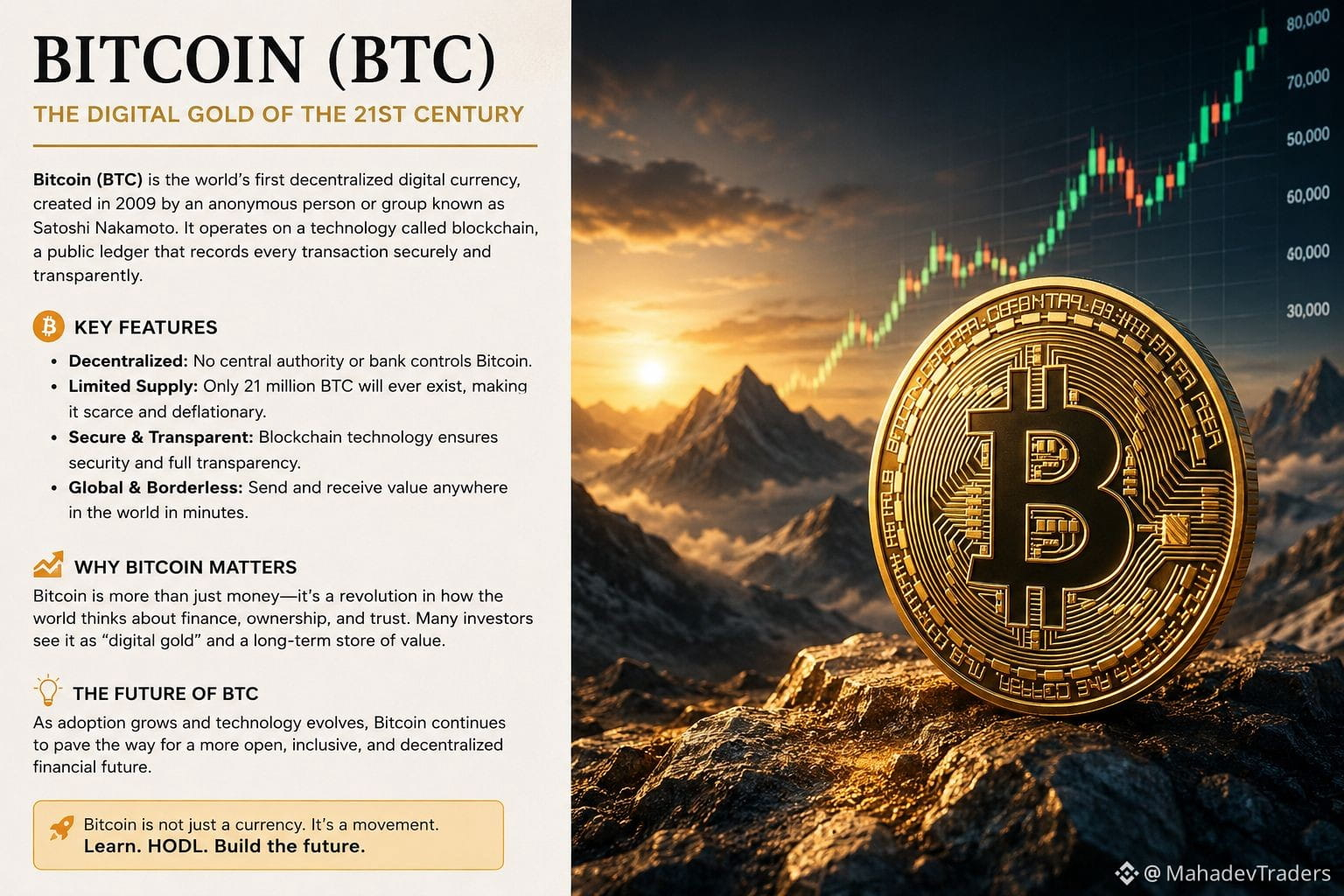
Bitcoin (BTC) is a digital currency created in 2009 by Satoshi Nakamoto. It works on blockchain technology, which records transactions securely without a central bank. Bitcoin has a limited supply of 21 million coins, making it a scarce digital asset. It can be used for digital payments and is also considered by some people as an investment. However, its price can change significantly, so it involves risk. #BTC #MonetaryPolicy #GROW #RichQUACK🐤
Bitcoin (BTC)
Bitcoin (BTC) is a digital currency created in 2009 by Satoshi Nakamoto. It works on blockchain technology, which records transactions securely without a central bank. Bitcoin has a limited supply of 21 million coins, making it a scarce digital asset. It can be used for digital payments and is also considered by some people as an investment. However, its price can change significantly, so it involves risk. #BTC #MonetaryPolicy #GROW #RichQUACK🐤
Bitcoin (BTC) is a digital currency created in 2009 by Satoshi Nakamoto. It works on blockchain technology, which records transactions securely without a central bank. Bitcoin has a limited supply of 21 million coins, making it a scarce digital asset. It can be used for digital payments and is also considered by some people as an investment. However, its price can change significantly, so it involves risk. #BTC #MonetaryPolicy #GROW #RichQUACK🐤
78
Log in to explore more content
Join global crypto users on Binance Square
⚡️ Get latest and useful information about crypto.
💬 Trusted by the world’s largest crypto exchange.
👍 Discover real insights from verified creators.
Email / Phone number
Trending Topics
1
#FedRateWatch
44,622 views
290 Discussing
2
#BitcoinReboundsTo$79K
35,802 views
293 Discussing
3
#BessentEndorsesFinalClarityActDraft
3,556 views
161 Discussing
4
#ZamaOpens16ConfidentialMorphoVaults
2,109 views
91 Discussing
5
#USDCOnChainVolumeTops$100Trillion
611 views
24 Discussing
6
#BitcoinSpotETFsNetInflow$160M
1,517 views
75 Discussing
7
#SouthKoreaCryptoTaxDelayPetitionTops50000
28,665 views
790 Discussing
8
#SolanaTransactionV1GoesLiveOnMainnet
20,083 views
520 Discussing
9
#RussianCentralBankFlagsCryptoAsFinancialRisk
14,990 views
428 Discussing
10
#GrayscalePutsXRPAt26.11%InAdvisorPortfolio
33,065 views
574 Discussing