
#macrotrends
macrotrends
298,293 views
891 Discussing
Hot
Latest

🎬 Series 10: September Macrostorm and the Quiet Games of Giants ☕️🏙️📉
September opens the door to a local correction: after a powerful August with growth nearing 30%, Bitcoin pulled back to $76,400. Oil above $90, government bond yields, and geopolitics are weighing on the market. While retail is getting nervous, institutions are building the foundation: the 21 largest banks (including Citi and Goldman Sachs) announce the creation of a bank-backed stablecoin, while European exchanges and the SEC actively push the tokenization of traditional stocks on-chain.
Yuha meets September in the calm of a penthouse with a view of the bustling city. Red candles on the screens are only temporary noise, as the traditional financial giant slowly and inevitably shifts onto the blockchain. The key in days like this is to stay focused and not give up ground to emotions. 🥂✨
#YuKhaCrypto #MarketDynamics #BTC #CryptoSeries #MacroTrends
© 2026 YuKhaCryptoDzen
🎬 Series 10: September Macrostorm and the Quiet Games of Giants ☕️🏙️📉
September opens the door to a local correction: after a powerful August with growth nearing 30%, Bitcoin pulled back to $76,400. Oil above $90, government bond yields, and geopolitics are weighing on the market. While retail is getting nervous, institutions are building the foundation: the 21 largest banks (including Citi and Goldman Sachs) announce the creation of a bank-backed stablecoin, while European exchanges and the SEC actively push the tokenization of traditional stocks on-chain.
Yuha meets September in the calm of a penthouse with a view of the bustling city. Red candles on the screens are only temporary noise, as the traditional financial giant slowly and inevitably shifts onto the blockchain. The key in days like this is to stay focused and not give up ground to emotions. 🥂✨
#YuKhaCrypto #MarketDynamics #BTC #CryptoSeries #MacroTrends
© 2026 YuKhaCryptoDzen
September opens the door to a local correction: after a powerful August with growth nearing 30%, Bitcoin pulled back to $76,400. Oil above $90, government bond yields, and geopolitics are weighing on the market. While retail is getting nervous, institutions are building the foundation: the 21 largest banks (including Citi and Goldman Sachs) announce the creation of a bank-backed stablecoin, while European exchanges and the SEC actively push the tokenization of traditional stocks on-chain.
Yuha meets September in the calm of a penthouse with a view of the bustling city. Red candles on the screens are only temporary noise, as the traditional financial giant slowly and inevitably shifts onto the blockchain. The key in days like this is to stay focused and not give up ground to emotions. 🥂✨
#YuKhaCrypto #MarketDynamics #BTC #CryptoSeries #MacroTrends
© 2026 YuKhaCryptoDzen

4
15
385

·
--
🚨 REGULATORY CLEARANCE AND TREASURY LIQUIDITY TRIGGER A PARADIGM SHIFT FOR $BTC 💥
The convergence of regulatory concessions, executive-level engagement, and Treasury fiscal injections marks a decisive structural pivot for digital assets. 🔍 Smart money is actively repricing macro risk, systematically absorbing supply overhead across top-tier assets like $BTC , $ETH , and $BNB as institutional friction dissolves.
📊 With systemic order flow shifting dramatically, liquidity engineered by legacy short exposure has been completely cleared. 💡 This alignment of fiscal expansion and regulatory clarity creates the ideal backdrop for sustained market structure expansion. 💬 Are you positioning ahead of this macro liquidity injection, or waiting for structural confirmation at higher high resistance? 👇
⚠️ Not financial advice. Always manage your risk. 🛡️
🏷️ #BTC #Crypto #MacroTrends #MarketStructure
🎯 🦈
🚨 REGULATORY CLEARANCE AND TREASURY LIQUIDITY TRIGGER A PARADIGM SHIFT FOR $BTC 💥
The convergence of regulatory concessions, executive-level engagement, and Treasury fiscal injections marks a decisive structural pivot for digital assets. 🔍 Smart money is actively repricing macro risk, systematically absorbing supply overhead across top-tier assets like $BTC , $ETH , and $BNB as institutional friction dissolves.
📊 With systemic order flow shifting dramatically, liquidity engineered by legacy short exposure has been completely cleared. 💡 This alignment of fiscal expansion and regulatory clarity creates the ideal backdrop for sustained market structure expansion. 💬 Are you positioning ahead of this macro liquidity injection, or waiting for structural confirmation at higher high resistance? 👇
⚠️ Not financial advice. Always manage your risk. 🛡️
🏷️ #BTC #Crypto #MacroTrends #MarketStructure
🎯 🦈
The convergence of regulatory concessions, executive-level engagement, and Treasury fiscal injections marks a decisive structural pivot for digital assets. 🔍 Smart money is actively repricing macro risk, systematically absorbing supply overhead across top-tier assets like $BTC , $ETH , and $BNB as institutional friction dissolves.
📊 With systemic order flow shifting dramatically, liquidity engineered by legacy short exposure has been completely cleared. 💡 This alignment of fiscal expansion and regulatory clarity creates the ideal backdrop for sustained market structure expansion. 💬 Are you positioning ahead of this macro liquidity injection, or waiting for structural confirmation at higher high resistance? 👇
⚠️ Not financial advice. Always manage your risk. 🛡️
🏷️ #BTC #Crypto #MacroTrends #MarketStructure
🎯 🦈
53

·
--
$FET IS RIDING THE WAVE OF AI DOMINATING US ECONOMIC GROWTH ⚡
AI investment now accounts for over 25% of US GDP growth contribution—a record high. For every $4 of economic expansion, over $1 is AI-driven. Total AI spending has hit 8% of GDP, surpassing the dot-com bubble peak of 6.5%.
This macro tailwind is structural, not cyclical. Capital flows into AI infrastructure like data centers and R&D are accelerating, directly benefiting decentralized AI protocols. Volume on AI token pairs has been climbing steadily over the past two weeks.
How are you positioning for this secular shift—buying dips or waiting for a retest of support?
Not financial advice. Always manage your risk.
#FET #AICrypto #MacroTrends #Bullish
⚡
$FET IS RIDING THE WAVE OF AI DOMINATING US ECONOMIC GROWTH ⚡
AI investment now accounts for over 25% of US GDP growth contribution—a record high. For every $4 of economic expansion, over $1 is AI-driven. Total AI spending has hit 8% of GDP, surpassing the dot-com bubble peak of 6.5%.
This macro tailwind is structural, not cyclical. Capital flows into AI infrastructure like data centers and R&D are accelerating, directly benefiting decentralized AI protocols. Volume on AI token pairs has been climbing steadily over the past two weeks.
How are you positioning for this secular shift—buying dips or waiting for a retest of support?
Not financial advice. Always manage your risk.
#FET #AICrypto #MacroTrends #Bullish
⚡
AI investment now accounts for over 25% of US GDP growth contribution—a record high. For every $4 of economic expansion, over $1 is AI-driven. Total AI spending has hit 8% of GDP, surpassing the dot-com bubble peak of 6.5%.
This macro tailwind is structural, not cyclical. Capital flows into AI infrastructure like data centers and R&D are accelerating, directly benefiting decentralized AI protocols. Volume on AI token pairs has been climbing steadily over the past two weeks.
How are you positioning for this secular shift—buying dips or waiting for a retest of support?
Not financial advice. Always manage your risk.
#FET #AICrypto #MacroTrends #Bullish
⚡
38

·
--
Gold can rally even when the Fed hints at higher interest rates, and that contradiction catches a lot of traders off guard.
Most people assume markets move in one clean direction: rate hikes mean risk-off, peace means risk-on. But traders who follow that simple script often get chopped up, especially when they’re rotating between crypto and macro assets like gold.
After the U.S. and Iran signed an interim peace deal, gold actually pushed higher even while the Federal Reserve signaled another rate hike could come later this year. Normally, higher rates pressure gold because yields compete with it. But geopolitics changes the equation. When uncertainty lingers, investors still park money in safe assets, which is why XAU managed to climb despite the hawkish signal.
This kind of cross-current matters for crypto too. When macro hedging kicks in, capital sometimes rotates out of risk assets like $BTC or $ETH into things perceived as safer. If traders ignore those signals and chase momentum blindly, they can end up buying tops while liquidity quietly moves elsewhere, even affecting majors like $BNB.
Are you watching macro signals like gold and rates when trading crypto, or just the charts?
#CryptoMarkets #Bitcoin #MacroTrends
Gold can rally even when the Fed hints at higher interest rates, and that contradiction catches a lot of traders off guard.
Most people assume markets move in one clean direction: rate hikes mean risk-off, peace means risk-on. But traders who follow that simple script often get chopped up, especially when they’re rotating between crypto and macro assets like gold.
After the U.S. and Iran signed an interim peace deal, gold actually pushed higher even while the Federal Reserve signaled another rate hike could come later this year. Normally, higher rates pressure gold because yields compete with it. But geopolitics changes the equation. When uncertainty lingers, investors still park money in safe assets, which is why XAU managed to climb despite the hawkish signal.
This kind of cross-current matters for crypto too. When macro hedging kicks in, capital sometimes rotates out of risk assets like $BTC or $ETH into things perceived as safer. If traders ignore those signals and chase momentum blindly, they can end up buying tops while liquidity quietly moves elsewhere, even affecting majors like $BNB .
Are you watching macro signals like gold and rates when trading crypto, or just the charts?
#CryptoMarkets #Bitcoin #MacroTrends
Most people assume markets move in one clean direction: rate hikes mean risk-off, peace means risk-on. But traders who follow that simple script often get chopped up, especially when they’re rotating between crypto and macro assets like gold.
After the U.S. and Iran signed an interim peace deal, gold actually pushed higher even while the Federal Reserve signaled another rate hike could come later this year. Normally, higher rates pressure gold because yields compete with it. But geopolitics changes the equation. When uncertainty lingers, investors still park money in safe assets, which is why XAU managed to climb despite the hawkish signal.
This kind of cross-current matters for crypto too. When macro hedging kicks in, capital sometimes rotates out of risk assets like $BTC or $ETH into things perceived as safer. If traders ignore those signals and chase momentum blindly, they can end up buying tops while liquidity quietly moves elsewhere, even affecting majors like $BNB .
Are you watching macro signals like gold and rates when trading crypto, or just the charts?
#CryptoMarkets #Bitcoin #MacroTrends
47

·
--
Crypto bulls on firmer footing as Markets are responding positively to shifting macroeconomic conditions and evolving regulatory landscapes across global crypto ecosystems. The latest developments in the sector reflect growing institutional participation as traditional finance increasingly explores crypto exposure through ETFs, tokenized assets, and on-chain infrastructure builds. Institutional flows have stabilized in recent trading sessions, with analysts noting improved liquidity across major cryptocurrency trading venues worldwide. The correlation between crypto assets and technology stocks remains a key indicator for overall market sentiment, while Federal Reserve policy signals continue to influence risk asset performance throughout the quarter. Broader adoption from pension funds and asset managers signals a maturing market cycle with sustained capital allocation. Will this positive momentum sustain through the remainder of the quarter or face renewed volatility from macroeconomic headwinds? Drop your take below. 👇
#MacroTrends #CryptoMarkets #FedPolicy
Crypto bulls on firmer footing as Markets are responding positively to shifting macroeconomic conditions and evolving regulatory landscapes across global crypto ecosystems. The latest developments in the sector reflect growing institutional participation as traditional finance increasingly explores crypto exposure through ETFs, tokenized assets, and on-chain infrastructure builds. Institutional flows have stabilized in recent trading sessions, with analysts noting improved liquidity across major cryptocurrency trading venues worldwide. The correlation between crypto assets and technology stocks remains a key indicator for overall market sentiment, while Federal Reserve policy signals continue to influence risk asset performance throughout the quarter. Broader adoption from pension funds and asset managers signals a maturing market cycle with sustained capital allocation. Will this positive momentum sustain through the remainder of the quarter or face renewed volatility from macroeconomic headwinds? Drop your take below. 👇
#MacroTrends #CryptoMarkets #FedPolicy
#MacroTrends #CryptoMarkets #FedPolicy
1
10

·
--
The U.S. Treasury yield curve has flattened, signaling potential shifts in monetary policy that often influence risk assets. 📊
Analysts note that tighter credit conditions can affect liquidity flow into alternative stores of value, including digital assets. 📈
$BTC, as the leading cryptocurrency, historically shows sensitivity to macro‑economic cues, making this development noteworthy for its market dynamics. 🧠
Recent on‑chain data shows a modest increase in long‑term holder activity, suggesting steady confidence among core participants. 🔍
Developers continue to enhance the Bitcoin protocol’s scalability through layer‑2 solutions, reinforcing its utility beyond a store of value. 💡
While macro factors evolve, it remains important for participants to assess risk and stay informed about broader economic trends. 🌐 DYOR.
#CryptoNews #Bitcoin #MacroTrends #Finance #GAMERXERO
The U.S. Treasury yield curve has flattened, signaling potential shifts in monetary policy that often influence risk assets. 📊
Analysts note that tighter credit conditions can affect liquidity flow into alternative stores of value, including digital assets. 📈
$BTC , as the leading cryptocurrency, historically shows sensitivity to macro‑economic cues, making this development noteworthy for its market dynamics. 🧠
Recent on‑chain data shows a modest increase in long‑term holder activity, suggesting steady confidence among core participants. 🔍
Developers continue to enhance the Bitcoin protocol’s scalability through layer‑2 solutions, reinforcing its utility beyond a store of value. 💡
While macro factors evolve, it remains important for participants to assess risk and stay informed about broader economic trends. 🌐 DYOR.
#CryptoNews #Bitcoin #MacroTrends #Finance #GAMERXERO
Analysts note that tighter credit conditions can affect liquidity flow into alternative stores of value, including digital assets. 📈
$BTC , as the leading cryptocurrency, historically shows sensitivity to macro‑economic cues, making this development noteworthy for its market dynamics. 🧠
Recent on‑chain data shows a modest increase in long‑term holder activity, suggesting steady confidence among core participants. 🔍
Developers continue to enhance the Bitcoin protocol’s scalability through layer‑2 solutions, reinforcing its utility beyond a store of value. 💡
While macro factors evolve, it remains important for participants to assess risk and stay informed about broader economic trends. 🌐 DYOR.
#CryptoNews #Bitcoin #MacroTrends #Finance #GAMERXERO
36

·
--
Bullish
🚨 THE MACRO RECOVERY: SIGNAL BEHIND BITCOIN’S REBOUND TO $62K! 📉🧠
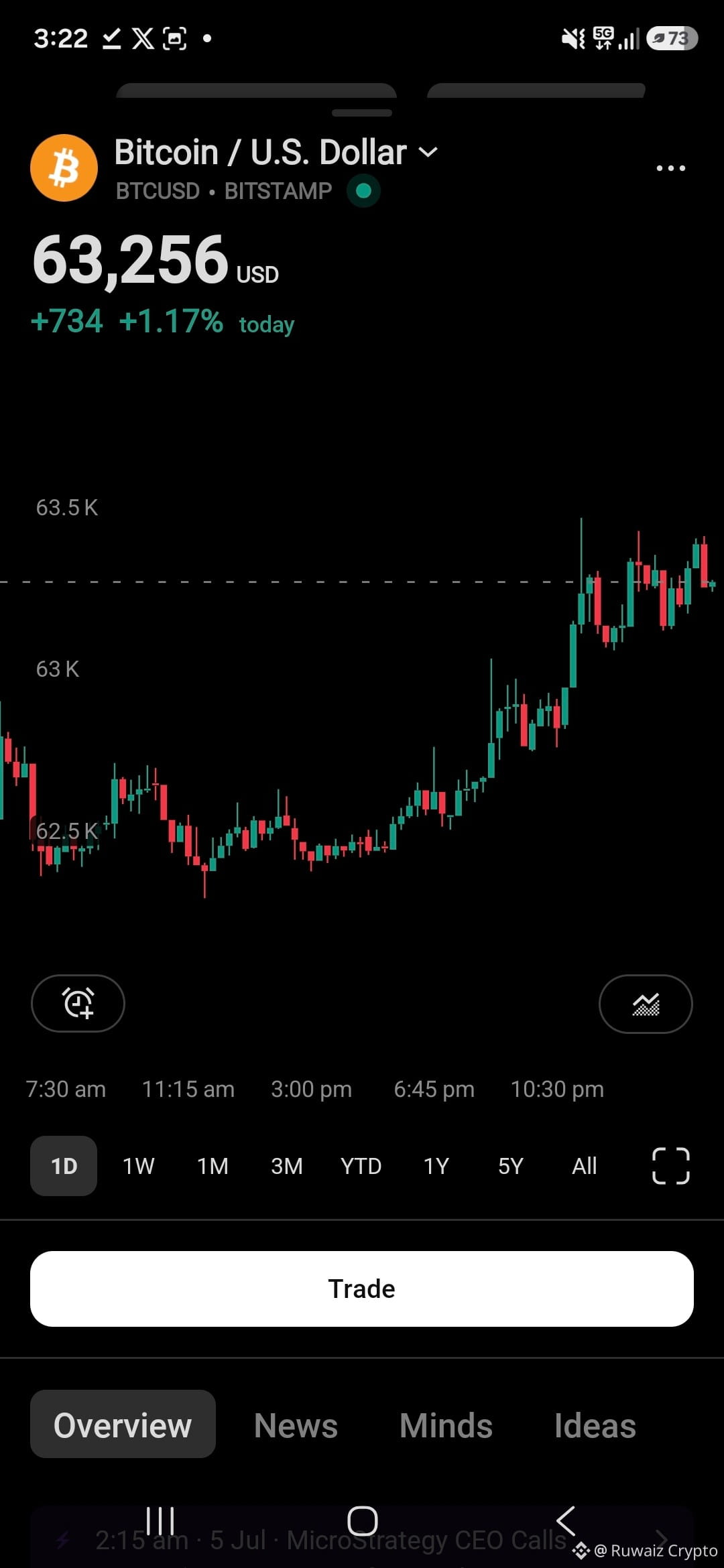
We have officially crossed into the second half of 2026, and the market is flashing a major structural turnaround. After enduring its weakest monthly stretch since mid-2022 and dropping to a 21-month nadir of $57,750 amid aggressive ETF outflows, Bitcoin has mounted a powerful comeback. In the last 48 hours, $BTC surged back to reclamation territories around $62,300.
{future}(BTCUSDT)
While retail sentiment slid into deep pessimism (with the Fear & Greed Index briefly striking an extreme low of 11), smart money institutional desks have been quietly absorbing the supply.
📊 THE VOLATILITY DRIVERS TO WATCH THIS WEEK:
1️⃣ The Macro Tailwinds: Recent U.S. nonfarm payrolls and soft employment data provided a textbook "Goldilocks" scenario. It wasn't weak enough to trigger immediate recession panic, but soft enough to cool the Fed’s hawkish interest rate outlook, causing the US dollar to pull back and sending risk assets upward.
2️⃣ The 200-Week SMA Battle: Traditional equities are hitting all-time highs, and the correlation is bleeding back into digital assets. Traders are now heavily watching the 200-week simple moving average hovering near $62,652 as the next major structural technical hurdle to flip.
3️⃣ Layer-1 Ecosystem Shifting: Capital rotation is heating up. Heavy focus is moving toward major upcoming network updates—such as Ethereum's base-layer throughput expansion (Glamsterdam) slated for later this half—and prediction markets leaning increasingly bullish on top-tier altcoin baselines.
🧠 ANALYST INSIGHT:
Corrections simply transfer liquidity from over-leveraged weak hands to patient, long-term players. Track the structural plumbing, not short-term noise.
🚨 HIT FOLLOW FOR DAILY INSIDER MACRO CHARTS! 💼🦅
👇 Are you buying this $62k bounce, holding your core spots, or waiting for more macro confirmation? Drop your strategy in the comments! 👇
#BinanceSquare #CryptoAnalysis #bitcoin #Ethereum #MacroTrends
🚨 THE MACRO RECOVERY: SIGNAL BEHIND BITCOIN’S REBOUND TO $62K! 📉🧠
We have officially crossed into the second half of 2026, and the market is flashing a major structural turnaround. After enduring its weakest monthly stretch since mid-2022 and dropping to a 21-month nadir of $57,750 amid aggressive ETF outflows, Bitcoin has mounted a powerful comeback. In the last 48 hours, $BTC surged back to reclamation territories around $62,300.
While retail sentiment slid into deep pessimism (with the Fear & Greed Index briefly striking an extreme low of 11), smart money institutional desks have been quietly absorbing the supply.
📊 THE VOLATILITY DRIVERS TO WATCH THIS WEEK:
1️⃣ The Macro Tailwinds: Recent U.S. nonfarm payrolls and soft employment data provided a textbook "Goldilocks" scenario. It wasn't weak enough to trigger immediate recession panic, but soft enough to cool the Fed’s hawkish interest rate outlook, causing the US dollar to pull back and sending risk assets upward.
2️⃣ The 200-Week SMA Battle: Traditional equities are hitting all-time highs, and the correlation is bleeding back into digital assets. Traders are now heavily watching the 200-week simple moving average hovering near $62,652 as the next major structural technical hurdle to flip.
3️⃣ Layer-1 Ecosystem Shifting: Capital rotation is heating up. Heavy focus is moving toward major upcoming network updates—such as Ethereum's base-layer throughput expansion (Glamsterdam) slated for later this half—and prediction markets leaning increasingly bullish on top-tier altcoin baselines.
🧠 ANALYST INSIGHT:
Corrections simply transfer liquidity from over-leveraged weak hands to patient, long-term players. Track the structural plumbing, not short-term noise.
🚨 HIT FOLLOW FOR DAILY INSIDER MACRO CHARTS! 💼🦅
👇 Are you buying this $62k bounce, holding your core spots, or waiting for more macro confirmation? Drop your strategy in the comments! 👇
#BinanceSquare #CryptoAnalysis #bitcoin #Ethereum #MacroTrends
We have officially crossed into the second half of 2026, and the market is flashing a major structural turnaround. After enduring its weakest monthly stretch since mid-2022 and dropping to a 21-month nadir of $57,750 amid aggressive ETF outflows, Bitcoin has mounted a powerful comeback. In the last 48 hours, $BTC surged back to reclamation territories around $62,300.
While retail sentiment slid into deep pessimism (with the Fear & Greed Index briefly striking an extreme low of 11), smart money institutional desks have been quietly absorbing the supply.
📊 THE VOLATILITY DRIVERS TO WATCH THIS WEEK:
1️⃣ The Macro Tailwinds: Recent U.S. nonfarm payrolls and soft employment data provided a textbook "Goldilocks" scenario. It wasn't weak enough to trigger immediate recession panic, but soft enough to cool the Fed’s hawkish interest rate outlook, causing the US dollar to pull back and sending risk assets upward.
2️⃣ The 200-Week SMA Battle: Traditional equities are hitting all-time highs, and the correlation is bleeding back into digital assets. Traders are now heavily watching the 200-week simple moving average hovering near $62,652 as the next major structural technical hurdle to flip.
3️⃣ Layer-1 Ecosystem Shifting: Capital rotation is heating up. Heavy focus is moving toward major upcoming network updates—such as Ethereum's base-layer throughput expansion (Glamsterdam) slated for later this half—and prediction markets leaning increasingly bullish on top-tier altcoin baselines.
🧠 ANALYST INSIGHT:
Corrections simply transfer liquidity from over-leveraged weak hands to patient, long-term players. Track the structural plumbing, not short-term noise.
🚨 HIT FOLLOW FOR DAILY INSIDER MACRO CHARTS! 💼🦅
👇 Are you buying this $62k bounce, holding your core spots, or waiting for more macro confirmation? Drop your strategy in the comments! 👇
#BinanceSquare #CryptoAnalysis #bitcoin #Ethereum #MacroTrends

1
5
463
·
--
Recent OPEC+ output increase and Hormuz tension keep oil prices near $100‑110, influencing global risk sentiment. 📊
Higher energy costs often affect macro environments, which can impact risk‑on assets like cryptocurrencies. 🌐
$BTC, as the leading store of value, tends to be monitored for correlation shifts during inflationary pressures. 🪙
On‑chain data shows Bitcoin’s hash rate remains robust, indicating continued miner participation despite market volatility. 🔍
Recent institutional reports note growing interest in Bitcoin as a hedge against currency devaluation in emerging markets. 💡
As always, DYOR and consider how macro trends align with your own risk profile. 🧠
What macro factors do you think will shape Bitcoin’s role in the coming months? #CryptoNews #Bitcoin #MacroTrends #InvestSmart #GAMERXERO
Recent OPEC+ output increase and Hormuz tension keep oil prices near $100‑110, influencing global risk sentiment. 📊
Higher energy costs often affect macro environments, which can impact risk‑on assets like cryptocurrencies. 🌐
$BTC , as the leading store of value, tends to be monitored for correlation shifts during inflationary pressures. 🪙
On‑chain data shows Bitcoin’s hash rate remains robust, indicating continued miner participation despite market volatility. 🔍
Recent institutional reports note growing interest in Bitcoin as a hedge against currency devaluation in emerging markets. 💡
As always, DYOR and consider how macro trends align with your own risk profile. 🧠
What macro factors do you think will shape Bitcoin’s role in the coming months? #CryptoNews #Bitcoin #MacroTrends #InvestSmart #GAMERXERO
Higher energy costs often affect macro environments, which can impact risk‑on assets like cryptocurrencies. 🌐
$BTC , as the leading store of value, tends to be monitored for correlation shifts during inflationary pressures. 🪙
On‑chain data shows Bitcoin’s hash rate remains robust, indicating continued miner participation despite market volatility. 🔍
Recent institutional reports note growing interest in Bitcoin as a hedge against currency devaluation in emerging markets. 💡
As always, DYOR and consider how macro trends align with your own risk profile. 🧠
What macro factors do you think will shape Bitcoin’s role in the coming months? #CryptoNews #Bitcoin #MacroTrends #InvestSmart #GAMERXERO
112
·
--
US Treasury’s $13B 20‑year bond sale and yields near 5% highlight shifting macro conditions for risk assets 📊
$BTC is often discussed as a hedge when monetary policy faces uncertainty, especially with debates on the Fed’s role.
Rep. Thomas Massie’s Fed‑abolition proposal cites “The Bitcoin Standard,” putting Bitcoin back in the legislative spotlight 🧠.
Increased policy discussion can raise broader public awareness and potentially attract new institutional interest.
On‑chain metrics show $BTC’s hash rate staying strong and transaction volume holding steady, indicating network resilience ⚡.
DYOR to assess how macro‑policy trends might intersect with crypto fundamentals before forming any conclusions 💡.
#CryptoNews #Bitcoin #MacroTrends #Blockchain #GAMERXERO
US Treasury’s $13B 20‑year bond sale and yields near 5% highlight shifting macro conditions for risk assets 📊
$BTC is often discussed as a hedge when monetary policy faces uncertainty, especially with debates on the Fed’s role.
Rep. Thomas Massie’s Fed‑abolition proposal cites “The Bitcoin Standard,” putting Bitcoin back in the legislative spotlight 🧠.
Increased policy discussion can raise broader public awareness and potentially attract new institutional interest.
On‑chain metrics show $BTC ’s hash rate staying strong and transaction volume holding steady, indicating network resilience ⚡.
DYOR to assess how macro‑policy trends might intersect with crypto fundamentals before forming any conclusions 💡.
#CryptoNews #Bitcoin #MacroTrends #Blockchain #GAMERXERO
$BTC is often discussed as a hedge when monetary policy faces uncertainty, especially with debates on the Fed’s role.
Rep. Thomas Massie’s Fed‑abolition proposal cites “The Bitcoin Standard,” putting Bitcoin back in the legislative spotlight 🧠.
Increased policy discussion can raise broader public awareness and potentially attract new institutional interest.
On‑chain metrics show $BTC ’s hash rate staying strong and transaction volume holding steady, indicating network resilience ⚡.
DYOR to assess how macro‑policy trends might intersect with crypto fundamentals before forming any conclusions 💡.
#CryptoNews #Bitcoin #MacroTrends #Blockchain #GAMERXERO
48

Bitcoin faces potential downside pressure as rising yields and climbing oil prices create a cautious macro environment ahead of the critical US inflation report.
#CPIReport #MacroTrends
Bitcoin faces potential downside pressure as rising yields and climbing oil prices create a cautious macro environment ahead of the critical US inflation report.
#CPIReport #MacroTrends
#CPIReport #MacroTrends
20

·
--
🚨 Bitcoin could spike on mass stimulus, then drop if bond yields rise or the Fed tightens. Watch for liquidity shifts—smart money may front-run the news, then exit as macro pressure builds. Altcoins might follow BTC’s lead but with higher volatility.
Is this a short-term pump or a trap for retail?
#Bitcoin #MacroTrends
$TRUMP #TradingSignal #CryptoAnalysis
🚨 Bitcoin could spike on mass stimulus, then drop if bond yields rise or the Fed tightens. Watch for liquidity shifts—smart money may front-run the news, then exit as macro pressure builds. Altcoins might follow BTC’s lead but with higher volatility.
Is this a short-term pump or a trap for retail?
#Bitcoin #MacroTrends
$TRUMP #TradingSignal #CryptoAnalysis
Is this a short-term pump or a trap for retail?
#Bitcoin #MacroTrends
$TRUMP #TradingSignal #CryptoAnalysis

114

·
--
Most traders treat Bitcoin breaking away from traditional stock markets as an instant buy signal, but history shows these decoupling phases are almost always a trap.
Too many people get wrecked longing $BTC the second tech stocks dip, thinking crypto has finally escaped macro gravity. Then reality hits when liquidity dries up and leverage gets wiped out overnight.
When you look at past cycles, periods where crypto diverges from equities rarely last more than a few weeks. The current narrative assumes that mounting bond-market pressure and a softening dollar will push capital into digital assets, turning $BTC into a high-octane version of gold.
While that sounds great on paper, higher volatility cuts both ways. Unlike traditional safe havens or tokenized commodities like $PAXG, holding a high-beta hedge during macro turbulence means absorbing massive downside the moment yields snap back.
Are we actually seeing a structural macro shift this time, or are we just walking into another fakeout?
#Bitcoin #CryptoTrading #MacroTrends
Most traders treat Bitcoin breaking away from traditional stock markets as an instant buy signal, but history shows these decoupling phases are almost always a trap.
Too many people get wrecked longing $BTC the second tech stocks dip, thinking crypto has finally escaped macro gravity. Then reality hits when liquidity dries up and leverage gets wiped out overnight.
When you look at past cycles, periods where crypto diverges from equities rarely last more than a few weeks. The current narrative assumes that mounting bond-market pressure and a softening dollar will push capital into digital assets, turning $BTC into a high-octane version of gold.
While that sounds great on paper, higher volatility cuts both ways. Unlike traditional safe havens or tokenized commodities like $PAXG , holding a high-beta hedge during macro turbulence means absorbing massive downside the moment yields snap back.
Are we actually seeing a structural macro shift this time, or are we just walking into another fakeout?
#Bitcoin #CryptoTrading #MacroTrends
Too many people get wrecked longing $BTC the second tech stocks dip, thinking crypto has finally escaped macro gravity. Then reality hits when liquidity dries up and leverage gets wiped out overnight.
When you look at past cycles, periods where crypto diverges from equities rarely last more than a few weeks. The current narrative assumes that mounting bond-market pressure and a softening dollar will push capital into digital assets, turning $BTC into a high-octane version of gold.
While that sounds great on paper, higher volatility cuts both ways. Unlike traditional safe havens or tokenized commodities like $PAXG , holding a high-beta hedge during macro turbulence means absorbing massive downside the moment yields snap back.
Are we actually seeing a structural macro shift this time, or are we just walking into another fakeout?
#Bitcoin #CryptoTrading #MacroTrends

94

·
--
GLOBAL LEADERS ARE PRIVATELY BIDDING $BTC RESERVES AS TOKENIZATION REVOLUTION ACCELERATES 🚨 ⚡
Sovereign capital is quietly shifting as world leaders awaken to national $BTC reserves and blockchain liquidity. Behind closed doors, policy discussions are pivoting from outdated friction toward tokenizing real-world assets like rare earths and real estate to capture global capital flow. 🌊
With countries actively evaluating sovereign stablecoins and strategic digital asset treasuries, the macro landscape is evolving at breakneck speed. Smart money understands that front-running nation-state adoption is the ultimate asymmetrical trade of this decade. 💡
Which nation do you think announces a strategic reserve next? 👇
⚠️ Not financial advice. Always manage your risk. 🛡️
🏷️ #BTC #CryptoReserves #Tokenization #MacroTrends
🔥 💎
GLOBAL LEADERS ARE PRIVATELY BIDDING $BTC RESERVES AS TOKENIZATION REVOLUTION ACCELERATES 🚨 ⚡
Sovereign capital is quietly shifting as world leaders awaken to national $BTC reserves and blockchain liquidity. Behind closed doors, policy discussions are pivoting from outdated friction toward tokenizing real-world assets like rare earths and real estate to capture global capital flow. 🌊
With countries actively evaluating sovereign stablecoins and strategic digital asset treasuries, the macro landscape is evolving at breakneck speed. Smart money understands that front-running nation-state adoption is the ultimate asymmetrical trade of this decade. 💡
Which nation do you think announces a strategic reserve next? 👇
⚠️ Not financial advice. Always manage your risk. 🛡️
🏷️ #BTC #CryptoReserves #Tokenization #MacroTrends
🔥 💎
Sovereign capital is quietly shifting as world leaders awaken to national $BTC reserves and blockchain liquidity. Behind closed doors, policy discussions are pivoting from outdated friction toward tokenizing real-world assets like rare earths and real estate to capture global capital flow. 🌊
With countries actively evaluating sovereign stablecoins and strategic digital asset treasuries, the macro landscape is evolving at breakneck speed. Smart money understands that front-running nation-state adoption is the ultimate asymmetrical trade of this decade. 💡
Which nation do you think announces a strategic reserve next? 👇
⚠️ Not financial advice. Always manage your risk. 🛡️
🏷️ #BTC #CryptoReserves #Tokenization #MacroTrends
🔥 💎
24

**🌍 Is the global balance of influence changing?**
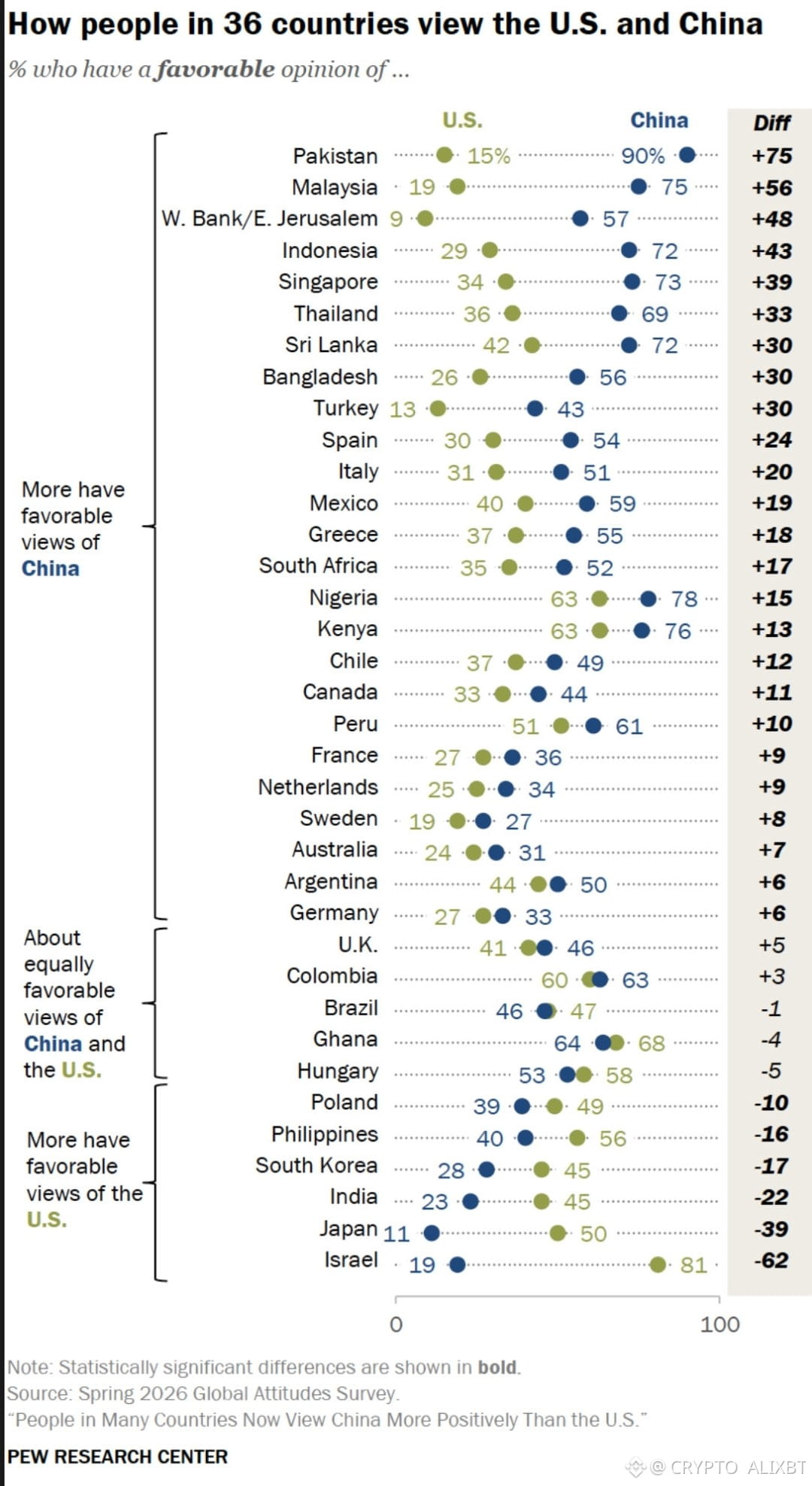
The latest **Pew Research Global Attitudes Survey (Spring 2026)** reveals a major shift in how people around the world view the world's two largest superpowers.
Out of **36 countries surveyed**, a majority now have a **more favorable opinion of China than the United States.**
Here are some of the biggest gaps:
* 🇵🇰 Pakistan: **China 90%** vs **U.S. 15%** (+75)
* 🇲🇾 Malaysia: **75%** vs **19%**
* 🇮🇩 Indonesia: **72%** vs **29%**
* 🇸🇬 Singapore: **73%** vs **34%**
* 🇱🇰 Sri Lanka: **72%** vs **42%**
Meanwhile, countries such as **Japan, India, South Korea, the Philippines, and Israel** continue to hold a more favorable view of the United States.
### Why does this matter?
This isn't just about politics.
Global perception often influences:
* 🌏 Trade partnerships
* 💰 Foreign investment
* 🏭 Manufacturing and supply chains
* 🤖 AI and technology leadership
* 📈 Long-term capital flows
For investors, these trends can shape future opportunities across equities, commodities, and even crypto markets. As China's global influence grows, projects connected to Chinese innovation, infrastructure, AI, and digital finance could attract greater attention.
The smartest investors don't just watch charts—they watch global macro trends before the market fully prices them in.
**Do you think China's growing global influence will eventually be reflected in financial markets and crypto, or will the U.S. remain the dominant force?**
👇 Share your thoughts.
#China #USA #GlobalEconomy #Investing #Crypto #BinanceSquare #Markets #MacroTrends
$DODO ,$AKE ,$TAO
**🌍 Is the global balance of influence changing?**
The latest **Pew Research Global Attitudes Survey (Spring 2026)** reveals a major shift in how people around the world view the world's two largest superpowers.
Out of **36 countries surveyed**, a majority now have a **more favorable opinion of China than the United States.**
Here are some of the biggest gaps:
* 🇵🇰 Pakistan: **China 90%** vs **U.S. 15%** (+75)
* 🇲🇾 Malaysia: **75%** vs **19%**
* 🇮🇩 Indonesia: **72%** vs **29%**
* 🇸🇬 Singapore: **73%** vs **34%**
* 🇱🇰 Sri Lanka: **72%** vs **42%**
Meanwhile, countries such as **Japan, India, South Korea, the Philippines, and Israel** continue to hold a more favorable view of the United States.
### Why does this matter?
This isn't just about politics.
Global perception often influences:
* 🌏 Trade partnerships
* 💰 Foreign investment
* 🏭 Manufacturing and supply chains
* 🤖 AI and technology leadership
* 📈 Long-term capital flows
For investors, these trends can shape future opportunities across equities, commodities, and even crypto markets. As China's global influence grows, projects connected to Chinese innovation, infrastructure, AI, and digital finance could attract greater attention.
The smartest investors don't just watch charts—they watch global macro trends before the market fully prices them in.
**Do you think China's growing global influence will eventually be reflected in financial markets and crypto, or will the U.S. remain the dominant force?**
👇 Share your thoughts.
#China #USA #GlobalEconomy #Investing #Crypto #BinanceSquare #Markets #MacroTrends
$DODO ,$AKE ,$TAO
The latest **Pew Research Global Attitudes Survey (Spring 2026)** reveals a major shift in how people around the world view the world's two largest superpowers.
Out of **36 countries surveyed**, a majority now have a **more favorable opinion of China than the United States.**
Here are some of the biggest gaps:
* 🇵🇰 Pakistan: **China 90%** vs **U.S. 15%** (+75)
* 🇲🇾 Malaysia: **75%** vs **19%**
* 🇮🇩 Indonesia: **72%** vs **29%**
* 🇸🇬 Singapore: **73%** vs **34%**
* 🇱🇰 Sri Lanka: **72%** vs **42%**
Meanwhile, countries such as **Japan, India, South Korea, the Philippines, and Israel** continue to hold a more favorable view of the United States.
### Why does this matter?
This isn't just about politics.
Global perception often influences:
* 🌏 Trade partnerships
* 💰 Foreign investment
* 🏭 Manufacturing and supply chains
* 🤖 AI and technology leadership
* 📈 Long-term capital flows
For investors, these trends can shape future opportunities across equities, commodities, and even crypto markets. As China's global influence grows, projects connected to Chinese innovation, infrastructure, AI, and digital finance could attract greater attention.
The smartest investors don't just watch charts—they watch global macro trends before the market fully prices them in.
**Do you think China's growing global influence will eventually be reflected in financial markets and crypto, or will the U.S. remain the dominant force?**
👇 Share your thoughts.
#China #USA #GlobalEconomy #Investing #Crypto #BinanceSquare #Markets #MacroTrends
$DODO ,$AKE ,$TAO
301

·
--
Last week a strange macro signal flashed: Washington and Tehran signed an interim peace deal, and instead of risk assets ripping, gold quietly climbed.
For crypto traders, this is the kind of moment that causes expensive mistakes. Many assume higher interest rates automatically crush “store of value” assets, so they rotate too quickly and end up chasing the wrong narrative.
Here’s what actually happened. Gold moved higher after the US,Iran interim peace announcement, even while the Federal Reserve signaled another rate hike could come later this year. On paper, tighter monetary policy should pressure assets like XAU. Yet geopolitical relief and uncertainty around global stability kept demand alive.
This matters for crypto because the same capital often rotates between gold and digital stores of value. When macro tension spikes, flows don’t always behave the way models predict. We’ve seen similar moments where $BTC held strength alongside gold-like assets such as $PAXG, even when rate expectations were turning hawkish. Traders watching only the Fed headline often miss the bigger picture.
Macro signals rarely move in clean directions. If gold can rise while rate hikes are still on the table, it’s a reminder that $BTC and $ETH may not follow the simple playbook many expect.
Anyone else noticing how often the macro narrative and the actual price reaction diverge?
#CryptoMarkets #Bitcoin #MacroTrends
Last week a strange macro signal flashed: Washington and Tehran signed an interim peace deal, and instead of risk assets ripping, gold quietly climbed.
For crypto traders, this is the kind of moment that causes expensive mistakes. Many assume higher interest rates automatically crush “store of value” assets, so they rotate too quickly and end up chasing the wrong narrative.
Here’s what actually happened. Gold moved higher after the US,Iran interim peace announcement, even while the Federal Reserve signaled another rate hike could come later this year. On paper, tighter monetary policy should pressure assets like XAU. Yet geopolitical relief and uncertainty around global stability kept demand alive.
This matters for crypto because the same capital often rotates between gold and digital stores of value. When macro tension spikes, flows don’t always behave the way models predict. We’ve seen similar moments where $BTC held strength alongside gold-like assets such as $PAXG , even when rate expectations were turning hawkish. Traders watching only the Fed headline often miss the bigger picture.
Macro signals rarely move in clean directions. If gold can rise while rate hikes are still on the table, it’s a reminder that $BTC and $ETH may not follow the simple playbook many expect.
Anyone else noticing how often the macro narrative and the actual price reaction diverge?
#CryptoMarkets #Bitcoin #MacroTrends
For crypto traders, this is the kind of moment that causes expensive mistakes. Many assume higher interest rates automatically crush “store of value” assets, so they rotate too quickly and end up chasing the wrong narrative.
Here’s what actually happened. Gold moved higher after the US,Iran interim peace announcement, even while the Federal Reserve signaled another rate hike could come later this year. On paper, tighter monetary policy should pressure assets like XAU. Yet geopolitical relief and uncertainty around global stability kept demand alive.
This matters for crypto because the same capital often rotates between gold and digital stores of value. When macro tension spikes, flows don’t always behave the way models predict. We’ve seen similar moments where $BTC held strength alongside gold-like assets such as $PAXG , even when rate expectations were turning hawkish. Traders watching only the Fed headline often miss the bigger picture.
Macro signals rarely move in clean directions. If gold can rise while rate hikes are still on the table, it’s a reminder that $BTC and $ETH may not follow the simple playbook many expect.
Anyone else noticing how often the macro narrative and the actual price reaction diverge?
#CryptoMarkets #Bitcoin #MacroTrends
71

TORONTO REAL ESTATE MARKET STRUCTURE SHOWING SIGNS OF MACRO INSTABILITY 📉
The Toronto property market is currently exhibiting a clear breakdown of previous support levels, indicating a shift in long-term momentum. Price action is failing to hold historical consolidation zones, suggesting that sellers are currently in control of the order flow.
We are observing a significant increase in supply-side pressure as liquidity is drained from the local market. Current metrics indicate a potential test of lower structural support levels as buyers remain sidelined. Do you view this correction as a necessary reset or a long-term trend reversal?
Not financial advice. Always manage your risk.
#RE #MarketAnalysis #TorontoRealEstate #MacroTrends
⚡
TORONTO REAL ESTATE MARKET STRUCTURE SHOWING SIGNS OF MACRO INSTABILITY 📉
The Toronto property market is currently exhibiting a clear breakdown of previous support levels, indicating a shift in long-term momentum. Price action is failing to hold historical consolidation zones, suggesting that sellers are currently in control of the order flow.
We are observing a significant increase in supply-side pressure as liquidity is drained from the local market. Current metrics indicate a potential test of lower structural support levels as buyers remain sidelined. Do you view this correction as a necessary reset or a long-term trend reversal?
Not financial advice. Always manage your risk.
#RE #MarketAnalysis #TorontoRealEstate #MacroTrends
⚡
The Toronto property market is currently exhibiting a clear breakdown of previous support levels, indicating a shift in long-term momentum. Price action is failing to hold historical consolidation zones, suggesting that sellers are currently in control of the order flow.
We are observing a significant increase in supply-side pressure as liquidity is drained from the local market. Current metrics indicate a potential test of lower structural support levels as buyers remain sidelined. Do you view this correction as a necessary reset or a long-term trend reversal?
Not financial advice. Always manage your risk.
#RE #MarketAnalysis #TorontoRealEstate #MacroTrends
⚡
159

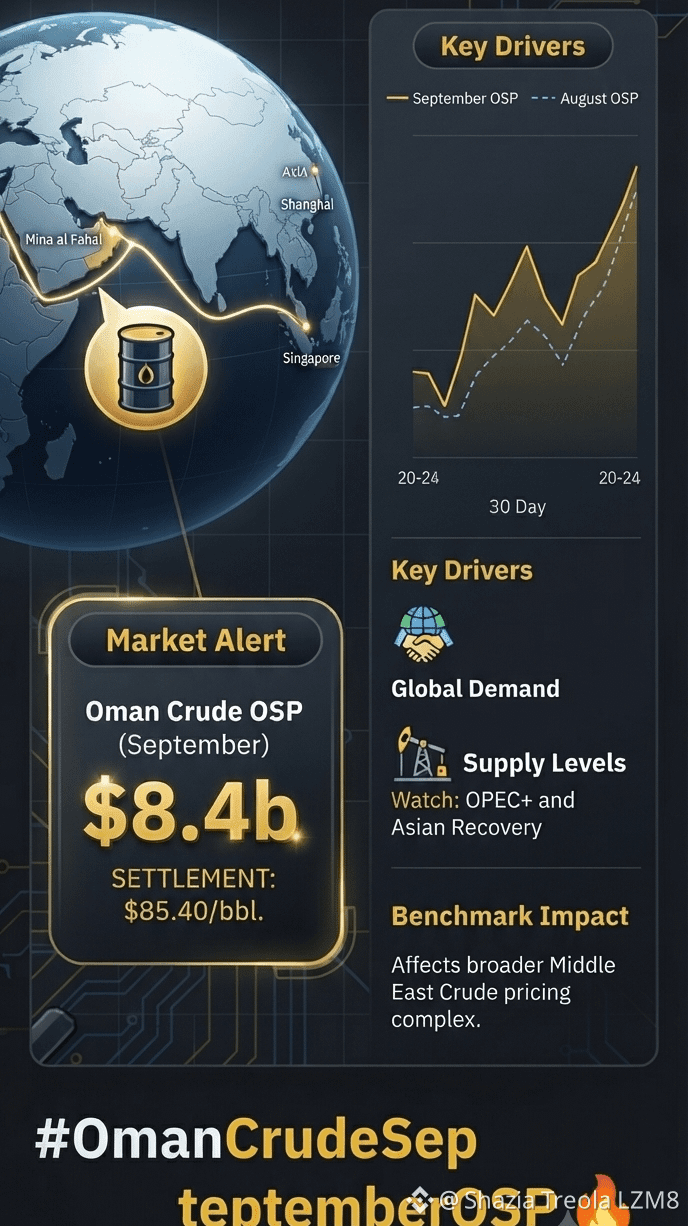
#OmanCrudeSeptemberOSPFalls Cracking the Benchmark: Major Overhauls in Crude Pricing
Energy markets are buzzing as structural shifts hit Middle Eastern benchmarks, highlighted by discussions around Oman Crude September OSP and broader pricing architecture updates.
Why It Matters: Benchmark adjustments directly influence how physical crude cargoes are priced for Asian buyers, affecting broader commodity indexes.
Trader Focus: Volatility in oil and energy benchmarks often sets the tone for broader inflation expectations, filtering down into equities, forex, and digital assets.
Are you tracking commodity volatility right now? Let me know your market outlook! 💬
$BTC $ETH $BNB
{future}(BTCUSDT)
{future}(ETHUSDT)
{future}(BNBUSDT)
#OmanCrudeSeptemberOSPFalls #OilMarket #trading #MacroTrends
#OmanCrudeSeptemberOSPFalls Cracking the Benchmark: Major Overhauls in Crude Pricing
Energy markets are buzzing as structural shifts hit Middle Eastern benchmarks, highlighted by discussions around Oman Crude September OSP and broader pricing architecture updates.
Why It Matters: Benchmark adjustments directly influence how physical crude cargoes are priced for Asian buyers, affecting broader commodity indexes.
Trader Focus: Volatility in oil and energy benchmarks often sets the tone for broader inflation expectations, filtering down into equities, forex, and digital assets.
Are you tracking commodity volatility right now? Let me know your market outlook! 💬
$BTC $ETH $BNB
#OmanCrudeSeptemberOSPFalls #OilMarket #trading #MacroTrends
Energy markets are buzzing as structural shifts hit Middle Eastern benchmarks, highlighted by discussions around Oman Crude September OSP and broader pricing architecture updates.
Why It Matters: Benchmark adjustments directly influence how physical crude cargoes are priced for Asian buyers, affecting broader commodity indexes.
Trader Focus: Volatility in oil and energy benchmarks often sets the tone for broader inflation expectations, filtering down into equities, forex, and digital assets.
Are you tracking commodity volatility right now? Let me know your market outlook! 💬
$BTC $ETH $BNB
#OmanCrudeSeptemberOSPFalls #OilMarket #trading #MacroTrends
99
·
--
Verified
yo ser, check this out. saw some wild charts today. the south korean kospi index is up a ridiculous 226% in the past year. ngl, that's dot-com bubble level stuff from 2000, right before things got interesting.
kinda wild how fast things move. this surge pushed their equity market to 6th globally, blowing past india, canada, uk, and france. only the big dogs like us, china, japan, hong kong, taiwan are ahead.
what's fueling it? mostly just two massive chip stocks, samsung and sk hynix. they're huge players in the tech space. makes you wonder about broader market sentiment and what that means for our bags. $BTC $ETH $SOL
#marketcycles #techbubble #kospi #macrotrends
yo ser, check this out. saw some wild charts today. the south korean kospi index is up a ridiculous 226% in the past year. ngl, that's dot-com bubble level stuff from 2000, right before things got interesting.
kinda wild how fast things move. this surge pushed their equity market to 6th globally, blowing past india, canada, uk, and france. only the big dogs like us, china, japan, hong kong, taiwan are ahead.
what's fueling it? mostly just two massive chip stocks, samsung and sk hynix. they're huge players in the tech space. makes you wonder about broader market sentiment and what that means for our bags. $BTC $ETH $SOL
#marketcycles #techbubble #kospi #macrotrends
kinda wild how fast things move. this surge pushed their equity market to 6th globally, blowing past india, canada, uk, and france. only the big dogs like us, china, japan, hong kong, taiwan are ahead.
what's fueling it? mostly just two massive chip stocks, samsung and sk hynix. they're huge players in the tech space. makes you wonder about broader market sentiment and what that means for our bags. $BTC $ETH $SOL
#marketcycles #techbubble #kospi #macrotrends
946

SOFTENING U.S. DATA COULD MEAN GOOD NEWS FOR CRYPTO BULLS $BTC 🔥
The latest U.S. labor data is softening and inflation is improving. This has scaled back expectations for further Fed tightening. But the global picture is splitting—US is watching for inflation resurgence, while Europe shifts focus to growth and fiscal credibility.
For crypto, this means less macro pressure but lingering uncertainty on how the slowdown plays out. How are you reading this setup?
Not financial advice. Always manage your risk.
#BTC #MacroTrends #CryptoAnalysis #FedPolicy
🔥
SOFTENING U.S. DATA COULD MEAN GOOD NEWS FOR CRYPTO BULLS $BTC 🔥
The latest U.S. labor data is softening and inflation is improving. This has scaled back expectations for further Fed tightening. But the global picture is splitting—US is watching for inflation resurgence, while Europe shifts focus to growth and fiscal credibility.
For crypto, this means less macro pressure but lingering uncertainty on how the slowdown plays out. How are you reading this setup?
Not financial advice. Always manage your risk.
#BTC #MacroTrends #CryptoAnalysis #FedPolicy
🔥
The latest U.S. labor data is softening and inflation is improving. This has scaled back expectations for further Fed tightening. But the global picture is splitting—US is watching for inflation resurgence, while Europe shifts focus to growth and fiscal credibility.
For crypto, this means less macro pressure but lingering uncertainty on how the slowdown plays out. How are you reading this setup?
Not financial advice. Always manage your risk.
#BTC #MacroTrends #CryptoAnalysis #FedPolicy
🔥
32


·
--
The latest ADP employment data shows the U.S. added 35,750 jobs for the week ending May 9, down from 42,250 the prior week. While still positive, the deceleration signals a cooling labor market, which could reinforce expectations of a more dovish Fed pivot.
For crypto traders, softer employment numbers often dampen USD strength and boost risk appetite, potentially driving flows into assets like Bitcoin and BNB. Lower interest rate expectations also ease pressure on DeFi yields and stablecoin demand, as borrowing costs become less punitive.
That said, the market is already pricing in rate cuts—any deviation from the narrative could amplify volatility. Keep an eye on upcoming non-farm payrolls for confirmation of the trend.
$BTC $BNB #MacroTrends #CryptoMarkets
The latest ADP employment data shows the U.S. added 35,750 jobs for the week ending May 9, down from 42,250 the prior week. While still positive, the deceleration signals a cooling labor market, which could reinforce expectations of a more dovish Fed pivot.
For crypto traders, softer employment numbers often dampen USD strength and boost risk appetite, potentially driving flows into assets like Bitcoin and BNB. Lower interest rate expectations also ease pressure on DeFi yields and stablecoin demand, as borrowing costs become less punitive.
That said, the market is already pricing in rate cuts—any deviation from the narrative could amplify volatility. Keep an eye on upcoming non-farm payrolls for confirmation of the trend.
$BTC $BNB #MacroTrends #CryptoMarkets
For crypto traders, softer employment numbers often dampen USD strength and boost risk appetite, potentially driving flows into assets like Bitcoin and BNB. Lower interest rate expectations also ease pressure on DeFi yields and stablecoin demand, as borrowing costs become less punitive.
That said, the market is already pricing in rate cuts—any deviation from the narrative could amplify volatility. Keep an eye on upcoming non-farm payrolls for confirmation of the trend.
$BTC $BNB #MacroTrends #CryptoMarkets
34
Log in to explore more content
Join global crypto users on Binance Square
⚡️ Get latest and useful information about crypto.
💬 Trusted by the world’s largest crypto exchange.
👍 Discover real insights from verified creators.
Email / Phone number
Trending Topics
1
#BitcoinReboundsTo$79K
9,733 views
102 Discussing
2
#GrayscalePutsXRPAt26.11%InAdvisorPortfolio
756 views
64 Discussing
3
#PhiladelphiaSemiconductorIndexFalls5.9%
759 views
43 Discussing
4
#SECChairUrgesCongressToAdvanceClarityAct
1,031 views
43 Discussing
5
#FedHikeOddsRiseTo89%
77,749 views
1,031 Discussing
6
#RLUSDSupplyHitsRecord$2.442B
5,680 views
64 Discussing
7
#AvalancheIntegratesIntoUAEPassDigitalVault
73,052 views
993 Discussing
8
#UKSeeksViewsOnTokenizingGold
60,813 views
756 Discussing
9
#AnthropicCEOCallsForAISlowdown
234,062 views
3,279 Discussing
10
#RevolutDataLeakReportedlyPostedAttackersThreatenDailyReleases
4,349 views
87 Discussing