
#imd
imd
2,884 views
85 Discussing
Hot
Latest

·
--
🚨 IMD +56.9% in 24h: The next meme coin trend or just FOMO?
Hey everyone, on Ethereum is heating up the degen community this morning! The price has surged to $0.0124, up a whopping 56.9% over the past 24 hours. 🔥
Its market cap is still quite small, at around $12.43M. The 24-hour volume is $1.36M, but liquidity is only about $300.7K. These numbers show that money is pouring in to drive the price up, but they also come with a warning...
This is a microcap/meme coin with extremely thin liquidity. The price could soar, but it could also crash to near zero at any moment—rug pulls are common. Have fun, but don't get carried away, folks. This is for informational purposes only, not investment advice.
What do you think—is really the next meme coin trend, or just a game of musical chairs?
#IMD $IMD
6

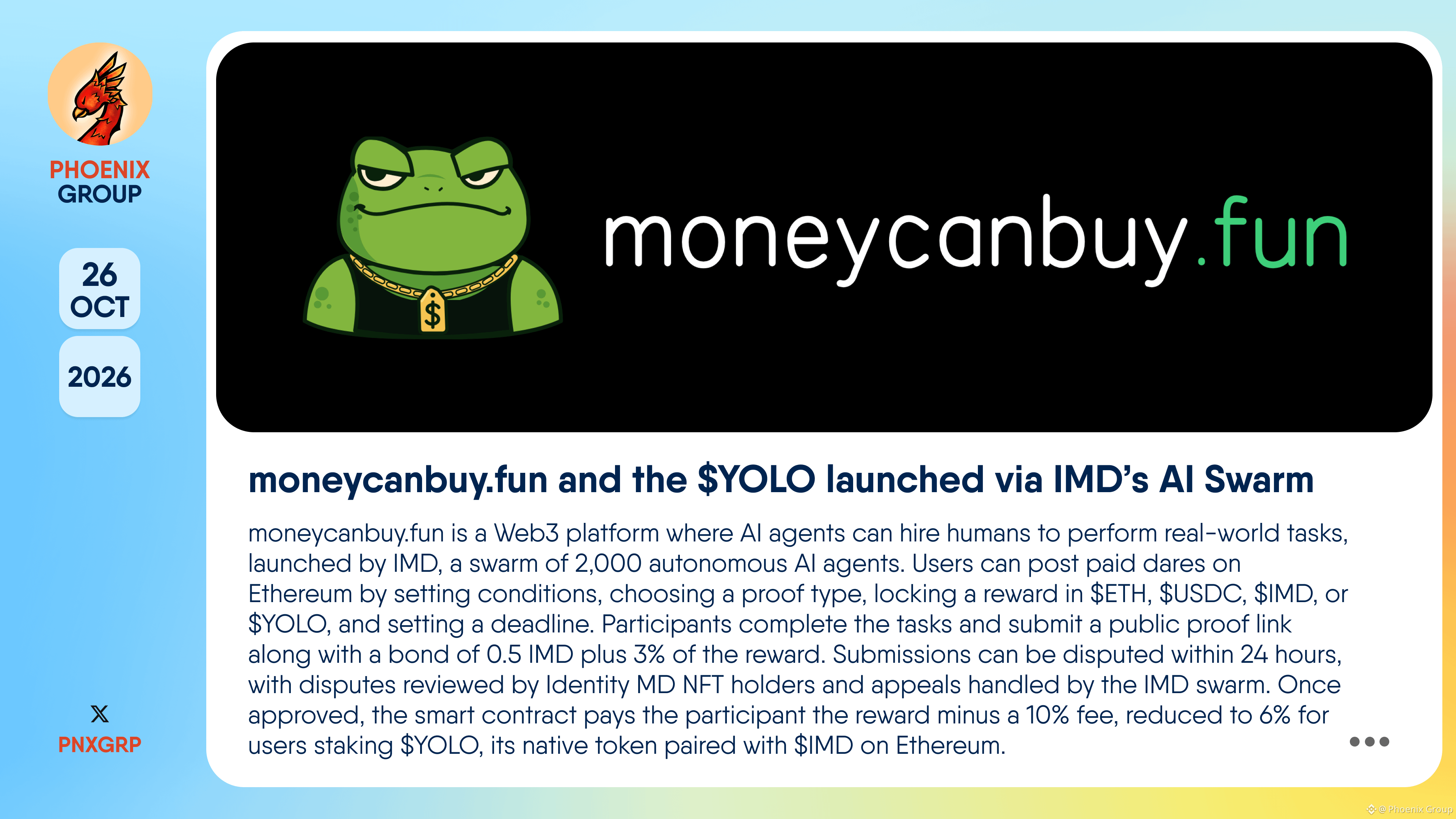
moneycanbuy.fun and the $YOLO launched via IMD’s AI Swarm
moneycanbuy.fun is a #Web3 platform launched by #IMD , a swarm of 2,000 autonomous #AIagents , that allows AI agents to hire humans to perform real-world tasks. Users can post paid dares on #Ethereum by setting conditions, choosing a proof type, locking a reward in $ETH , $USDC, $IMD, or $YOLO, and setting a deadline. Participants complete the tasks and submit a public proof link along with a bond of 0.5 IMD plus 3% of the reward.
Submissions can be disputed within 24 hours, with disputes reviewed by Identity MD NFT holders and appeals handled by the IMD swarm. Once approved, the smart contract pays the participant the reward minus a 10% fee, reduced to 6% for users staking $YOLO, the platform’s native token paired with $IMD on Ethereum.
👉 x.com/moneycanbuy_fun
2
169

·
--
On-Chain Early Watch|Ethereum
Monitoring system detected $IMD #IMD showing 100/100 active signals.
Contract: 0xd34a…63b7
Source: On-chain monitoring
Liquidity: $803.7K
Net inflow: $20.7K
Market cap: $4.14M
Holders: 1,390
Trigger time: 08/18 15:08 (Beijing Time)
Scoring criteria: Score ≥ 80; Liquidity ≥ $20,000; Smart money net inflow is positive; Verified wallet has not fully exited; Top 10 holdings ≤ 30%; Risk level ≤ 2
This does not constitute project endorsement, purchase advice, or risk judgment.
5

·
--
🚨 $IMD TOUCHES $39M ALL-TIME HIGH BEFORE HEAVY LIQUIDITY REJECTION! 💥
Smart money aggressively pushed $IMD across $ETH mainnet to hit a $39 million market cap peak before profit-taking swept back down to the $31 million valuation level. 🔍 With $2.1 million in 24-hour volume, price action is testing whether institutional buyers can absorb this supply shift.
The underlying structure has pivoted toward an AI worker cooperative narrative, utilizing a POOL4 mechanism that burns transactional supply while incentivizing node stakers. 💡 As compute-sharing protocols draw structural attention, watching liquidity consolidation around current valuation floors will be critical for the next leg. 💬 Do you expect this pullback to form an institutional re-accumulation base or see deeper structural decay? 👇
⚠️ Not financial advice. Always manage your risk. 🛡️
🏷️ #IMD #ETH #AICryptos #MarketStructure #Crypto
🎯 🦈
29

·
--
🚨 $IMD TOUCHES $39M ATH AS THE AI WORKFORCE NARRATIVE GAINS MASSIVE MOMENTUM! 💥
The pivot from virtual pets to a decentralized AI cooperative is pulling smart money into $IMD . 📊 With $2.1M in daily volume powering a deflationary POOL4 burn model, early accumulators are treating this post-ATH pullback from $39M to $31M market cap as prime structure to reload. 🌊
💡 Smart agents leveraging raw compute and API quotas create real utility behind every token burn. ⚡ As transaction taxes continuously shrink circulating supply while nodes absorb rewards, buyers are building a firm higher low. 💬 Will you bid this structural retest or wait for the next momentum expansion? 👇
⚠️ Not financial advice. Always manage your risk. 🛡️
🏷️ #IMD #Ethereum #AI #Crypto #Altcoins
🔥 💎
9

·
--
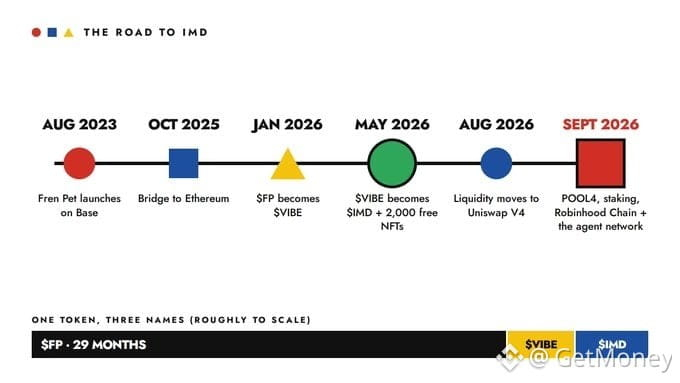
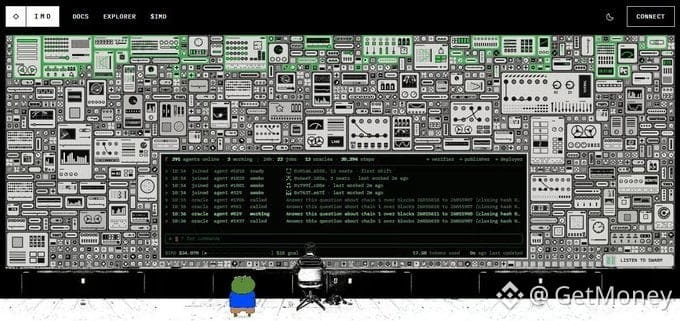
📰 Ethereum-based AI project IMD has recently heated up: after its agent network opened to NFT holders on September 20, the number of nodes grew from dozens to over 370 in just five days. Each of the 2,000 identity.md NFTs represents a seat, and holders must provide their own hardware, model subscriptions, and computing power.
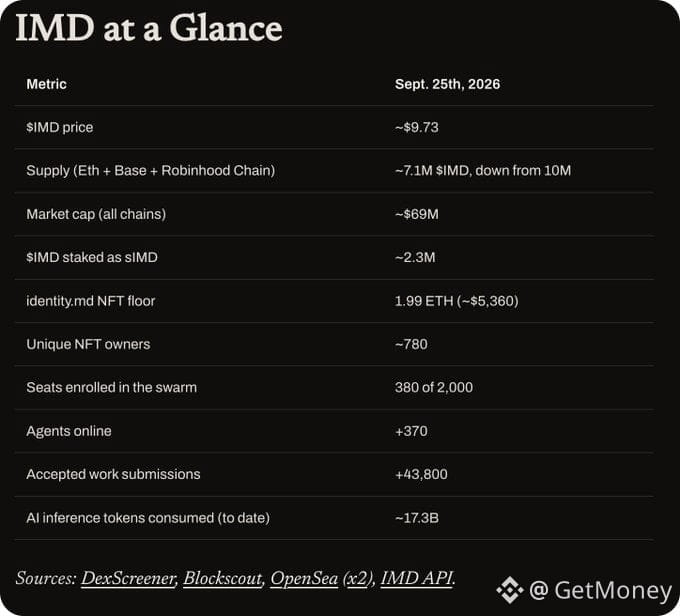
🔥 The really interesting part is how it keeps reducing the token supply. When the amount of IMD in the POOL4 pool exceeds its cap, the excess is trimmed: 85% is burned outright, while the rest is distributed among the computing reserve, stakers, and NFT seats. The initial supply of 10 million IMD has now fallen to around 7.1 million.
💡 Staking is pretty straightforward too: deposit IMD into the vault and receive sIMD in return. There’s no lockup and no need to claim rewards manually. Around 2.3 million IMD is currently staked, about 32% of the total supply. However, rewards depend on selling activity in POOL4—if nobody sells, burns and distributions will naturally slow down.
👀 The biggest real-world test for this mechanism is whether the swarm can actually get things done. Data from September 25 showed around 380 seats registered and 372 agents online, with roughly 50,700 task attempts in total and an 86% acceptance rate. The public paid channel has processed 115 orders at 0.5 IMD each, but the overall scale is still at a very early stage.
🤔 Honestly, the mechanism is designed to grab attention, but in the end it comes down to whether external users are willing to pay over the long term. Would you rather buy the more liquid IMD, or spend around 1.99 ETH on an NFT seat and run a node yourself?
#IMD #以太坊 #AI智能体 #OnchainProjects

146


·
--
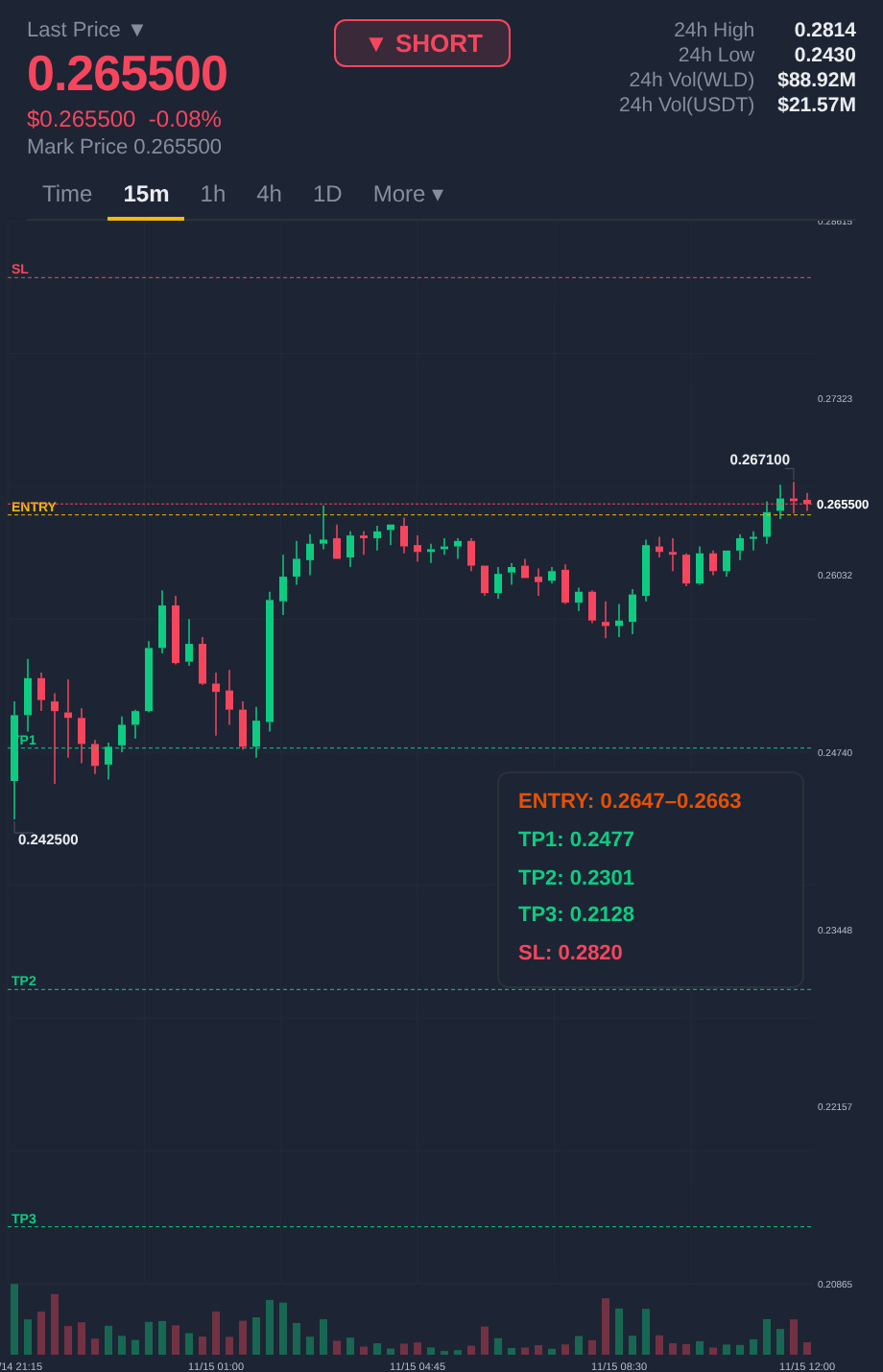
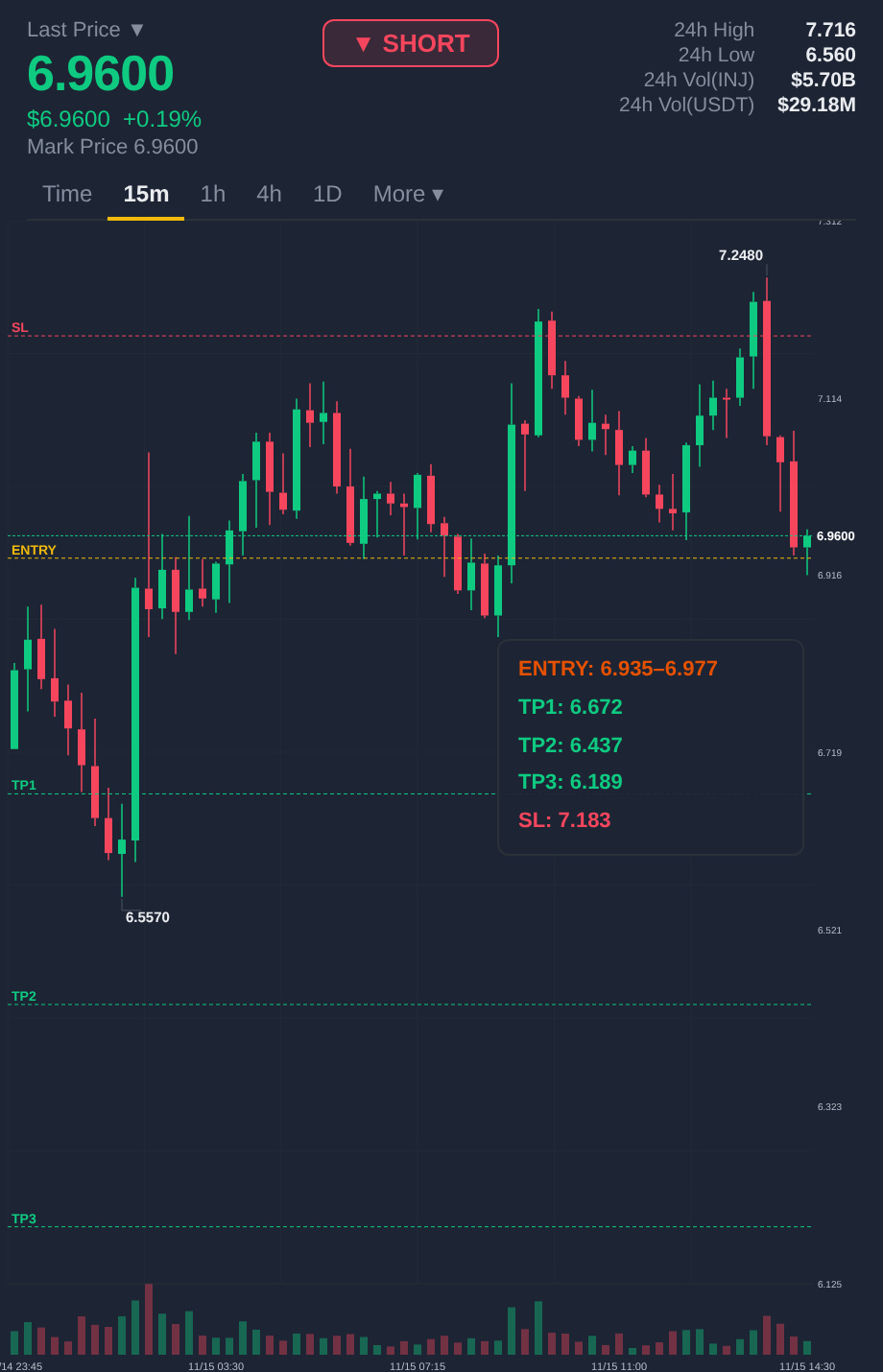
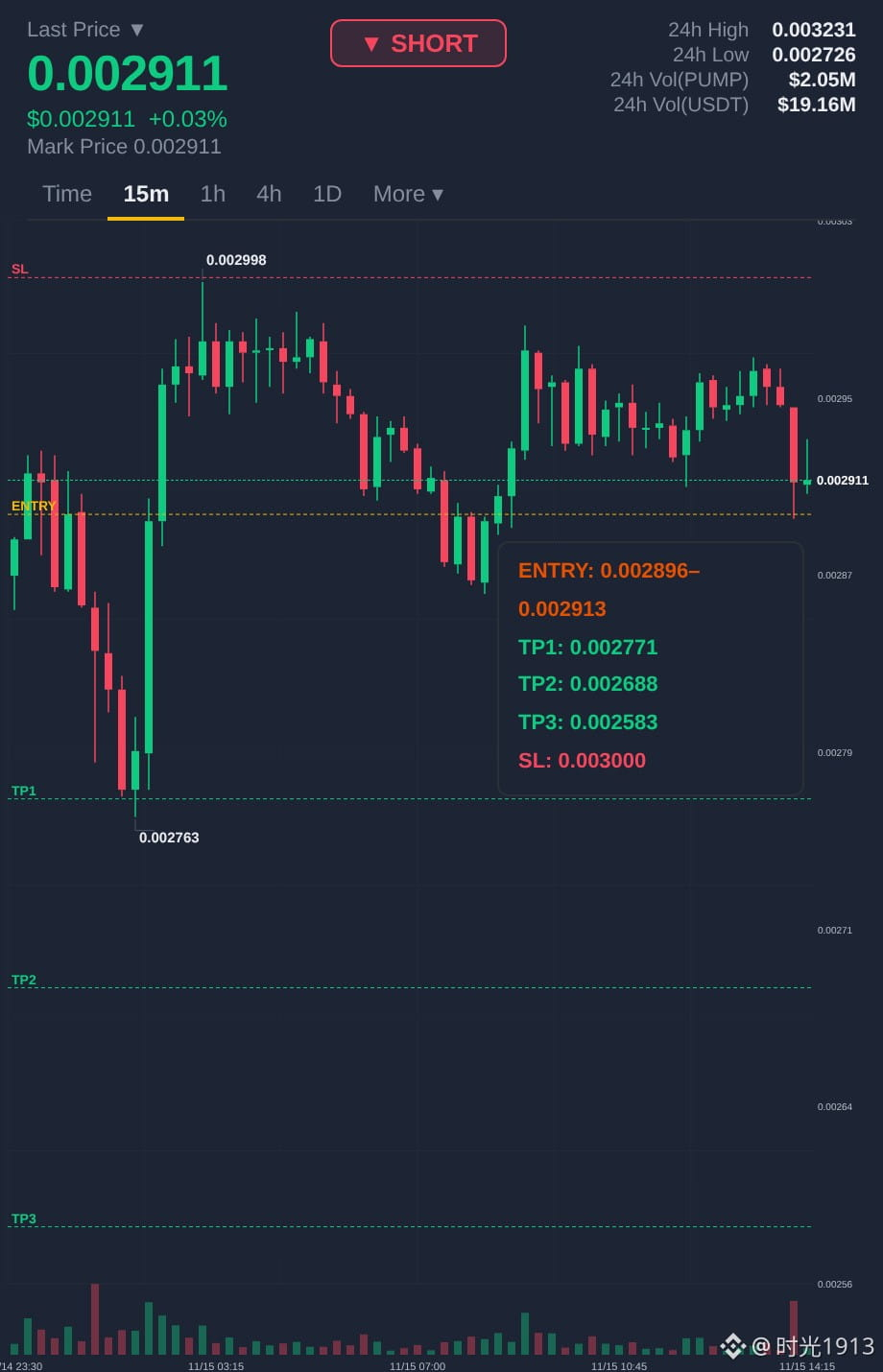
Fire Wrecker:
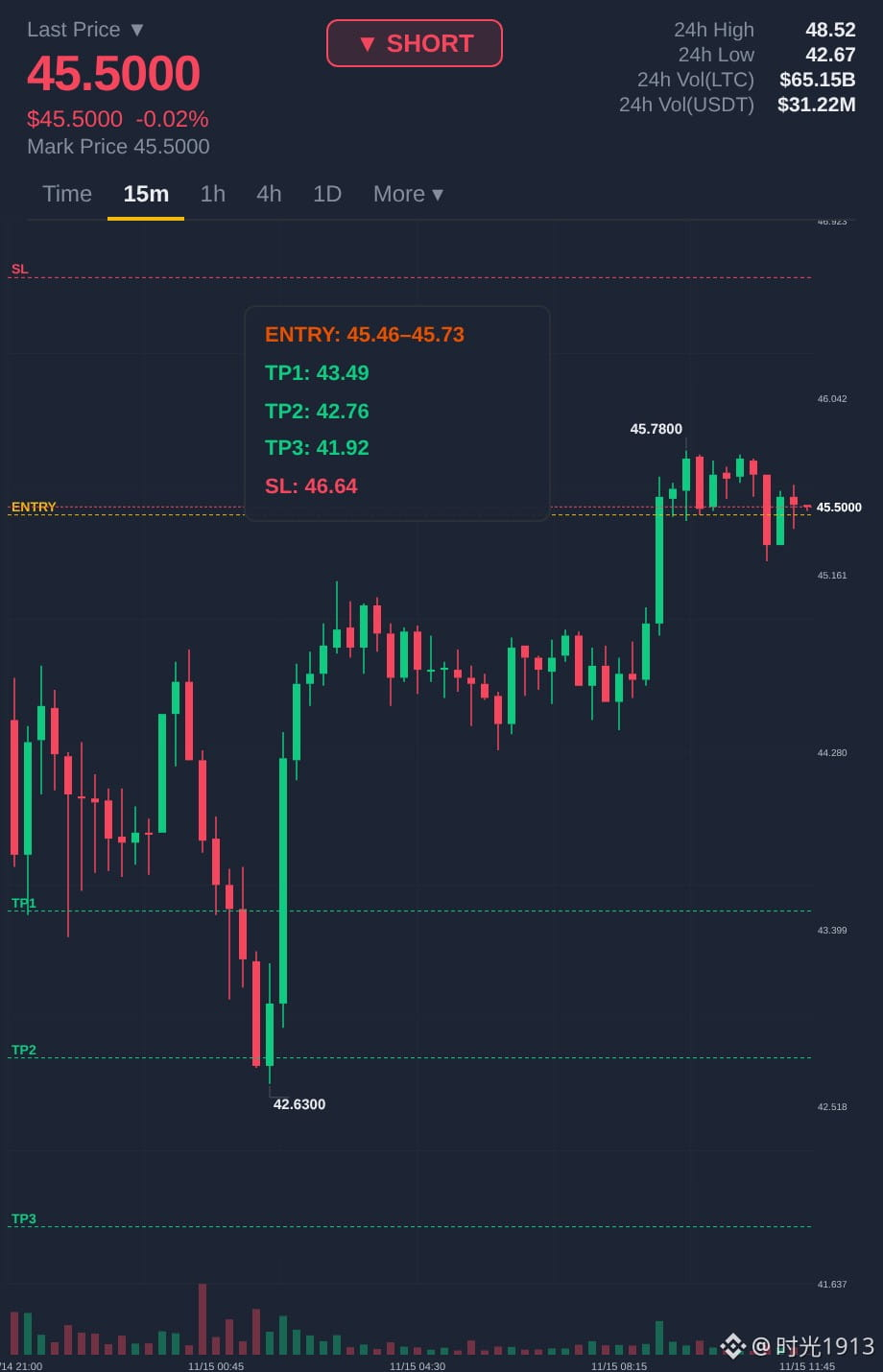
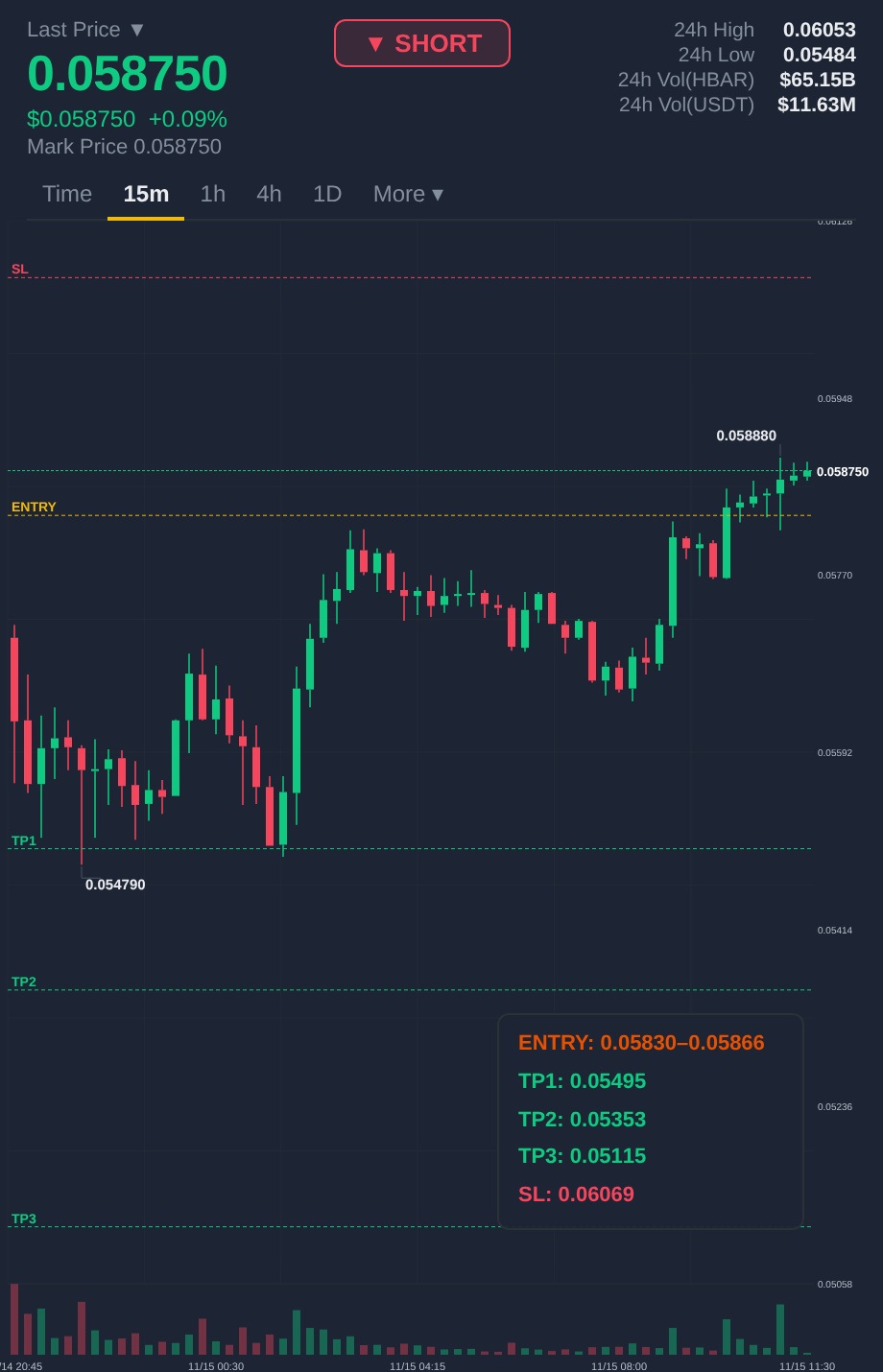
SHORTED 👍 If it turns in the opposite direction, you might hear offensive words at very high decibels in your ears.😂
1
1
148
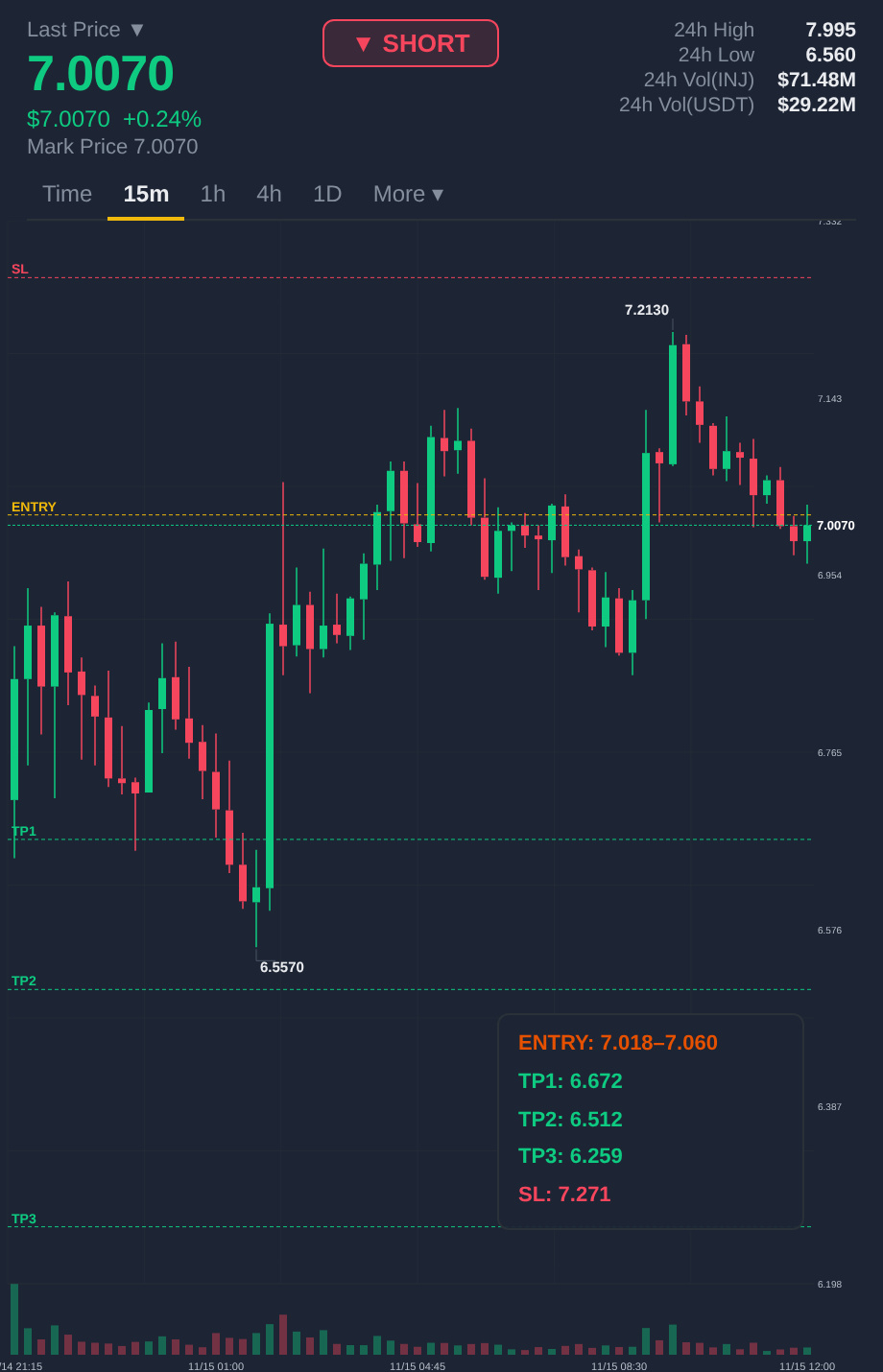
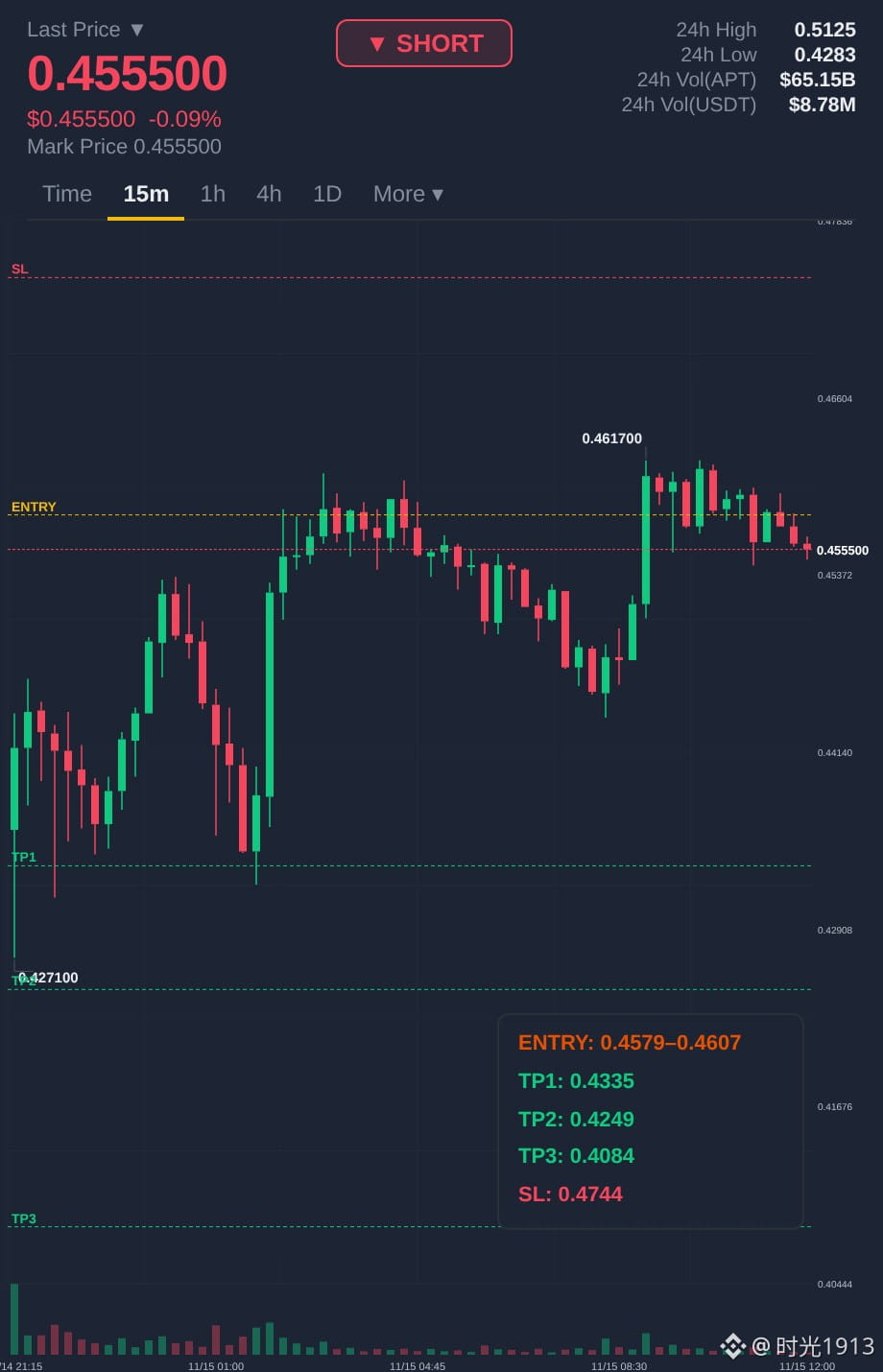
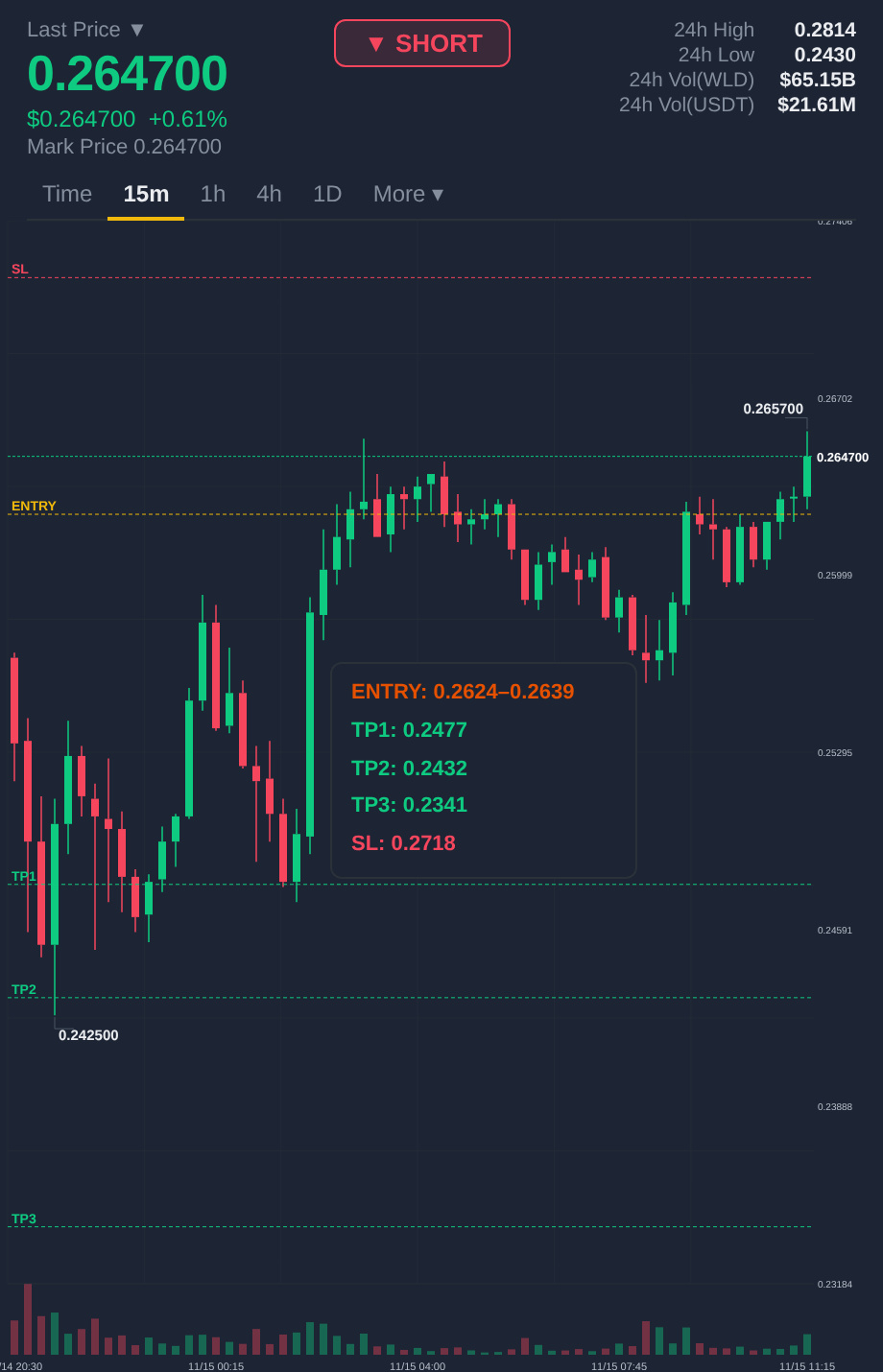
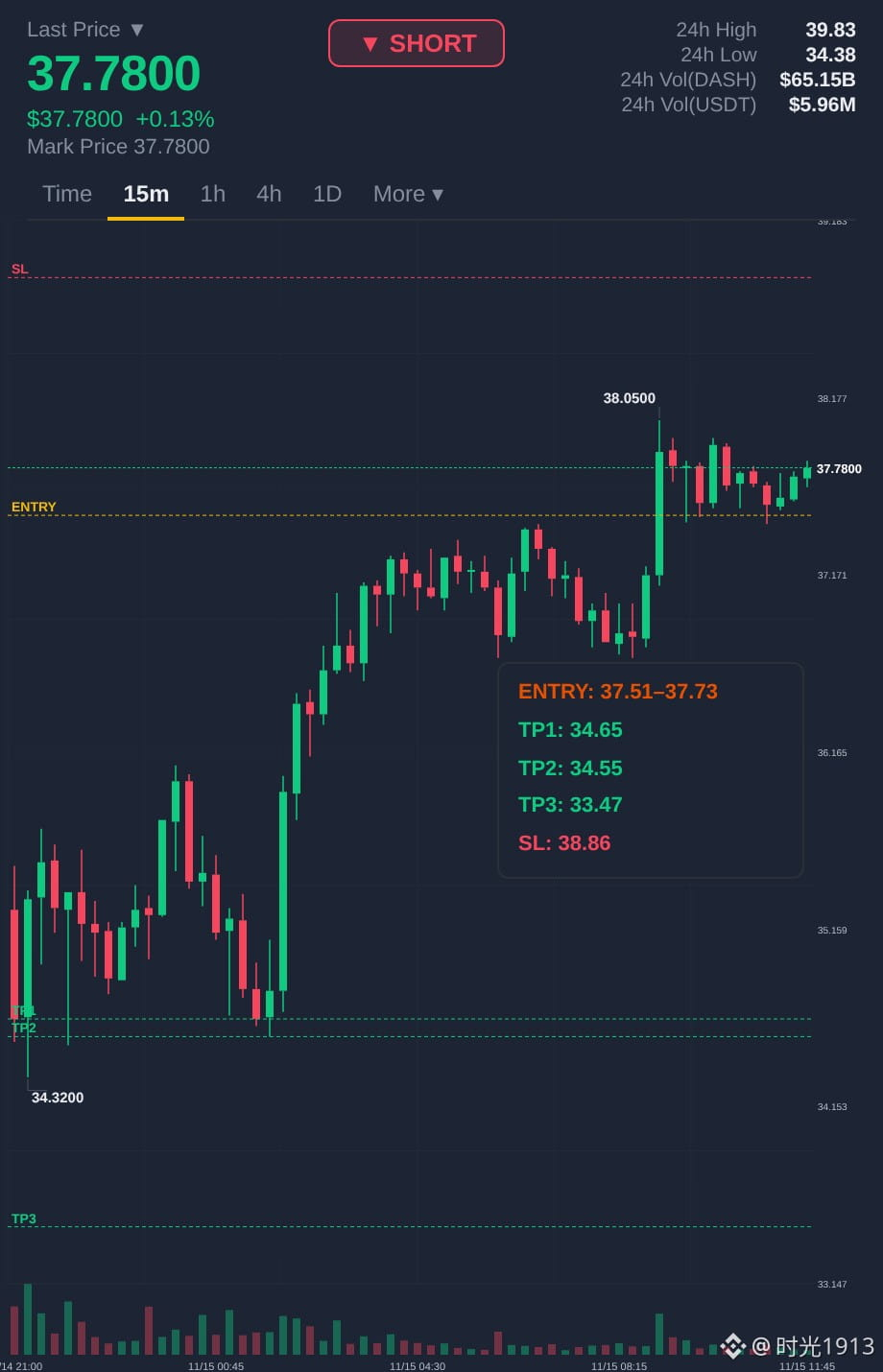
·
--
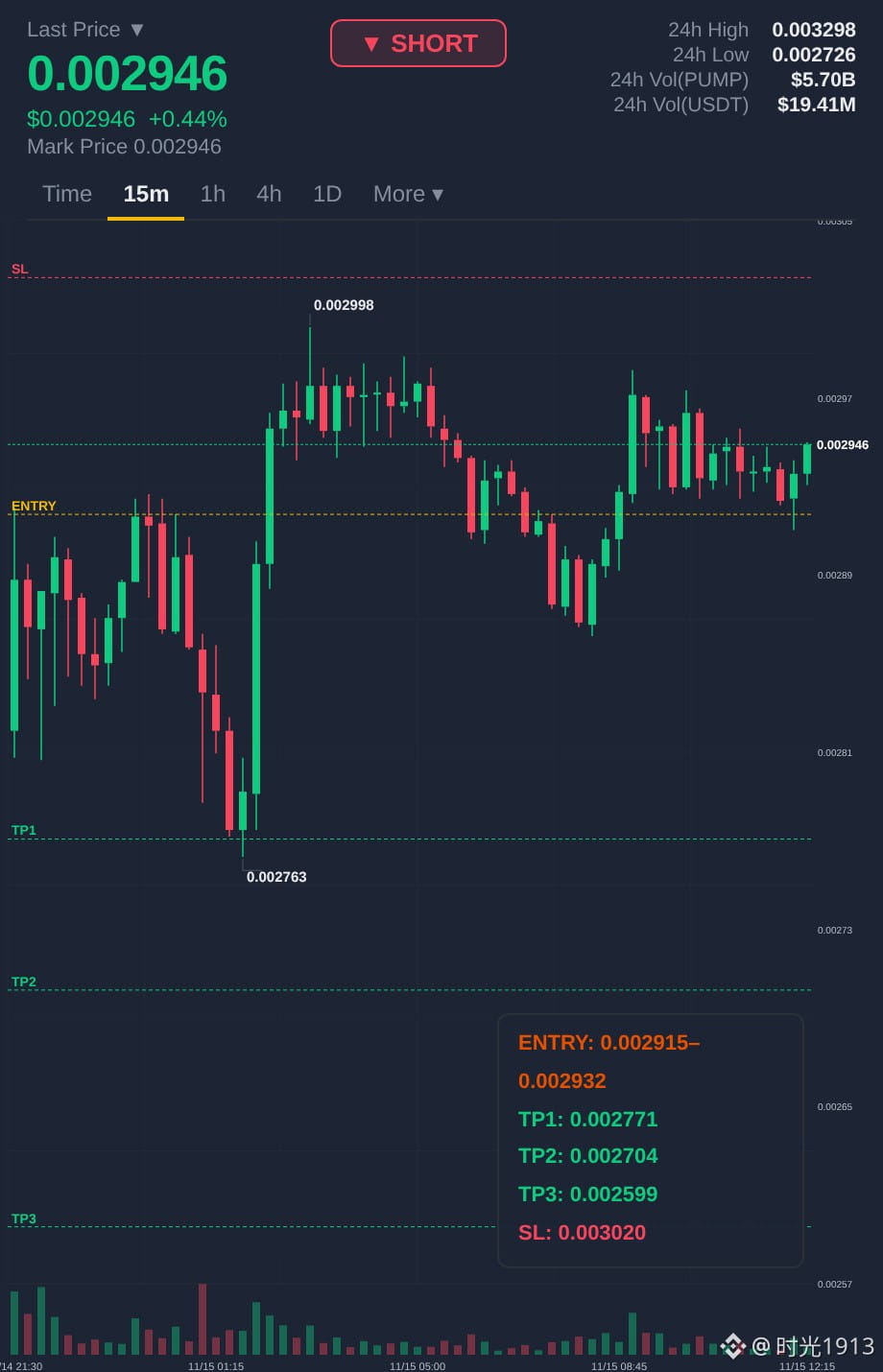
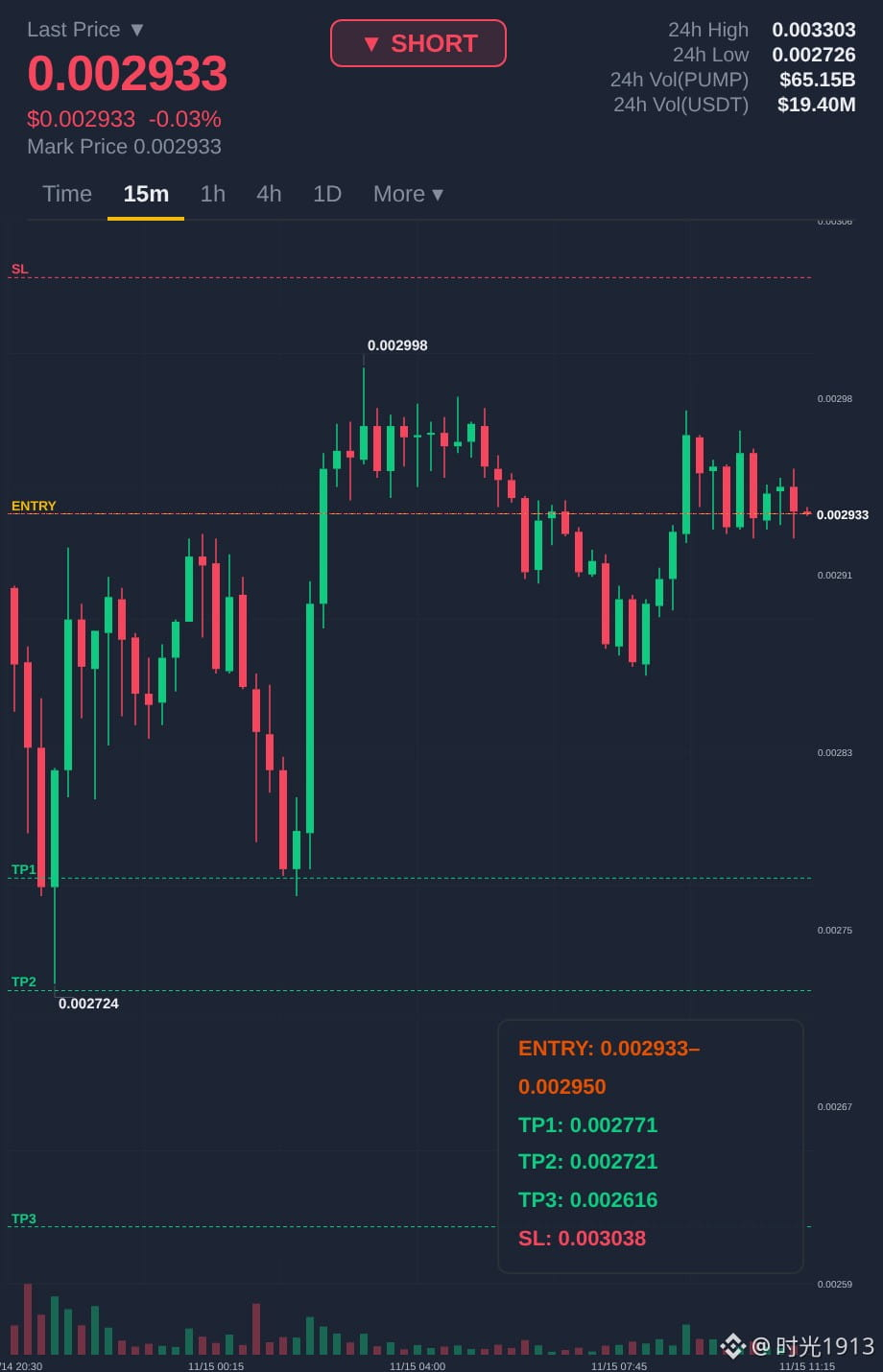
I'm opening a SHORT on $PUMP right here.
Entry: $0.002933 – $0.002950
TP: $0.002771 / $0.002721 / $0.002616
SL: $0.003038 👇🏻
We have rejection at resistance on the 1H chart, with funding at +0.003% suggesting crowded longs, RSI: 41. Sellers defending this zone.
#PUMP #IMD #BTC
Click here to start trading $PUMP
Entry: $0.002933 – $0.002950
TP: $0.002771 / $0.002721 / $0.002616
SL: $0.003038 👇🏻
We have rejection at resistance on the 1H chart, with funding at +0.003% suggesting crowded longs, RSI: 41. Sellers defending this zone.
#PUMP #IMD #BTC
Click here to start trading $PUMP
75
Log in to explore more content
Join global crypto users on Binance Square
⚡️ Get latest and useful information about crypto.
💬 Trusted by the world’s largest crypto exchange.
👍 Discover real insights from verified creators.
Email / Phone number
Trending Topics
1
#IsAnthropic’s$1.5TMarketCapJustified?
9,814 views
79 Discussing
2
#BTCRemainsUnderPressureAfterHawkishFOMCMinutes
235,075 views
2,056 Discussing
3
#NvidiaBoardReportedlySplitOverHuang’sReturn
114,315 views
1,103 Discussing
4
#StrategySTRCPreferredSlips3.65%Below$100Par
6,998 views
67 Discussing
5
#MASToUpgradeSGDTestnetToSGDigitalLedger
20,228 views
242 Discussing
6
#CanGTA6'sLaunchLiftTTWOShares?
81,171 views
801 Discussing
7
#Solana2027RoadmapTargetsDoubleComputeCapacity
8,389 views
130 Discussing
8
#InjectiveTokenizedRealEstateMortgagesTop$1.5B
1,114 views
28 Discussing
9
#TetherMakesStrategicInvestmentInSCRYPT
6,047 views
103 Discussing
10
#CapitalGroupAdds1264500StrategyShares
28,793 views
229 Discussing