
#glassnode
glassnode
234,956 views
614 Discussing
Hot
Latest

·
--
📉 Bitcoin Faces Resistance Near $83K–$85K!
Glassnode data points to long-term holder supply pressure around the $83,000–$85,000 zone, creating a potential resistance area.
But there’s an interesting twist 👀
🟢 Investors are still accumulating BTC around these levels
🔴 Long-term holders are also adding selling pressure
That creates a battle between accumulation and distribution.
📌 Key zone to watch: $83K–$85K
A strong breakout could weaken the resistance, while rejection may keep BTC range-bound.
#Bitcoin #BTC #CryptoMarket #Glassnode
📉 Bitcoin Faces Resistance Near $83K–$85K!
Glassnode data points to long-term holder supply pressure around the $83,000–$85,000 zone, creating a potential resistance area.
But there’s an interesting twist 👀
🟢 Investors are still accumulating BTC around these levels
🔴 Long-term holders are also adding selling pressure
That creates a battle between accumulation and distribution.
📌 Key zone to watch: $83K–$85K
A strong breakout could weaken the resistance, while rejection may keep BTC range-bound.
#Bitcoin #BTC #CryptoMarket #Glassnode
Glassnode data points to long-term holder supply pressure around the $83,000–$85,000 zone, creating a potential resistance area.
But there’s an interesting twist 👀
🟢 Investors are still accumulating BTC around these levels
🔴 Long-term holders are also adding selling pressure
That creates a battle between accumulation and distribution.
📌 Key zone to watch: $83K–$85K
A strong breakout could weaken the resistance, while rejection may keep BTC range-bound.
#Bitcoin #BTC #CryptoMarket #Glassnode

1
65

·
--
Glassnode is scaring people again: 83K-85K is a tough top for old greenhorns; once 75K breaks, look at 60K.
It sounds like a script, but on-chain data really is like that. Long-term holders are looking to exit their positions and unload the supply is stacked up—without volume, it’s basically handing out headshots. Don’t rush to bottom-fish; wait for the market to fall itself into a golden pit.
$BTC #Glassnode
Glassnode is scaring people again: 83K-85K is a tough top for old greenhorns; once 75K breaks, look at 60K.
It sounds like a script, but on-chain data really is like that. Long-term holders are looking to exit their positions and unload the supply is stacked up—without volume, it’s basically handing out headshots. Don’t rush to bottom-fish; wait for the market to fall itself into a golden pit.
$BTC #Glassnode
It sounds like a script, but on-chain data really is like that. Long-term holders are looking to exit their positions and unload the supply is stacked up—without volume, it’s basically handing out headshots. Don’t rush to bottom-fish; wait for the market to fall itself into a golden pit.
$BTC #Glassnode

70

·
--
📰 Glassnode 이번에는 비트코인의 낮은 변동성의 원인을 지목하면서, 사람들이 차트(호가창)에서 직접적으로 쉽게 보지 못하는 한 곳을 가리켰습니다: 시가총액이 얼마나 큰지가 아니라, BTC가 실제로 ‘누구’에게 잡혀 있느냐입니다.
🔥 데이터에 따르면 비트코인 변동성은 현재 역사적 저점 수준에 있습니다. 더 중요한 점은 장기 보유자 공급량이 실현 변동성(실현 변동률)을 설명하는 힘이 시가총액, 미결제약정, 거래량보다 더 크다는 것입니다.
솔직히 이 관점은 꽤 흥미롭습니다. 많은 사람이 시장이 안정적인지 불안정한지 볼 때, 첫 반응은 거래량과 선물(계약) 포지션, 혹은 자금 규모를 먼저 보는 겁니다. 하지만 Glassnode의 결론은, 실제로 변동성을 좌우하는 것은 ‘코인을 보유한 사람들이 얼마나 자주 움직이느냐’일 수 있다는 것입니다.
💡 장기 보유자 비중이 더 중요해지면, 시장 내 코인(유통 물량)의 흐름이 그렇게 격렬하지 않을 가능성이 있습니다. 반대로 시가총액과 거래량이 꽤 크더라도, 보유 구조가 바뀌기만 하면 변동성이 다시 확대될 수 있습니다.
🤔 당신은 지금 BTC의 안정이 주로 시장 자금이 커져서라고 보나요, 아니면 장기 보유자들이 당분간 팔 의향이 없어서라고 보나요?
#BTC #Glassnode #链上数据 #비트코인娱乐注册
📰 Glassnode 이번에는 비트코인의 낮은 변동성의 원인을 지목하면서, 사람들이 차트(호가창)에서 직접적으로 쉽게 보지 못하는 한 곳을 가리켰습니다: 시가총액이 얼마나 큰지가 아니라, BTC가 실제로 ‘누구’에게 잡혀 있느냐입니다.
🔥 데이터에 따르면 비트코인 변동성은 현재 역사적 저점 수준에 있습니다. 더 중요한 점은 장기 보유자 공급량이 실현 변동성(실현 변동률)을 설명하는 힘이 시가총액, 미결제약정, 거래량보다 더 크다는 것입니다.
솔직히 이 관점은 꽤 흥미롭습니다. 많은 사람이 시장이 안정적인지 불안정한지 볼 때, 첫 반응은 거래량과 선물(계약) 포지션, 혹은 자금 규모를 먼저 보는 겁니다. 하지만 Glassnode의 결론은, 실제로 변동성을 좌우하는 것은 ‘코인을 보유한 사람들이 얼마나 자주 움직이느냐’일 수 있다는 것입니다.
💡 장기 보유자 비중이 더 중요해지면, 시장 내 코인(유통 물량)의 흐름이 그렇게 격렬하지 않을 가능성이 있습니다. 반대로 시가총액과 거래량이 꽤 크더라도, 보유 구조가 바뀌기만 하면 변동성이 다시 확대될 수 있습니다.
🤔 당신은 지금 BTC의 안정이 주로 시장 자금이 커져서라고 보나요, 아니면 장기 보유자들이 당분간 팔 의향이 없어서라고 보나요?
#BTC #Glassnode #链上数据 #비트코인娱乐注册
🔥 데이터에 따르면 비트코인 변동성은 현재 역사적 저점 수준에 있습니다. 더 중요한 점은 장기 보유자 공급량이 실현 변동성(실현 변동률)을 설명하는 힘이 시가총액, 미결제약정, 거래량보다 더 크다는 것입니다.
솔직히 이 관점은 꽤 흥미롭습니다. 많은 사람이 시장이 안정적인지 불안정한지 볼 때, 첫 반응은 거래량과 선물(계약) 포지션, 혹은 자금 규모를 먼저 보는 겁니다. 하지만 Glassnode의 결론은, 실제로 변동성을 좌우하는 것은 ‘코인을 보유한 사람들이 얼마나 자주 움직이느냐’일 수 있다는 것입니다.
💡 장기 보유자 비중이 더 중요해지면, 시장 내 코인(유통 물량)의 흐름이 그렇게 격렬하지 않을 가능성이 있습니다. 반대로 시가총액과 거래량이 꽤 크더라도, 보유 구조가 바뀌기만 하면 변동성이 다시 확대될 수 있습니다.
🤔 당신은 지금 BTC의 안정이 주로 시장 자금이 커져서라고 보나요, 아니면 장기 보유자들이 당분간 팔 의향이 없어서라고 보나요?
#BTC #Glassnode #链上数据 #비트코인娱乐注册

4
·
--
📰 Glassnode’s latest signal is a bit less than comforting: bitcoin across multiple wallet cohort groups has, for the first time since early June, collectively shifted to net selling.
In the prior nearly three months, almost all cohorts were continuously accumulating. Now the accumulation trend score has fallen to 0.37— the lower the score, the more actively they’re selling. The main force behind this round of selling is the “whales” holding more than 1,000 BTC.
🔥 On the price front, the key resistance level at $83,000 was not breached, and then price dropped back below $80,000. Honestly, even wallet groups of different sizes have started selling—short-term pressure in the market is clearly more pronounced than a simple technical pullback.
However, things have not fully tilted toward the bears. Bitcoin is simultaneously facing pressure from the 50-week moving average around $79,687. Meanwhile, the 50-day moving average could potentially cross above the 200-day moving average as early as Tuesday, forming a golden cross. If this signal materializes, it may give bulls a bit of reason to try breaking through again.
🤔 The question now is: will whale selling continue to spread, or will the golden-cross expectation help the market reclaim its bid? Do you think BTC can get back above $83,000?
#BTC #比特币 #Glassnode #On-chain data
📰 Glassnode’s latest signal is a bit less than comforting: bitcoin across multiple wallet cohort groups has, for the first time since early June, collectively shifted to net selling.
In the prior nearly three months, almost all cohorts were continuously accumulating. Now the accumulation trend score has fallen to 0.37— the lower the score, the more actively they’re selling. The main force behind this round of selling is the “whales” holding more than 1,000 BTC.
🔥 On the price front, the key resistance level at $83,000 was not breached, and then price dropped back below $80,000. Honestly, even wallet groups of different sizes have started selling—short-term pressure in the market is clearly more pronounced than a simple technical pullback.
However, things have not fully tilted toward the bears. Bitcoin is simultaneously facing pressure from the 50-week moving average around $79,687. Meanwhile, the 50-day moving average could potentially cross above the 200-day moving average as early as Tuesday, forming a golden cross. If this signal materializes, it may give bulls a bit of reason to try breaking through again.
🤔 The question now is: will whale selling continue to spread, or will the golden-cross expectation help the market reclaim its bid? Do you think BTC can get back above $83,000?
#BTC #比特币 #Glassnode #On-chain data
In the prior nearly three months, almost all cohorts were continuously accumulating. Now the accumulation trend score has fallen to 0.37— the lower the score, the more actively they’re selling. The main force behind this round of selling is the “whales” holding more than 1,000 BTC.
🔥 On the price front, the key resistance level at $83,000 was not breached, and then price dropped back below $80,000. Honestly, even wallet groups of different sizes have started selling—short-term pressure in the market is clearly more pronounced than a simple technical pullback.
However, things have not fully tilted toward the bears. Bitcoin is simultaneously facing pressure from the 50-week moving average around $79,687. Meanwhile, the 50-day moving average could potentially cross above the 200-day moving average as early as Tuesday, forming a golden cross. If this signal materializes, it may give bulls a bit of reason to try breaking through again.
🤔 The question now is: will whale selling continue to spread, or will the golden-cross expectation help the market reclaim its bid? Do you think BTC can get back above $83,000?
#BTC #比特币 #Glassnode #On-chain data

72

📡 Glassnode Expands Latency Monitoring Maps for Layer 2 Networks
Data analytics platform Glassnode has announced the addition of Ink, OP Mainnet, and ZKsync Era networks to its latency monitoring maps. This addition aims to provide deeper insights into the infrastructure performance of Layer 2 networks, reflecting the growing importance of latency in the trading and operational environment of these networks.
━━━━━━━━━━━━━━
📊 Impact: 📈 High
🏷️ OTHER
#Glassnode #Layer2 #Blockchain #DataAnalytics #Crypto
📰 Source: cryptobriefing.com
📡 Glassnode Expands Latency Monitoring Maps for Layer 2 Networks
Data analytics platform Glassnode has announced the addition of Ink, OP Mainnet, and ZKsync Era networks to its latency monitoring maps. This addition aims to provide deeper insights into the infrastructure performance of Layer 2 networks, reflecting the growing importance of latency in the trading and operational environment of these networks.
━━━━━━━━━━━━━━
📊 Impact: 📈 High
🏷️ OTHER
#Glassnode #Layer2 #Blockchain #DataAnalytics #Crypto
📰 Source: cryptobriefing.com
Data analytics platform Glassnode has announced the addition of Ink, OP Mainnet, and ZKsync Era networks to its latency monitoring maps. This addition aims to provide deeper insights into the infrastructure performance of Layer 2 networks, reflecting the growing importance of latency in the trading and operational environment of these networks.
━━━━━━━━━━━━━━
📊 Impact: 📈 High
🏷️ OTHER
#Glassnode #Layer2 #Blockchain #DataAnalytics #Crypto
📰 Source: cryptobriefing.com
6
📊 Glassnode Analysis: Bitcoin confined between accumulation zones and dense supply
A recent analysis by Glassnode revealed that Bitcoin’s price is trading within a narrow range, trapped between a strong support level representing investor accumulation zones and dense supply from sellers above the current price. This situation suggests that breaking through resistance will require absorbing selling pressure and potential profit-taking.
━━━━━━━━━━━━━━
📊 Impact: 📈 High
🏷️ BITCOIN
#Bitcoin #Glassnode #MarketAnalysis #CryptoInsights
📰 Source: cryptobriefing.com
📊 Glassnode Analysis: Bitcoin confined between accumulation zones and dense supply
A recent analysis by Glassnode revealed that Bitcoin’s price is trading within a narrow range, trapped between a strong support level representing investor accumulation zones and dense supply from sellers above the current price. This situation suggests that breaking through resistance will require absorbing selling pressure and potential profit-taking.
━━━━━━━━━━━━━━
📊 Impact: 📈 High
🏷️ BITCOIN
#Bitcoin #Glassnode #MarketAnalysis #CryptoInsights
📰 Source: cryptobriefing.com
A recent analysis by Glassnode revealed that Bitcoin’s price is trading within a narrow range, trapped between a strong support level representing investor accumulation zones and dense supply from sellers above the current price. This situation suggests that breaking through resistance will require absorbing selling pressure and potential profit-taking.
━━━━━━━━━━━━━━
📊 Impact: 📈 High
🏷️ BITCOIN
#Bitcoin #Glassnode #MarketAnalysis #CryptoInsights
📰 Source: cryptobriefing.com
15

·
--
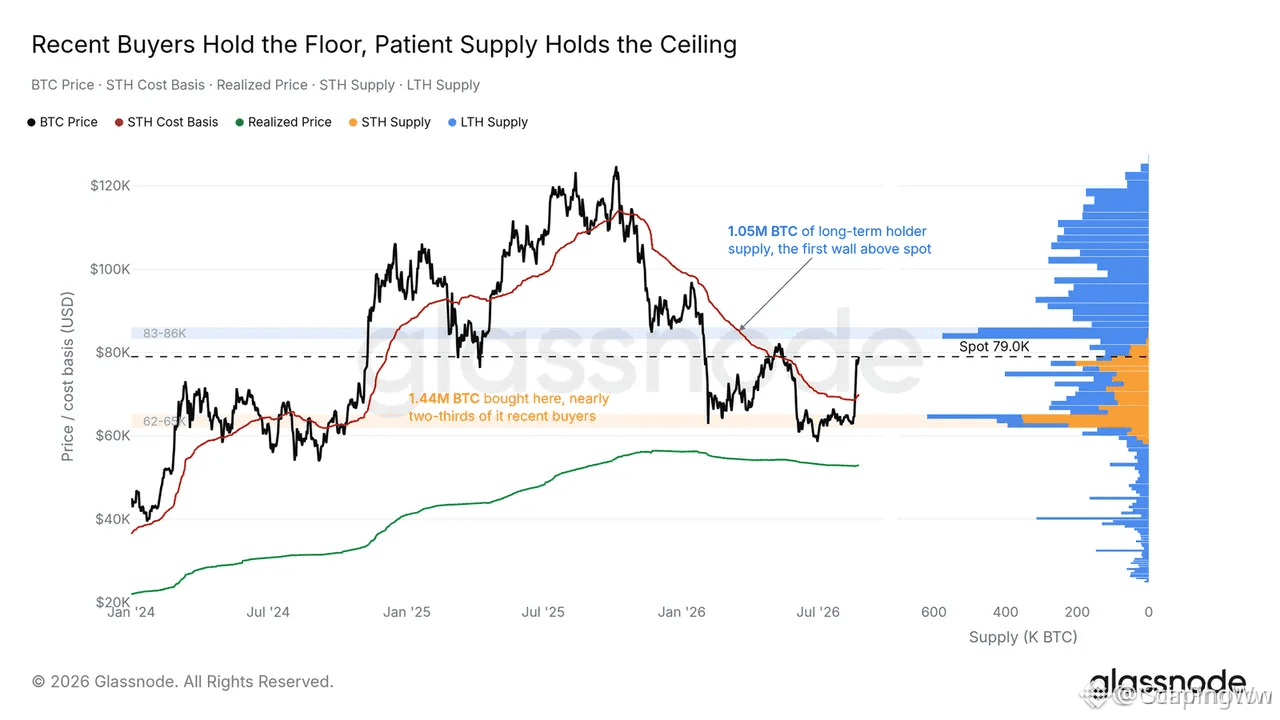
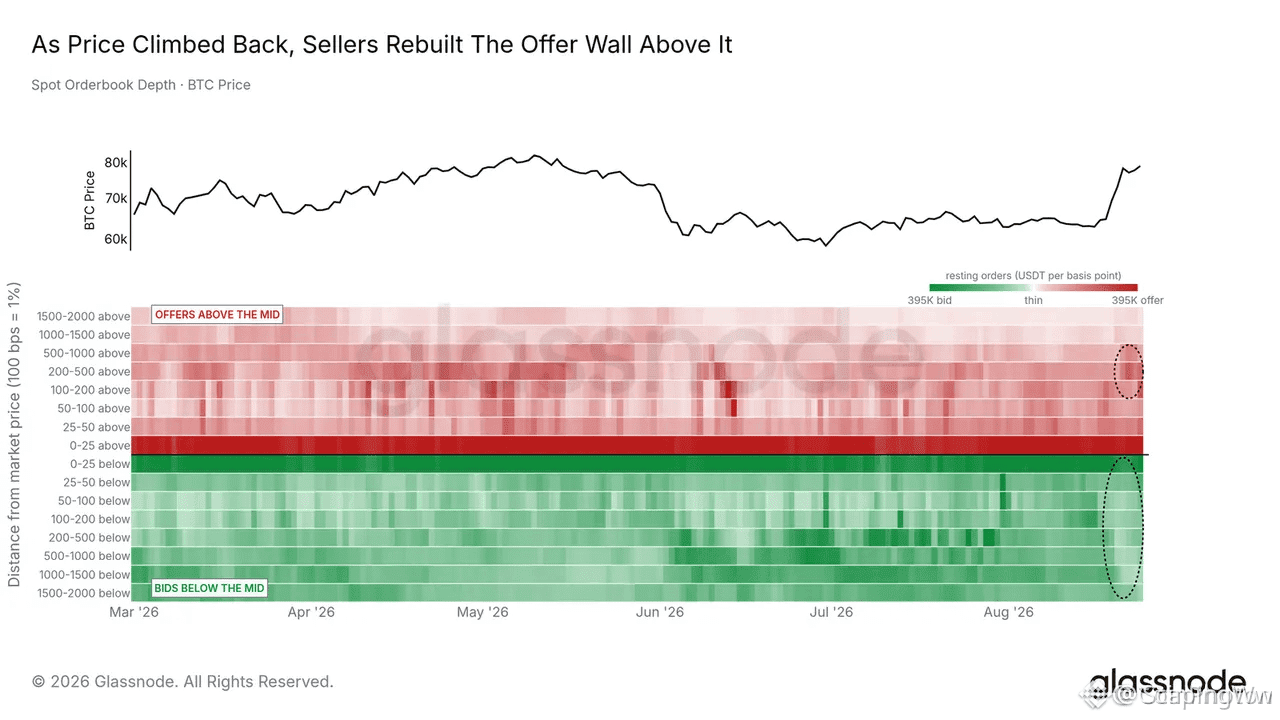
🚨 $BTC FACES HEAVY SUPPLY WALL BETWEEN $81K AND $86K AS LONG-TERM HOLDERS TEST BREAKEVEN! 💥
📌 Glassnode data highlights a dense cluster of resistance for $BTC between $81,000 and $86,000, where trapped long-term holders are lining up to hit breakeven. 📊 Supply is thick here, reinforced by the 365-day VWAP at $82,600 and a key dealer gamma flip around $82,300.
🔍 Buyers are putting up a battle, holding ground above the 50-week and 100-week EMAs near $77,353 and $78,485. 🌊 For bulls to spark the next leg up, spot demand must aggressively absorb this massive overhead supply wall before liquidations trigger higher.
💬 Do you expect bulls to chew through this $86,000 liquidity wall on the first try, or are we due for a retest of lower EMA support? 👇
⚠️ Not financial advice. Always manage your risk. 🛡️
🏷️ #BTC #Bitcoin #Crypto #Glassnode
🎯 🦈
🚨 $BTC FACES HEAVY SUPPLY WALL BETWEEN $81K AND $86K AS LONG-TERM HOLDERS TEST BREAKEVEN! 💥
📌 Glassnode data highlights a dense cluster of resistance for $BTC between $81,000 and $86,000, where trapped long-term holders are lining up to hit breakeven. 📊 Supply is thick here, reinforced by the 365-day VWAP at $82,600 and a key dealer gamma flip around $82,300.
🔍 Buyers are putting up a battle, holding ground above the 50-week and 100-week EMAs near $77,353 and $78,485. 🌊 For bulls to spark the next leg up, spot demand must aggressively absorb this massive overhead supply wall before liquidations trigger higher.
💬 Do you expect bulls to chew through this $86,000 liquidity wall on the first try, or are we due for a retest of lower EMA support? 👇
⚠️ Not financial advice. Always manage your risk. 🛡️
🏷️ #BTC #Bitcoin #Crypto #Glassnode
🎯 🦈
📌 Glassnode data highlights a dense cluster of resistance for $BTC between $81,000 and $86,000, where trapped long-term holders are lining up to hit breakeven. 📊 Supply is thick here, reinforced by the 365-day VWAP at $82,600 and a key dealer gamma flip around $82,300.
🔍 Buyers are putting up a battle, holding ground above the 50-week and 100-week EMAs near $77,353 and $78,485. 🌊 For bulls to spark the next leg up, spot demand must aggressively absorb this massive overhead supply wall before liquidations trigger higher.
💬 Do you expect bulls to chew through this $86,000 liquidity wall on the first try, or are we due for a retest of lower EMA support? 👇
⚠️ Not financial advice. Always manage your risk. 🛡️
🏷️ #BTC #Bitcoin #Crypto #Glassnode
🎯 🦈
37

·
--
💥 Bitcoin faces a major demand test above $83K as liquidity thickens
Bitcoin’s recovery is approaching a major supply wall between $81,000 and $86,000, according to Glassnode. The $83,000–$86,000 area is dominated by long-term holders who accumulated BTC before the recent drawdown and may be more willing to sell once prices return to their breakeven levels.
Additional resistance is coming from exchange sell orders, options positioning and a remaining liquidation shelf. Glassnode identified $80,800 as a key self-custody cost-basis level and around $82,300 as the point where options dealers shift their hedging dynamics. Bitcoin’s 365-day VWAP is also around $82,600.
#bitcoin #Glassnode #BitcoinHoldsNear$79400
#ThuyBNB
$BTC $BNB
💥 Bitcoin faces a major demand test above $83K as liquidity thickens
Bitcoin’s recovery is approaching a major supply wall between $81,000 and $86,000, according to Glassnode. The $83,000–$86,000 area is dominated by long-term holders who accumulated BTC before the recent drawdown and may be more willing to sell once prices return to their breakeven levels.
Additional resistance is coming from exchange sell orders, options positioning and a remaining liquidation shelf. Glassnode identified $80,800 as a key self-custody cost-basis level and around $82,300 as the point where options dealers shift their hedging dynamics. Bitcoin’s 365-day VWAP is also around $82,600.
#bitcoin #Glassnode #BitcoinHoldsNear$79400
#ThuyBNB
$BTC $BNB
Bitcoin’s recovery is approaching a major supply wall between $81,000 and $86,000, according to Glassnode. The $83,000–$86,000 area is dominated by long-term holders who accumulated BTC before the recent drawdown and may be more willing to sell once prices return to their breakeven levels.
Additional resistance is coming from exchange sell orders, options positioning and a remaining liquidation shelf. Glassnode identified $80,800 as a key self-custody cost-basis level and around $82,300 as the point where options dealers shift their hedging dynamics. Bitcoin’s 365-day VWAP is also around $82,600.
#bitcoin #Glassnode #BitcoinHoldsNear$79400
#ThuyBNB
$BTC $BNB
2
57

·
--
🚨 LATEST: Glassnode identifies $81K–$86K as a key supply zone between Bitcoin’s current rebound and its January high, following a 26% rally from August lows.
⚡️ The move is supported by spot demand, including $2.23B in U.S. spot ETF inflows, exchange outflows and accumulation across major wallet cohorts.
#Bitcoin #Glassnode #OnChainAnalytics #CryptoNews $BTC
{future}(BTCUSDT)
🚨 LATEST: Glassnode identifies $81K–$86K as a key supply zone between Bitcoin’s current rebound and its January high, following a 26% rally from August lows.
⚡️ The move is supported by spot demand, including $2.23B in U.S. spot ETF inflows, exchange outflows and accumulation across major wallet cohorts.
#Bitcoin #Glassnode #OnChainAnalytics #CryptoNews $BTC
⚡️ The move is supported by spot demand, including $2.23B in U.S. spot ETF inflows, exchange outflows and accumulation across major wallet cohorts.
#Bitcoin #Glassnode #OnChainAnalytics #CryptoNews $BTC
1
152

·
--
Bullish
UPDATE:
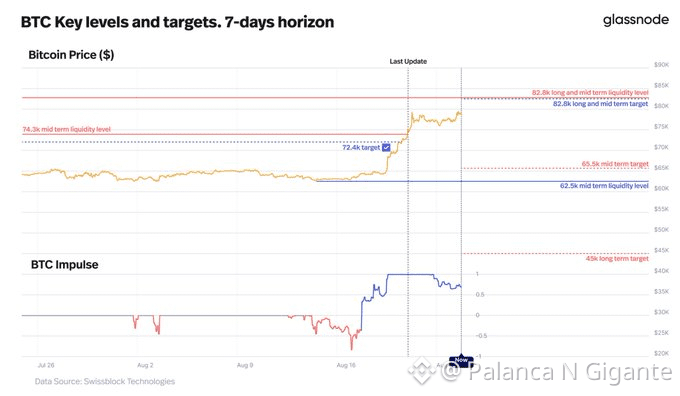
Glassnode’s Bitcoin Vector model turned bullish from the lows, and the $BTC has risen by about 20% since then, now being fully allocated and in profit, with US$82.8k marked as the next upside target.
$BTR $BMT 👀👀👀👀👀
{spot}(BMTUSDT)
{future}(BTRUSDT)
{spot}(BTCUSDT)
#Glassnode #BTCKeyZone #bullish #OpenAIReportedlyCompletesBelModelPretraining #BitcoinRejectedAt$81K50WeekMA
UPDATE:
Glassnode’s Bitcoin Vector model turned bullish from the lows, and the $BTC has risen by about 20% since then, now being fully allocated and in profit, with US$82.8k marked as the next upside target.
$BTR $BMT 👀👀👀👀👀
#Glassnode #BTCKeyZone #bullish #OpenAIReportedlyCompletesBelModelPretraining #BitcoinRejectedAt$81K50WeekMA
Glassnode’s Bitcoin Vector model turned bullish from the lows, and the $BTC has risen by about 20% since then, now being fully allocated and in profit, with US$82.8k marked as the next upside target.
$BTR $BMT 👀👀👀👀👀
#Glassnode #BTCKeyZone #bullish #OpenAIReportedlyCompletesBelModelPretraining #BitcoinRejectedAt$81K50WeekMA
1k

🚨 BITCOIN JUST MADE A HUGE MOVE
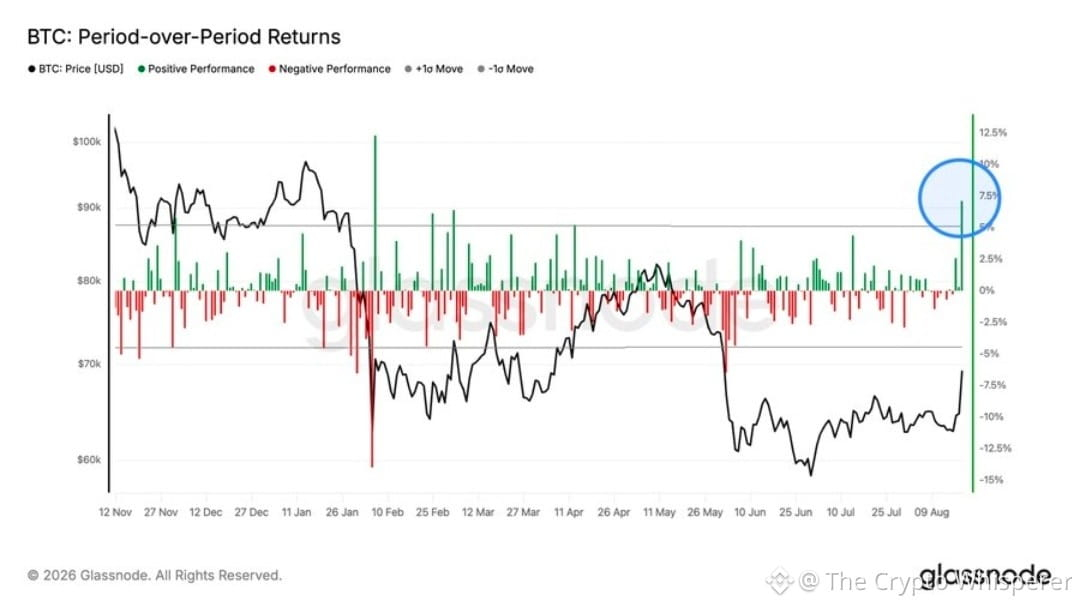
Bitcoin recorded a 5.8-sigma daily move relative to its 30-day volatility, according to Glassnode.
📈 This marks BTC’s largest upside move since October 2023.
A move this extreme highlights just how powerful the current momentum has become — and why volatility could remain elevated.
👀 The key now: Can Bitcoin hold these gains and turn this explosive move into a sustained trend?
$BTC
{spot}(BTCUSDT)
#Bitcoin #Crypto #Glassnode #CryptoMarket
🚨 BITCOIN JUST MADE A HUGE MOVE
Bitcoin recorded a 5.8-sigma daily move relative to its 30-day volatility, according to Glassnode.
📈 This marks BTC’s largest upside move since October 2023.
A move this extreme highlights just how powerful the current momentum has become — and why volatility could remain elevated.
👀 The key now: Can Bitcoin hold these gains and turn this explosive move into a sustained trend?
$BTC
#Bitcoin #Crypto #Glassnode #CryptoMarket
Bitcoin recorded a 5.8-sigma daily move relative to its 30-day volatility, according to Glassnode.
📈 This marks BTC’s largest upside move since October 2023.
A move this extreme highlights just how powerful the current momentum has become — and why volatility could remain elevated.
👀 The key now: Can Bitcoin hold these gains and turn this explosive move into a sustained trend?
$BTC
#Bitcoin #Crypto #Glassnode #CryptoMarket
29

·
--
Glassnode’s latest report continues to define Bitcoin’s on-chain structure as being in the “capitulation phase.” The current price rebound should be understood more as a local rebound during the bottoming process rather than a trend reversal. The cost basis of short-term holders is about $68,500, which is below the real market average of roughly $75,800.
In this round, the maximum relative unrealized loss is about 25%, significantly lower than the over 60% levels seen in prior cycles. Losses are shallower but more dispersed, which may require a longer time to complete clearing. The 90-day moving average of the realized profit/loss ratio is 0.75, and it has not yet entered the historical range—before past seller exhaustion—where it fell below 0.5.
Until key indicators break back above 2 again, structurally the rebound still leans toward local repair. Derivatives conditions have improved, but spot has not caught up. The 30-day perpetual futures directional premium has returned to positive territory, suggesting a rebound in leverage-driven long preference.
The Coinbase Premium Index remains negative, indicating that U.S. spot demand has not yet clearly returned.
For market observation only and not investment advice.
#比特币 #Glassnode #on-chain data
Glassnode’s latest report continues to define Bitcoin’s on-chain structure as being in the “capitulation phase.” The current price rebound should be understood more as a local rebound during the bottoming process rather than a trend reversal. The cost basis of short-term holders is about $68,500, which is below the real market average of roughly $75,800.
In this round, the maximum relative unrealized loss is about 25%, significantly lower than the over 60% levels seen in prior cycles. Losses are shallower but more dispersed, which may require a longer time to complete clearing. The 90-day moving average of the realized profit/loss ratio is 0.75, and it has not yet entered the historical range—before past seller exhaustion—where it fell below 0.5.
Until key indicators break back above 2 again, structurally the rebound still leans toward local repair. Derivatives conditions have improved, but spot has not caught up. The 30-day perpetual futures directional premium has returned to positive territory, suggesting a rebound in leverage-driven long preference.
The Coinbase Premium Index remains negative, indicating that U.S. spot demand has not yet clearly returned.
For market observation only and not investment advice.
#比特币 #Glassnode #on-chain data
In this round, the maximum relative unrealized loss is about 25%, significantly lower than the over 60% levels seen in prior cycles. Losses are shallower but more dispersed, which may require a longer time to complete clearing. The 90-day moving average of the realized profit/loss ratio is 0.75, and it has not yet entered the historical range—before past seller exhaustion—where it fell below 0.5.
Until key indicators break back above 2 again, structurally the rebound still leans toward local repair. Derivatives conditions have improved, but spot has not caught up. The 30-day perpetual futures directional premium has returned to positive territory, suggesting a rebound in leverage-driven long preference.
The Coinbase Premium Index remains negative, indicating that U.S. spot demand has not yet clearly returned.
For market observation only and not investment advice.
#比特币 #Glassnode #on-chain data
35

Holding $BTC 0.9 USDT
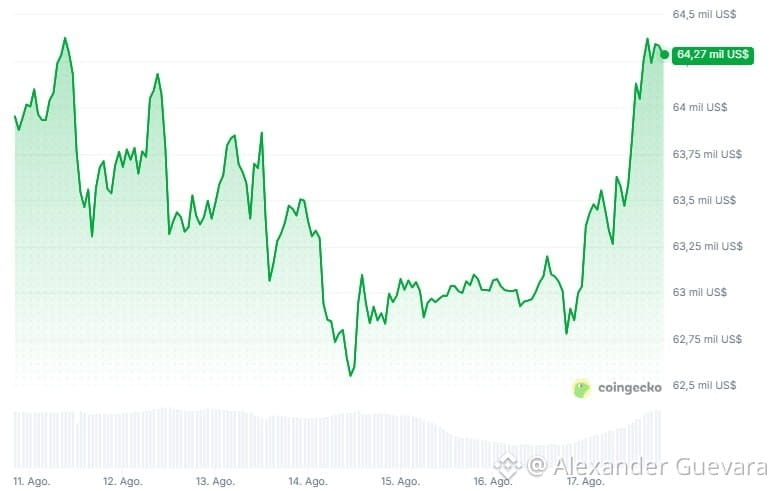
📈 Bitcoin surpassed USD 64,000. According to a recent Glassnode report, the price of the digital coin is caught between two opposing forces: a constant short-term selling pressure and a long-term investor resistance posture.
#Glassnode #BTC #bitcoin #Volume #liquidez $BTC $WBTC
📈 Bitcoin surpassed USD 64,000. According to a recent Glassnode report, the price of the digital coin is caught between two opposing forces: a constant short-term selling pressure and a long-term investor resistance posture.
#Glassnode #BTC #bitcoin #Volume #liquidez $BTC $WBTC
#Glassnode #BTC #bitcoin #Volume #liquidez $BTC $WBTC
111

·
--
Exchange balances hit an 8-year low, and a "supply squeeze" is underway on the BTC chainBeneath the choppy market around $64,000, an "quiet exit" is taking place—centralized exchange BTC balances have fallen to the lowest level since December 2017.
# Exchange balances hit an 8-year low, and a "supply squeeze" is underway on the BTC chain
## An unintuitive phenomenon
Over the past two weeks, the BTC price has been hovering in the $64,000–$65,000 range, almost lulling people to sleep. But if you open the on-chain dashboards of Glassnode or CryptoQuant, you’ll see a completely different picture: **BTC on exchanges is being "emptied out."**
As of early May 2026, the total BTC reserves of global centralized exchanges have fallen to about 2.679 million coins, the lowest level since December 2017. Starting from the 3.2 million coin peak in 2024, cumulative reductions have exceeded 520,000 BTC. Only between February and May 2026, Binance, OKX, and Gemini together saw nearly 100,000 BTC flow out, worth more than $8 billion.
Exchange balances hit an 8-year low, and a "supply squeeze" is underway on the BTC chain
Beneath the choppy market around $64,000, an "quiet exit" is taking place—centralized exchange BTC balances have fallen to the lowest level since December 2017.
# Exchange balances hit an 8-year low, and a "supply squeeze" is underway on the BTC chain
## An unintuitive phenomenon
Over the past two weeks, the BTC price has been hovering in the $64,000–$65,000 range, almost lulling people to sleep. But if you open the on-chain dashboards of Glassnode or CryptoQuant, you’ll see a completely different picture: **BTC on exchanges is being "emptied out."**
As of early May 2026, the total BTC reserves of global centralized exchanges have fallen to about 2.679 million coins, the lowest level since December 2017. Starting from the 3.2 million coin peak in 2024, cumulative reductions have exceeded 520,000 BTC. Only between February and May 2026, Binance, OKX, and Gemini together saw nearly 100,000 BTC flow out, worth more than $8 billion.
# Exchange balances hit an 8-year low, and a "supply squeeze" is underway on the BTC chain
## An unintuitive phenomenon
Over the past two weeks, the BTC price has been hovering in the $64,000–$65,000 range, almost lulling people to sleep. But if you open the on-chain dashboards of Glassnode or CryptoQuant, you’ll see a completely different picture: **BTC on exchanges is being "emptied out."**
As of early May 2026, the total BTC reserves of global centralized exchanges have fallen to about 2.679 million coins, the lowest level since December 2017. Starting from the 3.2 million coin peak in 2024, cumulative reductions have exceeded 520,000 BTC. Only between February and May 2026, Binance, OKX, and Gemini together saw nearly 100,000 BTC flow out, worth more than $8 billion.
154

·
--
💥 10.83 million BTC losses hit a record! Are long-term holders still quietly buying?
Bitcoin has fallen to around $59K, and Glassnode data shows the loss supply has surged to 10.83 million BTC—an all-time high📈
But don’t panic👀 Long-term holders (seasoned veterans holding BTC for more than 155 days) currently control 14.8 million BTC, at a record level! Although 5.58 million of that amount is also underwater, they haven’t sold—this is often one of the bottoming signals in history🧱
RSI is 42, the funding rate is neutral—no signs yet of extreme leverage liquidation⚖️
The key is whether $60K can be held. Traders are panicking in the short term, but long-term players are accumulating🤔 Which camp are you in?
$BTC #比特幣 #鏈上數據 #Glassnode
$BTC
💥 10.83 million BTC losses hit a record! Are long-term holders still quietly buying?
Bitcoin has fallen to around $59K, and Glassnode data shows the loss supply has surged to 10.83 million BTC—an all-time high📈
But don’t panic👀 Long-term holders (seasoned veterans holding BTC for more than 155 days) currently control 14.8 million BTC, at a record level! Although 5.58 million of that amount is also underwater, they haven’t sold—this is often one of the bottoming signals in history🧱
RSI is 42, the funding rate is neutral—no signs yet of extreme leverage liquidation⚖️
The key is whether $60K can be held. Traders are panicking in the short term, but long-term players are accumulating🤔 Which camp are you in?
$BTC #比特幣 #鏈上數據 #Glassnode
$BTC
Bitcoin has fallen to around $59K, and Glassnode data shows the loss supply has surged to 10.83 million BTC—an all-time high📈
But don’t panic👀 Long-term holders (seasoned veterans holding BTC for more than 155 days) currently control 14.8 million BTC, at a record level! Although 5.58 million of that amount is also underwater, they haven’t sold—this is often one of the bottoming signals in history🧱
RSI is 42, the funding rate is neutral—no signs yet of extreme leverage liquidation⚖️
The key is whether $60K can be held. Traders are panicking in the short term, but long-term players are accumulating🤔 Which camp are you in?
$BTC #比特幣 #鏈上數據 #Glassnode
$BTC
85

·
--
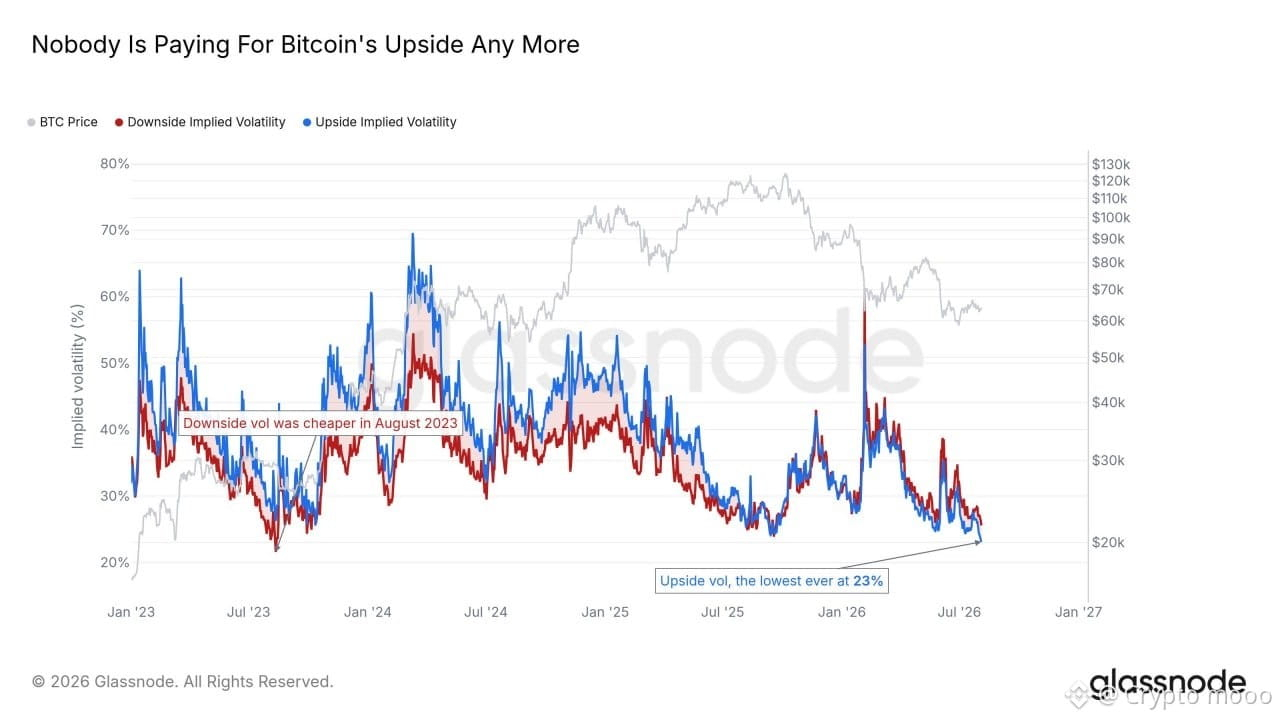
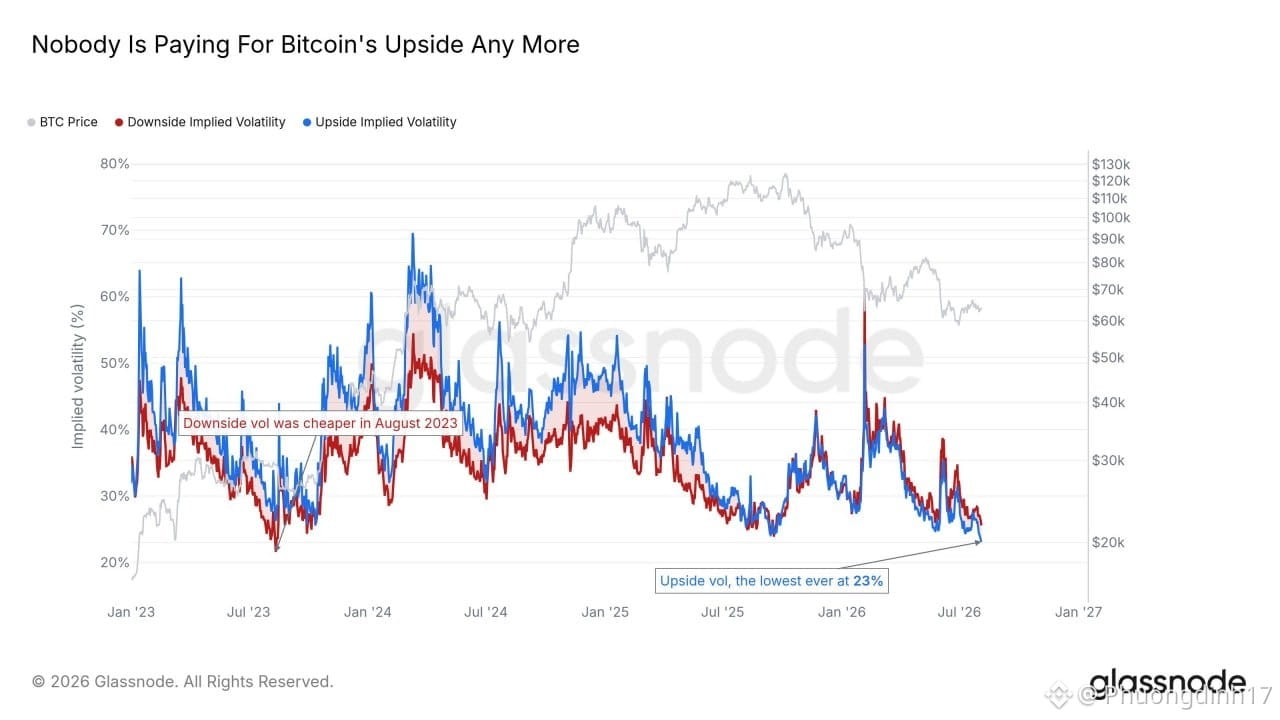
According to Glassnode data, the upside implied volatility of $BTC recently just fell to a record low of 23%. This signal suggests that investors are practically no longer “keen” to pay additional fees to bet on the upside breakout scenario for Bitcoin at the current time.
#Bitcoin #Glassnode #Crypto
$XRP $DOGE
According to Glassnode data, the upside implied volatility of $BTC recently just fell to a record low of 23%. This signal suggests that investors are practically no longer “keen” to pay additional fees to bet on the upside breakout scenario for Bitcoin at the current time.
#Bitcoin #Glassnode #Crypto
$XRP $DOGE
#Bitcoin #Glassnode #Crypto
$XRP $DOGE
161

·
--
According to Glassnode data, the expected upside implied volatility of $BTC has just fallen from a record low level to 23%. This signals that investors are now virtually “not that interested” in paying extra fees to bet on the more bullish breakout scenario for Bitcoin at the current time.
#Bitcoin #Glassnode #Crypto
$XRP $DOGE
According to Glassnode data, the expected upside implied volatility of $BTC has just fallen from a record low level to 23%. This signals that investors are now virtually “not that interested” in paying extra fees to bet on the more bullish breakout scenario for Bitcoin at the current time.
#Bitcoin #Glassnode #Crypto
$XRP $DOGE
#Bitcoin #Glassnode #Crypto
$XRP $DOGE
182
·
--
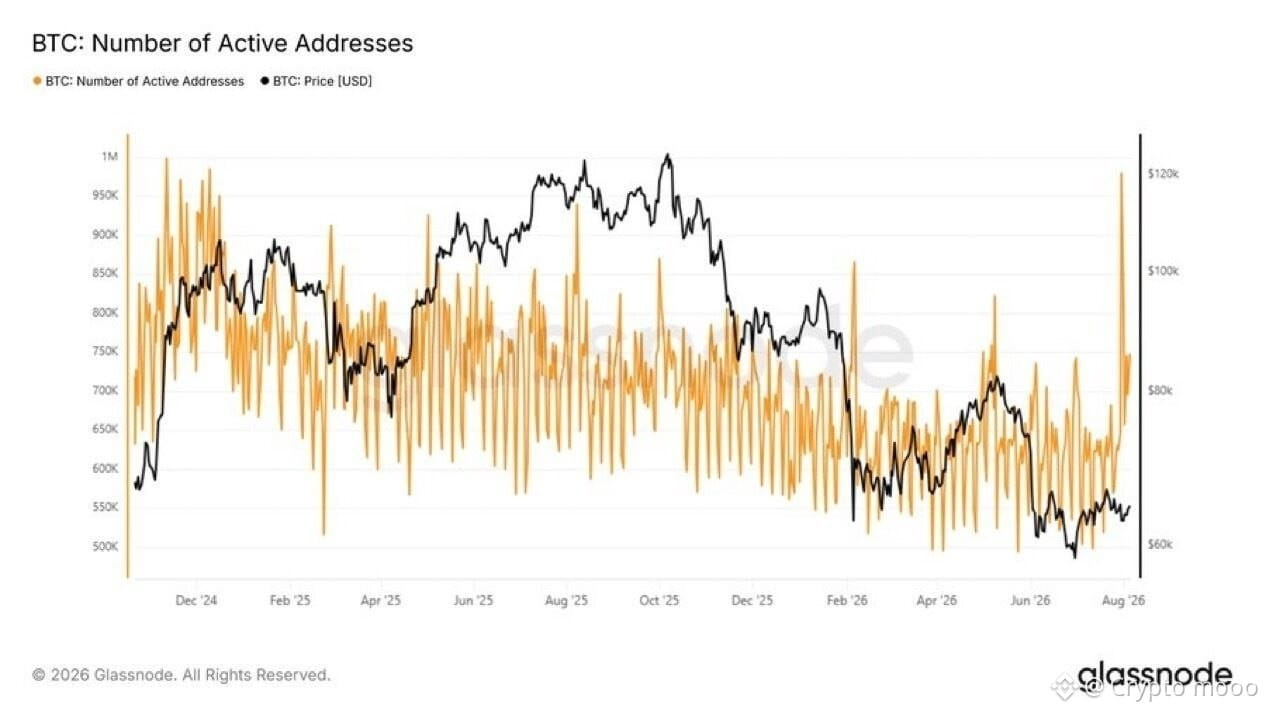
Glassnode: the number of active Bitcoin ($BTC) wallet addresses has surged to 980,000 — the highest level recorded since December 2024. This strong increase in network activity occurred right after reports emerged about a vulnerability exploit in Coldcard hardware wallet firmware, prompting users to urgently move assets to enhance security.
#Bitcoin #Glassnode #Crypto
$LINK $XRP
Glassnode: the number of active Bitcoin ($BTC ) wallet addresses has surged to 980,000 — the highest level recorded since December 2024. This strong increase in network activity occurred right after reports emerged about a vulnerability exploit in Coldcard hardware wallet firmware, prompting users to urgently move assets to enhance security.
#Bitcoin #Glassnode #Crypto
$LINK $XRP
#Bitcoin #Glassnode #Crypto
$LINK $XRP
25


Glassnode Data: Crypto Returns Underperform US Treasuries for 157 Consecutive Days, and the Last Similar Scenario Ended at the Bottom of a Bear Market
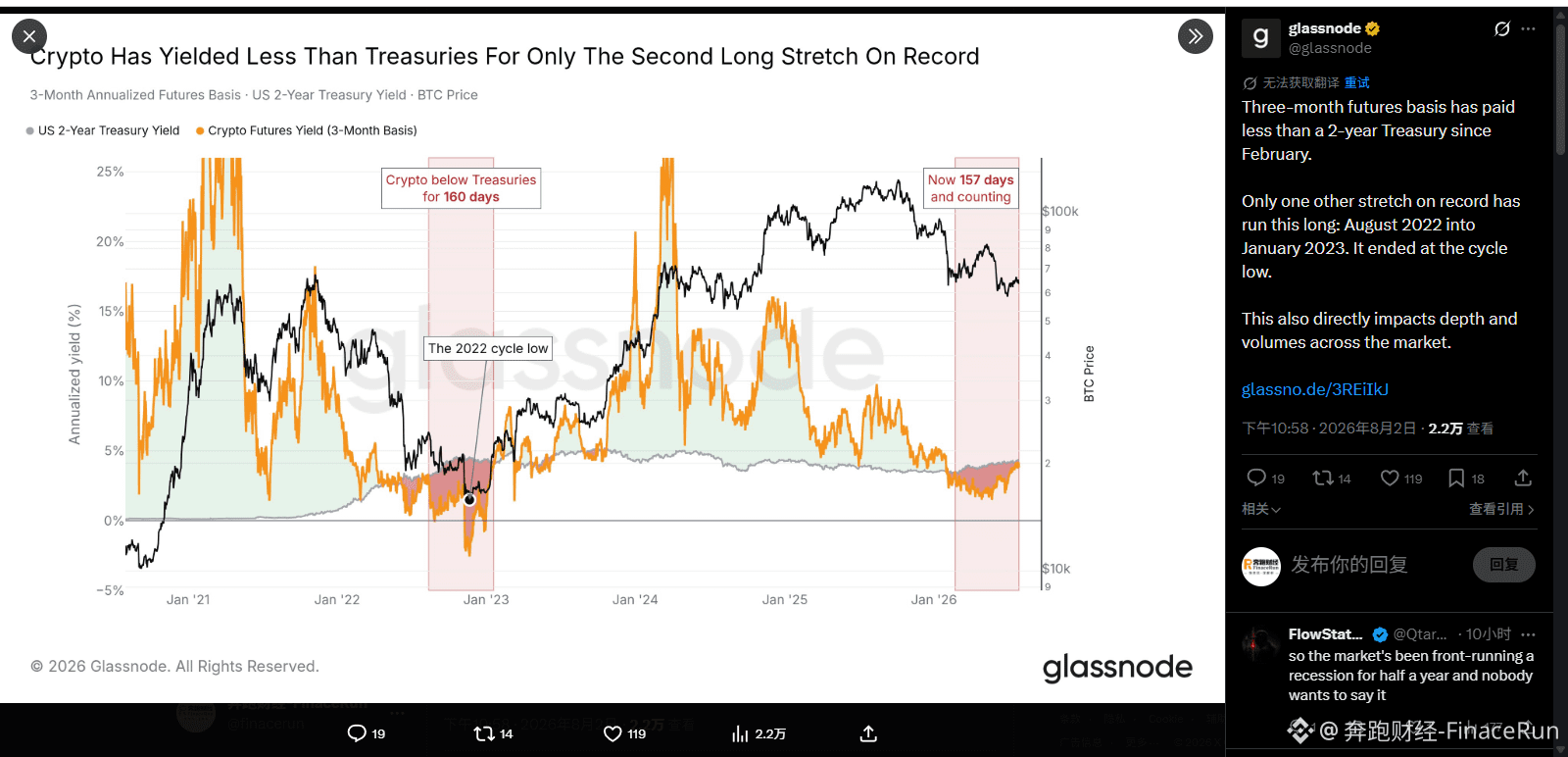
On August 2, blockchain analytics firm Glassnode released an X post chart showing that the annualized yield spread (annualized basis return) of three-month crypto asset futures has been continuously lower than the yield of the US 2-year Treasury note since February this year.
As of the time of the statistics, this phase has lasted 157 days and is still ongoing. As a result, both liquidity depth and trading volume in the crypto market have been directly hit.
Looking back at historical performance, similar long-lasting inversion between crypto asset yields and US Treasury risk-free rates was seen only during the period from August 2022 to January 2023.
Specifically, during that time crypto asset yields underperformed US Treasuries for 160 straight days, coinciding with the lowest point of the previous bear market.
The analysis indicates that prolonged underperformance of crypto futures yields relative to risk-free US Treasuries will directly weaken market depth and trading activity, further suppressing participants’ willingness to engage in on-exchange capital.
Overall, the current 157-day continuous inversion is approaching the record of 160 days seen in 2022–2023. Based on historical patterns, the current market may be in or near the bottom area of this cycle.
As investors, we need to closely watch key changes in this comparative indicator. Once market sentiment starts to recover and capital participation gradually returns, it could become an important signal for judging a shift in market trends.
#Glassnode #宏观流动性
Glassnode Data: Crypto Returns Underperform US Treasuries for 157 Consecutive Days, and the Last Similar Scenario Ended at the Bottom of a Bear Market
On August 2, blockchain analytics firm Glassnode released an X post chart showing that the annualized yield spread (annualized basis return) of three-month crypto asset futures has been continuously lower than the yield of the US 2-year Treasury note since February this year.
As of the time of the statistics, this phase has lasted 157 days and is still ongoing. As a result, both liquidity depth and trading volume in the crypto market have been directly hit.
Looking back at historical performance, similar long-lasting inversion between crypto asset yields and US Treasury risk-free rates was seen only during the period from August 2022 to January 2023.
Specifically, during that time crypto asset yields underperformed US Treasuries for 160 straight days, coinciding with the lowest point of the previous bear market.
The analysis indicates that prolonged underperformance of crypto futures yields relative to risk-free US Treasuries will directly weaken market depth and trading activity, further suppressing participants’ willingness to engage in on-exchange capital.
Overall, the current 157-day continuous inversion is approaching the record of 160 days seen in 2022–2023. Based on historical patterns, the current market may be in or near the bottom area of this cycle.
As investors, we need to closely watch key changes in this comparative indicator. Once market sentiment starts to recover and capital participation gradually returns, it could become an important signal for judging a shift in market trends.
#Glassnode #宏观流动性
On August 2, blockchain analytics firm Glassnode released an X post chart showing that the annualized yield spread (annualized basis return) of three-month crypto asset futures has been continuously lower than the yield of the US 2-year Treasury note since February this year.
As of the time of the statistics, this phase has lasted 157 days and is still ongoing. As a result, both liquidity depth and trading volume in the crypto market have been directly hit.
Looking back at historical performance, similar long-lasting inversion between crypto asset yields and US Treasury risk-free rates was seen only during the period from August 2022 to January 2023.
Specifically, during that time crypto asset yields underperformed US Treasuries for 160 straight days, coinciding with the lowest point of the previous bear market.
The analysis indicates that prolonged underperformance of crypto futures yields relative to risk-free US Treasuries will directly weaken market depth and trading activity, further suppressing participants’ willingness to engage in on-exchange capital.
Overall, the current 157-day continuous inversion is approaching the record of 160 days seen in 2022–2023. Based on historical patterns, the current market may be in or near the bottom area of this cycle.
As investors, we need to closely watch key changes in this comparative indicator. Once market sentiment starts to recover and capital participation gradually returns, it could become an important signal for judging a shift in market trends.
#Glassnode #宏观流动性
1
396

·
--
Bearish
Is Bitcoin getting closer to the bottom?
Glassnode detects a signal worth following: Bitcoin sellers are starting to lose momentum, while the market moves within a tight range and selling pressure gradually eases.
But there’s an important point: selling exhaustion doesn’t mean the bottom is guaranteed.
Glassnode indicates that the current indicators have not yet reached the historical levels that appeared at the bottoms of previous bearish markets.
The equation now is simple:
🔹 Sellers begin to get exhausted
🔹 Volatility declines
🔹 But strong demand from buyers has not yet shown up in sufficient form
🔹 Therefore, the market needs additional confirmation before calling the bottom final
The market may be in a phase of exhausting sellers and building a price base, but real confirmation will come when demand returns strongly and Bitcoin starts reclaiming key resistance levels.
Conclusion:
The signal is positive in terms of selling pressure, but it’s not a confirmed buy signal yet. At this stage, patience and monitoring demand behavior matter more than chasing any rebound.
{future}(BTCUSDT)
#Bitcoin #Crypto #Glassnode #BitcoinAnalysis #CryptoMarket
Is Bitcoin getting closer to the bottom?
Glassnode detects a signal worth following: Bitcoin sellers are starting to lose momentum, while the market moves within a tight range and selling pressure gradually eases.
But there’s an important point: selling exhaustion doesn’t mean the bottom is guaranteed.
Glassnode indicates that the current indicators have not yet reached the historical levels that appeared at the bottoms of previous bearish markets.
The equation now is simple:
🔹 Sellers begin to get exhausted
🔹 Volatility declines
🔹 But strong demand from buyers has not yet shown up in sufficient form
🔹 Therefore, the market needs additional confirmation before calling the bottom final
The market may be in a phase of exhausting sellers and building a price base, but real confirmation will come when demand returns strongly and Bitcoin starts reclaiming key resistance levels.
Conclusion:
The signal is positive in terms of selling pressure, but it’s not a confirmed buy signal yet. At this stage, patience and monitoring demand behavior matter more than chasing any rebound.
#Bitcoin #Crypto #Glassnode #BitcoinAnalysis #CryptoMarket
Glassnode detects a signal worth following: Bitcoin sellers are starting to lose momentum, while the market moves within a tight range and selling pressure gradually eases.
But there’s an important point: selling exhaustion doesn’t mean the bottom is guaranteed.
Glassnode indicates that the current indicators have not yet reached the historical levels that appeared at the bottoms of previous bearish markets.
The equation now is simple:
🔹 Sellers begin to get exhausted
🔹 Volatility declines
🔹 But strong demand from buyers has not yet shown up in sufficient form
🔹 Therefore, the market needs additional confirmation before calling the bottom final
The market may be in a phase of exhausting sellers and building a price base, but real confirmation will come when demand returns strongly and Bitcoin starts reclaiming key resistance levels.
Conclusion:
The signal is positive in terms of selling pressure, but it’s not a confirmed buy signal yet. At this stage, patience and monitoring demand behavior matter more than chasing any rebound.
#Bitcoin #Crypto #Glassnode #BitcoinAnalysis #CryptoMarket

1
188
Log in to explore more content
Join global crypto users on Binance Square
⚡️ Get latest and useful information about crypto.
💬 Trusted by the world’s largest crypto exchange.
👍 Discover real insights from verified creators.
Email / Phone number
Trending Topics
1
#FedRateWatch
244,303 views
1,602 Discussing
2
#BitcoinSlidesTo$76000
2,517 views
50 Discussing
3
#BitcoinReboundsTo$79K
48,951 views
355 Discussing
4
#StrategyMarketCapPassesFord
7,109 views
298 Discussing
5
#ClarityActOddsHalveOnPolymarket
5,260 views
238 Discussing
6
#US30YTreasuryYieldTops5.40%
9,094 views
207 Discussing
7
#BessentEndorsesFinalClarityActDraft
25,302 views
501 Discussing
8
#ZamaOpens16ConfidentialMorphoVaults
9,838 views
246 Discussing
9
#USDCOnChainVolumeTops$100Trillion
1,490 views
37 Discussing
10
#BitcoinSpotETFsNetInflow$160M
2,319 views
92 Discussing