

#ethereum
ethereum
103.7M views
256,307 Discussing
Hot
Latest

·
--
$ETH at $2,331 - Is this the bottom or more pain?
{spot}(ETHUSDT)
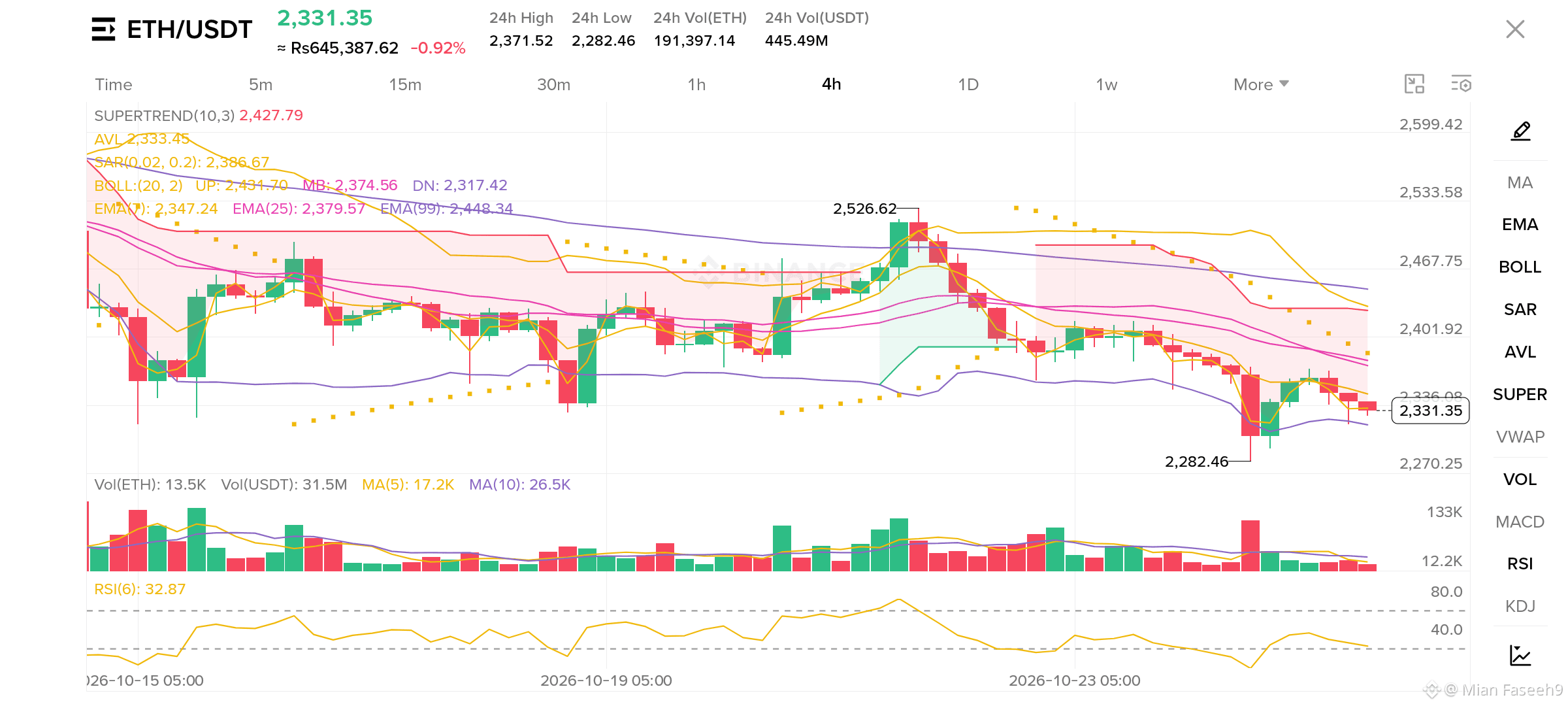
Real talks,$ETH is looking weak. Right now $2,331.35 and 24h low was $2,282.46. We fell from $2,526 high and still under pressure.
On my 4H chart:
Supertrend is $2,427 - still acting as big resistance.
BOLL lower band is $2,317 - we are sitting right on it.
EMA7 $2,347 and EMA25 $2,379 both above price, so trend is still bearish.
RSI(6) 32.87 - almost oversold but not yet fully.
My take: If $2,282 holds, we can see a bounce to $2,374 (BOLL mid) then $2,431. But if $2,282 breaks, next support is $2,200.
I am not shorting here, waiting for confirmation. Low volume shows sellers are getting tired.
Are you buying this dip or waiting lower?
Follow me for daily ETH XAU XAG real chart updates.
If this analysis helped you, a small Tip is appreciated 🙏
#ETH #Ethereum #ETHUSDT
$ETH at $2,331 - Is this the bottom or more pain?
Real talks,$ETH is looking weak. Right now $2,331.35 and 24h low was $2,282.46. We fell from $2,526 high and still under pressure.
On my 4H chart:
Supertrend is $2,427 - still acting as big resistance.
BOLL lower band is $2,317 - we are sitting right on it.
EMA7 $2,347 and EMA25 $2,379 both above price, so trend is still bearish.
RSI(6) 32.87 - almost oversold but not yet fully.
My take: If $2,282 holds, we can see a bounce to $2,374 (BOLL mid) then $2,431. But if $2,282 breaks, next support is $2,200.
I am not shorting here, waiting for confirmation. Low volume shows sellers are getting tired.
Are you buying this dip or waiting lower?
Follow me for daily ETH XAU XAG real chart updates.
If this analysis helped you, a small Tip is appreciated 🙏
#ETH #Ethereum #ETHUSDT
Real talks,$ETH is looking weak. Right now $2,331.35 and 24h low was $2,282.46. We fell from $2,526 high and still under pressure.
On my 4H chart:
Supertrend is $2,427 - still acting as big resistance.
BOLL lower band is $2,317 - we are sitting right on it.
EMA7 $2,347 and EMA25 $2,379 both above price, so trend is still bearish.
RSI(6) 32.87 - almost oversold but not yet fully.
My take: If $2,282 holds, we can see a bounce to $2,374 (BOLL mid) then $2,431. But if $2,282 breaks, next support is $2,200.
I am not shorting here, waiting for confirmation. Low volume shows sellers are getting tired.
Are you buying this dip or waiting lower?
Follow me for daily ETH XAU XAG real chart updates.
If this analysis helped you, a small Tip is appreciated 🙏
#ETH #Ethereum #ETHUSDT
ABO3ZAM:
تحليل واقعي يا بطل، 2280 منطقة حرجة جداً وأي كسر لها بيسحبنا لـ 2200. الأفضل ننتظر إغلاق شمعة 4 ساعات عشان نتأكد من تماسك الدعم قبل أي دخول 🎯
9
3
1.5k

·
--
Bullish
Anyone else notice $ETH slipping under $2.4k? 📉
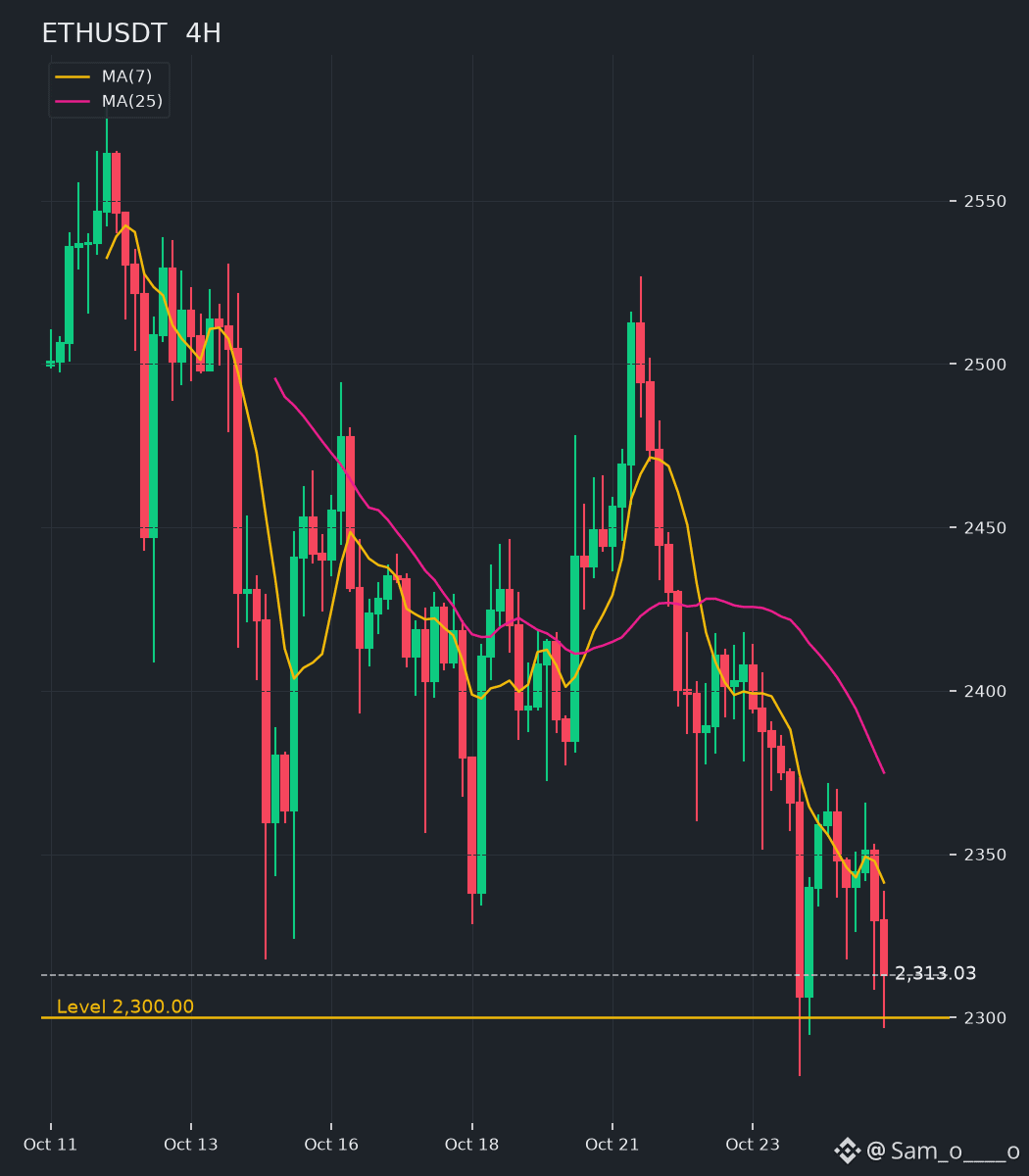
It recently tested ~$2.37k highs. For context, it recently dipped to roughly $2,280 low, so for now I’m leaning bullish on $ETH if it holds roughly $2,300 support, since a bounce could retest ~$2,400.
I’m watching $2.3k as a key level, and let’s see if bulls defend it. However, a break below ~$2,300 would bust this idea. What do you think? 🤔
#Ethereum #crypto
Anyone else notice $ETH slipping under $2.4k? 📉
It recently tested ~$2.37k highs. For context, it recently dipped to roughly $2,280 low, so for now I’m leaning bullish on $ETH if it holds roughly $2,300 support, since a bounce could retest ~$2,400.
I’m watching $2.3k as a key level, and let’s see if bulls defend it. However, a break below ~$2,300 would bust this idea. What do you think? 🤔
#Ethereum #crypto
It recently tested ~$2.37k highs. For context, it recently dipped to roughly $2,280 low, so for now I’m leaning bullish on $ETH if it holds roughly $2,300 support, since a bounce could retest ~$2,400.
I’m watching $2.3k as a key level, and let’s see if bulls defend it. However, a break below ~$2,300 would bust this idea. What do you think? 🤔
#Ethereum #crypto
4
602

·
--
📉 #ETH Market Update:
Ethereum Slips Below $2,300 📉
Ethereum is facing significant downward market pressure, recently falling below the critical $2,300 level. If you are watching the charts, you might be wondering what is driving this bearish momentum.
Key Drivers Behind the Drop: 🔹 ETF Capital Flight: A primary catalyst for this slide is the persistent capital flight from spot Ethereum ETFs. 🔹 Cooling Institutional Demand: The numbers paint a clear picture—Spot ETH ETFs have recorded net outflows on 14 out of 17 trading days so far this October.
As the market absorbs these continuous institutional outflows, traders are closely watching for ETH to establish its next major support zone.
🗣️ What’s your strategy? Are you buying this dip, or waiting on the sidelines for the market to stabilize? Share your thoughts below! 👇
#Ethereum #ETH #CryptoNewss #CryptoMarket
{spot}(ETHUSDT)
$ETH
📉 #ETH Market Update:
Ethereum Slips Below $2,300 📉
Ethereum is facing significant downward market pressure, recently falling below the critical $2,300 level. If you are watching the charts, you might be wondering what is driving this bearish momentum.
Key Drivers Behind the Drop: 🔹 ETF Capital Flight: A primary catalyst for this slide is the persistent capital flight from spot Ethereum ETFs. 🔹 Cooling Institutional Demand: The numbers paint a clear picture—Spot ETH ETFs have recorded net outflows on 14 out of 17 trading days so far this October.
As the market absorbs these continuous institutional outflows, traders are closely watching for ETH to establish its next major support zone.
🗣️ What’s your strategy? Are you buying this dip, or waiting on the sidelines for the market to stabilize? Share your thoughts below! 👇
#Ethereum #ETH #CryptoNewss #CryptoMarket
$ETH
Ethereum Slips Below $2,300 📉
Ethereum is facing significant downward market pressure, recently falling below the critical $2,300 level. If you are watching the charts, you might be wondering what is driving this bearish momentum.
Key Drivers Behind the Drop: 🔹 ETF Capital Flight: A primary catalyst for this slide is the persistent capital flight from spot Ethereum ETFs. 🔹 Cooling Institutional Demand: The numbers paint a clear picture—Spot ETH ETFs have recorded net outflows on 14 out of 17 trading days so far this October.
As the market absorbs these continuous institutional outflows, traders are closely watching for ETH to establish its next major support zone.
🗣️ What’s your strategy? Are you buying this dip, or waiting on the sidelines for the market to stabilize? Share your thoughts below! 👇
#Ethereum #ETH #CryptoNewss #CryptoMarket
$ETH

170

·
--
🚨 $ETH : Could $2,000 Come Before $3,000?
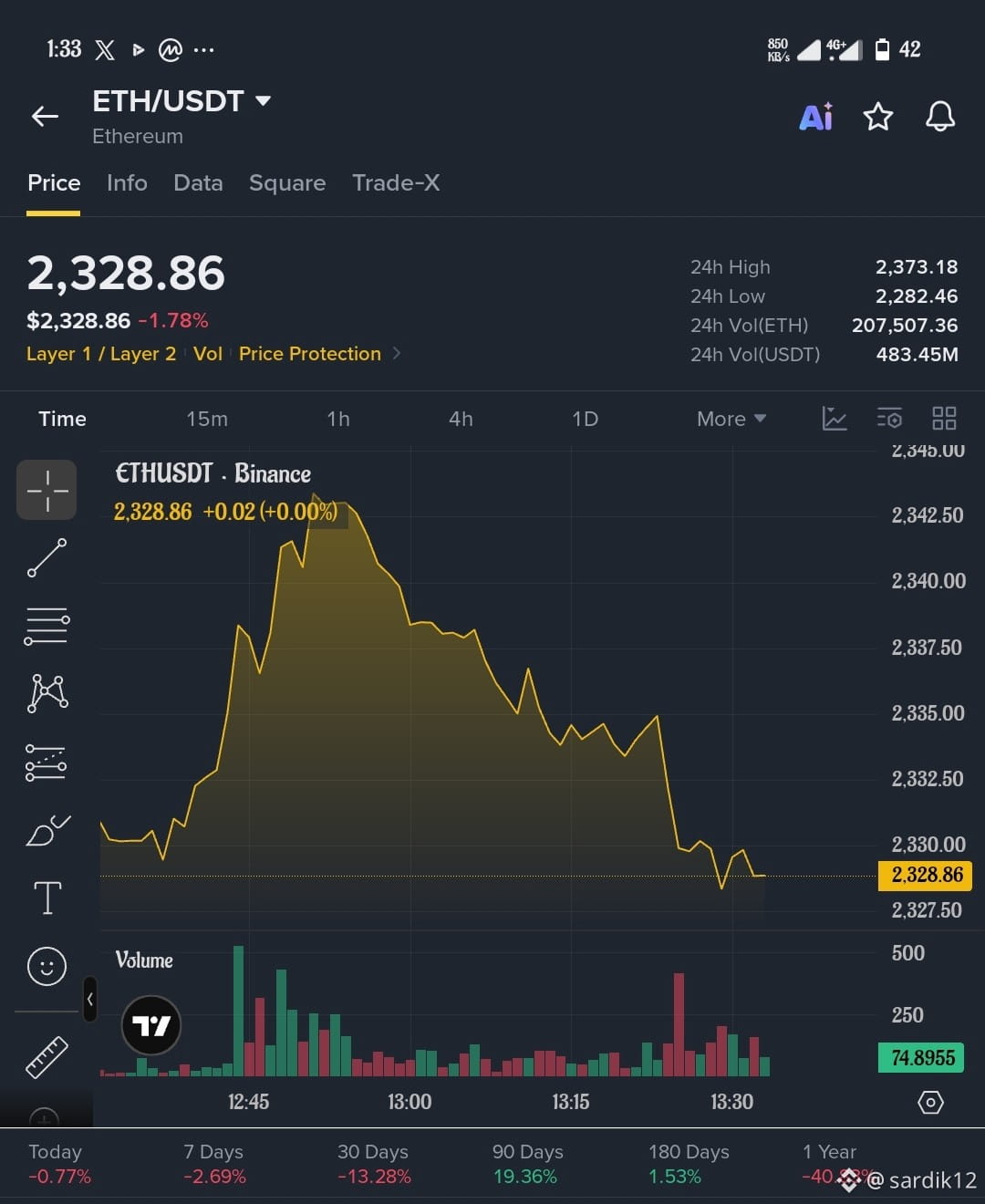
Ethereum is still showing weakness after getting rejected near $2,800. With ETH around $2,348, I'm watching one level closely: $2,000.
If buyers defend this zone and bullish confirmation appears, a recovery toward $2,500, $2,800, and eventually $3,000 could be possible.
But if ETH loses $2,000 decisively, the next downside area to watch could be around $1,600.
📊 My Trading Plan
Entry: $2,000–$2,100 after bullish confirmation
TP1: $2,500
TP2: $2,800
Final target: $3,000
Invalidation: A sustained break below $2,000
I am not buying just because the price is falling. I want to see buyers step in before considering an entry.
What's your view: will ETH reclaim $3,000 first, or revisit $2,000 before any recovery?
#Ethereum #ETH
🚨 $ETH : Could $2,000 Come Before $3,000?
Ethereum is still showing weakness after getting rejected near $2,800. With ETH around $2,348, I'm watching one level closely: $2,000.
If buyers defend this zone and bullish confirmation appears, a recovery toward $2,500, $2,800, and eventually $3,000 could be possible.
But if ETH loses $2,000 decisively, the next downside area to watch could be around $1,600.
📊 My Trading Plan
Entry: $2,000–$2,100 after bullish confirmation
TP1: $2,500
TP2: $2,800
Final target: $3,000
Invalidation: A sustained break below $2,000
I am not buying just because the price is falling. I want to see buyers step in before considering an entry.
What's your view: will ETH reclaim $3,000 first, or revisit $2,000 before any recovery?
#Ethereum #ETH
Ethereum is still showing weakness after getting rejected near $2,800. With ETH around $2,348, I'm watching one level closely: $2,000.
If buyers defend this zone and bullish confirmation appears, a recovery toward $2,500, $2,800, and eventually $3,000 could be possible.
But if ETH loses $2,000 decisively, the next downside area to watch could be around $1,600.
📊 My Trading Plan
Entry: $2,000–$2,100 after bullish confirmation
TP1: $2,500
TP2: $2,800
Final target: $3,000
Invalidation: A sustained break below $2,000
I am not buying just because the price is falling. I want to see buyers step in before considering an entry.
What's your view: will ETH reclaim $3,000 first, or revisit $2,000 before any recovery?
#Ethereum #ETH
charlyonlain:
Eth esta regido por btc espera unas semanas y veras hasta donde cae
1
1
711

$ETH 🚨 ETHEREUM AT A CRITICAL LEVEL! 🚨 $ETH HOLDERS, ARE YOU READY FOR THE NEXT MOVE?
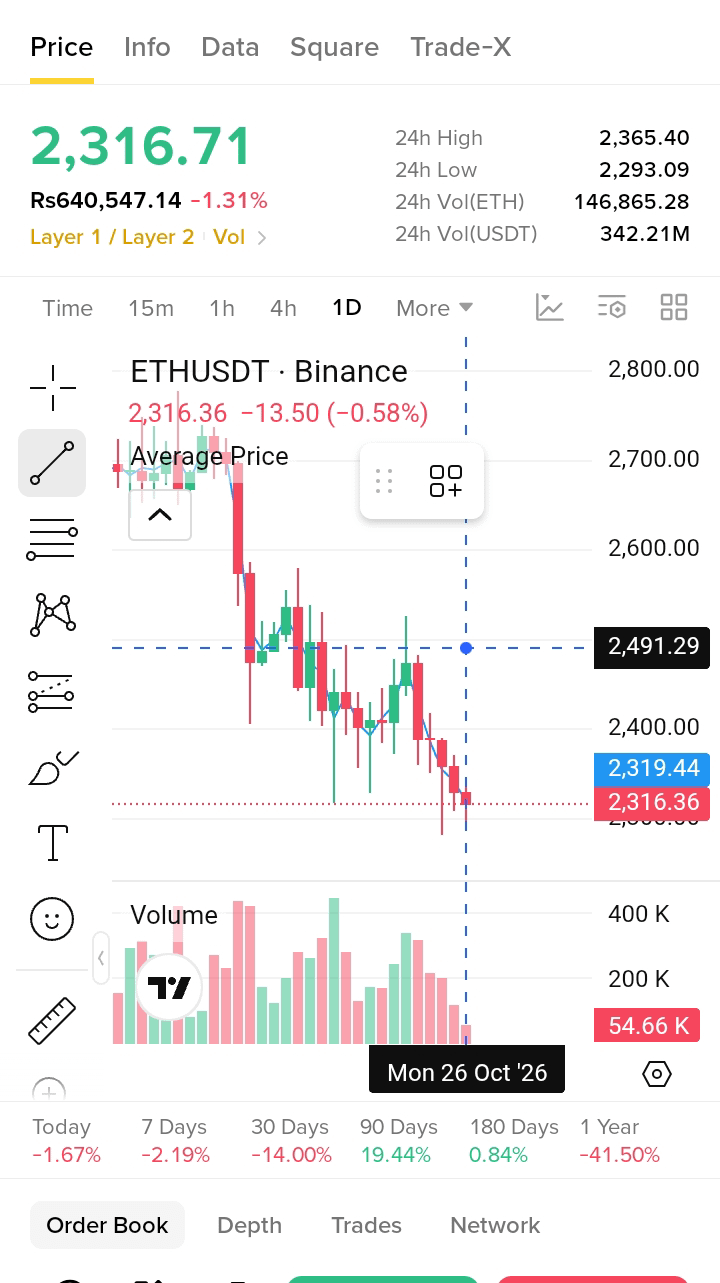
📉 ETH/USDT Market Update | October 26, 2026
Ethereum is showing serious bearish pressure! 🔥
💰 Current Price: $2,316.36
🔴 24H Change: -1.31%
📈 24H High: $2,365.40
📉 24H Low: $2,293.09
🔍 WHAT DOES THE CHART TELL US?
🐻 BEARS ARE IN CONTROL: ETH has been making lower highs and lower lows on the daily chart, showing continued selling pressure.
🛡️ SUPPORT ZONE: $2,290–$2,300 is the key area to watch. If buyers defend this zone, we could see a relief bounce.
🚀 BULLISH RECOVERY: ETH needs to reclaim $2,350–$2,400 to show signs of recovery. A stronger move above $2,490 could improve the bullish outlook.
⚠️ BEARISH SCENARIO: A confirmed breakdown below $2,290 could open the door to further downside. Watch for confirmation instead of chasing the move.
🎯 MY GAME PLAN: ✅ Watch price action around $2,300. ✅ Look for volume confirmation before entering a trade. ✅ Manage risk and avoid emotional decisions. ✅ Remember: capital protection comes first!
🔥 THE BIG QUESTION: Will Ethereum bounce from $2,300 and surprise the bears, or will sellers push ETH even lower? 👀
👇 COMMENT YOUR TARGET! 🚀 BULLISH: $2,400+ 🐻 BEARISH: Below $2,290
Let’s see what the ETH community thinks!
#Ethereum #ETH #BinanceSquareTalks #CryptoAnalysis #TechnicalAnalysis
{future}(ETHUSDT)
$ETH 🚨 ETHEREUM AT A CRITICAL LEVEL! 🚨 $ETH HOLDERS, ARE YOU READY FOR THE NEXT MOVE?
📉 ETH/USDT Market Update | October 26, 2026
Ethereum is showing serious bearish pressure! 🔥
💰 Current Price: $2,316.36
🔴 24H Change: -1.31%
📈 24H High: $2,365.40
📉 24H Low: $2,293.09
🔍 WHAT DOES THE CHART TELL US?
🐻 BEARS ARE IN CONTROL: ETH has been making lower highs and lower lows on the daily chart, showing continued selling pressure.
🛡️ SUPPORT ZONE: $2,290–$2,300 is the key area to watch. If buyers defend this zone, we could see a relief bounce.
🚀 BULLISH RECOVERY: ETH needs to reclaim $2,350–$2,400 to show signs of recovery. A stronger move above $2,490 could improve the bullish outlook.
⚠️ BEARISH SCENARIO: A confirmed breakdown below $2,290 could open the door to further downside. Watch for confirmation instead of chasing the move.
🎯 MY GAME PLAN: ✅ Watch price action around $2,300. ✅ Look for volume confirmation before entering a trade. ✅ Manage risk and avoid emotional decisions. ✅ Remember: capital protection comes first!
🔥 THE BIG QUESTION: Will Ethereum bounce from $2,300 and surprise the bears, or will sellers push ETH even lower? 👀
👇 COMMENT YOUR TARGET! 🚀 BULLISH: $2,400+ 🐻 BEARISH: Below $2,290
Let’s see what the ETH community thinks!
#Ethereum #ETH #BinanceSquareTalks #CryptoAnalysis #TechnicalAnalysis
📉 ETH/USDT Market Update | October 26, 2026
Ethereum is showing serious bearish pressure! 🔥
💰 Current Price: $2,316.36
🔴 24H Change: -1.31%
📈 24H High: $2,365.40
📉 24H Low: $2,293.09
🔍 WHAT DOES THE CHART TELL US?
🐻 BEARS ARE IN CONTROL: ETH has been making lower highs and lower lows on the daily chart, showing continued selling pressure.
🛡️ SUPPORT ZONE: $2,290–$2,300 is the key area to watch. If buyers defend this zone, we could see a relief bounce.
🚀 BULLISH RECOVERY: ETH needs to reclaim $2,350–$2,400 to show signs of recovery. A stronger move above $2,490 could improve the bullish outlook.
⚠️ BEARISH SCENARIO: A confirmed breakdown below $2,290 could open the door to further downside. Watch for confirmation instead of chasing the move.
🎯 MY GAME PLAN: ✅ Watch price action around $2,300. ✅ Look for volume confirmation before entering a trade. ✅ Manage risk and avoid emotional decisions. ✅ Remember: capital protection comes first!
🔥 THE BIG QUESTION: Will Ethereum bounce from $2,300 and surprise the bears, or will sellers push ETH even lower? 👀
👇 COMMENT YOUR TARGET! 🚀 BULLISH: $2,400+ 🐻 BEARISH: Below $2,290
Let’s see what the ETH community thinks!
#Ethereum #ETH #BinanceSquareTalks #CryptoAnalysis #TechnicalAnalysis
1
135

·
--
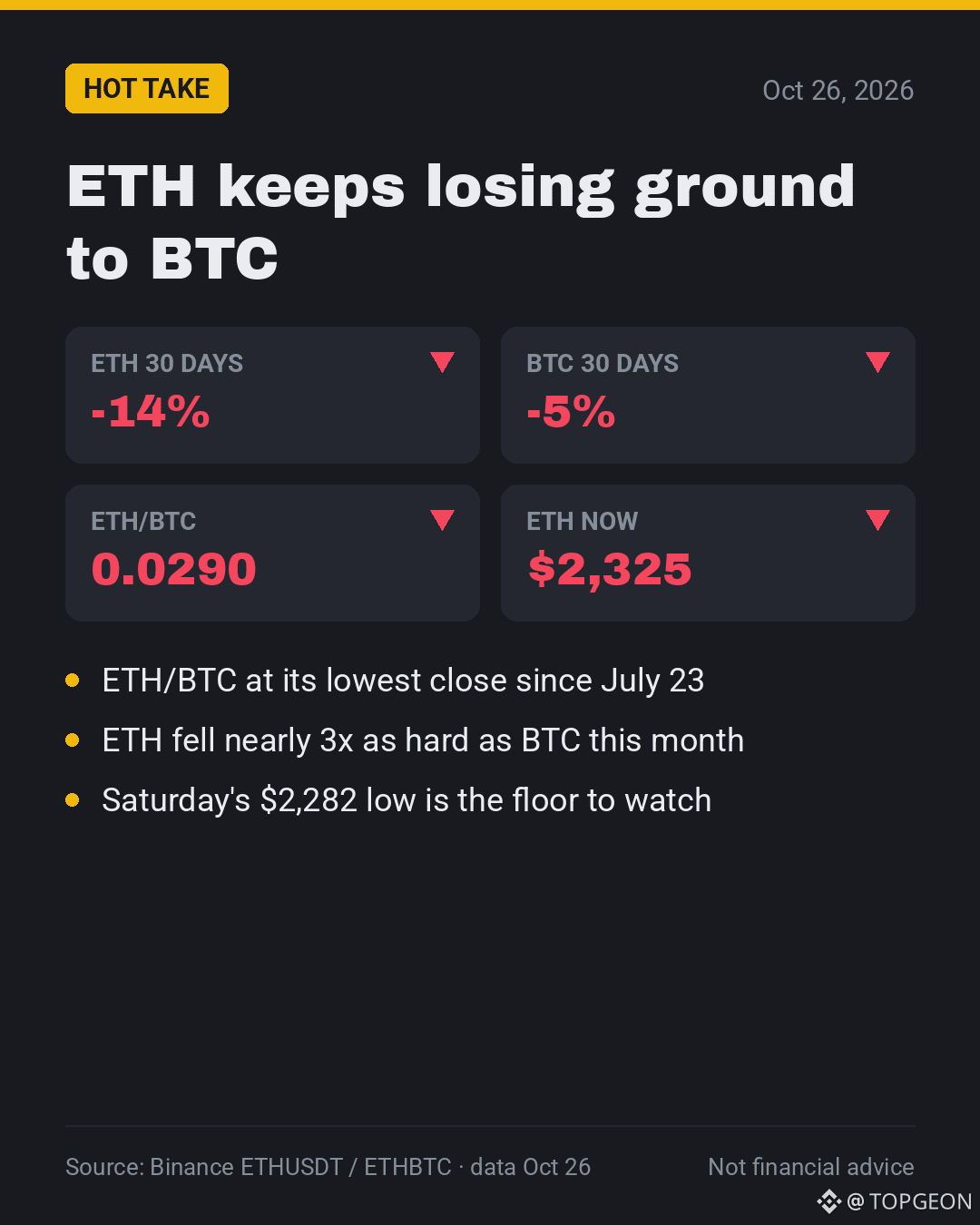
📉 $ETH is down 14% this month. $BTC? Only 5%.
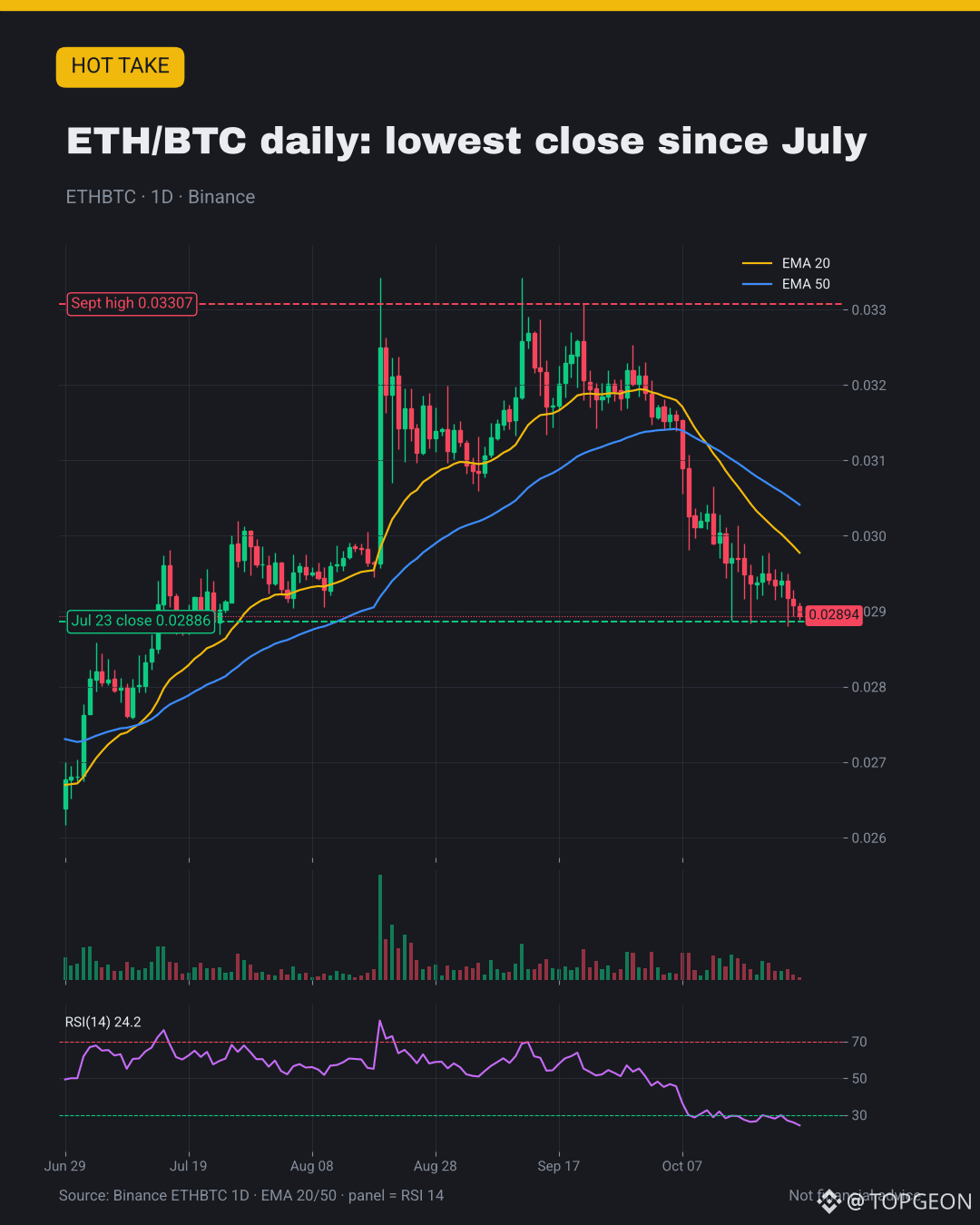
📰 Measured against Bitcoin, ETH just had its weakest close since July.
🤔 Money keeps drifting out of ETH, even on calm days.
👀 Saturday's $2,282 low is the floor that matters now.
💬 Bargain at these prices, or a value trap? 👇
#Ethereum #ETH
📉 $ETH is down 14% this month. $BTC ? Only 5%.
📰 Measured against Bitcoin, ETH just had its weakest close since July.
🤔 Money keeps drifting out of ETH, even on calm days.
👀 Saturday's $2,282 low is the floor that matters now.
💬 Bargain at these prices, or a value trap? 👇
#Ethereum #ETH
📰 Measured against Bitcoin, ETH just had its weakest close since July.
🤔 Money keeps drifting out of ETH, even on calm days.
👀 Saturday's $2,282 low is the floor that matters now.
💬 Bargain at these prices, or a value trap? 👇
#Ethereum #ETH
97

·
--
Bearish
$ETH
Yesterday, Bitcoin dropped below $80,000, dragging other cryptocurrencies down with it, including Ethereum.
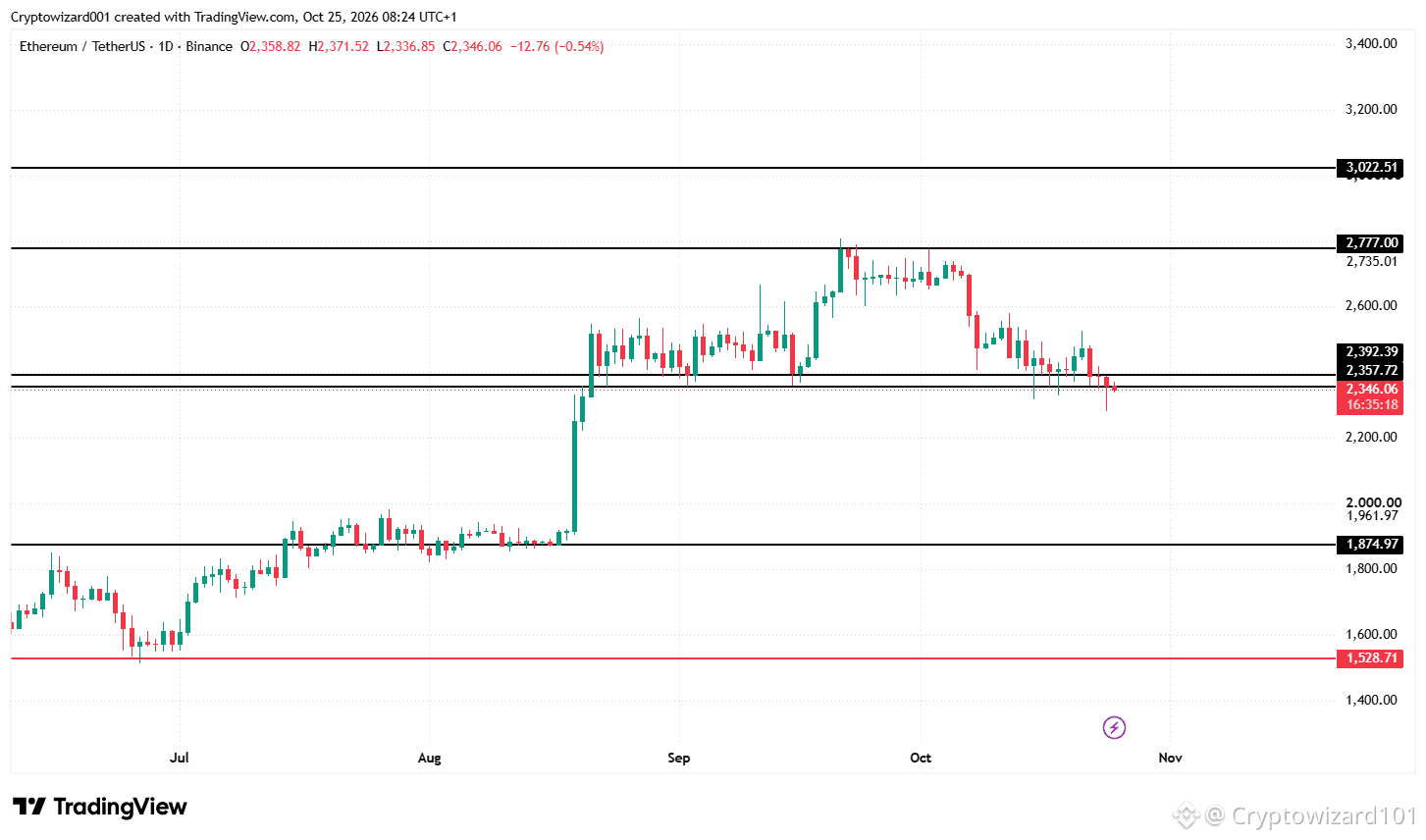
$ETH has declined from $2,500 to around $2,200 this week. If the daily candle closes below $2,300 today, the bears could take control and push the price toward $1,800.
#Ethereum needs to reclaim and hold above $2,400 to strengthen its bullish outlook. However, the next move will largely depend on Bitcoin’s price action and macroeconomic news coming out of the US.
{future}(ETHUSDT)
$ETH
Yesterday, Bitcoin dropped below $80,000, dragging other cryptocurrencies down with it, including Ethereum.
$ETH has declined from $2,500 to around $2,200 this week. If the daily candle closes below $2,300 today, the bears could take control and push the price toward $1,800.
#Ethereum needs to reclaim and hold above $2,400 to strengthen its bullish outlook. However, the next move will largely depend on Bitcoin’s price action and macroeconomic news coming out of the US.
Yesterday, Bitcoin dropped below $80,000, dragging other cryptocurrencies down with it, including Ethereum.
$ETH has declined from $2,500 to around $2,200 this week. If the daily candle closes below $2,300 today, the bears could take control and push the price toward $1,800.
#Ethereum needs to reclaim and hold above $2,400 to strengthen its bullish outlook. However, the next move will largely depend on Bitcoin’s price action and macroeconomic news coming out of the US.
ABO3ZAM:
تحليل منطقي، لكن الشارت يظهر كسر وهمي واضح للدعم الحالي. هل تعتقد أننا بنشوف إغلاق اليوم فوق 2350 ولا السيولة بتسحبنا لأسفل أكثر؟ 🎯
5
1
1.5k

·
--
$ETH Long Idea: Bounce From Range Low
Entry zone: 2,296.93 - 2,308.74 USD
Target: 2,417.77 USD (range high)
Invalidation: 4H close below 2,265.59 USD
Risk/Reward: 1 : 3.1
WHY THIS LEVEL
▪️ Price is testing the 20-candle swing low
▪️ 4H RSI 33.7 (neutral), EMA 20 is below EMA 50
A 4H close below 2,265.59 USD cancels the idea. Chart idea only, not a position I hold.
Would you take this one, wait for more, or stay out? Tell us why below.
Not financial advice. Always DYOR.
Like & Follow for Daily Trade Analytics & Insider News. @MistralAK
#Ethereum #TradingSignals #TechnicalAnalysis
{spot}(ETHUSDT)
$ETH Long Idea: Bounce From Range Low
Entry zone: 2,296.93 - 2,308.74 USD
Target: 2,417.77 USD (range high)
Invalidation: 4H close below 2,265.59 USD
Risk/Reward: 1 : 3.1
WHY THIS LEVEL
▪️ Price is testing the 20-candle swing low
▪️ 4H RSI 33.7 (neutral), EMA 20 is below EMA 50
A 4H close below 2,265.59 USD cancels the idea. Chart idea only, not a position I hold.
Would you take this one, wait for more, or stay out? Tell us why below.
Not financial advice. Always DYOR.
Like & Follow for Daily Trade Analytics & Insider News. @MistralAK
#Ethereum #TradingSignals #TechnicalAnalysis
Entry zone: 2,296.93 - 2,308.74 USD
Target: 2,417.77 USD (range high)
Invalidation: 4H close below 2,265.59 USD
Risk/Reward: 1 : 3.1
WHY THIS LEVEL
▪️ Price is testing the 20-candle swing low
▪️ 4H RSI 33.7 (neutral), EMA 20 is below EMA 50
A 4H close below 2,265.59 USD cancels the idea. Chart idea only, not a position I hold.
Would you take this one, wait for more, or stay out? Tell us why below.
Not financial advice. Always DYOR.
Like & Follow for Daily Trade Analytics & Insider News. @MistralAK
#Ethereum #TradingSignals #TechnicalAnalysis

176

·
--
Bullish
$ETH USDT — LONG
Watching ETH for a move higher toward $2,444, with $2,262 as the stop-loss level.
Leverage: 30X
TP: 2,444
SL: 2,266
High leverage carries significant liquidation risk.
#ETH #Ethereum #ETHUSDT #Cryptotrading
$ETH USDT — LONG
Watching ETH for a move higher toward $2,444, with $2,262 as the stop-loss level.
Leverage: 30X
TP: 2,444
SL: 2,266
High leverage carries significant liquidation risk.
#ETH #Ethereum #ETHUSDT #Cryptotrading
Watching ETH for a move higher toward $2,444, with $2,262 as the stop-loss level.
Leverage: 30X
TP: 2,444
SL: 2,266
High leverage carries significant liquidation risk.
#ETH #Ethereum #ETHUSDT #Cryptotrading
80

·
--
Bullish
ETH traders, don't scroll past this. 👀
Before your next trade, check whether Ethereum is showing strength or losing momentum.
Open the ETH chart below and tell me: bullish or bearish?
#Ethereum #ETH #CryptoTrading $ETH
ETH traders, don't scroll past this. 👀
Before your next trade, check whether Ethereum is showing strength or losing momentum.
Open the ETH chart below and tell me: bullish or bearish?
#Ethereum #ETH #CryptoTrading $ETH
Before your next trade, check whether Ethereum is showing strength or losing momentum.
Open the ETH chart below and tell me: bullish or bearish?
#Ethereum #ETH #CryptoTrading $ETH

40

·
--
Bearish
⚠️ WARNING: ETH -1.8% CRASHING
Ethereum leading the crash in top coins today!
$810M liquidated, market fear before Fed decision.
Is this the dip to buy? 👇
#ETH #CryptoCrash #Ethereum $ETH
{future}(ETHUSDT)
⚠️ WARNING: ETH -1.8% CRASHING
Ethereum leading the crash in top coins today!
$810M liquidated, market fear before Fed decision.
Is this the dip to buy? 👇
#ETH #CryptoCrash #Ethereum $ETH
Ethereum leading the crash in top coins today!
$810M liquidated, market fear before Fed decision.
Is this the dip to buy? 👇
#ETH #CryptoCrash #Ethereum $ETH
29

Ethereum Faces a Key Support Test
ETH is trading near $2,327 as the market navigates uncertainty. The $2,290–$2,300 area is being watched as potential support, while $2,360–$2,400 is an important recovery zone to monitor.
Will ETH regain momentum? Market confirmation matters more than speculation!
#BinancePick #Ethereum #ETH #Altcoins
Ethereum Faces a Key Support Test
ETH is trading near $2,327 as the market navigates uncertainty. The $2,290–$2,300 area is being watched as potential support, while $2,360–$2,400 is an important recovery zone to monitor.
Will ETH regain momentum? Market confirmation matters more than speculation!
#BinancePick #Ethereum #ETH #Altcoins
ETH is trading near $2,327 as the market navigates uncertainty. The $2,290–$2,300 area is being watched as potential support, while $2,360–$2,400 is an important recovery zone to monitor.
Will ETH regain momentum? Market confirmation matters more than speculation!
#BinancePick #Ethereum #ETH #Altcoins
50

$ETH is at $2,305, down 1.3% in 24h. 📉
It's still below its 7, 25 and 99-period averages on the 4h chart, with $2,281 as the key support I'm watching.
Bounce or break? 👇
$ETH #Ethereum #BinancePick
$ETH is at $2,305, down 1.3% in 24h. 📉
It's still below its 7, 25 and 99-period averages on the 4h chart, with $2,281 as the key support I'm watching.
Bounce or break? 👇
$ETH #Ethereum #BinancePick
It's still below its 7, 25 and 99-period averages on the 4h chart, with $2,281 as the key support I'm watching.
Bounce or break? 👇
$ETH #Ethereum #BinancePick
82

·
--
Bearish
🚨 Ethereum Alert: $ETH Loses Crucial Support – Is $2,020 Next?
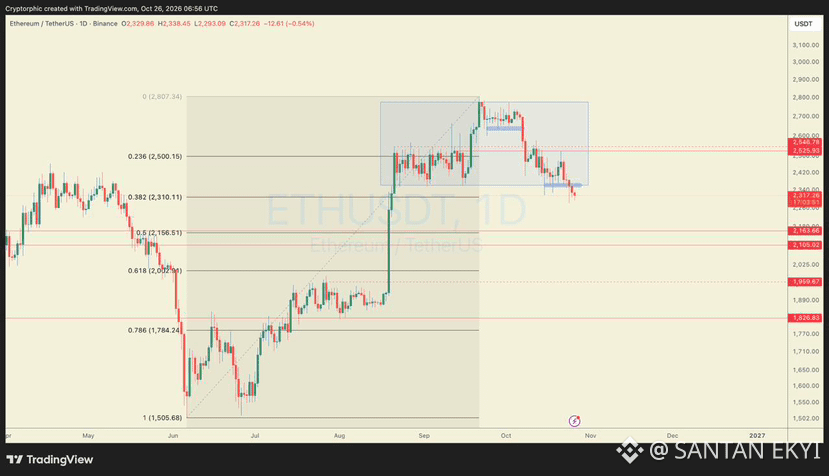
Ethereum is currently facing heavy selling pressure after breaking below the critical $2,310 level (0.382 Fibonacci retracement). Bears are fully in control of the short-term momentum. 📉
Here is the exact technical roadmap you need to watch right now:
🔻 The Bearish Danger Zone:
The next major liquidity support rests between $2,160 and $2,105 (the 0.5 Fib).
⚠️ Warning: If this demand zone breaks, expect a rapid flush down to $2,020 (0.618 Fib).
📈 The Bullish Invalidation:
For the trend to reverse, $ETH must reclaim and close a high timeframe candle above $2,370. Until that happens, playing it safe is the smartest move.
What’s your play? Are you waiting to buy the dip at the 0.5 Fib, or are you scaling into a short position? Tap the $ETH ticker to check the current order book volume and set your limit orders. 📊👇
Disclaimer: Technical analysis is based on probabilities, not certainties. Always use proper risk management. DYOR & NFA
#BinancePick #Ethereum
🚨 Ethereum Alert: $ETH Loses Crucial Support – Is $2,020 Next?
Ethereum is currently facing heavy selling pressure after breaking below the critical $2,310 level (0.382 Fibonacci retracement). Bears are fully in control of the short-term momentum. 📉
Here is the exact technical roadmap you need to watch right now:
🔻 The Bearish Danger Zone:
The next major liquidity support rests between $2,160 and $2,105 (the 0.5 Fib).
⚠️ Warning: If this demand zone breaks, expect a rapid flush down to $2,020 (0.618 Fib).
📈 The Bullish Invalidation:
For the trend to reverse, $ETH must reclaim and close a high timeframe candle above $2,370. Until that happens, playing it safe is the smartest move.
What’s your play? Are you waiting to buy the dip at the 0.5 Fib, or are you scaling into a short position? Tap the $ETH ticker to check the current order book volume and set your limit orders. 📊👇
Disclaimer: Technical analysis is based on probabilities, not certainties. Always use proper risk management. DYOR & NFA
#BinancePick #Ethereum
Ethereum is currently facing heavy selling pressure after breaking below the critical $2,310 level (0.382 Fibonacci retracement). Bears are fully in control of the short-term momentum. 📉
Here is the exact technical roadmap you need to watch right now:
🔻 The Bearish Danger Zone:
The next major liquidity support rests between $2,160 and $2,105 (the 0.5 Fib).
⚠️ Warning: If this demand zone breaks, expect a rapid flush down to $2,020 (0.618 Fib).
📈 The Bullish Invalidation:
For the trend to reverse, $ETH must reclaim and close a high timeframe candle above $2,370. Until that happens, playing it safe is the smartest move.
What’s your play? Are you waiting to buy the dip at the 0.5 Fib, or are you scaling into a short position? Tap the $ETH ticker to check the current order book volume and set your limit orders. 📊👇
Disclaimer: Technical analysis is based on probabilities, not certainties. Always use proper risk management. DYOR & NFA
#BinancePick #Ethereum
92

·
--
🚨 Bitmine is closing in on 5% of all ETH controlled, spending nearly $400M on share repurchases this year. The treasury now holds $15B in assets after just 15 months. A bold bet on self-confidence amid market volatility.
Market Implication: Large-scale treasury accumulation often signals strong conviction from major players, potentially reducing circulating supply pressure.
💭 Is Bitmine's aggressive buyback a sign of a bottom forming, or simply a play for dominance? #Bitmine #Ethereum
$ETH #TradingSignal #CryptoAnalysis
🚨 Bitmine is closing in on 5% of all ETH controlled, spending nearly $400M on share repurchases this year. The treasury now holds $15B in assets after just 15 months. A bold bet on self-confidence amid market volatility.
Market Implication: Large-scale treasury accumulation often signals strong conviction from major players, potentially reducing circulating supply pressure.
💭 Is Bitmine's aggressive buyback a sign of a bottom forming, or simply a play for dominance? #Bitmine #Ethereum
$ETH #TradingSignal #CryptoAnalysis
Market Implication: Large-scale treasury accumulation often signals strong conviction from major players, potentially reducing circulating supply pressure.
💭 Is Bitmine's aggressive buyback a sign of a bottom forming, or simply a play for dominance? #Bitmine #Ethereum
$ETH #TradingSignal #CryptoAnalysis


·
--
👑🔥 KING BITCOIN vs. ETHEREUM — THE ETF CAPITAL BATTLE! 🔥👑
Dear Binancians 💛
The institutional money flow is telling a tale of two giants! 📊⚔️
👑 $BTC — THE KING HOLDS HIS GROUND! 🇺🇸 US Spot Bitcoin ETFs recorded $301.2M in provisional net inflows last week.
But here’s the twist! 👀 💰 Over $1B flowed in during the first three sessions, before $773.5M flowed out over the final two.
💎 $ETH — FACING INSTITUTIONAL PRESSURE Ethereum ETFs recorded $220.7M in net outflows, raising questions about the strength of institutional demand.
⚠️ ONE IMPORTANT DETAIL: Friday’s figures are still provisional, with two fund entries missing. The final numbers may change.
🔍 THE ROYAL MARKET TAKEAWAY Bitcoin attracted net capital over the week, while Ethereum faced net outflows. But ETF flows alone don’t determine the next price move.
👑 Watch $BTC ’s incoming capital, ETH’s recovery in ETF demand, and price action before making any decision.
💛 Remember, Royal Traders: Follow the data, respect the risk, and protect your capital before chasing profits.
Not financial advice (NFA). DYOR.
#Bitcoin #Ethereum #CryptoMarket #ETFFlows #Binance
👑🔥 KING BITCOIN vs. ETHEREUM — THE ETF CAPITAL BATTLE! 🔥👑
Dear Binancians 💛
The institutional money flow is telling a tale of two giants! 📊⚔️
👑 $BTC — THE KING HOLDS HIS GROUND! 🇺🇸 US Spot Bitcoin ETFs recorded $301.2M in provisional net inflows last week.
But here’s the twist! 👀 💰 Over $1B flowed in during the first three sessions, before $773.5M flowed out over the final two.
💎 $ETH — FACING INSTITUTIONAL PRESSURE Ethereum ETFs recorded $220.7M in net outflows, raising questions about the strength of institutional demand.
⚠️ ONE IMPORTANT DETAIL: Friday’s figures are still provisional, with two fund entries missing. The final numbers may change.
🔍 THE ROYAL MARKET TAKEAWAY Bitcoin attracted net capital over the week, while Ethereum faced net outflows. But ETF flows alone don’t determine the next price move.
👑 Watch $BTC ’s incoming capital, ETH’s recovery in ETF demand, and price action before making any decision.
💛 Remember, Royal Traders: Follow the data, respect the risk, and protect your capital before chasing profits.
Not financial advice (NFA). DYOR.
#Bitcoin #Ethereum #CryptoMarket #ETFFlows #Binance
Dear Binancians 💛
The institutional money flow is telling a tale of two giants! 📊⚔️
👑 $BTC — THE KING HOLDS HIS GROUND! 🇺🇸 US Spot Bitcoin ETFs recorded $301.2M in provisional net inflows last week.
But here’s the twist! 👀 💰 Over $1B flowed in during the first three sessions, before $773.5M flowed out over the final two.
💎 $ETH — FACING INSTITUTIONAL PRESSURE Ethereum ETFs recorded $220.7M in net outflows, raising questions about the strength of institutional demand.
⚠️ ONE IMPORTANT DETAIL: Friday’s figures are still provisional, with two fund entries missing. The final numbers may change.
🔍 THE ROYAL MARKET TAKEAWAY Bitcoin attracted net capital over the week, while Ethereum faced net outflows. But ETF flows alone don’t determine the next price move.
👑 Watch $BTC ’s incoming capital, ETH’s recovery in ETF demand, and price action before making any decision.
💛 Remember, Royal Traders: Follow the data, respect the risk, and protect your capital before chasing profits.
Not financial advice (NFA). DYOR.
#Bitcoin #Ethereum #CryptoMarket #ETFFlows #Binance

1
28

·
--
Ethereum (ETH) Suffers Its Worst October in 8 Years: Is More Pain Ahead?
- Ethereum experienced a nearly 9% gain in September but has plunged about 13% in October, with analysts predicting further declines due to waning institutional interest.
- The cryptocurrency is currently trading around $2,330, with concerns about dropping below the $2,000 psychological level, which could lead to a significant support area between $1,850-$1,920.
- Diminishing institutional demand is evident, with $220 million leaving spot ETH ETFs recently, and notable figures like Arthur Hayes selling significant amounts of ETH, raising concerns about the asset's recovery potential.
Nguồn: CryptoPotato
🌍 Cập nhật bởi GemCrypto
$ETH
#Ethereum #Crypto
Ethereum (ETH) Suffers Its Worst October in 8 Years: Is More Pain Ahead?
- Ethereum experienced a nearly 9% gain in September but has plunged about 13% in October, with analysts predicting further declines due to waning institutional interest.
- The cryptocurrency is currently trading around $2,330, with concerns about dropping below the $2,000 psychological level, which could lead to a significant support area between $1,850-$1,920.
- Diminishing institutional demand is evident, with $220 million leaving spot ETH ETFs recently, and notable figures like Arthur Hayes selling significant amounts of ETH, raising concerns about the asset's recovery potential.
Nguồn: CryptoPotato
🌍 Cập nhật bởi GemCrypto
$ETH
#Ethereum #Crypto
- Ethereum experienced a nearly 9% gain in September but has plunged about 13% in October, with analysts predicting further declines due to waning institutional interest.
- The cryptocurrency is currently trading around $2,330, with concerns about dropping below the $2,000 psychological level, which could lead to a significant support area between $1,850-$1,920.
- Diminishing institutional demand is evident, with $220 million leaving spot ETH ETFs recently, and notable figures like Arthur Hayes selling significant amounts of ETH, raising concerns about the asset's recovery potential.
Nguồn: CryptoPotato
🌍 Cập nhật bởi GemCrypto
$ETH
#Ethereum #Crypto


·
--
Bearish
🔵 ETHEREUM ($ETH ) MARKET UPDATE | OCT 26, 2026
📊 MARKET SNAPSHOT $ETH
💰 $ETH Price: $2,330.73
📈 24H Change: +0.29%
🔺 24H High: $2,365.40
🔻 24H Low: $2,293.09
📊 24H Trading Volume: ~$357.9M USDT
🔍 TECHNICAL ANALYSIS
🟢 Support Zone: $2,300–$2,293
🔴 Resistance Zone: $2,365–$2,385
🚀 BULLISH SCENARIO: If ETH breaks above $2,365 with strong volume, buyers could push the price toward the $2,385 resistance area.
⚠️ BEARISH SCENARIO: A breakdown below $2,293 may increase selling pressure and trigger another pullback.
💡 MY VIEW: ETH is showing a slight positive move, but the market still needs stronger buying momentum. Watch Bitcoin's direction and ETH volume before entering a trade. Don't chase breakouts without confirmation.
🔥 Follow @Square-Creator-f4ed70961107 for more crypto market updates!
#Ethereum #ETH #CryptoAnalysis #BinanceSquare #CryptoTrading
⚠️ Disclaimer: Support and resistance levels are approximate, not guaranteed predictions. Always DYOR. Not financial advice.
{future}(ETHUSDT)
🔵 ETHEREUM ($ETH ) MARKET UPDATE | OCT 26, 2026
📊 MARKET SNAPSHOT $ETH
💰 $ETH Price: $2,330.73
📈 24H Change: +0.29%
🔺 24H High: $2,365.40
🔻 24H Low: $2,293.09
📊 24H Trading Volume: ~$357.9M USDT
🔍 TECHNICAL ANALYSIS
🟢 Support Zone: $2,300–$2,293
🔴 Resistance Zone: $2,365–$2,385
🚀 BULLISH SCENARIO: If ETH breaks above $2,365 with strong volume, buyers could push the price toward the $2,385 resistance area.
⚠️ BEARISH SCENARIO: A breakdown below $2,293 may increase selling pressure and trigger another pullback.
💡 MY VIEW: ETH is showing a slight positive move, but the market still needs stronger buying momentum. Watch Bitcoin's direction and ETH volume before entering a trade. Don't chase breakouts without confirmation.
🔥 Follow @SubhaXTrade for more crypto market updates!
#Ethereum #ETH #CryptoAnalysis #BinanceSquare #CryptoTrading
⚠️ Disclaimer: Support and resistance levels are approximate, not guaranteed predictions. Always DYOR. Not financial advice.
📊 MARKET SNAPSHOT $ETH
💰 $ETH Price: $2,330.73
📈 24H Change: +0.29%
🔺 24H High: $2,365.40
🔻 24H Low: $2,293.09
📊 24H Trading Volume: ~$357.9M USDT
🔍 TECHNICAL ANALYSIS
🟢 Support Zone: $2,300–$2,293
🔴 Resistance Zone: $2,365–$2,385
🚀 BULLISH SCENARIO: If ETH breaks above $2,365 with strong volume, buyers could push the price toward the $2,385 resistance area.
⚠️ BEARISH SCENARIO: A breakdown below $2,293 may increase selling pressure and trigger another pullback.
💡 MY VIEW: ETH is showing a slight positive move, but the market still needs stronger buying momentum. Watch Bitcoin's direction and ETH volume before entering a trade. Don't chase breakouts without confirmation.
🔥 Follow @SubhaXTrade for more crypto market updates!
#Ethereum #ETH #CryptoAnalysis #BinanceSquare #CryptoTrading
⚠️ Disclaimer: Support and resistance levels are approximate, not guaranteed predictions. Always DYOR. Not financial advice.
5

#Bitcoin and #Ethereum ETF flows are telling two very different stories.
US spot Bitcoin ETFs recorded a provisional $301.2M in net inflows last week.
Ethereum $ETH ETFs went the other way, losing $220.7M.
But the Bitcoin numbers need context. $BTC funds pulled in more than $1B during the first three sessions before giving back $773.5M over the final two.
And the figures aren't final because two fund entries were missing for Friday.
Still, the contrast is worth watching. Bitcoin is attracting more capital over the full week, while ETH is struggling to maintain institutional demand.
#Bitcoin and #Ethereum ETF flows are telling two very different stories.
US spot Bitcoin ETFs recorded a provisional $301.2M in net inflows last week.
Ethereum $ETH ETFs went the other way, losing $220.7M.
But the Bitcoin numbers need context. $BTC funds pulled in more than $1B during the first three sessions before giving back $773.5M over the final two.
And the figures aren't final because two fund entries were missing for Friday.
Still, the contrast is worth watching. Bitcoin is attracting more capital over the full week, while ETH is struggling to maintain institutional demand.
US spot Bitcoin ETFs recorded a provisional $301.2M in net inflows last week.
Ethereum $ETH ETFs went the other way, losing $220.7M.
But the Bitcoin numbers need context. $BTC funds pulled in more than $1B during the first three sessions before giving back $773.5M over the final two.
And the figures aren't final because two fund entries were missing for Friday.
Still, the contrast is worth watching. Bitcoin is attracting more capital over the full week, while ETH is struggling to maintain institutional demand.


1
98

·
--
Ethereum Tests $2,300 While Bitcoin Holds $80,000 — $ETH
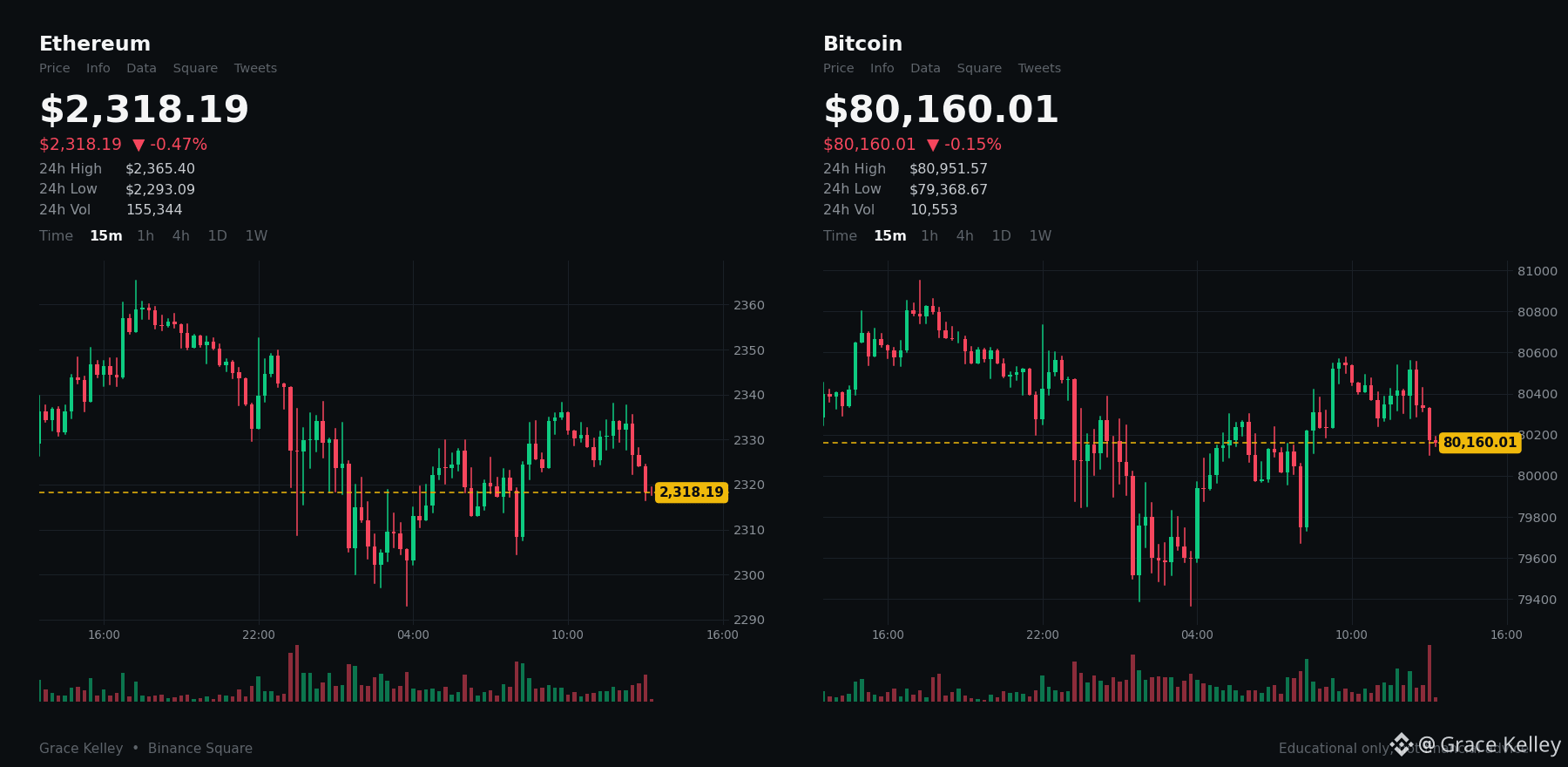
Ethereum slipped toward the big $2,300 level today (Monday, 26 October 2026), falling about 1–2% in this morning's market updates. On my live chart at about 6:20 PM PKT today, $ETH is at $2,318.19, with a day's low of $2,293.09 and a high of $2,365.40.
Why it is under pressure: the whole market is cautious before the US Federal Reserve decision on Wednesday, 28 October, with oil near an eight-month high and nine of the top 10 coins lower today. Ethereum is not falling alone — it is moving with the market.
Levels traders are watching:
• Support: $2,280–$2,300 first, then $2,150–$2,160. A break below $2,280 could open the way toward $2,150.
• Resistance: $2,315–$2,325 first — Ethereum is sitting right in that zone now — then $2,360. A strong move above $2,360 would help the recovery.
In simple words: $2,300 is Ethereum's line in the sand, and Wednesday's Fed signal could decide whether it holds.
Do you think Ethereum holds $2,300 this week, or does it slip toward $2,150 next?
Educational content only, not financial advice.
#BinanceSquare #WriteToEarn #Ethereum
Ethereum Tests $2,300 While Bitcoin Holds $80,000 — $ETH
Ethereum slipped toward the big $2,300 level today (Monday, 26 October 2026), falling about 1–2% in this morning's market updates. On my live chart at about 6:20 PM PKT today, $ETH is at $2,318.19, with a day's low of $2,293.09 and a high of $2,365.40.
Why it is under pressure: the whole market is cautious before the US Federal Reserve decision on Wednesday, 28 October, with oil near an eight-month high and nine of the top 10 coins lower today. Ethereum is not falling alone — it is moving with the market.
Levels traders are watching:
• Support: $2,280–$2,300 first, then $2,150–$2,160. A break below $2,280 could open the way toward $2,150.
• Resistance: $2,315–$2,325 first — Ethereum is sitting right in that zone now — then $2,360. A strong move above $2,360 would help the recovery.
In simple words: $2,300 is Ethereum's line in the sand, and Wednesday's Fed signal could decide whether it holds.
Do you think Ethereum holds $2,300 this week, or does it slip toward $2,150 next?
Educational content only, not financial advice.
#BinanceSquare #WriteToEarn #Ethereum
Ethereum slipped toward the big $2,300 level today (Monday, 26 October 2026), falling about 1–2% in this morning's market updates. On my live chart at about 6:20 PM PKT today, $ETH is at $2,318.19, with a day's low of $2,293.09 and a high of $2,365.40.
Why it is under pressure: the whole market is cautious before the US Federal Reserve decision on Wednesday, 28 October, with oil near an eight-month high and nine of the top 10 coins lower today. Ethereum is not falling alone — it is moving with the market.
Levels traders are watching:
• Support: $2,280–$2,300 first, then $2,150–$2,160. A break below $2,280 could open the way toward $2,150.
• Resistance: $2,315–$2,325 first — Ethereum is sitting right in that zone now — then $2,360. A strong move above $2,360 would help the recovery.
In simple words: $2,300 is Ethereum's line in the sand, and Wednesday's Fed signal could decide whether it holds.
Do you think Ethereum holds $2,300 this week, or does it slip toward $2,150 next?
Educational content only, not financial advice.
#BinanceSquare #WriteToEarn #Ethereum
56
Log in to explore more content
Join global crypto users on Binance Square
⚡️ Get latest and useful information about crypto.
💬 Trusted by the world’s largest crypto exchange.
👍 Discover real insights from verified creators.
Email / Phone number
Trending Topics
1
#BinancePick
2.8M views
147,266 Discussing
2
#EarningsSeason
5.1M views
25,159 Discussing
3
#AnthropicTTMRevenueGrewAbout1200%
582 views
81 Discussing
4
#AnthropicS1ExpectedToday
2,605 views
100 Discussing
5
#SouthKoreaReportedlyWeighsFourthCryptoTaxDelay
11,154 views
266 Discussing
6
#FranklinTempletonFilesForTwoDividendToBitcoinETFs
18,027 views
392 Discussing
7
#StrategyMSTRSurpassesNasdaqInMarketCap
14,621 views
305 Discussing
8
#CanadaProposesStablecoinRedemptionWithin3BusinessDays
682 views
30 Discussing
9
#ElectrumWalletBugLetRogueServersStealFunds
19,209 views
400 Discussing
10
#ArgentineCourtDismissesLIBRACaseAgainstMilei
29,975 views
488 Discussing