
#educacióncripto
educacióncripto
174,488 views
471 Discussing
Hot
Latest

·
--
$CryptoEducation $FundamentalAnalysis $BTC $BNB $CryptoMarket
DO YOU MAKE THIS MISTAKE when buying Cryptocurrencies? — Supply, Demand and Capitalization that change everything
Market capitalization is calculated as: Market Cap = Price × Circulating Supply. It is not an intrinsic value, but the theoretical cost of acquiring the entire supply in circulation. Always distinguish: circulating supply (public), total (including reserves) and maximum (protocol limit, e.g., BTC 21 M). Price comes from the supply-demand balance: fixed supply + growing demand = upward pressure; emission without burn = downward pressure. Burn mechanisms reduce supply and support long-term value. Bitcoin (BTC)** has a fixed supply and decreasing issuance through *halving* every 4 years → a deflationary model. **BNB (BNB) reduces supply with programmed burns up to 100 M. Before you trade, review: 1) market cap → real size; 2) 24h volume → liquidity; 3) volume/cap → rotation; 4) circulating vs total supply → dilution risk. These fundamentals are your best shield against unsustainable assets and the mandatory starting point for any serious analysis. Put it into practice now! Check market cap and the $BTC and $BNB supply on Binance Square, share it in the comments, and follow me for tomorrow: Japanese candlesticks + supports and resistances.
⚡ #EducaciónCripto #FundamentalAnalysis #BTC #BNB #CryptoMarket
$CryptoEducation $FundamentalAnalysis $BTC $BNB $CryptoMarket
DO YOU MAKE THIS MISTAKE when buying Cryptocurrencies? — Supply, Demand and Capitalization that change everything
Market capitalization is calculated as: Market Cap = Price × Circulating Supply. It is not an intrinsic value, but the theoretical cost of acquiring the entire supply in circulation. Always distinguish: circulating supply (public), total (including reserves) and maximum (protocol limit, e.g., BTC 21 M). Price comes from the supply-demand balance: fixed supply + growing demand = upward pressure; emission without burn = downward pressure. Burn mechanisms reduce supply and support long-term value. Bitcoin (BTC)** has a fixed supply and decreasing issuance through *halving* every 4 years → a deflationary model. **BNB (BNB) reduces supply with programmed burns up to 100 M. Before you trade, review: 1) market cap → real size; 2) 24h volume → liquidity; 3) volume/cap → rotation; 4) circulating vs total supply → dilution risk. These fundamentals are your best shield against unsustainable assets and the mandatory starting point for any serious analysis. Put it into practice now! Check market cap and the $BTC and $BNB supply on Binance Square, share it in the comments, and follow me for tomorrow: Japanese candlesticks + supports and resistances.
⚡ #EducaciónCripto #FundamentalAnalysis #BTC #BNB #CryptoMarket
DO YOU MAKE THIS MISTAKE when buying Cryptocurrencies? — Supply, Demand and Capitalization that change everything
Market capitalization is calculated as: Market Cap = Price × Circulating Supply. It is not an intrinsic value, but the theoretical cost of acquiring the entire supply in circulation. Always distinguish: circulating supply (public), total (including reserves) and maximum (protocol limit, e.g., BTC 21 M). Price comes from the supply-demand balance: fixed supply + growing demand = upward pressure; emission without burn = downward pressure. Burn mechanisms reduce supply and support long-term value. Bitcoin (BTC)** has a fixed supply and decreasing issuance through *halving* every 4 years → a deflationary model. **BNB (BNB) reduces supply with programmed burns up to 100 M. Before you trade, review: 1) market cap → real size; 2) 24h volume → liquidity; 3) volume/cap → rotation; 4) circulating vs total supply → dilution risk. These fundamentals are your best shield against unsustainable assets and the mandatory starting point for any serious analysis. Put it into practice now! Check market cap and the $BTC and $BNB supply on Binance Square, share it in the comments, and follow me for tomorrow: Japanese candlesticks + supports and resistances.
⚡ #EducaciónCripto #FundamentalAnalysis #BTC #BNB #CryptoMarket

1
96

·
--
Article
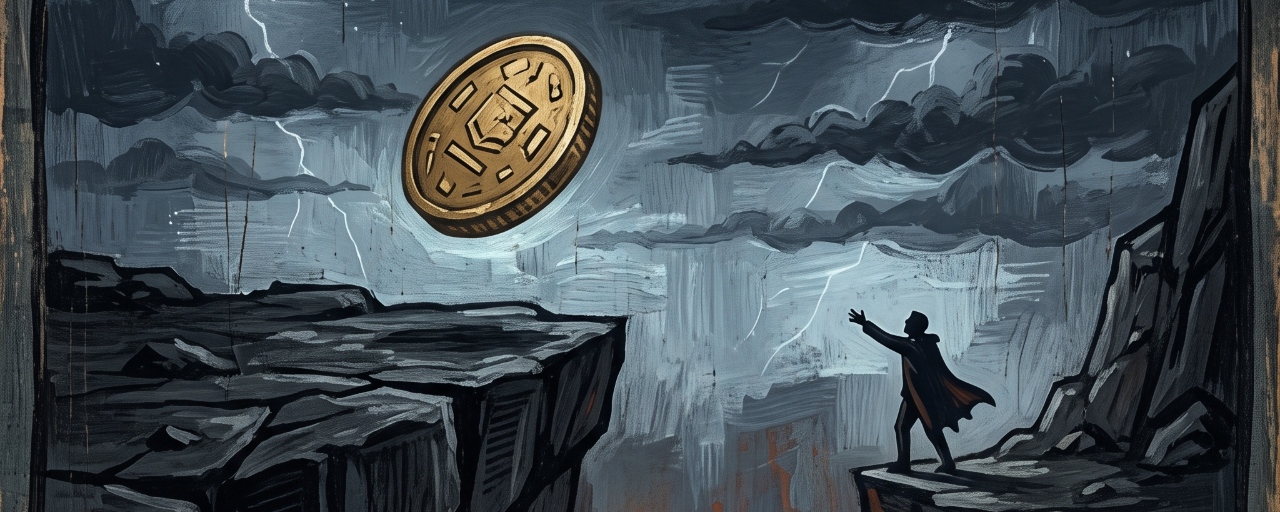
I lost all my capital in binary options because I thought it was so simple to read a candlestick patternIt wasn't the market that broke me. It was believing that the simplicity of a chart meant simplicity in the outcome.
I'm going to tell you something I don't share often, because it's embarrassing to admit it.
Before touching futures, before spot, before understanding real risk management, I started with binary options.
And I fell right into the trap that catches thousands of new people every day.
I saw a candlestick pattern. A hammer, an engulfing pattern, something that "looked obvious" in the chart.
I thought: "This is simple math. Up or down. 50/50, and I already know how to read the pattern. I have an edge."
I lost all my capital in binary options because I thought it was so simple to read a candlestick pattern
It wasn't the market that broke me. It was believing that the simplicity of a chart meant simplicity in the outcome.
I'm going to tell you something I don't share often, because it's embarrassing to admit it.
Before touching futures, before spot, before understanding real risk management, I started with binary options.
And I fell right into the trap that catches thousands of new people every day.
I saw a candlestick pattern. A hammer, an engulfing pattern, something that "looked obvious" in the chart.
I thought: "This is simple math. Up or down. 50/50, and I already know how to read the pattern. I have an edge."
I'm going to tell you something I don't share often, because it's embarrassing to admit it.
Before touching futures, before spot, before understanding real risk management, I started with binary options.
And I fell right into the trap that catches thousands of new people every day.
I saw a candlestick pattern. A hammer, an engulfing pattern, something that "looked obvious" in the chart.
I thought: "This is simple math. Up or down. 50/50, and I already know how to read the pattern. I have an edge."
174
3 Golden Rules to Protect Your Capital in Crypto 🛡️Have you ever felt tempted to jump into a trade just because the price is skyrocketing? In the crypto world, before thinking about how much you can gain, it's crucial to learn how to protect what you already have.
Here are 3 rules every trader should follow to avoid getting wrecked:
1️⃣ The 1-2% Rule: Never risk more than 1% to 2% of your total capital on a single trade. If the market moves against you, a small loss is much easier to recover from than a major disaster. 📉
3 Golden Rules to Protect Your Capital in Crypto 🛡️
Have you ever felt tempted to jump into a trade just because the price is skyrocketing? In the crypto world, before thinking about how much you can gain, it's crucial to learn how to protect what you already have.
Here are 3 rules every trader should follow to avoid getting wrecked:
1️⃣ The 1-2% Rule: Never risk more than 1% to 2% of your total capital on a single trade. If the market moves against you, a small loss is much easier to recover from than a major disaster. 📉
Here are 3 rules every trader should follow to avoid getting wrecked:
1️⃣ The 1-2% Rule: Never risk more than 1% to 2% of your total capital on a single trade. If the market moves against you, a small loss is much easier to recover from than a major disaster. 📉
159

·
--
Common Mistakes When Starting in Crypto
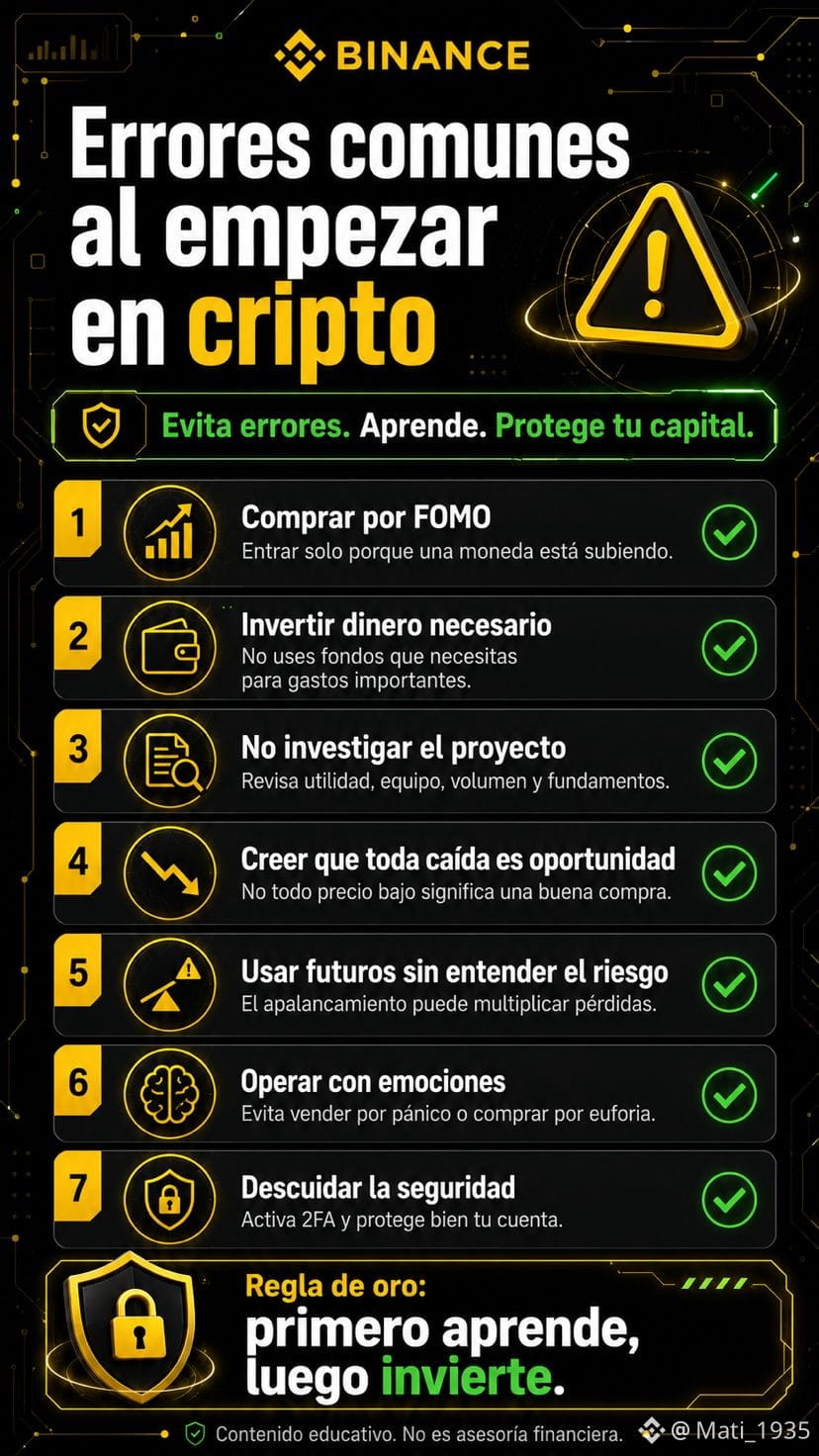
Diving into the crypto market without a strategy is like driving at night without headlights: you might make it, but chances are you'll crash into something.
Here are 7 mistakes many newbies make:
1. Buying just because a coin is “pumping”.
2. Investing money they need to live.
3. Not doing their homework on the project before jumping in.
4. Thinking every dip is a buying opportunity.
5. Using futures without grasping the risks involved.
6. Selling out of fear and buying due to FOMO.
7. Not securing their account with basic safety measures.
The crypto market can present opportunities, but it also punishes improvisation hard.
Before thinking about profits, learn how to avoid losses from avoidable mistakes.
$BTC $BNB $ETH
Educational content. Not financial advice.
#BinanceSquare #Cripto #Bitcoin #EducaciónCripto #Trading
Common Mistakes When Starting in Crypto
Diving into the crypto market without a strategy is like driving at night without headlights: you might make it, but chances are you'll crash into something.
Here are 7 mistakes many newbies make:
1. Buying just because a coin is “pumping”.
2. Investing money they need to live.
3. Not doing their homework on the project before jumping in.
4. Thinking every dip is a buying opportunity.
5. Using futures without grasping the risks involved.
6. Selling out of fear and buying due to FOMO.
7. Not securing their account with basic safety measures.
The crypto market can present opportunities, but it also punishes improvisation hard.
Before thinking about profits, learn how to avoid losses from avoidable mistakes.
$BTC $BNB $ETH
Educational content. Not financial advice.
#BinanceSquare #Cripto #Bitcoin #EducaciónCripto #Trading
Diving into the crypto market without a strategy is like driving at night without headlights: you might make it, but chances are you'll crash into something.
Here are 7 mistakes many newbies make:
1. Buying just because a coin is “pumping”.
2. Investing money they need to live.
3. Not doing their homework on the project before jumping in.
4. Thinking every dip is a buying opportunity.
5. Using futures without grasping the risks involved.
6. Selling out of fear and buying due to FOMO.
7. Not securing their account with basic safety measures.
The crypto market can present opportunities, but it also punishes improvisation hard.
Before thinking about profits, learn how to avoid losses from avoidable mistakes.
$BTC $BNB $ETH
Educational content. Not financial advice.
#BinanceSquare #Cripto #Bitcoin #EducaciónCripto #Trading
197

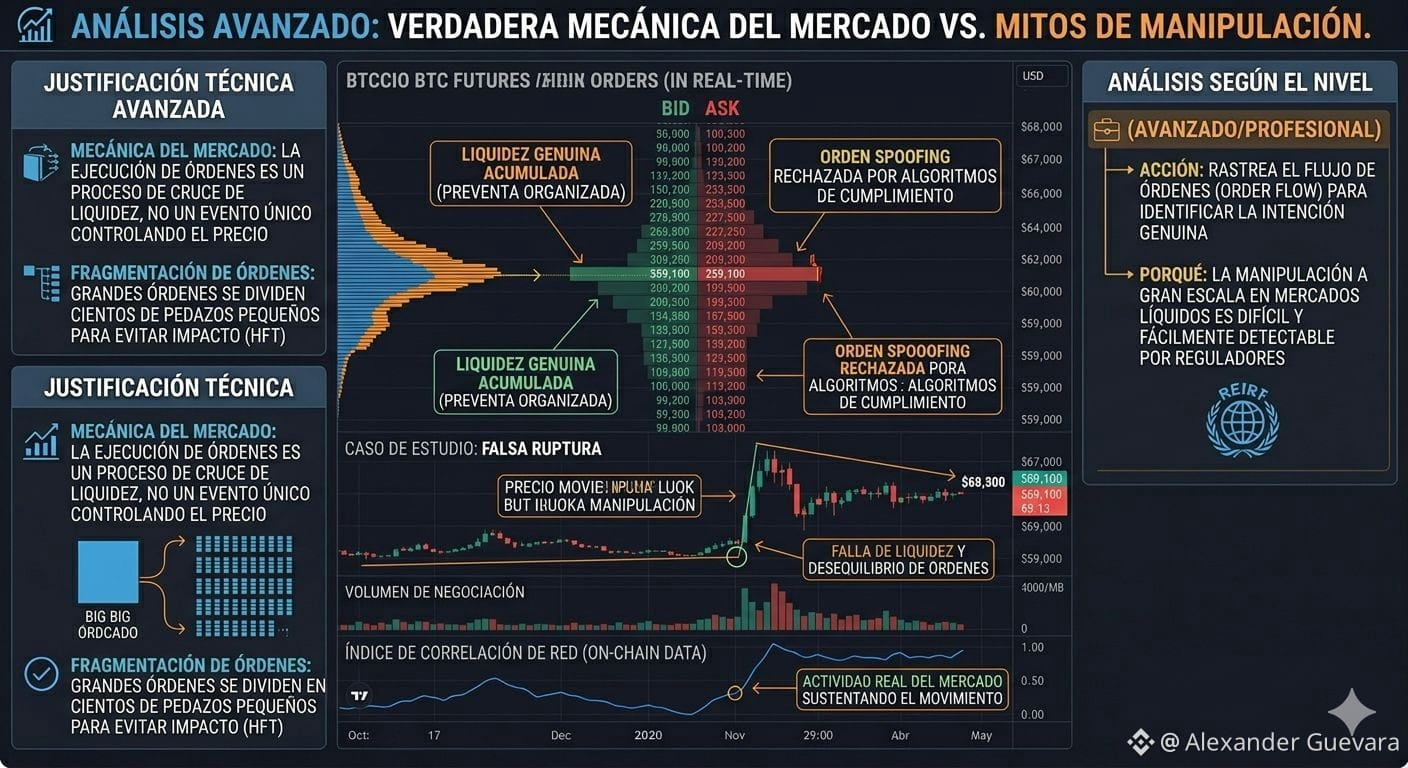
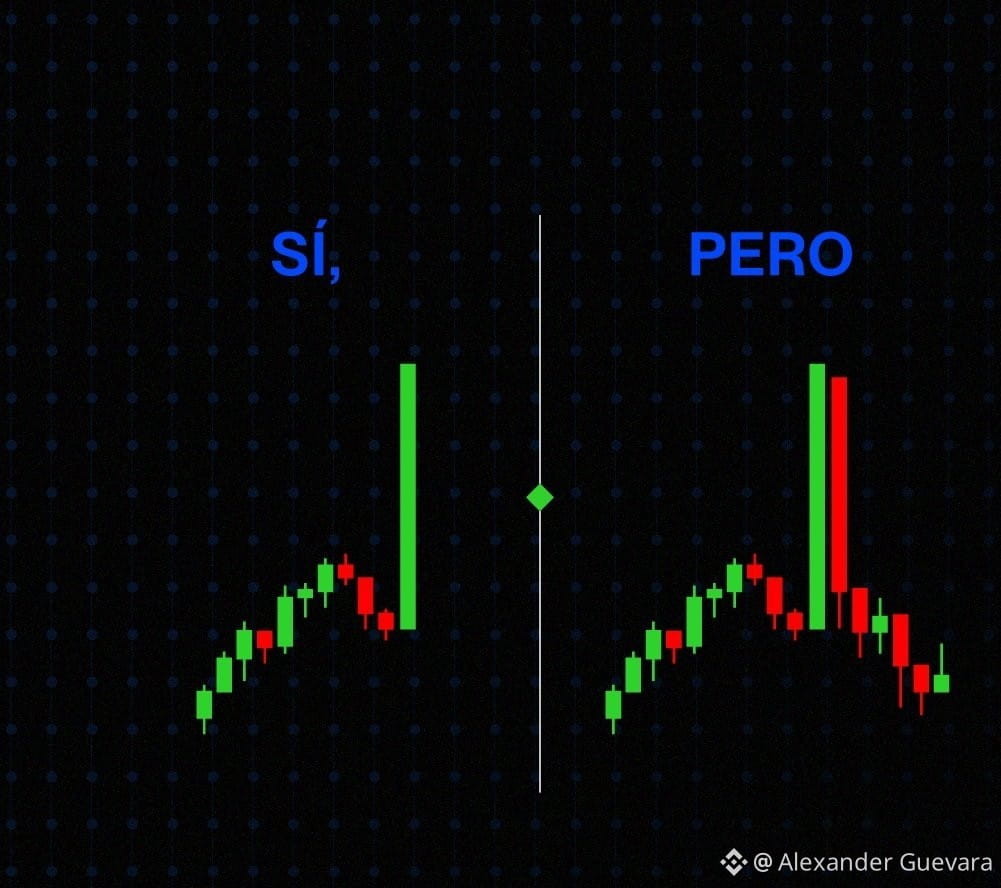
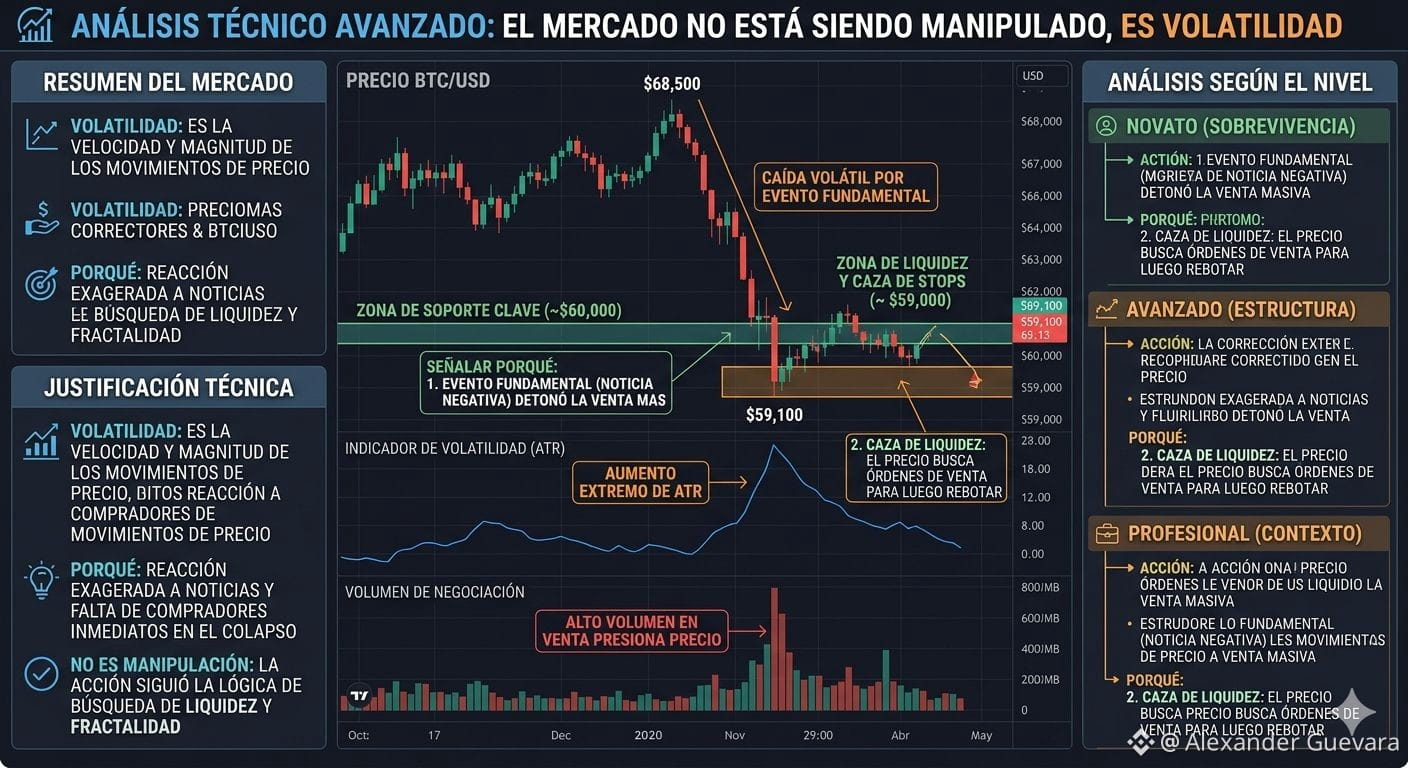
The market isn't being manipulated. It's all about volatility.
Technical analysis for advanced, novice, and professional trading.
Volatility and manipulation are two sides of the same coin in trading, but understanding their technical differences is what sets a novice apart from a pro.
The Approach Based on Your Experience Level
* **Novice (Survival):** For you, volatility feels like manipulation because it triggers your stop losses. In reality, it’s just a lack of liquidity or a reaction to news.
**Action:** Reduce leverage, trade on higher timeframes (4H/1D), and assume that price will always seek out zones with more accumulated orders.
* **Advanced (Structure):** You know that the market isn’t chaotic. Volatility concentrates around inefficiencies (Fair Value Gaps) and liquidity zones (previous highs and lows).
**Action:** Stop looking for isolated candlestick patterns. Use volume profile (VPVR) to identify where real orders intersect and trade confirmed breakouts.
* **Professional (Context):** You understand that the "smart money" doesn’t manipulate illegally; they execute algorithms to search for liquidity to fill their large orders without moving the price against them. *
**Action:** Don’t guess the direction. Track the Order Flow, identify institutional order blocks, and position yourself in favor of the market maker.
**Golden Rule:** Volatility expands the range; manipulation traps the impatient. If price moves quickly without volume, it’s a stop-hunting game. If there’s vertical volume, it’s real interest.
The market has a fractal design: what a novice sees as a trick, a pro reads as an efficient transfer of risk.
What's Your Take on Whether the Market is Manipulated???
#TrendingTopic #TradingCommunity #BinanceSquareFamily #EducaciónCripto #BinanceSquare $BTC $BNB $MUB
@CoinMarketCap_official @Cointelegraph @CoinDesk
@Binance_News @Binance_Academy @Binancelatam @Square-Creator-850f5c723d11
The market isn't being manipulated. It's all about volatility.
Technical analysis for advanced, novice, and professional trading.
Volatility and manipulation are two sides of the same coin in trading, but understanding their technical differences is what sets a novice apart from a pro.
The Approach Based on Your Experience Level
* **Novice (Survival):** For you, volatility feels like manipulation because it triggers your stop losses. In reality, it’s just a lack of liquidity or a reaction to news.
**Action:** Reduce leverage, trade on higher timeframes (4H/1D), and assume that price will always seek out zones with more accumulated orders.
* **Advanced (Structure):** You know that the market isn’t chaotic. Volatility concentrates around inefficiencies (Fair Value Gaps) and liquidity zones (previous highs and lows).
**Action:** Stop looking for isolated candlestick patterns. Use volume profile (VPVR) to identify where real orders intersect and trade confirmed breakouts.
* **Professional (Context):** You understand that the "smart money" doesn’t manipulate illegally; they execute algorithms to search for liquidity to fill their large orders without moving the price against them. *
**Action:** Don’t guess the direction. Track the Order Flow, identify institutional order blocks, and position yourself in favor of the market maker.
**Golden Rule:** Volatility expands the range; manipulation traps the impatient. If price moves quickly without volume, it’s a stop-hunting game. If there’s vertical volume, it’s real interest.
The market has a fractal design: what a novice sees as a trick, a pro reads as an efficient transfer of risk.
What's Your Take on Whether the Market is Manipulated???
#TrendingTopic #TradingCommunity #BinanceSquareFamily #EducaciónCripto #BinanceSquare $BTC $BNB $MUB
@CoinMarketCap @Cointelegraph @CoinDesk
@Binance News @Binance Academy @Binance LATAM Official @Square-Creator-850f5c723d11
Technical analysis for advanced, novice, and professional trading.
Volatility and manipulation are two sides of the same coin in trading, but understanding their technical differences is what sets a novice apart from a pro.
The Approach Based on Your Experience Level
* **Novice (Survival):** For you, volatility feels like manipulation because it triggers your stop losses. In reality, it’s just a lack of liquidity or a reaction to news.
**Action:** Reduce leverage, trade on higher timeframes (4H/1D), and assume that price will always seek out zones with more accumulated orders.
* **Advanced (Structure):** You know that the market isn’t chaotic. Volatility concentrates around inefficiencies (Fair Value Gaps) and liquidity zones (previous highs and lows).
**Action:** Stop looking for isolated candlestick patterns. Use volume profile (VPVR) to identify where real orders intersect and trade confirmed breakouts.
* **Professional (Context):** You understand that the "smart money" doesn’t manipulate illegally; they execute algorithms to search for liquidity to fill their large orders without moving the price against them. *
**Action:** Don’t guess the direction. Track the Order Flow, identify institutional order blocks, and position yourself in favor of the market maker.
**Golden Rule:** Volatility expands the range; manipulation traps the impatient. If price moves quickly without volume, it’s a stop-hunting game. If there’s vertical volume, it’s real interest.
The market has a fractal design: what a novice sees as a trick, a pro reads as an efficient transfer of risk.
What's Your Take on Whether the Market is Manipulated???
#TrendingTopic #TradingCommunity #BinanceSquareFamily #EducaciónCripto #BinanceSquare $BTC $BNB $MUB
@CoinMarketCap @Cointelegraph @CoinDesk
@Binance News @Binance Academy @Binance LATAM Official @Square-Creator-850f5c723d11
3
66
·
--
Verified
Article
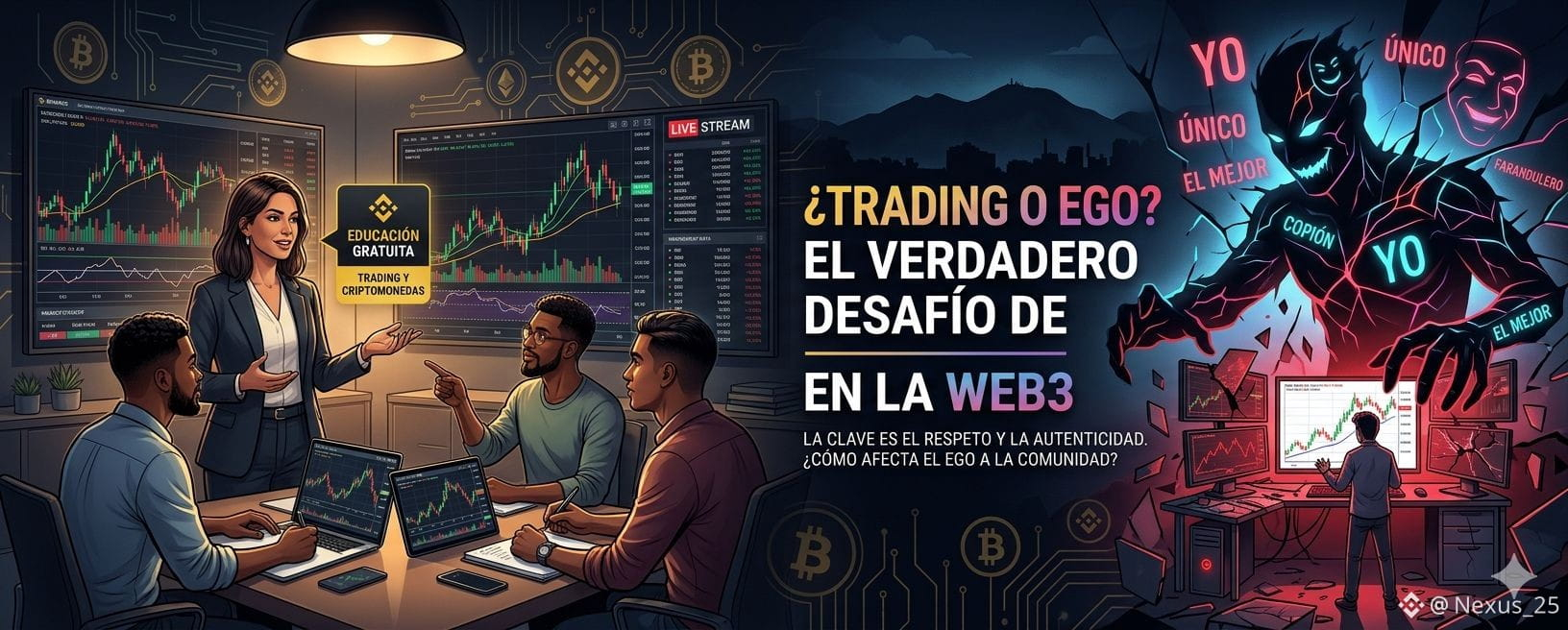
Trading or Ego? The real challenge of educating in Web3.The crypto ecosystem in Latin America is experiencing a golden age. Every day, more people are tuning into Live streams looking to learn, analyze, and find that guidance that helps them navigate the market's volatility. However, amidst this growth, a shadow has emerged that threatens the essence of our community: ego.
🛐The false shine of the "Only Leader"
It's pretty common to see how some content creators try to position themselves as "the only ones" teaching or the absolute pioneers in the region. In the trading game, where numbers don't lie and the market is the ultimate judge, the claim of exclusivity is not only false but also distracts users from what's most important: their education.
Trading or Ego? The real challenge of educating in Web3.
The crypto ecosystem in Latin America is experiencing a golden age. Every day, more people are tuning into Live streams looking to learn, analyze, and find that guidance that helps them navigate the market's volatility. However, amidst this growth, a shadow has emerged that threatens the essence of our community: ego.
🛐The false shine of the "Only Leader"
It's pretty common to see how some content creators try to position themselves as "the only ones" teaching or the absolute pioneers in the region. In the trading game, where numbers don't lie and the market is the ultimate judge, the claim of exclusivity is not only false but also distracts users from what's most important: their education.
🛐The false shine of the "Only Leader"
It's pretty common to see how some content creators try to position themselves as "the only ones" teaching or the absolute pioneers in the region. In the trading game, where numbers don't lie and the market is the ultimate judge, the claim of exclusivity is not only false but also distracts users from what's most important: their education.
9
2
13
388


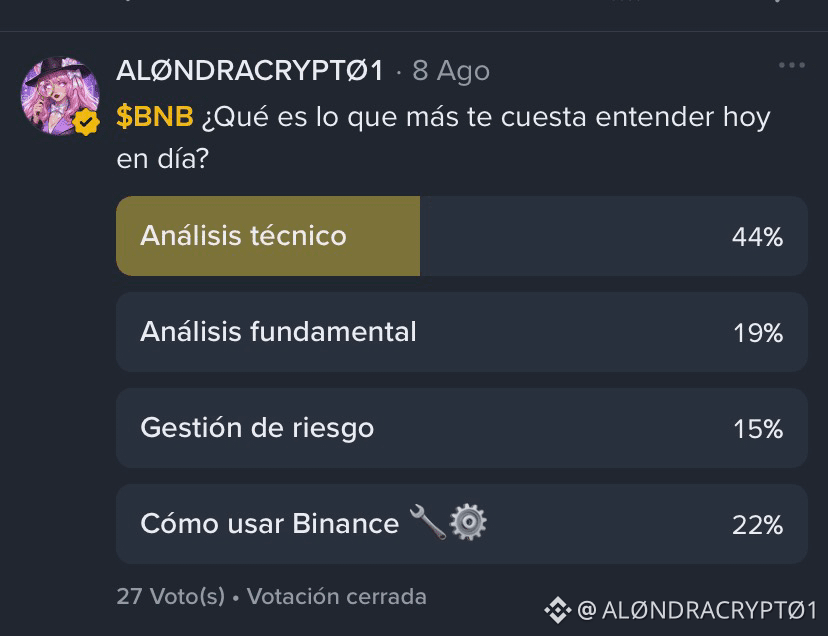
✨$PROM I want to sincerely thank those who voted in our recent poll.
Even though we’re still a small group and growing step by step, every participation is priceless because it helps me understand exactly what to support them with. Thank you for staying active!
Looking at the results, I realized that what they find hardest to understand these days is Technical Analysis (44%) and how to use Binance (22%). It’s completely normal to feel that way at the beginning—this world has a lot of new terms.
To give you a solution and help those who don’t know what to do, I invite you to leave your questions down here in the comments. Tell me what’s difficult for you, and I will read them myself and answer to guide you step by step.
I invite you to participate more in the next polls and to keep being active in the community. Learn calmly and consistently! 📚🕵️♀️
#EducaciónCripto
{future}(PROMUSDT)
✨$PROM I want to sincerely thank those who voted in our recent poll.
Even though we’re still a small group and growing step by step, every participation is priceless because it helps me understand exactly what to support them with. Thank you for staying active!
Looking at the results, I realized that what they find hardest to understand these days is Technical Analysis (44%) and how to use Binance (22%). It’s completely normal to feel that way at the beginning—this world has a lot of new terms.
To give you a solution and help those who don’t know what to do, I invite you to leave your questions down here in the comments. Tell me what’s difficult for you, and I will read them myself and answer to guide you step by step.
I invite you to participate more in the next polls and to keep being active in the community. Learn calmly and consistently! 📚🕵️♀️
#EducaciónCripto
Even though we’re still a small group and growing step by step, every participation is priceless because it helps me understand exactly what to support them with. Thank you for staying active!
Looking at the results, I realized that what they find hardest to understand these days is Technical Analysis (44%) and how to use Binance (22%). It’s completely normal to feel that way at the beginning—this world has a lot of new terms.
To give you a solution and help those who don’t know what to do, I invite you to leave your questions down here in the comments. Tell me what’s difficult for you, and I will read them myself and answer to guide you step by step.
I invite you to participate more in the next polls and to keep being active in the community. Learn calmly and consistently! 📚🕵️♀️
#EducaciónCripto

5
1.6k

Article
What is the AHR999 Ratio? The math behind accumulation zones.Every time Bitcoin takes a nosedive, the same question pops up: 'Has it hit bottom yet?' The issue is that most folks try to answer that with emotions, headlines, or gut feelings. That's where tools like the AHR999 Ratio come into play.
This indicator was born in 2018 with a pretty straightforward idea: to gauge whether Bitcoin is overpriced, underpriced, or just moving within its normal historical behavior. To do this, it compares the current price against the 200-day moving average and the long-term historical growth of the network.
What is the AHR999 Ratio? The math behind accumulation zones.
Every time Bitcoin takes a nosedive, the same question pops up: 'Has it hit bottom yet?' The issue is that most folks try to answer that with emotions, headlines, or gut feelings. That's where tools like the AHR999 Ratio come into play.
This indicator was born in 2018 with a pretty straightforward idea: to gauge whether Bitcoin is overpriced, underpriced, or just moving within its normal historical behavior. To do this, it compares the current price against the 200-day moving average and the long-term historical growth of the network.
This indicator was born in 2018 with a pretty straightforward idea: to gauge whether Bitcoin is overpriced, underpriced, or just moving within its normal historical behavior. To do this, it compares the current price against the 200-day moving average and the long-term historical growth of the network.
164

·
--
Hello, community! If you’re one of the people who just landed on Binance Square or in the crypto ecosystem, and sometimes all those technical terms, charts, and news overwhelm you—believe me, I totally understand. I’m also learning along this journey, and I want to share what has helped me not give up in the attempt:
💡 3 golden tips to start off on the right foot:
1. Watch out for FOMO (Fear of missing out): When the market rises fast, it’s normal to want to buy right away. Take a deep breath. The market always offers opportunities; it’s better to miss a pump than to enter late and risk more than you should.
2. Education is your best investment: Before touching futures contracts or investing in a cryptocurrency you only know by name, use the platform’s free tools. Learning the basics will save you from more than one headache!
3. Start slowly (and with a strategy): You don’t need big capital to learn. Understanding how diversification works and never risking money you need for day-to-day life is rule number one.
💬 Let’s build a community!
What’s been your biggest question or stumbling block since you joined Binance? Let’s put it in the comments so we can help each other as we’re getting started! 👇
#BinanceSquare #CryptoBeginners #EducaciónCripto #AprendeConBinance #ComunidadCrypto
Hello, community! If you’re one of the people who just landed on Binance Square or in the crypto ecosystem, and sometimes all those technical terms, charts, and news overwhelm you—believe me, I totally understand. I’m also learning along this journey, and I want to share what has helped me not give up in the attempt:
💡 3 golden tips to start off on the right foot:
1. Watch out for FOMO (Fear of missing out): When the market rises fast, it’s normal to want to buy right away. Take a deep breath. The market always offers opportunities; it’s better to miss a pump than to enter late and risk more than you should.
2. Education is your best investment: Before touching futures contracts or investing in a cryptocurrency you only know by name, use the platform’s free tools. Learning the basics will save you from more than one headache!
3. Start slowly (and with a strategy): You don’t need big capital to learn. Understanding how diversification works and never risking money you need for day-to-day life is rule number one.
💬 Let’s build a community!
What’s been your biggest question or stumbling block since you joined Binance? Let’s put it in the comments so we can help each other as we’re getting started! 👇
#BinanceSquare #CryptoBeginners #EducaciónCripto #AprendeConBinance #ComunidadCrypto
💡 3 golden tips to start off on the right foot:
1. Watch out for FOMO (Fear of missing out): When the market rises fast, it’s normal to want to buy right away. Take a deep breath. The market always offers opportunities; it’s better to miss a pump than to enter late and risk more than you should.
2. Education is your best investment: Before touching futures contracts or investing in a cryptocurrency you only know by name, use the platform’s free tools. Learning the basics will save you from more than one headache!
3. Start slowly (and with a strategy): You don’t need big capital to learn. Understanding how diversification works and never risking money you need for day-to-day life is rule number one.
💬 Let’s build a community!
What’s been your biggest question or stumbling block since you joined Binance? Let’s put it in the comments so we can help each other as we’re getting started! 👇
#BinanceSquare #CryptoBeginners #EducaciónCripto #AprendeConBinance #ComunidadCrypto
389

📉 Where is the market going? How to identify a trend without making it complicated
To make good financial decisions and trade with confidence, you don’t need to be an expert in complex indicators. The first and most important step is learning to read a candlestick chart and understand who’s in control: the buyers or the sellers.
If you want to analyze the price direction in a simple way, focus on these three points:
1. Bullish Trend (Buyers in charge): It’s identified when the price starts forming higher highs and higher lows. If you see the chart rising in steps, the market strength is buying-side, and trying to look for sell opportunities against that move is usually very risky.
2. Bearish Trend (Sellers in charge): This happens when the chart shows lower highs and lower lows. Here, the price falls like a staircase. In these scenarios, patience is your best ally—wait for the price to find a firm floor before attempting to accumulate.
3. Range or Sideways (Indecisive market): Sometimes the price moves trapped between a ceiling and a floor with no clear direction. If you don’t have a clear strategy for trading ranges, the healthiest thing for your capital is to wait patiently until the price breaks out of that zone with strength.
Trading in favor of the main trend always reduces risk and increases your chances of success.
{spot}(BTCUSDT)
#AnalisisTecnico #TradingParaPrincipiantes #BinanceSquare #EducaciónCripto
📉 Where is the market going? How to identify a trend without making it complicated
To make good financial decisions and trade with confidence, you don’t need to be an expert in complex indicators. The first and most important step is learning to read a candlestick chart and understand who’s in control: the buyers or the sellers.
If you want to analyze the price direction in a simple way, focus on these three points:
1. Bullish Trend (Buyers in charge): It’s identified when the price starts forming higher highs and higher lows. If you see the chart rising in steps, the market strength is buying-side, and trying to look for sell opportunities against that move is usually very risky.
2. Bearish Trend (Sellers in charge): This happens when the chart shows lower highs and lower lows. Here, the price falls like a staircase. In these scenarios, patience is your best ally—wait for the price to find a firm floor before attempting to accumulate.
3. Range or Sideways (Indecisive market): Sometimes the price moves trapped between a ceiling and a floor with no clear direction. If you don’t have a clear strategy for trading ranges, the healthiest thing for your capital is to wait patiently until the price breaks out of that zone with strength.
Trading in favor of the main trend always reduces risk and increases your chances of success.
#AnalisisTecnico #TradingParaPrincipiantes #BinanceSquare #EducaciónCripto
To make good financial decisions and trade with confidence, you don’t need to be an expert in complex indicators. The first and most important step is learning to read a candlestick chart and understand who’s in control: the buyers or the sellers.
If you want to analyze the price direction in a simple way, focus on these three points:
1. Bullish Trend (Buyers in charge): It’s identified when the price starts forming higher highs and higher lows. If you see the chart rising in steps, the market strength is buying-side, and trying to look for sell opportunities against that move is usually very risky.
2. Bearish Trend (Sellers in charge): This happens when the chart shows lower highs and lower lows. Here, the price falls like a staircase. In these scenarios, patience is your best ally—wait for the price to find a firm floor before attempting to accumulate.
3. Range or Sideways (Indecisive market): Sometimes the price moves trapped between a ceiling and a floor with no clear direction. If you don’t have a clear strategy for trading ranges, the healthiest thing for your capital is to wait patiently until the price breaks out of that zone with strength.
Trading in favor of the main trend always reduces risk and increases your chances of success.
#AnalisisTecnico #TradingParaPrincipiantes #BinanceSquare #EducaciónCripto
83

·
--
3 Golden Rules That Saved Me from Losing It All in Crypto 🧠💡
If you're just getting started in this world or you've been around for a while but feel like you're on a roller coaster, save this post. These three rules change the game completely:
1️⃣ Don't Chase the FOMO (Fear of Missing Out): If a coin has already pumped 50% in a day, you're late to the party. Jumping in now is just buying the exit from those who got in cheap. Wait for a healthy pullback or look for another opportunity.
2️⃣ The stop-loss isn't your enemy: It's your life insurance. It's better to accept a small, controlled loss of 3% than to get stuck in a 50% drop waiting for "someday to recover".
3️⃣ Diversify Wisely: Don't put all your capital into a single Altcoin or Memecoin, no matter how good it looks. Split your portfolio between stable/strong assets ($BTC / $BNB ) and a smaller portion for higher-risk projects.
Consistency in the market isn't about winning 100% of the time; it's about managing risk when you make mistakes.
Which of these rules was the hardest for you to learn?
#EducaciónCripto #CryptoAprende #GestiónDeRiesgo #mindset
3 Golden Rules That Saved Me from Losing It All in Crypto 🧠💡
If you're just getting started in this world or you've been around for a while but feel like you're on a roller coaster, save this post. These three rules change the game completely:
1️⃣ Don't Chase the FOMO (Fear of Missing Out): If a coin has already pumped 50% in a day, you're late to the party. Jumping in now is just buying the exit from those who got in cheap. Wait for a healthy pullback or look for another opportunity.
2️⃣ The stop-loss isn't your enemy: It's your life insurance. It's better to accept a small, controlled loss of 3% than to get stuck in a 50% drop waiting for "someday to recover".
3️⃣ Diversify Wisely: Don't put all your capital into a single Altcoin or Memecoin, no matter how good it looks. Split your portfolio between stable/strong assets ($BTC / $BNB ) and a smaller portion for higher-risk projects.
Consistency in the market isn't about winning 100% of the time; it's about managing risk when you make mistakes.
Which of these rules was the hardest for you to learn?
#EducaciónCripto #CryptoAprende #GestiónDeRiesgo #mindset
If you're just getting started in this world or you've been around for a while but feel like you're on a roller coaster, save this post. These three rules change the game completely:
1️⃣ Don't Chase the FOMO (Fear of Missing Out): If a coin has already pumped 50% in a day, you're late to the party. Jumping in now is just buying the exit from those who got in cheap. Wait for a healthy pullback or look for another opportunity.
2️⃣ The stop-loss isn't your enemy: It's your life insurance. It's better to accept a small, controlled loss of 3% than to get stuck in a 50% drop waiting for "someday to recover".
3️⃣ Diversify Wisely: Don't put all your capital into a single Altcoin or Memecoin, no matter how good it looks. Split your portfolio between stable/strong assets ($BTC / $BNB ) and a smaller portion for higher-risk projects.
Consistency in the market isn't about winning 100% of the time; it's about managing risk when you make mistakes.
Which of these rules was the hardest for you to learn?
#EducaciónCripto #CryptoAprende #GestiónDeRiesgo #mindset

233
·
--
Article
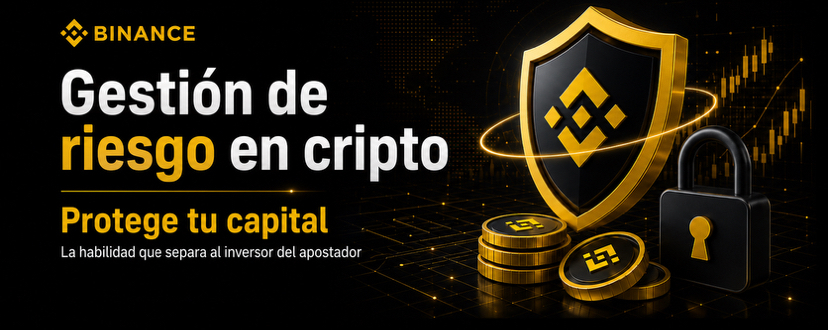
Risk Management in Crypto: The Skill that Separates the Investor from the GamblerMany newbies jump into the crypto market thinking the key is to find 'the next coin that's going to explode.'
They're looking for the next x10.
The next hidden token.
The next opportunity before everyone else sees it.
But there's a pretty uncomfortable truth: in crypto, it's not necessarily the one who hits it right once that survives, but the one who knows how to manage risk when they mess up.
Because making a mistake isn't an option.
It's part of the game.
The problem is that many enter the market as if everything hinges on being right. They buy a coin, convince themselves it's going to pump, ignore any negative signals, and when the price drops, instead of accepting the mistake, they just FOMO buy more without a strategy.
Risk Management in Crypto: The Skill that Separates the Investor from the Gambler
Many newbies jump into the crypto market thinking the key is to find 'the next coin that's going to explode.'
They're looking for the next x10.
The next hidden token.
The next opportunity before everyone else sees it.
But there's a pretty uncomfortable truth: in crypto, it's not necessarily the one who hits it right once that survives, but the one who knows how to manage risk when they mess up.
Because making a mistake isn't an option.
It's part of the game.
The problem is that many enter the market as if everything hinges on being right. They buy a coin, convince themselves it's going to pump, ignore any negative signals, and when the price drops, instead of accepting the mistake, they just FOMO buy more without a strategy.
They're looking for the next x10.
The next hidden token.
The next opportunity before everyone else sees it.
But there's a pretty uncomfortable truth: in crypto, it's not necessarily the one who hits it right once that survives, but the one who knows how to manage risk when they mess up.
Because making a mistake isn't an option.
It's part of the game.
The problem is that many enter the market as if everything hinges on being right. They buy a coin, convince themselves it's going to pump, ignore any negative signals, and when the price drops, instead of accepting the mistake, they just FOMO buy more without a strategy.
1
207

A lot of people use Binance or other exchanges to pay for paperwork, remittances, or services abroad, but they make mistakes that can later cost them money, time, and even legal trouble.
I’ve seen these 3 mistakes over and over:
Not recording anything: sending without keeping track
They send USDT, BTC, or BNB and don’t save screenshots, addresses, date, reference rate, or the reason for the payment.
Later, they can’t justify those funds if they ever get asked about them (bank, authorities, client, family).
Tip:
Create a folder on your phone or computer called “Paperwork – Crypto” and save:
Screenshot of the transaction
Name of the recipient or service
Crypto amount and approximate amount in USD/Bs
Date and reason for the payment
Use any P2P method without checking reputation
They pick the lowest price without looking at reputation, history, or number of completed transactions.
They end up with blocked accounts, funds on hold, or sellers who don’t respond.
Tip:
Filter by: high reputation, many transactions, and good time on the platform.
Read the seller’s automatic messages before accepting.
Don’t accept payments to accounts that aren’t yours or that you don’t normally use.
Not understanding the difference between “collecting in crypto” and “issuing an invoice in crypto”
They charge for services in USDT without leaving any document that explains what it is, what it’s for, and how it was calculated.
There’s no invoice, contract, or at least a basic proof of the service.
Tip:
Use a mini-contract or a simple letter where you explain:
Service provided
Total value in USD
Reference rate (if applicable)
Agreed crypto amount
Send that document by email or WhatsApp and save it together with the transaction receipt.
If you handle consular paperwork, apostilles, legal advice, or remittances, it’s worth having a clear way to use crypto without headaches.
Which of these 3 mistakes have you seen the most around you? Or did you already learn the hard way from your own mistake? I’m reading your comments
#Binance #BinanceSquare #Venezuela #Crypto #Remittances #ConsularPaperwork #USDT #EducaciónCripto
A lot of people use Binance or other exchanges to pay for paperwork, remittances, or services abroad, but they make mistakes that can later cost them money, time, and even legal trouble.
I’ve seen these 3 mistakes over and over:
Not recording anything: sending without keeping track
They send USDT, BTC, or BNB and don’t save screenshots, addresses, date, reference rate, or the reason for the payment.
Later, they can’t justify those funds if they ever get asked about them (bank, authorities, client, family).
Tip:
Create a folder on your phone or computer called “Paperwork – Crypto” and save:
Screenshot of the transaction
Name of the recipient or service
Crypto amount and approximate amount in USD/Bs
Date and reason for the payment
Use any P2P method without checking reputation
They pick the lowest price without looking at reputation, history, or number of completed transactions.
They end up with blocked accounts, funds on hold, or sellers who don’t respond.
Tip:
Filter by: high reputation, many transactions, and good time on the platform.
Read the seller’s automatic messages before accepting.
Don’t accept payments to accounts that aren’t yours or that you don’t normally use.
Not understanding the difference between “collecting in crypto” and “issuing an invoice in crypto”
They charge for services in USDT without leaving any document that explains what it is, what it’s for, and how it was calculated.
There’s no invoice, contract, or at least a basic proof of the service.
Tip:
Use a mini-contract or a simple letter where you explain:
Service provided
Total value in USD
Reference rate (if applicable)
Agreed crypto amount
Send that document by email or WhatsApp and save it together with the transaction receipt.
If you handle consular paperwork, apostilles, legal advice, or remittances, it’s worth having a clear way to use crypto without headaches.
Which of these 3 mistakes have you seen the most around you? Or did you already learn the hard way from your own mistake? I’m reading your comments
#Binance #BinanceSquare #Venezuela #Crypto #Remittances #ConsularPaperwork #USDT #EducaciónCripto
I’ve seen these 3 mistakes over and over:
Not recording anything: sending without keeping track
They send USDT, BTC, or BNB and don’t save screenshots, addresses, date, reference rate, or the reason for the payment.
Later, they can’t justify those funds if they ever get asked about them (bank, authorities, client, family).
Tip:
Create a folder on your phone or computer called “Paperwork – Crypto” and save:
Screenshot of the transaction
Name of the recipient or service
Crypto amount and approximate amount in USD/Bs
Date and reason for the payment
Use any P2P method without checking reputation
They pick the lowest price without looking at reputation, history, or number of completed transactions.
They end up with blocked accounts, funds on hold, or sellers who don’t respond.
Tip:
Filter by: high reputation, many transactions, and good time on the platform.
Read the seller’s automatic messages before accepting.
Don’t accept payments to accounts that aren’t yours or that you don’t normally use.
Not understanding the difference between “collecting in crypto” and “issuing an invoice in crypto”
They charge for services in USDT without leaving any document that explains what it is, what it’s for, and how it was calculated.
There’s no invoice, contract, or at least a basic proof of the service.
Tip:
Use a mini-contract or a simple letter where you explain:
Service provided
Total value in USD
Reference rate (if applicable)
Agreed crypto amount
Send that document by email or WhatsApp and save it together with the transaction receipt.
If you handle consular paperwork, apostilles, legal advice, or remittances, it’s worth having a clear way to use crypto without headaches.
Which of these 3 mistakes have you seen the most around you? Or did you already learn the hard way from your own mistake? I’m reading your comments
#Binance #BinanceSquare #Venezuela #Crypto #Remittances #ConsularPaperwork #USDT #EducaciónCripto
335

·
--
Where to start in crypto when you’re a beginner? (Spoiler: It’s not risking everything on a 20x) 🚀
Many people enter the trading world looking to multiply their money overnight, but the reality is that the market rewards patience and knowledge—not luck.
If you’re building your foundation from scratch, I recommend following these steps before risking real capital:
1. Master the essential theory: Understand the difference between the Spot and Futures markets, and learn how the order book works.
2. Train your technical eye: Get familiar with Japanese candlesticks, trends, and the key support and resistance zones.
3. Prioritize risk management: Learn to protect your capital before thinking about profits. A good trader survives to trade tomorrow.
💡 The real competitive advantage: Educating yourself step by step and using simulation tools to practice without stress will save you a lot of headaches (and money) in the future.
What concept cost you the most to understand when you first started with cryptocurrencies? I’m reading you in the comments! 👇
#BinanceSquare #EducaciónCripto #tradingprincipiantes #cryptoeducational
Where to start in crypto when you’re a beginner? (Spoiler: It’s not risking everything on a 20x) 🚀
Many people enter the trading world looking to multiply their money overnight, but the reality is that the market rewards patience and knowledge—not luck.
If you’re building your foundation from scratch, I recommend following these steps before risking real capital:
1. Master the essential theory: Understand the difference between the Spot and Futures markets, and learn how the order book works.
2. Train your technical eye: Get familiar with Japanese candlesticks, trends, and the key support and resistance zones.
3. Prioritize risk management: Learn to protect your capital before thinking about profits. A good trader survives to trade tomorrow.
💡 The real competitive advantage: Educating yourself step by step and using simulation tools to practice without stress will save you a lot of headaches (and money) in the future.
What concept cost you the most to understand when you first started with cryptocurrencies? I’m reading you in the comments! 👇
#BinanceSquare #EducaciónCripto #tradingprincipiantes #cryptoeducational
Many people enter the trading world looking to multiply their money overnight, but the reality is that the market rewards patience and knowledge—not luck.
If you’re building your foundation from scratch, I recommend following these steps before risking real capital:
1. Master the essential theory: Understand the difference between the Spot and Futures markets, and learn how the order book works.
2. Train your technical eye: Get familiar with Japanese candlesticks, trends, and the key support and resistance zones.
3. Prioritize risk management: Learn to protect your capital before thinking about profits. A good trader survives to trade tomorrow.
💡 The real competitive advantage: Educating yourself step by step and using simulation tools to practice without stress will save you a lot of headaches (and money) in the future.
What concept cost you the most to understand when you first started with cryptocurrencies? I’m reading you in the comments! 👇
#BinanceSquare #EducaciónCripto #tradingprincipiantes #cryptoeducational
274
✨$BNB I was looking at your comments and I perfectly understand that technical analysis can sometimes cause headaches, anxiety, and stress when we try to decipher charts for the first time. It’s completely normal to feel overwhelmed at the beginning.
As I always tell you, this is not easy money or magic; it requires study and patience.
To give you a real piece of advice on where to start without getting tangled up, the most important thing is to go step by step, mastering the basics of trends at your own pace and without forcing things so we can take care of our mental peace.
Here are a few simple things you can do starting today:
- Set aside at least 20 minutes a day to read charts or review basic concepts without rushing.
- Write down the terms you don’t understand and research them one by one calmly.
- Watch how the market behaves without trading—just analyze the reasons behind the movements.
The key is to stay well-informed, be consistent, and not put too much pressure on yourself. Keep learning and building knowledge step by step! 🕵️♀️🔍
#AlondraCrypto #EducaciónCripto
{future}(BNBUSDT)
✨$BNB I was looking at your comments and I perfectly understand that technical analysis can sometimes cause headaches, anxiety, and stress when we try to decipher charts for the first time. It’s completely normal to feel overwhelmed at the beginning.
As I always tell you, this is not easy money or magic; it requires study and patience.
To give you a real piece of advice on where to start without getting tangled up, the most important thing is to go step by step, mastering the basics of trends at your own pace and without forcing things so we can take care of our mental peace.
Here are a few simple things you can do starting today:
- Set aside at least 20 minutes a day to read charts or review basic concepts without rushing.
- Write down the terms you don’t understand and research them one by one calmly.
- Watch how the market behaves without trading—just analyze the reasons behind the movements.
The key is to stay well-informed, be consistent, and not put too much pressure on yourself. Keep learning and building knowledge step by step! 🕵️♀️🔍
#AlondraCrypto #EducaciónCripto
As I always tell you, this is not easy money or magic; it requires study and patience.
To give you a real piece of advice on where to start without getting tangled up, the most important thing is to go step by step, mastering the basics of trends at your own pace and without forcing things so we can take care of our mental peace.
Here are a few simple things you can do starting today:
- Set aside at least 20 minutes a day to read charts or review basic concepts without rushing.
- Write down the terms you don’t understand and research them one by one calmly.
- Watch how the market behaves without trading—just analyze the reasons behind the movements.
The key is to stay well-informed, be consistent, and not put too much pressure on yourself. Keep learning and building knowledge step by step! 🕵️♀️🔍
#AlondraCrypto #EducaciónCripto

2
1
11
3.3k

·
--
Protect your assets.Protect your cryptocurrencies! Security on Binance depends on you 🔒🛡️
Security in the crypto ecosystem is not only the responsibility of the platform—it’s a shared task! As users, the most powerful tool we have is prevention and common sense.
Here are the fundamental pillars to keep your account and your funds well-protected against thieves:
*Enable Two-Factor Authentication (2FA): Use Google Authenticator or physical security keys. Avoid relying only on SMS, as they’re vulnerable to SIM swapping attacks (*SIM swapping*).
Protect your assets.
Protect your cryptocurrencies! Security on Binance depends on you 🔒🛡️
Security in the crypto ecosystem is not only the responsibility of the platform—it’s a shared task! As users, the most powerful tool we have is prevention and common sense.
Here are the fundamental pillars to keep your account and your funds well-protected against thieves:
*Enable Two-Factor Authentication (2FA): Use Google Authenticator or physical security keys. Avoid relying only on SMS, as they’re vulnerable to SIM swapping attacks (*SIM swapping*).
Security in the crypto ecosystem is not only the responsibility of the platform—it’s a shared task! As users, the most powerful tool we have is prevention and common sense.
Here are the fundamental pillars to keep your account and your funds well-protected against thieves:
*Enable Two-Factor Authentication (2FA): Use Google Authenticator or physical security keys. Avoid relying only on SMS, as they’re vulnerable to SIM swapping attacks (*SIM swapping*).
187

Trying to design an infallible strategy to trade Polkadot ($DOT ) in a way that never hits a stop-loss is a waste of time that only generates frustration.
The most consistent investors in the Web3 ecosystem don’t have a crystal ball; what they have is strict control over their losses and a risk-reward ratio that allows them to be profitable even when they only get half of their projections right.
Consistency is mathematical, not magic.
#dot #altcoins #EducaciónCripto
Trying to design an infallible strategy to trade Polkadot ($DOT ) in a way that never hits a stop-loss is a waste of time that only generates frustration.
The most consistent investors in the Web3 ecosystem don’t have a crystal ball; what they have is strict control over their losses and a risk-reward ratio that allows them to be profitable even when they only get half of their projections right.
Consistency is mathematical, not magic.
#dot #altcoins #EducaciónCripto
The most consistent investors in the Web3 ecosystem don’t have a crystal ball; what they have is strict control over their losses and a risk-reward ratio that allows them to be profitable even when they only get half of their projections right.
Consistency is mathematical, not magic.
#dot #altcoins #EducaciónCripto
1
152
Education is Key #EducaciónCripto
Education is Key #EducaciónCripto

325
Enter the market seeking to solve urgent economic problems through fast operations on Uniswap ($UNI ) generates psychological pressure that is impossible to sustain.
{future}(UNIUSDT)
The need to make money quickly forces you to take excessive risks and ignore danger signals in the chart. The market is a mechanism designed to transfer money from the impatient to the patient; haste is the worst enemy of profitability.
#UNI #inversión #EducaciónCripto
Enter the market seeking to solve urgent economic problems through fast operations on Uniswap ($UNI ) generates psychological pressure that is impossible to sustain.
The need to make money quickly forces you to take excessive risks and ignore danger signals in the chart. The market is a mechanism designed to transfer money from the impatient to the patient; haste is the worst enemy of profitability.
#UNI #inversión #EducaciónCripto
The need to make money quickly forces you to take excessive risks and ignore danger signals in the chart. The market is a mechanism designed to transfer money from the impatient to the patient; haste is the worst enemy of profitability.
#UNI #inversión #EducaciónCripto
2
184
·
--
The most common mistake in the crypto world isn’t buying too late—it’s not having a clear strategy. 🧠Before opening any trade, always define three things: 1️⃣ Your entry point. 2️⃣ Your profit target (Take Profit). 3️⃣ Your loss limit (Stop Loss). Trading without a plan is simply gambling. Protect your capital and trade with patience! 🚀$BNB #EducaciónCripto #GestionDeRiesgo #Binance
The most common mistake in the crypto world isn’t buying too late—it’s not having a clear strategy. 🧠Before opening any trade, always define three things: 1️⃣ Your entry point. 2️⃣ Your profit target (Take Profit). 3️⃣ Your loss limit (Stop Loss). Trading without a plan is simply gambling. Protect your capital and trade with patience! 🚀$BNB #EducaciónCripto #GestionDeRiesgo #Binance
142
Log in to explore more content
Join global crypto users on Binance Square
⚡️ Get latest and useful information about crypto.
💬 Trusted by the world’s largest crypto exchange.
👍 Discover real insights from verified creators.
Email / Phone number
Trending Topics
1
#BitcoinReboundsTo$79K
19,608 views
166 Discussing
2
#BitcoinSpotETFsNetInflow$160M
40 views
21 Discussing
3
#SouthKoreaCryptoTaxDelayPetitionTops50000
7,877 views
216 Discussing
4
#SolanaTransactionV1GoesLiveOnMainnet
4,150 views
145 Discussing
5
#RussianCentralBankFlagsCryptoAsFinancialRisk
5,049 views
176 Discussing
6
#GrayscalePutsXRPAt26.11%InAdvisorPortfolio
16,051 views
278 Discussing
7
#PhiladelphiaSemiconductorIndexFalls5.9%
5,067 views
175 Discussing
8
#SECChairUrgesCongressToAdvanceClarityAct
16,724 views
190 Discussing
9
#FedHikeOddsRiseTo89%
106,739 views
1,205 Discussing
10
#RLUSDSupplyHitsRecord$2.442B
7,781 views
70 Discussing