

#bitcoincore32
bitcoincore32
63 views
15 Discussing
Hot
Latest
·
--
#BitcoinCore32.1RaisesPeerConnectionLimit
Bitcoin Core has officially released version 32.1, a critical security and maintenance update that significantly strengthens the peer-to-peer (P2P) network architecture. The most notable adjustment under the hood is an increase in the default maximum number of automatic peer connections from 125 to 200. [1, 2, 3]
This version was deployed as a swift technical response alongside the disclosure of three "easily discoverable" vulnerabilities, including a bug that could allow a malicious peer to crash Windows, macOS, and BSD-based nodes. [1, 2]
$ACT
{future}(ACTUSDT)
$BANK
{future}(BANKUSDT)
$DOGE
{future}(DOGEUSDT)
#BitcoinCore32EntersFinalTesting
#BitcoinCore32
#BitcoinWarnings
#BitcoinCore32.1RaisesPeerConnectionLimit
Bitcoin Core has officially released version 32.1, a critical security and maintenance update that significantly strengthens the peer-to-peer (P2P) network architecture. The most notable adjustment under the hood is an increase in the default maximum number of automatic peer connections from 125 to 200. [1, 2, 3]
This version was deployed as a swift technical response alongside the disclosure of three "easily discoverable" vulnerabilities, including a bug that could allow a malicious peer to crash Windows, macOS, and BSD-based nodes. [1, 2]
$ACT
$BANK
$DOGE
#BitcoinCore32EntersFinalTesting
#BitcoinCore32
#BitcoinWarnings


154

·
--
Bitcoin Core version 32.1 has been released, notably increasing the peer connection limit. This update allows nodes to connect to more peers simultaneously, potentially enhancing network resilience and transaction propagation speed.
This change could lead to a more robust and efficient Bitcoin network. By enabling nodes to maintain more connections, the decentralization aspect of Bitcoin is further strengthened, making it harder for any single entity to disrupt the network. Users might experience slightly faster transaction confirmations, especially during periods of high network activity. While this is a technical upgrade, it's a positive signal for the underlying infrastructure of the world's largest cryptocurrency.
This development is a testament to the ongoing work by the Bitcoin Core developers to continuously improve the network's performance and security. Such incremental upgrades are crucial for the long-term health and adoption of Bitcoin.
This is not financial advice. Always do your own research before trading.
#BitcoinCore32.1RaisesPeerConnectionLimit $BTC

43

·
--
#BitcoinCore32.1RaisesPeerConnectionLimit
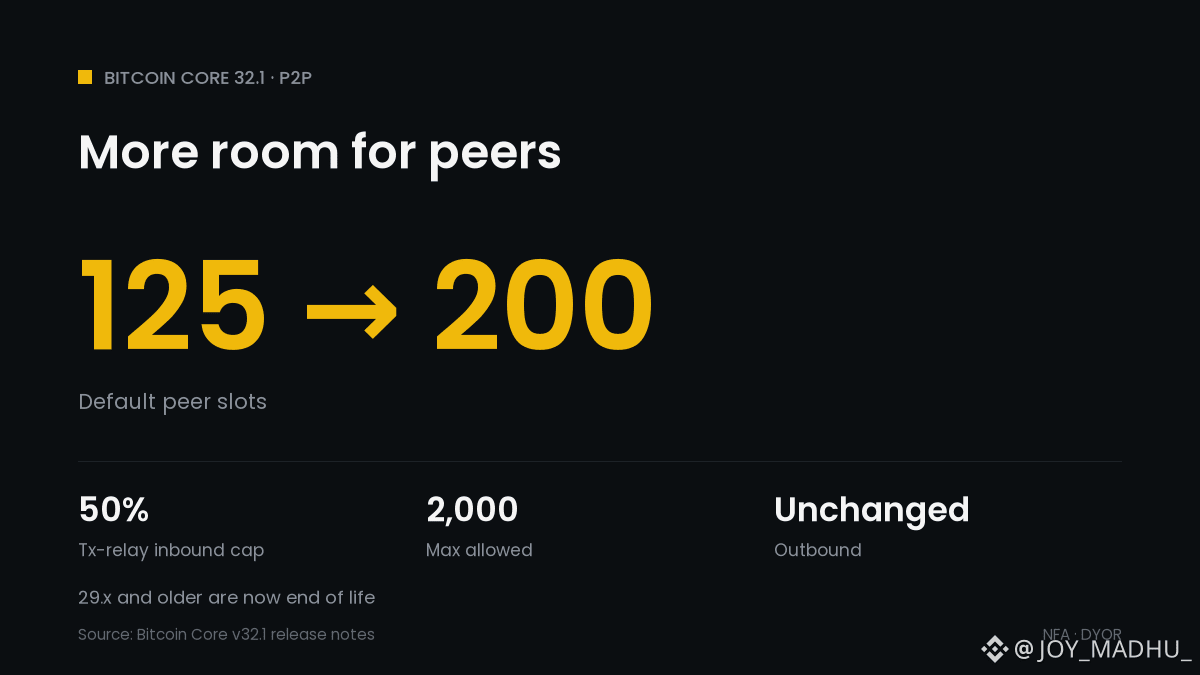
🌐 Bitcoin Core 32.1 Lifts Default Peer Slots From 125 to 200
📈 The default -maxconnections rises to 200, adding inbound room for block-relay-only peers
🔹 Outbound connections stay unchanged
⚙️ New -inboundrelaypercent option: transaction-relaying peers can use at most 50% of inbound slots by default
⚠️ Values above 2,000 are now clamped, to cut crash risk
🔒 Private-broadcast fix closes a possible IP leak on Tor setups
📊 Global tx relay rate limit stays at 14 tx/s, plus a new 12MB per 10 min cap
📅 32.0 was tagged but never released; 29.x and older are now end of life
What it means for Bitcoin: more slots help blocks spread faster and make it harder to isolate nodes. It's an infrastructure upgrade, not a price event.
Node runners, will you keep 200 or set it back to 125? 👇
$BTC
#CryptoNews #Bitcoin #BitcoinCore32.1RaisesPeerConnectionLimit

·
--
💡 Spotted a detail! The most discussed meme lately: the Fed's interest rate decision and expectations of a rate hike.
Several posts discuss the Fed holding rates steady while hawkish officials call for a December hike, with markets watching the short-term pressure this could put on BTC and risk assets.
Jokes aside, even when watching the drama, stay clear-headed.
$BTC is no different—the market has always tested people.
What do you think?👇
#市场观察 #BTC #Binance #BitcoinCore32.1RaisesPeerConnectionLimit
8
·
--
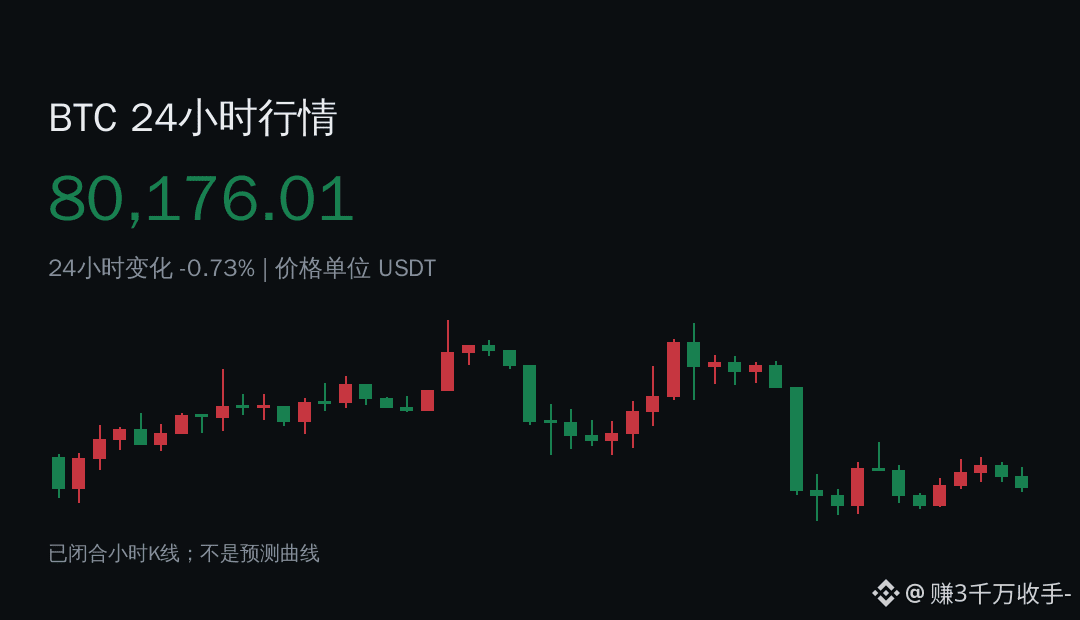
📉 Yikes | $BTC 24-hour trading volume 1124731859.51 USDT, current price 80176.01 USDT.
📊 Data snapshot
· Current price: 80176.01 USDT
· 24h: -0.73%
· Range: 79710.00 — 81788.56
· Trading volume: 1124731859.51 USDT
Don't rush to conclusions. Let volume speak before price—the bulls and bears are wrestling it out right now.
Are you watching? 👇
#市场观察 #BTC #Binance #BitcoinCore32.1RaisesPeerConnectionLimit
·
--

Article
BTC | Data Checklist | 2026-10-29Let the data speak first: $BTC funding rate +0.0098%, mark price 80122.10 USDT.
📊 Data Snapshot
· Funding rate: +0.0098%
· Mark price: 80122.10 USDT
Let’s put the data first. No rush to pick a side—seasoned traders know to look before they act.
Would you wait for confirmation? 👇
## How to read this data
The mark price is a reference price for the contract, not a promise of execution. The funding rate has been converted to a percentage, with its sign and precision preserved. Without the settlement interval and position size, we won’t estimate individual fees or treat the funding rate as proof of price direction.
#市场观察 #BTC #Binance #BitcoinCore32.1RaisesPeerConnectionLimit
BTC | Data Checklist | 2026-10-29
Let the data speak first: $BTC funding rate +0.0098%, mark price 80122.10 USDT.
📊 Data Snapshot
· Funding rate: +0.0098%
· Mark price: 80122.10 USDT
Let’s put the data first. No rush to pick a side—seasoned traders know to look before they act.
Would you wait for confirmation? 👇
## How to read this data
The mark price is a reference price for the contract, not a promise of execution. The funding rate has been converted to a percentage, with its sign and precision preserved. Without the settlement interval and position size, we won’t estimate individual fees or treat the funding rate as proof of price direction.
#市场观察 #BTC #Binance #BitcoinCore32.1RaisesPeerConnectionLimit
2
·
--
📊 The data is getting interesting: $BTC 's holdings have reached 96737.92 BTC.
📊 Data snapshot
· Open interest: 96737.92 BTC
Seasoned traders know that volume matters more than price. This change in open interest is worth watching.
What do you make of this move? 👇
#市场观察 #BTC #Binance #BitcoinCore32.1RaisesPeerConnectionLimit
📊 Data snapshot
· Open interest: 96737.92 BTC
Seasoned traders know that volume matters more than price. This change in open interest is worth watching.
What do you make of this move? 👇
#市场观察 #BTC #Binance #BitcoinCore32.1RaisesPeerConnectionLimit

·
--
Let the data lead—$BTC puts 80135.79 USDT on the board today, down 1.72% in 24 hours.
📊 Data Snapshot
· Current price: 80135.79 USDT
· 24h: -1.72%
· Range: 79710.00 — 81788.56
· Trading volume: 1134259051.92 USDT
Behind the numbers are emotions
What’s your take on this move? 👇
#市场观察 #BTC #Binance #BitcoinCore32.1RaisesPeerConnectionLimit
📊 Data Snapshot
· Current price: 80135.79 USDT
· 24h: -1.72%
· Range: 79710.00 — 81788.56
· Trading volume: 1134259051.92 USDT
Behind the numbers are emotions
What’s your take on this move? 👇
#市场观察 #BTC #Binance #BitcoinCore32.1RaisesPeerConnectionLimit

·
--
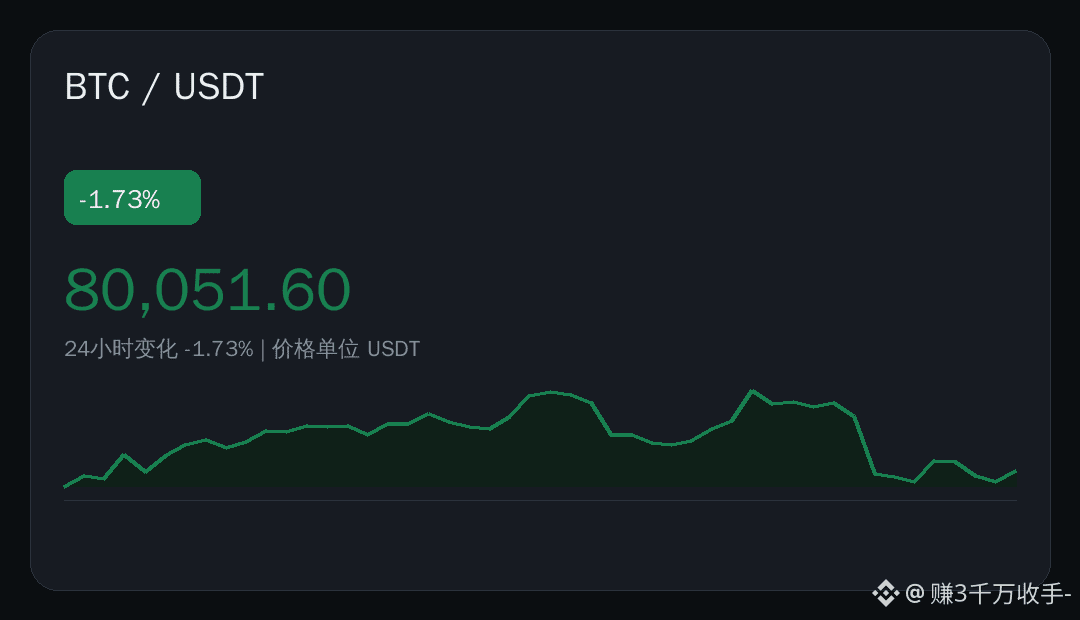
Let's pause the speculation—$BTC put 80051.60 USDT on the board today, down 1.73% in 24 hours.
📊 Data Snapshot
· Current price: 80051.60 USDT
· 24h: -1.73%
· Range: 79710.00 — 81823.00
· Trading volume: 1170159162.98 USDT
Volatility doesn't equal opportunity
Will you wait for confirmation? 👇
#市场观察 #BTC #Binance #BitcoinCore32.1RaisesPeerConnectionLimit
📊 Data Snapshot
· Current price: 80051.60 USDT
· 24h: -1.73%
· Range: 79710.00 — 81823.00
· Trading volume: 1170159162.98 USDT
Volatility doesn't equal opportunity
Will you wait for confirmation? 👇
#市场观察 #BTC #Binance #BitcoinCore32.1RaisesPeerConnectionLimit
·
--
Let's stop speculating for a moment—$BTC wrote down 79946.03 USDT today, down 1.50% over 24 hours.
📊 Data snapshot
· Current price: 79946.03 USDT
· 24h: -1.50%
· Range: 79710.00 — 81823.00
· Trading volume: 1157325572.60 USDT
A seasoned trader would put it this way: volume matters more than price. Price can lie, but volume can't.
What do you think of this move? 👇
#市场观察 #BTC #Binance #BitcoinCore32.1RaisesPeerConnectionLimit

·
--
Let’s talk about something beyond market trends: money management.
Always keep some cash on hand, so you have bullets when opportunities arise.
There’s always a market, but your mindset is a lifelong commitment.
The same goes for $BTC —the market has always been a test of people.
Let’s chat in the comments 👇
#市场观察 #BTC #Binance #BitcoinCore32.1RaisesPeerConnectionLimit

1
·
--
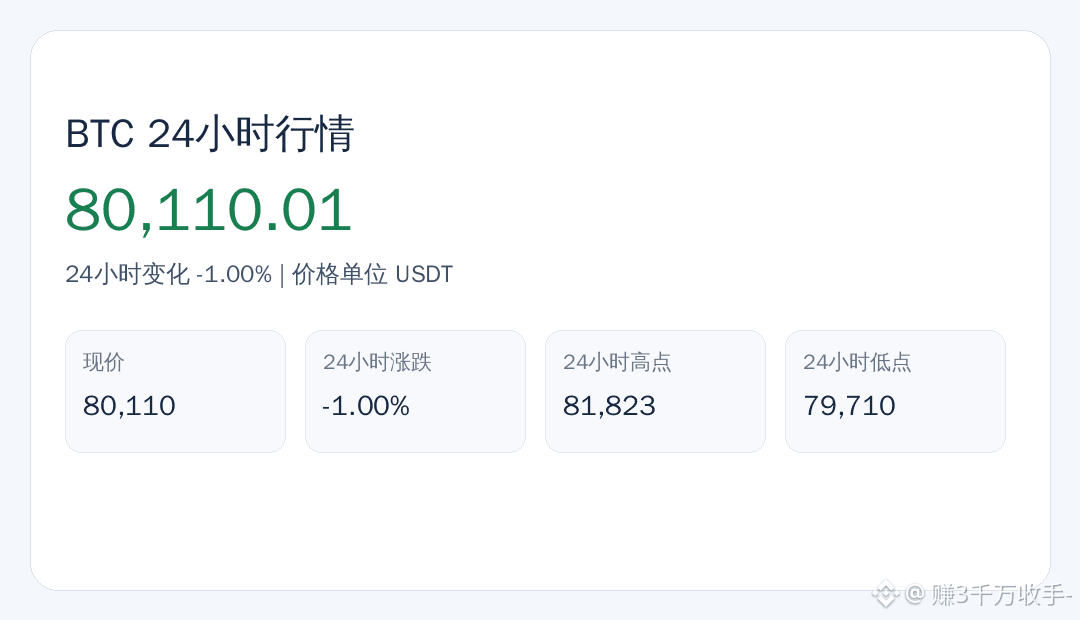
Excitement aside, look closely at the numbers: $BTC 24 hours -1.00%, current price 80110.01 USDT.
📊 Data Snapshot
· Current price: 80110.01 USDT
· 24h: -1.00%
· Range: 79710.00 — 81823.00
· Trading volume: 1143323334.85 USDT
The numbers are right here, and sentiment is moving with them. Volume matters more than price; bulls and bears are battling it out.
Would you wait for confirmation?👇
#市场观察 #BTC #Binance #BitcoinCore32.1RaisesPeerConnectionLimit
1
That early morning, I personally pressed the button to go all-in long
At 3:17 a.m., I stared at the INIT candlestick chart on my phone, my fingers trembling slightly.
0.17378. That was its low for the night. It had plunged all the way from 0.25, dropping 30 percent. The group chat was full of people wailing. Some said the team had abandoned the project; others said this was the final shakeout. I stared at the long lower wick, and my heart suddenly began to race.
“A crash is an opportunity.” I had no idea where I’d heard that, but the words kept circling in my mind like a spell.
I opened the futures trading screen, my finger hovering over it. I still had 23,000 U in my account—three months’ salary. I took a deep breath, cranked the leverage up to 20x, and went all-in long at an entry price of 0.17520.
A red warning popped up: Estimated liquidation price: 0.16850. I hesitated for 0.3 seconds, then tapped Confirm.
For the first two hours, the market moved just as I’d hoped. INIT slowly climbed back from 0.175 to 0.19. My unrealized profit showed up in green, and I even started imagining doubling my money. I poured myself a glass of water, leaned back in my chair, and thought I was a genius.
Then, at 5:42 a.m., a huge red candle came crashing down from nowhere.
The price plunged straight from 0.19 to 0.172. My liquidation price was 0.16850, and the system started bombarding me with notifications. I fumbled around, trying to add margin, but I couldn’t get my finger to hit the right input box.
0.170. 0.169. 0.1685.
A message suddenly appeared on the screen: Your position has been liquidated.
I froze. 23,000 U—gone. It didn’t disappear gradually. It was as if it had never existed, wiped out in a matter of seconds.
I turned off my phone, lay down on the bed, and stared at the ceiling. It was already getting light outside, and I could hear a street-cleaning truck downstairs. I thought back to when I’d first started trading crypto three months earlier: I’d made 2,000 yuan and been so happy that I treated my friends to hot pot. Now I couldn’t even afford hot pot.
The most ironic part was that when I opened the app at noon the next day, INIT was back up to 0.208. If I hadn’t used leverage, if I’d just bought the spot asset, I’d be in profit now.
Twenty-times leverage turned my call on the market from “right” into “dead.”
Later, I saw an older guy in the group chat say something. I took a screenshot and saved it on my phone. Every time I feel like opening a futures position, I pull it up and read it:
“The crypto world never runs out of opportunities. What’s in short supply is people who survive long enough to see the next one.”
After that day, I withdrew all the money from my futures account. I didn’t move it to another exchange to keep gambling—I transferred it back to my bank account. I set myself one rule: never touch anything with more than 1x leverage.
Two months later, I bought some ETH on the spot market at 2311. This time, there was no leverage, no liquidation price, and no trembling at three in the morning. If it went up, I’d be happy. If it went down, I’d treat it as saving money.
I finally understood something: in crypto, staying alive matters ten thousand times more than making money fast.
#FedWatch #EarningsSeason #BitcoinCore32.1RaisesPeerConnectionLimit
26
·
--
🩸 Can't take it—$BTC is stirring things up again: down 0.83% in 24 hours, current price 80302.00 USDT.
📊 Data snapshot
· Current price: 80302.00 USDT
· 24h: -0.83%
· Range: 79710.00 — 81823.00
· Trading volume: 1125542507.58 USDT
Behind the numbers are emotions. Volume speaks before price, and bulls and bears are currently locked in a tug-of-war.
Are you keeping an eye on it? 👇
#市场观察 #BTC #Binance #BitcoinCore32.1RaisesPeerConnectionLimit

Log in to explore more content
Join global crypto users on Binance Square
⚡️ Get latest and useful information about crypto.
💬 Trusted by the world’s largest crypto exchange.
👍 Discover real insights from verified creators.
Email / Phone number
Trending Topics
1
#FedWatch
16.2M views
38,824 Discussing
2
#EarningsSeason
6.3M views
31,553 Discussing
3
#USMidtermElections
12,591 views
338 Discussing
4
#BitcoinDropsBelow$80K
12,783 views
68 Discussing
5
#BoEOpensConsultationOnTokenizedCollateralForClearing
94 views
8 Discussing
6
#BrazilCryptoExchangesMustApplyForLicensesByFriday
8,033 views
284 Discussing
7
#ICEPartnersWithTradeXYZToBringPerpetualContractsToUS
573 views
12 Discussing
8
#SolidusLabsReportsSuspected$170MSpoofingOnHyperliquidOilContracts
1,155 views
23 Discussing
9
#StanDruckenmillerBecomesInvestorInTradeXYZ
8,435 views
279 Discussing
10
#RussiaProposedNonCustodialWalletLimitsExcludeIntlSettlements
1,536 views
38 Discussing