
#bedrock
bedrock
7.3M views
89,812 Discussing
Hot
Latest

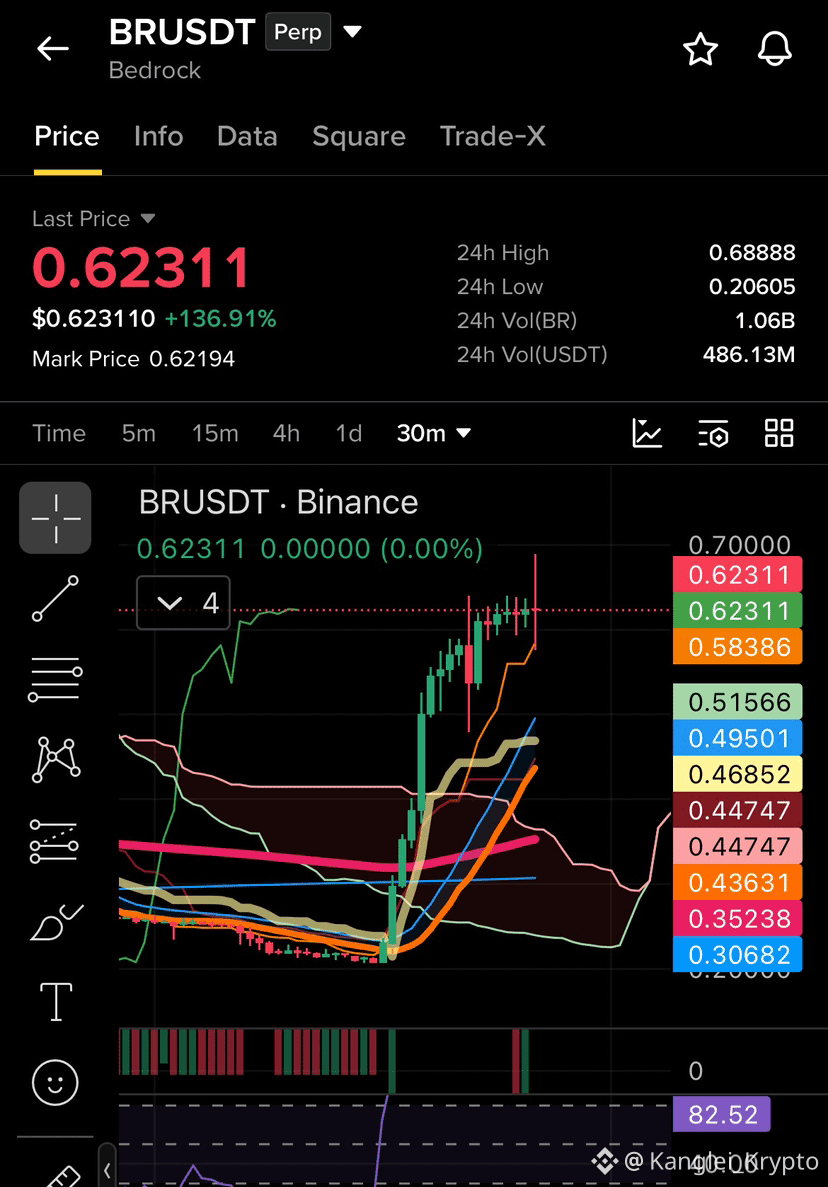
🚀 #BRUSDT (Bedrock) 30m Chart Deep Dive 📈📉
Massive +137% pump in 24h… but is the real move just starting or already overextended?
Current price: 0.623
24h range: 0.206 → 0.688
Volume is insane (486M USDT). This is classic early-stage volatility.
Technical Snapshot:
Price blasted through every MA after the low and is now riding the upper bands.
RSI-style oscillator sitting at 82.5 → clearly overbought on the 30m.
Strong higher-highs / higher-lows structure still intact, but we’re extended.
Perfect Long Entries (High-probability pullback zones):
1. Aggressive Long: 0.580 – 0.595 (orange MA + previous breakout zone)
2. Safer Long: 0.510 – 0.530 (blue + green MA confluence + volume support)
3. Deep discount: 0.440 – 0.460 (major structure support)
Long invalidation: Clean break and close below 0.430
Targets: 0.70 → 0.85 → 1.00+ (if momentum continues)
Perfect Short Entries (Counter-trend / take-profit zones)
1. Aggressive Short: 0.670 – 0.690 (recent high rejection zone)
2. Better Short: Rejection from 0.700 – 0.720 with volume drop
3. Confirmation Short: Breakdown below 0.580 with increasing sell volume
Short invalidation: Strong reclaim and close above 0.720
Targets: 0.55 → 0.48 → 0.40
This coin is still in pure discovery mode. One more vertical leg is possible… or a brutal 40-50% wipe can happen in hours.
What are you doing here?
Long the dip or fading the top? Drop your entry & leverage below 👇
#BRUSDT #Bedrock #FedRateWatch
⚠️ High-risk early-stage token. Extreme volatility. Never risk more than you can afford to lose. This is not financial advice.
{future}(BRUSDT)
$BR $BTC
🚀 #BRUSDT (Bedrock) 30m Chart Deep Dive 📈📉
Massive +137% pump in 24h… but is the real move just starting or already overextended?
Current price: 0.623
24h range: 0.206 → 0.688
Volume is insane (486M USDT). This is classic early-stage volatility.
Technical Snapshot:
Price blasted through every MA after the low and is now riding the upper bands.
RSI-style oscillator sitting at 82.5 → clearly overbought on the 30m.
Strong higher-highs / higher-lows structure still intact, but we’re extended.
Perfect Long Entries (High-probability pullback zones):
1. Aggressive Long: 0.580 – 0.595 (orange MA + previous breakout zone)
2. Safer Long: 0.510 – 0.530 (blue + green MA confluence + volume support)
3. Deep discount: 0.440 – 0.460 (major structure support)
Long invalidation: Clean break and close below 0.430
Targets: 0.70 → 0.85 → 1.00+ (if momentum continues)
Perfect Short Entries (Counter-trend / take-profit zones)
1. Aggressive Short: 0.670 – 0.690 (recent high rejection zone)
2. Better Short: Rejection from 0.700 – 0.720 with volume drop
3. Confirmation Short: Breakdown below 0.580 with increasing sell volume
Short invalidation: Strong reclaim and close above 0.720
Targets: 0.55 → 0.48 → 0.40
This coin is still in pure discovery mode. One more vertical leg is possible… or a brutal 40-50% wipe can happen in hours.
What are you doing here?
Long the dip or fading the top? Drop your entry & leverage below 👇
#BRUSDT #Bedrock #FedRateWatch
⚠️ High-risk early-stage token. Extreme volatility. Never risk more than you can afford to lose. This is not financial advice.
$BR $BTC
Massive +137% pump in 24h… but is the real move just starting or already overextended?
Current price: 0.623
24h range: 0.206 → 0.688
Volume is insane (486M USDT). This is classic early-stage volatility.
Technical Snapshot:
Price blasted through every MA after the low and is now riding the upper bands.
RSI-style oscillator sitting at 82.5 → clearly overbought on the 30m.
Strong higher-highs / higher-lows structure still intact, but we’re extended.
Perfect Long Entries (High-probability pullback zones):
1. Aggressive Long: 0.580 – 0.595 (orange MA + previous breakout zone)
2. Safer Long: 0.510 – 0.530 (blue + green MA confluence + volume support)
3. Deep discount: 0.440 – 0.460 (major structure support)
Long invalidation: Clean break and close below 0.430
Targets: 0.70 → 0.85 → 1.00+ (if momentum continues)
Perfect Short Entries (Counter-trend / take-profit zones)
1. Aggressive Short: 0.670 – 0.690 (recent high rejection zone)
2. Better Short: Rejection from 0.700 – 0.720 with volume drop
3. Confirmation Short: Breakdown below 0.580 with increasing sell volume
Short invalidation: Strong reclaim and close above 0.720
Targets: 0.55 → 0.48 → 0.40
This coin is still in pure discovery mode. One more vertical leg is possible… or a brutal 40-50% wipe can happen in hours.
What are you doing here?
Long the dip or fading the top? Drop your entry & leverage below 👇
#BRUSDT #Bedrock #FedRateWatch
⚠️ High-risk early-stage token. Extreme volatility. Never risk more than you can afford to lose. This is not financial advice.
$BR $BTC
1
2
386

·
--
Bullish
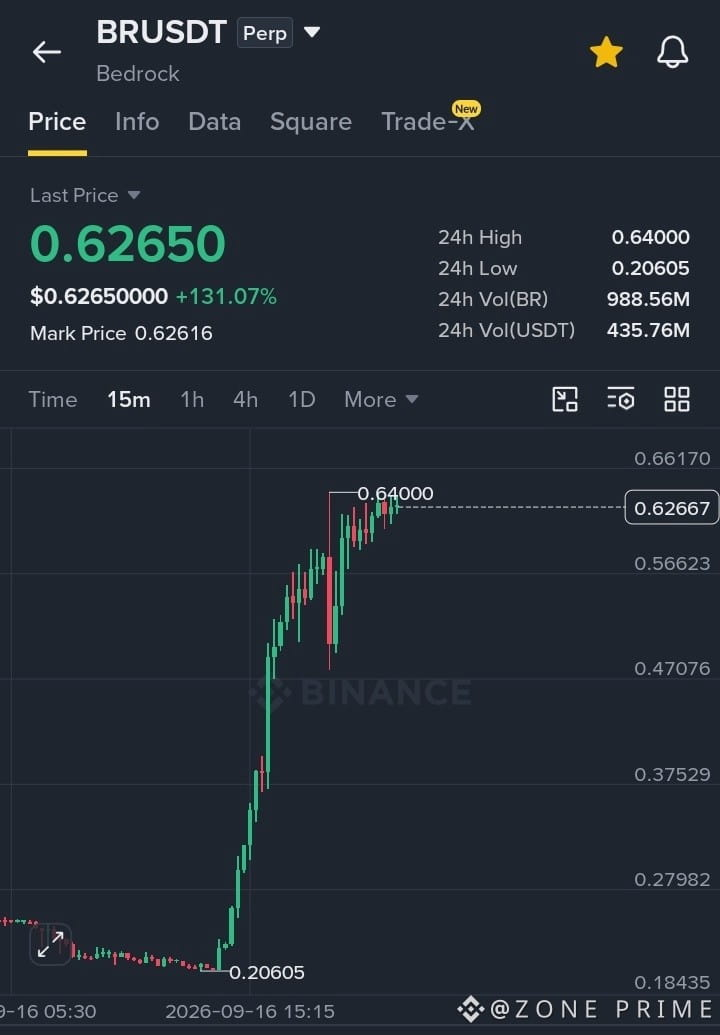
$BR /USDT — LONG SETUP Go 📈 🚀 💯
Entry: 0.56623 - 0.62650
TP1: 0.64000
TP2: 0.66170
TP3: 0.70000
Stop: 0.52500
Explosive impulse momentum breaking through previous structural levels with strong volume.
Sustained spot demand expansion and tight price consolidation favor further bullish price discovery.
#BR #brusdt #bedrock #crypto $BR
{future}(BRUSDT)
$BR /USDT — LONG SETUP Go 📈 🚀 💯
Entry: 0.56623 - 0.62650
TP1: 0.64000
TP2: 0.66170
TP3: 0.70000
Stop: 0.52500
Explosive impulse momentum breaking through previous structural levels with strong volume.
Sustained spot demand expansion and tight price consolidation favor further bullish price discovery.
#BR #brusdt #bedrock #crypto $BR
Entry: 0.56623 - 0.62650
TP1: 0.64000
TP2: 0.66170
TP3: 0.70000
Stop: 0.52500
Explosive impulse momentum breaking through previous structural levels with strong volume.
Sustained spot demand expansion and tight price consolidation favor further bullish price discovery.
#BR #brusdt #bedrock #crypto $BR
124

·
--
Bullish
🔥 Hidden 100x Crypto Secret! What is happening with Bedrock ($BR)? 🤫👇
"Don't Miss This!"
{future}(BRUSDT)
👉 While everyone is busy watching Bitcoin (BTC) and Solana (SOL), a hidden gem is quietly preparing for a massive move. Yes, we are talking about Bedrock ($BR )! 🚀
🧐 What is Bedrock (BR)?
Bedrock is a highly efficient Liquid Restaking Protocol operating on the BNB Chain. It allows users to deposit their Bitcoin (BTC) and Ethereum (ETH) to earn double rewards—combining staking yield with DeFi rewards! 💰
⚠️ Massive Alert: What's Happening on September 20?
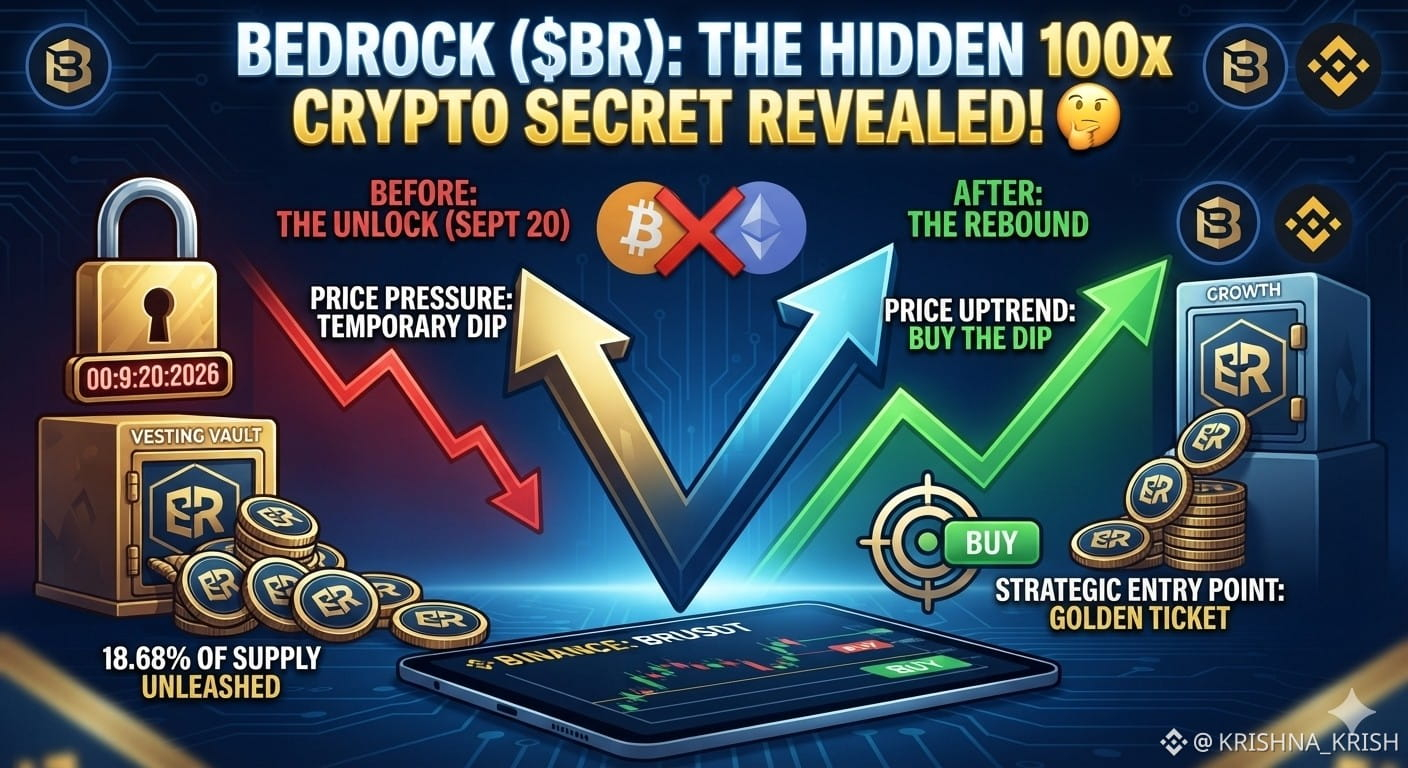
👉 Mark your calendars! On September 20, 2026, Bedrock is facing a major Token Unlock event.
1)Over 40.63 Million BR tokens will be released into the market.
2)This accounts for a whopping 18.68% of its current circulating supply!
⁉️What does this mean for the price?
Historically, when such a huge number of tokens unlock, early investors or whales might dump their holdings, causing a temporary price dip. But don't panic! Once the initial selling pressure clears out, it creates the ultimate "Buy the Dip" entry point for smart traders! 📉➡️📈
💡 Pro Pro-Trading Tip:
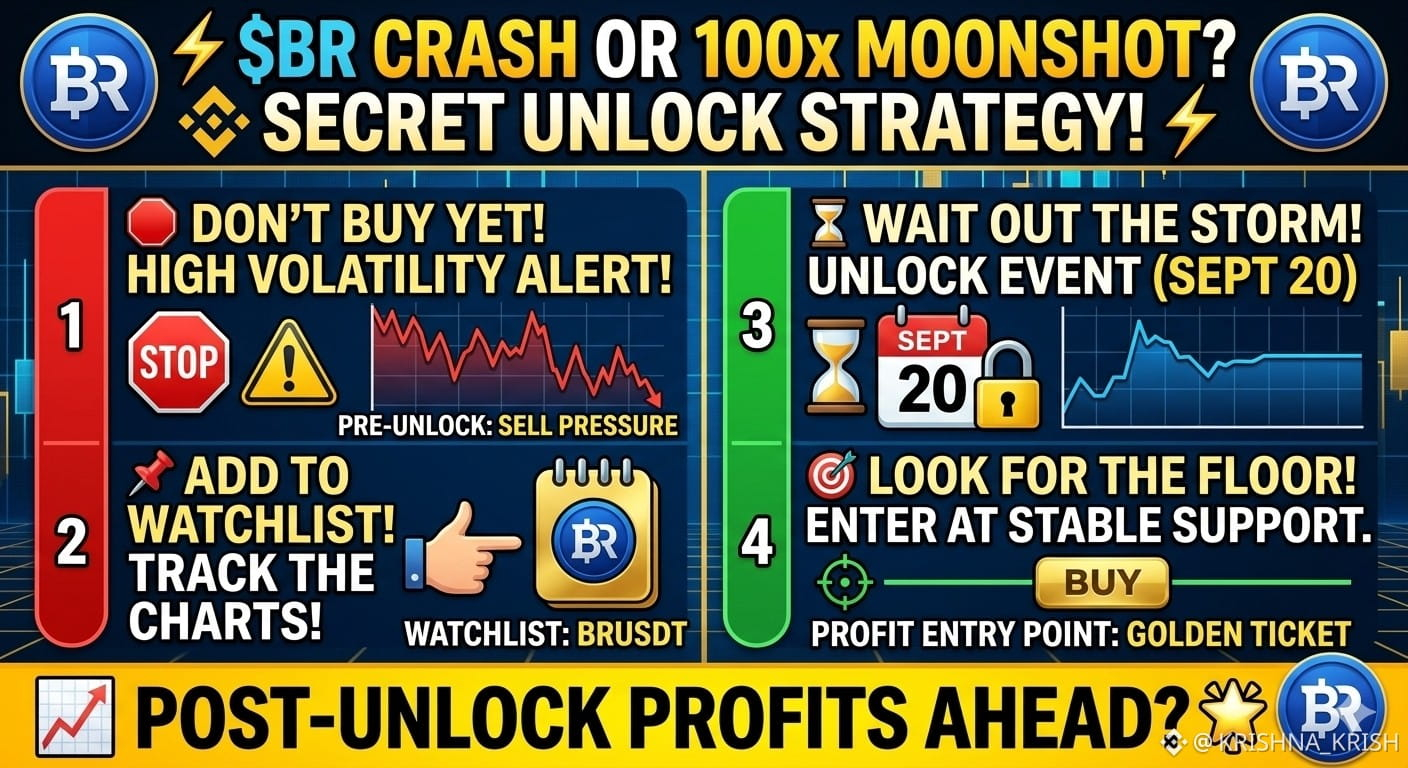
🚨Do not rush to buy right now. Add $BR to your Watchlist immediately.
Wait for the September 20 token unlock to conclude. Once the market absorbs the selling pressure and the price finds a strong support level, look for a clean entry. This could be a golden ticket for massive profits! 🌟
Let me know your thoughts in the comments below! 👇
#Bedrock #TokenUnlock #BNBChain #CryptoAlert #WhaleAlert #CryptoTrading #Altcoins
🔥 Hidden 100x Crypto Secret! What is happening with Bedrock ($BR )? 🤫👇
"Don't Miss This!"
👉 While everyone is busy watching Bitcoin (BTC) and Solana (SOL), a hidden gem is quietly preparing for a massive move. Yes, we are talking about Bedrock ($BR )! 🚀
🧐 What is Bedrock (BR)?
Bedrock is a highly efficient Liquid Restaking Protocol operating on the BNB Chain. It allows users to deposit their Bitcoin (BTC) and Ethereum (ETH) to earn double rewards—combining staking yield with DeFi rewards! 💰
⚠️ Massive Alert: What's Happening on September 20?
👉 Mark your calendars! On September 20, 2026, Bedrock is facing a major Token Unlock event.
1)Over 40.63 Million BR tokens will be released into the market.
2)This accounts for a whopping 18.68% of its current circulating supply!
⁉️What does this mean for the price?
Historically, when such a huge number of tokens unlock, early investors or whales might dump their holdings, causing a temporary price dip. But don't panic! Once the initial selling pressure clears out, it creates the ultimate "Buy the Dip" entry point for smart traders! 📉➡️📈
💡 Pro Pro-Trading Tip:
🚨Do not rush to buy right now. Add $BR to your Watchlist immediately.
Wait for the September 20 token unlock to conclude. Once the market absorbs the selling pressure and the price finds a strong support level, look for a clean entry. This could be a golden ticket for massive profits! 🌟
Let me know your thoughts in the comments below! 👇
#Bedrock #TokenUnlock #BNBChain #CryptoAlert #WhaleAlert #CryptoTrading #Altcoins
"Don't Miss This!"
👉 While everyone is busy watching Bitcoin (BTC) and Solana (SOL), a hidden gem is quietly preparing for a massive move. Yes, we are talking about Bedrock ($BR )! 🚀
🧐 What is Bedrock (BR)?
Bedrock is a highly efficient Liquid Restaking Protocol operating on the BNB Chain. It allows users to deposit their Bitcoin (BTC) and Ethereum (ETH) to earn double rewards—combining staking yield with DeFi rewards! 💰
⚠️ Massive Alert: What's Happening on September 20?
👉 Mark your calendars! On September 20, 2026, Bedrock is facing a major Token Unlock event.
1)Over 40.63 Million BR tokens will be released into the market.
2)This accounts for a whopping 18.68% of its current circulating supply!
⁉️What does this mean for the price?
Historically, when such a huge number of tokens unlock, early investors or whales might dump their holdings, causing a temporary price dip. But don't panic! Once the initial selling pressure clears out, it creates the ultimate "Buy the Dip" entry point for smart traders! 📉➡️📈
💡 Pro Pro-Trading Tip:
🚨Do not rush to buy right now. Add $BR to your Watchlist immediately.
Wait for the September 20 token unlock to conclude. Once the market absorbs the selling pressure and the price finds a strong support level, look for a clean entry. This could be a golden ticket for massive profits! 🌟
Let me know your thoughts in the comments below! 👇
#Bedrock #TokenUnlock #BNBChain #CryptoAlert #WhaleAlert #CryptoTrading #Altcoins
1
239
·
--
Bearish
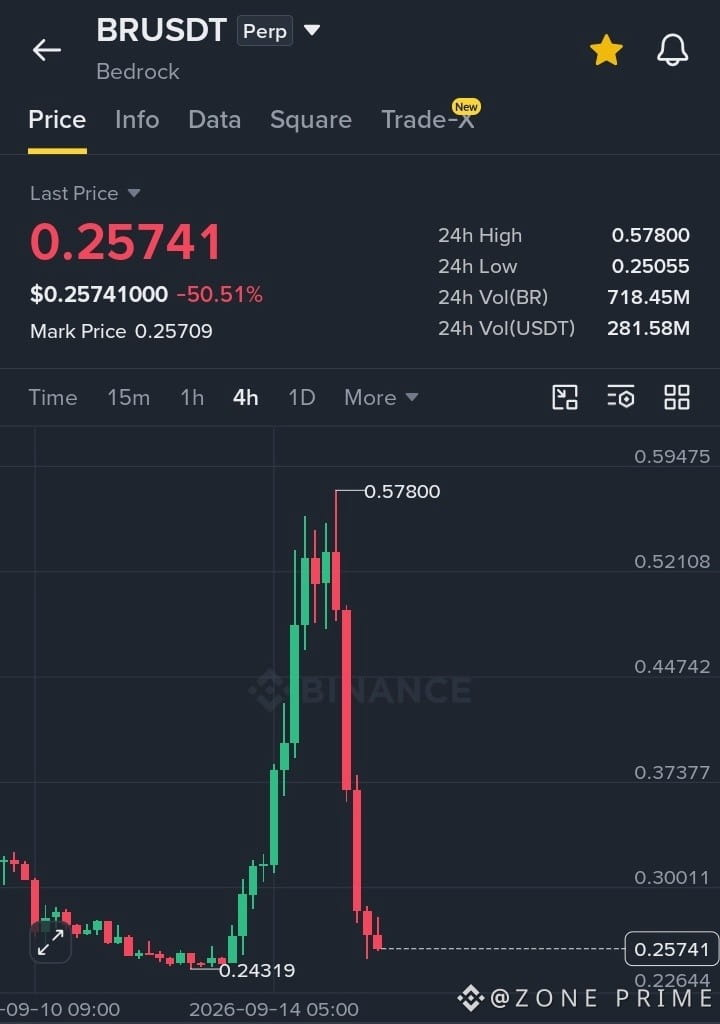
$BR /USDT — SHORT SETUP Go 📉 💯 ✨ 😱
Entry: 0.30011 - 0.37377
TP1: 0.25741
TP2: 0.24319
TP3: 0.21500
Stop: 0.39800
Relief rally running into heavy overhead resistance around the 0.30011 breakdown node.
Declining buy-side orderflow velocity and strong supply overhang pave the way for a retest of panic-sale lows.
#br #brusdt #bedrock #crypto #Write2Earn $BR
{future}(BRUSDT)
$BR /USDT — SHORT SETUP Go 📉 💯 ✨ 😱
Entry: 0.30011 - 0.37377
TP1: 0.25741
TP2: 0.24319
TP3: 0.21500
Stop: 0.39800
Relief rally running into heavy overhead resistance around the 0.30011 breakdown node.
Declining buy-side orderflow velocity and strong supply overhang pave the way for a retest of panic-sale lows.
#br #brusdt #bedrock #crypto #Write2Earn $BR
Entry: 0.30011 - 0.37377
TP1: 0.25741
TP2: 0.24319
TP3: 0.21500
Stop: 0.39800
Relief rally running into heavy overhead resistance around the 0.30011 breakdown node.
Declining buy-side orderflow velocity and strong supply overhang pave the way for a retest of panic-sale lows.
#br #brusdt #bedrock #crypto #Write2Earn $BR
742
·
--
Bearish
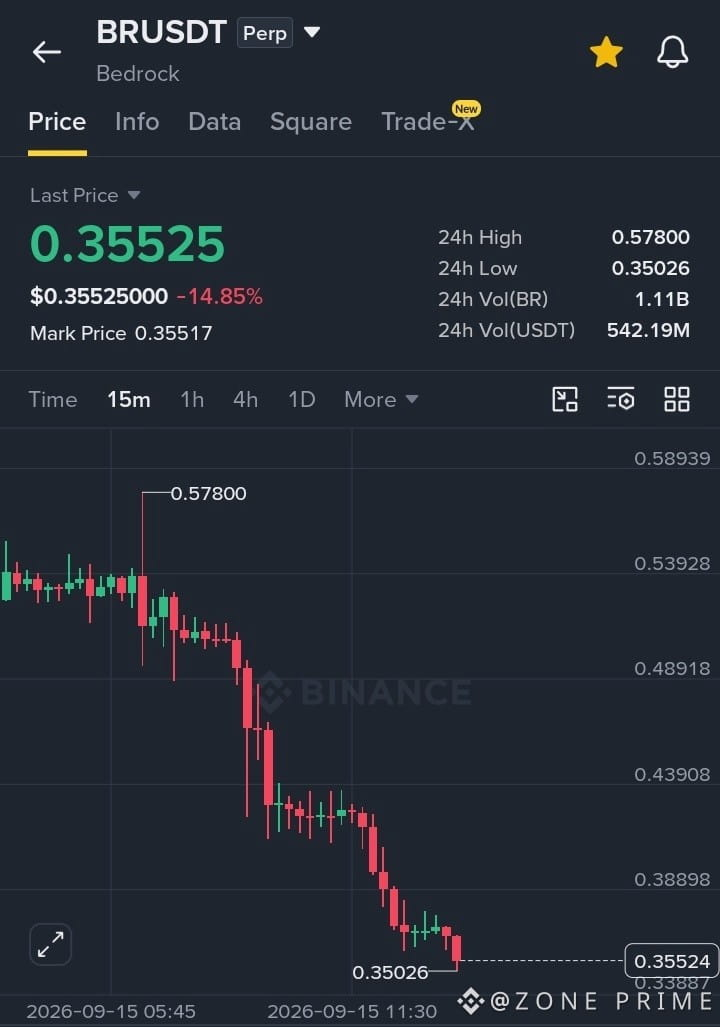
$BR /USDT — SHORT SETUP Go 📉 💯 ✨
Entry: 0.38898 - 0.43908
TP1: 0.35525
TP2: 0.35026
TP3: 0.32000
Stop: 0.46500
Severe structural breakdown turning previous support zones into firm resistance.
Expanding seller orderbook pressure and negative momentum indicators open the path for further downside exploration.
#br #brusdt #bedrock #crypto #Write2Earn $BR
{future}(BRUSDT)
$BR /USDT — SHORT SETUP Go 📉 💯 ✨
Entry: 0.38898 - 0.43908
TP1: 0.35525
TP2: 0.35026
TP3: 0.32000
Stop: 0.46500
Severe structural breakdown turning previous support zones into firm resistance.
Expanding seller orderbook pressure and negative momentum indicators open the path for further downside exploration.
#br #brusdt #bedrock #crypto #Write2Earn $BR
Entry: 0.38898 - 0.43908
TP1: 0.35525
TP2: 0.35026
TP3: 0.32000
Stop: 0.46500
Severe structural breakdown turning previous support zones into firm resistance.
Expanding seller orderbook pressure and negative momentum indicators open the path for further downside exploration.
#br #brusdt #bedrock #crypto #Write2Earn $BR
217


·
--
Bearish
🔥 $BR
{future}(BRUSDT)
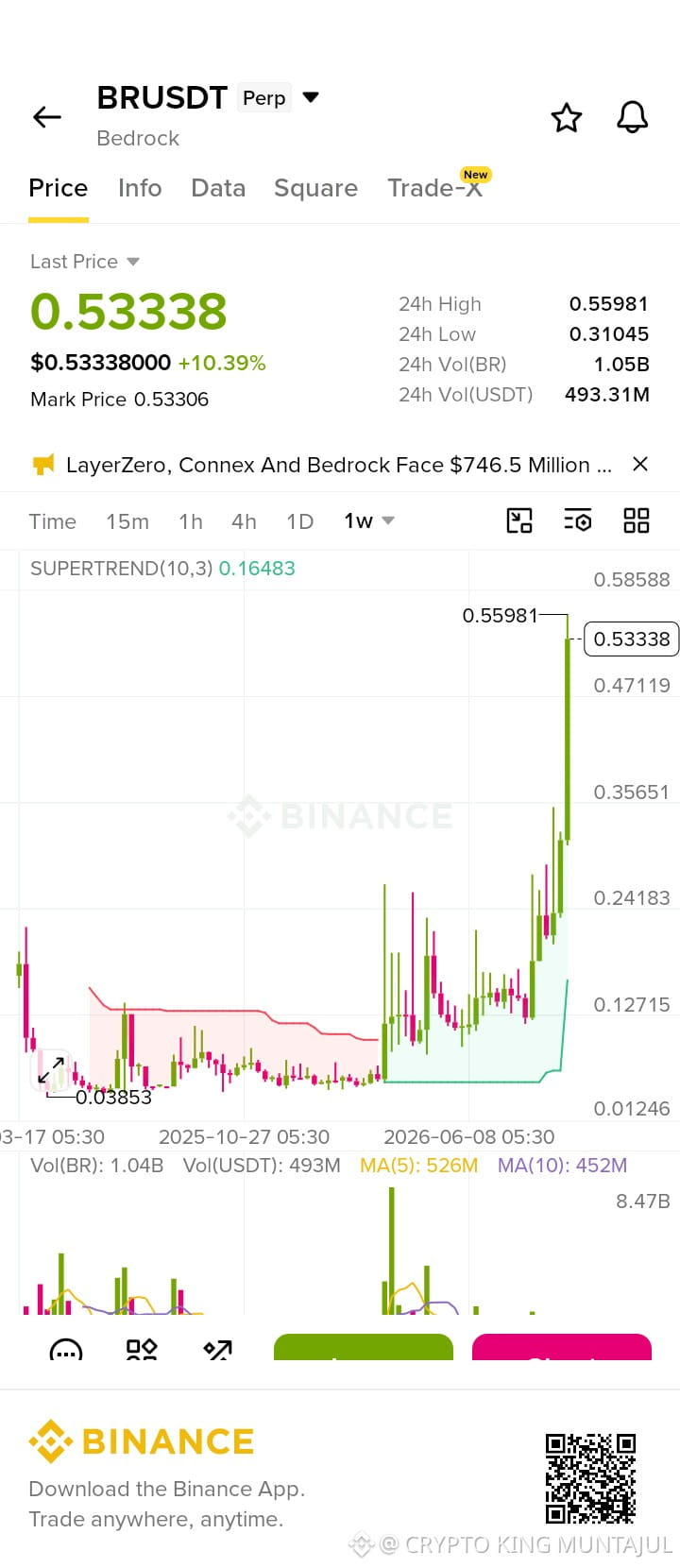
USDT (Bedrock) — Strong Weekly Breakout!
BRUSDT is showing serious momentum, with the price currently around $0.5334, up approximately 10.39% in 24 hours.
📊 Key Market Levels • Current Price: $0.5334 • 24H High: $0.5598 • 24H Low: $0.3105 • 24H Volume: $493M USDT • Weekly chart showing a powerful upside expansion • Recent high near $0.5598 is the immediate resistance zone
🚀 What stands out?
The weekly structure has shifted dramatically after a long consolidation period. BRUSDT has pushed sharply higher with a major increase in trading activity, suggesting strong market participation.
⚠️ Watch the $0.56 zone:
A clean breakout and hold above the recent high could strengthen the bullish structure. On the other hand, rejection around this area may trigger profit-taking and a short-term pullback.
🎯 Key zones to watch:
Resistance: $0.5598 → $0.5859
Support: $0.4712 → $0.3565
📌 Trade smart: Huge volatility means both opportunities and risks are elevated. Avoid chasing pumps blindly and manage your risk carefully.
BRUSDT is definitely one to keep on the radar. 👀🔥
#BRUSDT #Bedrock #Crypto #Binance #altcoins #CryptoTrading #MarketUpdate #Breakout #Bullish
🔥 $BR
USDT (Bedrock) — Strong Weekly Breakout!
BRUSDT is showing serious momentum, with the price currently around $0.5334, up approximately 10.39% in 24 hours.
📊 Key Market Levels • Current Price: $0.5334 • 24H High: $0.5598 • 24H Low: $0.3105 • 24H Volume: $493M USDT • Weekly chart showing a powerful upside expansion • Recent high near $0.5598 is the immediate resistance zone
🚀 What stands out?
The weekly structure has shifted dramatically after a long consolidation period. BRUSDT has pushed sharply higher with a major increase in trading activity, suggesting strong market participation.
⚠️ Watch the $0.56 zone:
A clean breakout and hold above the recent high could strengthen the bullish structure. On the other hand, rejection around this area may trigger profit-taking and a short-term pullback.
🎯 Key zones to watch:
Resistance: $0.5598 → $0.5859
Support: $0.4712 → $0.3565
📌 Trade smart: Huge volatility means both opportunities and risks are elevated. Avoid chasing pumps blindly and manage your risk carefully.
BRUSDT is definitely one to keep on the radar. 👀🔥
#BRUSDT #Bedrock #Crypto #Binance #altcoins #CryptoTrading #MarketUpdate #Breakout #Bullish
USDT (Bedrock) — Strong Weekly Breakout!
BRUSDT is showing serious momentum, with the price currently around $0.5334, up approximately 10.39% in 24 hours.
📊 Key Market Levels • Current Price: $0.5334 • 24H High: $0.5598 • 24H Low: $0.3105 • 24H Volume: $493M USDT • Weekly chart showing a powerful upside expansion • Recent high near $0.5598 is the immediate resistance zone
🚀 What stands out?
The weekly structure has shifted dramatically after a long consolidation period. BRUSDT has pushed sharply higher with a major increase in trading activity, suggesting strong market participation.
⚠️ Watch the $0.56 zone:
A clean breakout and hold above the recent high could strengthen the bullish structure. On the other hand, rejection around this area may trigger profit-taking and a short-term pullback.
🎯 Key zones to watch:
Resistance: $0.5598 → $0.5859
Support: $0.4712 → $0.3565
📌 Trade smart: Huge volatility means both opportunities and risks are elevated. Avoid chasing pumps blindly and manage your risk carefully.
BRUSDT is definitely one to keep on the radar. 👀🔥
#BRUSDT #Bedrock #Crypto #Binance #altcoins #CryptoTrading #MarketUpdate #Breakout #Bullish
1
214
·
--
Bullish
🚨 $BR PARABOLIC BREAKOUT: Institutional Re-accumulation or the Ultimate Whale Trap? 🚀
$BR (Bedrock) just recorded a staggering 700%+ surge in 24-hour volume, shattering its historic ATH resistance at $0.51–$0.52! Retail is frantically FOMO-ing in, but Smart Money is playing a completely different strategy.
If you are trading this volatility, here is the exact institutional execution plan:
📊 VIP TRADE EXECUTION ($BR/USDT):
Institutional Entry Zone: $0.4850 – $0.5050 (Accumulate on 15M liquidity retests)
Target 1: $0.5800 (Quick Profit Take) 🎯
Target 2: $0.6600 (Mid-Term Resistance) 🎯
Target 3: $0.7500 (Parabolic Extension) 🚀
Hard Stop-Loss: $0.4400 (Strict Trade Invalidation) 🛡️
⚠️ CRITICAL TRADER ADVISORY:
1️⃣ Beware of Wick Liquidations: High volatility means market-order entries will get crushed by slippage. Use limit orders only.
2️⃣ Leverage Cap: Keep leverage under 3x–5x. Whales are actively hunting high-leverage long positions.
👇 DEBATE TIME: Is $BR heading straight to $1.00, or are we seeing a massive flash crash next? Drop your price prediction below before the candle closes!
#BR #Bedrock #BinanceSquareTalks #CryptoSignals
🚨 $BR PARABOLIC BREAKOUT: Institutional Re-accumulation or the Ultimate Whale Trap? 🚀
$BR (Bedrock) just recorded a staggering 700%+ surge in 24-hour volume, shattering its historic ATH resistance at $0.51–$0.52! Retail is frantically FOMO-ing in, but Smart Money is playing a completely different strategy.
If you are trading this volatility, here is the exact institutional execution plan:
📊 VIP TRADE EXECUTION ($BR /USDT):
Institutional Entry Zone: $0.4850 – $0.5050 (Accumulate on 15M liquidity retests)
Target 1: $0.5800 (Quick Profit Take) 🎯
Target 2: $0.6600 (Mid-Term Resistance) 🎯
Target 3: $0.7500 (Parabolic Extension) 🚀
Hard Stop-Loss: $0.4400 (Strict Trade Invalidation) 🛡️
⚠️ CRITICAL TRADER ADVISORY:
1️⃣ Beware of Wick Liquidations: High volatility means market-order entries will get crushed by slippage. Use limit orders only.
2️⃣ Leverage Cap: Keep leverage under 3x–5x. Whales are actively hunting high-leverage long positions.
👇 DEBATE TIME: Is $BR heading straight to $1.00, or are we seeing a massive flash crash next? Drop your price prediction below before the candle closes!
#BR #Bedrock #BinanceSquareTalks #CryptoSignals
$BR (Bedrock) just recorded a staggering 700%+ surge in 24-hour volume, shattering its historic ATH resistance at $0.51–$0.52! Retail is frantically FOMO-ing in, but Smart Money is playing a completely different strategy.
If you are trading this volatility, here is the exact institutional execution plan:
📊 VIP TRADE EXECUTION ($BR /USDT):
Institutional Entry Zone: $0.4850 – $0.5050 (Accumulate on 15M liquidity retests)
Target 1: $0.5800 (Quick Profit Take) 🎯
Target 2: $0.6600 (Mid-Term Resistance) 🎯
Target 3: $0.7500 (Parabolic Extension) 🚀
Hard Stop-Loss: $0.4400 (Strict Trade Invalidation) 🛡️
⚠️ CRITICAL TRADER ADVISORY:
1️⃣ Beware of Wick Liquidations: High volatility means market-order entries will get crushed by slippage. Use limit orders only.
2️⃣ Leverage Cap: Keep leverage under 3x–5x. Whales are actively hunting high-leverage long positions.
👇 DEBATE TIME: Is $BR heading straight to $1.00, or are we seeing a massive flash crash next? Drop your price prediction below before the candle closes!
#BR #Bedrock #BinanceSquareTalks #CryptoSignals

1
172

·
--
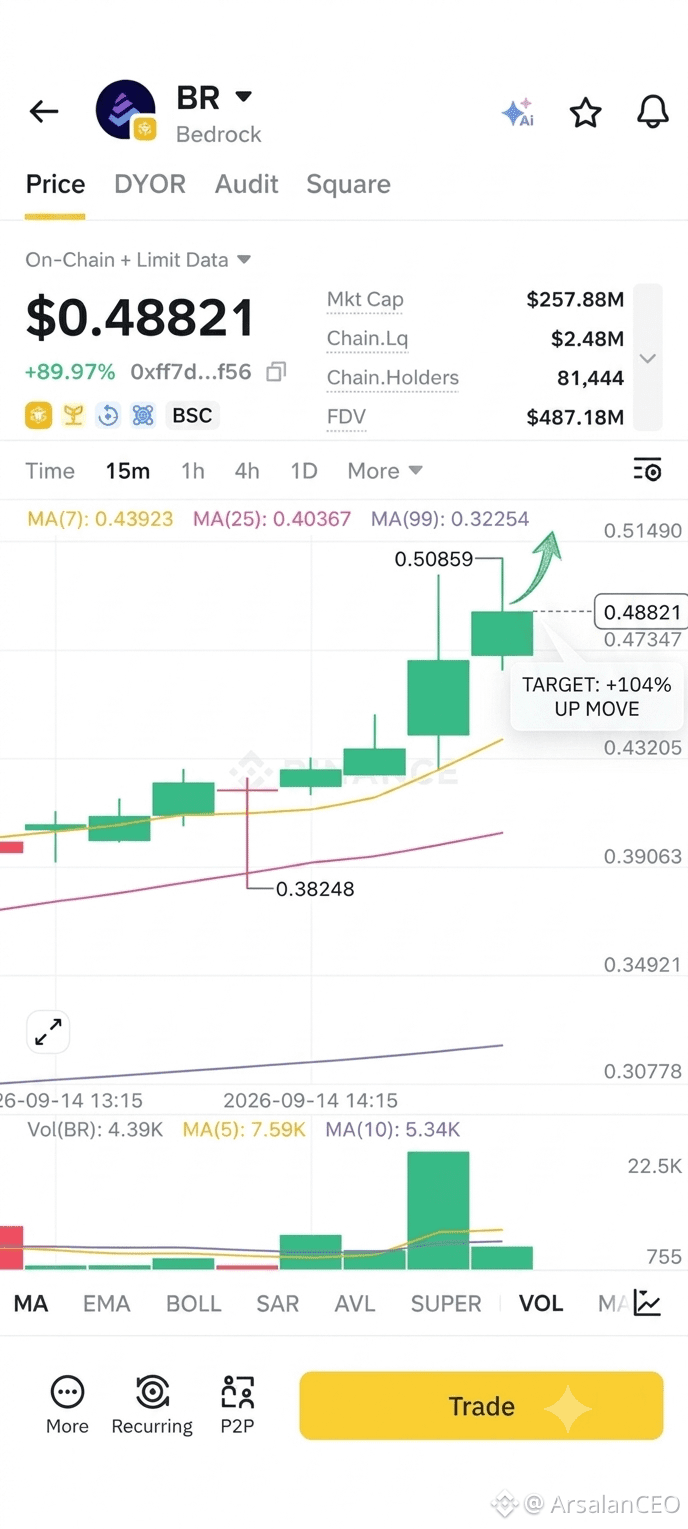
🚀 $BR / USDT Massive Parabolic Rally! +104% UP MOVE Target! 📈
$BR token is in full expansion mode, printing huge green candles with heavy volume influx on the 15m chart! Buyers are dominating as price breaks out into new highs.
💡 Trade Setup & Targets:
• Asset: $BR / USDT (Bedrock)
• Current Price: $0.48821 (Live) 🟢
• Targeted Expansion: +104% Massive Up Move 🎯
• Immediate Resistance / High: $0.50859 🚀
• Key Support Zone: $0.38248 – $0.43923
• Market Sentiment: Super Bullish 🟢
⚠️ Risk Management: Protect your profits by trailing your stop-loss! Wait for healthy retests rather than chasing green candles. (DYOR)
#BR #Bedrock #BRUSDT
{future}(BRUSDT)
🚀 $BR / USDT Massive Parabolic Rally! +104% UP MOVE Target! 📈
$BR token is in full expansion mode, printing huge green candles with heavy volume influx on the 15m chart! Buyers are dominating as price breaks out into new highs.
💡 Trade Setup & Targets:
• Asset: $BR / USDT (Bedrock)
• Current Price: $0.48821 (Live) 🟢
• Targeted Expansion: +104% Massive Up Move 🎯
• Immediate Resistance / High: $0.50859 🚀
• Key Support Zone: $0.38248 – $0.43923
• Market Sentiment: Super Bullish 🟢
⚠️ Risk Management: Protect your profits by trailing your stop-loss! Wait for healthy retests rather than chasing green candles. (DYOR)
#BR #Bedrock #BRUSDT
$BR token is in full expansion mode, printing huge green candles with heavy volume influx on the 15m chart! Buyers are dominating as price breaks out into new highs.
💡 Trade Setup & Targets:
• Asset: $BR / USDT (Bedrock)
• Current Price: $0.48821 (Live) 🟢
• Targeted Expansion: +104% Massive Up Move 🎯
• Immediate Resistance / High: $0.50859 🚀
• Key Support Zone: $0.38248 – $0.43923
• Market Sentiment: Super Bullish 🟢
⚠️ Risk Management: Protect your profits by trailing your stop-loss! Wait for healthy retests rather than chasing green candles. (DYOR)
#BR #Bedrock #BRUSDT
152

·
--
Bullish
🚀🔥 $BR / BEDROCK — THE MOMENTUM IS REAL! 🔥🚀
Bedrock ($BR) is making a serious move on Binance! 📈💥
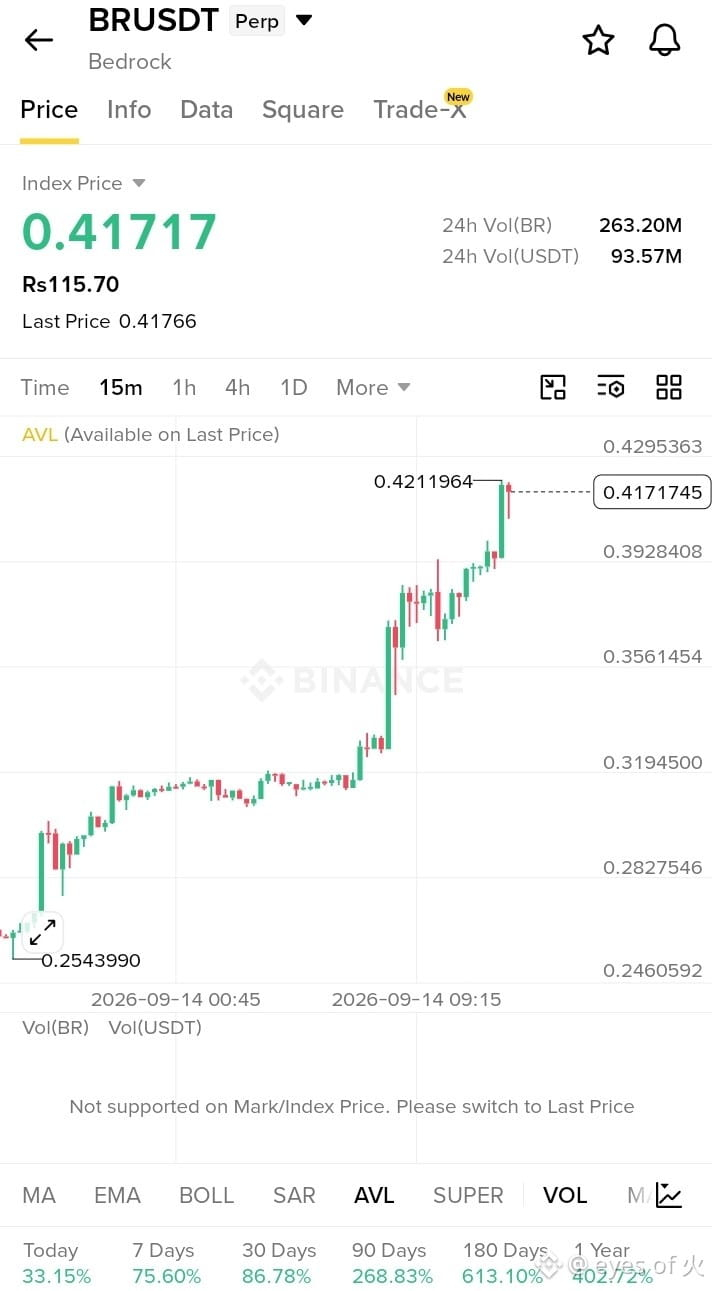
From around $0.254 → $0.421, BR has delivered an explosive rally, with the price currently trading near $0.417. That’s a huge move in a short period of time! 🐂🔥
📊 Binance Perpetual Snapshot: 💰 Index Price: $0.41717
📈 Recent High: $0.42119
💵 24H Volume: ~$93.57M USDT
🔥 Today: +33.15%
🚀 7D: +75.60%
💥 30D: +86.78%
📈 90D: +268.83%
🎯 What am I watching now?
After such a powerful pump, I would NOT blindly chase a Long here. 🧠⚠️
🟢 Long Setup: If BR pulls back toward the $0.39–$0.40 zone, holds support and buyers step back in → this could offer a healthier Long setup.
🚀 Breakout Setup: A strong breakout above $0.4212, followed by confirmation/hold, could signal another bullish continuation.
🔴 Short Setup: I would only consider a Short if the $0.421 area gets strongly rejected and the price starts breaking down with confirmation.
⚠️ Remember: A coin being “too high” is not automatically a Short signal. Strong momentum can stay strong longer than expected. Risk management is everything. 🛡️
For me, the key levels are simple:
$0.4212 = Breakout 🚀
$0.40 = Important Zone 👀
$0.39 = Key Support 🛡️
🔥 BR is clearly one of the coins to watch right now.
The next move could be very interesting… 👀🚀
Trade the setup, not the emotion. 🧠📊
{future}(BRUSDT)
#BR #BRUSDT #Binance #CryptoTrading #Bedrock
🚀🔥 $BR / BEDROCK — THE MOMENTUM IS REAL! 🔥🚀
Bedrock ($BR ) is making a serious move on Binance! 📈💥
From around $0.254 → $0.421, BR has delivered an explosive rally, with the price currently trading near $0.417. That’s a huge move in a short period of time! 🐂🔥
📊 Binance Perpetual Snapshot: 💰 Index Price: $0.41717
📈 Recent High: $0.42119
💵 24H Volume: ~$93.57M USDT
🔥 Today: +33.15%
🚀 7D: +75.60%
💥 30D: +86.78%
📈 90D: +268.83%
🎯 What am I watching now?
After such a powerful pump, I would NOT blindly chase a Long here. 🧠⚠️
🟢 Long Setup: If BR pulls back toward the $0.39–$0.40 zone, holds support and buyers step back in → this could offer a healthier Long setup.
🚀 Breakout Setup: A strong breakout above $0.4212, followed by confirmation/hold, could signal another bullish continuation.
🔴 Short Setup: I would only consider a Short if the $0.421 area gets strongly rejected and the price starts breaking down with confirmation.
⚠️ Remember: A coin being “too high” is not automatically a Short signal. Strong momentum can stay strong longer than expected. Risk management is everything. 🛡️
For me, the key levels are simple:
$0.4212 = Breakout 🚀
$0.40 = Important Zone 👀
$0.39 = Key Support 🛡️
🔥 BR is clearly one of the coins to watch right now.
The next move could be very interesting… 👀🚀
Trade the setup, not the emotion. 🧠📊
#BR #BRUSDT #Binance #CryptoTrading #Bedrock
Bedrock ($BR ) is making a serious move on Binance! 📈💥
From around $0.254 → $0.421, BR has delivered an explosive rally, with the price currently trading near $0.417. That’s a huge move in a short period of time! 🐂🔥
📊 Binance Perpetual Snapshot: 💰 Index Price: $0.41717
📈 Recent High: $0.42119
💵 24H Volume: ~$93.57M USDT
🔥 Today: +33.15%
🚀 7D: +75.60%
💥 30D: +86.78%
📈 90D: +268.83%
🎯 What am I watching now?
After such a powerful pump, I would NOT blindly chase a Long here. 🧠⚠️
🟢 Long Setup: If BR pulls back toward the $0.39–$0.40 zone, holds support and buyers step back in → this could offer a healthier Long setup.
🚀 Breakout Setup: A strong breakout above $0.4212, followed by confirmation/hold, could signal another bullish continuation.
🔴 Short Setup: I would only consider a Short if the $0.421 area gets strongly rejected and the price starts breaking down with confirmation.
⚠️ Remember: A coin being “too high” is not automatically a Short signal. Strong momentum can stay strong longer than expected. Risk management is everything. 🛡️
For me, the key levels are simple:
$0.4212 = Breakout 🚀
$0.40 = Important Zone 👀
$0.39 = Key Support 🛡️
🔥 BR is clearly one of the coins to watch right now.
The next move could be very interesting… 👀🚀
Trade the setup, not the emotion. 🧠📊
#BR #BRUSDT #Binance #CryptoTrading #Bedrock
224

·
--
Bullish
$BR USDT — the move is strong, but I wouldn’t chase this candle.
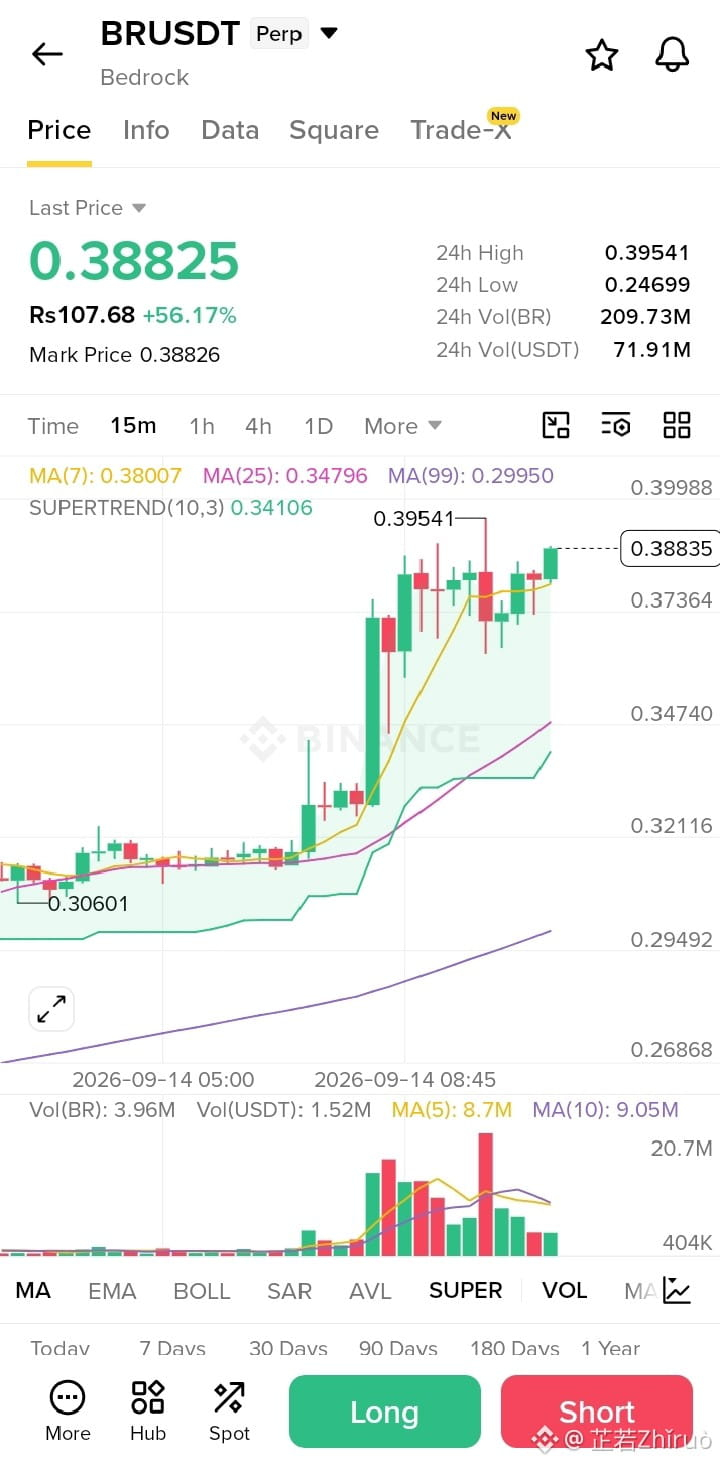
BR is up 56.17%, trading around 0.38825 after pushing to 0.39541 on the 15m chart. Price is still above MA7 0.38007 and MA25 0.34796, while Supertrend remains bullish at 0.34106.
My approach here: wait for a pullback instead of buying the top.
Trade Setup — Long
Entry: 0.3800–0.3840
TP1: 0.3954
TP2: 0.3998
TP3: 0.4050*
SL: 0.3730
If 0.3730 breaks and price starts closing below it, I’d step aside and reassess. The key is whether buyers can reclaim/hold 0.3954 with momentum.
High volatility = smaller position size. No need to chase.
*TP3 is an extension target, not a confirmed resistance level.
{future}(BRUSDT)
#bedrock #AnthropicCEOCallsForAISlowdown #BitcoinThirdSingleBlockReorgInFourWeeks #WhiteHouseRejectsAISlowdownCalls
$BR USDT — the move is strong, but I wouldn’t chase this candle.
BR is up 56.17%, trading around 0.38825 after pushing to 0.39541 on the 15m chart. Price is still above MA7 0.38007 and MA25 0.34796, while Supertrend remains bullish at 0.34106.
My approach here: wait for a pullback instead of buying the top.
Trade Setup — Long
Entry: 0.3800–0.3840
TP1: 0.3954
TP2: 0.3998
TP3: 0.4050*
SL: 0.3730
If 0.3730 breaks and price starts closing below it, I’d step aside and reassess. The key is whether buyers can reclaim/hold 0.3954 with momentum.
High volatility = smaller position size. No need to chase.
*TP3 is an extension target, not a confirmed resistance level.
#bedrock #AnthropicCEOCallsForAISlowdown #BitcoinThirdSingleBlockReorgInFourWeeks #WhiteHouseRejectsAISlowdownCalls
BR is up 56.17%, trading around 0.38825 after pushing to 0.39541 on the 15m chart. Price is still above MA7 0.38007 and MA25 0.34796, while Supertrend remains bullish at 0.34106.
My approach here: wait for a pullback instead of buying the top.
Trade Setup — Long
Entry: 0.3800–0.3840
TP1: 0.3954
TP2: 0.3998
TP3: 0.4050*
SL: 0.3730
If 0.3730 breaks and price starts closing below it, I’d step aside and reassess. The key is whether buyers can reclaim/hold 0.3954 with momentum.
High volatility = smaller position size. No need to chase.
*TP3 is an extension target, not a confirmed resistance level.
#bedrock #AnthropicCEOCallsForAISlowdown #BitcoinThirdSingleBlockReorgInFourWeeks #WhiteHouseRejectsAISlowdownCalls
105
·
--
🔥 $BR / USDT Skyrockets +53.85%! Bullish Momentum Unleashed! 🔥
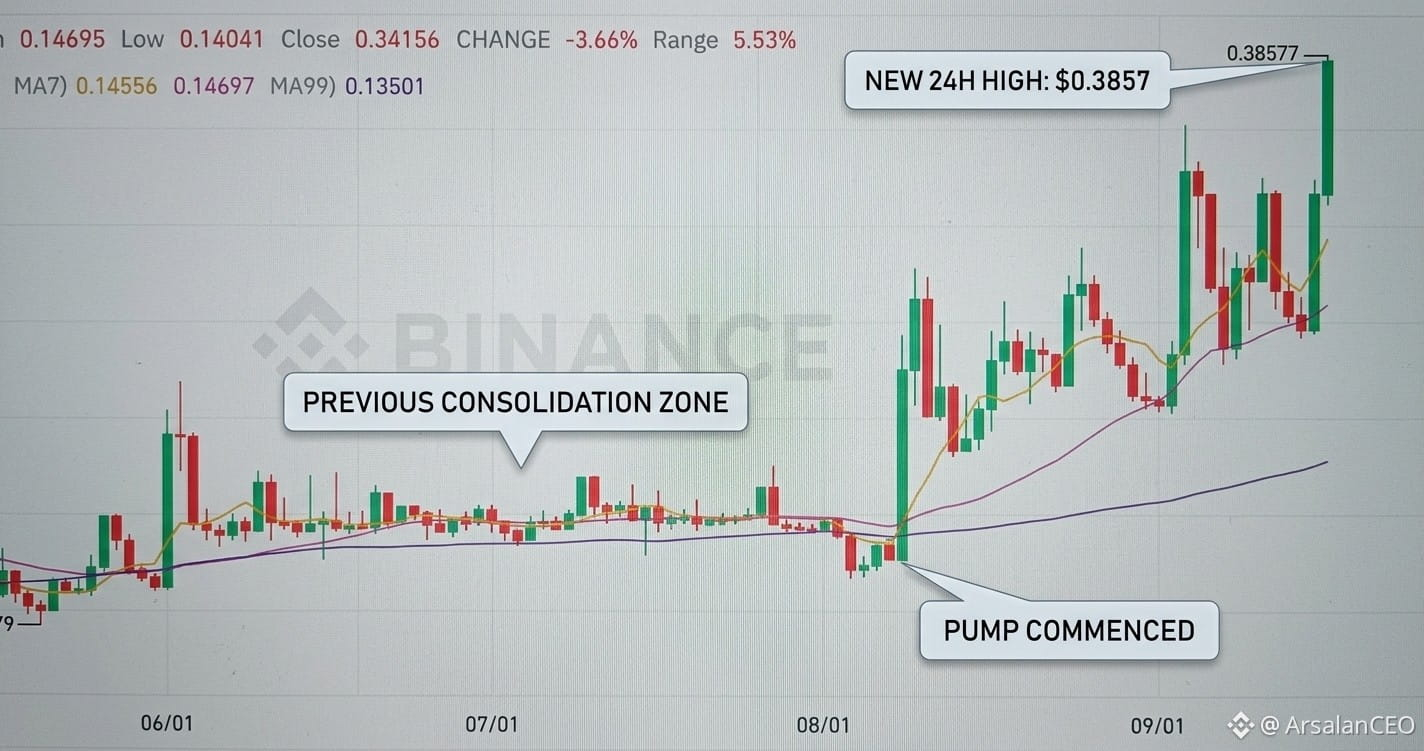
Bedrock ($BR) has broken out with exceptional force on the daily timeframe, soaring from the $0.2469 low to print a massive 24-hour high of $0.3857 before stabilizing near $0.3838.
📊 Key Technical Highlights:
Current Price: $0.38386 📈
24h Peak Resistance: $0.38577 🎯
Major Breakout Zone: $0.2500 – $0.2700 (Previous Multi-Month Resistance)
24h Trading Volume: $42.03M USDT / 131.19M BR 💥
🎯 Technical Analysis & Trade Setup:
Bullish Trend Continuation: The daily candle has surged far above key moving averages (MA7: $0.1459, MA25: $0.1469, MA99: $0.1350), confirming a fresh parabolic expansion phase.
Key Resistance / Targets:
Target 1: $0.4200 🚀
Target 2: $0.4500 – $0.5000 🎯
Primary Support Zone: $0.3200 – $0.3500 (Potential retest / accumulation zone)
⚠️ Disclaimer: Crypto trading involves significant market risk. Early-stage high-volatility assets can swing sharply. Always perform your own research (DYOR) and manage your risk strictly.
What is your strategy for $BR? Are we pushing to $0.5000 next? Share your targets below! 👇
#BR #Bedrock #BRUSDT #crypto
{alpha}(560xff7d6a96ae471bbcd7713af9cb1feeb16cf56b41)
🔥 $BR / USDT Skyrockets +53.85%! Bullish Momentum Unleashed! 🔥
Bedrock ($BR ) has broken out with exceptional force on the daily timeframe, soaring from the $0.2469 low to print a massive 24-hour high of $0.3857 before stabilizing near $0.3838.
📊 Key Technical Highlights:
Current Price: $0.38386 📈
24h Peak Resistance: $0.38577 🎯
Major Breakout Zone: $0.2500 – $0.2700 (Previous Multi-Month Resistance)
24h Trading Volume: $42.03M USDT / 131.19M BR 💥
🎯 Technical Analysis & Trade Setup:
Bullish Trend Continuation: The daily candle has surged far above key moving averages (MA7: $0.1459, MA25: $0.1469, MA99: $0.1350), confirming a fresh parabolic expansion phase.
Key Resistance / Targets:
Target 1: $0.4200 🚀
Target 2: $0.4500 – $0.5000 🎯
Primary Support Zone: $0.3200 – $0.3500 (Potential retest / accumulation zone)
⚠️ Disclaimer: Crypto trading involves significant market risk. Early-stage high-volatility assets can swing sharply. Always perform your own research (DYOR) and manage your risk strictly.
What is your strategy for $BR ? Are we pushing to $0.5000 next? Share your targets below! 👇
#BR #Bedrock #BRUSDT #crypto
Bedrock ($BR ) has broken out with exceptional force on the daily timeframe, soaring from the $0.2469 low to print a massive 24-hour high of $0.3857 before stabilizing near $0.3838.
📊 Key Technical Highlights:
Current Price: $0.38386 📈
24h Peak Resistance: $0.38577 🎯
Major Breakout Zone: $0.2500 – $0.2700 (Previous Multi-Month Resistance)
24h Trading Volume: $42.03M USDT / 131.19M BR 💥
🎯 Technical Analysis & Trade Setup:
Bullish Trend Continuation: The daily candle has surged far above key moving averages (MA7: $0.1459, MA25: $0.1469, MA99: $0.1350), confirming a fresh parabolic expansion phase.
Key Resistance / Targets:
Target 1: $0.4200 🚀
Target 2: $0.4500 – $0.5000 🎯
Primary Support Zone: $0.3200 – $0.3500 (Potential retest / accumulation zone)
⚠️ Disclaimer: Crypto trading involves significant market risk. Early-stage high-volatility assets can swing sharply. Always perform your own research (DYOR) and manage your risk strictly.
What is your strategy for $BR ? Are we pushing to $0.5000 next? Share your targets below! 👇
#BR #Bedrock #BRUSDT #crypto
162
·
--
Bearish
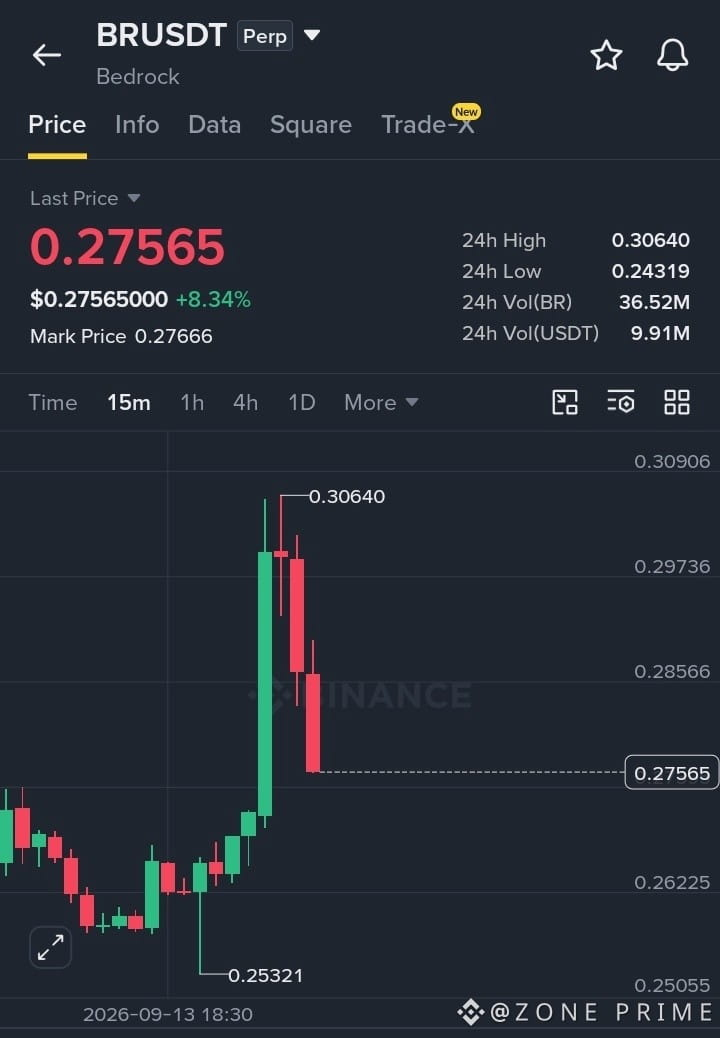
$BR /USDT — SHORT SETUP Go Everyone Fast 📉💯✨😱
Entry: 0.28566 - 0.29736
TP1: 0.27565
TP2: 0.26225
TP3: 0.25321
Stop: 0.30640
Relief rally retesting overhead supply and meeting strong institutional distribution below 0.30640. 📉
Fading cumulative buyer delta and stochastic ask-side compression confirm an asymmetric sell-side rotation.
#br #brusdt #bedrock #crypto #Write2Earn $BR
{future}(BRUSDT)
$BR /USDT — SHORT SETUP Go Everyone Fast 📉💯✨😱
Entry: 0.28566 - 0.29736
TP1: 0.27565
TP2: 0.26225
TP3: 0.25321
Stop: 0.30640
Relief rally retesting overhead supply and meeting strong institutional distribution below 0.30640. 📉
Fading cumulative buyer delta and stochastic ask-side compression confirm an asymmetric sell-side rotation.
#br #brusdt #bedrock #crypto #Write2Earn $BR
Entry: 0.28566 - 0.29736
TP1: 0.27565
TP2: 0.26225
TP3: 0.25321
Stop: 0.30640
Relief rally retesting overhead supply and meeting strong institutional distribution below 0.30640. 📉
Fading cumulative buyer delta and stochastic ask-side compression confirm an asymmetric sell-side rotation.
#br #brusdt #bedrock #crypto #Write2Earn $BR
317
$BR This rebound is worth paying attention to, but the on-chain unlock calendar may be more important than the candlestick chart.
In the past 24 hours, Bedrock is up more than 76%. Derivatives trading has clearly heated up. The current price is about $0.2599, with 24-hour trading volume of roughly $20.64 million and a market cap of about $78.4 million. Huobi listing perpetual contracts, improving market sentiment, and an influx of new capital all contribute to short-term price momentum.
However, on September 20, 40.63 million tokens will be unlocked—about 13.47% of the circulating supply. If profit-taking and the unlocked holdings overlap, selling pressure could quickly intensify. In a strong market, it’s more suitable to treat this as a “catalyst vs. unlock” contest rather than chasing upside in one direction.
For the short term, watch whether trading volume can continue to hold up, as well as the funding rates and the strength of incoming bids before and after the unlock. Position sizing is always more important than trying to predict the size of the move.
#Bedrock #BR #Cryptocurrency
$BR This rebound is worth paying attention to, but the on-chain unlock calendar may be more important than the candlestick chart.
In the past 24 hours, Bedrock is up more than 76%. Derivatives trading has clearly heated up. The current price is about $0.2599, with 24-hour trading volume of roughly $20.64 million and a market cap of about $78.4 million. Huobi listing perpetual contracts, improving market sentiment, and an influx of new capital all contribute to short-term price momentum.
However, on September 20, 40.63 million tokens will be unlocked—about 13.47% of the circulating supply. If profit-taking and the unlocked holdings overlap, selling pressure could quickly intensify. In a strong market, it’s more suitable to treat this as a “catalyst vs. unlock” contest rather than chasing upside in one direction.
For the short term, watch whether trading volume can continue to hold up, as well as the funding rates and the strength of incoming bids before and after the unlock. Position sizing is always more important than trying to predict the size of the move.
#Bedrock #BR #Cryptocurrency
In the past 24 hours, Bedrock is up more than 76%. Derivatives trading has clearly heated up. The current price is about $0.2599, with 24-hour trading volume of roughly $20.64 million and a market cap of about $78.4 million. Huobi listing perpetual contracts, improving market sentiment, and an influx of new capital all contribute to short-term price momentum.
However, on September 20, 40.63 million tokens will be unlocked—about 13.47% of the circulating supply. If profit-taking and the unlocked holdings overlap, selling pressure could quickly intensify. In a strong market, it’s more suitable to treat this as a “catalyst vs. unlock” contest rather than chasing upside in one direction.
For the short term, watch whether trading volume can continue to hold up, as well as the funding rates and the strength of incoming bids before and after the unlock. Position sizing is always more important than trying to predict the size of the move.
#Bedrock #BR #Cryptocurrency
18

·
--
$BR This wave of strong surge: on the surface, it’s driven by sentiment and capital flows; behind the scenes, it also benefits from enhanced contract liquidity.
Over the past 24 hours, Bedrock is up more than 76%. Its current price is around $0.26. The 24-hour trading volume is about $20.64 million, and its market cap is roughly $78.4 million. After Huobi listed its perpetual contracts, trading interest clearly rose. In the short term, capital has rushed in, and the market’s risk appetite is also increasing.
However, it’s important to note that strong rallies often come with higher volatility. On September 20, 40.63 million BR tokens will be unlocked—about 13.47% of the circulating supply. Whether these tokens enter exchanges and whether they turn into sell pressure is the most critical thing to watch in the short term.
In terms of strategy: momentum-driven capital may continue to push the price higher, but the risk of chasing also grows at the same time. It’s recommended to focus on trading volume, contract open interest, and on-chain transfers before and after the unlock. Don’t just look at the percentage gain—don’t ignore the volatility caused by token release.
#Bedrock #BR #cryptocurrency
$BR This wave of strong surge: on the surface, it’s driven by sentiment and capital flows; behind the scenes, it also benefits from enhanced contract liquidity.
Over the past 24 hours, Bedrock is up more than 76%. Its current price is around $0.26. The 24-hour trading volume is about $20.64 million, and its market cap is roughly $78.4 million. After Huobi listed its perpetual contracts, trading interest clearly rose. In the short term, capital has rushed in, and the market’s risk appetite is also increasing.
However, it’s important to note that strong rallies often come with higher volatility. On September 20, 40.63 million BR tokens will be unlocked—about 13.47% of the circulating supply. Whether these tokens enter exchanges and whether they turn into sell pressure is the most critical thing to watch in the short term.
In terms of strategy: momentum-driven capital may continue to push the price higher, but the risk of chasing also grows at the same time. It’s recommended to focus on trading volume, contract open interest, and on-chain transfers before and after the unlock. Don’t just look at the percentage gain—don’t ignore the volatility caused by token release.
#Bedrock #BR #cryptocurrency
Over the past 24 hours, Bedrock is up more than 76%. Its current price is around $0.26. The 24-hour trading volume is about $20.64 million, and its market cap is roughly $78.4 million. After Huobi listed its perpetual contracts, trading interest clearly rose. In the short term, capital has rushed in, and the market’s risk appetite is also increasing.
However, it’s important to note that strong rallies often come with higher volatility. On September 20, 40.63 million BR tokens will be unlocked—about 13.47% of the circulating supply. Whether these tokens enter exchanges and whether they turn into sell pressure is the most critical thing to watch in the short term.
In terms of strategy: momentum-driven capital may continue to push the price higher, but the risk of chasing also grows at the same time. It’s recommended to focus on trading volume, contract open interest, and on-chain transfers before and after the unlock. Don’t just look at the percentage gain—don’t ignore the volatility caused by token release.
#Bedrock #BR #cryptocurrency
113

$BR This surge is lively—but behind the excitement, there’s a time point you absolutely must keep an eye on.
In the past 24 hours, Bedrock is up over 76%. The current price is around $0.26, and contract trading has clearly seen a noticeable volume increase. The direct catalyst is very clear: Huobi has listed perpetual contracts, which ignited market sentiment. Incremental capital moved in quickly, and short-term momentum is still continuing in inertia.
But risks are also scheduled: on September 20, 40.63 million tokens will be unlocked, representing about 13.47% of the circulating supply. This is not a small ratio. Around large unlock events, early holders and profit-takers often feel an urge to cash out, and chasing higher can easily turn you into the counterparty.
The liquidity premium brought by the contract listing is somewhat more short-term. The unlock event is the real variable on the supply side. If your positions are heavy, plan ahead. Even if you’re holding a lighter position and just watching the show, don’t loosen your stop-loss during the rally. Momentum is momentum; events are events. Risk management should always come first.
#Bedrock #BR #Token unlock
$BR This surge is lively—but behind the excitement, there’s a time point you absolutely must keep an eye on.
In the past 24 hours, Bedrock is up over 76%. The current price is around $0.26, and contract trading has clearly seen a noticeable volume increase. The direct catalyst is very clear: Huobi has listed perpetual contracts, which ignited market sentiment. Incremental capital moved in quickly, and short-term momentum is still continuing in inertia.
But risks are also scheduled: on September 20, 40.63 million tokens will be unlocked, representing about 13.47% of the circulating supply. This is not a small ratio. Around large unlock events, early holders and profit-takers often feel an urge to cash out, and chasing higher can easily turn you into the counterparty.
The liquidity premium brought by the contract listing is somewhat more short-term. The unlock event is the real variable on the supply side. If your positions are heavy, plan ahead. Even if you’re holding a lighter position and just watching the show, don’t loosen your stop-loss during the rally. Momentum is momentum; events are events. Risk management should always come first.
#Bedrock #BR #Token unlock
In the past 24 hours, Bedrock is up over 76%. The current price is around $0.26, and contract trading has clearly seen a noticeable volume increase. The direct catalyst is very clear: Huobi has listed perpetual contracts, which ignited market sentiment. Incremental capital moved in quickly, and short-term momentum is still continuing in inertia.
But risks are also scheduled: on September 20, 40.63 million tokens will be unlocked, representing about 13.47% of the circulating supply. This is not a small ratio. Around large unlock events, early holders and profit-takers often feel an urge to cash out, and chasing higher can easily turn you into the counterparty.
The liquidity premium brought by the contract listing is somewhat more short-term. The unlock event is the real variable on the supply side. If your positions are heavy, plan ahead. Even if you’re holding a lighter position and just watching the show, don’t loosen your stop-loss during the rally. Momentum is momentum; events are events. Risk management should always come first.
#Bedrock #BR #Token unlock
6

·
--
$BR 24 hours saw a surge of over 50%. With the contract going live and trading volume exploding, short-term sentiment was pushed to the limit.
But there’s one specific time point you must watch: on September 20, Bedrock will undergo a large-scale token unlock, worth approximately $12.85 million—accounting for 13.47% of the circulating supply.
In the short term, the liquidity and trading volume boost brought by the contract are still providing “blood” to the price. The current price is about $0.41, with $6.47 million in 24-hour trading volume and a market cap of about $124 million. The long side’s trend has not yet shown signs of breaking down.
For the mid to long term, the concentration of 13.47% of the circulating float being released will be a real source of sell pressure. Before the unlock, it’s often more about expectation-driven trading; after the unlock, it’s the real test of whether capital can absorb the supply.
Personally, I don’t recommend chasing at the peak of sentiment. Wait until the unlock is actually underway and the sell pressure has been digested before making a judgment—this typically offers better value. In the short run, you make money from sentiment; in the medium term, you compete on real absorption strength.
#Bedrock #BR #token unlock
$BR 24 hours saw a surge of over 50%. With the contract going live and trading volume exploding, short-term sentiment was pushed to the limit.
But there’s one specific time point you must watch: on September 20, Bedrock will undergo a large-scale token unlock, worth approximately $12.85 million—accounting for 13.47% of the circulating supply.
In the short term, the liquidity and trading volume boost brought by the contract are still providing “blood” to the price. The current price is about $0.41, with $6.47 million in 24-hour trading volume and a market cap of about $124 million. The long side’s trend has not yet shown signs of breaking down.
For the mid to long term, the concentration of 13.47% of the circulating float being released will be a real source of sell pressure. Before the unlock, it’s often more about expectation-driven trading; after the unlock, it’s the real test of whether capital can absorb the supply.
Personally, I don’t recommend chasing at the peak of sentiment. Wait until the unlock is actually underway and the sell pressure has been digested before making a judgment—this typically offers better value. In the short run, you make money from sentiment; in the medium term, you compete on real absorption strength.
#Bedrock #BR #token unlock
But there’s one specific time point you must watch: on September 20, Bedrock will undergo a large-scale token unlock, worth approximately $12.85 million—accounting for 13.47% of the circulating supply.
In the short term, the liquidity and trading volume boost brought by the contract are still providing “blood” to the price. The current price is about $0.41, with $6.47 million in 24-hour trading volume and a market cap of about $124 million. The long side’s trend has not yet shown signs of breaking down.
For the mid to long term, the concentration of 13.47% of the circulating float being released will be a real source of sell pressure. Before the unlock, it’s often more about expectation-driven trading; after the unlock, it’s the real test of whether capital can absorb the supply.
Personally, I don’t recommend chasing at the peak of sentiment. Wait until the unlock is actually underway and the sell pressure has been digested before making a judgment—this typically offers better value. In the short run, you make money from sentiment; in the medium term, you compete on real absorption strength.
#Bedrock #BR #token unlock
58

·
--
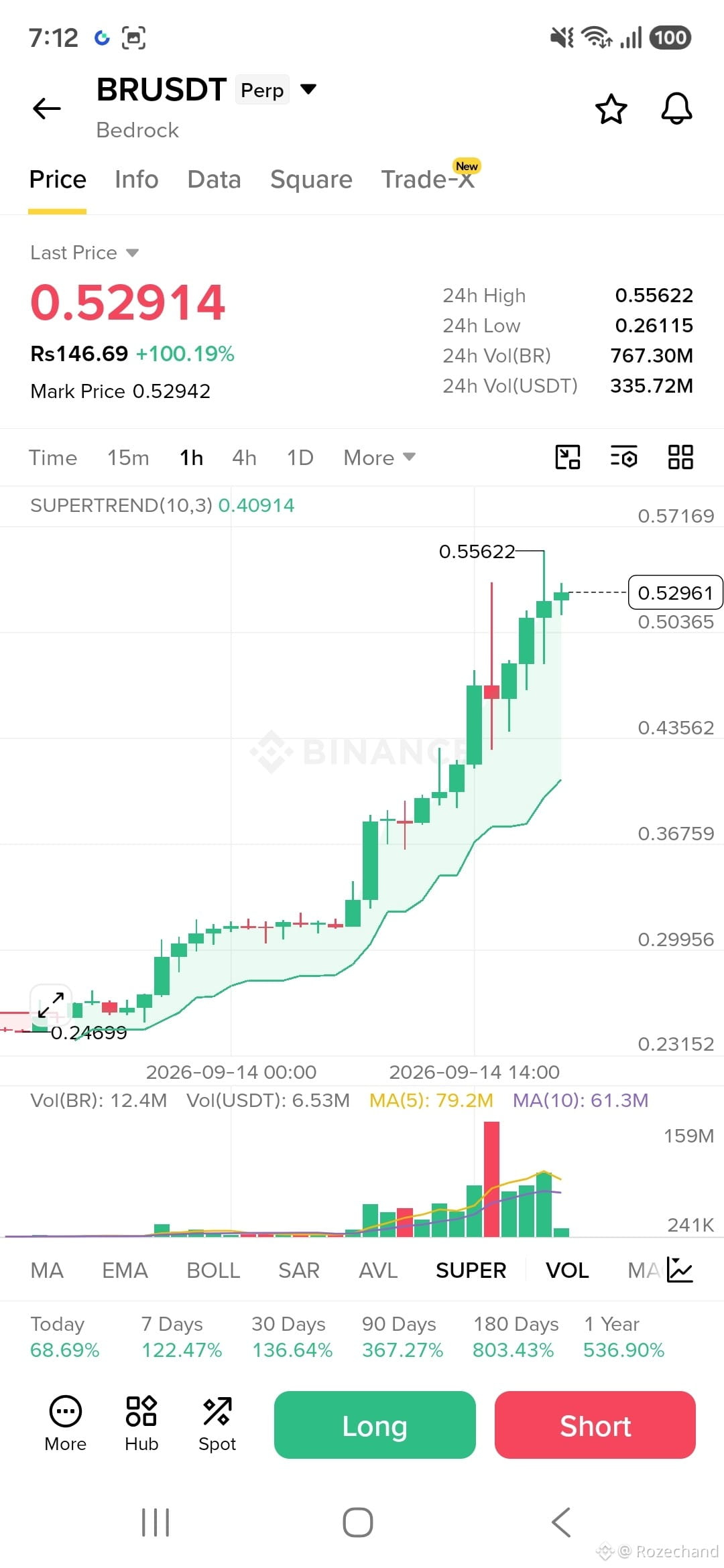
🚀 $BR (Bedrock) is making BIG moves! 🔥
📈 Price: $0.5313
🔥 24H Change: +101.77%
💰 Market Cap: $268M+
📊 Volume: $15.9M+
🏆 New ATH: $0.5333
$BR ne aaj strong momentum show kiya hai. 👀
Lekin +100% ke baad volatility bohat high ho sakti hai, isliye trade se pehle proper risk management zaroor karein. ⚠️
What do you think — more upside or a pullback? 📈📉
#BRUSDT #Bedrock #Crypto #Altcoins! oins #Trading #bullish
🚀 $BR (Bedrock) is making BIG moves! 🔥
📈 Price: $0.5313
🔥 24H Change: +101.77%
💰 Market Cap: $268M+
📊 Volume: $15.9M+
🏆 New ATH: $0.5333
$BR ne aaj strong momentum show kiya hai. 👀
Lekin +100% ke baad volatility bohat high ho sakti hai, isliye trade se pehle proper risk management zaroor karein. ⚠️
What do you think — more upside or a pullback? 📈📉
#BRUSDT #Bedrock #Crypto #Altcoins! oins #Trading #bullish
📈 Price: $0.5313
🔥 24H Change: +101.77%
💰 Market Cap: $268M+
📊 Volume: $15.9M+
🏆 New ATH: $0.5333
$BR ne aaj strong momentum show kiya hai. 👀
Lekin +100% ke baad volatility bohat high ho sakti hai, isliye trade se pehle proper risk management zaroor karein. ⚠️
What do you think — more upside or a pullback? 📈📉
#BRUSDT #Bedrock #Crypto #Altcoins! oins #Trading #bullish
1
82
·
--
Bullish
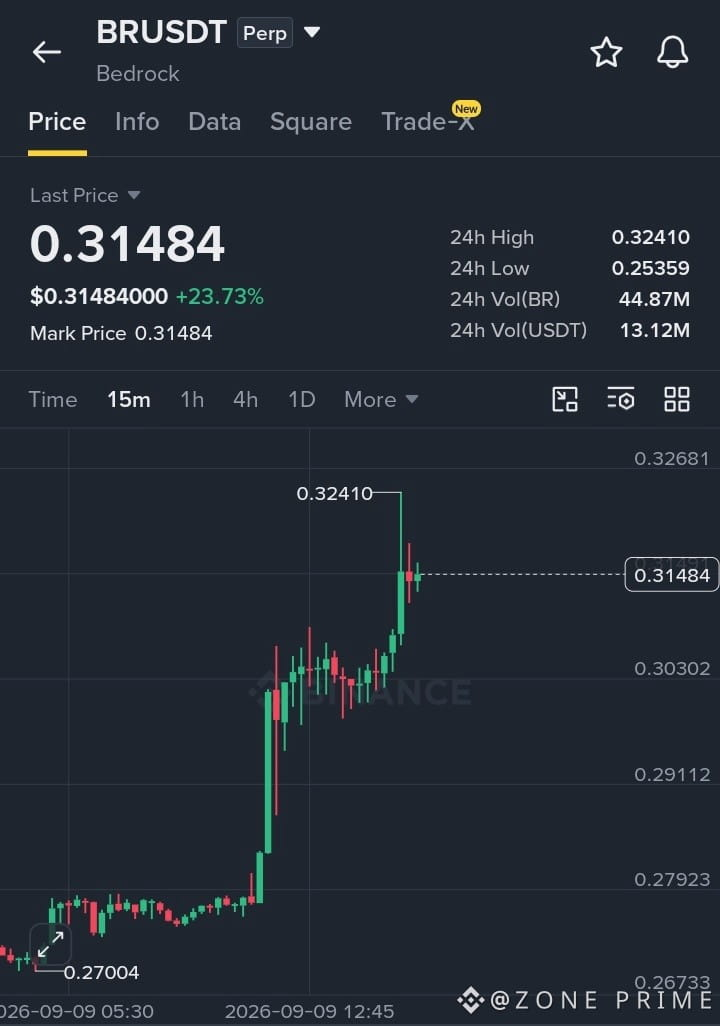
$BR /USDT — LONG SETUP Go 📈 🚀 😱
Entry: 0.30302 - 0.31484
TP1: 0.32410
TP2: 0.32681
TP3: 0.33500
Stop: 0.29112
Strong bullish market structure maintaining gains above the 0.30302 structural support floor.
Active buyer absorption on local dips sets up high probability for an upward breakout extension toward session highs. 🚀
#br #brusdt #bedrock #crypto #Write2Earn! $BR
{future}(BRUSDT)
$BR /USDT — LONG SETUP Go 📈 🚀 😱
Entry: 0.30302 - 0.31484
TP1: 0.32410
TP2: 0.32681
TP3: 0.33500
Stop: 0.29112
Strong bullish market structure maintaining gains above the 0.30302 structural support floor.
Active buyer absorption on local dips sets up high probability for an upward breakout extension toward session highs. 🚀
#br #brusdt #bedrock #crypto #Write2Earn! $BR
Entry: 0.30302 - 0.31484
TP1: 0.32410
TP2: 0.32681
TP3: 0.33500
Stop: 0.29112
Strong bullish market structure maintaining gains above the 0.30302 structural support floor.
Active buyer absorption on local dips sets up high probability for an upward breakout extension toward session highs. 🚀
#br #brusdt #bedrock #crypto #Write2Earn! $BR
172

$BR Update 🔎
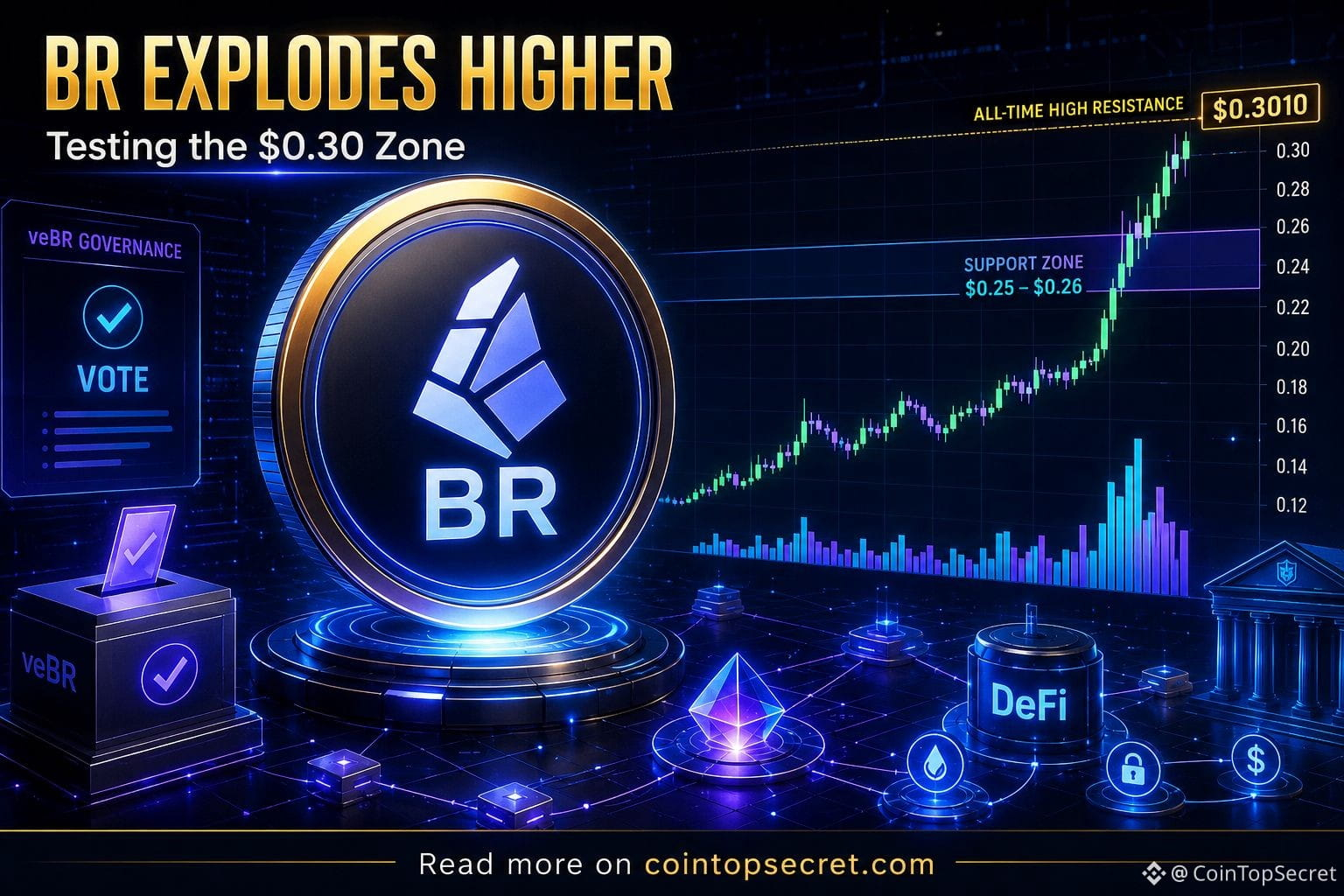
Bedrock is exploding higher — can $BR reclaim the spotlight?
💰 Price: $0.2951
📈 24h: +43.9%
🏦 Market Cap: $86.1M
🏆 Rank: #296
📊 24h Range: $0.2048–$0.3010
📊 24h Volume: $3.63M
What’s happening?
BR has surged sharply, with CoinGecko showing a 43.9% 24h gain and the token trading just below its $0.3010 all-time high. 24h volume has also more than doubled versus the previous day.
Bedrock DAO uses BR for governance through its veBR voting system, while the broader Bedrock ecosystem continues developing around decentralized finance infrastructure.
🔥 Key catalyst: Explosive momentum and rapidly increasing trading activity.
Next step to watch:
🔻 Bearish: rejection around $0.30 could trigger a pullback toward $0.25–$0.26.
🔺 Bullish: a sustained break above $0.3010 would put price discovery back in focus.
My take: BR is showing powerful momentum, but trading close to an ATH after a 40%+ daily move means volatility risk is elevated.
Not financial advice, DYOR ⚠️
#Bedrock #BR #BedrockDAO #CryptoAnalysis #DeFi
$BR Update 🔎
Bedrock is exploding higher — can $BR reclaim the spotlight?
💰 Price: $0.2951
📈 24h: +43.9%
🏦 Market Cap: $86.1M
🏆 Rank: #296
📊 24h Range: $0.2048–$0.3010
📊 24h Volume: $3.63M
What’s happening?
BR has surged sharply, with CoinGecko showing a 43.9% 24h gain and the token trading just below its $0.3010 all-time high. 24h volume has also more than doubled versus the previous day.
Bedrock DAO uses BR for governance through its veBR voting system, while the broader Bedrock ecosystem continues developing around decentralized finance infrastructure.
🔥 Key catalyst: Explosive momentum and rapidly increasing trading activity.
Next step to watch:
🔻 Bearish: rejection around $0.30 could trigger a pullback toward $0.25–$0.26.
🔺 Bullish: a sustained break above $0.3010 would put price discovery back in focus.
My take: BR is showing powerful momentum, but trading close to an ATH after a 40%+ daily move means volatility risk is elevated.
Not financial advice, DYOR ⚠️
#Bedrock #BR #BedrockDAO #CryptoAnalysis #DeFi
Bedrock is exploding higher — can $BR reclaim the spotlight?
💰 Price: $0.2951
📈 24h: +43.9%
🏦 Market Cap: $86.1M
🏆 Rank: #296
📊 24h Range: $0.2048–$0.3010
📊 24h Volume: $3.63M
What’s happening?
BR has surged sharply, with CoinGecko showing a 43.9% 24h gain and the token trading just below its $0.3010 all-time high. 24h volume has also more than doubled versus the previous day.
Bedrock DAO uses BR for governance through its veBR voting system, while the broader Bedrock ecosystem continues developing around decentralized finance infrastructure.
🔥 Key catalyst: Explosive momentum and rapidly increasing trading activity.
Next step to watch:
🔻 Bearish: rejection around $0.30 could trigger a pullback toward $0.25–$0.26.
🔺 Bullish: a sustained break above $0.3010 would put price discovery back in focus.
My take: BR is showing powerful momentum, but trading close to an ATH after a 40%+ daily move means volatility risk is elevated.
Not financial advice, DYOR ⚠️
#Bedrock #BR #BedrockDAO #CryptoAnalysis #DeFi
203

·
--
Bullish
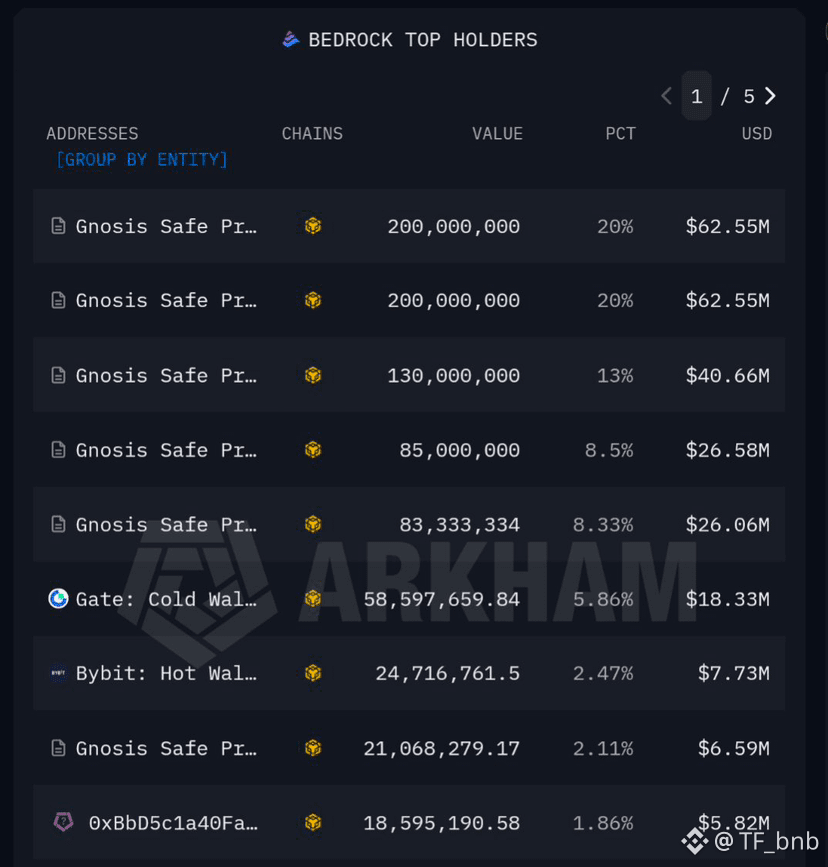
$BR holder map is NOT retail. 👀
The top 5 wallets are Gnosis Safes holding:
20% + 20% + 13% + 8.5% + 8.33%.
That’s roughly 70% of the entire supply concentrated in just 5 multisigs. 🐳
And it gets more interesting: Gate cold wallet and Bybit hot wallet come next, meaning a significant part of the remaining supply is sitting on exchanges rather than in organic retail hands.
This explains why $BR can move so cleanly… and then suddenly wick violently. ⚠️
The circulating float is much thinner than it looks. One large Safe movement can completely change the order flow.
I’m not fading this structure here.
But I’m also NOT treating $BR like a normal free-float coin.
Watch the wallets first.
Watch the chart second. 👀
DYOR. NFA.
#BR #Bedrock
{future}(BRUSDT)
$BR holder map is NOT retail. 👀
The top 5 wallets are Gnosis Safes holding:
20% + 20% + 13% + 8.5% + 8.33%.
That’s roughly 70% of the entire supply concentrated in just 5 multisigs. 🐳
And it gets more interesting: Gate cold wallet and Bybit hot wallet come next, meaning a significant part of the remaining supply is sitting on exchanges rather than in organic retail hands.
This explains why $BR can move so cleanly… and then suddenly wick violently. ⚠️
The circulating float is much thinner than it looks. One large Safe movement can completely change the order flow.
I’m not fading this structure here.
But I’m also NOT treating $BR like a normal free-float coin.
Watch the wallets first.
Watch the chart second. 👀
DYOR. NFA.
#BR #Bedrock
The top 5 wallets are Gnosis Safes holding:
20% + 20% + 13% + 8.5% + 8.33%.
That’s roughly 70% of the entire supply concentrated in just 5 multisigs. 🐳
And it gets more interesting: Gate cold wallet and Bybit hot wallet come next, meaning a significant part of the remaining supply is sitting on exchanges rather than in organic retail hands.
This explains why $BR can move so cleanly… and then suddenly wick violently. ⚠️
The circulating float is much thinner than it looks. One large Safe movement can completely change the order flow.
I’m not fading this structure here.
But I’m also NOT treating $BR like a normal free-float coin.
Watch the wallets first.
Watch the chart second. 👀
DYOR. NFA.
#BR #Bedrock
3
2.3k
Log in to explore more content
Join global crypto users on Binance Square
⚡️ Get latest and useful information about crypto.
💬 Trusted by the world’s largest crypto exchange.
👍 Discover real insights from verified creators.
Email / Phone number
Trending Topics
1
#FedRateWatch
1.3M views
6,331 Discussing
2
#ZcashRises6%
29,696 views
479 Discussing
3
#XRPSinks10%
19,452 views
314 Discussing
4
#BitcoinETFsShed$450M
3,027 views
66 Discussing
5
#CircleOpensArcMainnet
9,940 views
221 Discussing
6
#ZcashHoldersBackNU7Upgrade
20,651 views
389 Discussing
7
#MSTRTradingVolumeSurpassesMorganStanley
21,624 views
550 Discussing
8
#BitcoinFalls4%
44,106 views
855 Discussing
9
#SKHynixInTalksToMakeMemoryChipsInUS
18,621 views
345 Discussing
10
#OpenAIDiscussesNewFundingAt$1.2TValuation
4,606 views
57 Discussing