

#aprendebitcoin
aprendebitcoin
25,911 views
90 Discussing
Hot
Latest
·
--
Bullish
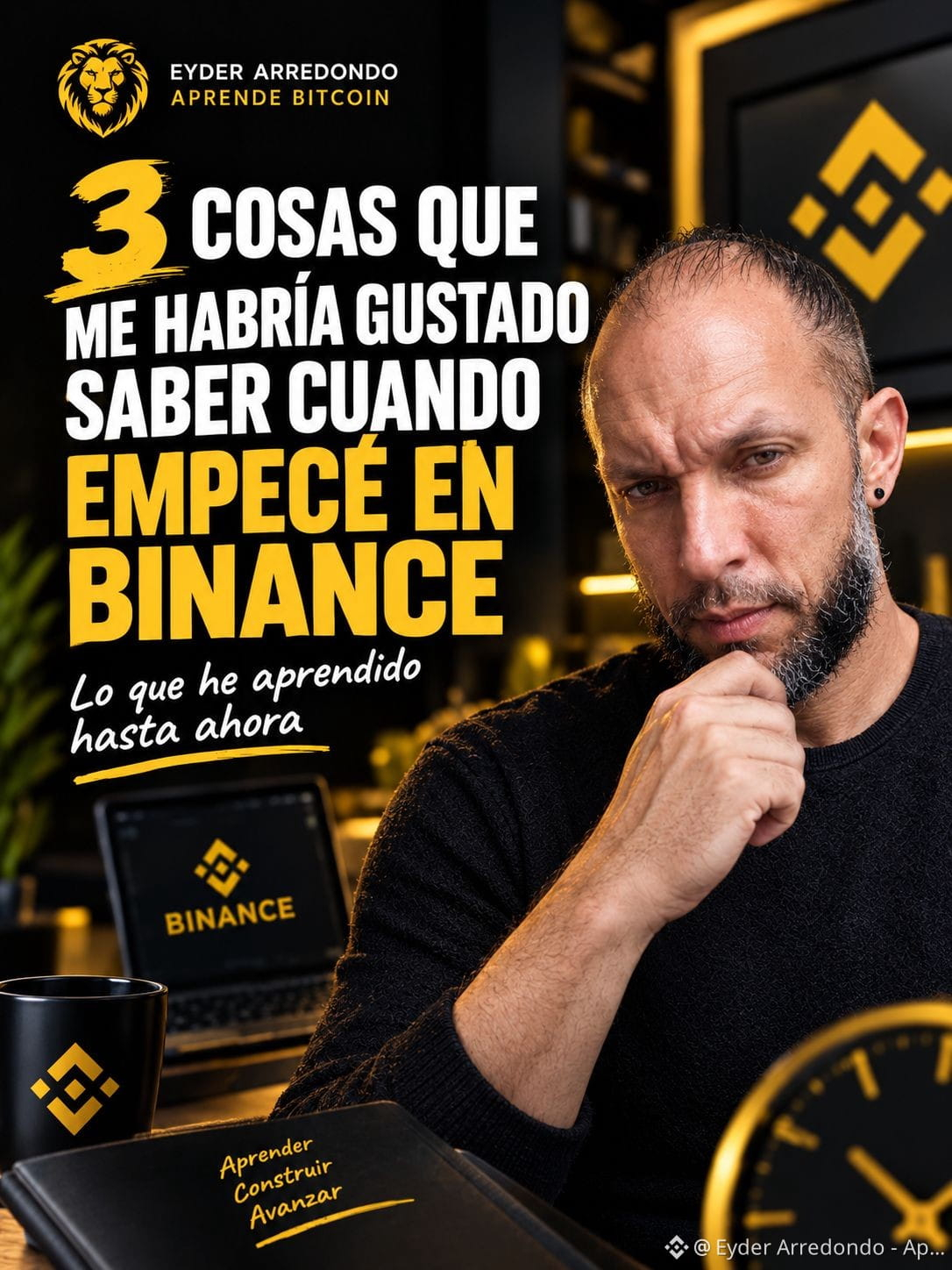
🪙 When I started learning about $BTC and cryptocurrencies, I thought it all came down to:
👉 Buy
👉 Wait for it to go up
👉 Sell
Over time I discovered there was much more.
1️⃣ Not everything is SPOT
Binance has different tools and products, and each one serves a different purpose.
2️⃣ Learn to review your trades
Knowing how much you bought, at what price, how much you paid in fees, and what you actually did with your money is a fundamental part of learning.
3️⃣ You don’t need to know everything to start learning
I’m still learning too.
And that’s exactly why I decided to create Eyder Arredondo | Learn Bitcoin:
📚 Learn
🔎 Research
🧪 Experiment
💡 And share what I discover along the way.
Because before looking for big profits, I believe there’s something much more important:
UNDERSTANDING WHAT YOU’RE DOING.
Now I ask you:
What was the first thing about Binance that you didn’t understand when you started?
I’ll read your comments.
# #Bitcoin #AprendeBitcoin #EducaciónFinanciera
🪙 When I started learning about $BTC and cryptocurrencies, I thought it all came down to:
👉 Buy
👉 Wait for it to go up
👉 Sell
Over time I discovered there was much more.
1️⃣ Not everything is SPOT
Binance has different tools and products, and each one serves a different purpose.
2️⃣ Learn to review your trades
Knowing how much you bought, at what price, how much you paid in fees, and what you actually did with your money is a fundamental part of learning.
3️⃣ You don’t need to know everything to start learning
I’m still learning too.
And that’s exactly why I decided to create Eyder Arredondo | Learn Bitcoin:
📚 Learn
🔎 Research
🧪 Experiment
💡 And share what I discover along the way.
Because before looking for big profits, I believe there’s something much more important:
UNDERSTANDING WHAT YOU’RE DOING.
Now I ask you:
What was the first thing about Binance that you didn’t understand when you started?
I’ll read your comments.
# #Bitcoin #AprendeBitcoin #EducaciónFinanciera
👉 Buy
👉 Wait for it to go up
👉 Sell
Over time I discovered there was much more.
1️⃣ Not everything is SPOT
Binance has different tools and products, and each one serves a different purpose.
2️⃣ Learn to review your trades
Knowing how much you bought, at what price, how much you paid in fees, and what you actually did with your money is a fundamental part of learning.
3️⃣ You don’t need to know everything to start learning
I’m still learning too.
And that’s exactly why I decided to create Eyder Arredondo | Learn Bitcoin:
📚 Learn
🔎 Research
🧪 Experiment
💡 And share what I discover along the way.
Because before looking for big profits, I believe there’s something much more important:
UNDERSTANDING WHAT YOU’RE DOING.
Now I ask you:
What was the first thing about Binance that you didn’t understand when you started?
I’ll read your comments.
# #Bitcoin #AprendeBitcoin #EducaciónFinanciera
195
·
--
Bullish
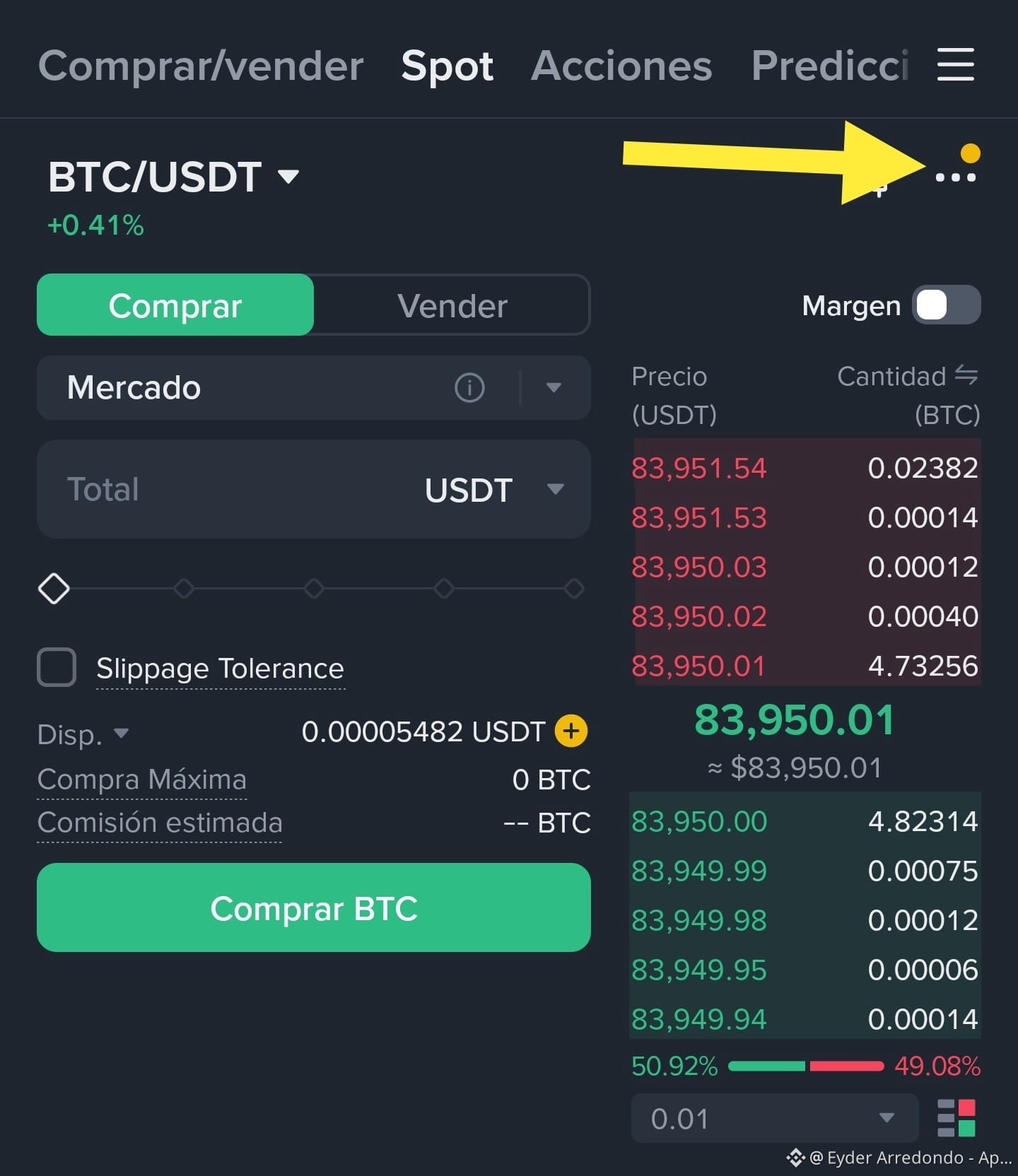
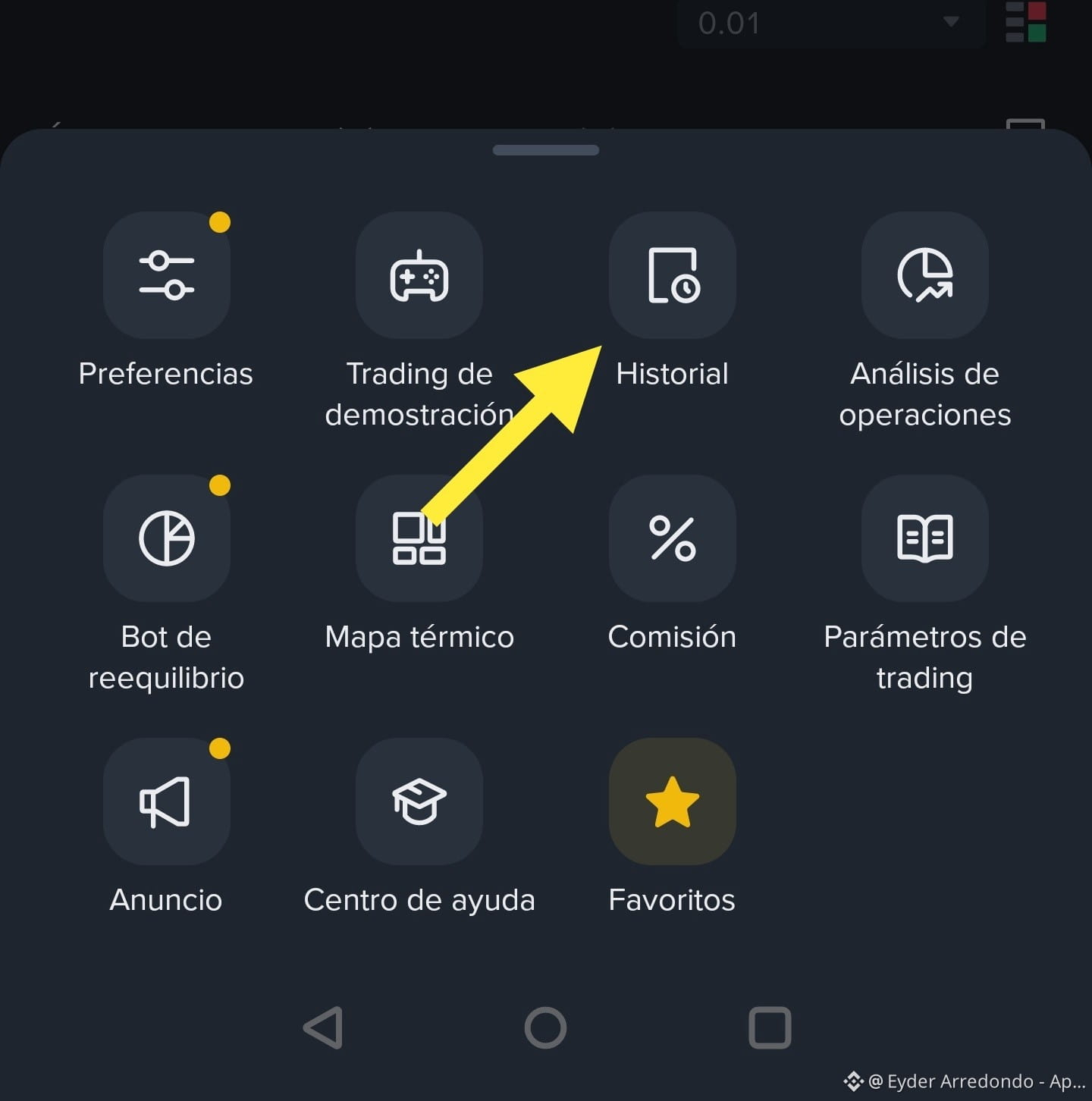
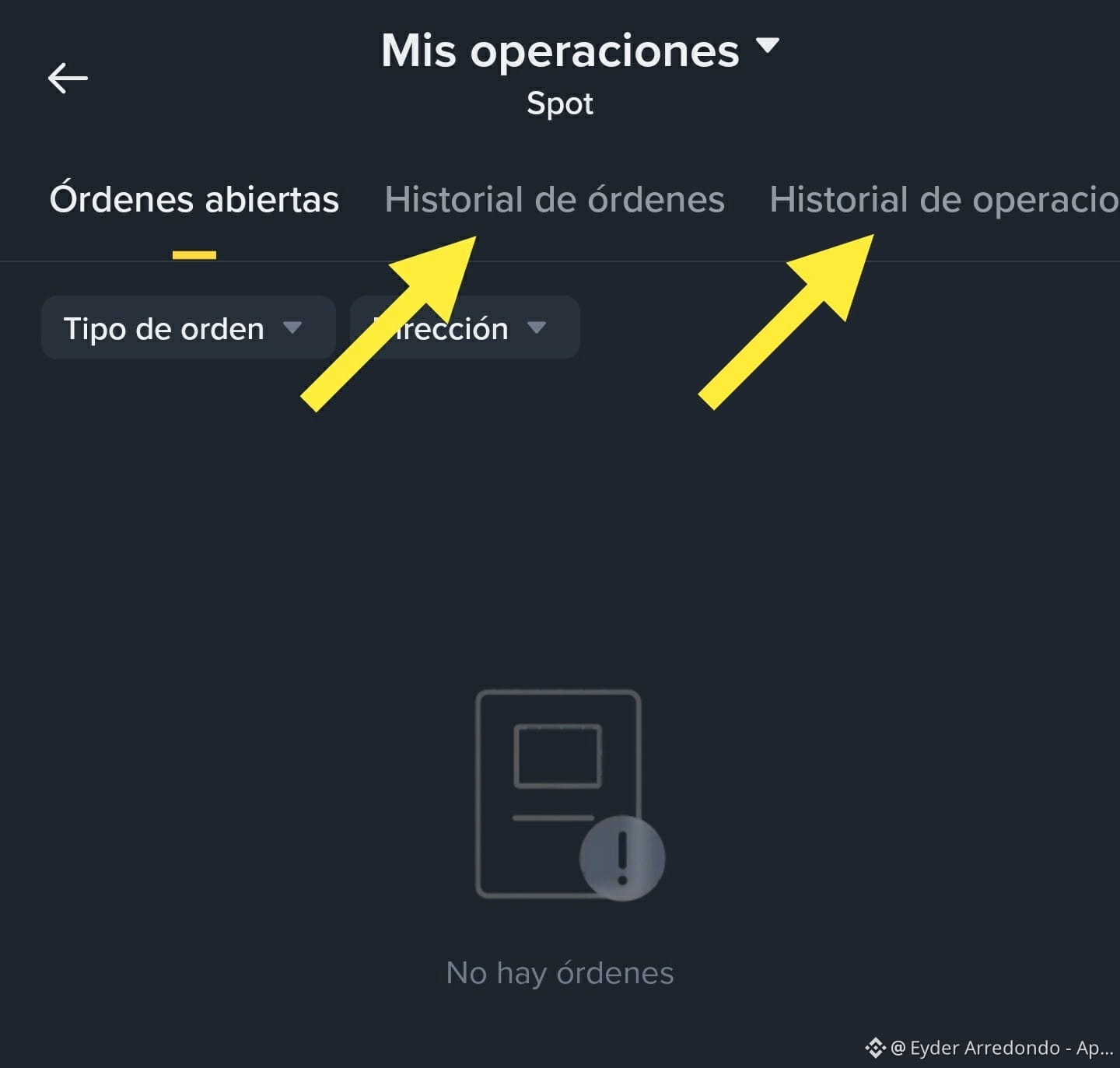
🪙 If you buy cryptocurrencies and you don’t know where to see what you really did, learn this:
🔹 **1. ORDER HISTORY**
Here you can review the orders you placed on Binance.
For example:
📌 Which asset you wanted to buy or sell.
📌 The type of order you used.
📌 The price you set.
📌 The quantity.
📌 Whether the order was executed, canceled, or left pending.
👉 It’s like checking the orders you’ve sent to the market.
🔹 **2. TRADES HISTORY**
Here you can check the trades that were actually executed.
You can review:
📌 What you bought or sold.
📌 How much was executed.
📌 The execution price.
📌 The date and time.
📌 The commission you paid.
💡 **SEE THE DIFFERENCE?**
An **order** is what you tried to do.
A **trade** is what was actually executed.
For example:
👉 You place an order to buy 100 USDT of $BTC
But only 60 USDT are executed
In the order history you can see the order you placed.
In the trades history you can confirm what portion was really executed and how much you paid.
That’s why you shouldn’t just look at your current balance.
Learn to review your histories and start understanding what you’re really doing with your money inside Binance.
📚 Learning to use Binance is also learning to read your own actions.
DYOR. Investigate yourself.
#BinanceSquareTalks #CriptoParaPrincipiantes #AprendeBitcoin
🪙 If you buy cryptocurrencies and you don’t know where to see what you really did, learn this:
🔹 **1. ORDER HISTORY**
Here you can review the orders you placed on Binance.
For example:
📌 Which asset you wanted to buy or sell.
📌 The type of order you used.
📌 The price you set.
📌 The quantity.
📌 Whether the order was executed, canceled, or left pending.
👉 It’s like checking the orders you’ve sent to the market.
🔹 **2. TRADES HISTORY**
Here you can check the trades that were actually executed.
You can review:
📌 What you bought or sold.
📌 How much was executed.
📌 The execution price.
📌 The date and time.
📌 The commission you paid.
💡 **SEE THE DIFFERENCE?**
An **order** is what you tried to do.
A **trade** is what was actually executed.
For example:
👉 You place an order to buy 100 USDT of $BTC
But only 60 USDT are executed
In the order history you can see the order you placed.
In the trades history you can confirm what portion was really executed and how much you paid.
That’s why you shouldn’t just look at your current balance.
Learn to review your histories and start understanding what you’re really doing with your money inside Binance.
📚 Learning to use Binance is also learning to read your own actions.
DYOR. Investigate yourself.
#BinanceSquareTalks #CriptoParaPrincipiantes #AprendeBitcoin
🔹 **1. ORDER HISTORY**
Here you can review the orders you placed on Binance.
For example:
📌 Which asset you wanted to buy or sell.
📌 The type of order you used.
📌 The price you set.
📌 The quantity.
📌 Whether the order was executed, canceled, or left pending.
👉 It’s like checking the orders you’ve sent to the market.
🔹 **2. TRADES HISTORY**
Here you can check the trades that were actually executed.
You can review:
📌 What you bought or sold.
📌 How much was executed.
📌 The execution price.
📌 The date and time.
📌 The commission you paid.
💡 **SEE THE DIFFERENCE?**
An **order** is what you tried to do.
A **trade** is what was actually executed.
For example:
👉 You place an order to buy 100 USDT of $BTC
But only 60 USDT are executed
In the order history you can see the order you placed.
In the trades history you can confirm what portion was really executed and how much you paid.
That’s why you shouldn’t just look at your current balance.
Learn to review your histories and start understanding what you’re really doing with your money inside Binance.
📚 Learning to use Binance is also learning to read your own actions.
DYOR. Investigate yourself.
#BinanceSquareTalks #CriptoParaPrincipiantes #AprendeBitcoin

1
1k
·
--
Bullish
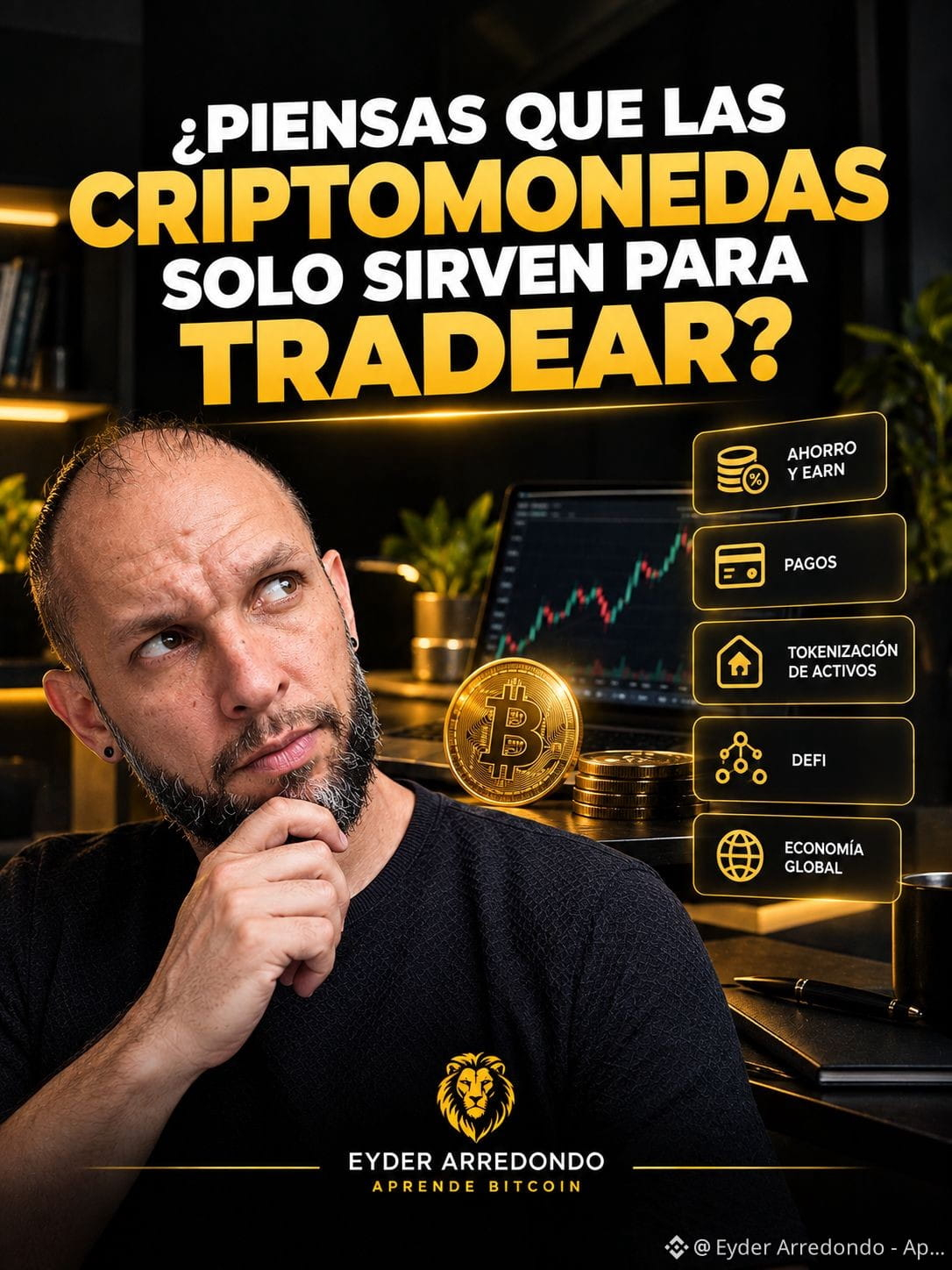
🌕 When someone hears “crypto,” many times they immediately think of:
📈 Buying low and selling high
📉 Doing trading
🎰 Betting on a coin that can go up
⚠️ Risking money
But the crypto ecosystem is much broader.
For example, you can:
ACCUMULATE $BTC :
Buy small amounts and learn to save in BTC in the long term.
USE STABLECOINS:
USDT and USDC aim to keep a value close to the dollar and can be used to move digital value.
STORE YOUR OWN ASSETS:
With a wallet you can learn about self-custody and have direct control over certain assets.
GENERATE YIELD:
Some platforms offer Earn or staking products where certain assets can generate rewards. That said: there are risks and the terms can change.
SEND AND RECEIVE MONEY:
Cryptocurrencies can be used to transfer value between people and countries without necessarily depending on traditional systems.
LEARN ABOUT NEW TECHNOLOGIES:
Ethereum, Solana, and other networks enable decentralized applications, smart contracts, and different financial and digital services.
USE WEB3 APPLICATIONS AND SERVICES:
The ecosystem also includes games, apps, NFTs, DeFi, and other blockchain-based projects.
AND ABOVE ALL: LEARN!
I don’t want you to see cryptocurrencies only as a way to bet that something will go up.
I want you to understand what they are, what they’re for, how they work, and what their risks are.
Because before looking for big profits, better LEARN TO UNDERSTAND WHAT YOU’RE BUYING.
⚠️ Educational content. Not financial advice.
#bitcoin #AprendeBitcoin #stablecoin
🌕 When someone hears “crypto,” many times they immediately think of:
📈 Buying low and selling high
📉 Doing trading
🎰 Betting on a coin that can go up
⚠️ Risking money
But the crypto ecosystem is much broader.
For example, you can:
ACCUMULATE $BTC :
Buy small amounts and learn to save in BTC in the long term.
USE STABLECOINS:
USDT and USDC aim to keep a value close to the dollar and can be used to move digital value.
STORE YOUR OWN ASSETS:
With a wallet you can learn about self-custody and have direct control over certain assets.
GENERATE YIELD:
Some platforms offer Earn or staking products where certain assets can generate rewards. That said: there are risks and the terms can change.
SEND AND RECEIVE MONEY:
Cryptocurrencies can be used to transfer value between people and countries without necessarily depending on traditional systems.
LEARN ABOUT NEW TECHNOLOGIES:
Ethereum, Solana, and other networks enable decentralized applications, smart contracts, and different financial and digital services.
USE WEB3 APPLICATIONS AND SERVICES:
The ecosystem also includes games, apps, NFTs, DeFi, and other blockchain-based projects.
AND ABOVE ALL: LEARN!
I don’t want you to see cryptocurrencies only as a way to bet that something will go up.
I want you to understand what they are, what they’re for, how they work, and what their risks are.
Because before looking for big profits, better LEARN TO UNDERSTAND WHAT YOU’RE BUYING.
⚠️ Educational content. Not financial advice.
#bitcoin #AprendeBitcoin #stablecoin
📈 Buying low and selling high
📉 Doing trading
🎰 Betting on a coin that can go up
⚠️ Risking money
But the crypto ecosystem is much broader.
For example, you can:
ACCUMULATE $BTC :
Buy small amounts and learn to save in BTC in the long term.
USE STABLECOINS:
USDT and USDC aim to keep a value close to the dollar and can be used to move digital value.
STORE YOUR OWN ASSETS:
With a wallet you can learn about self-custody and have direct control over certain assets.
GENERATE YIELD:
Some platforms offer Earn or staking products where certain assets can generate rewards. That said: there are risks and the terms can change.
SEND AND RECEIVE MONEY:
Cryptocurrencies can be used to transfer value between people and countries without necessarily depending on traditional systems.
LEARN ABOUT NEW TECHNOLOGIES:
Ethereum, Solana, and other networks enable decentralized applications, smart contracts, and different financial and digital services.
USE WEB3 APPLICATIONS AND SERVICES:
The ecosystem also includes games, apps, NFTs, DeFi, and other blockchain-based projects.
AND ABOVE ALL: LEARN!
I don’t want you to see cryptocurrencies only as a way to bet that something will go up.
I want you to understand what they are, what they’re for, how they work, and what their risks are.
Because before looking for big profits, better LEARN TO UNDERSTAND WHAT YOU’RE BUYING.
⚠️ Educational content. Not financial advice.
#bitcoin #AprendeBitcoin #stablecoin
1
152
·
--
Bullish
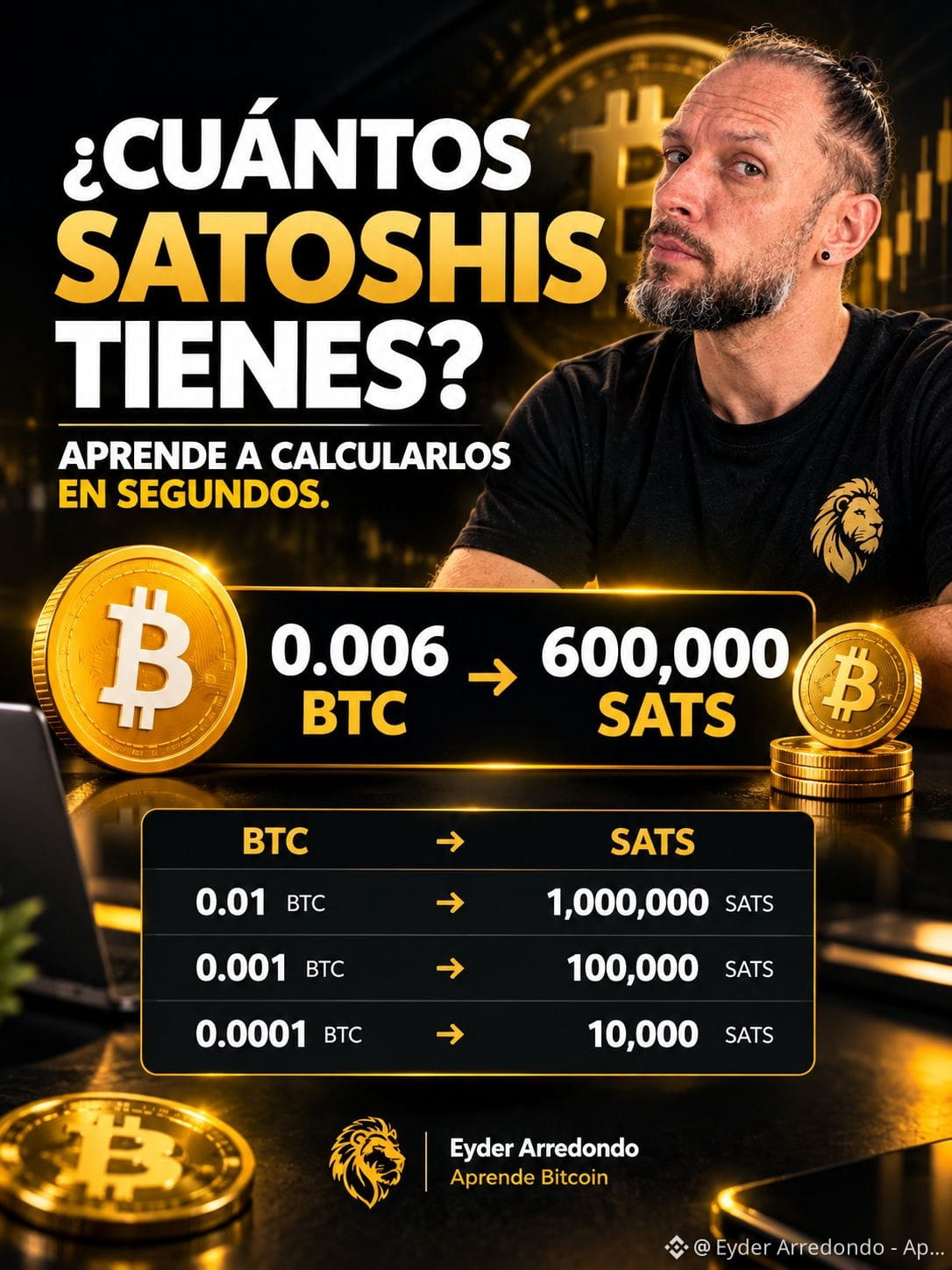
🌕 Did you know you don’t need to have 1 $BTC to start talking about Bitcoin?
Bitcoin is divided into smaller units called satoshis or sats.
1 Bitcoin = 100,000,000 satoshis
So:
0.1 BTC = 10,000,000 sats
0.01 BTC = 1,000,000 sats
0.001 BTC = 100,000 sats
0.0001 BTC = 10,000 sats
0.00001 BTC = 1,000 sats
The formula is very simple:
BTC × 100,000,000 = SATOSHIS
For example:
If you have 0.006 BTC:
0.006 × 100,000,000 = 600,000 sats
That means you don’t just have “only 0.006 Bitcoin”.
You have exactly 600,000 satoshis.
And here’s something that I think is important when we’re just getting started:
Instead of only thinking:
❌ “I can’t buy 1 Bitcoin.”
We can start thinking:
✅ “How many satoshis am I accumulating?”
Because Bitcoin was designed so it can be divided into very small units.
It’s not just about how many BTC you have, but about how many satoshis you’re accumulating over time.
1 BTC = 100 million sats.
Now you can calculate yours.
#bitcoin #AprendeBitcoin #sats
🌕 Did you know you don’t need to have 1 $BTC to start talking about Bitcoin?
Bitcoin is divided into smaller units called satoshis or sats.
1 Bitcoin = 100,000,000 satoshis
So:
0.1 BTC = 10,000,000 sats
0.01 BTC = 1,000,000 sats
0.001 BTC = 100,000 sats
0.0001 BTC = 10,000 sats
0.00001 BTC = 1,000 sats
The formula is very simple:
BTC × 100,000,000 = SATOSHIS
For example:
If you have 0.006 BTC:
0.006 × 100,000,000 = 600,000 sats
That means you don’t just have “only 0.006 Bitcoin”.
You have exactly 600,000 satoshis.
And here’s something that I think is important when we’re just getting started:
Instead of only thinking:
❌ “I can’t buy 1 Bitcoin.”
We can start thinking:
✅ “How many satoshis am I accumulating?”
Because Bitcoin was designed so it can be divided into very small units.
It’s not just about how many BTC you have, but about how many satoshis you’re accumulating over time.
1 BTC = 100 million sats.
Now you can calculate yours.
#bitcoin #AprendeBitcoin #sats
Bitcoin is divided into smaller units called satoshis or sats.
1 Bitcoin = 100,000,000 satoshis
So:
0.1 BTC = 10,000,000 sats
0.01 BTC = 1,000,000 sats
0.001 BTC = 100,000 sats
0.0001 BTC = 10,000 sats
0.00001 BTC = 1,000 sats
The formula is very simple:
BTC × 100,000,000 = SATOSHIS
For example:
If you have 0.006 BTC:
0.006 × 100,000,000 = 600,000 sats
That means you don’t just have “only 0.006 Bitcoin”.
You have exactly 600,000 satoshis.
And here’s something that I think is important when we’re just getting started:
Instead of only thinking:
❌ “I can’t buy 1 Bitcoin.”
We can start thinking:
✅ “How many satoshis am I accumulating?”
Because Bitcoin was designed so it can be divided into very small units.
It’s not just about how many BTC you have, but about how many satoshis you’re accumulating over time.
1 BTC = 100 million sats.
Now you can calculate yours.
#bitcoin #AprendeBitcoin #sats
2
2k
·
--
Bullish
Many of us grew up using cash, bank passbooks, and doing things in a completely different way.
That’s why it’s normal that when we hear words like:
$BTC
Blockchain
Cryptocurrencies
Wallet
DeFi
Fiat Money
we think: How does that work?
And maybe we still don’t fully trust this world.
But it’s one thing not to trust yet, and a very different thing not to be willing to learn.
I decided to start from scratch, with small amounts, asking questions and learning from my own mistakes.
I don’t want to become an expert overnight.
I want to understand.
Because our generation has already learned how to adapt to cell phones, the internet, social media, and many technologies that didn’t even exist when we were young.
No matter what age you start at.
It’s never too late to learn something new.
#AprendeBitcoin #bitcoin #BinanceSquareTalks
Many of us grew up using cash, bank passbooks, and doing things in a completely different way.
That’s why it’s normal that when we hear words like:
$BTC
Blockchain
Cryptocurrencies
Wallet
DeFi
Fiat Money
we think: How does that work?
And maybe we still don’t fully trust this world.
But it’s one thing not to trust yet, and a very different thing not to be willing to learn.
I decided to start from scratch, with small amounts, asking questions and learning from my own mistakes.
I don’t want to become an expert overnight.
I want to understand.
Because our generation has already learned how to adapt to cell phones, the internet, social media, and many technologies that didn’t even exist when we were young.
No matter what age you start at.
It’s never too late to learn something new.
#AprendeBitcoin #bitcoin #BinanceSquareTalks
That’s why it’s normal that when we hear words like:
$BTC
Blockchain
Cryptocurrencies
Wallet
DeFi
Fiat Money
we think: How does that work?
And maybe we still don’t fully trust this world.
But it’s one thing not to trust yet, and a very different thing not to be willing to learn.
I decided to start from scratch, with small amounts, asking questions and learning from my own mistakes.
I don’t want to become an expert overnight.
I want to understand.
Because our generation has already learned how to adapt to cell phones, the internet, social media, and many technologies that didn’t even exist when we were young.
No matter what age you start at.
It’s never too late to learn something new.
#AprendeBitcoin #bitcoin #BinanceSquareTalks

1
161
·
--
Bearish
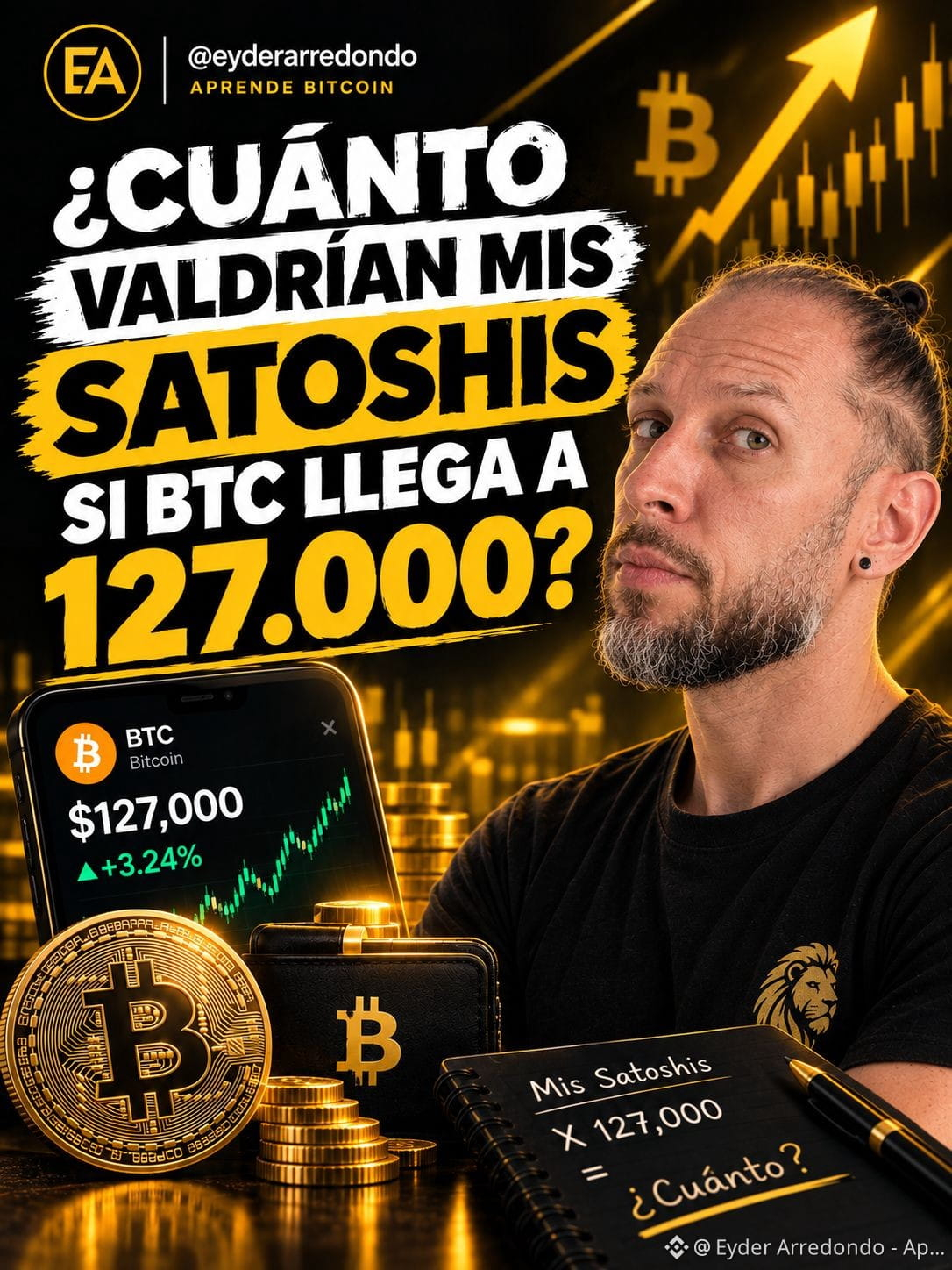
🌕 I’m learning something with my $BTC on Earn, and it seems interesting.
Right now I’m receiving approximately 4 sats per day as interest.
It may seem like practically nothing… but I decided to do the math:
Daily → 4 sats
Weekly → 28 sats
Monthly → 112 sats
In a year → 1.344 sats
Now comes the interesting part
If BTC one day reached 127,000 USDT, those same 1,344 sats would be worth approximately: 1.71 USDT
And if BTC were at:
60,000 → 0.81 USDT
80,000 → 1.08 USDT
100,000 → 1.34 USDT
127,000 → 1.71 USDT
150,000 → 2.02 USDT
The interest I receive isn’t expressed in dollars.
It’s represented in BTC.
That’s why, even though those few sats may seem to have a small value in USDT today, their value in dollars can change if the price of Bitcoin changes.
And since I have my Earn Flexible set to automatically re-subscribe, the BTC I keep accumulating can continue to be part of the balance that generates yield.
My goal isn’t for 4 sats to make me rich.
My goal is to learn how BTC accumulation works over time.
Because when you start with little, every satoshi can also become an opportunity to learn.
It’s better to learn how to handle small amounts before you have a lot.
⚠️ Example based on my personal experience and a hypothetical projection of BTC price. The APR can change and the actual interest may vary. This is not investment advice.
#BinanceEarn #btc #AprendeBitcoin
🌕 I’m learning something with my $BTC on Earn, and it seems interesting.
Right now I’m receiving approximately 4 sats per day as interest.
It may seem like practically nothing… but I decided to do the math:
Daily → 4 sats
Weekly → 28 sats
Monthly → 112 sats
In a year → 1.344 sats
Now comes the interesting part
If BTC one day reached 127,000 USDT, those same 1,344 sats would be worth approximately: 1.71 USDT
And if BTC were at:
60,000 → 0.81 USDT
80,000 → 1.08 USDT
100,000 → 1.34 USDT
127,000 → 1.71 USDT
150,000 → 2.02 USDT
The interest I receive isn’t expressed in dollars.
It’s represented in BTC.
That’s why, even though those few sats may seem to have a small value in USDT today, their value in dollars can change if the price of Bitcoin changes.
And since I have my Earn Flexible set to automatically re-subscribe, the BTC I keep accumulating can continue to be part of the balance that generates yield.
My goal isn’t for 4 sats to make me rich.
My goal is to learn how BTC accumulation works over time.
Because when you start with little, every satoshi can also become an opportunity to learn.
It’s better to learn how to handle small amounts before you have a lot.
⚠️ Example based on my personal experience and a hypothetical projection of BTC price. The APR can change and the actual interest may vary. This is not investment advice.
#BinanceEarn #btc #AprendeBitcoin
Right now I’m receiving approximately 4 sats per day as interest.
It may seem like practically nothing… but I decided to do the math:
Daily → 4 sats
Weekly → 28 sats
Monthly → 112 sats
In a year → 1.344 sats
Now comes the interesting part
If BTC one day reached 127,000 USDT, those same 1,344 sats would be worth approximately: 1.71 USDT
And if BTC were at:
60,000 → 0.81 USDT
80,000 → 1.08 USDT
100,000 → 1.34 USDT
127,000 → 1.71 USDT
150,000 → 2.02 USDT
The interest I receive isn’t expressed in dollars.
It’s represented in BTC.
That’s why, even though those few sats may seem to have a small value in USDT today, their value in dollars can change if the price of Bitcoin changes.
And since I have my Earn Flexible set to automatically re-subscribe, the BTC I keep accumulating can continue to be part of the balance that generates yield.
My goal isn’t for 4 sats to make me rich.
My goal is to learn how BTC accumulation works over time.
Because when you start with little, every satoshi can also become an opportunity to learn.
It’s better to learn how to handle small amounts before you have a lot.
⚠️ Example based on my personal experience and a hypothetical projection of BTC price. The APR can change and the actual interest may vary. This is not investment advice.
#BinanceEarn #btc #AprendeBitcoin
2
1
753
·
--
Bullish
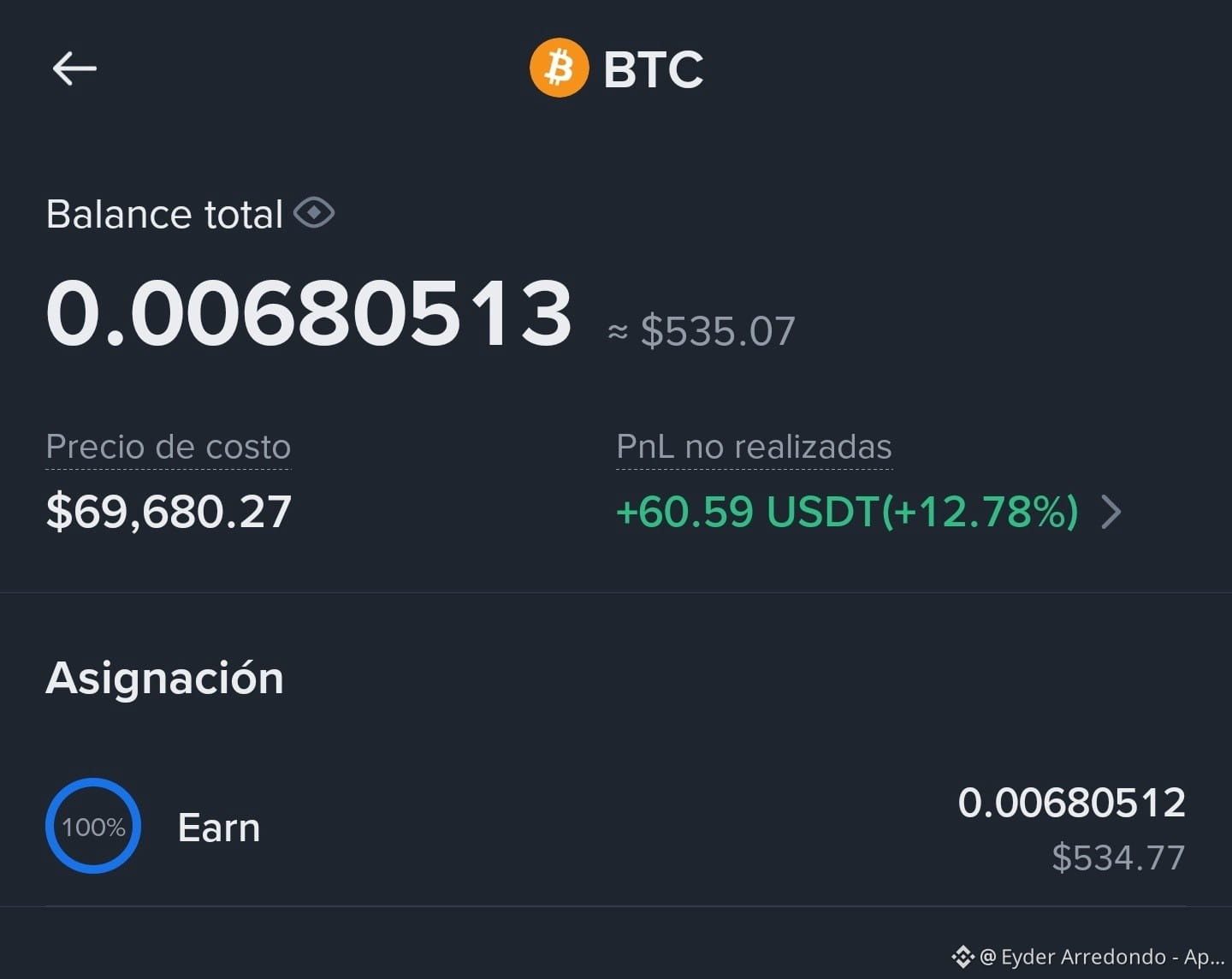
DO YOU KNOW WHAT THESE NUMBERS MEAN IN YOUR BITCOIN?
Today I want to show something real from my wallet, because learning to invest also means learning to read what you’re seeing.
In my case:
0.006805 $BTC → is the amount of Bitcoin I have.
$69,680.27 → is my average cost price. In other words, approximately the average price at which I acquired most of those BTC.
📈 +$60.59 USDT (+12.78%) → is my unrealized profit.
Why unrealized?
Because I haven’t sold my Bitcoin yet. It’s a gain that exists right now based on the market price, but it could change if BTC goes up or down.
💵 ≈ $535.07 → is the approximate value my position has right now.
And there’s another interesting detail:
🔐 100% is in Earn.
That means I have my BTC assigned to an Earn product, instead of simply keeping them in Spot.
What am I learning from this?
That investing isn’t just buying Bitcoin and waiting for it to go up.
I also have to learn to understand how much I have, what my cost price is, how much I’m gaining or losing, and where my assets are.
This is part of learning to manage my own portfolio.
What I say here isn’t financial advice. It’s my experience as I learn.
#bitcoin #AprendeBitcoin #BitcoinParaPrincipiantes
DO YOU KNOW WHAT THESE NUMBERS MEAN IN YOUR BITCOIN?
Today I want to show something real from my wallet, because learning to invest also means learning to read what you’re seeing.
In my case:
0.006805 $BTC → is the amount of Bitcoin I have.
$69,680.27 → is my average cost price. In other words, approximately the average price at which I acquired most of those BTC.
📈 +$60.59 USDT (+12.78%) → is my unrealized profit.
Why unrealized?
Because I haven’t sold my Bitcoin yet. It’s a gain that exists right now based on the market price, but it could change if BTC goes up or down.
💵 ≈ $535.07 → is the approximate value my position has right now.
And there’s another interesting detail:
🔐 100% is in Earn.
That means I have my BTC assigned to an Earn product, instead of simply keeping them in Spot.
What am I learning from this?
That investing isn’t just buying Bitcoin and waiting for it to go up.
I also have to learn to understand how much I have, what my cost price is, how much I’m gaining or losing, and where my assets are.
This is part of learning to manage my own portfolio.
What I say here isn’t financial advice. It’s my experience as I learn.
#bitcoin #AprendeBitcoin #BitcoinParaPrincipiantes
Today I want to show something real from my wallet, because learning to invest also means learning to read what you’re seeing.
In my case:
0.006805 $BTC → is the amount of Bitcoin I have.
$69,680.27 → is my average cost price. In other words, approximately the average price at which I acquired most of those BTC.
📈 +$60.59 USDT (+12.78%) → is my unrealized profit.
Why unrealized?
Because I haven’t sold my Bitcoin yet. It’s a gain that exists right now based on the market price, but it could change if BTC goes up or down.
💵 ≈ $535.07 → is the approximate value my position has right now.
And there’s another interesting detail:
🔐 100% is in Earn.
That means I have my BTC assigned to an Earn product, instead of simply keeping them in Spot.
What am I learning from this?
That investing isn’t just buying Bitcoin and waiting for it to go up.
I also have to learn to understand how much I have, what my cost price is, how much I’m gaining or losing, and where my assets are.
This is part of learning to manage my own portfolio.
What I say here isn’t financial advice. It’s my experience as I learn.
#bitcoin #AprendeBitcoin #BitcoinParaPrincipiantes
2
7
2.1k
·
--
Bullish
WHY DID $BTC REACH $79,890 AND THEN DROP TO $76,800?
How can it rise so much and then fall almost $3,100?
The answer isn’t necessarily that “Bitcoin broke” or that the trend ended.
There’s something much simpler to understand:
📍 THE PRICE FINDS RESISTANCE ZONES
Bitcoin reached approximately $79,890 again, coming close to the psychological $80,000 level.
In those zones, you may see:
• People taking profits.
• Sellers waiting for that level to exit.
• New sell orders.
• Traders reacting to the price behavior.
And when selling pressure increases, the price can pull back.
WHAT HAPPENED NEXT?
BTC pulled back to approximately $76,800.
That represents a drop of nearly 3.9% from the high of $79,890.
But here’s the important part:
A drop by itself doesn’t tell us whether Bitcoin will keep falling or start rising again.
That’s why, instead of trying to guess the next move, I prefer to observe:
🔎 Resistance: where does sell pressure show up?
📊 Volume: is there significant participation during the move?
📈 Trend: what is the price doing on a broader scale?
To me, learning to read these things is much more important than trying to be exactly right about where Bitcoin will be tomorrow.
It’s not about guessing the market.
It’s about learning to understand it.
#bitcoin #AprendeBitcoin #BitcoinParaPrincipiantes
WHY DID $BTC REACH $79,890 AND THEN DROP TO $76,800?
How can it rise so much and then fall almost $3,100?
The answer isn’t necessarily that “Bitcoin broke” or that the trend ended.
There’s something much simpler to understand:
📍 THE PRICE FINDS RESISTANCE ZONES
Bitcoin reached approximately $79,890 again, coming close to the psychological $80,000 level.
In those zones, you may see:
• People taking profits.
• Sellers waiting for that level to exit.
• New sell orders.
• Traders reacting to the price behavior.
And when selling pressure increases, the price can pull back.
WHAT HAPPENED NEXT?
BTC pulled back to approximately $76,800.
That represents a drop of nearly 3.9% from the high of $79,890.
But here’s the important part:
A drop by itself doesn’t tell us whether Bitcoin will keep falling or start rising again.
That’s why, instead of trying to guess the next move, I prefer to observe:
🔎 Resistance: where does sell pressure show up?
📊 Volume: is there significant participation during the move?
📈 Trend: what is the price doing on a broader scale?
To me, learning to read these things is much more important than trying to be exactly right about where Bitcoin will be tomorrow.
It’s not about guessing the market.
It’s about learning to understand it.
#bitcoin #AprendeBitcoin #BitcoinParaPrincipiantes
How can it rise so much and then fall almost $3,100?
The answer isn’t necessarily that “Bitcoin broke” or that the trend ended.
There’s something much simpler to understand:
📍 THE PRICE FINDS RESISTANCE ZONES
Bitcoin reached approximately $79,890 again, coming close to the psychological $80,000 level.
In those zones, you may see:
• People taking profits.
• Sellers waiting for that level to exit.
• New sell orders.
• Traders reacting to the price behavior.
And when selling pressure increases, the price can pull back.
WHAT HAPPENED NEXT?
BTC pulled back to approximately $76,800.
That represents a drop of nearly 3.9% from the high of $79,890.
But here’s the important part:
A drop by itself doesn’t tell us whether Bitcoin will keep falling or start rising again.
That’s why, instead of trying to guess the next move, I prefer to observe:
🔎 Resistance: where does sell pressure show up?
📊 Volume: is there significant participation during the move?
📈 Trend: what is the price doing on a broader scale?
To me, learning to read these things is much more important than trying to be exactly right about where Bitcoin will be tomorrow.
It’s not about guessing the market.
It’s about learning to understand it.
#bitcoin #AprendeBitcoin #BitcoinParaPrincipiantes
98
·
--
Bullish
🔥 One of the things I’m starting to learn about $BTC is that we can’t just look at its price.
We can also investigate what happens inside its blockchain.
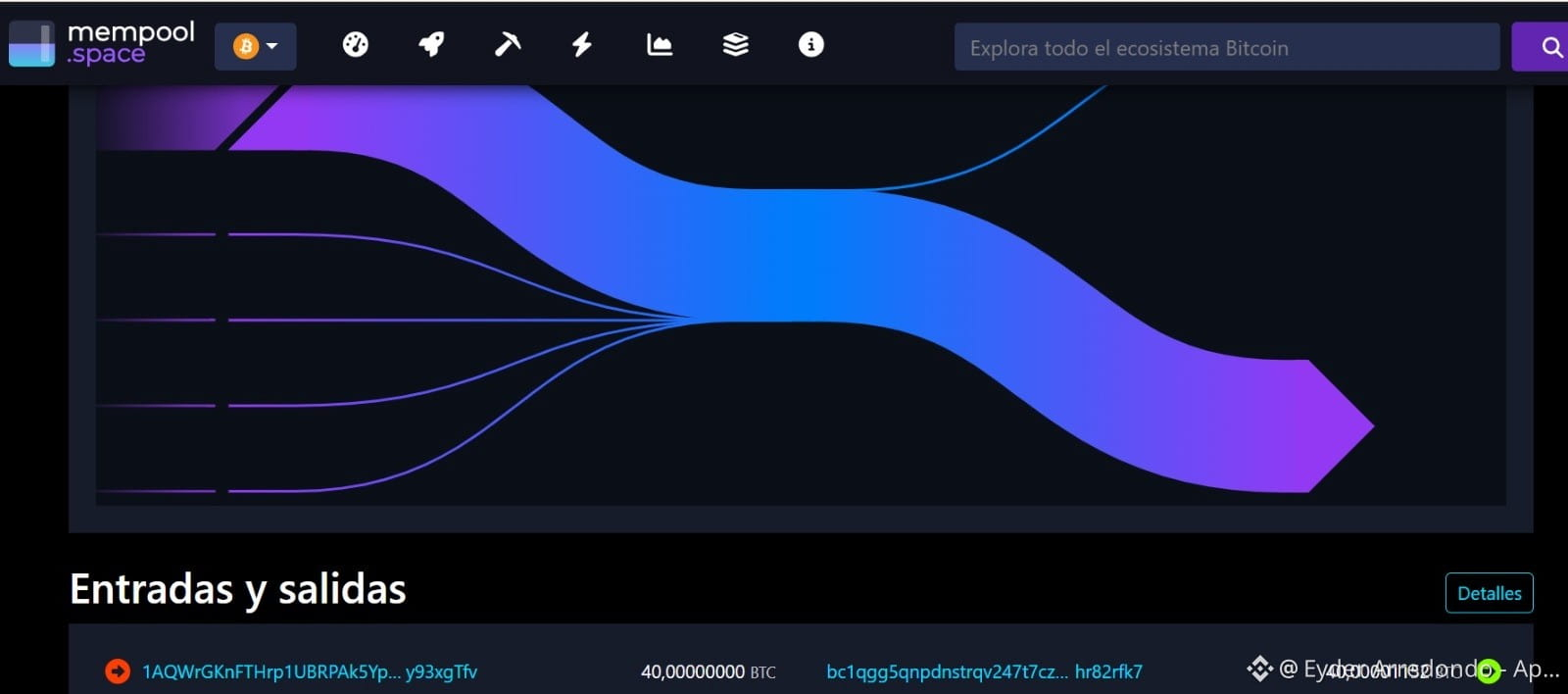
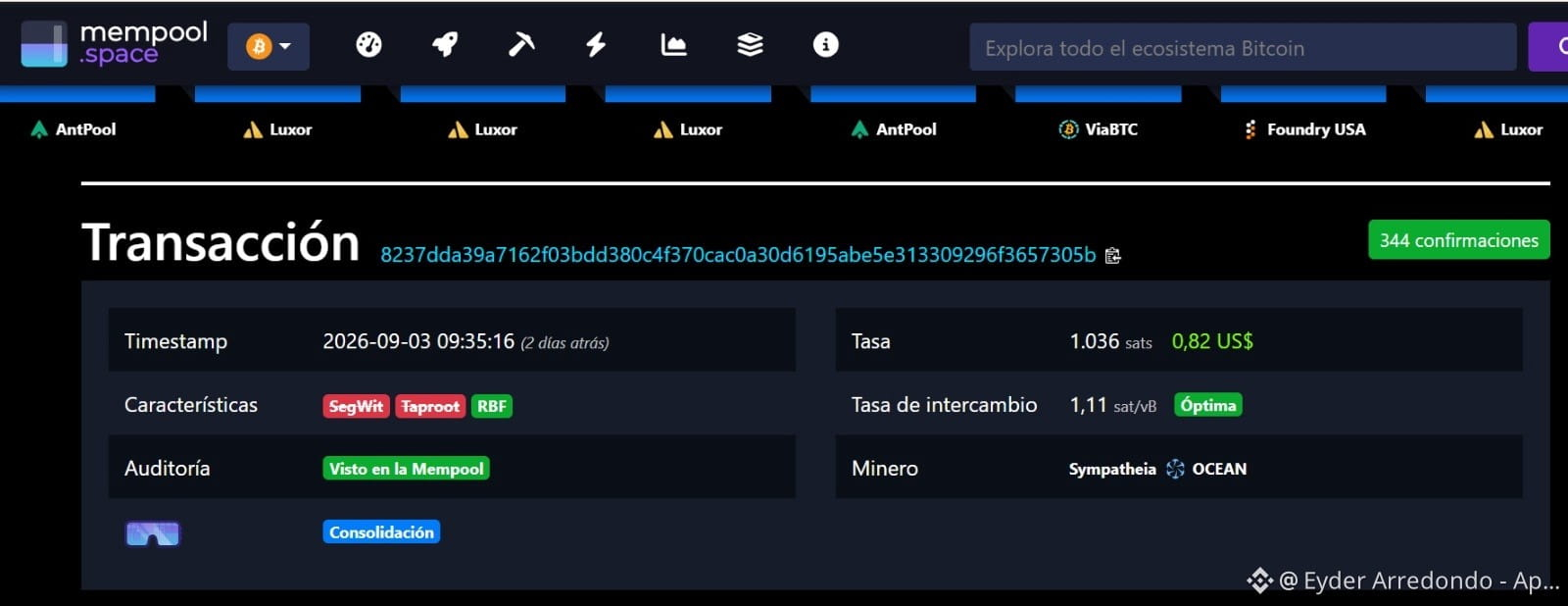
For example, recently a wallet that had been inactive for almost 15 years made another transaction with 40 BTC recently.
And the interesting thing is that we can investigate its history:
🔹 When it received those BTC.
🔹 How much it received.
🔹 How long they remained unmoved.
🔹 When they moved again.
🔹 How much BTC left.
🔹 Which address they were sent to.
🔹 In which block the transaction occurred.
All of this can be checked using a Bitcoin explorer.
But here is a VERY important difference, especially if you’re just starting out:
Not every movement you see on Binance is a Bitcoin transaction.
If you buy BTC on Binance, for example, you are not necessarily making a transaction on the blockchain.
When you buy BTC from another user within an exchange, Binance can simply update the balances within its own system.
That is an internal operation, not necessarily a movement recorded on the blockchain.
On the other hand, when you withdraw BTC from Binance to an external address, Binance processes that withdrawal and, once transmitted, you can find its TXID on the blockchain.
This difference is fundamental to learning how to read Bitcoin correctly.
Because one of the things I like most about Bitcoin is that:
👉 You don’t have to believe me. You can verify it yourself.
#bitcoin #blockchains #AprendeBitcoin
🔥 One of the things I’m starting to learn about $BTC is that we can’t just look at its price.
We can also investigate what happens inside its blockchain.
For example, recently a wallet that had been inactive for almost 15 years made another transaction with 40 BTC recently.
And the interesting thing is that we can investigate its history:
🔹 When it received those BTC.
🔹 How much it received.
🔹 How long they remained unmoved.
🔹 When they moved again.
🔹 How much BTC left.
🔹 Which address they were sent to.
🔹 In which block the transaction occurred.
All of this can be checked using a Bitcoin explorer.
But here is a VERY important difference, especially if you’re just starting out:
Not every movement you see on Binance is a Bitcoin transaction.
If you buy BTC on Binance, for example, you are not necessarily making a transaction on the blockchain.
When you buy BTC from another user within an exchange, Binance can simply update the balances within its own system.
That is an internal operation, not necessarily a movement recorded on the blockchain.
On the other hand, when you withdraw BTC from Binance to an external address, Binance processes that withdrawal and, once transmitted, you can find its TXID on the blockchain.
This difference is fundamental to learning how to read Bitcoin correctly.
Because one of the things I like most about Bitcoin is that:
👉 You don’t have to believe me. You can verify it yourself.
#bitcoin #blockchains #AprendeBitcoin
We can also investigate what happens inside its blockchain.
For example, recently a wallet that had been inactive for almost 15 years made another transaction with 40 BTC recently.
And the interesting thing is that we can investigate its history:
🔹 When it received those BTC.
🔹 How much it received.
🔹 How long they remained unmoved.
🔹 When they moved again.
🔹 How much BTC left.
🔹 Which address they were sent to.
🔹 In which block the transaction occurred.
All of this can be checked using a Bitcoin explorer.
But here is a VERY important difference, especially if you’re just starting out:
Not every movement you see on Binance is a Bitcoin transaction.
If you buy BTC on Binance, for example, you are not necessarily making a transaction on the blockchain.
When you buy BTC from another user within an exchange, Binance can simply update the balances within its own system.
That is an internal operation, not necessarily a movement recorded on the blockchain.
On the other hand, when you withdraw BTC from Binance to an external address, Binance processes that withdrawal and, once transmitted, you can find its TXID on the blockchain.
This difference is fundamental to learning how to read Bitcoin correctly.
Because one of the things I like most about Bitcoin is that:
👉 You don’t have to believe me. You can verify it yourself.
#bitcoin #blockchains #AprendeBitcoin
173
·
--
Bullish
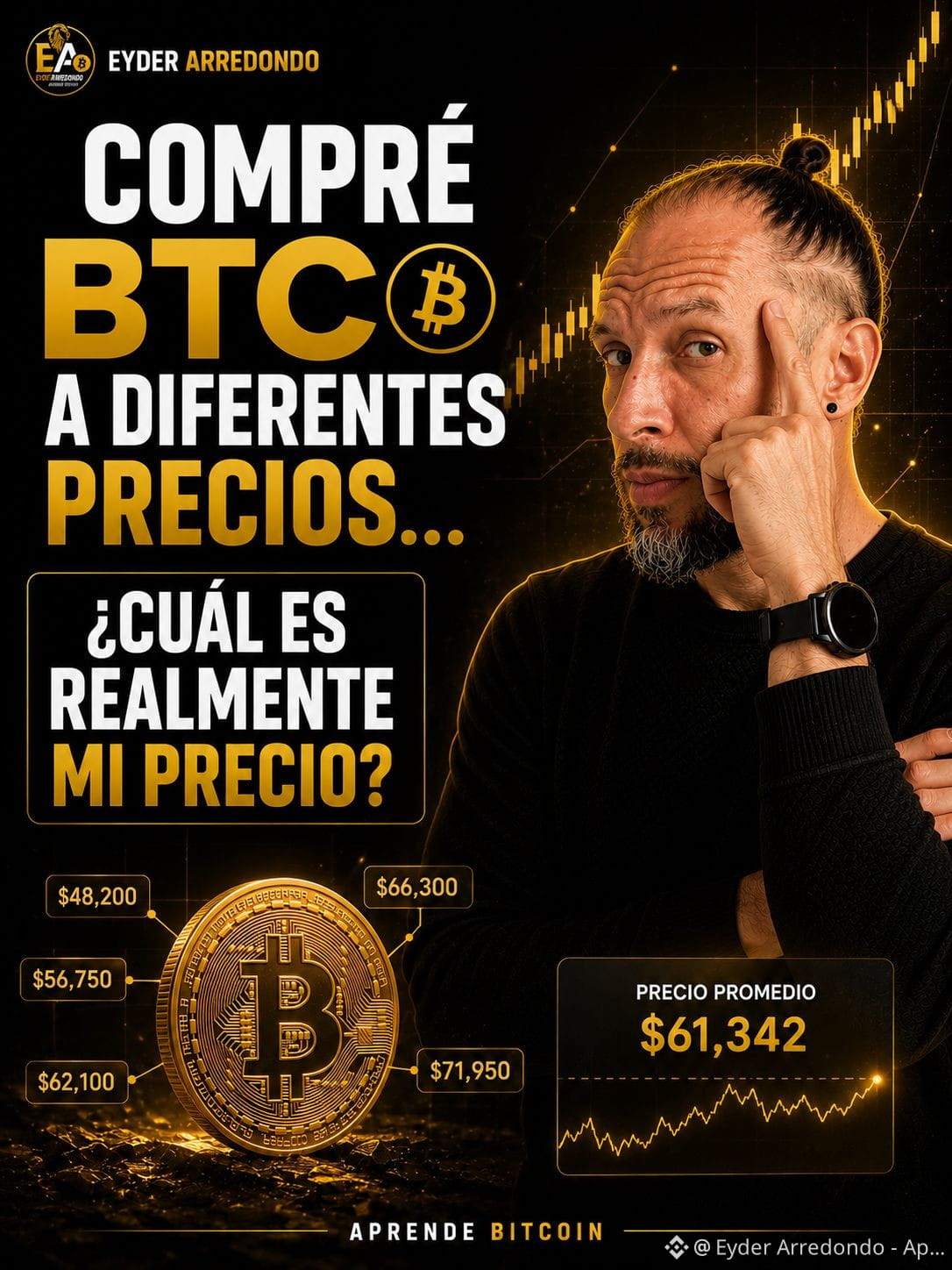
🪙 BUYING $BTC AT DIFFERENT PRICES? THEN YOU NEED TO UNDERSTAND THIS
When you start accumulating Bitcoin, you probably don't buy everything at the same price.
You can buy part at $65,000, another at $72,000, and another at $80,000.
So… what is really your purchase price?
👉 Your average price depends on how much money you invested in each purchase and how much BTC you received.
💡 Why is it important?
Because it lets you know approximately at what price your position starts to be in profit or loss, without obsessing over each individual purchase.
That's why, when you accumulate BTC little by little, looking only at the price of the last purchase can be misleading.
📌 It's not about buying perfectly. It's about understanding what you're accumulating and what your average cost is.
#bitcoin #AprendeBitcoin #BinanceSquareTalks
🪙 BUYING $BTC AT DIFFERENT PRICES? THEN YOU NEED TO UNDERSTAND THIS
When you start accumulating Bitcoin, you probably don't buy everything at the same price.
You can buy part at $65,000, another at $72,000, and another at $80,000.
So… what is really your purchase price?
👉 Your average price depends on how much money you invested in each purchase and how much BTC you received.
💡 Why is it important?
Because it lets you know approximately at what price your position starts to be in profit or loss, without obsessing over each individual purchase.
That's why, when you accumulate BTC little by little, looking only at the price of the last purchase can be misleading.
📌 It's not about buying perfectly. It's about understanding what you're accumulating and what your average cost is.
#bitcoin #AprendeBitcoin #BinanceSquareTalks
When you start accumulating Bitcoin, you probably don't buy everything at the same price.
You can buy part at $65,000, another at $72,000, and another at $80,000.
So… what is really your purchase price?
👉 Your average price depends on how much money you invested in each purchase and how much BTC you received.
💡 Why is it important?
Because it lets you know approximately at what price your position starts to be in profit or loss, without obsessing over each individual purchase.
That's why, when you accumulate BTC little by little, looking only at the price of the last purchase can be misleading.
📌 It's not about buying perfectly. It's about understanding what you're accumulating and what your average cost is.
#bitcoin #AprendeBitcoin #BinanceSquareTalks
1
330
·
--
Bullish
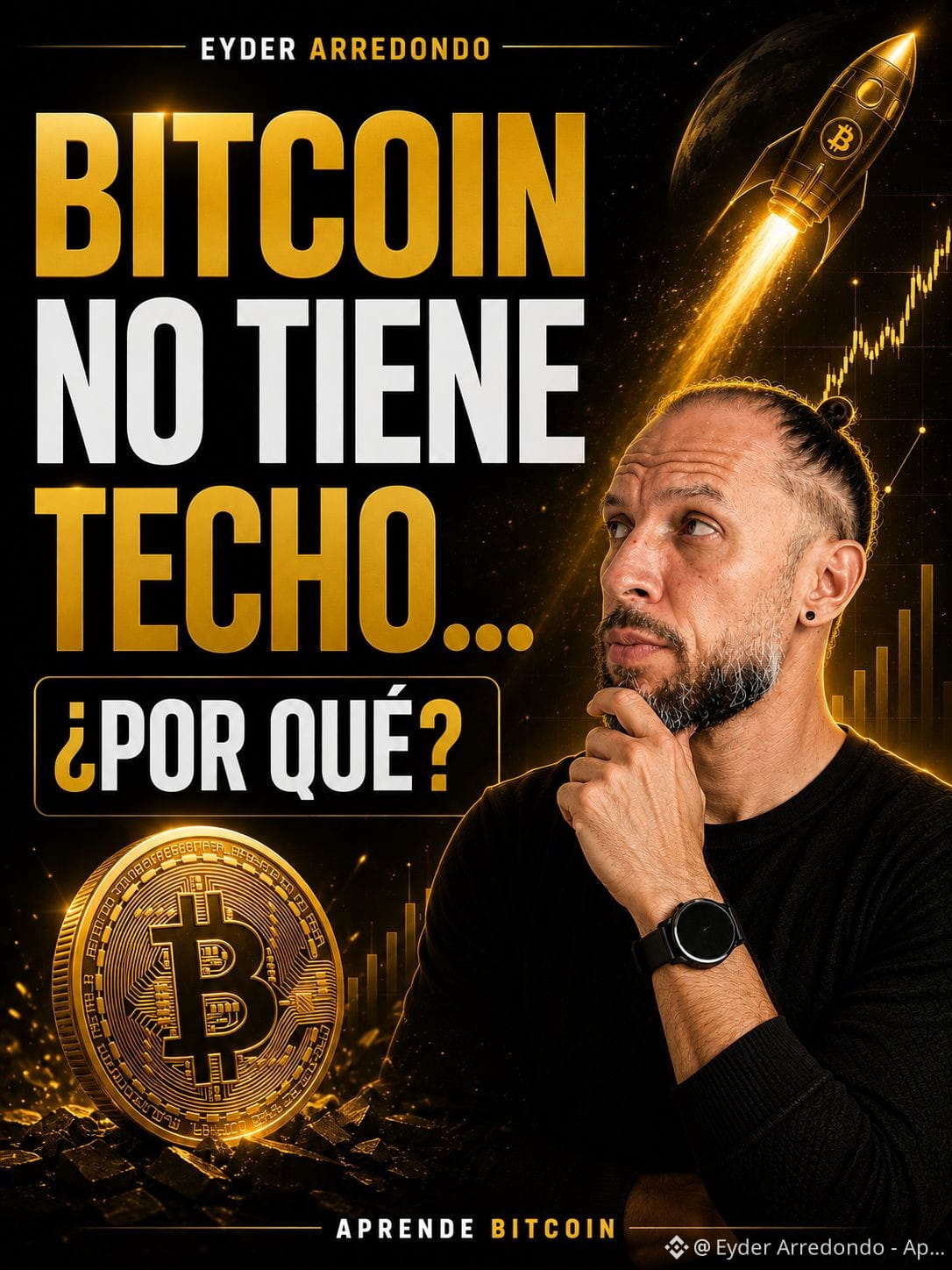
$BTC DOESN'T HAVE A ROOF… WHY?
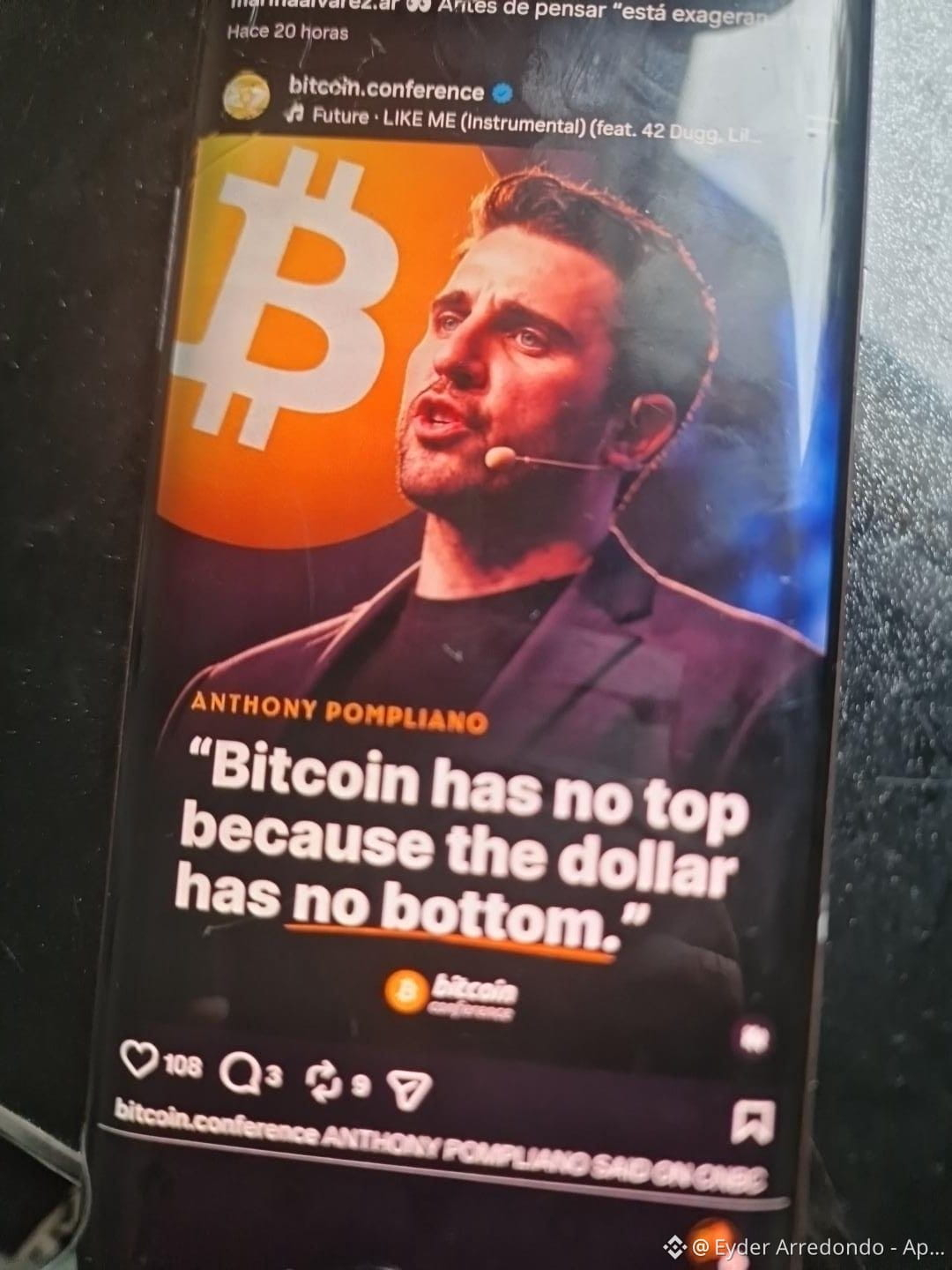
I read this phrase by Anthony Pompliano and it seemed perfect to understand an important idea:
“Bitcoin doesn’t have a ceiling because the dollar doesn’t have a bottom.”
What does that mean?
The dollar can increase the amount in circulation. Bitcoin, on the other hand, has a programmed maximum limit of 21 million BTC.
Imagine you have something scarce and, at the same time, you have more and more units of money trying to buy it.
Its price expressed in that money could increase.
⚠️ But pay attention: this DOESN'T mean that Bitcoin will go up forever or that it can't drop 30%, 50% or more.
The point is different:
👉 The dollar is a unit of measurement whose purchasing power can change over time.
👉 Bitcoin has a known maximum supply.
That’s why Bitcoin isn’t only analyzed by “how much it’s worth in dollars?” but also by “what’s happening with the money we’re using to measure it?”
Understanding this completely changes the way you look at Bitcoin.
#bitcoin #AprendeBitcoin #BitcoinParaPrincipiantes
$BTC DOESN'T HAVE A ROOF… WHY?
I read this phrase by Anthony Pompliano and it seemed perfect to understand an important idea:
“Bitcoin doesn’t have a ceiling because the dollar doesn’t have a bottom.”
What does that mean?
The dollar can increase the amount in circulation. Bitcoin, on the other hand, has a programmed maximum limit of 21 million BTC.
Imagine you have something scarce and, at the same time, you have more and more units of money trying to buy it.
Its price expressed in that money could increase.
⚠️ But pay attention: this DOESN'T mean that Bitcoin will go up forever or that it can't drop 30%, 50% or more.
The point is different:
👉 The dollar is a unit of measurement whose purchasing power can change over time.
👉 Bitcoin has a known maximum supply.
That’s why Bitcoin isn’t only analyzed by “how much it’s worth in dollars?” but also by “what’s happening with the money we’re using to measure it?”
Understanding this completely changes the way you look at Bitcoin.
#bitcoin #AprendeBitcoin #BitcoinParaPrincipiantes
I read this phrase by Anthony Pompliano and it seemed perfect to understand an important idea:
“Bitcoin doesn’t have a ceiling because the dollar doesn’t have a bottom.”
What does that mean?
The dollar can increase the amount in circulation. Bitcoin, on the other hand, has a programmed maximum limit of 21 million BTC.
Imagine you have something scarce and, at the same time, you have more and more units of money trying to buy it.
Its price expressed in that money could increase.
⚠️ But pay attention: this DOESN'T mean that Bitcoin will go up forever or that it can't drop 30%, 50% or more.
The point is different:
👉 The dollar is a unit of measurement whose purchasing power can change over time.
👉 Bitcoin has a known maximum supply.
That’s why Bitcoin isn’t only analyzed by “how much it’s worth in dollars?” but also by “what’s happening with the money we’re using to measure it?”
Understanding this completely changes the way you look at Bitcoin.
#bitcoin #AprendeBitcoin #BitcoinParaPrincipiantes
2
3
2.4k
·
--
Bearish
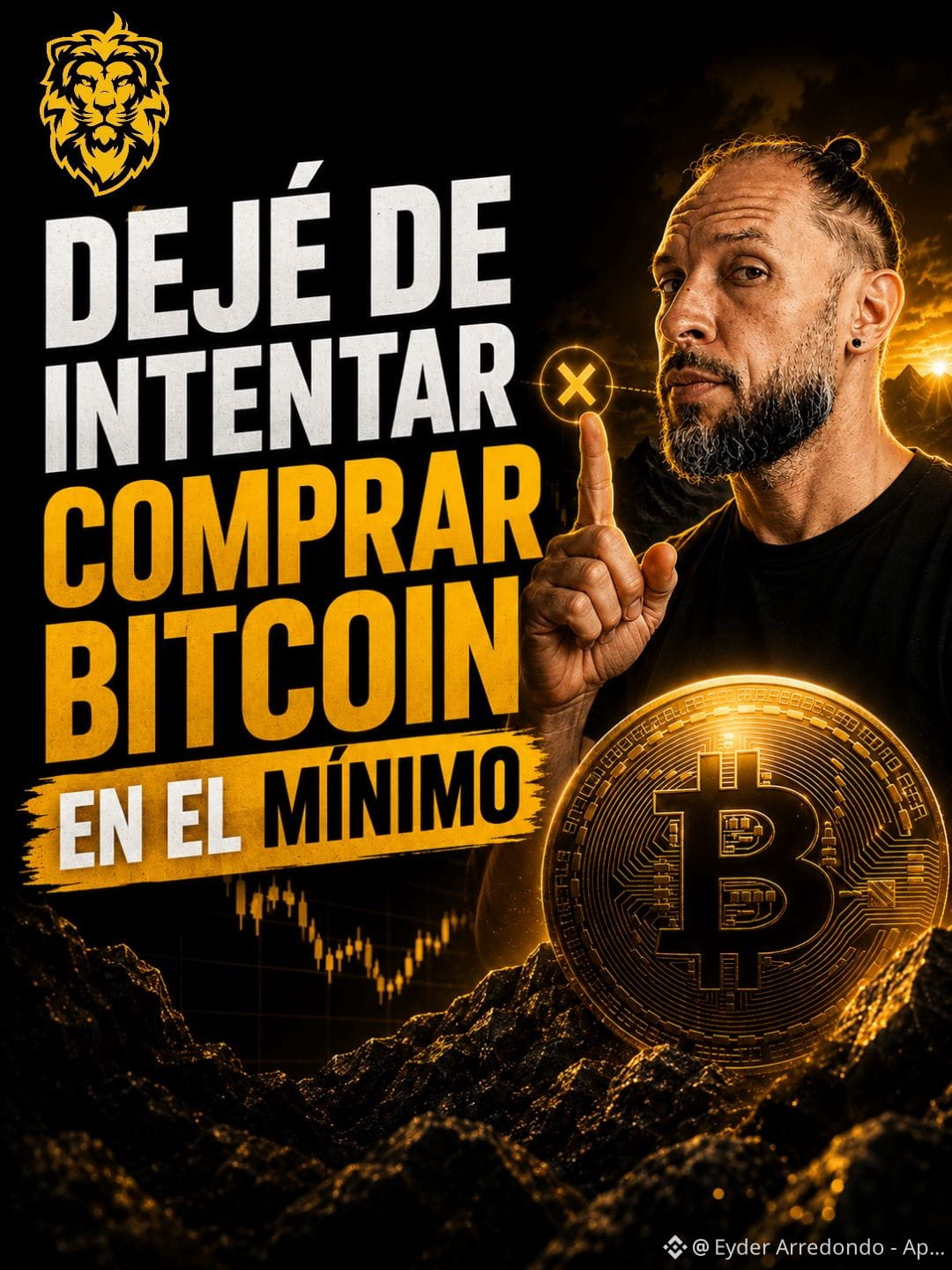
I stopped trying to buy $BTC at the minimum.
For a while I thought that to buy well I had to wait for a big drop.
But over time I started to notice something different:
When Bitcoin begins to move sideways, the moves become smaller and volatility decreases; the market seems to enter a kind of pause.
And this is where I’m applying a strategy that I’m really liking:
📉 I don’t try to guess the bottom.
📈 I also don’t chase the price when it starts rising.
🎯 I set in advance a price zone where I consider it reasonable to accumulate.
When Bitcoin reaches that zone and also begins to show lower volatility, I take advantage and buy.
Why do I like this approach?
Because a low-volatility phase can end in a strong move, but not necessarily upward. Bitcoin can break both to the upside and to the downside.
That’s why my goal isn’t to predict the next move.
It’s to have a plan before it happens.
And this is where Bollinger Bands can be really interesting: when the bands start to tighten, they help us visualize that volatility reduction.
It’s not a magic buy signal.
It’s simply a tool that helps me better understand what the market is doing and make decisions with rules instead of emotions.
I’m not trying to guess Bitcoin’s next move. I’m trying to be prepared for when it happens.
#bitcoin #bitcoinparaprincipiantes #AprendeBitcoin
I stopped trying to buy $BTC at the minimum.
For a while I thought that to buy well I had to wait for a big drop.
But over time I started to notice something different:
When Bitcoin begins to move sideways, the moves become smaller and volatility decreases; the market seems to enter a kind of pause.
And this is where I’m applying a strategy that I’m really liking:
📉 I don’t try to guess the bottom.
📈 I also don’t chase the price when it starts rising.
🎯 I set in advance a price zone where I consider it reasonable to accumulate.
When Bitcoin reaches that zone and also begins to show lower volatility, I take advantage and buy.
Why do I like this approach?
Because a low-volatility phase can end in a strong move, but not necessarily upward. Bitcoin can break both to the upside and to the downside.
That’s why my goal isn’t to predict the next move.
It’s to have a plan before it happens.
And this is where Bollinger Bands can be really interesting: when the bands start to tighten, they help us visualize that volatility reduction.
It’s not a magic buy signal.
It’s simply a tool that helps me better understand what the market is doing and make decisions with rules instead of emotions.
I’m not trying to guess Bitcoin’s next move. I’m trying to be prepared for when it happens.
#bitcoin #bitcoinparaprincipiantes #AprendeBitcoin
For a while I thought that to buy well I had to wait for a big drop.
But over time I started to notice something different:
When Bitcoin begins to move sideways, the moves become smaller and volatility decreases; the market seems to enter a kind of pause.
And this is where I’m applying a strategy that I’m really liking:
📉 I don’t try to guess the bottom.
📈 I also don’t chase the price when it starts rising.
🎯 I set in advance a price zone where I consider it reasonable to accumulate.
When Bitcoin reaches that zone and also begins to show lower volatility, I take advantage and buy.
Why do I like this approach?
Because a low-volatility phase can end in a strong move, but not necessarily upward. Bitcoin can break both to the upside and to the downside.
That’s why my goal isn’t to predict the next move.
It’s to have a plan before it happens.
And this is where Bollinger Bands can be really interesting: when the bands start to tighten, they help us visualize that volatility reduction.
It’s not a magic buy signal.
It’s simply a tool that helps me better understand what the market is doing and make decisions with rules instead of emotions.
I’m not trying to guess Bitcoin’s next move. I’m trying to be prepared for when it happens.
#bitcoin #bitcoinparaprincipiantes #AprendeBitcoin
1k
·
--
Bearish
MY FIRST INTEREST IN $BTC … AND THEY PAID ME IN BTC!
Today I received my first 4 satoshis in Bitcoin interest and learned something I think every beginner should know.
I had them in Binance Earn Flexible, a product that lets you keep your BTC generating yield and, depending on the product conditions, you can withdraw your funds with flexibility.
Today I received:
🪙 +0,00000004 BTC = 4 satoshis
And I understood something important:
If you put BTC to generate yield, the interest can be paid in the same asset: BTC.
📈 This is different from P&L.
P&L shows how the value of your BTC changes when its price goes up or down.
Interest, on the other hand, increases the amount of BTC you have.
It may seem like a small amount, but for me it represents something important: I’m learning how to make my own satoshis generate more satoshis.
#bitcoin #Binance #AprendeBitcoin
MY FIRST INTEREST IN $BTC … AND THEY PAID ME IN BTC!
Today I received my first 4 satoshis in Bitcoin interest and learned something I think every beginner should know.
I had them in Binance Earn Flexible, a product that lets you keep your BTC generating yield and, depending on the product conditions, you can withdraw your funds with flexibility.
Today I received:
🪙 +0,00000004 BTC = 4 satoshis
And I understood something important:
If you put BTC to generate yield, the interest can be paid in the same asset: BTC.
📈 This is different from P&L.
P&L shows how the value of your BTC changes when its price goes up or down.
Interest, on the other hand, increases the amount of BTC you have.
It may seem like a small amount, but for me it represents something important: I’m learning how to make my own satoshis generate more satoshis.
#bitcoin #Binance #AprendeBitcoin
Today I received my first 4 satoshis in Bitcoin interest and learned something I think every beginner should know.
I had them in Binance Earn Flexible, a product that lets you keep your BTC generating yield and, depending on the product conditions, you can withdraw your funds with flexibility.
Today I received:
🪙 +0,00000004 BTC = 4 satoshis
And I understood something important:
If you put BTC to generate yield, the interest can be paid in the same asset: BTC.
📈 This is different from P&L.
P&L shows how the value of your BTC changes when its price goes up or down.
Interest, on the other hand, increases the amount of BTC you have.
It may seem like a small amount, but for me it represents something important: I’m learning how to make my own satoshis generate more satoshis.
#bitcoin #Binance #AprendeBitcoin

112
·
--
Bearish
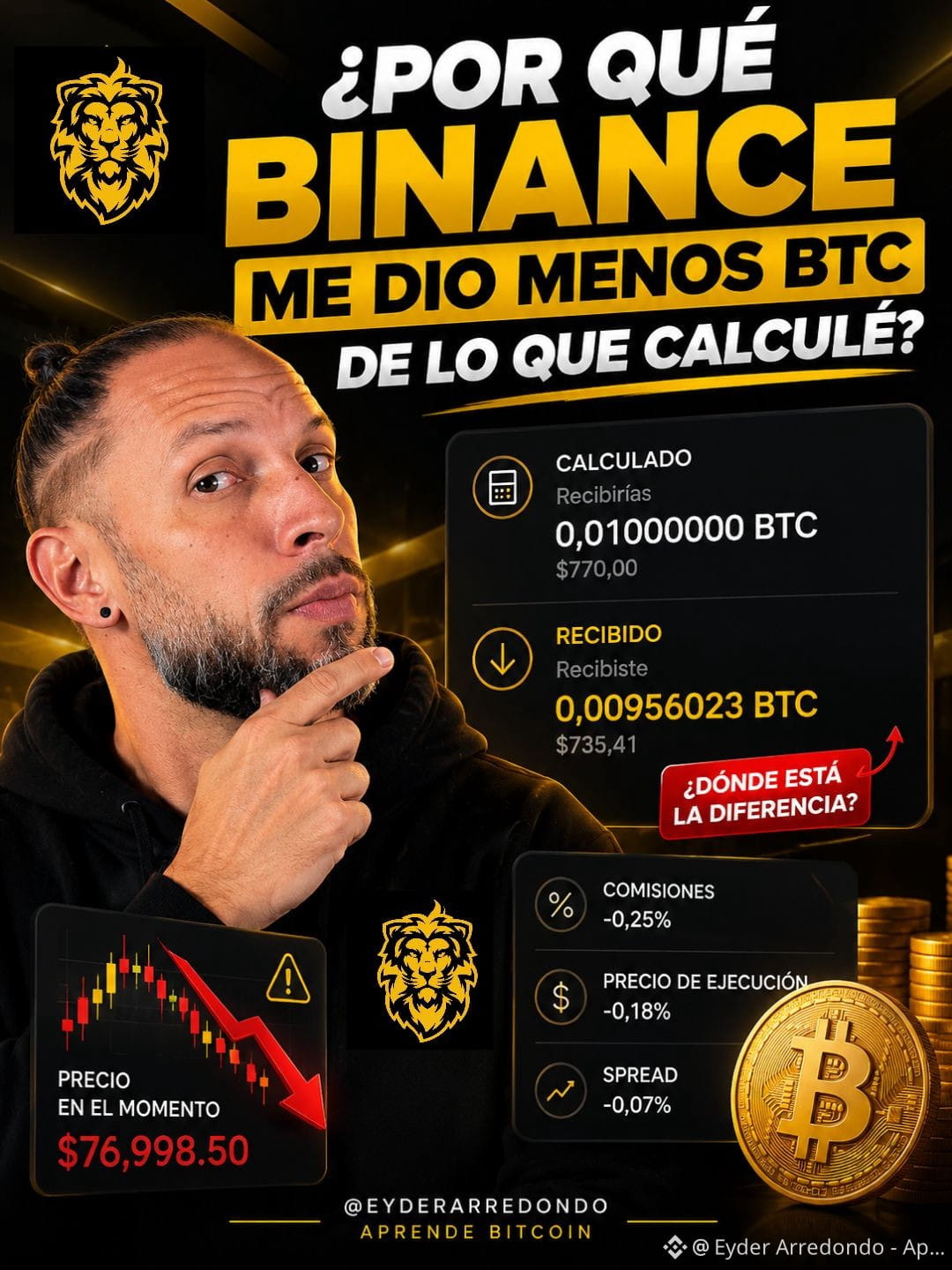
💸 WHY DID BINANCE GIVE ME $BTC LESS THAN WHAT I CALCULATED?
When you start buying Bitcoin, you can do a quick calculation:
$100 ÷ BTC price = amount of BTC
But when you execute the purchase, you may receive a little less than what you calculated.
Why?
Mainly for two reasons:
🔹 Commission: Binance charges a commission to execute the transaction, depending on the order type and your level/fee tier.
🔹 Execution price: the price you see on screen can change while your order is being executed. With a market order, the buy can also be filled at different available prices.
That’s why you shouldn’t be surprised if your calculation said:
“With $100 I buy 0.001 BTC”
and you end up receiving something slightly lower.
👉 It doesn’t necessarily mean you lost money.
It means you should factor in the commission + the actual execution price when estimating how much BTC you’ll receive.
#bitcoin #BinanceSquareTalks #AprendeBitcoin
💸 WHY DID BINANCE GIVE ME $BTC LESS THAN WHAT I CALCULATED?
When you start buying Bitcoin, you can do a quick calculation:
$100 ÷ BTC price = amount of BTC
But when you execute the purchase, you may receive a little less than what you calculated.
Why?
Mainly for two reasons:
🔹 Commission: Binance charges a commission to execute the transaction, depending on the order type and your level/fee tier.
🔹 Execution price: the price you see on screen can change while your order is being executed. With a market order, the buy can also be filled at different available prices.
That’s why you shouldn’t be surprised if your calculation said:
“With $100 I buy 0.001 BTC”
and you end up receiving something slightly lower.
👉 It doesn’t necessarily mean you lost money.
It means you should factor in the commission + the actual execution price when estimating how much BTC you’ll receive.
#bitcoin #BinanceSquareTalks #AprendeBitcoin
When you start buying Bitcoin, you can do a quick calculation:
$100 ÷ BTC price = amount of BTC
But when you execute the purchase, you may receive a little less than what you calculated.
Why?
Mainly for two reasons:
🔹 Commission: Binance charges a commission to execute the transaction, depending on the order type and your level/fee tier.
🔹 Execution price: the price you see on screen can change while your order is being executed. With a market order, the buy can also be filled at different available prices.
That’s why you shouldn’t be surprised if your calculation said:
“With $100 I buy 0.001 BTC”
and you end up receiving something slightly lower.
👉 It doesn’t necessarily mean you lost money.
It means you should factor in the commission + the actual execution price when estimating how much BTC you’ll receive.
#bitcoin #BinanceSquareTalks #AprendeBitcoin
104
·
--
Bearish
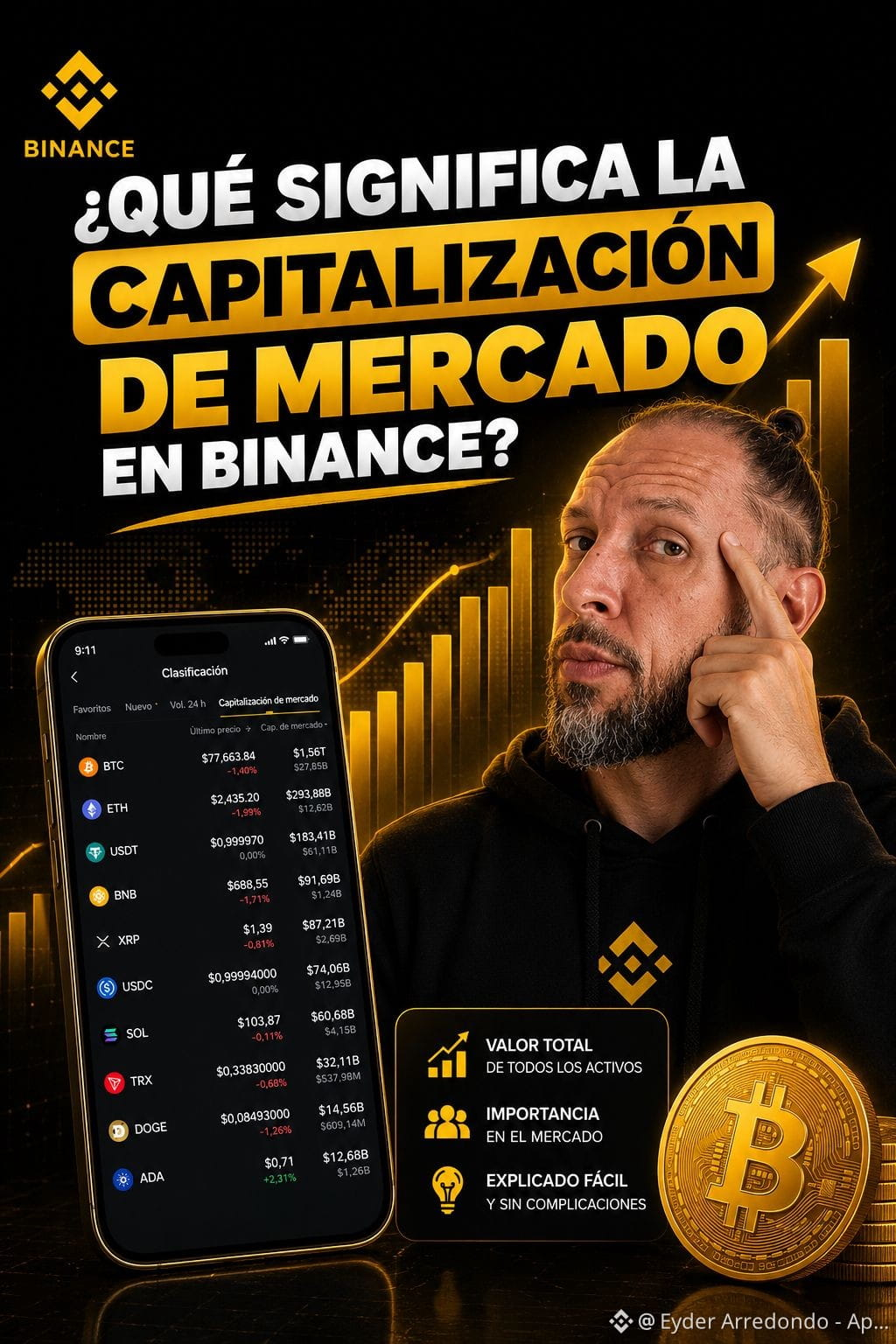
🚨 What does market capitalization mean on Binance? 👀
If you’re just starting out in the crypto world, you’ll probably look at a coin’s price first. But there’s another piece of data that may be even more important for understanding its size: market capitalization.
It’s calculated like this:
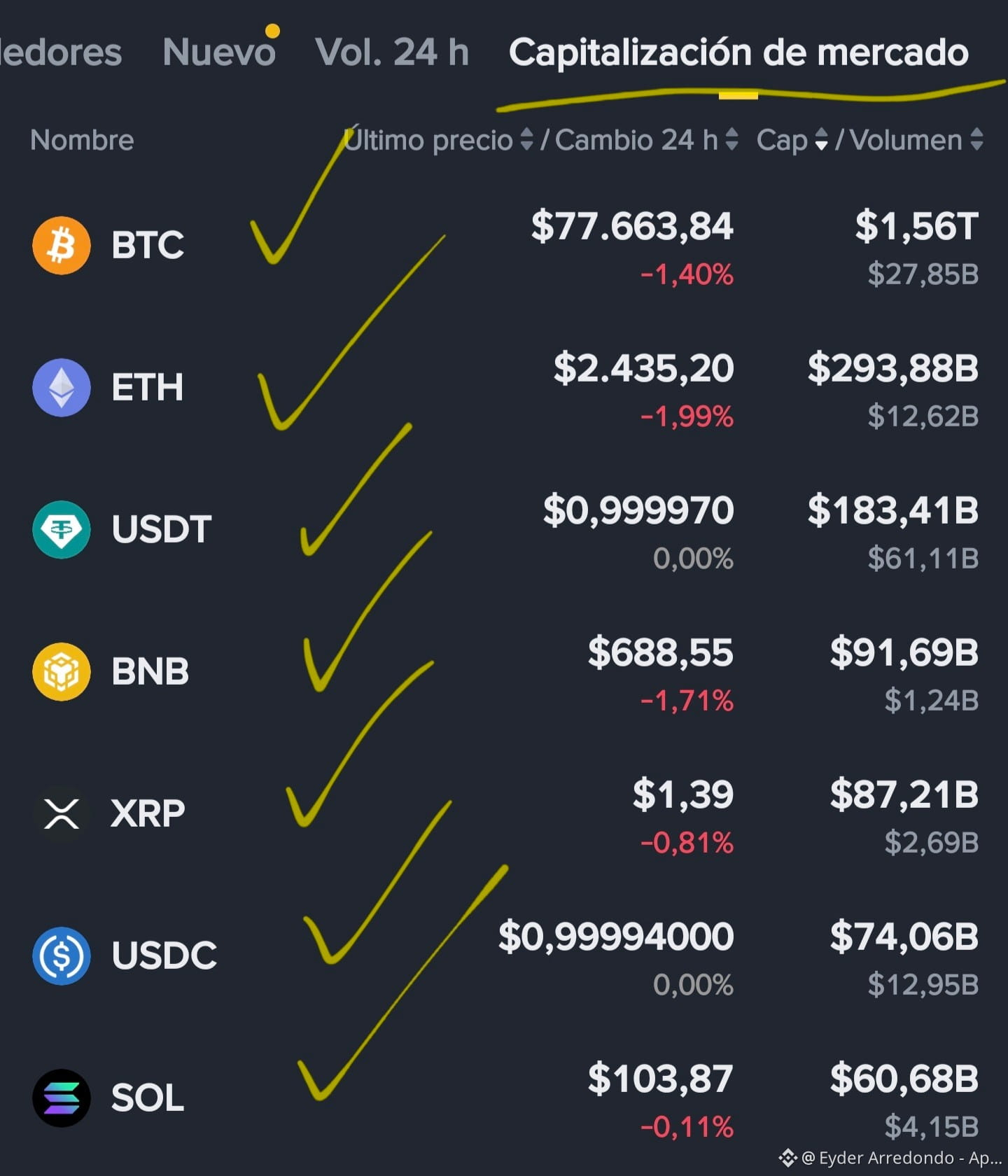
Price × circulating coins = Market capitalization
In the image we can see:
🟠 $BTC → ~$1.56T
🔵 $ETH → ~$293B
🟡 $BNB → ~$91B
⚫ XRP → ~$87B
🟣 SOL → ~$60B
So what does this tell us?
👉 It gives you an idea of the total value of that asset in the market, not just how much one coin costs.
That’s why a cryptocurrency worth $1 isn’t necessarily “cheap,” and one worth $1,000 isn’t necessarily “bigger.”
💡 Before thinking: “This coin could reach $100,” ask yourself another question:
What would its market cap be if it reached $100?
⚠️ And remember: market capitalization doesn’t mean that amount of money went directly into the project. It’s a valuation based on price and circulating supply.
📚 For me, learning to read this data is essential before buying any cryptocurrency.
Did you already look at market capitalization before investing?
#bitcoin #AprendeBitcoin #bitcoinparaprincipiantes
🚨 What does market capitalization mean on Binance? 👀
If you’re just starting out in the crypto world, you’ll probably look at a coin’s price first. But there’s another piece of data that may be even more important for understanding its size: market capitalization.
It’s calculated like this:
Price × circulating coins = Market capitalization
In the image we can see:
🟠 $BTC → ~$1.56T
🔵 $ETH → ~$293B
🟡 $BNB → ~$91B
⚫ XRP → ~$87B
🟣 SOL → ~$60B
So what does this tell us?
👉 It gives you an idea of the total value of that asset in the market, not just how much one coin costs.
That’s why a cryptocurrency worth $1 isn’t necessarily “cheap,” and one worth $1,000 isn’t necessarily “bigger.”
💡 Before thinking: “This coin could reach $100,” ask yourself another question:
What would its market cap be if it reached $100?
⚠️ And remember: market capitalization doesn’t mean that amount of money went directly into the project. It’s a valuation based on price and circulating supply.
📚 For me, learning to read this data is essential before buying any cryptocurrency.
Did you already look at market capitalization before investing?
#bitcoin #AprendeBitcoin #bitcoinparaprincipiantes
If you’re just starting out in the crypto world, you’ll probably look at a coin’s price first. But there’s another piece of data that may be even more important for understanding its size: market capitalization.
It’s calculated like this:
Price × circulating coins = Market capitalization
In the image we can see:
🟠 $BTC → ~$1.56T
🔵 $ETH → ~$293B
🟡 $BNB → ~$91B
⚫ XRP → ~$87B
🟣 SOL → ~$60B
So what does this tell us?
👉 It gives you an idea of the total value of that asset in the market, not just how much one coin costs.
That’s why a cryptocurrency worth $1 isn’t necessarily “cheap,” and one worth $1,000 isn’t necessarily “bigger.”
💡 Before thinking: “This coin could reach $100,” ask yourself another question:
What would its market cap be if it reached $100?
⚠️ And remember: market capitalization doesn’t mean that amount of money went directly into the project. It’s a valuation based on price and circulating supply.
📚 For me, learning to read this data is essential before buying any cryptocurrency.
Did you already look at market capitalization before investing?
#bitcoin #AprendeBitcoin #bitcoinparaprincipiantes
212
·
--
Bearish
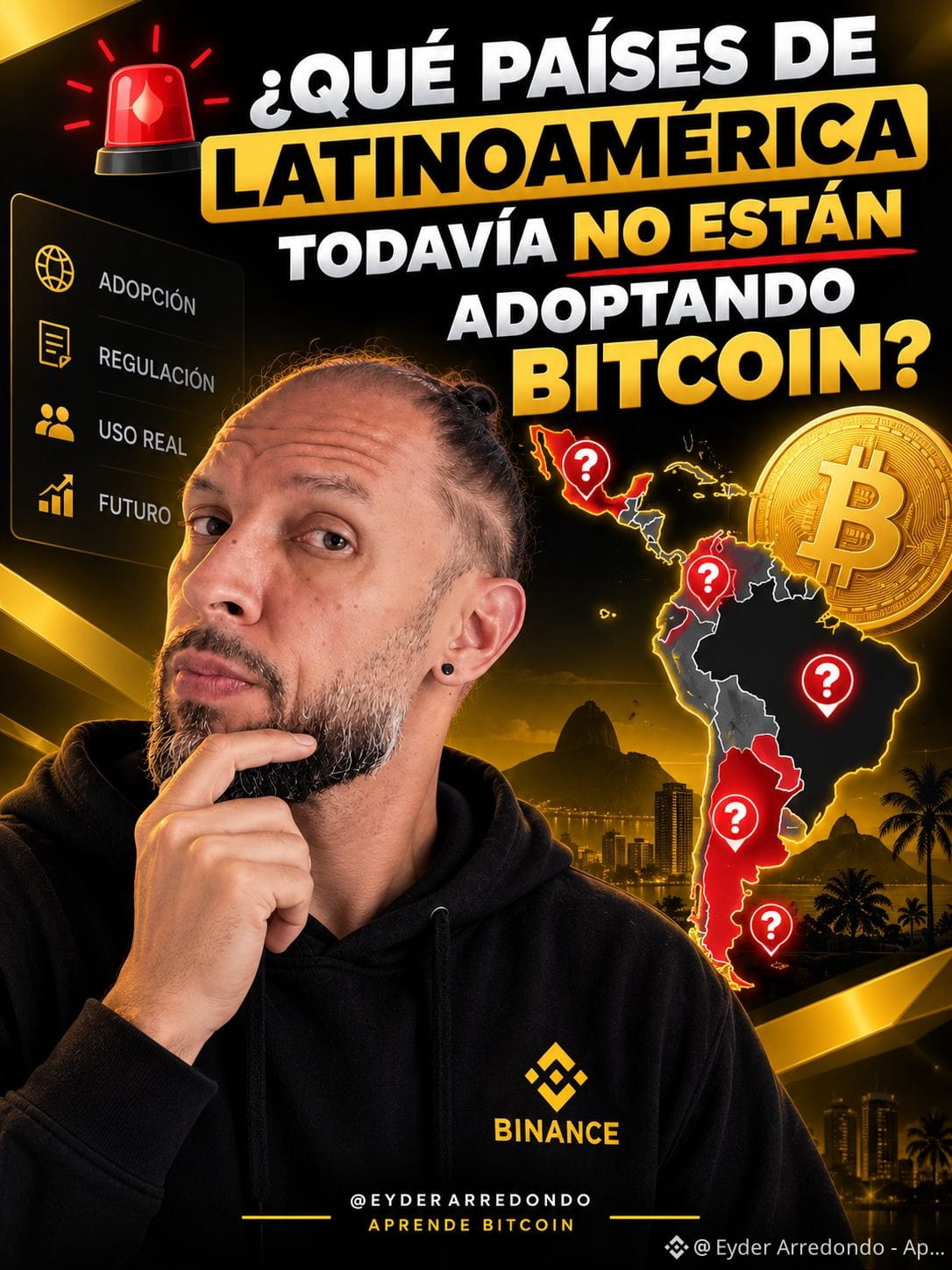
🚨 WHICH LATIN AMERICAN COUNTRIES ARE STILL NOT ADOPTING $BTC ?
When we talk about Bitcoin in Latin America, we often think that all countries are moving at the same pace.
But the data tells a different story.
📊 According to Chainalysis’ Global Crypto Adoption Index 2025, some Latin American countries appear among the markets with the highest crypto activity in the world:
🇧🇷 Brazil → #5 worldwide
🇻🇪 Venezuela → #18
🇦🇷 Argentina → #20
And there’s something even more interesting:
💰 Brazil moved approximately $318.8 BILLION in crypto value between July 2024 and June 2025.
Argentina: ~$93.9 billion
Mexico: ~$71.2 billion
Venezuela: ~$44.6 billion
Colombia: ~$44.2 billion
So…
❌ It wouldn’t be accurate to simply say that “Latin America doesn’t trust Bitcoin.”
The reality is much more interesting:
👉 Adoption is VERY different from country to country.
Why?
Because Bitcoin doesn’t mean the same thing to everyone.
In some countries, it can be seen mainly as an investment.
In others, as a way to protect against the currency’s loss of value.
And in others, simply, there is still a lack of knowledge or distrust.
🇧🇴 Bolivia is an interesting example.
After years of restrictions, the country began to soften its position on crypto assets, and during the 2025 currency crisis, interest in Bitcoin—and especially in stablecoins as an alternative for making payments and preserving value—grew.
💡 And here is the question I’m really interested in:
Could it be that the countries that use Bitcoin the least today simply haven’t yet found a reason to need it?
#bitcoin #AprendeBitcoin #bitcoinparaprincipiantes
🚨 WHICH LATIN AMERICAN COUNTRIES ARE STILL NOT ADOPTING $BTC ?
When we talk about Bitcoin in Latin America, we often think that all countries are moving at the same pace.
But the data tells a different story.
📊 According to Chainalysis’ Global Crypto Adoption Index 2025, some Latin American countries appear among the markets with the highest crypto activity in the world:
🇧🇷 Brazil → #5 worldwide
🇻🇪 Venezuela → #18
🇦🇷 Argentina → #20
And there’s something even more interesting:
💰 Brazil moved approximately $318.8 BILLION in crypto value between July 2024 and June 2025.
Argentina: ~$93.9 billion
Mexico: ~$71.2 billion
Venezuela: ~$44.6 billion
Colombia: ~$44.2 billion
So…
❌ It wouldn’t be accurate to simply say that “Latin America doesn’t trust Bitcoin.”
The reality is much more interesting:
👉 Adoption is VERY different from country to country.
Why?
Because Bitcoin doesn’t mean the same thing to everyone.
In some countries, it can be seen mainly as an investment.
In others, as a way to protect against the currency’s loss of value.
And in others, simply, there is still a lack of knowledge or distrust.
🇧🇴 Bolivia is an interesting example.
After years of restrictions, the country began to soften its position on crypto assets, and during the 2025 currency crisis, interest in Bitcoin—and especially in stablecoins as an alternative for making payments and preserving value—grew.
💡 And here is the question I’m really interested in:
Could it be that the countries that use Bitcoin the least today simply haven’t yet found a reason to need it?
#bitcoin #AprendeBitcoin #bitcoinparaprincipiantes
When we talk about Bitcoin in Latin America, we often think that all countries are moving at the same pace.
But the data tells a different story.
📊 According to Chainalysis’ Global Crypto Adoption Index 2025, some Latin American countries appear among the markets with the highest crypto activity in the world:
🇧🇷 Brazil → #5 worldwide
🇻🇪 Venezuela → #18
🇦🇷 Argentina → #20
And there’s something even more interesting:
💰 Brazil moved approximately $318.8 BILLION in crypto value between July 2024 and June 2025.
Argentina: ~$93.9 billion
Mexico: ~$71.2 billion
Venezuela: ~$44.6 billion
Colombia: ~$44.2 billion
So…
❌ It wouldn’t be accurate to simply say that “Latin America doesn’t trust Bitcoin.”
The reality is much more interesting:
👉 Adoption is VERY different from country to country.
Why?
Because Bitcoin doesn’t mean the same thing to everyone.
In some countries, it can be seen mainly as an investment.
In others, as a way to protect against the currency’s loss of value.
And in others, simply, there is still a lack of knowledge or distrust.
🇧🇴 Bolivia is an interesting example.
After years of restrictions, the country began to soften its position on crypto assets, and during the 2025 currency crisis, interest in Bitcoin—and especially in stablecoins as an alternative for making payments and preserving value—grew.
💡 And here is the question I’m really interested in:
Could it be that the countries that use Bitcoin the least today simply haven’t yet found a reason to need it?
#bitcoin #AprendeBitcoin #bitcoinparaprincipiantes
142
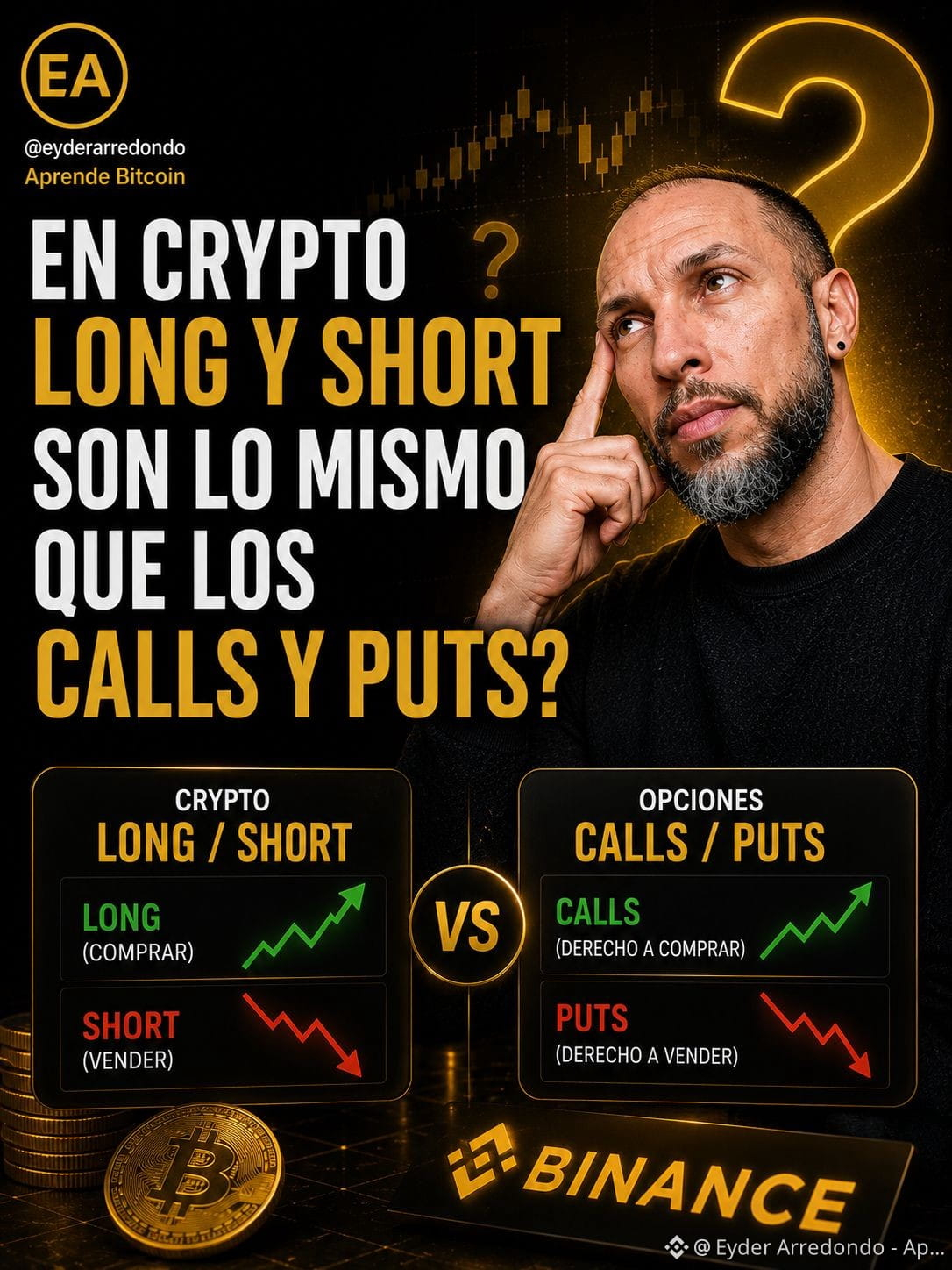
🚀 Are Long and Short the same as Calls and Puts?
If you come from the stock market like I do, you’ve probably asked yourself this same question.
The short answer is: they’re similar, but they’re not the same.
📈 Long = Taking a position expecting the price to go up.
📉 Short = Taking a position expecting the price to go down.
So far, it looks a lot like:
✅ Call → bullish expectation.
✅ Put → bearish expectation.
But there’s an important difference.
With options, you buy a contract that gives you a right, and its price also depends on factors like time and volatility.
In cryptocurrency futures, your profit or loss depends mainly on the movement of the asset’s price. Plus, you can use leverage, which increases both the potential profit and the risk of loss.
💡 Understanding this difference can help you choose the right instrument for your strategy and your level of experience.
I’m also learning this world of Bitcoin futures, so follow me because I’ll share every step so we can learn together.
👇 Tell me in the comments: Have you ever traded Long or Short, or do you come from the options world like I do?
#bitcoin #AprendeBitcoin #BitcoinParaPrincipiantes $BTC
🚀 Are Long and Short the same as Calls and Puts?
If you come from the stock market like I do, you’ve probably asked yourself this same question.
The short answer is: they’re similar, but they’re not the same.
📈 Long = Taking a position expecting the price to go up.
📉 Short = Taking a position expecting the price to go down.
So far, it looks a lot like:
✅ Call → bullish expectation.
✅ Put → bearish expectation.
But there’s an important difference.
With options, you buy a contract that gives you a right, and its price also depends on factors like time and volatility.
In cryptocurrency futures, your profit or loss depends mainly on the movement of the asset’s price. Plus, you can use leverage, which increases both the potential profit and the risk of loss.
💡 Understanding this difference can help you choose the right instrument for your strategy and your level of experience.
I’m also learning this world of Bitcoin futures, so follow me because I’ll share every step so we can learn together.
👇 Tell me in the comments: Have you ever traded Long or Short, or do you come from the options world like I do?
#bitcoin #AprendeBitcoin #BitcoinParaPrincipiantes $BTC
If you come from the stock market like I do, you’ve probably asked yourself this same question.
The short answer is: they’re similar, but they’re not the same.
📈 Long = Taking a position expecting the price to go up.
📉 Short = Taking a position expecting the price to go down.
So far, it looks a lot like:
✅ Call → bullish expectation.
✅ Put → bearish expectation.
But there’s an important difference.
With options, you buy a contract that gives you a right, and its price also depends on factors like time and volatility.
In cryptocurrency futures, your profit or loss depends mainly on the movement of the asset’s price. Plus, you can use leverage, which increases both the potential profit and the risk of loss.
💡 Understanding this difference can help you choose the right instrument for your strategy and your level of experience.
I’m also learning this world of Bitcoin futures, so follow me because I’ll share every step so we can learn together.
👇 Tell me in the comments: Have you ever traded Long or Short, or do you come from the options world like I do?
#bitcoin #AprendeBitcoin #BitcoinParaPrincipiantes $BTC
85
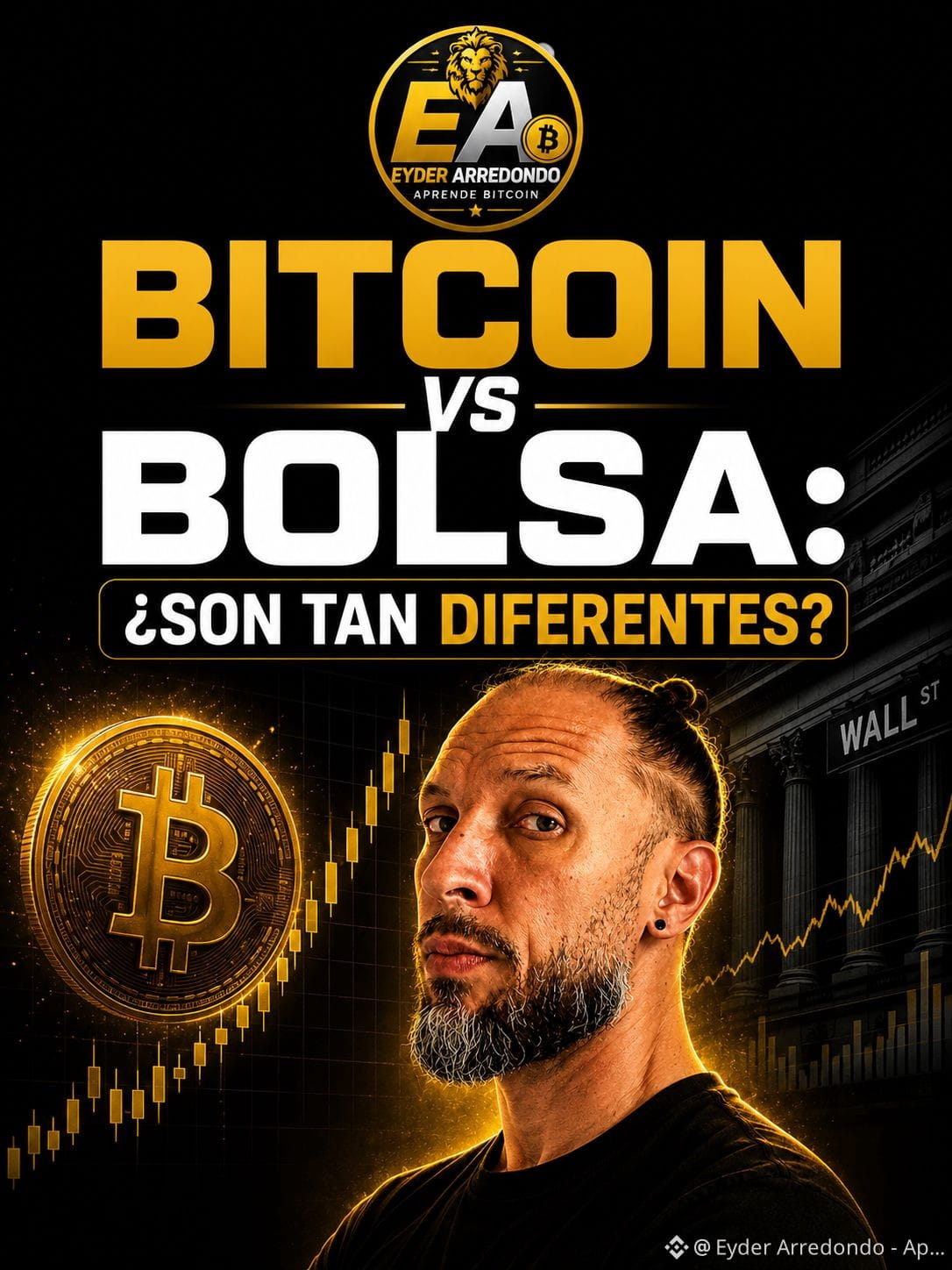
🌕 Bitcoin vs Stock Market: are they really that different?
Did you know that $BTC and stocks have more in common than it seems?
When I started learning about digital assets, I realized that many concepts that already exist in the stock market also show up in Bitcoin and other cryptocurrencies.
For example:
🟠 BITCOIN vs STOCKS
Bitcoin is an asset you can buy and sell, just like an individual stock such as Apple, Nvidia, or Microsoft.
📊 ETF vs ASSET BASKET
An ETF lets you gain exposure to multiple assets through a single instrument.
For example:
🔹 SPY → aims to track the S&P 500
🔹 QQQ → aims to track the Nasdaq-100
And in the crypto world, there are also products that let you get exposure to different assets without having to buy each one separately.
📈 What do they have in common?
✅ Supply and demand
✅ Price and volatility
✅ Charts and candlesticks
✅ Volume
✅ Trends
✅ Liquidity
✅ Risk management
✅ Diversification
⚠️ But they are NOT the same.
Bitcoin and cryptocurrencies have different characteristics and risks than stocks and ETFs.
That’s why understanding how one market works doesn’t automatically mean you know how to trade the other.
💡 For me, what’s interesting is learning the principles they share and then understanding the differences.
I learn it, put it into practice, and explain it to you in the simplest way.
👇 Which one do you prefer?
🟠 Bitcoin
📈 Stocks
📊 ETF
🤝 A combination of all of them
#bitcoin #bitcoinparaprincipiantes #AprendeBitcoin
🌕 Bitcoin vs Stock Market: are they really that different?
Did you know that $BTC and stocks have more in common than it seems?
When I started learning about digital assets, I realized that many concepts that already exist in the stock market also show up in Bitcoin and other cryptocurrencies.
For example:
🟠 BITCOIN vs STOCKS
Bitcoin is an asset you can buy and sell, just like an individual stock such as Apple, Nvidia, or Microsoft.
📊 ETF vs ASSET BASKET
An ETF lets you gain exposure to multiple assets through a single instrument.
For example:
🔹 SPY → aims to track the S&P 500
🔹 QQQ → aims to track the Nasdaq-100
And in the crypto world, there are also products that let you get exposure to different assets without having to buy each one separately.
📈 What do they have in common?
✅ Supply and demand
✅ Price and volatility
✅ Charts and candlesticks
✅ Volume
✅ Trends
✅ Liquidity
✅ Risk management
✅ Diversification
⚠️ But they are NOT the same.
Bitcoin and cryptocurrencies have different characteristics and risks than stocks and ETFs.
That’s why understanding how one market works doesn’t automatically mean you know how to trade the other.
💡 For me, what’s interesting is learning the principles they share and then understanding the differences.
I learn it, put it into practice, and explain it to you in the simplest way.
👇 Which one do you prefer?
🟠 Bitcoin
📈 Stocks
📊 ETF
🤝 A combination of all of them
#bitcoin #bitcoinparaprincipiantes #AprendeBitcoin
Did you know that $BTC and stocks have more in common than it seems?
When I started learning about digital assets, I realized that many concepts that already exist in the stock market also show up in Bitcoin and other cryptocurrencies.
For example:
🟠 BITCOIN vs STOCKS
Bitcoin is an asset you can buy and sell, just like an individual stock such as Apple, Nvidia, or Microsoft.
📊 ETF vs ASSET BASKET
An ETF lets you gain exposure to multiple assets through a single instrument.
For example:
🔹 SPY → aims to track the S&P 500
🔹 QQQ → aims to track the Nasdaq-100
And in the crypto world, there are also products that let you get exposure to different assets without having to buy each one separately.
📈 What do they have in common?
✅ Supply and demand
✅ Price and volatility
✅ Charts and candlesticks
✅ Volume
✅ Trends
✅ Liquidity
✅ Risk management
✅ Diversification
⚠️ But they are NOT the same.
Bitcoin and cryptocurrencies have different characteristics and risks than stocks and ETFs.
That’s why understanding how one market works doesn’t automatically mean you know how to trade the other.
💡 For me, what’s interesting is learning the principles they share and then understanding the differences.
I learn it, put it into practice, and explain it to you in the simplest way.
👇 Which one do you prefer?
🟠 Bitcoin
📈 Stocks
📊 ETF
🤝 A combination of all of them
#bitcoin #bitcoinparaprincipiantes #AprendeBitcoin
98
·
--
Bullish
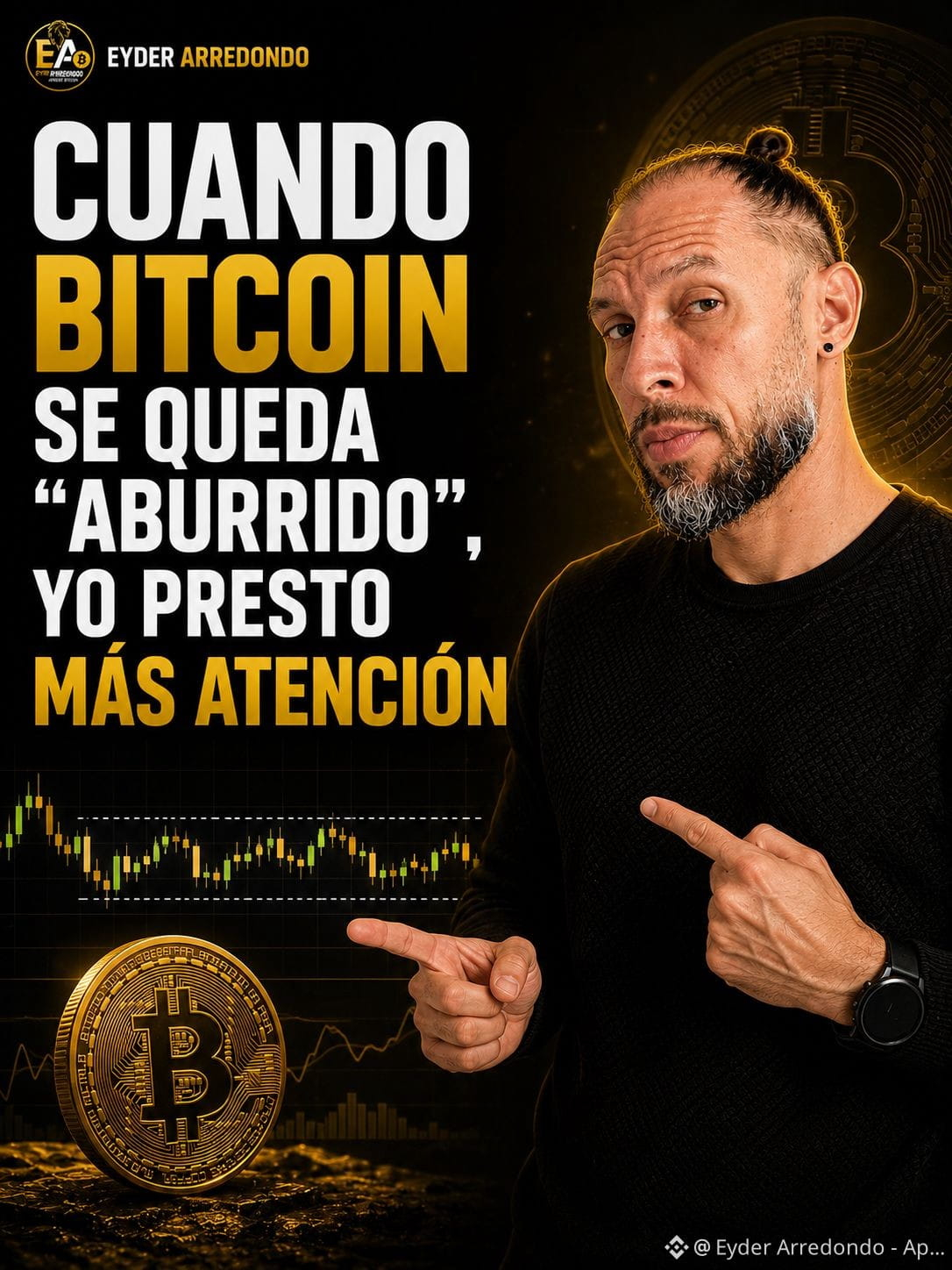
WHEN $BTC GETS “BORED,” I PAY MORE ATTENTION
Something I’ve started noticing while studying Bitcoin behavior is this:
📊 After periods of sideways movement, an important move often comes.
And here is a tool I like to use to analyze those moments:
✅️ Bollinger Bands.
But… what are they and why are they important? 👇
Bollinger Bands are made up of:
🔹 A moving average in the center
🔹 An upper band
🔹 A lower band
And they mainly help us visualize price volatility.
When Bitcoin has been moving within a range for a while and the bands start to tighten, we have what’s known as:
📉 Bollinger Band Squeeze (volatility is tightening)
Volatility is decreasing and the price is compressing.
But here’s where it gets interesting 👇
When the bands start opening up again or expanding, they tell us that volatility is increasing and that the price is making a move with more force.
In other words:
➡️ Tight bands = lower volatility
➡️ Bands opening up = higher volatility and movement
🚨 But there’s something VERY important:
Bollinger Bands do NOT, by themselves, tell us which direction Bitcoin will break.
The expansion can accompany:
🟢 A bullish move
or
🔴 A bearish move.
That’s why I don’t use them to try to guess the future.
I use them as a tool to tell me:
“Here volatility may be increasing. Pay attention.”
The idea isn’t to fill the chart with indicators.
It’s learning to interpret the context.
And something I’m learning with Bitcoin is that:
The moments when it seems like “nothing is happening” can be precisely the ones we should watch more closely.
First, the price compresses.
Then, volatility may increase.
And when the bands begin to expand, the market may be telling us that the move is already gaining strength. 🟠
#bitcoin #AprendeBitcoin
WHEN $BTC GETS “BORED,” I PAY MORE ATTENTION
Something I’ve started noticing while studying Bitcoin behavior is this:
📊 After periods of sideways movement, an important move often comes.
And here is a tool I like to use to analyze those moments:
✅️ Bollinger Bands.
But… what are they and why are they important? 👇
Bollinger Bands are made up of:
🔹 A moving average in the center
🔹 An upper band
🔹 A lower band
And they mainly help us visualize price volatility.
When Bitcoin has been moving within a range for a while and the bands start to tighten, we have what’s known as:
📉 Bollinger Band Squeeze (volatility is tightening)
Volatility is decreasing and the price is compressing.
But here’s where it gets interesting 👇
When the bands start opening up again or expanding, they tell us that volatility is increasing and that the price is making a move with more force.
In other words:
➡️ Tight bands = lower volatility
➡️ Bands opening up = higher volatility and movement
🚨 But there’s something VERY important:
Bollinger Bands do NOT, by themselves, tell us which direction Bitcoin will break.
The expansion can accompany:
🟢 A bullish move
or
🔴 A bearish move.
That’s why I don’t use them to try to guess the future.
I use them as a tool to tell me:
“Here volatility may be increasing. Pay attention.”
The idea isn’t to fill the chart with indicators.
It’s learning to interpret the context.
And something I’m learning with Bitcoin is that:
The moments when it seems like “nothing is happening” can be precisely the ones we should watch more closely.
First, the price compresses.
Then, volatility may increase.
And when the bands begin to expand, the market may be telling us that the move is already gaining strength. 🟠
#bitcoin #AprendeBitcoin
Something I’ve started noticing while studying Bitcoin behavior is this:
📊 After periods of sideways movement, an important move often comes.
And here is a tool I like to use to analyze those moments:
✅️ Bollinger Bands.
But… what are they and why are they important? 👇
Bollinger Bands are made up of:
🔹 A moving average in the center
🔹 An upper band
🔹 A lower band
And they mainly help us visualize price volatility.
When Bitcoin has been moving within a range for a while and the bands start to tighten, we have what’s known as:
📉 Bollinger Band Squeeze (volatility is tightening)
Volatility is decreasing and the price is compressing.
But here’s where it gets interesting 👇
When the bands start opening up again or expanding, they tell us that volatility is increasing and that the price is making a move with more force.
In other words:
➡️ Tight bands = lower volatility
➡️ Bands opening up = higher volatility and movement
🚨 But there’s something VERY important:
Bollinger Bands do NOT, by themselves, tell us which direction Bitcoin will break.
The expansion can accompany:
🟢 A bullish move
or
🔴 A bearish move.
That’s why I don’t use them to try to guess the future.
I use them as a tool to tell me:
“Here volatility may be increasing. Pay attention.”
The idea isn’t to fill the chart with indicators.
It’s learning to interpret the context.
And something I’m learning with Bitcoin is that:
The moments when it seems like “nothing is happening” can be precisely the ones we should watch more closely.
First, the price compresses.
Then, volatility may increase.
And when the bands begin to expand, the market may be telling us that the move is already gaining strength. 🟠
#bitcoin #AprendeBitcoin
2
376
📊 DO YOU SEE THIS INDICATOR BELOW THE CHART OF $BTC AND YOU DON’T KNOW WHAT IT MEANS?
It’s called VOLUME, and understanding it can help you a lot to read a chart.
In simple words:
👉 Volume shows how much Bitcoin was being traded during a given period.
For example:
📈 Bitcoin goes up + volume increases
➡️ There’s more activity happening alongside that move.
📉 Bitcoin goes down + volume increases
➡️ There’s also strong participation in that move.
But pay attention 👀:
A high volume DOES NOT automatically mean Bitcoin will go up.
What matters is learning to watch the price together with the volume.
When I first started looking at charts, I also saw those bars under the price without understanding what they were telling me.
Now I know they’re not there for decoration. 😅
If you’re learning to read Bitcoin charts, save this post, because volume will be one of the tools you’ll find the most.
👇 Did you already know what volume is for, or is it new to you?
#bitcoin #Binance #AprendeBitcoin
📊 DO YOU SEE THIS INDICATOR BELOW THE CHART OF $BTC AND YOU DON’T KNOW WHAT IT MEANS?
It’s called VOLUME, and understanding it can help you a lot to read a chart.
In simple words:
👉 Volume shows how much Bitcoin was being traded during a given period.
For example:
📈 Bitcoin goes up + volume increases
➡️ There’s more activity happening alongside that move.
📉 Bitcoin goes down + volume increases
➡️ There’s also strong participation in that move.
But pay attention 👀:
A high volume DOES NOT automatically mean Bitcoin will go up.
What matters is learning to watch the price together with the volume.
When I first started looking at charts, I also saw those bars under the price without understanding what they were telling me.
Now I know they’re not there for decoration. 😅
If you’re learning to read Bitcoin charts, save this post, because volume will be one of the tools you’ll find the most.
👇 Did you already know what volume is for, or is it new to you?
#bitcoin #Binance #AprendeBitcoin
It’s called VOLUME, and understanding it can help you a lot to read a chart.
In simple words:
👉 Volume shows how much Bitcoin was being traded during a given period.
For example:
📈 Bitcoin goes up + volume increases
➡️ There’s more activity happening alongside that move.
📉 Bitcoin goes down + volume increases
➡️ There’s also strong participation in that move.
But pay attention 👀:
A high volume DOES NOT automatically mean Bitcoin will go up.
What matters is learning to watch the price together with the volume.
When I first started looking at charts, I also saw those bars under the price without understanding what they were telling me.
Now I know they’re not there for decoration. 😅
If you’re learning to read Bitcoin charts, save this post, because volume will be one of the tools you’ll find the most.
👇 Did you already know what volume is for, or is it new to you?
#bitcoin #Binance #AprendeBitcoin

318
Log in to explore more content
Join global crypto users on Binance Square
⚡️ Get latest and useful information about crypto.
💬 Trusted by the world’s largest crypto exchange.
👍 Discover real insights from verified creators.
Email / Phone number
Trending Topics
1
#ChainlinkLaunchesCCIP2WithEnterpriseVerification
109 views
72 Discussing
2
#GoldFallsTo$4144
1,870 views
64 Discussing
3
#QNTFallsOver40%FromMorningHigh
15,897 views
528 Discussing
4
#KospiFalls2.7%SamsungSKHynixDropOver5%
2,475 views
213 Discussing
5
#BitgetCEOConfirms$388MStolenInHack
963 views
28 Discussing
6
#BTCFallsBelow$83000
12,967 views
110 Discussing
7
#BitgetDetailsSecurityIncidentTimeline
11,196 views
362 Discussing
8
#BitcoinSpotETFs$2.39BWeeklyNetInflow
5,198 views
26 Discussing
9
#FedProposesPaymentStablecoinRules
40,188 views
723 Discussing
10
#ChinaMayLetAlibabaByteDanceBuyNvidiaChips
41,628 views
744 Discussing