
#xmr1
xmr1
223 views
18 Discussing
Hot
Latest

·
--
🚨BREAKING🚨
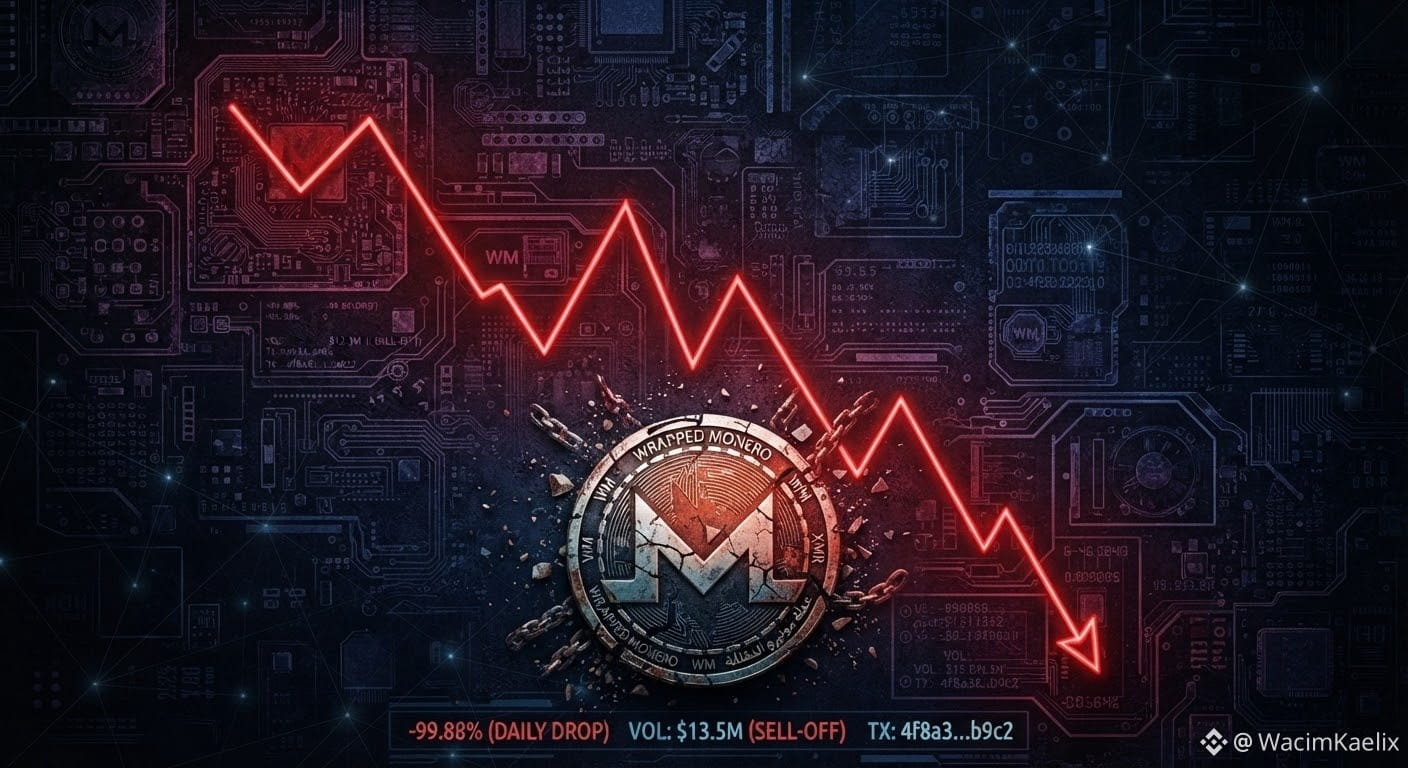
* 📉 XMR1 crashes over 99%, plunging from nearly $488 to around $1 in approximately 30 minutes.
* 💰 A wallet funded by the token's creator address received 5.2 million XMR1 and reportedly sold approximately $13.5 million worth.
* ⚠️ Around 4.83 million XMR1 tokens remained in the wallet after the reported sales.
* 🔍 It remains unclear whether the transfers were authorized or resulted from compromised credentials.
* 🧭 Important: XMR1 is a wrapped Monero token issued by Wagyu, not native Monero (XMR).
* 📊 Native Monero and Hyperliquid's XMR futures continued trading near $482.
* ⚠️ No confirmed connection has been established between the incident and Wagyu's previously disclosed data leak.
$XMR
{future}(XMRUSDT)
#XMR #XMR1
🚨BREAKING🚨
* 📉 XMR1 crashes over 99%, plunging from nearly $488 to around $1 in approximately 30 minutes.
* 💰 A wallet funded by the token's creator address received 5.2 million XMR1 and reportedly sold approximately $13.5 million worth.
* ⚠️ Around 4.83 million XMR1 tokens remained in the wallet after the reported sales.
* 🔍 It remains unclear whether the transfers were authorized or resulted from compromised credentials.
* 🧭 Important: XMR1 is a wrapped Monero token issued by Wagyu, not native Monero (XMR).
* 📊 Native Monero and Hyperliquid's XMR futures continued trading near $482.
* ⚠️ No confirmed connection has been established between the incident and Wagyu's previously disclosed data leak.
$XMR
#XMR #XMR1
1
193
·
--
🚨 $XMR1 COLLAPSES FROM $500 TO $1 AFTER A SEVERE SERVER COMPROMISE! 📉
The recent $XMR1 collapse wiping value from $500 down to $1 exposes the fragile underbelly of wrapped assets. When administrative credentials sit on a single rented server at a third-party host, a single security breach can annihilate millions in minutes on a major perpetuals venue. 📊
PerpetualCow has promised user reimbursements following the $13.5 million liquidation cascade, but the timeline remains entirely dark. This brutal event serves as a masterclass in custodial risk, proving that trust assumptions in wrapped bridges often carry catastrophic hidden costs. 💡
💬 Are you auditing the structural risks of your wrapped holdings before deploying capital, or trusting convenience over code? 👇
⚠️ Not financial advice. Always manage your risk. 🛡️
🏷️ #XMR1 #Monero #CryptoSecurity #DeFi
🦈 🛡️

14

·
--
🔓 Wagyu pledges refunds after XMR1 crash, blames hack at Icelandic web host
Wagyu operator PerpetualCow said the key for the account that issued wrapped Monero token XMR1 sat on a server rented from Icelandic host 1984 ehf, which was just breached. 1984 and Iceland's CERT-IS confirmed a serious attack and said all services were suspended. Bitquery found the receiving wallet sold XMR1 worth $13.5 million, crashing it from about $500 to $1 on Hyperliquid. The operator promised to reimburse those who lost money but gave no payout timeline.
⭐ The episode highlights the centralized risks behind wrapped tokens, where one leaked key can wipe out a market.
#XMR1 #Monero #Hyperliquid #CryptoSecurity

137

🚨 $XMR1 COLLAPSES 99% IN MINUTES AS ISSUER LINKED WALLET DUMPS MASSIVE LIQUIDITY! 💥
Wrapped tokens carry a hidden architectural vulnerability that catches even seasoned market participants off guard. When an issuer-linked wallet suddenly unloads millions onto an order book on a major exchange, the exit liquidity vanishes instantly, sending price plummeting from $488 down to $1 in a matter of minutes. 📊
Native assets remain completely decoupled from these bridge and wrapper failures, proving that synthetic exposure always carries counterparty risk. If the issuer holds the redemption keys, you are trusting a single entity with your entire capital preservation. 💡
Are you sticking strictly to native spot assets or taking synthetic risks for yield? 🤔
⚠️ Not financial advice. Always manage your risk. 🛡️
🏷️ #XMR1 #Monero #CryptoSecurity #RiskManagement #Trading
🦈 ⚡
6

·
--
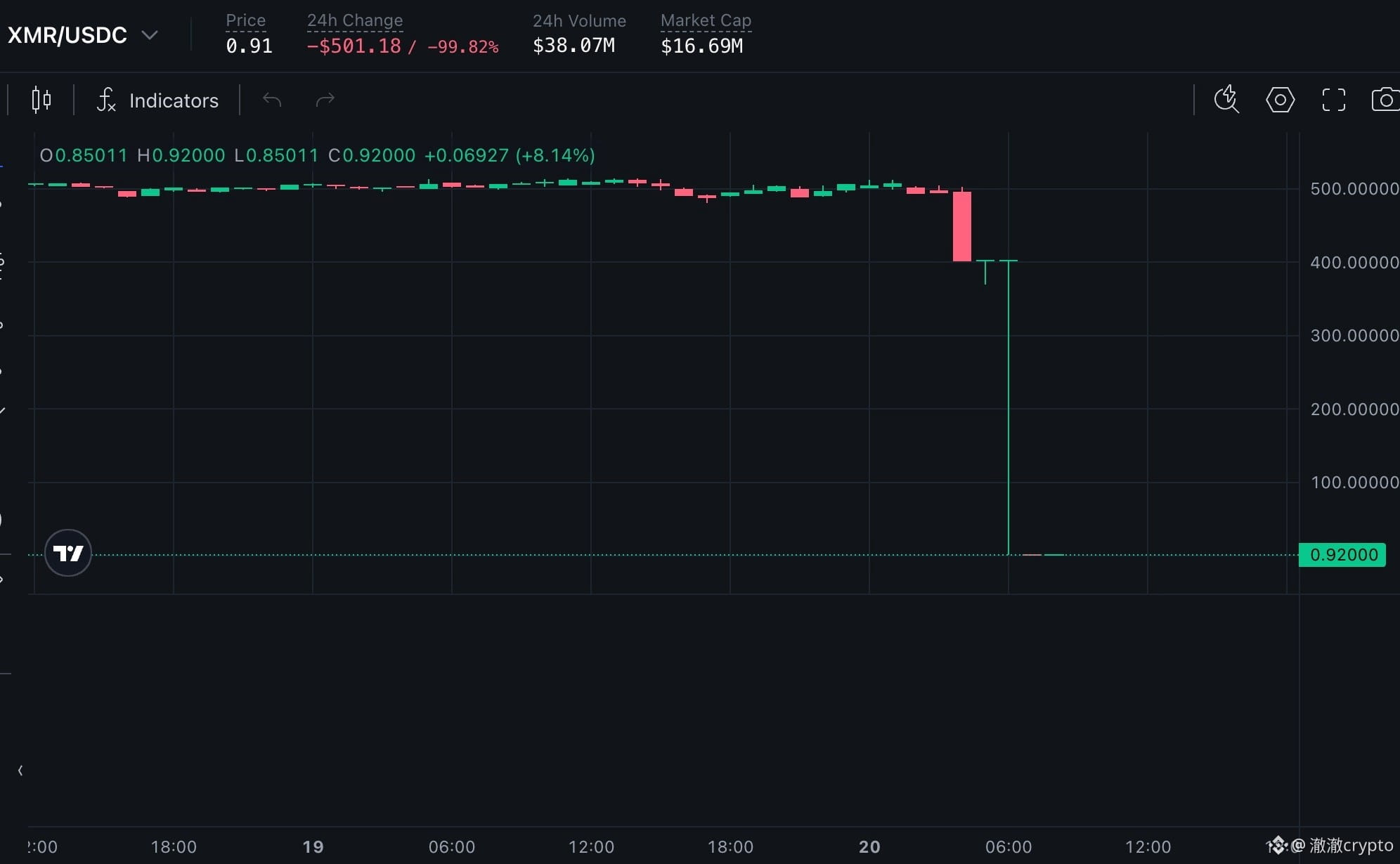
8 hours ago, XMR1 plunged from $494 to $0.91. Now its founder has spoken: the deployment key leaked from an old server that had been deleted.
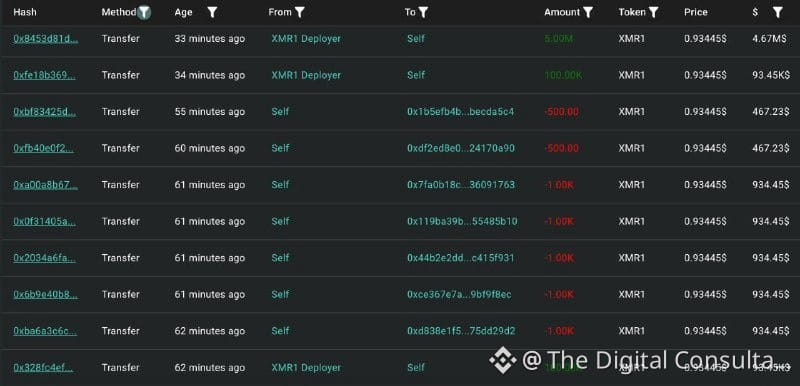
The attacker transferred 5,200,000 XMR1 from the deployer’s wallet, then dumped it over 35 minutes to cash out $13.22 million in USDC and buy 7,467 ETH.
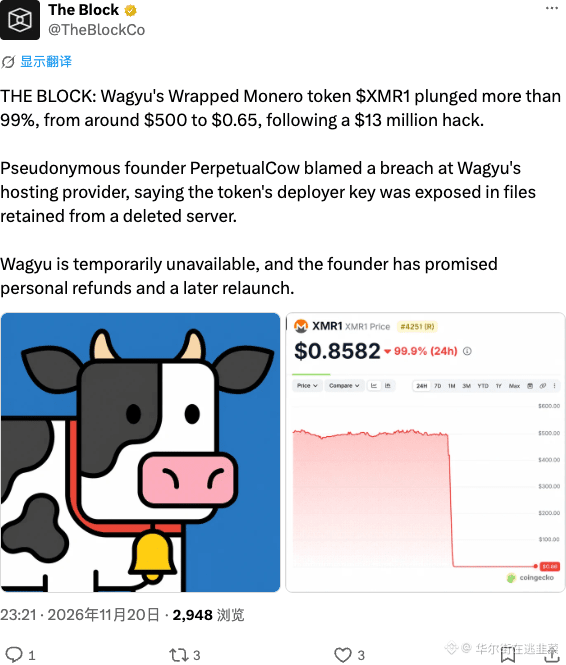
Founder PerpetualCow posted, accepting responsibility: he’ll personally reimburse everyone who lost money. Wagyu will suspend service for now and relaunch later, but gave no timeline.
At least the claim that it was “stolen” checks out against on-chain records. The deployer’s wallet still holds 13.4 million XMR1, untouched, while Monero itself (XMR) fell only about 5.9%.
But he says the key leaked after hosting provider 1984.hosting was hacked. Icelandic media only confirmed that 1984 went offline that day due to a cyberattack; there’s no hard proof that this is how the key was lost.
First, let’s see whether the compensation actually materializes. Then we can see whether 1984 accepts the blame. If neither side does anything, we can assume those words meant nothing.
Do you believe he can really reimburse everyone out of his own pocket, or do you think this is just a way to buy time?
$BTC $ETH $SOL
#XMR1 #Wagyu
871

·
--
Bearish
🚨 XMR1 plunged from nearly US$500 to around US$1 in half an hour.
A 99% drop.
A wallet received 5.2 million XMR1 and sold around 364,000, converting approximately US$13.5 million into ETH. According to CoinDesk's analysis, around 4.8 million tokens were still in the wallet.
Could it have been a hack? That's the suspicion—but there's still no confirmation. And note: XMR1 is a token linked to Monero via Wagyu. Native XMR did not experience this drop.
$XMR $ETH #XMR1

2.5k

·
--
At 1 a.m., something went wrong on Hyperliquid again. Someone minted 5.2 million wrapped Monero tokens, XMR1, with a nominal value of $2.5 billion. They only managed to sell 283,000 at an average price of $47, pocketing 13.34 million USDC. The price plunged from $494 to around $1 in 35 minutes—a 99.8% drop.
The on-chain details are interesting: the attackers moved the USDC back on-chain, then turned around and bought 7,348 ETH worth $12.9 million. They converted the stolen funds straight into a major coin—they didn’t want to spend another second in an altcoin.
The problem was the Wagyu cross-chain bridge. XMR1 is a wrapped token it operates on Hyperliquid. Once its deployment wallet was compromised, the entire wrapping system became an ATM. A nominal market cap of $2.5 billion sounds impressive, but the order-book depth is what represents real money. They could only sell at an average of $47, making the lack of liquidity crystal clear.
Meanwhile, AI hardware stocks got hammered across the board at the U.S. market open. The Philadelphia Semiconductor Index fell 3%, SOXL dropped 9.21%, and AMD, SanDisk, and Arm all fell 4–5%. Risk appetite continued to shrink, with BTC holding around 61K.
A bridge is a single point of failure, and the market cap of a wrapped token is an illusion. Before you trade these kinds of assets, think this through: when things go wrong, how far back in line are you?
NFA DYOR
#XMR1 #Hyperliquid #比特币 #美股 #SecurityIncident
396

·
--
Wagyu's XMR1 token plunged 99% after a hacker stole $13 million. The founder admitted it was caused by a leaked deployment key and promised refunds and a relaunch. They threw away the key right after deployment—honestly, that move was worse than the hacker's. Refunds? Just an empty promise.
#Wagyu #XMR1 #SmartContract #Meme
#Wagyu #XMR1 #SmartContract #Meme
34

·
--
【Suspected hack! Hyperliquid’s “Monero” token XMR1 plunged from around $494 to around $1 in about 35 minutes, down over 99%】
On November 20, the deployer wallet of XMR1, a token pegged to Monero on Hyperliquid, transferred a large batch of tokens to a new address. The recipient immediately dumped them into the order book for about $13.3 million in USDC, then bought around 7,467 tokens and bridged them to Ethereum via $ETH . The deployer’s private key may have been compromised. The security of these wrapped tokens depends entirely on the deployer’s private key; native Monero is unaffected.
#Hyperliquid #XMR1 #Security Incident
22

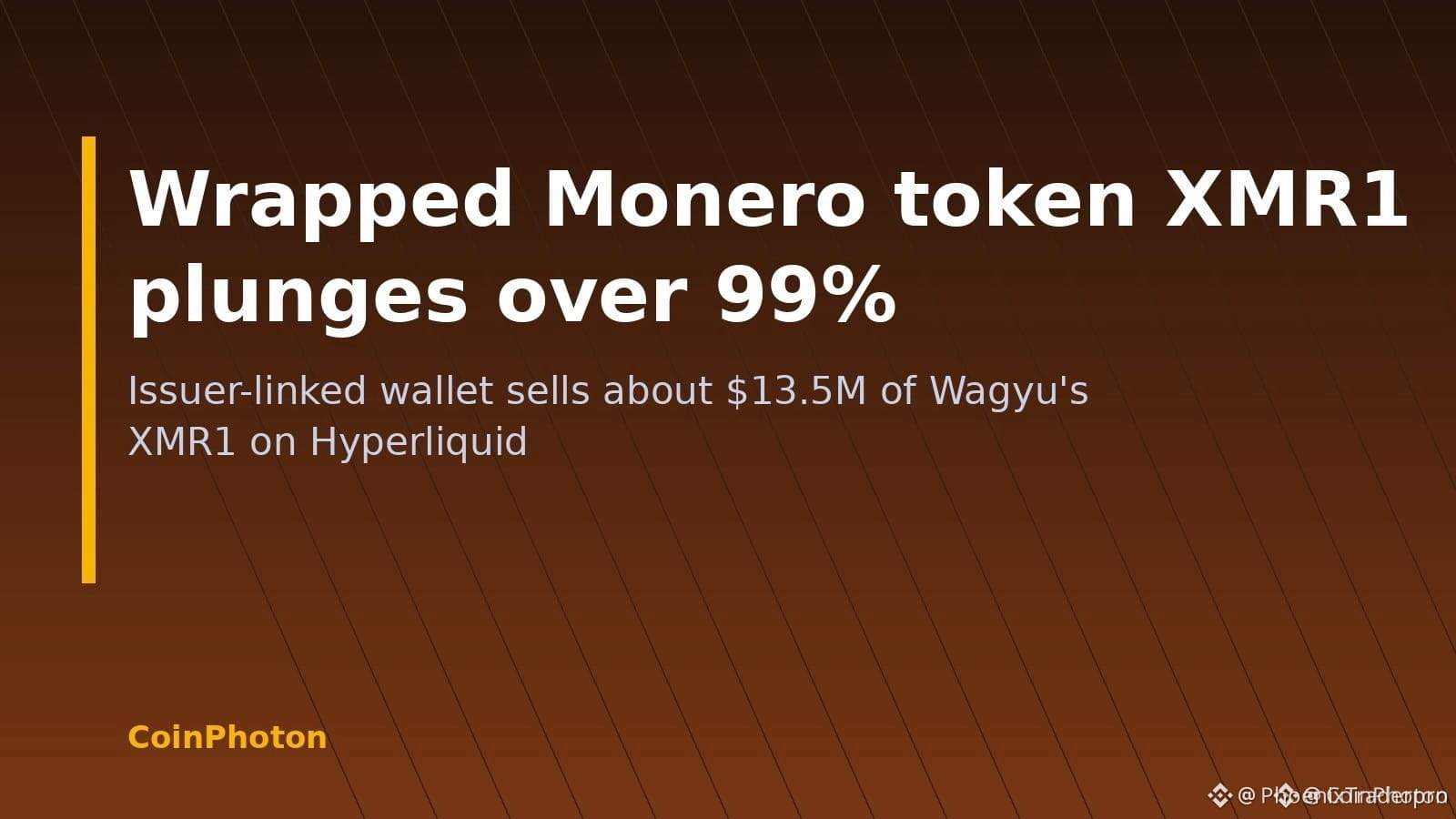
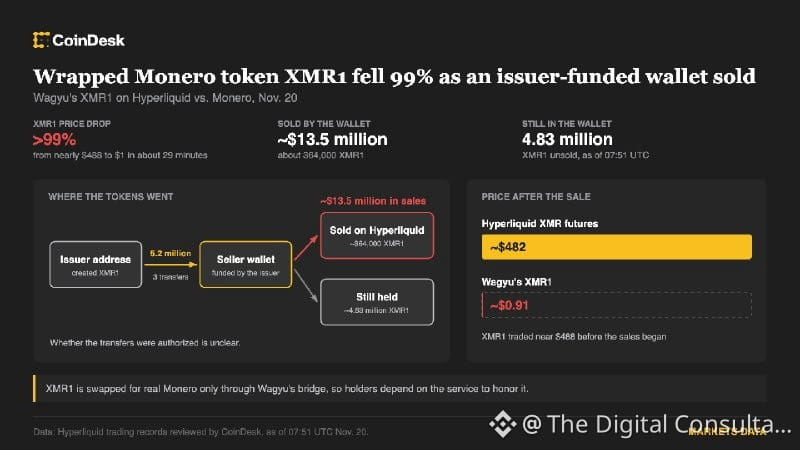
Wrapped Monero token XMR1 crashes 99% as issuer wallet sells $13.5 million
- XMR1 (Wrapped Monero) token drops 99%
- Wallet linked to the issuer sells $13.5 million
- Event is separate from Monero and Hyperliquid’s XMR futures market
#BinanceSquare #CryptoNews #XMR
$xmr1 #xmr1 $xmr
#vlikevn Titanbot
Source: CoinDesk
- XMR1 (Wrapped Monero) token drops 99%
- Wallet linked to the issuer sells $13.5 million
- Event is separate from Monero and Hyperliquid’s XMR futures market
#BinanceSquare #CryptoNews #XMR
$xmr1 #xmr1 $xmr
#vlikevn Titanbot
Source: CoinDesk
9

📈 Holding XMR1 does not mean holding Monero itself, and selling a wallet linked to the issuer for $13.5 million wiped out 99% of its value. $HYPE
The reason is that XMR1 is a Wagyu-issued token that tracks the price of Monero, not the original currency. So holders might think they are protected, while the decision here is in the hands of whoever owns the wallet linked to the issuance.
The market is separate from Monero and from the XMR futures market on Hyperliquid, but the lesson is the same: check who issues the token and who controls its liquidity before relying on it.
Have you ever seen a similar token collapse this way? What happened afterward?
#XMR1 #Monero
Tap BTC to trade
Content is for informational purposes only and is not financial advice.
Tap $HYPE to trade
$HYPE
Others have already gotten ahead of you and followed. Visit my profile and stay with those who read before the news goes viral.
28
·
--
🚨 Wagyu founder promises to refund $13 million after XMR1 hack
Wagyu’s wrapped Monero token, XMR1, crashed 99% after an attack in which the perpetrator sold $13 million worth of tokens. The project’s founder promised a full refund, but details have yet to be disclosed.
It seems decentralization means everyone is responsible, but one person returns the money. Still, if the reimbursement goes ahead, it would be a rare precedent in the world of DeFi.
#crime #взлом #XMR1
434

·
--
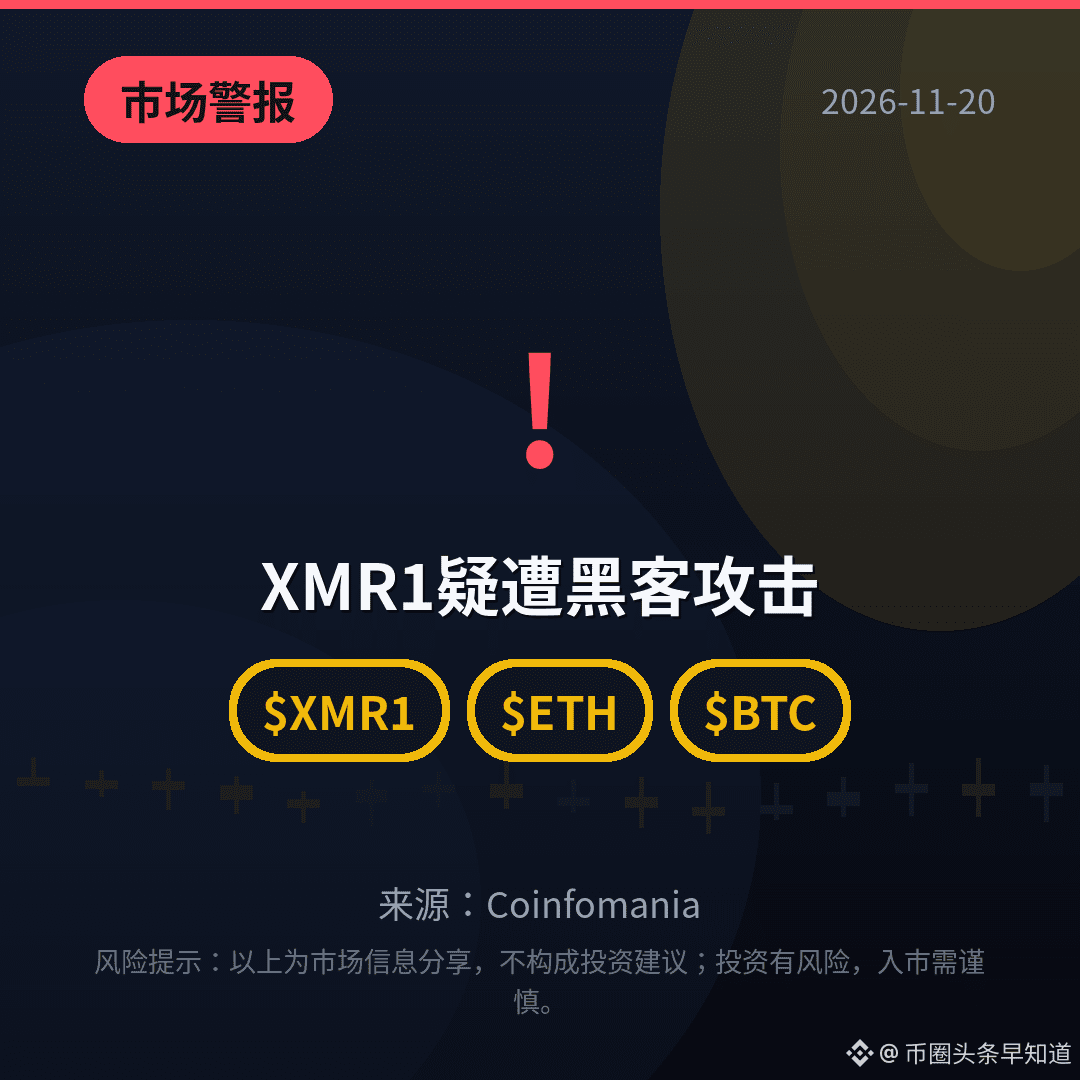
【Market Alert】XMR1 suspected of being hacked, 5.2 million tokens dumped
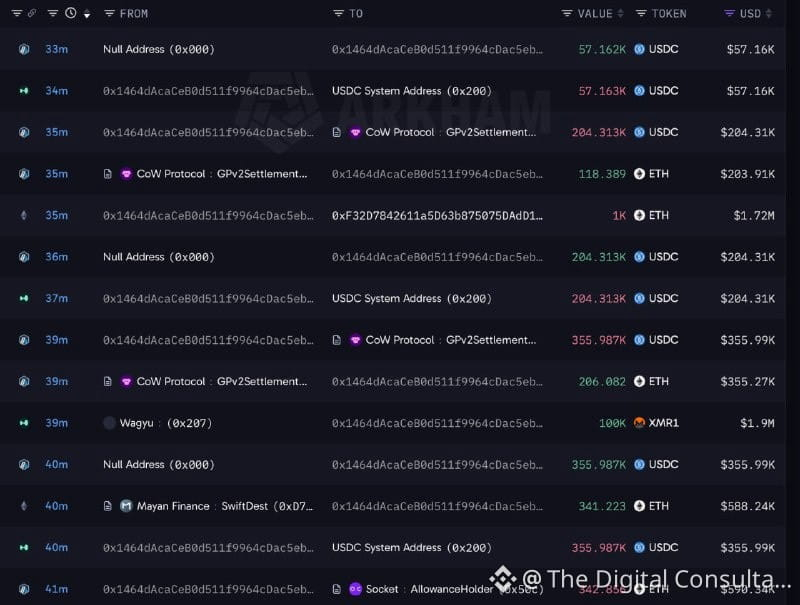
According to monitoring by Lookonchain, privacy coin XMR1 was allegedly hacked: the attacker transferred 5.2 million XMR1 and, after dumping them on Hyperliquid, used about $13.22 million USDC to buy 7,467 ETH. Is this bullish or bearish for XMR1? Let’s discuss in the comments
$XMR1 $ETH $BTC
#币安广场 #XMR1 #Hacker
(Source: Coinfomania)
⚠️Risk warning: The above is shared for market information only and does not constitute investment advice. Investing involves risks; exercise caution when entering the market.
14
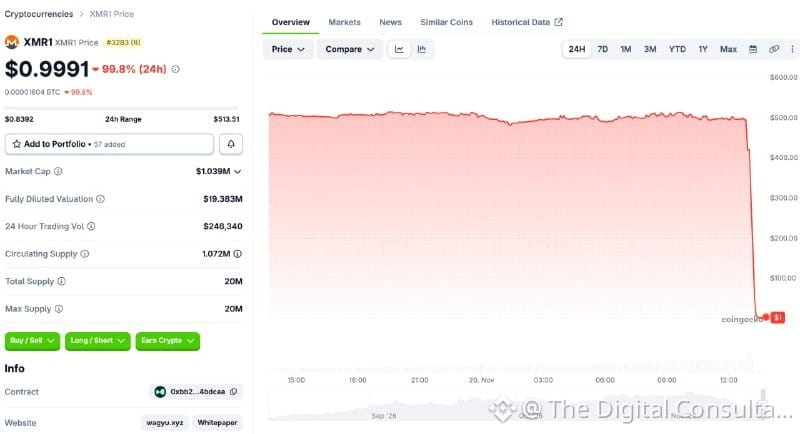
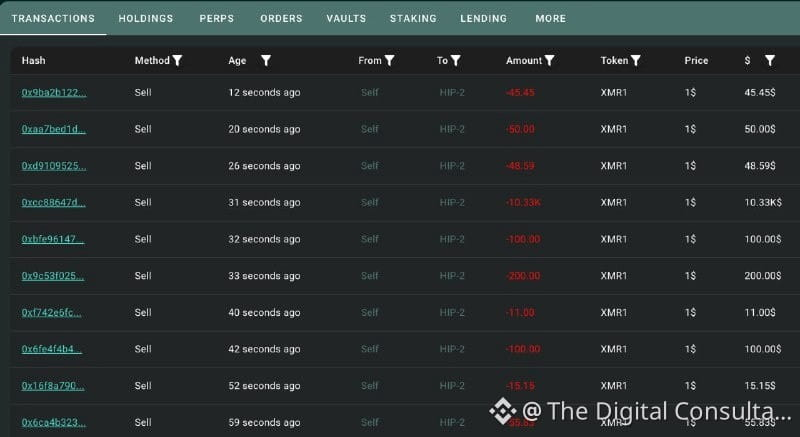
One wallet received 5.2 million XMR1, then sold it on Hyperliquid and converted the proceeds into ETH. $ETH
Was XMR1 hacked? Nothing is confirmed so far. What we know is that wallet 0x1464 received the amount and sold it, then used the proceeds to buy ETH.
So far, it has spent 13.22 million USDC to buy 7,467 ETH. This could indicate a coordinated sale by a single party, but it neither proves a hack nor clears the project.
What matters to you as a follower: watch for similar transactions from other wallets. That will show whether this is an isolated case or a broader pattern.
If you held XMR1 and saw a single wallet selling this much, what would you do?
#XMR1 #Hyperliquid
This content is for informational purposes only and is not financial advice.
Click $ETH to trade
$ETH $HYPE $XMR1
Others got ahead of you and followed. Visit my profile and stay with those who read before the news spreads.
23

Article
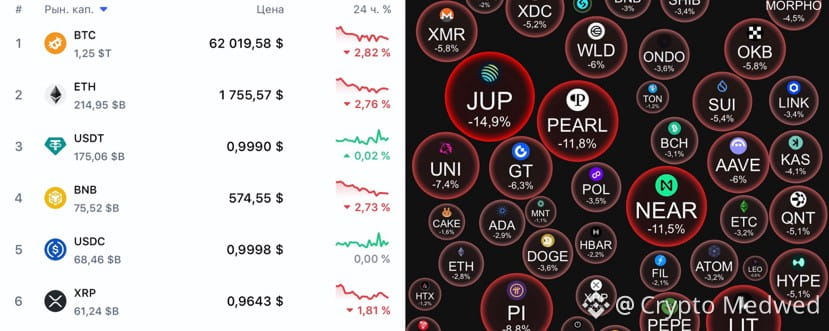
The market is stormy, but we're holding on and looking for opportunities!📉 Bitcoin fell to around $61,240, its lowest level since early July. U.S. spot BTC ETFs lost $582.3 million in the last session, of which $541.1 million came from BlackRock's fund.
💰 The Ethereum Glamsterdam upgrade is no longer expected in December. Developers need more time to ensure changes to gas costs don't break some existing smart contracts. An exact launch date has not yet been set.
The market is stormy, but we're holding on and looking for opportunities!
📉 Bitcoin fell to around $61,240, its lowest level since early July. U.S. spot BTC ETFs lost $582.3 million in the last session, of which $541.1 million came from BlackRock's fund.
💰 The Ethereum Glamsterdam upgrade is no longer expected in December. Developers need more time to ensure changes to gas costs don't break some existing smart contracts. An exact launch date has not yet been set.
💰 The Ethereum Glamsterdam upgrade is no longer expected in December. Developers need more time to ensure changes to gas costs don't break some existing smart contracts. An exact launch date has not yet been set.
179
Log in to explore more content
Join global crypto users on Binance Square
⚡️ Get latest and useful information about crypto.
💬 Trusted by the world’s largest crypto exchange.
👍 Discover real insights from verified creators.
Email / Phone number
Trending Topics
1
#CanBTCReboundAfterFallingBelow60K?
0 views
115 Discussing
2
#GlobalStocksFaceLongestLosingStreakSince2023
0 views
268 Discussing
3
#AnthropicPlungesTowardIPOPriceonDay2
0 views
43 Discussing
4
#GaoTengBitcoinETFListsOnHKEX
0 views
264 Discussing
5
#TradFiForBeginners
946,825 views
5,525 Discussing
6
#NvidiaBoardReportedlySplitOverHuang’sReturn
258,674 views
2,405 Discussing
7
#TetherBurns8BillionUSDTInPast20Days
0 views
101 Discussing
8
#BitcoinWalletSignatureFlawExploitableWithinSeconds
0 views
44 Discussing
9
#CanGTA6'sLaunchLiftTTWOShares?
207,868 views
1,711 Discussing
10
#HongKongProposesSFCLicensingForFourVirtualAssetServices
404 views
32 Discussing