

#tge
tge
4.5M views
2,978 Discussing
Hot
Latest

·
--
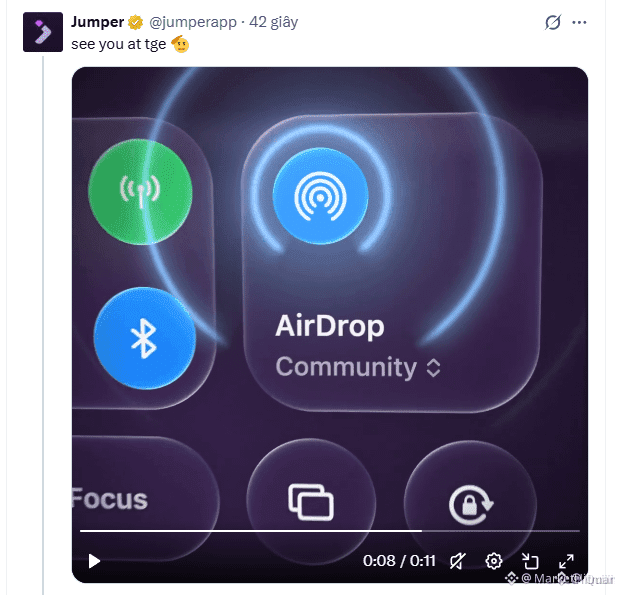
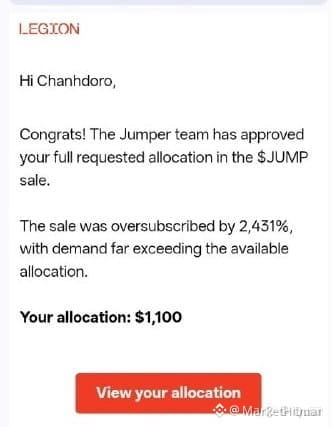
🚨 $JUMPER AIRDROP CONFIRMED FOR TGE WITH XP HOLDERS IN THE DRIVER SEAT! 💥
The latest update from the team effectively greenlights a token allocation at TGE, with momentum heavily favoring XP holders. 📊 Early distribution models mirror the presale structure, directly rewarding dedicated ecosystem participants over casual farmers.
Smart market operators are optimizing XP accumulation now, though setting realistic allocation expectations remains key as final snapshots approach. 💡 Priority positioning is established, but maintaining disciplined portfolio strategy separates steady gains from speculative noise. 💬 How are you structuring your strategy ahead of the token generation event? 👇
⚠️ Not financial advice. Always manage your risk. 🛡️
🏷️ #JUMPER #Airdrop #TGE #Crypto
⚡ 🎯
🚨 $JUMPER AIRDROP CONFIRMED FOR TGE WITH XP HOLDERS IN THE DRIVER SEAT! 💥
The latest update from the team effectively greenlights a token allocation at TGE, with momentum heavily favoring XP holders. 📊 Early distribution models mirror the presale structure, directly rewarding dedicated ecosystem participants over casual farmers.
Smart market operators are optimizing XP accumulation now, though setting realistic allocation expectations remains key as final snapshots approach. 💡 Priority positioning is established, but maintaining disciplined portfolio strategy separates steady gains from speculative noise. 💬 How are you structuring your strategy ahead of the token generation event? 👇
⚠️ Not financial advice. Always manage your risk. 🛡️
🏷️ #JUMPER #Airdrop #TGE #Crypto
⚡ 🎯
The latest update from the team effectively greenlights a token allocation at TGE, with momentum heavily favoring XP holders. 📊 Early distribution models mirror the presale structure, directly rewarding dedicated ecosystem participants over casual farmers.
Smart market operators are optimizing XP accumulation now, though setting realistic allocation expectations remains key as final snapshots approach. 💡 Priority positioning is established, but maintaining disciplined portfolio strategy separates steady gains from speculative noise. 💬 How are you structuring your strategy ahead of the token generation event? 👇
⚠️ Not financial advice. Always manage your risk. 🛡️
🏷️ #JUMPER #Airdrop #TGE #Crypto
⚡ 🎯
14

·
--
Partly True
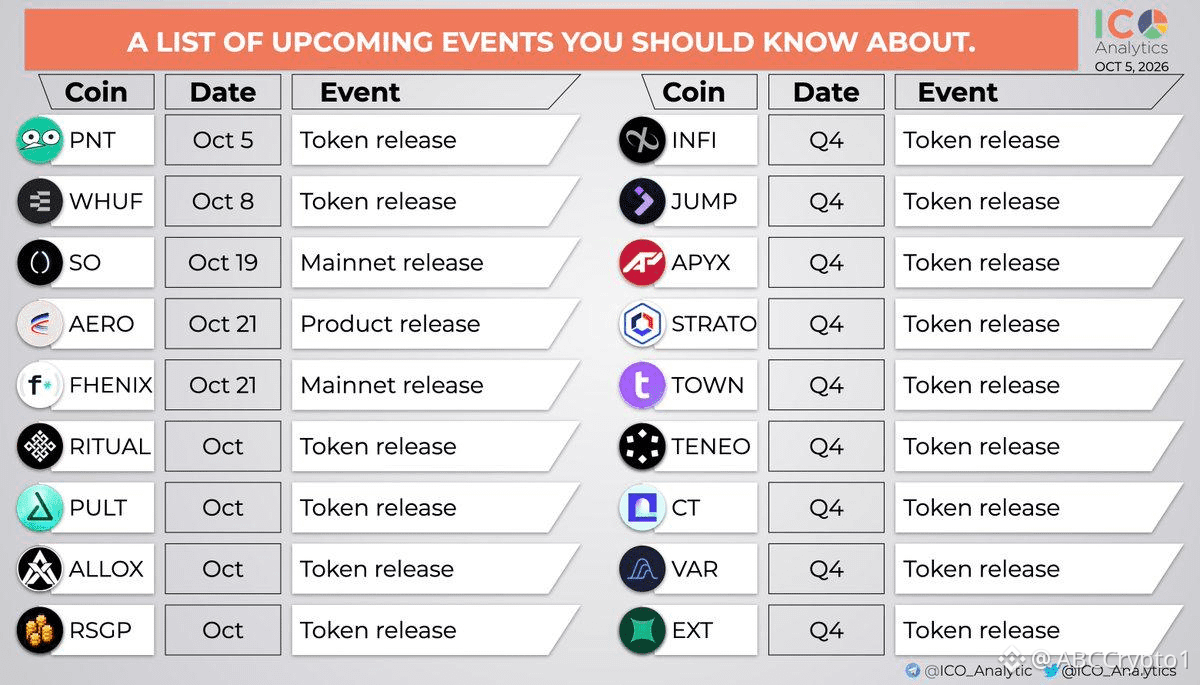
ℹ️ Major crypto events coming up — here’s what to watch.
Upcoming TGEs, ICOs, mainnet launches and product releases:
🔵 $PNT — TGE Oct 5
🔵 $WHUF — TGE Oct 8
🔵 $SO — mainnet Oct 19
🔵 $AERO — product release Oct 21
🔵 $FHENIX — mainnet Oct 21
🔵 $RITUAL — TGE October
🔵 $PULT — TGE October
🔵 $ALLOX — TGE October
🔵 $RSGP — TGE October
🔵 $INFI — TGE Q4
🔵 $JUMP — TGE Q4
🔵 $APYX — TGE Q4
🔵 $CT — TGE Q4
🔵 $STRATO — TGE Q4
🔵 $TOWN — TGE Q4
🔵 $TENEO — TGE Q4
🔵 $EXT — TGE Q4
🔵 $VAR — TGE Q4
⚠️ All dates are approximate and based on previous project announcements.
#crypto #tge #ICO #Web3 #BinanceSquare
ℹ️ Major crypto events coming up — here’s what to watch.
Upcoming TGEs, ICOs, mainnet launches and product releases:
🔵 $PNT — TGE Oct 5
🔵 $WHUF — TGE Oct 8
🔵 $SO — mainnet Oct 19
🔵 $AERO — product release Oct 21
🔵 $FHENIX — mainnet Oct 21
🔵 $RITUAL — TGE October
🔵 $PULT — TGE October
🔵 $ALLOX — TGE October
🔵 $RSGP — TGE October
🔵 $INFI — TGE Q4
🔵 $JUMP — TGE Q4
🔵 $APYX — TGE Q4
🔵 $CT — TGE Q4
🔵 $STRATO — TGE Q4
🔵 $TOWN — TGE Q4
🔵 $TENEO — TGE Q4
🔵 $EXT — TGE Q4
🔵 $VAR — TGE Q4
⚠️ All dates are approximate and based on previous project announcements.
#crypto #tge #ICO #Web3 #BinanceSquare
Upcoming TGEs, ICOs, mainnet launches and product releases:
🔵 $PNT — TGE Oct 5
🔵 $WHUF — TGE Oct 8
🔵 $SO — mainnet Oct 19
🔵 $AERO — product release Oct 21
🔵 $FHENIX — mainnet Oct 21
🔵 $RITUAL — TGE October
🔵 $PULT — TGE October
🔵 $ALLOX — TGE October
🔵 $RSGP — TGE October
🔵 $INFI — TGE Q4
🔵 $JUMP — TGE Q4
🔵 $APYX — TGE Q4
🔵 $CT — TGE Q4
🔵 $STRATO — TGE Q4
🔵 $TOWN — TGE Q4
🔵 $TENEO — TGE Q4
🔵 $EXT — TGE Q4
🔵 $VAR — TGE Q4
⚠️ All dates are approximate and based on previous project announcements.
#crypto #tge #ICO #Web3 #BinanceSquare
893

🚨 $PREDICT HINTS AT UPCOMING TGE AS INSTITUTIONAL SPECULATION BUILDS ⚡
🔍 Predict.fun has signaled its impending Token Generation Event with a cryptic announcement, sparking early liquidity positioning across prediction market protocols. 📊 When institutional infrastructure layers prepare to deploy native assets, smart money often tracks early volume behavior and initial distribution dynamics rather than chasing day-one volatility.
💡 Institutional capital treats TGE launches as structural liquidity events, watching for fair value pricing before committing long-term allocations. 💬 How are you positioning ahead of prediction market token rollouts this season? 👇
⚠️ Not financial advice. Always manage your risk. 🛡️
🏷️ #PREDICT #TGE #Crypto #PredictionMarkets
🎯 🦈
🚨 $PREDICT HINTS AT UPCOMING TGE AS INSTITUTIONAL SPECULATION BUILDS ⚡
🔍 Predict.fun has signaled its impending Token Generation Event with a cryptic announcement, sparking early liquidity positioning across prediction market protocols. 📊 When institutional infrastructure layers prepare to deploy native assets, smart money often tracks early volume behavior and initial distribution dynamics rather than chasing day-one volatility.
💡 Institutional capital treats TGE launches as structural liquidity events, watching for fair value pricing before committing long-term allocations. 💬 How are you positioning ahead of prediction market token rollouts this season? 👇
⚠️ Not financial advice. Always manage your risk. 🛡️
🏷️ #PREDICT #TGE #Crypto #PredictionMarkets
🎯 🦈
🔍 Predict.fun has signaled its impending Token Generation Event with a cryptic announcement, sparking early liquidity positioning across prediction market protocols. 📊 When institutional infrastructure layers prepare to deploy native assets, smart money often tracks early volume behavior and initial distribution dynamics rather than chasing day-one volatility.
💡 Institutional capital treats TGE launches as structural liquidity events, watching for fair value pricing before committing long-term allocations. 💬 How are you positioning ahead of prediction market token rollouts this season? 👇
⚠️ Not financial advice. Always manage your risk. 🛡️
🏷️ #PREDICT #TGE #Crypto #PredictionMarkets
🎯 🦈
111
·
--
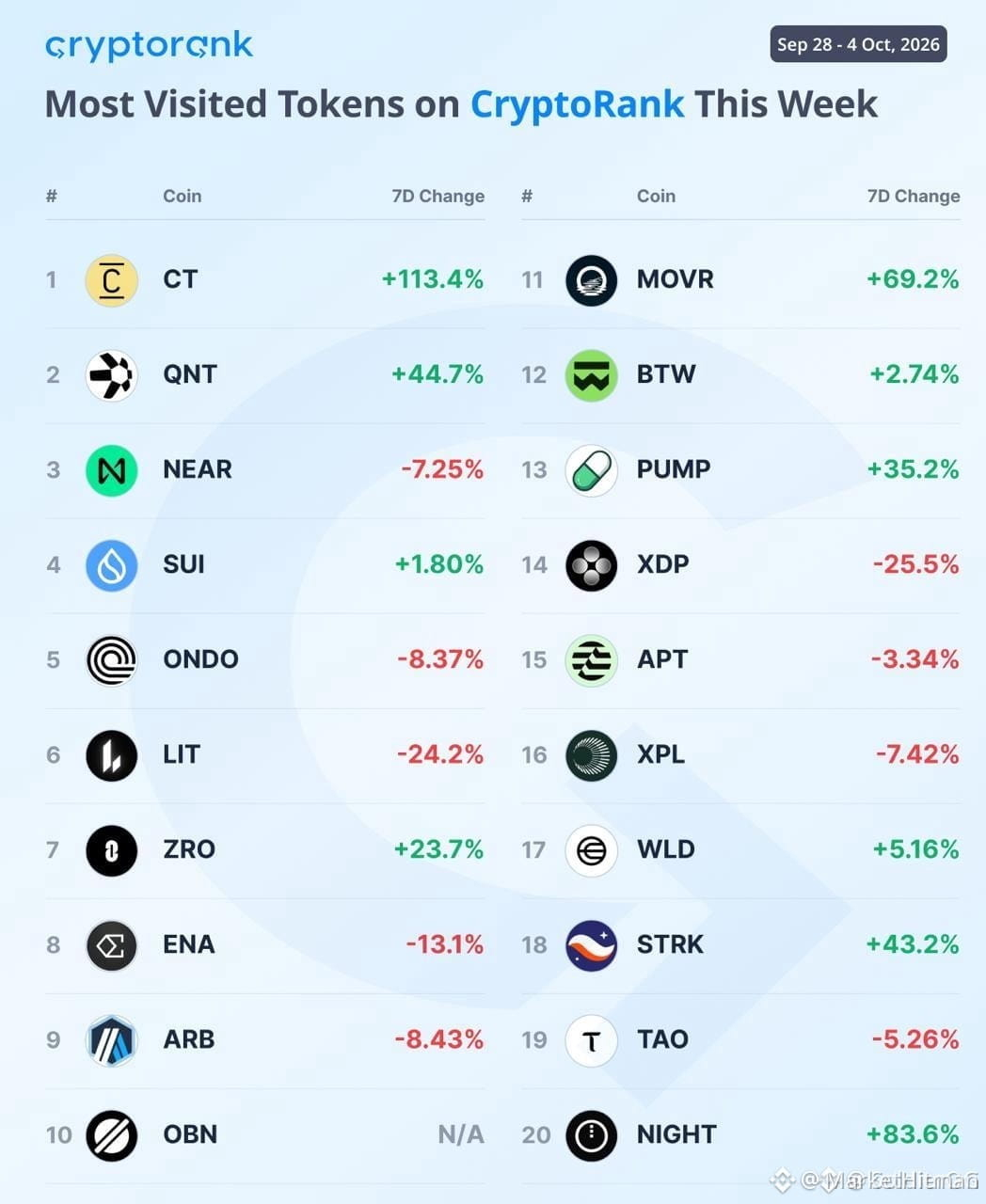
🚨 $CT EXPLODES 113% POST-TGE AS SEARCH VOLUME CROWNS A NEW ALTCOIN LEADER! ⚡
Post-token generation events are the ultimate test of organic market depth, and $CT just posted a massive 113% expansion straight out of the gate. 📊 Ranking at the very top of weekly search metrics signals intense market attention, but the real test is whether organic bidding can absorb initial market distributions.
Momentum traders are watching for a clean price discovery reclaim, while aggressive chasing near local highs carries severe retest risk. 🔍 Early liquidity surges frequently draw institutional participation, though sustained trends demand structural support. 💬 Is $CT building a multi-week continuation base or setting up a classic post-launch liquidity drain? 👇
⚠️ Not financial advice. Always manage your risk. 🛡️
🏷️ #CT #Altcoins #TGE #Crypto
⚡ 💎
🚨 $CT EXPLODES 113% POST-TGE AS SEARCH VOLUME CROWNS A NEW ALTCOIN LEADER! ⚡
Post-token generation events are the ultimate test of organic market depth, and $CT just posted a massive 113% expansion straight out of the gate. 📊 Ranking at the very top of weekly search metrics signals intense market attention, but the real test is whether organic bidding can absorb initial market distributions.
Momentum traders are watching for a clean price discovery reclaim, while aggressive chasing near local highs carries severe retest risk. 🔍 Early liquidity surges frequently draw institutional participation, though sustained trends demand structural support. 💬 Is $CT building a multi-week continuation base or setting up a classic post-launch liquidity drain? 👇
⚠️ Not financial advice. Always manage your risk. 🛡️
🏷️ #CT #Altcoins #TGE #Crypto
⚡ 💎
Post-token generation events are the ultimate test of organic market depth, and $CT just posted a massive 113% expansion straight out of the gate. 📊 Ranking at the very top of weekly search metrics signals intense market attention, but the real test is whether organic bidding can absorb initial market distributions.
Momentum traders are watching for a clean price discovery reclaim, while aggressive chasing near local highs carries severe retest risk. 🔍 Early liquidity surges frequently draw institutional participation, though sustained trends demand structural support. 💬 Is $CT building a multi-week continuation base or setting up a classic post-launch liquidity drain? 👇
⚠️ Not financial advice. Always manage your risk. 🛡️
🏷️ #CT #Altcoins #TGE #Crypto
⚡ 💎
31

·
--
Verified
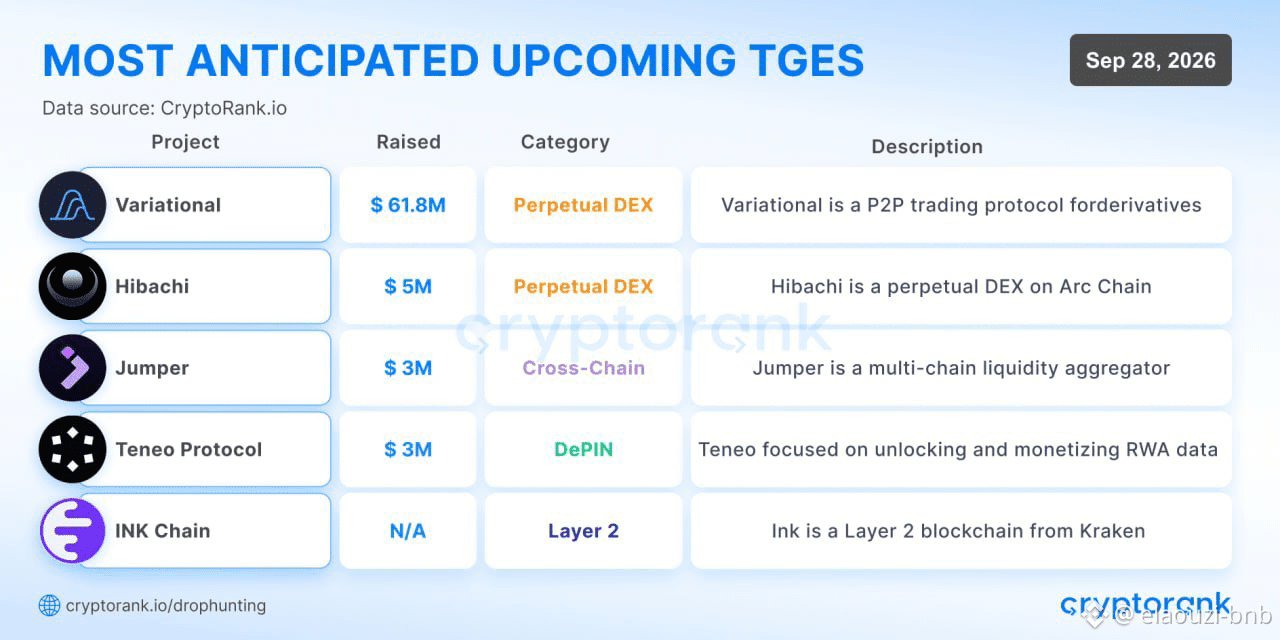
Anticipated TGE Events for Token Launches (During Q4 2026)
A number of prominent crypto projects and protocols are preparing to launch their official digital token offerings (TGE) and airdrop campaigns in the coming period
Top Projects and Expected Listings
Variational project: expected to launch its token in Q4 2026
Hibachi project: expected to launch its token in Q4 2026
Jumper project: the public sale begins on September 29, with expectations for a token launch in Q4 of 2026
Teneo project: expected to launch its token in Q4 2026
INK project: the existence of the token has been officially confirmed, with anticipation of the announcement of the specific date later
$JUP
{future}(JUPUSDT)
#tge
#elaouzi
#JUP
Anticipated TGE Events for Token Launches (During Q4 2026)
A number of prominent crypto projects and protocols are preparing to launch their official digital token offerings (TGE) and airdrop campaigns in the coming period
Top Projects and Expected Listings
Variational project: expected to launch its token in Q4 2026
Hibachi project: expected to launch its token in Q4 2026
Jumper project: the public sale begins on September 29, with expectations for a token launch in Q4 of 2026
Teneo project: expected to launch its token in Q4 2026
INK project: the existence of the token has been officially confirmed, with anticipation of the announcement of the specific date later
$JUP
#tge
#elaouzi
#JUP
A number of prominent crypto projects and protocols are preparing to launch their official digital token offerings (TGE) and airdrop campaigns in the coming period
Top Projects and Expected Listings
Variational project: expected to launch its token in Q4 2026
Hibachi project: expected to launch its token in Q4 2026
Jumper project: the public sale begins on September 29, with expectations for a token launch in Q4 of 2026
Teneo project: expected to launch its token in Q4 2026
INK project: the existence of the token has been officially confirmed, with anticipation of the announcement of the specific date later
$JUP
#tge
#elaouzi
#JUP
2
661

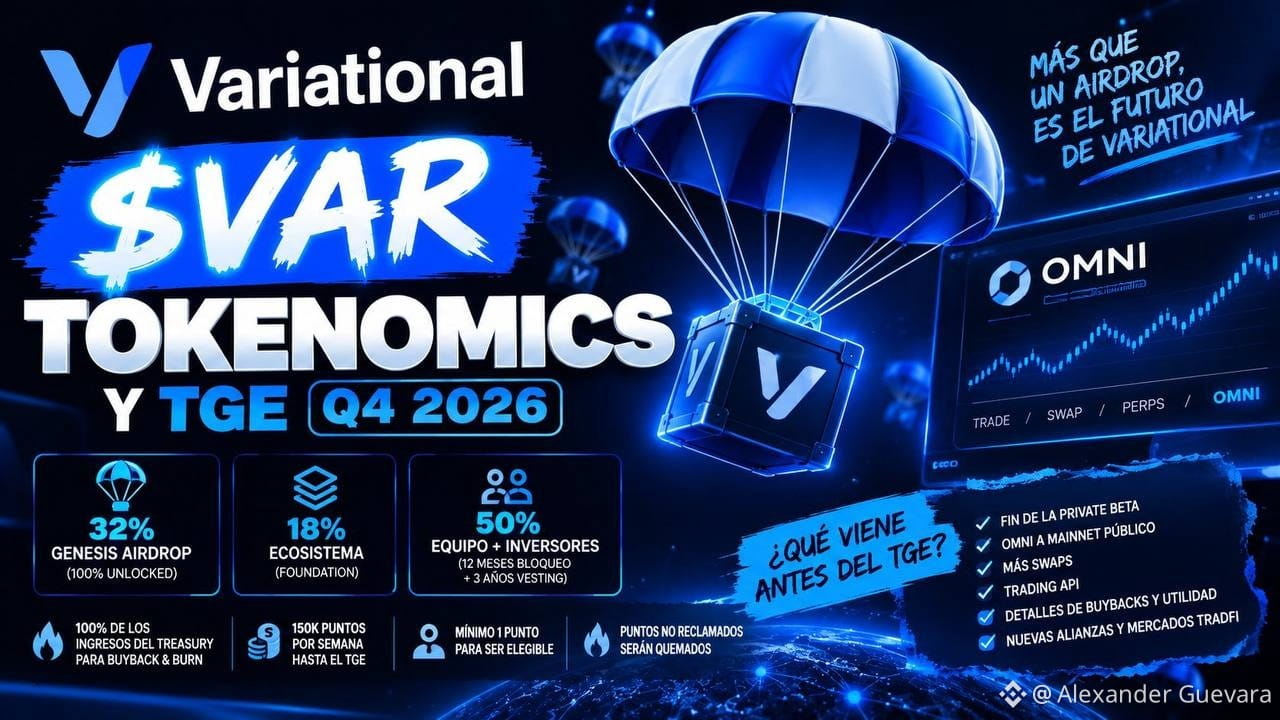
🟢 A 32% allocation of the free token distribution for variational. For reference, Hyperliquid allocated 31% and Lighter allocated 25%. However, the initial token sale (TGE) will be in the fourth quarter, so points will accumulate over the course of a few months. But it will probably be a fairly large free distribution for users.
✅😃Now we know that the 32% will be for the TGE drop
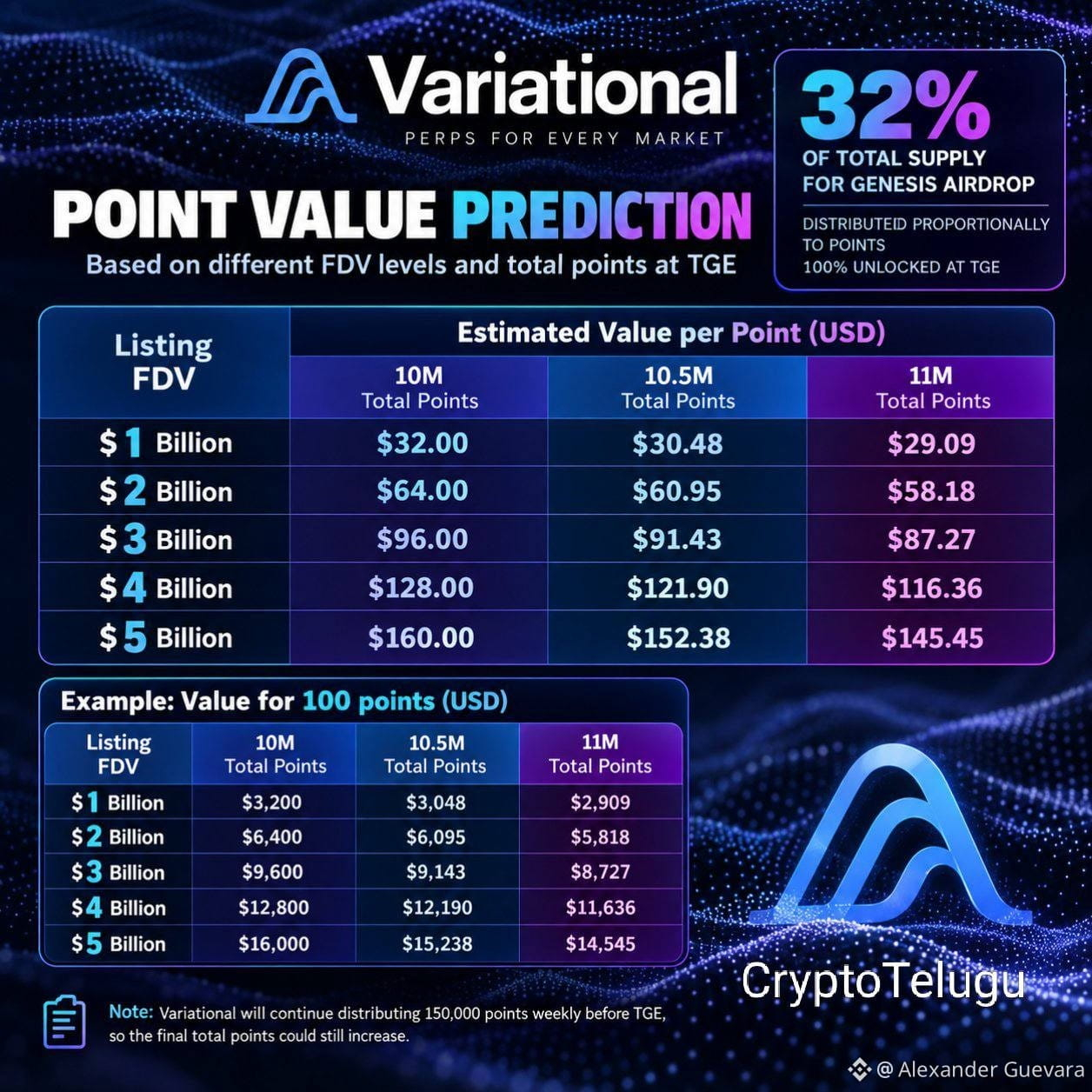
👇Here is the points-to-value calculation
🪙Since the points distribution continues until the TGE
📅If it ends in October, expect ~10M points
📅For November, expect ~10.6M points
📅December expect ~11.25M points
🤔Let’s assume 10.5M points at the time of the TGE
📈 $LIT listed at $3B FDV
😉Assume that $VAR will be listed at the same FDV
💰Then 1 point will be worth $91 in $VAR
💰100 points = $9000
🖼️Check the image below for the points value spreadsheet
🤔Do you agree? 1 point = $90
#tge #Hyperliquid #AirdropAlert #BinanceWillListHyperliquid(HYPE) #hype $HYPE
🟢 A 32% allocation of the free token distribution for variational. For reference, Hyperliquid allocated 31% and Lighter allocated 25%. However, the initial token sale (TGE) will be in the fourth quarter, so points will accumulate over the course of a few months. But it will probably be a fairly large free distribution for users.
✅😃Now we know that the 32% will be for the TGE drop
👇Here is the points-to-value calculation
🪙Since the points distribution continues until the TGE
📅If it ends in October, expect ~10M points
📅For November, expect ~10.6M points
📅December expect ~11.25M points
🤔Let’s assume 10.5M points at the time of the TGE
📈 $LIT listed at $3B FDV
😉Assume that $VAR will be listed at the same FDV
💰Then 1 point will be worth $91 in $VAR
💰100 points = $9000
🖼️Check the image below for the points value spreadsheet
🤔Do you agree? 1 point = $90
#tge #Hyperliquid #AirdropAlert #BinanceWillListHyperliquid(HYPE) #hype $HYPE
✅😃Now we know that the 32% will be for the TGE drop
👇Here is the points-to-value calculation
🪙Since the points distribution continues until the TGE
📅If it ends in October, expect ~10M points
📅For November, expect ~10.6M points
📅December expect ~11.25M points
🤔Let’s assume 10.5M points at the time of the TGE
📈 $LIT listed at $3B FDV
😉Assume that $VAR will be listed at the same FDV
💰Then 1 point will be worth $91 in $VAR
💰100 points = $9000
🖼️Check the image below for the points value spreadsheet
🤔Do you agree? 1 point = $90
#tge #Hyperliquid #AirdropAlert #BinanceWillListHyperliquid(HYPE) #hype $HYPE
52
·
--
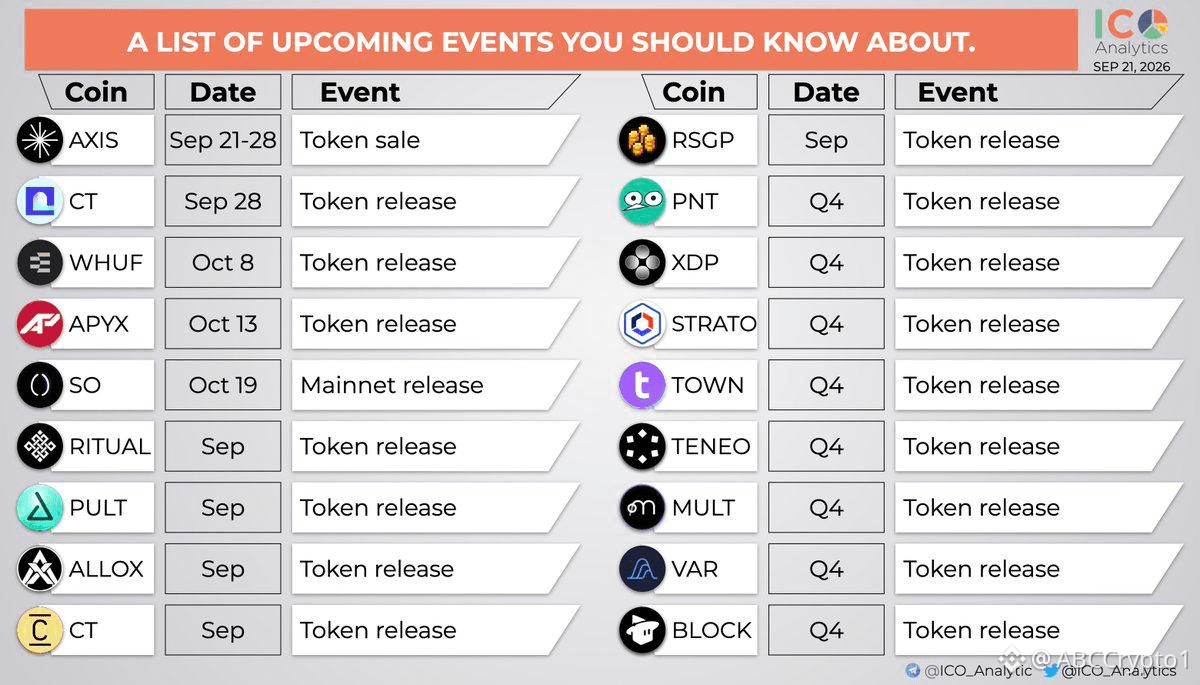
ℹ️Major crypto events coming up — here’s what to watch.
Upcoming TGEs, ICOs, mainnet launches and product releases:
🔵 $AXIS — ICO Sep 21–28
🔵 $CT — TGE Sep 28
🔵 $WHUF — TGE Oct 8
🔵 $APYX — TGE Oct 13
🔵 $SO — mainnet Oct 19
🔵 $RITUAL — TGE September
🔵 $PULT — TGE September
🔵 $ALLOX — TGE September
🔵 $RSGP — TGE September
🔵 $PNT — TGE Q4
🔵 $XDP — TGE Q4
🔵 $STRATO — TGE Q4
🔵 $TOWN — TGE Q4
🔵 $TENEO — TGE Q4
🔵 $MULT — TGE Q4
🔵 $VAR — TGE Q4
🔵 $BLOCK — TGE Q4
⚠️ All dates are approximate and based on previous project announcements.
#crypto #tge #ICO #Web3 #BinanceSquare
ℹ️Major crypto events coming up — here’s what to watch.
Upcoming TGEs, ICOs, mainnet launches and product releases:
🔵 $AXIS — ICO Sep 21–28
🔵 $CT — TGE Sep 28
🔵 $WHUF — TGE Oct 8
🔵 $APYX — TGE Oct 13
🔵 $SO — mainnet Oct 19
🔵 $RITUAL — TGE September
🔵 $PULT — TGE September
🔵 $ALLOX — TGE September
🔵 $RSGP — TGE September
🔵 $PNT — TGE Q4
🔵 $XDP — TGE Q4
🔵 $STRATO — TGE Q4
🔵 $TOWN — TGE Q4
🔵 $TENEO — TGE Q4
🔵 $MULT — TGE Q4
🔵 $VAR — TGE Q4
🔵 $BLOCK — TGE Q4
⚠️ All dates are approximate and based on previous project announcements.
#crypto #tge #ICO #Web3 #BinanceSquare
Upcoming TGEs, ICOs, mainnet launches and product releases:
🔵 $AXIS — ICO Sep 21–28
🔵 $CT — TGE Sep 28
🔵 $WHUF — TGE Oct 8
🔵 $APYX — TGE Oct 13
🔵 $SO — mainnet Oct 19
🔵 $RITUAL — TGE September
🔵 $PULT — TGE September
🔵 $ALLOX — TGE September
🔵 $RSGP — TGE September
🔵 $PNT — TGE Q4
🔵 $XDP — TGE Q4
🔵 $STRATO — TGE Q4
🔵 $TOWN — TGE Q4
🔵 $TENEO — TGE Q4
🔵 $MULT — TGE Q4
🔵 $VAR — TGE Q4
🔵 $BLOCK — TGE Q4
⚠️ All dates are approximate and based on previous project announcements.
#crypto #tge #ICO #Web3 #BinanceSquare
552

·
--
Announcement hits: 292 references, but only 153 reposts—these days the arguments are fiercer than the spread.
Back then, everyone asked, “Will there be an airdrop?” Now the question has changed: how many tokens can one point buy, what the actual circulating supply really is, and whether real, cash-like income can arrive before the selling pressure does.
With 32% of the Genesis circulation fully unlocked, it’s the largest sell-pressure pool on the TGE day. The complication is that every week, another 150,000 points are still being distributed—meaning long-time players’ shares aren’t fixed; they’re continuously diluted by the new points. So nobody can say what your stored points are worth by the TGE day.
“Use 100% of treasury revenue to buy back and burn”? It sounds like a deflationary narrative, but the revenue size, execution schedule, and funding sources have all not been disclosed. Right now it’s just a promise, not a running mechanism. Meanwhile, the “50% team and investor allocation locked for 12 months” is structurally healthier.
The delay reason given is “there are partners that haven’t been disclosed yet.” That just leaves room for imagination—the agreement’s numbers—$2.43 billion in 24-hour trading volume, 1.73 billion open positions, and $222 million in TVL—are real indicators of product scale. But whether the token can actually absorb and support that value is a separate matter.
If it were me, I’d be bearish on this setup and wouldn’t enter. The 32% unlock overhang is sitting there; the buyback-and-burn is only a paper promise—whoever ends up holding the bag first is hard to say. I’ll re-calculate this only after the treasury revenue, the buyback cadence, and how many tokens have actually been burned are truly published and delivered.
#Variational #TGE #DeFi
Announcement hits: 292 references, but only 153 reposts—these days the arguments are fiercer than the spread.
Back then, everyone asked, “Will there be an airdrop?” Now the question has changed: how many tokens can one point buy, what the actual circulating supply really is, and whether real, cash-like income can arrive before the selling pressure does.
With 32% of the Genesis circulation fully unlocked, it’s the largest sell-pressure pool on the TGE day. The complication is that every week, another 150,000 points are still being distributed—meaning long-time players’ shares aren’t fixed; they’re continuously diluted by the new points. So nobody can say what your stored points are worth by the TGE day.
“Use 100% of treasury revenue to buy back and burn”? It sounds like a deflationary narrative, but the revenue size, execution schedule, and funding sources have all not been disclosed. Right now it’s just a promise, not a running mechanism. Meanwhile, the “50% team and investor allocation locked for 12 months” is structurally healthier.
The delay reason given is “there are partners that haven’t been disclosed yet.” That just leaves room for imagination—the agreement’s numbers—$2.43 billion in 24-hour trading volume, 1.73 billion open positions, and $222 million in TVL—are real indicators of product scale. But whether the token can actually absorb and support that value is a separate matter.
If it were me, I’d be bearish on this setup and wouldn’t enter. The 32% unlock overhang is sitting there; the buyback-and-burn is only a paper promise—whoever ends up holding the bag first is hard to say. I’ll re-calculate this only after the treasury revenue, the buyback cadence, and how many tokens have actually been burned are truly published and delivered.
#Variational #TGE #DeFi
Back then, everyone asked, “Will there be an airdrop?” Now the question has changed: how many tokens can one point buy, what the actual circulating supply really is, and whether real, cash-like income can arrive before the selling pressure does.
With 32% of the Genesis circulation fully unlocked, it’s the largest sell-pressure pool on the TGE day. The complication is that every week, another 150,000 points are still being distributed—meaning long-time players’ shares aren’t fixed; they’re continuously diluted by the new points. So nobody can say what your stored points are worth by the TGE day.
“Use 100% of treasury revenue to buy back and burn”? It sounds like a deflationary narrative, but the revenue size, execution schedule, and funding sources have all not been disclosed. Right now it’s just a promise, not a running mechanism. Meanwhile, the “50% team and investor allocation locked for 12 months” is structurally healthier.
The delay reason given is “there are partners that haven’t been disclosed yet.” That just leaves room for imagination—the agreement’s numbers—$2.43 billion in 24-hour trading volume, 1.73 billion open positions, and $222 million in TVL—are real indicators of product scale. But whether the token can actually absorb and support that value is a separate matter.
If it were me, I’d be bearish on this setup and wouldn’t enter. The 32% unlock overhang is sitting there; the buyback-and-burn is only a paper promise—whoever ends up holding the bag first is hard to say. I’ll re-calculate this only after the treasury revenue, the buyback cadence, and how many tokens have actually been burned are truly published and delivered.
#Variational #TGE #DeFi
62
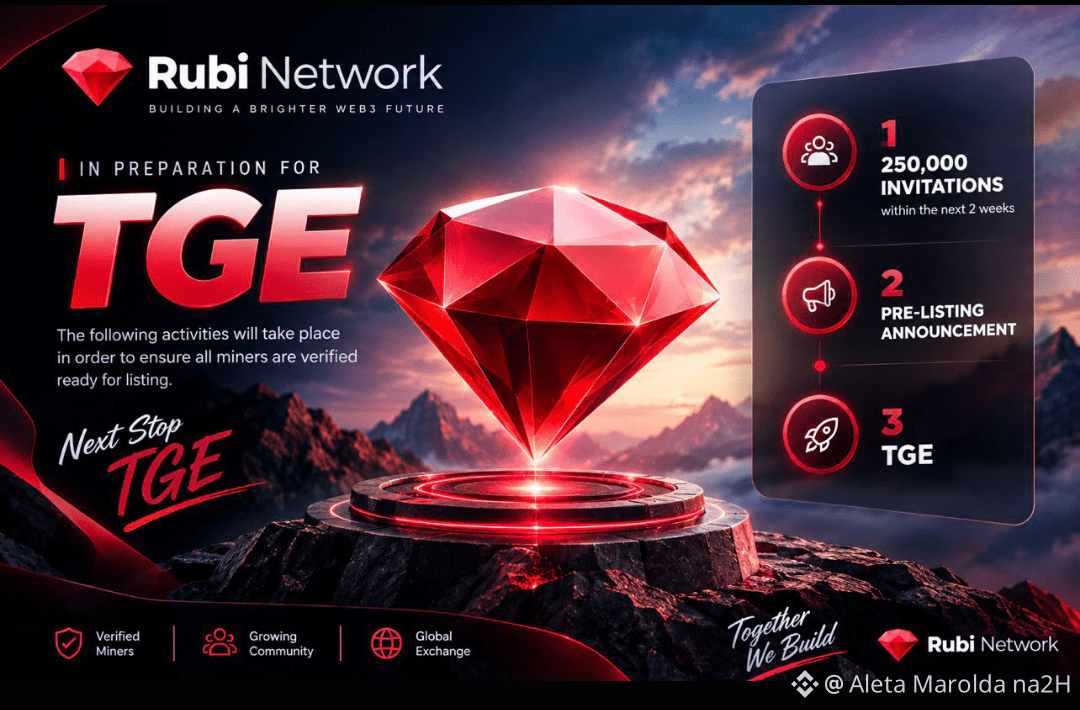
🚀 TGE is getting closer!
To prepare for the next big milestone, we’re moving forward with the final verification steps to ensure our miners are ready for listing.
🔹 250,000 invitations in the next 2 weeks
🔹 Pre-listing announcement
🔹 TGE 🔥
Are you ready, guys? 👀
Stay active. Stay consistent.
The good news is closer than ever. 🚀
#tge #TRX #doge #xrp #trade
$CL
{future}(CLUSDT)
$SD
{alpha}(10x30d20208d987713f46dfd34ef128bb16c404d10f)
$ID
{future}(IDUSDT)
🚀 TGE is getting closer!
To prepare for the next big milestone, we’re moving forward with the final verification steps to ensure our miners are ready for listing.
🔹 250,000 invitations in the next 2 weeks
🔹 Pre-listing announcement
🔹 TGE 🔥
Are you ready, guys? 👀
Stay active. Stay consistent.
The good news is closer than ever. 🚀
#tge #TRX #doge #xrp #trade
$CL
$SD
$ID
To prepare for the next big milestone, we’re moving forward with the final verification steps to ensure our miners are ready for listing.
🔹 250,000 invitations in the next 2 weeks
🔹 Pre-listing announcement
🔹 TGE 🔥
Are you ready, guys? 👀
Stay active. Stay consistent.
The good news is closer than ever. 🚀
#tge #TRX #doge #xrp #trade
$CL
$SD
$ID
388

·
--
Bullish
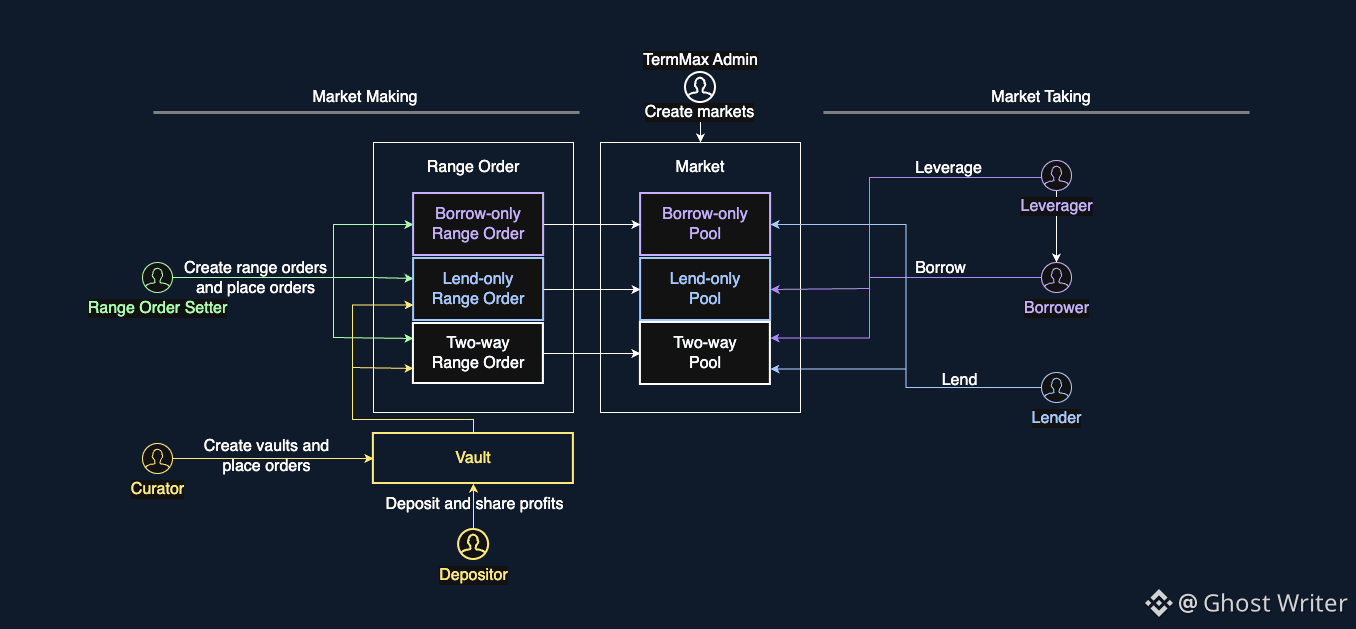
#termmax @termmax TermMax is not just a fixed-rate protocol. It’s a redesigned “DeFi LEGO” built from the ground up.
I used to think fixed-rate is only for big funds or institutions. But after sitting down and reading through TermMax’s components carefully, I realized: they’re breaking things down into small pieces so retail users can use it too, while still preserving the precision of fixed interest rates.
The simplest way to understand it:
👉 Market is the “playground.” Each Market comes with a pre-defined debt token (usually stablecoin), collateral, maturity date, and liquidation threshold. All borrowing, lending, and leverage happen here.
👉 Range Order is the interest-rate curve that a market maker or curator draws in advance. There are 3 types: borrow-only, lend-only, or two-way. Users don’t need to place complicated orders—they just need to choose the interest-rate segment that fits and match. This is the part I find most interesting—rates are “quoted” clearly instead of jumping according to supply-demand every second.
👉 Vault is like an investment fund managed by the curator. You deposit money, they allocate it across multiple Range Orders, and profits are shared by ratio. It has a timelock and a guardian to protect depositors. It’s very close to how traditional funds operate, but on-chain.
And there are three main tokens:
- FT: fixed-rate interest token. Bought at a discount to face value; at maturity you receive the full amount—the interest is known in advance.
- XT: the portion of interest that must be paid.
- GT: an NFT representing the entire leverage position (collateral + debt).
The whole system is designed so that floating rate only remains as the “waiting-to-match” part, while the matched portion always has a fixed interest rate.
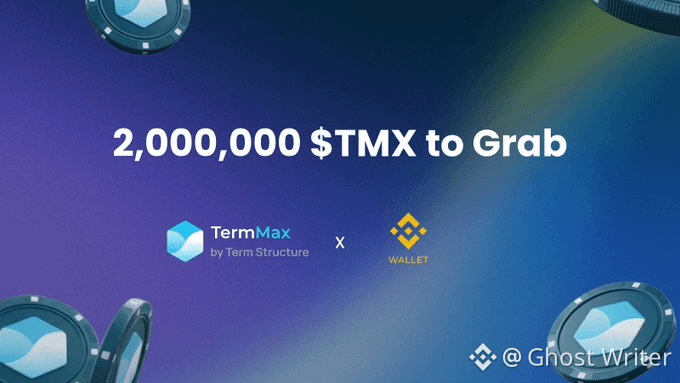
On August 25th, TMX will officially TGE, and TermMax will also run the Binance Wallet Booster program. This is a great time for newcomers to explore before liquidity and incentives increase dramatically.
#binancewallet #tge
#termmax @TermMax TermMax is not just a fixed-rate protocol. It’s a redesigned “DeFi LEGO” built from the ground up.
I used to think fixed-rate is only for big funds or institutions. But after sitting down and reading through TermMax’s components carefully, I realized: they’re breaking things down into small pieces so retail users can use it too, while still preserving the precision of fixed interest rates.
The simplest way to understand it:
👉 Market is the “playground.” Each Market comes with a pre-defined debt token (usually stablecoin), collateral, maturity date, and liquidation threshold. All borrowing, lending, and leverage happen here.
👉 Range Order is the interest-rate curve that a market maker or curator draws in advance. There are 3 types: borrow-only, lend-only, or two-way. Users don’t need to place complicated orders—they just need to choose the interest-rate segment that fits and match. This is the part I find most interesting—rates are “quoted” clearly instead of jumping according to supply-demand every second.
👉 Vault is like an investment fund managed by the curator. You deposit money, they allocate it across multiple Range Orders, and profits are shared by ratio. It has a timelock and a guardian to protect depositors. It’s very close to how traditional funds operate, but on-chain.
And there are three main tokens:
- FT: fixed-rate interest token. Bought at a discount to face value; at maturity you receive the full amount—the interest is known in advance.
- XT: the portion of interest that must be paid.
- GT: an NFT representing the entire leverage position (collateral + debt).
The whole system is designed so that floating rate only remains as the “waiting-to-match” part, while the matched portion always has a fixed interest rate.
On August 25th, TMX will officially TGE, and TermMax will also run the Binance Wallet Booster program. This is a great time for newcomers to explore before liquidity and incentives increase dramatically.
#binancewallet #tge
I used to think fixed-rate is only for big funds or institutions. But after sitting down and reading through TermMax’s components carefully, I realized: they’re breaking things down into small pieces so retail users can use it too, while still preserving the precision of fixed interest rates.
The simplest way to understand it:
👉 Market is the “playground.” Each Market comes with a pre-defined debt token (usually stablecoin), collateral, maturity date, and liquidation threshold. All borrowing, lending, and leverage happen here.
👉 Range Order is the interest-rate curve that a market maker or curator draws in advance. There are 3 types: borrow-only, lend-only, or two-way. Users don’t need to place complicated orders—they just need to choose the interest-rate segment that fits and match. This is the part I find most interesting—rates are “quoted” clearly instead of jumping according to supply-demand every second.
👉 Vault is like an investment fund managed by the curator. You deposit money, they allocate it across multiple Range Orders, and profits are shared by ratio. It has a timelock and a guardian to protect depositors. It’s very close to how traditional funds operate, but on-chain.
And there are three main tokens:
- FT: fixed-rate interest token. Bought at a discount to face value; at maturity you receive the full amount—the interest is known in advance.
- XT: the portion of interest that must be paid.
- GT: an NFT representing the entire leverage position (collateral + debt).
The whole system is designed so that floating rate only remains as the “waiting-to-match” part, while the matched portion always has a fixed interest rate.
On August 25th, TMX will officially TGE, and TermMax will also run the Binance Wallet Booster program. This is a great time for newcomers to explore before liquidity and incentives increase dramatically.
#binancewallet #tge
23
1
16
1.3k

·
--
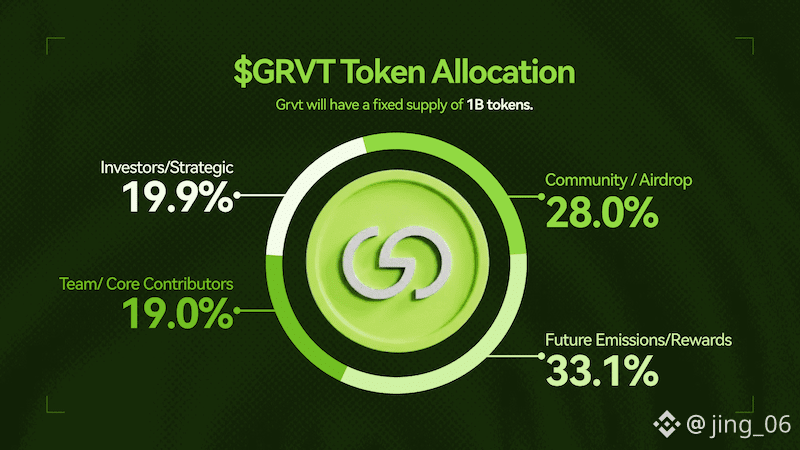
Today I re-organized the $GRVT information for @grvt_io . I’m more focused on the allocation and claiming rules rather than trying to guess the price. The official figure released in March states a fixed total supply of 1 billion tokens: community/airdrop accounts for 28%, future emissions and rewards for 33.1%, investors/strategic for 19.9%, and the team and core contributors for 19%. The latest registration guide shows that eligible users can, before 00:00 UTC on July 27, 2026, choose to route the TGE distribution to Grvt, BSC, or Ethereum. The Multiplier Plan for claiming 4 or 8 months later is entirely voluntary, and it won’t expand the total airdrop pool—it only changes each participant’s weighted share. Also note that the distribution address must be controlled by the individual; you cannot enter a centralized exchange deposit address. For me, the vesting schedule and actual entitlements are more worth tracking than short-term sentiment.
#Tokenomics #tge
#grvt
Today I re-organized the $GRVT information for @grvt_io . I’m more focused on the allocation and claiming rules rather than trying to guess the price. The official figure released in March states a fixed total supply of 1 billion tokens: community/airdrop accounts for 28%, future emissions and rewards for 33.1%, investors/strategic for 19.9%, and the team and core contributors for 19%. The latest registration guide shows that eligible users can, before 00:00 UTC on July 27, 2026, choose to route the TGE distribution to Grvt, BSC, or Ethereum. The Multiplier Plan for claiming 4 or 8 months later is entirely voluntary, and it won’t expand the total airdrop pool—it only changes each participant’s weighted share. Also note that the distribution address must be controlled by the individual; you cannot enter a centralized exchange deposit address. For me, the vesting schedule and actual entitlements are more worth tracking than short-term sentiment.
#Tokenomics #tge
#grvt
#Tokenomics #tge
#grvt
126

·
--
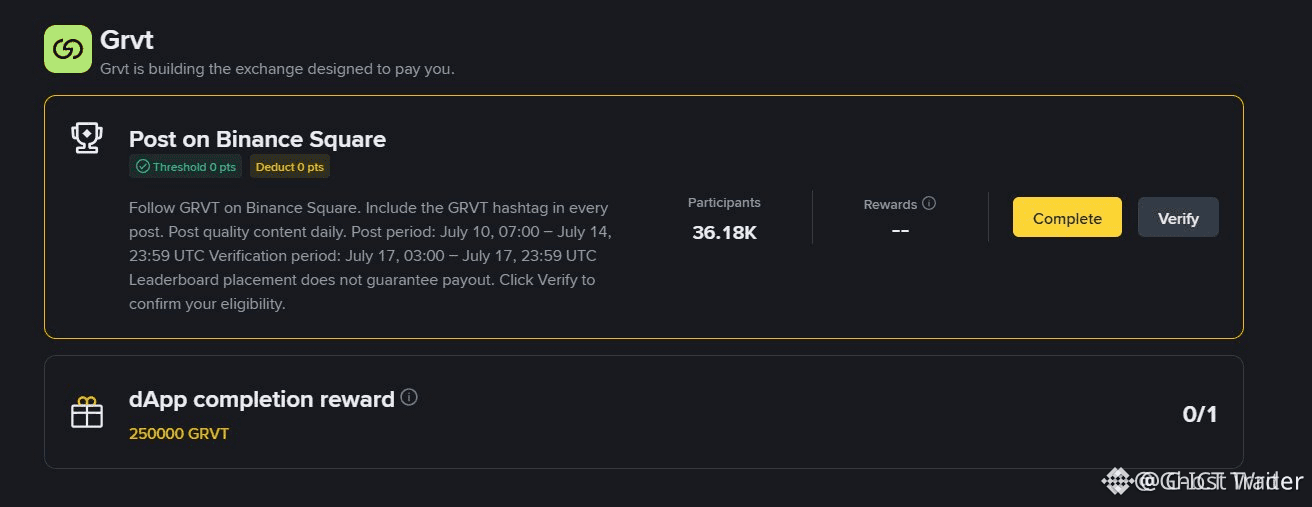
$GRVT CAMPAIGN HITS TOP 200 GLOBAL WITH 36,000 PARTICIPANTS 🔥
The Booster campaign on Binance has drawn significant liquidity — over 36,000 users competing, with $GRVT already ranking top 2xx globally. This level of engagement signals strong retail demand ahead of the TGE.
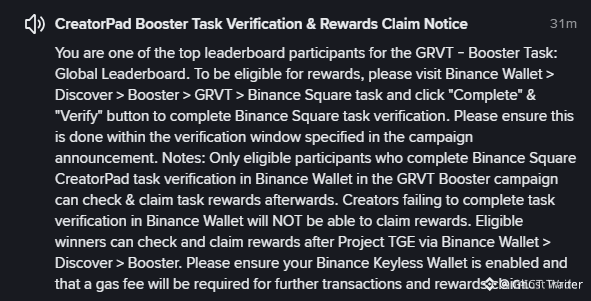
Today is the final verification window (July 17). Miss it and the system won't record your task. Whether you're in or observing, the TGE price speculation is heating up.
What's your target entry for $GRVT at launch?
Not financial advice. Always manage your risk.
#GRVT #Crypto #TGE #Community
🔥
$GRVT CAMPAIGN HITS TOP 200 GLOBAL WITH 36,000 PARTICIPANTS 🔥
The Booster campaign on Binance has drawn significant liquidity — over 36,000 users competing, with $GRVT already ranking top 2xx globally. This level of engagement signals strong retail demand ahead of the TGE.
Today is the final verification window (July 17). Miss it and the system won't record your task. Whether you're in or observing, the TGE price speculation is heating up.
What's your target entry for $GRVT at launch?
Not financial advice. Always manage your risk.
#GRVT #Crypto #TGE #Community
🔥
The Booster campaign on Binance has drawn significant liquidity — over 36,000 users competing, with $GRVT already ranking top 2xx globally. This level of engagement signals strong retail demand ahead of the TGE.
Today is the final verification window (July 17). Miss it and the system won't record your task. Whether you're in or observing, the TGE price speculation is heating up.
What's your target entry for $GRVT at launch?
Not financial advice. Always manage your risk.
#GRVT #Crypto #TGE #Community
🔥
45

·
--
After ARX launched on multiple platforms, the TGE hype continues to build, with market discussions focusing on whether it can maintain momentum after the strong initial spike. The daily increase was once noted at 248%, indicating a solid level of interest from funds, but such volatility in new coins is often exaggerated.
I'm particularly focused on two points: first, whether the real liquidity brought by the launch platforms can sustain; and second, if the Arcium narrative can shift from short-term hype to genuine ecosystem demand. Before chasing the highs, let's check the volume, unlock schedule, and support during pullbacks.
$ARX #Arcium #Altcoin #TGE
After ARX launched on multiple platforms, the TGE hype continues to build, with market discussions focusing on whether it can maintain momentum after the strong initial spike. The daily increase was once noted at 248%, indicating a solid level of interest from funds, but such volatility in new coins is often exaggerated.
I'm particularly focused on two points: first, whether the real liquidity brought by the launch platforms can sustain; and second, if the Arcium narrative can shift from short-term hype to genuine ecosystem demand. Before chasing the highs, let's check the volume, unlock schedule, and support during pullbacks.
$ARX #Arcium #Altcoin #TGE
I'm particularly focused on two points: first, whether the real liquidity brought by the launch platforms can sustain; and second, if the Arcium narrative can shift from short-term hype to genuine ecosystem demand. Before chasing the highs, let's check the volume, unlock schedule, and support during pullbacks.
$ARX #Arcium #Altcoin #TGE
309

·
--
🧵 **Arcium Today's TGE, RTG Checker is Live**
The $ARX token allocation query portal is officially open, and the allocations for Wave 1 & 2 have been finalized—users can claim their tokens today.
What’s even more interesting than just grabbing the tokens is that some participants from Wave 1 & 2 have been upgraded to **Patrons** and entered the leaderboard. This means the project team is tiering early contributors, and the Patron status may come with additional benefits or airdrop boosts down the line.
The total token supply is 1 billion coins, and the allocation structure shows a clear preference:
• Early supporters and backers: 27.12%
• Core contributors: 21.07%
• Ecosystem and development: 20.43%
• Community incentives: 18.52%
• Validators: 5.26%
• Angel investors: 5.6%
• Community sales: 2%
**Community + ecosystem combined make up over 40%**, indicating that the focus of token releases is on building rather than just fundraising, so keep an eye on the long-term release pace.
👉 Check the portal for your allocation eligibility
#Arcium #TGE
🧵 **Arcium Today's TGE, RTG Checker is Live**
The $ARX token allocation query portal is officially open, and the allocations for Wave 1 & 2 have been finalized—users can claim their tokens today.
What’s even more interesting than just grabbing the tokens is that some participants from Wave 1 & 2 have been upgraded to **Patrons** and entered the leaderboard. This means the project team is tiering early contributors, and the Patron status may come with additional benefits or airdrop boosts down the line.
The total token supply is 1 billion coins, and the allocation structure shows a clear preference:
• Early supporters and backers: 27.12%
• Core contributors: 21.07%
• Ecosystem and development: 20.43%
• Community incentives: 18.52%
• Validators: 5.26%
• Angel investors: 5.6%
• Community sales: 2%
**Community + ecosystem combined make up over 40%**, indicating that the focus of token releases is on building rather than just fundraising, so keep an eye on the long-term release pace.
👉 Check the portal for your allocation eligibility
#Arcium #TGE
The $ARX token allocation query portal is officially open, and the allocations for Wave 1 & 2 have been finalized—users can claim their tokens today.
What’s even more interesting than just grabbing the tokens is that some participants from Wave 1 & 2 have been upgraded to **Patrons** and entered the leaderboard. This means the project team is tiering early contributors, and the Patron status may come with additional benefits or airdrop boosts down the line.
The total token supply is 1 billion coins, and the allocation structure shows a clear preference:
• Early supporters and backers: 27.12%
• Core contributors: 21.07%
• Ecosystem and development: 20.43%
• Community incentives: 18.52%
• Validators: 5.26%
• Angel investors: 5.6%
• Community sales: 2%
**Community + ecosystem combined make up over 40%**, indicating that the focus of token releases is on building rather than just fundraising, so keep an eye on the long-term release pace.
👉 Check the portal for your allocation eligibility
#Arcium #TGE
70

·
--
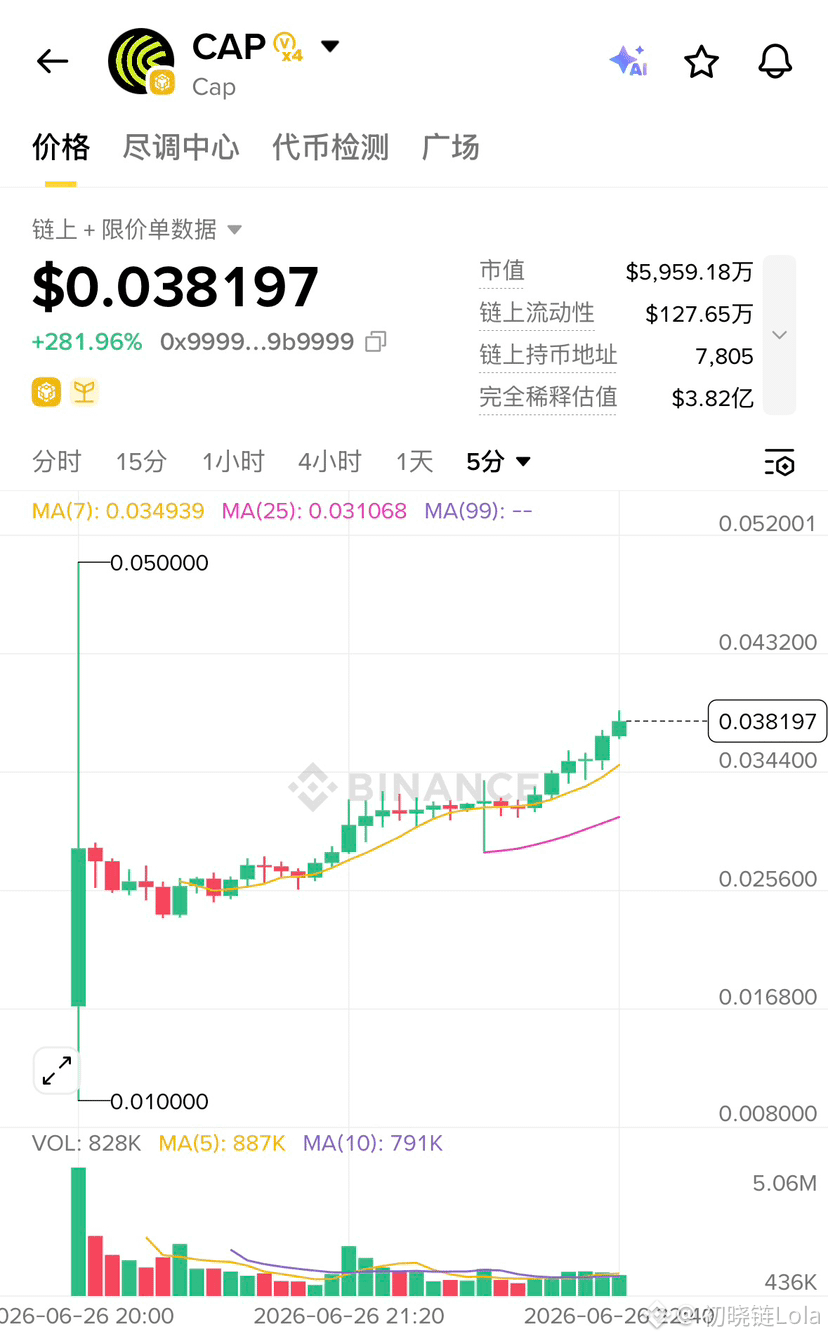
Today wallet TGE event,
3190 $CAP earned 100u,
I guess that’s not too bad,
too bad there weren’t enough points—I’m jealous🙈
In June I did #ALPHA , single order earns around $200,
not much, and I didn’t put in much time or cost,
so it’s basically free-roll,
in a bear market you don’t lose and you even gain some liquidity,
small amounts add up ✌️
#TGE
Today wallet TGE event,
3190 $CAP earned 100u,
I guess that’s not too bad,
too bad there weren’t enough points—I’m jealous🙈
In June I did #ALPHA , single order earns around $200,
not much, and I didn’t put in much time or cost,
so it’s basically free-roll,
in a bear market you don’t lose and you even gain some liquidity,
small amounts add up ✌️
#TGE
3190 $CAP earned 100u,
I guess that’s not too bad,
too bad there weren’t enough points—I’m jealous🙈
In June I did #ALPHA , single order earns around $200,
not much, and I didn’t put in much time or cost,
so it’s basically free-roll,
in a bear market you don’t lose and you even gain some liquidity,
small amounts add up ✌️
#TGE
25
11
6.2k

88% OF $ALTS LAUNCHED IN 2025 ARE UNDERWATER 🔥
One stat says it all: only 12 out of every 100 tokens listed since January are still above their debut price. Delphi Digital tracked 652 new listings and found a median return of -82%. Tokens like Berachain and Animecoin are down over 93% from listing.
This isn't just a bear market — it's a structural shift. Many TGEs became liquidity events for early backers while retail bought the top. FDVs were already inflated before the public got in.
Are you still buying new listings without checking the unlock schedule?
Not financial advice. Always manage your risk.
#ALTS #AltcoinMarket #TGE #Cryptocurrency
🔥
88% OF $ALTS LAUNCHED IN 2025 ARE UNDERWATER 🔥
One stat says it all: only 12 out of every 100 tokens listed since January are still above their debut price. Delphi Digital tracked 652 new listings and found a median return of -82%. Tokens like Berachain and Animecoin are down over 93% from listing.
This isn't just a bear market — it's a structural shift. Many TGEs became liquidity events for early backers while retail bought the top. FDVs were already inflated before the public got in.
Are you still buying new listings without checking the unlock schedule?
Not financial advice. Always manage your risk.
#ALTS #AltcoinMarket #TGE #Cryptocurrency
🔥
One stat says it all: only 12 out of every 100 tokens listed since January are still above their debut price. Delphi Digital tracked 652 new listings and found a median return of -82%. Tokens like Berachain and Animecoin are down over 93% from listing.
This isn't just a bear market — it's a structural shift. Many TGEs became liquidity events for early backers while retail bought the top. FDVs were already inflated before the public got in.
Are you still buying new listings without checking the unlock schedule?
Not financial advice. Always manage your risk.
#ALTS #AltcoinMarket #TGE #Cryptocurrency
🔥
251

Verified
Great time to start GRVT’s journey now! 🚀
GRVT offers you the chance to participate through two different paths, but the destination is the same—TGE (July 21).
🔹 Booster Campaign: Earn rewards by completing simple missions without any trading or deposits.
🔹 Season 2 Points System: For those who will make real use of the platform and contribute, there is a higher potential to earn more rewards.
GRVT’s goal is to value real users and build a strong ecosystem in the long term. Whether you’re new or experienced, there’s a path that fits you.
I believe this project could play an important role in the crypto ecosystem in the future. So learn about the project from now, participate, and follow its progress. #Airdrop #tge #grvt
@grvt_io
Great time to start GRVT’s journey now! 🚀
GRVT offers you the chance to participate through two different paths, but the destination is the same—TGE (July 21).
🔹 Booster Campaign: Earn rewards by completing simple missions without any trading or deposits.
🔹 Season 2 Points System: For those who will make real use of the platform and contribute, there is a higher potential to earn more rewards.
GRVT’s goal is to value real users and build a strong ecosystem in the long term. Whether you’re new or experienced, there’s a path that fits you.
I believe this project could play an important role in the crypto ecosystem in the future. So learn about the project from now, participate, and follow its progress. #Airdrop #tge #grvt
@grvt_io
GRVT offers you the chance to participate through two different paths, but the destination is the same—TGE (July 21).
🔹 Booster Campaign: Earn rewards by completing simple missions without any trading or deposits.
🔹 Season 2 Points System: For those who will make real use of the platform and contribute, there is a higher potential to earn more rewards.
GRVT’s goal is to value real users and build a strong ecosystem in the long term. Whether you’re new or experienced, there’s a path that fits you.
I believe this project could play an important role in the crypto ecosystem in the future. So learn about the project from now, participate, and follow its progress. #Airdrop #tge #grvt
@grvt_io
91

·
--
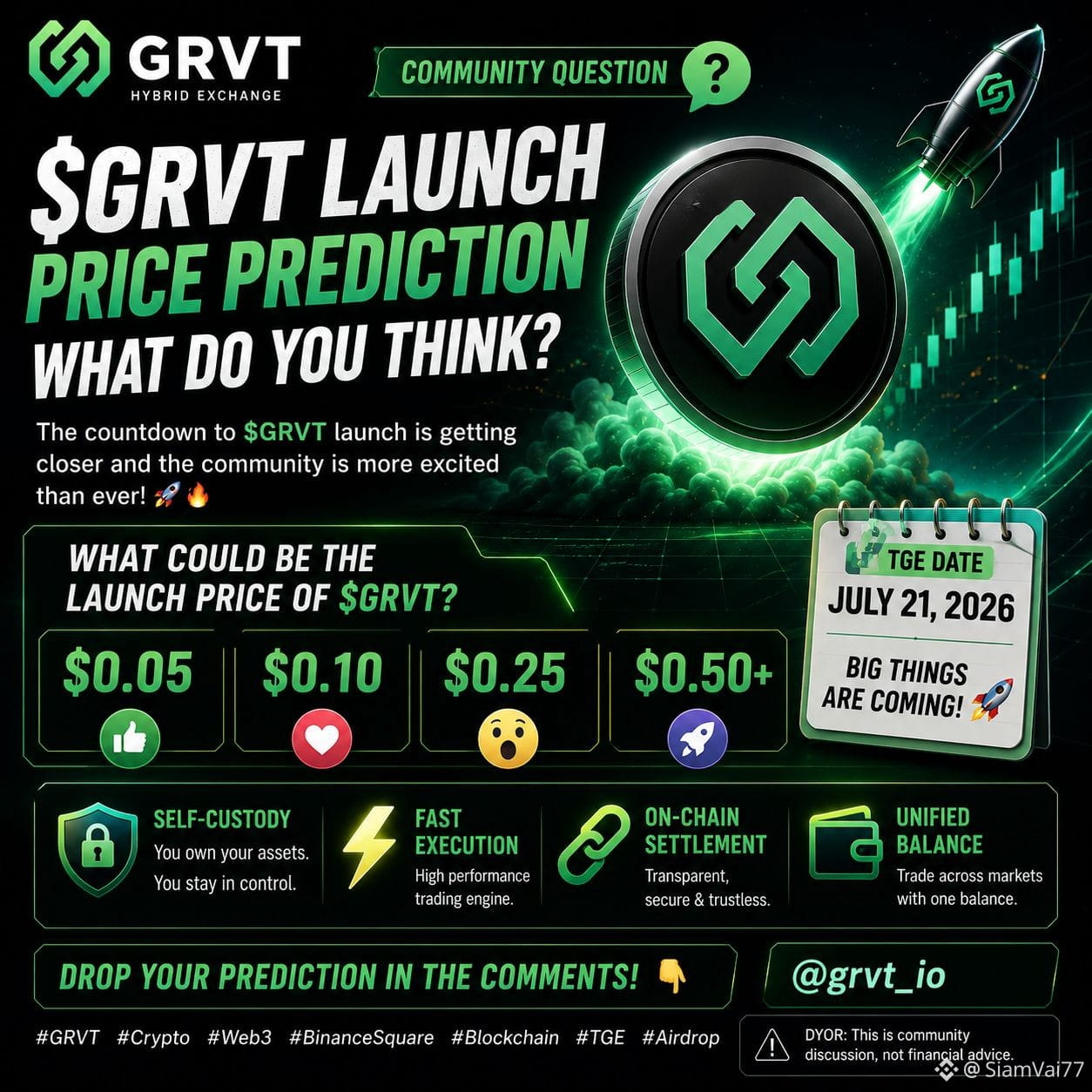
🚀🔥 $GRVT Launch Price Prediction – What Do You Think? 🔥🚀
The countdown to the $GRVT launch is getting closer, and the community is becoming more excited every day! 👀
With GRVT's growing ecosystem, active rewards campaigns, and strong community support, many users are asking the same question:
🤔 What could be the launch price of $GRVT?
Will it launch at: 🟢 $0.05? 🟢 $0.10? 🟢 $0.25? 🟢 Or even higher? 🚀
GRVT has already opened token registration and is preparing for its upcoming TGE, scheduled for July 21, making price speculation one of the hottest topics in the community right now. �
Grvt Help Center +1
💬 My prediction? I think strong community participation and ecosystem growth could attract significant attention after launch.
👇 Drop your prediction in the comments!
📊 What price do you expect $GRVT to reach on launch day?
#grvt #Crypto #Web3 #BinanceSquare #Blockchain #tge #Airdrop
@grvt_io 🚀💎
⚠️ DYOR. This is only community discussion and not financial advice.
🚀🔥 $GRVT Launch Price Prediction – What Do You Think? 🔥🚀
The countdown to the $GRVT launch is getting closer, and the community is becoming more excited every day! 👀
With GRVT's growing ecosystem, active rewards campaigns, and strong community support, many users are asking the same question:
🤔 What could be the launch price of $GRVT?
Will it launch at: 🟢 $0.05? 🟢 $0.10? 🟢 $0.25? 🟢 Or even higher? 🚀
GRVT has already opened token registration and is preparing for its upcoming TGE, scheduled for July 21, making price speculation one of the hottest topics in the community right now. �
Grvt Help Center +1
💬 My prediction? I think strong community participation and ecosystem growth could attract significant attention after launch.
👇 Drop your prediction in the comments!
📊 What price do you expect $GRVT to reach on launch day?
#grvt #Crypto #Web3 #BinanceSquare #Blockchain #tge #Airdrop
@grvt_io 🚀💎
⚠️ DYOR. This is only community discussion and not financial advice.
The countdown to the $GRVT launch is getting closer, and the community is becoming more excited every day! 👀
With GRVT's growing ecosystem, active rewards campaigns, and strong community support, many users are asking the same question:
🤔 What could be the launch price of $GRVT?
Will it launch at: 🟢 $0.05? 🟢 $0.10? 🟢 $0.25? 🟢 Or even higher? 🚀
GRVT has already opened token registration and is preparing for its upcoming TGE, scheduled for July 21, making price speculation one of the hottest topics in the community right now. �
Grvt Help Center +1
💬 My prediction? I think strong community participation and ecosystem growth could attract significant attention after launch.
👇 Drop your prediction in the comments!
📊 What price do you expect $GRVT to reach on launch day?
#grvt #Crypto #Web3 #BinanceSquare #Blockchain #tge #Airdrop
@grvt_io 🚀💎
⚠️ DYOR. This is only community discussion and not financial advice.
6
6
150
·
--
LOOK AT THE TRUE NATURE OF A 1 BILLION TMX: A STORY NOT FOUND IN TOTAL SUPPLY
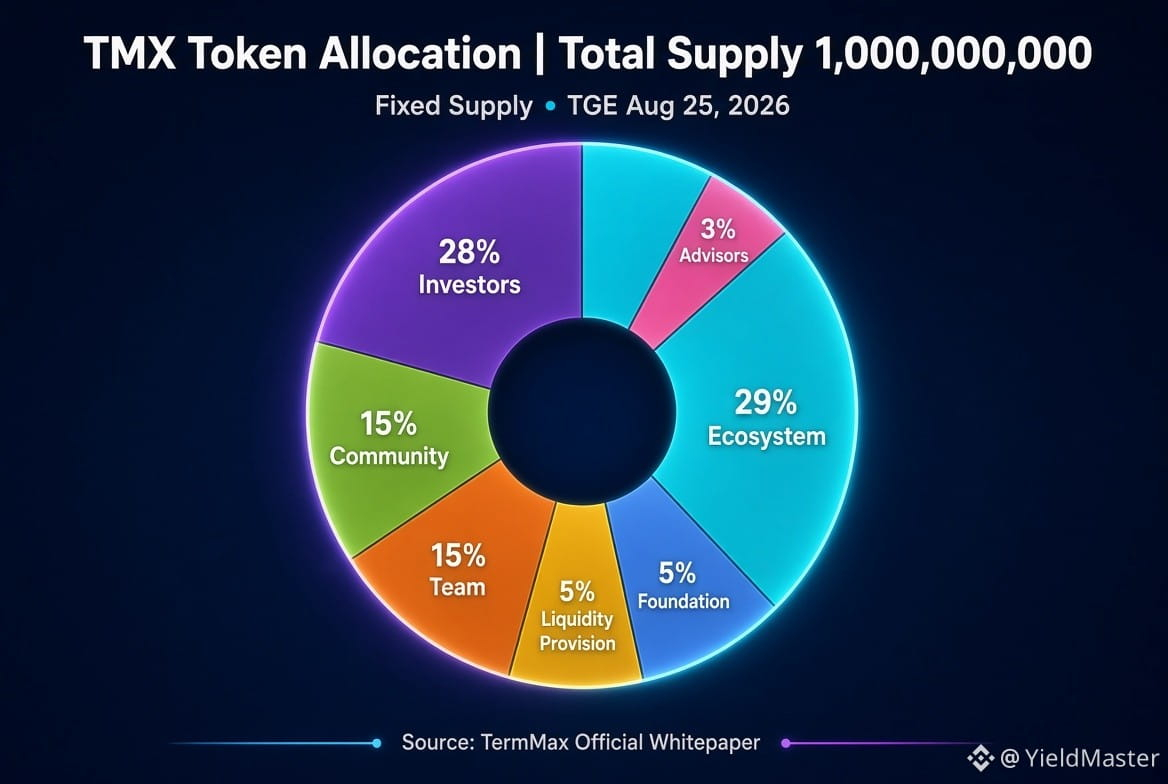
Have you ever stopped in front of a number and realized your perspective changed completely? Yesterday I thought about TGE, and today the 1B TMX figure makes me reflect again.
An initial 1 billion tokens sounds huge. But when you learn that the actual circulating amount expected at TGE is only about 20%, the picture takes on a different color. With 800M TMX not yet reaching the market, the real story isn’t simply “how large the supply is,” but rather “how that supply penetrates the market.”
A 48-month distribution schedule with 40M TMX (4%) allocated to early users suggests that TermMax is choosing the long road instead of a short-term wave push. For me, the TGE is only the starting whistle. The next chapter is the core: real utility.
When TMX moves into staking and serves the financial ecosystem with fixed-interest yields, we’ll see the intersection between Tokenomics and the actual value of the product. TMX isn’t just “another token issuance event”—it’s a test of sustainability based on utility and user adoption.
Don’t just look at a total supply of 1 billion. Look at the value the ecosystem can build on the real liquidity that appears at the starting line.
#Creatorpad #TGE #termmax @termmax
LOOK AT THE TRUE NATURE OF A 1 BILLION TMX: A STORY NOT FOUND IN TOTAL SUPPLY
Have you ever stopped in front of a number and realized your perspective changed completely? Yesterday I thought about TGE, and today the 1B TMX figure makes me reflect again.
An initial 1 billion tokens sounds huge. But when you learn that the actual circulating amount expected at TGE is only about 20%, the picture takes on a different color. With 800M TMX not yet reaching the market, the real story isn’t simply “how large the supply is,” but rather “how that supply penetrates the market.”
A 48-month distribution schedule with 40M TMX (4%) allocated to early users suggests that TermMax is choosing the long road instead of a short-term wave push. For me, the TGE is only the starting whistle. The next chapter is the core: real utility.
When TMX moves into staking and serves the financial ecosystem with fixed-interest yields, we’ll see the intersection between Tokenomics and the actual value of the product. TMX isn’t just “another token issuance event”—it’s a test of sustainability based on utility and user adoption.
Don’t just look at a total supply of 1 billion. Look at the value the ecosystem can build on the real liquidity that appears at the starting line.
#Creatorpad #TGE #termmax @TermMax
Have you ever stopped in front of a number and realized your perspective changed completely? Yesterday I thought about TGE, and today the 1B TMX figure makes me reflect again.
An initial 1 billion tokens sounds huge. But when you learn that the actual circulating amount expected at TGE is only about 20%, the picture takes on a different color. With 800M TMX not yet reaching the market, the real story isn’t simply “how large the supply is,” but rather “how that supply penetrates the market.”
A 48-month distribution schedule with 40M TMX (4%) allocated to early users suggests that TermMax is choosing the long road instead of a short-term wave push. For me, the TGE is only the starting whistle. The next chapter is the core: real utility.
When TMX moves into staking and serves the financial ecosystem with fixed-interest yields, we’ll see the intersection between Tokenomics and the actual value of the product. TMX isn’t just “another token issuance event”—it’s a test of sustainability based on utility and user adoption.
Don’t just look at a total supply of 1 billion. Look at the value the ecosystem can build on the real liquidity that appears at the starting line.
#Creatorpad #TGE #termmax @TermMax
85

·
--
Partly True
DAPPOS ($DOS) has recently received multiple positive catalysts, and the price performance is worth close attention.
First, the TGE is approaching. This is an important milestone for a project to enter the market, and it is often accompanied by increased capital inflows and heightened attention. Second, the airdrop registration has been completed for 60,000 verified wallets, which means the community foundation is solid and real user participation is relatively high.
More importantly, the ecosystem data: its xBubble has generated $6.8 million in real revenue and has also secured over $20 million in funding. This revenue scale is persuasive in the current market environment, indicating that the product has been validated by the market rather than being driven purely by speculation based on expectations.
On the product side, two key capabilities have been implemented: a unified multi-chain experience and Intent execution. These significantly reduce the barrier to entry for users and improve cross-chain interaction efficiency. For multi-chain ecosystem projects, these two abilities are crucial determinants of long-term competitiveness.
Based on market data, <[$DOS ]> is currently quoted at $0.1, with an approximately $0.31 million trading volume over the past 24 hours, a market cap of $20 million, and overall it is still in the early stage. Liquidity is moderate, and there is room for volatility.
In summary, with a fundamentally positive outlook + TGE catalyst + ecosystem execution, short-term sentiment is somewhat bullish. However, it’s still important to note that the main risk variables are the token unlock schedule and the overall market conditions.
#DAPPOS #TGE #Multi-chain ecosystem
DAPPOS ($DOS ) has recently received multiple positive catalysts, and the price performance is worth close attention.
First, the TGE is approaching. This is an important milestone for a project to enter the market, and it is often accompanied by increased capital inflows and heightened attention. Second, the airdrop registration has been completed for 60,000 verified wallets, which means the community foundation is solid and real user participation is relatively high.
More importantly, the ecosystem data: its xBubble has generated $6.8 million in real revenue and has also secured over $20 million in funding. This revenue scale is persuasive in the current market environment, indicating that the product has been validated by the market rather than being driven purely by speculation based on expectations.
On the product side, two key capabilities have been implemented: a unified multi-chain experience and Intent execution. These significantly reduce the barrier to entry for users and improve cross-chain interaction efficiency. For multi-chain ecosystem projects, these two abilities are crucial determinants of long-term competitiveness.
Based on market data, <[$DOS ]> is currently quoted at $0.1, with an approximately $0.31 million trading volume over the past 24 hours, a market cap of $20 million, and overall it is still in the early stage. Liquidity is moderate, and there is room for volatility.
In summary, with a fundamentally positive outlook + TGE catalyst + ecosystem execution, short-term sentiment is somewhat bullish. However, it’s still important to note that the main risk variables are the token unlock schedule and the overall market conditions.
#DAPPOS #TGE #Multi-chain ecosystem
First, the TGE is approaching. This is an important milestone for a project to enter the market, and it is often accompanied by increased capital inflows and heightened attention. Second, the airdrop registration has been completed for 60,000 verified wallets, which means the community foundation is solid and real user participation is relatively high.
More importantly, the ecosystem data: its xBubble has generated $6.8 million in real revenue and has also secured over $20 million in funding. This revenue scale is persuasive in the current market environment, indicating that the product has been validated by the market rather than being driven purely by speculation based on expectations.
On the product side, two key capabilities have been implemented: a unified multi-chain experience and Intent execution. These significantly reduce the barrier to entry for users and improve cross-chain interaction efficiency. For multi-chain ecosystem projects, these two abilities are crucial determinants of long-term competitiveness.
Based on market data, <[$DOS ]> is currently quoted at $0.1, with an approximately $0.31 million trading volume over the past 24 hours, a market cap of $20 million, and overall it is still in the early stage. Liquidity is moderate, and there is room for volatility.
In summary, with a fundamentally positive outlook + TGE catalyst + ecosystem execution, short-term sentiment is somewhat bullish. However, it’s still important to note that the main risk variables are the token unlock schedule and the overall market conditions.
#DAPPOS #TGE #Multi-chain ecosystem
560
Log in to explore more content
Join global crypto users on Binance Square
⚡️ Get latest and useful information about crypto.
💬 Trusted by the world’s largest crypto exchange.
👍 Discover real insights from verified creators.
Email / Phone number
Trending Topics
1
#FedMinutesFocusOnOctoberPause
62,533 views
831 Discussing
2
#BinanceLaunchesBinanceIntelligence
1M views
6,106 Discussing
3
#EvernorthDelaysNasdaqDebutToOct12
2,791 views
151 Discussing
4
#RobinhoodAdds$25MInBitcoinToBalanceSheet
1,811 views
53 Discussing
5
#SP500AndNasdaqHitRecordHighs
10,663 views
345 Discussing
6
#USMortgageRatesRiseTo7.49%
11,900 views
299 Discussing
7
#BTCFallsBelow$84K
94,222 views
215 Discussing
8
#DubaiVARAIssuesReserveAssetAuditCircular
36,819 views
883 Discussing
9
#SECApproves3XBitcoinETF
34,672 views
715 Discussing
10
#WinklevossFilesSpotZcashETFApplication
43,368 views
822 Discussing