

#riskmanagementmastery
riskmanagementmastery
1.4M views
2,469 Discussing
Hot
Latest

$BTC
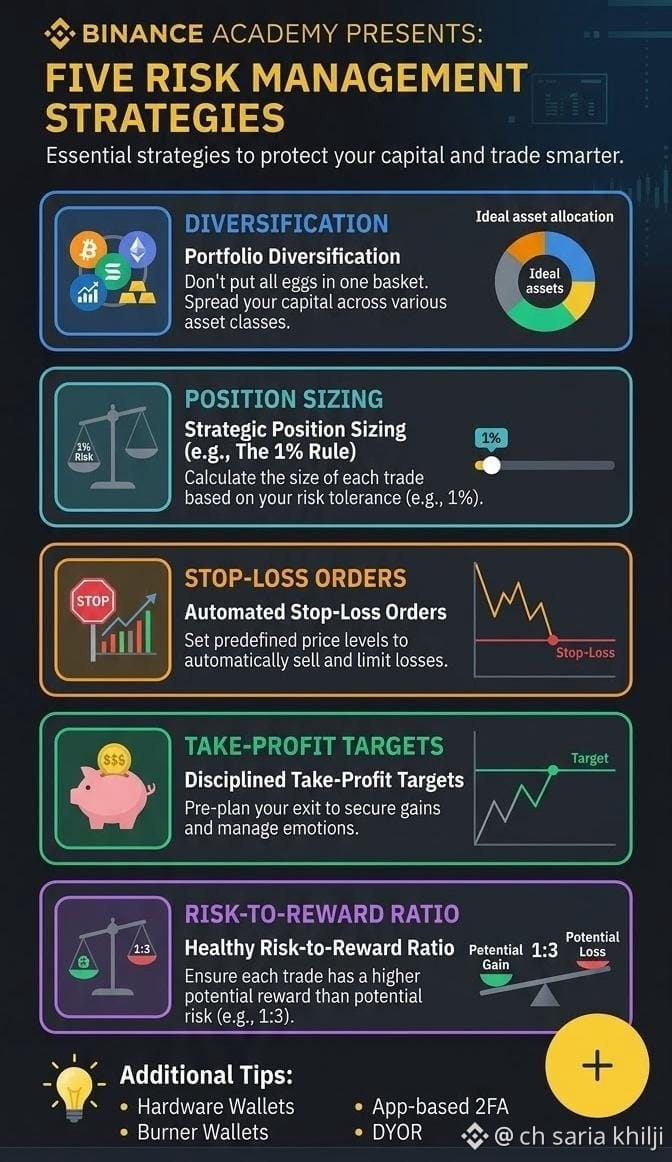
5 Risk Management Strategies Every Crypto Investor Should Know
Managing risk is one of the most important skills in crypto.
Here are five strategies to help protect your portfolio:
1️⃣ Acceptance
Sometimes the potential loss is small enough that it makes sense to simply accept the risk and invest without spending extra to mitigate it.
2️⃣ Transfer
Shift the risk to a third party through instruments like insurance or derivatives.
You pay a fee, but you gain protection.
3️⃣ Avoidance
If an asset carries too much risk for your comfort level, the simplest strategy is to stay out entirely.
4️⃣ Reduction
Diversify across different assets, sectors, or asset classes to minimize the impact of any single loss on your overall portfolio.
5️⃣ The 1% Rule
Never risk more than 1% of your total total capital on a single trade. Pair this with stop-loss orders to cap your downside automatically.
💡 Additional tips:
🔸 Use hardware wallets for long-term holdings
🔸 Enable app-based 2FA rather than SMS
🔸 Use burner wallets for DeFi interactions
🔸 Always DYOR before investing
Good risk management keeps you in the game long enough to win.
#RiskAnalysis
#RiskManagementMastery
#RiskTaking
$BTC
5 Risk Management Strategies Every Crypto Investor Should Know
Managing risk is one of the most important skills in crypto.
Here are five strategies to help protect your portfolio:
1️⃣ Acceptance
Sometimes the potential loss is small enough that it makes sense to simply accept the risk and invest without spending extra to mitigate it.
2️⃣ Transfer
Shift the risk to a third party through instruments like insurance or derivatives.
You pay a fee, but you gain protection.
3️⃣ Avoidance
If an asset carries too much risk for your comfort level, the simplest strategy is to stay out entirely.
4️⃣ Reduction
Diversify across different assets, sectors, or asset classes to minimize the impact of any single loss on your overall portfolio.
5️⃣ The 1% Rule
Never risk more than 1% of your total total capital on a single trade. Pair this with stop-loss orders to cap your downside automatically.
💡 Additional tips:
🔸 Use hardware wallets for long-term holdings
🔸 Enable app-based 2FA rather than SMS
🔸 Use burner wallets for DeFi interactions
🔸 Always DYOR before investing
Good risk management keeps you in the game long enough to win.
#RiskAnalysis
#RiskManagementMastery
#RiskTaking
5 Risk Management Strategies Every Crypto Investor Should Know
Managing risk is one of the most important skills in crypto.
Here are five strategies to help protect your portfolio:
1️⃣ Acceptance
Sometimes the potential loss is small enough that it makes sense to simply accept the risk and invest without spending extra to mitigate it.
2️⃣ Transfer
Shift the risk to a third party through instruments like insurance or derivatives.
You pay a fee, but you gain protection.
3️⃣ Avoidance
If an asset carries too much risk for your comfort level, the simplest strategy is to stay out entirely.
4️⃣ Reduction
Diversify across different assets, sectors, or asset classes to minimize the impact of any single loss on your overall portfolio.
5️⃣ The 1% Rule
Never risk more than 1% of your total total capital on a single trade. Pair this with stop-loss orders to cap your downside automatically.
💡 Additional tips:
🔸 Use hardware wallets for long-term holdings
🔸 Enable app-based 2FA rather than SMS
🔸 Use burner wallets for DeFi interactions
🔸 Always DYOR before investing
Good risk management keeps you in the game long enough to win.
#RiskAnalysis
#RiskManagementMastery
#RiskTaking
1
103

·
--
📊 RISK MANAGEMENT CHECK
BUY signal ❌ without volume
SELL signal ❌ without breakdown
Leverage ❌ without a stop-loss
Use smaller size when volatility spikes.
#cryptotrading #RiskManagementMastery #futures #trading #Binance
📊 RISK MANAGEMENT CHECK
BUY signal ❌ without volume
SELL signal ❌ without breakdown
Leverage ❌ without a stop-loss
Use smaller size when volatility spikes.
#cryptotrading #RiskManagementMastery #futures #trading #Binance
BUY signal ❌ without volume
SELL signal ❌ without breakdown
Leverage ❌ without a stop-loss
Use smaller size when volatility spikes.
#cryptotrading #RiskManagementMastery #futures #trading #Binance
1

·
--
Crypto Risk
⚠️ 5 Things Every Crypto Beginner Should Know
1️⃣ Crypto prices can move very quickly
2️⃣ High leverage can increase losses
3️⃣ Never risk money you cannot afford to lose
4️⃣ Do your own research before trading
5️⃣ Protect your account and wallet security
Crypto can offer opportunities, but it also carries significant risks.
Educational content only. This is not financial advice or a recommendation to buy or sell any cryptocurrency.
#cryptotipshop #cryptoeducation #RiskManagementMastery t #BİNANCESQUARE #crypto
Crypto Risk
⚠️ 5 Things Every Crypto Beginner Should Know
1️⃣ Crypto prices can move very quickly
2️⃣ High leverage can increase losses
3️⃣ Never risk money you cannot afford to lose
4️⃣ Do your own research before trading
5️⃣ Protect your account and wallet security
Crypto can offer opportunities, but it also carries significant risks.
Educational content only. This is not financial advice or a recommendation to buy or sell any cryptocurrency.
#cryptotipshop #cryptoeducation #RiskManagementMastery t #BİNANCESQUARE #crypto
⚠️ 5 Things Every Crypto Beginner Should Know
1️⃣ Crypto prices can move very quickly
2️⃣ High leverage can increase losses
3️⃣ Never risk money you cannot afford to lose
4️⃣ Do your own research before trading
5️⃣ Protect your account and wallet security
Crypto can offer opportunities, but it also carries significant risks.
Educational content only. This is not financial advice or a recommendation to buy or sell any cryptocurrency.
#cryptotipshop #cryptoeducation #RiskManagementMastery t #BİNANCESQUARE #crypto
26

The market doesn’t punish fear.
It punishes people who ignore risk. 🔥
Most traders feel invincible after two green candles.
They stop checking volume.
They stop checking liquidity.
They stop asking why the price is moving.
Then one red candle appears…
and suddenly everyone becomes a long-term holder.
The truth?
Profit feels easy during hype. Risk only becomes visible after the crowd is trapped.
A viral post is not research.
A green chart is not a guarantee.
And “don’t miss this” is often the beginning of someone else’s exit.
Have you ever bought a coin just because everyone was talking about it? 👇
#Crypto #FOMO #TradingTales #RiskManagementMastery t #BinanceSquare
$BTC
{spot}(BTCUSDT)
$SOL
{spot}(SOLUSDT)
$PEPE
{spot}(PEPEUSDT)
The market doesn’t punish fear.
It punishes people who ignore risk. 🔥
Most traders feel invincible after two green candles.
They stop checking volume.
They stop checking liquidity.
They stop asking why the price is moving.
Then one red candle appears…
and suddenly everyone becomes a long-term holder.
The truth?
Profit feels easy during hype. Risk only becomes visible after the crowd is trapped.
A viral post is not research.
A green chart is not a guarantee.
And “don’t miss this” is often the beginning of someone else’s exit.
Have you ever bought a coin just because everyone was talking about it? 👇
#Crypto #FOMO #TradingTales #RiskManagementMastery t #BinanceSquare
$BTC
$SOL
$PEPE
It punishes people who ignore risk. 🔥
Most traders feel invincible after two green candles.
They stop checking volume.
They stop checking liquidity.
They stop asking why the price is moving.
Then one red candle appears…
and suddenly everyone becomes a long-term holder.
The truth?
Profit feels easy during hype. Risk only becomes visible after the crowd is trapped.
A viral post is not research.
A green chart is not a guarantee.
And “don’t miss this” is often the beginning of someone else’s exit.
Have you ever bought a coin just because everyone was talking about it? 👇
#Crypto #FOMO #TradingTales #RiskManagementMastery t #BinanceSquare
$BTC
$SOL
$PEPE

96

·
--
Discipline Over Emotion. Patience Over Pressure. Consistency Over Hype. 📈
Trading is not about winning every trade.
It’s about managing risk, protecting your capital, and staying consistent when the market doesn’t go your way.
I’m focused on building a long-term trading mindset —
less emotion, fewer trades, better setups, stronger discipline.
No shortcuts. No revenge trading.
Just Patience • Discipline • Risk Management • Consistency.
The goal is simple: Become better than yesterday. 🚀
🔥 Binance Traders, what’s the ONE rule you never break while trading?
Drop it below — let’s see which rule the community follows the most. 👇
#Binance nance #CryptoTrends2024 pto #Trading #TradingMindset #RiskManagementMastery #Discipline ine #Consistency
🚀🚀🚀🚀
Discipline Over Emotion. Patience Over Pressure. Consistency Over Hype. 📈
Trading is not about winning every trade.
It’s about managing risk, protecting your capital, and staying consistent when the market doesn’t go your way.
I’m focused on building a long-term trading mindset —
less emotion, fewer trades, better setups, stronger discipline.
No shortcuts. No revenge trading.
Just Patience • Discipline • Risk Management • Consistency.
The goal is simple: Become better than yesterday. 🚀
🔥 Binance Traders, what’s the ONE rule you never break while trading?
Drop it below — let’s see which rule the community follows the most. 👇
#Binance nance #CryptoTrends2024 pto #Trading #TradingMindset #RiskManagementMastery #Discipline ine #Consistency
🚀🚀🚀🚀
Trading is not about winning every trade.
It’s about managing risk, protecting your capital, and staying consistent when the market doesn’t go your way.
I’m focused on building a long-term trading mindset —
less emotion, fewer trades, better setups, stronger discipline.
No shortcuts. No revenge trading.
Just Patience • Discipline • Risk Management • Consistency.
The goal is simple: Become better than yesterday. 🚀
🔥 Binance Traders, what’s the ONE rule you never break while trading?
Drop it below — let’s see which rule the community follows the most. 👇
#Binance nance #CryptoTrends2024 pto #Trading #TradingMindset #RiskManagementMastery #Discipline ine #Consistency
🚀🚀🚀🚀
58
·
--
Market Sentiment Shift: Navigating Optimism with Discipline 🧠⚖️
As the market pushes higher and sentiment sits comfortably in Greed zone, FOMO (Fear Of Missing Out) naturally starts creeping into trading decisions. While seeing green across the board is exciting, this is precisely when risk management matters most.
Smart traders know that sustainable wealth isn't built on chasing pumps—it's built on protecting capital.
3 Golden Rules for Current Market Conditions:
1 Avoid Over-Leveraging: High volatility can wipe out high-leverage positions instantly during sudden liquidity sweeps. Keep your leverage conservative.
2 Stick to Your Take-Profit Plan: Greed makes traders hold onto trades longer than planned. Take partial profits at key resistance levels.
3 Never Risk More Than 1-2% Per Trade: Always define your stop loss before opening a position to keep emotional bias out of execution.
Remember: The goal isn't just to make profits in a green market—it's to keep them when market dynamics shift. Protect your capital first! 🛡️
#BTC #ETH #bnb #Binance #RiskManagementMastery
Market Sentiment Shift: Navigating Optimism with Discipline 🧠⚖️
As the market pushes higher and sentiment sits comfortably in Greed zone, FOMO (Fear Of Missing Out) naturally starts creeping into trading decisions. While seeing green across the board is exciting, this is precisely when risk management matters most.
Smart traders know that sustainable wealth isn't built on chasing pumps—it's built on protecting capital.
3 Golden Rules for Current Market Conditions:
1 Avoid Over-Leveraging: High volatility can wipe out high-leverage positions instantly during sudden liquidity sweeps. Keep your leverage conservative.
2 Stick to Your Take-Profit Plan: Greed makes traders hold onto trades longer than planned. Take partial profits at key resistance levels.
3 Never Risk More Than 1-2% Per Trade: Always define your stop loss before opening a position to keep emotional bias out of execution.
Remember: The goal isn't just to make profits in a green market—it's to keep them when market dynamics shift. Protect your capital first! 🛡️
#BTC #ETH #bnb #Binance #RiskManagementMastery
As the market pushes higher and sentiment sits comfortably in Greed zone, FOMO (Fear Of Missing Out) naturally starts creeping into trading decisions. While seeing green across the board is exciting, this is precisely when risk management matters most.
Smart traders know that sustainable wealth isn't built on chasing pumps—it's built on protecting capital.
3 Golden Rules for Current Market Conditions:
1 Avoid Over-Leveraging: High volatility can wipe out high-leverage positions instantly during sudden liquidity sweeps. Keep your leverage conservative.
2 Stick to Your Take-Profit Plan: Greed makes traders hold onto trades longer than planned. Take partial profits at key resistance levels.
3 Never Risk More Than 1-2% Per Trade: Always define your stop loss before opening a position to keep emotional bias out of execution.
Remember: The goal isn't just to make profits in a green market—it's to keep them when market dynamics shift. Protect your capital first! 🛡️
#BTC #ETH #bnb #Binance #RiskManagementMastery
71

·
--
Bullish
Trading Mindset & Strategy (High Discussion)
🚨 90% of crypto traders lose money because of ONE simple mistake:
Chasing green candles after a breakout. 📉
When a coin pumps +30% in 24h, retail FOMO peaks but smart money is already looking for liquidity to exit.
Here is the exact playbook to protect your capital:
1️⃣ Never buy into high-volume spikes at key resistance.
2️⃣ Wait for the pullback to test former resistance as support.
3️⃣ Always trade with an invalidation level (Hard Stop-Loss).
4️⃣ Take partial profits on the way up unrealized gains are not real gains.
The market rewards discipline over excitement. Consistency > Home runs. 🧠⚡
👇 What’s your #1 rule before entering a trade? Drop your strategy in the comments!
$BTC
{spot}(BTCUSDT)
#CryptoTrading #RiskManagementMastery #altcoins
Trading Mindset & Strategy (High Discussion)
🚨 90% of crypto traders lose money because of ONE simple mistake:
Chasing green candles after a breakout. 📉
When a coin pumps +30% in 24h, retail FOMO peaks but smart money is already looking for liquidity to exit.
Here is the exact playbook to protect your capital:
1️⃣ Never buy into high-volume spikes at key resistance.
2️⃣ Wait for the pullback to test former resistance as support.
3️⃣ Always trade with an invalidation level (Hard Stop-Loss).
4️⃣ Take partial profits on the way up unrealized gains are not real gains.
The market rewards discipline over excitement. Consistency > Home runs. 🧠⚡
👇 What’s your #1 rule before entering a trade? Drop your strategy in the comments!
$BTC
#CryptoTrading #RiskManagementMastery #altcoins
🚨 90% of crypto traders lose money because of ONE simple mistake:
Chasing green candles after a breakout. 📉
When a coin pumps +30% in 24h, retail FOMO peaks but smart money is already looking for liquidity to exit.
Here is the exact playbook to protect your capital:
1️⃣ Never buy into high-volume spikes at key resistance.
2️⃣ Wait for the pullback to test former resistance as support.
3️⃣ Always trade with an invalidation level (Hard Stop-Loss).
4️⃣ Take partial profits on the way up unrealized gains are not real gains.
The market rewards discipline over excitement. Consistency > Home runs. 🧠⚡
👇 What’s your #1 rule before entering a trade? Drop your strategy in the comments!
$BTC
#CryptoTrading #RiskManagementMastery #altcoins
78

·
--
🪝 “A Great Opportunity to Get Rich 🤑”
Those words can make you think, “If I don’t act now, I might miss my chance.” 💰
But here’s the real question: Did you make your own decision, or did you simply follow what everyone else was doing?
It’s natural to feel inspired by someone else’s success, but everyone has different capital, different goals, and a different tolerance for risk.
FOMO and rushed decisions can cost more than money — they can take away your peace of mind, too. 💵
it's true!
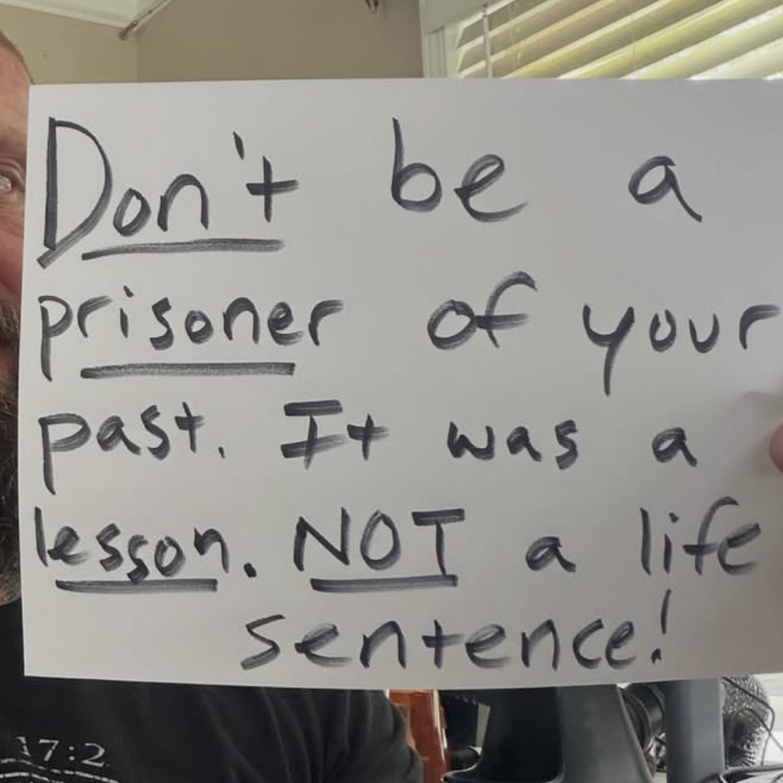
If you’ve made mistakes in the past, don’t blame yourself.
Let those mistakes become lessons, not the end of your journey. ❤️
Instead of chasing overnight wealth, focus on understanding the market, managing risk, and building patience.
Your hard-earned money 💰 deserves thoughtful decisions, not emotional ones.
Learn first. Think clearly. Then decide — because not every opportunity is the right opportunity for you. 📈
#CryptoEducation💡🚀
#tradingmindset #RiskManagementMastery
#learncrypto #Investing"
{spot}(MSFTBUSDT)
🪝 “A Great Opportunity to Get Rich 🤑”
Those words can make you think, “If I don’t act now, I might miss my chance.” 💰
But here’s the real question: Did you make your own decision, or did you simply follow what everyone else was doing?
It’s natural to feel inspired by someone else’s success, but everyone has different capital, different goals, and a different tolerance for risk.
FOMO and rushed decisions can cost more than money — they can take away your peace of mind, too. 💵
it's true!
If you’ve made mistakes in the past, don’t blame yourself.
Let those mistakes become lessons, not the end of your journey. ❤️
Instead of chasing overnight wealth, focus on understanding the market, managing risk, and building patience.
Your hard-earned money 💰 deserves thoughtful decisions, not emotional ones.
Learn first. Think clearly. Then decide — because not every opportunity is the right opportunity for you. 📈
#CryptoEducation💡🚀
#tradingmindset #RiskManagementMastery
#learncrypto #Investing"
Those words can make you think, “If I don’t act now, I might miss my chance.” 💰
But here’s the real question: Did you make your own decision, or did you simply follow what everyone else was doing?
It’s natural to feel inspired by someone else’s success, but everyone has different capital, different goals, and a different tolerance for risk.
FOMO and rushed decisions can cost more than money — they can take away your peace of mind, too. 💵
it's true!
If you’ve made mistakes in the past, don’t blame yourself.
Let those mistakes become lessons, not the end of your journey. ❤️
Instead of chasing overnight wealth, focus on understanding the market, managing risk, and building patience.
Your hard-earned money 💰 deserves thoughtful decisions, not emotional ones.
Learn first. Think clearly. Then decide — because not every opportunity is the right opportunity for you. 📈
#CryptoEducation💡🚀
#tradingmindset #RiskManagementMastery
#learncrypto #Investing"

45

·
--
🧠 3 Golden Rules of Risk Management Every Trader Needs!!
1️⃣ Never risk more than 1–2% per trade. Capital preservation is priority.
2️⃣ Always set your Stop-Loss BEFORE entering. Hoping is not a strategy.
3️⃣ Take partial profits (TP). Green PnL on screen isn’t real until closed.
Which rule took you the longest to learn? Drop a comment below! 👇
#CryptoEducation💡🚀 #RiskManagementMastery #BinanceSquareTalks
🧠 3 Golden Rules of Risk Management Every Trader Needs!!
1️⃣ Never risk more than 1–2% per trade. Capital preservation is priority.
2️⃣ Always set your Stop-Loss BEFORE entering. Hoping is not a strategy.
3️⃣ Take partial profits (TP). Green PnL on screen isn’t real until closed.
Which rule took you the longest to learn? Drop a comment below! 👇
#CryptoEducation💡🚀 #RiskManagementMastery #BinanceSquareTalks
1️⃣ Never risk more than 1–2% per trade. Capital preservation is priority.
2️⃣ Always set your Stop-Loss BEFORE entering. Hoping is not a strategy.
3️⃣ Take partial profits (TP). Green PnL on screen isn’t real until closed.
Which rule took you the longest to learn? Drop a comment below! 👇
#CryptoEducation💡🚀 #RiskManagementMastery #BinanceSquareTalks
52

·
--
The most common mistake when starting in crypto isn’t choosing a bad coin—it’s not managing risk 📉⚠️
Yesterday, while reviewing my trades, I remembered a basic rule that many people forget: never enter a position without knowing in advance how much you’re willing to risk.
3 quick rules that I always apply:
- Use low leverage when trading in Futures.
-Always set your Stop Loss.
-Don’t get carried away by FOMO when the market is rising fast.
What’s the golden rule you always use when trading? 💬👇
#Binance #crypto #TradingTales #RiskManagementMastery #SKPoliceRefer18PolymarketUsersToProsecutors
The most common mistake when starting in crypto isn’t choosing a bad coin—it’s not managing risk 📉⚠️
Yesterday, while reviewing my trades, I remembered a basic rule that many people forget: never enter a position without knowing in advance how much you’re willing to risk.
3 quick rules that I always apply:
- Use low leverage when trading in Futures.
-Always set your Stop Loss.
-Don’t get carried away by FOMO when the market is rising fast.
What’s the golden rule you always use when trading? 💬👇
#Binance #crypto #TradingTales #RiskManagementMastery #SKPoliceRefer18PolymarketUsersToProsecutors
Yesterday, while reviewing my trades, I remembered a basic rule that many people forget: never enter a position without knowing in advance how much you’re willing to risk.
3 quick rules that I always apply:
- Use low leverage when trading in Futures.
-Always set your Stop Loss.
-Don’t get carried away by FOMO when the market is rising fast.
What’s the golden rule you always use when trading? 💬👇
#Binance #crypto #TradingTales #RiskManagementMastery #SKPoliceRefer18PolymarketUsersToProsecutors
1
96

The Golden Rule of Crypto: Risk Management First! 🛡️💰
Many people enter the crypto market looking for quick profits, but the secret to long-term success isn't just making money—it's protecting your capital.
Here are 3 simple habits that will keep your portfolio safe:
1️⃣ Never All-In: Spread your investment. Diversifying your funds across strong assets reduces your overall risk.
2️⃣ Set Realistic Goals: Don't get greedy. Taking small, consistent profits is always better than waiting for an unrealistic moonshot.
3️⃣ Keep Learning: Market trends change fast. Spend 15 minutes a day learning new concepts on Binance Academy to stay ahead.
What is your #1 rule when it comes to managing crypto risk? Let’s discuss in the comments! 👇
#BinanceSquareTalks #CryptoPatience #RiskManagementMastery #tradingStrategy #BTC
The Golden Rule of Crypto: Risk Management First! 🛡️💰
Many people enter the crypto market looking for quick profits, but the secret to long-term success isn't just making money—it's protecting your capital.
Here are 3 simple habits that will keep your portfolio safe:
1️⃣ Never All-In: Spread your investment. Diversifying your funds across strong assets reduces your overall risk.
2️⃣ Set Realistic Goals: Don't get greedy. Taking small, consistent profits is always better than waiting for an unrealistic moonshot.
3️⃣ Keep Learning: Market trends change fast. Spend 15 minutes a day learning new concepts on Binance Academy to stay ahead.
What is your #1 rule when it comes to managing crypto risk? Let’s discuss in the comments! 👇
#BinanceSquareTalks #CryptoPatience #RiskManagementMastery #tradingStrategy #BTC
Many people enter the crypto market looking for quick profits, but the secret to long-term success isn't just making money—it's protecting your capital.
Here are 3 simple habits that will keep your portfolio safe:
1️⃣ Never All-In: Spread your investment. Diversifying your funds across strong assets reduces your overall risk.
2️⃣ Set Realistic Goals: Don't get greedy. Taking small, consistent profits is always better than waiting for an unrealistic moonshot.
3️⃣ Keep Learning: Market trends change fast. Spend 15 minutes a day learning new concepts on Binance Academy to stay ahead.
What is your #1 rule when it comes to managing crypto risk? Let’s discuss in the comments! 👇
#BinanceSquareTalks #CryptoPatience #RiskManagementMastery #tradingStrategy #BTC
66

·
--
The Crypto Market Is Not About Predicting the Next Candle — It’s About Managing Risk 📊
One of the biggest lessons I’ve learned from trading crypto is simple:
You don’t need to predict every move. You need to survive the moves you get wrong.
When the market starts moving fast, many traders immediately ask:
“Is this the beginning of a pump?”
“Should I buy now?”
“Is the market going to crash?”
But experienced traders usually ask a different question:
“Where is my risk if I’m wrong?”
For me, market analysis starts with three things:
1️⃣ Market Structure
I first look at the bigger trend instead of reacting to every small candle. Higher highs and higher lows can indicate strength, while lower highs and lower lows can show weakness.
2️⃣ Support & Resistance
I don’t want to buy simply because a coin has fallen. A strong support area, combined with confirmation from price action and volume, can provide a much better setup than blindly catching a falling knife.
3️⃣ Risk Management
This is probably the most important part.
Even a great setup can fail.
That’s why I prefer defining my entry, invalidation level and position size before entering a trade.
Remember:
A trader who protects capital gets another opportunity. A trader who risks everything on one trade may not get another chance.
I’m also a big believer in avoiding FOMO.
If $BTC suddenly pumps 10%, chasing the candle because “it will keep going up” is not a strategy.
The same applies to $ETH and $BNB.
Instead of asking “How much can I make?”, try asking:
“How much am I willing to lose if my analysis is wrong?”
That small change in mindset can completely change the way you trade.
Crypto will always provide another opportunity.
You don’t have to catch every move. You just have to be prepared for the right one. 🚀
What is your biggest trading rule?
Risk management, patience, or technical analysis? 👇
#RiskManagementMastery #bitcoin #Write2Earn! #BinanceSquare
$BTC
The Crypto Market Is Not About Predicting the Next Candle — It’s About Managing Risk 📊
One of the biggest lessons I’ve learned from trading crypto is simple:
You don’t need to predict every move. You need to survive the moves you get wrong.
When the market starts moving fast, many traders immediately ask:
“Is this the beginning of a pump?”
“Should I buy now?”
“Is the market going to crash?”
But experienced traders usually ask a different question:
“Where is my risk if I’m wrong?”
For me, market analysis starts with three things:
1️⃣ Market Structure
I first look at the bigger trend instead of reacting to every small candle. Higher highs and higher lows can indicate strength, while lower highs and lower lows can show weakness.
2️⃣ Support & Resistance
I don’t want to buy simply because a coin has fallen. A strong support area, combined with confirmation from price action and volume, can provide a much better setup than blindly catching a falling knife.
3️⃣ Risk Management
This is probably the most important part.
Even a great setup can fail.
That’s why I prefer defining my entry, invalidation level and position size before entering a trade.
Remember:
A trader who protects capital gets another opportunity. A trader who risks everything on one trade may not get another chance.
I’m also a big believer in avoiding FOMO.
If $BTC suddenly pumps 10%, chasing the candle because “it will keep going up” is not a strategy.
The same applies to $ETH and $BNB.
Instead of asking “How much can I make?”, try asking:
“How much am I willing to lose if my analysis is wrong?”
That small change in mindset can completely change the way you trade.
Crypto will always provide another opportunity.
You don’t have to catch every move. You just have to be prepared for the right one. 🚀
What is your biggest trading rule?
Risk management, patience, or technical analysis? 👇
#RiskManagementMastery #bitcoin #Write2Earn! #BinanceSquare
$BTC
One of the biggest lessons I’ve learned from trading crypto is simple:
You don’t need to predict every move. You need to survive the moves you get wrong.
When the market starts moving fast, many traders immediately ask:
“Is this the beginning of a pump?”
“Should I buy now?”
“Is the market going to crash?”
But experienced traders usually ask a different question:
“Where is my risk if I’m wrong?”
For me, market analysis starts with three things:
1️⃣ Market Structure
I first look at the bigger trend instead of reacting to every small candle. Higher highs and higher lows can indicate strength, while lower highs and lower lows can show weakness.
2️⃣ Support & Resistance
I don’t want to buy simply because a coin has fallen. A strong support area, combined with confirmation from price action and volume, can provide a much better setup than blindly catching a falling knife.
3️⃣ Risk Management
This is probably the most important part.
Even a great setup can fail.
That’s why I prefer defining my entry, invalidation level and position size before entering a trade.
Remember:
A trader who protects capital gets another opportunity. A trader who risks everything on one trade may not get another chance.
I’m also a big believer in avoiding FOMO.
If $BTC suddenly pumps 10%, chasing the candle because “it will keep going up” is not a strategy.
The same applies to $ETH and $BNB.
Instead of asking “How much can I make?”, try asking:
“How much am I willing to lose if my analysis is wrong?”
That small change in mindset can completely change the way you trade.
Crypto will always provide another opportunity.
You don’t have to catch every move. You just have to be prepared for the right one. 🚀
What is your biggest trading rule?
Risk management, patience, or technical analysis? 👇
#RiskManagementMastery #bitcoin #Write2Earn! #BinanceSquare
$BTC
87

·
--
🧠 3 Non-Negotiable Rules to Protect Your Crypto Portfolio Right Now 🧠
No matter if you are a day trader or a long-term HODLer, surviving the current consolidation phase requires extreme discipline. The market is moving incredibly fast, and chasing hype tokens without a plan is the fastest way to get trapped.If you want to keep your portfolio green this month, stick to these 3 structural rules:Re-evaluate Capital Allocation: With $BTC dominance holding strong, over-allocating into micro-cap alts during a consolidation phase can drastically increase risk. Keep a solid core in majors.Utilize Yield-Bearing Assets: Don't let your assets sit idle. When the market moves sideways, utilizing stablecoin lending protocols or local Binance Earn options helps mitigate volatility while building compounding rewards.Lock in Your Risk Limits: Set your stop-losses and targets before you open a trade, not while watching the chart pump or dump. Emotional trading kills accounts.What rule do you struggle with the most? Drop your thoughts below, and let’s discuss! 📈#SECReceivesGrayscaleLitecoinTrustETFFiling #SECReceivesGrayscaleLitecoinTrustETFFiling #Write2Earn #EducationalContent #RiskManagementMastery
🧠 3 Non-Negotiable Rules to Protect Your Crypto Portfolio Right Now 🧠
No matter if you are a day trader or a long-term HODLer, surviving the current consolidation phase requires extreme discipline. The market is moving incredibly fast, and chasing hype tokens without a plan is the fastest way to get trapped.If you want to keep your portfolio green this month, stick to these 3 structural rules:Re-evaluate Capital Allocation: With $BTC dominance holding strong, over-allocating into micro-cap alts during a consolidation phase can drastically increase risk. Keep a solid core in majors.Utilize Yield-Bearing Assets: Don't let your assets sit idle. When the market moves sideways, utilizing stablecoin lending protocols or local Binance Earn options helps mitigate volatility while building compounding rewards.Lock in Your Risk Limits: Set your stop-losses and targets before you open a trade, not while watching the chart pump or dump. Emotional trading kills accounts.What rule do you struggle with the most? Drop your thoughts below, and let’s discuss! 📈#SECReceivesGrayscaleLitecoinTrustETFFiling #SECReceivesGrayscaleLitecoinTrustETFFiling #Write2Earn #EducationalContent #RiskManagementMastery
No matter if you are a day trader or a long-term HODLer, surviving the current consolidation phase requires extreme discipline. The market is moving incredibly fast, and chasing hype tokens without a plan is the fastest way to get trapped.If you want to keep your portfolio green this month, stick to these 3 structural rules:Re-evaluate Capital Allocation: With $BTC dominance holding strong, over-allocating into micro-cap alts during a consolidation phase can drastically increase risk. Keep a solid core in majors.Utilize Yield-Bearing Assets: Don't let your assets sit idle. When the market moves sideways, utilizing stablecoin lending protocols or local Binance Earn options helps mitigate volatility while building compounding rewards.Lock in Your Risk Limits: Set your stop-losses and targets before you open a trade, not while watching the chart pump or dump. Emotional trading kills accounts.What rule do you struggle with the most? Drop your thoughts below, and let’s discuss! 📈#SECReceivesGrayscaleLitecoinTrustETFFiling #SECReceivesGrayscaleLitecoinTrustETFFiling #Write2Earn #EducationalContent #RiskManagementMastery
61

·
--
🚨 7 CRYPTO TRADING RULES YOU MUST FOLLOW 🚨
Want to survive crypto long enough to actually make money? Stop trading on emotions. 🧠
📌 Rule 1: Never risk more than 1–2% of your portfolio on one trade.
📌 Rule 2: ALWAYS use a stop-loss. No SL = no trade. 🛑
📌 Rule 3: Don’t chase pumps. If a coin already moved 30–50%, wait for a proper setup.
📌 Rule 4: Risk/Reward should ideally be 1:2 or better. 🎯
📌 Rule 5: Never revenge trade after a loss. Take a break.
📌 Rule 6: Don’t use high leverage just because a platform offers it. Higher leverage = higher liquidation risk.
📌 Rule 7: Protect your capital first. Your next trade doesn’t need to recover your last loss.
🔥 The goal isn't to win every trade.
The goal is to stay disciplined, protect your capital, and let good setups come to you.
💬 Which rule do traders break the MOST?
#cryptotradingpro #TradingTips" #ALTCOİNS #web3空投 #RiskManagementMastery
🚨 7 CRYPTO TRADING RULES YOU MUST FOLLOW 🚨
Want to survive crypto long enough to actually make money? Stop trading on emotions. 🧠
📌 Rule 1: Never risk more than 1–2% of your portfolio on one trade.
📌 Rule 2: ALWAYS use a stop-loss. No SL = no trade. 🛑
📌 Rule 3: Don’t chase pumps. If a coin already moved 30–50%, wait for a proper setup.
📌 Rule 4: Risk/Reward should ideally be 1:2 or better. 🎯
📌 Rule 5: Never revenge trade after a loss. Take a break.
📌 Rule 6: Don’t use high leverage just because a platform offers it. Higher leverage = higher liquidation risk.
📌 Rule 7: Protect your capital first. Your next trade doesn’t need to recover your last loss.
🔥 The goal isn't to win every trade.
The goal is to stay disciplined, protect your capital, and let good setups come to you.
💬 Which rule do traders break the MOST?
#cryptotradingpro #TradingTips" #ALTCOİNS #web3空投 #RiskManagementMastery
Want to survive crypto long enough to actually make money? Stop trading on emotions. 🧠
📌 Rule 1: Never risk more than 1–2% of your portfolio on one trade.
📌 Rule 2: ALWAYS use a stop-loss. No SL = no trade. 🛑
📌 Rule 3: Don’t chase pumps. If a coin already moved 30–50%, wait for a proper setup.
📌 Rule 4: Risk/Reward should ideally be 1:2 or better. 🎯
📌 Rule 5: Never revenge trade after a loss. Take a break.
📌 Rule 6: Don’t use high leverage just because a platform offers it. Higher leverage = higher liquidation risk.
📌 Rule 7: Protect your capital first. Your next trade doesn’t need to recover your last loss.
🔥 The goal isn't to win every trade.
The goal is to stay disciplined, protect your capital, and let good setups come to you.
💬 Which rule do traders break the MOST?
#cryptotradingpro #TradingTips" #ALTCOİNS #web3空投 #RiskManagementMastery

74

·
--
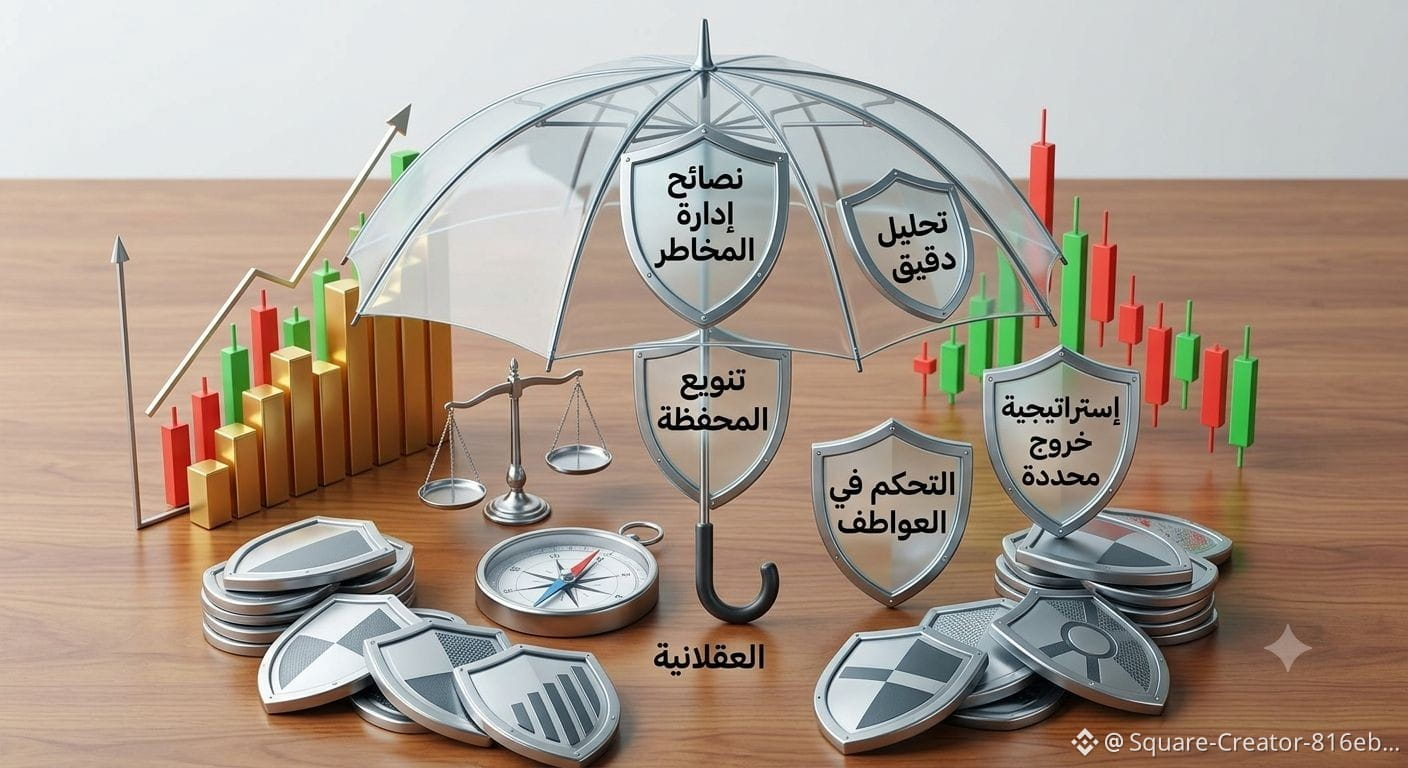
🧠 Psychological Traps and Risk Management in Trading: How to Protect Your Capital?
The biggest enemy of a trader isn’t technical analysis—it’s emotions and psychological traps you fall into during the market’s rapid movements!
Here are the top 3 psychological traps and risk-management rules to avoid them:
1️⃣ The Fear of Missing Out (FOMO) Trap:
Problem: Buying at the peaks when the currency rises sharply, out of fear of missing out on profits.
Solution: Don’t enter any trade without a predefined plan and specific entry levels.
2️⃣ Revenge Trading:
Problem: Trying to open fast, large trades after a certain loss to get your money back immediately—only to expose yourself to even bigger losses.
Solution: When a loss happens, close the screen and take a break to evaluate your plan calmly.
3️⃣ Not Using a Stop Loss:
Problem: Constant hope that the price will return, leading to account liquidation or tying up your capital for long periods.
Solution: Set your stop-loss order before entering the trade, and never change it under the influence of emotion.
🛡️ The Golden Rule:
Risk no more than 1% to 3% of your total portfolio on a single trade. Staying in the market is more important than quick profit!
#Binance #cryptouniverseofficial #RiskManagementMastery #TrendingTopic #تداول_العملات_الرقمية
🧠 Psychological Traps and Risk Management in Trading: How to Protect Your Capital?
The biggest enemy of a trader isn’t technical analysis—it’s emotions and psychological traps you fall into during the market’s rapid movements!
Here are the top 3 psychological traps and risk-management rules to avoid them:
1️⃣ The Fear of Missing Out (FOMO) Trap:
Problem: Buying at the peaks when the currency rises sharply, out of fear of missing out on profits.
Solution: Don’t enter any trade without a predefined plan and specific entry levels.
2️⃣ Revenge Trading:
Problem: Trying to open fast, large trades after a certain loss to get your money back immediately—only to expose yourself to even bigger losses.
Solution: When a loss happens, close the screen and take a break to evaluate your plan calmly.
3️⃣ Not Using a Stop Loss:
Problem: Constant hope that the price will return, leading to account liquidation or tying up your capital for long periods.
Solution: Set your stop-loss order before entering the trade, and never change it under the influence of emotion.
🛡️ The Golden Rule:
Risk no more than 1% to 3% of your total portfolio on a single trade. Staying in the market is more important than quick profit!
#Binance #cryptouniverseofficial #RiskManagementMastery #TrendingTopic #تداول_العملات_الرقمية
The biggest enemy of a trader isn’t technical analysis—it’s emotions and psychological traps you fall into during the market’s rapid movements!
Here are the top 3 psychological traps and risk-management rules to avoid them:
1️⃣ The Fear of Missing Out (FOMO) Trap:
Problem: Buying at the peaks when the currency rises sharply, out of fear of missing out on profits.
Solution: Don’t enter any trade without a predefined plan and specific entry levels.
2️⃣ Revenge Trading:
Problem: Trying to open fast, large trades after a certain loss to get your money back immediately—only to expose yourself to even bigger losses.
Solution: When a loss happens, close the screen and take a break to evaluate your plan calmly.
3️⃣ Not Using a Stop Loss:
Problem: Constant hope that the price will return, leading to account liquidation or tying up your capital for long periods.
Solution: Set your stop-loss order before entering the trade, and never change it under the influence of emotion.
🛡️ The Golden Rule:
Risk no more than 1% to 3% of your total portfolio on a single trade. Staying in the market is more important than quick profit!
#Binance #cryptouniverseofficial #RiskManagementMastery #TrendingTopic #تداول_العملات_الرقمية
207

⚠️ $SOL TRADERS — READ THIS BEFORE ENTERING
Seeing a coin pump can make you feel like you're missing out.
But FOMO can turn a good opportunity into a bad entry.
Before trading $SOL, ask yourself:
1️⃣ Where is my entry?
2️⃣ Where is my stop-loss?
3️⃣ Where will I take profit?
4️⃣ How much am I risking?
If you can't answer these questions, don't rush the trade. 🚫
Protecting your capital comes first. 💰
#SOL #Solana #CryptoTrading #RiskManagementMastery
⚠️ $SOL TRADERS — READ THIS BEFORE ENTERING
Seeing a coin pump can make you feel like you're missing out.
But FOMO can turn a good opportunity into a bad entry.
Before trading $SOL, ask yourself:
1️⃣ Where is my entry?
2️⃣ Where is my stop-loss?
3️⃣ Where will I take profit?
4️⃣ How much am I risking?
If you can't answer these questions, don't rush the trade. 🚫
Protecting your capital comes first. 💰
#SOL #Solana #CryptoTrading #RiskManagementMastery
Seeing a coin pump can make you feel like you're missing out.
But FOMO can turn a good opportunity into a bad entry.
Before trading $SOL, ask yourself:
1️⃣ Where is my entry?
2️⃣ Where is my stop-loss?
3️⃣ Where will I take profit?
4️⃣ How much am I risking?
If you can't answer these questions, don't rush the trade. 🚫
Protecting your capital comes first. 💰
#SOL #Solana #CryptoTrading #RiskManagementMastery
125

📊 Trading isn’t about predicting every move.
It’s about managing risk when the market doesn’t move your way.
Before entering any trade, ask yourself:
• Where is my entry?
• Where is my stop-loss?
• What is my risk?
• Is the setup actually worth taking?
🎯 Protect your capital first. Profits come second.
In crypto, surviving the market is already a skill.
#Binance #crypto #TradingTales #bitcoin #RiskManagementMastery
📊 Trading isn’t about predicting every move.
It’s about managing risk when the market doesn’t move your way.
Before entering any trade, ask yourself:
• Where is my entry?
• Where is my stop-loss?
• What is my risk?
• Is the setup actually worth taking?
🎯 Protect your capital first. Profits come second.
In crypto, surviving the market is already a skill.
#Binance #crypto #TradingTales #bitcoin #RiskManagementMastery
It’s about managing risk when the market doesn’t move your way.
Before entering any trade, ask yourself:
• Where is my entry?
• Where is my stop-loss?
• What is my risk?
• Is the setup actually worth taking?
🎯 Protect your capital first. Profits come second.
In crypto, surviving the market is already a skill.
#Binance #crypto #TradingTales #bitcoin #RiskManagementMastery
71

The Biggest Trading Mistake During a Crash
When the market crashes, many traders make the same mistake:
They trade their emotions instead of the market.
Fear says: ❌ “Sell everything!”
FOMO says: ❌ “Buy immediately because it bounced!”
A smarter approach: 👉 Check the reason for the move
👉 Look at volume
👉 Watch important support levels
👉 Check liquidation data
👉 Avoid making decisions purely from panic
📌 Volatility creates opportunities, but it also increases risk.
The goal isn't to predict every candle.
The goal is to manage risk when you're wrong.
#cryptotrading #BTC #tradingpsychology #RiskManagementMastery #cryptoeducation
The Biggest Trading Mistake During a Crash
When the market crashes, many traders make the same mistake:
They trade their emotions instead of the market.
Fear says: ❌ “Sell everything!”
FOMO says: ❌ “Buy immediately because it bounced!”
A smarter approach: 👉 Check the reason for the move
👉 Look at volume
👉 Watch important support levels
👉 Check liquidation data
👉 Avoid making decisions purely from panic
📌 Volatility creates opportunities, but it also increases risk.
The goal isn't to predict every candle.
The goal is to manage risk when you're wrong.
#cryptotrading #BTC #tradingpsychology #RiskManagementMastery #cryptoeducation
When the market crashes, many traders make the same mistake:
They trade their emotions instead of the market.
Fear says: ❌ “Sell everything!”
FOMO says: ❌ “Buy immediately because it bounced!”
A smarter approach: 👉 Check the reason for the move
👉 Look at volume
👉 Watch important support levels
👉 Check liquidation data
👉 Avoid making decisions purely from panic
📌 Volatility creates opportunities, but it also increases risk.
The goal isn't to predict every candle.
The goal is to manage risk when you're wrong.
#cryptotrading #BTC #tradingpsychology #RiskManagementMastery #cryptoeducation
44

·
--
📊 What Is a Stop-Loss in Trading?
A stop-loss is an order designed to help limit potential losses if the market moves against your trade.
Before entering a position, traders often decide:
🔹 Entry price
🔹 Stop-loss level
🔹 Take-profit target
🔹 Maximum amount they are willing to risk
A stop-loss does not guarantee that losses will be avoided, especially during fast market movements or price gaps. Always use proper risk management and never trade with money you cannot afford to lose.
#TradingCommunity #RiskManagementMastery #crypto #TradingTales #BinanceSquareFamily
📊 What Is a Stop-Loss in Trading?
A stop-loss is an order designed to help limit potential losses if the market moves against your trade.
Before entering a position, traders often decide:
🔹 Entry price
🔹 Stop-loss level
🔹 Take-profit target
🔹 Maximum amount they are willing to risk
A stop-loss does not guarantee that losses will be avoided, especially during fast market movements or price gaps. Always use proper risk management and never trade with money you cannot afford to lose.
#TradingCommunity #RiskManagementMastery #crypto #TradingTales #BinanceSquareFamily
A stop-loss is an order designed to help limit potential losses if the market moves against your trade.
Before entering a position, traders often decide:
🔹 Entry price
🔹 Stop-loss level
🔹 Take-profit target
🔹 Maximum amount they are willing to risk
A stop-loss does not guarantee that losses will be avoided, especially during fast market movements or price gaps. Always use proper risk management and never trade with money you cannot afford to lose.
#TradingCommunity #RiskManagementMastery #crypto #TradingTales #BinanceSquareFamily
65

·
--
Bullish
🔥 3 Golden Rules of Risk Management in Crypto Trading
Protecting your capital is far more important than chasing quick profits. To stay profitable in the long run, always follow these 3 core rules:
Always Set a Stop-Loss: Never enter a trade without a predefined exit plan. A stop-loss protects your account from sudden market volatility and liquidation.
Risk Only 1–2% Per Trade: Never allocate more than 1% to 2% of your total portfolio risk to a single trade. This preserves your capital during consecutive loss streaks.
Maintain a Positive Risk-to-Reward Ratio (RRR): Focus on trade setups offering at least a 1:2 or 1:3 ratio. A disciplined RRR ensures you remain net profitable even with a 50% win rate.
Trade your plan, not your emotions! 📈
Disclaimer: Not financial advice. Always do your own research (DYOR) before trading.
#CryptoTrading #BinanceSquare #RiskManagementMastery #CryptoTips #BTC
🔥 3 Golden Rules of Risk Management in Crypto Trading
Protecting your capital is far more important than chasing quick profits. To stay profitable in the long run, always follow these 3 core rules:
Always Set a Stop-Loss: Never enter a trade without a predefined exit plan. A stop-loss protects your account from sudden market volatility and liquidation.
Risk Only 1–2% Per Trade: Never allocate more than 1% to 2% of your total portfolio risk to a single trade. This preserves your capital during consecutive loss streaks.
Maintain a Positive Risk-to-Reward Ratio (RRR): Focus on trade setups offering at least a 1:2 or 1:3 ratio. A disciplined RRR ensures you remain net profitable even with a 50% win rate.
Trade your plan, not your emotions! 📈
Disclaimer: Not financial advice. Always do your own research (DYOR) before trading.
#CryptoTrading #BinanceSquare #RiskManagementMastery #CryptoTips #BTC
Protecting your capital is far more important than chasing quick profits. To stay profitable in the long run, always follow these 3 core rules:
Always Set a Stop-Loss: Never enter a trade without a predefined exit plan. A stop-loss protects your account from sudden market volatility and liquidation.
Risk Only 1–2% Per Trade: Never allocate more than 1% to 2% of your total portfolio risk to a single trade. This preserves your capital during consecutive loss streaks.
Maintain a Positive Risk-to-Reward Ratio (RRR): Focus on trade setups offering at least a 1:2 or 1:3 ratio. A disciplined RRR ensures you remain net profitable even with a 50% win rate.
Trade your plan, not your emotions! 📈
Disclaimer: Not financial advice. Always do your own research (DYOR) before trading.
#CryptoTrading #BinanceSquare #RiskManagementMastery #CryptoTips #BTC
62
Log in to explore more content
Join global crypto users on Binance Square
⚡️ Get latest and useful information about crypto.
💬 Trusted by the world’s largest crypto exchange.
👍 Discover real insights from verified creators.
Email / Phone number
Trending Topics
1
#GoldFallsTo$4144
0 views
2 Discussing
2
#QNTFallsOver40%FromMorningHigh
2 views
11 Discussing
3
#BitgetCEOConfirms$388MStolenInHack
0 views
1 Discussing
4
#BTCFallsBelow$83000
5,521 views
78 Discussing
5
#BitgetDetailsSecurityIncidentTimeline
1,337 views
91 Discussing
6
#BitcoinSpotETFs$2.39BWeeklyNetInflow
875 views
14 Discussing
7
#FedProposesPaymentStablecoinRules
22,292 views
454 Discussing
8
#ChinaMayLetAlibabaByteDanceBuyNvidiaChips
24,162 views
487 Discussing
9
#USChinaRelease$30BTariffCutProductLists
3,002 views
49 Discussing
10
#SKoreaFSCConsidersVirtualAssetMarketMaker
15,610 views
370 Discussing