

#riskassets
riskassets
111,730 views
778 Discussing
Hot
Latest

·
--
Ukraine’s official latest update states that Russia attacked a nuclear research reactor facility in Kyiv. The renewed escalation of the geopolitical situation immediately triggered widespread concern and vigilance from the international community.
Safety incidents involving nuclear facilities have always been extremely sensitive, often directly heightening market worries about conflict spiraling out of control. This sudden development shattered expectations of short-term easing, causing global risk-averse sentiment to rise rapidly.
In traditional financial markets, commodities such as crude oil and traditional safe-haven assets such as gold are typically boosted immediately, while risk assets such as U.S. stocks may face short-term valuation pressure. When uncertainty increases, capital tends to flow back more toward defensive holdings.
For the crypto market, $BTC often oscillates between a safe-haven narrative and the attributes of risk assets. Whether subsequent liquidity will tighten further or find an independent safe-haven outlet still requires close monitoring of how events unfold.
#Geopolitics #CryptoMarket #RiskAssets
Ukraine’s official latest update states that Russia attacked a nuclear research reactor facility in Kyiv. The renewed escalation of the geopolitical situation immediately triggered widespread concern and vigilance from the international community.
Safety incidents involving nuclear facilities have always been extremely sensitive, often directly heightening market worries about conflict spiraling out of control. This sudden development shattered expectations of short-term easing, causing global risk-averse sentiment to rise rapidly.
In traditional financial markets, commodities such as crude oil and traditional safe-haven assets such as gold are typically boosted immediately, while risk assets such as U.S. stocks may face short-term valuation pressure. When uncertainty increases, capital tends to flow back more toward defensive holdings.
For the crypto market, $BTC often oscillates between a safe-haven narrative and the attributes of risk assets. Whether subsequent liquidity will tighten further or find an independent safe-haven outlet still requires close monitoring of how events unfold.
#Geopolitics #CryptoMarket #RiskAssets
Safety incidents involving nuclear facilities have always been extremely sensitive, often directly heightening market worries about conflict spiraling out of control. This sudden development shattered expectations of short-term easing, causing global risk-averse sentiment to rise rapidly.
In traditional financial markets, commodities such as crude oil and traditional safe-haven assets such as gold are typically boosted immediately, while risk assets such as U.S. stocks may face short-term valuation pressure. When uncertainty increases, capital tends to flow back more toward defensive holdings.
For the crypto market, $BTC often oscillates between a safe-haven narrative and the attributes of risk assets. Whether subsequent liquidity will tighten further or find an independent safe-haven outlet still requires close monitoring of how events unfold.
#Geopolitics #CryptoMarket #RiskAssets
88

·
--
#NasdaqWorstDayInOverAYear
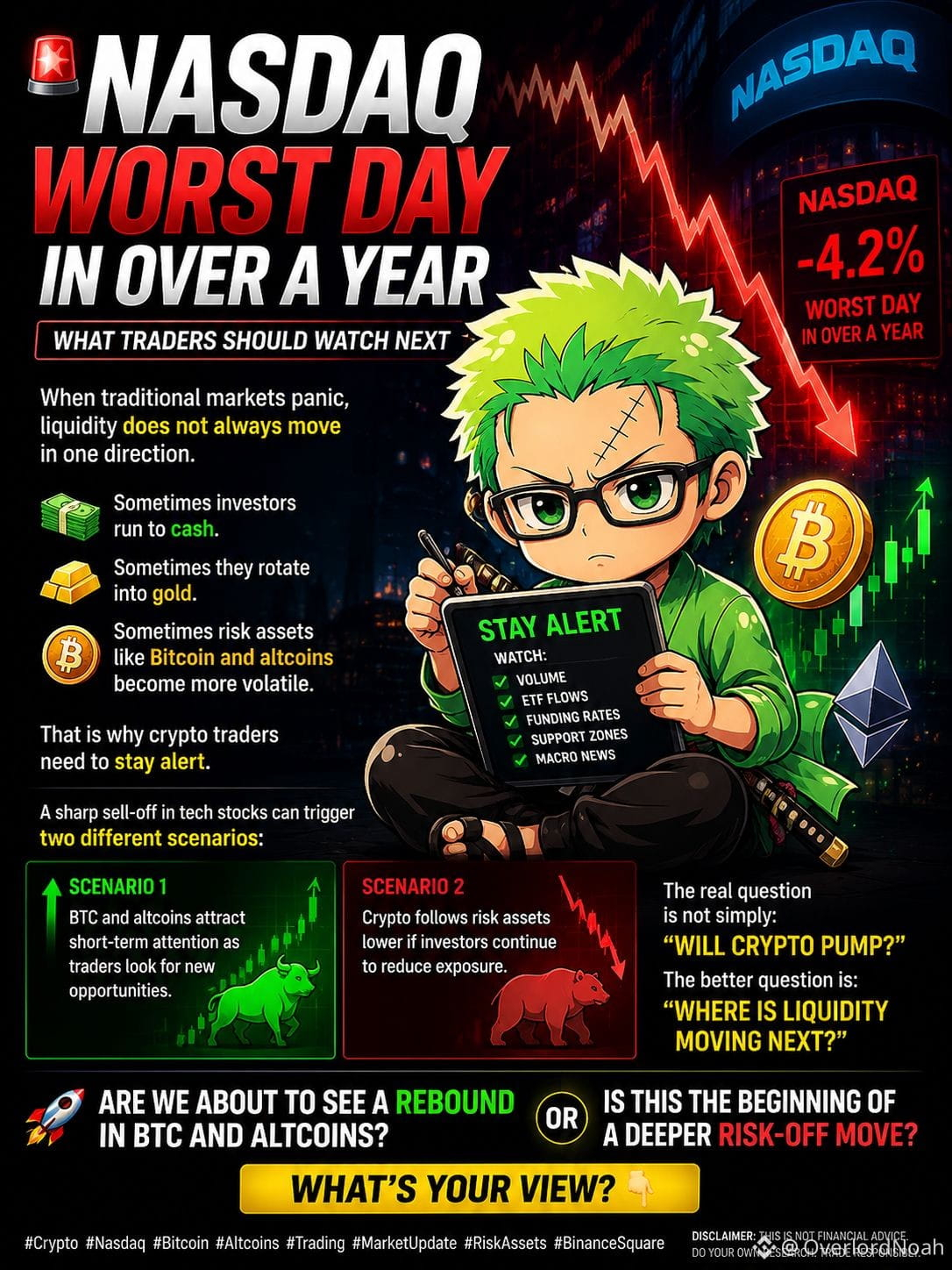
🚨 Nasdaq just had its worst day in over a year…$BTC $ETH $BNB
But here’s what many traders should watch next 👇
When traditional markets panic, liquidity does not always move in one direction.
Sometimes investors run to cash.
Sometimes they rotate into gold.
Sometimes risk assets like Bitcoin and altcoins become more volatile.
That is why crypto traders need to stay alert.
A sharp sell-off in tech stocks can trigger two different scenarios:
📈 Scenario 1:
BTC and altcoins attract short-term attention as traders look for new opportunities.
📉 Scenario 2:
Crypto follows risk assets lower if investors continue to reduce exposure.
So the real question is not simply:
“Will crypto pump?”
The better question is:
“Where is liquidity moving next?”
Smart traders don’t just react to headlines.
They watch volume, ETF flows, funding rates, support zones, and macro news.
Are we about to see a rebound in BTC and altcoins?
Or is this the beginning of a deeper risk-off move?
What’s your view? 👇
#NASDAQ #MarketUpdate #riskassets #BinanceSquare
{spot}(ETHUSDT)
{spot}(BNBUSDT)
{spot}(BTCUSDT)
#NasdaqWorstDayInOverAYear
🚨 Nasdaq just had its worst day in over a year…$BTC $ETH $BNB
But here’s what many traders should watch next 👇
When traditional markets panic, liquidity does not always move in one direction.
Sometimes investors run to cash.
Sometimes they rotate into gold.
Sometimes risk assets like Bitcoin and altcoins become more volatile.
That is why crypto traders need to stay alert.
A sharp sell-off in tech stocks can trigger two different scenarios:
📈 Scenario 1:
BTC and altcoins attract short-term attention as traders look for new opportunities.
📉 Scenario 2:
Crypto follows risk assets lower if investors continue to reduce exposure.
So the real question is not simply:
“Will crypto pump?”
The better question is:
“Where is liquidity moving next?”
Smart traders don’t just react to headlines.
They watch volume, ETF flows, funding rates, support zones, and macro news.
Are we about to see a rebound in BTC and altcoins?
Or is this the beginning of a deeper risk-off move?
What’s your view? 👇
#NASDAQ #MarketUpdate #riskassets #BinanceSquare
🚨 Nasdaq just had its worst day in over a year…$BTC $ETH $BNB
But here’s what many traders should watch next 👇
When traditional markets panic, liquidity does not always move in one direction.
Sometimes investors run to cash.
Sometimes they rotate into gold.
Sometimes risk assets like Bitcoin and altcoins become more volatile.
That is why crypto traders need to stay alert.
A sharp sell-off in tech stocks can trigger two different scenarios:
📈 Scenario 1:
BTC and altcoins attract short-term attention as traders look for new opportunities.
📉 Scenario 2:
Crypto follows risk assets lower if investors continue to reduce exposure.
So the real question is not simply:
“Will crypto pump?”
The better question is:
“Where is liquidity moving next?”
Smart traders don’t just react to headlines.
They watch volume, ETF flows, funding rates, support zones, and macro news.
Are we about to see a rebound in BTC and altcoins?
Or is this the beginning of a deeper risk-off move?
What’s your view? 👇
#NASDAQ #MarketUpdate #riskassets #BinanceSquare
85

·
--
On weekend mornings, I get up and check the charts—this setup is a bit intense. Two oil tankers in the Strait of Hormuz were blown up, and the whole US-Iran situation isn’t over yet; oil prices jumped straight up by 5%. With geopolitical risk kicking in as well, risk assets were the first to suffer.
$BTC has dropped to 63k, and the Coinbase premium has been negative for 60 straight days. The money from US institutions clearly doesn’t seem very eager to come in. Liquidity in the Asian session is already thin, so chasing a drop at a time like this is probably something to be cautious about.
With inflation expectations driven by the surge in oil prices, plus hawkish voices from the Fed, gold actually fell. Safe-haven matters aren’t that simple—it's not as direct as "buy gold if there’s risk."
Tech stocks are even worse: chip stocks have already slid into a bear market, and even SpaceX has broken below its issue price. The whole market is waiting for a clear signal.
In the short term, if the geopolitical situation keeps stirring things up, volatility is definitely not going away. Seasoned old bulls are probably in a calm, wait-and-see mode—neither randomly bottom-fishing nor panicking to cut losses.
#Bitcoin #Crypto #Oil #Geopolitics #RiskAssets
NFA DYOR
On weekend mornings, I get up and check the charts—this setup is a bit intense. Two oil tankers in the Strait of Hormuz were blown up, and the whole US-Iran situation isn’t over yet; oil prices jumped straight up by 5%. With geopolitical risk kicking in as well, risk assets were the first to suffer.
$BTC has dropped to 63k, and the Coinbase premium has been negative for 60 straight days. The money from US institutions clearly doesn’t seem very eager to come in. Liquidity in the Asian session is already thin, so chasing a drop at a time like this is probably something to be cautious about.
With inflation expectations driven by the surge in oil prices, plus hawkish voices from the Fed, gold actually fell. Safe-haven matters aren’t that simple—it's not as direct as "buy gold if there’s risk."
Tech stocks are even worse: chip stocks have already slid into a bear market, and even SpaceX has broken below its issue price. The whole market is waiting for a clear signal.
In the short term, if the geopolitical situation keeps stirring things up, volatility is definitely not going away. Seasoned old bulls are probably in a calm, wait-and-see mode—neither randomly bottom-fishing nor panicking to cut losses.
#Bitcoin #Crypto #Oil #Geopolitics #RiskAssets
NFA DYOR
$BTC has dropped to 63k, and the Coinbase premium has been negative for 60 straight days. The money from US institutions clearly doesn’t seem very eager to come in. Liquidity in the Asian session is already thin, so chasing a drop at a time like this is probably something to be cautious about.
With inflation expectations driven by the surge in oil prices, plus hawkish voices from the Fed, gold actually fell. Safe-haven matters aren’t that simple—it's not as direct as "buy gold if there’s risk."
Tech stocks are even worse: chip stocks have already slid into a bear market, and even SpaceX has broken below its issue price. The whole market is waiting for a clear signal.
In the short term, if the geopolitical situation keeps stirring things up, volatility is definitely not going away. Seasoned old bulls are probably in a calm, wait-and-see mode—neither randomly bottom-fishing nor panicking to cut losses.
#Bitcoin #Crypto #Oil #Geopolitics #RiskAssets
NFA DYOR
163

·
--
Bullish
$DOGE
{future}(DOGEUSDT)
🚨 $DOGE | MARKET RISK SENTIMENT UPDATE 👀🔥
Still staring at candles and moving averages while macro pressure is quietly taking control?
The truth is… the market isn’t moving in isolation anymore.
🌍 Liquidity is tightening
⚠️ Geopolitical tensions are rising
📉 Risk assets are becoming more sensitive to every headline shock
When global negotiations turn uncertain, it doesn’t matter how clean your chart looks—volatility usually shows up first, and explanations come later.
And this is exactly the kind of environment where $DOGE reacts the fastest 👇
🐶 High-beta meme asset
⚡ Sharp moves on liquidity shifts
📊 Emotional trading dominates price action more than fundamentals
The market has seen this pattern before: 📉 Everyone “buys the dip” too early
💥 One external shock resets sentiment
🧊 Then patience becomes the only real edge
💭 Key question now:
Are you trading structure… or are you trading the next liquidity wave?
#DOGE #Dogecoin #riskassets #Macro #trading
$DOGE
🚨 $DOGE | MARKET RISK SENTIMENT UPDATE 👀🔥
Still staring at candles and moving averages while macro pressure is quietly taking control?
The truth is… the market isn’t moving in isolation anymore.
🌍 Liquidity is tightening
⚠️ Geopolitical tensions are rising
📉 Risk assets are becoming more sensitive to every headline shock
When global negotiations turn uncertain, it doesn’t matter how clean your chart looks—volatility usually shows up first, and explanations come later.
And this is exactly the kind of environment where $DOGE reacts the fastest 👇
🐶 High-beta meme asset
⚡ Sharp moves on liquidity shifts
📊 Emotional trading dominates price action more than fundamentals
The market has seen this pattern before: 📉 Everyone “buys the dip” too early
💥 One external shock resets sentiment
🧊 Then patience becomes the only real edge
💭 Key question now:
Are you trading structure… or are you trading the next liquidity wave?
#DOGE #Dogecoin #riskassets #Macro #trading
🚨 $DOGE | MARKET RISK SENTIMENT UPDATE 👀🔥
Still staring at candles and moving averages while macro pressure is quietly taking control?
The truth is… the market isn’t moving in isolation anymore.
🌍 Liquidity is tightening
⚠️ Geopolitical tensions are rising
📉 Risk assets are becoming more sensitive to every headline shock
When global negotiations turn uncertain, it doesn’t matter how clean your chart looks—volatility usually shows up first, and explanations come later.
And this is exactly the kind of environment where $DOGE reacts the fastest 👇
🐶 High-beta meme asset
⚡ Sharp moves on liquidity shifts
📊 Emotional trading dominates price action more than fundamentals
The market has seen this pattern before: 📉 Everyone “buys the dip” too early
💥 One external shock resets sentiment
🧊 Then patience becomes the only real edge
💭 Key question now:
Are you trading structure… or are you trading the next liquidity wave?
#DOGE #Dogecoin #riskassets #Macro #trading
1
102

·
--
$C RISK SENTIMENT SNAPS BACK ⚠️
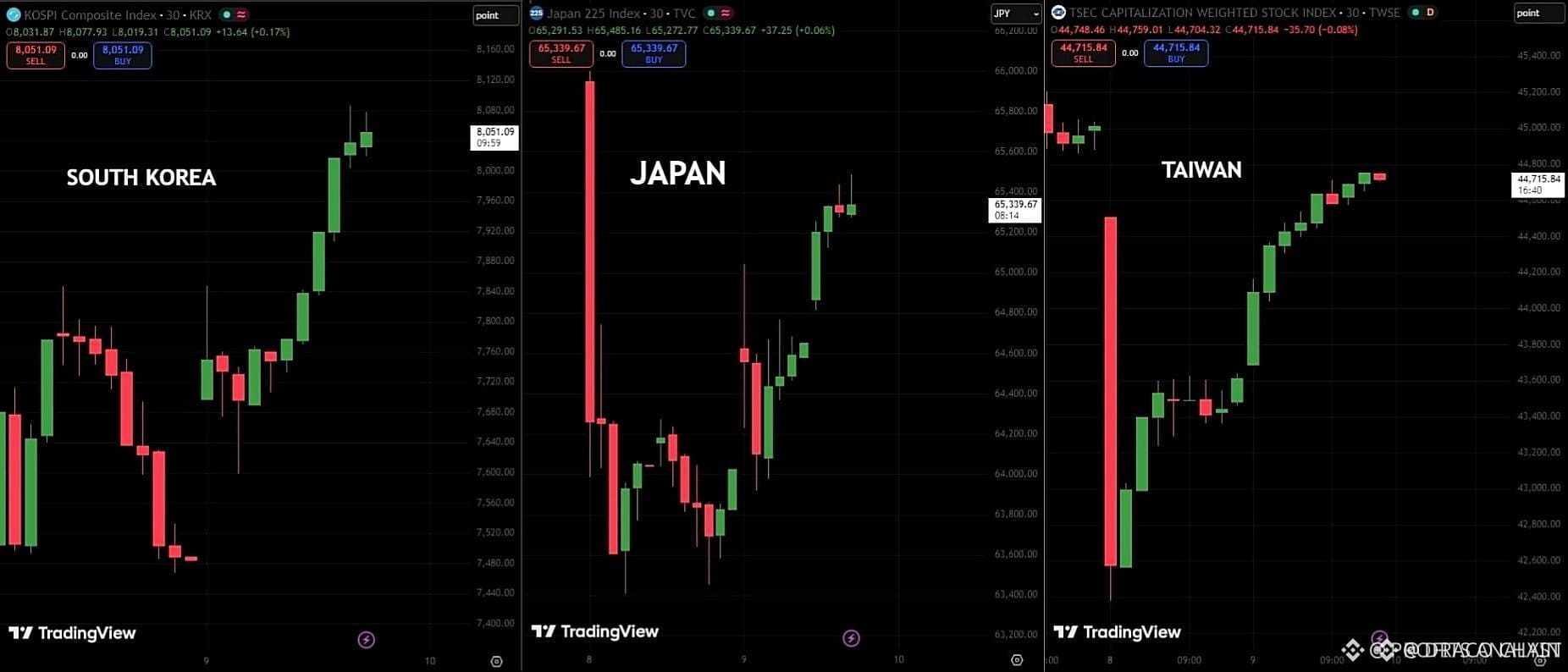
Asian equities rebounded after reports of a pause in Iran-Israel attacks improved global risk appetite, while oil prices moved lower. The recovery follows sharp prior-session losses across major regional indices, suggesting positioning was highly sensitive to geopolitical headlines.
For crypto traders, the key signal is liquidity rotation. Lower oil and firmer equities can support broader risk assets, but headline risk remains elevated and reversals can be fast. Confirmation through volume and market breadth matters more than a single rebound session.
Not financial advice. Manage your risk.
#Crypto #Markets #Oil #RiskAssets #Trading
⚡
{alpha}(84530x1bc0c42215582d5a085795f4badbac3ff36d1bcb)
$C RISK SENTIMENT SNAPS BACK ⚠️
Asian equities rebounded after reports of a pause in Iran-Israel attacks improved global risk appetite, while oil prices moved lower. The recovery follows sharp prior-session losses across major regional indices, suggesting positioning was highly sensitive to geopolitical headlines.
For crypto traders, the key signal is liquidity rotation. Lower oil and firmer equities can support broader risk assets, but headline risk remains elevated and reversals can be fast. Confirmation through volume and market breadth matters more than a single rebound session.
Not financial advice. Manage your risk.
#Crypto #Markets #Oil #RiskAssets #Trading
⚡
Asian equities rebounded after reports of a pause in Iran-Israel attacks improved global risk appetite, while oil prices moved lower. The recovery follows sharp prior-session losses across major regional indices, suggesting positioning was highly sensitive to geopolitical headlines.
For crypto traders, the key signal is liquidity rotation. Lower oil and firmer equities can support broader risk assets, but headline risk remains elevated and reversals can be fast. Confirmation through volume and market breadth matters more than a single rebound session.
Not financial advice. Manage your risk.
#Crypto #Markets #Oil #RiskAssets #Trading
⚡
76
$BTC watches risk assets as tech and crypto stocks cool ⚡
U.S. equities closed mixed, with the Dow higher while the S&P 500 and Nasdaq slipped as pressure hit key tech names. Crypto-linked equities also traded heavy, showing a softer risk tone around the sector despite selective strength in a few names.
This matters because crypto often takes cues from broader liquidity and Nasdaq sentiment. When high-beta tech and crypto equities fade together, the market usually becomes more selective and confirmation matters more than impulse entries.
Not financial advice. Manage your risk.
#BTC #CryptoMarket #MarketUpdate #RiskAssets
🚀
$BTC watches risk assets as tech and crypto stocks cool ⚡
U.S. equities closed mixed, with the Dow higher while the S&P 500 and Nasdaq slipped as pressure hit key tech names. Crypto-linked equities also traded heavy, showing a softer risk tone around the sector despite selective strength in a few names.
This matters because crypto often takes cues from broader liquidity and Nasdaq sentiment. When high-beta tech and crypto equities fade together, the market usually becomes more selective and confirmation matters more than impulse entries.
Not financial advice. Manage your risk.
#BTC #CryptoMarket #MarketUpdate #RiskAssets
🚀
U.S. equities closed mixed, with the Dow higher while the S&P 500 and Nasdaq slipped as pressure hit key tech names. Crypto-linked equities also traded heavy, showing a softer risk tone around the sector despite selective strength in a few names.
This matters because crypto often takes cues from broader liquidity and Nasdaq sentiment. When high-beta tech and crypto equities fade together, the market usually becomes more selective and confirmation matters more than impulse entries.
Not financial advice. Manage your risk.
#BTC #CryptoMarket #MarketUpdate #RiskAssets
🚀
60

·
--
$BTC watches risk appetite as Nikkei breaks record highs 📈
Japan’s Nikkei 225 has pushed above 70,000 again, setting a fresh all-time high and reinforcing the strength in global equity momentum. For crypto, this matters because sustained risk appetite in major markets can support liquidity conditions, though confirmation still needs to come from price structure and volume.
The key takeaway is not to chase the headline, but to watch whether capital rotation continues into higher-beta assets. If $BTC holds key demand zones while equities remain firm, the broader risk backdrop stays constructive.
Not financial advice. Manage your risk.
#BTC #CryptoMarket #Macro #RiskAssets
📌
$BTC watches risk appetite as Nikkei breaks record highs 📈
Japan’s Nikkei 225 has pushed above 70,000 again, setting a fresh all-time high and reinforcing the strength in global equity momentum. For crypto, this matters because sustained risk appetite in major markets can support liquidity conditions, though confirmation still needs to come from price structure and volume.
The key takeaway is not to chase the headline, but to watch whether capital rotation continues into higher-beta assets. If $BTC holds key demand zones while equities remain firm, the broader risk backdrop stays constructive.
Not financial advice. Manage your risk.
#BTC #CryptoMarket #Macro #RiskAssets
📌
Japan’s Nikkei 225 has pushed above 70,000 again, setting a fresh all-time high and reinforcing the strength in global equity momentum. For crypto, this matters because sustained risk appetite in major markets can support liquidity conditions, though confirmation still needs to come from price structure and volume.
The key takeaway is not to chase the headline, but to watch whether capital rotation continues into higher-beta assets. If $BTC holds key demand zones while equities remain firm, the broader risk backdrop stays constructive.
Not financial advice. Manage your risk.
#BTC #CryptoMarket #Macro #RiskAssets
📌
24

Liquidity Is Rotating Fast, And Risk Assets May Feel It ⚡
BlackRock’s Rick Rieder says a massive pool of money market cash could be moving back into risk assets, and that kind of rotation can support equities, credit, and crypto alike. With this week’s event risk clustering around options expiry, rebalancing, and fresh market catalysts, volatility could stay elevated even as liquidity improves.
For crypto, the message is simple: when capital starts chasing beta again, momentum can expand quickly. The key now is whether this liquidity shift turns into sustained breakout confirmation or just a short-term squeeze.
Not financial advice. Manage your risk.
#Crypto #Liquidity #RiskAssets #MarketVolatility
⚡
Liquidity Is Rotating Fast, And Risk Assets May Feel It ⚡
BlackRock’s Rick Rieder says a massive pool of money market cash could be moving back into risk assets, and that kind of rotation can support equities, credit, and crypto alike. With this week’s event risk clustering around options expiry, rebalancing, and fresh market catalysts, volatility could stay elevated even as liquidity improves.
For crypto, the message is simple: when capital starts chasing beta again, momentum can expand quickly. The key now is whether this liquidity shift turns into sustained breakout confirmation or just a short-term squeeze.
Not financial advice. Manage your risk.
#Crypto #Liquidity #RiskAssets #MarketVolatility
⚡
BlackRock’s Rick Rieder says a massive pool of money market cash could be moving back into risk assets, and that kind of rotation can support equities, credit, and crypto alike. With this week’s event risk clustering around options expiry, rebalancing, and fresh market catalysts, volatility could stay elevated even as liquidity improves.
For crypto, the message is simple: when capital starts chasing beta again, momentum can expand quickly. The key now is whether this liquidity shift turns into sustained breakout confirmation or just a short-term squeeze.
Not financial advice. Manage your risk.
#Crypto #Liquidity #RiskAssets #MarketVolatility
⚡
15

·
--
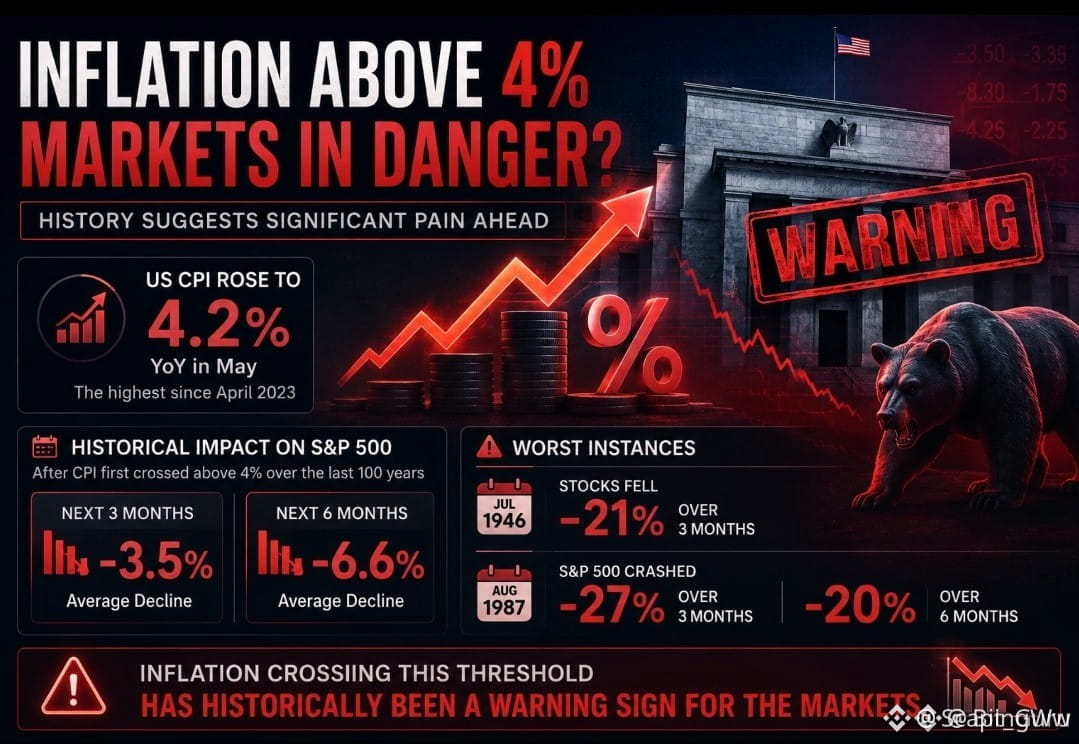
Inflation Just Crossed 4% and Risk Assets Are on Notice 📉
US CPI just printed 4.2% YoY, the hottest reading since 2023, and that is the kind of macro headline that can shake weak hands fast. History does not guarantee a repeat, but when inflation pushes above 4%, markets often get choppy and jeets start getting rekt.
If this sticks, expect more volatility across stocks and crypto alike. Stay nimble, keep size sane, and do not let FUD force bad entries.
Not financial advice. Manage your risk.
#CPI #Inflation #SP500 #RiskAssets
🛡️
Inflation Just Crossed 4% and Risk Assets Are on Notice 📉
US CPI just printed 4.2% YoY, the hottest reading since 2023, and that is the kind of macro headline that can shake weak hands fast. History does not guarantee a repeat, but when inflation pushes above 4%, markets often get choppy and jeets start getting rekt.
If this sticks, expect more volatility across stocks and crypto alike. Stay nimble, keep size sane, and do not let FUD force bad entries.
Not financial advice. Manage your risk.
#CPI #Inflation #SP500 #RiskAssets
🛡️
US CPI just printed 4.2% YoY, the hottest reading since 2023, and that is the kind of macro headline that can shake weak hands fast. History does not guarantee a repeat, but when inflation pushes above 4%, markets often get choppy and jeets start getting rekt.
If this sticks, expect more volatility across stocks and crypto alike. Stay nimble, keep size sane, and do not let FUD force bad entries.
Not financial advice. Manage your risk.
#CPI #Inflation #SP500 #RiskAssets
🛡️
23
·
--
$BTC watches risk appetite as tech leads the US open 📈
US equities opened firmer, with the S&P 500 and Nasdaq moving higher as semiconductor names showed broad strength. For crypto, this matters because stronger tech leadership often supports risk appetite, but confirmation still depends on whether momentum holds through the US session.
The cleaner read is structural: if equity breadth remains constructive, $BTC may find better support on dips. If the move fades, crypto liquidity can stay defensive.
Not financial advice. Manage your risk.
#BTC #CryptoMarket #Macro #RiskAssets
📊
$BTC watches risk appetite as tech leads the US open 📈
US equities opened firmer, with the S&P 500 and Nasdaq moving higher as semiconductor names showed broad strength. For crypto, this matters because stronger tech leadership often supports risk appetite, but confirmation still depends on whether momentum holds through the US session.
The cleaner read is structural: if equity breadth remains constructive, $BTC may find better support on dips. If the move fades, crypto liquidity can stay defensive.
Not financial advice. Manage your risk.
#BTC #CryptoMarket #Macro #RiskAssets
📊
US equities opened firmer, with the S&P 500 and Nasdaq moving higher as semiconductor names showed broad strength. For crypto, this matters because stronger tech leadership often supports risk appetite, but confirmation still depends on whether momentum holds through the US session.
The cleaner read is structural: if equity breadth remains constructive, $BTC may find better support on dips. If the move fades, crypto liquidity can stay defensive.
Not financial advice. Manage your risk.
#BTC #CryptoMarket #Macro #RiskAssets
📊
66


·
--
Bearish
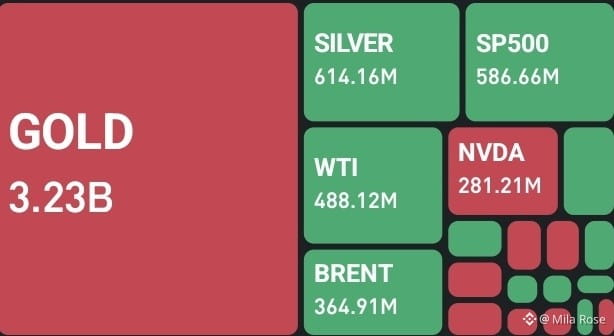
🩸 Gold Under Pressure: Is Capital Rotating Toward Risk Assets?💥
The latest global asset map (1000123822.jpg) shows noticeable weakness in gold, while other markets are showing a more mixed but generally risk-on tone.
📊 Market Snapshot
Gold $XAU is seeing clear downside pressure with broad red flows
Silver, WTI $CL crude, and the S&P 500 are holding a stronger green bias
Even major tech names like NVIDIA ($NVDA ) are slightly cooling off after recent strength
🔄 Macro Insight
This type of rotation often signals shifting capital across asset classes. When traditional safe-havens like gold weaken, liquidity tends to move into higher-risk markets seeking better returns.
The key question now is whether any of this capital rotation starts flowing into crypto, especially during periods of elevated volatility.
👀 What to Watch
Markets are in a transition phase, and positioning matters more than ever. The next move could depend on how long this rotation continues and where liquidity settles next.
#Gold #Crypto #Macro #Markets #RiskAssets
🩸 Gold Under Pressure: Is Capital Rotating Toward Risk Assets?💥
The latest global asset map (1000123822.jpg) shows noticeable weakness in gold, while other markets are showing a more mixed but generally risk-on tone.
📊 Market Snapshot
Gold $XAU is seeing clear downside pressure with broad red flows
Silver, WTI $CL crude, and the S&P 500 are holding a stronger green bias
Even major tech names like NVIDIA ($NVDA ) are slightly cooling off after recent strength
🔄 Macro Insight
This type of rotation often signals shifting capital across asset classes. When traditional safe-havens like gold weaken, liquidity tends to move into higher-risk markets seeking better returns.
The key question now is whether any of this capital rotation starts flowing into crypto, especially during periods of elevated volatility.
👀 What to Watch
Markets are in a transition phase, and positioning matters more than ever. The next move could depend on how long this rotation continues and where liquidity settles next.
#Gold #Crypto #Macro #Markets #RiskAssets
The latest global asset map (1000123822.jpg) shows noticeable weakness in gold, while other markets are showing a more mixed but generally risk-on tone.
📊 Market Snapshot
Gold $XAU is seeing clear downside pressure with broad red flows
Silver, WTI $CL crude, and the S&P 500 are holding a stronger green bias
Even major tech names like NVIDIA ($NVDA ) are slightly cooling off after recent strength
🔄 Macro Insight
This type of rotation often signals shifting capital across asset classes. When traditional safe-havens like gold weaken, liquidity tends to move into higher-risk markets seeking better returns.
The key question now is whether any of this capital rotation starts flowing into crypto, especially during periods of elevated volatility.
👀 What to Watch
Markets are in a transition phase, and positioning matters more than ever. The next move could depend on how long this rotation continues and where liquidity settles next.
#Gold #Crypto #Macro #Markets #RiskAssets
281

SpaceX valuation debate puts risk assets back in focus 🚀 $BTC
Neil Shen’s latest comments on SpaceX highlight a bigger market theme: investors are still willing to price exceptional growth far into the future when the business model is strong enough.
For crypto, this matters because high-conviction growth narratives often spill into broader risk appetite, especially when liquidity conditions improve.
The key takeaway is discipline. Big valuations can be justified, but only when long-term profit potential turns into real execution. That same lens applies across crypto: strong narratives need confirmation through adoption, revenue, liquidity, and market structure.
Not financial advice. Manage your risk.
#BTC #CryptoMarket #RiskAssets #MarketStructure
⚡
SpaceX valuation debate puts risk assets back in focus 🚀 $BTC
Neil Shen’s latest comments on SpaceX highlight a bigger market theme: investors are still willing to price exceptional growth far into the future when the business model is strong enough.
For crypto, this matters because high-conviction growth narratives often spill into broader risk appetite, especially when liquidity conditions improve.
The key takeaway is discipline. Big valuations can be justified, but only when long-term profit potential turns into real execution. That same lens applies across crypto: strong narratives need confirmation through adoption, revenue, liquidity, and market structure.
Not financial advice. Manage your risk.
#BTC #CryptoMarket #RiskAssets #MarketStructure
⚡
Neil Shen’s latest comments on SpaceX highlight a bigger market theme: investors are still willing to price exceptional growth far into the future when the business model is strong enough.
For crypto, this matters because high-conviction growth narratives often spill into broader risk appetite, especially when liquidity conditions improve.
The key takeaway is discipline. Big valuations can be justified, but only when long-term profit potential turns into real execution. That same lens applies across crypto: strong narratives need confirmation through adoption, revenue, liquidity, and market structure.
Not financial advice. Manage your risk.
#BTC #CryptoMarket #RiskAssets #MarketStructure
⚡
16
$BTC watches risk appetite as SpaceX volatility hits markets 🛰️
SpaceX’s massive post-IPO surge briefly pushed its valuation near $2.94 trillion before momentum cooled. The move shows how aggressively capital is rotating into high-growth narratives, but the overbought RSI and valuation concerns are now forcing traders to respect short-term volatility.
This matters for crypto because big speculative equity moves often spill into broader risk sentiment. If buyers keep chasing innovation-led assets, $BTC could benefit from stronger risk appetite; if the pullback deepens, liquidity may tighten across high-beta markets.
Not financial advice. Manage your risk.
#BTC #CryptoMarket #MarketUpdate #RiskAssets #Trading
✅
$BTC watches risk appetite as SpaceX volatility hits markets 🛰️
SpaceX’s massive post-IPO surge briefly pushed its valuation near $2.94 trillion before momentum cooled. The move shows how aggressively capital is rotating into high-growth narratives, but the overbought RSI and valuation concerns are now forcing traders to respect short-term volatility.
This matters for crypto because big speculative equity moves often spill into broader risk sentiment. If buyers keep chasing innovation-led assets, $BTC could benefit from stronger risk appetite; if the pullback deepens, liquidity may tighten across high-beta markets.
Not financial advice. Manage your risk.
#BTC #CryptoMarket #MarketUpdate #RiskAssets #Trading
✅
SpaceX’s massive post-IPO surge briefly pushed its valuation near $2.94 trillion before momentum cooled. The move shows how aggressively capital is rotating into high-growth narratives, but the overbought RSI and valuation concerns are now forcing traders to respect short-term volatility.
This matters for crypto because big speculative equity moves often spill into broader risk sentiment. If buyers keep chasing innovation-led assets, $BTC could benefit from stronger risk appetite; if the pullback deepens, liquidity may tighten across high-beta markets.
Not financial advice. Manage your risk.
#BTC #CryptoMarket #MarketUpdate #RiskAssets #Trading
✅
27

CPI Above 4% Raises the Pressure on Risk Assets 📉
US inflation is back in the spotlight after CPI printed 4.2% YoY, a level that has historically tightened conditions for equities and other risk assets. The market impact is less about the headline alone and more about what it means for rate cuts, liquidity, and valuation support in the months ahead.
When inflation stays above this threshold, volatility tends to rise and investors become more selective. That does not guarantee a major drawdown, but it does shift the backdrop toward caution rather than easy upside.
Not financial advice. Manage your risk.
#CPI #MacroEconomy #StockMarket #RiskAssets
📊
CPI Above 4% Raises the Pressure on Risk Assets 📉
US inflation is back in the spotlight after CPI printed 4.2% YoY, a level that has historically tightened conditions for equities and other risk assets. The market impact is less about the headline alone and more about what it means for rate cuts, liquidity, and valuation support in the months ahead.
When inflation stays above this threshold, volatility tends to rise and investors become more selective. That does not guarantee a major drawdown, but it does shift the backdrop toward caution rather than easy upside.
Not financial advice. Manage your risk.
#CPI #MacroEconomy #StockMarket #RiskAssets
📊
US inflation is back in the spotlight after CPI printed 4.2% YoY, a level that has historically tightened conditions for equities and other risk assets. The market impact is less about the headline alone and more about what it means for rate cuts, liquidity, and valuation support in the months ahead.
When inflation stays above this threshold, volatility tends to rise and investors become more selective. That does not guarantee a major drawdown, but it does shift the backdrop toward caution rather than easy upside.
Not financial advice. Manage your risk.
#CPI #MacroEconomy #StockMarket #RiskAssets
📊
19
·
--
$BTC watches Asian equity strength as risk appetite improves 📈
Asian markets closed with strong momentum as Japan’s Nikkei 225 hit a fresh closing high, while South Korea’s KOSPI also pushed higher. SK Hynix leading the move with a 5%+ surge keeps the AI and semiconductor narrative firmly in focus.
For crypto, this matters because stronger equity risk appetite can support liquidity conditions and sentiment across major digital assets. $BTC remains the key barometer here: if buyers defend structure and volatility expands, the next move could be driven by broader macro confidence rather than isolated crypto headlines.
Not financial advice. Manage your risk.
#BTC #CryptoMarket #MarketUpdate #RiskAssets
⚡
$BTC watches Asian equity strength as risk appetite improves 📈
Asian markets closed with strong momentum as Japan’s Nikkei 225 hit a fresh closing high, while South Korea’s KOSPI also pushed higher. SK Hynix leading the move with a 5%+ surge keeps the AI and semiconductor narrative firmly in focus.
For crypto, this matters because stronger equity risk appetite can support liquidity conditions and sentiment across major digital assets. $BTC remains the key barometer here: if buyers defend structure and volatility expands, the next move could be driven by broader macro confidence rather than isolated crypto headlines.
Not financial advice. Manage your risk.
#BTC #CryptoMarket #MarketUpdate #RiskAssets
⚡
Asian markets closed with strong momentum as Japan’s Nikkei 225 hit a fresh closing high, while South Korea’s KOSPI also pushed higher. SK Hynix leading the move with a 5%+ surge keeps the AI and semiconductor narrative firmly in focus.
For crypto, this matters because stronger equity risk appetite can support liquidity conditions and sentiment across major digital assets. $BTC remains the key barometer here: if buyers defend structure and volatility expands, the next move could be driven by broader macro confidence rather than isolated crypto headlines.
Not financial advice. Manage your risk.
#BTC #CryptoMarket #MarketUpdate #RiskAssets
⚡
128
$BTC watches global risk appetite as Nikkei hits fresh highs 📈
Japan’s Nikkei 225 has pushed beyond the 70,000 mark again, setting a new all-time high and reinforcing the strength in global equities.
For crypto, this matters because strong equity momentum can support broader risk appetite, especially if liquidity conditions stay favorable. $BTC remains the key asset to watch for confirmation, as crypto often reacts fastest when macro sentiment shifts from cautious to constructive.
Not financial advice. Manage your risk.
#BTC #CryptoMarket #Macro #RiskAssets
⚡
$BTC watches global risk appetite as Nikkei hits fresh highs 📈
Japan’s Nikkei 225 has pushed beyond the 70,000 mark again, setting a new all-time high and reinforcing the strength in global equities.
For crypto, this matters because strong equity momentum can support broader risk appetite, especially if liquidity conditions stay favorable. $BTC remains the key asset to watch for confirmation, as crypto often reacts fastest when macro sentiment shifts from cautious to constructive.
Not financial advice. Manage your risk.
#BTC #CryptoMarket #Macro #RiskAssets
⚡
Japan’s Nikkei 225 has pushed beyond the 70,000 mark again, setting a new all-time high and reinforcing the strength in global equities.
For crypto, this matters because strong equity momentum can support broader risk appetite, especially if liquidity conditions stay favorable. $BTC remains the key asset to watch for confirmation, as crypto often reacts fastest when macro sentiment shifts from cautious to constructive.
Not financial advice. Manage your risk.
#BTC #CryptoMarket #Macro #RiskAssets
⚡
18
Hong Kong supply wave puts $BTC risk appetite on watch 🧭
Hong Kong markets are staring at roughly $274B in fresh share supply as IPO lock-ups roll off, and that can create short-term pressure across risk assets. The key buffer, guys, is strong demand from passive index funds and regional inflows, which may help absorb the selling instead of letting weak hands fully nuke sentiment.
Look, bros, this is not a panic signal, but it is a liquidity signal. When big supply hits the market, jeets usually move first and smart money watches absorption. If demand stays strong, risk appetite can hold up better than fudders expect.
Not financial advice. Manage your risk.
#BTC #MarketUpdate #CryptoNews #RiskAssets
🚀
Hong Kong supply wave puts $BTC risk appetite on watch 🧭
Hong Kong markets are staring at roughly $274B in fresh share supply as IPO lock-ups roll off, and that can create short-term pressure across risk assets. The key buffer, guys, is strong demand from passive index funds and regional inflows, which may help absorb the selling instead of letting weak hands fully nuke sentiment.
Look, bros, this is not a panic signal, but it is a liquidity signal. When big supply hits the market, jeets usually move first and smart money watches absorption. If demand stays strong, risk appetite can hold up better than fudders expect.
Not financial advice. Manage your risk.
#BTC #MarketUpdate #CryptoNews #RiskAssets
🚀
Hong Kong markets are staring at roughly $274B in fresh share supply as IPO lock-ups roll off, and that can create short-term pressure across risk assets. The key buffer, guys, is strong demand from passive index funds and regional inflows, which may help absorb the selling instead of letting weak hands fully nuke sentiment.
Look, bros, this is not a panic signal, but it is a liquidity signal. When big supply hits the market, jeets usually move first and smart money watches absorption. If demand stays strong, risk appetite can hold up better than fudders expect.
Not financial advice. Manage your risk.
#BTC #MarketUpdate #CryptoNews #RiskAssets
🚀
18
$JTO , $ADX , and $SYN Jump as Risk Appetite Returns 🚨
The market is reacting to a sharp de-escalation in Middle East risk, with the Strait of Hormuz reopening and oil prices sliding fast. That kind of shift usually feeds a cleaner bid into risk assets, especially when traders unwind defensive positioning.
The move is less about the headline itself and more about what it removes from the tape: energy shock risk, shipping disruption, and near-term macro stress. If this holds, momentum could stay constructive, but follow-through still needs confirmation from spot demand and broader market structure.
Not financial advice. Manage your risk.
#JTO #ADX #SYN #RiskAssets #CryptoNews
🟢
$JTO , $ADX , and $SYN Jump as Risk Appetite Returns 🚨
The market is reacting to a sharp de-escalation in Middle East risk, with the Strait of Hormuz reopening and oil prices sliding fast. That kind of shift usually feeds a cleaner bid into risk assets, especially when traders unwind defensive positioning.
The move is less about the headline itself and more about what it removes from the tape: energy shock risk, shipping disruption, and near-term macro stress. If this holds, momentum could stay constructive, but follow-through still needs confirmation from spot demand and broader market structure.
Not financial advice. Manage your risk.
#JTO #ADX #SYN #RiskAssets #CryptoNews
🟢
The market is reacting to a sharp de-escalation in Middle East risk, with the Strait of Hormuz reopening and oil prices sliding fast. That kind of shift usually feeds a cleaner bid into risk assets, especially when traders unwind defensive positioning.
The move is less about the headline itself and more about what it removes from the tape: energy shock risk, shipping disruption, and near-term macro stress. If this holds, momentum could stay constructive, but follow-through still needs confirmation from spot demand and broader market structure.
Not financial advice. Manage your risk.
#JTO #ADX #SYN #RiskAssets #CryptoNews
🟢
259

·
--
Another explosion in Syria, 1 death and 4 injured! Geopolitical tensions are escalating, and market risk-avoidance sentiment is heating up. In the face of uncertainty, digital assets like Bitcoin are becoming a new safe haven. #地缘政治 #风险资产 $BTC
Another explosion in Syria, 1 dead and 4 injured! Geopolitical tensions rising, market避险 sentiment heating up. Amid uncertainty, digital assets like Bitcoin are becoming new safe havens. #Geopolitics #RiskAssets $BTC
Another explosion in Syria, 1 death and 4 injured! Geopolitical tensions are escalating, and market risk-avoidance sentiment is heating up. In the face of uncertainty, digital assets like Bitcoin are becoming a new safe haven. #地缘政治 #风险资产 $BTC
Another explosion in Syria, 1 dead and 4 injured! Geopolitical tensions rising, market避险 sentiment heating up. Amid uncertainty, digital assets like Bitcoin are becoming new safe havens. #Geopolitics #RiskAssets $BTC
Another explosion in Syria, 1 dead and 4 injured! Geopolitical tensions rising, market避险 sentiment heating up. Amid uncertainty, digital assets like Bitcoin are becoming new safe havens. #Geopolitics #RiskAssets $BTC
58
·
--
Hang Seng property stocks plunge collectively; Sunac China is down 8%+, and KinDev Holdings is down more than 4%. Property market risks are increasing, and risk assets like Bitcoin may come under pressure. Crypto investors should watch for changes in risk appetite! #房地产市场 #风险资产 $BTC
HK property stocks taking a nosedive, Sunac China down 8%+, KinDev Holdings down 4%. Property market risk rising, Bitcoin and other risk assets may face pressure. Crypto investors watch for risk appetite shifts! #RealEstate #RiskAssets $BTC
Hang Seng property stocks plunge collectively; Sunac China is down 8%+, and KinDev Holdings is down more than 4%. Property market risks are increasing, and risk assets like Bitcoin may come under pressure. Crypto investors should watch for changes in risk appetite! #房地产市场 #风险资产 $BTC
HK property stocks taking a nosedive, Sunac China down 8%+, KinDev Holdings down 4%. Property market risk rising, Bitcoin and other risk assets may face pressure. Crypto investors watch for risk appetite shifts! #RealEstate #RiskAssets $BTC
HK property stocks taking a nosedive, Sunac China down 8%+, KinDev Holdings down 4%. Property market risk rising, Bitcoin and other risk assets may face pressure. Crypto investors watch for risk appetite shifts! #RealEstate #RiskAssets $BTC
90
Log in to explore more content
Join global crypto users on Binance Square
⚡️ Get latest and useful information about crypto.
💬 Trusted by the world’s largest crypto exchange.
👍 Discover real insights from verified creators.
Email / Phone number
Trending Topics
1
#CerebrasSinksNearly20%OnReportNvidiaToPowerOpenAI
218 views
30 Discussing
2
#SECProposesCryptoCustodyRules
14,113 views
182 Discussing
3
#SECApproves3xLongCryptoCommodityETPs
14,083 views
193 Discussing
4
#G7PlansToReleaseUpTo100MBarrelsOilDiesel
15,113 views
236 Discussing
5
#ICBASuesOCCOverCryptoBankCharters
12,904 views
160 Discussing
6
#USStocksCloseHigherOnWeakJobsData
12,224 views
141 Discussing
7
#AnchorageReportedlyCuts17%Workforce
1,120 views
50 Discussing
8
#NFPWatch
11M views
19,630 Discussing
9
#NEARIntentsRecovers$3.8MAfterAttack
0 views
1 Discussing
10
#BlastToGraduallyShutDownItsL2Network
755 views
42 Discussing