
#qubic
qubic
267,507 views
645 Discussing
Hot
Latest

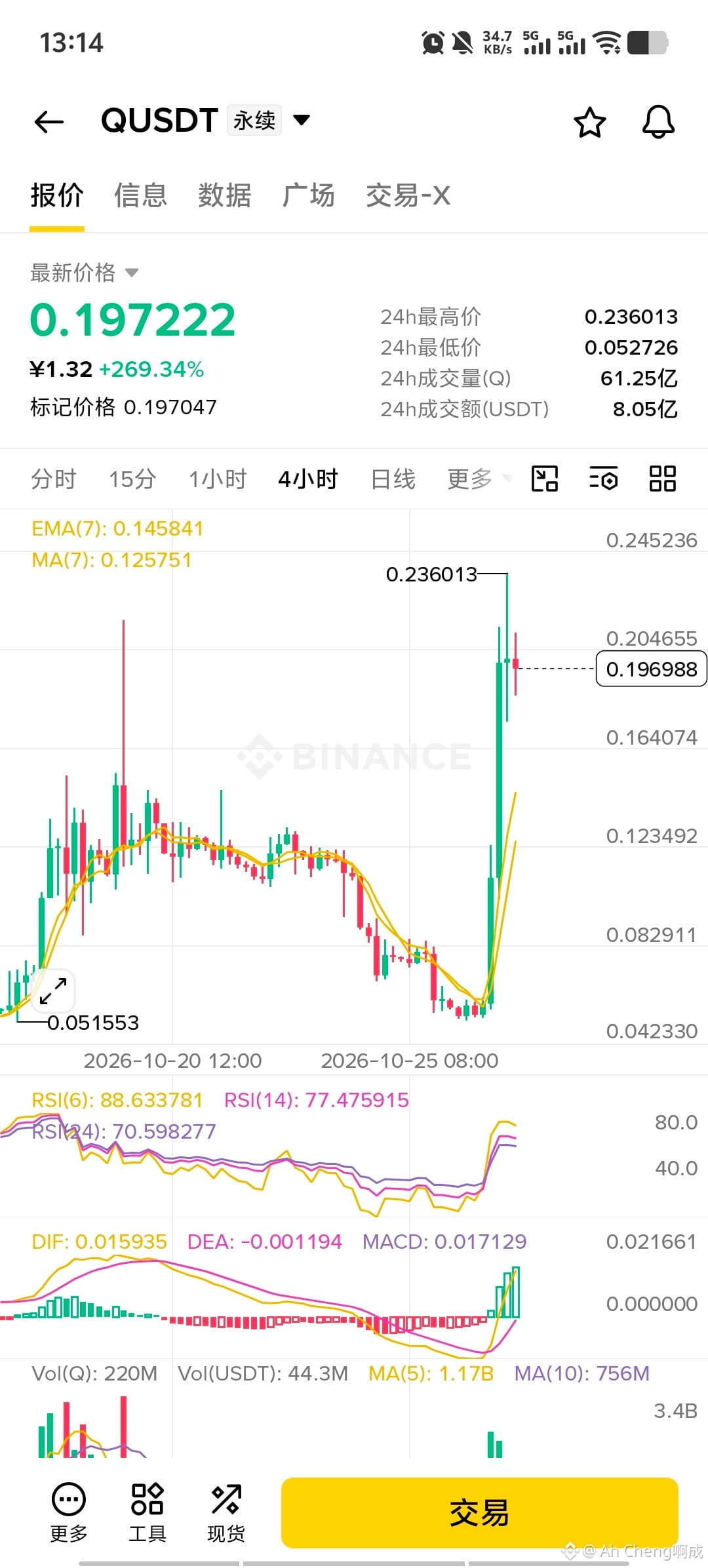
🚀 $QUBIC , $KAS & $TAO ON THE EDGE OF A BREAKOUT 🦈
📊 The order book on a top‑tier exchange shows a massive buy wall forming just below $0.0006 for $QUBIC , hinting that smart money is priming a liquidity sweep. 🌊 Simultaneously, $KAS is flirting with the $3 mark as whale‑size bids absorb sell pressure, while $TAO ’s volume spike at $1,800 suggests a bullish wave ready to crest.
⚡ With momentum gathering across three assets, the race is on—who will punch through first? 💬 Which token will break the ceiling first? 👇
⚠️ Not financial advice. Always manage your risk. 🛡️
🏷️ #QUBIC #KAS #TAO #Breakout #Crypto
🔥 💎
60
·
--
🦈 $QUBIC $KAS $TAO RACE TO CRITICAL LEVELS 🚀
📊 Institutional liquidity is gravitating toward the $0.0006 zone on $QUBIC , where a tight order block has held three consecutive tests. The 4H volume spike suggests smart money is positioning for a short‑term push.
🦈 $KAS eyes the $3 threshold, a historic swing point that previously triggered a rapid reversal after a liquidity sweep. The recent bearish imbalance on the 1H chart leaves a clear imbalance gap ready to be filled. $TAO ’s $1,800 mark sits atop a demand zone that absorbed sell pressure on the daily, hinting at a potential upside retest. 📌
💬 Which of these three will breach its target first? 👇
⚠️ Not financial advice. Always manage your risk. 🛡️
🏷️ #QUBIC #KAS #TAO #SmartMoney #Altcoin
🦈 🔥
50


🔐 Qubic restarts its chain after $1.4 million was stolen: the funds were recovered, but what about “immutability”?
This wasn’t a smart contract vulnerability—it was weak mnemonic generation.
According to multiple reports, attackers exploited weak-randomness mnemonics generated by some wallets in mobile browsers (some reports say Apple devices were involved), stealing about 2.94 trillion QU—worth roughly $1.4 million—from 1,404 accounts.
🔹 676 Computors (validator nodes) shut down the entire network, freezing about 87.1% of the stolen QU on-chain
🔹 The remaining 12.9% or so went to MEXC, and the receiving account has been frozen
🔹 Validators voted to approve a recovery plan, and the chain has restarted. Affected users can apply to recover their funds by May 1, 2027
The community is split: one side says the network worked as intended and saved users’ money; the other says that if a chain can be stopped and rolled back at will, then its finality depends on people, not code.
My take: this is obviously a happy ending for the victims. But as a token holder, be clear-eyed: the power that can save you can also freeze your assets. This isn’t about right or wrong—it’s about the rules you’re willing to accept when choosing a chain.
A more practical lesson: the security of your mnemonic is only as strong as the tool that generated it. Don’t create wallets on websites, with browser extensions, or using untrusted tools. Use a reputable wallet app or hardware wallet. If your old wallet was created on a website, consider creating a new wallet and transferring your assets.
Would you rather use a chain that can be rolled back when something goes wrong, or one that no one can change?
#Qubic #钱包安全 #助记词 #BlockchainSecurity
36

·
--
【Market Update】1,404 accounts were emptied, forcing Qubic to pause its mainnet—the problem lay with third-party wallet software, but token holders were the first to pay the price. Once the wallet layer is compromised, taking the network offline can only limit further losses; it can’t easily restore the trust already damaged. It’s also a reminder not to keep large amounts of assets in a single wallet for the long term. Would you dare to keep all your assets in one wallet?
(Source: CryptoBriefing)
$QUBIC $BTC $ETH
#币安广场 #Qubic #WalletSecurity
⚠️Risk warning: The above is shared for informational purposes only and does not constitute investment advice. Investing involves risk; please exercise caution.
(Source: CryptoBriefing)
$QUBIC $BTC $ETH
#币安广场 #Qubic #WalletSecurity
⚠️Risk warning: The above is shared for informational purposes only and does not constitute investment advice. Investing involves risk; please exercise caution.

577

Qubic freezes 1,400 weak-seed wallets
- Qubic: 1,400 wallets exploited due to weak seeds
- 87.1% of the stolen funds remain on-chain, with the rest at MEXC
- Validators prepare to vote on a recovery plan
#BinanceSquare #CryptoNews #Qubic
$qubic
#vlikevn #Titanbot
Source: CoinTelegraph
Qubic freezes 1,400 weak-seed wallets
- Qubic: 1,400 wallets exploited due to weak seeds
- 87.1% of the stolen funds remain on-chain, with the rest at MEXC
- Validators prepare to vote on a recovery plan
#BinanceSquare #CryptoNews #Qubic
$qubic
#vlikevn #Titanbot
Source: CoinTelegraph
- Qubic: 1,400 wallets exploited due to weak seeds
- 87.1% of the stolen funds remain on-chain, with the rest at MEXC
- Validators prepare to vote on a recovery plan
#BinanceSquare #CryptoNews #Qubic
$qubic
#vlikevn #Titanbot
Source: CoinTelegraph
1

·
--
$BTC Hold on before you look at that—this Qubic saga is even crazier.
A hacker used weak seed phrases to steal from 1,400 wallets, but 87.1% of the funds are still sitting untouched on-chain.
Qubic hit back by freezing the entire chain, and MEXC has the remaining funds locked down.
Validators are preparing to vote on how to restore things. Put simply, a thief broke in and ransacked half the house, then the owner welded the door shut so even their own people can't get out.
That was a pretty heavy freeze, but at least the money didn't get away. The hacker's probably more panicked than anyone right now—they stole a real hot potato.
If you think the chain was unfairly frozen, come vent in the comments. #Qubic #WalletSecurity

88

·
--
🚨 $QUBIC SECURITY BREACH REVEALS SEED VULNERABILITY 🦈
The incident underscores a classic smart‑money move: exploit predictable entropy before the network even feels the strain. 🦈 The 1,404 compromised wallets acted as a liquidity sink, draining $1.4 M while the blockchain itself stayed intact.
📌 Our analysis flags the seed‑generation window—iOS Safari and early Qubic app builds—as a high‑risk entropy pool. 📊 On‑chain data shows 87 % of the stolen tokens frozen, a clear sign that the attacker’s exit strategy was throttled by the network’s freeze logic.
The takeaway for any institutional holder: secure the key‑creation layer as fiercely as the custody layer. 🔍 Upgrade to deterministic wallets, audit RNG sources, and treat any pre‑Oct‑18 seed as compromised.
💬 What steps are you taking to audit seed randomness in your custodial pipelines? 👇
⚠️ Not financial advice. Always manage your risk. 🛡️
🏷️ #QUBIC #WalletSecurity #SmartMoney #Crypto #RiskManagement
🦈 📊

1

·
--
The Qubic network was attacked, and 1,404 wallets lost approximately 2.94 trillion QU. Around 87.1% of the stolen funds have been frozen. The attacker exploited a vulnerability caused by insufficient randomness in wallet seeds. Qubic immediately suspended network transactions and released a fix in version 4.26.4. Other exchanges have suspended QUBIC deposits and withdrawals to jointly respond to the security incident. #Qubic #区块链安全 #Cryptocurrency
The Qubic network was attacked, and 1,404 wallets lost approximately 2.94 trillion QU. Around 87.1% of the stolen funds have been frozen. The attacker exploited a vulnerability caused by insufficient randomness in wallet seeds. Qubic immediately suspended network transactions and released a fix in version 4.26.4. Other exchanges have suspended QUBIC deposits and withdrawals to jointly respond to the security incident. #Qubic #区块链安全 #Cryptocurrency
73
Qubic pauses chain after 1.4K wallets are attacked due to weak seeds
- News: Qubic shuts down chain after reports that 1.4K wallets were attacked due to weak seeds
- 87.1% of funds are safe on-chain; the rest are stranded on MEXC
- Validators prepare a recovery plan
#Qubic #CryptoNews #BTC #ETH
$btc $eth
#vlikevn Titanbot
Source: CoinTelegraph
- News: Qubic shuts down chain after reports that 1.4K wallets were attacked due to weak seeds
- 87.1% of funds are safe on-chain; the rest are stranded on MEXC
- Validators prepare a recovery plan
#Qubic #CryptoNews #BTC #ETH
$btc $eth
#vlikevn Titanbot
Source: CoinTelegraph
255

🚨 $QUBIC: AN ATTACK AFFECTED 1,404 WALLETS AND FORCED THE NETWORK TO SHUT DOWN
Qubic reported that between October 17 and 18, an attacker stole approximately 2.94 trillion QU, worth around US$1.4 million at the time of the incident.
🔎 WHAT HAPPENED?
The problem was with the generation of some recovery seeds: the secret words that allow access to a wallet.
Because they were not generated with enough randomness, some could be discovered by attackers.
⚠️ WHO MIGHT BE AFFECTED?
According to the project, users who created their seeds:
• On an iPhone or iPad, before 10/18/2026.
• In Safari on a Mac, before 10/18/2026.
• In the Qubic iOS app, before July 2025.
This does NOT mean that all Apple wallets or other cryptocurrencies are vulnerable.
🛑 WHAT MEASURES WERE TAKEN?
The network was shut down to limit further movement of funds.
Qubic reported that approximately 87.1% of the stolen tokens were immobilized on the network and that MEXC restricted the account that received the rest.
But frozen funds do NOT mean recovered funds.
🛡️ WHAT SHOULD YOU DO IF YOU USE QUBIC?
Check the official announcements. Updating the app does not make a compromised old seed safe.
Do not share your recovery words or trust supposed recovery services.
📌 THE KEY TAKEAWAY
A cryptocurrency's security also depends on how its users' keys are generated and protected.
Source: Qubic announcement dated 10/18/2026.
💬 Do you think stopping a blockchain during an attack protects users or creates another problem?
#Qubic #CryptoSecurity
128

·
--
Article
How Does the Brain Handle Time: Distributed Clocks & AI LimitsNeuraxon Intelligence Academy · Volume 12 · By the Qubic Scientific Team
The brain does not have a central clock. It has many, distributed throughout the tissue and tuned to scales ranging from the microsecond to the seasons of the year.
We know that [intelligence is not computed in steps but in time](https://www.binance.com/en/square/post/295315343732018), in which the neuron acts as a dynamical system: a state that changes continuously and never resets. But it is not enough for each unit to live in continuous time. An organism has to measure intervals, anticipate what is coming, learn from causes that occurred seconds ago and, at the same time, remain stable for years. These are different temporal problems, and the brain does not solve them with the same mechanism.
For decades the psychology of time searched for a single internal clock, a kind of pacemaker that would emit pulses and a counter that would accumulate them. That idea had descriptive success, but neuroscience kept finding something else. The literature today distinguishes between dedicated models, which postulate a circuit specialized in measuring time, and intrinsic models, in which time is read from the very evolution of neural activity (Ivry & Schlerf, 2008). There is no single stopwatch. There are distributed mechanisms, specialized according to scale and function: the cerebellum for brief and precise intervals, cortico-striatal circuits for intervals of seconds, the cortex for the integration of long sequences (Merchant, Harrington & Meck, 2013; Paton & Buonomano, 2018).
From the Microsecond to the Seasons: The Time the Brain Already Knows How to Handle
The brain simultaneously manages events that last less than a blink and cycles that last months. No other machine covers such a wide range with the same tissue.
At the fastest end is the localization of sounds. A noise coming from the left reaches the left ear some tens or hundreds of microseconds before the right one. Brainstem circuits detect that difference and convert it into a direction in space (Grothe, Pecka & McAlpine, 2010). We are not aware of the calculation; we simply turn our head toward the sound. A little higher up, on the scale of tens of milliseconds, is speech. What distinguishes "ba" from "pa" is, to a large extent, how long it takes for the voice to begin vibrating after the lips open (voice onset time). A difference of a few tens of milliseconds changes the consonant we hear (Lisker & Abramson, 1964).
On the scale of seconds lies almost everything we do intentionally: catching a ball in flight, following the beat of a song, waiting our turn in a conversation, noticing that a traffic light is taking longer than usual. Here the brain does not only perceive, it also anticipates. It knows when the next thing should arrive and is surprised if it does not.
On the scale of minutes and hours slower changes appear, which we do not experience as events but as states. An intense smell stops being noticed after a while: this is habituation. Attention degrades after a period of sustained task. And the organism has ultradian rhythms, that is, cycles shorter than a day that repeat several times in twenty-four hours. The best known is that of sleep: during the night we alternate between non-REM and REM sleep phases in cycles of about ninety minutes. Stress hormones are not released continuously either, but in roughly hourly pulses, and that pulsatility serves a purpose: tissues respond differently to a hormone that arrives in pulses than to the same amount administered constantly (Lightman & Conway-Campbell, 2010 - https://doi.org/10.1038/nrn2914).
Sleep deserves special mention, because it combines two clocks. One is a sleep pressure that accumulates with the hours of wakefulness and dissipates during sleep. The other is a rhythm of about twenty-four hours that opens and closes the sleep window regardless of how tired we are. During wakefulness synapses tend to strengthen overall, and during sleep they are readjusted downward, which preserves what is relevant and gives the brain back room to learn the next day (Tononi & Cirelli, 2014 - https://doi.org/10.1016/j.neuron.2013.12.025).
That twenty-four-hour rhythm is the circadian rhythm, from the Latin circa diem, "around a day." Its master clock is in the suprachiasmatic nucleus of the hypothalamus, a small group of neurons (about twenty thousand in rodents, counting both sides) located just above the crossing of the optic nerves (Abrahamson & Moore, 2001). Inside each of its cells, a loop of genes and proteins that activate and inhibit one another takes about twenty-four hours to complete a cycle (Takahashi, 2017). Light sets it to the correct time through cells in the retina that measure how much light there is in the environment (Hattar et al., 2002). Jet lag is the direct experience of this clock, in which the world changed time abruptly and the internal clock takes days to readjust.
Figure 1. The circadian rhythm across a 24-hour day. A master clock in the suprachiasmatic nucleus synchronizes sleep, hormone release, and alertness to the light-dark cycle. Image: "Biological clock (human),"Wikimedia Commons (public domain).
Above the day are the infradian rhythms, longer than twenty-four hours. In the female rat, the density of dendritic spines in the hippocampus, the small protrusions where synapses form, drops by about 30% in just twenty-four hours within an estrous cycle of four or five days that follows estradiol levels (Woolley & McEwen, 1992). The wiring of a structure key to memory changes rhythmically.
Beyond that are the seasonal rhythms: the duration of nocturnal melatonin secretion encodes the length of the night, and thus many mammals know what time of year it is (Wehr, 2001).
There remains the scale of a lifetime. During development there are critical periods in which certain circuits can only be organized within a specific time window; if experience arrives late, the circuit does not form the same way (Hensch, 2005). The brain does not only measure time. It is built in time.
All these scales coexist in the same organ and influence one another. The circadian clock opens the sleep window, sleep readjusts the synapses, hormones modify the wiring, and all of this conditions what is learned in a given second. That coexistence is the phenomenon that we want, as far as possible, to simulate.
A Hierarchy of Temporal Windows in the Cortex
The first clue to that architecture is that different cortical regions do not "remember" for the same length of time. Murray and colleagues (https://doi.org/10.1038/nn.3862) measured how long it takes for the autocorrelation of the spontaneous activity of neurons to fade in different areas of the macaque. Sensory areas have short time constants: they respond quickly and forget quickly. Prefrontal and association areas have much longer constants: they integrate information over a longer time. The cortex is ordered as a hierarchy of temporal windows.
In humans, something equivalent was observed with narrative stimuli. Hasson and colleagues (https://doi.org/10.1523/JNEUROSCI.5487-07.2008) presented films scrambled at different scales, from fragments of seconds to complete scenes. Primary sensory areas responded the same regardless of the scrambling. Higher-order areas responded reliably only when structure at long scales was preserved. Each region has its own "temporal integration window." Kiebel, Daunizeau and Friston (https://doi.org/10.1371/journal.pcbi.1000209) gave this observation a computational reading: if the world generates causes that change at different speeds, a brain that wants to predict it needs a hierarchy of timescales that reflects that structure.
There is even a privileged scale for experience. Pöppel (https://doi.org/10.1016/S1364-6613(97)01008-5) gathered evidence that we integrate events into windows of about two or three seconds, a functional "present" that groups what we perceive as simultaneous or continuous. It is not a magic number. It is the consequence of the nervous system working with several nested time constants.
Time as State: Population Clocks and Time Cells
If there is no central clock, how does a network know how much time has passed? The most elegant answer is that time is encoded in the very state of the network. Buonomano and Maass (https://doi.org/10.1038/nrn2558) formulated it as state-dependent computation, where a recurrent network receives a stimulus that traverses a trajectory of activity that does not repeat. At each instant its configuration is different. A reader that learns to recognize that configuration is enough to know how much time has elapsed since the stimulus.
The hippocampus offers a striking version of this idea. During the empty intervals of a task, some neurons fire at specific moments of the interval, in sequence, as if marking successive seconds. They were called time cells (MacDonald et al., 2011; Eichenbaum, 2014). The lateral entorhinal cortex provides another piece: populations whose activity drifts gradually with experience, so that elapsed time can be decoded from the accumulated change of the population (Tsao et al., 2018). In both cases time is not measured with pulses, but with changes of state.
Figure 2. "Time cells" tile an interval: individual hippocampal neurons fire at successive moments, so elapsed time is read from the sequence of active cells rather than from a central clock. Image: Cao, Bladon et al. (2022),eLife 75353, Fig. 1,CC BY 4.0.
Learning in Time: Windows of Synaptic Plasticity
Representing time is one thing. Learning in time is another. The world rarely delivers the consequence in the same millisecond as the cause. The brain solves this problem with several overlapping windows of plasticity.
The briefest is spike-timing-dependent plasticity (STDP, one of Neuraxon's mechanisms). If a presynaptic neuron fires a few milliseconds before the postsynaptic one, the synapse is strengthened; if it fires after, it is weakened. The useful window is a few tens of milliseconds (Bi & Poo, 1998). It is a detector of local causality, very precise and very short.
That window is not enough to associate an action with a reward that arrives a second later. That is what eligibility traces are for: the coincidence of activity leaves a transient mark on the synapse, and that mark becomes a weight change if a [neuromodulatory signal](https://www.binance.com/en/square/post/295306656801506) arrives while it persists. In dendritic spines of the striatum, dopamine strengthens synapses only if it arrives between about 0.3 and 2 seconds after the activity (Yagishita et al., 2014). The hippocampus adds behavioral timescale synaptic plasticity, capable of associating inputs separated by several seconds and of creating a place field in a single trial (Bittner et al., 2017).
Above these lie slower scales. Consolidation and structural plasticity operate over hours or days, and what is consolidated no longer depends on the activity of the moment.
Stability Without Freezing: Multi-Scale Homeostasis
A network that learns by Hebbian rules is unstable by nature. If what fires together is strengthened, what is strengthened fires more and is strengthened more. Without a counterweight, the network saturates or falls silent.
The brain has that counterweight. Turrigiano (2008) described synaptic scaling: when a neuron remains too active for hours, it proportionally reduces the strength of all its synapses, and increases it if it remains too silent. Intrinsic excitability adjusts in a similar way (Desai, Rutherford & Turrigiano, 1999). In vivo, this slow loop returns cortical activity to its set point over the course of days, and does so in a manner dependent on the states of wakefulness and sleep (Hengen et al., 2016).
But there is a difficulty. Hebbian plasticity acts in seconds and synaptic homeostasis in hours. Zenke, Gerstner and Ganguli (2017) showed that such a slow regulator cannot, by itself, curb such a fast instability. The conclusion is that there must be fast compensatory mechanisms, acting at almost the same speed as learning, and that slow homeostasis takes care of something else: correcting long-term drift. Stability is not provided by a thermostat, but by a cascade of regulators, each at its own scale.
Memory theory reaches a parallel conclusion. Benna and Fusi (2016) demonstrated that synapses with a single timescale, if they change quickly, learn well but forget soon; and if they change slowly, they retain but barely learn. Synapses with internal variables coupled to different scales escape that dilemma and multiply memory capacity. Multi-scale organization is the solution to a computational problem.
What Does a Transformer Do with Time?
With this whole framework we can look at the architecture that dominates current artificial intelligence. A Transformer processes a sequence of text fragments (tokens). So that the model knows in what order they appear, a positional encoding is added to each token, where a vector indicates whether it is the first, the second, or the thousandth (Vaswani et al., 2017). Then the attention mechanism compares all tokens with all tokens at once.
Figure 3. The Transformer architecture. Order is supplied once, as a positional encoding added to each token; self-attention then compares all tokens simultaneously, so the model treats sequence position as an index rather than living through time. Image: "Transformer, full architecture,"Wikimedia Commons (CC BY-SA 4.0).
The consequence is profound. For a Transformer, time is an index. There is no duration, only order. A silence of one second and one of an hour are indistinguishable if they do not generate different tokens. Moreover, the entire context is available simultaneously. The model does not live through the sequence; it contemplates it whole, like a map spread out on a table. In neuroscientific terms, it has turned time into space.
Nor are there learning timescales during use. The weights are fixed during training and remain frozen. What the model "remembers" within a conversation lives in its context window, which is an external and finite working memory. What it knows about the world stops at its cutoff date. Between the scale of the context window and the scale of retraining, which is measured in months, there is nothing.
Four Limitations of Transformers That Follow from That Choice
The first limitation is insensitivity to duration. Many phenomena of the physical and social world depend on how long something lasts, not only on what comes before. Transformers applied to time series illustrate the cost. A simple linear model outperformed several Transformer architectures specialized in long-series forecasting, partly because attention, being permutation-invariant, loses information about fine temporal order that positional encoding does not fully restore (Zeng et al., 2023).
The second is flat memory. The context window has no hierarchy of scales: everything that fits is equally present and whatever does not fit disappears. Not even within the window is access homogeneous. Models retrieve information located in the middle of long contexts worse than information at the beginning or the end (Liu et al., 2024). There is no equivalent to the nested windows described by Murray and Hasson.
The third is the rigid separation between learning and acting. A Transformer does not learn while it operates. If it is retrained with new data without precautions, it tends to overwrite what came before, a phenomenon known for decades as catastrophic interference (McCloskey & Cohen, 1989). It is exactly the single-scale dilemma, where without slow variables to protect what has been consolidated, the fast erases the old.
The fourth is imported stability. The network does not regulate itself. Its stability depends on fixed mathematical normalizations, on learning-rate schedules designed by engineers, and on a training process that ends. It works precisely because the system stops changing. An organism cannot afford that solution.
None of this denies the power of Transformers. It explains why they perform so well on tasks where the world fits into a text and so poorly when one has to act, wait, anticipate, and correct in an environment that keeps moving. There are alternatives within deep learning itself, such as liquid time-constant networks (Hasani et al., 2021) or state-space models. They are real advances, and they confirm that time has to be incorporated into the dynamics.
How Neuraxon 3.0 Attempts It: Multi-Scale Temporal Homeostasis (MSTH)
Neuraxon starts from the premise opposite to that of the Transformer. Time is not encoded as position; rather, it is the variable over which the state of each unit evolves. [Neuraxon 2.0](https://www.binance.com/en/square/post/295304276561778) already introduced continuous-time processing, synapses with fast and slow components, and a ChronoPlasticity mechanism that allows each synapse to adjust its memory horizon. Neuraxon 3.0, currently in development, reorganizes these pieces around the hierarchy of scales we have described.
The first decision is to separate what the brain separates. One thing is the synaptic current, which rises and dissipates in milliseconds according to receptor kinetics. Another is the weight, which persists. Conflating both variables makes memory depend on the noise of the instant (Destexhe, Mainen & Sejnowski, 1994; Tsodyks & Markram, 1997).
The second is to stack plasticity windows. On the millisecond scale, a rule dependent on spike order operates. On the scale of seconds, eligibility traces that wait for a neuromodulatory signal, in line with the experimentally described retroactive dopamine (Yagishita et al., 2014; Brzosko, Schultz & Paulsen, 2015), and a hippocampus-inspired behavioral-timescale plasticity. At slower scales, metaplastic gates and [astrocytic domains](https://www.binance.com/en/square/post/302913958960674) that decide how much a group of synapses can change.
The third is multi-scale homeostasis, which in Neuraxon we call MSTH (Multi-Scale Temporal Homeostasis). Instead of a single thermostat, four coordinated regulatory loops, from an ultrafast one that damps bursts of activity to a slow one that corrects long-term drift. It is the computational translation of the argument by Zenke, Gerstner and Ganguli (2017): the fast regulators contain Hebbian instability and the slow ones preserve the set point without freezing learning. [Criticality](https://www.binance.com/en/square/post/322900066069841), the regime in which activity neither dies out nor runs away, is measured as an observable of the system (Wilting & Priesemann, 2018).
Neuraxon 3.0 is today an architecture in design, and the contribution of MSTH will be subjected to specific experiments in long-horizon regimes before claiming anything about its effectiveness. Nor does it yet incorporate an offline consolidation phase equivalent to sleep, which the preceding overview suggests is essential and which we consider one of the main pending tasks.
Why Time Matters for Qubic
The intelligence we seek does not answer closed questions. It acts in environments that change while it acts. The interactive games of [ARC-AGI-3](https://www.binance.com/en/square/post/332806106415490) show this well: they do not present a problem statement, but a world whose rules are discovered by playing, turn by turn. A system that does not distinguish between what just happened and what happened fifty moves ago, that cannot associate an action with its delayed consequence, and that does not learn while it plays, is at a structural disadvantage.
That is why time is not an implementation detail in Neuraxon. It is the ground on which it is decided whether an architecture can adapt. And that is why it makes sense for it to be developed on a network like Qubic, which operates continuously and with state, where a system can persist, change, and regulate itself without anyone resetting it. The brain took hundreds of millions of years to learn to manage time on many scales at once. We are trying to compute that unique characteristic.
References
Abrahamson, E. E., & Moore, R. Y. (2001). Suprachiasmatic nucleus in the mouse: Retinal innervation, intrinsic organization and efferent projections. Brain Research, 916(1–2), 172–191. https://doi.org/10.1016/S0006-8993(01)02890-6Benna, M. K., & Fusi, S. (2016). Computational principles of synaptic memory consolidation. Nature Neuroscience, 19(12), 1697–1706. https://doi.org/10.1038/nn.4401Bi, G. Q., & Poo, M. M. (1998). Synaptic modifications in cultured hippocampal neurons: Dependence on spike timing, synaptic strength, and postsynaptic cell type. Journal of Neuroscience, 18(24), 10464–10472. https://doi.org/10.1523/JNEUROSCI.18-24-10464.1998Bittner, K. C., Milstein, A. D., Grienberger, C., Romani, S., & Magee, J. C. (2017). Behavioral time scale synaptic plasticity underlies CA1 place fields. Science, 357(6355), 1033–1036. https://doi.org/10.1126/science.aan3846Borbély, A. A. (1982). A two process model of sleep regulation. Human Neurobiology, 1(3), 195–204.Brzosko, Z., Schultz, W., & Paulsen, O. (2015). Retroactive modulation of spike timing-dependent plasticity by dopamine. eLife, 4, e09685. https://doi.org/10.7554/eLife.09685Buonomano, D. V., & Maass, W. (2009). State-dependent computations: Spatiotemporal processing in cortical networks. Nature Reviews Neuroscience, 10(2), 113–125. https://doi.org/10.1038/nrn2558Desai, N. S., Rutherford, L. C., & Turrigiano, G. G. (1999). Plasticity in the intrinsic excitability of cortical pyramidal neurons. Nature Neuroscience, 2(6), 515–520. https://doi.org/10.1038/9165Destexhe, A., Mainen, Z. F., & Sejnowski, T. J. (1994). Synthesis of models for excitable membranes, synaptic transmission and neuromodulation using a common kinetic formalism. Journal of Computational Neuroscience, 1(3), 195–230. https://doi.org/10.1007/BF00961734Eichenbaum, H. (2014). Time cells in the hippocampus: A new dimension for mapping memories. Nature Reviews Neuroscience, 15(11), 732–744. https://doi.org/10.1038/nrn3827Grothe, B., Pecka, M., & McAlpine, D. (2010). Mechanisms of sound localization in mammals. Physiological Reviews, 90(3), 983–1012. https://doi.org/10.1152/physrev.00026.2009Hasani, R., Lechner, M., Amini, A., Rus, D., & Grosu, R. (2021). Liquid time-constant networks. Proceedings of the AAAI Conference on Artificial Intelligence, 35(9), 7657–7666. https://doi.org/10.1609/aaai.v35i9.16936Hasson, U., Yang, E., Vallines, I., Heeger, D. J., & Rubin, N. (2008). A hierarchy of temporal receptive windows in human cortex. Journal of Neuroscience, 28(10), 2539–2550. https://doi.org/10.1523/JNEUROSCI.5487-07.2008Hattar, S., Liao, H.-W., Takao, M., Berson, D. M., & Yau, K.-W. (2002). Melanopsin-containing retinal ganglion cells: Architecture, projections, and intrinsic photosensitivity. Science, 295(5557), 1065–1070. https://doi.org/10.1126/science.1069609Hengen, K. B., Torrado Pacheco, A., McGregor, J. N., Van Hooser, S. D., & Turrigiano, G. G. (2016). Neuronal firing rate homeostasis is inhibited by sleep and promoted by wake. Cell, 165(1), 180–191. https://doi.org/10.1016/j.cell.2016.01.046Hensch, T. K. (2005). Critical period plasticity in local cortical circuits. Nature Reviews Neuroscience, 6(11), 877–888. https://doi.org/10.1038/nrn1787Ivry, R. B., & Schlerf, J. E. (2008). Dedicated and intrinsic models of time perception. Trends in Cognitive Sciences, 12(7), 273–280. https://doi.org/10.1016/j.tics.2008.04.002Kiebel, S. J., Daunizeau, J., & Friston, K. J. (2008). A hierarchy of time-scales and the brain. PLoS Computational Biology, 4(11), e1000209. https://doi.org/10.1371/journal.pcbi.1000209Kleitman, N. (1982). Basic rest-activity cycle—22 years later. Sleep, 5(4), 311–317. https://doi.org/10.1093/sleep/5.4.311Lightman, S. L., & Conway-Campbell, B. L. (2010). The crucial role of pulsatile activity of the HPA axis for continuous dynamic equilibration. Nature Reviews Neuroscience, 11(10), 710–718. https://doi.org/10.1038/nrn2914Lisker, L., & Abramson, A. S. (1964). A cross-language study of voicing in initial stops: Acoustical measurements. Word, 20(3), 384–422. https://doi.org/10.1080/00437956.1964.11659830Liu, N. F., Lin, K., Hewitt, J., Paranjape, A., Bevilacqua, M., Petroni, F., & Liang, P. (2024). Lost in the middle: How language models use long contexts. Transactions of the Association for Computational Linguistics, 12, 157–173. https://doi.org/10.1162/tacl_a_00638MacDonald, C. J., Lepage, K. Q., Eden, U. T., & Eichenbaum, H. (2011). Hippocampal "time cells" bridge the gap in memory for discontiguous events. Neuron, 71(4), 737–749. https://doi.org/10.1016/j.neuron.2011.07.012McCloskey, M., & Cohen, N. J. (1989). Catastrophic interference in connectionist networks: The sequential learning problem. Psychology of Learning and Motivation, 24, 109–165. https://doi.org/10.1016/S0079-7421(08)60536-8Merchant, H., Harrington, D. L., & Meck, W. H. (2013). Neural basis of the perception and estimation of time. Annual Review of Neuroscience, 36, 313–336. https://doi.org/10.1146/annurev-neuro-062012-170349Murray, J. D., Bernacchia, A., Freedman, D. J., Romo, R., Wallis, J. D., Cai, X., Padoa-Schioppa, C., Pasternak, T., Seo, H., Lee, D., & Wang, X.-J. (2014). A hierarchy of intrinsic timescales across primate cortex. Nature Neuroscience, 17(12), 1661–1663. https://doi.org/10.1038/nn.3862Paton, J. J., & Buonomano, D. V. (2018). The neural basis of timing: Distributed mechanisms for diverse functions. Neuron, 98(4), 687–705. https://doi.org/10.1016/j.neuron.2018.03.045Pöppel, E. (1997). A hierarchical model of temporal perception. Trends in Cognitive Sciences, 1(2), 56–61. https://doi.org/10.1016/S1364-6613(97)01008-5Takahashi, J. S. (2017). Transcriptional architecture of the mammalian circadian clock. Nature Reviews Genetics, 18(3), 164–179. https://doi.org/10.1038/nrg.2016.150Tononi, G., & Cirelli, C. (2014). Sleep and the price of plasticity: From synaptic and cellular homeostasis to memory consolidation and integration. Neuron, 81(1), 12–34. https://doi.org/10.1016/j.neuron.2013.12.025Tsao, A., Sugar, J., Lu, L., Wang, C., Knierim, J. J., Moser, M.-B., & Moser, E. I. (2018). Integrating time from experience in the lateral entorhinal cortex. Nature, 561(7721), 57–62. https://doi.org/10.1038/s41586-018-0459-6Tsodyks, M. V., & Markram, H. (1997). The neural code between neocortical pyramidal neurons depends on neurotransmitter release probability. Proceedings of the National Academy of Sciences, 94(2), 719–723. https://doi.org/10.1073/pnas.94.2.719Turrigiano, G. G. (2008). The self-tuning neuron: Synaptic scaling of excitatory synapses. Cell, 135(3), 422–435. https://doi.org/10.1016/j.cell.2008.10.008Vaswani, A., Shazeer, N., Parmar, N., Uszkoreit, J., Jones, L., Gomez, A. N., Kaiser, Ł., & Polosukhin, I. (2017). Attention is all you need. In Advances in Neural Information Processing Systems 30 (pp. 5998–6008). https://arxiv.org/abs/1706.03762Wehr, T. A. (2001). Photoperiodism in humans and other primates: Evidence and implications. Journal of Biological Rhythms, 16(4), 348–364. https://doi.org/10.1177/074873001129002060Wilting, J., & Priesemann, V. (2018). Inferring collective dynamical states from widely unobserved systems. Nature Communications, 9, 2325. https://doi.org/10.1038/s41467-018-04725-4Woolley, C. S., & McEwen, B. S. (1992). Estradiol mediates fluctuation in hippocampal synapse density during the estrous cycle in the adult rat. Journal of Neuroscience, 12(7), 2549–2554. https://doi.org/10.1523/JNEUROSCI.12-07-02549.1992Yagishita, S., Hayashi-Takagi, A., Ellis-Davies, G. C. R., Urakubo, H., Ishii, S., & Kasai, H. (2014). A critical time window for dopamine actions on the structural plasticity of dendritic spines. Science, 345(6204), 1616–1620. https://doi.org/10.1126/science.1255514Zeng, A., Chen, M., Zhang, L., & Xu, Q. (2023). Are transformers effective for time series forecasting? Proceedings of the AAAI Conference on Artificial Intelligence, 37(9), 11121–11128. https://doi.org/10.1609/aaai.v37i9.26317Zenke, F., Gerstner, W., & Ganguli, S. (2017). The temporal paradox of Hebbian learning and homeostatic plasticity. Current Opinion in Neurobiology, 43, 166–176. https://doi.org/10.1016/j.conb.2017.03.015
Neuraxon Intelligence Academy: The Complete Series
Continue exploring the science behind brain-inspired AI, Aigarth, and Neuraxon in the previous volumes of the Neuraxon Intelligence Academy:
[NIA Volume 1](https://www.binance.com/en/square/post/295315343732018): Why Intelligence Is Not Computed in Steps, but in Time — Explores why biological intelligence operates in continuous time rather than discrete computational steps like traditional LLMs.[NIA Volume 2](https://www.binance.com/en/square/post/295304276561778): Ternary Dynamics as a Model of Living Intelligence — Explains ternary dynamics and why three-state logic (excitatory, neutral, inhibitory) matters for modeling living systems.[NIA Volume 3](https://www.binance.com/en/square/post/295306656801506): Neuromodulation and Brain-Inspired AI — Covers neuromodulation and how the brain's chemical signaling (dopamine, serotonin, acetylcholine, norepinephrine) inspires Neuraxon's architecture.[NIA Volume 4](https://www.binance.com/en/square/post/295302152913618): Neural Networks in AI and Neuroscience — A deep comparison of biological neural networks, artificial neural networks, and Neuraxon's third-path approach.[NIA Volume 5](https://www.binance.com/en/square/post/302913958960674): Astrocytes and Brain-Inspired AI — How astrocytic gating transforms neural network plasticity through the AGMP framework in Neuraxon.[NIA Volume 6](https://www.binance.com/en/square/post/310198879866145): Conscious Machines vs Intelligent Organisms: AI Consciousness Explained — Explores AI consciousness through the lens of Global Workspace Theory, Integrated Information Theory, and predictive coding.[NIA Volume 7](https://www.binance.com/en/square/post/321350661453970): Conway's Game of Life, Artificial Life, and Digital Ecosystems — The science behind Qubic, Aigarth, and Neuraxon's emergent complexity and self-organized criticality.[NIA Volume 8](https://www.binance.com/en/square/post/322900066069841): Brain Criticality and the Branching Ratio in Neural and Artificial Networks — Why a branching ratio near 1 and self-organized criticality are bioinspired design principles in Neuraxon.[NIA Volume 9](https://www.binance.com/en/square/post/328379422341521): The Origins of the g Factor: From Education and Neuroscience to Artificial Intelligence — Explores the origins of the g factor across education, neuroscience, and AI.[NIA Volume 10](https://www.binance.com/en/square/post/332806106415490): How Do We Measure the Intelligence of a Machine? The g Factor, ARC-AGI, and the Future of AI Evaluation — The g factor, François Chollet's ARC-AGI benchmark, data contamination in LLM evaluation, and why skill-acquisition efficiency is the real test of intelligence.[NIA Volume 11](https://www.binance.com/en/square/post/342567558192178): What Is AGI? The Limits, Visions & Definitions of Artificial General Intelligence
#Qubic #AGI #AI #Neuraxon
How Does the Brain Handle Time: Distributed Clocks & AI Limits
Neuraxon Intelligence Academy · Volume 12 · By the Qubic Scientific Team
The brain does not have a central clock. It has many, distributed throughout the tissue and tuned to scales ranging from the microsecond to the seasons of the year.
We know that intelligence is not computed in steps but in time, in which the neuron acts as a dynamical system: a state that changes continuously and never resets. But it is not enough for each unit to live in continuous time. An organism has to measure intervals, anticipate what is coming, learn from causes that occurred seconds ago and, at the same time, remain stable for years. These are different temporal problems, and the brain does not solve them with the same mechanism.
For decades the psychology of time searched for a single internal clock, a kind of pacemaker that would emit pulses and a counter that would accumulate them. That idea had descriptive success, but neuroscience kept finding something else. The literature today distinguishes between dedicated models, which postulate a circuit specialized in measuring time, and intrinsic models, in which time is read from the very evolution of neural activity (Ivry & Schlerf, 2008). There is no single stopwatch. There are distributed mechanisms, specialized according to scale and function: the cerebellum for brief and precise intervals, cortico-striatal circuits for intervals of seconds, the cortex for the integration of long sequences (Merchant, Harrington & Meck, 2013; Paton & Buonomano, 2018).
From the Microsecond to the Seasons: The Time the Brain Already Knows How to Handle
The brain simultaneously manages events that last less than a blink and cycles that last months. No other machine covers such a wide range with the same tissue.
At the fastest end is the localization of sounds. A noise coming from the left reaches the left ear some tens or hundreds of microseconds before the right one. Brainstem circuits detect that difference and convert it into a direction in space (Grothe, Pecka & McAlpine, 2010). We are not aware of the calculation; we simply turn our head toward the sound. A little higher up, on the scale of tens of milliseconds, is speech. What distinguishes "ba" from "pa" is, to a large extent, how long it takes for the voice to begin vibrating after the lips open (voice onset time). A difference of a few tens of milliseconds changes the consonant we hear (Lisker & Abramson, 1964).
On the scale of seconds lies almost everything we do intentionally: catching a ball in flight, following the beat of a song, waiting our turn in a conversation, noticing that a traffic light is taking longer than usual. Here the brain does not only perceive, it also anticipates. It knows when the next thing should arrive and is surprised if it does not.
On the scale of minutes and hours slower changes appear, which we do not experience as events but as states. An intense smell stops being noticed after a while: this is habituation. Attention degrades after a period of sustained task. And the organism has ultradian rhythms, that is, cycles shorter than a day that repeat several times in twenty-four hours. The best known is that of sleep: during the night we alternate between non-REM and REM sleep phases in cycles of about ninety minutes. Stress hormones are not released continuously either, but in roughly hourly pulses, and that pulsatility serves a purpose: tissues respond differently to a hormone that arrives in pulses than to the same amount administered constantly (Lightman & Conway-Campbell, 2010 - https://doi.org/10.1038/nrn2914).
Sleep deserves special mention, because it combines two clocks. One is a sleep pressure that accumulates with the hours of wakefulness and dissipates during sleep. The other is a rhythm of about twenty-four hours that opens and closes the sleep window regardless of how tired we are. During wakefulness synapses tend to strengthen overall, and during sleep they are readjusted downward, which preserves what is relevant and gives the brain back room to learn the next day (Tononi & Cirelli, 2014 - https://doi.org/10.1016/j.neuron.2013.12.025).
That twenty-four-hour rhythm is the circadian rhythm, from the Latin circa diem, "around a day." Its master clock is in the suprachiasmatic nucleus of the hypothalamus, a small group of neurons (about twenty thousand in rodents, counting both sides) located just above the crossing of the optic nerves (Abrahamson & Moore, 2001). Inside each of its cells, a loop of genes and proteins that activate and inhibit one another takes about twenty-four hours to complete a cycle (Takahashi, 2017). Light sets it to the correct time through cells in the retina that measure how much light there is in the environment (Hattar et al., 2002). Jet lag is the direct experience of this clock, in which the world changed time abruptly and the internal clock takes days to readjust.
Figure 1. The circadian rhythm across a 24-hour day. A master clock in the suprachiasmatic nucleus synchronizes sleep, hormone release, and alertness to the light-dark cycle. Image: "Biological clock (human),"Wikimedia Commons (public domain).
Above the day are the infradian rhythms, longer than twenty-four hours. In the female rat, the density of dendritic spines in the hippocampus, the small protrusions where synapses form, drops by about 30% in just twenty-four hours within an estrous cycle of four or five days that follows estradiol levels (Woolley & McEwen, 1992). The wiring of a structure key to memory changes rhythmically.
Beyond that are the seasonal rhythms: the duration of nocturnal melatonin secretion encodes the length of the night, and thus many mammals know what time of year it is (Wehr, 2001).
There remains the scale of a lifetime. During development there are critical periods in which certain circuits can only be organized within a specific time window; if experience arrives late, the circuit does not form the same way (Hensch, 2005). The brain does not only measure time. It is built in time.
All these scales coexist in the same organ and influence one another. The circadian clock opens the sleep window, sleep readjusts the synapses, hormones modify the wiring, and all of this conditions what is learned in a given second. That coexistence is the phenomenon that we want, as far as possible, to simulate.
A Hierarchy of Temporal Windows in the Cortex
The first clue to that architecture is that different cortical regions do not "remember" for the same length of time. Murray and colleagues (https://doi.org/10.1038/nn.3862) measured how long it takes for the autocorrelation of the spontaneous activity of neurons to fade in different areas of the macaque. Sensory areas have short time constants: they respond quickly and forget quickly. Prefrontal and association areas have much longer constants: they integrate information over a longer time. The cortex is ordered as a hierarchy of temporal windows.
In humans, something equivalent was observed with narrative stimuli. Hasson and colleagues (https://doi.org/10.1523/JNEUROSCI.5487-07.2008) presented films scrambled at different scales, from fragments of seconds to complete scenes. Primary sensory areas responded the same regardless of the scrambling. Higher-order areas responded reliably only when structure at long scales was preserved. Each region has its own "temporal integration window." Kiebel, Daunizeau and Friston (https://doi.org/10.1371/journal.pcbi.1000209) gave this observation a computational reading: if the world generates causes that change at different speeds, a brain that wants to predict it needs a hierarchy of timescales that reflects that structure.
There is even a privileged scale for experience. Pöppel (https://doi.org/10.1016/S1364-6613(97)01008-5) gathered evidence that we integrate events into windows of about two or three seconds, a functional "present" that groups what we perceive as simultaneous or continuous. It is not a magic number. It is the consequence of the nervous system working with several nested time constants.
Time as State: Population Clocks and Time Cells
If there is no central clock, how does a network know how much time has passed? The most elegant answer is that time is encoded in the very state of the network. Buonomano and Maass (https://doi.org/10.1038/nrn2558) formulated it as state-dependent computation, where a recurrent network receives a stimulus that traverses a trajectory of activity that does not repeat. At each instant its configuration is different. A reader that learns to recognize that configuration is enough to know how much time has elapsed since the stimulus.
The hippocampus offers a striking version of this idea. During the empty intervals of a task, some neurons fire at specific moments of the interval, in sequence, as if marking successive seconds. They were called time cells (MacDonald et al., 2011; Eichenbaum, 2014). The lateral entorhinal cortex provides another piece: populations whose activity drifts gradually with experience, so that elapsed time can be decoded from the accumulated change of the population (Tsao et al., 2018). In both cases time is not measured with pulses, but with changes of state.
Figure 2. "Time cells" tile an interval: individual hippocampal neurons fire at successive moments, so elapsed time is read from the sequence of active cells rather than from a central clock. Image: Cao, Bladon et al. (2022),eLife 75353, Fig. 1,CC BY 4.0.
Learning in Time: Windows of Synaptic Plasticity
Representing time is one thing. Learning in time is another. The world rarely delivers the consequence in the same millisecond as the cause. The brain solves this problem with several overlapping windows of plasticity.
The briefest is spike-timing-dependent plasticity (STDP, one of Neuraxon's mechanisms). If a presynaptic neuron fires a few milliseconds before the postsynaptic one, the synapse is strengthened; if it fires after, it is weakened. The useful window is a few tens of milliseconds (Bi & Poo, 1998). It is a detector of local causality, very precise and very short.
That window is not enough to associate an action with a reward that arrives a second later. That is what eligibility traces are for: the coincidence of activity leaves a transient mark on the synapse, and that mark becomes a weight change if a neuromodulatory signal arrives while it persists. In dendritic spines of the striatum, dopamine strengthens synapses only if it arrives between about 0.3 and 2 seconds after the activity (Yagishita et al., 2014). The hippocampus adds behavioral timescale synaptic plasticity, capable of associating inputs separated by several seconds and of creating a place field in a single trial (Bittner et al., 2017).
Above these lie slower scales. Consolidation and structural plasticity operate over hours or days, and what is consolidated no longer depends on the activity of the moment.
Stability Without Freezing: Multi-Scale Homeostasis
A network that learns by Hebbian rules is unstable by nature. If what fires together is strengthened, what is strengthened fires more and is strengthened more. Without a counterweight, the network saturates or falls silent.
The brain has that counterweight. Turrigiano (2008) described synaptic scaling: when a neuron remains too active for hours, it proportionally reduces the strength of all its synapses, and increases it if it remains too silent. Intrinsic excitability adjusts in a similar way (Desai, Rutherford & Turrigiano, 1999). In vivo, this slow loop returns cortical activity to its set point over the course of days, and does so in a manner dependent on the states of wakefulness and sleep (Hengen et al., 2016).
But there is a difficulty. Hebbian plasticity acts in seconds and synaptic homeostasis in hours. Zenke, Gerstner and Ganguli (2017) showed that such a slow regulator cannot, by itself, curb such a fast instability. The conclusion is that there must be fast compensatory mechanisms, acting at almost the same speed as learning, and that slow homeostasis takes care of something else: correcting long-term drift. Stability is not provided by a thermostat, but by a cascade of regulators, each at its own scale.
Memory theory reaches a parallel conclusion. Benna and Fusi (2016) demonstrated that synapses with a single timescale, if they change quickly, learn well but forget soon; and if they change slowly, they retain but barely learn. Synapses with internal variables coupled to different scales escape that dilemma and multiply memory capacity. Multi-scale organization is the solution to a computational problem.
What Does a Transformer Do with Time?
With this whole framework we can look at the architecture that dominates current artificial intelligence. A Transformer processes a sequence of text fragments (tokens). So that the model knows in what order they appear, a positional encoding is added to each token, where a vector indicates whether it is the first, the second, or the thousandth (Vaswani et al., 2017). Then the attention mechanism compares all tokens with all tokens at once.
Figure 3. The Transformer architecture. Order is supplied once, as a positional encoding added to each token; self-attention then compares all tokens simultaneously, so the model treats sequence position as an index rather than living through time. Image: "Transformer, full architecture,"Wikimedia Commons (CC BY-SA 4.0).
The consequence is profound. For a Transformer, time is an index. There is no duration, only order. A silence of one second and one of an hour are indistinguishable if they do not generate different tokens. Moreover, the entire context is available simultaneously. The model does not live through the sequence; it contemplates it whole, like a map spread out on a table. In neuroscientific terms, it has turned time into space.
Nor are there learning timescales during use. The weights are fixed during training and remain frozen. What the model "remembers" within a conversation lives in its context window, which is an external and finite working memory. What it knows about the world stops at its cutoff date. Between the scale of the context window and the scale of retraining, which is measured in months, there is nothing.
Four Limitations of Transformers That Follow from That Choice
The first limitation is insensitivity to duration. Many phenomena of the physical and social world depend on how long something lasts, not only on what comes before. Transformers applied to time series illustrate the cost. A simple linear model outperformed several Transformer architectures specialized in long-series forecasting, partly because attention, being permutation-invariant, loses information about fine temporal order that positional encoding does not fully restore (Zeng et al., 2023).
The second is flat memory. The context window has no hierarchy of scales: everything that fits is equally present and whatever does not fit disappears. Not even within the window is access homogeneous. Models retrieve information located in the middle of long contexts worse than information at the beginning or the end (Liu et al., 2024). There is no equivalent to the nested windows described by Murray and Hasson.
The third is the rigid separation between learning and acting. A Transformer does not learn while it operates. If it is retrained with new data without precautions, it tends to overwrite what came before, a phenomenon known for decades as catastrophic interference (McCloskey & Cohen, 1989). It is exactly the single-scale dilemma, where without slow variables to protect what has been consolidated, the fast erases the old.
The fourth is imported stability. The network does not regulate itself. Its stability depends on fixed mathematical normalizations, on learning-rate schedules designed by engineers, and on a training process that ends. It works precisely because the system stops changing. An organism cannot afford that solution.
None of this denies the power of Transformers. It explains why they perform so well on tasks where the world fits into a text and so poorly when one has to act, wait, anticipate, and correct in an environment that keeps moving. There are alternatives within deep learning itself, such as liquid time-constant networks (Hasani et al., 2021) or state-space models. They are real advances, and they confirm that time has to be incorporated into the dynamics.
How Neuraxon 3.0 Attempts It: Multi-Scale Temporal Homeostasis (MSTH)
Neuraxon starts from the premise opposite to that of the Transformer. Time is not encoded as position; rather, it is the variable over which the state of each unit evolves. Neuraxon 2.0 already introduced continuous-time processing, synapses with fast and slow components, and a ChronoPlasticity mechanism that allows each synapse to adjust its memory horizon. Neuraxon 3.0, currently in development, reorganizes these pieces around the hierarchy of scales we have described.
The first decision is to separate what the brain separates. One thing is the synaptic current, which rises and dissipates in milliseconds according to receptor kinetics. Another is the weight, which persists. Conflating both variables makes memory depend on the noise of the instant (Destexhe, Mainen & Sejnowski, 1994; Tsodyks & Markram, 1997).
The second is to stack plasticity windows. On the millisecond scale, a rule dependent on spike order operates. On the scale of seconds, eligibility traces that wait for a neuromodulatory signal, in line with the experimentally described retroactive dopamine (Yagishita et al., 2014; Brzosko, Schultz & Paulsen, 2015), and a hippocampus-inspired behavioral-timescale plasticity. At slower scales, metaplastic gates and astrocytic domains that decide how much a group of synapses can change.
The third is multi-scale homeostasis, which in Neuraxon we call MSTH (Multi-Scale Temporal Homeostasis). Instead of a single thermostat, four coordinated regulatory loops, from an ultrafast one that damps bursts of activity to a slow one that corrects long-term drift. It is the computational translation of the argument by Zenke, Gerstner and Ganguli (2017): the fast regulators contain Hebbian instability and the slow ones preserve the set point without freezing learning. Criticality, the regime in which activity neither dies out nor runs away, is measured as an observable of the system (Wilting & Priesemann, 2018).
Neuraxon 3.0 is today an architecture in design, and the contribution of MSTH will be subjected to specific experiments in long-horizon regimes before claiming anything about its effectiveness. Nor does it yet incorporate an offline consolidation phase equivalent to sleep, which the preceding overview suggests is essential and which we consider one of the main pending tasks.
Why Time Matters for Qubic
The intelligence we seek does not answer closed questions. It acts in environments that change while it acts. The interactive games of ARC-AGI-3 show this well: they do not present a problem statement, but a world whose rules are discovered by playing, turn by turn. A system that does not distinguish between what just happened and what happened fifty moves ago, that cannot associate an action with its delayed consequence, and that does not learn while it plays, is at a structural disadvantage.
That is why time is not an implementation detail in Neuraxon. It is the ground on which it is decided whether an architecture can adapt. And that is why it makes sense for it to be developed on a network like Qubic, which operates continuously and with state, where a system can persist, change, and regulate itself without anyone resetting it. The brain took hundreds of millions of years to learn to manage time on many scales at once. We are trying to compute that unique characteristic.
References
Abrahamson, E. E., & Moore, R. Y. (2001). Suprachiasmatic nucleus in the mouse: Retinal innervation, intrinsic organization and efferent projections. Brain Research, 916(1–2), 172–191. https://doi.org/10.1016/S0006-8993(01)02890-6Benna, M. K., & Fusi, S. (2016). Computational principles of synaptic memory consolidation. Nature Neuroscience, 19(12), 1697–1706. https://doi.org/10.1038/nn.4401Bi, G. Q., & Poo, M. M. (1998). Synaptic modifications in cultured hippocampal neurons: Dependence on spike timing, synaptic strength, and postsynaptic cell type. Journal of Neuroscience, 18(24), 10464–10472. https://doi.org/10.1523/JNEUROSCI.18-24-10464.1998Bittner, K. C., Milstein, A. D., Grienberger, C., Romani, S., & Magee, J. C. (2017). Behavioral time scale synaptic plasticity underlies CA1 place fields. Science, 357(6355), 1033–1036. https://doi.org/10.1126/science.aan3846Borbély, A. A. (1982). A two process model of sleep regulation. Human Neurobiology, 1(3), 195–204.Brzosko, Z., Schultz, W., & Paulsen, O. (2015). Retroactive modulation of spike timing-dependent plasticity by dopamine. eLife, 4, e09685. https://doi.org/10.7554/eLife.09685Buonomano, D. V., & Maass, W. (2009). State-dependent computations: Spatiotemporal processing in cortical networks. Nature Reviews Neuroscience, 10(2), 113–125. https://doi.org/10.1038/nrn2558Desai, N. S., Rutherford, L. C., & Turrigiano, G. G. (1999). Plasticity in the intrinsic excitability of cortical pyramidal neurons. Nature Neuroscience, 2(6), 515–520. https://doi.org/10.1038/9165Destexhe, A., Mainen, Z. F., & Sejnowski, T. J. (1994). Synthesis of models for excitable membranes, synaptic transmission and neuromodulation using a common kinetic formalism. Journal of Computational Neuroscience, 1(3), 195–230. https://doi.org/10.1007/BF00961734Eichenbaum, H. (2014). Time cells in the hippocampus: A new dimension for mapping memories. Nature Reviews Neuroscience, 15(11), 732–744. https://doi.org/10.1038/nrn3827Grothe, B., Pecka, M., & McAlpine, D. (2010). Mechanisms of sound localization in mammals. Physiological Reviews, 90(3), 983–1012. https://doi.org/10.1152/physrev.00026.2009Hasani, R., Lechner, M., Amini, A., Rus, D., & Grosu, R. (2021). Liquid time-constant networks. Proceedings of the AAAI Conference on Artificial Intelligence, 35(9), 7657–7666. https://doi.org/10.1609/aaai.v35i9.16936Hasson, U., Yang, E., Vallines, I., Heeger, D. J., & Rubin, N. (2008). A hierarchy of temporal receptive windows in human cortex. Journal of Neuroscience, 28(10), 2539–2550. https://doi.org/10.1523/JNEUROSCI.5487-07.2008Hattar, S., Liao, H.-W., Takao, M., Berson, D. M., & Yau, K.-W. (2002). Melanopsin-containing retinal ganglion cells: Architecture, projections, and intrinsic photosensitivity. Science, 295(5557), 1065–1070. https://doi.org/10.1126/science.1069609Hengen, K. B., Torrado Pacheco, A., McGregor, J. N., Van Hooser, S. D., & Turrigiano, G. G. (2016). Neuronal firing rate homeostasis is inhibited by sleep and promoted by wake. Cell, 165(1), 180–191. https://doi.org/10.1016/j.cell.2016.01.046Hensch, T. K. (2005). Critical period plasticity in local cortical circuits. Nature Reviews Neuroscience, 6(11), 877–888. https://doi.org/10.1038/nrn1787Ivry, R. B., & Schlerf, J. E. (2008). Dedicated and intrinsic models of time perception. Trends in Cognitive Sciences, 12(7), 273–280. https://doi.org/10.1016/j.tics.2008.04.002Kiebel, S. J., Daunizeau, J., & Friston, K. J. (2008). A hierarchy of time-scales and the brain. PLoS Computational Biology, 4(11), e1000209. https://doi.org/10.1371/journal.pcbi.1000209Kleitman, N. (1982). Basic rest-activity cycle—22 years later. Sleep, 5(4), 311–317. https://doi.org/10.1093/sleep/5.4.311Lightman, S. L., & Conway-Campbell, B. L. (2010). The crucial role of pulsatile activity of the HPA axis for continuous dynamic equilibration. Nature Reviews Neuroscience, 11(10), 710–718. https://doi.org/10.1038/nrn2914Lisker, L., & Abramson, A. S. (1964). A cross-language study of voicing in initial stops: Acoustical measurements. Word, 20(3), 384–422. https://doi.org/10.1080/00437956.1964.11659830Liu, N. F., Lin, K., Hewitt, J., Paranjape, A., Bevilacqua, M., Petroni, F., & Liang, P. (2024). Lost in the middle: How language models use long contexts. Transactions of the Association for Computational Linguistics, 12, 157–173. https://doi.org/10.1162/tacl_a_00638MacDonald, C. J., Lepage, K. Q., Eden, U. T., & Eichenbaum, H. (2011). Hippocampal "time cells" bridge the gap in memory for discontiguous events. Neuron, 71(4), 737–749. https://doi.org/10.1016/j.neuron.2011.07.012McCloskey, M., & Cohen, N. J. (1989). Catastrophic interference in connectionist networks: The sequential learning problem. Psychology of Learning and Motivation, 24, 109–165. https://doi.org/10.1016/S0079-7421(08)60536-8Merchant, H., Harrington, D. L., & Meck, W. H. (2013). Neural basis of the perception and estimation of time. Annual Review of Neuroscience, 36, 313–336. https://doi.org/10.1146/annurev-neuro-062012-170349Murray, J. D., Bernacchia, A., Freedman, D. J., Romo, R., Wallis, J. D., Cai, X., Padoa-Schioppa, C., Pasternak, T., Seo, H., Lee, D., & Wang, X.-J. (2014). A hierarchy of intrinsic timescales across primate cortex. Nature Neuroscience, 17(12), 1661–1663. https://doi.org/10.1038/nn.3862Paton, J. J., & Buonomano, D. V. (2018). The neural basis of timing: Distributed mechanisms for diverse functions. Neuron, 98(4), 687–705. https://doi.org/10.1016/j.neuron.2018.03.045Pöppel, E. (1997). A hierarchical model of temporal perception. Trends in Cognitive Sciences, 1(2), 56–61. https://doi.org/10.1016/S1364-6613(97)01008-5Takahashi, J. S. (2017). Transcriptional architecture of the mammalian circadian clock. Nature Reviews Genetics, 18(3), 164–179. https://doi.org/10.1038/nrg.2016.150Tononi, G., & Cirelli, C. (2014). Sleep and the price of plasticity: From synaptic and cellular homeostasis to memory consolidation and integration. Neuron, 81(1), 12–34. https://doi.org/10.1016/j.neuron.2013.12.025Tsao, A., Sugar, J., Lu, L., Wang, C., Knierim, J. J., Moser, M.-B., & Moser, E. I. (2018). Integrating time from experience in the lateral entorhinal cortex. Nature, 561(7721), 57–62. https://doi.org/10.1038/s41586-018-0459-6Tsodyks, M. V., & Markram, H. (1997). The neural code between neocortical pyramidal neurons depends on neurotransmitter release probability. Proceedings of the National Academy of Sciences, 94(2), 719–723. https://doi.org/10.1073/pnas.94.2.719Turrigiano, G. G. (2008). The self-tuning neuron: Synaptic scaling of excitatory synapses. Cell, 135(3), 422–435. https://doi.org/10.1016/j.cell.2008.10.008Vaswani, A., Shazeer, N., Parmar, N., Uszkoreit, J., Jones, L., Gomez, A. N., Kaiser, Ł., & Polosukhin, I. (2017). Attention is all you need. In Advances in Neural Information Processing Systems 30 (pp. 5998–6008). https://arxiv.org/abs/1706.03762Wehr, T. A. (2001). Photoperiodism in humans and other primates: Evidence and implications. Journal of Biological Rhythms, 16(4), 348–364. https://doi.org/10.1177/074873001129002060Wilting, J., & Priesemann, V. (2018). Inferring collective dynamical states from widely unobserved systems. Nature Communications, 9, 2325. https://doi.org/10.1038/s41467-018-04725-4Woolley, C. S., & McEwen, B. S. (1992). Estradiol mediates fluctuation in hippocampal synapse density during the estrous cycle in the adult rat. Journal of Neuroscience, 12(7), 2549–2554. https://doi.org/10.1523/JNEUROSCI.12-07-02549.1992Yagishita, S., Hayashi-Takagi, A., Ellis-Davies, G. C. R., Urakubo, H., Ishii, S., & Kasai, H. (2014). A critical time window for dopamine actions on the structural plasticity of dendritic spines. Science, 345(6204), 1616–1620. https://doi.org/10.1126/science.1255514Zeng, A., Chen, M., Zhang, L., & Xu, Q. (2023). Are transformers effective for time series forecasting? Proceedings of the AAAI Conference on Artificial Intelligence, 37(9), 11121–11128. https://doi.org/10.1609/aaai.v37i9.26317Zenke, F., Gerstner, W., & Ganguli, S. (2017). The temporal paradox of Hebbian learning and homeostatic plasticity. Current Opinion in Neurobiology, 43, 166–176. https://doi.org/10.1016/j.conb.2017.03.015
Neuraxon Intelligence Academy: The Complete Series
Continue exploring the science behind brain-inspired AI, Aigarth, and Neuraxon in the previous volumes of the Neuraxon Intelligence Academy:
NIA Volume 1: Why Intelligence Is Not Computed in Steps, but in Time — Explores why biological intelligence operates in continuous time rather than discrete computational steps like traditional LLMs.NIA Volume 2: Ternary Dynamics as a Model of Living Intelligence — Explains ternary dynamics and why three-state logic (excitatory, neutral, inhibitory) matters for modeling living systems.NIA Volume 3: Neuromodulation and Brain-Inspired AI — Covers neuromodulation and how the brain's chemical signaling (dopamine, serotonin, acetylcholine, norepinephrine) inspires Neuraxon's architecture.NIA Volume 4: Neural Networks in AI and Neuroscience — A deep comparison of biological neural networks, artificial neural networks, and Neuraxon's third-path approach.NIA Volume 5: Astrocytes and Brain-Inspired AI — How astrocytic gating transforms neural network plasticity through the AGMP framework in Neuraxon.NIA Volume 6: Conscious Machines vs Intelligent Organisms: AI Consciousness Explained — Explores AI consciousness through the lens of Global Workspace Theory, Integrated Information Theory, and predictive coding.NIA Volume 7: Conway's Game of Life, Artificial Life, and Digital Ecosystems — The science behind Qubic, Aigarth, and Neuraxon's emergent complexity and self-organized criticality.NIA Volume 8: Brain Criticality and the Branching Ratio in Neural and Artificial Networks — Why a branching ratio near 1 and self-organized criticality are bioinspired design principles in Neuraxon.NIA Volume 9: The Origins of the g Factor: From Education and Neuroscience to Artificial Intelligence — Explores the origins of the g factor across education, neuroscience, and AI.NIA Volume 10: How Do We Measure the Intelligence of a Machine? The g Factor, ARC-AGI, and the Future of AI Evaluation — The g factor, François Chollet's ARC-AGI benchmark, data contamination in LLM evaluation, and why skill-acquisition efficiency is the real test of intelligence.NIA Volume 11: What Is AGI? The Limits, Visions & Definitions of Artificial General Intelligence
#Qubic #AGI #AI #Neuraxon
1
216
·
--
1,404 wallets and roughly $1.4 million worth of $QU tokens vanished just like that. This Qubic incident wasn’t caused by leaked private keys or phishing signatures. Instead, a vulnerability in the wallet seed generation process meant that seeds generated by some Apple devices and browsers were used by attackers to drain accounts. This detail deserves more attention than the amount lost: users followed the normal process to create wallets and store assets, but the problem was buried deep in the underlying toolchain.
Qubic has restarted its network. The block explorer shows that tick processing resumed at 20:00 on October 19, advancing beyond the 85,371,949 tick where it had previously stopped. The validators, known as Computors, approved the recovery plan. Affected users can now submit claims, with a deadline of May 1, 2027. The official recommendation is to recreate wallets using version 4.26.4 or later and transfer funds as soon as possible.
The restart and claims process may help cover some of the losses, but the seed vulnerability affected wallets generated by Apple devices and browsers—wallets that are fairly common among everyday users. When you create a wallet, do you make a point of checking the client version and seed generation environment? Or do you assume that “major platforms/mainstream devices” are safe? Share your habits in the comments.
#Qubic #钱包安全 #Blockchain
47

·
--
Spend $QUBIC, win $QUBIC。
The Qubic × AEON Pay Challenge is officially live🔥
Now you can use $QUBIC to pay for purchases directly at real merchants.
By paying via AEON Pay consumption, you can participate in the $500 prize pool.
With payments going live, we’ve taken a meaningful step forward—beyond AI storytelling, Qubic is now connecting to real-world circulation scenarios.
Event period: Sep 7–Sep 14
#Qubic #aigarth #AEONPay #AGI
116

AEON and QUBIC, Advancing AI Powered Commerce
Smart infrastructure creates more opportunities for digital assets. Through its partnership with Qubic, AEON is giving $QUBIC a practical role in AI native payments, allowing it to support autonomous transactions while expanding its real world utility through AEON Pay.
By combining decentralized AI infrastructure with a growing global payment network, AEON is helping build an ecosystem where intelligent systems, developers, and users can exchange value more efficiently and bring the agentic economy closer to everyday adoption.
#AEON #QUBIC #AgenticEconomy #AIPayments
@AEON_Pay

2
144

·
--
🎯 1,400 wallets drained overnight
📰 The small blockchain Qubic was breached through a random-number vulnerability, losing $1.4 million. 87.1% is still frozen on-chain and hasn't escaped; the rest went to MEXC, where the exchange intercepted it within an hour.
💬 How many people were burned by those old versions that used Math.random to generate recovery phrases? One missing line of code on a small chain, and in the end the whole network had to vote to freeze the funds and clean up the mess.
🏷️ #Qubic #安全事件 #随机数漏洞 #On-chainFreeze
2

🚨 $QUBIC SECURITY BREACH DRAINS $1.4M AS OVER 1,400 COMPROMISED WALLETS GET SWEPT! 📉
Over 1,400 wallets holding 2.94 trillion $QUBIC were drained for roughly $1.4M, but the chain consensus itself never failed. 🔍 The critical vulnerability stemmed from insufficient randomness during account credential generation on Apple devices before October 18, leaving stored balances exposed.
Around 87% of the diverted liquidity sits frozen on-chain while the rest was halted at a major exchange. 💡 Halting execution or freezing tokens is not the same as returning capital, and software updates will never fix structurally vulnerable legacy setups. 💬 How often do you migrate your holdings to newly secured vaults to protect your capital? 👇
⚠️ Not financial advice. Always manage your risk. 🛡️
🏷️ #QUBIC #CryptoSecurity #OnChain #RiskManagement #Crypto
🛡️ ⚡

7
·
--
2.94 trillion QU tokens were transferred—an alarming amount on any blockchain. Qubic officially disclosed that between 23:42 on October 17 and 01:26 on October 18 (UTC), attackers exploited insufficient randomness in the seeds of some wallets and compromised 1,404 wallets in one go. The flaw was in the wallet generation process, not the consensus layer, but the outcome was just as serious.
What’s worth noting is what happened next: 87.1% of the funds have already been frozen. That proportion suggests the addresses the attackers used and the movement of funds were identified quickly, and the freeze was put in place in time. The remaining 12.9% are likely no longer where they were, making recovery significantly more difficult.
What concerns me more is the common thread in incidents like this. Insufficient seed randomness is a fundamental issue at the wallet creation stage. If the implementation is flawed, there’s nothing users can do by carefully safeguarding their recovery phrases. The fact that 1,404 wallets were affected at once shows this wasn’t an isolated case: a batch of wallets had a vulnerability built into their generation logic. Ordinary holders have limited ways to check for this themselves; much depends on how the wallet providers and the blockchain team address the flaw. For $QU holders, the key things to watch now are what happens to the frozen funds and whether similar wallets still have undiscovered risks.
#Qubic #钱包安全 #On-chainData
61

·
--
This SlowMist report makes for unsettling reading.
Qubic Wallet uses Math.random() to generate account seeds, and reuses the same random sequence in the dejaVu field of network packets. In a local PoC, SlowMist found that under certain conditions, observing six consecutive dejaVu values could reveal the PRNG’s 128-bit internal state, making it possible to reconstruct the 55-character account seed, derive the private key, and verify the match.
This attack does not require physical access; it offers a remote, scalable path to key recovery. Its practical exploitability still depends on factors such as network access, continuity of observations, and the order of random number calls. It is not yet possible to confirm whether the attackers previously used the same technique. On October 18, Qubic disclosed that 1,404 wallets had been compromised, with approximately 2.94 trillion QU stolen, due to insufficient randomness in some wallet seeds.
Two things to watch: first, whether the team provides a wallet patch and a migration plan; second, how compensation for historically exposed addresses will be determined. Which matters more to you: the patch or the compensation criteria?
Related asset: QUBIC. The outlook is bearish, with the impact concentrated among existing users of the wallet rather than the market as a whole.
Source: Wu Says
#QUBIC
Image 1: SlowMist: Qubic wallet RNG flaw may allow private key recovery after six network observations · Partial screenshot of the source page
Image source: https://www.wublock123.com/news/qubic-wallet-rng-flaw-private-key-recovery-after-6-observations-70368

⚡ $QUBIC LEADS THE BOARD WITH A MONSTER 39% IMPULSE AS BUYERS DEMAND MORE! 💥
Aggressive spot absorption is driving this move, ripping through sell orders and printing a clean +39.6% surge. 📊 Buyers are stepping up on every micro-dip, proving smart money is defending higher ground.
⚡ Momentum at this scale rarely fades instantly when structural buying volume remains this heavy. 💡 If this bidding velocity holds, the order book is primed for another leg higher once overhead liquidity gets swept.
💬 Are you riding this momentum trend directly, or waiting for consolidation before entering? 👇
⚠️ Not financial advice. Always manage your risk. 🛡️
🏷️ #QUBIC #Crypto #Breakout #Momentum
⚡ 🎯
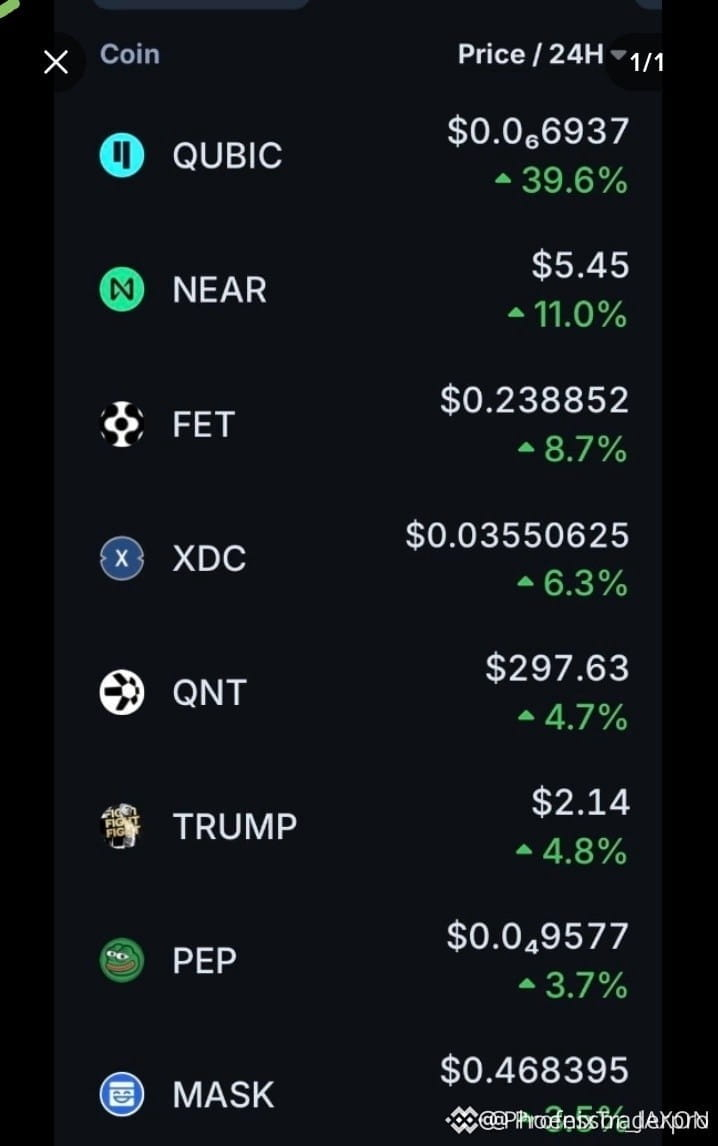
34
Log in to explore more content
Join global crypto users on Binance Square
⚡️ Get latest and useful information about crypto.
💬 Trusted by the world’s largest crypto exchange.
👍 Discover real insights from verified creators.
Email / Phone number
Trending Topics
1
#WillMarketsStageAThanksgivingReliefRally?
59,398 views
949 Discussing
2
#WillOctCorePCEShiftFedHikeExpectations?
13,836 views
259 Discussing
3
#BessentSoftensStanceOnHuang’sNvidiaReturn
39,829 views
630 Discussing
4
#EvolveAtBinanceBlockchainWeek
51,297 views
532 Discussing
5
#MuskWarnsOfAICashCrunch
30,212 views
469 Discussing
6
#SouthKoreaPlansToReleaseDigitalAssetBasicActDraft
747 views
25 Discussing
7
#ChinaKoreaTaiwanPrepareStockRescuesAheadOfMonday
4,940 views
41 Discussing
8
#SouthKoreaToTightenOversightOfCryptoTransfersAbroad
3,621 views
42 Discussing
9
#TrumpToGive18KGoldWatchesToTopFourTRUMPHolders
1,139 views
19 Discussing
10
#RussiaAllowsExchangesToOfferCryptoTrading
22,736 views
230 Discussing