

#psychology
psychology
287,971 views
1,048 Discussing
Hot
Latest
·
--
🧠 Missing a move costs nothing. Chasing one does.
A trade you didn't take costs you zero dollars.
A trade you chased to avoid missing it can cost you plenty.
The market makes thousands of moves a year. You only need a few.
👇 What's harder for you: watching a move you missed, or sitting still right now?
#trading #Cryptomindset #psychology
🧠 Missing a move costs nothing. Chasing one does.
A trade you didn't take costs you zero dollars.
A trade you chased to avoid missing it can cost you plenty.
The market makes thousands of moves a year. You only need a few.
👇 What's harder for you: watching a move you missed, or sitting still right now?
#trading #Cryptomindset #psychology
A trade you didn't take costs you zero dollars.
A trade you chased to avoid missing it can cost you plenty.
The market makes thousands of moves a year. You only need a few.
👇 What's harder for you: watching a move you missed, or sitting still right now?
#trading #Cryptomindset #psychology
1
98
·
--
The $STRK rally can trigger major FOMO! Don't let emotions dictate your moves. 🧠
When an altcoin pumps, emotional decisions often follow.
Stick to your plan; avoid chasing pumps or panic selling.
Did you stick to your plan with $STRK, or did FOMO make you jump in/out? 👇
#STRK #Psychology
The $STRK rally can trigger major FOMO! Don't let emotions dictate your moves. 🧠
When an altcoin pumps, emotional decisions often follow.
Stick to your plan; avoid chasing pumps or panic selling.
Did you stick to your plan with $STRK , or did FOMO make you jump in/out? 👇
#STRK #Psychology
When an altcoin pumps, emotional decisions often follow.
Stick to your plan; avoid chasing pumps or panic selling.
Did you stick to your plan with $STRK , or did FOMO make you jump in/out? 👇
#STRK #Psychology
129
·
--
Article
The top isn't a price. It's a feeling.Nobody ever buys the top because they see a chart labeled "top." They buy it because, for a moment, it feels like the safest, smartest, most obvious trade they've made all month.
That's not an accident. It's the exact design of the moment.
By the time a pump is visible enough to pull in new buyers, it's already been running. Early doubt has been replaced by proof: the price went up, so the people who bought early look right, and being right is contagious. Psychologists call this social proof, our tendency to treat "everyone is doing it" as evidence that it's correct. On a chart, a long green run doesn't just show a price move. It shows accumulated social proof, stacking higher with every candle.
At the same time, something else is happening in the brain. Watching an asset you don't own go up activates regret circuitry, the same mechanism that makes you replay the one time you left early. Neuroscience research on anticipated regret shows people will take on more risk specifically to avoid the feeling of having missed out, even when the odds don't favor them. That's FOMO's real engine. It's not greed for gains. It's a pre-emptive strike against a regret you haven't felt yet but can already imagine vividly.
Put those two forces together, social proof and anticipated regret, and you get the exact psychological conditions that make the top feel like clarity instead of risk. The people buying it aren't ignoring the danger. They genuinely can't see it yet, because the two systems telling them to buy are running louder than the one quiet signal that might say wait.
This is why "just recognize when it's a top" doesn't work as advice. You're not failing to see something obvious. You're standing exactly where the pump was built to put you.
What actually helps is pre-committing before the feeling arrives:
Decide your entries in advance, based on conditions, not on how confident the move looks.
Treat extreme confidence as a flag, not a green light. The more obvious a trade feels in the moment, the more worth double-checking it is.
Let the move stop first. A trend that's genuinely started will still be there after it slows down once. A trend that was ending won't.
The top always looks like opportunity from inside the crowd. That's not a flaw in your judgment. It's the one moment the crowd is built to disguise.
👇 Have you ever bought right before a drop and felt completely confident doing it? What did that confidence feel like, looking back?
Educational only. #trading #Cryptomindset #psychology
The top isn't a price. It's a feeling.
Nobody ever buys the top because they see a chart labeled "top." They buy it because, for a moment, it feels like the safest, smartest, most obvious trade they've made all month.
That's not an accident. It's the exact design of the moment.
By the time a pump is visible enough to pull in new buyers, it's already been running. Early doubt has been replaced by proof: the price went up, so the people who bought early look right, and being right is contagious. Psychologists call this social proof, our tendency to treat "everyone is doing it" as evidence that it's correct. On a chart, a long green run doesn't just show a price move. It shows accumulated social proof, stacking higher with every candle.
At the same time, something else is happening in the brain. Watching an asset you don't own go up activates regret circuitry, the same mechanism that makes you replay the one time you left early. Neuroscience research on anticipated regret shows people will take on more risk specifically to avoid the feeling of having missed out, even when the odds don't favor them. That's FOMO's real engine. It's not greed for gains. It's a pre-emptive strike against a regret you haven't felt yet but can already imagine vividly.
Put those two forces together, social proof and anticipated regret, and you get the exact psychological conditions that make the top feel like clarity instead of risk. The people buying it aren't ignoring the danger. They genuinely can't see it yet, because the two systems telling them to buy are running louder than the one quiet signal that might say wait.
This is why "just recognize when it's a top" doesn't work as advice. You're not failing to see something obvious. You're standing exactly where the pump was built to put you.
What actually helps is pre-committing before the feeling arrives:
Decide your entries in advance, based on conditions, not on how confident the move looks.
Treat extreme confidence as a flag, not a green light. The more obvious a trade feels in the moment, the more worth double-checking it is.
Let the move stop first. A trend that's genuinely started will still be there after it slows down once. A trend that was ending won't.
The top always looks like opportunity from inside the crowd. That's not a flaw in your judgment. It's the one moment the crowd is built to disguise.
👇 Have you ever bought right before a drop and felt completely confident doing it? What did that confidence feel like, looking back?
Educational only. #trading #Cryptomindset #psychology
That's not an accident. It's the exact design of the moment.
By the time a pump is visible enough to pull in new buyers, it's already been running. Early doubt has been replaced by proof: the price went up, so the people who bought early look right, and being right is contagious. Psychologists call this social proof, our tendency to treat "everyone is doing it" as evidence that it's correct. On a chart, a long green run doesn't just show a price move. It shows accumulated social proof, stacking higher with every candle.
At the same time, something else is happening in the brain. Watching an asset you don't own go up activates regret circuitry, the same mechanism that makes you replay the one time you left early. Neuroscience research on anticipated regret shows people will take on more risk specifically to avoid the feeling of having missed out, even when the odds don't favor them. That's FOMO's real engine. It's not greed for gains. It's a pre-emptive strike against a regret you haven't felt yet but can already imagine vividly.
Put those two forces together, social proof and anticipated regret, and you get the exact psychological conditions that make the top feel like clarity instead of risk. The people buying it aren't ignoring the danger. They genuinely can't see it yet, because the two systems telling them to buy are running louder than the one quiet signal that might say wait.
This is why "just recognize when it's a top" doesn't work as advice. You're not failing to see something obvious. You're standing exactly where the pump was built to put you.
What actually helps is pre-committing before the feeling arrives:
Decide your entries in advance, based on conditions, not on how confident the move looks.
Treat extreme confidence as a flag, not a green light. The more obvious a trade feels in the moment, the more worth double-checking it is.
Let the move stop first. A trend that's genuinely started will still be there after it slows down once. A trend that was ending won't.
The top always looks like opportunity from inside the crowd. That's not a flaw in your judgment. It's the one moment the crowd is built to disguise.
👇 Have you ever bought right before a drop and felt completely confident doing it? What did that confidence feel like, looking back?
Educational only. #trading #Cryptomindset #psychology
161
·
--
Three discipline habits, 10 seconds each
- Before entering: say your stop-loss out loud. If you can't, you don't have one yet.
- Before closing a win early: ask "is this my plan, or is this fear of giving it back?"
- Before revenge trading: close the app for 10 minutes. The urge rarely survives it.
Small rules, repeated, beat willpower every time.
P.S. Don't forget about your daily routine and irl responsibilities!
👇 Which one do you need most this week?
#trading #Cryptomindset #psychology
Three discipline habits, 10 seconds each
- Before entering: say your stop-loss out loud. If you can't, you don't have one yet.
- Before closing a win early: ask "is this my plan, or is this fear of giving it back?"
- Before revenge trading: close the app for 10 minutes. The urge rarely survives it.
Small rules, repeated, beat willpower every time.
P.S. Don't forget about your daily routine and irl responsibilities!
👇 Which one do you need most this week?
#trading #Cryptomindset #psychology
- Before entering: say your stop-loss out loud. If you can't, you don't have one yet.
- Before closing a win early: ask "is this my plan, or is this fear of giving it back?"
- Before revenge trading: close the app for 10 minutes. The urge rarely survives it.
Small rules, repeated, beat willpower every time.
P.S. Don't forget about your daily routine and irl responsibilities!
👇 Which one do you need most this week?
#trading #Cryptomindset #psychology
108

·
--

Article
TRAINING How to respond to an emotional abuser and not give them control over youFormat: personal work, about 60–75 minutes.
The main idea of the training:
Another person may be yelling, accusing, humiliating, provoking.
But their emotional state doesn’t have to become your state.
Not the task:
«I should just not care.»
Not the task:
«I don’t feel anything.»
TRAINING How to respond to an emotional abuser and not give them control over you
Format: personal work, about 60–75 minutes.
The main idea of the training:
Another person may be yelling, accusing, humiliating, provoking.
But their emotional state doesn’t have to become your state.
Not the task:
«I should just not care.»
Not the task:
«I don’t feel anything.»
The main idea of the training:
Another person may be yelling, accusing, humiliating, provoking.
But their emotional state doesn’t have to become your state.
Not the task:
«I should just not care.»
Not the task:
«I don’t feel anything.»
2
816
🔥 How a trader 100 years ago predicted your FOMO from yesterday
Jesse Livermore — a Wall Street legend from the early 20th century. He made and lost millions several times in a lifetime.
🧠 His quote: “The market never changes, because human nature never changes.” Trite? Look closer — it’s a diagnosis for each of us.
📉 The trader’s main enemy isn’t the market, but emotions: fear of locking in a loss and greed that prevents you from locking in profits.
😅 You keep a loser “because it’ll still bounce back,” and you sell a winner at the very first green percent. Psychology hasn’t changed one bit — only the tools have gotten faster.
💎 The difference between a pro and a beginner is often not in chart analysis, but in the ability to admit: you were wrong, and that’s normal.
👀 Has it happened to you with $BTC or $ETH — holding a losing position out of sheer stubbornness?
#Bitcoin #crypto #trading #psychology
🔥 How a trader 100 years ago predicted your FOMO from yesterday
Jesse Livermore — a Wall Street legend from the early 20th century. He made and lost millions several times in a lifetime.
🧠 His quote: “The market never changes, because human nature never changes.” Trite? Look closer — it’s a diagnosis for each of us.
📉 The trader’s main enemy isn’t the market, but emotions: fear of locking in a loss and greed that prevents you from locking in profits.
😅 You keep a loser “because it’ll still bounce back,” and you sell a winner at the very first green percent. Psychology hasn’t changed one bit — only the tools have gotten faster.
💎 The difference between a pro and a beginner is often not in chart analysis, but in the ability to admit: you were wrong, and that’s normal.
👀 Has it happened to you with $BTC or $ETH — holding a losing position out of sheer stubbornness?
#Bitcoin #crypto #trading #psychology
Jesse Livermore — a Wall Street legend from the early 20th century. He made and lost millions several times in a lifetime.
🧠 His quote: “The market never changes, because human nature never changes.” Trite? Look closer — it’s a diagnosis for each of us.
📉 The trader’s main enemy isn’t the market, but emotions: fear of locking in a loss and greed that prevents you from locking in profits.
😅 You keep a loser “because it’ll still bounce back,” and you sell a winner at the very first green percent. Psychology hasn’t changed one bit — only the tools have gotten faster.
💎 The difference between a pro and a beginner is often not in chart analysis, but in the ability to admit: you were wrong, and that’s normal.
👀 Has it happened to you with $BTC or $ETH — holding a losing position out of sheer stubbornness?
#Bitcoin #crypto #trading #psychology
131
·
--
Article
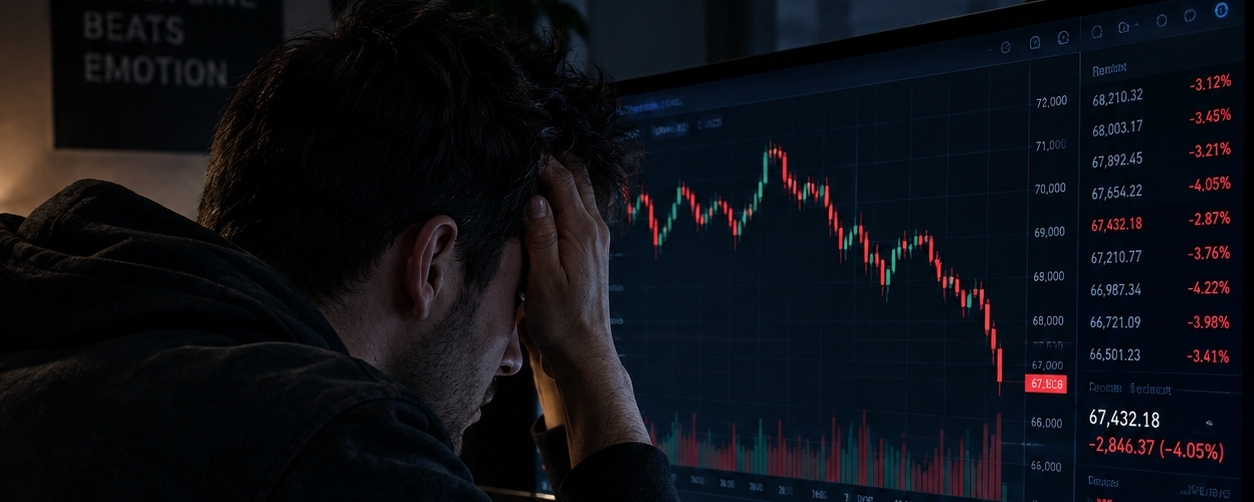
The trader's mirrorWhy you keep checking the chart, and it's not about the money
Ask a trader why they check the chart twenty times a day, and most will say "I need to know what's happening." That's usually not the real reason. The real reason is closer to what makes someone check their phone for notifications, and it has a name in psychology: variable ratio reinforcement.
In the 1950s, B.F. Skinner found that rewards given on an unpredictable schedule produce the strongest, most compulsive checking behavior, stronger than a reward given every single time. A slot machine works this way. So does a notifications feed. So does a price chart. You don't know when the next green candle is coming, so the not-knowing itself becomes the hook. Each check is a small bet: maybe this time there's good news.
This explains something that pure willpower can't. It's not that you lack discipline. It's that the behavior is being reinforced by a mechanism that has nothing to do with discipline. Checking the chart occasionally pays off with good news, which is enough to keep the habit running on autopilot, the same way an occasional win keeps someone pulling a slot machine.
The cost isn't just wasted time. Frequent checking correlates with impulsive decisions, because every check is another opportunity to react to noise instead of your plan. Research on "myopic loss aversion" (Thaler, Tversky, Kahneman and Schwartz, 1997) found that investors who checked their portfolios more often made worse decisions and earned lower returns than those who checked less, because frequent checking means seeing more short-term losses, and seeing losses more often makes people more loss-averse and more likely to react.
So the habit isn't neutral. It's actively working against the plan you made when you were calm.
What helps isn't "just stop caring." It's making the behavior harder to repeat on autopilot:
Set specific check times. Two or three fixed windows a day, not open access. This breaks the variable schedule that makes checking compulsive.
Turn off price notifications. Every ping is a new small bet being offered to you. Remove the offer.
Ask what you're checking for. If you can't name new information you're looking for, you're not checking, you're seeking a hit.
You're not weak for checking constantly. You're responding exactly the way a human brain is built to respond to unpredictable rewards. Understanding that is what makes it possible to change it.
👇 How many times a day do you check the chart, honestly? And has that number gone up or down since you started trading?
Educational only. #trading #Cryptomindset #psychology
The trader's mirror
Why you keep checking the chart, and it's not about the money
Ask a trader why they check the chart twenty times a day, and most will say "I need to know what's happening." That's usually not the real reason. The real reason is closer to what makes someone check their phone for notifications, and it has a name in psychology: variable ratio reinforcement.
In the 1950s, B.F. Skinner found that rewards given on an unpredictable schedule produce the strongest, most compulsive checking behavior, stronger than a reward given every single time. A slot machine works this way. So does a notifications feed. So does a price chart. You don't know when the next green candle is coming, so the not-knowing itself becomes the hook. Each check is a small bet: maybe this time there's good news.
This explains something that pure willpower can't. It's not that you lack discipline. It's that the behavior is being reinforced by a mechanism that has nothing to do with discipline. Checking the chart occasionally pays off with good news, which is enough to keep the habit running on autopilot, the same way an occasional win keeps someone pulling a slot machine.
The cost isn't just wasted time. Frequent checking correlates with impulsive decisions, because every check is another opportunity to react to noise instead of your plan. Research on "myopic loss aversion" (Thaler, Tversky, Kahneman and Schwartz, 1997) found that investors who checked their portfolios more often made worse decisions and earned lower returns than those who checked less, because frequent checking means seeing more short-term losses, and seeing losses more often makes people more loss-averse and more likely to react.
So the habit isn't neutral. It's actively working against the plan you made when you were calm.
What helps isn't "just stop caring." It's making the behavior harder to repeat on autopilot:
Set specific check times. Two or three fixed windows a day, not open access. This breaks the variable schedule that makes checking compulsive.
Turn off price notifications. Every ping is a new small bet being offered to you. Remove the offer.
Ask what you're checking for. If you can't name new information you're looking for, you're not checking, you're seeking a hit.
You're not weak for checking constantly. You're responding exactly the way a human brain is built to respond to unpredictable rewards. Understanding that is what makes it possible to change it.
👇 How many times a day do you check the chart, honestly? And has that number gone up or down since you started trading?
Educational only. #trading #Cryptomindset #psychology
Ask a trader why they check the chart twenty times a day, and most will say "I need to know what's happening." That's usually not the real reason. The real reason is closer to what makes someone check their phone for notifications, and it has a name in psychology: variable ratio reinforcement.
In the 1950s, B.F. Skinner found that rewards given on an unpredictable schedule produce the strongest, most compulsive checking behavior, stronger than a reward given every single time. A slot machine works this way. So does a notifications feed. So does a price chart. You don't know when the next green candle is coming, so the not-knowing itself becomes the hook. Each check is a small bet: maybe this time there's good news.
This explains something that pure willpower can't. It's not that you lack discipline. It's that the behavior is being reinforced by a mechanism that has nothing to do with discipline. Checking the chart occasionally pays off with good news, which is enough to keep the habit running on autopilot, the same way an occasional win keeps someone pulling a slot machine.
The cost isn't just wasted time. Frequent checking correlates with impulsive decisions, because every check is another opportunity to react to noise instead of your plan. Research on "myopic loss aversion" (Thaler, Tversky, Kahneman and Schwartz, 1997) found that investors who checked their portfolios more often made worse decisions and earned lower returns than those who checked less, because frequent checking means seeing more short-term losses, and seeing losses more often makes people more loss-averse and more likely to react.
So the habit isn't neutral. It's actively working against the plan you made when you were calm.
What helps isn't "just stop caring." It's making the behavior harder to repeat on autopilot:
Set specific check times. Two or three fixed windows a day, not open access. This breaks the variable schedule that makes checking compulsive.
Turn off price notifications. Every ping is a new small bet being offered to you. Remove the offer.
Ask what you're checking for. If you can't name new information you're looking for, you're not checking, you're seeking a hit.
You're not weak for checking constantly. You're responding exactly the way a human brain is built to respond to unpredictable rewards. Understanding that is what makes it possible to change it.
👇 How many times a day do you check the chart, honestly? And has that number gone up or down since you started trading?
Educational only. #trading #Cryptomindset #psychology
84

Must read and share your thought 💸💲
Look at your trading history.
Most likely, you will find a pattern where you closed profitable positions quickly, barely waiting for the green number to appear, while holding losing positions for weeks in the hope of a reversal.
❤️ Almost everyone does this, and this phenomenon has a scientific name.
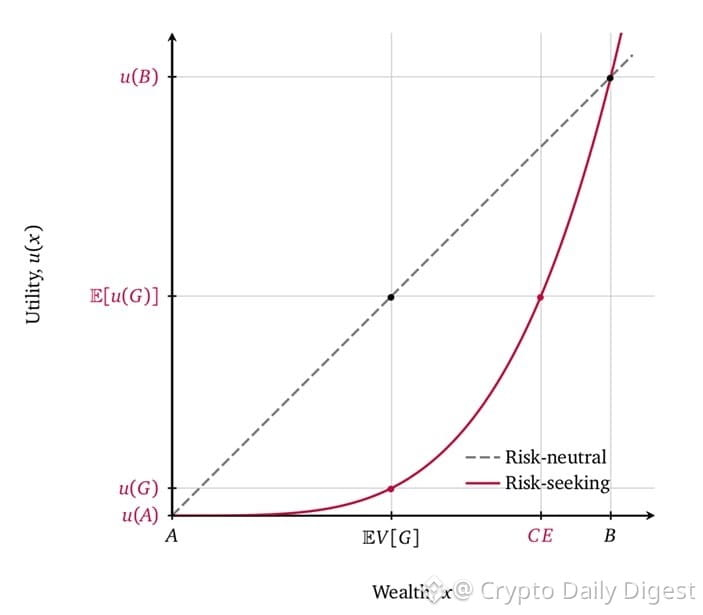
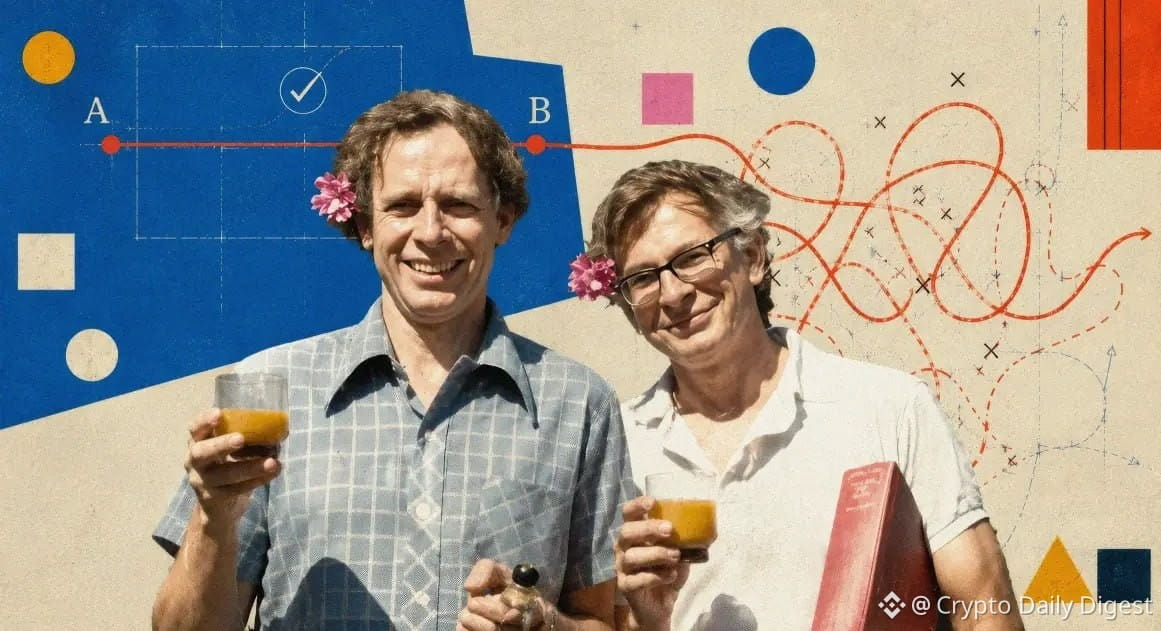
In 1985, economists Hersh Shefrin and Meir Statman described the disposition effect: the tendency to sell appreciated assets too early and hold depreciated ones too long. The roots go deeper, into the prospect theory of Daniel Kahneman and Amos Tversky from 1979.
Their main finding is that a loss is felt approximately twice as strongly as a gain of the same size. A loss of $1,000 hurts more than a gain of $1,000 pleases.
❤️ It is important for us to internalize two behaviors so that we do not suffer as much from money losses in the future and to lock in profits when necessary.
1. When a position is in profit, the brain wants to lock in the pleasant feeling and protect it from the risk of disappearing. We become cautious and exit early.
2. When a position is at a loss, closing it means admitting a mistake and making the loss real. As long as the trade is open, the loss seems temporary. We start taking risks just to get back to zero.
In 1998, Terrance Odean studied trades from 10,000 brokerage accounts and found that sold profitable stocks outperformed held losing stocks by approximately 3.4% in the following year.
❤️ Investors systematically got rid of the best and kept the worst.
Set stops and targets as I do — before entry or immediately during entry, while there are no emotions. The decision to exit is made according to pre-written rules. And a useful question for each open position: would I buy this asset today at the current price?
If the answer is no, there is no point in holding it any longer.
#psychology #RiskManagementMastery #psychological #losses #GrowYourWealth
Must read and share your thought 💸💲
Look at your trading history.
Most likely, you will find a pattern where you closed profitable positions quickly, barely waiting for the green number to appear, while holding losing positions for weeks in the hope of a reversal.
❤️ Almost everyone does this, and this phenomenon has a scientific name.
In 1985, economists Hersh Shefrin and Meir Statman described the disposition effect: the tendency to sell appreciated assets too early and hold depreciated ones too long. The roots go deeper, into the prospect theory of Daniel Kahneman and Amos Tversky from 1979.
Their main finding is that a loss is felt approximately twice as strongly as a gain of the same size. A loss of $1,000 hurts more than a gain of $1,000 pleases.
❤️ It is important for us to internalize two behaviors so that we do not suffer as much from money losses in the future and to lock in profits when necessary.
1. When a position is in profit, the brain wants to lock in the pleasant feeling and protect it from the risk of disappearing. We become cautious and exit early.
2. When a position is at a loss, closing it means admitting a mistake and making the loss real. As long as the trade is open, the loss seems temporary. We start taking risks just to get back to zero.
In 1998, Terrance Odean studied trades from 10,000 brokerage accounts and found that sold profitable stocks outperformed held losing stocks by approximately 3.4% in the following year.
❤️ Investors systematically got rid of the best and kept the worst.
Set stops and targets as I do — before entry or immediately during entry, while there are no emotions. The decision to exit is made according to pre-written rules. And a useful question for each open position: would I buy this asset today at the current price?
If the answer is no, there is no point in holding it any longer.
#psychology #RiskManagementMastery #psychological #losses #GrowYourWealth
Look at your trading history.
Most likely, you will find a pattern where you closed profitable positions quickly, barely waiting for the green number to appear, while holding losing positions for weeks in the hope of a reversal.
❤️ Almost everyone does this, and this phenomenon has a scientific name.
In 1985, economists Hersh Shefrin and Meir Statman described the disposition effect: the tendency to sell appreciated assets too early and hold depreciated ones too long. The roots go deeper, into the prospect theory of Daniel Kahneman and Amos Tversky from 1979.
Their main finding is that a loss is felt approximately twice as strongly as a gain of the same size. A loss of $1,000 hurts more than a gain of $1,000 pleases.
❤️ It is important for us to internalize two behaviors so that we do not suffer as much from money losses in the future and to lock in profits when necessary.
1. When a position is in profit, the brain wants to lock in the pleasant feeling and protect it from the risk of disappearing. We become cautious and exit early.
2. When a position is at a loss, closing it means admitting a mistake and making the loss real. As long as the trade is open, the loss seems temporary. We start taking risks just to get back to zero.
In 1998, Terrance Odean studied trades from 10,000 brokerage accounts and found that sold profitable stocks outperformed held losing stocks by approximately 3.4% in the following year.
❤️ Investors systematically got rid of the best and kept the worst.
Set stops and targets as I do — before entry or immediately during entry, while there are no emotions. The decision to exit is made according to pre-written rules. And a useful question for each open position: would I buy this asset today at the current price?
If the answer is no, there is no point in holding it any longer.
#psychology #RiskManagementMastery #psychological #losses #GrowYourWealth
3
1.5k
·
--
Why I write about the mind behind the trade?
Most trading content teaches you what to look at: patterns, indicators, levels. Almost none of it teaches you what happens inside you while you're looking.
That gap is where most losses actually live. A trader can have a correct read on the market and still lose money, not because the analysis was wrong, but because fear, urgency or frustration changed the decision at the exact moment it mattered. Post 1 on this page told that story directly: right analysis, wrong execution, and the only variable that failed was the person.
This isn't a niche problem. It's closer to the default. The mind under pressure doesn't run on the same rules it runs on when you're calmly reviewing a chart after the fact. Fear narrows attention. Urgency shortens the time you give yourself to think. A losing streak doesn't just cost money, it changes the decisions that come after it, often without the trader noticing the shift.
I write about this because understanding a bias doesn't require willpower, it requires recognition. Once you can name what's happening — "this is FOMO," "this is revenge," "this is fear talking, not information" — you've already created a small gap between the feeling and the action. That gap is where discipline actually happens. Not in some abstract idea of "being strong," but in one specific pause, repeated enough times that it becomes a habit.
Here's what this page will keep coming back to, in different forms:
The gap between knowing and doing. Most traders already know their stop-loss rule. Few can execute it every time. That gap is psychological, not informational.
The crowd inside you. Every chart move is a record of a crowd's emotional decision, and you're not watching that crowd from outside it. You're part of it, often without realizing.
Process over outcome. A good decision can still lose. A bad decision can still win. Judging yourself by the result instead of the decision quietly trains you to repeat your worst habits whenever they happen to pay off.
#trading #Cryptomindset #psychology
Why I write about the mind behind the trade?
Most trading content teaches you what to look at: patterns, indicators, levels. Almost none of it teaches you what happens inside you while you're looking.
That gap is where most losses actually live. A trader can have a correct read on the market and still lose money, not because the analysis was wrong, but because fear, urgency or frustration changed the decision at the exact moment it mattered. Post 1 on this page told that story directly: right analysis, wrong execution, and the only variable that failed was the person.
This isn't a niche problem. It's closer to the default. The mind under pressure doesn't run on the same rules it runs on when you're calmly reviewing a chart after the fact. Fear narrows attention. Urgency shortens the time you give yourself to think. A losing streak doesn't just cost money, it changes the decisions that come after it, often without the trader noticing the shift.
I write about this because understanding a bias doesn't require willpower, it requires recognition. Once you can name what's happening — "this is FOMO," "this is revenge," "this is fear talking, not information" — you've already created a small gap between the feeling and the action. That gap is where discipline actually happens. Not in some abstract idea of "being strong," but in one specific pause, repeated enough times that it becomes a habit.
Here's what this page will keep coming back to, in different forms:
The gap between knowing and doing. Most traders already know their stop-loss rule. Few can execute it every time. That gap is psychological, not informational.
The crowd inside you. Every chart move is a record of a crowd's emotional decision, and you're not watching that crowd from outside it. You're part of it, often without realizing.
Process over outcome. A good decision can still lose. A bad decision can still win. Judging yourself by the result instead of the decision quietly trains you to repeat your worst habits whenever they happen to pay off.
#trading #Cryptomindset #psychology
Most trading content teaches you what to look at: patterns, indicators, levels. Almost none of it teaches you what happens inside you while you're looking.
That gap is where most losses actually live. A trader can have a correct read on the market and still lose money, not because the analysis was wrong, but because fear, urgency or frustration changed the decision at the exact moment it mattered. Post 1 on this page told that story directly: right analysis, wrong execution, and the only variable that failed was the person.
This isn't a niche problem. It's closer to the default. The mind under pressure doesn't run on the same rules it runs on when you're calmly reviewing a chart after the fact. Fear narrows attention. Urgency shortens the time you give yourself to think. A losing streak doesn't just cost money, it changes the decisions that come after it, often without the trader noticing the shift.
I write about this because understanding a bias doesn't require willpower, it requires recognition. Once you can name what's happening — "this is FOMO," "this is revenge," "this is fear talking, not information" — you've already created a small gap between the feeling and the action. That gap is where discipline actually happens. Not in some abstract idea of "being strong," but in one specific pause, repeated enough times that it becomes a habit.
Here's what this page will keep coming back to, in different forms:
The gap between knowing and doing. Most traders already know their stop-loss rule. Few can execute it every time. That gap is psychological, not informational.
The crowd inside you. Every chart move is a record of a crowd's emotional decision, and you're not watching that crowd from outside it. You're part of it, often without realizing.
Process over outcome. A good decision can still lose. A bad decision can still win. Judging yourself by the result instead of the decision quietly trains you to repeat your worst habits whenever they happen to pay off.
#trading #Cryptomindset #psychology
1
188
·
--

Article
YOU LEARNED IT. BUT WHERE’S THE MONEY? Training on how not to quit what you started when the result doesn’t come right away You are shown an ad for training: “Launch your online product.” “Earn with the help of AI agents.” “Start a blog and get paid.” “Master a new trading strategy.” Nearby are the earnings amounts of other people. And it all forms a clear chain: I’ll take the training → start doing it → get money. You learn. You try. You work. But there’s no quick result. Then the thought comes: “Maybe it doesn’t work.” Next: “I need to find a new tool.” You change your strategy, niche, or buy yet another course. For a while, the anxiety decreases: it feels like you’ve found the right path. But then again comes the moment when you’re working, and the result still isn’t there. What is the core of the training? Training can give you a tool. But between receiving the tool and earning money, there’s a period of practice. You make mistakes, test demand, get feedback, and adjust your actions. At the same time, you don’t know in advance when (or whether) results will appear. This period is hard to endure—especially when you’ve already been shown someone else’s income and you’re expecting the same from yourself. But it’s also not necessary to continue indefinitely doing what doesn’t work. The purpose of the training is to learn how to distinguish between two situations:
YOU LEARNED IT. BUT WHERE’S THE MONEY? Training on how not to quit what you started when the result doesn’t come right away
You are shown an ad for training: “Launch your online product.” “Earn with the help of AI agents.” “Start a blog and get paid.” “Master a new trading strategy.” Nearby are the earnings amounts of other people. And it all forms a clear chain: I’ll take the training → start doing it → get money. You learn. You try. You work. But there’s no quick result. Then the thought comes: “Maybe it doesn’t work.” Next: “I need to find a new tool.” You change your strategy, niche, or buy yet another course. For a while, the anxiety decreases: it feels like you’ve found the right path. But then again comes the moment when you’re working, and the result still isn’t there. What is the core of the training? Training can give you a tool. But between receiving the tool and earning money, there’s a period of practice. You make mistakes, test demand, get feedback, and adjust your actions. At the same time, you don’t know in advance when (or whether) results will appear. This period is hard to endure—especially when you’ve already been shown someone else’s income and you’re expecting the same from yourself. But it’s also not necessary to continue indefinitely doing what doesn’t work. The purpose of the training is to learn how to distinguish between two situations:
TradingOnlain:
не против того чем вы занимаетесь и давно за вами наблюдаю, вы мне нравитесь. и если бы я мог бы следовать за кем-то то возможно выбрал бы вас но мой путь идти своей дорогой. о которой я написал
7
3
1.5k
·
--
The market doesn't know you exist.
It's not punishing you for the last trade. It's not rewarding you for being right. It doesn't remember your losing streak, and it isn't waiting for you to "get even."
The market is indifferent. Your trading doesn't have to be personal for the outcomes to be real.
Educational only. #trading #Cryptomindset #psychology
$BTC
The market doesn't know you exist.
It's not punishing you for the last trade. It's not rewarding you for being right. It doesn't remember your losing streak, and it isn't waiting for you to "get even."
The market is indifferent. Your trading doesn't have to be personal for the outcomes to be real.
Educational only. #trading #Cryptomindset #psychology
$BTC
It's not punishing you for the last trade. It's not rewarding you for being right. It doesn't remember your losing streak, and it isn't waiting for you to "get even."
The market is indifferent. Your trading doesn't have to be personal for the outcomes to be real.
Educational only. #trading #Cryptomindset #psychology
$BTC
1
108
·
--
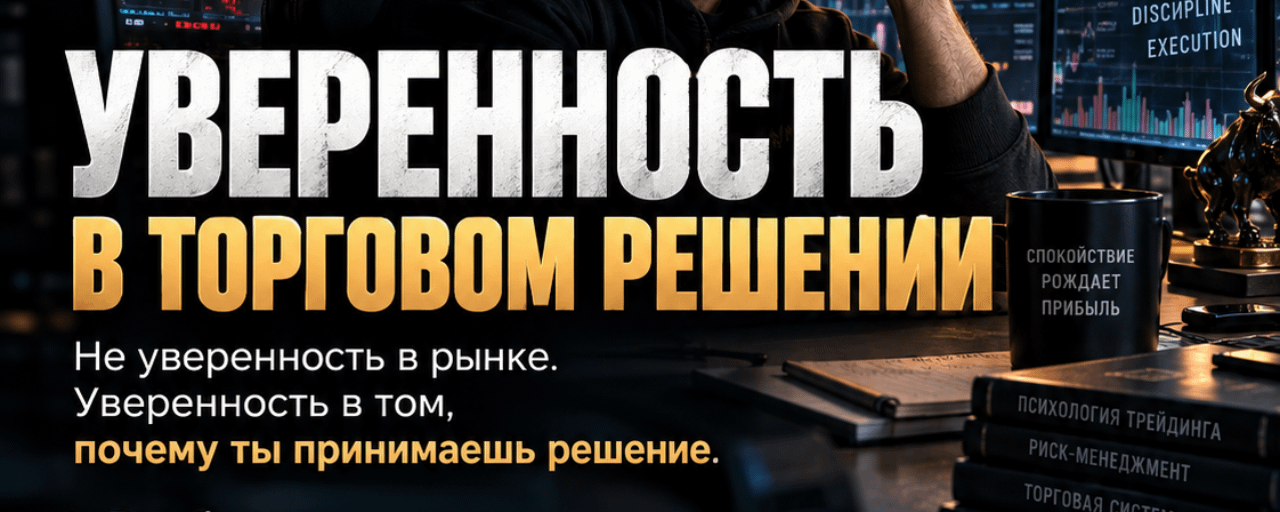
Article
Training: «Confidence in a Trading Decision»You’re confident in the level. Or do you just really want to be sure?
They tell you:
«Find support — buy».
«Find resistance — sell».
«Set a levels indicator — and you’ll see everything».
Sounds simple.
Just open the weekly chart of crypto.
Price can break through your «strongest level», bounce back, sweep the stops, make a false breakout, and then after a few hours go exactly where you originally expected.
Training: «Confidence in a Trading Decision»
You’re confident in the level. Or do you just really want to be sure?
They tell you:
«Find support — buy».
«Find resistance — sell».
«Set a levels indicator — and you’ll see everything».
Sounds simple.
Just open the weekly chart of crypto.
Price can break through your «strongest level», bounce back, sweep the stops, make a false breakout, and then after a few hours go exactly where you originally expected.
They tell you:
«Find support — buy».
«Find resistance — sell».
«Set a levels indicator — and you’ll see everything».
Sounds simple.
Just open the weekly chart of crypto.
Price can break through your «strongest level», bounce back, sweep the stops, make a false breakout, and then after a few hours go exactly where you originally expected.
3
724
·
--
2.5.1
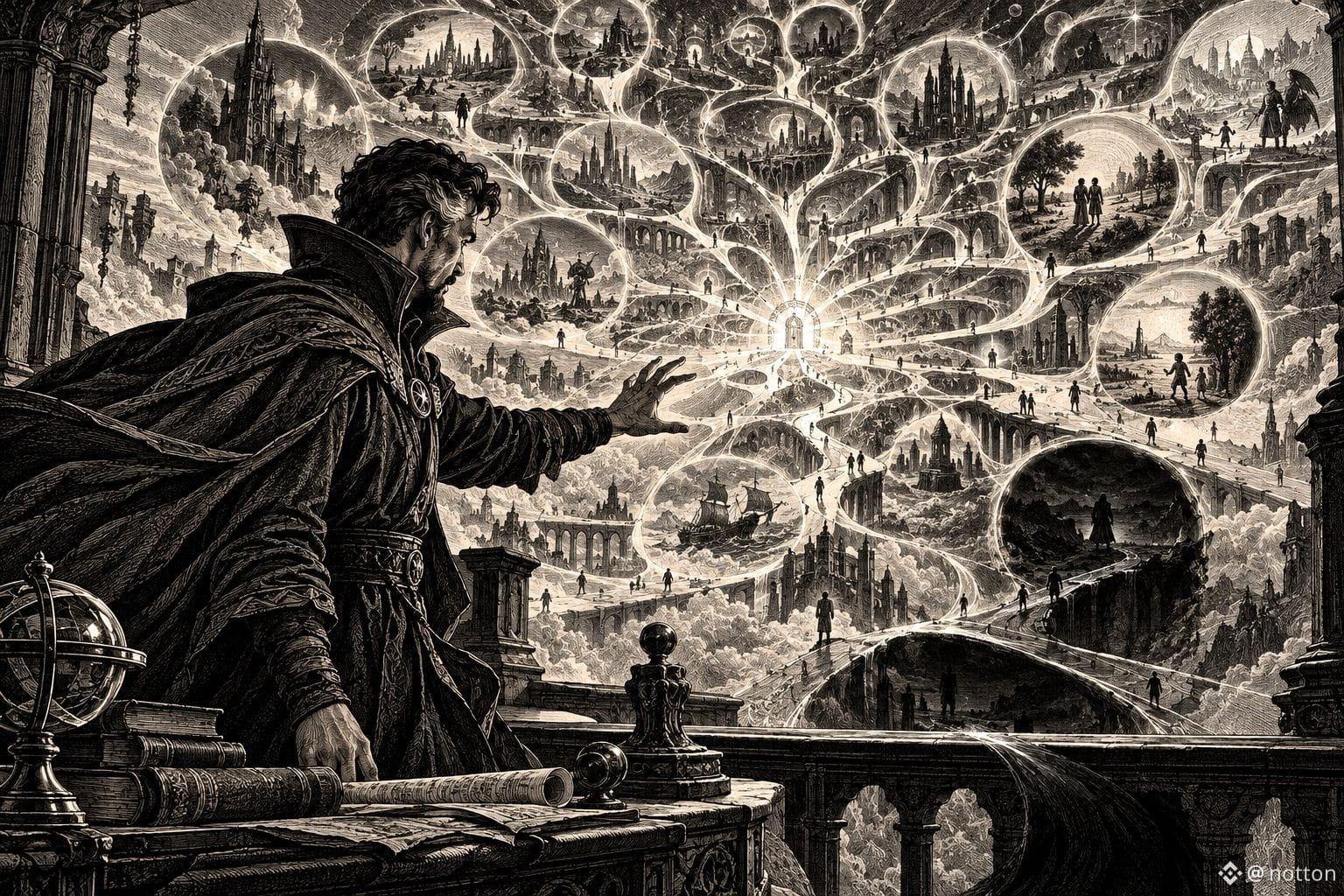
“If you understand the market, you can control the outcome.”
You can research an asset for hours.
- Read the reports
- Study the charts
- Understand the technology
- Know the risks
- And still be wrong
Because understanding why something might happen isn't the same as controlling whether it happens
This is one of the easiest traps in investing:
“If I know enough, I can predict it.”
But markets aren't machines with guaranteed outputs.
There are too many variables, too many participants, and too much uncertainty.
- Knowledge can improve a decision
- It cannot remove uncertainty
Sometimes the smartest thing you can know is:
- “I don't know”
~ Think before you act
#thinkBeforeYouAct #psychology
2.5.1
“If you understand the market, you can control the outcome.”
You can research an asset for hours.
- Read the reports
- Study the charts
- Understand the technology
- Know the risks
- And still be wrong
Because understanding why something might happen isn't the same as controlling whether it happens
This is one of the easiest traps in investing:
“If I know enough, I can predict it.”
But markets aren't machines with guaranteed outputs.
There are too many variables, too many participants, and too much uncertainty.
- Knowledge can improve a decision
- It cannot remove uncertainty
Sometimes the smartest thing you can know is:
- “I don't know”
~ Think before you act
#thinkBeforeYouAct #psychology
“If you understand the market, you can control the outcome.”
You can research an asset for hours.
- Read the reports
- Study the charts
- Understand the technology
- Know the risks
- And still be wrong
Because understanding why something might happen isn't the same as controlling whether it happens
This is one of the easiest traps in investing:
“If I know enough, I can predict it.”
But markets aren't machines with guaranteed outputs.
There are too many variables, too many participants, and too much uncertainty.
- Knowledge can improve a decision
- It cannot remove uncertainty
Sometimes the smartest thing you can know is:
- “I don't know”
~ Think before you act
#thinkBeforeYouAct #psychology
عبدالله باعيسئ :
Uncertainty
933
1
58
933

·
--
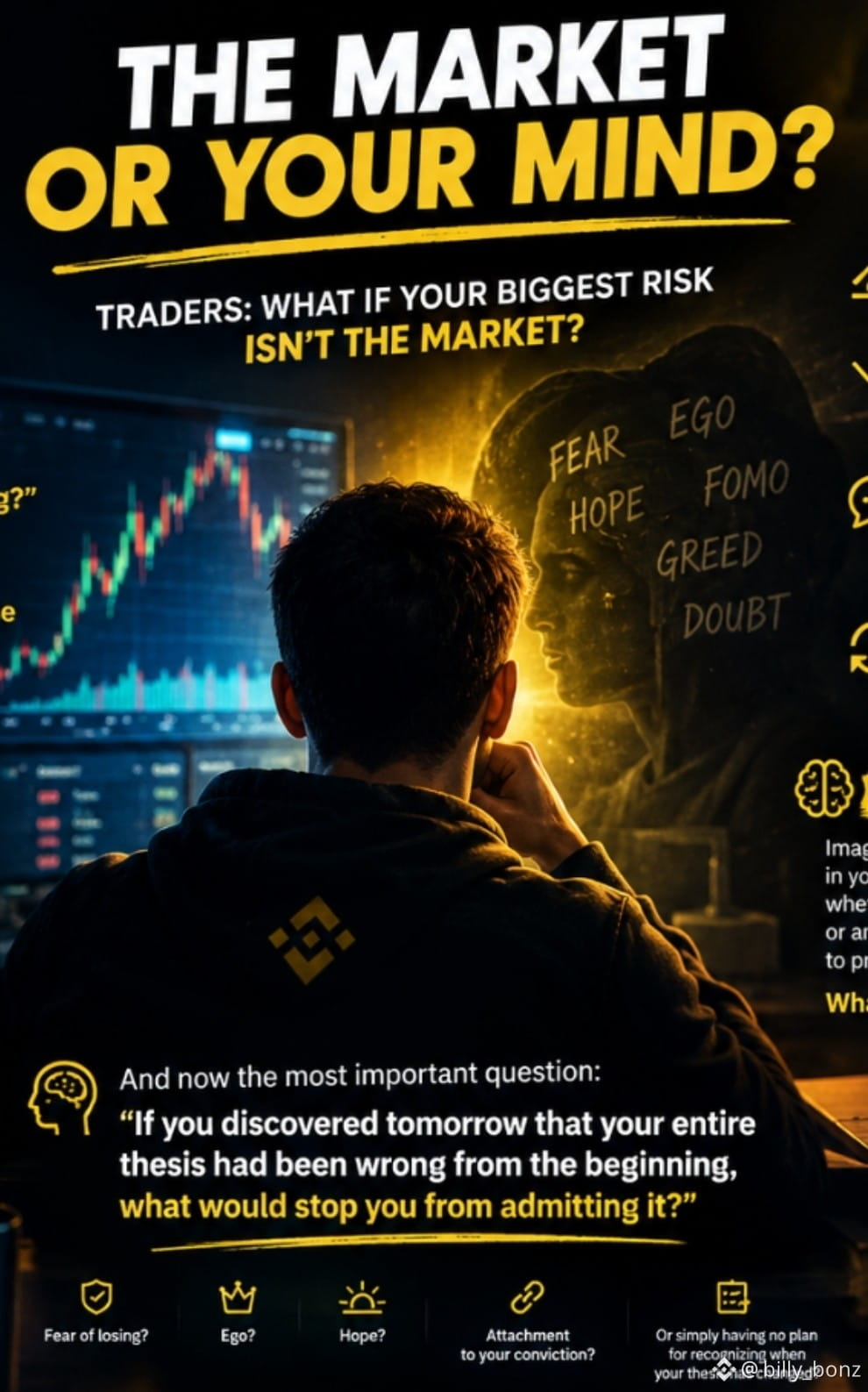
🧠 TRADERS: WHAT IF YOUR BIGGEST RISK ISN’T THE MARKET?
You look at charts to figure out where the market is going.
But sometimes, the real question isn’t:
“Where is the market going?”
It’s:
“Why do I need the market to go in the direction I chose so badly?”
Look at your current portfolio.
Every position tells a story.
But is that story based on your current analysis…
or are you simply defending a decision you already made?
🔹 When a position goes up → do you feel convinced you were right?
🔹 When it goes down → do you search for reasons not to change your mind?
🔹 When someone challenges your thesis → do you analyze their argument, or immediately look for reasons to reject it?
🔹 When the market changes → do you adapt your thesis, or does your ego refuse to change?
🎯 A psychological test
Imagine nobody knew what was in your portfolio.
Nobody would know whether you bought BTC, ETH, or an altcoin.
You have nothing to prove to anyone.
What would you actually keep?
And now the most important question:
If you discovered tomorrow that your entire thesis had been wrong from the beginning, what would stop you from admitting it?
Fear of losing?
Ego?
Hope?
Attachment to your conviction?
Or simply having no plan for recognizing when your thesis has changed?
👇 Answer honestly:
What crypto conviction are you defending today… that you have never seriously tried to disprove?
That might be where your biggest blind spot is.
#trading #CryptoTrading #TraderMindseta #psychology #BinanceSquare
Hit 👍 and fallow 🙏
🧠 TRADERS: WHAT IF YOUR BIGGEST RISK ISN’T THE MARKET?
You look at charts to figure out where the market is going.
But sometimes, the real question isn’t:
“Where is the market going?”
It’s:
“Why do I need the market to go in the direction I chose so badly?”
Look at your current portfolio.
Every position tells a story.
But is that story based on your current analysis…
or are you simply defending a decision you already made?
🔹 When a position goes up → do you feel convinced you were right?
🔹 When it goes down → do you search for reasons not to change your mind?
🔹 When someone challenges your thesis → do you analyze their argument, or immediately look for reasons to reject it?
🔹 When the market changes → do you adapt your thesis, or does your ego refuse to change?
🎯 A psychological test
Imagine nobody knew what was in your portfolio.
Nobody would know whether you bought BTC, ETH, or an altcoin.
You have nothing to prove to anyone.
What would you actually keep?
And now the most important question:
If you discovered tomorrow that your entire thesis had been wrong from the beginning, what would stop you from admitting it?
Fear of losing?
Ego?
Hope?
Attachment to your conviction?
Or simply having no plan for recognizing when your thesis has changed?
👇 Answer honestly:
What crypto conviction are you defending today… that you have never seriously tried to disprove?
That might be where your biggest blind spot is.
#trading #CryptoTrading #TraderMindseta #psychology #BinanceSquare
Hit 👍 and fallow 🙏
You look at charts to figure out where the market is going.
But sometimes, the real question isn’t:
“Where is the market going?”
It’s:
“Why do I need the market to go in the direction I chose so badly?”
Look at your current portfolio.
Every position tells a story.
But is that story based on your current analysis…
or are you simply defending a decision you already made?
🔹 When a position goes up → do you feel convinced you were right?
🔹 When it goes down → do you search for reasons not to change your mind?
🔹 When someone challenges your thesis → do you analyze their argument, or immediately look for reasons to reject it?
🔹 When the market changes → do you adapt your thesis, or does your ego refuse to change?
🎯 A psychological test
Imagine nobody knew what was in your portfolio.
Nobody would know whether you bought BTC, ETH, or an altcoin.
You have nothing to prove to anyone.
What would you actually keep?
And now the most important question:
If you discovered tomorrow that your entire thesis had been wrong from the beginning, what would stop you from admitting it?
Fear of losing?
Ego?
Hope?
Attachment to your conviction?
Or simply having no plan for recognizing when your thesis has changed?
👇 Answer honestly:
What crypto conviction are you defending today… that you have never seriously tried to disprove?
That might be where your biggest blind spot is.
#trading #CryptoTrading #TraderMindseta #psychology #BinanceSquare
Hit 👍 and fallow 🙏
62
·
--
Article
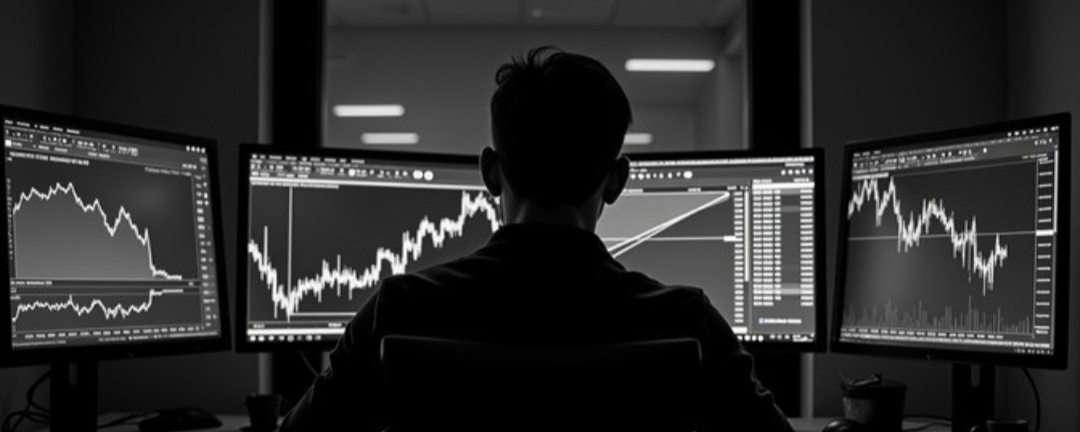
The crowd isn't out there. It's in you too.There's a comforting idea a lot of traders hold: that the market is "them" and the trader is a separate, rational observer studying it from the outside. Charts, this idea says, show you what other people are feeling, so you can act more clearly than they do.
It's a nice story. It's also wrong, and knowing why matters more than any indicator.
Every candle on a chart is the record of a decision someone made under pressure. A sharp green candle means a crowd of people felt the same pull at the same moment: don't miss this. A sharp red candle means a crowd felt the same fear: get out now. The chart isn't separate from the crowd's psychology. It's made entirely of it.
And here's the part that's harder to accept: you're not watching that crowd from outside it. You're standing inside it, feeling the same pulls, on the same timeline, often without noticing. The trader who says "I'd never buy a top" has usually just not yet felt the exact pressure that makes people buy tops. It doesn't feel like greed from the inside. It feels like clarity. That's what makes it dangerous.
This is why "just don't be emotional" is useless advice. You can't opt out of having a nervous system. What you can do is build a small gap between the feeling and the action, so the feeling has to travel through a checkpoint before it becomes a trade.
Three checkpoints worth building:
Notice the pull before you act on it. Before entering on a sharp move, name what's happening: "this is urgency" or "this is fear." Naming an emotional state measurably reduces its grip on decision-making. It's not a trick. It's how the brain works.
Ask what triggered your attention. Did you see the setup first, or did you see the crowd's reaction first and go looking for a setup to justify it? Those are different processes, and only one of them is analysis.
Separate the decision from the moment. Decide your risk, your entry, and your exit when you're calm, not while you're inside the pull. A rule made under pressure isn't a rule. It's the pressure, wearing a rule's clothing.
None of this makes you immune to the crowd. Nothing does. But it turns you from someone who's swept by it into someone who notices the current before stepping in.
👇 Think of a moment you acted on a "gut feeling" in the market. Looking back, was it clarity, or was it the crowd's pull, dressed up as your own instinct?
Educational only. #trading #Cryptomindset #psychology
The crowd isn't out there. It's in you too.
There's a comforting idea a lot of traders hold: that the market is "them" and the trader is a separate, rational observer studying it from the outside. Charts, this idea says, show you what other people are feeling, so you can act more clearly than they do.
It's a nice story. It's also wrong, and knowing why matters more than any indicator.
Every candle on a chart is the record of a decision someone made under pressure. A sharp green candle means a crowd of people felt the same pull at the same moment: don't miss this. A sharp red candle means a crowd felt the same fear: get out now. The chart isn't separate from the crowd's psychology. It's made entirely of it.
And here's the part that's harder to accept: you're not watching that crowd from outside it. You're standing inside it, feeling the same pulls, on the same timeline, often without noticing. The trader who says "I'd never buy a top" has usually just not yet felt the exact pressure that makes people buy tops. It doesn't feel like greed from the inside. It feels like clarity. That's what makes it dangerous.
This is why "just don't be emotional" is useless advice. You can't opt out of having a nervous system. What you can do is build a small gap between the feeling and the action, so the feeling has to travel through a checkpoint before it becomes a trade.
Three checkpoints worth building:
Notice the pull before you act on it. Before entering on a sharp move, name what's happening: "this is urgency" or "this is fear." Naming an emotional state measurably reduces its grip on decision-making. It's not a trick. It's how the brain works.
Ask what triggered your attention. Did you see the setup first, or did you see the crowd's reaction first and go looking for a setup to justify it? Those are different processes, and only one of them is analysis.
Separate the decision from the moment. Decide your risk, your entry, and your exit when you're calm, not while you're inside the pull. A rule made under pressure isn't a rule. It's the pressure, wearing a rule's clothing.
None of this makes you immune to the crowd. Nothing does. But it turns you from someone who's swept by it into someone who notices the current before stepping in.
👇 Think of a moment you acted on a "gut feeling" in the market. Looking back, was it clarity, or was it the crowd's pull, dressed up as your own instinct?
Educational only. #trading #Cryptomindset #psychology
It's a nice story. It's also wrong, and knowing why matters more than any indicator.
Every candle on a chart is the record of a decision someone made under pressure. A sharp green candle means a crowd of people felt the same pull at the same moment: don't miss this. A sharp red candle means a crowd felt the same fear: get out now. The chart isn't separate from the crowd's psychology. It's made entirely of it.
And here's the part that's harder to accept: you're not watching that crowd from outside it. You're standing inside it, feeling the same pulls, on the same timeline, often without noticing. The trader who says "I'd never buy a top" has usually just not yet felt the exact pressure that makes people buy tops. It doesn't feel like greed from the inside. It feels like clarity. That's what makes it dangerous.
This is why "just don't be emotional" is useless advice. You can't opt out of having a nervous system. What you can do is build a small gap between the feeling and the action, so the feeling has to travel through a checkpoint before it becomes a trade.
Three checkpoints worth building:
Notice the pull before you act on it. Before entering on a sharp move, name what's happening: "this is urgency" or "this is fear." Naming an emotional state measurably reduces its grip on decision-making. It's not a trick. It's how the brain works.
Ask what triggered your attention. Did you see the setup first, or did you see the crowd's reaction first and go looking for a setup to justify it? Those are different processes, and only one of them is analysis.
Separate the decision from the moment. Decide your risk, your entry, and your exit when you're calm, not while you're inside the pull. A rule made under pressure isn't a rule. It's the pressure, wearing a rule's clothing.
None of this makes you immune to the crowd. Nothing does. But it turns you from someone who's swept by it into someone who notices the current before stepping in.
👇 Think of a moment you acted on a "gut feeling" in the market. Looking back, was it clarity, or was it the crowd's pull, dressed up as your own instinct?
Educational only. #trading #Cryptomindset #psychology
1
114
·
--
Every big move on a chart is really a crowd of people making the same emotional decision at the same time.
A sharp green candle isn't just "price going up." It's thousands of people feeling the same pull: don't miss this. A sharp red candle isn't just "price going down." It's thousands of people feeling the same fear: get out now.
The chart shows you the result. It doesn't show you which decision you're about to copy.
That's the real skill behind reading a chart: not predicting the next candle, but noticing which feeling is moving through the crowd right now, and asking whether you're about to feel it too.
👇 Next time you see a sharp move, pause for one second before reacting. What's the crowd feeling, and is it becoming your feeling too?
Educational only. #trading #Cryptomindset #psychology
Every big move on a chart is really a crowd of people making the same emotional decision at the same time.
A sharp green candle isn't just "price going up." It's thousands of people feeling the same pull: don't miss this. A sharp red candle isn't just "price going down." It's thousands of people feeling the same fear: get out now.
The chart shows you the result. It doesn't show you which decision you're about to copy.
That's the real skill behind reading a chart: not predicting the next candle, but noticing which feeling is moving through the crowd right now, and asking whether you're about to feel it too.
👇 Next time you see a sharp move, pause for one second before reacting. What's the crowd feeling, and is it becoming your feeling too?
Educational only. #trading #Cryptomindset #psychology
A sharp green candle isn't just "price going up." It's thousands of people feeling the same pull: don't miss this. A sharp red candle isn't just "price going down." It's thousands of people feeling the same fear: get out now.
The chart shows you the result. It doesn't show you which decision you're about to copy.
That's the real skill behind reading a chart: not predicting the next candle, but noticing which feeling is moving through the crowd right now, and asking whether you're about to feel it too.
👇 Next time you see a sharp move, pause for one second before reacting. What's the crowd feeling, and is it becoming your feeling too?
Educational only. #trading #Cryptomindset #psychology
2
1.7k
·
--
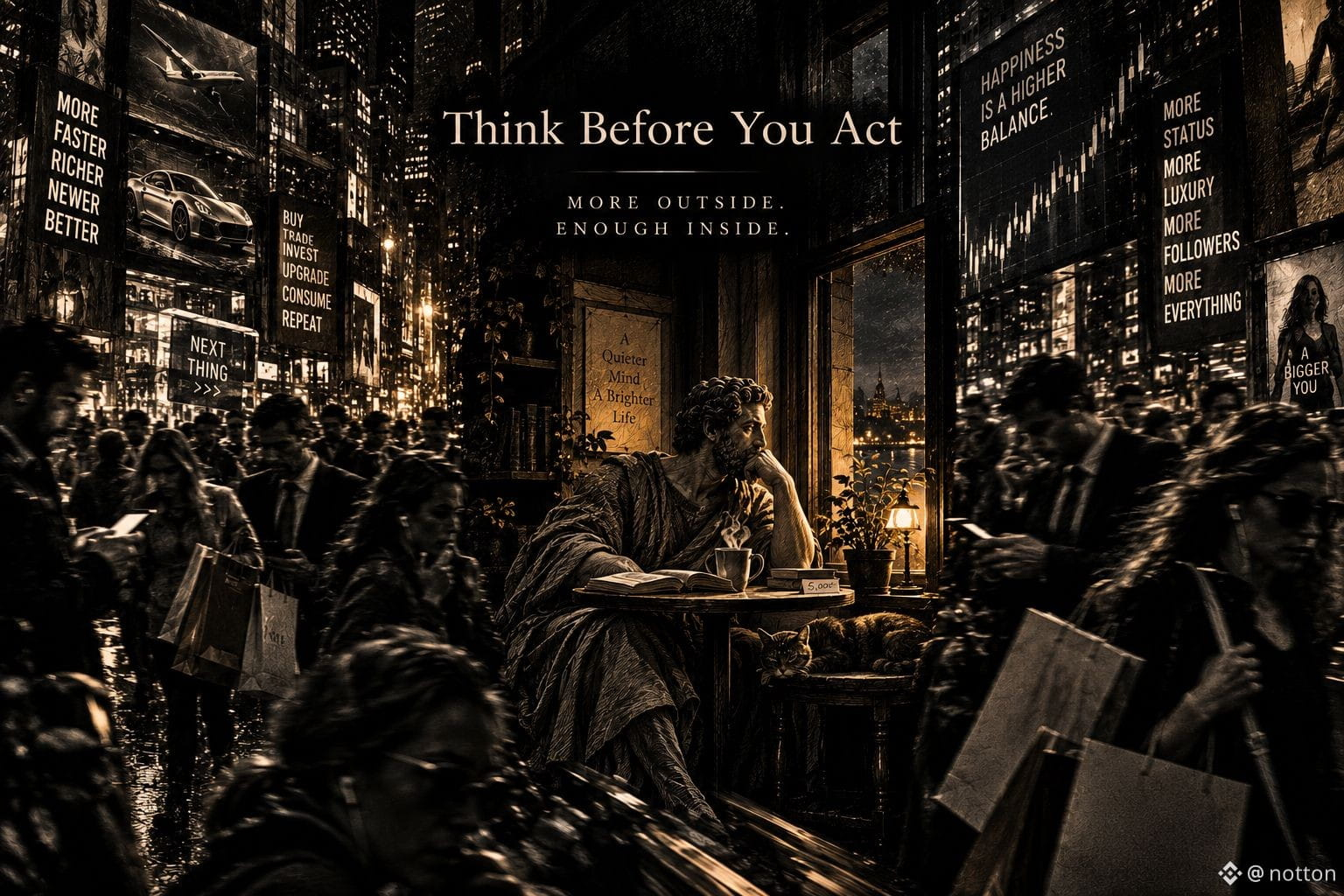
2.3.3
Why does something exciting eventually become normal?
- The first time you get a new phone, it feels special
- A few months later, it's just your phone
- You get used to the new thing
- Then you want the next thing
Psychologists call part of this hedonic adaptation.
And money has the same problem:
- You reach a goal
- You celebrate
Then your brain quietly moves the finish line
- $1,000 becomes $10,000
- $10,000 becomes $100,000.
And “enough” keeps moving...
Sometimes the problem isn't that we don't have enough
It's that we stop noticing what we already have
So today, we're stopping for a moment
5,000 of you are here
And instead of immediately asking:
- “What's next?”
We're going to ask:
- “What do we already have?”
Thank you for being part of this
Now -
back to
~ Thinking before we act
Q: What can make “enough” keep moving?
#ThinkBeforeYouAct #ThinkBeforeYouAct #Psychology #Gratitude
2.3.3
Why does something exciting eventually become normal?
- The first time you get a new phone, it feels special
- A few months later, it's just your phone
- You get used to the new thing
- Then you want the next thing
Psychologists call part of this hedonic adaptation.
And money has the same problem:
- You reach a goal
- You celebrate
Then your brain quietly moves the finish line
- $1,000 becomes $10,000
- $10,000 becomes $100,000.
And “enough” keeps moving...
Sometimes the problem isn't that we don't have enough
It's that we stop noticing what we already have
So today, we're stopping for a moment
5,000 of you are here
And instead of immediately asking:
- “What's next?”
We're going to ask:
- “What do we already have?”
Thank you for being part of this
Now -
back to
~ Thinking before we act
Q: What can make “enough” keep moving?
#ThinkBeforeYouAct #ThinkBeforeYouAct #Psychology #Gratitude
Why does something exciting eventually become normal?
- The first time you get a new phone, it feels special
- A few months later, it's just your phone
- You get used to the new thing
- Then you want the next thing
Psychologists call part of this hedonic adaptation.
And money has the same problem:
- You reach a goal
- You celebrate
Then your brain quietly moves the finish line
- $1,000 becomes $10,000
- $10,000 becomes $100,000.
And “enough” keeps moving...
Sometimes the problem isn't that we don't have enough
It's that we stop noticing what we already have
So today, we're stopping for a moment
5,000 of you are here
And instead of immediately asking:
- “What's next?”
We're going to ask:
- “What do we already have?”
Thank you for being part of this
Now -
back to
~ Thinking before we act
Q: What can make “enough” keep moving?
#ThinkBeforeYouAct #ThinkBeforeYouAct #Psychology #Gratitude
1.2k
1
61
1.2k
·
--
Article
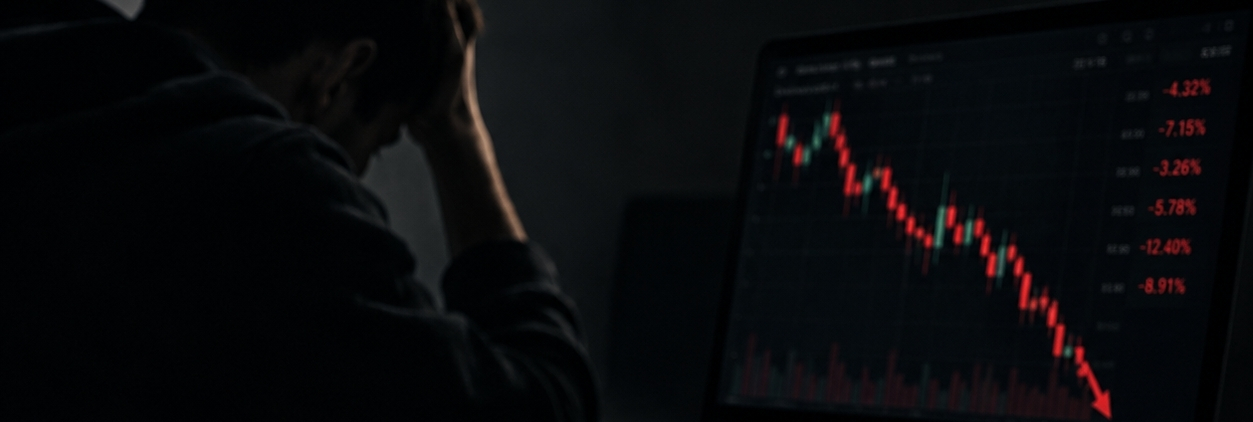
Why your brain treats a losing trade like a physical threatWhen a trade turns red, your brain doesn't process it as "numbers moving." It processes it as danger.
The amygdala, the part of your brain that reacts to threats, fires the same way whether you're facing a predator or watching a red candle. Cortisol rises. Your thinking narrows. This is why in the middle of a loss, people say "I wasn't thinking straight," and they mean it literally, not as an excuse.
That's also why a stop-loss feels harder to execute than it looks on paper. You're not failing at discipline. You're fighting a nervous system that's telling you to fight or freeze, in a situation where the only smart move is neither.
Three things that actually help, because they work with the nervous system instead of against it:
1. Decide before you feel it. Set your stop-loss when you're calm, before you enter. A decision made in a threat state is rarely a good one.
2. Name what's happening. Silently saying "this is fear, not information" pulls the analytical brain back online. It's a small step, but it's measurable.
3. Build the exit into the routine, not the moment. Traders who treat "hit stop → close → step away" as one automatic sequence rely less on willpower under pressure, because there's less left to decide in real time.
Understanding the mechanism doesn't remove the feeling. But it stops you from mistaking a normal stress response for a personal flaw, which is where a lot of self-blame in trading comes from.
👇 Next time you're in a losing trade, notice what happens in your body before you look at the numbers.
#trading #Cryptomindset #psychology
Why your brain treats a losing trade like a physical threat
When a trade turns red, your brain doesn't process it as "numbers moving." It processes it as danger.
The amygdala, the part of your brain that reacts to threats, fires the same way whether you're facing a predator or watching a red candle. Cortisol rises. Your thinking narrows. This is why in the middle of a loss, people say "I wasn't thinking straight," and they mean it literally, not as an excuse.
That's also why a stop-loss feels harder to execute than it looks on paper. You're not failing at discipline. You're fighting a nervous system that's telling you to fight or freeze, in a situation where the only smart move is neither.
Three things that actually help, because they work with the nervous system instead of against it:
1. Decide before you feel it. Set your stop-loss when you're calm, before you enter. A decision made in a threat state is rarely a good one.
2. Name what's happening. Silently saying "this is fear, not information" pulls the analytical brain back online. It's a small step, but it's measurable.
3. Build the exit into the routine, not the moment. Traders who treat "hit stop → close → step away" as one automatic sequence rely less on willpower under pressure, because there's less left to decide in real time.
Understanding the mechanism doesn't remove the feeling. But it stops you from mistaking a normal stress response for a personal flaw, which is where a lot of self-blame in trading comes from.
👇 Next time you're in a losing trade, notice what happens in your body before you look at the numbers.
#trading #Cryptomindset #psychology
The amygdala, the part of your brain that reacts to threats, fires the same way whether you're facing a predator or watching a red candle. Cortisol rises. Your thinking narrows. This is why in the middle of a loss, people say "I wasn't thinking straight," and they mean it literally, not as an excuse.
That's also why a stop-loss feels harder to execute than it looks on paper. You're not failing at discipline. You're fighting a nervous system that's telling you to fight or freeze, in a situation where the only smart move is neither.
Three things that actually help, because they work with the nervous system instead of against it:
1. Decide before you feel it. Set your stop-loss when you're calm, before you enter. A decision made in a threat state is rarely a good one.
2. Name what's happening. Silently saying "this is fear, not information" pulls the analytical brain back online. It's a small step, but it's measurable.
3. Build the exit into the routine, not the moment. Traders who treat "hit stop → close → step away" as one automatic sequence rely less on willpower under pressure, because there's less left to decide in real time.
Understanding the mechanism doesn't remove the feeling. But it stops you from mistaking a normal stress response for a personal flaw, which is where a lot of self-blame in trading comes from.
👇 Next time you're in a losing trade, notice what happens in your body before you look at the numbers.
#trading #Cryptomindset #psychology
2
1.4k
·
--
Article
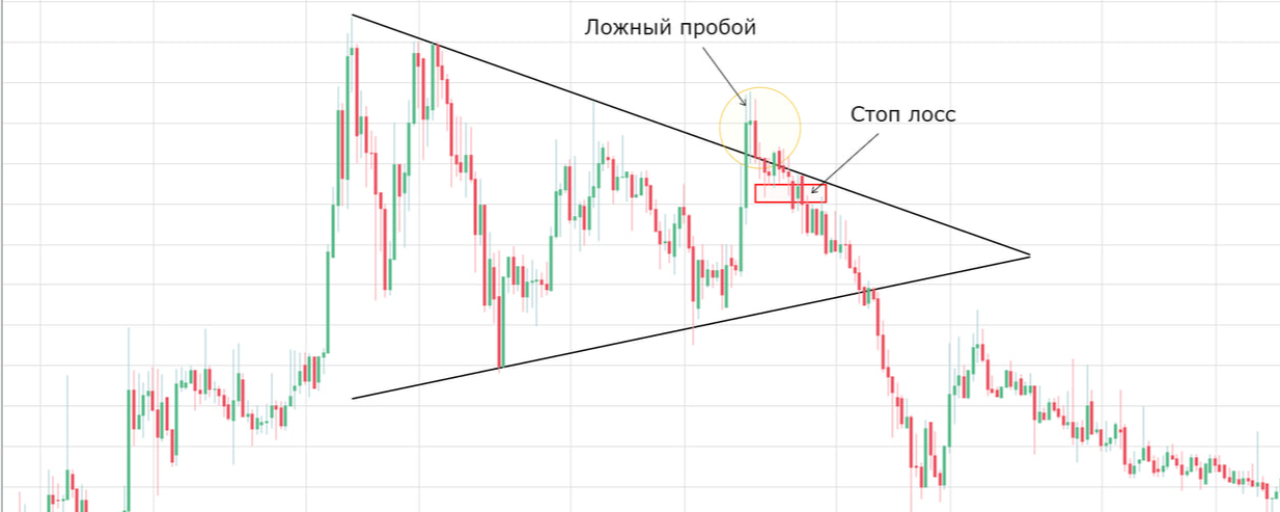
Case: the symmetrical triangle trap and the “wishful thinking” syndromeClient request
“I thought the trend would continue. It seemed to me that since the price had risen before, the triangle had to break only upward.”
History
A beautiful symmetrical triangle formed on the chart.
Before that, the market was in an uptrend.
The brain immediately chose a direction:
Case: the symmetrical triangle trap and the “wishful thinking” syndrome
Client request
“I thought the trend would continue. It seemed to me that since the price had risen before, the triangle had to break only upward.”
History
A beautiful symmetrical triangle formed on the chart.
Before that, the market was in an uptrend.
The brain immediately chose a direction:
“I thought the trend would continue. It seemed to me that since the price had risen before, the triangle had to break only upward.”
History
A beautiful symmetrical triangle formed on the chart.
Before that, the market was in an uptrend.
The brain immediately chose a direction:
1
6.2k

3am. My $ADA long was screaming red, down 40% on 20x leverage. My fingers hovered over the ‘close’ button, heart hammering, wanting to bleed out the pain just to make the ticker stop moving. Two years ago, I would’ve smashed it and flipped short out of spite. Instead, I stared at the wall for twenty minutes, hands under my thighs, letting the panic settle. I stopped acting on the adrenaline. I stopped trying to reclaim that $5,400 I lost years ago. I let the trade hit my stop. When was the last time you let a trade breathe?
#trading #crypto #psychology #riskmanagement #ADA
3am. My $ADA long was screaming red, down 40% on 20x leverage. My fingers hovered over the ‘close’ button, heart hammering, wanting to bleed out the pain just to make the ticker stop moving. Two years ago, I would’ve smashed it and flipped short out of spite. Instead, I stared at the wall for twenty minutes, hands under my thighs, letting the panic settle. I stopped acting on the adrenaline. I stopped trying to reclaim that $5,400 I lost years ago. I let the trade hit my stop. When was the last time you let a trade breathe?
#trading #crypto #psychology #riskmanagement #ADA
#trading #crypto #psychology #riskmanagement #ADA
108
Log in to explore more content
Join global crypto users on Binance Square
⚡️ Get latest and useful information about crypto.
💬 Trusted by the world’s largest crypto exchange.
👍 Discover real insights from verified creators.
Email / Phone number
Trending Topics
1
#BNBSurpasses$790
10,563 views
84 Discussing
2
#ZamaRises15.99%ToIntradayHigh$0.09
5,153 views
72 Discussing
3
#BitcoinSpotETFsDraw$6.34BInflowsInQ3
3,679 views
60 Discussing
4
#EthereumValidatorExitQueueJumps392%
56,284 views
692 Discussing
5
#IMFApprovesElSalvador$138MWithBitcoinWaiver
7,467 views
40 Discussing
6
#SECHaltsCryptoETFReviewsAmidFundingLapse
209,207 views
1,589 Discussing
7
#ZcashETFPostsFirstWeeklyOutflow$93.6M
88,921 views
246 Discussing
8
#GreekPoliceBustCryptoScamRingArrest17
337,880 views
2,254 Discussing
9
#BitcoinRejectedAt$87K
206,026 views
305 Discussing
10
#FedOctoberRateHikeOddsFallTo17%
335,777 views
2,375 Discussing