
#physicalai
physicalai
3,915 views
73 Discussing
Hot
Latest

·
--
At last, someone in the robotics industry is starting to measure “how much work got done” instead of “how many units were made.”
On Oct. 29 in Shanghai, AGIBOT introduced a new metric at Innovation Day 2026: Worken (Work + Token), which it calls “effective intelligent work hours” in Chinese.
The formula is straightforward:
Worken = number of robots actively working × hours of autonomous operation × output efficiency factor
1️⃣ Only robots actually carrying out tasks count; inventory and showroom displays do not
2️⃣ Only autonomous working time counts; powered-on standby and remote operation by a person nearby do not
3️⃣ Output is measured against a task benchmark, such as the qualified output of a human worker under the same standards
At the same event, AGIBOT also unveiled the G2 Max industrial robot (21 degrees of freedom, capable of carrying 40 kg with its dual arms), the GO-3 Preview embodied foundation model, and plans for Link-U OS 1.0 to be fully open-sourced and donated to the OpenAtom Foundation before the end of the year. The company said its 20,000th unit rolled off the production line in September.
My take:
This is the same shift we’ve seen in AI, from “parameter races” to “measuring token output.” Sooner or later, Physical AI valuations will move beyond shipment-volume narratives and focus on “how much qualified work each machine actually does in a year.” Whoever is first to make that figure auditable will have pricing power.
But let’s stay grounded: Worken is currently just AGIBOT’s proposal, not an industry standard. How task benchmarks are set and who audits the data have yet to be worked out. Until we see third-party-verifiable Worken data, treat it as a useful framework—not a KPI to take on faith.
Projects building DePIN / robotics data networks in crypto can take note: settling payments by effective work hours is much more credible than issuing tokens based on the number of devices.
Sources: AGIBOT official website / PR Newswire press release dated Oct. 29, The Robot Report
#AI #机器人 #PhysicalAI
For informational purposes only; not investment advice.
1k

🤖 $AXIS by Axis Robotics is live on Binance Alpha today!
Axis Robotics is building a data engine for Physical AI. Regular people guide simulated robots from their phone or browser, and that data helps train real robots. No special hardware needed.
🎁 Airdrop details:
• Claim 250 $AXIS on the Alpha Events page
• Need at least 235 Alpha Points
• Claiming uses 15 points
• Confirm within 24 hours or you lose it
• First come, first served
• If the event is still running, the point requirement drops by 5 every 5 minutes
📊 Quick facts:
• $12M seed round
• 200,000+ contributors
• Fixed supply of 1 billion, with 16.5% circulating at launch
Robotics + AI + crypto is a narrative worth watching 👀
Did you claim yours? 👇
Always DYOR. Not financial advice.
$AXIS #AxisRobotics #BinanceAlpha #Airdrop #PhysicalAI
357

·
--
Bullish
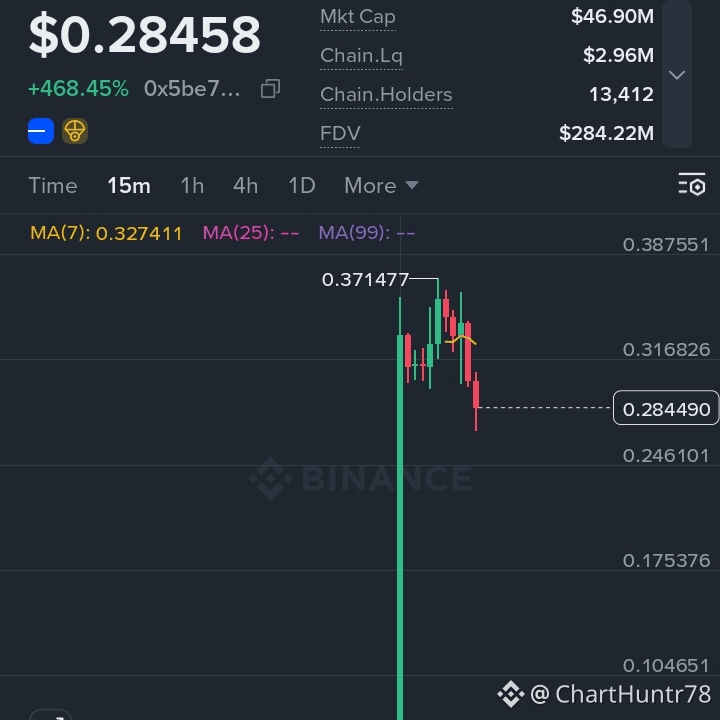
🚀 $AXIS (Axis Robotics) — Launch Day Absolute Beast
Physical AI is here. And the market is already pricing it.
Current Price: $0.28458
24h Change: +468.45%
Market Cap: $46.90M
FDV: $284.22M
Holders: 13,412
Liquidity: $2.96M
Volume: Exploding (multi-million)
Chart Snapshot
Insane vertical launch from ~$0.03–0.10 zone straight to $0.38 high
Currently cooling off around $0.28 after the first wave
MA(7) sitting higher at ~0.327 — price is in healthy post-pump consolidation
Classic launch-day structure: parabolic move → pullback → next leg setup
This is not a random meme pump.
Axis Robotics is building the compounding data engine for Physical AI — crowdsourcing real robot training trajectories so robots can actually learn the physical world (the missing piece that LLMs already had with the internet).
Clean Trade Setup (High Risk / High Reward)
Bias: Bullish continuation after cooling
Entry Zone:
$0.265 – $0.285 (current area or dip)
Targets:
TP1: $0.35 (retest of highs)
TP2: $0.42 – $0.48
TP3: $0.60+ (if narrative keeps running)
Stop Loss:
Below $0.22 (structure + major support)
Risk:Reward → Solid 1:2.5 to 1:4 potential from entry
Why this has legs
Just listed on Binance Alpha (first platform)
Real product: 200k+ contributors already generating robot data
Fixed supply 1B, only 16.5% circulating at TGE
Physical AI narrative is one of the strongest new sectors right now
Volume and holder growth are explosive on day 1
Warning: Extreme volatility. Launch-day tokens can reverse hard. Size small, respect the stop.
Who caught the launch? Who’s waiting for the retest?
Drop your entry & thoughts below 👇
Let’s see how far Physical AI can run.
#AXIS #AxisRobotics #PhysicalAI #BinanceAlpha #Robotics #CryptoTrading
1
19

·
--
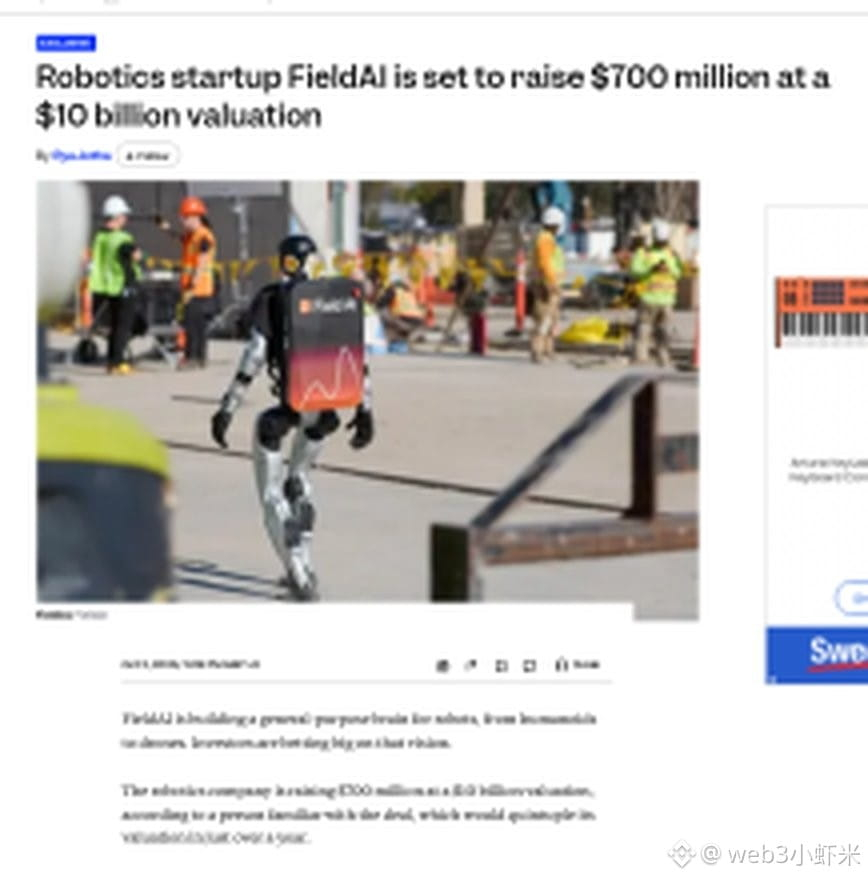
Scoring Business Insider: FieldAI, which is building a “general brain” for robots, is in talks for a new round of funding of about $700 million, valuing it at roughly $10 billion—according to insiders, a term sheet has already been signed. In a little over a year, its valuation has climbed from around $2 billion to about five times that.
The software can be used for humanoid robots, quadruped robot dogs, drones, and industrial vehicles alike—so the system can work autonomously in uncertain environments. Since June, contract/revenue has increased by about $35 million, bringing the total to over $135 million. Customers include those in construction, data centers, and defense. In the previous round—over $400 million—investors included Bezos’s family office, Emerson Collective, Khosla, and others. The lead investors in this round have not been disclosed, and the deal may not be officially closed yet.
Over on the Physical AI side, valuations are moving fast—nearby Physical Intelligence and Skild are also in the billion-dollar range. Actually getting it into the real world is far harder than doing single-task demos in a lab. Money is going in—now the question is whether they can steady things on the ground.
#AI #机器人 #PhysicalAI
73

·
--

Article
Robotics is the trade after AI — and most investors are still asleepAI gave machines a brain. Robotics gives them a body. Here's why the next decade's biggest wealth creation event is already starting — and how to position before the crowd arrives.
The pattern every great trade follows
Every decade produces one technology narrative that creates generational wealth. In the 2000s it was the internet. In the 2010s it was mobile and cloud. In the early 2020s it was AI — specifically the chips, data centers, and models that power it. NVIDIA went from $150 to $1,200. The investors who saw it early made 8x returns. The investors who waited for "proof" bought the top.
The question every intelligent investor asks now is: what's next? The answer is sitting in plain sight. It's already happening on factory floors in China, in a warehouse in California, and in Hyundai's production line in South Korea. It's called Physical AI — and the stock market is just beginning to price it in.
"Intelligence was always the bottleneck stopping robots from working. AI just removed that bottleneck."— Andrew Kang, CEO of RoboStrategy, Yahoo Finance 2026
Why 2026 is the inflection point
For decades, robots were powerful but dumb. They could weld a car frame or assemble a circuit board — but only if the environment was perfectly controlled and the task perfectly repetitive. One unexpected object on the assembly line and the robot stopped. Intelligence was the missing piece. AI just delivered it.
In the last 60 days alone, the milestones have been impossible to ignore: Figure AI's BotQ factory hit a production rate of one robot per hour. Boston Dynamics began shipping its electric Atlas to Hyundai and Google DeepMind. Tesla is pushing toward a summer launch of Optimus Gen 3. Unitree — the Chinese leader — shipped over 5,500 units in 2025 and is targeting 10,000 to 20,000 in 2026. OpenAI launched a humanoid robotics division. The theme crossed the line from science fiction to a logistics line item.
When the cost of a technology falls fast enough, adoption explodes. We saw it with computers, smartphones, and solar panels. The same curve is coming for robotics — and the demand side is already locked in: aging populations, labor shortages, and the reshoring of manufacturing to the US are structural forces that don't reverse.
The value chain: where to invest
Like any technology wave, robotics has layers. Each layer has a different risk/reward profile. The mistake most investors make is chasing the most exciting layer — which is usually the most dangerous one.
The crypto angle nobody is talking about
Here's what crypto investors are missing: when robots become autonomous agents — buying energy, paying for compute, transacting for services — they will need a payment rail that doesn't require a bank account or a human signature. That's crypto. Specifically: programmable money on smart contract networks.
This means AI agent tokens like FET (Fetch.ai) and RNDR (Render Network) have a real long-term use case beyond speculation. DePIN projects — decentralized physical infrastructure — become the backbone of a robot economy. The convergence of robotics and crypto isn't a narrative. It's an architectural requirement.
#Robotics #PhysicalAi #roboticsnarrative #PhysicalAinarrative
Robotics is the trade after AI — and most investors are still asleep
AI gave machines a brain. Robotics gives them a body. Here's why the next decade's biggest wealth creation event is already starting — and how to position before the crowd arrives.
The pattern every great trade follows
Every decade produces one technology narrative that creates generational wealth. In the 2000s it was the internet. In the 2010s it was mobile and cloud. In the early 2020s it was AI — specifically the chips, data centers, and models that power it. NVIDIA went from $150 to $1,200. The investors who saw it early made 8x returns. The investors who waited for "proof" bought the top.
The question every intelligent investor asks now is: what's next? The answer is sitting in plain sight. It's already happening on factory floors in China, in a warehouse in California, and in Hyundai's production line in South Korea. It's called Physical AI — and the stock market is just beginning to price it in.
"Intelligence was always the bottleneck stopping robots from working. AI just removed that bottleneck."— Andrew Kang, CEO of RoboStrategy, Yahoo Finance 2026
Why 2026 is the inflection point
For decades, robots were powerful but dumb. They could weld a car frame or assemble a circuit board — but only if the environment was perfectly controlled and the task perfectly repetitive. One unexpected object on the assembly line and the robot stopped. Intelligence was the missing piece. AI just delivered it.
In the last 60 days alone, the milestones have been impossible to ignore: Figure AI's BotQ factory hit a production rate of one robot per hour. Boston Dynamics began shipping its electric Atlas to Hyundai and Google DeepMind. Tesla is pushing toward a summer launch of Optimus Gen 3. Unitree — the Chinese leader — shipped over 5,500 units in 2025 and is targeting 10,000 to 20,000 in 2026. OpenAI launched a humanoid robotics division. The theme crossed the line from science fiction to a logistics line item.
When the cost of a technology falls fast enough, adoption explodes. We saw it with computers, smartphones, and solar panels. The same curve is coming for robotics — and the demand side is already locked in: aging populations, labor shortages, and the reshoring of manufacturing to the US are structural forces that don't reverse.
The value chain: where to invest
Like any technology wave, robotics has layers. Each layer has a different risk/reward profile. The mistake most investors make is chasing the most exciting layer — which is usually the most dangerous one.
The crypto angle nobody is talking about
Here's what crypto investors are missing: when robots become autonomous agents — buying energy, paying for compute, transacting for services — they will need a payment rail that doesn't require a bank account or a human signature. That's crypto. Specifically: programmable money on smart contract networks.
This means AI agent tokens like FET (Fetch.ai) and RNDR (Render Network) have a real long-term use case beyond speculation. DePIN projects — decentralized physical infrastructure — become the backbone of a robot economy. The convergence of robotics and crypto isn't a narrative. It's an architectural requirement.
#Robotics #PhysicalAi #roboticsnarrative #PhysicalAinarrative
1
1
136

·
--
Axis @axisrobotics Brothers, when are you updating the tasks?
It’s been 3 days! Three full days! Not a single task can be snatched!
Task link: https://t.co/7sfvqfLzJY
At first: if you have time, do a few tasks
Now: remember to wait for Axis at 8 PM
And then: still not there?
Refresh—still nothing
Refresh again—still nothing
I’m not even doing tasks anymore. I’m just waiting for tasks.
But after all the complaining, these days actually made me realize something:
Why can simulating tasks with a robot get so many people to show up on time every day?
Because what Axis is doing isn’t a typical task platform.
It turns robot training—something that’s far beyond ordinary people—into something anyone can take part in.
You don’t truly need to own a robot.
You don’t need to stay in a lab.
As long as you can complete the operations through a browser, you can contribute a real robot behavior trajectory.
One person’s movements may be ordinary.
But when more and more people do it together—different operating habits, different paths, different environments, and different mistakes—
all of that ultimately becomes Experience the robot can learn from.
This is actually pretty important.
Because one of the biggest differences between Physical AI and the AI we’re familiar with is that
robots can’t just understand the world—they also have to learn how to act in the world.
And the “acting” part
is hard to scale properly without enough Experience.
So now, looking back at Axis’s task mechanism, I actually find it kind of interesting.
On the surface, what everyone is competing for is tasks.
But the essence is:
contributing the experience the robot needs for its next training.
From early data collection to now, it’s already over 3M trajectories.
Axis has started shifting its focus from getting more data
to getting more valuable data.
V2 does targeted correction.
The Dataset begins to open up.
And then, more recently, it connects with more of the Robotics ecosystem.
The route is getting clearer and clearer:
It’s not just about making the Dataset bigger.
It’s about helping the robot continuously gain new Experience.
That’s also what I think makes Axis most worth paying attention to.
Because in the future, the model will be upgraded,
robot hardware will be upgraded,
and training methods will also be upgraded.
But robots will always need one thing:
more—and better—real-world experience.
So… I understand the logic of Axis.
Physical AI’s Experience is important.
The Data Flywheel is important.
Robots’ future is important too.
But what about my Experience?
My tasks?
I’ve been waiting for three days.
Please—bro, give us some tasks!
#PhysicalAI #Robotics
87

·
--
THE ROBOTICS REVOLUTION IS HERE.🤖 THE ROBOTICS REVOLUTION IS HERE.
AXIS Robotics is building the data layer for the future of Physical AI.
⚡ Complete tasks
🧠 Help train intelligent robots
🎯 Earn points & rewards
🚀 Get in early
🔥 Join through binance
[https://www.binance.com/en/support/announcement/detail/1c097191f01345b090018ffcd30e445c?utm_source=new_share&ref=CPA_000PJEIJMM](https://www.binance.com/en/support/announcement/detail/1c097191f01345b090018ffcd30e445c?utm_source=new_share&ref=CPA_000PJEIJMM)
FOLLOW → JOIN → COMPLETE TASKS → EARN 🚀
Don’t just watch the future. Be part of it.
#AXIS #PhysicalAI #Robotics #Aİ #DePIN #Crypto #Web3 #Airdrop
THE ROBOTICS REVOLUTION IS HERE.
🤖 THE ROBOTICS REVOLUTION IS HERE.
AXIS Robotics is building the data layer for the future of Physical AI.
⚡ Complete tasks
🧠 Help train intelligent robots
🎯 Earn points & rewards
🚀 Get in early
🔥 Join through binance
https://www.binance.com/en/support/announcement/detail/1c097191f01345b090018ffcd30e445c?utm_source=new_share&ref=CPA_000PJEIJMM
FOLLOW → JOIN → COMPLETE TASKS → EARN 🚀
Don’t just watch the future. Be part of it.
#AXIS #PhysicalAI #Robotics #Aİ #DePIN #Crypto #Web3 #Airdrop
166

·
--

Article
Physical AI Decade ②: If I could only buy one robotics stock, I would choose TSLAin the past few months.
I studied many robotics companies.
Figure.
Agility.
Apptronik.
UBTECH.
and the entire robotics industry chain.
But if you forced me to choose only one company right now,
My answer is actually very simple:
**TSLA.**
It’s not because its robots are the most advanced.
Not because Musk is the best storyteller.
and it’s not because the market likes to hype it the most either.
it’s because:
**If Physical AI really becomes the super mainline of the next decade.**
TSLA is very likely the first in the entire industry chain to
start making money,
the first to deliver results,
the first company to enter large-scale mass production.
Physical AI Decade ②: If I could only buy one robotics stock, I would choose TSLA
in the past few months.
I studied many robotics companies.
Figure.
Agility.
Apptronik.
UBTECH.
and the entire robotics industry chain.
But if you forced me to choose only one company right now,
My answer is actually very simple:
**TSLA.**
It’s not because its robots are the most advanced.
Not because Musk is the best storyteller.
and it’s not because the market likes to hype it the most either.
it’s because:
**If Physical AI really becomes the super mainline of the next decade.**
TSLA is very likely the first in the entire industry chain to
start making money,
the first to deliver results,
the first company to enter large-scale mass production.
TSLAUS-0.58%
1
395

·
--
Vangrid secures $9 million in funding, with participation from HashKey Capital, Borderless Capital, Crypto.com Capital, Animoca Brands, Mapleblock Capital, and Gate.io.
The positioning of this project is quite interesting: they are building a foundational 3D spatial data layer for the Physical AI era. In simple terms, they provide robots, autonomous driving systems, and embodied agents with a continuously updated "real-world map."
Completely different from traditional surveying and mapping, Vangrid follows a DePIN + crowdsourcing approach: it leverages 3D spatial data collected by smart phone users worldwide, then completes verifiable data validation through on-chain mechanisms. This dramatically lowers the cost of data collection, allowing robot companies and agent developers to call on low-cost, highly up-to-date real-world data as needed.
In my view, this round of financing sends three signals:
First, capital is accelerating its bet on Physical AI infrastructure. The robotics industry lacks not only computing power, but also "data fuel."
Second, the focus of the DePIN narrative is shifting from purely "hardware mining" to "AI data supply," and Vangrid combines both.
Third, smartphones—the most widely adopted sensing terminals—are being redefined as a crowdsourced sensor network for the physical world.
The next thing worth watching is how their data verification mechanism can resist malicious submissions, as well as the real rollout cadence of their first batch of robot/agent customers.
#PhysicalAI #DePIN #Web3
18

Unitree Robotics IPO Explodes 629%!
Unitree Robotics surged 629% on its Shanghai debut, becoming mainland China’s first publicly listed humanoid robot maker. The massive IPO demand highlights growing investor excitement around physical AI and humanoid robotics.#UnitreeRobotics #HumanoidRobots #AI #artificialintelligence. #Robotics #PhysicalAI
$BTC
{spot}(BTCUSDT)
$SPCXB
{spot}(SPCXBUSDT)
$XRP
{spot}(XRPUSDT)
Unitree Robotics IPO Explodes 629%!
Unitree Robotics surged 629% on its Shanghai debut, becoming mainland China’s first publicly listed humanoid robot maker. The massive IPO demand highlights growing investor excitement around physical AI and humanoid robotics.#UnitreeRobotics #HumanoidRobots #AI #artificialintelligence. #Robotics #PhysicalAI
$BTC
$SPCXB
$XRP
88
·
--
If a robot can only learn one action
then it’s not as smart as you think it is.
What’s really tricky is this:
After it learns to pick things up, can it then also classify the items?
After classification, can it keep moving them?
This is also the most interesting part of Axis’s latest update.
They’re now breaking the robot’s abilities into separate Experts:
Grasping = one skill
Classification = one skill
Transporting = one skill
Placement = one skill
Then they directly chain these skills together:
Grasping → Classification → Transporting → Placement
Once the previous Expert finishes, it hands the result to the next one.
You can think of it like this:
Before, we were teaching robots how to solve one problem.
Now we’re helping robots build up a skills tree.
And this isn’t just storytelling.
In Axis’s most recent experiments, one very intuitive piece of data is:
Real-world success rate 22% → 52%
They take the real-world data generated by the deployed strategy,
bring it back, and use it for further training—
and the success rate improves significantly.
There’s another number that’s also quite important: $5–$10 / task
The training cost for one Expert can already be on that scale.
Training one Expert on an A100 takes about 3–6 hours.
So now, when looking at Axis, it’s less appealing to only ask:
How much data have they collected?
Because having more data doesn’t necessarily mean the robot has truly learned something.
What they really want to know is:
How many truly useful, reusable, and composable skills can be distilled from all that data in the end?
That’s the difference.
If today the robot learns to grasp,
then tomorrow it learns to classify,
the day after it learns to transport,
and finally it can still piece these abilities together,
then what it gains isn’t a few isolated actions.
Instead, it becomes a set that can be continuously expanded:
Robot Skills Library
So Axis’s current direction is gradually shifting from:
More Data
to:
More Skills → Skills Can Compose → More Complex Tasks
Data is just the beginning.
What really matters is what the robot can learn from it.
#AXIS #PhysicalAI @axisrobotics #Kaito @KaitoAI
76

Vangrid secures $9 million in funding, with HashKey Capital, Animoca Brands, Crypto.com Capital, Borderless Capital, Mapleblock Capital, and Gate.io all participating—an impressively solid lineup.
What’s most worth discussing about this project isn’t the funding amount, but the scenario it targets: Physical AI is booming, yet for robots to leave the lab, the first hurdle is “understanding the real world.” High-precision 3D spatial data has traditionally depended on LiDAR and professional surveying vehicle fleets—high costs, slow updates, and nowhere near sufficient to support large-scale deployment.
Vangrid’s solution is to use smartphones for crowdsourced data collection: turning everyone’s phones into mobile surveying terminals, then using on-chain mechanisms to complete trustworthy data validation. At its core, it’s building a “decentralized real-world mapping network.” Once the data layer is up and running, robots, autonomous intelligent agents, and AR/VR applications can all benefit directly.
In the DePIN space, there are many projects focused on compute or storage, but few are truly betting on “physical-world data infrastructure.” Vangrid has chosen a tougher path with a higher moat, making it well worth tracking the subsequent rollout progress over the long term.
#DePIN #PhysicalAI #Web3
30
·
--
I re-researched @axisrobotics, and instead I’m becoming more and more convinced that
what’s truly worth paying attention to about Axis isn’t how much robot data it already has
but that it’s turning this data into a system that can continuously self-improve.
In August, Axis’s robotic data engine crossed 3M trajectories.
Behind the scenes, there are 123K+ contributors.
But if it’s only that the amount of data keeps growing,
then it’s not actually that exciting.
What really made me start looking at Axis again
was a recent series of moves:
Dataset V1 → Axis V2 → Booster Robotics → OpenRoboto
Behind all of them is really pointing to one thing:
making the Physical AI Data Loop actually run.
The hardest part of robot training was never just a lack of data,
but rather
how you know what the next batch of data should be.
Traditional processes look more like:
Task → Data → Model
Train, deploy.
When the model fails, go back and collect data again.
Axis V2 starts changing that process.
The model first executes the task.
The model reveals weaknesses.
Humans intervene with corrections at critical moments.
Correction data flows back into the training pipeline.
The model keeps getting stronger.
Then it exposes new weaknesses.
So it becomes:
Model → Failure → Correction → Data → Better Model
That’s also what’s really interesting about Human-Gated DAgger.
It’s not about having humans repeatedly perform actions the model already knows how to do.
Instead, humans step in when the model truly doesn’t know what to do.
In other words,
not collecting more correct answers,
but precisely collecting the data behind why the model is wrong.
I think this might be a very important value shift in robotics data.
Because once the model already can do something,
adding 10,000 more demonstrations may bring diminishing marginal returns.
But the places where the model repeatedly fails
are often where the next round of training most needs new data.
So when Axis talks about a Compounding Data Engine,
what I understand isn’t simply that the dataset keeps getting bigger.
It’s that
each training round helps make the next round of data collection more precise.
That’s also why I think Axis’s recent collaboration with OpenRoboto is especially worth watching.
Axis will provide 3M+ multimodal trajectories,
which will go into OpenRoboto’s Open Data Pool.
At the same time, through a Data-to-Model Pipeline, it supports model evaluation and benchmarking.
That extends the closed loop further into:
Data → Training → Benchmark → Evaluation → Better Data
Previously, I would have thought of Axis as
a Robot Data Platform.
Now I’m more inclined to think of it as
Physical AI’s Data Infrastructure.
Because hardware will change,
models will change,
VLAs will change.
But robots will always need new Experience from the real world.
So what’s truly worth observing isn’t how many trajectories Axis will reach next time,
but whether
once these data start being used by more models, more robots, and more benchmarks,
the Data Flywheel will actually begin to produce a Compounding Effect.
If this loop really runs,
Axis’s moat may not be how much data we have,
but whether we can continuously produce the next batch of data with higher value.
That’s what I find most interesting about Axis right now.
#PhysicalAI #Robotics @KaitoAI #Axis #kaito
72

·
--
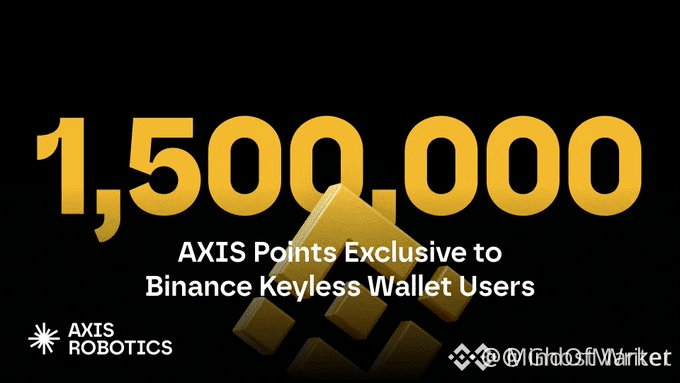
🚨 $AXIS LAUNCHES 1.5M ON-CHAIN DATA REWARDS FOR PHYSICAL AI TRAINERS 🦈
Axis Robotics opens a major structural data initiative offering 1.5M points across two 30-day reward cycles. 📊 Capitalizing on the 20,000 daily First-Come-First-Served allocation requires disciplined timing, with tasks refreshing precisely at 20:00 SGT.
🔍 Participants execute and verify robot trajectories directly on-chain using native Keyless MPC infrastructure to generate clean training footprints. ⚡ Each signed on-chain proof cements early exposure to the expanding Physical AI ecosystem. 💬 Are you structuring your daily execution to capture these point allocations, or sleeping on this AI infrastructure shift? 👇
⚠️ Not financial advice. Always manage your risk. 🛡️
🏷️ #AXIS #PhysicalAI #Crypto #Airdrop
🔥 💎
57

·
--
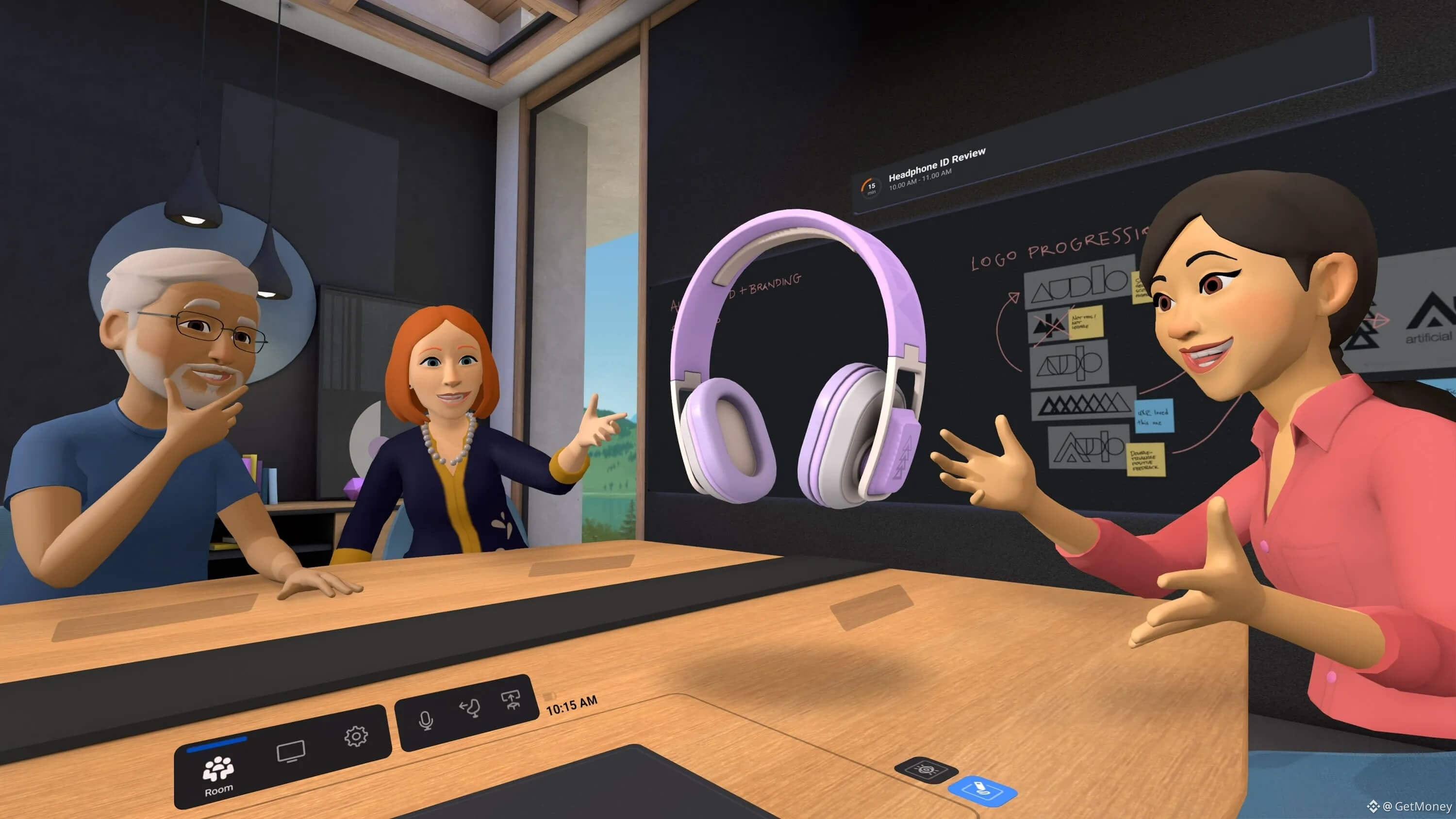
📰 Humans didn't move into the metaverse—who would have thought robots would move in first?
American startup Antioch has just completed a $32 million Series A round led by Greylock. Together with its $8.5 million seed round earlier this year, the company—now a little over a year old—has raised a total of $40.5 million.
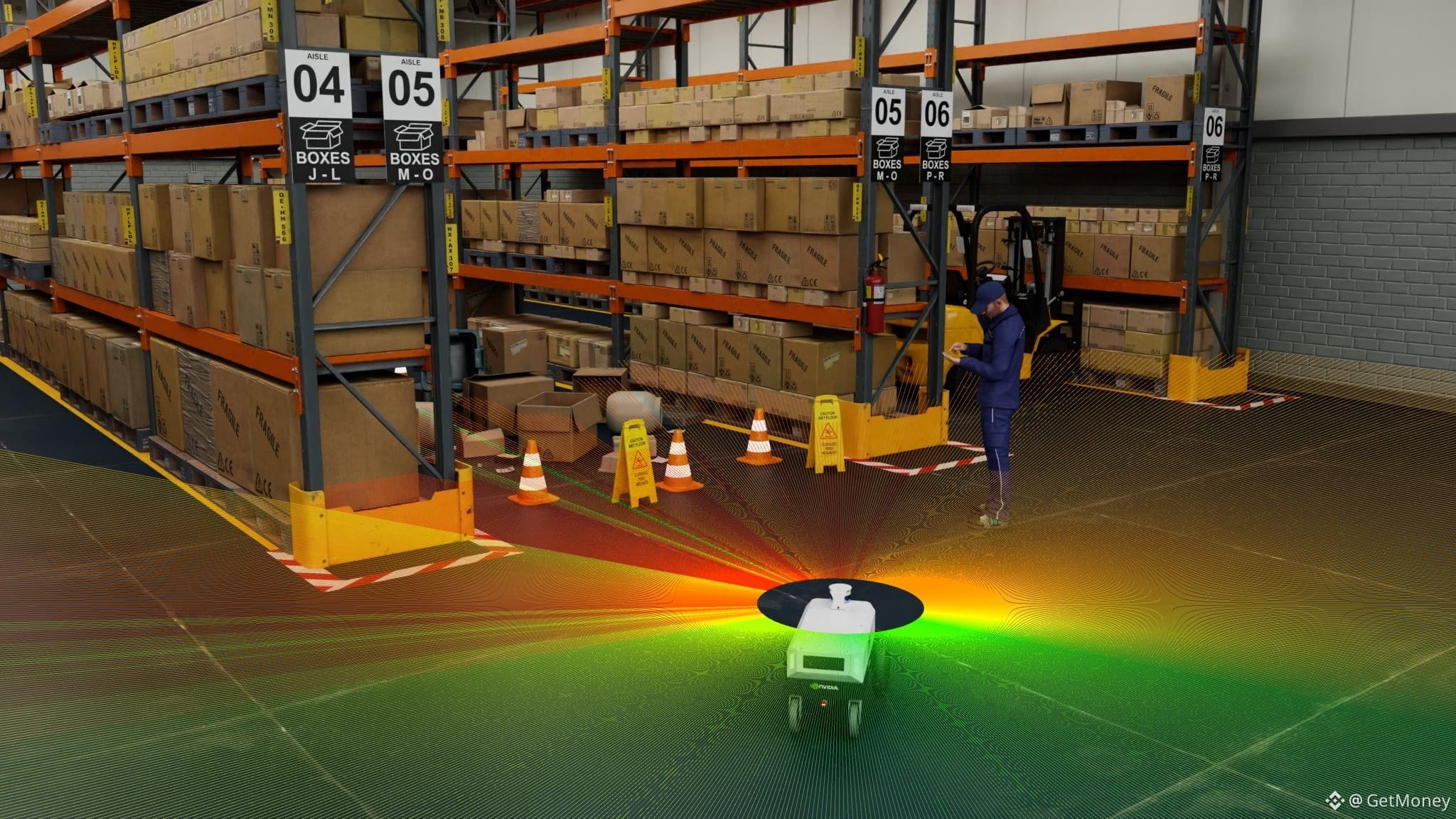
🔥 What it’s doing sounds like the metaverse, but the purpose is completely different: it brings robots, sensors, software, and runtime environments into a computer, training and testing robots in a digital world that closely resembles reality.
In real life, it’s hard to repeatedly test dangerous scenarios. A robot falls, the floor becomes slippery, the cameras fail, and even changes in warehouse racking and lighting can’t just be redone on real hardware whenever you want. Virtual environments are different: the same robot can be copied into thousands of digital doppelgängers, facing different layouts, materials, lighting, and friction.
💡 That’s also why simulated data has been revalued. Real robot data is closest to what happens in practice, but it’s expensive and slow. Internet videos are cheap and plentiful, but they lack joint angles, haptic feedback, and control signals. Simulation data sits right in between: it sacrifices some realism, but it can be copied quickly, trained in parallel, and it can even actively generate extreme edge cases.
Actually, NVIDIA’s Omniverse has also shifted its focus. Five years ago it was touted as “the foundation of the metaverse”; today, its official site defines it as tools and services for developing Physical AI applications, connecting robot simulation, industrial digital twins, and autonomous driving development.
👀 So what’s left from the metaverse isn’t humans wearing headsets to hold meetings in a virtual world—it’s a set of 3D tools that continue to serve robots. To be honest, robots may need a virtual world that never breaks and can be copied infinitely more than humans do.
🤔 Do you think the next round of breakthroughs will come from a consumer-grade metaverse, or from the virtual training grounds behind robots?
#PhysicalAI #机器人 #元宇宙 #Simulation training


93

·
--
Physical AI & Humanoid Robots: The Future of AI in 2026
🤖 The Future Isn't Coming—It's Already Here!
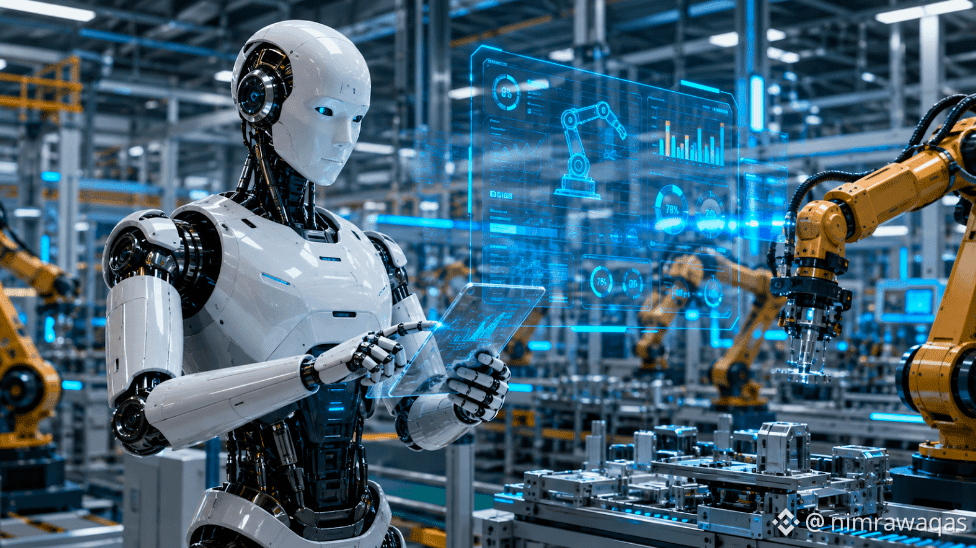
Imagine robots that can walk, think, recognize people, work in factories, assist doctors, and even help at home.
Welcome to the world of Physical AI & Humanoid Robots—one of the biggest AI trends of 2026.
📖 In this article, you'll discover:
✅ What Physical AI is
✅ How humanoid robots work
✅ Real-world applications
✅ Top robotics companies
✅ Benefits & challenges
✅ Future trends shaping tomorrow
Whether you're a student, tech enthusiast, or business professional, this guide explains everything in simple English.
🔗 Read the full article here:
https://aiwithnimrapk.blogspot.com/
Here's the link of this article ..👇🔗
https://aiwithnimrapk.blogspot.com/2026/08/physical-ai-humanoid-robots-future-of.html
💬 Do you think humanoid robots will become part of our daily lives? Share your thoughts below!
#artificialintelligence. #PhysicalAI #HumanoidRobots #Robotics #FutureTechnolog #AIInnovation #machinelearning #Automation #TechTrends #AIwithNimra
$GOOGL.US
GOOGLUS+0.01%
1
115

Vangrid secures $9 million in funding, with participation from HashKey Capital, Crypto.com Capital, Animoca Brands, Borderless Capital, Mapleblock Capital, Gate.io, and others.
The angle this project takes is quite interesting: turning "space data" into a DePIN network.
In simple terms, it aims to solve the "eyes" problem for robots and autonomous agents. For Physical AI to become real, the scarcest resource isn’t computing power—it’s continuously updated real-world maps. Traditional approaches rely on survey vehicles or LiDAR, which are costly and have slow coverage. Vangrid takes a different approach—using the cameras of everyday smartphones for crowdsourced data collection, combined with on-chain verification to ensure the data is trustworthy.
A few points worth paying attention to:
1) Smartphone crowdsourcing means the marginal cost is close to zero, and expansion speed could, in theory, grow exponentially.
2) 3D spatial data is the essential fuel for robots, autonomous driving, and AR, with a very high ceiling on demand.
3) On-chain verification addresses the trust issue of "garbage data entering and AI decision-making going wrong," which is a must-have for real-world applications.
The sector direction is right. The Physical AI narrative has continued to gain momentum over the past couple of years. The key now will be data quality, incentive mechanism design, and whether it can deliver truly real network effects.
#PhysicalAI #DePIN #spatial computing
20

$BB SURGES 40% IN A WEEK – TRADER UP 318% ON 10X LEVERAGE 🔥
Entry: $8.8 🔥
This isn't just a random pump. BlackBerry's QNX software is embedded in millions of smart cars and robots – the market is repricing it for the Physical AI narrative. A trader opened a 10x long at $8.8 just 32 days ago and is up 318%. With 40% weekly gains, the momentum is real.
Are you treating this as a fundamental turnaround or just another meme run?
Not financial advice. Always manage your risk.
#BB #MemeStock #PhysicalAI #Trading
🔥
160

·
--
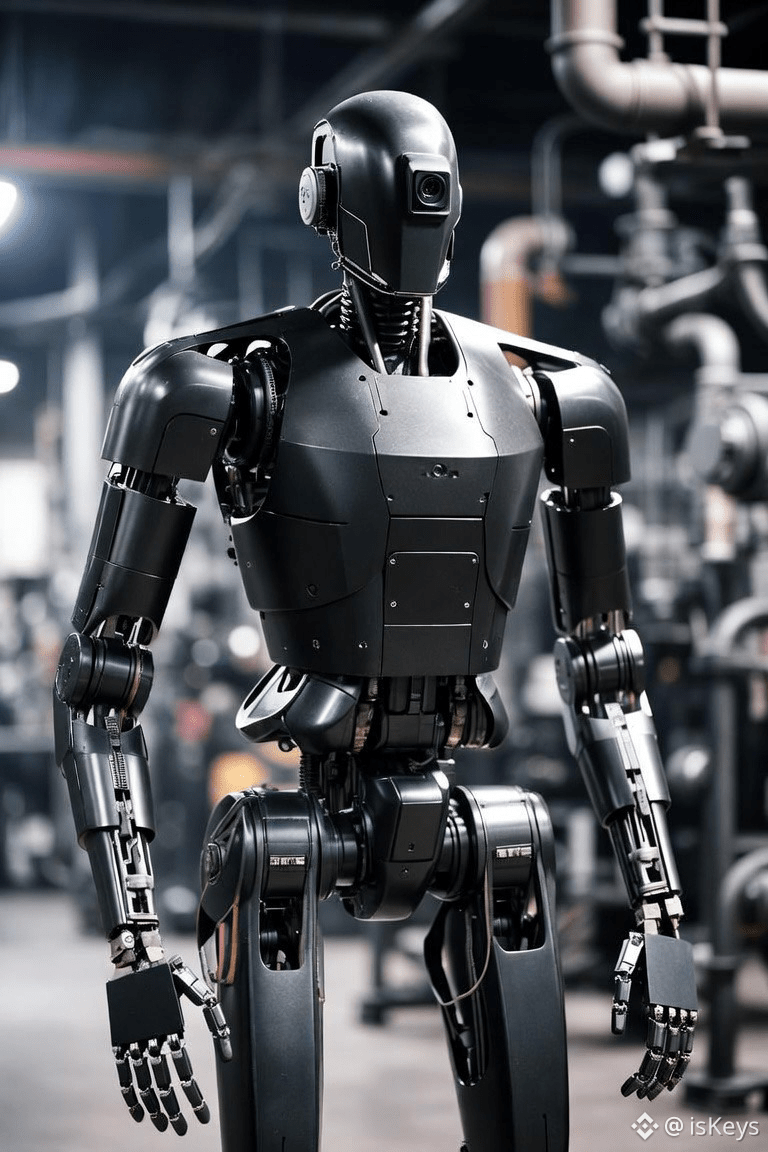
🚨 The biggest AI opportunity may not be humanoid robots.
According to Citi's Physical AI Summit, the near-term winners are likely to be **task-specific robots**, not general-purpose humanoids.
Why?
• They solve real labor shortages.
• They generate ROI much faster.
• They collect proprietary real-world data.
• They're already being deployed in logistics, warehouses, and automotive manufacturing.
The companies that build the strongest data flywheel and solve real deployment challenges—not the ones with the flashiest demos—may become the long-term winners.
Which Physical AI company are you most bullish on? 👇
#Aİ #PhysicalAI
122

·
--
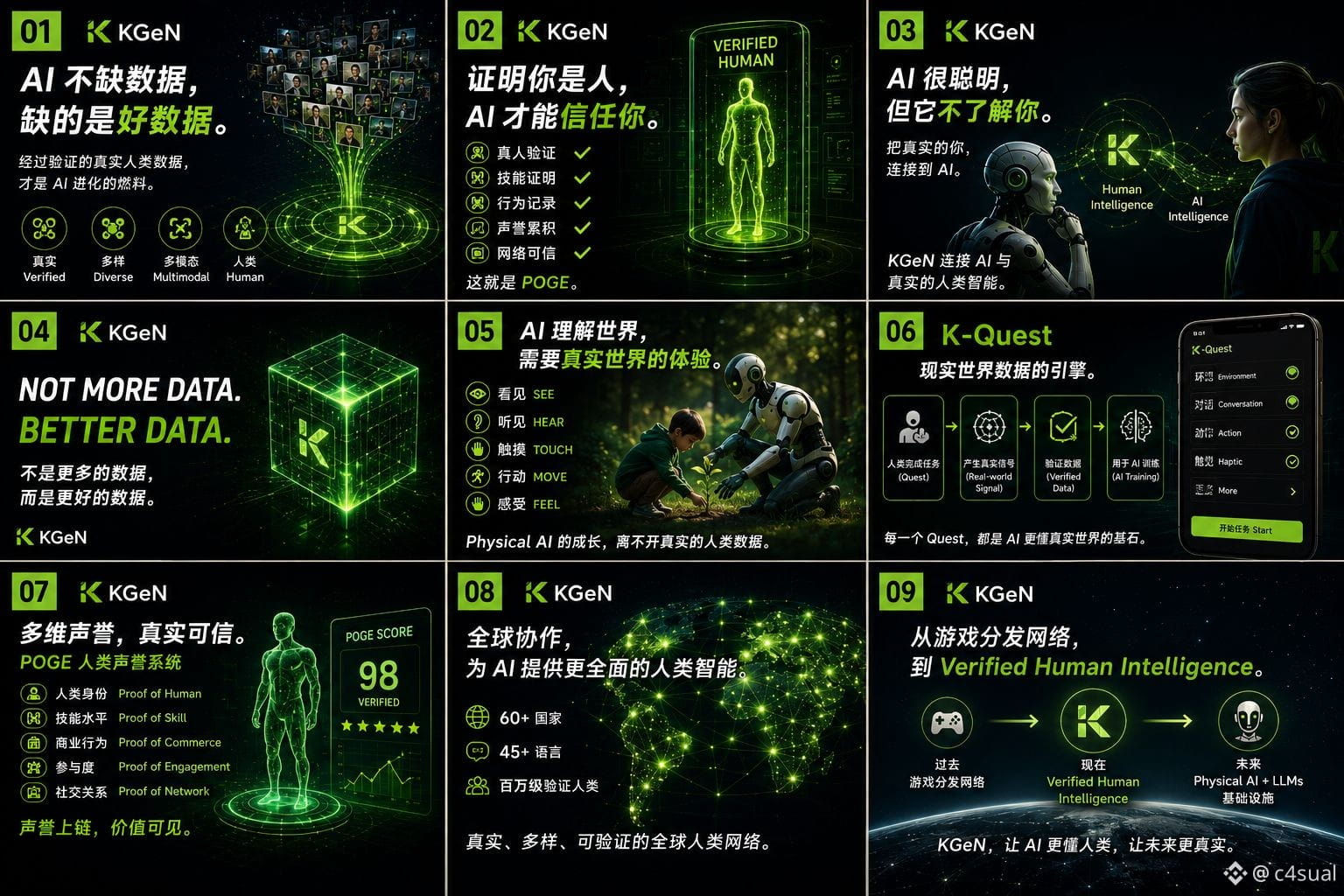
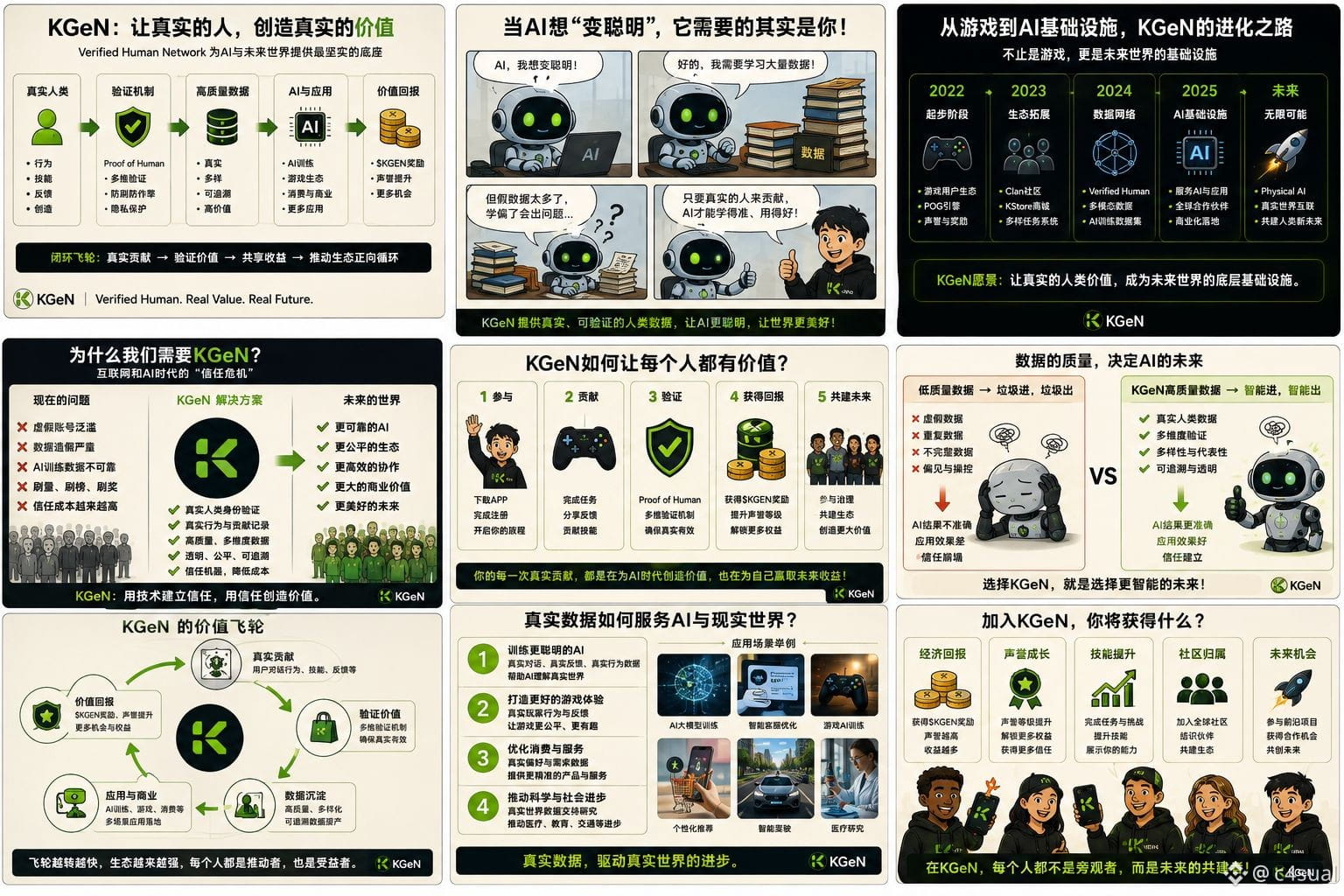
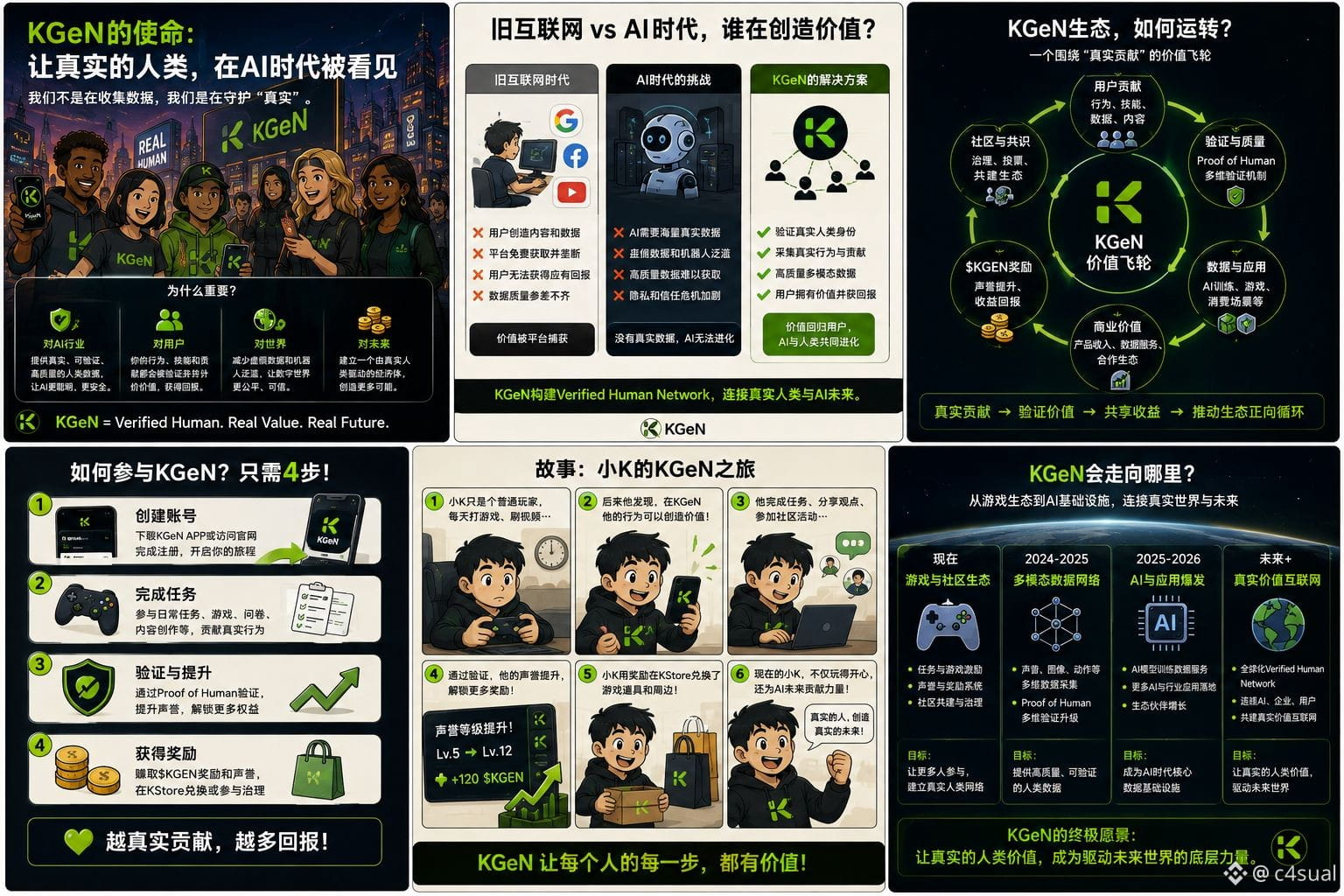
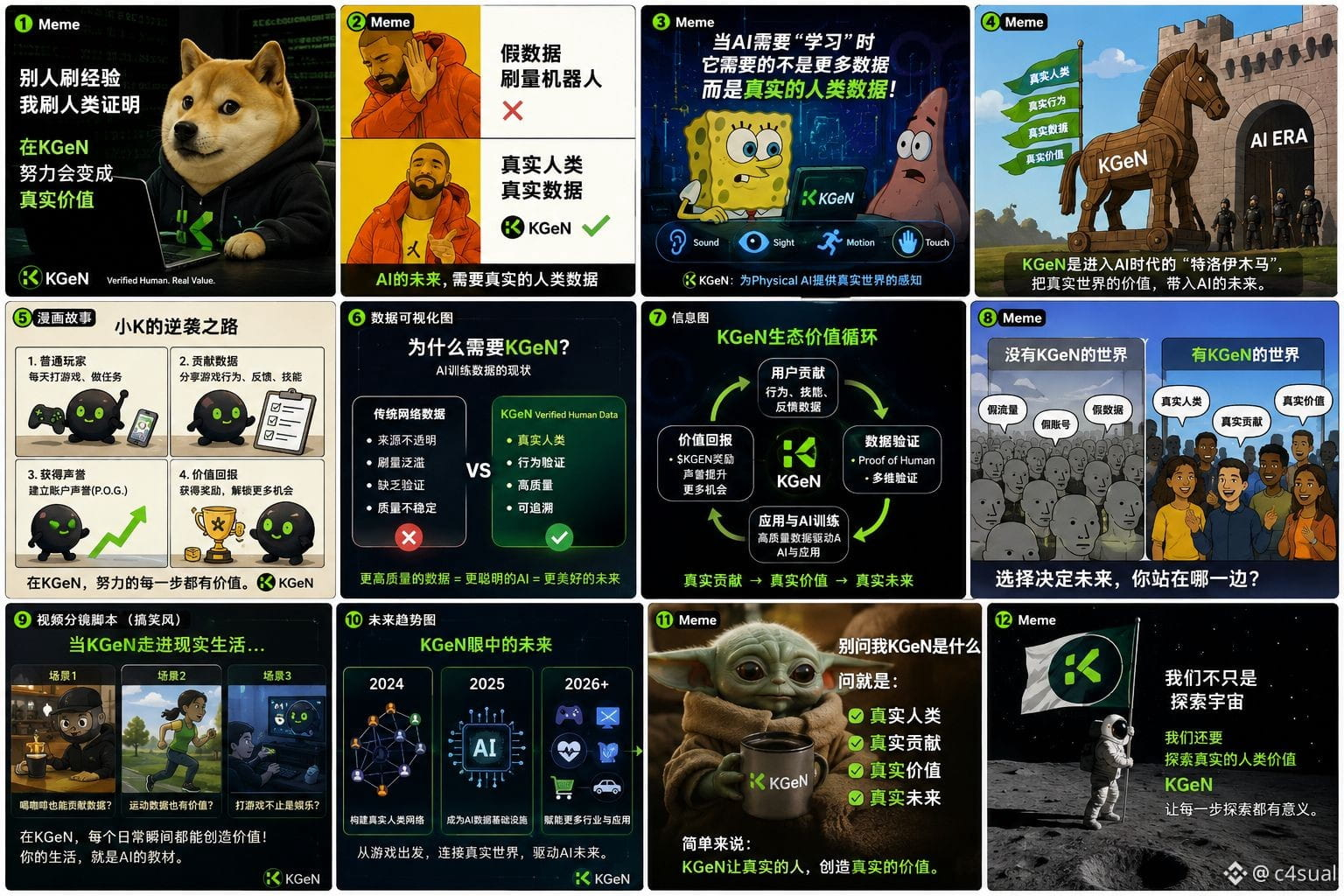
AI doesn't lack data; what it lacks is more real, more reliable human data.
KGeN is connecting real humans, data, and AI, making the real world the foundation for AI to understand the world.
Better Data. Smarter AI. 🟩
#KGeN #AI #PhysicalAI
AI doesn't lack data; what it lacks is more real, more reliable human data.
KGeN is connecting real humans, data, and AI, making the real world the foundation for AI to understand the world.
Better Data. Smarter AI. 🟩
#KGeN #AI #PhysicalAI
KGeN is connecting real humans, data, and AI, making the real world the foundation for AI to understand the world.
Better Data. Smarter AI. 🟩
#KGeN #AI #PhysicalAI
375
Log in to explore more content
Join global crypto users on Binance Square
⚡️ Get latest and useful information about crypto.
💬 Trusted by the world’s largest crypto exchange.
👍 Discover real insights from verified creators.
Email / Phone number
Trending Topics
1
#BinanceReopensWithdrawalsForMoreAssets
25,869 views
688 Discussing
2
#AppleReportsMixedResults
17,433 views
504 Discussing
3
#BinanceHourlyDepositsExceedWithdrawals
4,693 views
176 Discussing
4
#PalantirSlides3PercentOn$2BRevenue
435 views
10 Discussing
5
#USMidtermElections
721,421 views
3,911 Discussing
6
#USOctoberNFP-AreRateCutsStillPossible
113,429 views
947 Discussing
7
#Verify1to1BinanceReserves
102,172 views
700 Discussing
8
#SBIFirstHalfCryptoRevenueFalls30.1%
780 views
24 Discussing
9
#NEARVoteApprovesCutInMaxAnnualIssuanceTo1.6%
4,829 views
37 Discussing
10
#BinanceRestores28FiatWithdrawals
258,695 views
1,364 Discussing