

#growwithsac
growwithsac
1.2M views
3,483 Discussing
Hot
Latest


🚨 JUST NOW:
The US State Department approved $5.75 billion in potential Foreign Military Sales to Saudi Arabia: $5 billion for Boeing JDAM-ER precision-guided munitions and $750 million for Honeywell AGT-1500 tank engines.
#GrowWithSAC $DOLO $HD
🚨 JUST NOW:
The US State Department approved $5.75 billion in potential Foreign Military Sales to Saudi Arabia: $5 billion for Boeing JDAM-ER precision-guided munitions and $750 million for Honeywell AGT-1500 tank engines.
#GrowWithSAC $DOLO $HD
The US State Department approved $5.75 billion in potential Foreign Military Sales to Saudi Arabia: $5 billion for Boeing JDAM-ER precision-guided munitions and $750 million for Honeywell AGT-1500 tank engines.
#GrowWithSAC $DOLO $HD

440
🚨 BREAKING AND UNUSUAL
Saudi King Salman bin Abdulaziz relieves himself of his duties as Prime Minister and appoints Mohammed bin Salman to head the Council of Ministers.
#GrowWithSAC
🚨 BREAKING AND UNUSUAL
Saudi King Salman bin Abdulaziz relieves himself of his duties as Prime Minister and appoints Mohammed bin Salman to head the Council of Ministers.
#GrowWithSAC
Saudi King Salman bin Abdulaziz relieves himself of his duties as Prime Minister and appoints Mohammed bin Salman to head the Council of Ministers.
#GrowWithSAC

3
771
🚨 BREAKING:
Economic and geopolitical ties deepen as financial mechanisms expand for Saudi Arabia to accept
Chinese Yuan (RMB) for select oil trade with China, marking a strategic evolution in energy settlement.
#GrowWithSAC $DL $ETH
🚨 BREAKING:
Economic and geopolitical ties deepen as financial mechanisms expand for Saudi Arabia to accept
Chinese Yuan (RMB) for select oil trade with China, marking a strategic evolution in energy settlement.
#GrowWithSAC $DL $ETH
Economic and geopolitical ties deepen as financial mechanisms expand for Saudi Arabia to accept
Chinese Yuan (RMB) for select oil trade with China, marking a strategic evolution in energy settlement.
#GrowWithSAC $DL $ETH

3
441

🏆 Did SAC-KING Just Make History? 👑📈
+58.57% in just 30 days, a remarkable achievement! 🚀🔥
Congratulations, SAC-KING! 🎉👑
Surpassing 91.45% of users, this is more than a result — it’s a milestone worth remembering. 🏆✨
#GrowWithSAC #CPIWatch $BNB
🏆 Did SAC-KING Just Make History? 👑📈
+58.57% in just 30 days, a remarkable achievement! 🚀🔥
Congratulations, SAC-KING! 🎉👑
Surpassing 91.45% of users, this is more than a result — it’s a milestone worth remembering. 🏆✨
#GrowWithSAC #CPIWatch $BNB
+58.57% in just 30 days, a remarkable achievement! 🚀🔥
Congratulations, SAC-KING! 🎉👑
Surpassing 91.45% of users, this is more than a result — it’s a milestone worth remembering. 🏆✨
#GrowWithSAC #CPIWatch $BNB

108
🚨BREAKING:
King Salman reaffirms Saudi Arabia’s strong partnership with Pakistan.
#GrowWithSAC $NIL $O $P
🚨BREAKING:
King Salman reaffirms Saudi Arabia’s strong partnership with Pakistan.
#GrowWithSAC $NIL $O $P
King Salman reaffirms Saudi Arabia’s strong partnership with Pakistan.
#GrowWithSAC $NIL $O $P

409

·
--
🚨 $ZEC
{spot}(ZECUSDT)
Breaks Above $1,600 — Privacy Coins Are Back in Focus! 🚨
Zcash has made another major move, breaking above the $1,600 level and reaching above $1,640 during the latest rally. This marks a major price milestone and puts renewed attention on the privacy-coin sector.
The move comes alongside strong shielded-transaction activity and growing interest through institutional investment products. Europe’s first Zcash ETP from 21Shares also provides investors with another regulated way to gain ZEC exposure without directly holding the coin.
However, the rally has also brought heavy volume, volatility, and liquidations.
The key question now: Can ZEC turn $1,600 into strong support, or will profit-taking trigger a pullback?
Not financial advice. DYOR.
#ZEC #PrivacyCoins #Zcash #Crypto #GrowWithSAC
$MUBARAK
{future}(MUBARAKUSDT)
$NIL
{spot}(NILUSDT)
🚨 $ZEC
Breaks Above $1,600 — Privacy Coins Are Back in Focus! 🚨
Zcash has made another major move, breaking above the $1,600 level and reaching above $1,640 during the latest rally. This marks a major price milestone and puts renewed attention on the privacy-coin sector.
The move comes alongside strong shielded-transaction activity and growing interest through institutional investment products. Europe’s first Zcash ETP from 21Shares also provides investors with another regulated way to gain ZEC exposure without directly holding the coin.
However, the rally has also brought heavy volume, volatility, and liquidations.
The key question now: Can ZEC turn $1,600 into strong support, or will profit-taking trigger a pullback?
Not financial advice. DYOR.
#ZEC #PrivacyCoins #Zcash #Crypto #GrowWithSAC
$MUBARAK
$NIL
Breaks Above $1,600 — Privacy Coins Are Back in Focus! 🚨
Zcash has made another major move, breaking above the $1,600 level and reaching above $1,640 during the latest rally. This marks a major price milestone and puts renewed attention on the privacy-coin sector.
The move comes alongside strong shielded-transaction activity and growing interest through institutional investment products. Europe’s first Zcash ETP from 21Shares also provides investors with another regulated way to gain ZEC exposure without directly holding the coin.
However, the rally has also brought heavy volume, volatility, and liquidations.
The key question now: Can ZEC turn $1,600 into strong support, or will profit-taking trigger a pullback?
Not financial advice. DYOR.
#ZEC #PrivacyCoins #Zcash #Crypto #GrowWithSAC
$MUBARAK
$NIL

149
Verified
#BitwiseNEARStakingETPAssetsTop$100M
🚨 Bitwise $NEAR Staking ETP Assets Top $100M: What’s Really Driving It? 🚨
The market was moving quietly when one number suddenly became impossible to ignore: Bitwise’s NEAR Staking ETP had crossed the $100 million mark. But behind that headline sits a more interesting question: how much of the growth came from investors, and how much came from NEAR itself?
As of September 23, Bitwise reports approximately $110.65 million in assets, with about 25.43 million NEAR held across roughly 4.91 million outstanding units.
The important distinction is that rising AUM does not automatically mean an equivalent wave of fresh capital entered the product. The value of the underlying NEAR holdings can rise sharply even if the number of ETP units changes only modestly. Recent reporting found unit growth of around 0.6% during one measured period, while NEAR's price appreciation did much more of the lifting.
That makes the milestone meaningful, but also worth reading carefully. The ETP gives European investors regulated market access to NEAR while staking the underlying tokens, connecting traditional investment infrastructure with on-chain yield.
My take: the next signal to watch is not simply AUM, but whether outstanding units continue expanding alongside network activity. That would provide stronger evidence of sustained investor demand rather than price-driven asset growth.
A bigger number gets attention; the composition behind that number tells the real story.
❓Do you think rising NEAR ETP assets will translate into stronger long-term institutional participation?
Disclaimer: This content is for educational purposes only and is not financial advice. Crypto assets are volatile and carry significant risk.
#NEAR #Staking #GrowWithSAC $MUBARAK $MARSCOIN
#BitwiseNEARStakingETPAssetsTop$100M
🚨 Bitwise $NEAR Staking ETP Assets Top $100M: What’s Really Driving It? 🚨
The market was moving quietly when one number suddenly became impossible to ignore: Bitwise’s NEAR Staking ETP had crossed the $100 million mark. But behind that headline sits a more interesting question: how much of the growth came from investors, and how much came from NEAR itself?
As of September 23, Bitwise reports approximately $110.65 million in assets, with about 25.43 million NEAR held across roughly 4.91 million outstanding units.
The important distinction is that rising AUM does not automatically mean an equivalent wave of fresh capital entered the product. The value of the underlying NEAR holdings can rise sharply even if the number of ETP units changes only modestly. Recent reporting found unit growth of around 0.6% during one measured period, while NEAR's price appreciation did much more of the lifting.
That makes the milestone meaningful, but also worth reading carefully. The ETP gives European investors regulated market access to NEAR while staking the underlying tokens, connecting traditional investment infrastructure with on-chain yield.
My take: the next signal to watch is not simply AUM, but whether outstanding units continue expanding alongside network activity. That would provide stronger evidence of sustained investor demand rather than price-driven asset growth.
A bigger number gets attention; the composition behind that number tells the real story.
❓Do you think rising NEAR ETP assets will translate into stronger long-term institutional participation?
Disclaimer: This content is for educational purposes only and is not financial advice. Crypto assets are volatile and carry significant risk.
#NEAR #Staking #GrowWithSAC $MUBARAK $MARSCOIN
🚨 Bitwise $NEAR Staking ETP Assets Top $100M: What’s Really Driving It? 🚨
The market was moving quietly when one number suddenly became impossible to ignore: Bitwise’s NEAR Staking ETP had crossed the $100 million mark. But behind that headline sits a more interesting question: how much of the growth came from investors, and how much came from NEAR itself?
As of September 23, Bitwise reports approximately $110.65 million in assets, with about 25.43 million NEAR held across roughly 4.91 million outstanding units.
The important distinction is that rising AUM does not automatically mean an equivalent wave of fresh capital entered the product. The value of the underlying NEAR holdings can rise sharply even if the number of ETP units changes only modestly. Recent reporting found unit growth of around 0.6% during one measured period, while NEAR's price appreciation did much more of the lifting.
That makes the milestone meaningful, but also worth reading carefully. The ETP gives European investors regulated market access to NEAR while staking the underlying tokens, connecting traditional investment infrastructure with on-chain yield.
My take: the next signal to watch is not simply AUM, but whether outstanding units continue expanding alongside network activity. That would provide stronger evidence of sustained investor demand rather than price-driven asset growth.
A bigger number gets attention; the composition behind that number tells the real story.
❓Do you think rising NEAR ETP assets will translate into stronger long-term institutional participation?
Disclaimer: This content is for educational purposes only and is not financial advice. Crypto assets are volatile and carry significant risk.
#NEAR #Staking #GrowWithSAC $MUBARAK $MARSCOIN

4
1.6k

#BitwiseNEARStakingETPAssetsTop$100M
🚨 $NEAR JUST CROSSED $100M: BUT WHAT’S REALLY BEHIND IT? 🔥
Sometimes the headline shines brighter than the story beneath it.
With NEAR moving sharply, the real question is not just how high the number climbed, but why.
Bitwise’s NEAR Staking ETP has now reached about $110.65M in assets, holding roughly 25.43M NEAR across 4.91M outstanding units, according to Bitwise-reported figures surfaced on Binance Square.
That milestone looks impressive, but AUM alone does not equal fresh investor money. The value of an ETP can rise simply because the underlying token appreciates.
That distinction matters here. Recent reporting says NEAR’s strong price rally did much of the heavy lifting, while ETP units increased only modestly. In other words, the headline reflects both market appreciation and investment activity, not necessarily a $100M wave of new capital.
My Take: the more useful metric to watch next is outstanding units. If units keep expanding while NEAR stabilizes, the case for sustained demand through regulated investment products becomes much stronger.
The ETP also stakes its underlying NEAR, giving investors exposure to the token plus variable staking rewards, although fees and changing network rewards affect the net return.
The headline is big. The next signal is whether ownership keeps growing after the price excitement cools.
Would you watch AUM or ETP unit growth more closely?
Disclaimer: This is for informational purposes only, not financial advice.
#NEAR #CryptoETP #GrowWithSAC $BCH $MET
#BitwiseNEARStakingETPAssetsTop$100M
🚨 $NEAR JUST CROSSED $100M: BUT WHAT’S REALLY BEHIND IT? 🔥
Sometimes the headline shines brighter than the story beneath it.
With NEAR moving sharply, the real question is not just how high the number climbed, but why.
Bitwise’s NEAR Staking ETP has now reached about $110.65M in assets, holding roughly 25.43M NEAR across 4.91M outstanding units, according to Bitwise-reported figures surfaced on Binance Square.
That milestone looks impressive, but AUM alone does not equal fresh investor money. The value of an ETP can rise simply because the underlying token appreciates.
That distinction matters here. Recent reporting says NEAR’s strong price rally did much of the heavy lifting, while ETP units increased only modestly. In other words, the headline reflects both market appreciation and investment activity, not necessarily a $100M wave of new capital.
My Take: the more useful metric to watch next is outstanding units. If units keep expanding while NEAR stabilizes, the case for sustained demand through regulated investment products becomes much stronger.
The ETP also stakes its underlying NEAR, giving investors exposure to the token plus variable staking rewards, although fees and changing network rewards affect the net return.
The headline is big. The next signal is whether ownership keeps growing after the price excitement cools.
Would you watch AUM or ETP unit growth more closely?
Disclaimer: This is for informational purposes only, not financial advice.
#NEAR #CryptoETP #GrowWithSAC $BCH $MET
🚨 $NEAR JUST CROSSED $100M: BUT WHAT’S REALLY BEHIND IT? 🔥
Sometimes the headline shines brighter than the story beneath it.
With NEAR moving sharply, the real question is not just how high the number climbed, but why.
Bitwise’s NEAR Staking ETP has now reached about $110.65M in assets, holding roughly 25.43M NEAR across 4.91M outstanding units, according to Bitwise-reported figures surfaced on Binance Square.
That milestone looks impressive, but AUM alone does not equal fresh investor money. The value of an ETP can rise simply because the underlying token appreciates.
That distinction matters here. Recent reporting says NEAR’s strong price rally did much of the heavy lifting, while ETP units increased only modestly. In other words, the headline reflects both market appreciation and investment activity, not necessarily a $100M wave of new capital.
My Take: the more useful metric to watch next is outstanding units. If units keep expanding while NEAR stabilizes, the case for sustained demand through regulated investment products becomes much stronger.
The ETP also stakes its underlying NEAR, giving investors exposure to the token plus variable staking rewards, although fees and changing network rewards affect the net return.
The headline is big. The next signal is whether ownership keeps growing after the price excitement cools.
Would you watch AUM or ETP unit growth more closely?
Disclaimer: This is for informational purposes only, not financial advice.
#NEAR #CryptoETP #GrowWithSAC $BCH $MET

258
Verified
#cardanojoinsx402paymentstandard
⚡ Cardano Joins X402 Payment Standard: Is ADA Entering the AI Payment Era? ⚡
Imagine an AI agent needing a dataset for one task, paying for it automatically, and moving on without creating an account. That future is exactly where Cardano's latest x402 integration becomes interesting.
Cardano has been added to the official x402 software kit, allowing developers to build applications and AI agents that can make web payments using ADA and Cardano-issued tokens.
x402 turns the HTTP "402 Payment Required" response into an automated payment flow, allowing services to charge per request instead of relying on accounts, API keys, or subscriptions. The standard is now governed by the x402 Foundation under the Linux Foundation.
The more important point is utility. If autonomous agents become regular users of APIs, data and digital services, blockchain networks need payment rails that machines can actually use without constant human intervention.
But there is an important reality check: Cardano's current facilitator has completed transactions on a pre-production network, while mainnet commercial payments at scale have not yet been demonstrated.
ADA is therefore gaining a new narrative around machine-to-machine payments, but the real test will be developer adoption and actual transaction activity, not headlines alone.
Infrastructure becomes valuable when people, apps, and now machines actually use it.
❓Could x402 become a meaningful adoption catalyst for Cardano and ADA?
Disclaimer: This content is for educational purposes only, not financial advice. Crypto assets are volatile and involve significant risk.
#Cardano #ADA #GrowWithSAC $ADA $BCH $METAB
#CardanoJoinsX402PaymentStandard
#cardanojoinsx402paymentstandard
⚡ Cardano Joins X402 Payment Standard: Is ADA Entering the AI Payment Era? ⚡
Imagine an AI agent needing a dataset for one task, paying for it automatically, and moving on without creating an account. That future is exactly where Cardano's latest x402 integration becomes interesting.
Cardano has been added to the official x402 software kit, allowing developers to build applications and AI agents that can make web payments using ADA and Cardano-issued tokens.
x402 turns the HTTP "402 Payment Required" response into an automated payment flow, allowing services to charge per request instead of relying on accounts, API keys, or subscriptions. The standard is now governed by the x402 Foundation under the Linux Foundation.
The more important point is utility. If autonomous agents become regular users of APIs, data and digital services, blockchain networks need payment rails that machines can actually use without constant human intervention.
But there is an important reality check: Cardano's current facilitator has completed transactions on a pre-production network, while mainnet commercial payments at scale have not yet been demonstrated.
ADA is therefore gaining a new narrative around machine-to-machine payments, but the real test will be developer adoption and actual transaction activity, not headlines alone.
Infrastructure becomes valuable when people, apps, and now machines actually use it.
❓Could x402 become a meaningful adoption catalyst for Cardano and ADA?
Disclaimer: This content is for educational purposes only, not financial advice. Crypto assets are volatile and involve significant risk.
#Cardano #ADA #GrowWithSAC $ADA $BCH $METAB
#CardanoJoinsX402PaymentStandard
⚡ Cardano Joins X402 Payment Standard: Is ADA Entering the AI Payment Era? ⚡
Imagine an AI agent needing a dataset for one task, paying for it automatically, and moving on without creating an account. That future is exactly where Cardano's latest x402 integration becomes interesting.
Cardano has been added to the official x402 software kit, allowing developers to build applications and AI agents that can make web payments using ADA and Cardano-issued tokens.
x402 turns the HTTP "402 Payment Required" response into an automated payment flow, allowing services to charge per request instead of relying on accounts, API keys, or subscriptions. The standard is now governed by the x402 Foundation under the Linux Foundation.
The more important point is utility. If autonomous agents become regular users of APIs, data and digital services, blockchain networks need payment rails that machines can actually use without constant human intervention.
But there is an important reality check: Cardano's current facilitator has completed transactions on a pre-production network, while mainnet commercial payments at scale have not yet been demonstrated.
ADA is therefore gaining a new narrative around machine-to-machine payments, but the real test will be developer adoption and actual transaction activity, not headlines alone.
Infrastructure becomes valuable when people, apps, and now machines actually use it.
❓Could x402 become a meaningful adoption catalyst for Cardano and ADA?
Disclaimer: This content is for educational purposes only, not financial advice. Crypto assets are volatile and involve significant risk.
#Cardano #ADA #GrowWithSAC $ADA $BCH $METAB
#CardanoJoinsX402PaymentStandard

6
5.2k
Verified
#cardanojoinsx402paymentstandard
🚨 CARDANO ENTERS THE AI PAYMENT RACE: ADA JUST GOT A NEW ROLE 🔥
The internet is learning to pay itself.
And when machines start buying data, compute, and services, the payment rail suddenly matters as much as the application.
Cardano has joined the official x402 payment stack, giving developers tools to let applications and AI agents pay for online services using ADA and Cardano-native tokens.
x402 turns HTTP’s “402 Payment Required” response into an automated payment flow. An agent can request a resource, receive payment instructions, settle on-chain, and access the service without an account, API key, or traditional checkout.
Cardano’s architecture adds an interesting angle. Its deterministic transactions let an agent know the exact transaction effect before signing, while native assets can move without relying on token smart contracts.
My Take: the headline is bigger than an integration. If AI agents become meaningful economic actors, blockchains that can handle machine-to-machine payments could gain a new utility layer.
But this is still early. Cardano’s facilitator has been proven with a real transaction on pre-production, while mainnet operation has not yet been demonstrated.
ADA is currently around $0.248 on Binance and down about 1.3% over 24 hours, showing that the market has not simply priced the development as guaranteed upside.
The real test is adoption, not announcement.
Could AI-agent payments become Cardano’s next major utility frontier?
Disclaimer: This is for informational purposes only, not financial advice.
#Cardano #AI #GrowWithSAC $ADA $METAB $ALLO
#CardanoJoinsX402PaymentStandard
#cardanojoinsx402paymentstandard
🚨 CARDANO ENTERS THE AI PAYMENT RACE: ADA JUST GOT A NEW ROLE 🔥
The internet is learning to pay itself.
And when machines start buying data, compute, and services, the payment rail suddenly matters as much as the application.
Cardano has joined the official x402 payment stack, giving developers tools to let applications and AI agents pay for online services using ADA and Cardano-native tokens.
x402 turns HTTP’s “402 Payment Required” response into an automated payment flow. An agent can request a resource, receive payment instructions, settle on-chain, and access the service without an account, API key, or traditional checkout.
Cardano’s architecture adds an interesting angle. Its deterministic transactions let an agent know the exact transaction effect before signing, while native assets can move without relying on token smart contracts.
My Take: the headline is bigger than an integration. If AI agents become meaningful economic actors, blockchains that can handle machine-to-machine payments could gain a new utility layer.
But this is still early. Cardano’s facilitator has been proven with a real transaction on pre-production, while mainnet operation has not yet been demonstrated.
ADA is currently around $0.248 on Binance and down about 1.3% over 24 hours, showing that the market has not simply priced the development as guaranteed upside.
The real test is adoption, not announcement.
Could AI-agent payments become Cardano’s next major utility frontier?
Disclaimer: This is for informational purposes only, not financial advice.
#Cardano #AI #GrowWithSAC $ADA $METAB $ALLO
#CardanoJoinsX402PaymentStandard
🚨 CARDANO ENTERS THE AI PAYMENT RACE: ADA JUST GOT A NEW ROLE 🔥
The internet is learning to pay itself.
And when machines start buying data, compute, and services, the payment rail suddenly matters as much as the application.
Cardano has joined the official x402 payment stack, giving developers tools to let applications and AI agents pay for online services using ADA and Cardano-native tokens.
x402 turns HTTP’s “402 Payment Required” response into an automated payment flow. An agent can request a resource, receive payment instructions, settle on-chain, and access the service without an account, API key, or traditional checkout.
Cardano’s architecture adds an interesting angle. Its deterministic transactions let an agent know the exact transaction effect before signing, while native assets can move without relying on token smart contracts.
My Take: the headline is bigger than an integration. If AI agents become meaningful economic actors, blockchains that can handle machine-to-machine payments could gain a new utility layer.
But this is still early. Cardano’s facilitator has been proven with a real transaction on pre-production, while mainnet operation has not yet been demonstrated.
ADA is currently around $0.248 on Binance and down about 1.3% over 24 hours, showing that the market has not simply priced the development as guaranteed upside.
The real test is adoption, not announcement.
Could AI-agent payments become Cardano’s next major utility frontier?
Disclaimer: This is for informational purposes only, not financial advice.
#Cardano #AI #GrowWithSAC $ADA $METAB $ALLO
#CardanoJoinsX402PaymentStandard

733
#BitcoinBreaksAboveMayHighNears$86K
🚨 Bitcoin Breaks Above May High, Nears $86K: Is the Market Waking Up? 🚨
The screen was quiet, then Bitcoin suddenly pushed through a level traders had been watching for months. What looked like another resistance test quickly became a serious statement from buyers.
Bitcoin has now pushed above the May high area and traded around the $86K zone, reaching an eight-month high above $87K earlier today. Binance market data also showed BTC briefly moving back below $86K, highlighting how quickly this breakout is being contested.
The move is not coming from one factor alone. Recent coverage points to stronger U.S. spot Bitcoin ETF demand, short covering, improved regulatory sentiment and broader risk appetite supporting the rebound.
But this is where the chart becomes more interesting. Breaking resistance is one thing; holding above it is another. If buyers can defend the reclaimed zone, the breakout gains technical credibility. A sharp rejection would suggest sellers are still active near these higher levels.
My takeaway: Bitcoin has changed the conversation from recovery to confirmation. The next phase is less about celebrating the breakout and more about watching whether price can build acceptance above it.
In markets, the strongest move is not always the first candle. It is the level that survives the retest.
❓Do you think BTC can establish a stable base above $86K, or is another rejection coming?
Disclaimer: This is for educational purposes only, not financial advice. Crypto markets are highly volatile and involve significant risk.
#Bitcoin #BTC #GrowWithSAC $BTC $BCH $PENGU
#BitcoinBreaksAboveMayHighNears$86K
🚨 Bitcoin Breaks Above May High, Nears $86K: Is the Market Waking Up? 🚨
The screen was quiet, then Bitcoin suddenly pushed through a level traders had been watching for months. What looked like another resistance test quickly became a serious statement from buyers.
Bitcoin has now pushed above the May high area and traded around the $86K zone, reaching an eight-month high above $87K earlier today. Binance market data also showed BTC briefly moving back below $86K, highlighting how quickly this breakout is being contested.
The move is not coming from one factor alone. Recent coverage points to stronger U.S. spot Bitcoin ETF demand, short covering, improved regulatory sentiment and broader risk appetite supporting the rebound.
But this is where the chart becomes more interesting. Breaking resistance is one thing; holding above it is another. If buyers can defend the reclaimed zone, the breakout gains technical credibility. A sharp rejection would suggest sellers are still active near these higher levels.
My takeaway: Bitcoin has changed the conversation from recovery to confirmation. The next phase is less about celebrating the breakout and more about watching whether price can build acceptance above it.
In markets, the strongest move is not always the first candle. It is the level that survives the retest.
❓Do you think BTC can establish a stable base above $86K, or is another rejection coming?
Disclaimer: This is for educational purposes only, not financial advice. Crypto markets are highly volatile and involve significant risk.
#Bitcoin #BTC #GrowWithSAC $BTC $BCH $PENGU
🚨 Bitcoin Breaks Above May High, Nears $86K: Is the Market Waking Up? 🚨
The screen was quiet, then Bitcoin suddenly pushed through a level traders had been watching for months. What looked like another resistance test quickly became a serious statement from buyers.
Bitcoin has now pushed above the May high area and traded around the $86K zone, reaching an eight-month high above $87K earlier today. Binance market data also showed BTC briefly moving back below $86K, highlighting how quickly this breakout is being contested.
The move is not coming from one factor alone. Recent coverage points to stronger U.S. spot Bitcoin ETF demand, short covering, improved regulatory sentiment and broader risk appetite supporting the rebound.
But this is where the chart becomes more interesting. Breaking resistance is one thing; holding above it is another. If buyers can defend the reclaimed zone, the breakout gains technical credibility. A sharp rejection would suggest sellers are still active near these higher levels.
My takeaway: Bitcoin has changed the conversation from recovery to confirmation. The next phase is less about celebrating the breakout and more about watching whether price can build acceptance above it.
In markets, the strongest move is not always the first candle. It is the level that survives the retest.
❓Do you think BTC can establish a stable base above $86K, or is another rejection coming?
Disclaimer: This is for educational purposes only, not financial advice. Crypto markets are highly volatile and involve significant risk.
#Bitcoin #BTC #GrowWithSAC $BTC $BCH $PENGU

206 Atlas:
Holding the breakout matters more than the spike. Watch for volume on retests to confirm acceptance above $86K.
2
4
4k
Verified
#ZECBreaksAbove$1600AtRecordHigh
🚨 $ZEC Breaks Above $1,600 at Record High: The Privacy Comeback Gets Real 🚨
For a moment, the chart looked almost unreal. Zcash had already climbed aggressively, but then buyers pushed through $1,600 and turned a major resistance zone into the center of attention.
ZEC crossed $1,600 for the first time since 2016, reaching above $1,640 during the latest move. The breakout comes as Zcash records its strongest shielded-transaction activity in years, while institutional products are also drawing capital toward the asset.
One important catalyst is the arrival of Europe’s first Zcash ETP from 21Shares on Euronext Paris and Amsterdam. That gives investors another regulated route to gain exposure to ZEC without directly holding the coin.
But price alone does not tell the whole story. ZEC’s recent rally has been accompanied by heavy trading activity and sharp liquidations, showing that both genuine demand and leveraged positioning are contributing to the volatility.
My take: the $1,600 breakout matters most if ZEC can turn that level into support. A sustained hold would strengthen the breakout narrative, while a fast rejection could reveal that momentum became overheated.
The headline is impressive, but the real test begins after the breakout.
❓Do you think ZEC can establish support above $1,600, or will profit-taking pull it back?
Disclaimer: This is for educational purposes only, not financial advice. Crypto assets are highly volatile and involve significant risk.
#ZEC #PrivacyCoins #GrowWithSAC $MUBARAK $NIL
#ZECBreaksAbove$1600AtRecordHigh
🚨 $ZEC Breaks Above $1,600 at Record High: The Privacy Comeback Gets Real 🚨
For a moment, the chart looked almost unreal. Zcash had already climbed aggressively, but then buyers pushed through $1,600 and turned a major resistance zone into the center of attention.
ZEC crossed $1,600 for the first time since 2016, reaching above $1,640 during the latest move. The breakout comes as Zcash records its strongest shielded-transaction activity in years, while institutional products are also drawing capital toward the asset.
One important catalyst is the arrival of Europe’s first Zcash ETP from 21Shares on Euronext Paris and Amsterdam. That gives investors another regulated route to gain exposure to ZEC without directly holding the coin.
But price alone does not tell the whole story. ZEC’s recent rally has been accompanied by heavy trading activity and sharp liquidations, showing that both genuine demand and leveraged positioning are contributing to the volatility.
My take: the $1,600 breakout matters most if ZEC can turn that level into support. A sustained hold would strengthen the breakout narrative, while a fast rejection could reveal that momentum became overheated.
The headline is impressive, but the real test begins after the breakout.
❓Do you think ZEC can establish support above $1,600, or will profit-taking pull it back?
Disclaimer: This is for educational purposes only, not financial advice. Crypto assets are highly volatile and involve significant risk.
#ZEC #PrivacyCoins #GrowWithSAC $MUBARAK $NIL
🚨 $ZEC Breaks Above $1,600 at Record High: The Privacy Comeback Gets Real 🚨
For a moment, the chart looked almost unreal. Zcash had already climbed aggressively, but then buyers pushed through $1,600 and turned a major resistance zone into the center of attention.
ZEC crossed $1,600 for the first time since 2016, reaching above $1,640 during the latest move. The breakout comes as Zcash records its strongest shielded-transaction activity in years, while institutional products are also drawing capital toward the asset.
One important catalyst is the arrival of Europe’s first Zcash ETP from 21Shares on Euronext Paris and Amsterdam. That gives investors another regulated route to gain exposure to ZEC without directly holding the coin.
But price alone does not tell the whole story. ZEC’s recent rally has been accompanied by heavy trading activity and sharp liquidations, showing that both genuine demand and leveraged positioning are contributing to the volatility.
My take: the $1,600 breakout matters most if ZEC can turn that level into support. A sustained hold would strengthen the breakout narrative, while a fast rejection could reveal that momentum became overheated.
The headline is impressive, but the real test begins after the breakout.
❓Do you think ZEC can establish support above $1,600, or will profit-taking pull it back?
Disclaimer: This is for educational purposes only, not financial advice. Crypto assets are highly volatile and involve significant risk.
#ZEC #PrivacyCoins #GrowWithSAC $MUBARAK $NIL

206 Atlas:
Breakouts into uncharted territory often trap late momentum chasers. Watch the 4h close to confirm if $1,600 holds as support or acts as a liquidity grab for shorts.
2
2.6k
Verified
#wallstreetearningsrevisionsturnbearish
🚨 Wall Street Earnings Revisions Turn Bearish: A Warning for Risk Assets? 🚨
The mood on Wall Street had been calm for weeks, with analysts repeatedly nudging earnings estimates higher. Then the tone changed, and suddenly the market had a new question: what happens when optimism starts running backward?
Citigroup's earnings-revision gauge has reportedly turned negative for the first time in 23 weeks, meaning analyst downgrades are now outnumbering upgrades for U.S. companies. The shift follows the Federal Reserve's first rate hike since 2023.
That matters because earnings expectations have been one of the foundations supporting equity valuations. Rising yields and persistent inflation pressure can make future profits less valuable while also raising companies' financing costs.
AI remains an important counterweight. Recent research shows AI-related investment has supported a large share of 2026 earnings growth, but Goldman Sachs has warned that the current AI capex surge may become harder to sustain into 2027.
The key distinction is between a single weak revision cycle and a broader deterioration. Other recent research still showed positive earnings revisions across major regions, meaning the current signal is cautionary rather than proof that corporate earnings have collapsed.
For crypto, the connection is liquidity. If tighter financial conditions pressure risk appetite, Bitcoin and altcoins can feel the impact even when their own fundamentals remain unchanged.
When earnings expectations turn, markets often start repricing before the headlines catch up.
❓Could weakening earnings revisions become the next major catalyst for crypto volatility?
Disclaimer: Educational content only, not financial advice. Crypto and financial markets carry significant risk.
#Crypto #Bitcoin #GrowWithSAC $BCH $METAB $SUPER
#WallStreetEarningsRevisionsTurnBearish
#wallstreetearningsrevisionsturnbearish
🚨 Wall Street Earnings Revisions Turn Bearish: A Warning for Risk Assets? 🚨
The mood on Wall Street had been calm for weeks, with analysts repeatedly nudging earnings estimates higher. Then the tone changed, and suddenly the market had a new question: what happens when optimism starts running backward?
Citigroup's earnings-revision gauge has reportedly turned negative for the first time in 23 weeks, meaning analyst downgrades are now outnumbering upgrades for U.S. companies. The shift follows the Federal Reserve's first rate hike since 2023.
That matters because earnings expectations have been one of the foundations supporting equity valuations. Rising yields and persistent inflation pressure can make future profits less valuable while also raising companies' financing costs.
AI remains an important counterweight. Recent research shows AI-related investment has supported a large share of 2026 earnings growth, but Goldman Sachs has warned that the current AI capex surge may become harder to sustain into 2027.
The key distinction is between a single weak revision cycle and a broader deterioration. Other recent research still showed positive earnings revisions across major regions, meaning the current signal is cautionary rather than proof that corporate earnings have collapsed.
For crypto, the connection is liquidity. If tighter financial conditions pressure risk appetite, Bitcoin and altcoins can feel the impact even when their own fundamentals remain unchanged.
When earnings expectations turn, markets often start repricing before the headlines catch up.
❓Could weakening earnings revisions become the next major catalyst for crypto volatility?
Disclaimer: Educational content only, not financial advice. Crypto and financial markets carry significant risk.
#Crypto #Bitcoin #GrowWithSAC $BCH $METAB $SUPER
#WallStreetEarningsRevisionsTurnBearish
🚨 Wall Street Earnings Revisions Turn Bearish: A Warning for Risk Assets? 🚨
The mood on Wall Street had been calm for weeks, with analysts repeatedly nudging earnings estimates higher. Then the tone changed, and suddenly the market had a new question: what happens when optimism starts running backward?
Citigroup's earnings-revision gauge has reportedly turned negative for the first time in 23 weeks, meaning analyst downgrades are now outnumbering upgrades for U.S. companies. The shift follows the Federal Reserve's first rate hike since 2023.
That matters because earnings expectations have been one of the foundations supporting equity valuations. Rising yields and persistent inflation pressure can make future profits less valuable while also raising companies' financing costs.
AI remains an important counterweight. Recent research shows AI-related investment has supported a large share of 2026 earnings growth, but Goldman Sachs has warned that the current AI capex surge may become harder to sustain into 2027.
The key distinction is between a single weak revision cycle and a broader deterioration. Other recent research still showed positive earnings revisions across major regions, meaning the current signal is cautionary rather than proof that corporate earnings have collapsed.
For crypto, the connection is liquidity. If tighter financial conditions pressure risk appetite, Bitcoin and altcoins can feel the impact even when their own fundamentals remain unchanged.
When earnings expectations turn, markets often start repricing before the headlines catch up.
❓Could weakening earnings revisions become the next major catalyst for crypto volatility?
Disclaimer: Educational content only, not financial advice. Crypto and financial markets carry significant risk.
#Crypto #Bitcoin #GrowWithSAC $BCH $METAB $SUPER
#WallStreetEarningsRevisionsTurnBearish

3
1.6k
Verified
#aistockswhatnext
🤖 AI Stocks: What Next After the Rally? 🤖
The trading screen keeps flashing green, but the mood has changed. After another surge in AI-linked shares, investors are no longer asking whether AI is powerful enough, they are asking whether expectations have become too powerful.
The Nasdaq recently reached an intraday record as optimism around AI adoption and corporate earnings returned to the market. Semiconductor names have also been driving much of the renewed momentum.
But here is the uncomfortable part: AI enthusiasm now carries an enormous investment bill. Goldman Sachs estimates that nearly half of 2026 S&P 500 earnings growth has been connected to AI-related investment, while warning that the pace of AI capital spending may become harder to sustain into 2027.
That creates two competing forces. Strong demand for computing infrastructure can keep supporting revenues, while expensive data centers, rising supply and pressure to turn AI spending into actual profits can challenge valuations.
So what comes next may be less about another headline rally and more about earnings quality. The market will increasingly reward companies that demonstrate real monetization rather than simply announcing bigger AI budgets.
For crypto, the connection is liquidity and risk appetite. If investors continue embracing growth assets, crypto can benefit from the broader environment; if AI valuations face a serious reset, risk assets could become more sensitive to the fallout.
The AI trade is entering its proof-of-value phase: spending must eventually become earnings.
❓Do you think AI stocks have more room to run, or is the market approaching an expectations reset?
Disclaimer: Educational content only, not financial advice. Markets can be highly volatile.
#Aİ #GrowWithSAC $NIL $BCH $MET
#AIStocksWhatNext
#aistockswhatnext
🤖 AI Stocks: What Next After the Rally? 🤖
The trading screen keeps flashing green, but the mood has changed. After another surge in AI-linked shares, investors are no longer asking whether AI is powerful enough, they are asking whether expectations have become too powerful.
The Nasdaq recently reached an intraday record as optimism around AI adoption and corporate earnings returned to the market. Semiconductor names have also been driving much of the renewed momentum.
But here is the uncomfortable part: AI enthusiasm now carries an enormous investment bill. Goldman Sachs estimates that nearly half of 2026 S&P 500 earnings growth has been connected to AI-related investment, while warning that the pace of AI capital spending may become harder to sustain into 2027.
That creates two competing forces. Strong demand for computing infrastructure can keep supporting revenues, while expensive data centers, rising supply and pressure to turn AI spending into actual profits can challenge valuations.
So what comes next may be less about another headline rally and more about earnings quality. The market will increasingly reward companies that demonstrate real monetization rather than simply announcing bigger AI budgets.
For crypto, the connection is liquidity and risk appetite. If investors continue embracing growth assets, crypto can benefit from the broader environment; if AI valuations face a serious reset, risk assets could become more sensitive to the fallout.
The AI trade is entering its proof-of-value phase: spending must eventually become earnings.
❓Do you think AI stocks have more room to run, or is the market approaching an expectations reset?
Disclaimer: Educational content only, not financial advice. Markets can be highly volatile.
#Aİ #GrowWithSAC $NIL $BCH $MET
#AIStocksWhatNext
🤖 AI Stocks: What Next After the Rally? 🤖
The trading screen keeps flashing green, but the mood has changed. After another surge in AI-linked shares, investors are no longer asking whether AI is powerful enough, they are asking whether expectations have become too powerful.
The Nasdaq recently reached an intraday record as optimism around AI adoption and corporate earnings returned to the market. Semiconductor names have also been driving much of the renewed momentum.
But here is the uncomfortable part: AI enthusiasm now carries an enormous investment bill. Goldman Sachs estimates that nearly half of 2026 S&P 500 earnings growth has been connected to AI-related investment, while warning that the pace of AI capital spending may become harder to sustain into 2027.
That creates two competing forces. Strong demand for computing infrastructure can keep supporting revenues, while expensive data centers, rising supply and pressure to turn AI spending into actual profits can challenge valuations.
So what comes next may be less about another headline rally and more about earnings quality. The market will increasingly reward companies that demonstrate real monetization rather than simply announcing bigger AI budgets.
For crypto, the connection is liquidity and risk appetite. If investors continue embracing growth assets, crypto can benefit from the broader environment; if AI valuations face a serious reset, risk assets could become more sensitive to the fallout.
The AI trade is entering its proof-of-value phase: spending must eventually become earnings.
❓Do you think AI stocks have more room to run, or is the market approaching an expectations reset?
Disclaimer: Educational content only, not financial advice. Markets can be highly volatile.
#Aİ #GrowWithSAC $NIL $BCH $MET
#AIStocksWhatNext

1
1.4k
#BitcoinBreaksAboveMayHighNears$86K
🚨 BITCOIN BREAKS THE CEILING: $86K IS NO LONGER JUST A DREAM 🚀
The market was quiet, then the door moved.
Bitcoin pushed through the zone that had kept bulls waiting, and suddenly the old resistance became the new test.
BTC climbed above $86,000 this week, reaching roughly $87,400 before cooling back toward the mid-$85K area. Binance currently shows BTC around $85.8K, keeping the breakout zone firmly in focus.
The bigger story is the money behind the move. U.S. spot Bitcoin ETFs recorded about $999M of net inflows on September 21, followed by another strong session, pushing two-day inflows above $1.7B.
But there is another layer: short covering helped accelerate the initial move. That matters because ETF demand can provide sustained buying, while short squeezes can create faster, more fragile upside.
My Take: the important question is no longer whether BTC touched $86K. It is whether price can hold above the former breakout area without relying on forced short covering.
If ETF flows weaken or yields rise, momentum could cool quickly. A breakout is information, not a guarantee of continuation.
The real strength will be revealed by what Bitcoin does after the excitement fades.
Do you think BTC can establish $86K as new support?
Disclaimer: This is for informational purposes only, not financial advice.
#Bitcoin #BTC #GrowWithSAC $BTC $XRP $ZEC
#BitcoinBreaksAboveMayHighNears$86K
🚨 BITCOIN BREAKS THE CEILING: $86K IS NO LONGER JUST A DREAM 🚀
The market was quiet, then the door moved.
Bitcoin pushed through the zone that had kept bulls waiting, and suddenly the old resistance became the new test.
BTC climbed above $86,000 this week, reaching roughly $87,400 before cooling back toward the mid-$85K area. Binance currently shows BTC around $85.8K, keeping the breakout zone firmly in focus.
The bigger story is the money behind the move. U.S. spot Bitcoin ETFs recorded about $999M of net inflows on September 21, followed by another strong session, pushing two-day inflows above $1.7B.
But there is another layer: short covering helped accelerate the initial move. That matters because ETF demand can provide sustained buying, while short squeezes can create faster, more fragile upside.
My Take: the important question is no longer whether BTC touched $86K. It is whether price can hold above the former breakout area without relying on forced short covering.
If ETF flows weaken or yields rise, momentum could cool quickly. A breakout is information, not a guarantee of continuation.
The real strength will be revealed by what Bitcoin does after the excitement fades.
Do you think BTC can establish $86K as new support?
Disclaimer: This is for informational purposes only, not financial advice.
#Bitcoin #BTC #GrowWithSAC $BTC $XRP $ZEC
🚨 BITCOIN BREAKS THE CEILING: $86K IS NO LONGER JUST A DREAM 🚀
The market was quiet, then the door moved.
Bitcoin pushed through the zone that had kept bulls waiting, and suddenly the old resistance became the new test.
BTC climbed above $86,000 this week, reaching roughly $87,400 before cooling back toward the mid-$85K area. Binance currently shows BTC around $85.8K, keeping the breakout zone firmly in focus.
The bigger story is the money behind the move. U.S. spot Bitcoin ETFs recorded about $999M of net inflows on September 21, followed by another strong session, pushing two-day inflows above $1.7B.
But there is another layer: short covering helped accelerate the initial move. That matters because ETF demand can provide sustained buying, while short squeezes can create faster, more fragile upside.
My Take: the important question is no longer whether BTC touched $86K. It is whether price can hold above the former breakout area without relying on forced short covering.
If ETF flows weaken or yields rise, momentum could cool quickly. A breakout is information, not a guarantee of continuation.
The real strength will be revealed by what Bitcoin does after the excitement fades.
Do you think BTC can establish $86K as new support?
Disclaimer: This is for informational purposes only, not financial advice.
#Bitcoin #BTC #GrowWithSAC $BTC $XRP $ZEC

325
#wallstreetearningsrevisionsturnbearish
🚨 WALL STREET’S EARNINGS MOOD JUST FLIPPED BEARISH ⚠️
The market can ignore a warning for a while.
But when expectations themselves begin to turn, the silence gets harder to dismiss.
Wall Street analysts have turned net negative on U.S. corporate earnings revisions for the first time in 23 weeks, ending the longest upgrade streak since September 2021, according to a Citigroup index reported by Bloomberg.
The shift is being linked to higher inflation, rising energy costs and interest rates. Consumer companies, materials and financials are among the areas seeing notable pressure in revisions.
My Take: this is less about companies suddenly becoming weak and more about the earnings bar moving lower. Markets can tolerate expensive valuations when profits keep surprising higher, but falling expectations remove part of that support.
Still, this is not a universal earnings collapse. FactSet reported earlier this month that S&P 500 Q3 bottom-up EPS estimates had actually risen 1.2% through August, showing how quickly the revision picture can change.
That tension matters for risk assets. If earnings downgrades broaden while inflation and borrowing costs stay elevated, investors may become more selective about paying premium valuations.
The important signal is not one week of cuts. It is whether negative revisions become a trend.
Do you think this is a temporary reset or the beginning of a broader earnings slowdown?
Disclaimer: This is for informational purposes only, not financial advice.
#StockMarket #Earnings #GrowWithSAC $TAKE $NEON.US
#WallStreetEarningsRevisionsTurnBearish
#wallstreetearningsrevisionsturnbearish
🚨 WALL STREET’S EARNINGS MOOD JUST FLIPPED BEARISH ⚠️
The market can ignore a warning for a while.
But when expectations themselves begin to turn, the silence gets harder to dismiss.
Wall Street analysts have turned net negative on U.S. corporate earnings revisions for the first time in 23 weeks, ending the longest upgrade streak since September 2021, according to a Citigroup index reported by Bloomberg.
The shift is being linked to higher inflation, rising energy costs and interest rates. Consumer companies, materials and financials are among the areas seeing notable pressure in revisions.
My Take: this is less about companies suddenly becoming weak and more about the earnings bar moving lower. Markets can tolerate expensive valuations when profits keep surprising higher, but falling expectations remove part of that support.
Still, this is not a universal earnings collapse. FactSet reported earlier this month that S&P 500 Q3 bottom-up EPS estimates had actually risen 1.2% through August, showing how quickly the revision picture can change.
That tension matters for risk assets. If earnings downgrades broaden while inflation and borrowing costs stay elevated, investors may become more selective about paying premium valuations.
The important signal is not one week of cuts. It is whether negative revisions become a trend.
Do you think this is a temporary reset or the beginning of a broader earnings slowdown?
Disclaimer: This is for informational purposes only, not financial advice.
#StockMarket #Earnings #GrowWithSAC $TAKE $NEON.US
#WallStreetEarningsRevisionsTurnBearish
🚨 WALL STREET’S EARNINGS MOOD JUST FLIPPED BEARISH ⚠️
The market can ignore a warning for a while.
But when expectations themselves begin to turn, the silence gets harder to dismiss.
Wall Street analysts have turned net negative on U.S. corporate earnings revisions for the first time in 23 weeks, ending the longest upgrade streak since September 2021, according to a Citigroup index reported by Bloomberg.
The shift is being linked to higher inflation, rising energy costs and interest rates. Consumer companies, materials and financials are among the areas seeing notable pressure in revisions.
My Take: this is less about companies suddenly becoming weak and more about the earnings bar moving lower. Markets can tolerate expensive valuations when profits keep surprising higher, but falling expectations remove part of that support.
Still, this is not a universal earnings collapse. FactSet reported earlier this month that S&P 500 Q3 bottom-up EPS estimates had actually risen 1.2% through August, showing how quickly the revision picture can change.
That tension matters for risk assets. If earnings downgrades broaden while inflation and borrowing costs stay elevated, investors may become more selective about paying premium valuations.
The important signal is not one week of cuts. It is whether negative revisions become a trend.
Do you think this is a temporary reset or the beginning of a broader earnings slowdown?
Disclaimer: This is for informational purposes only, not financial advice.
#StockMarket #Earnings #GrowWithSAC $TAKE $NEON.US
#WallStreetEarningsRevisionsTurnBearish

TAKE-38.44%
NEONUS+1.43%
1
361
#ZECBreaksAbove$1600AtRecordHigh
🚨 $ZEC BREAKS $1,600: THE PRIVACY COIN JUST ENTERED PRICE DISCOVERY 🔥
The silence broke, and the old ceiling disappeared.
ZEC has turned a forgotten resistance zone into the center of crypto attention.
Zcash pushed above $1,600 on September 23, reaching a fresh multi-year record and trading around $1,600+, according to current market data.
One catalyst is institutional access. 21Shares launched Europe’s first Zcash ETP on Euronext Paris and Amsterdam, giving traditional investors another route to ZEC exposure.
Demand is showing up beyond the chart. Grayscale’s Zcash ETF recorded $32.81M of inflows in one recent session, while its assets had approached $1B.
The network itself is also producing a stronger signal. Shielded transactions reached 62,379 last week, the highest weekly level in roughly four years, adding fundamental activity behind the market narrative.
My Take: this rally is becoming more than a pure momentum trade. Institutional products, renewed privacy interest, and rising shielded activity are converging, but the vertical move also raises volatility risk.
The key test now is whether ZEC can build acceptance above $1,600 rather than simply spike through it.
A breakout becomes meaningful when the market can hold what it just conquered.
Do you think $1,600 becomes ZEC’s new foundation?
Disclaimer: This is for informational purposes only, not financial advice.
#Zcash #Crypto #GrowWithSAC $BCH $MET
#ZECBreaksAbove$1600AtRecordHigh
🚨 $ZEC BREAKS $1,600: THE PRIVACY COIN JUST ENTERED PRICE DISCOVERY 🔥
The silence broke, and the old ceiling disappeared.
ZEC has turned a forgotten resistance zone into the center of crypto attention.
Zcash pushed above $1,600 on September 23, reaching a fresh multi-year record and trading around $1,600+, according to current market data.
One catalyst is institutional access. 21Shares launched Europe’s first Zcash ETP on Euronext Paris and Amsterdam, giving traditional investors another route to ZEC exposure.
Demand is showing up beyond the chart. Grayscale’s Zcash ETF recorded $32.81M of inflows in one recent session, while its assets had approached $1B.
The network itself is also producing a stronger signal. Shielded transactions reached 62,379 last week, the highest weekly level in roughly four years, adding fundamental activity behind the market narrative.
My Take: this rally is becoming more than a pure momentum trade. Institutional products, renewed privacy interest, and rising shielded activity are converging, but the vertical move also raises volatility risk.
The key test now is whether ZEC can build acceptance above $1,600 rather than simply spike through it.
A breakout becomes meaningful when the market can hold what it just conquered.
Do you think $1,600 becomes ZEC’s new foundation?
Disclaimer: This is for informational purposes only, not financial advice.
#Zcash #Crypto #GrowWithSAC $BCH $MET
🚨 $ZEC BREAKS $1,600: THE PRIVACY COIN JUST ENTERED PRICE DISCOVERY 🔥
The silence broke, and the old ceiling disappeared.
ZEC has turned a forgotten resistance zone into the center of crypto attention.
Zcash pushed above $1,600 on September 23, reaching a fresh multi-year record and trading around $1,600+, according to current market data.
One catalyst is institutional access. 21Shares launched Europe’s first Zcash ETP on Euronext Paris and Amsterdam, giving traditional investors another route to ZEC exposure.
Demand is showing up beyond the chart. Grayscale’s Zcash ETF recorded $32.81M of inflows in one recent session, while its assets had approached $1B.
The network itself is also producing a stronger signal. Shielded transactions reached 62,379 last week, the highest weekly level in roughly four years, adding fundamental activity behind the market narrative.
My Take: this rally is becoming more than a pure momentum trade. Institutional products, renewed privacy interest, and rising shielded activity are converging, but the vertical move also raises volatility risk.
The key test now is whether ZEC can build acceptance above $1,600 rather than simply spike through it.
A breakout becomes meaningful when the market can hold what it just conquered.
Do you think $1,600 becomes ZEC’s new foundation?
Disclaimer: This is for informational purposes only, not financial advice.
#Zcash #Crypto #GrowWithSAC $BCH $MET
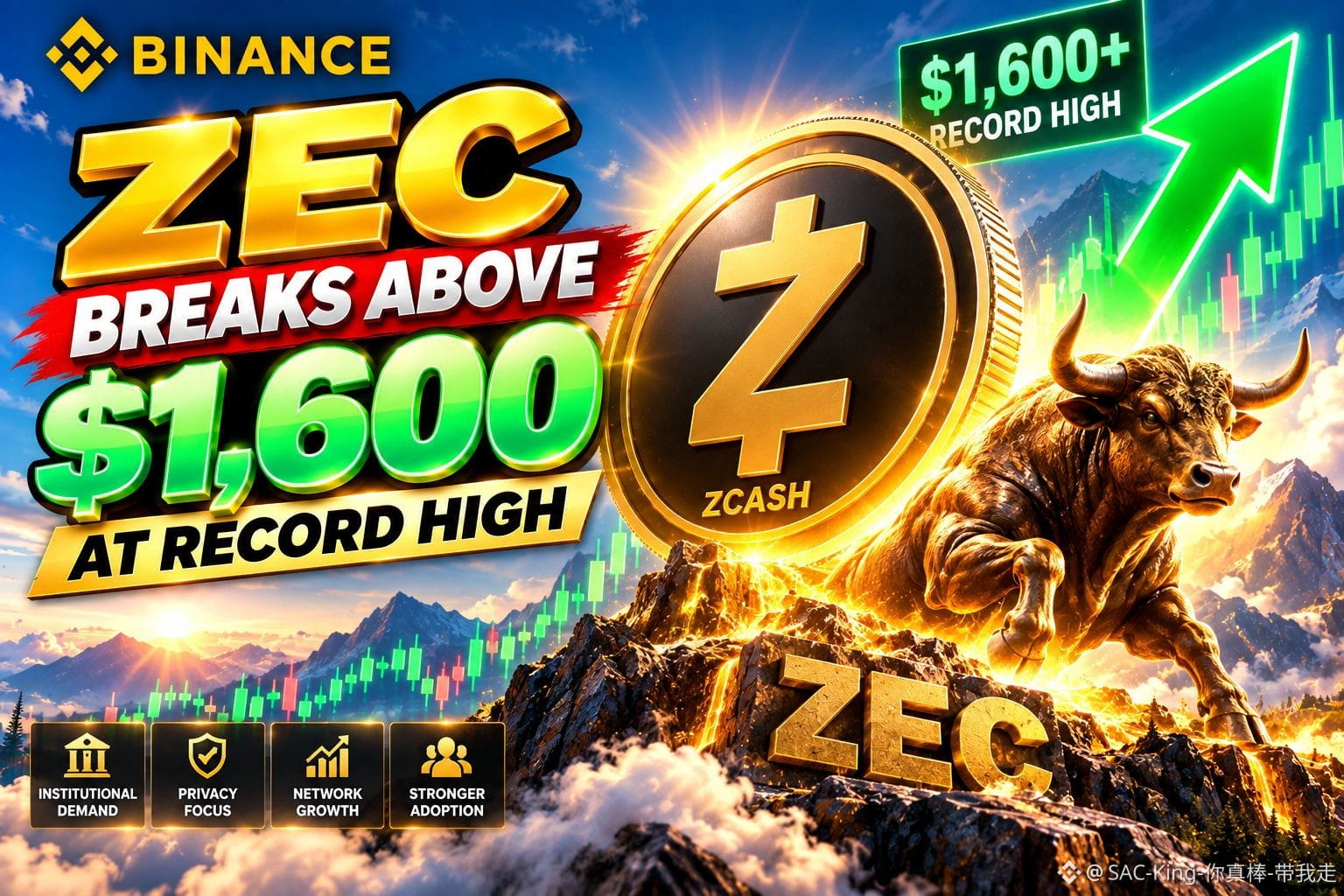
435

·
--
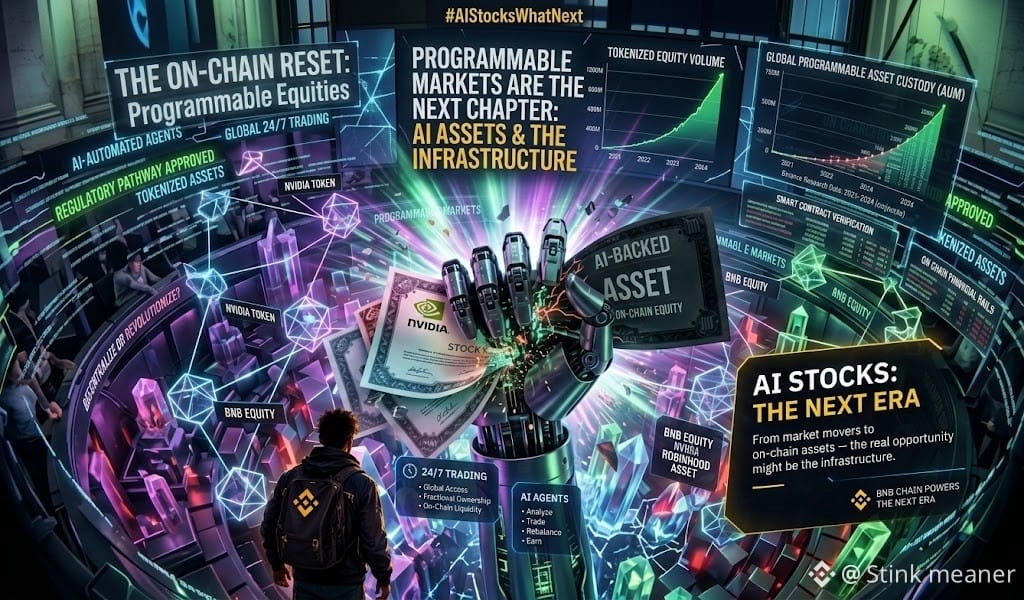
🤖 Everyone is asking which AI stock comes next. I think we're missing the market being built underneath them.
#AIStocksWhatNext
Nvidia's Jensen Huang expects chip sales to double next year. AI demand is still forcing capital into the sector.
But while investors chase the next AI winner, something quieter is happening:
AI stocks themselves are becoming on-chain assets.
Binance Research shows tokenized-equity market cap reached $4B, while monthly trading volume jumped from $237M → $7.9B between January and August.
BNB Chain and Robinhood Chain now account for 88.2% of tracked tokenized-equity volume in September.
NVIDIA already has a tokenized representation on BNB Smart Chain — and the SEC has now opened a temporary regulatory path for certain on-chain venues to trade tokenized U.S. stocks.
That's the hidden loop:
AI boom → tokenized AI equities → 24/7 markets → automated agents → demand for financial rails.
So the next AI opportunity may not be another chipmaker.
It may be the infrastructure that makes the AI stock market programmable.
$BNB $BCH $NIL
{future}(BCHUSDT)
Not financial advice. Tokenization growth does not guarantee BNB appreciation or future adoption. DYOR.
🙏If you find my posts insightful please follow to stay updated.
#TokenizedStocks #BinanceSquareTalks #CryptoAi #GrowWithSAC
🤖 Everyone is asking which AI stock comes next. I think we're missing the market being built underneath them.
#AIStocksWhatNext
Nvidia's Jensen Huang expects chip sales to double next year. AI demand is still forcing capital into the sector.
But while investors chase the next AI winner, something quieter is happening:
AI stocks themselves are becoming on-chain assets.
Binance Research shows tokenized-equity market cap reached $4B, while monthly trading volume jumped from $237M → $7.9B between January and August.
BNB Chain and Robinhood Chain now account for 88.2% of tracked tokenized-equity volume in September.
NVIDIA already has a tokenized representation on BNB Smart Chain — and the SEC has now opened a temporary regulatory path for certain on-chain venues to trade tokenized U.S. stocks.
That's the hidden loop:
AI boom → tokenized AI equities → 24/7 markets → automated agents → demand for financial rails.
So the next AI opportunity may not be another chipmaker.
It may be the infrastructure that makes the AI stock market programmable.
$BNB $BCH $NIL
Not financial advice. Tokenization growth does not guarantee BNB appreciation or future adoption. DYOR.
🙏If you find my posts insightful please follow to stay updated.
#TokenizedStocks #BinanceSquareTalks #CryptoAi #GrowWithSAC
#AIStocksWhatNext
Nvidia's Jensen Huang expects chip sales to double next year. AI demand is still forcing capital into the sector.
But while investors chase the next AI winner, something quieter is happening:
AI stocks themselves are becoming on-chain assets.
Binance Research shows tokenized-equity market cap reached $4B, while monthly trading volume jumped from $237M → $7.9B between January and August.
BNB Chain and Robinhood Chain now account for 88.2% of tracked tokenized-equity volume in September.
NVIDIA already has a tokenized representation on BNB Smart Chain — and the SEC has now opened a temporary regulatory path for certain on-chain venues to trade tokenized U.S. stocks.
That's the hidden loop:
AI boom → tokenized AI equities → 24/7 markets → automated agents → demand for financial rails.
So the next AI opportunity may not be another chipmaker.
It may be the infrastructure that makes the AI stock market programmable.
$BNB $BCH $NIL
Not financial advice. Tokenization growth does not guarantee BNB appreciation or future adoption. DYOR.
🙏If you find my posts insightful please follow to stay updated.
#TokenizedStocks #BinanceSquareTalks #CryptoAi #GrowWithSAC
2
128
Verified
#aistockswhatnext
🚨 AI STOCKS HIT RECORDS, BUT THE NEXT MOVE MAY BE THE HARD PART ⚡
The machines keep getting smarter, but markets are getting less forgiving.
AI has carried the tech rally a long way. Now investors are asking a tougher question: what comes after the excitement?
The Nasdaq closed at a record high on September 22, helped by AI-related stocks, while chipmakers continued benefiting from strong expectations around AI infrastructure spending.
NVIDIA remains central to the story. Its latest quarter delivered $96.2B in revenue, up 106% year over year, with Data Center revenue reaching $89B. NVIDIA also said demand for AI infrastructure is accelerating.
But the market is now moving beyond the question of whether AI demand exists. The harder test is whether future earnings can justify the enormous expectations already embedded in many valuations.
My Take: AI stocks may be entering a more selective phase. The winners may increasingly be determined by actual revenue growth, margins, infrastructure spending and the ability to convert AI investment into durable cash flows.
Competition adds another layer. New AI models, changing chip economics, energy costs and regulation could quickly shift where investors see value.
The AI story is not necessarily ending. The market may simply be demanding proof instead of promises.
Do you think AI stocks can keep leading the market, or is a rotation coming?
Disclaimer: This is for informational purposes only, not financial advice.
#Aİ #TechStocks #GrowWithSAC $TAKE $NEON.US
#AIStocksWhatNext
#aistockswhatnext
🚨 AI STOCKS HIT RECORDS, BUT THE NEXT MOVE MAY BE THE HARD PART ⚡
The machines keep getting smarter, but markets are getting less forgiving.
AI has carried the tech rally a long way. Now investors are asking a tougher question: what comes after the excitement?
The Nasdaq closed at a record high on September 22, helped by AI-related stocks, while chipmakers continued benefiting from strong expectations around AI infrastructure spending.
NVIDIA remains central to the story. Its latest quarter delivered $96.2B in revenue, up 106% year over year, with Data Center revenue reaching $89B. NVIDIA also said demand for AI infrastructure is accelerating.
But the market is now moving beyond the question of whether AI demand exists. The harder test is whether future earnings can justify the enormous expectations already embedded in many valuations.
My Take: AI stocks may be entering a more selective phase. The winners may increasingly be determined by actual revenue growth, margins, infrastructure spending and the ability to convert AI investment into durable cash flows.
Competition adds another layer. New AI models, changing chip economics, energy costs and regulation could quickly shift where investors see value.
The AI story is not necessarily ending. The market may simply be demanding proof instead of promises.
Do you think AI stocks can keep leading the market, or is a rotation coming?
Disclaimer: This is for informational purposes only, not financial advice.
#Aİ #TechStocks #GrowWithSAC $TAKE $NEON.US
#AIStocksWhatNext
🚨 AI STOCKS HIT RECORDS, BUT THE NEXT MOVE MAY BE THE HARD PART ⚡
The machines keep getting smarter, but markets are getting less forgiving.
AI has carried the tech rally a long way. Now investors are asking a tougher question: what comes after the excitement?
The Nasdaq closed at a record high on September 22, helped by AI-related stocks, while chipmakers continued benefiting from strong expectations around AI infrastructure spending.
NVIDIA remains central to the story. Its latest quarter delivered $96.2B in revenue, up 106% year over year, with Data Center revenue reaching $89B. NVIDIA also said demand for AI infrastructure is accelerating.
But the market is now moving beyond the question of whether AI demand exists. The harder test is whether future earnings can justify the enormous expectations already embedded in many valuations.
My Take: AI stocks may be entering a more selective phase. The winners may increasingly be determined by actual revenue growth, margins, infrastructure spending and the ability to convert AI investment into durable cash flows.
Competition adds another layer. New AI models, changing chip economics, energy costs and regulation could quickly shift where investors see value.
The AI story is not necessarily ending. The market may simply be demanding proof instead of promises.
Do you think AI stocks can keep leading the market, or is a rotation coming?
Disclaimer: This is for informational purposes only, not financial advice.
#Aİ #TechStocks #GrowWithSAC $TAKE $NEON.US
#AIStocksWhatNext

1
759
Log in to explore more content
Join global crypto users on Binance Square
⚡️ Get latest and useful information about crypto.
💬 Trusted by the world’s largest crypto exchange.
👍 Discover real insights from verified creators.
Email / Phone number
Trending Topics
1
#BinanceWillListHyperliquid(HYPE)
77,327 views
1,840 Discussing
2
#FedOctoberRateHikeOddsRiseTo69.7%
16,315 views
669 Discussing
3
#BitcoinFallsBelow$83,000
2,505 views
20 Discussing
4
#BitcoinFallsToAround$84,600ThisWeek
0 views
0 Discussing
5
#US30YearYieldHighestSince2004
18,173 views
551 Discussing
6
#ETHBreaksAbove$2,700
1,217 views
20 Discussing
7
#USWeighsPromotingDollarStablecoinsAbroad
49,192 views
1,442 Discussing
8
#US10YTreasuryYieldHits19YearHigh
50,117 views
1,154 Discussing
9
#SpotBitcoinETFsInflow$2.31BInFourDays
5,981 views
66 Discussing
10
#BitcoinRejectedAt$87,300Twice
0 views
0 Discussing