

#gas
gas
927,378 views
2,406 Discussing
Hot
Latest

·
--
Crypto Explained | ETH and Gas Fees: What Is the “Fuel Money” for a Blockchain?You pay Gas fees to transfer funds or mint an NFT—but who gets that money?
【The basics】Ethereum is a globally shared computer. Every operation (transferring funds, trading, or running a
contract) uses computing resources. Gas is what you pay the validators who perform those computations for you.
“Fuel money.” The more congested the network, the more people compete to get their transactions processed, and the higher the gas price (the price per unit of Gas).
【Why it’s related to the price of the coin】A booming market → a surge in on-chain transactions → skyrocketing Gas fees. That’s why experienced users
have a habit: they do on-chain operations late at night or when the market is quiet. The same operation can cost half as much.
Crypto Explained | ETH and Gas Fees: What Is the “Fuel Money” for a Blockchain?
You pay Gas fees to transfer funds or mint an NFT—but who gets that money?
【The basics】Ethereum is a globally shared computer. Every operation (transferring funds, trading, or running a
contract) uses computing resources. Gas is what you pay the validators who perform those computations for you.
“Fuel money.” The more congested the network, the more people compete to get their transactions processed, and the higher the gas price (the price per unit of Gas).
【Why it’s related to the price of the coin】A booming market → a surge in on-chain transactions → skyrocketing Gas fees. That’s why experienced users
have a habit: they do on-chain operations late at night or when the market is quiet. The same operation can cost half as much.
【The basics】Ethereum is a globally shared computer. Every operation (transferring funds, trading, or running a
contract) uses computing resources. Gas is what you pay the validators who perform those computations for you.
“Fuel money.” The more congested the network, the more people compete to get their transactions processed, and the higher the gas price (the price per unit of Gas).
【Why it’s related to the price of the coin】A booming market → a surge in on-chain transactions → skyrocketing Gas fees. That’s why experienced users
have a habit: they do on-chain operations late at night or when the market is quiet. The same operation can cost half as much.
152

Article
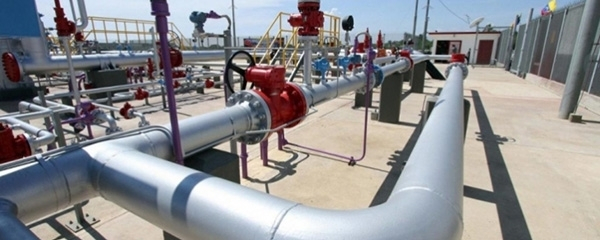
Reuters: Baker Hughes signs agreements to expand natural gas infrastructure in VenezuelaEarlier this year, U.S. company Baker Hughes said it saw a significant revenue opportunity in Venezuela.
Energy technology and oilfield services company Baker Hughes signed an agreement on Monday with Petróleos de Venezuela S.A. (PDVSA), engineering company Lindsayca, and LNG developer Fulcrum LNG to develop natural gas infrastructure in the Caribbean nation.
According to Reuters, the U.S. firm also signed a separate agreement with New Stratus Energy to support future oil and gas projects in Venezuela.
Reuters: Baker Hughes signs agreements to expand natural gas infrastructure in Venezuela
Earlier this year, U.S. company Baker Hughes said it saw a significant revenue opportunity in Venezuela.
Energy technology and oilfield services company Baker Hughes signed an agreement on Monday with Petróleos de Venezuela S.A. (PDVSA), engineering company Lindsayca, and LNG developer Fulcrum LNG to develop natural gas infrastructure in the Caribbean nation.
According to Reuters, the U.S. firm also signed a separate agreement with New Stratus Energy to support future oil and gas projects in Venezuela.
Energy technology and oilfield services company Baker Hughes signed an agreement on Monday with Petróleos de Venezuela S.A. (PDVSA), engineering company Lindsayca, and LNG developer Fulcrum LNG to develop natural gas infrastructure in the Caribbean nation.
According to Reuters, the U.S. firm also signed a separate agreement with New Stratus Energy to support future oil and gas projects in Venezuela.
30

Data & Intelligence Narratives
$ARKM | $TRB | $GAS
ARKM, TRB, and GAS continue to represent data, oracle, and blockchain infrastructure narratives. As market participation increases, these sectors can attract renewed attention.
Key support zones remain important for understanding whether momentum is strengthening.
Key Takeaway: Data and infrastructure remain critical parts of the broader crypto stack.
#ARKM #TRB #GAS #Infrastructure #Crypto
{future}(ARKMUSDT)
{future}(TRBUSDT)
{future}(GASUSDT)
Data & Intelligence Narratives
$ARKM | $TRB | $GAS
ARKM, TRB, and GAS continue to represent data, oracle, and blockchain infrastructure narratives. As market participation increases, these sectors can attract renewed attention.
Key support zones remain important for understanding whether momentum is strengthening.
Key Takeaway: Data and infrastructure remain critical parts of the broader crypto stack.
#ARKM #TRB #GAS #Infrastructure #Crypto
$ARKM | $TRB | $GAS
ARKM, TRB, and GAS continue to represent data, oracle, and blockchain infrastructure narratives. As market participation increases, these sectors can attract renewed attention.
Key support zones remain important for understanding whether momentum is strengthening.
Key Takeaway: Data and infrastructure remain critical parts of the broader crypto stack.
#ARKM #TRB #GAS #Infrastructure #Crypto
1
439

$GAS LONG
1. Buyers maintain control over price dynamics by setting a working vector for continued growth.
2. The current technical setup favors a gradual move upward toward the specified targets.
3. The risk profile remains balanced as long as the long position is protected by the relevant protective order.
🔹Entry zone: 1.4584
✅Take 1: 1.472427 (+0.96%)
✅Take 2: 1.496254 (+2.60%)
✅Take 3: 1.5319945 (+5.05%)
🛡Protection: 1.4128595 (-3.12%)
⚠️ This is not financial advice. Trade at your own risk. DYOR.
#GAS #BitcoinUpdate #TradeStories 📈
$GAS
$GAS LONG
1. Buyers maintain control over price dynamics by setting a working vector for continued growth.
2. The current technical setup favors a gradual move upward toward the specified targets.
3. The risk profile remains balanced as long as the long position is protected by the relevant protective order.
🔹Entry zone: 1.4584
✅Take 1: 1.472427 (+0.96%)
✅Take 2: 1.496254 (+2.60%)
✅Take 3: 1.5319945 (+5.05%)
🛡Protection: 1.4128595 (-3.12%)
⚠️ This is not financial advice. Trade at your own risk. DYOR.
#GAS #BitcoinUpdate #TradeStories 📈
$GAS
1. Buyers maintain control over price dynamics by setting a working vector for continued growth.
2. The current technical setup favors a gradual move upward toward the specified targets.
3. The risk profile remains balanced as long as the long position is protected by the relevant protective order.
🔹Entry zone: 1.4584
✅Take 1: 1.472427 (+0.96%)
✅Take 2: 1.496254 (+2.60%)
✅Take 3: 1.5319945 (+5.05%)
🛡Protection: 1.4128595 (-3.12%)
⚠️ This is not financial advice. Trade at your own risk. DYOR.
#GAS #BitcoinUpdate #TradeStories 📈
$GAS
10

·
--
$ETH $BTC
{future}(ETHUSDT)
*🇨🇳 Chinese translation:*
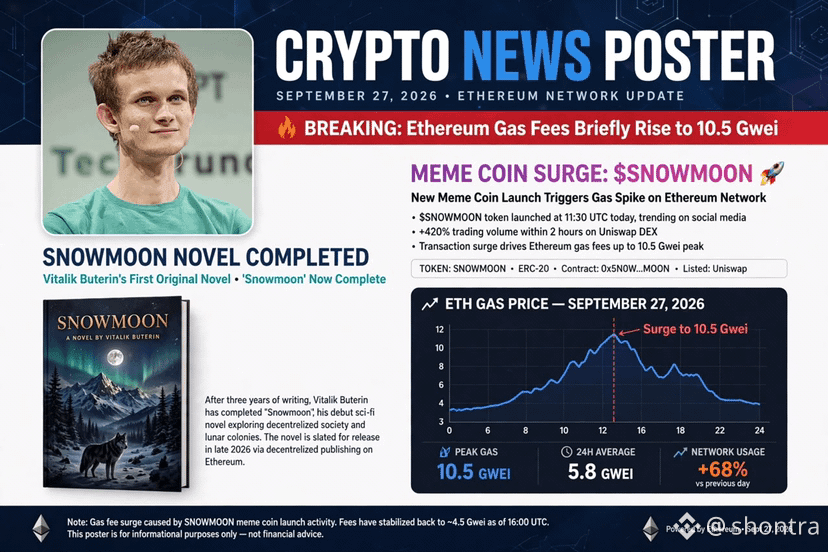
Ethereum Gas fees briefly surged to 10.5 Gwei
According to Etherscan data, Ethereum gas fees briefly rose to 10.5 Gwei. As reported by Odaily, Vitalik said his first original novel, *Snowmoon*, has been completed. Related concept Meme coins appeared on the Ethereum network, causing gas fees to briefly spike.
⚠️ Sorry, the poster generation service is temporarily unavailable. Please try again later; the translation has been completed for you.
*Forum post copy:*
⛽ *ETH Gas rockets to 10.5 Gwei! All because of Vitalik’s novel?*
V God’s first novel *Snowmoon* is finished; concept Meme coins are instantly pumped, and Gas spikes in the short term!
Another V God concept taking off?
#ETH #Gas #Vitalik $ETH
$ETH $BTC
*🇨🇳 Chinese translation:*
Ethereum Gas fees briefly surged to 10.5 Gwei
According to Etherscan data, Ethereum gas fees briefly rose to 10.5 Gwei. As reported by Odaily, Vitalik said his first original novel, *Snowmoon*, has been completed. Related concept Meme coins appeared on the Ethereum network, causing gas fees to briefly spike.
⚠️ Sorry, the poster generation service is temporarily unavailable. Please try again later; the translation has been completed for you.
*Forum post copy:*
⛽ *ETH Gas rockets to 10.5 Gwei! All because of Vitalik’s novel?*
V God’s first novel *Snowmoon* is finished; concept Meme coins are instantly pumped, and Gas spikes in the short term!
Another V God concept taking off?
#ETH #Gas #Vitalik $ETH
*🇨🇳 Chinese translation:*
Ethereum Gas fees briefly surged to 10.5 Gwei
According to Etherscan data, Ethereum gas fees briefly rose to 10.5 Gwei. As reported by Odaily, Vitalik said his first original novel, *Snowmoon*, has been completed. Related concept Meme coins appeared on the Ethereum network, causing gas fees to briefly spike.
⚠️ Sorry, the poster generation service is temporarily unavailable. Please try again later; the translation has been completed for you.
*Forum post copy:*
⛽ *ETH Gas rockets to 10.5 Gwei! All because of Vitalik’s novel?*
V God’s first novel *Snowmoon* is finished; concept Meme coins are instantly pumped, and Gas spikes in the short term!
Another V God concept taking off?
#ETH #Gas #Vitalik $ETH
197

·
--
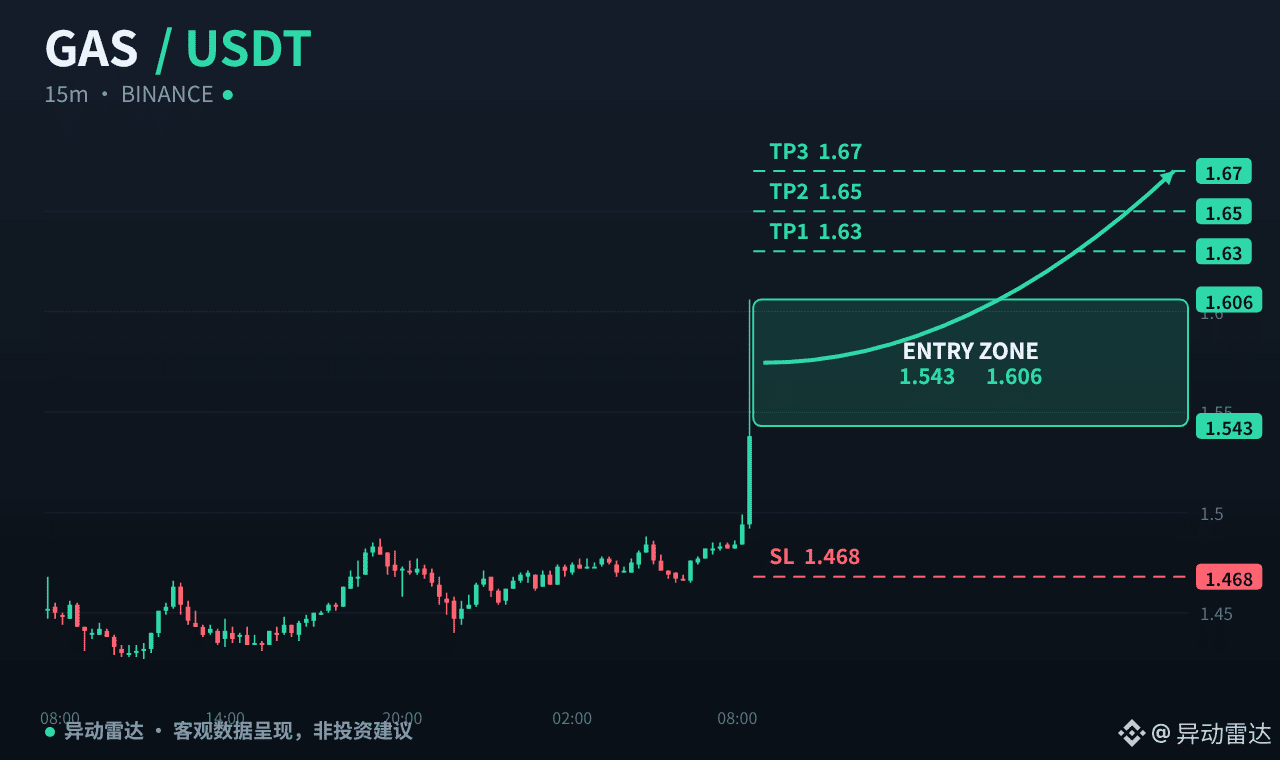
$GAS net buy in half an hour: 1.88 million; volume expands to 8.7 times
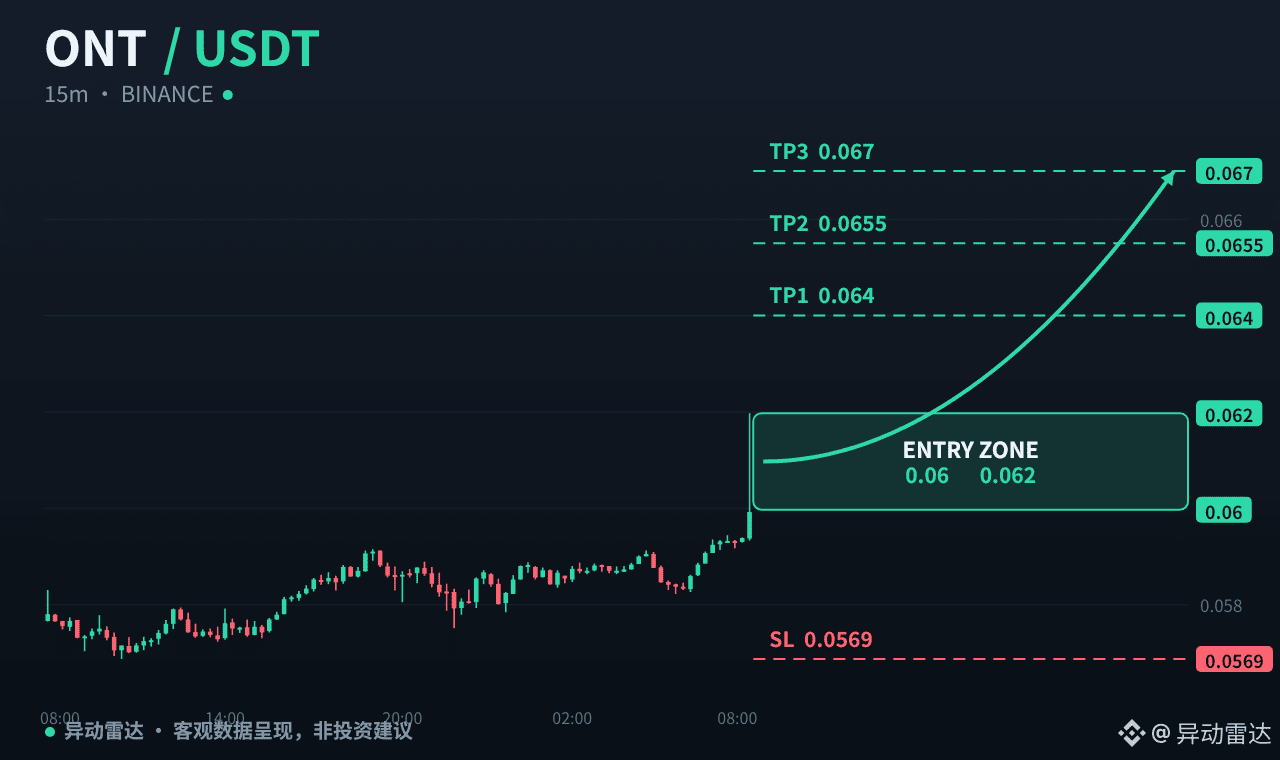
$ONT 24H成交 2.96 million. The small-cap market is volatile; treat with a light position.
💰 GAS 1.5430 bullish bias
🟢 Hold above 1.6060
Targets 1.6300 / 1.6500 / 1.6700
Stop-loss 1.4680
🔴 Breaks below 1.4540
Next support 1.4460 / 1.4380
🎯 The main force uses the large-holder long/short ratio of 1.96 to drive a strong long; the active trade ratio of 2.32 shows buy orders being absorbed. The main force is chasing longs; if the half-hour volume capacity is further amplified and the rising confirmation of the active trade ratio continues, the current large-holder long/short ratio and funding rate will support the bulls to extend momentum.
━━━━━━━━━
💰 ONT 0.05997 bullish bias
🟢 Hold above 0.06197
Targets 0.06400 / 0.06550 / 0.06700
Stop-loss 0.05687
🔴 Breaks below 0.05805
Next support 0.05750 / 0.05680
🎯 The main force uses the large-holder long/short ratio of 1.91 to drive a strong long; the active trade ratio of 0.48 shows sell orders being more proactive. The main force is building longs; it requires further increase in half-hour net inflows and repeated confirmation of the sharp 5-minute rally. The current ATR and large-holder long/short ratio support the continuation of the long trend.
—
🕒 Data taken from 09-26 08:12 (UTC+8), Binance futures market; you can verify on your own
Objective data is presented only, not investment advice; mind the risks.
#GAS #ONT
$GAS net buy in half an hour: 1.88 million; volume expands to 8.7 times
$ONT 24H成交 2.96 million. The small-cap market is volatile; treat with a light position.
💰 GAS 1.5430 bullish bias
🟢 Hold above 1.6060
Targets 1.6300 / 1.6500 / 1.6700
Stop-loss 1.4680
🔴 Breaks below 1.4540
Next support 1.4460 / 1.4380
🎯 The main force uses the large-holder long/short ratio of 1.96 to drive a strong long; the active trade ratio of 2.32 shows buy orders being absorbed. The main force is chasing longs; if the half-hour volume capacity is further amplified and the rising confirmation of the active trade ratio continues, the current large-holder long/short ratio and funding rate will support the bulls to extend momentum.
━━━━━━━━━
💰 ONT 0.05997 bullish bias
🟢 Hold above 0.06197
Targets 0.06400 / 0.06550 / 0.06700
Stop-loss 0.05687
🔴 Breaks below 0.05805
Next support 0.05750 / 0.05680
🎯 The main force uses the large-holder long/short ratio of 1.91 to drive a strong long; the active trade ratio of 0.48 shows sell orders being more proactive. The main force is building longs; it requires further increase in half-hour net inflows and repeated confirmation of the sharp 5-minute rally. The current ATR and large-holder long/short ratio support the continuation of the long trend.
—
🕒 Data taken from 09-26 08:12 (UTC+8), Binance futures market; you can verify on your own
Objective data is presented only, not investment advice; mind the risks.
#GAS #ONT
$ONT 24H成交 2.96 million. The small-cap market is volatile; treat with a light position.
💰 GAS 1.5430 bullish bias
🟢 Hold above 1.6060
Targets 1.6300 / 1.6500 / 1.6700
Stop-loss 1.4680
🔴 Breaks below 1.4540
Next support 1.4460 / 1.4380
🎯 The main force uses the large-holder long/short ratio of 1.96 to drive a strong long; the active trade ratio of 2.32 shows buy orders being absorbed. The main force is chasing longs; if the half-hour volume capacity is further amplified and the rising confirmation of the active trade ratio continues, the current large-holder long/short ratio and funding rate will support the bulls to extend momentum.
━━━━━━━━━
💰 ONT 0.05997 bullish bias
🟢 Hold above 0.06197
Targets 0.06400 / 0.06550 / 0.06700
Stop-loss 0.05687
🔴 Breaks below 0.05805
Next support 0.05750 / 0.05680
🎯 The main force uses the large-holder long/short ratio of 1.91 to drive a strong long; the active trade ratio of 0.48 shows sell orders being more proactive. The main force is building longs; it requires further increase in half-hour net inflows and repeated confirmation of the sharp 5-minute rally. The current ATR and large-holder long/short ratio support the continuation of the long trend.
—
🕒 Data taken from 09-26 08:12 (UTC+8), Binance futures market; you can verify on your own
Objective data is presented only, not investment advice; mind the risks.
#GAS #ONT
98
Market Leaders at Prime Levels — Act Before Acceleration
$ARKM | $TRB | $GAS
ARKM, TRB, and GAS continue to attract attention across data, infrastructure, and ecosystem narratives. As the market compresses, their ability to maintain important support zones becomes a key area to monitor.
The next volatility expansion could redefine short-term structure.
Key Takeaway: Strong support combined with increasing activity can signal changing market conditions.
#ARKM #TRB #GAS #CryptoLeaders #HighConviction
{future}(ARKMUSDT)
{future}(TRBUSDT)
{future}(GASUSDT)
Market Leaders at Prime Levels — Act Before Acceleration
$ARKM | $TRB | $GAS
ARKM, TRB, and GAS continue to attract attention across data, infrastructure, and ecosystem narratives. As the market compresses, their ability to maintain important support zones becomes a key area to monitor.
The next volatility expansion could redefine short-term structure.
Key Takeaway: Strong support combined with increasing activity can signal changing market conditions.
#ARKM #TRB #GAS #CryptoLeaders #HighConviction
$ARKM | $TRB | $GAS
ARKM, TRB, and GAS continue to attract attention across data, infrastructure, and ecosystem narratives. As the market compresses, their ability to maintain important support zones becomes a key area to monitor.
The next volatility expansion could redefine short-term structure.
Key Takeaway: Strong support combined with increasing activity can signal changing market conditions.
#ARKM #TRB #GAS #CryptoLeaders #HighConviction
1
276

·
--
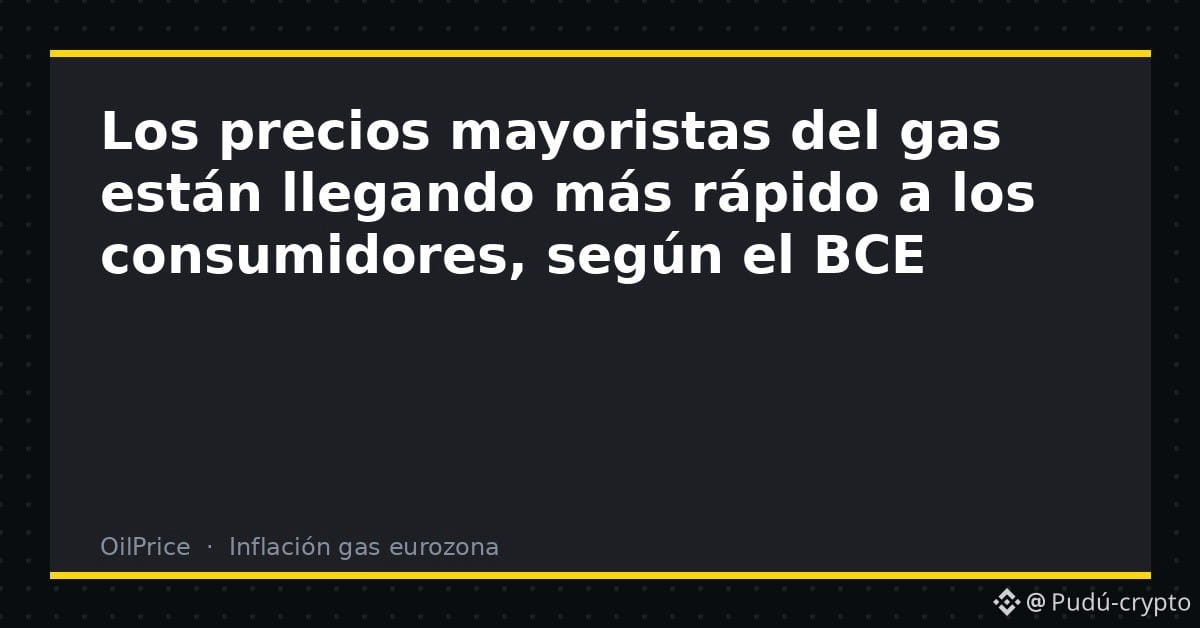
The wholesale gas no longer takes as long to show up on your bill.
The ECB published its economic bulletin and left one thing clear. This rise in wholesale gas prices is now being passed on to consumers and electricity faster than before.
In most Eurozone countries, this impact can show up in inflation within one to three months.
Even so, the pressure on electricity in 2026 has been lower than in 2022. Partly because of the greater share of renewables in power generation.
The data shows that gas is still moving the needle on prices.
Are you surprised that the pass-through is so fast?
$XAU #ECB #Inflación #Gas
The wholesale gas no longer takes as long to show up on your bill.
The ECB published its economic bulletin and left one thing clear. This rise in wholesale gas prices is now being passed on to consumers and electricity faster than before.
In most Eurozone countries, this impact can show up in inflation within one to three months.
Even so, the pressure on electricity in 2026 has been lower than in 2022. Partly because of the greater share of renewables in power generation.
The data shows that gas is still moving the needle on prices.
Are you surprised that the pass-through is so fast?
$XAU #ECB #Inflación #Gas
The ECB published its economic bulletin and left one thing clear. This rise in wholesale gas prices is now being passed on to consumers and electricity faster than before.
In most Eurozone countries, this impact can show up in inflation within one to three months.
Even so, the pressure on electricity in 2026 has been lower than in 2022. Partly because of the greater share of renewables in power generation.
The data shows that gas is still moving the needle on prices.
Are you surprised that the pass-through is so fast?
$XAU #ECB #Inflación #Gas

172

·
--
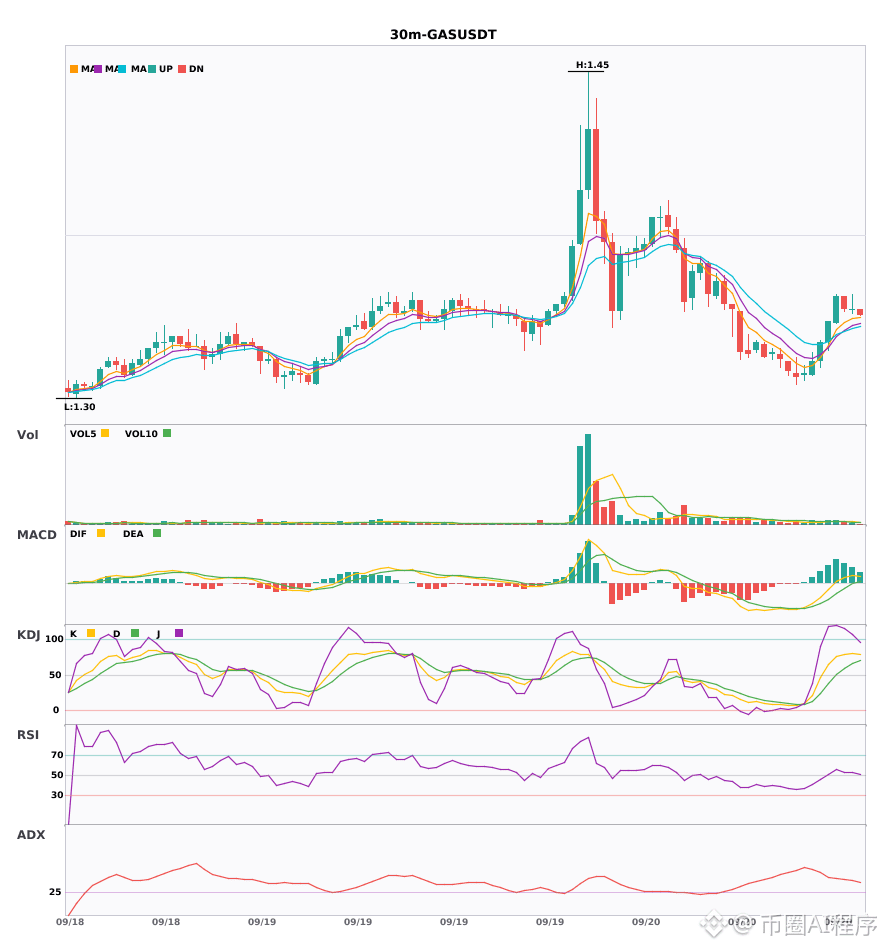
$GAS $MAGIC multi-period resonance — strong move in 30 minutes; 4-hour moving-average bullish alignment confirmed🔥
════════════════════
🔴 $GAS 30-minute bullish signal
⚠️ Technicals: This is a multi-period resonance signal! The 4-hour timeframe confirms bullishness; the 30-minute timeframe provides the entry/exit signal. The moving averages are in a bullish alignment. MACD is showing strong momentum but slightly decreasing. KDJ: K crosses above D without being overbought. Volume is 1.3x normal.
════════════════════
🔴 $MAGIC 30-minute bullish signal
⚠️ Technicals: 4-hour bullish resonance confirmation | 30-minute entry signal. MACD is running bullish; trend is relatively strong, with weakening momentum | EMA5 > EMA8 > EMA13, bullish alignment | KDJ is running strongly, with bulls in control (K is 67.4, D is 50.3) | Volume expands (1.8x)
════════════════════
🔔 Watch for real-time market fluctuations first-hand 🔔
#多周期共振 #GAS #MAGIC
📌 During trading, pay attention to whether the candlestick pattern matches
$GAS $MAGIC multi-period resonance — strong move in 30 minutes; 4-hour moving-average bullish alignment confirmed🔥
════════════════════
🔴 $GAS 30-minute bullish signal
⚠️ Technicals: This is a multi-period resonance signal! The 4-hour timeframe confirms bullishness; the 30-minute timeframe provides the entry/exit signal. The moving averages are in a bullish alignment. MACD is showing strong momentum but slightly decreasing. KDJ: K crosses above D without being overbought. Volume is 1.3x normal.
════════════════════
🔴 $MAGIC 30-minute bullish signal
⚠️ Technicals: 4-hour bullish resonance confirmation | 30-minute entry signal. MACD is running bullish; trend is relatively strong, with weakening momentum | EMA5 > EMA8 > EMA13, bullish alignment | KDJ is running strongly, with bulls in control (K is 67.4, D is 50.3) | Volume expands (1.8x)
════════════════════
🔔 Watch for real-time market fluctuations first-hand 🔔
#多周期共振 #GAS #MAGIC
📌 During trading, pay attention to whether the candlestick pattern matches
════════════════════
🔴 $GAS 30-minute bullish signal
⚠️ Technicals: This is a multi-period resonance signal! The 4-hour timeframe confirms bullishness; the 30-minute timeframe provides the entry/exit signal. The moving averages are in a bullish alignment. MACD is showing strong momentum but slightly decreasing. KDJ: K crosses above D without being overbought. Volume is 1.3x normal.
════════════════════
🔴 $MAGIC 30-minute bullish signal
⚠️ Technicals: 4-hour bullish resonance confirmation | 30-minute entry signal. MACD is running bullish; trend is relatively strong, with weakening momentum | EMA5 > EMA8 > EMA13, bullish alignment | KDJ is running strongly, with bulls in control (K is 67.4, D is 50.3) | Volume expands (1.8x)
════════════════════
🔔 Watch for real-time market fluctuations first-hand 🔔
#多周期共振 #GAS #MAGIC
📌 During trading, pay attention to whether the candlestick pattern matches
143

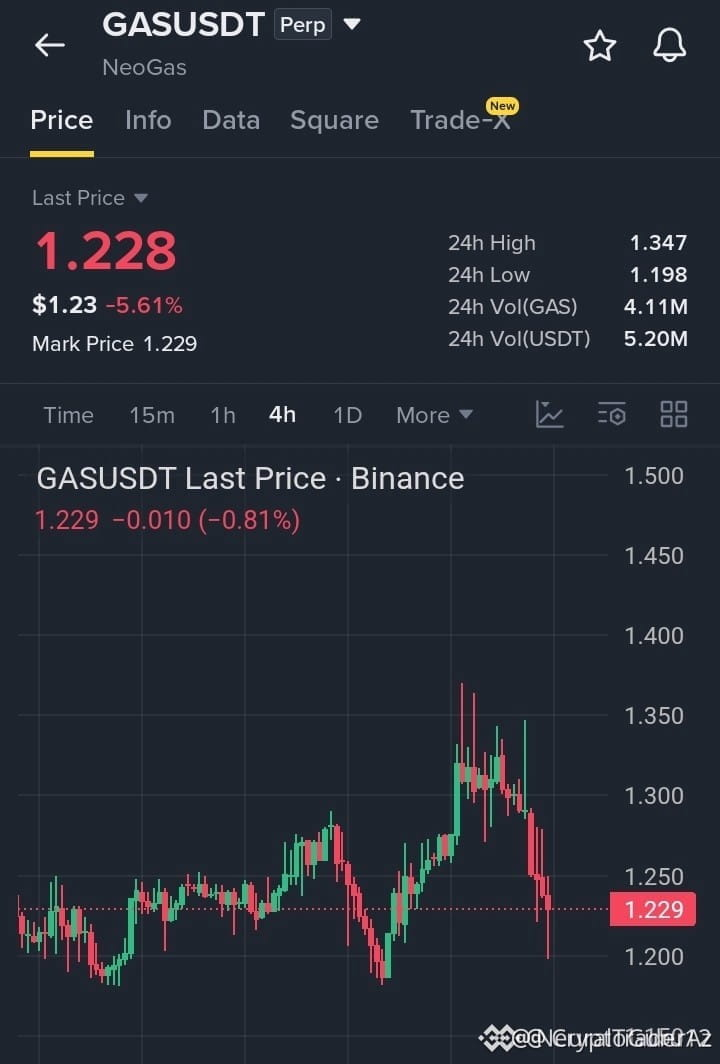
🦈 $GAS SELLERS REJECT $1.35 AND PRESSURE $1.22 LIQUIDITY 📉
Entry: 1.225–1.245 ⚡
Target: 1.210 🚀
Target: 1.195 🎯
Target: 1.180 💥
Stop Loss: 1.275 ⚠️
📌 $GAS is showing a clean 4H bearish rejection after failing to reclaim the $1.35 supply shelf. Price has slipped below the $1.25–$1.30 demand band, turning that structure into resistance. 🦈
📊 The short zone at $1.225–$1.245 aligns with a lower-timeframe liquidity sweep, while $1.275 invalidates the bearish impulse. If sellers defend the retest, $1.210 opens first, then $1.195 and $1.180. ⚡
💬 Will $GAS bounce into $1.275 and trap shorts, or is this just the first leg down? 👇
⚠️ Not financial advice. Always manage your risk. 🛡️
🏷️ #GAS #ShortSetup #Bearish #Liquidity #Crypto
🎯 📉
🦈 $GAS SELLERS REJECT $1.35 AND PRESSURE $1.22 LIQUIDITY 📉
Entry: 1.225–1.245 ⚡
Target: 1.210 🚀
Target: 1.195 🎯
Target: 1.180 💥
Stop Loss: 1.275 ⚠️
📌 $GAS is showing a clean 4H bearish rejection after failing to reclaim the $1.35 supply shelf. Price has slipped below the $1.25–$1.30 demand band, turning that structure into resistance. 🦈
📊 The short zone at $1.225–$1.245 aligns with a lower-timeframe liquidity sweep, while $1.275 invalidates the bearish impulse. If sellers defend the retest, $1.210 opens first, then $1.195 and $1.180. ⚡
💬 Will $GAS bounce into $1.275 and trap shorts, or is this just the first leg down? 👇
⚠️ Not financial advice. Always manage your risk. 🛡️
🏷️ #GAS #ShortSetup #Bearish #Liquidity #Crypto
🎯 📉
Entry: 1.225–1.245 ⚡
Target: 1.210 🚀
Target: 1.195 🎯
Target: 1.180 💥
Stop Loss: 1.275 ⚠️
📌 $GAS is showing a clean 4H bearish rejection after failing to reclaim the $1.35 supply shelf. Price has slipped below the $1.25–$1.30 demand band, turning that structure into resistance. 🦈
📊 The short zone at $1.225–$1.245 aligns with a lower-timeframe liquidity sweep, while $1.275 invalidates the bearish impulse. If sellers defend the retest, $1.210 opens first, then $1.195 and $1.180. ⚡
💬 Will $GAS bounce into $1.275 and trap shorts, or is this just the first leg down? 👇
⚠️ Not financial advice. Always manage your risk. 🛡️
🏷️ #GAS #ShortSetup #Bearish #Liquidity #Crypto
🎯 📉
16

·
--
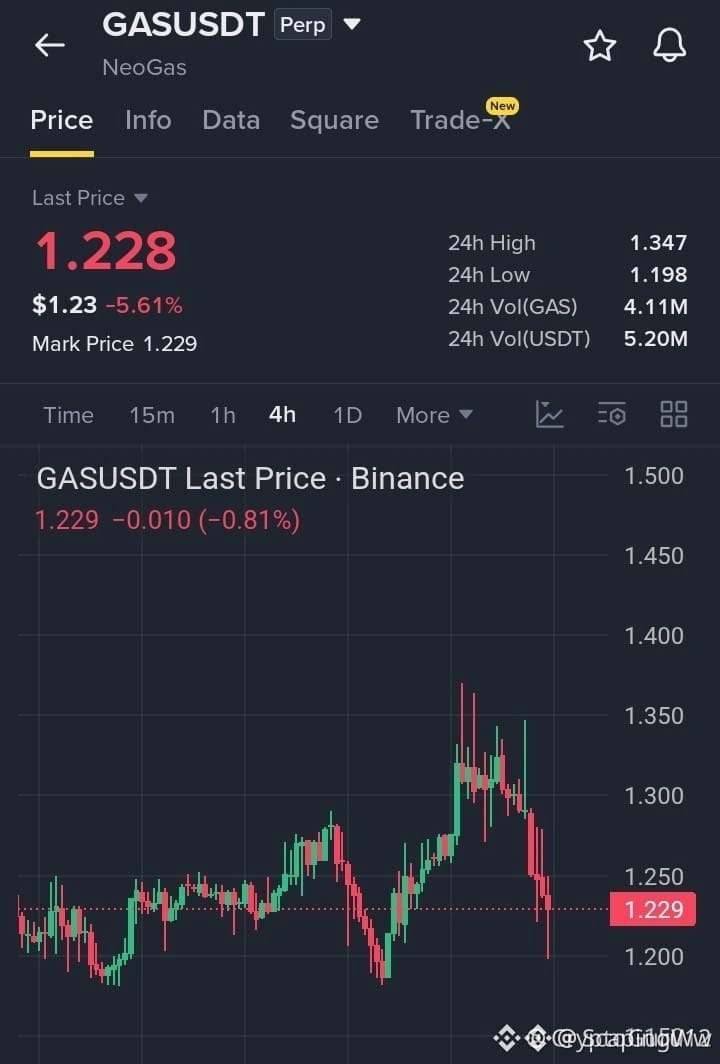
$GAS SELLERS DEFEND THE $1.35 REJECTION ZONE 🐻⚡
Entry: 1.225 – 1.245 ⚡
Target: 1.210 / 1.195 / 1.180 🚀
Stop Loss: 1.275 ⚠️
$GAS is bleeding momentum after the 4H rejection at $1.35, with sellers defending the $1.25–$1.30 ceiling like a locked supply zone. 📊 The break toward $1.22 signals continuation, not just a wick, as price refuses to reclaim resistance.
💡 Shorting the failed bounce into 1.225–1.245 keeps risk tight above 1.275 while targets ladder toward 1.180. ⚡ If this zone flips back into demand, the trade dies fast.
🤔 Are you fading this bounce or waiting for $1.30 reclaim before stepping aside?
⚠️ Not financial advice. Always manage your risk. 🛡️
🏷️ #GAS #ShortSetup #Bearish #Momentum #Crypto
🐻 📉
$GAS SELLERS DEFEND THE $1.35 REJECTION ZONE 🐻⚡
Entry: 1.225 – 1.245 ⚡
Target: 1.210 / 1.195 / 1.180 🚀
Stop Loss: 1.275 ⚠️
$GAS is bleeding momentum after the 4H rejection at $1.35, with sellers defending the $1.25–$1.30 ceiling like a locked supply zone. 📊 The break toward $1.22 signals continuation, not just a wick, as price refuses to reclaim resistance.
💡 Shorting the failed bounce into 1.225–1.245 keeps risk tight above 1.275 while targets ladder toward 1.180. ⚡ If this zone flips back into demand, the trade dies fast.
🤔 Are you fading this bounce or waiting for $1.30 reclaim before stepping aside?
⚠️ Not financial advice. Always manage your risk. 🛡️
🏷️ #GAS #ShortSetup #Bearish #Momentum #Crypto
🐻 📉
Entry: 1.225 – 1.245 ⚡
Target: 1.210 / 1.195 / 1.180 🚀
Stop Loss: 1.275 ⚠️
$GAS is bleeding momentum after the 4H rejection at $1.35, with sellers defending the $1.25–$1.30 ceiling like a locked supply zone. 📊 The break toward $1.22 signals continuation, not just a wick, as price refuses to reclaim resistance.
💡 Shorting the failed bounce into 1.225–1.245 keeps risk tight above 1.275 while targets ladder toward 1.180. ⚡ If this zone flips back into demand, the trade dies fast.
🤔 Are you fading this bounce or waiting for $1.30 reclaim before stepping aside?
⚠️ Not financial advice. Always manage your risk. 🛡️
🏷️ #GAS #ShortSetup #Bearish #Momentum #Crypto
🐻 📉
26


·
--
Bearish
$GAS Short Setup
Sellers Take Control Near Resistance
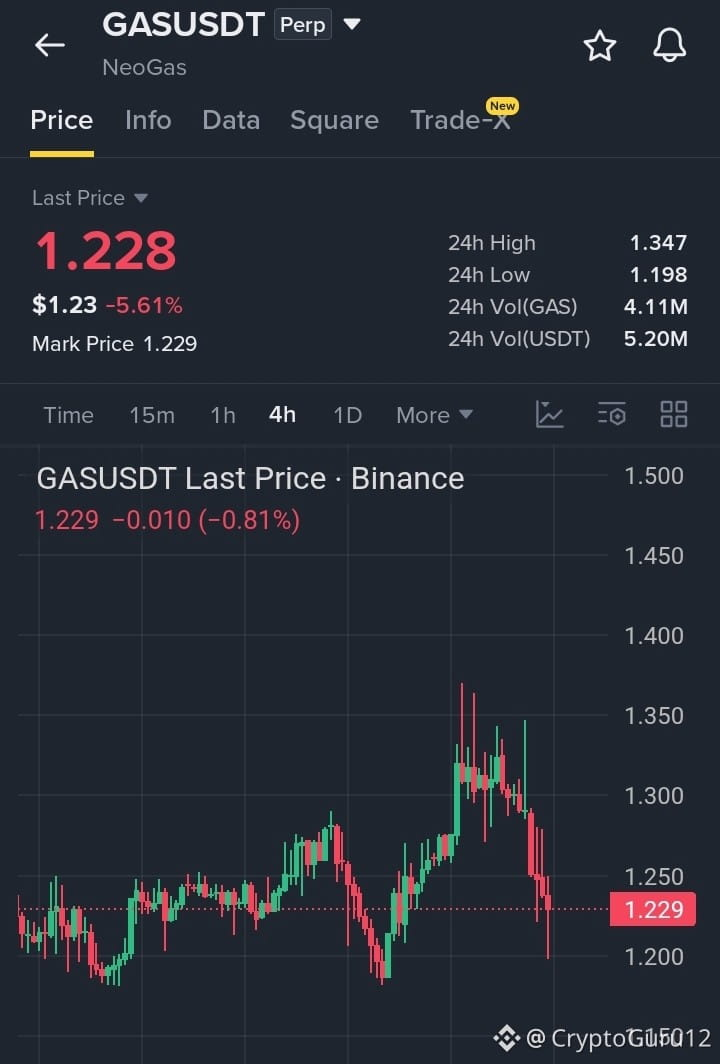
#gas is showing clear bearish momentum on the 4H chart after rejection from the $1.35 area. The recent breakdown toward $1.22 suggests further downside pressure while price remains below the $1.25–$1.30 zone.
Short Setup
Entry: 1.225 – 1.245
TP1: 1.210
TP2: 1.195
TP3: 1.180
SL: 1.275
Sell and Trade
{future}(GASUSDT)
$LSK
{future}(LSKUSDT)
$龙虾
{future}(龙虾USDT)
$GAS Short Setup
Sellers Take Control Near Resistance
#gas is showing clear bearish momentum on the 4H chart after rejection from the $1.35 area. The recent breakdown toward $1.22 suggests further downside pressure while price remains below the $1.25–$1.30 zone.
Short Setup
Entry: 1.225 – 1.245
TP1: 1.210
TP2: 1.195
TP3: 1.180
SL: 1.275
Sell and Trade
$LSK
$龙虾
Sellers Take Control Near Resistance
#gas is showing clear bearish momentum on the 4H chart after rejection from the $1.35 area. The recent breakdown toward $1.22 suggests further downside pressure while price remains below the $1.25–$1.30 zone.
Short Setup
Entry: 1.225 – 1.245
TP1: 1.210
TP2: 1.195
TP3: 1.180
SL: 1.275
Sell and Trade
$LSK
$龙虾
1
518

·
--
Short position setup on $GAS
Sellers gain the upper hand near the resistance zone
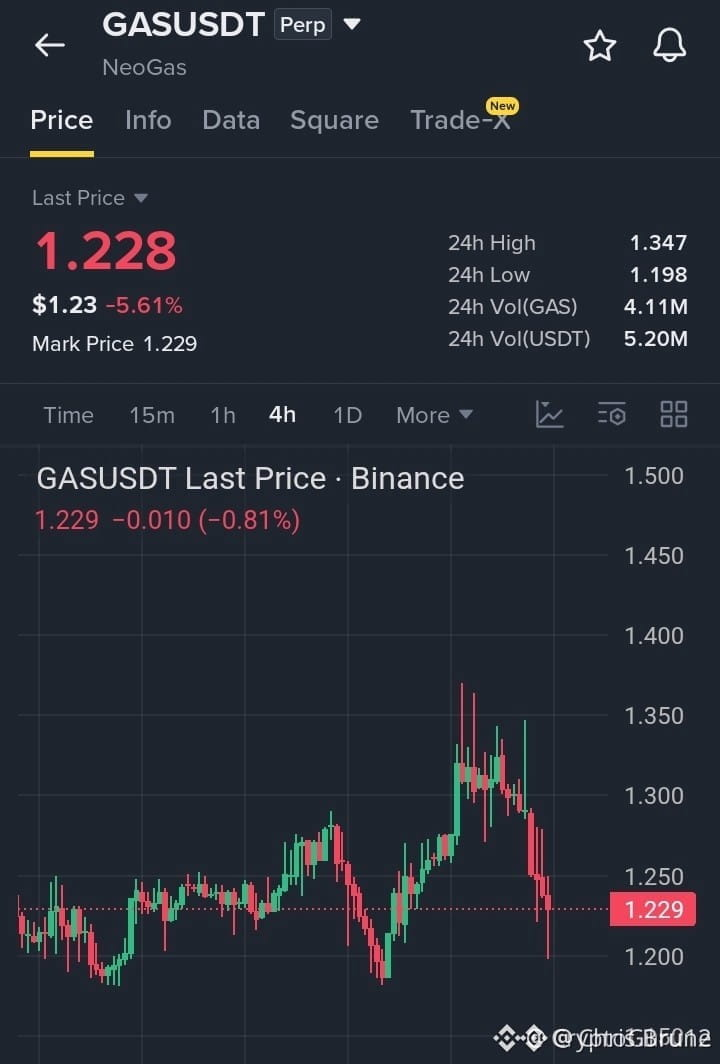
#gas shows clear bearish momentum on the 4-hour chart after being rejected from the 1.35 $ zone. The recent break to 1.22 $ suggests additional downside pressure as long as the price remains below the 1.25 $ – 1.30 $ zone.
Short position setup
Entry: 1.225 – 1.245
TP1: 1.210
TP2: 1.195
TP3: 1.180
SL: 1.275
Sell and trade
{future}(GASUSDT)
$LSK
{future}(LSKUSDT)
$龙虾
{future}(龙虾USDT)
Short position setup on $GAS
Sellers gain the upper hand near the resistance zone
#gas shows clear bearish momentum on the 4-hour chart after being rejected from the 1.35 $ zone. The recent break to 1.22 $ suggests additional downside pressure as long as the price remains below the 1.25 $ – 1.30 $ zone.
Short position setup
Entry: 1.225 – 1.245
TP1: 1.210
TP2: 1.195
TP3: 1.180
SL: 1.275
Sell and trade
$LSK
$龙虾
Sellers gain the upper hand near the resistance zone
#gas shows clear bearish momentum on the 4-hour chart after being rejected from the 1.35 $ zone. The recent break to 1.22 $ suggests additional downside pressure as long as the price remains below the 1.25 $ – 1.30 $ zone.
Short position setup
Entry: 1.225 – 1.245
TP1: 1.210
TP2: 1.195
TP3: 1.180
SL: 1.275
Sell and trade
$LSK
$龙虾
77

·
--
Bearish
$GAS /USDT — Weakness Builds as Volume Dries Up
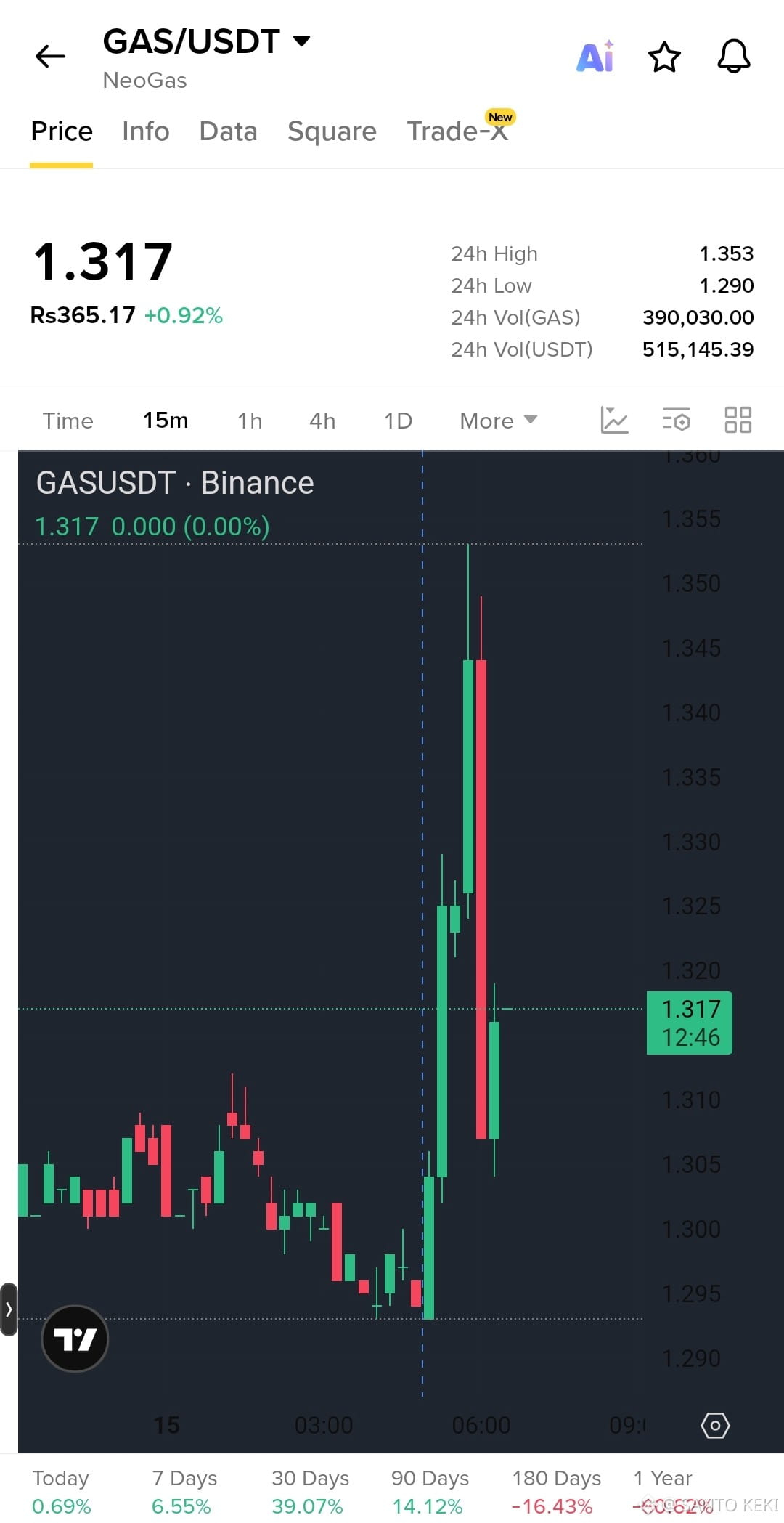
GAS has slipped from $1.344 to $1.316, marking a 2.1% decline. The bigger signal is volume, which has fallen 92%, showing that the move is happening with significantly weaker participation.
Price: $1.316
Change: -2.1%
Volume: 7,537
Volume Change: -92%
Trading Setup — SHORT
Entry Zone: $1.315–$1.325
TP1: $1.285
TP2: $1.255
TP3: $1.220
Stop Loss: $1.345
The $1.315 area is the key level. A clean break below it followed by rejection on the retest could open the path toward the downside targets.
Invalidation: Strong reclaim above $1.345.
Trade with proper risk management and DYOR.
$GAS #GAS #cryptotrading #AnthropicCEOCallsForAISlowdown
{spot}(GASUSDT)
$GAS /USDT — Weakness Builds as Volume Dries Up
GAS has slipped from $1.344 to $1.316, marking a 2.1% decline. The bigger signal is volume, which has fallen 92%, showing that the move is happening with significantly weaker participation.
Price: $1.316
Change: -2.1%
Volume: 7,537
Volume Change: -92%
Trading Setup — SHORT
Entry Zone: $1.315–$1.325
TP1: $1.285
TP2: $1.255
TP3: $1.220
Stop Loss: $1.345
The $1.315 area is the key level. A clean break below it followed by rejection on the retest could open the path toward the downside targets.
Invalidation: Strong reclaim above $1.345.
Trade with proper risk management and DYOR.
$GAS #GAS #cryptotrading #AnthropicCEOCallsForAISlowdown
GAS has slipped from $1.344 to $1.316, marking a 2.1% decline. The bigger signal is volume, which has fallen 92%, showing that the move is happening with significantly weaker participation.
Price: $1.316
Change: -2.1%
Volume: 7,537
Volume Change: -92%
Trading Setup — SHORT
Entry Zone: $1.315–$1.325
TP1: $1.285
TP2: $1.255
TP3: $1.220
Stop Loss: $1.345
The $1.315 area is the key level. A clean break below it followed by rejection on the retest could open the path toward the downside targets.
Invalidation: Strong reclaim above $1.345.
Trade with proper risk management and DYOR.
$GAS #GAS #cryptotrading #AnthropicCEOCallsForAISlowdown
82
Market Leaders at Prime Levels — Structure Before Momentum
$ARKM | $TRB | $GAS
ARKM, TRB, and GAS are maintaining important market structures while volatility contracts.
ARKM continues to defend key support. TRB remains resilient around important levels. GAS is holding its broader market structure.
Key Takeaway: Structural resilience during consolidation can precede renewed momentum.
#ARKM #TRB #GAS #HighConviction #StrategicEntry
{future}(ARKMUSDT)
{future}(TRBUSDT)
{future}(GASUSDT)
Market Leaders at Prime Levels — Structure Before Momentum
$ARKM | $TRB | $GAS
ARKM, TRB, and GAS are maintaining important market structures while volatility contracts.
ARKM continues to defend key support. TRB remains resilient around important levels. GAS is holding its broader market structure.
Key Takeaway: Structural resilience during consolidation can precede renewed momentum.
#ARKM #TRB #GAS #HighConviction #StrategicEntry
$ARKM | $TRB | $GAS
ARKM, TRB, and GAS are maintaining important market structures while volatility contracts.
ARKM continues to defend key support. TRB remains resilient around important levels. GAS is holding its broader market structure.
Key Takeaway: Structural resilience during consolidation can precede renewed momentum.
#ARKM #TRB #GAS #HighConviction #StrategicEntry
1
249

Market Leaders at Prime Levels — Strength Through Consolidation
$ARKM | $TRB | $GAS
ARKM, TRB, and GAS are holding important market areas as volatility continues to contract. These conditions can provide a strategic window before the next directional move.
ARKM continues to defend its broader structure. TRB remains resilient around key levels. GAS is maintaining its market positioning while absorbing short-term fluctuations.
Strong structure often matters most before the market begins accelerating.
Key Takeaway: Defended support during consolidation can become the base for renewed momentum.
#ARKM #TRB #GAS #HighConviction #StrategicEntry
{future}(ARKMUSDT)
{future}(TRBUSDT)
{future}(GASUSDT)
Market Leaders at Prime Levels — Strength Through Consolidation
$ARKM | $TRB | $GAS
ARKM, TRB, and GAS are holding important market areas as volatility continues to contract. These conditions can provide a strategic window before the next directional move.
ARKM continues to defend its broader structure. TRB remains resilient around key levels. GAS is maintaining its market positioning while absorbing short-term fluctuations.
Strong structure often matters most before the market begins accelerating.
Key Takeaway: Defended support during consolidation can become the base for renewed momentum.
#ARKM #TRB #GAS #HighConviction #StrategicEntry
$ARKM | $TRB | $GAS
ARKM, TRB, and GAS are holding important market areas as volatility continues to contract. These conditions can provide a strategic window before the next directional move.
ARKM continues to defend its broader structure. TRB remains resilient around key levels. GAS is maintaining its market positioning while absorbing short-term fluctuations.
Strong structure often matters most before the market begins accelerating.
Key Takeaway: Defended support during consolidation can become the base for renewed momentum.
#ARKM #TRB #GAS #HighConviction #StrategicEntry
1
482

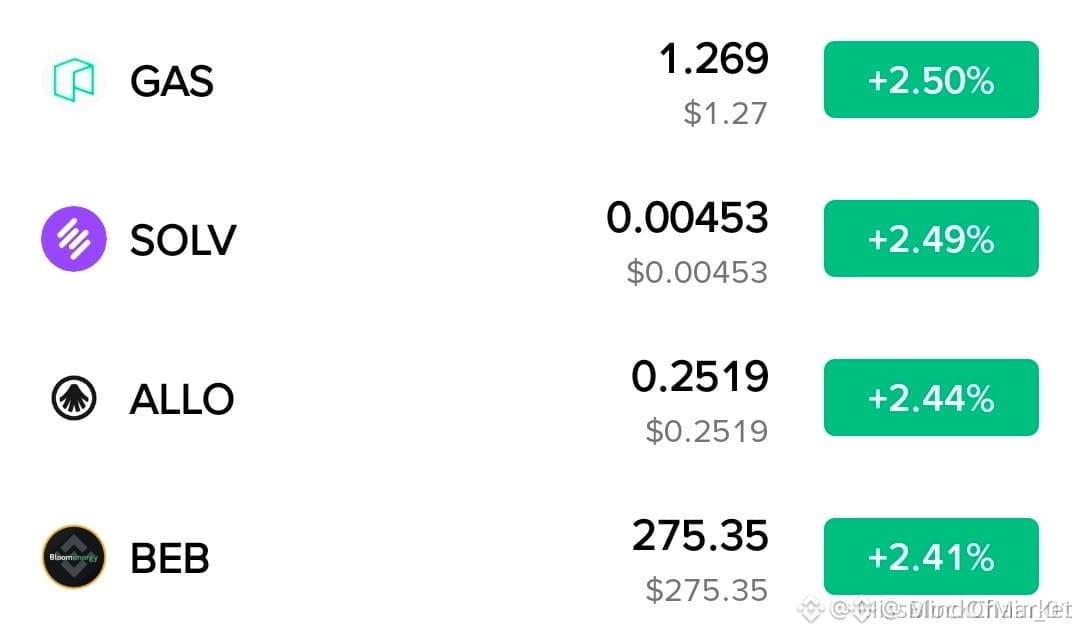
🚨 $GAS SURGES WITH GREEN MOMENTUM—WHISTLE‑STOP OR BREAKOUT? 📈
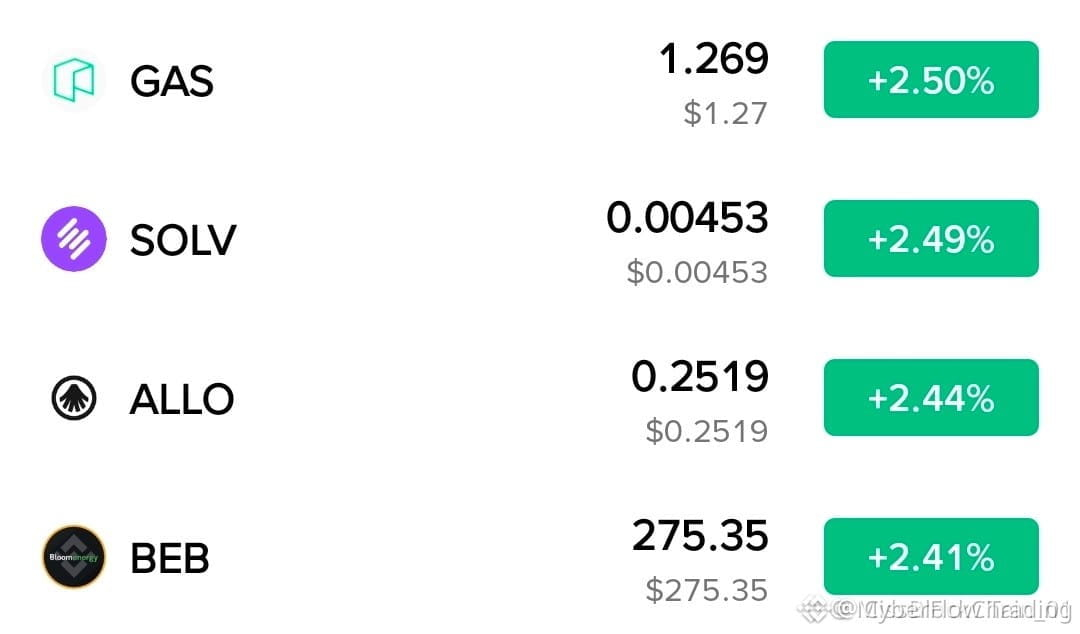
Buyers are still throwing fire into $GAS , $SOLV and $ALLO , carving fresh demand zones as the green candles roll. 📊 The order flow shows a steady uptick in aggressive bids, hinting that smart money is stacking positions before the next catalyst. ⚡
The real test comes now: a volume‑spiked breakout could rocket the trio higher, but a sharp rejection might flip the script into a short‑bias trap. 🌊💡 Which side are you lining up for—riding the rally or hunting the liquidity sweep? 👇
⚠️ Not financial advice. Always manage your risk. 🛡️
🏷️ #GAS #AltcoinMomentum #Breakout #ShortOpportunity #Crypto
🔥 💎
🚨 $GAS SURGES WITH GREEN MOMENTUM—WHISTLE‑STOP OR BREAKOUT? 📈
Buyers are still throwing fire into $GAS , $SOLV and $ALLO , carving fresh demand zones as the green candles roll. 📊 The order flow shows a steady uptick in aggressive bids, hinting that smart money is stacking positions before the next catalyst. ⚡
The real test comes now: a volume‑spiked breakout could rocket the trio higher, but a sharp rejection might flip the script into a short‑bias trap. 🌊💡 Which side are you lining up for—riding the rally or hunting the liquidity sweep? 👇
⚠️ Not financial advice. Always manage your risk. 🛡️
🏷️ #GAS #AltcoinMomentum #Breakout #ShortOpportunity #Crypto
🔥 💎
Buyers are still throwing fire into $GAS , $SOLV and $ALLO , carving fresh demand zones as the green candles roll. 📊 The order flow shows a steady uptick in aggressive bids, hinting that smart money is stacking positions before the next catalyst. ⚡
The real test comes now: a volume‑spiked breakout could rocket the trio higher, but a sharp rejection might flip the script into a short‑bias trap. 🌊💡 Which side are you lining up for—riding the rally or hunting the liquidity sweep? 👇
⚠️ Not financial advice. Always manage your risk. 🛡️
🏷️ #GAS #AltcoinMomentum #Breakout #ShortOpportunity #Crypto
🔥 💎
241
·
--
🚨 $GAS & $SOLV RIDE GREEN MOMENTUM, LIQUIDITY HUNT AHEAD! 🦈
Smart money is still loading bids across the altcoin cluster, with each green candle swallowing residual sell pressure. 📊 The confluence of volume spikes and tight order‑block zones suggests the next push could be a clean breakout rather than a fleeting pullback. 🦈
Watch the 4‑hour profile: a fresh liquidity pool sits just above the recent highs, primed for a rapid sweep. If volume fails to hold, a sharp rejection could flip the structure into a short‑bias, offering a high‑R:R entry on the downside. 📈
💬 Which side of the liquidity fence are you positioning for? 👇
⚠️ Not financial advice. Always manage your risk. 🛡️
🏷️ #GAS #AltcoinMomentum #Breakout #Liquidity #Crypto
🦈 🔥
🚨 $GAS & $SOLV RIDE GREEN MOMENTUM, LIQUIDITY HUNT AHEAD! 🦈
Smart money is still loading bids across the altcoin cluster, with each green candle swallowing residual sell pressure. 📊 The confluence of volume spikes and tight order‑block zones suggests the next push could be a clean breakout rather than a fleeting pullback. 🦈
Watch the 4‑hour profile: a fresh liquidity pool sits just above the recent highs, primed for a rapid sweep. If volume fails to hold, a sharp rejection could flip the structure into a short‑bias, offering a high‑R:R entry on the downside. 📈
💬 Which side of the liquidity fence are you positioning for? 👇
⚠️ Not financial advice. Always manage your risk. 🛡️
🏷️ #GAS #AltcoinMomentum #Breakout #Liquidity #Crypto
🦈 🔥
Smart money is still loading bids across the altcoin cluster, with each green candle swallowing residual sell pressure. 📊 The confluence of volume spikes and tight order‑block zones suggests the next push could be a clean breakout rather than a fleeting pullback. 🦈
Watch the 4‑hour profile: a fresh liquidity pool sits just above the recent highs, primed for a rapid sweep. If volume fails to hold, a sharp rejection could flip the structure into a short‑bias, offering a high‑R:R entry on the downside. 📈
💬 Which side of the liquidity fence are you positioning for? 👇
⚠️ Not financial advice. Always manage your risk. 🛡️
🏷️ #GAS #AltcoinMomentum #Breakout #Liquidity #Crypto
🦈 🔥
98
·
--
Bullish
Verified
⛽️ Ethereum will allow transactions without ETH in the wallet
Ethereum is preparing a function that will allow users to transfer $USDT $USDC and other assets without having $ETH to pay for gas.
{spot}(ETHUSDT)
The commission will be paid by a third-party service or application, including with conversion from stablecoins.
The change will be implemented via EIP-8141, which is already planned to be included in the Hegota update in 2027.
At the same time, the network itself will still receive a commission in ETH - only who pays for gas and how it is paid will change.
#Ethereum #gas #NewsAboutCrypto
⛽️ Ethereum will allow transactions without ETH in the wallet
Ethereum is preparing a function that will allow users to transfer $USDT $USDC and other assets without having $ETH to pay for gas.
The commission will be paid by a third-party service or application, including with conversion from stablecoins.
The change will be implemented via EIP-8141, which is already planned to be included in the Hegota update in 2027.
At the same time, the network itself will still receive a commission in ETH - only who pays for gas and how it is paid will change.
#Ethereum #gas #NewsAboutCrypto
Ethereum is preparing a function that will allow users to transfer $USDT $USDC and other assets without having $ETH to pay for gas.
The commission will be paid by a third-party service or application, including with conversion from stablecoins.
The change will be implemented via EIP-8141, which is already planned to be included in the Hegota update in 2027.
At the same time, the network itself will still receive a commission in ETH - only who pays for gas and how it is paid will change.
#Ethereum #gas #NewsAboutCrypto

5
84
Log in to explore more content
Join global crypto users on Binance Square
⚡️ Get latest and useful information about crypto.
💬 Trusted by the world’s largest crypto exchange.
👍 Discover real insights from verified creators.
Email / Phone number
Trending Topics
1
#BinanceLaunchesBinanceIntelligence
585,201 views
3,658 Discussing
2
#WinklevossFilesSpotZcashETFApplication
1,086 views
45 Discussing
3
#SouthKoreaAITradeLiftsWorldcoinTo$7.41B
170 views
9 Discussing
4
#StrategyEstimates$4.1BIncomeTaxBenefit
151 views
8 Discussing
5
#IglooShutsDownAbstractBlockchain
28 views
8 Discussing
6
#StrategyMarketCapSurpassesRumble
30,181 views
666 Discussing
7
#StriveBuys2000BTCFor$169M
16,877 views
153 Discussing
8
#EvernorthXRPTreasuryCompletesSPACMerger
225,061 views
1,864 Discussing
9
#ADAGains10%Above$0.27
78,598 views
265 Discussing
10
#ETHUp70%InQ3ButLiquidityFalls
425,761 views
2,831 Discussing