
#bitcoinmining
bitcoinmining
487,103 views
1,907 Discussing
Hot
Latest

Ethiopia Miners Hit Hard By Power Cuts
Ethiopia is slashing power supply to Bitcoin miners by 77 percent due to declining hydropower levels. The state utility is now prioritizing residential households and local manufacturers over mining operations.
#BitcoinMining #Hydropower
Ethiopia Miners Hit Hard By Power Cuts
Ethiopia is slashing power supply to Bitcoin miners by 77 percent due to declining hydropower levels. The state utility is now prioritizing residential households and local manufacturers over mining operations.
#BitcoinMining #Hydropower
Ethiopia is slashing power supply to Bitcoin miners by 77 percent due to declining hydropower levels. The state utility is now prioritizing residential households and local manufacturers over mining operations.
#BitcoinMining #Hydropower

·
--
Ethiopia has slashed power to Bitcoin miners, restricting them to just 23% of their contracted capacity. This dramatic cut highlights the risks of relying solely on weather-dependent hydropower.
While renewable energy is key to BTC's green future, climate-driven grid instability poses a real challenge to mining continuity. Can miners balance sustainability with operational reliability?
#BitcoinMining #GreenEnergy #CryptoNews
Ethiopia has slashed power to Bitcoin miners, restricting them to just 23% of their contracted capacity. This dramatic cut highlights the risks of relying solely on weather-dependent hydropower.
While renewable energy is key to BTC's green future, climate-driven grid instability poses a real challenge to mining continuity. Can miners balance sustainability with operational reliability?
#BitcoinMining #GreenEnergy #CryptoNews
While renewable energy is key to BTC's green future, climate-driven grid instability poses a real challenge to mining continuity. Can miners balance sustainability with operational reliability?
#BitcoinMining #GreenEnergy #CryptoNews
65
High production costs are keeping AI focused miners away from Bitcoin. With average cash costs hitting 75500 dollars in Q2, the profitability gap remains too wide for a quick return.
#BitcoinMining #HashRate
High production costs are keeping AI focused miners away from Bitcoin. With average cash costs hitting 75500 dollars in Q2, the profitability gap remains too wide for a quick return.
#BitcoinMining #HashRate
#BitcoinMining #HashRate
11
·
--
#bitcointhirdsingleblockreorginfourweeks
🚨 Bitcoin Had 3 One-Block Reorgs in 4 Weeks. Should You Be Worried?
At block 966,500, AntPool and SpiderPool found valid blocks pointing to the same parent at almost the same time.
One branch won.
The other disappeared.
That sounds scary.
But technically, this is normal Bitcoin behavior.
The winning AntPool chain accumulated more proof-of-work, while SpiderPool’s block became orphaned.
The cost?
About 3.14 BTC in mining rewards for the losing block.
So what's actually interesting?
The frequency. 👀
This was the third one-block reorganization in just four weeks.
The previous two occurred at blocks 962,722 and 963,853.
One reorg isn't the story.
Three in four weeks is what deserves monitoring.
And here's the bigger twist:
The reorg itself isn't the main decentralization concern. Hashrate concentration is.
Data cited in the research puts Foundry USA around 33.6% and AntPool around 17.9% of network hashrate.
But there's an important distinction:
Mining pool share ≠ one entity controlling the network.
Miners can switch pools, and a temporary one-block fork is fundamentally different from a deep chain reorganization or successful 51% attack.
That's why comparing this event with an 18-block replacement on another PoW network can be misleading.
Bitcoin's one-block fork was resolved normally.
And the fact that independent nodes can observe these competing blocks is part of the system working as designed.
One caveat:
The often-cited “one reorg every ~47 days” statistic hasn't been independently verified here, so the exact degree of abnormality remains uncertain.
🧠 Square Insight:
A one-block reorg isn't Bitcoin's real problem. Mining concentration is the metric worth watching.
The question isn't whether Bitcoin can survive a one-block reorg.
It can.
The better question is:
What happens if mining concentration keeps increasing?
$BTC
{future}(BTCUSDT)
#Bitcoin #BitcoinMining #Decentralization
Market commentary only. Not financial advice.
#bitcointhirdsingleblockreorginfourweeks
🚨 Bitcoin Had 3 One-Block Reorgs in 4 Weeks. Should You Be Worried?
At block 966,500, AntPool and SpiderPool found valid blocks pointing to the same parent at almost the same time.
One branch won.
The other disappeared.
That sounds scary.
But technically, this is normal Bitcoin behavior.
The winning AntPool chain accumulated more proof-of-work, while SpiderPool’s block became orphaned.
The cost?
About 3.14 BTC in mining rewards for the losing block.
So what's actually interesting?
The frequency. 👀
This was the third one-block reorganization in just four weeks.
The previous two occurred at blocks 962,722 and 963,853.
One reorg isn't the story.
Three in four weeks is what deserves monitoring.
And here's the bigger twist:
The reorg itself isn't the main decentralization concern. Hashrate concentration is.
Data cited in the research puts Foundry USA around 33.6% and AntPool around 17.9% of network hashrate.
But there's an important distinction:
Mining pool share ≠ one entity controlling the network.
Miners can switch pools, and a temporary one-block fork is fundamentally different from a deep chain reorganization or successful 51% attack.
That's why comparing this event with an 18-block replacement on another PoW network can be misleading.
Bitcoin's one-block fork was resolved normally.
And the fact that independent nodes can observe these competing blocks is part of the system working as designed.
One caveat:
The often-cited “one reorg every ~47 days” statistic hasn't been independently verified here, so the exact degree of abnormality remains uncertain.
🧠 Square Insight:
A one-block reorg isn't Bitcoin's real problem. Mining concentration is the metric worth watching.
The question isn't whether Bitcoin can survive a one-block reorg.
It can.
The better question is:
What happens if mining concentration keeps increasing?
$BTC
#Bitcoin #BitcoinMining #Decentralization
Market commentary only. Not financial advice.
🚨 Bitcoin Had 3 One-Block Reorgs in 4 Weeks. Should You Be Worried?
At block 966,500, AntPool and SpiderPool found valid blocks pointing to the same parent at almost the same time.
One branch won.
The other disappeared.
That sounds scary.
But technically, this is normal Bitcoin behavior.
The winning AntPool chain accumulated more proof-of-work, while SpiderPool’s block became orphaned.
The cost?
About 3.14 BTC in mining rewards for the losing block.
So what's actually interesting?
The frequency. 👀
This was the third one-block reorganization in just four weeks.
The previous two occurred at blocks 962,722 and 963,853.
One reorg isn't the story.
Three in four weeks is what deserves monitoring.
And here's the bigger twist:
The reorg itself isn't the main decentralization concern. Hashrate concentration is.
Data cited in the research puts Foundry USA around 33.6% and AntPool around 17.9% of network hashrate.
But there's an important distinction:
Mining pool share ≠ one entity controlling the network.
Miners can switch pools, and a temporary one-block fork is fundamentally different from a deep chain reorganization or successful 51% attack.
That's why comparing this event with an 18-block replacement on another PoW network can be misleading.
Bitcoin's one-block fork was resolved normally.
And the fact that independent nodes can observe these competing blocks is part of the system working as designed.
One caveat:
The often-cited “one reorg every ~47 days” statistic hasn't been independently verified here, so the exact degree of abnormality remains uncertain.
🧠 Square Insight:
A one-block reorg isn't Bitcoin's real problem. Mining concentration is the metric worth watching.
The question isn't whether Bitcoin can survive a one-block reorg.
It can.
The better question is:
What happens if mining concentration keeps increasing?
$BTC
#Bitcoin #BitcoinMining #Decentralization
Market commentary only. Not financial advice.

ABO3ZAM:
تحليل تقني دقيق ينم عن فهم عميق لهيكلية الشبكة. من منظور تداولي، هذه الأحداث لا تؤثر على الزخم اللحظي للسعر، لكنها تفرض الحذر عند مناطق الرفض السعري. التزم دائماً بتأمين أرباحك وجني السيولة عند مستويات المقاومة الرئيسية، فإدارة المخاطر هي صمام الأمان الوحيد في تقلبات السوق.
1
1
671


BITDEER JUST PRINTED 1,310 BTC.
Bitdeer reports that August production reached 1,310 BTC, up about 249% YoY.
Self-mining capacity: 79.9 EH/s
Co-hosting capacity: 21.6 EH/s
Total self-mining capacity: 84.1 EH/s
From a Bitcoin mining company to a BTC production machine.
THE MINERS ARE STILL PRINTING.
Is Bitdeer accelerating its hash rate or entering an increasingly fierce mining race?
#bitcoin #Bitdeer #crypto #Bitcoinmining
$BTDR.US
{stock_us}(BTDR.US)
BITDEER JUST PRINTED 1,310 BTC.
Bitdeer reports that August production reached 1,310 BTC, up about 249% YoY.
Self-mining capacity: 79.9 EH/s
Co-hosting capacity: 21.6 EH/s
Total self-mining capacity: 84.1 EH/s
From a Bitcoin mining company to a BTC production machine.
THE MINERS ARE STILL PRINTING.
Is Bitdeer accelerating its hash rate or entering an increasingly fierce mining race?
#bitcoin #Bitdeer #crypto #Bitcoinmining
$BTDR.US
Bitdeer reports that August production reached 1,310 BTC, up about 249% YoY.
Self-mining capacity: 79.9 EH/s
Co-hosting capacity: 21.6 EH/s
Total self-mining capacity: 84.1 EH/s
From a Bitcoin mining company to a BTC production machine.
THE MINERS ARE STILL PRINTING.
Is Bitdeer accelerating its hash rate or entering an increasingly fierce mining race?
#bitcoin #Bitdeer #crypto #Bitcoinmining
$BTDR.US
BTC+1.15%
BTDRUS+4.21%
114

#bitcointhirdsingleblockreorginfourweeks
Is the Bitcoin network glitching? 🛑
Spiderpool and Antpool just went head-to-head in a literal mining race, resulting in a single-block reorganization at block height 966,500.
Both pools mined a valid block at the exact same time. Ultimately, Antpool won the sprint and secured the chain, leaving Spiderpool’s block behind.
Here is the wild part: This is the third time this has happened in just four weeks! (We saw the exact same thing on Aug 16 and Aug 24).
Should you be worried?
Not at all. This isn't a hack, bug, or network flaw. It’s just Bitcoin’s Proof-of-Work consensus functioning exactly as designed. When two miners strike gold at the exact same second, the network temporarily keeps both until one chain gets the next block first to break the tie.
The network is healthy, the blocks keep ticking, and the miners keep racing. 🏃♂️💨
Did you know these mini "chain reorgs" happened this often, or is this completely new to you? Let me know below! 👇
#BTC #BitcoinMining
$BTC
{future}(BTCUSDT)
$ETH
{future}(ETHUSDT)
$BNB
{future}(BNBUSDT)
#bitcointhirdsingleblockreorginfourweeks
Is the Bitcoin network glitching? 🛑
Spiderpool and Antpool just went head-to-head in a literal mining race, resulting in a single-block reorganization at block height 966,500.
Both pools mined a valid block at the exact same time. Ultimately, Antpool won the sprint and secured the chain, leaving Spiderpool’s block behind.
Here is the wild part: This is the third time this has happened in just four weeks! (We saw the exact same thing on Aug 16 and Aug 24).
Should you be worried?
Not at all. This isn't a hack, bug, or network flaw. It’s just Bitcoin’s Proof-of-Work consensus functioning exactly as designed. When two miners strike gold at the exact same second, the network temporarily keeps both until one chain gets the next block first to break the tie.
The network is healthy, the blocks keep ticking, and the miners keep racing. 🏃♂️💨
Did you know these mini "chain reorgs" happened this often, or is this completely new to you? Let me know below! 👇
#BTC #BitcoinMining
$BTC
$ETH
$BNB
Is the Bitcoin network glitching? 🛑
Spiderpool and Antpool just went head-to-head in a literal mining race, resulting in a single-block reorganization at block height 966,500.
Both pools mined a valid block at the exact same time. Ultimately, Antpool won the sprint and secured the chain, leaving Spiderpool’s block behind.
Here is the wild part: This is the third time this has happened in just four weeks! (We saw the exact same thing on Aug 16 and Aug 24).
Should you be worried?
Not at all. This isn't a hack, bug, or network flaw. It’s just Bitcoin’s Proof-of-Work consensus functioning exactly as designed. When two miners strike gold at the exact same second, the network temporarily keeps both until one chain gets the next block first to break the tie.
The network is healthy, the blocks keep ticking, and the miners keep racing. 🏃♂️💨
Did you know these mini "chain reorgs" happened this often, or is this completely new to you? Let me know below! 👇
#BTC #BitcoinMining
$BTC
$ETH
$BNB

1
122

Verified
#bitcointhirdsingleblockreorginfourweeks
🚨 Bitcoin saw 3 reorgs (block reorganizations) of a single block within 4 weeks. Should we be worried?
At block 966,500, AntPool and SpiderPool found valid blocks that point to the same parent in nearly the same time window.
One branch won.
The other disappeared.
This looks concerning.
But technically, this is normal behavior for Bitcoin.
AntPool’s winning chain accumulated more Proof-of-Work, while SpiderPool’s block became orphaned.
The cost?
About 3.14 BTC in mining rewards for the losing block.
So what’s actually noteworthy?
The repetition. 👀
This was the third reorganization of the same block within just four weeks.
The previous two happened at blocks 962,722 and 963,853.
One reorg isn’t the story.
Three times in four weeks is what’s worth watching.
Here’s the bigger shift:
The reorganization itself isn’t the main decentralization concern. Hashrate concentration is.
The data cited in the study places Foundry USA at around 33.6% and AntPool at around 17.9% of the network’s total hashrate.
But there’s an important distinction:
Mining pool share ≠ a single entity controlling the network.
Miners can switch pools, a temporary branch on one block differs fundamentally from a deep reorganization of a chain, or from a successful 51% attack.
The better question is:
What happens if mining concentration keeps increasing?
$BTC
#Bitcoin #BitcoinMining #Decentralization
#bitcointhirdsingleblockreorginfourweeks
🚨 Bitcoin saw 3 reorgs (block reorganizations) of a single block within 4 weeks. Should we be worried?
At block 966,500, AntPool and SpiderPool found valid blocks that point to the same parent in nearly the same time window.
One branch won.
The other disappeared.
This looks concerning.
But technically, this is normal behavior for Bitcoin.
AntPool’s winning chain accumulated more Proof-of-Work, while SpiderPool’s block became orphaned.
The cost?
About 3.14 BTC in mining rewards for the losing block.
So what’s actually noteworthy?
The repetition. 👀
This was the third reorganization of the same block within just four weeks.
The previous two happened at blocks 962,722 and 963,853.
One reorg isn’t the story.
Three times in four weeks is what’s worth watching.
Here’s the bigger shift:
The reorganization itself isn’t the main decentralization concern. Hashrate concentration is.
The data cited in the study places Foundry USA at around 33.6% and AntPool at around 17.9% of the network’s total hashrate.
But there’s an important distinction:
Mining pool share ≠ a single entity controlling the network.
Miners can switch pools, a temporary branch on one block differs fundamentally from a deep reorganization of a chain, or from a successful 51% attack.
The better question is:
What happens if mining concentration keeps increasing?
$BTC
#Bitcoin #BitcoinMining #Decentralization
🚨 Bitcoin saw 3 reorgs (block reorganizations) of a single block within 4 weeks. Should we be worried?
At block 966,500, AntPool and SpiderPool found valid blocks that point to the same parent in nearly the same time window.
One branch won.
The other disappeared.
This looks concerning.
But technically, this is normal behavior for Bitcoin.
AntPool’s winning chain accumulated more Proof-of-Work, while SpiderPool’s block became orphaned.
The cost?
About 3.14 BTC in mining rewards for the losing block.
So what’s actually noteworthy?
The repetition. 👀
This was the third reorganization of the same block within just four weeks.
The previous two happened at blocks 962,722 and 963,853.
One reorg isn’t the story.
Three times in four weeks is what’s worth watching.
Here’s the bigger shift:
The reorganization itself isn’t the main decentralization concern. Hashrate concentration is.
The data cited in the study places Foundry USA at around 33.6% and AntPool at around 17.9% of the network’s total hashrate.
But there’s an important distinction:
Mining pool share ≠ a single entity controlling the network.
Miners can switch pools, a temporary branch on one block differs fundamentally from a deep reorganization of a chain, or from a successful 51% attack.
The better question is:
What happens if mining concentration keeps increasing?
$BTC
#Bitcoin #BitcoinMining #Decentralization

ABO3ZAM:
إعادة التنظيم المتكررة تعكس تنافساً حاداً على تأكيد الكتل، لكنها لا تؤثر جوهرياً على تمركز الزخم السعري اللحظي. راقب مناطق الرفض السعري جيداً، والتزم بصرامة بإدارة المخاطر وتأمين الأرباح عند أي تذبذب حاد، فالسوق لا يرحم من يتجاهل قواعد الحماية.
3
4
1.8k
Verified
#bitcointhirdsingleblockreorginfourweeks
Is the Bitcoin network getting jammed? 🛑
Spiderpool and Antpool just ran into each other in a literal mining race, causing a one-block reorganization at block height 966,500.
Both pools mined a valid block at exactly the same moment. In the end, Antpool won the race and resolved the chain, leaving Spiderpool’s block behind.
And the crazy part: this is the third time it has happened in just four weeks! (We saw the same thing on August 16 and August 24.)
Should you be worried?
Of course not. This isn’t a hack, a bug, or a network issue. It’s simply Bitcoin’s Proof-of-Work consensus working exactly as designed. When two miners “hit gold” in the exact same second, the network temporarily holds two chains together until one chain finds the next block first to break the tie.
The network is fine, the blocks keep going, and miners keep racing. 🏃♂️💨
Did you know that these small “chain reorganizations” happen with this frequency, or is it completely new to you? Tell me below! 👇
Follow please
#BTC #BitcoinMining
$BTC
{future}(BTCUSDT)
#bitcointhirdsingleblockreorginfourweeks
Is the Bitcoin network getting jammed? 🛑
Spiderpool and Antpool just ran into each other in a literal mining race, causing a one-block reorganization at block height 966,500.
Both pools mined a valid block at exactly the same moment. In the end, Antpool won the race and resolved the chain, leaving Spiderpool’s block behind.
And the crazy part: this is the third time it has happened in just four weeks! (We saw the same thing on August 16 and August 24.)
Should you be worried?
Of course not. This isn’t a hack, a bug, or a network issue. It’s simply Bitcoin’s Proof-of-Work consensus working exactly as designed. When two miners “hit gold” in the exact same second, the network temporarily holds two chains together until one chain finds the next block first to break the tie.
The network is fine, the blocks keep going, and miners keep racing. 🏃♂️💨
Did you know that these small “chain reorganizations” happen with this frequency, or is it completely new to you? Tell me below! 👇
Follow please
#BTC #BitcoinMining
$BTC
Is the Bitcoin network getting jammed? 🛑
Spiderpool and Antpool just ran into each other in a literal mining race, causing a one-block reorganization at block height 966,500.
Both pools mined a valid block at exactly the same moment. In the end, Antpool won the race and resolved the chain, leaving Spiderpool’s block behind.
And the crazy part: this is the third time it has happened in just four weeks! (We saw the same thing on August 16 and August 24.)
Should you be worried?
Of course not. This isn’t a hack, a bug, or a network issue. It’s simply Bitcoin’s Proof-of-Work consensus working exactly as designed. When two miners “hit gold” in the exact same second, the network temporarily holds two chains together until one chain finds the next block first to break the tie.
The network is fine, the blocks keep going, and miners keep racing. 🏃♂️💨
Did you know that these small “chain reorganizations” happen with this frequency, or is it completely new to you? Tell me below! 👇
Follow please
#BTC #BitcoinMining
$BTC

ABO3ZAM:
هذا التذبذب في التعدين لا يؤثر على سلامة الشبكة، لكنه يعكس احتدام المنافسة على الزخم. تقنياً السعر يستهدف مناطق الرفض السعري عند المقاومات الحالية، لذا التزم بإدارة المخاطر وتأمين الأرباح عند تأكيد الارتداد لضمان حماية رأس المال من تقلبات السيولة اللحظية.
9
1
1.1k

🎉 BIG WIN: One solo miner just beat astronomical odds.
After nearly a 40 day drought with zero solo blocks found, a miner running through Braiins Solo pool hit block 966,351 and walked away with $244,920 in bitcoin, the entire block subsidy plus fees, all to themselves.
$BTC
{spot}(BTCUSDT)
My take: stories like this are why solo mining still has a cult following even though the odds are brutal. One lucky block and years of running at a loss suddenly make sense.
📌 Sharing personal opinions only. Not financial advice.
Would you ever try solo mining for a shot at this, or is pool mining the only sane move? 👇
#bitcoin #BTC #BitcoinMining #CryptoNews #crypto
🎉 BIG WIN: One solo miner just beat astronomical odds.
After nearly a 40 day drought with zero solo blocks found, a miner running through Braiins Solo pool hit block 966,351 and walked away with $244,920 in bitcoin, the entire block subsidy plus fees, all to themselves.
$BTC
My take: stories like this are why solo mining still has a cult following even though the odds are brutal. One lucky block and years of running at a loss suddenly make sense.
📌 Sharing personal opinions only. Not financial advice.
Would you ever try solo mining for a shot at this, or is pool mining the only sane move? 👇
#bitcoin #BTC #BitcoinMining #CryptoNews #crypto
After nearly a 40 day drought with zero solo blocks found, a miner running through Braiins Solo pool hit block 966,351 and walked away with $244,920 in bitcoin, the entire block subsidy plus fees, all to themselves.
$BTC
My take: stories like this are why solo mining still has a cult following even though the odds are brutal. One lucky block and years of running at a loss suddenly make sense.
📌 Sharing personal opinions only. Not financial advice.
Would you ever try solo mining for a shot at this, or is pool mining the only sane move? 👇
#bitcoin #BTC #BitcoinMining #CryptoNews #crypto
1
9

·
--
The Bitcoin President: Chapter 3 — Fueling the Fire 🚜⚡The heat radiating off the Permian Basin oil field in West Texas was brutal, even at midnight. Huge metal pumps marched against the dark sky like giant iron birds, pulling crude oil from deep underground. High above the wells, massive fire stacks flared, burning off excess natural gas into the desert air.
Inside a cramped, air-conditioned trailer at the edge of the field, Cole Vance—a veteran field engineer—slammed a wrench onto his desk.
"They want us to do what?!" Cole yelled into his satellite phone, his voice competing with the roar of the generators outside.
"You heard the directive, Cole," a voice from the Department of Energy crackled through the static. "Direct orders from the White House. You aren’t flaring that gas anymore. A fleet of flatbed trucks is pulling into your sector in ten minutes. They are carrying modular shipping containers packed with liquid-cooled ASIC Bitcoin mining rigs. You have until sunrise to plug them directly into your gas turbine generators."
Cole stared at the phone in disbelief. "Sir, I’m an oil man, not a crypto miner! This grid is built for drilling, not printing digital money!"
"Figure it out, Cole. Wall Street is trying to tank the market. The President needs those rigs hashing before the opening bell."
The line went dead.
Cole stepped out of the trailer into the hot desert wind. Within minutes, the headlights of a massive convoy cut through the dust. Heavy trucks carrying secure, steel containers rolled to a stop. Teams of technicians in hardhats scrambled out, running heavy electrical cables as thick as a man's arm toward the field's power station.
Cole pulled out his phone to check the markets. His trading app flashed a bright, warning orange.
BITCOIN: $73,450. DOWN 5% IN TWO HOURS.
The Wall Street short attack was working. The price was bleeding fast, falling toward the dangerous $71,000 cliff.
"Hey, boss!" a young technician shouted, running up to Cole with a rugged tablet. "We’re hooking up the first bank of three thousand mining rigs now. But the power draw is insane. If we don’t balance the voltage from the gas turbines perfectly, we’re going to blow the transformers and blackout the whole field!"
Cole looked at the plummeting price on his phone, then at the roaring fire of the gas flares. If they succeeded, they would build the foundation of a new economic era. If they failed, they would destroy millions of dollars of government equipment on national television.
"Fire up the backup turbines!" Cole roared, strapping his hardhat on tight. "Let’s give the President his power!"
🚨 RACE AGAINST THE CLOCK!
While Wall Street dumps billions to crash BTC to $71,000, Texas engineers are fighting to plug thousands of secret government mining rigs directly into the oil fields!
👇 Drop a comment: Will Texas get the hash rate online in time to save the market, or will the power grid blow up? Let me know if you want Chapter 4!
#Bitcoinmining #btchashrate #CryptoFiction #BTC走势分析 #BinanceSquare
The Bitcoin President: Chapter 3 — Fueling the Fire 🚜⚡
The heat radiating off the Permian Basin oil field in West Texas was brutal, even at midnight. Huge metal pumps marched against the dark sky like giant iron birds, pulling crude oil from deep underground. High above the wells, massive fire stacks flared, burning off excess natural gas into the desert air.
Inside a cramped, air-conditioned trailer at the edge of the field, Cole Vance—a veteran field engineer—slammed a wrench onto his desk.
"They want us to do what?!" Cole yelled into his satellite phone, his voice competing with the roar of the generators outside.
"You heard the directive, Cole," a voice from the Department of Energy crackled through the static. "Direct orders from the White House. You aren’t flaring that gas anymore. A fleet of flatbed trucks is pulling into your sector in ten minutes. They are carrying modular shipping containers packed with liquid-cooled ASIC Bitcoin mining rigs. You have until sunrise to plug them directly into your gas turbine generators."
Cole stared at the phone in disbelief. "Sir, I’m an oil man, not a crypto miner! This grid is built for drilling, not printing digital money!"
"Figure it out, Cole. Wall Street is trying to tank the market. The President needs those rigs hashing before the opening bell."
The line went dead.
Cole stepped out of the trailer into the hot desert wind. Within minutes, the headlights of a massive convoy cut through the dust. Heavy trucks carrying secure, steel containers rolled to a stop. Teams of technicians in hardhats scrambled out, running heavy electrical cables as thick as a man's arm toward the field's power station.
Cole pulled out his phone to check the markets. His trading app flashed a bright, warning orange.
BITCOIN: $73,450. DOWN 5% IN TWO HOURS.
The Wall Street short attack was working. The price was bleeding fast, falling toward the dangerous $71,000 cliff.
"Hey, boss!" a young technician shouted, running up to Cole with a rugged tablet. "We’re hooking up the first bank of three thousand mining rigs now. But the power draw is insane. If we don’t balance the voltage from the gas turbines perfectly, we’re going to blow the transformers and blackout the whole field!"
Cole looked at the plummeting price on his phone, then at the roaring fire of the gas flares. If they succeeded, they would build the foundation of a new economic era. If they failed, they would destroy millions of dollars of government equipment on national television.
"Fire up the backup turbines!" Cole roared, strapping his hardhat on tight. "Let’s give the President his power!"
🚨 RACE AGAINST THE CLOCK!
While Wall Street dumps billions to crash BTC to $71,000, Texas engineers are fighting to plug thousands of secret government mining rigs directly into the oil fields!
👇 Drop a comment: Will Texas get the hash rate online in time to save the market, or will the power grid blow up? Let me know if you want Chapter 4!
#Bitcoinmining #btchashrate #CryptoFiction #BTC走势分析 #BinanceSquare
Inside a cramped, air-conditioned trailer at the edge of the field, Cole Vance—a veteran field engineer—slammed a wrench onto his desk.
"They want us to do what?!" Cole yelled into his satellite phone, his voice competing with the roar of the generators outside.
"You heard the directive, Cole," a voice from the Department of Energy crackled through the static. "Direct orders from the White House. You aren’t flaring that gas anymore. A fleet of flatbed trucks is pulling into your sector in ten minutes. They are carrying modular shipping containers packed with liquid-cooled ASIC Bitcoin mining rigs. You have until sunrise to plug them directly into your gas turbine generators."
Cole stared at the phone in disbelief. "Sir, I’m an oil man, not a crypto miner! This grid is built for drilling, not printing digital money!"
"Figure it out, Cole. Wall Street is trying to tank the market. The President needs those rigs hashing before the opening bell."
The line went dead.
Cole stepped out of the trailer into the hot desert wind. Within minutes, the headlights of a massive convoy cut through the dust. Heavy trucks carrying secure, steel containers rolled to a stop. Teams of technicians in hardhats scrambled out, running heavy electrical cables as thick as a man's arm toward the field's power station.
Cole pulled out his phone to check the markets. His trading app flashed a bright, warning orange.
BITCOIN: $73,450. DOWN 5% IN TWO HOURS.
The Wall Street short attack was working. The price was bleeding fast, falling toward the dangerous $71,000 cliff.
"Hey, boss!" a young technician shouted, running up to Cole with a rugged tablet. "We’re hooking up the first bank of three thousand mining rigs now. But the power draw is insane. If we don’t balance the voltage from the gas turbines perfectly, we’re going to blow the transformers and blackout the whole field!"
Cole looked at the plummeting price on his phone, then at the roaring fire of the gas flares. If they succeeded, they would build the foundation of a new economic era. If they failed, they would destroy millions of dollars of government equipment on national television.
"Fire up the backup turbines!" Cole roared, strapping his hardhat on tight. "Let’s give the President his power!"
🚨 RACE AGAINST THE CLOCK!
While Wall Street dumps billions to crash BTC to $71,000, Texas engineers are fighting to plug thousands of secret government mining rigs directly into the oil fields!
👇 Drop a comment: Will Texas get the hash rate online in time to save the market, or will the power grid blow up? Let me know if you want Chapter 4!
#Bitcoinmining #btchashrate #CryptoFiction #BTC走势分析 #BinanceSquare
5

🚨 BITCOIN IS RALLYING — BUT BITCOIN MINERS ARE BEING LEFT BEHIND ₿
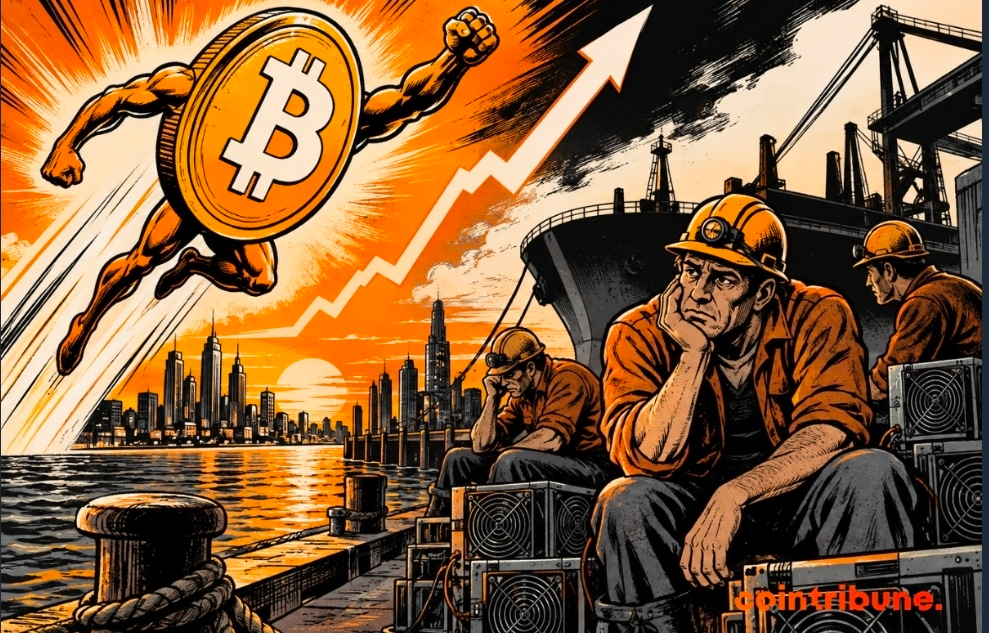
Bitcoin has climbed roughly 22% since August 17, yet most major mining stocks have significantly underperformed $BTC
{spot}(BTCUSDT)
Why the disconnect? 👇
⛏️ Mining economics remain under pressure
⚡ High energy & infrastructure costs
🤖 Many miners are pivoting toward AI/HPC
📊 Investors are increasingly valuing miners as data-center businesses rather than pure Bitcoin plays
The old relationship between BTC price and mining stocks may be changing.
Bitcoin is moving higher — but will miners eventually catch up? 👀
#Bitcoin #BitcoinMining #HUT8 #CryptoNews
🚨 BITCOIN IS RALLYING — BUT BITCOIN MINERS ARE BEING LEFT BEHIND ₿
Bitcoin has climbed roughly 22% since August 17, yet most major mining stocks have significantly underperformed $BTC
Why the disconnect? 👇
⛏️ Mining economics remain under pressure
⚡ High energy & infrastructure costs
🤖 Many miners are pivoting toward AI/HPC
📊 Investors are increasingly valuing miners as data-center businesses rather than pure Bitcoin plays
The old relationship between BTC price and mining stocks may be changing.
Bitcoin is moving higher — but will miners eventually catch up? 👀
#Bitcoin #BitcoinMining #HUT8 #CryptoNews
Bitcoin has climbed roughly 22% since August 17, yet most major mining stocks have significantly underperformed $BTC
Why the disconnect? 👇
⛏️ Mining economics remain under pressure
⚡ High energy & infrastructure costs
🤖 Many miners are pivoting toward AI/HPC
📊 Investors are increasingly valuing miners as data-center businesses rather than pure Bitcoin plays
The old relationship between BTC price and mining stocks may be changing.
Bitcoin is moving higher — but will miners eventually catch up? 👀
#Bitcoin #BitcoinMining #HUT8 #CryptoNews
27

·
--
🔥 Mexico Seizes 300 Crypto Mining Rigs Wired Into a Hydroelectric Dam.
Alongside the rigs, officers took transformers, medium-voltage terminals and working satellite internet antennas from the site in Tlaola, a municipality of roughly 20,000 people. El Pas and Mexico News Daily describe the seized machines as GPUs, which would point away from Bitcoin and toward coins still mined on graphics cards. In Tlaola, a property allegedly used for cryptocurrency mining was secured by @FGRMexico, @SEMAR_mx and the State Public Security of @Gob_Puebla. Electrical infrastructure, satellite internet, and specialized equipment for generating assets were located. Public Security Secretariat (@SSPGobPue) September 6, 2026 While mining is legal in Mexico, prosecutors are preparing a charge of electricity theft.
Mining consumes a great deal of energy and generates a lot of noise, which is why operators seek out isolated and very remote locations. That is what alerted us, state security minister Francisco Snchez told reporters. Investigators had tracked reports of illegal mining in the region because of its proximity to the Nuevo Necaxa dam, he said, adding that, There was a very large power connection. Snchez described the site as part of a network exploiting the Sierra Norte's hydroelectric infrastructure, and said the same activity is happening in neighboring states, with searches extending to nearby municipalities.
❓ What do you think—is this the start of a bigger move or just noise? Drop it below.
$BTC $ETH
#SECryptoRegulation #BitcoinMining #AICryptoIntegration
🔥 Mexico Seizes 300 Crypto Mining Rigs Wired Into a Hydroelectric Dam.
Alongside the rigs, officers took transformers, medium-voltage terminals and working satellite internet antennas from the site in Tlaola, a municipality of roughly 20,000 people. El Pas and Mexico News Daily describe the seized machines as GPUs, which would point away from Bitcoin and toward coins still mined on graphics cards. In Tlaola, a property allegedly used for cryptocurrency mining was secured by @FGRMexico, @SEMAR_mx and the State Public Security of @Gob_Puebla. Electrical infrastructure, satellite internet, and specialized equipment for generating assets were located. Public Security Secretariat (@SSPGobPue) September 6, 2026 While mining is legal in Mexico, prosecutors are preparing a charge of electricity theft.
Mining consumes a great deal of energy and generates a lot of noise, which is why operators seek out isolated and very remote locations. That is what alerted us, state security minister Francisco Snchez told reporters. Investigators had tracked reports of illegal mining in the region because of its proximity to the Nuevo Necaxa dam, he said, adding that, There was a very large power connection. Snchez described the site as part of a network exploiting the Sierra Norte's hydroelectric infrastructure, and said the same activity is happening in neighboring states, with searches extending to nearby municipalities.
❓ What do you think—is this the start of a bigger move or just noise? Drop it below.
$BTC $ETH
#SECryptoRegulation #BitcoinMining #AICryptoIntegration
Alongside the rigs, officers took transformers, medium-voltage terminals and working satellite internet antennas from the site in Tlaola, a municipality of roughly 20,000 people. El Pas and Mexico News Daily describe the seized machines as GPUs, which would point away from Bitcoin and toward coins still mined on graphics cards. In Tlaola, a property allegedly used for cryptocurrency mining was secured by @FGRMexico, @SEMAR_mx and the State Public Security of @Gob_Puebla. Electrical infrastructure, satellite internet, and specialized equipment for generating assets were located. Public Security Secretariat (@SSPGobPue) September 6, 2026 While mining is legal in Mexico, prosecutors are preparing a charge of electricity theft.
Mining consumes a great deal of energy and generates a lot of noise, which is why operators seek out isolated and very remote locations. That is what alerted us, state security minister Francisco Snchez told reporters. Investigators had tracked reports of illegal mining in the region because of its proximity to the Nuevo Necaxa dam, he said, adding that, There was a very large power connection. Snchez described the site as part of a network exploiting the Sierra Norte's hydroelectric infrastructure, and said the same activity is happening in neighboring states, with searches extending to nearby municipalities.
❓ What do you think—is this the start of a bigger move or just noise? Drop it below.
$BTC $ETH
#SECryptoRegulation #BitcoinMining #AICryptoIntegration
35

·
--
🚨 LATEST BITCOIN MINER UPDATE! ⛏️₿
Bitcoin’s Miner Position Index (MPI) has dropped to -1.2, sitting well below its annual average. 📊
According to Bitfinex, this signals subdued selling pressure from Bitcoin miners. 👀
With miners showing less interest in selling, could this be a positive sign for Bitcoin’s next move? 🚀🔥
The market is watching closely! 📈
#Bitcoin #BTC #Crypto #BitcoinMining #$#Bullish
$BTC
🚨 LATEST BITCOIN MINER UPDATE! ⛏️₿
Bitcoin’s Miner Position Index (MPI) has dropped to -1.2, sitting well below its annual average. 📊
According to Bitfinex, this signals subdued selling pressure from Bitcoin miners. 👀
With miners showing less interest in selling, could this be a positive sign for Bitcoin’s next move? 🚀🔥
The market is watching closely! 📈
#Bitcoin #BTC #Crypto #BitcoinMining #$#Bullish
$BTC
Bitcoin’s Miner Position Index (MPI) has dropped to -1.2, sitting well below its annual average. 📊
According to Bitfinex, this signals subdued selling pressure from Bitcoin miners. 👀
With miners showing less interest in selling, could this be a positive sign for Bitcoin’s next move? 🚀🔥
The market is watching closely! 📈
#Bitcoin #BTC #Crypto #BitcoinMining #$#Bullish
$BTC

46

📉 Hyperscale Data company halts Bitcoin mining in Michigan
Hyperscale Data announced the end of its Bitcoin mining operations at its facilities in the state of Michigan. The decision comes as the company shifts its investment focus and capital toward developing a dedicated artificial intelligence data center in the same state. The company’s Bitcoin holdings have fallen by about 79% since late July.
━━━━━━━━━━━━━━
📊 Impact: 📈 High
🏷️ BITCOIN
#BitcoinMining #HyperscaleData #AI #CryptoNews #Blockchain
📰 Source: cointelegraph.com
📉 Hyperscale Data company halts Bitcoin mining in Michigan
Hyperscale Data announced the end of its Bitcoin mining operations at its facilities in the state of Michigan. The decision comes as the company shifts its investment focus and capital toward developing a dedicated artificial intelligence data center in the same state. The company’s Bitcoin holdings have fallen by about 79% since late July.
━━━━━━━━━━━━━━
📊 Impact: 📈 High
🏷️ BITCOIN
#BitcoinMining #HyperscaleData #AI #CryptoNews #Blockchain
📰 Source: cointelegraph.com
Hyperscale Data announced the end of its Bitcoin mining operations at its facilities in the state of Michigan. The decision comes as the company shifts its investment focus and capital toward developing a dedicated artificial intelligence data center in the same state. The company’s Bitcoin holdings have fallen by about 79% since late July.
━━━━━━━━━━━━━━
📊 Impact: 📈 High
🏷️ BITCOIN
#BitcoinMining #HyperscaleData #AI #CryptoNews #Blockchain
📰 Source: cointelegraph.com
13
⛏️ Bitcoin mining company moves toward artificial intelligence with massive contracts
A bitcoin mining company has redirected its facilities to host artificial intelligence operations, as part of an agreement that could exceed $1.2 billion, with the potential to generate even greater revenue through capacity expansion options. This shift points to growing interest in combining digital asset mining infrastructure with the computing demands of artificial intelligence.
━━━━━━━━━━━━━━
📊 Impact: 📈 High
🏷️ OTHER
#BitcoinMining #ArtificialIntelligence #DataCenters #Blockchain #Tech
📰 Source: decrypt.co
⛏️ Bitcoin mining company moves toward artificial intelligence with massive contracts
A bitcoin mining company has redirected its facilities to host artificial intelligence operations, as part of an agreement that could exceed $1.2 billion, with the potential to generate even greater revenue through capacity expansion options. This shift points to growing interest in combining digital asset mining infrastructure with the computing demands of artificial intelligence.
━━━━━━━━━━━━━━
📊 Impact: 📈 High
🏷️ OTHER
#BitcoinMining #ArtificialIntelligence #DataCenters #Blockchain #Tech
📰 Source: decrypt.co
A bitcoin mining company has redirected its facilities to host artificial intelligence operations, as part of an agreement that could exceed $1.2 billion, with the potential to generate even greater revenue through capacity expansion options. This shift points to growing interest in combining digital asset mining infrastructure with the computing demands of artificial intelligence.
━━━━━━━━━━━━━━
📊 Impact: 📈 High
🏷️ OTHER
#BitcoinMining #ArtificialIntelligence #DataCenters #Blockchain #Tech
📰 Source: decrypt.co
3
·
--
Verified
🔥 Bitcoin Miner Ditches Site for AI Deal That Could Top $1.2 Billion.
Image: Shutterstock/DecryptCreate an account to save your articles.Add on GoogleAdd Decrypt as your preferred source to see more of our stories on Google.In brief Hyperscale Data stopped Bitcoin mining at its Michigan data center on September 1. The AI agreement could generate more than $1.2 billion over 20 years if the customer exercises both extensions. The company plans to sell its mining servers as it prepares the facility for AI operations.
Hyperscale Data shut down Bitcoin mining operations at its Michigan data center on Tuesday to make room for an AI customer whose contract could generate more than $1.2 billion over 20 years, the company said. In an announcement on Wednesday, Hyperscale said the previously announced deal could generate more than $1.2 billion if the customer exercises both five-year extensions to the initial 10-year term. The agreement covers 20 megawatts of capacity for an unnamed California-based provider of cloud computing services for AI.
❓ What's your take is this the start of a bigger move or just noise? Drop it below.
$BTC $ETH
#BitcoinMining #AICryptoIntegration #CryptoMarkets
🔥 Bitcoin Miner Ditches Site for AI Deal That Could Top $1.2 Billion.
Image: Shutterstock/DecryptCreate an account to save your articles.Add on GoogleAdd Decrypt as your preferred source to see more of our stories on Google.In brief Hyperscale Data stopped Bitcoin mining at its Michigan data center on September 1. The AI agreement could generate more than $1.2 billion over 20 years if the customer exercises both extensions. The company plans to sell its mining servers as it prepares the facility for AI operations.
Hyperscale Data shut down Bitcoin mining operations at its Michigan data center on Tuesday to make room for an AI customer whose contract could generate more than $1.2 billion over 20 years, the company said. In an announcement on Wednesday, Hyperscale said the previously announced deal could generate more than $1.2 billion if the customer exercises both five-year extensions to the initial 10-year term. The agreement covers 20 megawatts of capacity for an unnamed California-based provider of cloud computing services for AI.
❓ What's your take is this the start of a bigger move or just noise? Drop it below.
$BTC $ETH
#BitcoinMining #AICryptoIntegration #CryptoMarkets
Image: Shutterstock/DecryptCreate an account to save your articles.Add on GoogleAdd Decrypt as your preferred source to see more of our stories on Google.In brief Hyperscale Data stopped Bitcoin mining at its Michigan data center on September 1. The AI agreement could generate more than $1.2 billion over 20 years if the customer exercises both extensions. The company plans to sell its mining servers as it prepares the facility for AI operations.
Hyperscale Data shut down Bitcoin mining operations at its Michigan data center on Tuesday to make room for an AI customer whose contract could generate more than $1.2 billion over 20 years, the company said. In an announcement on Wednesday, Hyperscale said the previously announced deal could generate more than $1.2 billion if the customer exercises both five-year extensions to the initial 10-year term. The agreement covers 20 megawatts of capacity for an unnamed California-based provider of cloud computing services for AI.
❓ What's your take is this the start of a bigger move or just noise? Drop it below.
$BTC $ETH
#BitcoinMining #AICryptoIntegration #CryptoMarkets
48
·
--

Article
AI isn’t replacing Bitcoin mining — it’s changing where it happensThe claim that artificial intelligence is simply “pushing out” Bitcoin mining from the market needs an important correction.
Haipo Yang, CEO of ViaBTC, explained in an analysis published in August that the real conflict between AI and mining is mainly in the resources behind the machines: electricity, land, capital, chip capacity, and data center infrastructure.
The movement is already reflected in the numbers. Bitcoin’s hashrate reached above 1.1 ZH/s in October 2025 and subsequently fell back to levels close to or below 900 EH/s at some points in 2026. Difficulty also underwent strong negative adjustments, including drops of 11.16% in February and 10.09% in June.
AI isn’t replacing Bitcoin mining — it’s changing where it happens
The claim that artificial intelligence is simply “pushing out” Bitcoin mining from the market needs an important correction.
Haipo Yang, CEO of ViaBTC, explained in an analysis published in August that the real conflict between AI and mining is mainly in the resources behind the machines: electricity, land, capital, chip capacity, and data center infrastructure.
The movement is already reflected in the numbers. Bitcoin’s hashrate reached above 1.1 ZH/s in October 2025 and subsequently fell back to levels close to or below 900 EH/s at some points in 2026. Difficulty also underwent strong negative adjustments, including drops of 11.16% in February and 10.09% in June.
Haipo Yang, CEO of ViaBTC, explained in an analysis published in August that the real conflict between AI and mining is mainly in the resources behind the machines: electricity, land, capital, chip capacity, and data center infrastructure.
The movement is already reflected in the numbers. Bitcoin’s hashrate reached above 1.1 ZH/s in October 2025 and subsequently fell back to levels close to or below 900 EH/s at some points in 2026. Difficulty also underwent strong negative adjustments, including drops of 11.16% in February and 10.09% in June.
2
181

·
--
Water is more precious than ore! The mining frenzy in the U.S. Southwest directly crashes into the red line on water resources. The law may grant you mining rights, but the sky won’t give you water—there’s a gulf of ten thousand and eight thousand miles between paper rights and real water supply.
Don’t think this is just trouble for lithium and copper mines. Big miners can’t escape it either. In places like Texas and Arizona, where mining sites are clustered, machine cooling and power generation all rely on burning water. Once water gets tight, mining costs instantly soar.
My judgment is straightforward: going forward, mining won’t be just about power prices—it will also be about water. Only mining companies that implement water-saving solutions like immersion liquid cooling, waste-heat recovery, and using flare gas will have the last laugh. Loose, extensive mining will eventually be shuffled out.
In the short term, $BTC’s hash rate may see a wave of migration-related volatility, but in the long run, the survival of the fittest among miners will make the network healthier instead. In the next cycle, green, low-cost mining will be the way to go.
$BTC #BitcoinMining #CryptoMining
Water is more precious than ore! The mining frenzy in the U.S. Southwest directly crashes into the red line on water resources. The law may grant you mining rights, but the sky won’t give you water—there’s a gulf of ten thousand and eight thousand miles between paper rights and real water supply.
Don’t think this is just trouble for lithium and copper mines. Big miners can’t escape it either. In places like Texas and Arizona, where mining sites are clustered, machine cooling and power generation all rely on burning water. Once water gets tight, mining costs instantly soar.
My judgment is straightforward: going forward, mining won’t be just about power prices—it will also be about water. Only mining companies that implement water-saving solutions like immersion liquid cooling, waste-heat recovery, and using flare gas will have the last laugh. Loose, extensive mining will eventually be shuffled out.
In the short term, $BTC ’s hash rate may see a wave of migration-related volatility, but in the long run, the survival of the fittest among miners will make the network healthier instead. In the next cycle, green, low-cost mining will be the way to go.
$BTC #BitcoinMining #CryptoMining
Don’t think this is just trouble for lithium and copper mines. Big miners can’t escape it either. In places like Texas and Arizona, where mining sites are clustered, machine cooling and power generation all rely on burning water. Once water gets tight, mining costs instantly soar.
My judgment is straightforward: going forward, mining won’t be just about power prices—it will also be about water. Only mining companies that implement water-saving solutions like immersion liquid cooling, waste-heat recovery, and using flare gas will have the last laugh. Loose, extensive mining will eventually be shuffled out.
In the short term, $BTC ’s hash rate may see a wave of migration-related volatility, but in the long run, the survival of the fittest among miners will make the network healthier instead. In the next cycle, green, low-cost mining will be the way to go.
$BTC #BitcoinMining #CryptoMining
53
Bitcoin Hashrate Faces Massive Shift Toward AI
Bitcoin enters its first hashrate bear market as miners pivot computational power toward AI workloads.
#BitcoinMining #AICompute
Bitcoin Hashrate Faces Massive Shift Toward AI
Bitcoin enters its first hashrate bear market as miners pivot computational power toward AI workloads.
#BitcoinMining #AICompute
Bitcoin enters its first hashrate bear market as miners pivot computational power toward AI workloads.
#BitcoinMining #AICompute
1
21

·
--
Miners → AI Pivot (institutional/ticker style) — BULLISH narrative
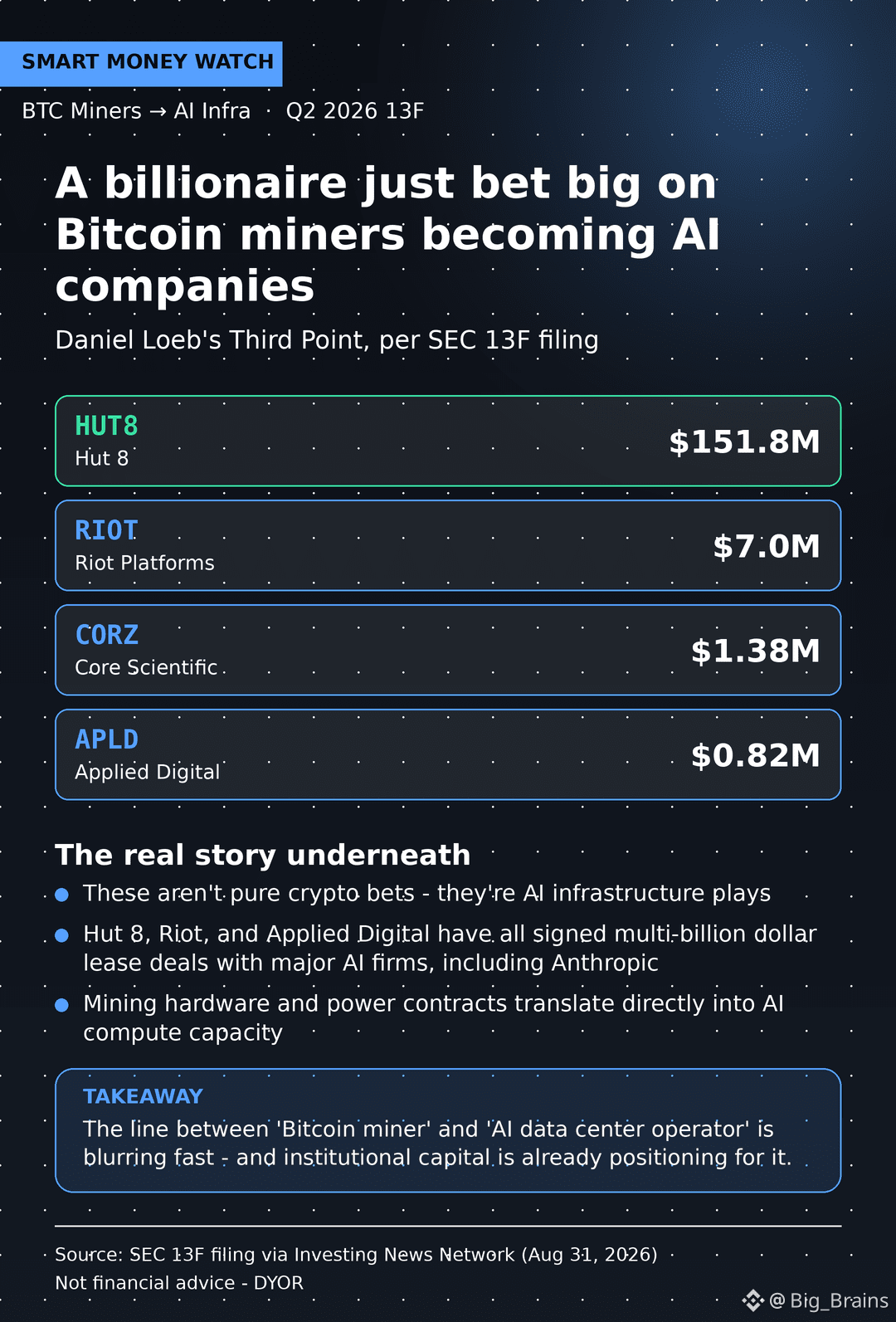
Billionaire Daniel Loeb just loaded up on Bitcoin miners — but it's really an AI infrastructure bet. Hut 8, Riot, Applied Digital all have multi-billion dollar AI lease deals. The line between "miner" and "AI data center" is disappearing.
#BitcoinMining #Aİ #HUT8 #SmartMoney #BinanceSquare
Miners → AI Pivot (institutional/ticker style) — BULLISH narrative
Billionaire Daniel Loeb just loaded up on Bitcoin miners — but it's really an AI infrastructure bet. Hut 8, Riot, Applied Digital all have multi-billion dollar AI lease deals. The line between "miner" and "AI data center" is disappearing.
#BitcoinMining #Aİ #HUT8 #SmartMoney #BinanceSquare
Billionaire Daniel Loeb just loaded up on Bitcoin miners — but it's really an AI infrastructure bet. Hut 8, Riot, Applied Digital all have multi-billion dollar AI lease deals. The line between "miner" and "AI data center" is disappearing.
#BitcoinMining #Aİ #HUT8 #SmartMoney #BinanceSquare
34
Log in to explore more content
Join global crypto users on Binance Square
⚡️ Get latest and useful information about crypto.
💬 Trusted by the world’s largest crypto exchange.
👍 Discover real insights from verified creators.
Email / Phone number
Trending Topics
1
#MemeLaunchpads82%OfArcDayOneVolume
476 views
63 Discussing
2
#OstiumLoanDisputeHearingSetInNYFederalCourt
2,477 views
90 Discussing
3
#SKPoliceRefer18PolymarketUsersToProsecutors
3,544 views
158 Discussing
4
#FedSEPProjects2026RateAt4.1%
8,237 views
228 Discussing
5
#USHouseAdvancesBitcoinReserveBill
5,646 views
179 Discussing
6
#AmazonGetsWarrantsToBuyGeneracStock
6,344 views
190 Discussing
7
#DotPlotSignalsOneMoreHikeIn2026
27,744 views
552 Discussing
8
#RobinhoodToSupportCircleArcNetwork
9,257 views
197 Discussing
9
#FedHikes25BpsUSStocksClose
40,267 views
466 Discussing
10
#AaveToLaunchRWAMarketOnAvalanche
9,153 views
197 Discussing