
#btcusdt
btcusdt
13.8M views
25,579 Discussing
Hot
Latest

·
--
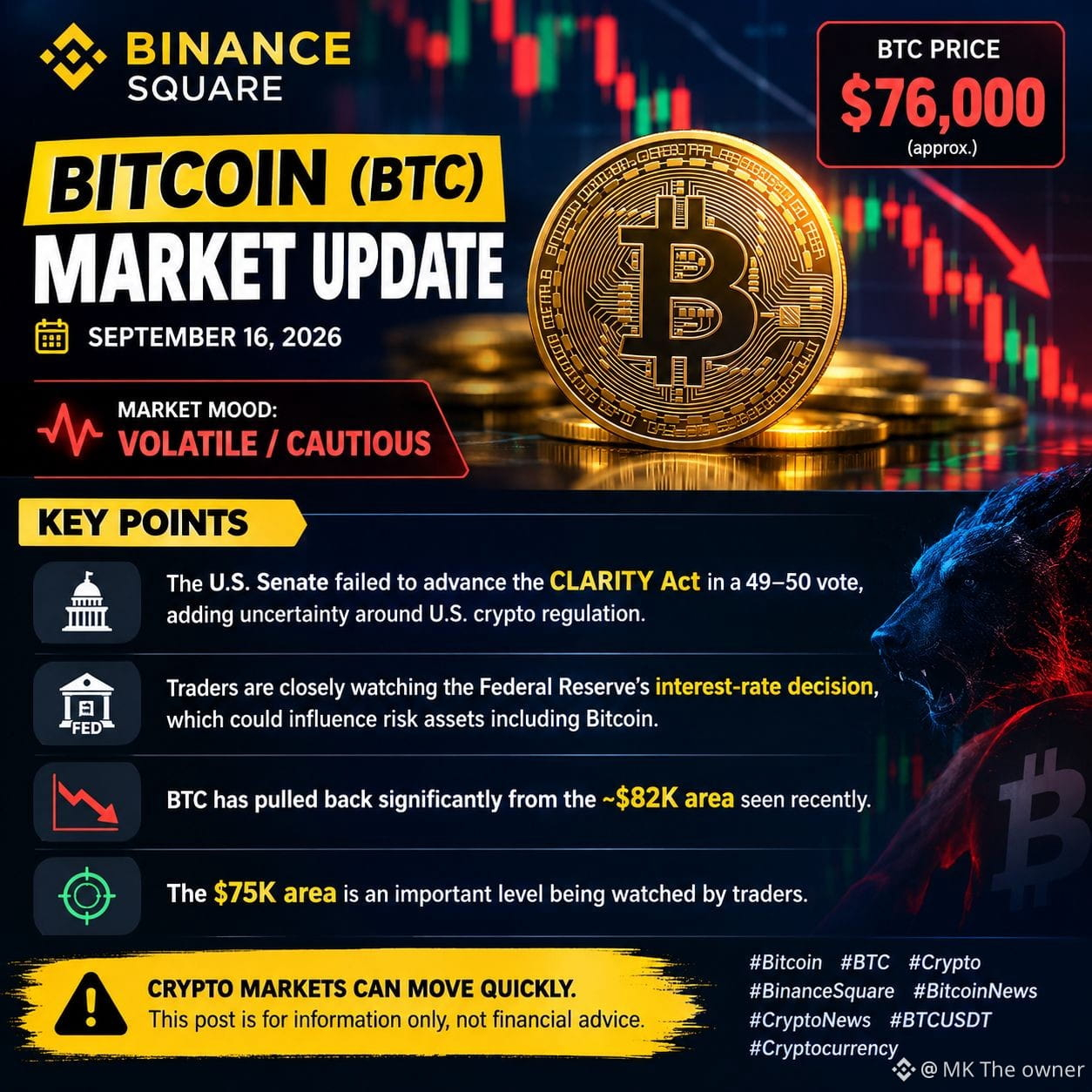
🟠 BITCOIN (BTC) MARKET UPDATE — SEPTEMBER 16, 2026
Bitcoin is facing increased volatility today as the crypto market reacts to developments around U.S. crypto regulation and expectations for the Federal Reserve’s upcoming interest-rate decision.
📉 BTC Price: Around $76K
📊 Market mood: Volatile / cautious
🔎 Key points:
• The U.S. Senate failed to advance the CLARITY Act in a 49–50 vote, adding uncertainty around U.S. crypto regulation.
• Traders are closely watching the Federal Reserve’s interest-rate decision, which could influence risk assets including Bitcoin.
• BTC has pulled back significantly from the ~$82K area seen recently.
• The $75K area is an important level being watched by traders.
⚠️ Crypto markets can move quickly. This post is for information only, not financial advice.
#Bitcoin #BTC #Crypto #BinanceSquare #BitcoinNews #CryptoNews #BTCUSDT
🟠 BITCOIN (BTC) MARKET UPDATE — SEPTEMBER 16, 2026
Bitcoin is facing increased volatility today as the crypto market reacts to developments around U.S. crypto regulation and expectations for the Federal Reserve’s upcoming interest-rate decision.
📉 BTC Price: Around $76K
📊 Market mood: Volatile / cautious
🔎 Key points:
• The U.S. Senate failed to advance the CLARITY Act in a 49–50 vote, adding uncertainty around U.S. crypto regulation.
• Traders are closely watching the Federal Reserve’s interest-rate decision, which could influence risk assets including Bitcoin.
• BTC has pulled back significantly from the ~$82K area seen recently.
• The $75K area is an important level being watched by traders.
⚠️ Crypto markets can move quickly. This post is for information only, not financial advice.
#Bitcoin #BTC #Crypto #BinanceSquare #BitcoinNews #CryptoNews #BTCUSDT
Bitcoin is facing increased volatility today as the crypto market reacts to developments around U.S. crypto regulation and expectations for the Federal Reserve’s upcoming interest-rate decision.
📉 BTC Price: Around $76K
📊 Market mood: Volatile / cautious
🔎 Key points:
• The U.S. Senate failed to advance the CLARITY Act in a 49–50 vote, adding uncertainty around U.S. crypto regulation.
• Traders are closely watching the Federal Reserve’s interest-rate decision, which could influence risk assets including Bitcoin.
• BTC has pulled back significantly from the ~$82K area seen recently.
• The $75K area is an important level being watched by traders.
⚠️ Crypto markets can move quickly. This post is for information only, not financial advice.
#Bitcoin #BTC #Crypto #BinanceSquare #BitcoinNews #CryptoNews #BTCUSDT
AngelOfCrypto_-:
nice
2
1
285

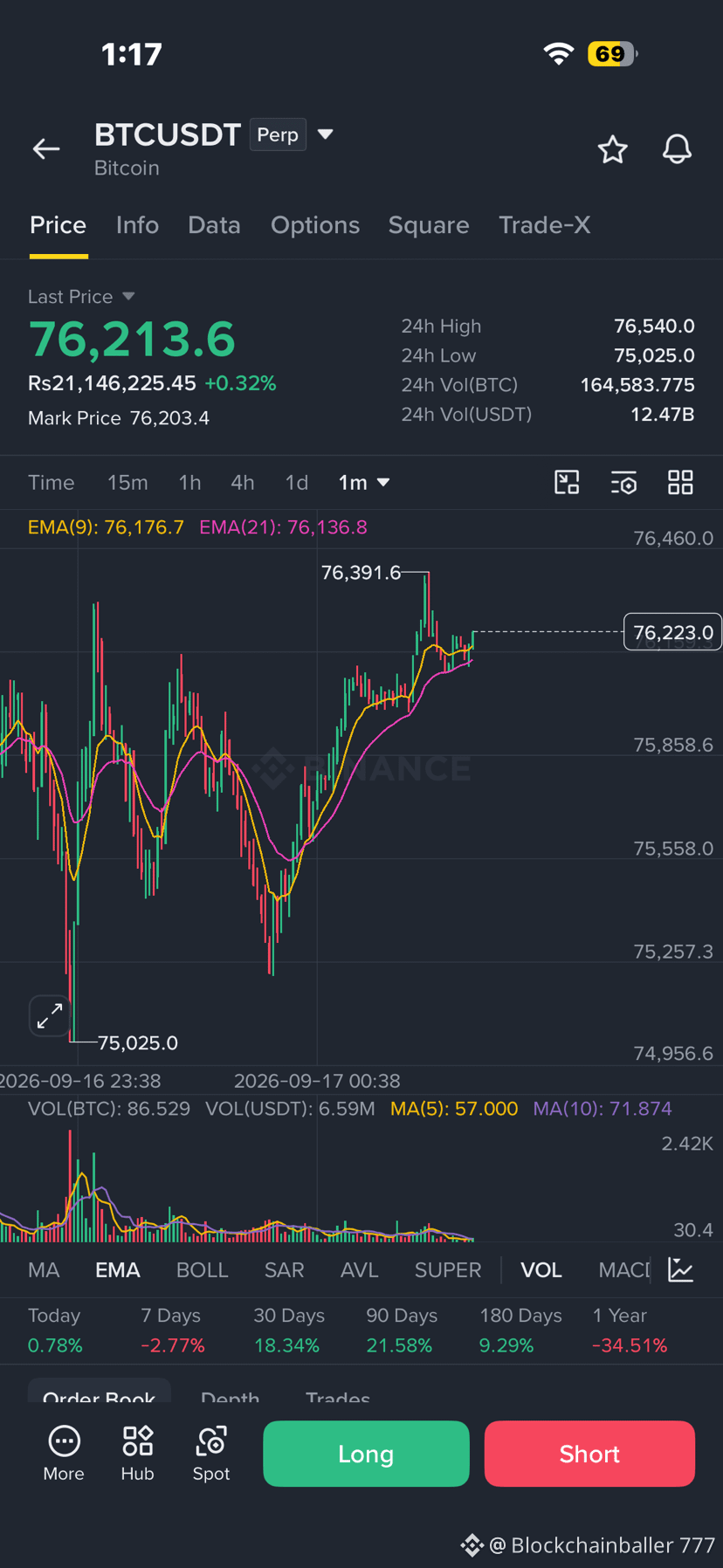
🚨🚀 $BTC BULLS ARE ABOUT TO WAKE UP! $76,213 LONG NOW! 🔥📈
Everyone waiting for the perfect entry… THIS IS THE ZONE I’M WATCHING! 👀
🎯 Entry: $76,213
🎯 TP1: $76,800
🎯 TP2: $77,500
🎯 TP3: $78,300
🛑 SL: $75,500
💥 If BTC reclaims momentum, this move could accelerate FAST!
Who’s riding this with me? 👇🔥
#BTC #Bitcoin #BTCUSDT #Crypto #Binance
{future}(BTCUSDT)
{future}(SOLUSDT)
{future}(ETHUSDT)
🚨🚀 $BTC BULLS ARE ABOUT TO WAKE UP! $76,213 LONG NOW! 🔥📈
Everyone waiting for the perfect entry… THIS IS THE ZONE I’M WATCHING! 👀
🎯 Entry: $76,213
🎯 TP1: $76,800
🎯 TP2: $77,500
🎯 TP3: $78,300
🛑 SL: $75,500
💥 If BTC reclaims momentum, this move could accelerate FAST!
Who’s riding this with me? 👇🔥
#BTC #Bitcoin #BTCUSDT #Crypto #Binance
Everyone waiting for the perfect entry… THIS IS THE ZONE I’M WATCHING! 👀
🎯 Entry: $76,213
🎯 TP1: $76,800
🎯 TP2: $77,500
🎯 TP3: $78,300
🛑 SL: $75,500
💥 If BTC reclaims momentum, this move could accelerate FAST!
Who’s riding this with me? 👇🔥
#BTC #Bitcoin #BTCUSDT #Crypto #Binance
1
1
123
🚨 $BTC JUST GAVE THE SHORTS A MASTERCLASS! 🔥📉
Patience + confirmation + execution. That’s the game. 🎯
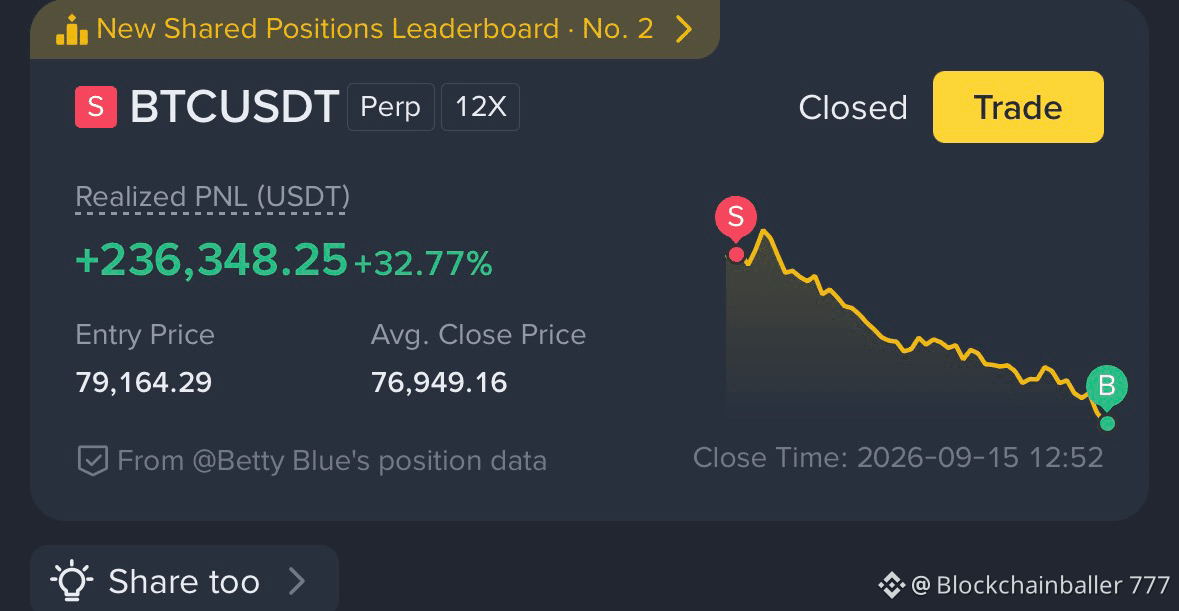
💥 BTCUSDT PERP — SHORT CLOSED
⚡ Leverage: 12X
🎯 Entry: $79,164.29
🏁 Avg Close: $76,949.16
💰 PNL: +$236,348.25
📈 +32.77%
BTC rejected the $79K resistance zone and delivered a clean move lower. 👀
The big question now:
🟢 Bounce from here?
🔴 Or another leg down?
👇 What’s your BTC plan right now — LONG or SHORT?
#BTC #Bitcoin #CryptoTrading #BTCUSDT #Trading
{future}(BTCUSDT)
{future}(SOLUSDT)
{future}(ZECUSDT)
🚨 $BTC JUST GAVE THE SHORTS A MASTERCLASS! 🔥📉
Patience + confirmation + execution. That’s the game. 🎯
💥 BTCUSDT PERP — SHORT CLOSED
⚡ Leverage: 12X
🎯 Entry: $79,164.29
🏁 Avg Close: $76,949.16
💰 PNL: +$236,348.25
📈 +32.77%
BTC rejected the $79K resistance zone and delivered a clean move lower. 👀
The big question now:
🟢 Bounce from here?
🔴 Or another leg down?
👇 What’s your BTC plan right now — LONG or SHORT?
#BTC #Bitcoin #CryptoTrading #BTCUSDT #Trading
Patience + confirmation + execution. That’s the game. 🎯
💥 BTCUSDT PERP — SHORT CLOSED
⚡ Leverage: 12X
🎯 Entry: $79,164.29
🏁 Avg Close: $76,949.16
💰 PNL: +$236,348.25
📈 +32.77%
BTC rejected the $79K resistance zone and delivered a clean move lower. 👀
The big question now:
🟢 Bounce from here?
🔴 Or another leg down?
👇 What’s your BTC plan right now — LONG or SHORT?
#BTC #Bitcoin #CryptoTrading #BTCUSDT #Trading
1
1
308
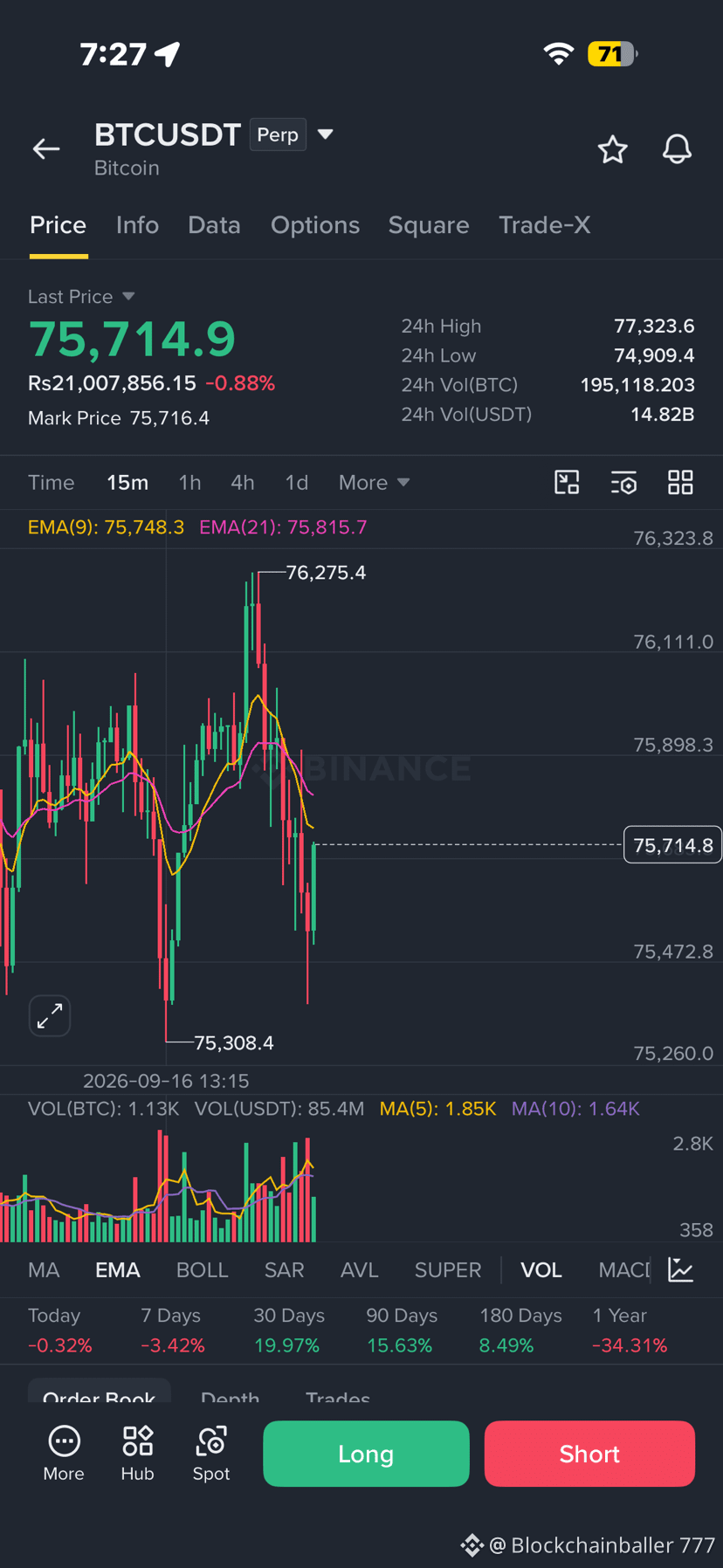
🚨 $BTC LONG NOW 🚨
$BTC 75,700 🔥
Bulls are defending this zone — I’m watching for a strong bounce and upside continuation. 📈💥
🎯 TP1: 76,500
🎯 TP2: 77,300
🎯 TP3: 78,500+
🛑 SL: 74,900
Big pump setup if support holds! 🚀
Who’s LONG with me? 👀👇
#BTC #Bitcoin #Crypto #BTCUSDT #CryptoTrading
{future}(SOLUSDT)
{future}(ETHUSDT)
{future}(BTCUSDT)
🚨 $BTC LONG NOW 🚨
$BTC 75,700 🔥
Bulls are defending this zone — I’m watching for a strong bounce and upside continuation. 📈💥
🎯 TP1: 76,500
🎯 TP2: 77,300
🎯 TP3: 78,500+
🛑 SL: 74,900
Big pump setup if support holds! 🚀
Who’s LONG with me? 👀👇
#BTC #Bitcoin #Crypto #BTCUSDT #CryptoTrading
$BTC 75,700 🔥
Bulls are defending this zone — I’m watching for a strong bounce and upside continuation. 📈💥
🎯 TP1: 76,500
🎯 TP2: 77,300
🎯 TP3: 78,500+
🛑 SL: 74,900
Big pump setup if support holds! 🚀
Who’s LONG with me? 👀👇
#BTC #Bitcoin #Crypto #BTCUSDT #CryptoTrading
1
2
114

·
--
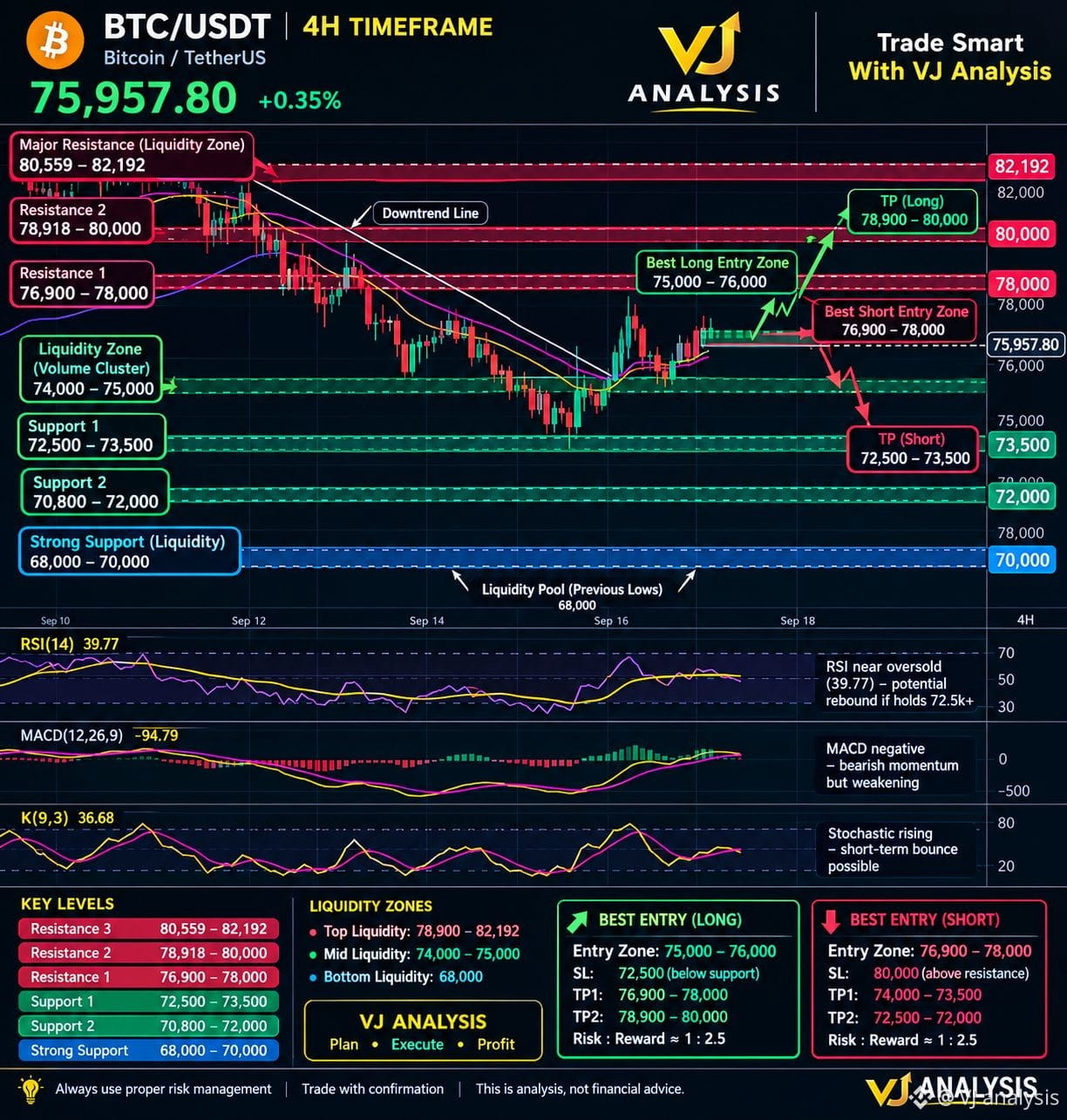
🚨 #BTC☀️ — STEP-BY-STEP DECISION TREE 🚨
1. Check the entry zone
- If #BTCUSDT reaches "$75,000–$76,000" and holds support, enter LONG.
- Set LONG SL at "$72,500".
- Size the position so that a stop-out risks only a small, predefined percentage of your account; calculate size from the distance to the stop rather than using a fixed dollar amount.
2. Manage the LONG#BTC
- At "$76,900–$78,000", take LONG TP1.
- At "$78,900–$80,000", take LONG TP2.
- Before entering, confirm that the potential reward to each target justifies the risk to "$72,500"; skip the trade if the risk-to-reward ratio is unattractive.
- Do not open a SHORT while the LONG remains active.
3. Check for reversal#BTC
- After BTC reaches "$76,900–$78,000", watch for rejection and confirmation.
- If rejection is confirmed, close or secure the LONG and consider a SHORT.
- Set SHORT SL at "$80,000".
- Size the SHORT so the loss at the stop remains within your predefined risk limit, and enter only if the projected move toward the target offers a reasonable risk-to-reward ratio.
4. Manage the SHORT#BTC
- Target "$74,000–$73,500".
- Enter only after confirmed rejection from "$76,900–$78,000"; do not short the zone automatically.
- Consider reducing risk or taking partial profits as price approaches the target, and avoid increasing size to recover losses.
Decision flow: #BTC
- "$75K–$76K" holds → Enter LONG
- "$76.9K–$78K" reached → Take LONG TP1; watch for rejection
- Rejection confirmed → Consider SHORT
- "$78.9K–$80K" reached → Take LONG TP2
- No confirmation → Do not enter or reverse
📌 Trade confirmation, not just the zone. Use disciplined position sizing and take trades only when the potential reward justifies the defined risk. These levels are for educational purposes only and are not financial advice; markets can move unpredictably, so make independent decisions and manage risk accordingly.
🚨 #BTC☀️ — STEP-BY-STEP DECISION TREE 🚨
1. Check the entry zone
- If #BTCUSDT reaches "$75,000–$76,000" and holds support, enter LONG.
- Set LONG SL at "$72,500".
- Size the position so that a stop-out risks only a small, predefined percentage of your account; calculate size from the distance to the stop rather than using a fixed dollar amount.
2. Manage the LONG#BTC
- At "$76,900–$78,000", take LONG TP1.
- At "$78,900–$80,000", take LONG TP2.
- Before entering, confirm that the potential reward to each target justifies the risk to "$72,500"; skip the trade if the risk-to-reward ratio is unattractive.
- Do not open a SHORT while the LONG remains active.
3. Check for reversal#BTC
- After BTC reaches "$76,900–$78,000", watch for rejection and confirmation.
- If rejection is confirmed, close or secure the LONG and consider a SHORT.
- Set SHORT SL at "$80,000".
- Size the SHORT so the loss at the stop remains within your predefined risk limit, and enter only if the projected move toward the target offers a reasonable risk-to-reward ratio.
4. Manage the SHORT#BTC
- Target "$74,000–$73,500".
- Enter only after confirmed rejection from "$76,900–$78,000"; do not short the zone automatically.
- Consider reducing risk or taking partial profits as price approaches the target, and avoid increasing size to recover losses.
Decision flow: #BTC
- "$75K–$76K" holds → Enter LONG
- "$76.9K–$78K" reached → Take LONG TP1; watch for rejection
- Rejection confirmed → Consider SHORT
- "$78.9K–$80K" reached → Take LONG TP2
- No confirmation → Do not enter or reverse
📌 Trade confirmation, not just the zone. Use disciplined position sizing and take trades only when the potential reward justifies the defined risk. These levels are for educational purposes only and are not financial advice; markets can move unpredictably, so make independent decisions and manage risk accordingly.
1. Check the entry zone
- If #BTCUSDT reaches "$75,000–$76,000" and holds support, enter LONG.
- Set LONG SL at "$72,500".
- Size the position so that a stop-out risks only a small, predefined percentage of your account; calculate size from the distance to the stop rather than using a fixed dollar amount.
2. Manage the LONG#BTC
- At "$76,900–$78,000", take LONG TP1.
- At "$78,900–$80,000", take LONG TP2.
- Before entering, confirm that the potential reward to each target justifies the risk to "$72,500"; skip the trade if the risk-to-reward ratio is unattractive.
- Do not open a SHORT while the LONG remains active.
3. Check for reversal#BTC
- After BTC reaches "$76,900–$78,000", watch for rejection and confirmation.
- If rejection is confirmed, close or secure the LONG and consider a SHORT.
- Set SHORT SL at "$80,000".
- Size the SHORT so the loss at the stop remains within your predefined risk limit, and enter only if the projected move toward the target offers a reasonable risk-to-reward ratio.
4. Manage the SHORT#BTC
- Target "$74,000–$73,500".
- Enter only after confirmed rejection from "$76,900–$78,000"; do not short the zone automatically.
- Consider reducing risk or taking partial profits as price approaches the target, and avoid increasing size to recover losses.
Decision flow: #BTC
- "$75K–$76K" holds → Enter LONG
- "$76.9K–$78K" reached → Take LONG TP1; watch for rejection
- Rejection confirmed → Consider SHORT
- "$78.9K–$80K" reached → Take LONG TP2
- No confirmation → Do not enter or reverse
📌 Trade confirmation, not just the zone. Use disciplined position sizing and take trades only when the potential reward justifies the defined risk. These levels are for educational purposes only and are not financial advice; markets can move unpredictably, so make independent decisions and manage risk accordingly.
37

$BTC — Bitcoin faces uncertainty after Clarity Act bill rejection in Senate 🔔
{future}(BTCUSDT)
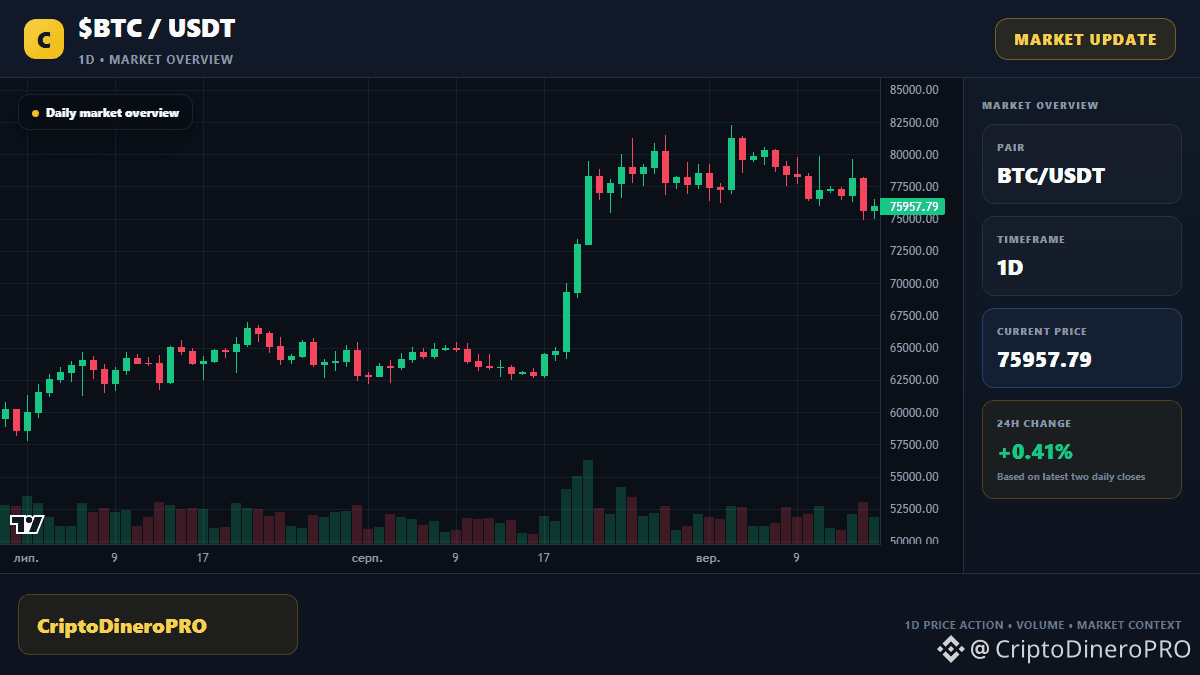
The US Senate voted 49-50 on September 15 to block debate on the Digital Asset Market Clarity Act, falling well short of the 60 votes needed to advance the bill. Bitcoin slid toward $76,000 on the news, a nearly 3% drop, while Ether fell roughly 5% and XRP cratered 10%.
#BTC #BTCUSDT #CryptoNews
$BTC — Bitcoin faces uncertainty after Clarity Act bill rejection in Senate 🔔
The US Senate voted 49-50 on September 15 to block debate on the Digital Asset Market Clarity Act, falling well short of the 60 votes needed to advance the bill. Bitcoin slid toward $76,000 on the news, a nearly 3% drop, while Ether fell roughly 5% and XRP cratered 10%.
#BTC #BTCUSDT #CryptoNews
The US Senate voted 49-50 on September 15 to block debate on the Digital Asset Market Clarity Act, falling well short of the 60 votes needed to advance the bill. Bitcoin slid toward $76,000 on the news, a nearly 3% drop, while Ether fell roughly 5% and XRP cratered 10%.
#BTC #BTCUSDT #CryptoNews
74
$BTC — Bitcoin, Ethereum, XRPHit by CLARITY Act 'Setback,' Fed Hike: What's Next? 🔔
{future}(BTCUSDT)
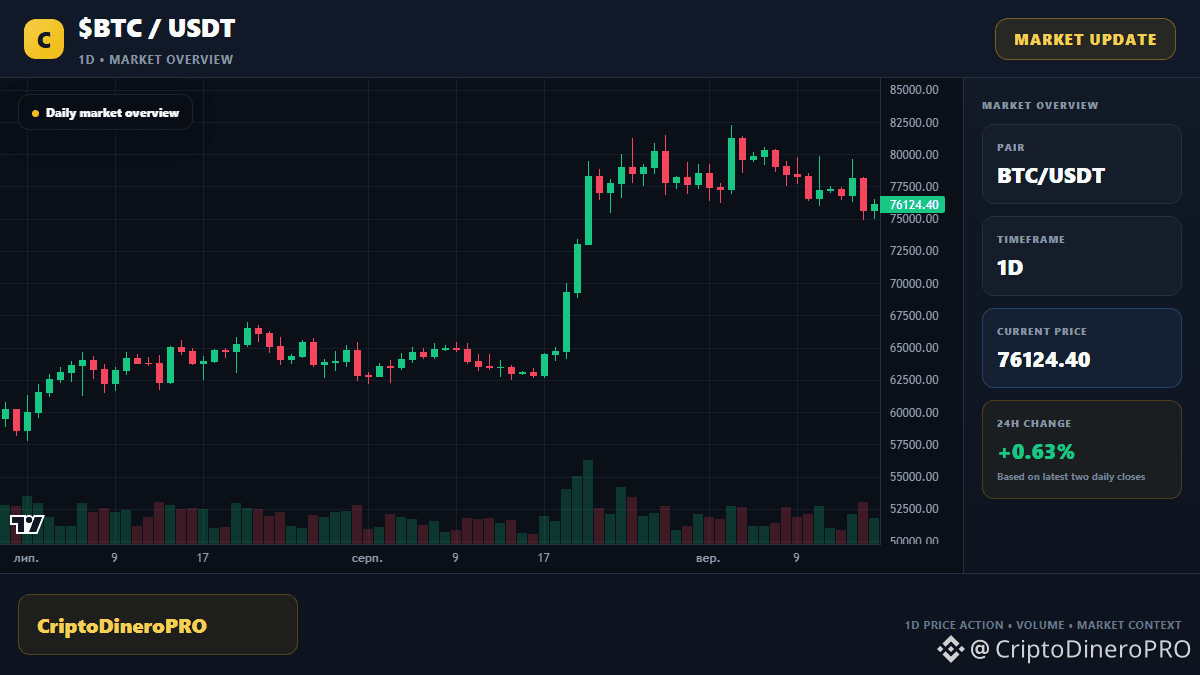
Bitcoin (CRYPTO: BTC) dropped below $76,000 as Ethereum (CRYPTO: ETH), Solana (CRYPTO: SOL) and Dogecoin (CRYPTO: DOGE) and XRP (CRYPTO: XRP) struggle to hold key levels after the Senate failed to advance the CLARITY. Cryptocurrency market analyst Ray Salmond said that the legislative “setback” is unlikely to derail crypto’s broader growth and adoption.
#BTC #BTCUSDT #CryptoNews
$BTC — Bitcoin, Ethereum, XRPHit by CLARITY Act 'Setback,' Fed Hike: What's Next? 🔔
Bitcoin (CRYPTO: BTC) dropped below $76,000 as Ethereum (CRYPTO: ETH), Solana (CRYPTO: SOL) and Dogecoin (CRYPTO: DOGE) and XRP (CRYPTO: XRP) struggle to hold key levels after the Senate failed to advance the CLARITY. Cryptocurrency market analyst Ray Salmond said that the legislative “setback” is unlikely to derail crypto’s broader growth and adoption.
#BTC #BTCUSDT #CryptoNews
Bitcoin (CRYPTO: BTC) dropped below $76,000 as Ethereum (CRYPTO: ETH), Solana (CRYPTO: SOL) and Dogecoin (CRYPTO: DOGE) and XRP (CRYPTO: XRP) struggle to hold key levels after the Senate failed to advance the CLARITY. Cryptocurrency market analyst Ray Salmond said that the legislative “setback” is unlikely to derail crypto’s broader growth and adoption.
#BTC #BTCUSDT #CryptoNews
88

·
--
Bearish
🚨 $BTC BREAKOUT ALERT: 4%+ Move Possible! 🚨
$BTC is testing $76K support after a sharp selloff. A clean breakdown could open $72K–$73K.
📉 THE TRADE:
• Entry: $74,950 – $75,150
• TP1: $74,000 🎯
• TP2: $72,900 🎯
• SL: $76,150 (4H close)
🧠 Don’t chase the wick—wait for the pullback. Invalidate above $76,150.
👇 Shorting the breakdown or waiting for the pullback?
$BTC #Bitcoin #CryptoSignals #BTCUSDT
🚨 $BTC BREAKOUT ALERT: 4%+ Move Possible! 🚨
$BTC is testing $76K support after a sharp selloff. A clean breakdown could open $72K–$73K.
📉 THE TRADE:
• Entry: $74,950 – $75,150
• TP1: $74,000 🎯
• TP2: $72,900 🎯
• SL: $76,150 (4H close)
🧠 Don’t chase the wick—wait for the pullback. Invalidate above $76,150.
👇 Shorting the breakdown or waiting for the pullback?
$BTC #Bitcoin #CryptoSignals #BTCUSDT
$BTC is testing $76K support after a sharp selloff. A clean breakdown could open $72K–$73K.
📉 THE TRADE:
• Entry: $74,950 – $75,150
• TP1: $74,000 🎯
• TP2: $72,900 🎯
• SL: $76,150 (4H close)
🧠 Don’t chase the wick—wait for the pullback. Invalidate above $76,150.
👇 Shorting the breakdown or waiting for the pullback?
$BTC #Bitcoin #CryptoSignals #BTCUSDT
32
$BTC — Bitcoin Core 32.0 targets speed and security fixes ahead of October 10 release 🔔
{future}(BTCUSDT)
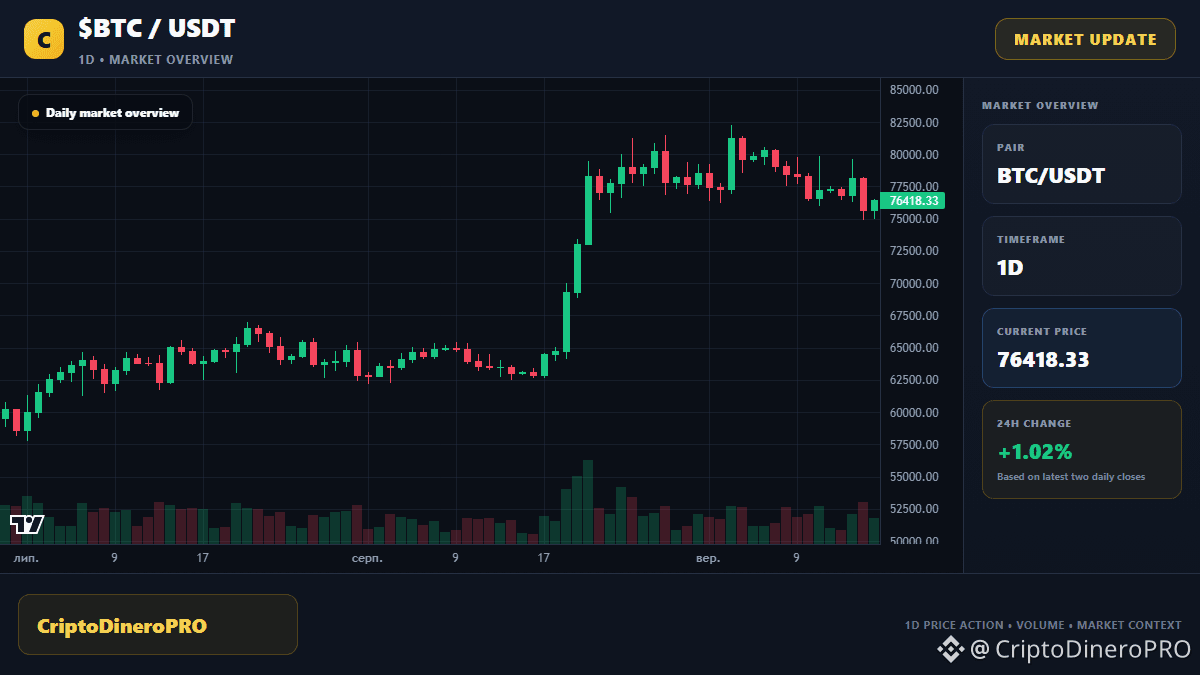
Bitcoin Core 32.0, the open-source program that powers the vast majority of full nodes on the network, tagged its first release candidate on September 14 and is targeting a stable release on October 10. The update doesn't change Bitcoin's consensus rules.
#BTC #BTCUSDT #CryptoNews
$BTC — Bitcoin Core 32.0 targets speed and security fixes ahead of October 10 release 🔔
Bitcoin Core 32.0, the open-source program that powers the vast majority of full nodes on the network, tagged its first release candidate on September 14 and is targeting a stable release on October 10. The update doesn't change Bitcoin's consensus rules.
#BTC #BTCUSDT #CryptoNews
Bitcoin Core 32.0, the open-source program that powers the vast majority of full nodes on the network, tagged its first release candidate on September 14 and is targeting a stable release on October 10. The update doesn't change Bitcoin's consensus rules.
#BTC #BTCUSDT #CryptoNews
107

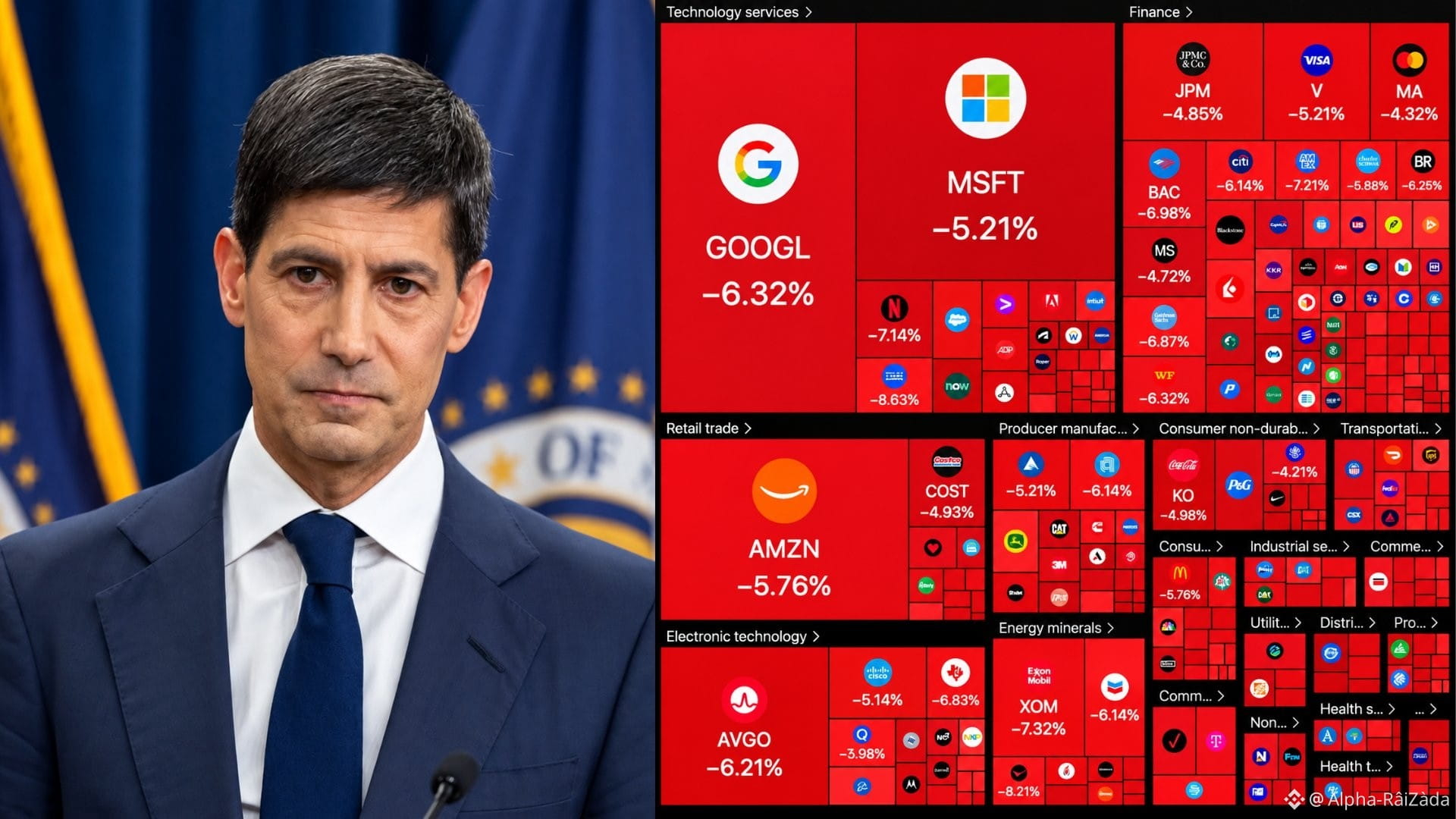
🚨 MARKET RISK-OFF ALERT 📉
The Fed has delivered a 25 bps rate hike, while Warsh’s post-meeting message remained firmly hawkish.
• Inflation still above target
• Labor market remains strong
• Further hikes not ruled out
• Traders now pricing 2 more hikes before year-end
• Bond yields continue rising
📉 Higher rates + rising yields = pressure on risk assets, including $BTC.
The key question now: How long will the tightening cycle continue?
⚠️ Expect higher volatility around upcoming Fed and macro data.
$BTC
{spot}(BTCUSDT)
#BTC #BTCUSDT #Bitcoin
🚨 MARKET RISK-OFF ALERT 📉
The Fed has delivered a 25 bps rate hike, while Warsh’s post-meeting message remained firmly hawkish.
• Inflation still above target
• Labor market remains strong
• Further hikes not ruled out
• Traders now pricing 2 more hikes before year-end
• Bond yields continue rising
📉 Higher rates + rising yields = pressure on risk assets, including $BTC .
The key question now: How long will the tightening cycle continue?
⚠️ Expect higher volatility around upcoming Fed and macro data.
$BTC
#BTC #BTCUSDT #Bitcoin
The Fed has delivered a 25 bps rate hike, while Warsh’s post-meeting message remained firmly hawkish.
• Inflation still above target
• Labor market remains strong
• Further hikes not ruled out
• Traders now pricing 2 more hikes before year-end
• Bond yields continue rising
📉 Higher rates + rising yields = pressure on risk assets, including $BTC .
The key question now: How long will the tightening cycle continue?
⚠️ Expect higher volatility around upcoming Fed and macro data.
$BTC
#BTC #BTCUSDT #Bitcoin
30
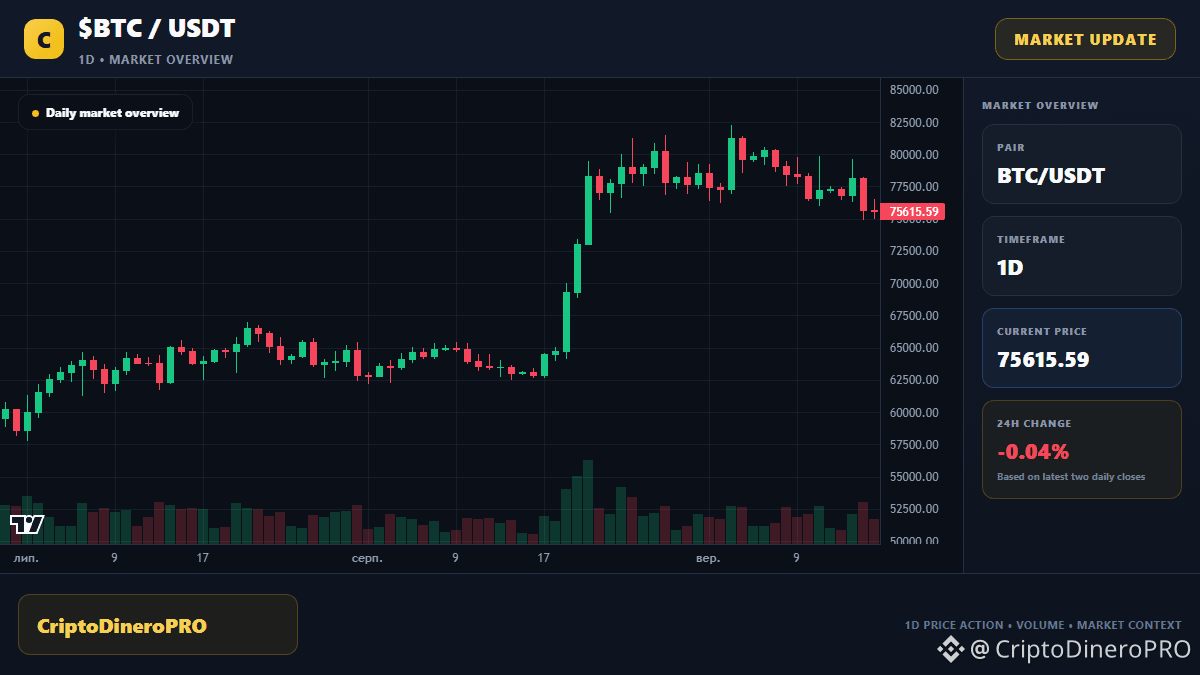
$BTC — Bitcoin Drop After Crypto Bill's Bust Seen as Relatively Shallow — Market Talk 🔔
{future}(BTCUSDT)
Bitcoin's decline after the crypto-friendly Clarity Act's defeat in Congress has been relatively shallow, analysts at Glassnode say in a report. "Given the news, the fall is small," they say. It appears that new buyers have gone quiet, cutting off the flow of money that had been driving up Bitcoin in the last month, but holders aren't rushing to sell either, they say.
#BTC #BTCUSDT #CryptoNews
$BTC — Bitcoin Drop After Crypto Bill's Bust Seen as Relatively Shallow — Market Talk 🔔
Bitcoin's decline after the crypto-friendly Clarity Act's defeat in Congress has been relatively shallow, analysts at Glassnode say in a report. "Given the news, the fall is small," they say. It appears that new buyers have gone quiet, cutting off the flow of money that had been driving up Bitcoin in the last month, but holders aren't rushing to sell either, they say.
#BTC #BTCUSDT #CryptoNews
Bitcoin's decline after the crypto-friendly Clarity Act's defeat in Congress has been relatively shallow, analysts at Glassnode say in a report. "Given the news, the fall is small," they say. It appears that new buyers have gone quiet, cutting off the flow of money that had been driving up Bitcoin in the last month, but holders aren't rushing to sell either, they say.
#BTC #BTCUSDT #CryptoNews
91

Bitcoin continues its dynamic dance, currently exhibiting a consolidation phase after recent price fluctuations. This sideways action often signals market participants re-evaluating positions before a major breakout or breakdown. A key opportunity lies in monitoring its ability to break above immediate resistance; a successful push could fuel a renewed upward trajectory, potentially attracting fresh capital into the market. However, the prevailing risk involves a potential loss of current support levels, which might lead to a further descent towards lower demand zones, catching overleveraged positions off guard. How do you see BTC navigating this current indecision?
#BTCUSDT #CryptoTrading #MarketAnalysis
Bitcoin continues its dynamic dance, currently exhibiting a consolidation phase after recent price fluctuations. This sideways action often signals market participants re-evaluating positions before a major breakout or breakdown. A key opportunity lies in monitoring its ability to break above immediate resistance; a successful push could fuel a renewed upward trajectory, potentially attracting fresh capital into the market. However, the prevailing risk involves a potential loss of current support levels, which might lead to a further descent towards lower demand zones, catching overleveraged positions off guard. How do you see BTC navigating this current indecision?
#BTCUSDT #CryptoTrading #MarketAnalysis
#BTCUSDT #CryptoTrading #MarketAnalysis
47
🚨 FED HIKE — $BTC RISK-OFF SIGNAL 📉
The Fed raised rates 25 bps to 3.75%–4.00%, with projections pointing to another hike by year-end.
📌 12 of 18 officials see one more hike this year.
📈 2026 inflation forecasts were also revised higher.
Higher rates + elevated inflation can keep pressure on risk assets, including BTC.
👀 BTC bias: Cautious — watch volatility around the Fed decision.
$BTC
{spot}(BTCUSDT)
$ETH
{spot}(ETHUSDT)
#BTC #BTCUSDT #Bitcoin
🚨 FED HIKE — $BTC RISK-OFF SIGNAL 📉
The Fed raised rates 25 bps to 3.75%–4.00%, with projections pointing to another hike by year-end.
📌 12 of 18 officials see one more hike this year.
📈 2026 inflation forecasts were also revised higher.
Higher rates + elevated inflation can keep pressure on risk assets, including BTC.
👀 BTC bias: Cautious — watch volatility around the Fed decision.
$BTC
$ETH
#BTC #BTCUSDT #Bitcoin
The Fed raised rates 25 bps to 3.75%–4.00%, with projections pointing to another hike by year-end.
📌 12 of 18 officials see one more hike this year.
📈 2026 inflation forecasts were also revised higher.
Higher rates + elevated inflation can keep pressure on risk assets, including BTC.
👀 BTC bias: Cautious — watch volatility around the Fed decision.
$BTC
$ETH
#BTC #BTCUSDT #Bitcoin

35

$BTC Near $76K — What’s Next? 👀
Bitcoin ( $BTC ) is trading around the $75K–$76K zone after a sharp pullback from above $78K. Recent selling pressure has kept short-term momentum weak.
{future}(BTCUSDT)
🔥 Key levels to watch:
$75K → Important support
$78K → Near-term resistance
$80K+ → Bigger recovery zone
Today’s Federal Reserve decision could bring major volatility to BTC and the wider crypto market.
The big question:
🚀 Can $BTC reclaim $78K?
or
📉 Will $75K support break first?
What do you think? 👇
⚠️ This is market commentary, not financial advice. Crypto is highly volatile.
#Bitcoin #BTC #BTCUSDT #cryptotrading
$BTC Near $76K — What’s Next? 👀
Bitcoin ( $BTC ) is trading around the $75K–$76K zone after a sharp pullback from above $78K. Recent selling pressure has kept short-term momentum weak.
🔥 Key levels to watch:
$75K → Important support
$78K → Near-term resistance
$80K+ → Bigger recovery zone
Today’s Federal Reserve decision could bring major volatility to BTC and the wider crypto market.
The big question:
🚀 Can $BTC reclaim $78K?
or
📉 Will $75K support break first?
What do you think? 👇
⚠️ This is market commentary, not financial advice. Crypto is highly volatile.
#Bitcoin #BTC #BTCUSDT #cryptotrading
Bitcoin ( $BTC ) is trading around the $75K–$76K zone after a sharp pullback from above $78K. Recent selling pressure has kept short-term momentum weak.
🔥 Key levels to watch:
$75K → Important support
$78K → Near-term resistance
$80K+ → Bigger recovery zone
Today’s Federal Reserve decision could bring major volatility to BTC and the wider crypto market.
The big question:
🚀 Can $BTC reclaim $78K?
or
📉 Will $75K support break first?
What do you think? 👇
⚠️ This is market commentary, not financial advice. Crypto is highly volatile.
#Bitcoin #BTC #BTCUSDT #cryptotrading

1
76

·
--
🚨 BTC CRITICAL ZONE TONIGHT — ONE MOVE COULD CREATE A BIG TRADE 👀🔥
Bitcoin is around $75.7K and the market is extremely sensitive to today's macro news.
I’m NOT chasing the first pump or dump.
Here is the setup I’m watching:
🟢 BULLISH BTC SETUP
If BTC reclaims $76,500 and gets a strong 15m candle close above it:
ENTRY: $76,500–$76,800
🎯 TP1: $77,300
🎯 TP2: $78,000
🎯 TP3: $79,000
🛑 SL: $75,800
Confirmation I want:
✅ 15m close above $76.5K
✅ Increasing volume
✅ Retest holds $76.5K
---
🔴 BEARISH BTC SETUP
If BTC breaks below $75,000 with strong selling volume:
ENTRY: $74,900–$75,100
🎯 TP1: $74,300
🎯 TP2: $73,500
🎯 TP3: $72,500
🛑 SL: $75,800
---
⚠️ IMPORTANT:
Fed/news volatility can create fake breakouts in both directions.
Don't enter just because BTC touches a level.
WAIT → CONFIRM → ENTER.
If neither setup confirms, my trade is simply:
❌ NO TRADE
I would rather miss a move than force a bad entry.
👇 What are you watching tonight?
🟢 BTC LONG
🔴 BTC SHORT
👀 WAIT FOR CONFIRMATION
$BTC $ETH
{spot}(BTCUSDT)
#Bitcoin #BTC #CryptoTrading #Binance #TradingSetup #CryptoMarket #BTCUSDT
🚨 BTC CRITICAL ZONE TONIGHT — ONE MOVE COULD CREATE A BIG TRADE 👀🔥
Bitcoin is around $75.7K and the market is extremely sensitive to today's macro news.
I’m NOT chasing the first pump or dump.
Here is the setup I’m watching:
🟢 BULLISH BTC SETUP
If BTC reclaims $76,500 and gets a strong 15m candle close above it:
ENTRY: $76,500–$76,800
🎯 TP1: $77,300
🎯 TP2: $78,000
🎯 TP3: $79,000
🛑 SL: $75,800
Confirmation I want:
✅ 15m close above $76.5K
✅ Increasing volume
✅ Retest holds $76.5K
---
🔴 BEARISH BTC SETUP
If BTC breaks below $75,000 with strong selling volume:
ENTRY: $74,900–$75,100
🎯 TP1: $74,300
🎯 TP2: $73,500
🎯 TP3: $72,500
🛑 SL: $75,800
---
⚠️ IMPORTANT:
Fed/news volatility can create fake breakouts in both directions.
Don't enter just because BTC touches a level.
WAIT → CONFIRM → ENTER.
If neither setup confirms, my trade is simply:
❌ NO TRADE
I would rather miss a move than force a bad entry.
👇 What are you watching tonight?
🟢 BTC LONG
🔴 BTC SHORT
👀 WAIT FOR CONFIRMATION
$BTC $ETH
#Bitcoin #BTC #CryptoTrading #Binance #TradingSetup #CryptoMarket #BTCUSDT
Bitcoin is around $75.7K and the market is extremely sensitive to today's macro news.
I’m NOT chasing the first pump or dump.
Here is the setup I’m watching:
🟢 BULLISH BTC SETUP
If BTC reclaims $76,500 and gets a strong 15m candle close above it:
ENTRY: $76,500–$76,800
🎯 TP1: $77,300
🎯 TP2: $78,000
🎯 TP3: $79,000
🛑 SL: $75,800
Confirmation I want:
✅ 15m close above $76.5K
✅ Increasing volume
✅ Retest holds $76.5K
---
🔴 BEARISH BTC SETUP
If BTC breaks below $75,000 with strong selling volume:
ENTRY: $74,900–$75,100
🎯 TP1: $74,300
🎯 TP2: $73,500
🎯 TP3: $72,500
🛑 SL: $75,800
---
⚠️ IMPORTANT:
Fed/news volatility can create fake breakouts in both directions.
Don't enter just because BTC touches a level.
WAIT → CONFIRM → ENTER.
If neither setup confirms, my trade is simply:
❌ NO TRADE
I would rather miss a move than force a bad entry.
👇 What are you watching tonight?
🟢 BTC LONG
🔴 BTC SHORT
👀 WAIT FOR CONFIRMATION
$BTC $ETH
#Bitcoin #BTC #CryptoTrading #Binance #TradingSetup #CryptoMarket #BTCUSDT
51


🚨 CRYPTO MARKET UPDATE — SEPTEMBER 16, 2026 🚨
The market is moving fast today. ⚠️📉
🟠 $BTC — Bitcoin BTC is trading around $75.9K, after a sharp pullback from recent highs. The $75K area is now an important zone to watch.
🔵 $ETH — Ethereum ETH is around $2.4K and remains under short-term selling pressure. Traders are watching whether ETH can reclaim the $2.4K–$2.45K area.
🔥 WHAT'S MOVING THE MARKET? The U.S. Senate's failure to advance the CLARITY Act triggered a broad crypto sell-off, while today's Federal Reserve decision could create another major volatility move.
📊 MY GAME PLAN Don't chase candles.
✅ Watch BTC around $75K ✅ Look for confirmation before entering ✅ Watch volume on breakouts/breakdowns ✅ Keep risk small in this volatility ❌ Don't use excessive leverage
🎯 Key idea: Let the market show the direction before taking the trade.
What are you watching today?
🟢 BULLISH: BTC reclaims resistance with strong volume
🔴 BEARISH: BTC loses support and sellers accelerate
#bitcoin #Ethereum✅ #Binance #BinanceSquare #BTCUSDT
🚨 CRYPTO MARKET UPDATE — SEPTEMBER 16, 2026 🚨
The market is moving fast today. ⚠️📉
🟠 $BTC — Bitcoin BTC is trading around $75.9K, after a sharp pullback from recent highs. The $75K area is now an important zone to watch.
🔵 $ETH — Ethereum ETH is around $2.4K and remains under short-term selling pressure. Traders are watching whether ETH can reclaim the $2.4K–$2.45K area.
🔥 WHAT'S MOVING THE MARKET? The U.S. Senate's failure to advance the CLARITY Act triggered a broad crypto sell-off, while today's Federal Reserve decision could create another major volatility move.
📊 MY GAME PLAN Don't chase candles.
✅ Watch BTC around $75K ✅ Look for confirmation before entering ✅ Watch volume on breakouts/breakdowns ✅ Keep risk small in this volatility ❌ Don't use excessive leverage
🎯 Key idea: Let the market show the direction before taking the trade.
What are you watching today?
🟢 BULLISH: BTC reclaims resistance with strong volume
🔴 BEARISH: BTC loses support and sellers accelerate
#bitcoin #Ethereum✅ #Binance #BinanceSquare #BTCUSDT
The market is moving fast today. ⚠️📉
🟠 $BTC — Bitcoin BTC is trading around $75.9K, after a sharp pullback from recent highs. The $75K area is now an important zone to watch.
🔵 $ETH — Ethereum ETH is around $2.4K and remains under short-term selling pressure. Traders are watching whether ETH can reclaim the $2.4K–$2.45K area.
🔥 WHAT'S MOVING THE MARKET? The U.S. Senate's failure to advance the CLARITY Act triggered a broad crypto sell-off, while today's Federal Reserve decision could create another major volatility move.
📊 MY GAME PLAN Don't chase candles.
✅ Watch BTC around $75K ✅ Look for confirmation before entering ✅ Watch volume on breakouts/breakdowns ✅ Keep risk small in this volatility ❌ Don't use excessive leverage
🎯 Key idea: Let the market show the direction before taking the trade.
What are you watching today?
🟢 BULLISH: BTC reclaims resistance with strong volume
🔴 BEARISH: BTC loses support and sellers accelerate
#bitcoin #Ethereum✅ #Binance #BinanceSquare #BTCUSDT
95

BTC is ripping through the 27k‑28k zone, eyes locked on the next swing as buying pressure surges.
🟢 $BTC LONG 📈
Entry $76,131.69-$76,284.11 | SL $73,921.66 (-3.0%) | TP1 $77,351.02 (+1.5%) | TP2 $80,018.29 (+5.0%) | R/R 1:1.7 | Conf 64%
A clean CHoCH broke the last swing high, CVD spikes confirm the flow, while a fresh FVG lines up with an OB that sits right on the break – classic POI confluence screaming long.
A 3.0% stop is tight on this volatility; stick to 2‑3x leverage to keep risk in check.
Take half profit around the first target as the price tests the next resistance.
Not financial advice — always manage your own risk 🙏
$BTC #BTCUSDT #FedRateWatch #TradingSignals #Write2Earn
BTC is ripping through the 27k‑28k zone, eyes locked on the next swing as buying pressure surges.
🟢 $BTC LONG 📈
Entry $76,131.69-$76,284.11 | SL $73,921.66 (-3.0%) | TP1 $77,351.02 (+1.5%) | TP2 $80,018.29 (+5.0%) | R/R 1:1.7 | Conf 64%
A clean CHoCH broke the last swing high, CVD spikes confirm the flow, while a fresh FVG lines up with an OB that sits right on the break – classic POI confluence screaming long.
A 3.0% stop is tight on this volatility; stick to 2‑3x leverage to keep risk in check.
Take half profit around the first target as the price tests the next resistance.
Not financial advice — always manage your own risk 🙏
$BTC #BTCUSDT #FedRateWatch #TradingSignals #Write2Earn
🟢 $BTC LONG 📈
Entry $76,131.69-$76,284.11 | SL $73,921.66 (-3.0%) | TP1 $77,351.02 (+1.5%) | TP2 $80,018.29 (+5.0%) | R/R 1:1.7 | Conf 64%
A clean CHoCH broke the last swing high, CVD spikes confirm the flow, while a fresh FVG lines up with an OB that sits right on the break – classic POI confluence screaming long.
A 3.0% stop is tight on this volatility; stick to 2‑3x leverage to keep risk in check.
Take half profit around the first target as the price tests the next resistance.
Not financial advice — always manage your own risk 🙏
$BTC #BTCUSDT #FedRateWatch #TradingSignals #Write2Earn
9

$BTC 🚨 BITCOIN IS AT A CRITICAL MOMENT! 🚨
Bitcoin (BTC) is currently moving around the $76K–$79K zone, with traders closely watching the next major market move.
🔥 Key levels to watch:
📉 Support: Around $76K
📈 Resistance: Around $80K–$82K
The big question is simple:
👉 Will BTC reclaim $80K?
👉 Or will sellers push the price lower?
Today’s market could be highly volatile as investors react to major U.S. economic and regulatory developments.
No hype. No guaranteed predictions. Just watch the levels, manage risk, and do your own research. 📊
What do you think BTC will do next? 👇
#Bitcoin #BTC #Crypto #BitcoinPrice #CryptoMarket #Binance #BTCUSDT #CryptoTrading #BitcoinNews #Blockchain #Cryptocurrency #BTCUpdate #CryptoCommunity #MarketUpdate #DigitalAssets
$BTC 🚨 BITCOIN IS AT A CRITICAL MOMENT! 🚨
Bitcoin (BTC) is currently moving around the $76K–$79K zone, with traders closely watching the next major market move.
🔥 Key levels to watch:
📉 Support: Around $76K
📈 Resistance: Around $80K–$82K
The big question is simple:
👉 Will BTC reclaim $80K?
👉 Or will sellers push the price lower?
Today’s market could be highly volatile as investors react to major U.S. economic and regulatory developments.
No hype. No guaranteed predictions. Just watch the levels, manage risk, and do your own research. 📊
What do you think BTC will do next? 👇
#Bitcoin #BTC #Crypto #BitcoinPrice #CryptoMarket #Binance #BTCUSDT #CryptoTrading #BitcoinNews #Blockchain #Cryptocurrency #BTCUpdate #CryptoCommunity #MarketUpdate #DigitalAssets
Bitcoin (BTC) is currently moving around the $76K–$79K zone, with traders closely watching the next major market move.
🔥 Key levels to watch:
📉 Support: Around $76K
📈 Resistance: Around $80K–$82K
The big question is simple:
👉 Will BTC reclaim $80K?
👉 Or will sellers push the price lower?
Today’s market could be highly volatile as investors react to major U.S. economic and regulatory developments.
No hype. No guaranteed predictions. Just watch the levels, manage risk, and do your own research. 📊
What do you think BTC will do next? 👇
#Bitcoin #BTC #Crypto #BitcoinPrice #CryptoMarket #Binance #BTCUSDT #CryptoTrading #BitcoinNews #Blockchain #Cryptocurrency #BTCUpdate #CryptoCommunity #MarketUpdate #DigitalAssets

81

🚨 $BTC /USDT REAL SIGNAL — 15M WATCH 🚨
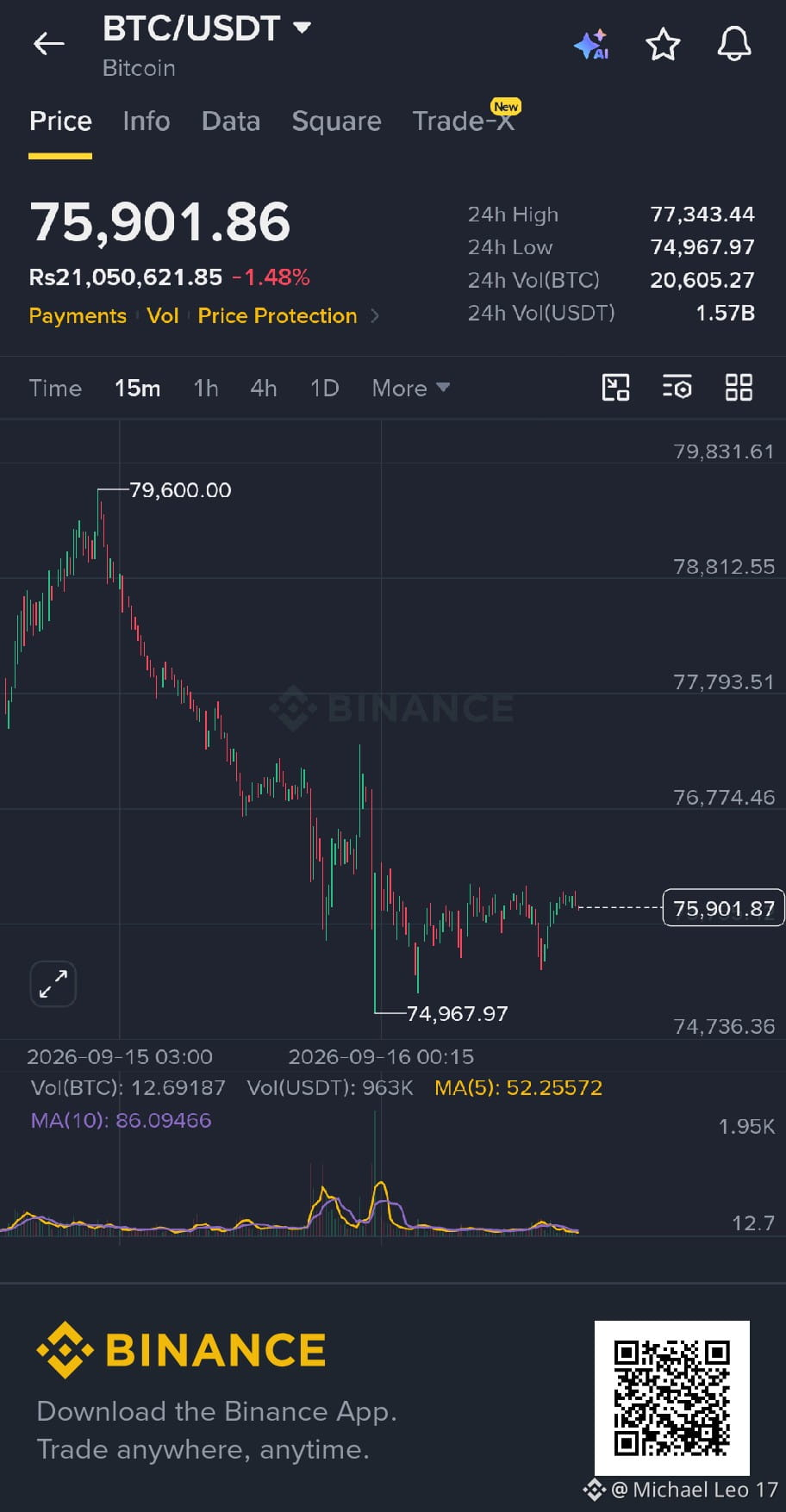
Bitcoin is trading near $75,901.86, down 1.48%. The chart shows a sharp decline from $79,600 toward the 24H low of $74,967.97, followed by consolidation around $75,900. Entry: $75,900–$76,000. TP1: $76,774. TP2: $77,793. TP3: $78,812. Stop-Loss: $74,900. Watch volume and 15M candle confirmation before entry. This is a chart-based setup, not a guarantee. Manage risk carefully and DYOR. Momentum remains fragile, so avoid chasing sudden pumps or breakdowns. ⚡📈
#BTC #Bitcoin #CryptoSignal #BTCUSDT
🚨 $BTC /USDT REAL SIGNAL — 15M WATCH 🚨
Bitcoin is trading near $75,901.86, down 1.48%. The chart shows a sharp decline from $79,600 toward the 24H low of $74,967.97, followed by consolidation around $75,900. Entry: $75,900–$76,000. TP1: $76,774. TP2: $77,793. TP3: $78,812. Stop-Loss: $74,900. Watch volume and 15M candle confirmation before entry. This is a chart-based setup, not a guarantee. Manage risk carefully and DYOR. Momentum remains fragile, so avoid chasing sudden pumps or breakdowns. ⚡📈
#BTC #Bitcoin #CryptoSignal #BTCUSDT
Bitcoin is trading near $75,901.86, down 1.48%. The chart shows a sharp decline from $79,600 toward the 24H low of $74,967.97, followed by consolidation around $75,900. Entry: $75,900–$76,000. TP1: $76,774. TP2: $77,793. TP3: $78,812. Stop-Loss: $74,900. Watch volume and 15M candle confirmation before entry. This is a chart-based setup, not a guarantee. Manage risk carefully and DYOR. Momentum remains fragile, so avoid chasing sudden pumps or breakdowns. ⚡📈
#BTC #Bitcoin #CryptoSignal #BTCUSDT
69
Log in to explore more content
Join global crypto users on Binance Square
⚡️ Get latest and useful information about crypto.
💬 Trusted by the world’s largest crypto exchange.
👍 Discover real insights from verified creators.
Email / Phone number
Trending Topics
1
#FedRateWatch
1.5M views
6,825 Discussing
2
#ZcashRises6%
58,820 views
688 Discussing
3
#XRPSinks10%
39,038 views
452 Discussing
4
#BitcoinETFsShed$450M
7,605 views
98 Discussing
5
#CircleOpensArcMainnet
18,023 views
299 Discussing
6
#ZcashHoldersBackNU7Upgrade
30,152 views
460 Discussing
7
#MSTRTradingVolumeSurpassesMorganStanley
27,956 views
609 Discussing
8
#BitcoinFalls4%
57,195 views
948 Discussing
9
#SKHynixInTalksToMakeMemoryChipsInUS
22,182 views
372 Discussing
10
#OpenAIDiscussesNewFundingAt$1.2TValuation
6,214 views
61 Discussing