
#714710
714710
1,726 views
7 Discussing
Hot
Latest


Lighter Pauses Withdrawals After Suspected $15.5 Million API Key Exploit• Lighter suspended withdrawals and pool creation on Nov. 16 after a suspected $15.5 million exploit.
• Researchers estimate losses of $10.39 million and $5.09 million across market maker accounts #714710 and #714723.
• The attacker's wallet withdrew $10.39 million in USDC at 10:11:47 UTC, per the Ethereum record.
Withdrawals and Pool Creation Halted
Decentralized perpetual futures venue Lighter has halted all withdrawals and the creation of new liquidity pools after on-chain observers flagged roughly $15.5 million leaving its Ethereum Layer 1 contract on Monday. In a Nov. 16 statement, the team said it was investigating a security incident that appeared to involve a single compromised external party, without naming the affected entity or putting a dollar figure on the loss. The halt covers every withdrawal and every new pool on the platform, and the team framed it as a precaution while it assessed the full impact. The suspected scale comes from researchers rather than the exchange. Early on-chain analysis pointed to an attacker withdrawing about $10.39 million in USDC, and follow-up work identified a second affected account, lifting the estimated total to roughly $15.48 million. Researcher 0xTria, citing observations from Korean blockchain analysts, traced the method to leaked API keys belonging to two large market maker accounts rather than a flaw in Lighter's protocol. The attacker first closed the victims' open trading positions and converted their holdings into USDC. Using one compromised account, the attacker then created a public zero-fee pool and deposited about $10,000 to acquire roughly 99.99% of its shares. The victims' USDC moved into that pool in batches of roughly $1 million and was redeemed back out, a route that appears to exploit how Lighter treats transfers between accounts sharing one Layer 1 address, which need no extra signature. Account #714710 reportedly lost $10.39 million, and account #714723 another $5.09 million.
Lighter Pins the Breach on a Leaked API Key
Lighter's follow-up update on Monday, posted at 12:49 UTC, narrowed the cause: the exchange said the incident stemmed from a leaked API key, the credential that lets trading software execute on an account's behalf, tied to one trader's account. It also stated that Lighter's protocol and smart contracts were not affected, and named the wallet address the team believes belongs to the attacker, an address community observers had already flagged. Chain timing frames how fast events moved: the first major withdrawal landed at 10:11:47 UTC, nearly an hour before Lighter's first public disclosure at 11:02 UTC, which paused withdrawals and pool creation. The venue, which settles trades on Ethereum using zero-knowledge proofs, placed the fault outside that settlement stack entirely. The team has switched on Guardian mode on its smart contract as a precaution and said its priority is recovering funds tied to what it described as an additional withdrawal attempt by the attacker. A contract upgrade carried out by Lighter's Security Council is meant to complete, with withdrawals reopening, before Monday ends. The update stops at a single compromised account and gives no dollar figure of its own. The $15.5 million total remains a researcher estimate the team has not confirmed, and Lighter has not said how the key leaked or whose account it belonged to.
Attacker Splits Funds Into 160 ETH Transfers
Ethereum's public record anchors the money trail. The attacker's wallet, 0xb3fffca23d4444eE73349825ACD84f7b5020e387, made the $10.39 million USDC withdrawal from the contract after receiving about $10,000 through a relay transfer roughly half an hour earlier. On-chain data shows the wallet swapped the USDC for about 5,760 ETH through CoW Swap and then split the holdings into 15 transfers of 160 ETH each, two of which were sent back. As of 12:51 UTC the address still held about 3,565 ETH. Analytics account Lookonchain reported the attacker was depositing funds on Hyperliquid, a larger perps rival, to buy the privacy coin Monero (XMR); neither Lighter nor the chain has confirmed that yet. A separate projection even models Lighter flipping Hyperliquid as the top perps platform by January 2027, a measure of how closely watched the venue had become. The incident reached the token directly. Upbit and Bithumb suspended LIT deposits and withdrawals in response to the security reports. LIT fell more than 17% at one point on Monday before recovering part of the loss to trade around $2.50 to $2.66, unwinding part of an October run built on the Robinhood Wallet integration and expanding token buybacks. Lighter itself had been expanding its infrastructure, launching an EVM development network in October that lets smart contracts manage trading orders and move assets between its Ethereum-compatible environment and Lighter Core. Our live monitoring shows the token down about 13.4% over the past 24 hours, and the full drawdown is charted in LIT technical analysis.
Still Paused, and Still Unconfirmed
The chain and the team's own words now bound the story tightly. The Ethereum record fixes the first theft at $10.39 million in USDC at 10:11:47 UTC, and Lighter's own post-mortem places the root cause in a leaked API key tied to one trader's account, with the protocol and smart contracts untouched. Remediation runs on the two tracks the team named: Guardian mode on the contract and a Security Council upgrade, with withdrawals targeted to reopen before Monday ends. What stays open sits in the gaps: the $15.5 million total is still a researcher estimate Lighter has not confirmed, the team has not explained how the key leaked, and no recovery figure exists for the attacker's additional withdrawal attempt. Until that upgrade lands, withdrawals and new pool creation stay paused.
Lighter Pauses Withdrawals After Suspected $15.5 Million API Key Exploit
• Lighter suspended withdrawals and pool creation on Nov. 16 after a suspected $15.5 million exploit.
• Researchers estimate losses of $10.39 million and $5.09 million across market maker accounts #714710 and #714723.
• The attacker's wallet withdrew $10.39 million in USDC at 10:11:47 UTC, per the Ethereum record.
Withdrawals and Pool Creation Halted
Decentralized perpetual futures venue Lighter has halted all withdrawals and the creation of new liquidity pools after on-chain observers flagged roughly $15.5 million leaving its Ethereum Layer 1 contract on Monday. In a Nov. 16 statement, the team said it was investigating a security incident that appeared to involve a single compromised external party, without naming the affected entity or putting a dollar figure on the loss. The halt covers every withdrawal and every new pool on the platform, and the team framed it as a precaution while it assessed the full impact. The suspected scale comes from researchers rather than the exchange. Early on-chain analysis pointed to an attacker withdrawing about $10.39 million in USDC, and follow-up work identified a second affected account, lifting the estimated total to roughly $15.48 million. Researcher 0xTria, citing observations from Korean blockchain analysts, traced the method to leaked API keys belonging to two large market maker accounts rather than a flaw in Lighter's protocol. The attacker first closed the victims' open trading positions and converted their holdings into USDC. Using one compromised account, the attacker then created a public zero-fee pool and deposited about $10,000 to acquire roughly 99.99% of its shares. The victims' USDC moved into that pool in batches of roughly $1 million and was redeemed back out, a route that appears to exploit how Lighter treats transfers between accounts sharing one Layer 1 address, which need no extra signature. Account #714710 reportedly lost $10.39 million, and account #714723 another $5.09 million.
Lighter Pins the Breach on a Leaked API Key
Lighter's follow-up update on Monday, posted at 12:49 UTC, narrowed the cause: the exchange said the incident stemmed from a leaked API key, the credential that lets trading software execute on an account's behalf, tied to one trader's account. It also stated that Lighter's protocol and smart contracts were not affected, and named the wallet address the team believes belongs to the attacker, an address community observers had already flagged. Chain timing frames how fast events moved: the first major withdrawal landed at 10:11:47 UTC, nearly an hour before Lighter's first public disclosure at 11:02 UTC, which paused withdrawals and pool creation. The venue, which settles trades on Ethereum using zero-knowledge proofs, placed the fault outside that settlement stack entirely. The team has switched on Guardian mode on its smart contract as a precaution and said its priority is recovering funds tied to what it described as an additional withdrawal attempt by the attacker. A contract upgrade carried out by Lighter's Security Council is meant to complete, with withdrawals reopening, before Monday ends. The update stops at a single compromised account and gives no dollar figure of its own. The $15.5 million total remains a researcher estimate the team has not confirmed, and Lighter has not said how the key leaked or whose account it belonged to.
Attacker Splits Funds Into 160 ETH Transfers
Ethereum's public record anchors the money trail. The attacker's wallet, 0xb3fffca23d4444eE73349825ACD84f7b5020e387, made the $10.39 million USDC withdrawal from the contract after receiving about $10,000 through a relay transfer roughly half an hour earlier. On-chain data shows the wallet swapped the USDC for about 5,760 ETH through CoW Swap and then split the holdings into 15 transfers of 160 ETH each, two of which were sent back. As of 12:51 UTC the address still held about 3,565 ETH. Analytics account Lookonchain reported the attacker was depositing funds on Hyperliquid, a larger perps rival, to buy the privacy coin Monero (XMR); neither Lighter nor the chain has confirmed that yet. A separate projection even models Lighter flipping Hyperliquid as the top perps platform by January 2027, a measure of how closely watched the venue had become. The incident reached the token directly. Upbit and Bithumb suspended LIT deposits and withdrawals in response to the security reports. LIT fell more than 17% at one point on Monday before recovering part of the loss to trade around $2.50 to $2.66, unwinding part of an October run built on the Robinhood Wallet integration and expanding token buybacks. Lighter itself had been expanding its infrastructure, launching an EVM development network in October that lets smart contracts manage trading orders and move assets between its Ethereum-compatible environment and Lighter Core. Our live monitoring shows the token down about 13.4% over the past 24 hours, and the full drawdown is charted in LIT technical analysis.
Still Paused, and Still Unconfirmed
The chain and the team's own words now bound the story tightly. The Ethereum record fixes the first theft at $10.39 million in USDC at 10:11:47 UTC, and Lighter's own post-mortem places the root cause in a leaked API key tied to one trader's account, with the protocol and smart contracts untouched. Remediation runs on the two tracks the team named: Guardian mode on the contract and a Security Council upgrade, with withdrawals targeted to reopen before Monday ends. What stays open sits in the gaps: the $15.5 million total is still a researcher estimate Lighter has not confirmed, the team has not explained how the key leaked, and no recovery figure exists for the attacker's additional withdrawal attempt. Until that upgrade lands, withdrawals and new pool creation stay paused.
• Researchers estimate losses of $10.39 million and $5.09 million across market maker accounts #714710 and #714723.
• The attacker's wallet withdrew $10.39 million in USDC at 10:11:47 UTC, per the Ethereum record.
Withdrawals and Pool Creation Halted
Decentralized perpetual futures venue Lighter has halted all withdrawals and the creation of new liquidity pools after on-chain observers flagged roughly $15.5 million leaving its Ethereum Layer 1 contract on Monday. In a Nov. 16 statement, the team said it was investigating a security incident that appeared to involve a single compromised external party, without naming the affected entity or putting a dollar figure on the loss. The halt covers every withdrawal and every new pool on the platform, and the team framed it as a precaution while it assessed the full impact. The suspected scale comes from researchers rather than the exchange. Early on-chain analysis pointed to an attacker withdrawing about $10.39 million in USDC, and follow-up work identified a second affected account, lifting the estimated total to roughly $15.48 million. Researcher 0xTria, citing observations from Korean blockchain analysts, traced the method to leaked API keys belonging to two large market maker accounts rather than a flaw in Lighter's protocol. The attacker first closed the victims' open trading positions and converted their holdings into USDC. Using one compromised account, the attacker then created a public zero-fee pool and deposited about $10,000 to acquire roughly 99.99% of its shares. The victims' USDC moved into that pool in batches of roughly $1 million and was redeemed back out, a route that appears to exploit how Lighter treats transfers between accounts sharing one Layer 1 address, which need no extra signature. Account #714710 reportedly lost $10.39 million, and account #714723 another $5.09 million.
Lighter Pins the Breach on a Leaked API Key
Lighter's follow-up update on Monday, posted at 12:49 UTC, narrowed the cause: the exchange said the incident stemmed from a leaked API key, the credential that lets trading software execute on an account's behalf, tied to one trader's account. It also stated that Lighter's protocol and smart contracts were not affected, and named the wallet address the team believes belongs to the attacker, an address community observers had already flagged. Chain timing frames how fast events moved: the first major withdrawal landed at 10:11:47 UTC, nearly an hour before Lighter's first public disclosure at 11:02 UTC, which paused withdrawals and pool creation. The venue, which settles trades on Ethereum using zero-knowledge proofs, placed the fault outside that settlement stack entirely. The team has switched on Guardian mode on its smart contract as a precaution and said its priority is recovering funds tied to what it described as an additional withdrawal attempt by the attacker. A contract upgrade carried out by Lighter's Security Council is meant to complete, with withdrawals reopening, before Monday ends. The update stops at a single compromised account and gives no dollar figure of its own. The $15.5 million total remains a researcher estimate the team has not confirmed, and Lighter has not said how the key leaked or whose account it belonged to.
Attacker Splits Funds Into 160 ETH Transfers
Ethereum's public record anchors the money trail. The attacker's wallet, 0xb3fffca23d4444eE73349825ACD84f7b5020e387, made the $10.39 million USDC withdrawal from the contract after receiving about $10,000 through a relay transfer roughly half an hour earlier. On-chain data shows the wallet swapped the USDC for about 5,760 ETH through CoW Swap and then split the holdings into 15 transfers of 160 ETH each, two of which were sent back. As of 12:51 UTC the address still held about 3,565 ETH. Analytics account Lookonchain reported the attacker was depositing funds on Hyperliquid, a larger perps rival, to buy the privacy coin Monero (XMR); neither Lighter nor the chain has confirmed that yet. A separate projection even models Lighter flipping Hyperliquid as the top perps platform by January 2027, a measure of how closely watched the venue had become. The incident reached the token directly. Upbit and Bithumb suspended LIT deposits and withdrawals in response to the security reports. LIT fell more than 17% at one point on Monday before recovering part of the loss to trade around $2.50 to $2.66, unwinding part of an October run built on the Robinhood Wallet integration and expanding token buybacks. Lighter itself had been expanding its infrastructure, launching an EVM development network in October that lets smart contracts manage trading orders and move assets between its Ethereum-compatible environment and Lighter Core. Our live monitoring shows the token down about 13.4% over the past 24 hours, and the full drawdown is charted in LIT technical analysis.
Still Paused, and Still Unconfirmed
The chain and the team's own words now bound the story tightly. The Ethereum record fixes the first theft at $10.39 million in USDC at 10:11:47 UTC, and Lighter's own post-mortem places the root cause in a leaked API key tied to one trader's account, with the protocol and smart contracts untouched. Remediation runs on the two tracks the team named: Guardian mode on the contract and a Security Council upgrade, with withdrawals targeted to reopen before Monday ends. What stays open sits in the gaps: the $15.5 million total is still a researcher estimate Lighter has not confirmed, the team has not explained how the key leaked, and no recovery figure exists for the attacker's additional withdrawal attempt. Until that upgrade lands, withdrawals and new pool creation stay paused.
9

·
--
🚨 $LIT BETRAYAL AT LIGHTER!
Lighter, the perpetuals exchange, woke up to $15.48 million in USDC drained from two market maker accounts. To me, the most serious thing isn’t the amount: it’s that leaked API keys were enough to empty the accounts without the protocol breaking.
Look at the detail no one is seeing:
→ Account #714710 lost $10.39M and #714723 another $5.09M, this morning, November 16.
→ The attacker created a public pool with a 0% fee, bought 99.99% with just ~$10,000, and withdrew the funds in batches of ~$1M.
→ The stolen funds have already been swapped for ETH on CoW Swap, and 640 ETH (~$1.12M) were sent to Hyperliquid to buy 2,240 XMR, which is almost impossible to trace.
Lighter paused withdrawals and pool creation indefinitely, and its token $LIT fell 9%, from $2.75 to $2.50.
Do you think decentralized exchanges are safer than centralized ones? 👇
$LIT $ETH $XMR
#HackCrypto #Lighter #DeFiSecurity
🚨 $LIT BETRAYAL AT LIGHTER!
Lighter, the perpetuals exchange, woke up to $15.48 million in USDC drained from two market maker accounts. To me, the most serious thing isn’t the amount: it’s that leaked API keys were enough to empty the accounts without the protocol breaking.
Look at the detail no one is seeing:
→ Account #714710 lost $10.39M and #714723 another $5.09M, this morning, November 16.
→ The attacker created a public pool with a 0% fee, bought 99.99% with just ~$10,000, and withdrew the funds in batches of ~$1M.
→ The stolen funds have already been swapped for ETH on CoW Swap, and 640 ETH (~$1.12M) were sent to Hyperliquid to buy 2,240 XMR, which is almost impossible to trace.
Lighter paused withdrawals and pool creation indefinitely, and its token $LIT fell 9%, from $2.75 to $2.50.
Do you think decentralized exchanges are safer than centralized ones? 👇
$LIT $ETH $XMR
#HackCrypto #Lighter #DeFiSecurity
Lighter, the perpetuals exchange, woke up to $15.48 million in USDC drained from two market maker accounts. To me, the most serious thing isn’t the amount: it’s that leaked API keys were enough to empty the accounts without the protocol breaking.
Look at the detail no one is seeing:
→ Account #714710 lost $10.39M and #714723 another $5.09M, this morning, November 16.
→ The attacker created a public pool with a 0% fee, bought 99.99% with just ~$10,000, and withdrew the funds in batches of ~$1M.
→ The stolen funds have already been swapped for ETH on CoW Swap, and 640 ETH (~$1.12M) were sent to Hyperliquid to buy 2,240 XMR, which is almost impossible to trace.
Lighter paused withdrawals and pool creation indefinitely, and its token $LIT fell 9%, from $2.75 to $2.50.
Do you think decentralized exchanges are safer than centralized ones? 👇
$LIT $ETH $XMR
#HackCrypto #Lighter #DeFiSecurity

3.8k

·
--
Lighter itself issued an announcement tonight. At around 19:02 Beijing time, @Lighter_xyz said it was investigating a security incident that appeared to involve only one compromised external party. As a precaution, all withdrawals and pool creation have been suspended. They gave no timeline for when they would resume.
People with money inside can’t get it out for now.
The on-chain activity over the past few hours lays out the process fairly clearly. Lookonchain reposted @0xTria’s analysis: around $15.5 million in USDC was drained from two market-maker accounts. One was #714710, with around $10.39 million; the other was #714723, with around $5.09 million. The official account hasn’t confirmed these figures or said that API keys were leaked, but this explanation matches the on-chain activity. According to the analysis, it happened sometime between about 5:41 and 6:25 this afternoon (Beijing time).
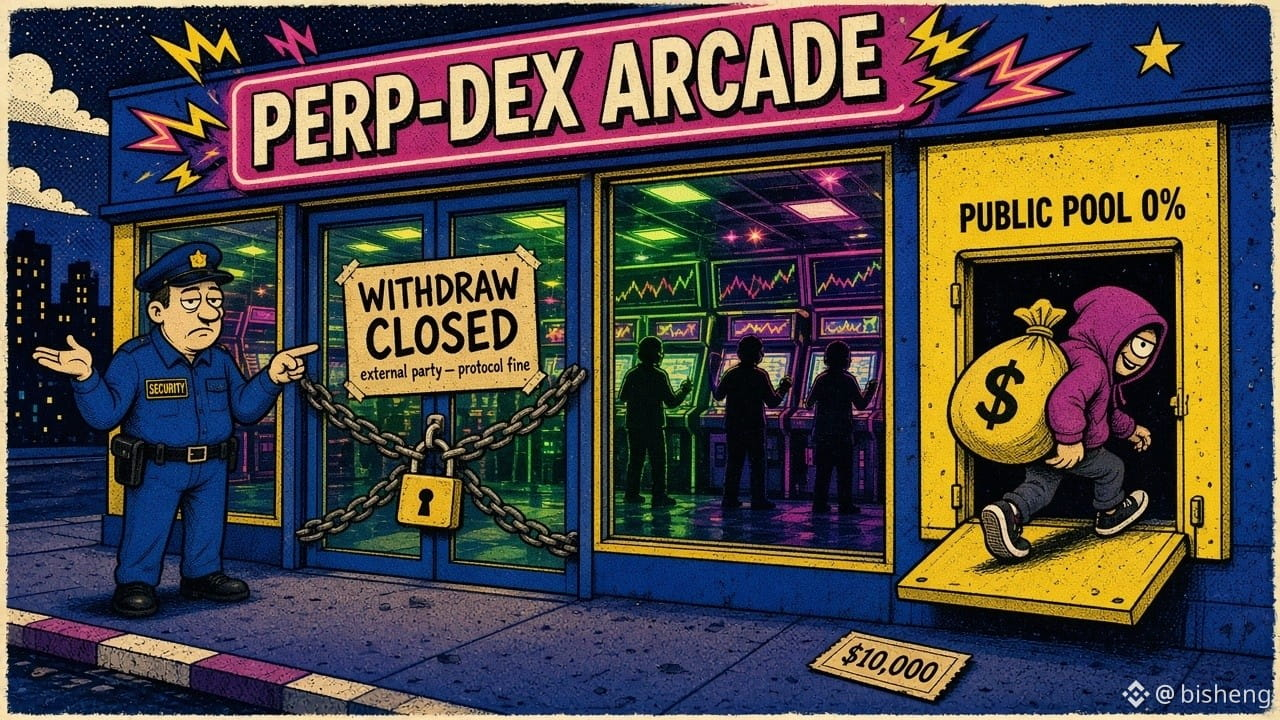
The method wasn’t complicated. First, the positions in the two accounts were closed to free up their margin. Then, using the victim’s account, a 0-fee public pool was created, and around $10,000 was deposited to acquire nearly 99.99% of its shares. Next, the victim’s USDC was dumped into the pool in chunks of about $1 million, then redeemed and withdrawn. On-chain observers saw the attacker’s address first swap the funds for Ethereum on CoW Protocol, then split them across other wallets, with some also flowing toward Hyperliquid and Monero.
There’s one crucial point in the analysis. Lighter’s API keys weren’t supposed to be able to transfer funds directly to someone else’s account; that step would still require an L1 wallet signature. But transfers between accounts under the same L1 address don’t require another signature. A public pool created by the victim is also considered their own account. So once the key is leaked, the pool becomes a withdrawal channel. A $10,000 deposit bought an exit. This wasn’t some sophisticated attack; there was a gap in the permissions.
The official account is now describing this as an “external single party” issue and saying the protocol is fine. That’s an attempt to absolve themselves. It doesn’t hold up. They’ve even suspended pool creation, which amounts to admitting that this route works. The key was the entry point; the pool rules were the exit. Both are problems. Anyone still emphasizing “this is not a smart contract vulnerability” is playing semantics.
You can still open and close trades, but you just can’t withdraw your money. That isn’t decentralization; it’s the platform closing the gate with a single statement.
I just saw LIT at around $2.59, down nearly 10% from the previous close of around $2.87. Upbit and Bithumb have already suspended LIT deposits and withdrawals following the official announcement. The token price and the Korean exchanges have already reacted; no one is waiting for a postmortem.
Some analysis has linked the two accounts to London market maker Abraxas Capital, saying that one of the transfers originally came from a wallet known to be theirs. The official account hasn’t named them, so treat this as unconfirmed for now—don’t state it as fact.
My view: this incident can’t be brushed off with “an external key was lost.” Withdrawals will probably resume in stages. Whether deposits and withdrawals resume on those two Korean exchanges depends on when they lift the suspension. If the pool permissions aren’t changed, the same method could be used again. If your money is still locked inside, don’t take “the protocol is fine” as reassurance. The official account still hasn’t provided a timeline for reopening. Changing the pool rules would be more useful than issuing another statement about an “external party.”
#Lighter #LIT
Lighter itself issued an announcement tonight. At around 19:02 Beijing time, @Lighter_xyz said it was investigating a security incident that appeared to involve only one compromised external party. As a precaution, all withdrawals and pool creation have been suspended. They gave no timeline for when they would resume.
People with money inside can’t get it out for now.
The on-chain activity over the past few hours lays out the process fairly clearly. Lookonchain reposted @0xTria’s analysis: around $15.5 million in USDC was drained from two market-maker accounts. One was #714710, with around $10.39 million; the other was #714723, with around $5.09 million. The official account hasn’t confirmed these figures or said that API keys were leaked, but this explanation matches the on-chain activity. According to the analysis, it happened sometime between about 5:41 and 6:25 this afternoon (Beijing time).
The method wasn’t complicated. First, the positions in the two accounts were closed to free up their margin. Then, using the victim’s account, a 0-fee public pool was created, and around $10,000 was deposited to acquire nearly 99.99% of its shares. Next, the victim’s USDC was dumped into the pool in chunks of about $1 million, then redeemed and withdrawn. On-chain observers saw the attacker’s address first swap the funds for Ethereum on CoW Protocol, then split them across other wallets, with some also flowing toward Hyperliquid and Monero.
There’s one crucial point in the analysis. Lighter’s API keys weren’t supposed to be able to transfer funds directly to someone else’s account; that step would still require an L1 wallet signature. But transfers between accounts under the same L1 address don’t require another signature. A public pool created by the victim is also considered their own account. So once the key is leaked, the pool becomes a withdrawal channel. A $10,000 deposit bought an exit. This wasn’t some sophisticated attack; there was a gap in the permissions.
The official account is now describing this as an “external single party” issue and saying the protocol is fine. That’s an attempt to absolve themselves. It doesn’t hold up. They’ve even suspended pool creation, which amounts to admitting that this route works. The key was the entry point; the pool rules were the exit. Both are problems. Anyone still emphasizing “this is not a smart contract vulnerability” is playing semantics.
You can still open and close trades, but you just can’t withdraw your money. That isn’t decentralization; it’s the platform closing the gate with a single statement.
I just saw LIT at around $2.59, down nearly 10% from the previous close of around $2.87. Upbit and Bithumb have already suspended LIT deposits and withdrawals following the official announcement. The token price and the Korean exchanges have already reacted; no one is waiting for a postmortem.
Some analysis has linked the two accounts to London market maker Abraxas Capital, saying that one of the transfers originally came from a wallet known to be theirs. The official account hasn’t named them, so treat this as unconfirmed for now—don’t state it as fact.
My view: this incident can’t be brushed off with “an external key was lost.” Withdrawals will probably resume in stages. Whether deposits and withdrawals resume on those two Korean exchanges depends on when they lift the suspension. If the pool permissions aren’t changed, the same method could be used again. If your money is still locked inside, don’t take “the protocol is fine” as reassurance. The official account still hasn’t provided a timeline for reopening. Changing the pool rules would be more useful than issuing another statement about an “external party.”
#Lighter #LIT
People with money inside can’t get it out for now.
The on-chain activity over the past few hours lays out the process fairly clearly. Lookonchain reposted @0xTria’s analysis: around $15.5 million in USDC was drained from two market-maker accounts. One was #714710, with around $10.39 million; the other was #714723, with around $5.09 million. The official account hasn’t confirmed these figures or said that API keys were leaked, but this explanation matches the on-chain activity. According to the analysis, it happened sometime between about 5:41 and 6:25 this afternoon (Beijing time).
The method wasn’t complicated. First, the positions in the two accounts were closed to free up their margin. Then, using the victim’s account, a 0-fee public pool was created, and around $10,000 was deposited to acquire nearly 99.99% of its shares. Next, the victim’s USDC was dumped into the pool in chunks of about $1 million, then redeemed and withdrawn. On-chain observers saw the attacker’s address first swap the funds for Ethereum on CoW Protocol, then split them across other wallets, with some also flowing toward Hyperliquid and Monero.
There’s one crucial point in the analysis. Lighter’s API keys weren’t supposed to be able to transfer funds directly to someone else’s account; that step would still require an L1 wallet signature. But transfers between accounts under the same L1 address don’t require another signature. A public pool created by the victim is also considered their own account. So once the key is leaked, the pool becomes a withdrawal channel. A $10,000 deposit bought an exit. This wasn’t some sophisticated attack; there was a gap in the permissions.
The official account is now describing this as an “external single party” issue and saying the protocol is fine. That’s an attempt to absolve themselves. It doesn’t hold up. They’ve even suspended pool creation, which amounts to admitting that this route works. The key was the entry point; the pool rules were the exit. Both are problems. Anyone still emphasizing “this is not a smart contract vulnerability” is playing semantics.
You can still open and close trades, but you just can’t withdraw your money. That isn’t decentralization; it’s the platform closing the gate with a single statement.
I just saw LIT at around $2.59, down nearly 10% from the previous close of around $2.87. Upbit and Bithumb have already suspended LIT deposits and withdrawals following the official announcement. The token price and the Korean exchanges have already reacted; no one is waiting for a postmortem.
Some analysis has linked the two accounts to London market maker Abraxas Capital, saying that one of the transfers originally came from a wallet known to be theirs. The official account hasn’t named them, so treat this as unconfirmed for now—don’t state it as fact.
My view: this incident can’t be brushed off with “an external key was lost.” Withdrawals will probably resume in stages. Whether deposits and withdrawals resume on those two Korean exchanges depends on when they lift the suspension. If the pool permissions aren’t changed, the same method could be used again. If your money is still locked inside, don’t take “the protocol is fine” as reassurance. The official account still hasn’t provided a timeline for reopening. Changing the pool rules would be more useful than issuing another statement about an “external party.”
#Lighter #LIT
161

The Lighter situation: everyone’s shouting that “the protocol wasn’t hacked; a market maker’s API key was just leaked,” and people in the comments are already calling for others to buy the dip on LIT. I think that claim is exactly what we should be most wary of.
First, what can be verified. Community analysis (as reported by BlockBeats, @BimbaCrypto, and others) says two whale accounts were drained: #714710 , about 10.39 million USDC, and #714723 , about 5.09 million USDC. I just checked these two accounts through Lighter’s public API: their positions are completely closed, and their balances are down to just 1,040.39 and 510.69 USDC, respectively. Notice those figures: they’re almost exactly one ten-thousandth of the original balances.
That matches the method reconstructed by the community: the attacker used the victims’ accounts to create a 0-fee public pool, first deposited about $10,000 of their own money to get a 99.99% share, then moved the victims’ USDC into the pool in batches and withdrew it. The victims were left with the remaining 0.01%.
The key issue is how permissions are designed. According to the community analysis, an API key shouldn’t be able to transfer money directly to an external address. But transfers between accounts under the same L1 address don’t require an additional signature, and the system treats a pool created by the victim’s own account as “their own account.” In other words, a trading key that should only be used to place orders can, by taking a detour, effectively gain withdrawal access. On CEXs, people disable withdrawal permissions when setting up API keys precisely to prevent this kind of thing. Here, that wall exists, but there’s an unlocked door in it.
So I’m not convinced by the claim that “it wasn’t a protocol vulnerability.” It’s true that the contracts weren’t breached, but the rules that let a trading key move funds are part of the protocol. Lighter still hasn’t issued an official statement as of the time I’m posting, so let’s hold off on conclusions about how the key was lost—or whether it was actually lost.
On-chain: Wu Blockchain cited Arkham, saying the attacker’s address, 0xb3fff…e387, swapped 10.39 million USDC through CoW for about 5,750 ETH. I just checked the address: it still has about 4,804.5 ETH, and the funds are already being split up for transfers out.
If you’re using the Lighter API, the best thing you can do now is revoke and recreate all your keys, then check whether any unfamiliar pools or subaccounts have appeared under your L1 address.
The Lighter situation: everyone’s shouting that “the protocol wasn’t hacked; a market maker’s API key was just leaked,” and people in the comments are already calling for others to buy the dip on LIT. I think that claim is exactly what we should be most wary of.
First, what can be verified. Community analysis (as reported by BlockBeats, @BimbaCrypto, and others) says two whale accounts were drained: #714710 , about 10.39 million USDC, and #714723 , about 5.09 million USDC. I just checked these two accounts through Lighter’s public API: their positions are completely closed, and their balances are down to just 1,040.39 and 510.69 USDC, respectively. Notice those figures: they’re almost exactly one ten-thousandth of the original balances.
That matches the method reconstructed by the community: the attacker used the victims’ accounts to create a 0-fee public pool, first deposited about $10,000 of their own money to get a 99.99% share, then moved the victims’ USDC into the pool in batches and withdrew it. The victims were left with the remaining 0.01%.
The key issue is how permissions are designed. According to the community analysis, an API key shouldn’t be able to transfer money directly to an external address. But transfers between accounts under the same L1 address don’t require an additional signature, and the system treats a pool created by the victim’s own account as “their own account.” In other words, a trading key that should only be used to place orders can, by taking a detour, effectively gain withdrawal access. On CEXs, people disable withdrawal permissions when setting up API keys precisely to prevent this kind of thing. Here, that wall exists, but there’s an unlocked door in it.
So I’m not convinced by the claim that “it wasn’t a protocol vulnerability.” It’s true that the contracts weren’t breached, but the rules that let a trading key move funds are part of the protocol. Lighter still hasn’t issued an official statement as of the time I’m posting, so let’s hold off on conclusions about how the key was lost—or whether it was actually lost.
On-chain: Wu Blockchain cited Arkham, saying the attacker’s address, 0xb3fff…e387, swapped 10.39 million USDC through CoW for about 5,750 ETH. I just checked the address: it still has about 4,804.5 ETH, and the funds are already being split up for transfers out.
If you’re using the Lighter API, the best thing you can do now is revoke and recreate all your keys, then check whether any unfamiliar pools or subaccounts have appeared under your L1 address.
First, what can be verified. Community analysis (as reported by BlockBeats, @BimbaCrypto, and others) says two whale accounts were drained: #714710 , about 10.39 million USDC, and #714723 , about 5.09 million USDC. I just checked these two accounts through Lighter’s public API: their positions are completely closed, and their balances are down to just 1,040.39 and 510.69 USDC, respectively. Notice those figures: they’re almost exactly one ten-thousandth of the original balances.
That matches the method reconstructed by the community: the attacker used the victims’ accounts to create a 0-fee public pool, first deposited about $10,000 of their own money to get a 99.99% share, then moved the victims’ USDC into the pool in batches and withdrew it. The victims were left with the remaining 0.01%.
The key issue is how permissions are designed. According to the community analysis, an API key shouldn’t be able to transfer money directly to an external address. But transfers between accounts under the same L1 address don’t require an additional signature, and the system treats a pool created by the victim’s own account as “their own account.” In other words, a trading key that should only be used to place orders can, by taking a detour, effectively gain withdrawal access. On CEXs, people disable withdrawal permissions when setting up API keys precisely to prevent this kind of thing. Here, that wall exists, but there’s an unlocked door in it.
So I’m not convinced by the claim that “it wasn’t a protocol vulnerability.” It’s true that the contracts weren’t breached, but the rules that let a trading key move funds are part of the protocol. Lighter still hasn’t issued an official statement as of the time I’m posting, so let’s hold off on conclusions about how the key was lost—or whether it was actually lost.
On-chain: Wu Blockchain cited Arkham, saying the attacker’s address, 0xb3fff…e387, swapped 10.39 million USDC through CoW for about 5,750 ETH. I just checked the address: it still has about 4,804.5 ETH, and the funds are already being split up for transfers out.
If you’re using the Lighter API, the best thing you can do now is revoke and recreate all your keys, then check whether any unfamiliar pools or subaccounts have appeared under your L1 address.
7

·
--
Opinion: Lighter may be dealing with leaked API keys from market maker accounts, rather than a hacking incidentOpinion: Lighter may be dealing with leaked API keys from market maker accounts, rather than a hacking incident
On November 16, Predicts.guru founder @0xTria reposted the findings of a Korean trader’s research, saying that Lighter is experiencing a leak of API keys from two large market maker accounts, not a protocol-level hack.
The attacker closed the victim’s positions, created a public pool with 0% fees from the victim’s account, and put in about $10,000 to acquire a 99.99% share. They then transferred the victim’s USDC into the pool in batches of $1 million and redeemed it. API keys on Lighter cannot send funds to other people, but transfers between accounts on the same L1 address do not require a signature, and a pool created by the victim is considered their own account.
Opinion: Lighter may be dealing with leaked API keys from market maker accounts, rather than a hacking incident
Opinion: Lighter may be dealing with leaked API keys from market maker accounts, rather than a hacking incident
On November 16, Predicts.guru founder @0xTria reposted the findings of a Korean trader’s research, saying that Lighter is experiencing a leak of API keys from two large market maker accounts, not a protocol-level hack.
The attacker closed the victim’s positions, created a public pool with 0% fees from the victim’s account, and put in about $10,000 to acquire a 99.99% share. They then transferred the victim’s USDC into the pool in batches of $1 million and redeemed it. API keys on Lighter cannot send funds to other people, but transfers between accounts on the same L1 address do not require a signature, and a pool created by the victim is considered their own account.
On November 16, Predicts.guru founder @0xTria reposted the findings of a Korean trader’s research, saying that Lighter is experiencing a leak of API keys from two large market maker accounts, not a protocol-level hack.
The attacker closed the victim’s positions, created a public pool with 0% fees from the victim’s account, and put in about $10,000 to acquire a 99.99% share. They then transferred the victim’s USDC into the pool in batches of $1 million and redeemed it. API keys on Lighter cannot send funds to other people, but transfers between accounts on the same L1 address do not require a signature, and a pool created by the victim is considered their own account.
8
Log in to explore more content
Join global crypto users on Binance Square
⚡️ Get latest and useful information about crypto.
💬 Trusted by the world’s largest crypto exchange.
👍 Discover real insights from verified creators.
Email / Phone number
Trending Topics
1
#A Packed Week of Earnings and Data Tests Markets
82,071 views
489 Discussing
2
#AnthropicIPOTestsInvestorAppetiteForAI
162,142 views
1,734 Discussing
3
#NvidiaBoardNotConsideringHuang’sReturnasCEO
15,948 views
227 Discussing
4
#WhatInvestmentSignalsDo13FFilingsReveal?
10,126 views
160 Discussing
5
#GoldmanSachsAndMillenniumEachHeldOver$1.2BInBitcoinETFs
0 views
0 Discussing
6
#InvescoStablecoinReservesFundLaunchesOnEthereum
3,998 views
88 Discussing
7
#CypherpunkReports$306MQ3NetProfit
770 views
16 Discussing
8
#OPTIMJACKAttackInfectsAtLeast186Websites
7,293 views
114 Discussing
9
#StrategySells2.09MMSTRSharesFor$244.7M
2,218 views
19 Discussing
10
#StablecoinMarketShrinksAtFastestPaceSinceTerraLuna
8,573 views
85 Discussing