
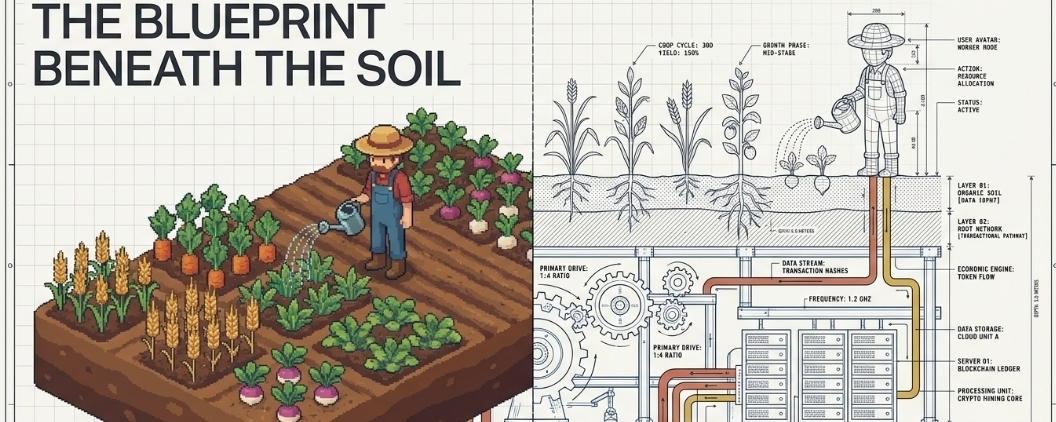
I don't know when exactly it happened. But at some point Pixels stopped feeling like a farming game and started feeling like... infrastructure.
It's a strange word to use for something with pixel art and cozy loops. But the more I follow what the team is actually building, the less it feels like a game company and the more it feels like a platform company that happens to have a game at the center of it.
Let me try to explain what I mean.
Founder Luke Barwikowski has outlined a vision to transform Pixels from a single game into a user acquisition engine for Web3 gaming. That sounds like a big statement. But look at what's actually being built underneath it.
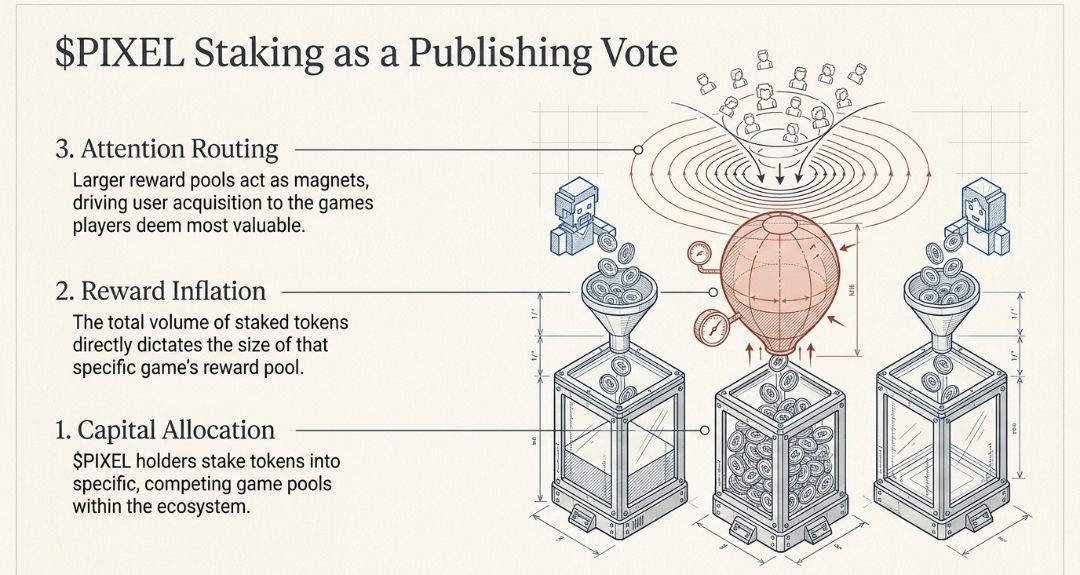
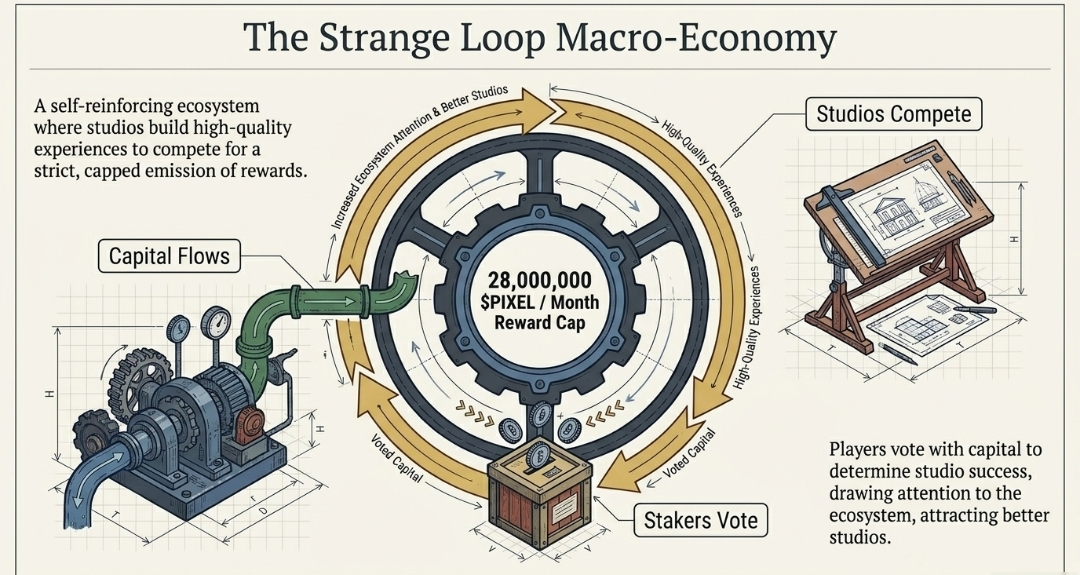
$PIXEL holders can now stake their tokens into specific game pools. The more PIXEL players stake to a game, the bigger that game's reward pool becomes. So you're not just holding a token anymore. You're effectively voting on which games inside the ecosystem deserve attention. That's not a game mechanic. That's closer to a publishing decision.
And then there's vPIXEL.
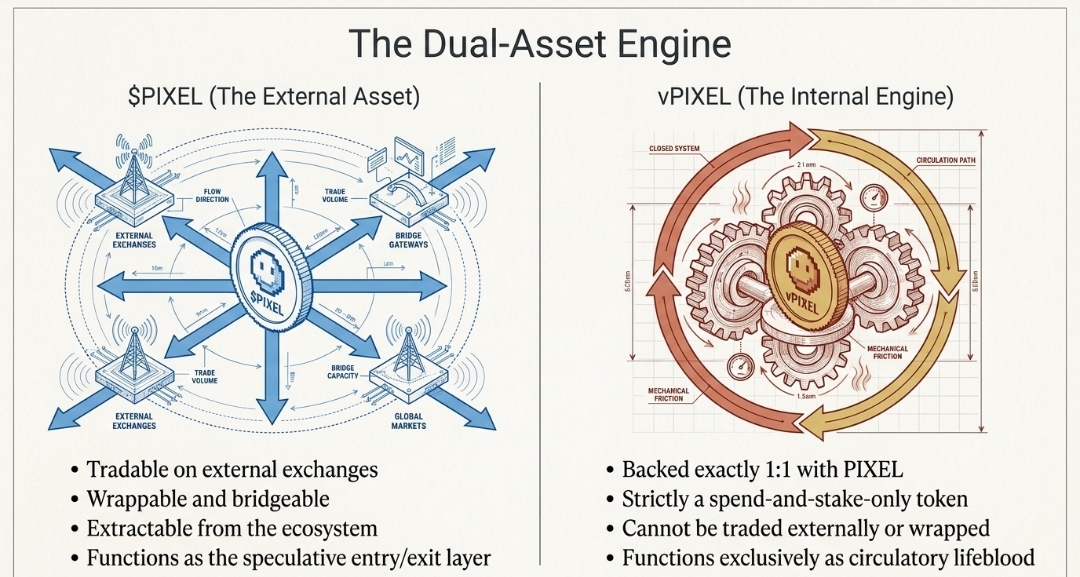
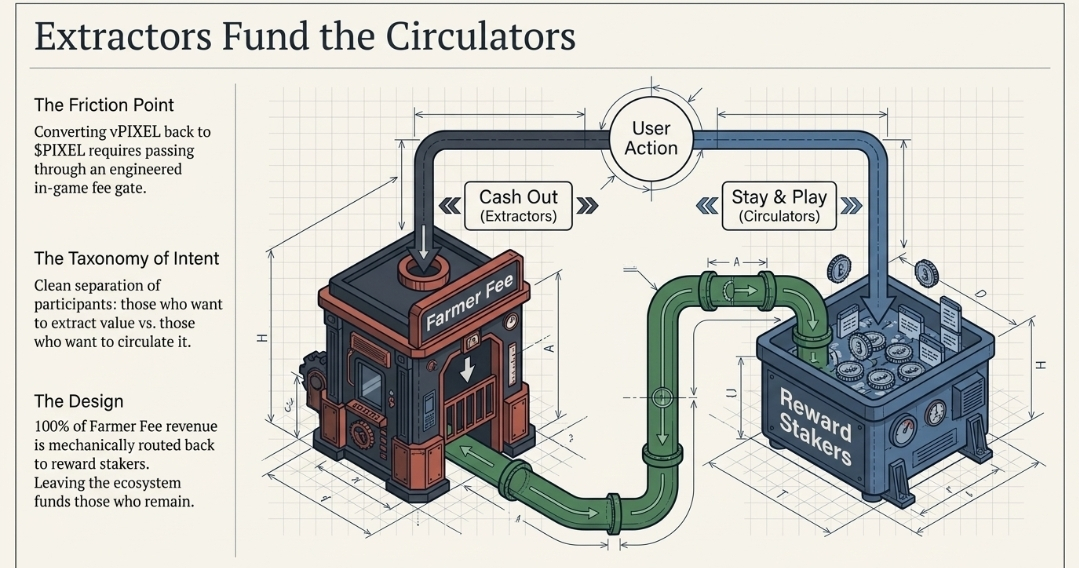
It's a spend-and-stake-only token, backed one-to-one with PIXEL. It can't be traded on an exchange. It can't be wrapped. If players want to convert it back to PIXEL, they either pay a fee in-game, which gets redistributed to people holding the token or they just use it inside the ecosystem as-is.
At first that felt like a complicated workaround. But the more I thought about it, the more it felt like a clean separation. Two types of participants. Two types of intent.
One group wants to extract. One wants to circulate.
100% of Farmer Fee revenue goes back to reward stakers in the Pixels ecosystem. So the people who leave... are actually funding the people who stay. That's not accidental. That's design.
What's interesting is how quietly all of this is happening.
The CEO said in a March 2026 AMA that the game is in the best economic spot it's ever been in and has been holding for months. The focus now is to grow the ecosystem. Not grow the player count. Grow the ecosystem. That's a different goal. And it asks a different question of the token.
Because if $PIXEL is no longer just about what you do inside the game... if it's about which games you support, how long you stay, whether your behavior is circular or extractive... then what kind of asset is it becoming?
Not exactly a currency. Not exactly an investment. Something in between. Something that only makes sense if you understand the full system around it.
Monthly staking rewards are currently capped at 28 million PIXEL per month as of March 2026, with rewards split based on the total PIXEL staked to each game, encouraging studios to build high-quality experiences to attract stakers.
That last part is the one that sticks with me. Studios competing for staker attention. Players deciding which games deserve capital. A token sitting at the center of both.
It's a strange loop when you really look at it.
And whether it works at real scale... I genuinely don't know. But I think that's the honest answer right now. The design is ahead of the proof. The system makes sense on paper. The question is whether enough players understand it deeply enough to participate in it the way it was intended.
Or whether most just log in, farm, and leave.
And honestly? That tension, between what the system wants from you and what you actually came to do might be the most interesting thing about Pixels right now.
It's no longer just a game trying to keep you playing.
It's a system trying to figure out who's actually worth keeping. 🤔
NFA ~ DYOR
