

LaoYao_crypto
684 Posts
LaoYao_crypto
Report
Block User
币圈心学践行者|知行合一,摆脱FOMO与焦虑,在周期中稳健生存与增值
Frequent Trader
2.6 Years
29 Following
449 Followers
767 Liked
Posts
All
Quotes
Videos
Live
Article
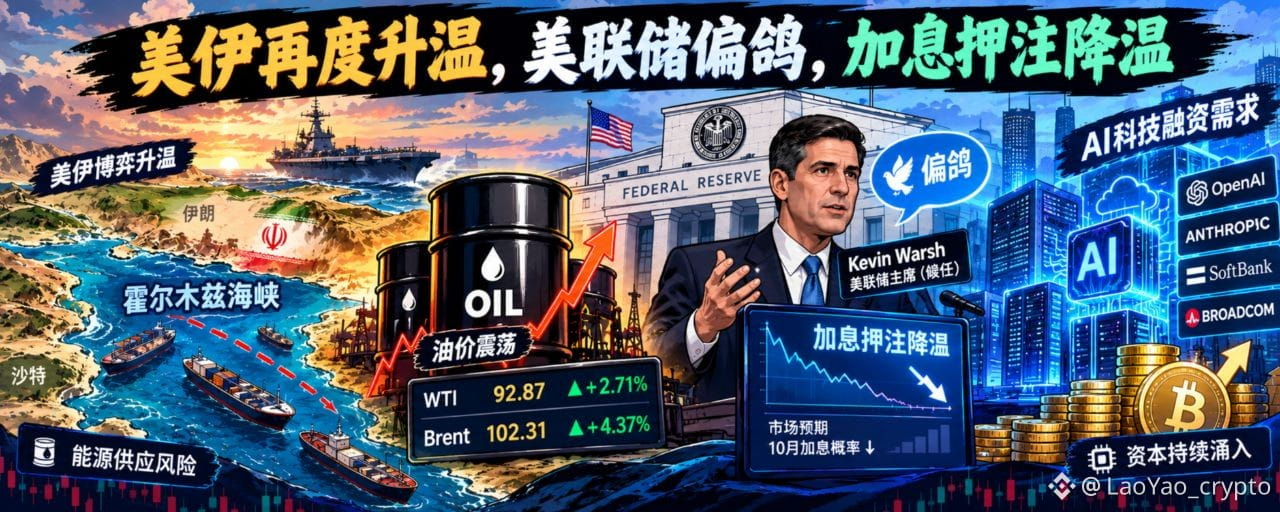
October 2: U.S.-Iran tensions flare again; the Fed turns more dovish, and rate-hike bets coolOver the past 24 hours, global assets have undergone a round of intense “re-pricing.”
Tensions in the U.S.-Iran standoff have escalated, pushing oil prices to fluctuate higher;
After surging to higher levels, yields on long-term U.S. Treasuries pulled back;
Federal Reserve officials have issued more cautious policy signals, and market bets on further rate hikes in October have clearly cooled.
Meanwhile, AI capital expenditures are still expanding at high speed. Broadcom even provided up to $42 billion in financing support to Anthropic for its AI infrastructure buildout, showing that AI is evolving from a “technology investment theme” into a financing theme across global capital markets.
The market’s core contradiction is becoming increasingly clear:
October 2: U.S.-Iran tensions flare again; the Fed turns more dovish, and rate-hike bets cool
Over the past 24 hours, global assets have undergone a round of intense “re-pricing.”
Tensions in the U.S.-Iran standoff have escalated, pushing oil prices to fluctuate higher;
After surging to higher levels, yields on long-term U.S. Treasuries pulled back;
Federal Reserve officials have issued more cautious policy signals, and market bets on further rate hikes in October have clearly cooled.
Meanwhile, AI capital expenditures are still expanding at high speed. Broadcom even provided up to $42 billion in financing support to Anthropic for its AI infrastructure buildout, showing that AI is evolving from a “technology investment theme” into a financing theme across global capital markets.
The market’s core contradiction is becoming increasingly clear:
Tensions in the U.S.-Iran standoff have escalated, pushing oil prices to fluctuate higher;
After surging to higher levels, yields on long-term U.S. Treasuries pulled back;
Federal Reserve officials have issued more cautious policy signals, and market bets on further rate hikes in October have clearly cooled.
Meanwhile, AI capital expenditures are still expanding at high speed. Broadcom even provided up to $42 billion in financing support to Anthropic for its AI infrastructure buildout, showing that AI is evolving from a “technology investment theme” into a financing theme across global capital markets.
The market’s core contradiction is becoming increasingly clear:
294
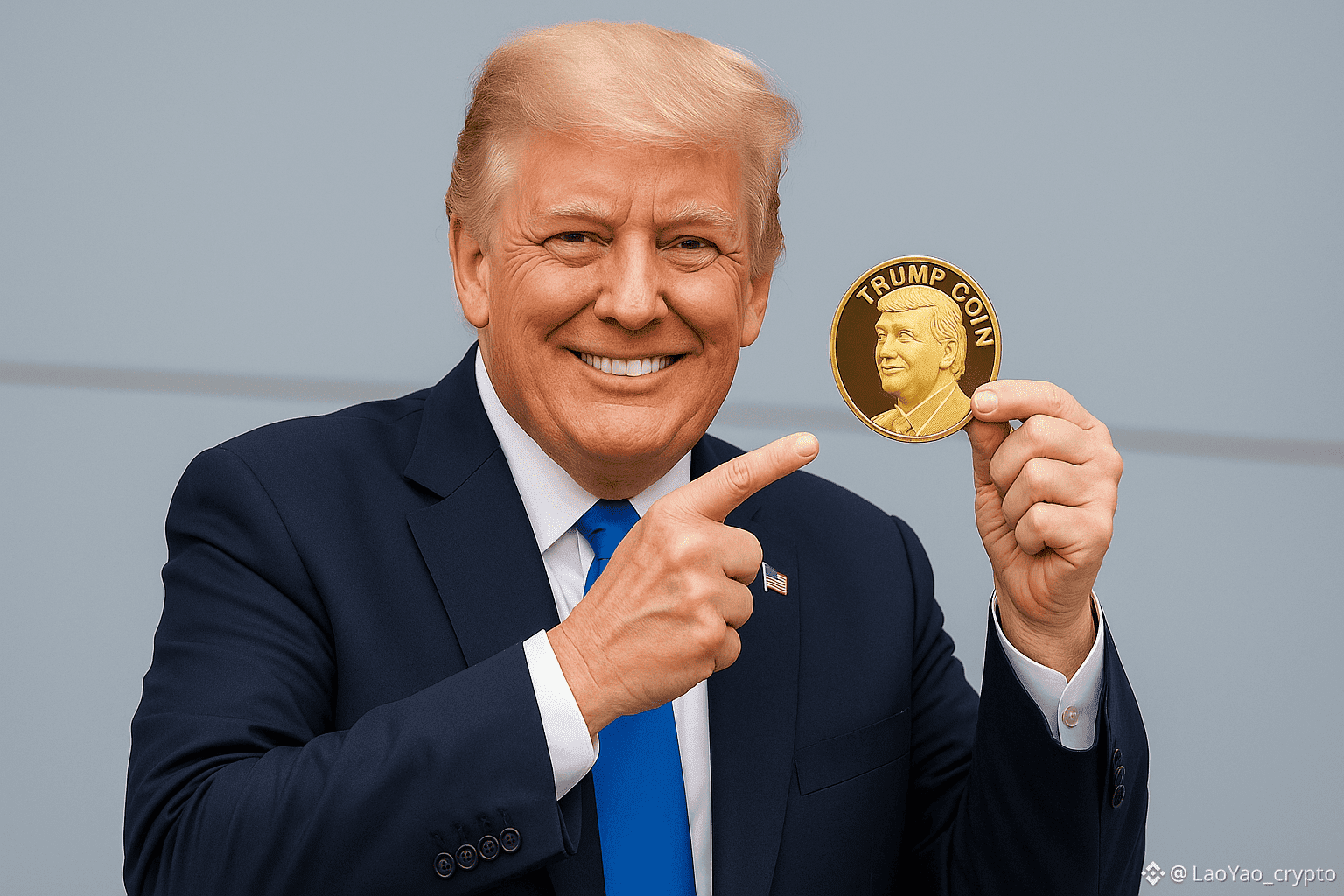
🚦 The 3rd TrumpCoin Holders Dinner will be held next month. The first 185 holders will get entry
According to Bloomberg, the coin promoter Fight Fight Fight, $TRUMP , plans to hold a dinner for coin holders on November 22 at the Trump National Golf Club. The top 185 TRUMP holders by holdings—{future}(TRUMPUSDT)—will be eligible to attend, and Trump himself has been listed as a special invited keynote speaker.
Background
$TRUMP is an official meme coin associated with U.S. President Donald Trump, launched in January 2025 with a total supply of 1 billion coins. Since listing, the token has cumulatively dropped by about 95% from its all-time high.
This is the third time the holders dinner has been held. The first two were held in May 2025 and April 2026, respectively. Trump attended both times and delivered speeches, drawing a large number of Chinese-language crypto community participants on-site.
Risk Warning
Because entry slots are tied to the ranking of coin holdings, it can easily trigger significant price fluctuations before the event. Reports say that in the previous event, about 92 of the invitees (out of a total of about 220) had already fully exited their positions before the event began.
Before engaging in any related trading, please thoroughly assess the risks.
🚦 The 3rd TrumpCoin Holders Dinner will be held next month. The first 185 holders will get entry
According to Bloomberg, the coin promoter Fight Fight Fight, $TRUMP , plans to hold a dinner for coin holders on November 22 at the Trump National Golf Club. The top 185 TRUMP holders by holdings——will be eligible to attend, and Trump himself has been listed as a special invited keynote speaker.
Background
$TRUMP is an official meme coin associated with U.S. President Donald Trump, launched in January 2025 with a total supply of 1 billion coins. Since listing, the token has cumulatively dropped by about 95% from its all-time high.
This is the third time the holders dinner has been held. The first two were held in May 2025 and April 2026, respectively. Trump attended both times and delivered speeches, drawing a large number of Chinese-language crypto community participants on-site.
Risk Warning
Because entry slots are tied to the ranking of coin holdings, it can easily trigger significant price fluctuations before the event. Reports say that in the previous event, about 92 of the invitees (out of a total of about 220) had already fully exited their positions before the event began.
Before engaging in any related trading, please thoroughly assess the risks.
According to Bloomberg, the coin promoter Fight Fight Fight, $TRUMP , plans to hold a dinner for coin holders on November 22 at the Trump National Golf Club. The top 185 TRUMP holders by holdings——will be eligible to attend, and Trump himself has been listed as a special invited keynote speaker.
Background
$TRUMP is an official meme coin associated with U.S. President Donald Trump, launched in January 2025 with a total supply of 1 billion coins. Since listing, the token has cumulatively dropped by about 95% from its all-time high.
This is the third time the holders dinner has been held. The first two were held in May 2025 and April 2026, respectively. Trump attended both times and delivered speeches, drawing a large number of Chinese-language crypto community participants on-site.
Risk Warning
Because entry slots are tied to the ranking of coin holdings, it can easily trigger significant price fluctuations before the event. Reports say that in the previous event, about 92 of the invitees (out of a total of about 220) had already fully exited their positions before the event began.
Before engaging in any related trading, please thoroughly assess the risks.
482

Article
October 1: Inflation cools, long bonds rise; Middle East hijacking incident adds geopolitical uncertaintyOver the past 24 hours, the market has seen a pricing mismatch worth paying attention to:
U.S. August core PCE inflation came in below expectations, while consumer spending remained strong. Market expectations for a rate hike again in October were further cooled.
Meanwhile, U.S. 10-year Treasury yields are still above 5.29%, while the 30-year yield at one point approached 5.65%.
In other words:
In the short end, the market is trading “decreasing rate-hike pressure,” but in the long end, it is trading “rising long-term funding costs.”
This could be the most noteworthy shift in the global capital markets right now.
Meanwhile, a flydubai FZ1073 flight from Dubai to Tel Aviv experienced a violent incident in the cockpit. The first officer stabbed the captain and attempted to take control of the aircraft. The plane dropped rapidly by nearly 14,000 feet within about 30 seconds. The crew and passengers ultimately subdued the attacker together and the aircraft made a safe landing in Tabuk, Saudi Arabia.
October 1: Inflation cools, long bonds rise; Middle East hijacking incident adds geopolitical uncertainty
Over the past 24 hours, the market has seen a pricing mismatch worth paying attention to:
U.S. August core PCE inflation came in below expectations, while consumer spending remained strong. Market expectations for a rate hike again in October were further cooled.
Meanwhile, U.S. 10-year Treasury yields are still above 5.29%, while the 30-year yield at one point approached 5.65%.
In other words:
In the short end, the market is trading “decreasing rate-hike pressure,” but in the long end, it is trading “rising long-term funding costs.”
This could be the most noteworthy shift in the global capital markets right now.
Meanwhile, a flydubai FZ1073 flight from Dubai to Tel Aviv experienced a violent incident in the cockpit. The first officer stabbed the captain and attempted to take control of the aircraft. The plane dropped rapidly by nearly 14,000 feet within about 30 seconds. The crew and passengers ultimately subdued the attacker together and the aircraft made a safe landing in Tabuk, Saudi Arabia.
U.S. August core PCE inflation came in below expectations, while consumer spending remained strong. Market expectations for a rate hike again in October were further cooled.
Meanwhile, U.S. 10-year Treasury yields are still above 5.29%, while the 30-year yield at one point approached 5.65%.
In other words:
In the short end, the market is trading “decreasing rate-hike pressure,” but in the long end, it is trading “rising long-term funding costs.”
This could be the most noteworthy shift in the global capital markets right now.
Meanwhile, a flydubai FZ1073 flight from Dubai to Tel Aviv experienced a violent incident in the cockpit. The first officer stabbed the captain and attempted to take control of the aircraft. The plane dropped rapidly by nearly 14,000 feet within about 30 seconds. The crew and passengers ultimately subdued the attacker together and the aircraft made a safe landing in Tabuk, Saudi Arabia.
464
Article
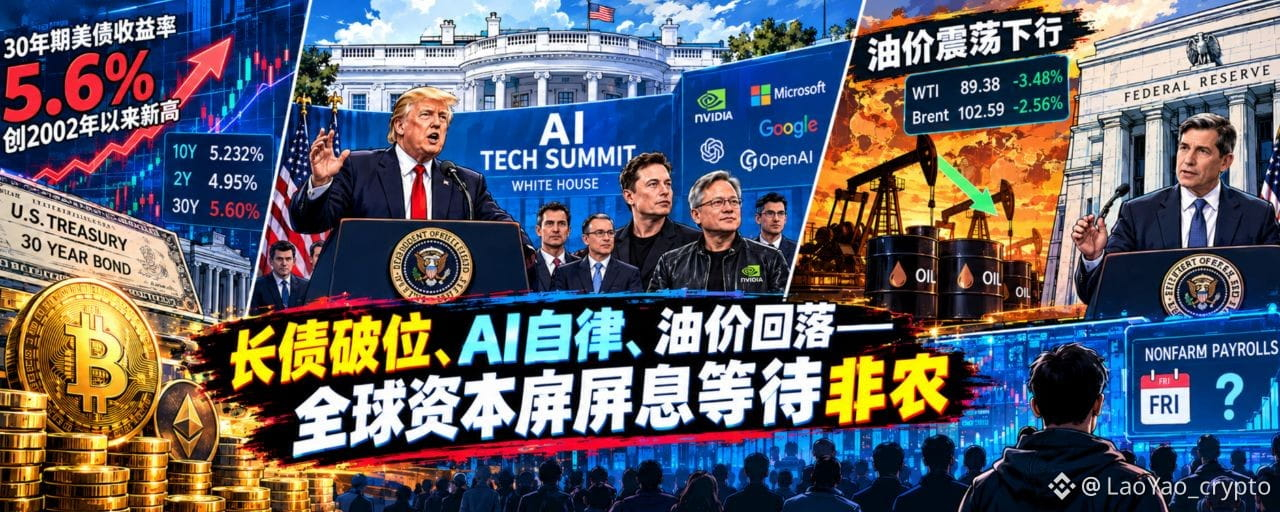
September 30: Long-end bonds break down, AI self-discipline, oil prices fall back—global capital holds its breath for the nonfarm payrollsOver the past 24 hours, global cross-asset markets have continued to reprice around three main themes:
First, long-dated U.S. Treasury yields break above multi-year highs, and global capital costs continue to rise.
Second, an impasse in the Iran-U.S. talks intertwines with the release of strategic oil reserves; after oil prices fluctuate at elevated levels, they pull back.
Second, Trump sets the tone for an AI “self-regulation” pathway, while what the market is truly waiting for is confirmation of the Fed’s rate path in Friday’s nonfarm payrolls.
The 30-year U.S. Treasury yield breaks through 5.6%, hitting a new high since 2002, implying that the risk-free rate anchor for global asset pricing is moving higher still.
September 30: Long-end bonds break down, AI self-discipline, oil prices fall back—global capital holds its breath for the nonfarm payrolls
Over the past 24 hours, global cross-asset markets have continued to reprice around three main themes:
First, long-dated U.S. Treasury yields break above multi-year highs, and global capital costs continue to rise.
Second, an impasse in the Iran-U.S. talks intertwines with the release of strategic oil reserves; after oil prices fluctuate at elevated levels, they pull back.
Second, Trump sets the tone for an AI “self-regulation” pathway, while what the market is truly waiting for is confirmation of the Fed’s rate path in Friday’s nonfarm payrolls.
The 30-year U.S. Treasury yield breaks through 5.6%, hitting a new high since 2002, implying that the risk-free rate anchor for global asset pricing is moving higher still.
First, long-dated U.S. Treasury yields break above multi-year highs, and global capital costs continue to rise.
Second, an impasse in the Iran-U.S. talks intertwines with the release of strategic oil reserves; after oil prices fluctuate at elevated levels, they pull back.
Second, Trump sets the tone for an AI “self-regulation” pathway, while what the market is truly waiting for is confirmation of the Fed’s rate path in Friday’s nonfarm payrolls.
The 30-year U.S. Treasury yield breaks through 5.6%, hitting a new high since 2002, implying that the risk-free rate anchor for global asset pricing is moving higher still.
338
Article
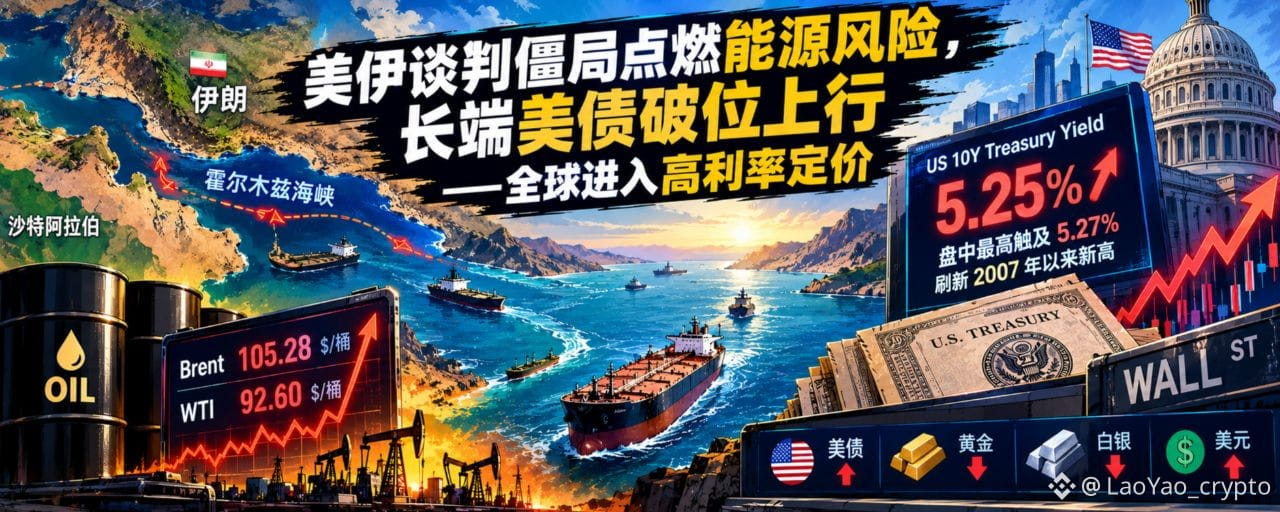
September 29: Stalled U.S.-Iran talks ignite energy risk, long-end U.S. Treasuries break higher — the world enters a high-interest-rate pricing regimeOver the past 24 hours, the market’s core contradiction has refocused on a transmission chain:
Stalled talks between the U.S. and Iran → Hormuz energy risk → oil prices rise → inflation expectations heat up → long-end U.S. Treasury yields break above 5.2% → global risk assets come under pressure.
The yield on the 10-year U.S. Treasury rose to 5.27% intraday, the highest since 2007;
The yield on the 30-year bond has risen to about 5.57%, nearing its highest level since 2004;
Meanwhile, Brent crude is up to around $105, and all three major U.S. stock indexes closed lower.
The market is once again trading on an increasingly clear theme:
September 29: Stalled U.S.-Iran talks ignite energy risk, long-end U.S. Treasuries break higher — the world enters a high-interest-rate pricing regime
Over the past 24 hours, the market’s core contradiction has refocused on a transmission chain:
Stalled talks between the U.S. and Iran → Hormuz energy risk → oil prices rise → inflation expectations heat up → long-end U.S. Treasury yields break above 5.2% → global risk assets come under pressure.
The yield on the 10-year U.S. Treasury rose to 5.27% intraday, the highest since 2007;
The yield on the 30-year bond has risen to about 5.57%, nearing its highest level since 2004;
Meanwhile, Brent crude is up to around $105, and all three major U.S. stock indexes closed lower.
The market is once again trading on an increasingly clear theme:
Stalled talks between the U.S. and Iran → Hormuz energy risk → oil prices rise → inflation expectations heat up → long-end U.S. Treasury yields break above 5.2% → global risk assets come under pressure.
The yield on the 10-year U.S. Treasury rose to 5.27% intraday, the highest since 2007;
The yield on the 30-year bond has risen to about 5.57%, nearing its highest level since 2004;
Meanwhile, Brent crude is up to around $105, and all three major U.S. stock indexes closed lower.
The market is once again trading on an increasingly clear theme:
925
Article
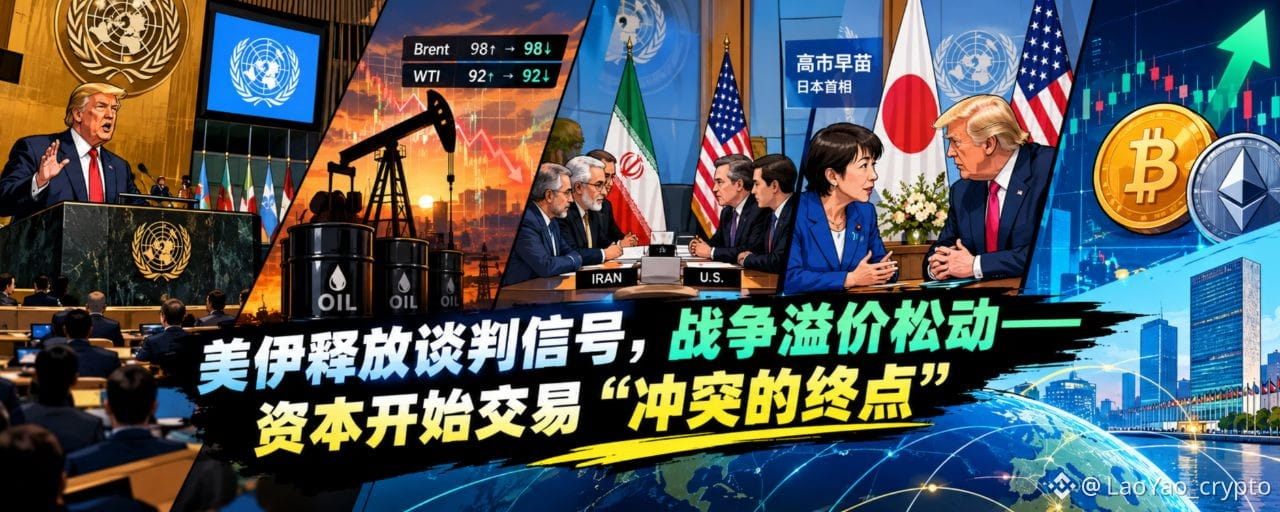
September 23: The U.S. and Iran release negotiation signals—war premium loosens, and capital begins trading the “end point” of the conflictIn the past 24 hours, global financial markets have seen a notable change worth paying attention to:
The focus of market trading is shifting from “whether the war will escalate” to “whether there is a path to end the conflict.”
The 81st UN General Assembly has become a new window for geopolitical maneuvering.
In his speech at the UN General Assembly, Trump continued to send very tough signals to Iran, saying that Iran faces the choice of either “reaching an agreement” or suffering further strikes;
But at the same time, representatives from the U.S. and Iran held about three hours of contact in New York, after which Trump said the talks were “very good” and “very productive,” adding that negotiations would continue.
September 23: The U.S. and Iran release negotiation signals—war premium loosens, and capital begins trading the “end point” of the conflict
In the past 24 hours, global financial markets have seen a notable change worth paying attention to:
The focus of market trading is shifting from “whether the war will escalate” to “whether there is a path to end the conflict.”
The 81st UN General Assembly has become a new window for geopolitical maneuvering.
In his speech at the UN General Assembly, Trump continued to send very tough signals to Iran, saying that Iran faces the choice of either “reaching an agreement” or suffering further strikes;
But at the same time, representatives from the U.S. and Iran held about three hours of contact in New York, after which Trump said the talks were “very good” and “very productive,” adding that negotiations would continue.
The focus of market trading is shifting from “whether the war will escalate” to “whether there is a path to end the conflict.”
The 81st UN General Assembly has become a new window for geopolitical maneuvering.
In his speech at the UN General Assembly, Trump continued to send very tough signals to Iran, saying that Iran faces the choice of either “reaching an agreement” or suffering further strikes;
But at the same time, representatives from the U.S. and Iran held about three hours of contact in New York, after which Trump said the talks were “very good” and “very productive,” adding that negotiations would continue.
312

Article
Meta Muse Breaks Ground: AI Agents Are Entering a Maturity PhaseOn September 8, Meta launched its personal AI Agent, Muse.
In less than two weeks, Muse’s downloads have exceeded 2.5 million, and it once topped the U.S. App Store Free rankings;
September 21,
The stock price rose by about 11.3% in a single day, setting a strong performance for the period.
What’s truly traded in the capital markets may not just be a new app.
Rather, it’s a more important judgment:
AI Agent, is entering the “gateway that takes care of things for you” from the “chat-capable model.”
Meta has equipped Muse with a dedicated Secure VM, a browser, background execution, permission confirmation, and a one-time payment card.
All the user needs to do is state the goal. Muse can then plan, search, fill out forms, place orders by itself, and only come back to the user for confirmation when necessary.
Meta Muse Breaks Ground: AI Agents Are Entering a Maturity Phase
On September 8, Meta launched its personal AI Agent, Muse.
In less than two weeks, Muse’s downloads have exceeded 2.5 million, and it once topped the U.S. App Store Free rankings;
September 21,
The stock price rose by about 11.3% in a single day, setting a strong performance for the period.
What’s truly traded in the capital markets may not just be a new app.
Rather, it’s a more important judgment:
AI Agent, is entering the “gateway that takes care of things for you” from the “chat-capable model.”
Meta has equipped Muse with a dedicated Secure VM, a browser, background execution, permission confirmation, and a one-time payment card.
All the user needs to do is state the goal. Muse can then plan, search, fill out forms, place orders by itself, and only come back to the user for confirmation when necessary.
In less than two weeks, Muse’s downloads have exceeded 2.5 million, and it once topped the U.S. App Store Free rankings;
September 21,
The stock price rose by about 11.3% in a single day, setting a strong performance for the period.
What’s truly traded in the capital markets may not just be a new app.
Rather, it’s a more important judgment:
AI Agent, is entering the “gateway that takes care of things for you” from the “chat-capable model.”
Meta has equipped Muse with a dedicated Secure VM, a browser, background execution, permission confirmation, and a one-time payment card.
All the user needs to do is state the goal. Muse can then plan, search, fill out forms, place orders by itself, and only come back to the user for confirmation when necessary.
METAUS+0,39%
1
454
🚦 The Product Value of “Daily Crypto Market Hotspot Summary” as I Understand It
Since last October, I’ve been writing “Daily Crypto Market Hotspot Summary” every day—and it’s been almost a year so far.
Many friends in the Chinese crypto community feel that this content has “too much of an AI flavor,” and even think it’s producing junk.
The mainstream way of playing in the Chinese crypto world is to issue trading calls.
But LaoYao’s view is: trading crypto is essentially the same as trading stocks. Both are forms of financial assets, and neither can escape the interplay of these core lines: geopolitical factors, macroeconomic policies, and the direction of capital flows.
In securities markets, investment banks consistently produce macro research reports, industry research reports, and single-stock research reports;
In the AI era, the product forms of investment banks will be upgraded even further—not just providing conclusions, but offering quantifiable decision references.
For the crypto trading category, it should take the same path.
For example: in the current situation, should $BTC be shorted or bought long?
If you ask AI directly, it will most likely give you something like “both sides have arguments—watch the risks,” that kind of safe, vague, useless talk.
But if you apply the analytical logic used by investment banks—break down the response paths of relevant parties (ETF capital, shorts, the Fed, regulators, macro events),
quantify variables like geopolitics, rate-expectation scenarios, and capital-flow direction,
then provide a success-rate reference with subjective probabilities—then that is exactly the pain point investors trading crypto care about.
And that is precisely the direction in which the product “Daily Crypto Market Hotspot Summary” should be extended.
I believe this will be one of the directions for AI product iteration:
—from “content summaries” to “consultative decision support.”
#每日币圈热点综述 #币圈心学
🚦 The Product Value of “Daily Crypto Market Hotspot Summary” as I Understand It
Since last October, I’ve been writing “Daily Crypto Market Hotspot Summary” every day—and it’s been almost a year so far.
Many friends in the Chinese crypto community feel that this content has “too much of an AI flavor,” and even think it’s producing junk.
The mainstream way of playing in the Chinese crypto world is to issue trading calls.
But LaoYao’s view is: trading crypto is essentially the same as trading stocks. Both are forms of financial assets, and neither can escape the interplay of these core lines: geopolitical factors, macroeconomic policies, and the direction of capital flows.
In securities markets, investment banks consistently produce macro research reports, industry research reports, and single-stock research reports;
In the AI era, the product forms of investment banks will be upgraded even further—not just providing conclusions, but offering quantifiable decision references.
For the crypto trading category, it should take the same path.
For example: in the current situation, should $BTC be shorted or bought long?
If you ask AI directly, it will most likely give you something like “both sides have arguments—watch the risks,” that kind of safe, vague, useless talk.
But if you apply the analytical logic used by investment banks—break down the response paths of relevant parties (ETF capital, shorts, the Fed, regulators, macro events),
quantify variables like geopolitics, rate-expectation scenarios, and capital-flow direction,
then provide a success-rate reference with subjective probabilities—then that is exactly the pain point investors trading crypto care about.
And that is precisely the direction in which the product “Daily Crypto Market Hotspot Summary” should be extended.
I believe this will be one of the directions for AI product iteration:
—from “content summaries” to “consultative decision support.”
#每日币圈热点综述 #币圈心学
Since last October, I’ve been writing “Daily Crypto Market Hotspot Summary” every day—and it’s been almost a year so far.
Many friends in the Chinese crypto community feel that this content has “too much of an AI flavor,” and even think it’s producing junk.
The mainstream way of playing in the Chinese crypto world is to issue trading calls.
But LaoYao’s view is: trading crypto is essentially the same as trading stocks. Both are forms of financial assets, and neither can escape the interplay of these core lines: geopolitical factors, macroeconomic policies, and the direction of capital flows.
In securities markets, investment banks consistently produce macro research reports, industry research reports, and single-stock research reports;
In the AI era, the product forms of investment banks will be upgraded even further—not just providing conclusions, but offering quantifiable decision references.
For the crypto trading category, it should take the same path.
For example: in the current situation, should $BTC be shorted or bought long?
If you ask AI directly, it will most likely give you something like “both sides have arguments—watch the risks,” that kind of safe, vague, useless talk.
But if you apply the analytical logic used by investment banks—break down the response paths of relevant parties (ETF capital, shorts, the Fed, regulators, macro events),
quantify variables like geopolitics, rate-expectation scenarios, and capital-flow direction,
then provide a success-rate reference with subjective probabilities—then that is exactly the pain point investors trading crypto care about.
And that is precisely the direction in which the product “Daily Crypto Market Hotspot Summary” should be extended.
I believe this will be one of the directions for AI product iteration:
—from “content summaries” to “consultative decision support.”
#每日币圈热点综述 #币圈心学
LaoYao_crypto
·
--
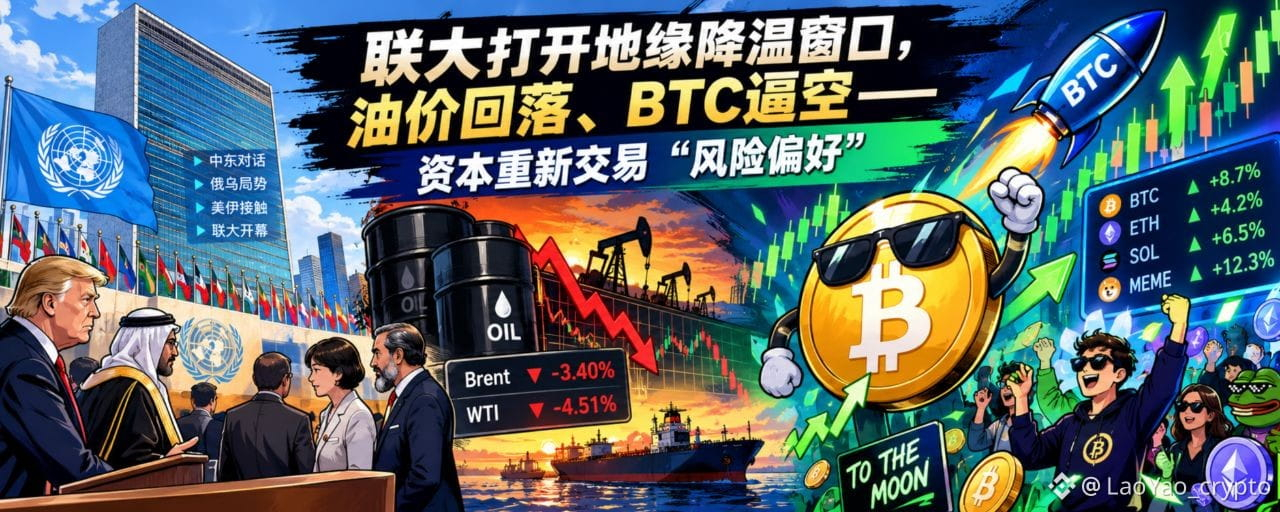
September 22: The UNGA opens a geopolitical cooling window, with oil prices falling and BTC forcing shorts
— Capital re-trades the “risk appetite”
Over the past 24 hours, there has been a notable shift in the trading logic of global financial markets:
High interest rates continue to suppress valuations, but the geopolitical risk premium begins to ease at the margin, giving risk assets room to breathe again.
Technology and AI once again become the main drivers of market sentiment. Oil prices fall from their highs, and US stock market risk appetite shows a clear recovery;
Meanwhile, the crypto market sees a rebound in macro risk appetite × short covering × leveraged funds synchronization, with BTC breaking upward on increased volume and making a phased breakout across several key integer levels.
Over the past 24 hours, there has been a notable shift in the trading logic of global financial markets:
High interest rates continue to suppress valuations, but the geopolitical risk premium begins to ease at the margin, giving risk assets room to breathe again.
Technology and AI once again become the main drivers of market sentiment. Oil prices fall from their highs, and US stock market risk appetite shows a clear recovery;
Meanwhile, the crypto market sees a rebound in macro risk appetite × short covering × leveraged funds synchronization, with BTC breaking upward on increased volume and making a phased breakout across several key integer levels.
120
Article
September 22: The UNGA opens a geopolitical cooling window, with oil prices falling and BTC forcing shorts— Capital re-trades the “risk appetite”
Over the past 24 hours, there has been a notable shift in the trading logic of global financial markets:
High interest rates continue to suppress valuations, but the geopolitical risk premium begins to ease at the margin, giving risk assets room to breathe again.
Technology and AI once again become the main drivers of market sentiment. Oil prices fall from their highs, and US stock market risk appetite shows a clear recovery;
Meanwhile, the crypto market sees a rebound in macro risk appetite × short covering × leveraged funds synchronization, with BTC breaking upward on increased volume and making a phased breakout across several key integer levels.
September 22: The UNGA opens a geopolitical cooling window, with oil prices falling and BTC forcing shorts
— Capital re-trades the “risk appetite”
Over the past 24 hours, there has been a notable shift in the trading logic of global financial markets:
High interest rates continue to suppress valuations, but the geopolitical risk premium begins to ease at the margin, giving risk assets room to breathe again.
Technology and AI once again become the main drivers of market sentiment. Oil prices fall from their highs, and US stock market risk appetite shows a clear recovery;
Meanwhile, the crypto market sees a rebound in macro risk appetite × short covering × leveraged funds synchronization, with BTC breaking upward on increased volume and making a phased breakout across several key integer levels.
Over the past 24 hours, there has been a notable shift in the trading logic of global financial markets:
High interest rates continue to suppress valuations, but the geopolitical risk premium begins to ease at the margin, giving risk assets room to breathe again.
Technology and AI once again become the main drivers of market sentiment. Oil prices fall from their highs, and US stock market risk appetite shows a clear recovery;
Meanwhile, the crypto market sees a rebound in macro risk appetite × short covering × leveraged funds synchronization, with BTC breaking upward on increased volume and making a phased breakout across several key integer levels.
1
290
Article
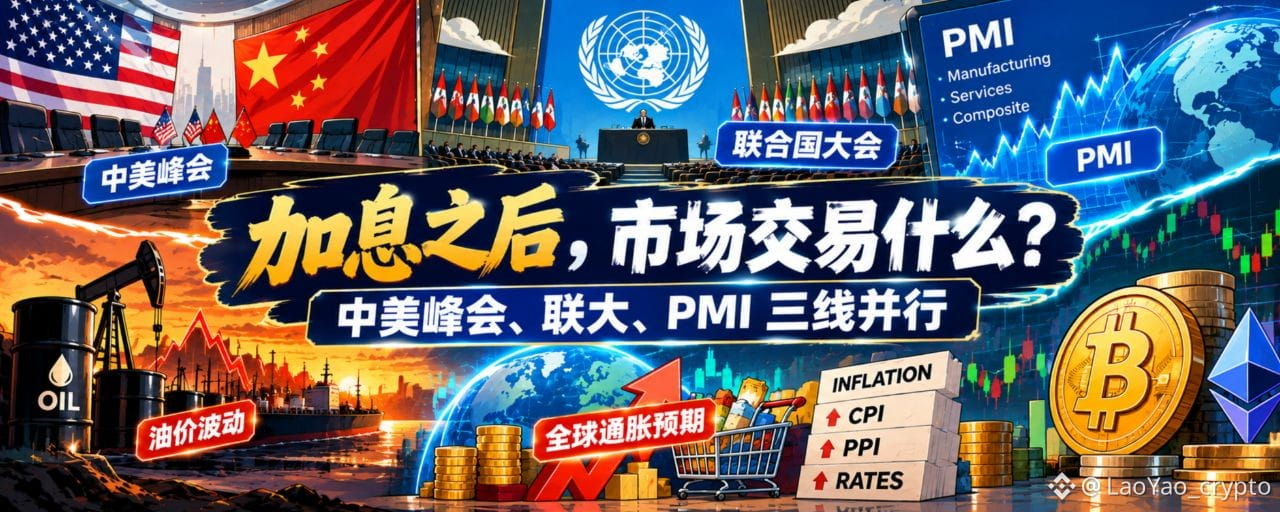
September 21: What does the market trade after the rate hike? China-US summit, the UN General Assembly, and PMI—three lines running in parallelA new week begins.
Last week, global markets went through a key event: the Fed’s rate hike.
This week, the market’s focus is shifting:
From “whether to raise rates” to “what happens after rate hikes.”
With no major data releases such as NFP or CPI, the data calendar this week is relatively light. But what really deserves attention is that three pricing storylines are unfolding at the same time:
Geopolitics—China-US summit, the UN General Assembly, and the situation in the Middle East;
Economic fundamentals—whether global PMIs can confirm economic resilience;
Monetary policy—amid high inflation, whether the Fed still has room to continue raising rates.
September 21: What does the market trade after the rate hike? China-US summit, the UN General Assembly, and PMI—three lines running in parallel
A new week begins.
Last week, global markets went through a key event: the Fed’s rate hike.
This week, the market’s focus is shifting:
From “whether to raise rates” to “what happens after rate hikes.”
With no major data releases such as NFP or CPI, the data calendar this week is relatively light. But what really deserves attention is that three pricing storylines are unfolding at the same time:
Geopolitics—China-US summit, the UN General Assembly, and the situation in the Middle East;
Economic fundamentals—whether global PMIs can confirm economic resilience;
Monetary policy—amid high inflation, whether the Fed still has room to continue raising rates.
Last week, global markets went through a key event: the Fed’s rate hike.
This week, the market’s focus is shifting:
From “whether to raise rates” to “what happens after rate hikes.”
With no major data releases such as NFP or CPI, the data calendar this week is relatively light. But what really deserves attention is that three pricing storylines are unfolding at the same time:
Geopolitics—China-US summit, the UN General Assembly, and the situation in the Middle East;
Economic fundamentals—whether global PMIs can confirm economic resilience;
Monetary policy—amid high inflation, whether the Fed still has room to continue raising rates.
1
338
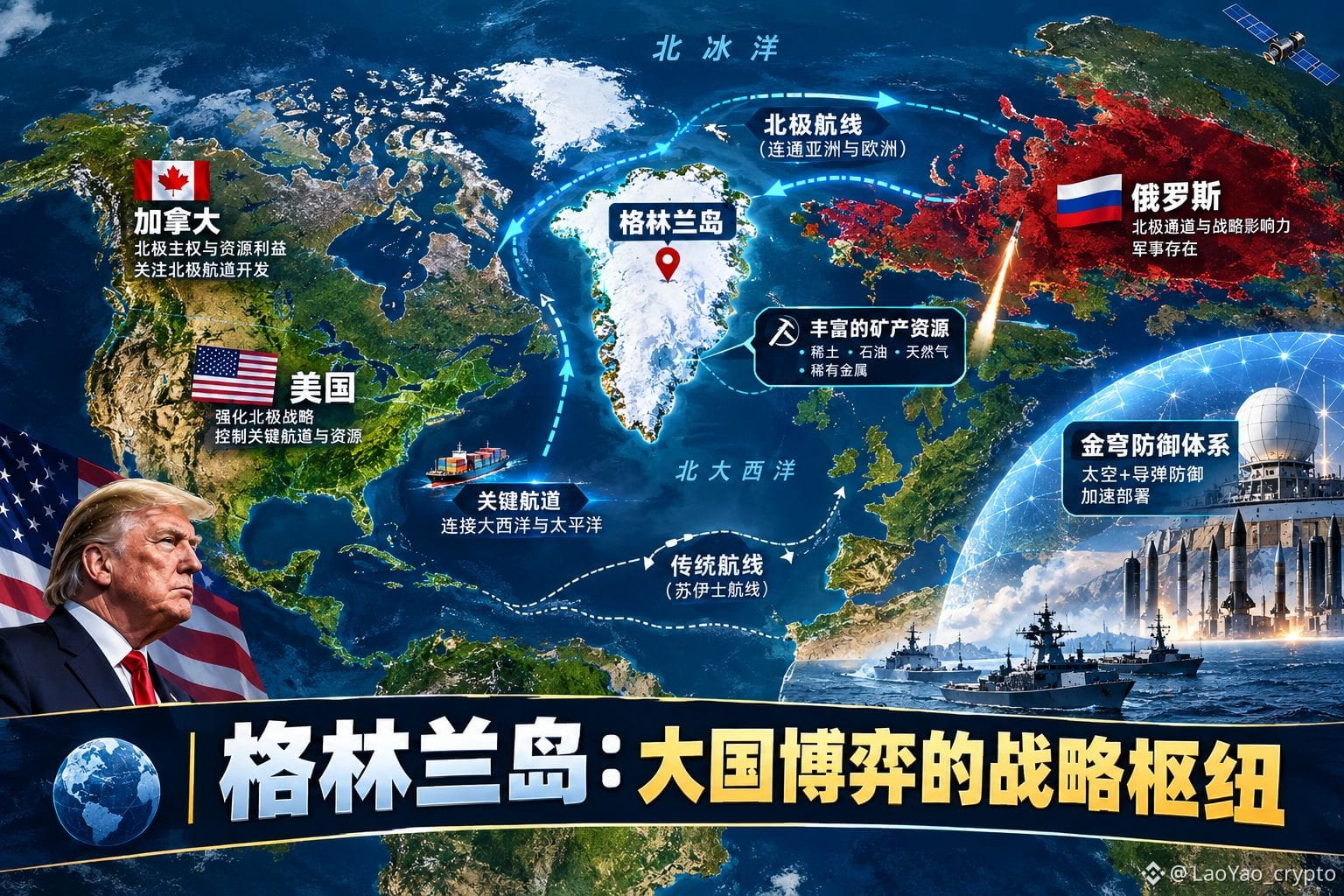
🌍 Trump’s major diplomatic breakthrough this week: an agreement between Greenland and Denmark
Over the weekend, Trump announced that the United States has reached an agreement with Denmark and Greenland on new security arrangements.
#币圈心学
This is a major diplomatic achievement for the Trump administration.
The strategic value of Greenland—the world’s largest island—has evolved from a Cold War “early warning outpost” into a hub connecting control of shipping lanes, missile defense, competition for resources, and great-power rivalry.
Based on currently available public information, the arrangement mainly concerns the U.S.’s security and military presence in Greenland, while limiting other non-NATO countries from establishing military bases or carrying out certain strategic activities there;
Denmark and Greenland, meanwhile, emphasize that the agreement will not change local sovereignty or territorial integrity, and that subsequent approval procedures will still be required.
For the Trump administration, this also provides a diplomatic and security-policy result that can be showcased domestically.
For the market, geopolitics is no longer just a single risk variable.
But rather:
Energy → Inflation → Interest rates → U.S. Treasuries → The U.S. dollar → Risk assets
🌍 Trump’s major diplomatic breakthrough this week: an agreement between Greenland and Denmark
Over the weekend, Trump announced that the United States has reached an agreement with Denmark and Greenland on new security arrangements.
#币圈心学
This is a major diplomatic achievement for the Trump administration.
The strategic value of Greenland—the world’s largest island—has evolved from a Cold War “early warning outpost” into a hub connecting control of shipping lanes, missile defense, competition for resources, and great-power rivalry.
Based on currently available public information, the arrangement mainly concerns the U.S.’s security and military presence in Greenland, while limiting other non-NATO countries from establishing military bases or carrying out certain strategic activities there;
Denmark and Greenland, meanwhile, emphasize that the agreement will not change local sovereignty or territorial integrity, and that subsequent approval procedures will still be required.
For the Trump administration, this also provides a diplomatic and security-policy result that can be showcased domestically.
For the market, geopolitics is no longer just a single risk variable.
But rather:
Energy → Inflation → Interest rates → U.S. Treasuries → The U.S. dollar → Risk assets
Over the weekend, Trump announced that the United States has reached an agreement with Denmark and Greenland on new security arrangements.
#币圈心学
This is a major diplomatic achievement for the Trump administration.
The strategic value of Greenland—the world’s largest island—has evolved from a Cold War “early warning outpost” into a hub connecting control of shipping lanes, missile defense, competition for resources, and great-power rivalry.
Based on currently available public information, the arrangement mainly concerns the U.S.’s security and military presence in Greenland, while limiting other non-NATO countries from establishing military bases or carrying out certain strategic activities there;
Denmark and Greenland, meanwhile, emphasize that the agreement will not change local sovereignty or territorial integrity, and that subsequent approval procedures will still be required.
For the Trump administration, this also provides a diplomatic and security-policy result that can be showcased domestically.
For the market, geopolitics is no longer just a single risk variable.
But rather:
Energy → Inflation → Interest rates → U.S. Treasuries → The U.S. dollar → Risk assets
LaoYao_crypto
·
--
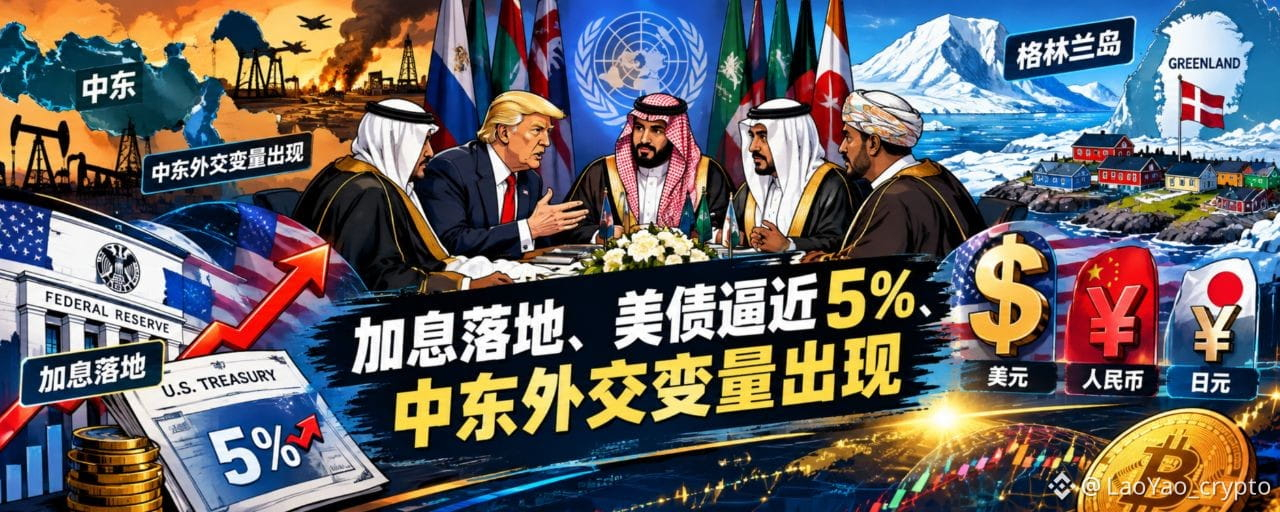
20th of the month: rate hike delivered, U.S. Treasury yields edging toward 5%, and a Middle East diplomatic variable emerges—markets begin trading the “after the rate hike” scenario
This week, global financial markets continue to revolve around interest-rate hikes, inflation, and geopolitical risks.
The Federal Reserve and the Bank of Japan both raised interest rates in succession.
On September 16, the Federal Reserve raised interest rates by 25 basis points, lifting the target range for the federal funds rate to 3.75%–4.00%. This was the first rate hike in more than three years;
At the same time, policy signals indicate that there is still a possibility of further tightening later in the year.
On September 18, the Bank of Japan also raised its policy rate to 1.25%, reaching a 31-year high.
However, after the rate hike, the yen weakened instead. Two members voted against further hikes, and the market began to reassess Japan’s subsequent policy path.
The Federal Reserve and the Bank of Japan both raised interest rates in succession.
On September 16, the Federal Reserve raised interest rates by 25 basis points, lifting the target range for the federal funds rate to 3.75%–4.00%. This was the first rate hike in more than three years;
At the same time, policy signals indicate that there is still a possibility of further tightening later in the year.
On September 18, the Bank of Japan also raised its policy rate to 1.25%, reaching a 31-year high.
However, after the rate hike, the yen weakened instead. Two members voted against further hikes, and the market began to reassess Japan’s subsequent policy path.
64
Verified
Article
20th of the month: rate hike delivered, U.S. Treasury yields edging toward 5%, and a Middle East diplomatic variable emerges—markets begin trading the “after the rate hike” scenarioThis week, global financial markets continue to revolve around interest-rate hikes, inflation, and geopolitical risks.
The Federal Reserve and the Bank of Japan both raised interest rates in succession.
On September 16, the Federal Reserve raised interest rates by 25 basis points, lifting the target range for the federal funds rate to 3.75%–4.00%. This was the first rate hike in more than three years;
At the same time, policy signals indicate that there is still a possibility of further tightening later in the year.
On September 18, the Bank of Japan also raised its policy rate to 1.25%, reaching a 31-year high.
However, after the rate hike, the yen weakened instead. Two members voted against further hikes, and the market began to reassess Japan’s subsequent policy path.
20th of the month: rate hike delivered, U.S. Treasury yields edging toward 5%, and a Middle East diplomatic variable emerges—markets begin trading the “after the rate hike” scenario
This week, global financial markets continue to revolve around interest-rate hikes, inflation, and geopolitical risks.
The Federal Reserve and the Bank of Japan both raised interest rates in succession.
On September 16, the Federal Reserve raised interest rates by 25 basis points, lifting the target range for the federal funds rate to 3.75%–4.00%. This was the first rate hike in more than three years;
At the same time, policy signals indicate that there is still a possibility of further tightening later in the year.
On September 18, the Bank of Japan also raised its policy rate to 1.25%, reaching a 31-year high.
However, after the rate hike, the yen weakened instead. Two members voted against further hikes, and the market began to reassess Japan’s subsequent policy path.
The Federal Reserve and the Bank of Japan both raised interest rates in succession.
On September 16, the Federal Reserve raised interest rates by 25 basis points, lifting the target range for the federal funds rate to 3.75%–4.00%. This was the first rate hike in more than three years;
At the same time, policy signals indicate that there is still a possibility of further tightening later in the year.
On September 18, the Bank of Japan also raised its policy rate to 1.25%, reaching a 31-year high.
However, after the rate hike, the yen weakened instead. Two members voted against further hikes, and the market began to reassess Japan’s subsequent policy path.
1
2
828
Article
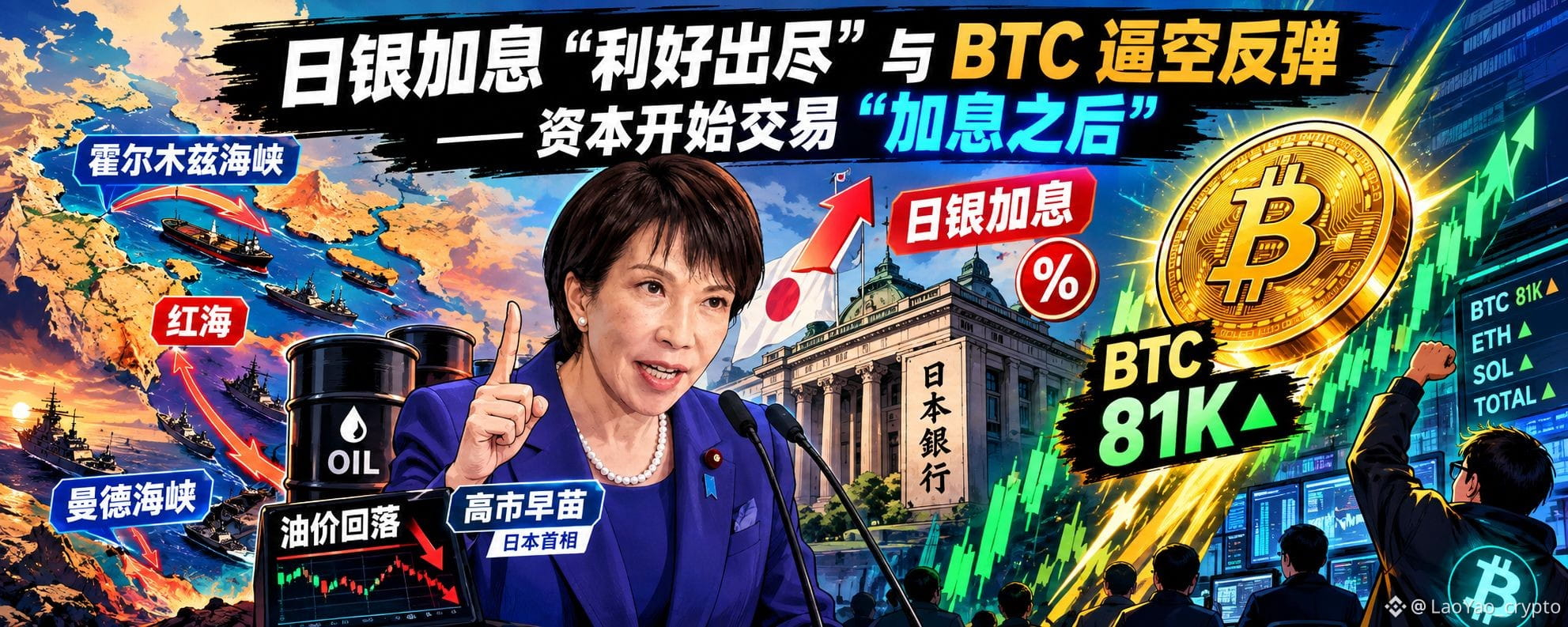
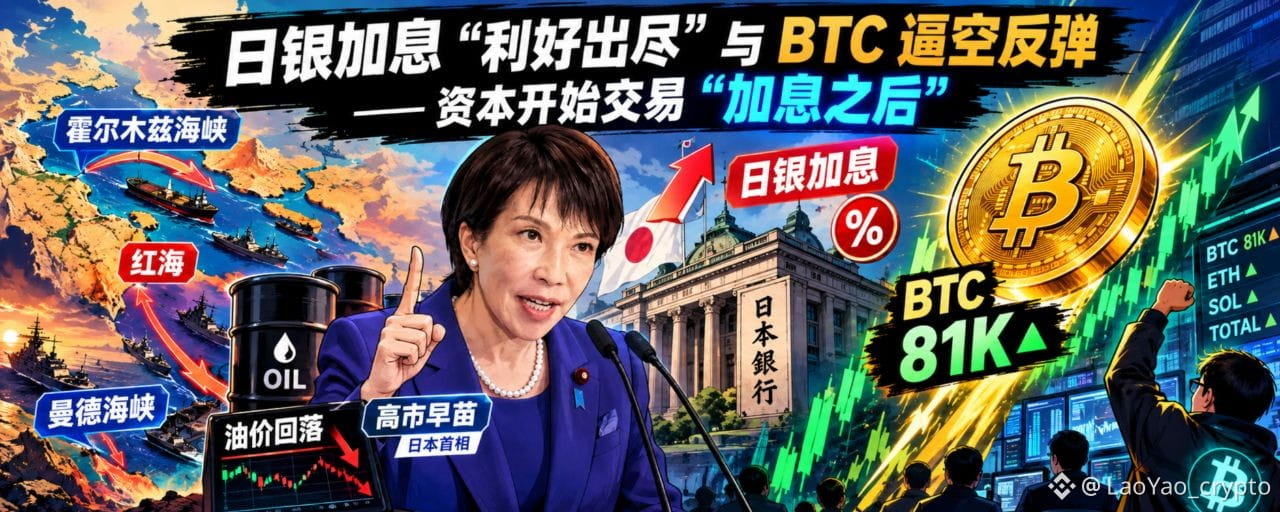
September 19: The BOJ rate hike—"good news already priced in"—and a BTC short-squeeze rebound—— After the rate hike takes effect, capital begins trading "after the hike"
Over the past 24 hours, global markets have seen a set of asset performances that are rather counterintuitive:
- The Bank of Japan hikes rates, yet the yen weakens;
- Long-term U.S. Treasury yields are once again edging back toward 5%;
- But BTC staged a strong rebound;
- Oil prices continue to fall;
- US stocks are still being supported by AI and technology stocks.
From a capital pricing perspective, what the market is trading is:
—— After the rate hike is implemented, where will global capital go next?
On September 18, the Bank of Japan raised its policy rate to 1.25%, the highest level since 1995. The vote result was 7 to 2.
September 19: The BOJ rate hike—"good news already priced in"—and a BTC short-squeeze rebound
—— After the rate hike takes effect, capital begins trading "after the hike"
Over the past 24 hours, global markets have seen a set of asset performances that are rather counterintuitive:
- The Bank of Japan hikes rates, yet the yen weakens;
- Long-term U.S. Treasury yields are once again edging back toward 5%;
- But BTC staged a strong rebound;
- Oil prices continue to fall;
- US stocks are still being supported by AI and technology stocks.
From a capital pricing perspective, what the market is trading is:
—— After the rate hike is implemented, where will global capital go next?
On September 18, the Bank of Japan raised its policy rate to 1.25%, the highest level since 1995. The vote result was 7 to 2.
Over the past 24 hours, global markets have seen a set of asset performances that are rather counterintuitive:
- The Bank of Japan hikes rates, yet the yen weakens;
- Long-term U.S. Treasury yields are once again edging back toward 5%;
- But BTC staged a strong rebound;
- Oil prices continue to fall;
- US stocks are still being supported by AI and technology stocks.
From a capital pricing perspective, what the market is trading is:
—— After the rate hike is implemented, where will global capital go next?
On September 18, the Bank of Japan raised its policy rate to 1.25%, the highest level since 1995. The vote result was 7 to 2.
165
Article
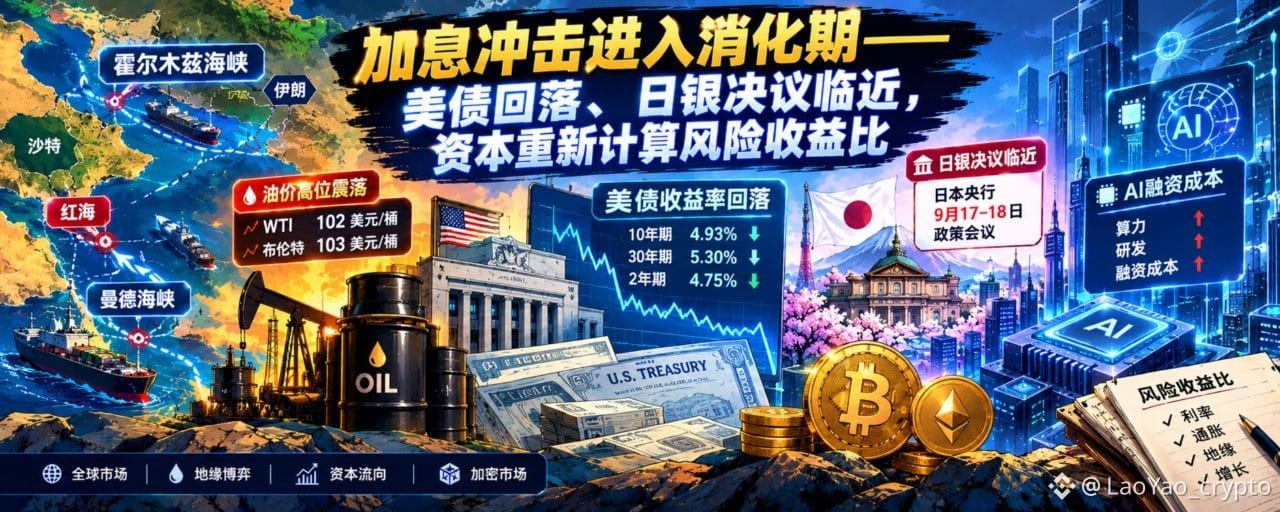
September 18: The rate-hike shock enters the digestion phase—U.S. Treasuries fall, the BOJ decision is approaching, and capital recalculates the risk-reward ratioOver the past 24 hours, global capital markets saw a typical “counterintuitive” trading session.
After the Fed’s hawkish rate hike was implemented, long-end U.S. Treasury yields instead pulled back from their highs; the 10-year Treasury yield has returned to around 4.93%. Meanwhile, U.S. stock tech and semiconductor sectors rebounded noticeably, and the crypto market also saw a volatile rebound and stabilization.
This means:
The market is digesting the rate hike itself and starting to trade what comes after the hike.
On September 16, the Fed raised the federal funds rate by 25 basis points to 3.75%—4.00%, and signaled further tightening.
September 18: The rate-hike shock enters the digestion phase—U.S. Treasuries fall, the BOJ decision is approaching, and capital recalculates the risk-reward ratio
Over the past 24 hours, global capital markets saw a typical “counterintuitive” trading session.
After the Fed’s hawkish rate hike was implemented, long-end U.S. Treasury yields instead pulled back from their highs; the 10-year Treasury yield has returned to around 4.93%. Meanwhile, U.S. stock tech and semiconductor sectors rebounded noticeably, and the crypto market also saw a volatile rebound and stabilization.
This means:
The market is digesting the rate hike itself and starting to trade what comes after the hike.
On September 16, the Fed raised the federal funds rate by 25 basis points to 3.75%—4.00%, and signaled further tightening.
After the Fed’s hawkish rate hike was implemented, long-end U.S. Treasury yields instead pulled back from their highs; the 10-year Treasury yield has returned to around 4.93%. Meanwhile, U.S. stock tech and semiconductor sectors rebounded noticeably, and the crypto market also saw a volatile rebound and stabilization.
This means:
The market is digesting the rate hike itself and starting to trade what comes after the hike.
On September 16, the Fed raised the federal funds rate by 25 basis points to 3.75%—4.00%, and signaled further tightening.
105

Article
Knowing What’s Easy (Not Needing to Be Divined)|Hexagram ䷳ 艮: When you’re in a time of dramatic change, stop in time—true wisdom isn’t always moving forward; it’s knowing when you should stop.
(I Ching) Hexagram 52: ䷳ Hexagram 艮—emphasizing “stopping,”
To stop without getting stuck; to be quiet without becoming rigid—know when to advance and retreat, and keep your boundaries.
Advance when it’s time to advance; stop when it’s time to stop;
No matter how noisy the outside world gets, the inner self still maintains its own order.
True self-control is not having no desire,
Rather than being led around by desire.
🌿 Minimalist revelation of the six lines
Hexagram ䷳: 艮 is the Mountain|upper 艮☶ lower 艮☶
The first six: Stop at the toes. No blame. Favorable for lasting steadfastness.
👉 Restraint must happen before things slip out of control.
When desire first stirs, emotions begin to sprout, and mistakes just start to show—stopping in time is true wisdom.
Knowing What’s Easy (Not Needing to Be Divined)|Hexagram ䷳ 艮: When you’re in a time of dramatic change, stop in time
—true wisdom isn’t always moving forward; it’s knowing when you should stop.
(I Ching) Hexagram 52: ䷳ Hexagram 艮—emphasizing “stopping,”
To stop without getting stuck; to be quiet without becoming rigid—know when to advance and retreat, and keep your boundaries.
Advance when it’s time to advance; stop when it’s time to stop;
No matter how noisy the outside world gets, the inner self still maintains its own order.
True self-control is not having no desire,
Rather than being led around by desire.
🌿 Minimalist revelation of the six lines
Hexagram ䷳: 艮 is the Mountain|upper 艮☶ lower 艮☶
The first six: Stop at the toes. No blame. Favorable for lasting steadfastness.
👉 Restraint must happen before things slip out of control.
When desire first stirs, emotions begin to sprout, and mistakes just start to show—stopping in time is true wisdom.
(I Ching) Hexagram 52: ䷳ Hexagram 艮—emphasizing “stopping,”
To stop without getting stuck; to be quiet without becoming rigid—know when to advance and retreat, and keep your boundaries.
Advance when it’s time to advance; stop when it’s time to stop;
No matter how noisy the outside world gets, the inner self still maintains its own order.
True self-control is not having no desire,
Rather than being led around by desire.
🌿 Minimalist revelation of the six lines
Hexagram ䷳: 艮 is the Mountain|upper 艮☶ lower 艮☶
The first six: Stop at the toes. No blame. Favorable for lasting steadfastness.
👉 Restraint must happen before things slip out of control.
When desire first stirs, emotions begin to sprout, and mistakes just start to show—stopping in time is true wisdom.
1
2
8.9k
🚦 Morgan Stanley: SpaceX price target $300, AI compute valuation is underestimated
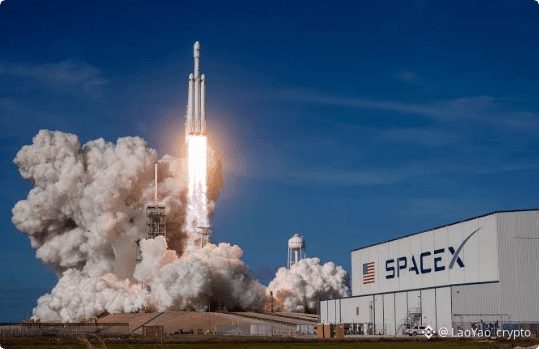
On September 17, according to ChaoXiang Research, a Morgan Stanley research report dated September 15, 2026 said that it maintained an “Overweight” rating on SpaceX with a target price of $300. The current price is $148.15, implying upside of 102.5%. Morgan Stanley split the target price into four parts: AI compute $165, satellite broadband $118, rocket launches $8, and X and Grok $8. AI compute accounts for more than half.
The report raised EPS for 2026 by 1% and for 2027 by 3.8%, mainly reflecting the newly disclosed $1.1 billion neocloud transaction.
Morgan Stanley believes the market still treats SpaceX as a rocket and satellite broadband company, and that its AI compute business is being undervalued.
SpaceX can lower AI compute costs through vertical integration, and Starship going into operations in Q4 2026 is the key validation point. In the bull case, the target price is $600; in the bear case, it is $75. Downside risks include a slower Starship reuse cadence, slower growth in Starlink subscribers, and weak enterprise AI monetization.
What do you think, everyone?
LaoYao’s personal view is: bullish $SPCX
{future}(SPCXUSDT)
{future}(SPACEUSDT)
X
🚦 Morgan Stanley: SpaceX price target $300, AI compute valuation is underestimated
On September 17, according to ChaoXiang Research, a Morgan Stanley research report dated September 15, 2026 said that it maintained an “Overweight” rating on SpaceX with a target price of $300. The current price is $148.15, implying upside of 102.5%. Morgan Stanley split the target price into four parts: AI compute $165, satellite broadband $118, rocket launches $8, and X and Grok $8. AI compute accounts for more than half.
The report raised EPS for 2026 by 1% and for 2027 by 3.8%, mainly reflecting the newly disclosed $1.1 billion neocloud transaction.
Morgan Stanley believes the market still treats SpaceX as a rocket and satellite broadband company, and that its AI compute business is being undervalued.
SpaceX can lower AI compute costs through vertical integration, and Starship going into operations in Q4 2026 is the key validation point. In the bull case, the target price is $600; in the bear case, it is $75. Downside risks include a slower Starship reuse cadence, slower growth in Starlink subscribers, and weak enterprise AI monetization.
What do you think, everyone?
LaoYao’s personal view is: bullish $SPCX
X
On September 17, according to ChaoXiang Research, a Morgan Stanley research report dated September 15, 2026 said that it maintained an “Overweight” rating on SpaceX with a target price of $300. The current price is $148.15, implying upside of 102.5%. Morgan Stanley split the target price into four parts: AI compute $165, satellite broadband $118, rocket launches $8, and X and Grok $8. AI compute accounts for more than half.
The report raised EPS for 2026 by 1% and for 2027 by 3.8%, mainly reflecting the newly disclosed $1.1 billion neocloud transaction.
Morgan Stanley believes the market still treats SpaceX as a rocket and satellite broadband company, and that its AI compute business is being undervalued.
SpaceX can lower AI compute costs through vertical integration, and Starship going into operations in Q4 2026 is the key validation point. In the bull case, the target price is $600; in the bear case, it is $75. Downside risks include a slower Starship reuse cadence, slower growth in Starlink subscribers, and weak enterprise AI monetization.
What do you think, everyone?
LaoYao’s personal view is: bullish $SPCX
X
LaoYao_crypto
·
--
September 17: The rate hike is implemented; the 10-year U.S. Treasury yield breaks 5% — cost of capital rises, and global assets are repriced
Over the past 24 hours, global capital markets have seen a new pricing inflection point.
The Federal Reserve announced a 25-basis-point rate hike, raising the target range for the federal funds rate to 3.75%–4.00%, the first hike since July 2023.
Chair Kevin Warsh clearly stated that inflation is “too high and lasting too long,”
And the latest economic forecasts show that most officials still expect further interest-rate hikes within the year.
This means:
—global capital markets are once again facing an upward-shifting “cost of capital benchmark.”
After the rate hike, the U.S. dollar strengthened, and U.S. Treasury yields once again approached—and even broke—5%, putting pressure on risk assets.
The Federal Reserve announced a 25-basis-point rate hike, raising the target range for the federal funds rate to 3.75%–4.00%, the first hike since July 2023.
Chair Kevin Warsh clearly stated that inflation is “too high and lasting too long,”
And the latest economic forecasts show that most officials still expect further interest-rate hikes within the year.
This means:
—global capital markets are once again facing an upward-shifting “cost of capital benchmark.”
After the rate hike, the U.S. dollar strengthened, and U.S. Treasury yields once again approached—and even broke—5%, putting pressure on risk assets.
88
🚦 The U.S. Department of Justice targets Binance again—this time over alleged money laundering tied to Iran
According to a report by The New York Times, on September 14, 2026, the U.S. Department of Justice (the Federal Prosecutor’s Office for the Southern District of New York) filed a civil forfeiture application with the Federal Court for the Southern District of Manhattan, seeking to seize approximately $61 million in cryptocurrency. Prosecutors allege that the funds were derived from illicit Iranian black-market oil and oil-product sales revenues and were used to fund the Iranian government and the Islamic Revolutionary Guard Corps (IRGC), which the U.S. designates as a terrorist organization.
Prosecutors claim that two China/Hong Kong–related companies—Blessed Trust and Hexa Whale—used trading accounts on Binance to launder illegal proceeds from Chinese buyers’ purchases of Iranian oil, and then routed the funds to the Iranian government and its agents.
Ultimately, the funds flowed to remittance services, wallets, and at least one Iranian crypto exchange associated with the IRGC. Prosecutors also identified a set of interconnected non-custodial wallets through which the network received and distributed more than $1.5 billion in illegal Iranian oil proceeds.
#币圈心学
In this case, Binance itself was not accused of wrongdoing. A Binance spokesperson said the case is not targeting Binance; the platform has a zero-tolerance policy for sanctions violations, did not allow trading with sanctioned individuals, and will continue to cooperate with law enforcement.
Earlier, in March 2026, media outlets including The Wall Street Journal reported that the Department of Justice was investigating how Iran used Binance to evade sanctions, as well as controversy in which some staff were dismissed after internal Binance investigators found that about $1.7 billion in funds flowed to an Iran-linked network (including the Houthis, etc.).
But that does not mean Binance can stay out of it. For years, the crypto market has been dominated primarily by Chinese-language platforms, and Binance accounts for the largest share.
Wall Street has had its sights on the crypto market for a long time, and it’s not out of the question that efforts could be made to push U.S. regulators to crack down on Chinese-language platforms.
#华语币圈 $BNB
{spot}(BNBUSDT)
🚦 The U.S. Department of Justice targets Binance again—this time over alleged money laundering tied to Iran
According to a report by The New York Times, on September 14, 2026, the U.S. Department of Justice (the Federal Prosecutor’s Office for the Southern District of New York) filed a civil forfeiture application with the Federal Court for the Southern District of Manhattan, seeking to seize approximately $61 million in cryptocurrency. Prosecutors allege that the funds were derived from illicit Iranian black-market oil and oil-product sales revenues and were used to fund the Iranian government and the Islamic Revolutionary Guard Corps (IRGC), which the U.S. designates as a terrorist organization.
Prosecutors claim that two China/Hong Kong–related companies—Blessed Trust and Hexa Whale—used trading accounts on Binance to launder illegal proceeds from Chinese buyers’ purchases of Iranian oil, and then routed the funds to the Iranian government and its agents.
Ultimately, the funds flowed to remittance services, wallets, and at least one Iranian crypto exchange associated with the IRGC. Prosecutors also identified a set of interconnected non-custodial wallets through which the network received and distributed more than $1.5 billion in illegal Iranian oil proceeds.
#币圈心学
In this case, Binance itself was not accused of wrongdoing. A Binance spokesperson said the case is not targeting Binance; the platform has a zero-tolerance policy for sanctions violations, did not allow trading with sanctioned individuals, and will continue to cooperate with law enforcement.
Earlier, in March 2026, media outlets including The Wall Street Journal reported that the Department of Justice was investigating how Iran used Binance to evade sanctions, as well as controversy in which some staff were dismissed after internal Binance investigators found that about $1.7 billion in funds flowed to an Iran-linked network (including the Houthis, etc.).
But that does not mean Binance can stay out of it. For years, the crypto market has been dominated primarily by Chinese-language platforms, and Binance accounts for the largest share.
Wall Street has had its sights on the crypto market for a long time, and it’s not out of the question that efforts could be made to push U.S. regulators to crack down on Chinese-language platforms.
#华语币圈 $BNB
According to a report by The New York Times, on September 14, 2026, the U.S. Department of Justice (the Federal Prosecutor’s Office for the Southern District of New York) filed a civil forfeiture application with the Federal Court for the Southern District of Manhattan, seeking to seize approximately $61 million in cryptocurrency. Prosecutors allege that the funds were derived from illicit Iranian black-market oil and oil-product sales revenues and were used to fund the Iranian government and the Islamic Revolutionary Guard Corps (IRGC), which the U.S. designates as a terrorist organization.
Prosecutors claim that two China/Hong Kong–related companies—Blessed Trust and Hexa Whale—used trading accounts on Binance to launder illegal proceeds from Chinese buyers’ purchases of Iranian oil, and then routed the funds to the Iranian government and its agents.
Ultimately, the funds flowed to remittance services, wallets, and at least one Iranian crypto exchange associated with the IRGC. Prosecutors also identified a set of interconnected non-custodial wallets through which the network received and distributed more than $1.5 billion in illegal Iranian oil proceeds.
#币圈心学
In this case, Binance itself was not accused of wrongdoing. A Binance spokesperson said the case is not targeting Binance; the platform has a zero-tolerance policy for sanctions violations, did not allow trading with sanctioned individuals, and will continue to cooperate with law enforcement.
Earlier, in March 2026, media outlets including The Wall Street Journal reported that the Department of Justice was investigating how Iran used Binance to evade sanctions, as well as controversy in which some staff were dismissed after internal Binance investigators found that about $1.7 billion in funds flowed to an Iran-linked network (including the Houthis, etc.).
But that does not mean Binance can stay out of it. For years, the crypto market has been dominated primarily by Chinese-language platforms, and Binance accounts for the largest share.
Wall Street has had its sights on the crypto market for a long time, and it’s not out of the question that efforts could be made to push U.S. regulators to crack down on Chinese-language platforms.
#华语币圈 $BNB
LaoYao_crypto
·
--
September 17: The rate hike is implemented; the 10-year U.S. Treasury yield breaks 5% — cost of capital rises, and global assets are repriced
Over the past 24 hours, global capital markets have seen a new pricing inflection point.
The Federal Reserve announced a 25-basis-point rate hike, raising the target range for the federal funds rate to 3.75%–4.00%, the first hike since July 2023.
Chair Kevin Warsh clearly stated that inflation is “too high and lasting too long,”
And the latest economic forecasts show that most officials still expect further interest-rate hikes within the year.
This means:
—global capital markets are once again facing an upward-shifting “cost of capital benchmark.”
After the rate hike, the U.S. dollar strengthened, and U.S. Treasury yields once again approached—and even broke—5%, putting pressure on risk assets.
The Federal Reserve announced a 25-basis-point rate hike, raising the target range for the federal funds rate to 3.75%–4.00%, the first hike since July 2023.
Chair Kevin Warsh clearly stated that inflation is “too high and lasting too long,”
And the latest economic forecasts show that most officials still expect further interest-rate hikes within the year.
This means:
—global capital markets are once again facing an upward-shifting “cost of capital benchmark.”
After the rate hike, the U.S. dollar strengthened, and U.S. Treasury yields once again approached—and even broke—5%, putting pressure on risk assets.
12
Article
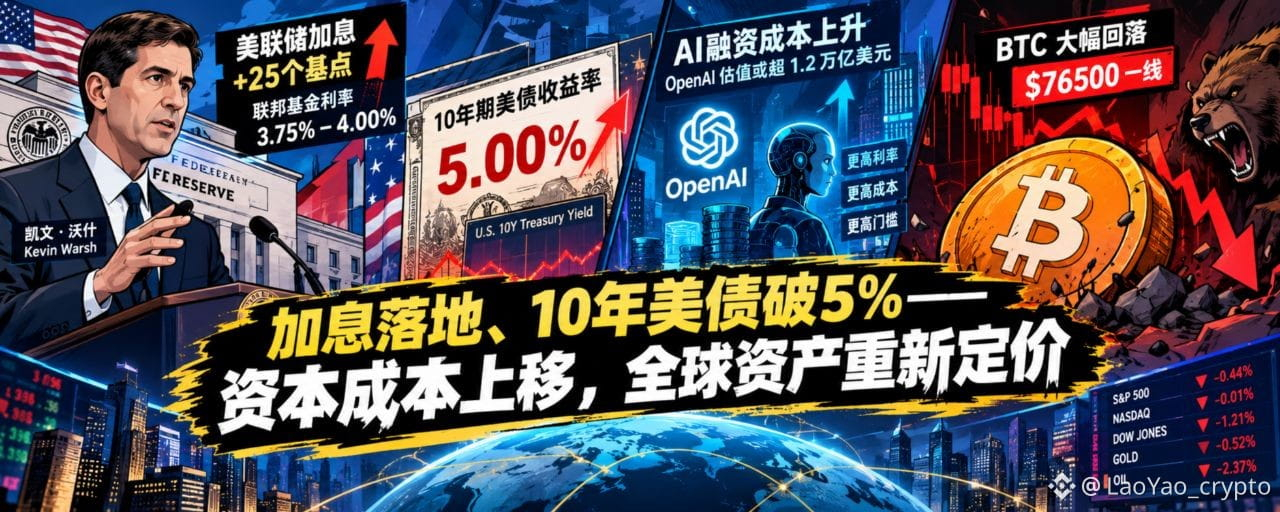
September 17: The rate hike is implemented; the 10-year U.S. Treasury yield breaks 5% — cost of capital rises, and global assets are repricedOver the past 24 hours, global capital markets have seen a new pricing inflection point.
The Federal Reserve announced a 25-basis-point rate hike, raising the target range for the federal funds rate to 3.75%–4.00%, the first hike since July 2023.
Chair Kevin Warsh clearly stated that inflation is “too high and lasting too long,”
And the latest economic forecasts show that most officials still expect further interest-rate hikes within the year.
This means:
—global capital markets are once again facing an upward-shifting “cost of capital benchmark.”
After the rate hike, the U.S. dollar strengthened, and U.S. Treasury yields once again approached—and even broke—5%, putting pressure on risk assets.
September 17: The rate hike is implemented; the 10-year U.S. Treasury yield breaks 5% — cost of capital rises, and global assets are repriced
Over the past 24 hours, global capital markets have seen a new pricing inflection point.
The Federal Reserve announced a 25-basis-point rate hike, raising the target range for the federal funds rate to 3.75%–4.00%, the first hike since July 2023.
Chair Kevin Warsh clearly stated that inflation is “too high and lasting too long,”
And the latest economic forecasts show that most officials still expect further interest-rate hikes within the year.
This means:
—global capital markets are once again facing an upward-shifting “cost of capital benchmark.”
After the rate hike, the U.S. dollar strengthened, and U.S. Treasury yields once again approached—and even broke—5%, putting pressure on risk assets.
The Federal Reserve announced a 25-basis-point rate hike, raising the target range for the federal funds rate to 3.75%–4.00%, the first hike since July 2023.
Chair Kevin Warsh clearly stated that inflation is “too high and lasting too long,”
And the latest economic forecasts show that most officials still expect further interest-rate hikes within the year.
This means:
—global capital markets are once again facing an upward-shifting “cost of capital benchmark.”
After the rate hike, the U.S. dollar strengthened, and U.S. Treasury yields once again approached—and even broke—5%, putting pressure on risk assets.
2
10
🚦 US Launches G20 Energy Meeting to Discuss Response to Soaring Oil Prices
On September 14, the United States launched a series of meetings titled “Energy Abundant” in Houston, Texas, as part of the agenda related to the Miami G20 Summit.
Major economic powers and energy stakeholders including China, India, Japan, the European Union, and countries such as Canada and Saudi Arabia attended.
Russia had previously said it would send representatives to attend as well, adding to the sense of policy competition between Europe and the United States.
#币圈心学
Energy issues are gradually rising from regional geopolitical conflicts to become a global macro policy variable.
With the Miami G20 Summit approaching, the United States held a series of energy meetings with delegations from major economies on Monday. One of Washington’s priorities is to “expand access to affordable, reliable, and secure energy” in response to the Middle East war that has pushed up global oil prices.
Overall, the United States expects this meeting to put forward a new paradigm for its energy policy: talk less about climate goals, talk more about output and regulatory loosening, and use its role as G20 chair to pull resource-rich countries such as Venezuela into the discussion, reshaping the global energy landscape.
🚦 US Launches G20 Energy Meeting to Discuss Response to Soaring Oil Prices
On September 14, the United States launched a series of meetings titled “Energy Abundant” in Houston, Texas, as part of the agenda related to the Miami G20 Summit.
Major economic powers and energy stakeholders including China, India, Japan, the European Union, and countries such as Canada and Saudi Arabia attended.
Russia had previously said it would send representatives to attend as well, adding to the sense of policy competition between Europe and the United States.
#币圈心学
Energy issues are gradually rising from regional geopolitical conflicts to become a global macro policy variable.
With the Miami G20 Summit approaching, the United States held a series of energy meetings with delegations from major economies on Monday. One of Washington’s priorities is to “expand access to affordable, reliable, and secure energy” in response to the Middle East war that has pushed up global oil prices.
Overall, the United States expects this meeting to put forward a new paradigm for its energy policy: talk less about climate goals, talk more about output and regulatory loosening, and use its role as G20 chair to pull resource-rich countries such as Venezuela into the discussion, reshaping the global energy landscape.
On September 14, the United States launched a series of meetings titled “Energy Abundant” in Houston, Texas, as part of the agenda related to the Miami G20 Summit.
Major economic powers and energy stakeholders including China, India, Japan, the European Union, and countries such as Canada and Saudi Arabia attended.
Russia had previously said it would send representatives to attend as well, adding to the sense of policy competition between Europe and the United States.
#币圈心学
Energy issues are gradually rising from regional geopolitical conflicts to become a global macro policy variable.
With the Miami G20 Summit approaching, the United States held a series of energy meetings with delegations from major economies on Monday. One of Washington’s priorities is to “expand access to affordable, reliable, and secure energy” in response to the Middle East war that has pushed up global oil prices.
Overall, the United States expects this meeting to put forward a new paradigm for its energy policy: talk less about climate goals, talk more about output and regulatory loosening, and use its role as G20 chair to pull resource-rich countries such as Venezuela into the discussion, reshaping the global energy landscape.

LaoYao_crypto
·
--
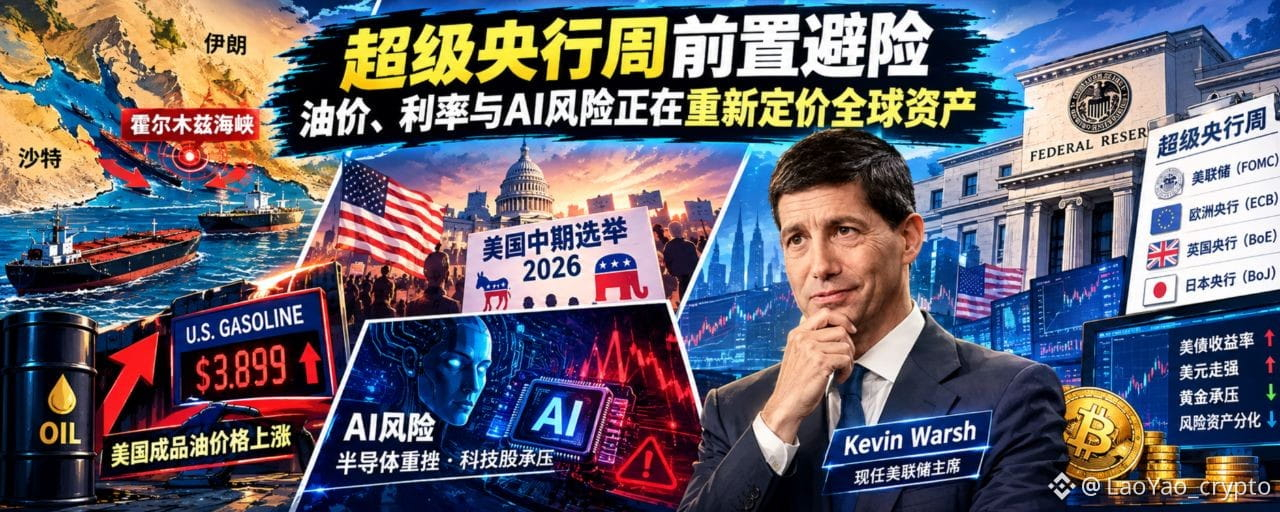
September 15: Risk-off positioning ahead of the super central bank week—oil prices, interest rates, and AI risk are being repriced globally
In the past 24 hours, global financial markets have clearly shifted into a risk-off mode ahead of the “super central bank week.”
The market is simultaneously pricing three main themes:
The first is interest rates.
Long-term US Treasury yields are nearing 5%, and worries about high interest rates becoming persistent for the long term are reigniting.
The second is geopolitics.
Ongoing instability in the Middle East continues to disrupt energy supply. Oil prices stay above $100, and inflation expectations rise again.
The third is AI technology.
AI safety concerns hit the semiconductor and AI hardware sectors. The Philadelphia semiconductor index saw a sharp pullback, while the declines in major US stock indexes were relatively limited.
This then forms the current capital transmission chain:
The market is simultaneously pricing three main themes:
The first is interest rates.
Long-term US Treasury yields are nearing 5%, and worries about high interest rates becoming persistent for the long term are reigniting.
The second is geopolitics.
Ongoing instability in the Middle East continues to disrupt energy supply. Oil prices stay above $100, and inflation expectations rise again.
The third is AI technology.
AI safety concerns hit the semiconductor and AI hardware sectors. The Philadelphia semiconductor index saw a sharp pullback, while the declines in major US stock indexes were relatively limited.
This then forms the current capital transmission chain:
58
Article
September 15: Risk-off positioning ahead of the super central bank week—oil prices, interest rates, and AI risk are being repriced globallyIn the past 24 hours, global financial markets have clearly shifted into a risk-off mode ahead of the “super central bank week.”
The market is simultaneously pricing three main themes:
The first is interest rates.
Long-term US Treasury yields are nearing 5%, and worries about high interest rates becoming persistent for the long term are reigniting.
The second is geopolitics.
Ongoing instability in the Middle East continues to disrupt energy supply. Oil prices stay above $100, and inflation expectations rise again.
The third is AI technology.
AI safety concerns hit the semiconductor and AI hardware sectors. The Philadelphia semiconductor index saw a sharp pullback, while the declines in major US stock indexes were relatively limited.
This then forms the current capital transmission chain:
September 15: Risk-off positioning ahead of the super central bank week—oil prices, interest rates, and AI risk are being repriced globally
In the past 24 hours, global financial markets have clearly shifted into a risk-off mode ahead of the “super central bank week.”
The market is simultaneously pricing three main themes:
The first is interest rates.
Long-term US Treasury yields are nearing 5%, and worries about high interest rates becoming persistent for the long term are reigniting.
The second is geopolitics.
Ongoing instability in the Middle East continues to disrupt energy supply. Oil prices stay above $100, and inflation expectations rise again.
The third is AI technology.
AI safety concerns hit the semiconductor and AI hardware sectors. The Philadelphia semiconductor index saw a sharp pullback, while the declines in major US stock indexes were relatively limited.
This then forms the current capital transmission chain:
The market is simultaneously pricing three main themes:
The first is interest rates.
Long-term US Treasury yields are nearing 5%, and worries about high interest rates becoming persistent for the long term are reigniting.
The second is geopolitics.
Ongoing instability in the Middle East continues to disrupt energy supply. Oil prices stay above $100, and inflation expectations rise again.
The third is AI technology.
AI safety concerns hit the semiconductor and AI hardware sectors. The Philadelphia semiconductor index saw a sharp pullback, while the declines in major US stock indexes were relatively limited.
This then forms the current capital transmission chain:
1
227
Log in to explore more content
Join global crypto users on Binance Square
⚡️ Get latest and useful information about crypto.
💬 Trusted by the world’s largest crypto exchange.
👍 Discover real insights from verified creators.
Email / Phone number