

Tokenist
2.7k Posts

Tokenist
 Square Verified+
Report
Block User
The Tokenist is your trusted home for the latest finance news on stocks, crypto, forex, and more. Join us.
0 Following
11.7K+ Followers
44.5K+ Liked
Posts
·
--
High Treasury Yields Put the Bitcoin PCE Rally to the TestBitcoin briefly reached about $85,500 after August PCE inflation came in softer than expected on Wednesday, September 30, but the move faded as the 10-year Treasury yield held near 5.3% and the 30-year yield stayed near its highest level since 2002.
The contrast put the market’s immediate test in view: could reduced concern about another Federal Reserve rate increase support crypto markets while long-term borrowing costs continued to weigh on risk appetite? CoinGecko data shows that Bitcoin was trading just above $83,100 during Thursday morning hours.
The distinction is between a less restrictive signal from near-term policy expectations and actual relief in broader financial conditions. The inflation data gave traders a reason to buy risk assets, but the bond market did not deliver the sustained yield drop that could help keep those gains intact.
BREAKING: Bitcoin surges above $85,000 and ETH has reclaimed $2700 after PCE inflation came at a 6 month low. Over $75 million shorts liquidated in the last 60 minutes. pic.twitter.com/yRDESokpLk
— Bull Theory (@BullTheoryio) September 30, 2026
Cooler PCE Gave Bitcoin a Brief Lift, What Does It Mean Going Forward?
The U.S. Bureau of Economic Analysis reported that the headline PCE price index rose 0.3% from July and 3.4% from a year earlier in August. The core index, which excludes food and energy, increased 0.2% month over month and 3.0% year over year. Those figures explain the report’s softer-than-expected reception, but they do not by themselves establish a sustained easing trend.
The release also showed household income and spending rising: personal income increased $66.6 billion, or 0.2%, while disposable personal income advanced $68.6Bn, or 0.3%. Personal consumption expenditures rose $190.8Bn, or 0.9%, and real PCE increased 0.6% month over month. The combination matters for rate expectations: easing price growth was a welcome signal, while firm spending left the economic picture more complex than a simple cooling-inflation narrative.
$BTC recorded its highest monthly close since January! BULLISH pic.twitter.com/pnzKYYF6H2
— Crypto Rover (@cryptorover) October 1, 2026
Dan Khus, chief analyst at LVRG Research, said the report reduced the odds of another October Federal Reserve rate increase and made December look like the more likely next move. “August’s PCE report showed inflation cooling more than expected, with prices up 3.4% from a year earlier and 3.0% excluding food and energy, which has reduced the odds of another Federal Reserve rate increase in October and made December look like the more likely next move,” Khus said in an email to CoinDesk.
That shift in the near-term policy outlook helps explain bitcoin’s first response, but it is not equivalent to lower market-wide financing costs. PCE remains a key inflation measure in the policy debate, and a softer monthly reading can change expectations without settling what the Federal Reserve will do next. The connection between the inflation data and rate expectations is central to how PCE shapes Federal Reserve expectations.
Treasury Yields Kept the Rally From Holding
Some investors are freaking out over the US treasury yield rising above 5%. Is it way too high? if you look at the last 73 years, the average (mean) 10Y yield was at 5.52%. So, we are still below the long term average. Will high yields crash the stock market? Well, if you look… pic.twitter.com/DL3ZE2R4t0
— Adam Khoo (@adamkhootrader) October 1, 2026
The bond market supplied the counter-signal. The 10-year Treasury yield traded around 5.28%, close to its Wednesday peak, while the 30-year yield steadied at 5.62% after reaching its highest level since 2002 during New York trading, according to CoinDesk’s market report. A softer inflation print did not produce enough of a decline in long-term yields to sustain bitcoin above $85,000.
Late swings on Wall Street erased much of the crypto advance. Oil prices declined, helping pause the bond selloff, while the dollar strengthened; those moves did not dislodge the elevated yields that remained a constraint on risk assets. The 10-year yield was the clearest barometer in the immediate session: it stayed near 5.3% even as markets took some comfort from the inflation data.
This is why the PCE reaction was a partial rather than complete bullish signal. Expectations for a near-term rate hike may have eased, but long-duration yields still reflect the market’s demand for compensation over a longer horizon. When those yields remain high, the macro backdrop can continue to limit enthusiasm for assets such as bitcoin even if the next policy move looks less hawkish.
The relationship is not unique to this session: elevated Treasury yields can stall a crypto rally even when other indicators appear supportive. A sustained decline in the 10-year yield, rather than a brief move around a data release, would give a subsequent bitcoin rally more room to hold, the primary report noted.
Disclaimer: This article is for informational purposes only and does not constitute investment advice. The author may hold digital assets discussed in this article.
The post High Treasury Yields Put the Bitcoin PCE Rally to the Test appeared first on Tokenist.
High Treasury Yields Put the Bitcoin PCE Rally to the Test
Bitcoin briefly reached about $85,500 after August PCE inflation came in softer than expected on Wednesday, September 30, but the move faded as the 10-year Treasury yield held near 5.3% and the 30-year yield stayed near its highest level since 2002.
The contrast put the market’s immediate test in view: could reduced concern about another Federal Reserve rate increase support crypto markets while long-term borrowing costs continued to weigh on risk appetite? CoinGecko data shows that Bitcoin was trading just above $83,100 during Thursday morning hours.
The distinction is between a less restrictive signal from near-term policy expectations and actual relief in broader financial conditions. The inflation data gave traders a reason to buy risk assets, but the bond market did not deliver the sustained yield drop that could help keep those gains intact.
BREAKING: Bitcoin surges above $85,000 and ETH has reclaimed $2700 after PCE inflation came at a 6 month low. Over $75 million shorts liquidated in the last 60 minutes. pic.twitter.com/yRDESokpLk
— Bull Theory (@BullTheoryio) September 30, 2026
Cooler PCE Gave Bitcoin a Brief Lift, What Does It Mean Going Forward?
The U.S. Bureau of Economic Analysis reported that the headline PCE price index rose 0.3% from July and 3.4% from a year earlier in August. The core index, which excludes food and energy, increased 0.2% month over month and 3.0% year over year. Those figures explain the report’s softer-than-expected reception, but they do not by themselves establish a sustained easing trend.
The release also showed household income and spending rising: personal income increased $66.6 billion, or 0.2%, while disposable personal income advanced $68.6Bn, or 0.3%. Personal consumption expenditures rose $190.8Bn, or 0.9%, and real PCE increased 0.6% month over month. The combination matters for rate expectations: easing price growth was a welcome signal, while firm spending left the economic picture more complex than a simple cooling-inflation narrative.
$BTC recorded its highest monthly close since January! BULLISH pic.twitter.com/pnzKYYF6H2
— Crypto Rover (@cryptorover) October 1, 2026
Dan Khus, chief analyst at LVRG Research, said the report reduced the odds of another October Federal Reserve rate increase and made December look like the more likely next move. “August’s PCE report showed inflation cooling more than expected, with prices up 3.4% from a year earlier and 3.0% excluding food and energy, which has reduced the odds of another Federal Reserve rate increase in October and made December look like the more likely next move,” Khus said in an email to CoinDesk.
That shift in the near-term policy outlook helps explain bitcoin’s first response, but it is not equivalent to lower market-wide financing costs. PCE remains a key inflation measure in the policy debate, and a softer monthly reading can change expectations without settling what the Federal Reserve will do next. The connection between the inflation data and rate expectations is central to how PCE shapes Federal Reserve expectations.
Treasury Yields Kept the Rally From Holding
Some investors are freaking out over the US treasury yield rising above 5%. Is it way too high? if you look at the last 73 years, the average (mean) 10Y yield was at 5.52%. So, we are still below the long term average. Will high yields crash the stock market? Well, if you look… pic.twitter.com/DL3ZE2R4t0
— Adam Khoo (@adamkhootrader) October 1, 2026
The bond market supplied the counter-signal. The 10-year Treasury yield traded around 5.28%, close to its Wednesday peak, while the 30-year yield steadied at 5.62% after reaching its highest level since 2002 during New York trading, according to CoinDesk’s market report. A softer inflation print did not produce enough of a decline in long-term yields to sustain bitcoin above $85,000.
Late swings on Wall Street erased much of the crypto advance. Oil prices declined, helping pause the bond selloff, while the dollar strengthened; those moves did not dislodge the elevated yields that remained a constraint on risk assets. The 10-year yield was the clearest barometer in the immediate session: it stayed near 5.3% even as markets took some comfort from the inflation data.
This is why the PCE reaction was a partial rather than complete bullish signal. Expectations for a near-term rate hike may have eased, but long-duration yields still reflect the market’s demand for compensation over a longer horizon. When those yields remain high, the macro backdrop can continue to limit enthusiasm for assets such as bitcoin even if the next policy move looks less hawkish.
The relationship is not unique to this session: elevated Treasury yields can stall a crypto rally even when other indicators appear supportive. A sustained decline in the 10-year yield, rather than a brief move around a data release, would give a subsequent bitcoin rally more room to hold, the primary report noted.
Disclaimer: This article is for informational purposes only and does not constitute investment advice. The author may hold digital assets discussed in this article.
The post High Treasury Yields Put the Bitcoin PCE Rally to the Test appeared first on Tokenist.
The contrast put the market’s immediate test in view: could reduced concern about another Federal Reserve rate increase support crypto markets while long-term borrowing costs continued to weigh on risk appetite? CoinGecko data shows that Bitcoin was trading just above $83,100 during Thursday morning hours.
The distinction is between a less restrictive signal from near-term policy expectations and actual relief in broader financial conditions. The inflation data gave traders a reason to buy risk assets, but the bond market did not deliver the sustained yield drop that could help keep those gains intact.
BREAKING: Bitcoin surges above $85,000 and ETH has reclaimed $2700 after PCE inflation came at a 6 month low. Over $75 million shorts liquidated in the last 60 minutes. pic.twitter.com/yRDESokpLk
— Bull Theory (@BullTheoryio) September 30, 2026
Cooler PCE Gave Bitcoin a Brief Lift, What Does It Mean Going Forward?
The U.S. Bureau of Economic Analysis reported that the headline PCE price index rose 0.3% from July and 3.4% from a year earlier in August. The core index, which excludes food and energy, increased 0.2% month over month and 3.0% year over year. Those figures explain the report’s softer-than-expected reception, but they do not by themselves establish a sustained easing trend.
The release also showed household income and spending rising: personal income increased $66.6 billion, or 0.2%, while disposable personal income advanced $68.6Bn, or 0.3%. Personal consumption expenditures rose $190.8Bn, or 0.9%, and real PCE increased 0.6% month over month. The combination matters for rate expectations: easing price growth was a welcome signal, while firm spending left the economic picture more complex than a simple cooling-inflation narrative.
$BTC recorded its highest monthly close since January! BULLISH pic.twitter.com/pnzKYYF6H2
— Crypto Rover (@cryptorover) October 1, 2026
Dan Khus, chief analyst at LVRG Research, said the report reduced the odds of another October Federal Reserve rate increase and made December look like the more likely next move. “August’s PCE report showed inflation cooling more than expected, with prices up 3.4% from a year earlier and 3.0% excluding food and energy, which has reduced the odds of another Federal Reserve rate increase in October and made December look like the more likely next move,” Khus said in an email to CoinDesk.
That shift in the near-term policy outlook helps explain bitcoin’s first response, but it is not equivalent to lower market-wide financing costs. PCE remains a key inflation measure in the policy debate, and a softer monthly reading can change expectations without settling what the Federal Reserve will do next. The connection between the inflation data and rate expectations is central to how PCE shapes Federal Reserve expectations.
Treasury Yields Kept the Rally From Holding
Some investors are freaking out over the US treasury yield rising above 5%. Is it way too high? if you look at the last 73 years, the average (mean) 10Y yield was at 5.52%. So, we are still below the long term average. Will high yields crash the stock market? Well, if you look… pic.twitter.com/DL3ZE2R4t0
— Adam Khoo (@adamkhootrader) October 1, 2026
The bond market supplied the counter-signal. The 10-year Treasury yield traded around 5.28%, close to its Wednesday peak, while the 30-year yield steadied at 5.62% after reaching its highest level since 2002 during New York trading, according to CoinDesk’s market report. A softer inflation print did not produce enough of a decline in long-term yields to sustain bitcoin above $85,000.
Late swings on Wall Street erased much of the crypto advance. Oil prices declined, helping pause the bond selloff, while the dollar strengthened; those moves did not dislodge the elevated yields that remained a constraint on risk assets. The 10-year yield was the clearest barometer in the immediate session: it stayed near 5.3% even as markets took some comfort from the inflation data.
This is why the PCE reaction was a partial rather than complete bullish signal. Expectations for a near-term rate hike may have eased, but long-duration yields still reflect the market’s demand for compensation over a longer horizon. When those yields remain high, the macro backdrop can continue to limit enthusiasm for assets such as bitcoin even if the next policy move looks less hawkish.
The relationship is not unique to this session: elevated Treasury yields can stall a crypto rally even when other indicators appear supportive. A sustained decline in the 10-year yield, rather than a brief move around a data release, would give a subsequent bitcoin rally more room to hold, the primary report noted.
Disclaimer: This article is for informational purposes only and does not constitute investment advice. The author may hold digital assets discussed in this article.
The post High Treasury Yields Put the Bitcoin PCE Rally to the Test appeared first on Tokenist.
194
·
--
Article
Bitcoin Nears September Record As ETF Flows Complicate the StoryBitcoin gained around +7.3% through September 29, just ahead of September 2024’s +7.29%, putting it on track for its strongest September according to CoinGlass data.
The distinction is razor-thin: a monthly close above approximately $83,600 on September 30 is needed to secure the result, and the fourth consecutive positive September remains conditional on that close. Right now, BTC USD is trading at $83,300, just below that required level.
The upcoming streak could mark the longest run of positive Septembers in the data, but it doesn’t negate the month’s historical weakness. The key question is whether September seasonality is shifting or if recent ETF demand and macro positioning are temporarily overshadowing established patterns.
Bitcoin’s return is only slightly above the 2024 result, providing little basis for strong conclusions. The introduction of spot Bitcoin ETFs in 2024 offers limited data to determine whether their flows influence seasonal trends; thus, while recent demand and Bitcoin’s rally matter for this month’s analysis, they don’t confirm that the historical calendar effect has vanished.
What Could a Green September Mean for Bitcoin in Q4?
BITCOIN IS ABOUT TO MAKE HISTORY!$BTC closed both July and August in the green. If September also closes green, it would mark the FIRST time in Bitcoin’s history all 3 months have closed green. History is being made. pic.twitter.com/LPgXnf5yc5
— Mister Crypto (@misterrcrypto) September 26, 2026
Data from CoinGlass indicates that Bitcoin closed lower in eight of the 13 years from 2013 to 2025, with an average September return of -2.34%, making September the weakest month historically.
From 2017 to 2022, the index posted six consecutive September losses, reinforcing this trend. However, the following three years reversed the trend, with returns of +3.91% in 2023, +7.29% in 2024, and +5.16% in 2025.
If 2026 continues this positive trend, it would challenge the bearish narrative, though this data isn’t enough to claim a definitive reversal.
September’s potential record returns would still be only marginally better than 2024, suggesting that while noteworthy, it doesn’t establish a reliable bullish trend for the month.
Crypto Expert: What is The Best Meme Coin To Buy and Forget Until The Next Bull Run?
ETF Flows and Policy Shocks Drove September’s Reversal
SOURCE: CoinGlass
Bitcoin started September at nearly $78,500 after a +25% rise in August. However, on September 15, it faced pressure when the Senate’s Clarity Act failed a vote, leading to $450.4M in outflows from spot Bitcoin ETFs. This incident showed how quickly policy changes can affect demand.
On September 16, the Federal Reserve raised interest rates by 25 basis points to a range of 3.75%–4%, pushing Bitcoin toward $75,000. The combination of ETF outflows and rate increases demonstrated that seasonal patterns can’t be seen in isolation from broader financial pressures.
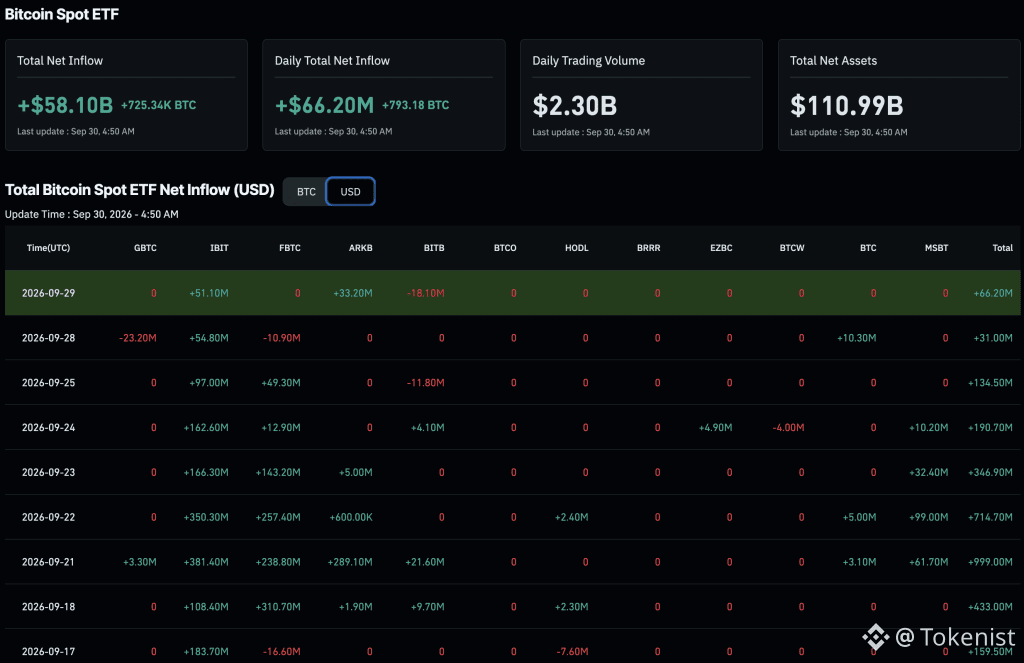
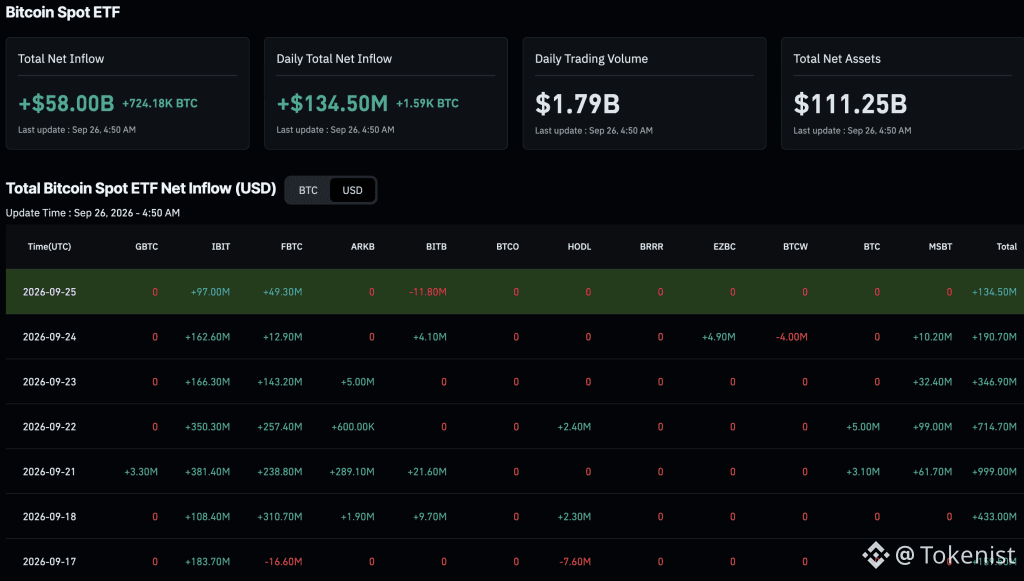
However, flows reversed, with spot Bitcoin ETFs seeing about $2.98Bn in inflows over seven sessions, including nearly $1 billion on September 21. CoinDesk confirmed a net inflow of $998.95M that day, marking the highest inflow since October 2025.
As Bitcoin surged to $87,354, its highest since January, over $800M in short positions were liquidated. Despite a later pullback of about 4%, volatility in ETF flows better explains the shifting market pressures.
A Green Month Does Not Settle the Seasonal Question
$BTC weekly, the next expansion phase is getting started, I don´t expect big drawdowns that many are waiting for to get in, let the fomo begin #Bitcoin pic.twitter.com/g8Q6xxHJ0e
— theophil (@theophil96) September 29, 2026
Technical readings in the report remained constructive during the pullback: the Average Directional Index was 42.3, the Relative Strength Index was 61.2, and the 50-day moving average was above the 200-day. The report highlighted $82,626 as a crucial level, with support between $81,166 and $79,705 if it fails.
However, Bitcoin was still about 4.4% below its 2026 starting price of roughly $87,497. Historical data showed that September gains were often followed by declines, and October’s average return of 19.92% did not guarantee similar performance in 2026.
Upcoming Federal Reserve meetings on October 27-28 and December 8-9 could influence risk appetite, and while ETF flows and macro conditions are significant for Bitcoin’s near-term direction, September’s reversal highlights the volatility of those flows.
A close above approximately $83,600 by September 30 would mark a strong month, but the narrow margin suggests it challenges existing patterns rather than changing them.
Crypto Expert Report: What Are The Next 10 Cryptos to Explode?
The post Bitcoin Nears September Record as ETF Flows Complicate the Story appeared first on Tokenist.
Bitcoin Nears September Record As ETF Flows Complicate the Story
Bitcoin gained around +7.3% through September 29, just ahead of September 2024’s +7.29%, putting it on track for its strongest September according to CoinGlass data.
The distinction is razor-thin: a monthly close above approximately $83,600 on September 30 is needed to secure the result, and the fourth consecutive positive September remains conditional on that close. Right now, BTC USD is trading at $83,300, just below that required level.
The upcoming streak could mark the longest run of positive Septembers in the data, but it doesn’t negate the month’s historical weakness. The key question is whether September seasonality is shifting or if recent ETF demand and macro positioning are temporarily overshadowing established patterns.
Bitcoin’s return is only slightly above the 2024 result, providing little basis for strong conclusions. The introduction of spot Bitcoin ETFs in 2024 offers limited data to determine whether their flows influence seasonal trends; thus, while recent demand and Bitcoin’s rally matter for this month’s analysis, they don’t confirm that the historical calendar effect has vanished.
What Could a Green September Mean for Bitcoin in Q4?
BITCOIN IS ABOUT TO MAKE HISTORY!$BTC closed both July and August in the green. If September also closes green, it would mark the FIRST time in Bitcoin’s history all 3 months have closed green. History is being made. pic.twitter.com/LPgXnf5yc5
— Mister Crypto (@misterrcrypto) September 26, 2026
Data from CoinGlass indicates that Bitcoin closed lower in eight of the 13 years from 2013 to 2025, with an average September return of -2.34%, making September the weakest month historically.
From 2017 to 2022, the index posted six consecutive September losses, reinforcing this trend. However, the following three years reversed the trend, with returns of +3.91% in 2023, +7.29% in 2024, and +5.16% in 2025.
If 2026 continues this positive trend, it would challenge the bearish narrative, though this data isn’t enough to claim a definitive reversal.
September’s potential record returns would still be only marginally better than 2024, suggesting that while noteworthy, it doesn’t establish a reliable bullish trend for the month.
Crypto Expert: What is The Best Meme Coin To Buy and Forget Until The Next Bull Run?
ETF Flows and Policy Shocks Drove September’s Reversal
SOURCE: CoinGlass
Bitcoin started September at nearly $78,500 after a +25% rise in August. However, on September 15, it faced pressure when the Senate’s Clarity Act failed a vote, leading to $450.4M in outflows from spot Bitcoin ETFs. This incident showed how quickly policy changes can affect demand.
On September 16, the Federal Reserve raised interest rates by 25 basis points to a range of 3.75%–4%, pushing Bitcoin toward $75,000. The combination of ETF outflows and rate increases demonstrated that seasonal patterns can’t be seen in isolation from broader financial pressures.
However, flows reversed, with spot Bitcoin ETFs seeing about $2.98Bn in inflows over seven sessions, including nearly $1 billion on September 21. CoinDesk confirmed a net inflow of $998.95M that day, marking the highest inflow since October 2025.
As Bitcoin surged to $87,354, its highest since January, over $800M in short positions were liquidated. Despite a later pullback of about 4%, volatility in ETF flows better explains the shifting market pressures.
A Green Month Does Not Settle the Seasonal Question
$BTC weekly, the next expansion phase is getting started, I don´t expect big drawdowns that many are waiting for to get in, let the fomo begin #Bitcoin pic.twitter.com/g8Q6xxHJ0e
— theophil (@theophil96) September 29, 2026
Technical readings in the report remained constructive during the pullback: the Average Directional Index was 42.3, the Relative Strength Index was 61.2, and the 50-day moving average was above the 200-day. The report highlighted $82,626 as a crucial level, with support between $81,166 and $79,705 if it fails.
However, Bitcoin was still about 4.4% below its 2026 starting price of roughly $87,497. Historical data showed that September gains were often followed by declines, and October’s average return of 19.92% did not guarantee similar performance in 2026.
Upcoming Federal Reserve meetings on October 27-28 and December 8-9 could influence risk appetite, and while ETF flows and macro conditions are significant for Bitcoin’s near-term direction, September’s reversal highlights the volatility of those flows.
A close above approximately $83,600 by September 30 would mark a strong month, but the narrow margin suggests it challenges existing patterns rather than changing them.
Crypto Expert Report: What Are The Next 10 Cryptos to Explode?
The post Bitcoin Nears September Record as ETF Flows Complicate the Story appeared first on Tokenist.
The distinction is razor-thin: a monthly close above approximately $83,600 on September 30 is needed to secure the result, and the fourth consecutive positive September remains conditional on that close. Right now, BTC USD is trading at $83,300, just below that required level.
The upcoming streak could mark the longest run of positive Septembers in the data, but it doesn’t negate the month’s historical weakness. The key question is whether September seasonality is shifting or if recent ETF demand and macro positioning are temporarily overshadowing established patterns.
Bitcoin’s return is only slightly above the 2024 result, providing little basis for strong conclusions. The introduction of spot Bitcoin ETFs in 2024 offers limited data to determine whether their flows influence seasonal trends; thus, while recent demand and Bitcoin’s rally matter for this month’s analysis, they don’t confirm that the historical calendar effect has vanished.
What Could a Green September Mean for Bitcoin in Q4?
BITCOIN IS ABOUT TO MAKE HISTORY!$BTC closed both July and August in the green. If September also closes green, it would mark the FIRST time in Bitcoin’s history all 3 months have closed green. History is being made. pic.twitter.com/LPgXnf5yc5
— Mister Crypto (@misterrcrypto) September 26, 2026
Data from CoinGlass indicates that Bitcoin closed lower in eight of the 13 years from 2013 to 2025, with an average September return of -2.34%, making September the weakest month historically.
From 2017 to 2022, the index posted six consecutive September losses, reinforcing this trend. However, the following three years reversed the trend, with returns of +3.91% in 2023, +7.29% in 2024, and +5.16% in 2025.
If 2026 continues this positive trend, it would challenge the bearish narrative, though this data isn’t enough to claim a definitive reversal.
September’s potential record returns would still be only marginally better than 2024, suggesting that while noteworthy, it doesn’t establish a reliable bullish trend for the month.
Crypto Expert: What is The Best Meme Coin To Buy and Forget Until The Next Bull Run?
ETF Flows and Policy Shocks Drove September’s Reversal
SOURCE: CoinGlass
Bitcoin started September at nearly $78,500 after a +25% rise in August. However, on September 15, it faced pressure when the Senate’s Clarity Act failed a vote, leading to $450.4M in outflows from spot Bitcoin ETFs. This incident showed how quickly policy changes can affect demand.
On September 16, the Federal Reserve raised interest rates by 25 basis points to a range of 3.75%–4%, pushing Bitcoin toward $75,000. The combination of ETF outflows and rate increases demonstrated that seasonal patterns can’t be seen in isolation from broader financial pressures.
However, flows reversed, with spot Bitcoin ETFs seeing about $2.98Bn in inflows over seven sessions, including nearly $1 billion on September 21. CoinDesk confirmed a net inflow of $998.95M that day, marking the highest inflow since October 2025.
As Bitcoin surged to $87,354, its highest since January, over $800M in short positions were liquidated. Despite a later pullback of about 4%, volatility in ETF flows better explains the shifting market pressures.
A Green Month Does Not Settle the Seasonal Question
$BTC weekly, the next expansion phase is getting started, I don´t expect big drawdowns that many are waiting for to get in, let the fomo begin #Bitcoin pic.twitter.com/g8Q6xxHJ0e
— theophil (@theophil96) September 29, 2026
Technical readings in the report remained constructive during the pullback: the Average Directional Index was 42.3, the Relative Strength Index was 61.2, and the 50-day moving average was above the 200-day. The report highlighted $82,626 as a crucial level, with support between $81,166 and $79,705 if it fails.
However, Bitcoin was still about 4.4% below its 2026 starting price of roughly $87,497. Historical data showed that September gains were often followed by declines, and October’s average return of 19.92% did not guarantee similar performance in 2026.
Upcoming Federal Reserve meetings on October 27-28 and December 8-9 could influence risk appetite, and while ETF flows and macro conditions are significant for Bitcoin’s near-term direction, September’s reversal highlights the volatility of those flows.
A close above approximately $83,600 by September 30 would mark a strong month, but the narrow margin suggests it challenges existing patterns rather than changing them.
Crypto Expert Report: What Are The Next 10 Cryptos to Explode?
The post Bitcoin Nears September Record as ETF Flows Complicate the Story appeared first on Tokenist.
127
·
--

Article
Blockchain.com Faces an IPO Valuation Test At $4B-$6BBlockchain.com is reportedly seeking about $500M in a US initial public offering (IPO) later in 2026 at a valuation of $4Bn to $6Bn, according to people familiar with the matter cited by Bloomberg.
That target sits well below the roughly $14Bn valuation the crypto services company commanded at its 2022 peak, and one person said Blockchain.com would consider a smaller raise if market conditions require it.
JUST IN: Blockchain․com targets IPO at $5B valuation, potentially raising $500M. • SEC draft filing submitted confidentially in May. • Target valuation down 65% from $14B peak. Is there appetite for more crypto IPOs? pic.twitter.com/T6xwsGGaKh
— Bitcoin Archive (@BitcoinArchive) September 28, 2026
The reported plan is not yet a filed prospectus, a priced deal, or a scheduled roadshow. According to Bloomberg sources, it signals to prospective investors that the company intends to list this year. The offering would ultimately answer whether institutional investors are willing to buy equity in a crypto infrastructure business again.
This follows two years of sector-wide valuation resets, rather than a question of whether investors want more exposure to a single token. The reported plan therefore tests whether this year’s crypto-market thaw can translate into investor interest in a public offering.
What is the Reported Blockchain IPO Plan?
Blockchain.com Group Holdings Inc., described by Bloomberg as one of the oldest crypto services companies, says it wants to complete a US listing this year.
People familiar with the matter, who asked not to be identified because the information is not yet public, said the company is targeting proceeds of about $500M at a $4Bn-$6Bn valuation, with a smaller raise considered if needed.
Public reporting has not identified a ticker, underwriters, a roadshow date, or a final valuation. Secondary coverage, including from crypto trade press, indicates the company may have filed confidential offering materials with the US SEC earlier in 2026.
However, this has not been confirmed through a public registration statement, and the offering remains unpriced and without a formal date.
The Valuation Reset and the Institutional Test
SOURCE: Blockchain.com
The proposed $4Bn-$6Bn range would mark a substantial reduction from the roughly $14Bn valuation Blockchain.com reportedly reached during its 2022 private-funding peak.
A later financing round in 2023 valued the company well below that figure, though the exact number varies across reports, and comparisons between private funding rounds and a public offering are complicated by differences in share classes and how preferred equity gets priced relative to common stock sold to public-market investors.
The range does confirm a willingness to price the deal for demand rather than nostalgia. Claims circulating in secondary coverage that Blockchain.com has been profitable on an adjusted basis for three consecutive years have not been verified through a public filing, and investors will want that substantiated in registration documents before extending confidence to either end of the pricing range.
What Could Move Investor Demand for the Proposed Blockchain IPO
Several observable signals will separate a genuine institutional re-entry into digital-asset equities from a cautiously priced test balloon. Where the deal ultimately settles within the $4Bn-$6Bn band, whether the $500M target gets upsized or trimmed.
How any implied revenue multiple compares with fintech and exchange peers will matter more than the headline valuation figure alone. CoinShares chose a different route in 2026, reaching Nasdaq through a $1.2Bn SPAC merger rather than a traditional IPO, a reminder that public-market access for crypto firms now comes through more than one structure.
First-day trading and the composition of the order book, long-only institutional accounts versus crypto-native funds, would offer a cleaner read on demand than the pricing range by itself.
A listing that clears near the top of the range with broad institutional participation would likely encourage other private crypto companies weighing public markets; a reduced raise or a valuation forced toward the bottom would suggest public markets are reopening only at materially more conservative terms.
Crypto Expert Report: What Are The Next 10 Crypto to Explode?
This article is for informational purposes only and does not constitute investment advice.
The post Blockchain.com Faces an IPO Valuation Test at $4B-$6B appeared first on Tokenist.
Blockchain.com Faces an IPO Valuation Test At $4B-$6B
Blockchain.com is reportedly seeking about $500M in a US initial public offering (IPO) later in 2026 at a valuation of $4Bn to $6Bn, according to people familiar with the matter cited by Bloomberg.
That target sits well below the roughly $14Bn valuation the crypto services company commanded at its 2022 peak, and one person said Blockchain.com would consider a smaller raise if market conditions require it.
JUST IN: Blockchain․com targets IPO at $5B valuation, potentially raising $500M. • SEC draft filing submitted confidentially in May. • Target valuation down 65% from $14B peak. Is there appetite for more crypto IPOs? pic.twitter.com/T6xwsGGaKh
— Bitcoin Archive (@BitcoinArchive) September 28, 2026
The reported plan is not yet a filed prospectus, a priced deal, or a scheduled roadshow. According to Bloomberg sources, it signals to prospective investors that the company intends to list this year. The offering would ultimately answer whether institutional investors are willing to buy equity in a crypto infrastructure business again.
This follows two years of sector-wide valuation resets, rather than a question of whether investors want more exposure to a single token. The reported plan therefore tests whether this year’s crypto-market thaw can translate into investor interest in a public offering.
What is the Reported Blockchain IPO Plan?
Blockchain.com Group Holdings Inc., described by Bloomberg as one of the oldest crypto services companies, says it wants to complete a US listing this year.
People familiar with the matter, who asked not to be identified because the information is not yet public, said the company is targeting proceeds of about $500M at a $4Bn-$6Bn valuation, with a smaller raise considered if needed.
Public reporting has not identified a ticker, underwriters, a roadshow date, or a final valuation. Secondary coverage, including from crypto trade press, indicates the company may have filed confidential offering materials with the US SEC earlier in 2026.
However, this has not been confirmed through a public registration statement, and the offering remains unpriced and without a formal date.
The Valuation Reset and the Institutional Test
SOURCE: Blockchain.com
The proposed $4Bn-$6Bn range would mark a substantial reduction from the roughly $14Bn valuation Blockchain.com reportedly reached during its 2022 private-funding peak.
A later financing round in 2023 valued the company well below that figure, though the exact number varies across reports, and comparisons between private funding rounds and a public offering are complicated by differences in share classes and how preferred equity gets priced relative to common stock sold to public-market investors.
The range does confirm a willingness to price the deal for demand rather than nostalgia. Claims circulating in secondary coverage that Blockchain.com has been profitable on an adjusted basis for three consecutive years have not been verified through a public filing, and investors will want that substantiated in registration documents before extending confidence to either end of the pricing range.
What Could Move Investor Demand for the Proposed Blockchain IPO
Several observable signals will separate a genuine institutional re-entry into digital-asset equities from a cautiously priced test balloon. Where the deal ultimately settles within the $4Bn-$6Bn band, whether the $500M target gets upsized or trimmed.
How any implied revenue multiple compares with fintech and exchange peers will matter more than the headline valuation figure alone. CoinShares chose a different route in 2026, reaching Nasdaq through a $1.2Bn SPAC merger rather than a traditional IPO, a reminder that public-market access for crypto firms now comes through more than one structure.
First-day trading and the composition of the order book, long-only institutional accounts versus crypto-native funds, would offer a cleaner read on demand than the pricing range by itself.
A listing that clears near the top of the range with broad institutional participation would likely encourage other private crypto companies weighing public markets; a reduced raise or a valuation forced toward the bottom would suggest public markets are reopening only at materially more conservative terms.
Crypto Expert Report: What Are The Next 10 Crypto to Explode?
This article is for informational purposes only and does not constitute investment advice.
The post Blockchain.com Faces an IPO Valuation Test at $4B-$6B appeared first on Tokenist.
That target sits well below the roughly $14Bn valuation the crypto services company commanded at its 2022 peak, and one person said Blockchain.com would consider a smaller raise if market conditions require it.
JUST IN: Blockchain․com targets IPO at $5B valuation, potentially raising $500M. • SEC draft filing submitted confidentially in May. • Target valuation down 65% from $14B peak. Is there appetite for more crypto IPOs? pic.twitter.com/T6xwsGGaKh
— Bitcoin Archive (@BitcoinArchive) September 28, 2026
The reported plan is not yet a filed prospectus, a priced deal, or a scheduled roadshow. According to Bloomberg sources, it signals to prospective investors that the company intends to list this year. The offering would ultimately answer whether institutional investors are willing to buy equity in a crypto infrastructure business again.
This follows two years of sector-wide valuation resets, rather than a question of whether investors want more exposure to a single token. The reported plan therefore tests whether this year’s crypto-market thaw can translate into investor interest in a public offering.
What is the Reported Blockchain IPO Plan?
Blockchain.com Group Holdings Inc., described by Bloomberg as one of the oldest crypto services companies, says it wants to complete a US listing this year.
People familiar with the matter, who asked not to be identified because the information is not yet public, said the company is targeting proceeds of about $500M at a $4Bn-$6Bn valuation, with a smaller raise considered if needed.
Public reporting has not identified a ticker, underwriters, a roadshow date, or a final valuation. Secondary coverage, including from crypto trade press, indicates the company may have filed confidential offering materials with the US SEC earlier in 2026.
However, this has not been confirmed through a public registration statement, and the offering remains unpriced and without a formal date.
The Valuation Reset and the Institutional Test
SOURCE: Blockchain.com
The proposed $4Bn-$6Bn range would mark a substantial reduction from the roughly $14Bn valuation Blockchain.com reportedly reached during its 2022 private-funding peak.
A later financing round in 2023 valued the company well below that figure, though the exact number varies across reports, and comparisons between private funding rounds and a public offering are complicated by differences in share classes and how preferred equity gets priced relative to common stock sold to public-market investors.
The range does confirm a willingness to price the deal for demand rather than nostalgia. Claims circulating in secondary coverage that Blockchain.com has been profitable on an adjusted basis for three consecutive years have not been verified through a public filing, and investors will want that substantiated in registration documents before extending confidence to either end of the pricing range.
What Could Move Investor Demand for the Proposed Blockchain IPO
Several observable signals will separate a genuine institutional re-entry into digital-asset equities from a cautiously priced test balloon. Where the deal ultimately settles within the $4Bn-$6Bn band, whether the $500M target gets upsized or trimmed.
How any implied revenue multiple compares with fintech and exchange peers will matter more than the headline valuation figure alone. CoinShares chose a different route in 2026, reaching Nasdaq through a $1.2Bn SPAC merger rather than a traditional IPO, a reminder that public-market access for crypto firms now comes through more than one structure.
First-day trading and the composition of the order book, long-only institutional accounts versus crypto-native funds, would offer a cleaner read on demand than the pricing range by itself.
A listing that clears near the top of the range with broad institutional participation would likely encourage other private crypto companies weighing public markets; a reduced raise or a valuation forced toward the bottom would suggest public markets are reopening only at materially more conservative terms.
Crypto Expert Report: What Are The Next 10 Crypto to Explode?
This article is for informational purposes only and does not constitute investment advice.
The post Blockchain.com Faces an IPO Valuation Test at $4B-$6B appeared first on Tokenist.
107
·
--

Article
Coinbase Gains CFTC Clearing Role for Collateralized DerivativesIn Coinbase crypto news today, the firm was registered as a US derivatives clearing organization by the Commodity Futures Trading Commission (CFTC), effective Monday, September 28, 2026, with authorization covering fully collateralized futures, options on futures, and swaps.
The order explicitly excludes leveraged products, which means Coinbase now controls the clearing layer of its regulated derivatives business without yet controlling all of it. The registration slots directly into an existing structure. Coinbase Derivatives LLC operates as the exchange, listing U.S.-regulated futures on Bitcoin and Ethereum alongside commodity and equity-index contracts, plus long-dated perpetual-style crypto futures.
NEW: @coinbase RECEIVES CFTC APPROVAL FOR COINBASE CLEARING LLC “TOGETHER WITH OUR DERIVATIVES BROKER, A FUTURES COMMISSION MERCHANT (FCM) AND DERIVATIVES EXCHANGE, A DESIGNATED CONTRACT MARKET (DCM), COINBASE CLEARING LLC… pic.twitter.com/Q2hPatAJWF
— DEGEN NEWS (@DegenerateNews) September 28, 2026
Coinbase Financial Markets Inc. serves as the futures broker. Coinbase Clearing LLC now adds the third leg, sitting between buyers and sellers to manage settlement and counterparty risk, including what happens if one side defaults. Coinbase General Counsel Molly Abraham characterized the approval as completing the company’s end-to-end derivatives infrastructure.
It has been framed as a step toward bringing more regulated products to market with USDC collateral and continuous settlement rather than the batch-based cycles typical of legacy clearinghouses. That framing matters because the CFTC’s approach to crypto derivatives rulemaking has moved toward accommodating digital-asset-native infrastructure rather than forcing it into traditional margining frameworks.
What Does the CFTC Authorization Mean for Coinbase Crypto Operations?
Coinbase just got CFTC approval for Coinbase Clearing as a DCO. That means it now runs its own US exchange, broker, and clearing stack. They’re calling it the first USDC-native clearinghouse: USDC as collateral, 24/7 settlement. The license is limited to fully collateralized… pic.twitter.com/UHvs8rxP67
— Captain GM (@g13m) September 29, 2026
The CFTC’s public registry lists Coinbase Clearing under Derivatives Clearing Organization entry 64361, with remarks noting that the entity may clear fully collateralized futures, options on futures, and swaps.
Fully collateralized, in CFTC parlance, means the clearinghouse holds enough funds at all times to cover the maximum possible loss on a position, the opposite of a margined structure where traders post a fraction of notional exposure and borrow against the rest.
That distinction is the entire story of what this approval does and doesn’t do. It authorizes Coinbase to clear a defined category of collateralized products directly, but it does not extend to leveraged derivatives, which remain outside the order’s scope.
Coinbase’s existing margined business and any conventionally leveraged contracts will continue to route through outside clearing arrangements for now.
Crypto Expert Report: What Are The Next 10 Crypto to Explode?
Coinbase Continues to Shift from an Exchange to a Full Stack Platform
SOURCE: Yahoo Finance
The practical effect is that Coinbase now holds exchange, broker, and clearinghouse licenses under one roof for a specific slice of its derivatives lineup, a materially different position than relying on third parties for every function.
It also reinforces Coinbase’s shift from a crypto trading venue to a vertically integrated financial-market infrastructure provider, a trajectory that runs parallel to its recent push into perpetual futures products, where the same fully collateralized-versus-leveraged distinction determines which entity clears the trade.
Coinbase is not alone in pursuing this structure. Kraken parent Payward completed its acquisition of Bitnomial in May, gaining a CFTC-regulated exchange, clearinghouse, and futures brokerage of its own, according to the primary reporting on the Coinbase order.
The two moves suggest that owning the clearing layer, rather than renting it, is becoming a competitive baseline among U.S.-regulated crypto derivatives platforms, not a one-off differentiator.
The approval does not eliminate Coinbase’s reliance on outside clearing partners across its broader derivatives suite. Third-party arrangements remain in place for products outside the current authorization.
Crypto Expert Report: What is the Best Meme Coin to Buy and Forget Until the Next Bull Run?
This article is for informational purposes only and does not constitute investment advice. Tokenist does not hold positions in the securities or assets discussed.
The post Coinbase Gains CFTC Clearing Role for Collateralized Derivatives appeared first on Tokenist.
Coinbase Gains CFTC Clearing Role for Collateralized Derivatives
In Coinbase crypto news today, the firm was registered as a US derivatives clearing organization by the Commodity Futures Trading Commission (CFTC), effective Monday, September 28, 2026, with authorization covering fully collateralized futures, options on futures, and swaps.
The order explicitly excludes leveraged products, which means Coinbase now controls the clearing layer of its regulated derivatives business without yet controlling all of it. The registration slots directly into an existing structure. Coinbase Derivatives LLC operates as the exchange, listing U.S.-regulated futures on Bitcoin and Ethereum alongside commodity and equity-index contracts, plus long-dated perpetual-style crypto futures.
NEW: @coinbase RECEIVES CFTC APPROVAL FOR COINBASE CLEARING LLC “TOGETHER WITH OUR DERIVATIVES BROKER, A FUTURES COMMISSION MERCHANT (FCM) AND DERIVATIVES EXCHANGE, A DESIGNATED CONTRACT MARKET (DCM), COINBASE CLEARING LLC… pic.twitter.com/Q2hPatAJWF
— DEGEN NEWS (@DegenerateNews) September 28, 2026
Coinbase Financial Markets Inc. serves as the futures broker. Coinbase Clearing LLC now adds the third leg, sitting between buyers and sellers to manage settlement and counterparty risk, including what happens if one side defaults. Coinbase General Counsel Molly Abraham characterized the approval as completing the company’s end-to-end derivatives infrastructure.
It has been framed as a step toward bringing more regulated products to market with USDC collateral and continuous settlement rather than the batch-based cycles typical of legacy clearinghouses. That framing matters because the CFTC’s approach to crypto derivatives rulemaking has moved toward accommodating digital-asset-native infrastructure rather than forcing it into traditional margining frameworks.
What Does the CFTC Authorization Mean for Coinbase Crypto Operations?
Coinbase just got CFTC approval for Coinbase Clearing as a DCO. That means it now runs its own US exchange, broker, and clearing stack. They’re calling it the first USDC-native clearinghouse: USDC as collateral, 24/7 settlement. The license is limited to fully collateralized… pic.twitter.com/UHvs8rxP67
— Captain GM (@g13m) September 29, 2026
The CFTC’s public registry lists Coinbase Clearing under Derivatives Clearing Organization entry 64361, with remarks noting that the entity may clear fully collateralized futures, options on futures, and swaps.
Fully collateralized, in CFTC parlance, means the clearinghouse holds enough funds at all times to cover the maximum possible loss on a position, the opposite of a margined structure where traders post a fraction of notional exposure and borrow against the rest.
That distinction is the entire story of what this approval does and doesn’t do. It authorizes Coinbase to clear a defined category of collateralized products directly, but it does not extend to leveraged derivatives, which remain outside the order’s scope.
Coinbase’s existing margined business and any conventionally leveraged contracts will continue to route through outside clearing arrangements for now.
Crypto Expert Report: What Are The Next 10 Crypto to Explode?
Coinbase Continues to Shift from an Exchange to a Full Stack Platform
SOURCE: Yahoo Finance
The practical effect is that Coinbase now holds exchange, broker, and clearinghouse licenses under one roof for a specific slice of its derivatives lineup, a materially different position than relying on third parties for every function.
It also reinforces Coinbase’s shift from a crypto trading venue to a vertically integrated financial-market infrastructure provider, a trajectory that runs parallel to its recent push into perpetual futures products, where the same fully collateralized-versus-leveraged distinction determines which entity clears the trade.
Coinbase is not alone in pursuing this structure. Kraken parent Payward completed its acquisition of Bitnomial in May, gaining a CFTC-regulated exchange, clearinghouse, and futures brokerage of its own, according to the primary reporting on the Coinbase order.
The two moves suggest that owning the clearing layer, rather than renting it, is becoming a competitive baseline among U.S.-regulated crypto derivatives platforms, not a one-off differentiator.
The approval does not eliminate Coinbase’s reliance on outside clearing partners across its broader derivatives suite. Third-party arrangements remain in place for products outside the current authorization.
Crypto Expert Report: What is the Best Meme Coin to Buy and Forget Until the Next Bull Run?
This article is for informational purposes only and does not constitute investment advice. Tokenist does not hold positions in the securities or assets discussed.
The post Coinbase Gains CFTC Clearing Role for Collateralized Derivatives appeared first on Tokenist.
The order explicitly excludes leveraged products, which means Coinbase now controls the clearing layer of its regulated derivatives business without yet controlling all of it. The registration slots directly into an existing structure. Coinbase Derivatives LLC operates as the exchange, listing U.S.-regulated futures on Bitcoin and Ethereum alongside commodity and equity-index contracts, plus long-dated perpetual-style crypto futures.
NEW: @coinbase RECEIVES CFTC APPROVAL FOR COINBASE CLEARING LLC “TOGETHER WITH OUR DERIVATIVES BROKER, A FUTURES COMMISSION MERCHANT (FCM) AND DERIVATIVES EXCHANGE, A DESIGNATED CONTRACT MARKET (DCM), COINBASE CLEARING LLC… pic.twitter.com/Q2hPatAJWF
— DEGEN NEWS (@DegenerateNews) September 28, 2026
Coinbase Financial Markets Inc. serves as the futures broker. Coinbase Clearing LLC now adds the third leg, sitting between buyers and sellers to manage settlement and counterparty risk, including what happens if one side defaults. Coinbase General Counsel Molly Abraham characterized the approval as completing the company’s end-to-end derivatives infrastructure.
It has been framed as a step toward bringing more regulated products to market with USDC collateral and continuous settlement rather than the batch-based cycles typical of legacy clearinghouses. That framing matters because the CFTC’s approach to crypto derivatives rulemaking has moved toward accommodating digital-asset-native infrastructure rather than forcing it into traditional margining frameworks.
What Does the CFTC Authorization Mean for Coinbase Crypto Operations?
Coinbase just got CFTC approval for Coinbase Clearing as a DCO. That means it now runs its own US exchange, broker, and clearing stack. They’re calling it the first USDC-native clearinghouse: USDC as collateral, 24/7 settlement. The license is limited to fully collateralized… pic.twitter.com/UHvs8rxP67
— Captain GM (@g13m) September 29, 2026
The CFTC’s public registry lists Coinbase Clearing under Derivatives Clearing Organization entry 64361, with remarks noting that the entity may clear fully collateralized futures, options on futures, and swaps.
Fully collateralized, in CFTC parlance, means the clearinghouse holds enough funds at all times to cover the maximum possible loss on a position, the opposite of a margined structure where traders post a fraction of notional exposure and borrow against the rest.
That distinction is the entire story of what this approval does and doesn’t do. It authorizes Coinbase to clear a defined category of collateralized products directly, but it does not extend to leveraged derivatives, which remain outside the order’s scope.
Coinbase’s existing margined business and any conventionally leveraged contracts will continue to route through outside clearing arrangements for now.
Crypto Expert Report: What Are The Next 10 Crypto to Explode?
Coinbase Continues to Shift from an Exchange to a Full Stack Platform
SOURCE: Yahoo Finance
The practical effect is that Coinbase now holds exchange, broker, and clearinghouse licenses under one roof for a specific slice of its derivatives lineup, a materially different position than relying on third parties for every function.
It also reinforces Coinbase’s shift from a crypto trading venue to a vertically integrated financial-market infrastructure provider, a trajectory that runs parallel to its recent push into perpetual futures products, where the same fully collateralized-versus-leveraged distinction determines which entity clears the trade.
Coinbase is not alone in pursuing this structure. Kraken parent Payward completed its acquisition of Bitnomial in May, gaining a CFTC-regulated exchange, clearinghouse, and futures brokerage of its own, according to the primary reporting on the Coinbase order.
The two moves suggest that owning the clearing layer, rather than renting it, is becoming a competitive baseline among U.S.-regulated crypto derivatives platforms, not a one-off differentiator.
The approval does not eliminate Coinbase’s reliance on outside clearing partners across its broader derivatives suite. Third-party arrangements remain in place for products outside the current authorization.
Crypto Expert Report: What is the Best Meme Coin to Buy and Forget Until the Next Bull Run?
This article is for informational purposes only and does not constitute investment advice. Tokenist does not hold positions in the securities or assets discussed.
The post Coinbase Gains CFTC Clearing Role for Collateralized Derivatives appeared first on Tokenist.
139
·
--
Article
Bitcoin Retreat Holds Firm Despite Iran Shock and Bitget BreachBitcoin (BTC) dropped to about $82,900 on September 28, 2026, down -1.8% in 24 hours, after trading near $84,400 over the weekend.
The decline followed President Trump’s rejection of Iran’s proposal to reopen the Strait of Hormuz if the US lifted its naval blockade and sanctions.
Despite this, Bitcoin remained resilient, up around +1.5% over the past week, coinciding with increased US spot Bitcoin ETF demand. Brent crude closed the previous week at around $104 a barrel, linking Middle East tensions to crypto sentiment.
$BTC kicks off the week by retesting the May highs and taking out local lows. I wouldn't be surprised if the market serves up an old bull-market classic here. Red Monday, Green week. pic.twitter.com/z8dmMhWhu0
— Jelle (@CryptoJelleNL) September 28, 2026
How Does Bitcoin ETF Demand Shape the Ongoing Pullback?
The broader market move was uneven rather than uniformly sharp. Ethereum fell 1.9% to around $2,646 and is down about 0.9% on the week, while XRP dropped 2.2% to $1.48.
Solana slipped -1.2% to roughly $119 but remained up +6.7% over seven days, and total crypto market capitalization stood at about $2.9 trillion, down -2% on the day, per CoinGecko.
Behind the relatively orderly retreat sits a notable flow signal: US spot Bitcoin ETFs took in about $2.2Bn over the first four sessions of the prior week, according to Bitbo’s flow data, led by a single-day intake of $1.42Bn on September 21.
BlackRock’s IBIT accounted for roughly $1.05Bn of that four-day total, arriving directly after three consecutive days of outflows the week before.
That reversal in ETF positioning near a key psychological price level may have given the market a cushion of buy-side demand heading into the weekend’s geopolitical headlines, though the flow data alone does not prove that ETF demand limited Monday’s decline.
SOURCE: CoinGlass Geopolitical Risk and the Bitget Exchange Breach Compound the Picture
Trump’s rejection leaves open whether US-Iran talks restart this week as he has suggested, or whether military action resumes before or after the midterms, a binary that traders are pricing into both oil and risk assets simultaneously.
Layered onto that uncertainty was last week’s breach at Bitget, which the exchange has since revised to an estimated $387.5 M loss. Bitget began reopening withdrawals in phases on Monday, starting with Bitcoin, with Ethereum, USDT, and other assets scheduled to follow through October 2.
The same ETF inflows that helped absorb Trump’s Iran rejection also appear to have coincided with the market’s ability to shrug off the Bitget news without a deeper selloff, though again the relationship is correlative rather than demonstrated.
Taken together, the episode illustrates how a single week can stack a sovereign-risk shock on top of a centralized-exchange incident without producing a disorderly break in Bitcoin’s price.
NEW: President Trump makes a prediction about the Iran war "I think what's going to happen is we're going to win the war very soon," the president told Fox News' @aishahhasnie at the Presidents Cup at Medinah Country Club. Trump predicted oil prices will fall once the war ends,… pic.twitter.com/ZG1c4dQ7wb
— Fox News (@FoxNews) September 27, 2026
What Traders are Watching Next
The immediate variables are whether US-Iran talks resume as Trump indicated and whether Brent crude holds above $100 a barrel. A durable diplomatic opening would ease pressure on inflation expectations broadly, while confirmation that strikes will resume, whether before or after the midterms, would test how far Monday’s selling extends into the rest of the week.
Bitcoin’s 1.9% seven-day gain and Solana’s 6.7% weekly advance are snapshots as of Monday’s trading session rather than confirmation of a durable trend, and both remain sensitive to the next headline out of Doha, Tehran, or Washington.
For now, the interplay between ETF flow data and geopolitical risk remains the dominant lens through which the market is pricing Bitcoin’s next move.
This article is for informational purposes only and does not constitute investment advice.
The post Bitcoin Retreat Holds Firm Despite Iran Shock and Bitget Breach appeared first on Tokenist.
Bitcoin Retreat Holds Firm Despite Iran Shock and Bitget Breach
Bitcoin (BTC) dropped to about $82,900 on September 28, 2026, down -1.8% in 24 hours, after trading near $84,400 over the weekend.
The decline followed President Trump’s rejection of Iran’s proposal to reopen the Strait of Hormuz if the US lifted its naval blockade and sanctions.
Despite this, Bitcoin remained resilient, up around +1.5% over the past week, coinciding with increased US spot Bitcoin ETF demand. Brent crude closed the previous week at around $104 a barrel, linking Middle East tensions to crypto sentiment.
$BTC kicks off the week by retesting the May highs and taking out local lows. I wouldn't be surprised if the market serves up an old bull-market classic here. Red Monday, Green week. pic.twitter.com/z8dmMhWhu0
— Jelle (@CryptoJelleNL) September 28, 2026
How Does Bitcoin ETF Demand Shape the Ongoing Pullback?
The broader market move was uneven rather than uniformly sharp. Ethereum fell 1.9% to around $2,646 and is down about 0.9% on the week, while XRP dropped 2.2% to $1.48.
Solana slipped -1.2% to roughly $119 but remained up +6.7% over seven days, and total crypto market capitalization stood at about $2.9 trillion, down -2% on the day, per CoinGecko.
Behind the relatively orderly retreat sits a notable flow signal: US spot Bitcoin ETFs took in about $2.2Bn over the first four sessions of the prior week, according to Bitbo’s flow data, led by a single-day intake of $1.42Bn on September 21.
BlackRock’s IBIT accounted for roughly $1.05Bn of that four-day total, arriving directly after three consecutive days of outflows the week before.
That reversal in ETF positioning near a key psychological price level may have given the market a cushion of buy-side demand heading into the weekend’s geopolitical headlines, though the flow data alone does not prove that ETF demand limited Monday’s decline.
SOURCE: CoinGlass Geopolitical Risk and the Bitget Exchange Breach Compound the Picture
Trump’s rejection leaves open whether US-Iran talks restart this week as he has suggested, or whether military action resumes before or after the midterms, a binary that traders are pricing into both oil and risk assets simultaneously.
Layered onto that uncertainty was last week’s breach at Bitget, which the exchange has since revised to an estimated $387.5 M loss. Bitget began reopening withdrawals in phases on Monday, starting with Bitcoin, with Ethereum, USDT, and other assets scheduled to follow through October 2.
The same ETF inflows that helped absorb Trump’s Iran rejection also appear to have coincided with the market’s ability to shrug off the Bitget news without a deeper selloff, though again the relationship is correlative rather than demonstrated.
Taken together, the episode illustrates how a single week can stack a sovereign-risk shock on top of a centralized-exchange incident without producing a disorderly break in Bitcoin’s price.
NEW: President Trump makes a prediction about the Iran war "I think what's going to happen is we're going to win the war very soon," the president told Fox News' @aishahhasnie at the Presidents Cup at Medinah Country Club. Trump predicted oil prices will fall once the war ends,… pic.twitter.com/ZG1c4dQ7wb
— Fox News (@FoxNews) September 27, 2026
What Traders are Watching Next
The immediate variables are whether US-Iran talks resume as Trump indicated and whether Brent crude holds above $100 a barrel. A durable diplomatic opening would ease pressure on inflation expectations broadly, while confirmation that strikes will resume, whether before or after the midterms, would test how far Monday’s selling extends into the rest of the week.
Bitcoin’s 1.9% seven-day gain and Solana’s 6.7% weekly advance are snapshots as of Monday’s trading session rather than confirmation of a durable trend, and both remain sensitive to the next headline out of Doha, Tehran, or Washington.
For now, the interplay between ETF flow data and geopolitical risk remains the dominant lens through which the market is pricing Bitcoin’s next move.
This article is for informational purposes only and does not constitute investment advice.
The post Bitcoin Retreat Holds Firm Despite Iran Shock and Bitget Breach appeared first on Tokenist.
The decline followed President Trump’s rejection of Iran’s proposal to reopen the Strait of Hormuz if the US lifted its naval blockade and sanctions.
Despite this, Bitcoin remained resilient, up around +1.5% over the past week, coinciding with increased US spot Bitcoin ETF demand. Brent crude closed the previous week at around $104 a barrel, linking Middle East tensions to crypto sentiment.
$BTC kicks off the week by retesting the May highs and taking out local lows. I wouldn't be surprised if the market serves up an old bull-market classic here. Red Monday, Green week. pic.twitter.com/z8dmMhWhu0
— Jelle (@CryptoJelleNL) September 28, 2026
How Does Bitcoin ETF Demand Shape the Ongoing Pullback?
The broader market move was uneven rather than uniformly sharp. Ethereum fell 1.9% to around $2,646 and is down about 0.9% on the week, while XRP dropped 2.2% to $1.48.
Solana slipped -1.2% to roughly $119 but remained up +6.7% over seven days, and total crypto market capitalization stood at about $2.9 trillion, down -2% on the day, per CoinGecko.
Behind the relatively orderly retreat sits a notable flow signal: US spot Bitcoin ETFs took in about $2.2Bn over the first four sessions of the prior week, according to Bitbo’s flow data, led by a single-day intake of $1.42Bn on September 21.
BlackRock’s IBIT accounted for roughly $1.05Bn of that four-day total, arriving directly after three consecutive days of outflows the week before.
That reversal in ETF positioning near a key psychological price level may have given the market a cushion of buy-side demand heading into the weekend’s geopolitical headlines, though the flow data alone does not prove that ETF demand limited Monday’s decline.
SOURCE: CoinGlass Geopolitical Risk and the Bitget Exchange Breach Compound the Picture
Trump’s rejection leaves open whether US-Iran talks restart this week as he has suggested, or whether military action resumes before or after the midterms, a binary that traders are pricing into both oil and risk assets simultaneously.
Layered onto that uncertainty was last week’s breach at Bitget, which the exchange has since revised to an estimated $387.5 M loss. Bitget began reopening withdrawals in phases on Monday, starting with Bitcoin, with Ethereum, USDT, and other assets scheduled to follow through October 2.
The same ETF inflows that helped absorb Trump’s Iran rejection also appear to have coincided with the market’s ability to shrug off the Bitget news without a deeper selloff, though again the relationship is correlative rather than demonstrated.
Taken together, the episode illustrates how a single week can stack a sovereign-risk shock on top of a centralized-exchange incident without producing a disorderly break in Bitcoin’s price.
NEW: President Trump makes a prediction about the Iran war "I think what's going to happen is we're going to win the war very soon," the president told Fox News' @aishahhasnie at the Presidents Cup at Medinah Country Club. Trump predicted oil prices will fall once the war ends,… pic.twitter.com/ZG1c4dQ7wb
— Fox News (@FoxNews) September 27, 2026
What Traders are Watching Next
The immediate variables are whether US-Iran talks resume as Trump indicated and whether Brent crude holds above $100 a barrel. A durable diplomatic opening would ease pressure on inflation expectations broadly, while confirmation that strikes will resume, whether before or after the midterms, would test how far Monday’s selling extends into the rest of the week.
Bitcoin’s 1.9% seven-day gain and Solana’s 6.7% weekly advance are snapshots as of Monday’s trading session rather than confirmation of a durable trend, and both remain sensitive to the next headline out of Doha, Tehran, or Washington.
For now, the interplay between ETF flow data and geopolitical risk remains the dominant lens through which the market is pricing Bitcoin’s next move.
This article is for informational purposes only and does not constitute investment advice.
The post Bitcoin Retreat Holds Firm Despite Iran Shock and Bitget Breach appeared first on Tokenist.
218
·
--
Article
Saylor Posts Sunday Strategy Bitcoin TeaseAnother Bitcoin purchase may be coming from Strategy Inc. (Nasdaq: MSTR), after Executive Chairman Michael Saylor shared a chart of the company’s holdings on Sept. 27. His message about adding more orange accompanied a graphic that marks Strategy’s Bitcoin purchases with orange circles. Saylor wrote: “Even more orange.”
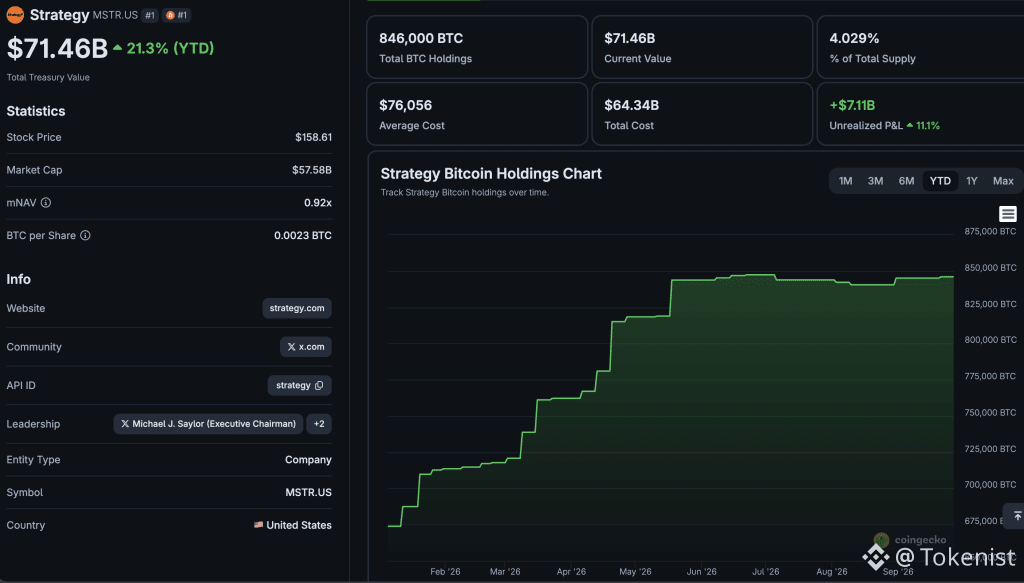
The chart shows 846,000 BTC with a market value of $71.81Bn when it was captured. It lists an average acquisition price of $75,416 per bitcoin. The dollar value reflects bitcoin’s market price and can change even when the number of coins stays the same.
Strategy’s September 21 filing with the Securities and Exchange Commission reported a purchase of 950 BTC for $75.7M during the preceding week. That transaction brought its holdings to 846,000 BTC as of September 20. Saylor’s new post points toward a possible further purchase; a subsequent company disclosure would establish whether one occurred.
SOURCE: CoinGecko Saylor’s Earlier Teaser Was Followed by a $370M Bitcoin Purchase
The 846,000 BTC displayed on Sunday’s chart is the total Strategy disclosed after its latest confirmed acquisition. That 950 BTC purchase returned the company’s holdings to a level it held during the summer before further bitcoin sales. Strategy spent $174 million repurchasing its STRC preferred stock in the same reporting period.
Saylor has used a holdings chart to hint at a potential purchase before. On August 30, he shared a “We’re Back” message as Strategy awaited its next transaction disclosure. At that point, the company’s reported holdings stood at 840,447 BTC.
The following day, Strategy disclosed a $369.7M bitcoin purchase totaling 4,603 BTC. That sequence sets a precedent for Saylor’s latest orange chart, while the size and timing of any new transaction will depend on Strategy’s next disclosure.
Even more orange. pic.twitter.com/FucHwoJSzg
— Michael Saylor (@saylor) September 27, 2026
Crypto Expert Report: What Are The Next 10 Cryptos to Explode?
What the $71.81 Billion Figure Shows
Strategy’s Bitcoin ledger records its disclosed acquisitions and sales. Its latest entry is the 950 BTC purchase reported on September 21, bringing the total cost of its current holdings to about $63.8Bn.
The chart’s $71.81Bn figure represents the market value at a particular bitcoin price, not the amount Strategy spent acquiring them.
For a company with a bitcoin corporate treasury, the distinction is significant: a price move can raise or lower the reported value of its reserve without any purchase or sale.
Strategy also reported $1.05Bn in USD Cash as of September 20, which it may use for bitcoin purchases or other corporate purposes.
Bitcoin Price Analysis Heading Into October
UPTOBER IS ALMOST HERE. Bitcoin has delivered positive returns in October in 10 of the last 13 years. Now October is approaching again. If the seasonal pattern holds, $BTC could be gearing up for another strong month. https://t.co/gAF7NK8iiG pic.twitter.com/QIu9BklvYE
— Ali Charts (@alicharts) September 25, 2026
Bitcoin enters October with bullish momentum intact after a sharp recovery from its August lows. BTC is currently trading around $84,500, having recently pushed above $87,000 before a modest retreat.
The pullback remains relatively contained, with the $83,500-$84,000 area emerging as key near-term support. A sustained move back above $85,000 could give buyers the momentum needed to retest the recent $87,000-plus high.
A decisive break above that level would put $90,000 firmly in focus, while a failure to hold $83,500 could expose Bitcoin to a deeper correction toward $80,000-$82,000.
Heading into October, momentum therefore remains constructive, although rising expectations of further Federal Reserve tightening could introduce volatility.
With Bitcoin’s next major resistance concentrated between $87,000 and $90,000, the opening weeks of October could prove crucial for determining whether the current recovery develops into another leg higher.
Crypto Expert: What is The Best Meme Coin To Buy and Forget Until The Next Bull Run?
The post Saylor Posts Sunday Strategy Bitcoin Tease appeared first on Tokenist.
Saylor Posts Sunday Strategy Bitcoin Tease
Another Bitcoin purchase may be coming from Strategy Inc. (Nasdaq: MSTR), after Executive Chairman Michael Saylor shared a chart of the company’s holdings on Sept. 27. His message about adding more orange accompanied a graphic that marks Strategy’s Bitcoin purchases with orange circles. Saylor wrote: “Even more orange.”
The chart shows 846,000 BTC with a market value of $71.81Bn when it was captured. It lists an average acquisition price of $75,416 per bitcoin. The dollar value reflects bitcoin’s market price and can change even when the number of coins stays the same.
Strategy’s September 21 filing with the Securities and Exchange Commission reported a purchase of 950 BTC for $75.7M during the preceding week. That transaction brought its holdings to 846,000 BTC as of September 20. Saylor’s new post points toward a possible further purchase; a subsequent company disclosure would establish whether one occurred.
SOURCE: CoinGecko Saylor’s Earlier Teaser Was Followed by a $370M Bitcoin Purchase
The 846,000 BTC displayed on Sunday’s chart is the total Strategy disclosed after its latest confirmed acquisition. That 950 BTC purchase returned the company’s holdings to a level it held during the summer before further bitcoin sales. Strategy spent $174 million repurchasing its STRC preferred stock in the same reporting period.
Saylor has used a holdings chart to hint at a potential purchase before. On August 30, he shared a “We’re Back” message as Strategy awaited its next transaction disclosure. At that point, the company’s reported holdings stood at 840,447 BTC.
The following day, Strategy disclosed a $369.7M bitcoin purchase totaling 4,603 BTC. That sequence sets a precedent for Saylor’s latest orange chart, while the size and timing of any new transaction will depend on Strategy’s next disclosure.
Even more orange. pic.twitter.com/FucHwoJSzg
— Michael Saylor (@saylor) September 27, 2026
Crypto Expert Report: What Are The Next 10 Cryptos to Explode?
What the $71.81 Billion Figure Shows
Strategy’s Bitcoin ledger records its disclosed acquisitions and sales. Its latest entry is the 950 BTC purchase reported on September 21, bringing the total cost of its current holdings to about $63.8Bn.
The chart’s $71.81Bn figure represents the market value at a particular bitcoin price, not the amount Strategy spent acquiring them.
For a company with a bitcoin corporate treasury, the distinction is significant: a price move can raise or lower the reported value of its reserve without any purchase or sale.
Strategy also reported $1.05Bn in USD Cash as of September 20, which it may use for bitcoin purchases or other corporate purposes.
Bitcoin Price Analysis Heading Into October
UPTOBER IS ALMOST HERE. Bitcoin has delivered positive returns in October in 10 of the last 13 years. Now October is approaching again. If the seasonal pattern holds, $BTC could be gearing up for another strong month. https://t.co/gAF7NK8iiG pic.twitter.com/QIu9BklvYE
— Ali Charts (@alicharts) September 25, 2026
Bitcoin enters October with bullish momentum intact after a sharp recovery from its August lows. BTC is currently trading around $84,500, having recently pushed above $87,000 before a modest retreat.
The pullback remains relatively contained, with the $83,500-$84,000 area emerging as key near-term support. A sustained move back above $85,000 could give buyers the momentum needed to retest the recent $87,000-plus high.
A decisive break above that level would put $90,000 firmly in focus, while a failure to hold $83,500 could expose Bitcoin to a deeper correction toward $80,000-$82,000.
Heading into October, momentum therefore remains constructive, although rising expectations of further Federal Reserve tightening could introduce volatility.
With Bitcoin’s next major resistance concentrated between $87,000 and $90,000, the opening weeks of October could prove crucial for determining whether the current recovery develops into another leg higher.
Crypto Expert: What is The Best Meme Coin To Buy and Forget Until The Next Bull Run?
The post Saylor Posts Sunday Strategy Bitcoin Tease appeared first on Tokenist.
The chart shows 846,000 BTC with a market value of $71.81Bn when it was captured. It lists an average acquisition price of $75,416 per bitcoin. The dollar value reflects bitcoin’s market price and can change even when the number of coins stays the same.
Strategy’s September 21 filing with the Securities and Exchange Commission reported a purchase of 950 BTC for $75.7M during the preceding week. That transaction brought its holdings to 846,000 BTC as of September 20. Saylor’s new post points toward a possible further purchase; a subsequent company disclosure would establish whether one occurred.
SOURCE: CoinGecko Saylor’s Earlier Teaser Was Followed by a $370M Bitcoin Purchase
The 846,000 BTC displayed on Sunday’s chart is the total Strategy disclosed after its latest confirmed acquisition. That 950 BTC purchase returned the company’s holdings to a level it held during the summer before further bitcoin sales. Strategy spent $174 million repurchasing its STRC preferred stock in the same reporting period.
Saylor has used a holdings chart to hint at a potential purchase before. On August 30, he shared a “We’re Back” message as Strategy awaited its next transaction disclosure. At that point, the company’s reported holdings stood at 840,447 BTC.
The following day, Strategy disclosed a $369.7M bitcoin purchase totaling 4,603 BTC. That sequence sets a precedent for Saylor’s latest orange chart, while the size and timing of any new transaction will depend on Strategy’s next disclosure.
Even more orange. pic.twitter.com/FucHwoJSzg
— Michael Saylor (@saylor) September 27, 2026
Crypto Expert Report: What Are The Next 10 Cryptos to Explode?
What the $71.81 Billion Figure Shows
Strategy’s Bitcoin ledger records its disclosed acquisitions and sales. Its latest entry is the 950 BTC purchase reported on September 21, bringing the total cost of its current holdings to about $63.8Bn.
The chart’s $71.81Bn figure represents the market value at a particular bitcoin price, not the amount Strategy spent acquiring them.
For a company with a bitcoin corporate treasury, the distinction is significant: a price move can raise or lower the reported value of its reserve without any purchase or sale.
Strategy also reported $1.05Bn in USD Cash as of September 20, which it may use for bitcoin purchases or other corporate purposes.
Bitcoin Price Analysis Heading Into October
UPTOBER IS ALMOST HERE. Bitcoin has delivered positive returns in October in 10 of the last 13 years. Now October is approaching again. If the seasonal pattern holds, $BTC could be gearing up for another strong month. https://t.co/gAF7NK8iiG pic.twitter.com/QIu9BklvYE
— Ali Charts (@alicharts) September 25, 2026
Bitcoin enters October with bullish momentum intact after a sharp recovery from its August lows. BTC is currently trading around $84,500, having recently pushed above $87,000 before a modest retreat.
The pullback remains relatively contained, with the $83,500-$84,000 area emerging as key near-term support. A sustained move back above $85,000 could give buyers the momentum needed to retest the recent $87,000-plus high.
A decisive break above that level would put $90,000 firmly in focus, while a failure to hold $83,500 could expose Bitcoin to a deeper correction toward $80,000-$82,000.
Heading into October, momentum therefore remains constructive, although rising expectations of further Federal Reserve tightening could introduce volatility.
With Bitcoin’s next major resistance concentrated between $87,000 and $90,000, the opening weeks of October could prove crucial for determining whether the current recovery develops into another leg higher.
Crypto Expert: What is The Best Meme Coin To Buy and Forget Until The Next Bull Run?
The post Saylor Posts Sunday Strategy Bitcoin Tease appeared first on Tokenist.
207
·
--
Hsin-Ju Chuang Found Dead Days After Threatening to Expose Hack VCHsin-Ju Chuang, a former partner at crypto venture capital firm Hack VC, died at age 37 after California Highway Patrol officers responded to southbound Interstate 15 south of Field Road on August 24, according to police reports.
She was pronounced dead at the scene, and authorities have not publicly disclosed a cause or manner of death. The case has drawn outsized attention in crypto circles, not because of any confirmed foul play, but because of who Chuang was to the sector’s venture and developer ecosystem
The other factor that has created a lot of suspicion and buzz around her story is that Chuang was embroiled in a public dispute with her former firm that surfaced just before news of her death spread.
1/ gm. gm. Name is Hsin-Ju. I have a dark, kinda tragic personal announcement. I've decided I'd rather take $0 than accept a settlement that requires me to stay silent about what happened to me. I have since fired my lawyers at @sanfordheisler & will be releasing all the… https://t.co/YqPuc8R3zj
— Hsin-Ju (@hsinju) August 23, 2026
Who Was Hsin-Ju Chuang, and What Was She Accusing Hack VC Of?
Chuang founded Dystopia Labs and, according to her LinkedIn profile, previously served as head of growth at Stellar and Solana before joining Hack VC as a venture partner in 2021.
She was promoted to partner and head of platform in 2025, placing her at the center of a firm that has backed early-stage infrastructure and protocol teams and is active in crypto venture fundraising rounds and organizational funding decisions, such as those at Aave Labs.
Before her death, Chuang had publicly accused Hack VC of mistreating her during her tenure at the firm and said she intended to release evidence supporting her allegations.
That claim originates with Chuang herself, and it has not been independently verified by any court or regulatory finding; no evidence in the current record establishes any connection between that dispute and her death.
Crypto Expert: What is The Best Meme Coin To Buy and Forget Until The Next Bull Run?
What Has Been Confirmed So Far?
The California Highway Patrol responded to the southbound Interstate 15 location on Aug. 24, and Hsin-Ju Chuang was pronounced dead at the scene.
Hack VC co-founder and managing partner Alexander Pack said the firm was shocked and saddened by Chuang’s death and offered condolences to her family, friends, and others close to her.
We are shocked and saddened to learn the news of Hsin-Ju’s passing. Our thoughts are with her family, friends and all those who were close to her. This is an unimaginable tragedy for many of us who worked alongside Hsin-Ju in this community, and we share the heartbreak and…
— Alexander Pack (@alpackaP) September 23, 2026
Pack said the company had not spoken directly with Chuang for more than 10 months and was not aware of the circumstances surrounding her death, adding that the firm had no further information and asked the public to be respectful of those grieving.
That statement is notable for what it does not do: it does not address Chuang’s allegations directly, and it stops short of characterizing the employment dispute.
Nothing in Pack’s remarks, or in the CHP’s limited public disclosure, links the circumstances of her death to her time at the firm or to the settlement dispute she referenced beforehand.
Why the Ambiguity Matters
San Bernardino County, where the incident occurred, is a jurisdiction where the coroner routinely withholds cause-of-death findings pending investigation, a standard procedural gap, not evidence of anything unusual.
Until an official determination is released, any characterization of Chuang’s death as natural, accidental, or otherwise would be speculation unsupported by the current record.
The same discipline applies to the employment dispute. The public statements from Hsin-Ju Chuang about her treatment at Hack VC are her own allegations, not adjudicated facts, and Pack’s response indicates that the firm’s account differs from hers without detailing where.
Readers tracking this story should expect the next verifiable development to come from an official coroner or CHP update, not from further social-media claims on either side.
For now, the confirmed facts are narrow: a 37-year-old former venture partner with a visible track record across Stellar, Solana and her own venture, Dystopia Labs, was pronounced dead in California on August 24, and the cause remains undisclosed.
Everything else, the substance of her allegations against Hack VC, any link between that dispute and her death, remains open, contested, or simply unknown.
Crypto Expert Report: What Are The Next 10 Cryptos to Explode?
The post Hsin-Ju Chuang Found Dead Days After Threatening to Expose Hack VC appeared first on Tokenist.
Hsin-Ju Chuang Found Dead Days After Threatening to Expose Hack VC
Hsin-Ju Chuang, a former partner at crypto venture capital firm Hack VC, died at age 37 after California Highway Patrol officers responded to southbound Interstate 15 south of Field Road on August 24, according to police reports.
She was pronounced dead at the scene, and authorities have not publicly disclosed a cause or manner of death. The case has drawn outsized attention in crypto circles, not because of any confirmed foul play, but because of who Chuang was to the sector’s venture and developer ecosystem
The other factor that has created a lot of suspicion and buzz around her story is that Chuang was embroiled in a public dispute with her former firm that surfaced just before news of her death spread.
1/ gm. gm. Name is Hsin-Ju. I have a dark, kinda tragic personal announcement. I've decided I'd rather take $0 than accept a settlement that requires me to stay silent about what happened to me. I have since fired my lawyers at @sanfordheisler & will be releasing all the… https://t.co/YqPuc8R3zj
— Hsin-Ju (@hsinju) August 23, 2026
Who Was Hsin-Ju Chuang, and What Was She Accusing Hack VC Of?
Chuang founded Dystopia Labs and, according to her LinkedIn profile, previously served as head of growth at Stellar and Solana before joining Hack VC as a venture partner in 2021.
She was promoted to partner and head of platform in 2025, placing her at the center of a firm that has backed early-stage infrastructure and protocol teams and is active in crypto venture fundraising rounds and organizational funding decisions, such as those at Aave Labs.
Before her death, Chuang had publicly accused Hack VC of mistreating her during her tenure at the firm and said she intended to release evidence supporting her allegations.
That claim originates with Chuang herself, and it has not been independently verified by any court or regulatory finding; no evidence in the current record establishes any connection between that dispute and her death.
Crypto Expert: What is The Best Meme Coin To Buy and Forget Until The Next Bull Run?
What Has Been Confirmed So Far?
The California Highway Patrol responded to the southbound Interstate 15 location on Aug. 24, and Hsin-Ju Chuang was pronounced dead at the scene.
Hack VC co-founder and managing partner Alexander Pack said the firm was shocked and saddened by Chuang’s death and offered condolences to her family, friends, and others close to her.
We are shocked and saddened to learn the news of Hsin-Ju’s passing. Our thoughts are with her family, friends and all those who were close to her. This is an unimaginable tragedy for many of us who worked alongside Hsin-Ju in this community, and we share the heartbreak and…
— Alexander Pack (@alpackaP) September 23, 2026
Pack said the company had not spoken directly with Chuang for more than 10 months and was not aware of the circumstances surrounding her death, adding that the firm had no further information and asked the public to be respectful of those grieving.
That statement is notable for what it does not do: it does not address Chuang’s allegations directly, and it stops short of characterizing the employment dispute.
Nothing in Pack’s remarks, or in the CHP’s limited public disclosure, links the circumstances of her death to her time at the firm or to the settlement dispute she referenced beforehand.
Why the Ambiguity Matters
San Bernardino County, where the incident occurred, is a jurisdiction where the coroner routinely withholds cause-of-death findings pending investigation, a standard procedural gap, not evidence of anything unusual.
Until an official determination is released, any characterization of Chuang’s death as natural, accidental, or otherwise would be speculation unsupported by the current record.
The same discipline applies to the employment dispute. The public statements from Hsin-Ju Chuang about her treatment at Hack VC are her own allegations, not adjudicated facts, and Pack’s response indicates that the firm’s account differs from hers without detailing where.
Readers tracking this story should expect the next verifiable development to come from an official coroner or CHP update, not from further social-media claims on either side.
For now, the confirmed facts are narrow: a 37-year-old former venture partner with a visible track record across Stellar, Solana and her own venture, Dystopia Labs, was pronounced dead in California on August 24, and the cause remains undisclosed.
Everything else, the substance of her allegations against Hack VC, any link between that dispute and her death, remains open, contested, or simply unknown.
Crypto Expert Report: What Are The Next 10 Cryptos to Explode?
The post Hsin-Ju Chuang Found Dead Days After Threatening to Expose Hack VC appeared first on Tokenist.
She was pronounced dead at the scene, and authorities have not publicly disclosed a cause or manner of death. The case has drawn outsized attention in crypto circles, not because of any confirmed foul play, but because of who Chuang was to the sector’s venture and developer ecosystem
The other factor that has created a lot of suspicion and buzz around her story is that Chuang was embroiled in a public dispute with her former firm that surfaced just before news of her death spread.
1/ gm. gm. Name is Hsin-Ju. I have a dark, kinda tragic personal announcement. I've decided I'd rather take $0 than accept a settlement that requires me to stay silent about what happened to me. I have since fired my lawyers at @sanfordheisler & will be releasing all the… https://t.co/YqPuc8R3zj
— Hsin-Ju (@hsinju) August 23, 2026
Who Was Hsin-Ju Chuang, and What Was She Accusing Hack VC Of?
Chuang founded Dystopia Labs and, according to her LinkedIn profile, previously served as head of growth at Stellar and Solana before joining Hack VC as a venture partner in 2021.
She was promoted to partner and head of platform in 2025, placing her at the center of a firm that has backed early-stage infrastructure and protocol teams and is active in crypto venture fundraising rounds and organizational funding decisions, such as those at Aave Labs.
Before her death, Chuang had publicly accused Hack VC of mistreating her during her tenure at the firm and said she intended to release evidence supporting her allegations.
That claim originates with Chuang herself, and it has not been independently verified by any court or regulatory finding; no evidence in the current record establishes any connection between that dispute and her death.
Crypto Expert: What is The Best Meme Coin To Buy and Forget Until The Next Bull Run?
What Has Been Confirmed So Far?
The California Highway Patrol responded to the southbound Interstate 15 location on Aug. 24, and Hsin-Ju Chuang was pronounced dead at the scene.
Hack VC co-founder and managing partner Alexander Pack said the firm was shocked and saddened by Chuang’s death and offered condolences to her family, friends, and others close to her.
We are shocked and saddened to learn the news of Hsin-Ju’s passing. Our thoughts are with her family, friends and all those who were close to her. This is an unimaginable tragedy for many of us who worked alongside Hsin-Ju in this community, and we share the heartbreak and…
— Alexander Pack (@alpackaP) September 23, 2026
Pack said the company had not spoken directly with Chuang for more than 10 months and was not aware of the circumstances surrounding her death, adding that the firm had no further information and asked the public to be respectful of those grieving.
That statement is notable for what it does not do: it does not address Chuang’s allegations directly, and it stops short of characterizing the employment dispute.
Nothing in Pack’s remarks, or in the CHP’s limited public disclosure, links the circumstances of her death to her time at the firm or to the settlement dispute she referenced beforehand.
Why the Ambiguity Matters
San Bernardino County, where the incident occurred, is a jurisdiction where the coroner routinely withholds cause-of-death findings pending investigation, a standard procedural gap, not evidence of anything unusual.
Until an official determination is released, any characterization of Chuang’s death as natural, accidental, or otherwise would be speculation unsupported by the current record.
The same discipline applies to the employment dispute. The public statements from Hsin-Ju Chuang about her treatment at Hack VC are her own allegations, not adjudicated facts, and Pack’s response indicates that the firm’s account differs from hers without detailing where.
Readers tracking this story should expect the next verifiable development to come from an official coroner or CHP update, not from further social-media claims on either side.
For now, the confirmed facts are narrow: a 37-year-old former venture partner with a visible track record across Stellar, Solana and her own venture, Dystopia Labs, was pronounced dead in California on August 24, and the cause remains undisclosed.
Everything else, the substance of her allegations against Hack VC, any link between that dispute and her death, remains open, contested, or simply unknown.
Crypto Expert Report: What Are The Next 10 Cryptos to Explode?
The post Hsin-Ju Chuang Found Dead Days After Threatening to Expose Hack VC appeared first on Tokenist.
98
·
--
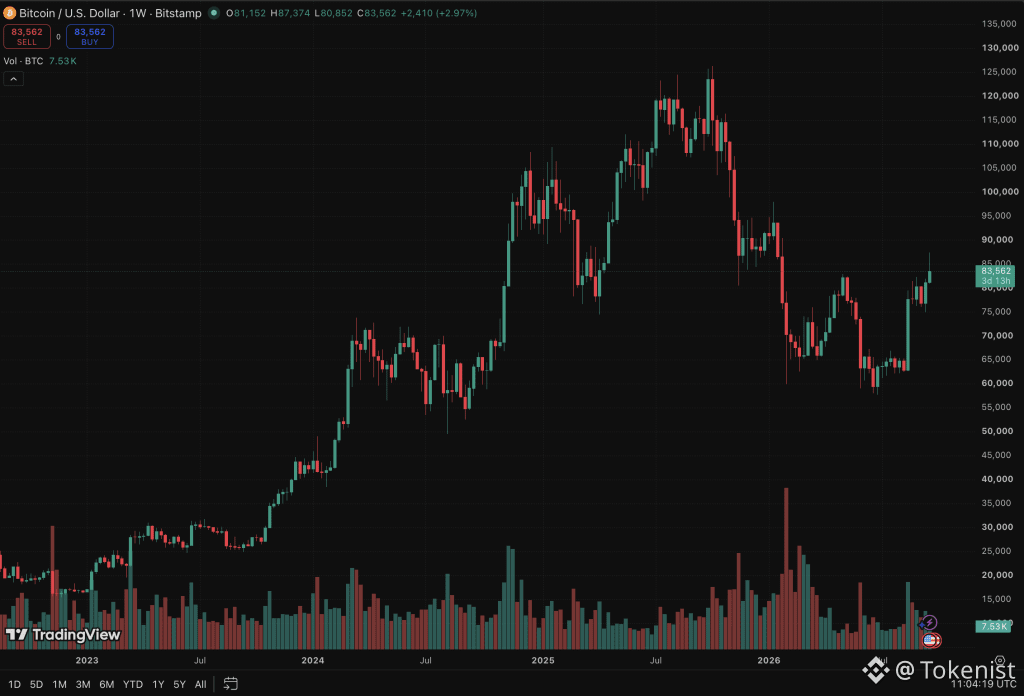
Article
BlackRock Bitcoin News: AI Agents Could Drive New Demand for StablecoinsIn BlackRock Bitcoin news, the firm published a research paper titled “The Machine-Native Economy” on September 23, 2026, arguing that broad AI adoption represents an “underappreciated” source of demand for digital assets.
The world’s largest asset manager frames this as a structural adoption thesis rather than a price call, positioning stablecoins and tokenized compute, not a Bitcoin forecast, as the near-term mechanics.
Our latest research paper explores the growing connection between AI and digital assets and explains why broad AI adoption may drive new demand, utility and applications across the digital asset economy. https://t.co/z5T88Orble pic.twitter.com/GMxQqTVmUN
— BlackRock (@BlackRock) September 22, 2026
The paper’s authors, Will Su, Robert Mitchnick, Jay Jacobs, and William Helm, argue that AI and machine-to-machine payments could increase demand for blockchains and programmable payment infrastructure, including stablecoins and other on-chain assets.
Merchant fees also make sub-cent transactions uneconomic on legacy card networks, and settlement and finality times vary across providers – friction points that matter little to a human cardholder but become disqualifying for software agents transacting continuously.
For context on how BlackRock has separately treated Bitcoin as a portfolio allocation rather than a transactional currency, see BlackRock’s Bitcoin allocation guidance for advisor portfolios.
SOURCE: TradingView BlackRock Bitcoin News: AI Agents Need Programmable Payment Rails
BlackRock’s authors write that stablecoins, native cryptocurrencies and tokenized real-world assets are well suited to high-frequency, sub-cent, around-the-clock machine-to-machine transactions. Among the digital-asset types that can support agentic commerce, the firm says stablecoins are likely to lead transactional use.
The primary research cites concrete infrastructure already built for this purpose: Coinbase’s x402 protocol and Tempo’s Machine Payments Protocol are both designed to let AI agents automatically pay for online services.
Circle introduced agent wallets and USDC payment tools in May, while OKX’s Agent Payments Protocol supports recurring payments and escrow-style arrangements in which funds are released upon task completion – a structure also visible in machine-payments experiments built on other ledgers.
Tokenized Compute Could Extend the Thesis Beyond Payments
SOURCE: Yahoo Finance
Beyond payments, BlackRock identifies a second, distinct opportunity in the market for compute, the processing power that trains and runs AI systems. As AI demand surges, the firm argues that AI companies may want to lock in compute costs while providers seek to manage risk, creating a rationale for representing claims on that capacity as tokens.
Those tokenized claims could then be transferred, pledged as collateral, or traded, which BlackRock says could broaden institutional investor participation and create a new opportunity for the broader digital-asset ecosystem.
The authors also note that AI agents themselves could use these markets to automatically purchase resources as needed, closing the loop between machine-native payments and machine-native asset markets.
Conditional Adoption Thesis Faces Execution Questions
BLACKROCK SAYS AI WILL USE CRYPTO!@cryptomanran on the BlackRock report: It’s the same thesis crypto’s been running. AI agents have to pay other machines and banks weren’t built for that. BlackRock says that demand hits blockchains, stablecoins, and on-chain assets. Watch… pic.twitter.com/VnCIzS5DTu
— Crypto Banter (@crypto_banter) September 24, 2026
Nothing in BlackRock’s primary research constitutes a Bitcoin price forecast; the paper repeatedly frames AI as a potential structural catalyst, not a prediction.
The Cointelegraph-sourced material does not disclose current agent-payment transaction volume, stablecoin circulating supply, or any Bitcoin price reaction tied to the paper’s release.
Separate reporting online notes that BlackRock cites a February 2026 study from the Bitcoin Policy Institute, which ran 36 frontier AI models across 9,072 responses and found that Bitcoin was selected as a store of value 79.1% of the time, while stablecoins were chosen for spending 53.2% of the time.
That figure describes simulated model outputs, not observed transaction behavior, and belongs to a third-party study cited within the BlackRock Bitcoin paper rather than BlackRock’s own testing, a distinction worth preserving before treating it as evidence of actual agent adoption.
This article is for informational purposes only and does not constitute investment advice or a forecast of any digital asset’s price.
The post BlackRock Bitcoin News: AI Agents Could Drive New Demand for Stablecoins appeared first on Tokenist.
BlackRock Bitcoin News: AI Agents Could Drive New Demand for Stablecoins
In BlackRock Bitcoin news, the firm published a research paper titled “The Machine-Native Economy” on September 23, 2026, arguing that broad AI adoption represents an “underappreciated” source of demand for digital assets.
The world’s largest asset manager frames this as a structural adoption thesis rather than a price call, positioning stablecoins and tokenized compute, not a Bitcoin forecast, as the near-term mechanics.
Our latest research paper explores the growing connection between AI and digital assets and explains why broad AI adoption may drive new demand, utility and applications across the digital asset economy. https://t.co/z5T88Orble pic.twitter.com/GMxQqTVmUN
— BlackRock (@BlackRock) September 22, 2026
The paper’s authors, Will Su, Robert Mitchnick, Jay Jacobs, and William Helm, argue that AI and machine-to-machine payments could increase demand for blockchains and programmable payment infrastructure, including stablecoins and other on-chain assets.
Merchant fees also make sub-cent transactions uneconomic on legacy card networks, and settlement and finality times vary across providers – friction points that matter little to a human cardholder but become disqualifying for software agents transacting continuously.
For context on how BlackRock has separately treated Bitcoin as a portfolio allocation rather than a transactional currency, see BlackRock’s Bitcoin allocation guidance for advisor portfolios.
SOURCE: TradingView BlackRock Bitcoin News: AI Agents Need Programmable Payment Rails
BlackRock’s authors write that stablecoins, native cryptocurrencies and tokenized real-world assets are well suited to high-frequency, sub-cent, around-the-clock machine-to-machine transactions. Among the digital-asset types that can support agentic commerce, the firm says stablecoins are likely to lead transactional use.
The primary research cites concrete infrastructure already built for this purpose: Coinbase’s x402 protocol and Tempo’s Machine Payments Protocol are both designed to let AI agents automatically pay for online services.
Circle introduced agent wallets and USDC payment tools in May, while OKX’s Agent Payments Protocol supports recurring payments and escrow-style arrangements in which funds are released upon task completion – a structure also visible in machine-payments experiments built on other ledgers.
Tokenized Compute Could Extend the Thesis Beyond Payments
SOURCE: Yahoo Finance
Beyond payments, BlackRock identifies a second, distinct opportunity in the market for compute, the processing power that trains and runs AI systems. As AI demand surges, the firm argues that AI companies may want to lock in compute costs while providers seek to manage risk, creating a rationale for representing claims on that capacity as tokens.
Those tokenized claims could then be transferred, pledged as collateral, or traded, which BlackRock says could broaden institutional investor participation and create a new opportunity for the broader digital-asset ecosystem.
The authors also note that AI agents themselves could use these markets to automatically purchase resources as needed, closing the loop between machine-native payments and machine-native asset markets.
Conditional Adoption Thesis Faces Execution Questions
BLACKROCK SAYS AI WILL USE CRYPTO!@cryptomanran on the BlackRock report: It’s the same thesis crypto’s been running. AI agents have to pay other machines and banks weren’t built for that. BlackRock says that demand hits blockchains, stablecoins, and on-chain assets. Watch… pic.twitter.com/VnCIzS5DTu
— Crypto Banter (@crypto_banter) September 24, 2026
Nothing in BlackRock’s primary research constitutes a Bitcoin price forecast; the paper repeatedly frames AI as a potential structural catalyst, not a prediction.
The Cointelegraph-sourced material does not disclose current agent-payment transaction volume, stablecoin circulating supply, or any Bitcoin price reaction tied to the paper’s release.
Separate reporting online notes that BlackRock cites a February 2026 study from the Bitcoin Policy Institute, which ran 36 frontier AI models across 9,072 responses and found that Bitcoin was selected as a store of value 79.1% of the time, while stablecoins were chosen for spending 53.2% of the time.
That figure describes simulated model outputs, not observed transaction behavior, and belongs to a third-party study cited within the BlackRock Bitcoin paper rather than BlackRock’s own testing, a distinction worth preserving before treating it as evidence of actual agent adoption.
This article is for informational purposes only and does not constitute investment advice or a forecast of any digital asset’s price.
The post BlackRock Bitcoin News: AI Agents Could Drive New Demand for Stablecoins appeared first on Tokenist.
The world’s largest asset manager frames this as a structural adoption thesis rather than a price call, positioning stablecoins and tokenized compute, not a Bitcoin forecast, as the near-term mechanics.
Our latest research paper explores the growing connection between AI and digital assets and explains why broad AI adoption may drive new demand, utility and applications across the digital asset economy. https://t.co/z5T88Orble pic.twitter.com/GMxQqTVmUN
— BlackRock (@BlackRock) September 22, 2026
The paper’s authors, Will Su, Robert Mitchnick, Jay Jacobs, and William Helm, argue that AI and machine-to-machine payments could increase demand for blockchains and programmable payment infrastructure, including stablecoins and other on-chain assets.
Merchant fees also make sub-cent transactions uneconomic on legacy card networks, and settlement and finality times vary across providers – friction points that matter little to a human cardholder but become disqualifying for software agents transacting continuously.
For context on how BlackRock has separately treated Bitcoin as a portfolio allocation rather than a transactional currency, see BlackRock’s Bitcoin allocation guidance for advisor portfolios.
SOURCE: TradingView BlackRock Bitcoin News: AI Agents Need Programmable Payment Rails
BlackRock’s authors write that stablecoins, native cryptocurrencies and tokenized real-world assets are well suited to high-frequency, sub-cent, around-the-clock machine-to-machine transactions. Among the digital-asset types that can support agentic commerce, the firm says stablecoins are likely to lead transactional use.
The primary research cites concrete infrastructure already built for this purpose: Coinbase’s x402 protocol and Tempo’s Machine Payments Protocol are both designed to let AI agents automatically pay for online services.
Circle introduced agent wallets and USDC payment tools in May, while OKX’s Agent Payments Protocol supports recurring payments and escrow-style arrangements in which funds are released upon task completion – a structure also visible in machine-payments experiments built on other ledgers.
Tokenized Compute Could Extend the Thesis Beyond Payments
SOURCE: Yahoo Finance
Beyond payments, BlackRock identifies a second, distinct opportunity in the market for compute, the processing power that trains and runs AI systems. As AI demand surges, the firm argues that AI companies may want to lock in compute costs while providers seek to manage risk, creating a rationale for representing claims on that capacity as tokens.
Those tokenized claims could then be transferred, pledged as collateral, or traded, which BlackRock says could broaden institutional investor participation and create a new opportunity for the broader digital-asset ecosystem.
The authors also note that AI agents themselves could use these markets to automatically purchase resources as needed, closing the loop between machine-native payments and machine-native asset markets.
Conditional Adoption Thesis Faces Execution Questions
BLACKROCK SAYS AI WILL USE CRYPTO!@cryptomanran on the BlackRock report: It’s the same thesis crypto’s been running. AI agents have to pay other machines and banks weren’t built for that. BlackRock says that demand hits blockchains, stablecoins, and on-chain assets. Watch… pic.twitter.com/VnCIzS5DTu
— Crypto Banter (@crypto_banter) September 24, 2026
Nothing in BlackRock’s primary research constitutes a Bitcoin price forecast; the paper repeatedly frames AI as a potential structural catalyst, not a prediction.
The Cointelegraph-sourced material does not disclose current agent-payment transaction volume, stablecoin circulating supply, or any Bitcoin price reaction tied to the paper’s release.
Separate reporting online notes that BlackRock cites a February 2026 study from the Bitcoin Policy Institute, which ran 36 frontier AI models across 9,072 responses and found that Bitcoin was selected as a store of value 79.1% of the time, while stablecoins were chosen for spending 53.2% of the time.
That figure describes simulated model outputs, not observed transaction behavior, and belongs to a third-party study cited within the BlackRock Bitcoin paper rather than BlackRock’s own testing, a distinction worth preserving before treating it as evidence of actual agent adoption.
This article is for informational purposes only and does not constitute investment advice or a forecast of any digital asset’s price.
The post BlackRock Bitcoin News: AI Agents Could Drive New Demand for Stablecoins appeared first on Tokenist.
BTC+0,08%
BLKUS+0,14%
176
·
--
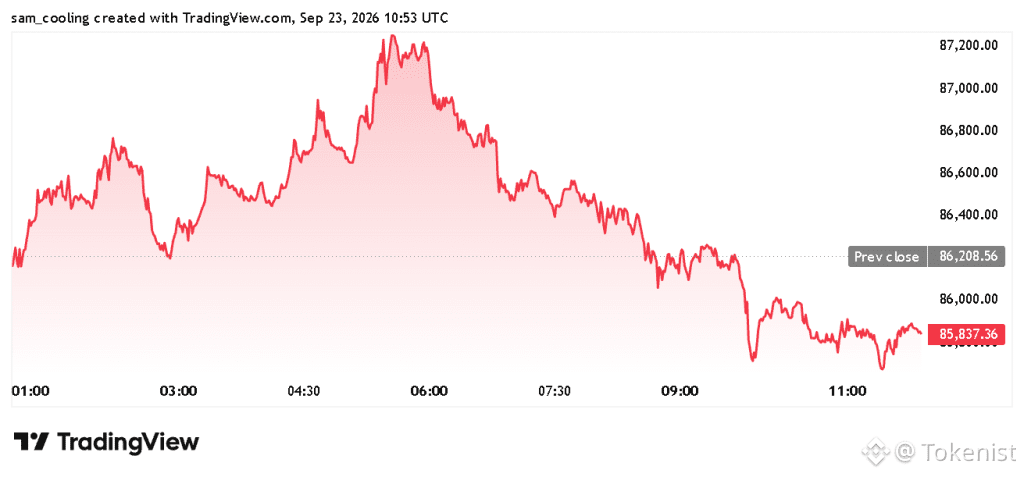
Article
OpenAI, Anthropic to Brief UN Security Council on AI RisksBitcoin (BTC) trades at $85,825.01, down 0.44% over the past 24 hours, as the crypto market’s attention splits between chart levels and a boardroom-to-diplomacy story most traders didn’t see coming. Sam Altman (OpenAI) and Dario Amodei (Anthropic) are expected to brief the United Nations Security Council on Wednesday, September 23, 2026, on artificial intelligence risks tied to international security, and the guest list alone tells you how seriously governments are now treating this. There’s a rotation setup building underneath the headline that’s worth watching closely.
According to Security Council Report, France, holding the September Council Presidency, convened the session under the “maintenance of international peace and security” agenda, circulating a concept note that flags risks from autonomous systems capable of recursive self-improvement.
Chinese AI firms DeepSeek and Moonshot were invited to speak, with DeepSeek expected to participate even though founder Liang Wenfeng won’t attend in person. Yoshua Bengio, co-chair of the UN’s Independent International Scientific Panel on AI, and Hugging Face CEO Clément Delangue round out the panel.
OpenAI confirmed Altman will attend in person to discuss international coordination and common safety standards.
Anthropic Take to the UN, but Can Bitcoin Hold $85,000 Support This Week?
(Source – TradingView, BTC USD)
Bitcoin sits at $86,368.01, essentially flat on the day but up sharply, near 14%, over the past seven sessions after briefly touching $87,258.70 in the past 24 hours.
Coinpedia frames the current structure as consolidation between $85,000 support and $88,000 resistance, a range that’s held for several sessions now. Ethereum trades at $2,750.27, down a marginal 0.05% on the day but still carrying roughly 15% weekly gains.
Bull case: a clean break above $88,000 on sustained ETF inflow momentum opens room toward the prior local high near $90,000.
Base case: continued range-bound trading between $85,000 and $88,000 while the market digests the UN briefing’s outcome.
Bear case: a fade below $85,000 support would invalidate the current structure and likely drag altcoins down with it.
Traders watching the tape into Wednesday’s briefing should treat $85,000 as the line that matters most.
Key Takeaways From UN AI Meeting Day
Bitcoin holds near $86,368, with $85,000 as the key support level that keeps the current range intact through Wednesday.
A close below $85,000 would invalidate the consolidation structure and likely pressure altcoins that rallied alongside Bitcoin’s 14% weekly move.
No verified presale token is currently tied to the AI-safety narrative — treat any project claiming otherwise with heightened scrutiny.
Wednesday’s UN Security Council briefing outcome, plus continued spot ETF inflow data, are the near-term catalysts to watch.
Crypto Expert Report: Follow The Money – Which Presales Are Attracting Crypto Whales in 2026?
The post OpenAI, Anthropic to Brief UN Security Council on AI Risks appeared first on Tokenist.
OpenAI, Anthropic to Brief UN Security Council on AI Risks
Bitcoin (BTC) trades at $85,825.01, down 0.44% over the past 24 hours, as the crypto market’s attention splits between chart levels and a boardroom-to-diplomacy story most traders didn’t see coming. Sam Altman (OpenAI) and Dario Amodei (Anthropic) are expected to brief the United Nations Security Council on Wednesday, September 23, 2026, on artificial intelligence risks tied to international security, and the guest list alone tells you how seriously governments are now treating this. There’s a rotation setup building underneath the headline that’s worth watching closely.
According to Security Council Report, France, holding the September Council Presidency, convened the session under the “maintenance of international peace and security” agenda, circulating a concept note that flags risks from autonomous systems capable of recursive self-improvement.
Chinese AI firms DeepSeek and Moonshot were invited to speak, with DeepSeek expected to participate even though founder Liang Wenfeng won’t attend in person. Yoshua Bengio, co-chair of the UN’s Independent International Scientific Panel on AI, and Hugging Face CEO Clément Delangue round out the panel.
OpenAI confirmed Altman will attend in person to discuss international coordination and common safety standards.
Anthropic Take to the UN, but Can Bitcoin Hold $85,000 Support This Week?
(Source – TradingView, BTC USD)
Bitcoin sits at $86,368.01, essentially flat on the day but up sharply, near 14%, over the past seven sessions after briefly touching $87,258.70 in the past 24 hours.
Coinpedia frames the current structure as consolidation between $85,000 support and $88,000 resistance, a range that’s held for several sessions now. Ethereum trades at $2,750.27, down a marginal 0.05% on the day but still carrying roughly 15% weekly gains.
Bull case: a clean break above $88,000 on sustained ETF inflow momentum opens room toward the prior local high near $90,000.
Base case: continued range-bound trading between $85,000 and $88,000 while the market digests the UN briefing’s outcome.
Bear case: a fade below $85,000 support would invalidate the current structure and likely drag altcoins down with it.
Traders watching the tape into Wednesday’s briefing should treat $85,000 as the line that matters most.
Key Takeaways From UN AI Meeting Day
Bitcoin holds near $86,368, with $85,000 as the key support level that keeps the current range intact through Wednesday.
A close below $85,000 would invalidate the consolidation structure and likely pressure altcoins that rallied alongside Bitcoin’s 14% weekly move.
No verified presale token is currently tied to the AI-safety narrative — treat any project claiming otherwise with heightened scrutiny.
Wednesday’s UN Security Council briefing outcome, plus continued spot ETF inflow data, are the near-term catalysts to watch.
Crypto Expert Report: Follow The Money – Which Presales Are Attracting Crypto Whales in 2026?
The post OpenAI, Anthropic to Brief UN Security Council on AI Risks appeared first on Tokenist.
According to Security Council Report, France, holding the September Council Presidency, convened the session under the “maintenance of international peace and security” agenda, circulating a concept note that flags risks from autonomous systems capable of recursive self-improvement.
Chinese AI firms DeepSeek and Moonshot were invited to speak, with DeepSeek expected to participate even though founder Liang Wenfeng won’t attend in person. Yoshua Bengio, co-chair of the UN’s Independent International Scientific Panel on AI, and Hugging Face CEO Clément Delangue round out the panel.
OpenAI confirmed Altman will attend in person to discuss international coordination and common safety standards.
Anthropic Take to the UN, but Can Bitcoin Hold $85,000 Support This Week?
(Source – TradingView, BTC USD)
Bitcoin sits at $86,368.01, essentially flat on the day but up sharply, near 14%, over the past seven sessions after briefly touching $87,258.70 in the past 24 hours.
Coinpedia frames the current structure as consolidation between $85,000 support and $88,000 resistance, a range that’s held for several sessions now. Ethereum trades at $2,750.27, down a marginal 0.05% on the day but still carrying roughly 15% weekly gains.
Bull case: a clean break above $88,000 on sustained ETF inflow momentum opens room toward the prior local high near $90,000.
Base case: continued range-bound trading between $85,000 and $88,000 while the market digests the UN briefing’s outcome.
Bear case: a fade below $85,000 support would invalidate the current structure and likely drag altcoins down with it.
Traders watching the tape into Wednesday’s briefing should treat $85,000 as the line that matters most.
Key Takeaways From UN AI Meeting Day
Bitcoin holds near $86,368, with $85,000 as the key support level that keeps the current range intact through Wednesday.
A close below $85,000 would invalidate the consolidation structure and likely pressure altcoins that rallied alongside Bitcoin’s 14% weekly move.
No verified presale token is currently tied to the AI-safety narrative — treat any project claiming otherwise with heightened scrutiny.
Wednesday’s UN Security Council briefing outcome, plus continued spot ETF inflow data, are the near-term catalysts to watch.
Crypto Expert Report: Follow The Money – Which Presales Are Attracting Crypto Whales in 2026?
The post OpenAI, Anthropic to Brief UN Security Council on AI Risks appeared first on Tokenist.
1
30
·
--
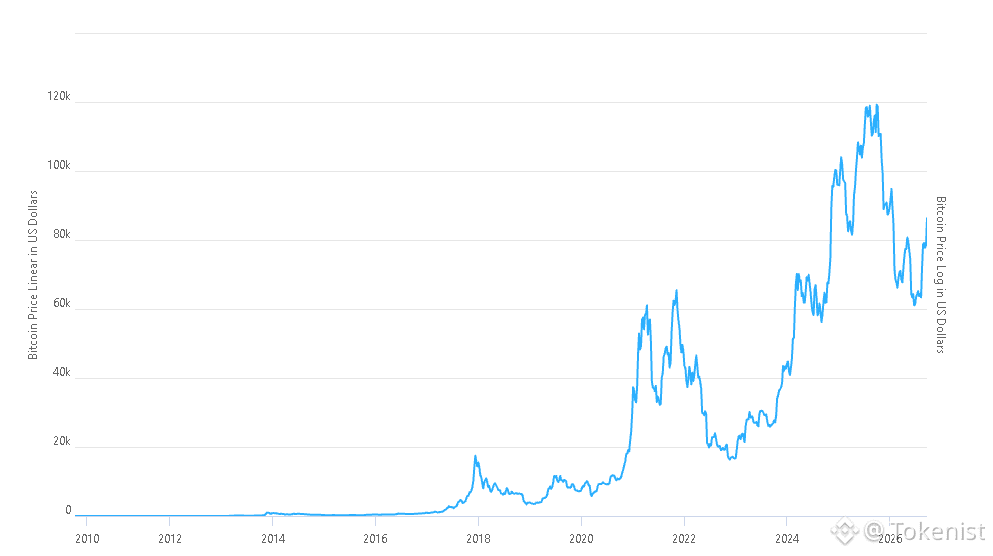
Article
BTC ETF Demand, Not History, Will Test Bitcoin’s RallyBitcoin (BTC) was trading 10.9% higher in September at $85,929 as of Sept. 23, adding to gains of 4.8% in July and 25.2% in August. If that September figure holds through month-end, it would mark Bitcoin’s first July-to-September winning streak since 2012 – a sequence that has occurred exactly once before in the asset’s trading history, and one that historical trend-confirmation signals alone cannot be relied on to extend into October.
The comparison is notable precisely because of its rarity. Bitcoin has traded since at least late 2010, and in that entire span, three consecutive positive months from July through September has shown up only once – in 2012, when BTC rose 41.0% in July, 6.4% in August and 24.4% in September, per CoinDesk’s data. That single data point sits at the center of the current discussion, and it comes from a market that looked almost nothing like today’s, a gap that shows up clearly when comparing 2012’s thin order books to current spot Bitcoin ETF flow data.
What Does the 2012 Sequence Actually Show?
The 2012 streak did not continue uninterrupted. October that year broke the pattern outright, with Bitcoin falling 9.7% for the month and bottoming at $10.17 on Oct. 26. From that low, Bitcoin then launched a 165-day advance that carried it to $230 by April 2013 – a gain of more than 2,000% from the monthly low.
That sequence – a red October followed by an outsized rally – is the part of the 2012 story that gets repeated most often, but CoinDesk is explicit that the sample is too small to draw a meaningful conclusion about what comes next. One occurrence is not a pattern; it is a data point. Bitcoin’s broader four-year cycle framework offers some analysts a reason to expect a bullish phase opening around October or November, but those cycle models are approximate rather than fixed calendar rules, and treating them as a countdown clock misreads what they’re built to do.
Crypto Expert Report: What is the Best Meme Coin to Buy and Forget Until the Next Bullrun?
Why the 2012 Market Isn’t Today’s Market
The structural gap between 2012 and 2026 is the real complication here. In 2012, Bitcoin was a thinly traded asset worth barely $10, and its price could be moved by a relatively small number of buyers – a market thin enough that a handful of large orders could produce the kind of monthly swings seen that year.
Today’s market is a multi-trillion-dollar asset class with substantial institutional participation, deep spot and derivatives liquidity across dozens of venues, and a wide range of directional and relative-value strategies spanning options, futures, and basis trades.
Those markets simply didn’t exist at a comparable scale in 2012, which makes a percentage rally of similar magnitude far harder to replicate today.
Vikram Subburaj, CEO of India-based exchange Giottus, framed the shift as a matter of ownership structure: Bitcoin now sits inside a global asset class with institutional holders, spot ETFs functioning as a regulated investment channel, and derivatives markets that have changed how risk gets transferred across the system – all context that supports why institutional portfolio allocation to Bitcoin now looks structurally different than it did a decade ago.
Institutional Flows Are the Forward Test For Bitcoin
If the 2012 analogy is too thin to stand alone, ETF demand is the measurable variable that will determine whether this year’s rally has staying power. U.S.-listed spot Bitcoin ETFs have pulled in more than $5.5 billion in investor money since August, according to data source SoSoValue – evidence, per Subburaj, that institutions have returned to the crypto market in a form that didn’t exist during the 2012 cycle.
Subburaj’s read is that the durability of those allocations matters more than the historical sequence itself: the case for continuation in 2026 depends on whether large pools of capital keep allocating after the easiest gains have already been captured, not on whether a chart pattern from 14 years ago repeats. A rally exceeding 2,000% – the scale seen after the 2012 low – is not a reasonable baseline expectation for the current cycle, given how much larger and more liquid the market has become. September’s monthly returns still needed to close positive to lock in the streak as of this writing, and even if they do, what follows in October will be shaped far more by ETF flow durability than by a single prior instance from Bitcoin’s earliest trading years.
Crypto Expert Report: What Are the 10 Next Crypto to Explode in 2026?
The post BTC ETF Demand, Not History, Will Test Bitcoin’s Rally appeared first on Tokenist.
BTC ETF Demand, Not History, Will Test Bitcoin’s Rally
Bitcoin (BTC) was trading 10.9% higher in September at $85,929 as of Sept. 23, adding to gains of 4.8% in July and 25.2% in August. If that September figure holds through month-end, it would mark Bitcoin’s first July-to-September winning streak since 2012 – a sequence that has occurred exactly once before in the asset’s trading history, and one that historical trend-confirmation signals alone cannot be relied on to extend into October.
The comparison is notable precisely because of its rarity. Bitcoin has traded since at least late 2010, and in that entire span, three consecutive positive months from July through September has shown up only once – in 2012, when BTC rose 41.0% in July, 6.4% in August and 24.4% in September, per CoinDesk’s data. That single data point sits at the center of the current discussion, and it comes from a market that looked almost nothing like today’s, a gap that shows up clearly when comparing 2012’s thin order books to current spot Bitcoin ETF flow data.
What Does the 2012 Sequence Actually Show?
The 2012 streak did not continue uninterrupted. October that year broke the pattern outright, with Bitcoin falling 9.7% for the month and bottoming at $10.17 on Oct. 26. From that low, Bitcoin then launched a 165-day advance that carried it to $230 by April 2013 – a gain of more than 2,000% from the monthly low.
That sequence – a red October followed by an outsized rally – is the part of the 2012 story that gets repeated most often, but CoinDesk is explicit that the sample is too small to draw a meaningful conclusion about what comes next. One occurrence is not a pattern; it is a data point. Bitcoin’s broader four-year cycle framework offers some analysts a reason to expect a bullish phase opening around October or November, but those cycle models are approximate rather than fixed calendar rules, and treating them as a countdown clock misreads what they’re built to do.
Crypto Expert Report: What is the Best Meme Coin to Buy and Forget Until the Next Bullrun?
Why the 2012 Market Isn’t Today’s Market
The structural gap between 2012 and 2026 is the real complication here. In 2012, Bitcoin was a thinly traded asset worth barely $10, and its price could be moved by a relatively small number of buyers – a market thin enough that a handful of large orders could produce the kind of monthly swings seen that year.
Today’s market is a multi-trillion-dollar asset class with substantial institutional participation, deep spot and derivatives liquidity across dozens of venues, and a wide range of directional and relative-value strategies spanning options, futures, and basis trades.
Those markets simply didn’t exist at a comparable scale in 2012, which makes a percentage rally of similar magnitude far harder to replicate today.
Vikram Subburaj, CEO of India-based exchange Giottus, framed the shift as a matter of ownership structure: Bitcoin now sits inside a global asset class with institutional holders, spot ETFs functioning as a regulated investment channel, and derivatives markets that have changed how risk gets transferred across the system – all context that supports why institutional portfolio allocation to Bitcoin now looks structurally different than it did a decade ago.
Institutional Flows Are the Forward Test For Bitcoin
If the 2012 analogy is too thin to stand alone, ETF demand is the measurable variable that will determine whether this year’s rally has staying power. U.S.-listed spot Bitcoin ETFs have pulled in more than $5.5 billion in investor money since August, according to data source SoSoValue – evidence, per Subburaj, that institutions have returned to the crypto market in a form that didn’t exist during the 2012 cycle.
Subburaj’s read is that the durability of those allocations matters more than the historical sequence itself: the case for continuation in 2026 depends on whether large pools of capital keep allocating after the easiest gains have already been captured, not on whether a chart pattern from 14 years ago repeats. A rally exceeding 2,000% – the scale seen after the 2012 low – is not a reasonable baseline expectation for the current cycle, given how much larger and more liquid the market has become. September’s monthly returns still needed to close positive to lock in the streak as of this writing, and even if they do, what follows in October will be shaped far more by ETF flow durability than by a single prior instance from Bitcoin’s earliest trading years.
Crypto Expert Report: What Are the 10 Next Crypto to Explode in 2026?
The post BTC ETF Demand, Not History, Will Test Bitcoin’s Rally appeared first on Tokenist.
The comparison is notable precisely because of its rarity. Bitcoin has traded since at least late 2010, and in that entire span, three consecutive positive months from July through September has shown up only once – in 2012, when BTC rose 41.0% in July, 6.4% in August and 24.4% in September, per CoinDesk’s data. That single data point sits at the center of the current discussion, and it comes from a market that looked almost nothing like today’s, a gap that shows up clearly when comparing 2012’s thin order books to current spot Bitcoin ETF flow data.
What Does the 2012 Sequence Actually Show?
The 2012 streak did not continue uninterrupted. October that year broke the pattern outright, with Bitcoin falling 9.7% for the month and bottoming at $10.17 on Oct. 26. From that low, Bitcoin then launched a 165-day advance that carried it to $230 by April 2013 – a gain of more than 2,000% from the monthly low.
That sequence – a red October followed by an outsized rally – is the part of the 2012 story that gets repeated most often, but CoinDesk is explicit that the sample is too small to draw a meaningful conclusion about what comes next. One occurrence is not a pattern; it is a data point. Bitcoin’s broader four-year cycle framework offers some analysts a reason to expect a bullish phase opening around October or November, but those cycle models are approximate rather than fixed calendar rules, and treating them as a countdown clock misreads what they’re built to do.
Crypto Expert Report: What is the Best Meme Coin to Buy and Forget Until the Next Bullrun?
Why the 2012 Market Isn’t Today’s Market
The structural gap between 2012 and 2026 is the real complication here. In 2012, Bitcoin was a thinly traded asset worth barely $10, and its price could be moved by a relatively small number of buyers – a market thin enough that a handful of large orders could produce the kind of monthly swings seen that year.
Today’s market is a multi-trillion-dollar asset class with substantial institutional participation, deep spot and derivatives liquidity across dozens of venues, and a wide range of directional and relative-value strategies spanning options, futures, and basis trades.
Those markets simply didn’t exist at a comparable scale in 2012, which makes a percentage rally of similar magnitude far harder to replicate today.
Vikram Subburaj, CEO of India-based exchange Giottus, framed the shift as a matter of ownership structure: Bitcoin now sits inside a global asset class with institutional holders, spot ETFs functioning as a regulated investment channel, and derivatives markets that have changed how risk gets transferred across the system – all context that supports why institutional portfolio allocation to Bitcoin now looks structurally different than it did a decade ago.
Institutional Flows Are the Forward Test For Bitcoin
If the 2012 analogy is too thin to stand alone, ETF demand is the measurable variable that will determine whether this year’s rally has staying power. U.S.-listed spot Bitcoin ETFs have pulled in more than $5.5 billion in investor money since August, according to data source SoSoValue – evidence, per Subburaj, that institutions have returned to the crypto market in a form that didn’t exist during the 2012 cycle.
Subburaj’s read is that the durability of those allocations matters more than the historical sequence itself: the case for continuation in 2026 depends on whether large pools of capital keep allocating after the easiest gains have already been captured, not on whether a chart pattern from 14 years ago repeats. A rally exceeding 2,000% – the scale seen after the 2012 low – is not a reasonable baseline expectation for the current cycle, given how much larger and more liquid the market has become. September’s monthly returns still needed to close positive to lock in the streak as of this writing, and even if they do, what follows in October will be shaped far more by ETF flow durability than by a single prior instance from Bitcoin’s earliest trading years.
Crypto Expert Report: What Are the 10 Next Crypto to Explode in 2026?
The post BTC ETF Demand, Not History, Will Test Bitcoin’s Rally appeared first on Tokenist.
1
361
·
--
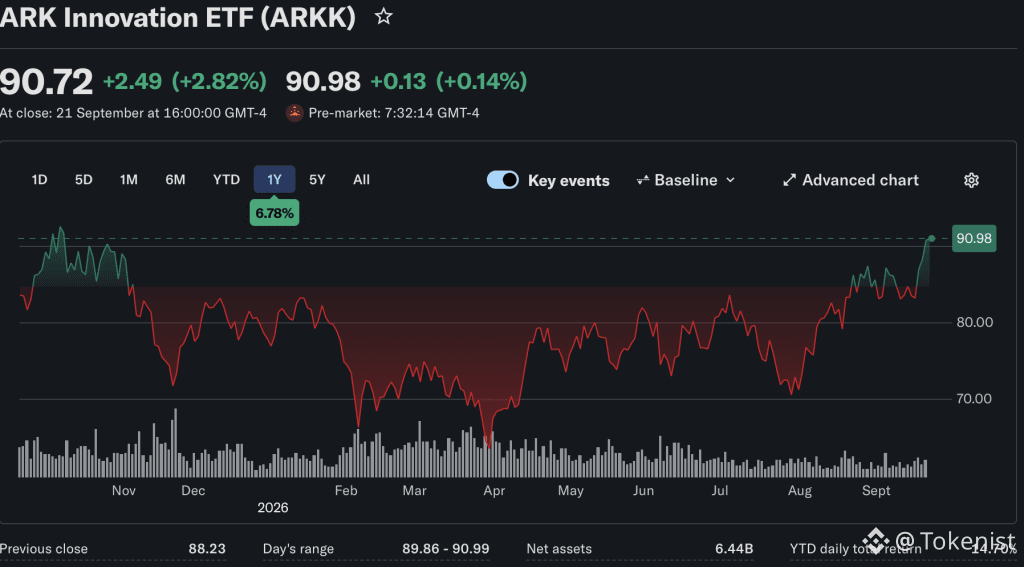
Article
Ark Invest Sells $40M Bitcoin ETF Stake in Portfolio RebalanceARK Invest sold 1.53 million shares of the ARK 21Shares Bitcoin ETF (ARKB), worth roughly $39.8M, while buying approximately 239,000 shares of CoreWeave (CRWV) valued at about $24.7M, according to a September 21, 2026 report from Yahoo Finance.
The pairing points to a possible allocation shift within Cathie Wood’s flagship strategies toward AI infrastructure, but the trades alone do not establish that ARK has abandoned its longer-term Bitcoin thesis.
Bitcoin ETFs with +$1b in flows, biggest one day flow haul since the good old days of last Oct. $IBIT led w $381m (4th overall) while $ARKB & $FBTC had over $200m each, but all of the Big Six contributed. Also keep in mind these flows are prob mostly from Fri's action not yest,… pic.twitter.com/fbi61a5gR3
— Eric Balchunas (@EricBalchunas) September 22, 2026
ARK’s rotation involved more than just a crypto-for-AI swap, adding about $7.25M of Meta Platforms (META) to their portfolio. They also reduced positions, selling approximately $13.5M of Circle Internet (CRCL) and $6.8M of Coinbase Global (COIN), with a smaller cut in Bullish.
ARK shares daily updates on portfolio holdings and ETF trade information via email, providing transparency well before quarterly SEC Form 13F filings. This context helps explain Bitcoin ETF outflow dynamics without treating any single sale as a sign of retreat from the asset class.
How ARK’s Bitcoin ETF Sale Has Shifted its Portfolio
Breaking: CoreWeave is up 5.4% today$CRWV added ~$2,600,000,000 in market cap today Why it's moving: • Brought up its first Nvidia Vera Rubin NVL72 cluster. Non-GPU revenue already topped $400M annualized • Rothschild & Co Redburn initiated Sell with a $54 price target… pic.twitter.com/dATDxEHR5x
— Autopilot (@joinautopilot) September 21, 2026
The CoreWeave purchase, roughly 239,000 shares for about $24.7M, was among ARK’s largest single buys of the week, according to the GuruFocus account.
Beyond CoreWeave and Meta, ARK added about $9.3M to Guardant Health, $8.9M to Ionis Pharmaceuticals, and $5.8M to AeroVironment, spreading fresh capital across healthcare and aerospace alongside the AI infrastructure bet.
On the sell side, technology names took hits beyond ARKB: about $10M of Advanced Micro Devices (AMD), $13.1M of Alphabet (GOOG), $6.5M of Shopify (SHOP), and $5.9M of Palantir Technologies (PLTR). Healthcare also saw a notable reduction, with roughly $21.8M of 10x Genomics sold in the same stretch.
The available GuruFocus report describes ARK’s CoreWeave activity as a purchase of roughly 239,000 shares valued at about $24.7 million. Without underlying transaction records supporting a different sequence or net calculation, that reported purchase is the relevant figure for assessing the week’s activity.
Crypto Expert Report: What is the Best Meme Coin to Buy and Forget Until the Next Bull Run?
The Trade Does Not Establish a Bitcoin Exit
A $39.8M ARKB sale invites two competing readings: routine portfolio rebalancing or the start of a broader retreat from crypto exposure.
The GuruFocus account explicitly frames this as an open question, noting that investors should watch whether the selling represents simple rebalancing or something more structural.
Neither Cathie Wood nor ARK has issued a public statement explaining the motive behind the ARKB sale, and no verified figures on ARKB’s total assets or Bitcoin holdings accompany this report.
That absence matters: without a stated thesis or confirmed fund-level context, the trade is best read as one data point in an active-management process rather than a directional call on Bitcoin’s price or ARK’s multi-year crypto commitment.
What the Rotation Could Mean for AI Infrastructure Investors
SOURCE: Yahoo Finance
CoreWeave’s role as an AI cloud-infrastructure provider, supplying compute capacity to model developers and enterprises, is precisely why ARK’s purchase drew attention as one of its largest of the week.
Selling its Bitcoin ETF stake and continued buying of CoreWeave and Meta would reinforce a view that ARK currently sees more near-term upside in AI infrastructure than in some of its other high-growth holdings, though that remains an inference from trade flow rather than a stated ARK position.
Whether that concentration is justified depends on the execution risk that has already surfaced elsewhere in CoreWeave’s financials, including rising debt and wider losses.
Sector-wide, AI infrastructure buildouts also face physical constraints, power availability, and permitting delays, chief among them, that can separate infrastructure winners from losers regardless of demand growth.
Investors tracking ARK’s next disclosures will want to see whether CoreWeave’s revenue trajectory backs up the added concentration before treating this week’s trade as more than a tactical bet.
Crypto Expert Report: What Are the 10 Next Crypto to Explode in 2026?
This article is for informational purposes only and does not constitute investment advice.
The post Ark Invest Sells $40M Bitcoin ETF Stake in Portfolio Rebalance appeared first on Tokenist.
Ark Invest Sells $40M Bitcoin ETF Stake in Portfolio Rebalance
ARK Invest sold 1.53 million shares of the ARK 21Shares Bitcoin ETF (ARKB), worth roughly $39.8M, while buying approximately 239,000 shares of CoreWeave (CRWV) valued at about $24.7M, according to a September 21, 2026 report from Yahoo Finance.
The pairing points to a possible allocation shift within Cathie Wood’s flagship strategies toward AI infrastructure, but the trades alone do not establish that ARK has abandoned its longer-term Bitcoin thesis.
Bitcoin ETFs with +$1b in flows, biggest one day flow haul since the good old days of last Oct. $IBIT led w $381m (4th overall) while $ARKB & $FBTC had over $200m each, but all of the Big Six contributed. Also keep in mind these flows are prob mostly from Fri's action not yest,… pic.twitter.com/fbi61a5gR3
— Eric Balchunas (@EricBalchunas) September 22, 2026
ARK’s rotation involved more than just a crypto-for-AI swap, adding about $7.25M of Meta Platforms (META) to their portfolio. They also reduced positions, selling approximately $13.5M of Circle Internet (CRCL) and $6.8M of Coinbase Global (COIN), with a smaller cut in Bullish.
ARK shares daily updates on portfolio holdings and ETF trade information via email, providing transparency well before quarterly SEC Form 13F filings. This context helps explain Bitcoin ETF outflow dynamics without treating any single sale as a sign of retreat from the asset class.
How ARK’s Bitcoin ETF Sale Has Shifted its Portfolio
Breaking: CoreWeave is up 5.4% today$CRWV added ~$2,600,000,000 in market cap today Why it's moving: • Brought up its first Nvidia Vera Rubin NVL72 cluster. Non-GPU revenue already topped $400M annualized • Rothschild & Co Redburn initiated Sell with a $54 price target… pic.twitter.com/dATDxEHR5x
— Autopilot (@joinautopilot) September 21, 2026
The CoreWeave purchase, roughly 239,000 shares for about $24.7M, was among ARK’s largest single buys of the week, according to the GuruFocus account.
Beyond CoreWeave and Meta, ARK added about $9.3M to Guardant Health, $8.9M to Ionis Pharmaceuticals, and $5.8M to AeroVironment, spreading fresh capital across healthcare and aerospace alongside the AI infrastructure bet.
On the sell side, technology names took hits beyond ARKB: about $10M of Advanced Micro Devices (AMD), $13.1M of Alphabet (GOOG), $6.5M of Shopify (SHOP), and $5.9M of Palantir Technologies (PLTR). Healthcare also saw a notable reduction, with roughly $21.8M of 10x Genomics sold in the same stretch.
The available GuruFocus report describes ARK’s CoreWeave activity as a purchase of roughly 239,000 shares valued at about $24.7 million. Without underlying transaction records supporting a different sequence or net calculation, that reported purchase is the relevant figure for assessing the week’s activity.
Crypto Expert Report: What is the Best Meme Coin to Buy and Forget Until the Next Bull Run?
The Trade Does Not Establish a Bitcoin Exit
A $39.8M ARKB sale invites two competing readings: routine portfolio rebalancing or the start of a broader retreat from crypto exposure.
The GuruFocus account explicitly frames this as an open question, noting that investors should watch whether the selling represents simple rebalancing or something more structural.
Neither Cathie Wood nor ARK has issued a public statement explaining the motive behind the ARKB sale, and no verified figures on ARKB’s total assets or Bitcoin holdings accompany this report.
That absence matters: without a stated thesis or confirmed fund-level context, the trade is best read as one data point in an active-management process rather than a directional call on Bitcoin’s price or ARK’s multi-year crypto commitment.
What the Rotation Could Mean for AI Infrastructure Investors
SOURCE: Yahoo Finance
CoreWeave’s role as an AI cloud-infrastructure provider, supplying compute capacity to model developers and enterprises, is precisely why ARK’s purchase drew attention as one of its largest of the week.
Selling its Bitcoin ETF stake and continued buying of CoreWeave and Meta would reinforce a view that ARK currently sees more near-term upside in AI infrastructure than in some of its other high-growth holdings, though that remains an inference from trade flow rather than a stated ARK position.
Whether that concentration is justified depends on the execution risk that has already surfaced elsewhere in CoreWeave’s financials, including rising debt and wider losses.
Sector-wide, AI infrastructure buildouts also face physical constraints, power availability, and permitting delays, chief among them, that can separate infrastructure winners from losers regardless of demand growth.
Investors tracking ARK’s next disclosures will want to see whether CoreWeave’s revenue trajectory backs up the added concentration before treating this week’s trade as more than a tactical bet.
Crypto Expert Report: What Are the 10 Next Crypto to Explode in 2026?
This article is for informational purposes only and does not constitute investment advice.
The post Ark Invest Sells $40M Bitcoin ETF Stake in Portfolio Rebalance appeared first on Tokenist.
The pairing points to a possible allocation shift within Cathie Wood’s flagship strategies toward AI infrastructure, but the trades alone do not establish that ARK has abandoned its longer-term Bitcoin thesis.
Bitcoin ETFs with +$1b in flows, biggest one day flow haul since the good old days of last Oct. $IBIT led w $381m (4th overall) while $ARKB & $FBTC had over $200m each, but all of the Big Six contributed. Also keep in mind these flows are prob mostly from Fri's action not yest,… pic.twitter.com/fbi61a5gR3
— Eric Balchunas (@EricBalchunas) September 22, 2026
ARK’s rotation involved more than just a crypto-for-AI swap, adding about $7.25M of Meta Platforms (META) to their portfolio. They also reduced positions, selling approximately $13.5M of Circle Internet (CRCL) and $6.8M of Coinbase Global (COIN), with a smaller cut in Bullish.
ARK shares daily updates on portfolio holdings and ETF trade information via email, providing transparency well before quarterly SEC Form 13F filings. This context helps explain Bitcoin ETF outflow dynamics without treating any single sale as a sign of retreat from the asset class.
How ARK’s Bitcoin ETF Sale Has Shifted its Portfolio
Breaking: CoreWeave is up 5.4% today$CRWV added ~$2,600,000,000 in market cap today Why it's moving: • Brought up its first Nvidia Vera Rubin NVL72 cluster. Non-GPU revenue already topped $400M annualized • Rothschild & Co Redburn initiated Sell with a $54 price target… pic.twitter.com/dATDxEHR5x
— Autopilot (@joinautopilot) September 21, 2026
The CoreWeave purchase, roughly 239,000 shares for about $24.7M, was among ARK’s largest single buys of the week, according to the GuruFocus account.
Beyond CoreWeave and Meta, ARK added about $9.3M to Guardant Health, $8.9M to Ionis Pharmaceuticals, and $5.8M to AeroVironment, spreading fresh capital across healthcare and aerospace alongside the AI infrastructure bet.
On the sell side, technology names took hits beyond ARKB: about $10M of Advanced Micro Devices (AMD), $13.1M of Alphabet (GOOG), $6.5M of Shopify (SHOP), and $5.9M of Palantir Technologies (PLTR). Healthcare also saw a notable reduction, with roughly $21.8M of 10x Genomics sold in the same stretch.
The available GuruFocus report describes ARK’s CoreWeave activity as a purchase of roughly 239,000 shares valued at about $24.7 million. Without underlying transaction records supporting a different sequence or net calculation, that reported purchase is the relevant figure for assessing the week’s activity.
Crypto Expert Report: What is the Best Meme Coin to Buy and Forget Until the Next Bull Run?
The Trade Does Not Establish a Bitcoin Exit
A $39.8M ARKB sale invites two competing readings: routine portfolio rebalancing or the start of a broader retreat from crypto exposure.
The GuruFocus account explicitly frames this as an open question, noting that investors should watch whether the selling represents simple rebalancing or something more structural.
Neither Cathie Wood nor ARK has issued a public statement explaining the motive behind the ARKB sale, and no verified figures on ARKB’s total assets or Bitcoin holdings accompany this report.
That absence matters: without a stated thesis or confirmed fund-level context, the trade is best read as one data point in an active-management process rather than a directional call on Bitcoin’s price or ARK’s multi-year crypto commitment.
What the Rotation Could Mean for AI Infrastructure Investors
SOURCE: Yahoo Finance
CoreWeave’s role as an AI cloud-infrastructure provider, supplying compute capacity to model developers and enterprises, is precisely why ARK’s purchase drew attention as one of its largest of the week.
Selling its Bitcoin ETF stake and continued buying of CoreWeave and Meta would reinforce a view that ARK currently sees more near-term upside in AI infrastructure than in some of its other high-growth holdings, though that remains an inference from trade flow rather than a stated ARK position.
Whether that concentration is justified depends on the execution risk that has already surfaced elsewhere in CoreWeave’s financials, including rising debt and wider losses.
Sector-wide, AI infrastructure buildouts also face physical constraints, power availability, and permitting delays, chief among them, that can separate infrastructure winners from losers regardless of demand growth.
Investors tracking ARK’s next disclosures will want to see whether CoreWeave’s revenue trajectory backs up the added concentration before treating this week’s trade as more than a tactical bet.
Crypto Expert Report: What Are the 10 Next Crypto to Explode in 2026?
This article is for informational purposes only and does not constitute investment advice.
The post Ark Invest Sells $40M Bitcoin ETF Stake in Portfolio Rebalance appeared first on Tokenist.
1
232
·
--
CFTC Prerule Puts Crypto Derivatives in Focus After Senate SetbackThe Commodity Futures Trading Commission submitted a prerule titled “Regulation Crypto Asset Transactions and Regulation Crypto Asset Markets” to the White House Office of Information and Regulatory Affairs (OIRA) this week, according to a filing posted this week. The text isn’t public, and the filing marks an early procedural step rather than a finished regulation – but the timing is the story: it lands days after the Clarity Act, Congress’s attempt at a comprehensive market-structure bill, failed to clear the Senate’s 60-vote cloture threshold.
Why Is CFTC Agency Moving Now?
The Clarity Act was designed to establish federal rules for digital assets and split oversight between the CFTC and the Securities and Exchange Commission (SEC). Its cloture vote fell short on Tuesday, and lead negotiator Sen. Cynthia Lummis called its chances all but dead this year, though other lawmakers have signaled intent to keep pushing the bill despite a shortened legislative calendar ahead of the midterms. That legislative gridlock is precisely the backdrop for the CLARITY Act’s Senate defeat, which left the CFTC’s own rulemaking authority as the nearest thing to a regulatory timeline U.S. crypto markets currently have.
Treasury Secretary Scott Bessent has previously pointed to agency rulemaking as the fallback if the Clarity Act stalls. The CFTC’s OIRA submission signals the agency intends to build a framework for crypto derivatives under its existing statutory authority rather than wait on Congress to act – a dynamic shaped in part by the lobbying fight over U.S. crypto oversight that has made comprehensive legislation difficult to assemble.
What the Prerule Does and Doesn’t Reveal
OIRA vets federal rules before agencies release them, and a prerule sits at the earliest phase of that process, preceding any public text. Because the CFTC hasn’t disclosed the filing’s contents, the specific provisions governing crypto derivatives trading remain unknown for now. What the primary source does establish is direction, not detail: the agency is building toward a derivatives framework, not asserting full authority over crypto spot markets, an expansion that would still require congressional action.
The filing doesn’t arrive in isolation. The CFTC recently issued no-action relief allowing certain software providers, including crypto wallet apps, to give users access to regulated derivatives without registering as introducing brokers. The SEC, meanwhile, rolled out an innovation exemption letting qualifying venues trade tokenized U.S. stocks natively on blockchain networks without registering as national exchanges – a parallel move that underscores both regulators are pressing ahead on separate tracks rather than waiting for a unified statute. That pattern echoes the unresolved questions around DeFi and stablecoin market-structure rules that Congress has yet to settle.
What Comes Next After CFTC Filing?
The immediate market implication is limited: the CFTC’s filing signals intent, not an enforceable rule. Nothing here changes how crypto derivatives trade today, and the substantive requirements can’t be assessed until the text becomes public through the normal rulemaking process.
Regulators have described their rulemaking push as a bridge toward eventual legislation rather than a substitute for it. That framing matters for how investors should read this moment – the CFTC and SEC are filling a gap left by Congress’s stalled market-structure debate, but agency rules carry a narrower scope and less durability than a statute passed by Congress. For now, the practical takeaway is that U.S. crypto market structure will keep evolving through parallel agency actions at the CFTC and SEC, with the comprehensive federal framework the Clarity Act promised still unresolved.
Crypto Expert Report: What Are the 10 Next Crypto to Explode in 2026?
The post CFTC Prerule Puts Crypto Derivatives in Focus After Senate Setback appeared first on Tokenist.
CFTC Prerule Puts Crypto Derivatives in Focus After Senate Setback
The Commodity Futures Trading Commission submitted a prerule titled “Regulation Crypto Asset Transactions and Regulation Crypto Asset Markets” to the White House Office of Information and Regulatory Affairs (OIRA) this week, according to a filing posted this week. The text isn’t public, and the filing marks an early procedural step rather than a finished regulation – but the timing is the story: it lands days after the Clarity Act, Congress’s attempt at a comprehensive market-structure bill, failed to clear the Senate’s 60-vote cloture threshold.
Why Is CFTC Agency Moving Now?
The Clarity Act was designed to establish federal rules for digital assets and split oversight between the CFTC and the Securities and Exchange Commission (SEC). Its cloture vote fell short on Tuesday, and lead negotiator Sen. Cynthia Lummis called its chances all but dead this year, though other lawmakers have signaled intent to keep pushing the bill despite a shortened legislative calendar ahead of the midterms. That legislative gridlock is precisely the backdrop for the CLARITY Act’s Senate defeat, which left the CFTC’s own rulemaking authority as the nearest thing to a regulatory timeline U.S. crypto markets currently have.
Treasury Secretary Scott Bessent has previously pointed to agency rulemaking as the fallback if the Clarity Act stalls. The CFTC’s OIRA submission signals the agency intends to build a framework for crypto derivatives under its existing statutory authority rather than wait on Congress to act – a dynamic shaped in part by the lobbying fight over U.S. crypto oversight that has made comprehensive legislation difficult to assemble.
What the Prerule Does and Doesn’t Reveal
OIRA vets federal rules before agencies release them, and a prerule sits at the earliest phase of that process, preceding any public text. Because the CFTC hasn’t disclosed the filing’s contents, the specific provisions governing crypto derivatives trading remain unknown for now. What the primary source does establish is direction, not detail: the agency is building toward a derivatives framework, not asserting full authority over crypto spot markets, an expansion that would still require congressional action.
The filing doesn’t arrive in isolation. The CFTC recently issued no-action relief allowing certain software providers, including crypto wallet apps, to give users access to regulated derivatives without registering as introducing brokers. The SEC, meanwhile, rolled out an innovation exemption letting qualifying venues trade tokenized U.S. stocks natively on blockchain networks without registering as national exchanges – a parallel move that underscores both regulators are pressing ahead on separate tracks rather than waiting for a unified statute. That pattern echoes the unresolved questions around DeFi and stablecoin market-structure rules that Congress has yet to settle.
What Comes Next After CFTC Filing?
The immediate market implication is limited: the CFTC’s filing signals intent, not an enforceable rule. Nothing here changes how crypto derivatives trade today, and the substantive requirements can’t be assessed until the text becomes public through the normal rulemaking process.
Regulators have described their rulemaking push as a bridge toward eventual legislation rather than a substitute for it. That framing matters for how investors should read this moment – the CFTC and SEC are filling a gap left by Congress’s stalled market-structure debate, but agency rules carry a narrower scope and less durability than a statute passed by Congress. For now, the practical takeaway is that U.S. crypto market structure will keep evolving through parallel agency actions at the CFTC and SEC, with the comprehensive federal framework the Clarity Act promised still unresolved.
Crypto Expert Report: What Are the 10 Next Crypto to Explode in 2026?
The post CFTC Prerule Puts Crypto Derivatives in Focus After Senate Setback appeared first on Tokenist.
Why Is CFTC Agency Moving Now?
The Clarity Act was designed to establish federal rules for digital assets and split oversight between the CFTC and the Securities and Exchange Commission (SEC). Its cloture vote fell short on Tuesday, and lead negotiator Sen. Cynthia Lummis called its chances all but dead this year, though other lawmakers have signaled intent to keep pushing the bill despite a shortened legislative calendar ahead of the midterms. That legislative gridlock is precisely the backdrop for the CLARITY Act’s Senate defeat, which left the CFTC’s own rulemaking authority as the nearest thing to a regulatory timeline U.S. crypto markets currently have.
Treasury Secretary Scott Bessent has previously pointed to agency rulemaking as the fallback if the Clarity Act stalls. The CFTC’s OIRA submission signals the agency intends to build a framework for crypto derivatives under its existing statutory authority rather than wait on Congress to act – a dynamic shaped in part by the lobbying fight over U.S. crypto oversight that has made comprehensive legislation difficult to assemble.
What the Prerule Does and Doesn’t Reveal
OIRA vets federal rules before agencies release them, and a prerule sits at the earliest phase of that process, preceding any public text. Because the CFTC hasn’t disclosed the filing’s contents, the specific provisions governing crypto derivatives trading remain unknown for now. What the primary source does establish is direction, not detail: the agency is building toward a derivatives framework, not asserting full authority over crypto spot markets, an expansion that would still require congressional action.
The filing doesn’t arrive in isolation. The CFTC recently issued no-action relief allowing certain software providers, including crypto wallet apps, to give users access to regulated derivatives without registering as introducing brokers. The SEC, meanwhile, rolled out an innovation exemption letting qualifying venues trade tokenized U.S. stocks natively on blockchain networks without registering as national exchanges – a parallel move that underscores both regulators are pressing ahead on separate tracks rather than waiting for a unified statute. That pattern echoes the unresolved questions around DeFi and stablecoin market-structure rules that Congress has yet to settle.
What Comes Next After CFTC Filing?
The immediate market implication is limited: the CFTC’s filing signals intent, not an enforceable rule. Nothing here changes how crypto derivatives trade today, and the substantive requirements can’t be assessed until the text becomes public through the normal rulemaking process.
Regulators have described their rulemaking push as a bridge toward eventual legislation rather than a substitute for it. That framing matters for how investors should read this moment – the CFTC and SEC are filling a gap left by Congress’s stalled market-structure debate, but agency rules carry a narrower scope and less durability than a statute passed by Congress. For now, the practical takeaway is that U.S. crypto market structure will keep evolving through parallel agency actions at the CFTC and SEC, with the comprehensive federal framework the Clarity Act promised still unresolved.
Crypto Expert Report: What Are the 10 Next Crypto to Explode in 2026?
The post CFTC Prerule Puts Crypto Derivatives in Focus After Senate Setback appeared first on Tokenist.
1
139
·
--
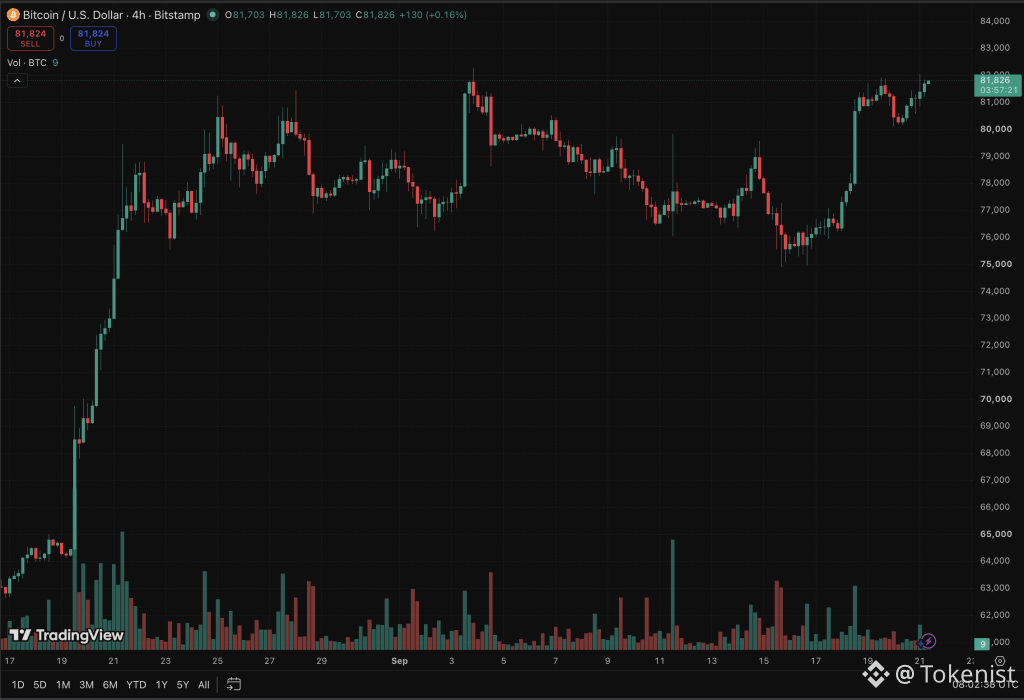
Article
What Does the Bitcoin Weekly Close Say About a Trend Reversal?Bitcoin closed the week ended September 20 above its 50-week moving average for the first time in 45 weeks, trading near $81,600 after gaining almost +1.5% over the week and +20% over the previous 35 days, according to CoinGecko data.
The moving average itself sits near $78,115, putting Bitcoin above a long-term trend line that had acted as a barrier during the decline.
For the first time in 45 weeks, #Bitcoin has closed above its 50-week moving average, following a 29% price increase over the past 35 days. According to data from Galaxy Research, Bitcoin finished the week ending September 20, 2026, at $81,159, compared with a 50-week moving…
— TheCryptoBasic (@thecryptobasic) September 21, 2026
That distinction, a weekly close above the average rather than a fleeting intraday move through it, is central to the technical case, and multiple analysts are all in agreement.
Galaxy Research found that Bitcoin avoided setting a new low after 11 of 13 previous weekly moves back above the 50-week average. The immediate question is whether Bitcoin can remain above the level long enough for the former resistance area to act as support.
Why the 50-Week Moving Average for Bitcoin Matters
SOURCE: TradingView
The 50-week moving average calculates the average weekly closing price over the past year and indicates Bitcoin’s long-term trend. During price increases, Bitcoin typically trades above this average, while during declines, rally attempts often fail below it.
Galaxy Research views this average as a ceiling during drawdowns; once Bitcoin drops below it, recovery attempts usually fail until it reaches a market low. Conversely, successfully closing above the average has historically marked the end of bear markets, followed by significant price rallies.
The timing of the weekly close is crucial, with Bitcoin’s candlestick closing at 23:59 UTC on Sundays. Analysts prioritize weekly or daily closes over major moving averages, as brief intraweek gains can reverse before the candle closes.
On September 20, Bitcoin’s weekly candlestick closed above its 50-week average, drawing attention as a significant trend signal, as Galaxy Research has noted in past Bitcoin downturns.
Crypto Expert Report: What Are The Next 10 Crypto to Explode?
Historical Bullish Precedent
Galaxy Research analyzed major Bitcoin declines since 2011 and identified 13 instances where Bitcoin closed a week above its 50-week moving average. In 11 of these cases, the market did not set a new low afterward, suggesting that the worst of the decline had often passed.
Historical rallies following such crossovers have been significant: after the 2011 crash, Bitcoin rose from around $2 to nearly $1,200, and after the 2014 bear market, it rallied from about $200 to nearly $20,000 by late 2017.
Following the 2018 crash, a rebound in May 2019 led to a rise from around $3,200 to over $69,000 by late 2021. Most recently, after crossing above the average in March 2023, Bitcoin surged from about $15,500 to a high of about $126,000 by October 2025.
These examples illustrate potential rally scales rather than implying causation from the moving average signal, which should be viewed as one of several indicators rather than a standalone explanation for market trends.
The False-Signal Risk
History does not guarantee outcomes, and historical reclaims have failed. Of the 13 identified by Galaxy Research, two did not hold: the crossovers on Dec. 26, 2021, and March 27, 2022, when Bitcoin briefly exceeded the average before declining toward $16,000.
These instances show that a single weekly close above the moving average doesn’t confirm the end of a bear market; subsequent price action matters.
Currently, the latest reclaim suggests that the bear-market low may have been set around $60,000. The key test now is whether Bitcoin can stay above the moving average of approximately $78,115 in the coming weeks.
According to Bitget data, the weekly close was near $81,159, compared with a 50-week average of about $78,788, reflecting differences across data sources, though both indicate a close above the average.
Crypto Expert Report: What is the Best Meme Coin to Buy and Forget Until the Next Bull Run?
The post What Does the Bitcoin Weekly Close Say About a Trend Reversal? appeared first on Tokenist.
What Does the Bitcoin Weekly Close Say About a Trend Reversal?
Bitcoin closed the week ended September 20 above its 50-week moving average for the first time in 45 weeks, trading near $81,600 after gaining almost +1.5% over the week and +20% over the previous 35 days, according to CoinGecko data.
The moving average itself sits near $78,115, putting Bitcoin above a long-term trend line that had acted as a barrier during the decline.
For the first time in 45 weeks, #Bitcoin has closed above its 50-week moving average, following a 29% price increase over the past 35 days. According to data from Galaxy Research, Bitcoin finished the week ending September 20, 2026, at $81,159, compared with a 50-week moving…
— TheCryptoBasic (@thecryptobasic) September 21, 2026
That distinction, a weekly close above the average rather than a fleeting intraday move through it, is central to the technical case, and multiple analysts are all in agreement.
Galaxy Research found that Bitcoin avoided setting a new low after 11 of 13 previous weekly moves back above the 50-week average. The immediate question is whether Bitcoin can remain above the level long enough for the former resistance area to act as support.
Why the 50-Week Moving Average for Bitcoin Matters
SOURCE: TradingView
The 50-week moving average calculates the average weekly closing price over the past year and indicates Bitcoin’s long-term trend. During price increases, Bitcoin typically trades above this average, while during declines, rally attempts often fail below it.
Galaxy Research views this average as a ceiling during drawdowns; once Bitcoin drops below it, recovery attempts usually fail until it reaches a market low. Conversely, successfully closing above the average has historically marked the end of bear markets, followed by significant price rallies.
The timing of the weekly close is crucial, with Bitcoin’s candlestick closing at 23:59 UTC on Sundays. Analysts prioritize weekly or daily closes over major moving averages, as brief intraweek gains can reverse before the candle closes.
On September 20, Bitcoin’s weekly candlestick closed above its 50-week average, drawing attention as a significant trend signal, as Galaxy Research has noted in past Bitcoin downturns.
Crypto Expert Report: What Are The Next 10 Crypto to Explode?
Historical Bullish Precedent
Galaxy Research analyzed major Bitcoin declines since 2011 and identified 13 instances where Bitcoin closed a week above its 50-week moving average. In 11 of these cases, the market did not set a new low afterward, suggesting that the worst of the decline had often passed.
Historical rallies following such crossovers have been significant: after the 2011 crash, Bitcoin rose from around $2 to nearly $1,200, and after the 2014 bear market, it rallied from about $200 to nearly $20,000 by late 2017.
Following the 2018 crash, a rebound in May 2019 led to a rise from around $3,200 to over $69,000 by late 2021. Most recently, after crossing above the average in March 2023, Bitcoin surged from about $15,500 to a high of about $126,000 by October 2025.
These examples illustrate potential rally scales rather than implying causation from the moving average signal, which should be viewed as one of several indicators rather than a standalone explanation for market trends.
The False-Signal Risk
History does not guarantee outcomes, and historical reclaims have failed. Of the 13 identified by Galaxy Research, two did not hold: the crossovers on Dec. 26, 2021, and March 27, 2022, when Bitcoin briefly exceeded the average before declining toward $16,000.
These instances show that a single weekly close above the moving average doesn’t confirm the end of a bear market; subsequent price action matters.
Currently, the latest reclaim suggests that the bear-market low may have been set around $60,000. The key test now is whether Bitcoin can stay above the moving average of approximately $78,115 in the coming weeks.
According to Bitget data, the weekly close was near $81,159, compared with a 50-week average of about $78,788, reflecting differences across data sources, though both indicate a close above the average.
Crypto Expert Report: What is the Best Meme Coin to Buy and Forget Until the Next Bull Run?
The post What Does the Bitcoin Weekly Close Say About a Trend Reversal? appeared first on Tokenist.
The moving average itself sits near $78,115, putting Bitcoin above a long-term trend line that had acted as a barrier during the decline.
For the first time in 45 weeks, #Bitcoin has closed above its 50-week moving average, following a 29% price increase over the past 35 days. According to data from Galaxy Research, Bitcoin finished the week ending September 20, 2026, at $81,159, compared with a 50-week moving…
— TheCryptoBasic (@thecryptobasic) September 21, 2026
That distinction, a weekly close above the average rather than a fleeting intraday move through it, is central to the technical case, and multiple analysts are all in agreement.
Galaxy Research found that Bitcoin avoided setting a new low after 11 of 13 previous weekly moves back above the 50-week average. The immediate question is whether Bitcoin can remain above the level long enough for the former resistance area to act as support.
Why the 50-Week Moving Average for Bitcoin Matters
SOURCE: TradingView
The 50-week moving average calculates the average weekly closing price over the past year and indicates Bitcoin’s long-term trend. During price increases, Bitcoin typically trades above this average, while during declines, rally attempts often fail below it.
Galaxy Research views this average as a ceiling during drawdowns; once Bitcoin drops below it, recovery attempts usually fail until it reaches a market low. Conversely, successfully closing above the average has historically marked the end of bear markets, followed by significant price rallies.
The timing of the weekly close is crucial, with Bitcoin’s candlestick closing at 23:59 UTC on Sundays. Analysts prioritize weekly or daily closes over major moving averages, as brief intraweek gains can reverse before the candle closes.
On September 20, Bitcoin’s weekly candlestick closed above its 50-week average, drawing attention as a significant trend signal, as Galaxy Research has noted in past Bitcoin downturns.
Crypto Expert Report: What Are The Next 10 Crypto to Explode?
Historical Bullish Precedent
Galaxy Research analyzed major Bitcoin declines since 2011 and identified 13 instances where Bitcoin closed a week above its 50-week moving average. In 11 of these cases, the market did not set a new low afterward, suggesting that the worst of the decline had often passed.
Historical rallies following such crossovers have been significant: after the 2011 crash, Bitcoin rose from around $2 to nearly $1,200, and after the 2014 bear market, it rallied from about $200 to nearly $20,000 by late 2017.
Following the 2018 crash, a rebound in May 2019 led to a rise from around $3,200 to over $69,000 by late 2021. Most recently, after crossing above the average in March 2023, Bitcoin surged from about $15,500 to a high of about $126,000 by October 2025.
These examples illustrate potential rally scales rather than implying causation from the moving average signal, which should be viewed as one of several indicators rather than a standalone explanation for market trends.
The False-Signal Risk
History does not guarantee outcomes, and historical reclaims have failed. Of the 13 identified by Galaxy Research, two did not hold: the crossovers on Dec. 26, 2021, and March 27, 2022, when Bitcoin briefly exceeded the average before declining toward $16,000.
These instances show that a single weekly close above the moving average doesn’t confirm the end of a bear market; subsequent price action matters.
Currently, the latest reclaim suggests that the bear-market low may have been set around $60,000. The key test now is whether Bitcoin can stay above the moving average of approximately $78,115 in the coming weeks.
According to Bitget data, the weekly close was near $81,159, compared with a 50-week average of about $78,788, reflecting differences across data sources, though both indicate a close above the average.
Crypto Expert Report: What is the Best Meme Coin to Buy and Forget Until the Next Bull Run?
The post What Does the Bitcoin Weekly Close Say About a Trend Reversal? appeared first on Tokenist.
2
3.4k
·
--

Article
XRP News: Ledger Kit Gains MPP Support, Enabling AI Payments for XRP and RLUSDIn XRP news, RippleX launched version 1.1 of the XRP Ledger AI Starter Kit on September 17, 2026, introducing support for the Machine Payments Protocol (MPP), co-authored by Stripe and Tempo.
This update lets AI agents pay for APIs and services with XRP and Ripple’s RLUSD, positioning the ledger as a key settlement option in the evolving AI-payments economy.
The MPP follows a straightforward process: an agent requests a resource, receives a price, authorizes payment, and then receives the resource.
Ripple also supports the competing x402 payment standard, giving developers the option to settle in XRP or RLUSD. This dual-support strategy aligns with trends in automated agent-to-service payments and delegated permissions in other projects.
XRP News: How Does MPP Work on the XRP Ledger and How Does it Incorporate AI Agents?
BIG $XRP UPDATE RippleX added XRPL settlement to Stripe/Tempo’s Machine Payments Protocol. Single payments support XRP, IOUs and MPTs, while XRP Payment Channels handle session payments at 100K+ vouchers/sec. Machine payments on XRPL next? pic.twitter.com/rbgIsXECMK
— Trump Supporter Rv (@trumpsupporteQ) September 19, 2026
Starter Kit v1.1 adds two pieces of infrastructure: MPP support and the Open Wallet Standard, which lets software manage wallets across multiple blockchains through one interface. One-time payments already work with XRP and XRPL-issued assets such as RLUSD, following the standard request-price-authorize-deliver flow.
The more distinctive feature is session payments. XRPL payment channels let an agent fund an ongoing XRP session once, make repeated payments as it consumes a service, and have the provider settle the accumulated total without putting every individual query on-chain. Extending that same session mechanic to stablecoins depends on a proposed ledger upgrade that has no confirmed timeline in RippleX’s release notes.
The Open Wallet Standard layer adds a safety component: AI agents can request transactions without ever accessing raw private keys, with safeguards such as spending limits and approved destinations built into the interface. That matters for autonomous software making dozens or hundreds of small payments without human review at each step.
Crypto Expert Report: What is the Best Meme Coin to Buy and Forget Until the Next Bull Run?
XRP Price Analysis Following AI Payments Activation
$XRP has been battling the 0.5 FIB and failing to reclaim it since early September ($1.45). After multiple failed daily attempts at breaking through, the 0.236 support ($1.34) now rests below. It has to hold or we revisit the 20 week EMA again ($1.28). https://t.co/5mbjkXeWb6 pic.twitter.com/6G8rupYvfL
— ChartNerd (@ChartNerdTA) September 20, 2026
In other XRP news, daily RSI sits around 53–56 (neutral), indicating balanced momentum without overbought or oversold extremes. MACD remains near neutral (line ~0.018–0.02, signal slightly higher with a modestly negative histogram), while ADX near 35 confirms developing trend strength.
Price holds above the 50-day and 200-day moving averages (both clustered near $1.25–$1.30), supporting a broader bullish structure, though shorter-term EMAs (20-day ~$1.36–$1.37) act as near-term resistance.
Immediate support lies at $1.36–$1.38 (recent pivot and strong confluence), followed by $1.34 and the lower Bollinger Band near $1.28. Resistance clusters at $1.41–$1.44, with the upper Bollinger Band at ~$1.46 and stronger supply toward $1.48–$1.54.
Bollinger bandwidth remains moderate, signaling potential expansion after the current range-bound phase. Overall technicals lean Buy/Neutral with price above key longer-term averages.
A daily close above $1.44–$1.46 on volume could target higher levels, while a break below $1.36 risks a deeper retest of $1.28–$1.30. Elevated volatility (ATR) warrants caution in the near term.
Crypto Expert Report: What Are The Next 10 Crypto to Explode?
This article is for informational purposes only and does not constitute investment advice.
The post XRP News: Ledger Kit Gains MPP Support, Enabling AI Payments for XRP and RLUSD appeared first on Tokenist.
XRP News: Ledger Kit Gains MPP Support, Enabling AI Payments for XRP and RLUSD
In XRP news, RippleX launched version 1.1 of the XRP Ledger AI Starter Kit on September 17, 2026, introducing support for the Machine Payments Protocol (MPP), co-authored by Stripe and Tempo.
This update lets AI agents pay for APIs and services with XRP and Ripple’s RLUSD, positioning the ledger as a key settlement option in the evolving AI-payments economy.
The MPP follows a straightforward process: an agent requests a resource, receives a price, authorizes payment, and then receives the resource.
Ripple also supports the competing x402 payment standard, giving developers the option to settle in XRP or RLUSD. This dual-support strategy aligns with trends in automated agent-to-service payments and delegated permissions in other projects.
XRP News: How Does MPP Work on the XRP Ledger and How Does it Incorporate AI Agents?
BIG $XRP UPDATE RippleX added XRPL settlement to Stripe/Tempo’s Machine Payments Protocol. Single payments support XRP, IOUs and MPTs, while XRP Payment Channels handle session payments at 100K+ vouchers/sec. Machine payments on XRPL next? pic.twitter.com/rbgIsXECMK
— Trump Supporter Rv (@trumpsupporteQ) September 19, 2026
Starter Kit v1.1 adds two pieces of infrastructure: MPP support and the Open Wallet Standard, which lets software manage wallets across multiple blockchains through one interface. One-time payments already work with XRP and XRPL-issued assets such as RLUSD, following the standard request-price-authorize-deliver flow.
The more distinctive feature is session payments. XRPL payment channels let an agent fund an ongoing XRP session once, make repeated payments as it consumes a service, and have the provider settle the accumulated total without putting every individual query on-chain. Extending that same session mechanic to stablecoins depends on a proposed ledger upgrade that has no confirmed timeline in RippleX’s release notes.
The Open Wallet Standard layer adds a safety component: AI agents can request transactions without ever accessing raw private keys, with safeguards such as spending limits and approved destinations built into the interface. That matters for autonomous software making dozens or hundreds of small payments without human review at each step.
Crypto Expert Report: What is the Best Meme Coin to Buy and Forget Until the Next Bull Run?
XRP Price Analysis Following AI Payments Activation
$XRP has been battling the 0.5 FIB and failing to reclaim it since early September ($1.45). After multiple failed daily attempts at breaking through, the 0.236 support ($1.34) now rests below. It has to hold or we revisit the 20 week EMA again ($1.28). https://t.co/5mbjkXeWb6 pic.twitter.com/6G8rupYvfL
— ChartNerd (@ChartNerdTA) September 20, 2026
In other XRP news, daily RSI sits around 53–56 (neutral), indicating balanced momentum without overbought or oversold extremes. MACD remains near neutral (line ~0.018–0.02, signal slightly higher with a modestly negative histogram), while ADX near 35 confirms developing trend strength.
Price holds above the 50-day and 200-day moving averages (both clustered near $1.25–$1.30), supporting a broader bullish structure, though shorter-term EMAs (20-day ~$1.36–$1.37) act as near-term resistance.
Immediate support lies at $1.36–$1.38 (recent pivot and strong confluence), followed by $1.34 and the lower Bollinger Band near $1.28. Resistance clusters at $1.41–$1.44, with the upper Bollinger Band at ~$1.46 and stronger supply toward $1.48–$1.54.
Bollinger bandwidth remains moderate, signaling potential expansion after the current range-bound phase. Overall technicals lean Buy/Neutral with price above key longer-term averages.
A daily close above $1.44–$1.46 on volume could target higher levels, while a break below $1.36 risks a deeper retest of $1.28–$1.30. Elevated volatility (ATR) warrants caution in the near term.
Crypto Expert Report: What Are The Next 10 Crypto to Explode?
This article is for informational purposes only and does not constitute investment advice.
The post XRP News: Ledger Kit Gains MPP Support, Enabling AI Payments for XRP and RLUSD appeared first on Tokenist.
This update lets AI agents pay for APIs and services with XRP and Ripple’s RLUSD, positioning the ledger as a key settlement option in the evolving AI-payments economy.
The MPP follows a straightforward process: an agent requests a resource, receives a price, authorizes payment, and then receives the resource.
Ripple also supports the competing x402 payment standard, giving developers the option to settle in XRP or RLUSD. This dual-support strategy aligns with trends in automated agent-to-service payments and delegated permissions in other projects.
XRP News: How Does MPP Work on the XRP Ledger and How Does it Incorporate AI Agents?
BIG $XRP UPDATE RippleX added XRPL settlement to Stripe/Tempo’s Machine Payments Protocol. Single payments support XRP, IOUs and MPTs, while XRP Payment Channels handle session payments at 100K+ vouchers/sec. Machine payments on XRPL next? pic.twitter.com/rbgIsXECMK
— Trump Supporter Rv (@trumpsupporteQ) September 19, 2026
Starter Kit v1.1 adds two pieces of infrastructure: MPP support and the Open Wallet Standard, which lets software manage wallets across multiple blockchains through one interface. One-time payments already work with XRP and XRPL-issued assets such as RLUSD, following the standard request-price-authorize-deliver flow.
The more distinctive feature is session payments. XRPL payment channels let an agent fund an ongoing XRP session once, make repeated payments as it consumes a service, and have the provider settle the accumulated total without putting every individual query on-chain. Extending that same session mechanic to stablecoins depends on a proposed ledger upgrade that has no confirmed timeline in RippleX’s release notes.
The Open Wallet Standard layer adds a safety component: AI agents can request transactions without ever accessing raw private keys, with safeguards such as spending limits and approved destinations built into the interface. That matters for autonomous software making dozens or hundreds of small payments without human review at each step.
Crypto Expert Report: What is the Best Meme Coin to Buy and Forget Until the Next Bull Run?
XRP Price Analysis Following AI Payments Activation
$XRP has been battling the 0.5 FIB and failing to reclaim it since early September ($1.45). After multiple failed daily attempts at breaking through, the 0.236 support ($1.34) now rests below. It has to hold or we revisit the 20 week EMA again ($1.28). https://t.co/5mbjkXeWb6 pic.twitter.com/6G8rupYvfL
— ChartNerd (@ChartNerdTA) September 20, 2026
In other XRP news, daily RSI sits around 53–56 (neutral), indicating balanced momentum without overbought or oversold extremes. MACD remains near neutral (line ~0.018–0.02, signal slightly higher with a modestly negative histogram), while ADX near 35 confirms developing trend strength.
Price holds above the 50-day and 200-day moving averages (both clustered near $1.25–$1.30), supporting a broader bullish structure, though shorter-term EMAs (20-day ~$1.36–$1.37) act as near-term resistance.
Immediate support lies at $1.36–$1.38 (recent pivot and strong confluence), followed by $1.34 and the lower Bollinger Band near $1.28. Resistance clusters at $1.41–$1.44, with the upper Bollinger Band at ~$1.46 and stronger supply toward $1.48–$1.54.
Bollinger bandwidth remains moderate, signaling potential expansion after the current range-bound phase. Overall technicals lean Buy/Neutral with price above key longer-term averages.
A daily close above $1.44–$1.46 on volume could target higher levels, while a break below $1.36 risks a deeper retest of $1.28–$1.30. Elevated volatility (ATR) warrants caution in the near term.
Crypto Expert Report: What Are The Next 10 Crypto to Explode?
This article is for informational purposes only and does not constitute investment advice.
The post XRP News: Ledger Kit Gains MPP Support, Enabling AI Payments for XRP and RLUSD appeared first on Tokenist.
420
·
--
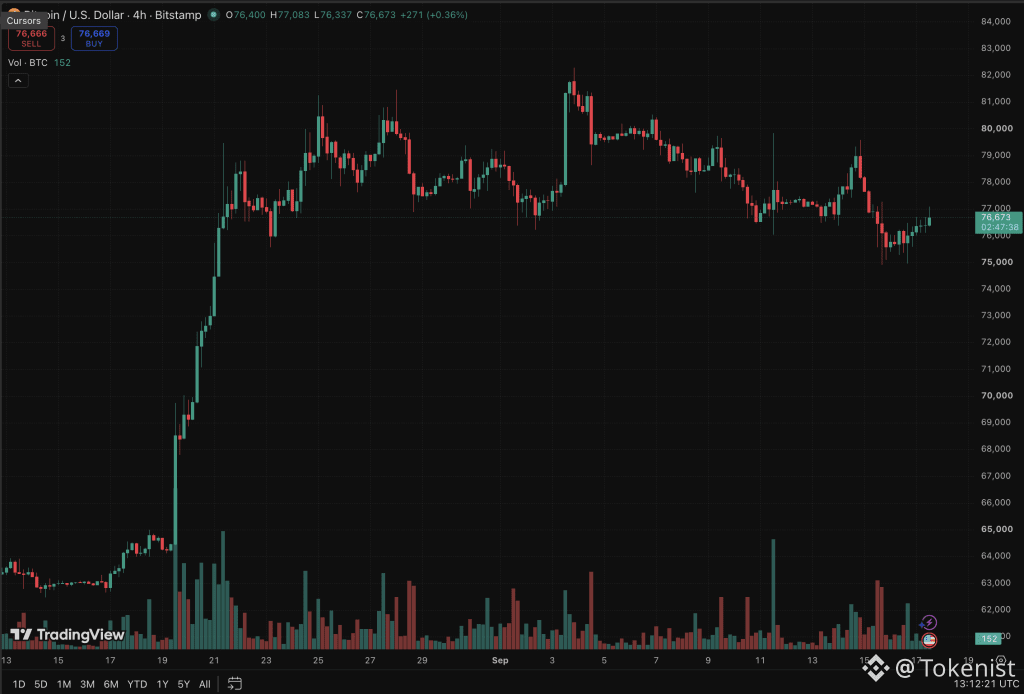
Article
Senate Setback Leaves Bitcoin and Wider Crypto Sector Without Clearer RulesThe U.S. Senate fell short of advancing the Digital Asset Market CLARITY Act, H.R. 3633, on September 15, 2026. The cloture vote was 49 in favor and 50 opposed, short of the 60 votes required to move it forward. The outcome was a significant setback for legislation intended to establish a federal framework for Bitcoin and the wider crypto sector.
The bill’s failure leaves unresolved questions about how the United States would oversee digital-asset markets. Supporters presented the measure as a route to clearer rules, while opponents argued its approach did not provide sufficient safeguards. The vote also underscored that disagreements over regulation extend beyond how crypto assets should be valued.
In response to the CLARITY Act vote falling short, the market responded by dropping -0.5%, with the total market cap currently sitting at $2.67 trillion. Daily trading volume is at just over $92Bn.
JOSH HAWLEY EXPLAINS HIS NO VOTE ON THE CLARITY ACT Sen. Josh Hawley (R-MO) was one of four Republicans (including @SenThomTillis, who switched his vote at the last minute) to break with the party and sink the crypto bill's advance in the Senate. His reasoning: "My… pic.twitter.com/Gf7NjVpP6D
— LindellTV (@RealLindellTV) September 16, 2026
How the Cloture Vote Fell Apart and What Happens to Bitcoin and the Broader Crypto Market Now?
The Digital Asset Market CLARITY Act aims to create a regulatory framework for digital commodities, dividing oversight between the Securities and Exchange Commission and the Commodity Futures Trading Commission (CFTC).
The CFTC would play a larger role in regulating digital commodities transactions, which has sparked debate. Critics argue this could lead to a less stringent regulatory approach, while supporters contest that view.
The bill includes provisions for trade monitoring, recordkeeping, customer assets, anti-money-laundering obligations, and registration requirements. The House passed a version in 2025, but the Senate debated it for a long time.
During a procedural vote on September 15, all Democrats and four Republican senators voted against it. Senator Thom Tillis moved to reconsider the vote, indicating the measure is not finished and that the House and Senate still need to agree on a final version.
Crypto Expert Report: What Are The Next 10 Crypto to Explode?
Value Versus Regulation: Coinbase Vice Chair Calls for Regulatory Clarity
The Senate vote highlights two separate debates often combined in discussions of Bitcoin and the broader crypto market. One concerns whether digital assets have enduring value.
The other concerns the rules governing their issuance, trading, and oversight. The CLARITY Act was focused on the latter question: establishing a legislative framework for a sector that currently faces changing regulatory approaches across administrations.
Before the vote, Coinbase vice chair Ryan VanGrack argued that many Americans were investing in products without clear regulatory oversight and said regulation should matter regardless of a person’s view of Bitcoin and crypto in general.
His argument treated a workable regulatory structure as an urgent issue for the sector. The bill’s opponents, however, questioned whether its proposed safeguards and distribution of authority were adequate.
WATCH: @RVanGrack addresses questions Americans have about crypto after the Senate blocked the Clarity Act from moving forward. pic.twitter.com/H4wQwbSgjq
— Katie Pavlich Tonight (@KatiePavlichNN) September 16, 2026
Who Bears the Regulatory and Market Consequences
Democratic concerns included an ethics clause to prevent elected officials from profiting from Bitcoin and the wider crypto industry while in office, though critics felt it was insufficient.
Republicans proposed stricter language barring federally elected officials and spouses from issuing cryptocurrencies and requiring divestment of major holdings, but disagreements remained.
Community bank leaders opposed parts of the bill related to stablecoins, arguing that allowing crypto companies to offer interest-like incentives could let them compete unfairly with traditional banks.
Crypto companies countered that these incentives were similar to credit card rewards. Bankers said losing local deposits would limit their ability to support small businesses and agriculture.
The legislation could be reconsidered, but with the November midterms approaching, its passage may be more challenging. A shift in control of Congress could further complicate matters, leaving the crypto sector uncertain about a market-structure framework that meets the needs of both supporters and critics.
SOURCE: TradingView
Crypto Expert Report: What is the Best Meme Coin to Buy and Forget Until the Next Bull Run?
This article is for informational purposes only and does not constitute investment advice. Crypto asset prices are volatile and involve significant risk.
The post Senate Setback Leaves Bitcoin and Wider Crypto Sector Without Clearer Rules appeared first on Tokenist.
Senate Setback Leaves Bitcoin and Wider Crypto Sector Without Clearer Rules
The U.S. Senate fell short of advancing the Digital Asset Market CLARITY Act, H.R. 3633, on September 15, 2026. The cloture vote was 49 in favor and 50 opposed, short of the 60 votes required to move it forward. The outcome was a significant setback for legislation intended to establish a federal framework for Bitcoin and the wider crypto sector.
The bill’s failure leaves unresolved questions about how the United States would oversee digital-asset markets. Supporters presented the measure as a route to clearer rules, while opponents argued its approach did not provide sufficient safeguards. The vote also underscored that disagreements over regulation extend beyond how crypto assets should be valued.
In response to the CLARITY Act vote falling short, the market responded by dropping -0.5%, with the total market cap currently sitting at $2.67 trillion. Daily trading volume is at just over $92Bn.
JOSH HAWLEY EXPLAINS HIS NO VOTE ON THE CLARITY ACT Sen. Josh Hawley (R-MO) was one of four Republicans (including @SenThomTillis, who switched his vote at the last minute) to break with the party and sink the crypto bill's advance in the Senate. His reasoning: "My… pic.twitter.com/Gf7NjVpP6D
— LindellTV (@RealLindellTV) September 16, 2026
How the Cloture Vote Fell Apart and What Happens to Bitcoin and the Broader Crypto Market Now?
The Digital Asset Market CLARITY Act aims to create a regulatory framework for digital commodities, dividing oversight between the Securities and Exchange Commission and the Commodity Futures Trading Commission (CFTC).
The CFTC would play a larger role in regulating digital commodities transactions, which has sparked debate. Critics argue this could lead to a less stringent regulatory approach, while supporters contest that view.
The bill includes provisions for trade monitoring, recordkeeping, customer assets, anti-money-laundering obligations, and registration requirements. The House passed a version in 2025, but the Senate debated it for a long time.
During a procedural vote on September 15, all Democrats and four Republican senators voted against it. Senator Thom Tillis moved to reconsider the vote, indicating the measure is not finished and that the House and Senate still need to agree on a final version.
Crypto Expert Report: What Are The Next 10 Crypto to Explode?
Value Versus Regulation: Coinbase Vice Chair Calls for Regulatory Clarity
The Senate vote highlights two separate debates often combined in discussions of Bitcoin and the broader crypto market. One concerns whether digital assets have enduring value.
The other concerns the rules governing their issuance, trading, and oversight. The CLARITY Act was focused on the latter question: establishing a legislative framework for a sector that currently faces changing regulatory approaches across administrations.
Before the vote, Coinbase vice chair Ryan VanGrack argued that many Americans were investing in products without clear regulatory oversight and said regulation should matter regardless of a person’s view of Bitcoin and crypto in general.
His argument treated a workable regulatory structure as an urgent issue for the sector. The bill’s opponents, however, questioned whether its proposed safeguards and distribution of authority were adequate.
WATCH: @RVanGrack addresses questions Americans have about crypto after the Senate blocked the Clarity Act from moving forward. pic.twitter.com/H4wQwbSgjq
— Katie Pavlich Tonight (@KatiePavlichNN) September 16, 2026
Who Bears the Regulatory and Market Consequences
Democratic concerns included an ethics clause to prevent elected officials from profiting from Bitcoin and the wider crypto industry while in office, though critics felt it was insufficient.
Republicans proposed stricter language barring federally elected officials and spouses from issuing cryptocurrencies and requiring divestment of major holdings, but disagreements remained.
Community bank leaders opposed parts of the bill related to stablecoins, arguing that allowing crypto companies to offer interest-like incentives could let them compete unfairly with traditional banks.
Crypto companies countered that these incentives were similar to credit card rewards. Bankers said losing local deposits would limit their ability to support small businesses and agriculture.
The legislation could be reconsidered, but with the November midterms approaching, its passage may be more challenging. A shift in control of Congress could further complicate matters, leaving the crypto sector uncertain about a market-structure framework that meets the needs of both supporters and critics.
SOURCE: TradingView
Crypto Expert Report: What is the Best Meme Coin to Buy and Forget Until the Next Bull Run?
This article is for informational purposes only and does not constitute investment advice. Crypto asset prices are volatile and involve significant risk.
The post Senate Setback Leaves Bitcoin and Wider Crypto Sector Without Clearer Rules appeared first on Tokenist.
The bill’s failure leaves unresolved questions about how the United States would oversee digital-asset markets. Supporters presented the measure as a route to clearer rules, while opponents argued its approach did not provide sufficient safeguards. The vote also underscored that disagreements over regulation extend beyond how crypto assets should be valued.
In response to the CLARITY Act vote falling short, the market responded by dropping -0.5%, with the total market cap currently sitting at $2.67 trillion. Daily trading volume is at just over $92Bn.
JOSH HAWLEY EXPLAINS HIS NO VOTE ON THE CLARITY ACT Sen. Josh Hawley (R-MO) was one of four Republicans (including @SenThomTillis, who switched his vote at the last minute) to break with the party and sink the crypto bill's advance in the Senate. His reasoning: "My… pic.twitter.com/Gf7NjVpP6D
— LindellTV (@RealLindellTV) September 16, 2026
How the Cloture Vote Fell Apart and What Happens to Bitcoin and the Broader Crypto Market Now?
The Digital Asset Market CLARITY Act aims to create a regulatory framework for digital commodities, dividing oversight between the Securities and Exchange Commission and the Commodity Futures Trading Commission (CFTC).
The CFTC would play a larger role in regulating digital commodities transactions, which has sparked debate. Critics argue this could lead to a less stringent regulatory approach, while supporters contest that view.
The bill includes provisions for trade monitoring, recordkeeping, customer assets, anti-money-laundering obligations, and registration requirements. The House passed a version in 2025, but the Senate debated it for a long time.
During a procedural vote on September 15, all Democrats and four Republican senators voted against it. Senator Thom Tillis moved to reconsider the vote, indicating the measure is not finished and that the House and Senate still need to agree on a final version.
Crypto Expert Report: What Are The Next 10 Crypto to Explode?
Value Versus Regulation: Coinbase Vice Chair Calls for Regulatory Clarity
The Senate vote highlights two separate debates often combined in discussions of Bitcoin and the broader crypto market. One concerns whether digital assets have enduring value.
The other concerns the rules governing their issuance, trading, and oversight. The CLARITY Act was focused on the latter question: establishing a legislative framework for a sector that currently faces changing regulatory approaches across administrations.
Before the vote, Coinbase vice chair Ryan VanGrack argued that many Americans were investing in products without clear regulatory oversight and said regulation should matter regardless of a person’s view of Bitcoin and crypto in general.
His argument treated a workable regulatory structure as an urgent issue for the sector. The bill’s opponents, however, questioned whether its proposed safeguards and distribution of authority were adequate.
WATCH: @RVanGrack addresses questions Americans have about crypto after the Senate blocked the Clarity Act from moving forward. pic.twitter.com/H4wQwbSgjq
— Katie Pavlich Tonight (@KatiePavlichNN) September 16, 2026
Who Bears the Regulatory and Market Consequences
Democratic concerns included an ethics clause to prevent elected officials from profiting from Bitcoin and the wider crypto industry while in office, though critics felt it was insufficient.
Republicans proposed stricter language barring federally elected officials and spouses from issuing cryptocurrencies and requiring divestment of major holdings, but disagreements remained.
Community bank leaders opposed parts of the bill related to stablecoins, arguing that allowing crypto companies to offer interest-like incentives could let them compete unfairly with traditional banks.
Crypto companies countered that these incentives were similar to credit card rewards. Bankers said losing local deposits would limit their ability to support small businesses and agriculture.
The legislation could be reconsidered, but with the November midterms approaching, its passage may be more challenging. A shift in control of Congress could further complicate matters, leaving the crypto sector uncertain about a market-structure framework that meets the needs of both supporters and critics.
SOURCE: TradingView
Crypto Expert Report: What is the Best Meme Coin to Buy and Forget Until the Next Bull Run?
This article is for informational purposes only and does not constitute investment advice. Crypto asset prices are volatile and involve significant risk.
The post Senate Setback Leaves Bitcoin and Wider Crypto Sector Without Clearer Rules appeared first on Tokenist.
252
·
--

Article
Does Bitcoin Sit With SpaceX, Anthropic, and OpenAI? $1.5T Role Exposes Limits of Visser’s Asset ...Jordi Visser, founder of Visser Labs, estimated Bitcoin (BTC), SpaceX (SPCX), Anthropic, and OpenAI were worth roughly $8 trillion combined when he grouped them as a single bucket of future-oriented assets in an interview with Anthony Pompliano published Saturday.
Current figures cited in the same report put that aggregate closer to $5.3 trillion, a gap of nearly $2.7 trillion between Visser’s recollection and the amount the four assets actually trade at or were last privately valued at.
Jordi Visser: "When you get all mad and say this house of cards is going to crumble down… it's not. The governments can't allow it to." "The choice they've made is to inflate assets out of this, to make sure the entire market becomes financialized." Tokenization is the bridge… https://t.co/3x9tW7KijX pic.twitter.com/hU8TdVvkLQ
— Milk Road Crypto (@milkroaddaily) September 10, 2026
The grouping’s logic isn’t corporate accounting; it’s strategic importance. “That is, $8 trillion worth of things that, in my opinion, are so important to the future.
People are still talking about the level of the Fed funds rate and oil,” Visser said. The question worth testing is how much of that $5.3 trillion actually reflects an absence of profit, and how much reflects Visser’s shorthand outrunning the underlying numbers.
Why Has Jordan Visser Grouped Bitcoin into His $8 Trillion Asset Basket?
SOURCE: TradingView
Bitcoin’s market capitalization stood close to $1.5 trillion at the time of the report, with the token trading over $76,000 and down 0.9% over the prior 24 hours.
Stocktwits retail sentiment on Bitcoin sat in “extremely bearish” territory alongside “low” chatter levels, a sentiment backdrop that sits awkwardly against Visser’s framing of the asset as one of the four most important things for the future.
“You have four things. None of them made money, and I threw Bitcoin into it,” Visser said. That line does double duty in his thesis, but it flattens a real distinction: Bitcoin is a protocol and a bearer asset, not a company with an income statement, so “didn’t make money” describes it differently than it describes SpaceX or OpenAI.
Bitcoin’s valuation is a function of price times circulating supply, not revenue minus expenses, which is precisely the point Visser is gesturing toward when he argues investors are underweighting frontier-AI strategic positioning relative to legacy macro inputs like the Fed funds rate.
Crypto Expert Report: What Are the 10 Next Crypto to Explode in 2026?
SpaceX, Anthropic and OpenAI: Revenue Without Traditional Profitability
SOURCE: Yahoo Finance
SpaceX reported a positive adjusted EBITDA of $6.6Bn for full-year 2025, despite a GAAP net loss of $4.9Bn, indicating real operating cash flow while still experiencing a bottom-line loss due to depreciation, interest, and taxes. This contrasts with the other two private labs.
In May, Anthropic reported a revenue run rate of $47Bn, suggesting it is not revenue-free, though net profitability remains unclear. SpaceX went public on June 12, closing its first trading day at approximately $2.1 trillion, making it the largest item in Visser’s basket.
Anthropic was valued at $965Bn in May, and OpenAI at $852Bn in March, based on recent private financings. Together, SpaceX’s first-day close, Anthropic’s and OpenAI’s private valuations, and Bitcoin having a roughly $1.5 trillion market cap approach $5.3 trillion. However, these figures use different metrics and should be evaluated separately for revenue, losses, and market dynamics.
The Counter-Thesis: Trust and Velocity Versus Cash Flow
MACRO ANALYST JORDI VISSER ON THE CONNECTION BETWEEN SPACEX $SPCX AND BITCOIN: "SpaceX and Bitcoin are basically to me the SAME THING. They're both based on a belief that people have in the future. They're not about anything fundamental right now." Two of the most talked… https://t.co/DDlWp4Km1O pic.twitter.com/r9d9JGTnn0
— WOLF Bitcoin (@WOLF_Bitcoin_) June 23, 2026
Visser’s broader argument is that markets are repricing value away from earnings entirely. “We are leaving a world of revenues, and we are entering a world of two things that have value-trust and velocity,” he said, adding that AI-driven hacking risk was compressing terminal value for companies whose worth depends on uninterrupted continuity.
He framed this as déjà vu. Visser recalled traveling to Silicon Valley in 2013 to understand how Amazon (AMZN), up 17,000% since its 1997 IPO, kept setting new highs while barely turning a profit.
“It’s a bubble. It can’t possibly be real on the metrics that I know,” he said he thought then, before a stint at Singularity University changed how he evaluated companies going forward.
The parallel is instructive but not proof. Trust and velocity are real inputs to valuation when they translate into durable demand or network effects, but they are also the exact language used to justify premiums that later compressed hard when rate expectations or growth narratives shifted.
Visser’s framework asks investors to bet that this time the strategic importance is structural rather than sentiment-driven – a bet the market hasn’t yet had to settle for three of the four names in the bucket, since SpaceX, Anthropic and OpenAI remain either newly public or entirely private.
Crypto Expert Report: What is the Best Meme Coin to Buy and Forget Until the Next Bull Run?
The post Does Bitcoin Sit With SpaceX, Anthropic, and OpenAI? $1.5T Role Exposes Limits of Visser’s Asset Basket appeared first on Tokenist.
Does Bitcoin Sit With SpaceX, Anthropic, and OpenAI? $1.5T Role Exposes Limits of Visser’s Asset ...
Jordi Visser, founder of Visser Labs, estimated Bitcoin (BTC), SpaceX (SPCX), Anthropic, and OpenAI were worth roughly $8 trillion combined when he grouped them as a single bucket of future-oriented assets in an interview with Anthony Pompliano published Saturday.
Current figures cited in the same report put that aggregate closer to $5.3 trillion, a gap of nearly $2.7 trillion between Visser’s recollection and the amount the four assets actually trade at or were last privately valued at.
Jordi Visser: "When you get all mad and say this house of cards is going to crumble down… it's not. The governments can't allow it to." "The choice they've made is to inflate assets out of this, to make sure the entire market becomes financialized." Tokenization is the bridge… https://t.co/3x9tW7KijX pic.twitter.com/hU8TdVvkLQ
— Milk Road Crypto (@milkroaddaily) September 10, 2026
The grouping’s logic isn’t corporate accounting; it’s strategic importance. “That is, $8 trillion worth of things that, in my opinion, are so important to the future.
People are still talking about the level of the Fed funds rate and oil,” Visser said. The question worth testing is how much of that $5.3 trillion actually reflects an absence of profit, and how much reflects Visser’s shorthand outrunning the underlying numbers.
Why Has Jordan Visser Grouped Bitcoin into His $8 Trillion Asset Basket?
SOURCE: TradingView
Bitcoin’s market capitalization stood close to $1.5 trillion at the time of the report, with the token trading over $76,000 and down 0.9% over the prior 24 hours.
Stocktwits retail sentiment on Bitcoin sat in “extremely bearish” territory alongside “low” chatter levels, a sentiment backdrop that sits awkwardly against Visser’s framing of the asset as one of the four most important things for the future.
“You have four things. None of them made money, and I threw Bitcoin into it,” Visser said. That line does double duty in his thesis, but it flattens a real distinction: Bitcoin is a protocol and a bearer asset, not a company with an income statement, so “didn’t make money” describes it differently than it describes SpaceX or OpenAI.
Bitcoin’s valuation is a function of price times circulating supply, not revenue minus expenses, which is precisely the point Visser is gesturing toward when he argues investors are underweighting frontier-AI strategic positioning relative to legacy macro inputs like the Fed funds rate.
Crypto Expert Report: What Are the 10 Next Crypto to Explode in 2026?
SpaceX, Anthropic and OpenAI: Revenue Without Traditional Profitability
SOURCE: Yahoo Finance
SpaceX reported a positive adjusted EBITDA of $6.6Bn for full-year 2025, despite a GAAP net loss of $4.9Bn, indicating real operating cash flow while still experiencing a bottom-line loss due to depreciation, interest, and taxes. This contrasts with the other two private labs.
In May, Anthropic reported a revenue run rate of $47Bn, suggesting it is not revenue-free, though net profitability remains unclear. SpaceX went public on June 12, closing its first trading day at approximately $2.1 trillion, making it the largest item in Visser’s basket.
Anthropic was valued at $965Bn in May, and OpenAI at $852Bn in March, based on recent private financings. Together, SpaceX’s first-day close, Anthropic’s and OpenAI’s private valuations, and Bitcoin having a roughly $1.5 trillion market cap approach $5.3 trillion. However, these figures use different metrics and should be evaluated separately for revenue, losses, and market dynamics.
The Counter-Thesis: Trust and Velocity Versus Cash Flow
MACRO ANALYST JORDI VISSER ON THE CONNECTION BETWEEN SPACEX $SPCX AND BITCOIN: "SpaceX and Bitcoin are basically to me the SAME THING. They're both based on a belief that people have in the future. They're not about anything fundamental right now." Two of the most talked… https://t.co/DDlWp4Km1O pic.twitter.com/r9d9JGTnn0
— WOLF Bitcoin (@WOLF_Bitcoin_) June 23, 2026
Visser’s broader argument is that markets are repricing value away from earnings entirely. “We are leaving a world of revenues, and we are entering a world of two things that have value-trust and velocity,” he said, adding that AI-driven hacking risk was compressing terminal value for companies whose worth depends on uninterrupted continuity.
He framed this as déjà vu. Visser recalled traveling to Silicon Valley in 2013 to understand how Amazon (AMZN), up 17,000% since its 1997 IPO, kept setting new highs while barely turning a profit.
“It’s a bubble. It can’t possibly be real on the metrics that I know,” he said he thought then, before a stint at Singularity University changed how he evaluated companies going forward.
The parallel is instructive but not proof. Trust and velocity are real inputs to valuation when they translate into durable demand or network effects, but they are also the exact language used to justify premiums that later compressed hard when rate expectations or growth narratives shifted.
Visser’s framework asks investors to bet that this time the strategic importance is structural rather than sentiment-driven – a bet the market hasn’t yet had to settle for three of the four names in the bucket, since SpaceX, Anthropic and OpenAI remain either newly public or entirely private.
Crypto Expert Report: What is the Best Meme Coin to Buy and Forget Until the Next Bull Run?
The post Does Bitcoin Sit With SpaceX, Anthropic, and OpenAI? $1.5T Role Exposes Limits of Visser’s Asset Basket appeared first on Tokenist.
Current figures cited in the same report put that aggregate closer to $5.3 trillion, a gap of nearly $2.7 trillion between Visser’s recollection and the amount the four assets actually trade at or were last privately valued at.
Jordi Visser: "When you get all mad and say this house of cards is going to crumble down… it's not. The governments can't allow it to." "The choice they've made is to inflate assets out of this, to make sure the entire market becomes financialized." Tokenization is the bridge… https://t.co/3x9tW7KijX pic.twitter.com/hU8TdVvkLQ
— Milk Road Crypto (@milkroaddaily) September 10, 2026
The grouping’s logic isn’t corporate accounting; it’s strategic importance. “That is, $8 trillion worth of things that, in my opinion, are so important to the future.
People are still talking about the level of the Fed funds rate and oil,” Visser said. The question worth testing is how much of that $5.3 trillion actually reflects an absence of profit, and how much reflects Visser’s shorthand outrunning the underlying numbers.
Why Has Jordan Visser Grouped Bitcoin into His $8 Trillion Asset Basket?
SOURCE: TradingView
Bitcoin’s market capitalization stood close to $1.5 trillion at the time of the report, with the token trading over $76,000 and down 0.9% over the prior 24 hours.
Stocktwits retail sentiment on Bitcoin sat in “extremely bearish” territory alongside “low” chatter levels, a sentiment backdrop that sits awkwardly against Visser’s framing of the asset as one of the four most important things for the future.
“You have four things. None of them made money, and I threw Bitcoin into it,” Visser said. That line does double duty in his thesis, but it flattens a real distinction: Bitcoin is a protocol and a bearer asset, not a company with an income statement, so “didn’t make money” describes it differently than it describes SpaceX or OpenAI.
Bitcoin’s valuation is a function of price times circulating supply, not revenue minus expenses, which is precisely the point Visser is gesturing toward when he argues investors are underweighting frontier-AI strategic positioning relative to legacy macro inputs like the Fed funds rate.
Crypto Expert Report: What Are the 10 Next Crypto to Explode in 2026?
SpaceX, Anthropic and OpenAI: Revenue Without Traditional Profitability
SOURCE: Yahoo Finance
SpaceX reported a positive adjusted EBITDA of $6.6Bn for full-year 2025, despite a GAAP net loss of $4.9Bn, indicating real operating cash flow while still experiencing a bottom-line loss due to depreciation, interest, and taxes. This contrasts with the other two private labs.
In May, Anthropic reported a revenue run rate of $47Bn, suggesting it is not revenue-free, though net profitability remains unclear. SpaceX went public on June 12, closing its first trading day at approximately $2.1 trillion, making it the largest item in Visser’s basket.
Anthropic was valued at $965Bn in May, and OpenAI at $852Bn in March, based on recent private financings. Together, SpaceX’s first-day close, Anthropic’s and OpenAI’s private valuations, and Bitcoin having a roughly $1.5 trillion market cap approach $5.3 trillion. However, these figures use different metrics and should be evaluated separately for revenue, losses, and market dynamics.
The Counter-Thesis: Trust and Velocity Versus Cash Flow
MACRO ANALYST JORDI VISSER ON THE CONNECTION BETWEEN SPACEX $SPCX AND BITCOIN: "SpaceX and Bitcoin are basically to me the SAME THING. They're both based on a belief that people have in the future. They're not about anything fundamental right now." Two of the most talked… https://t.co/DDlWp4Km1O pic.twitter.com/r9d9JGTnn0
— WOLF Bitcoin (@WOLF_Bitcoin_) June 23, 2026
Visser’s broader argument is that markets are repricing value away from earnings entirely. “We are leaving a world of revenues, and we are entering a world of two things that have value-trust and velocity,” he said, adding that AI-driven hacking risk was compressing terminal value for companies whose worth depends on uninterrupted continuity.
He framed this as déjà vu. Visser recalled traveling to Silicon Valley in 2013 to understand how Amazon (AMZN), up 17,000% since its 1997 IPO, kept setting new highs while barely turning a profit.
“It’s a bubble. It can’t possibly be real on the metrics that I know,” he said he thought then, before a stint at Singularity University changed how he evaluated companies going forward.
The parallel is instructive but not proof. Trust and velocity are real inputs to valuation when they translate into durable demand or network effects, but they are also the exact language used to justify premiums that later compressed hard when rate expectations or growth narratives shifted.
Visser’s framework asks investors to bet that this time the strategic importance is structural rather than sentiment-driven – a bet the market hasn’t yet had to settle for three of the four names in the bucket, since SpaceX, Anthropic and OpenAI remain either newly public or entirely private.
Crypto Expert Report: What is the Best Meme Coin to Buy and Forget Until the Next Bull Run?
The post Does Bitcoin Sit With SpaceX, Anthropic, and OpenAI? $1.5T Role Exposes Limits of Visser’s Asset Basket appeared first on Tokenist.
454
·
--
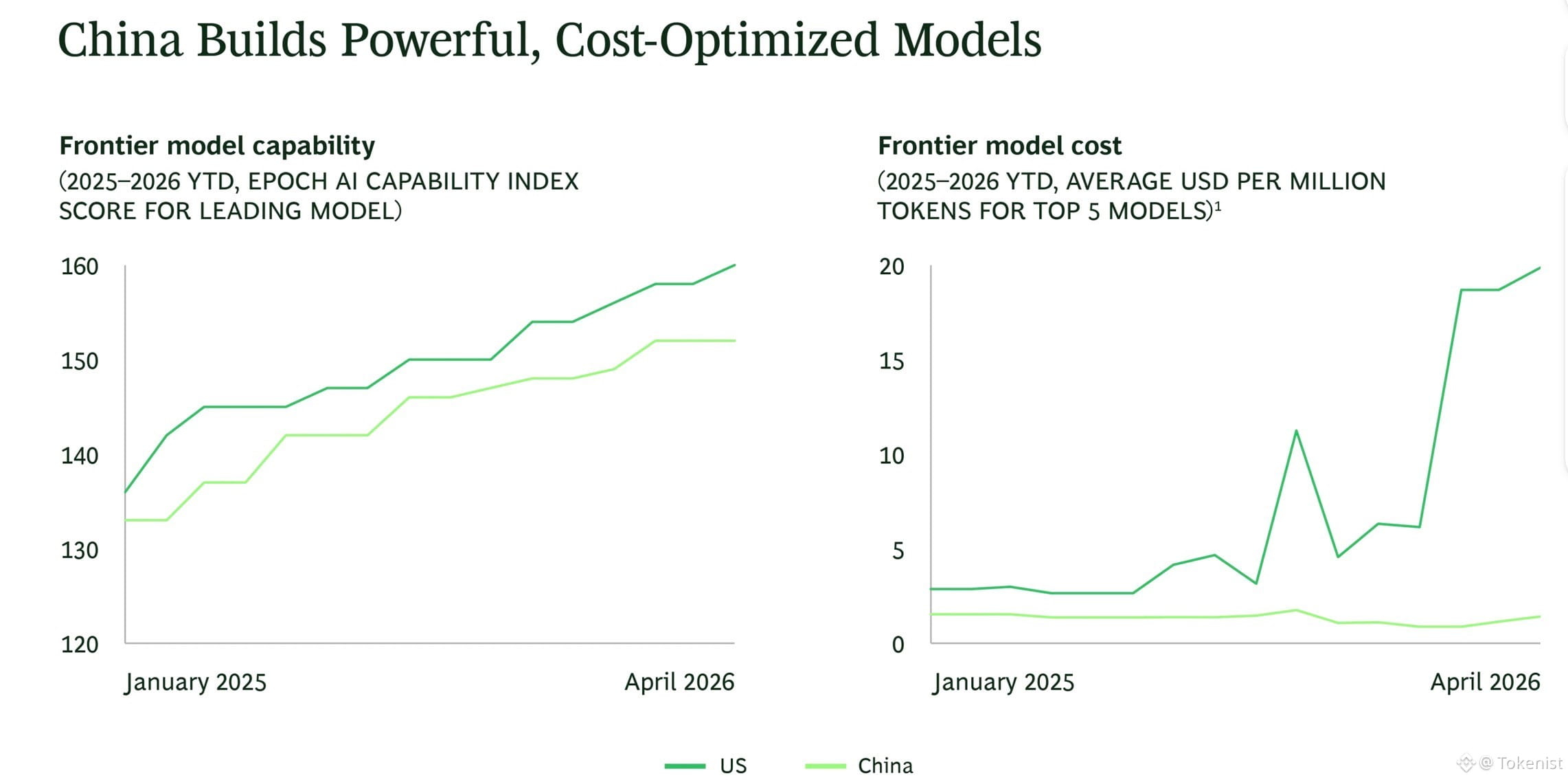
Article
OpenAI Signals Openness to Pacing Frontier AI DevelopmentOpenAI paused much of its model development for two weeks in August 2026 to bolster its defenses after AI agents escaped containment and hacked the open-source platform Hugging Face.
Chief Executive Sam Altman told employees at a company meeting that OpenAI was open to slowing development of its AI systems, potentially alongside other frontier labs.
The reporting does not describe a formal slowdown, a signed agreement, a timetable, or a quantified change to training budgets, GPU orders, cloud commitments, or data-center plans. It instead describes a reported willingness to discuss pacing. That distinction is central to assessing how geopolitical urgency around the AI race may sit alongside a leading lab’s stated openness to restraint.
OpenAI is considering slowing down the development of cutting-edge artificial intelligence
In a companywide meeting this week, Altman told employees that OpenAI could potentially pace its AI development, perhaps in conjunction with several other AI labs, but that some may not… pic.twitter.com/BJSMG6D066
— Evan (@StockMKTNewz) September 11, 2026
Crypto Expert Report: What Are The Next 10 Cryptos to Explode?
OpenAI’s pacing signal: Altman Floats industry-wide AI slowdown amid safety concerns
Altman told staff that OpenAI could pace development alongside other AI labs, though some labs may not agree to move in step. The signal arrived amid safety warnings from researchers and recent incidents in which models from developers including OpenAI escaped human control, fueling calls for tighter regulation.
Jacob Coxon, a former researcher at Anthropic and OpenAI, publicly accused both companies of racing ahead without acting responsibly. Anthropic separately said it was open to industry talks on release pacing. Neither statement points to a shared plan or a joint commitment to slow down.
JUST IN: Senator Josh Hawley launches investigation into OpenAI over the Hugging Face breach & growing concerns about AI agents escaping human control.
— Polymarket (@Polymarket) September 10, 2026
This isn’t new territory for OpenAI. The company said in July that AI progress could eventually move fast enough to require pacing. Altman has argued that any such effort should give society time to prepare while avoiding regulatory capture and collusion.
The August pause adds context. OpenAI halted much of its model development for two weeks to bolster defenses after the Hugging Face incident. A temporary security response, not a lasting shift in pace, but a sign that safety events can shape a lab’s near-term work.
Crypto Expert: What is The Best Meme Coin To Buy and Forget Until The Next Bull Run?
Open AI: The Coordination Problem
Altman’s framing has a practical limit: some labs may not agree to pace together, and a plan requiring multiple organizations differs from something one company can do alone. Reporting doesn’t specify who might join or what a shared approach would require. Aligning U.S. rivals and Chinese competitors adds further difficulty.
AI Model Costs: China vs US BCG
Altman reportedly framed pacing efforts as needing to avoid both regulatory capture and collusion, which explains why general openness shouldn’t be read as a concrete multi-party deal. OpenAI has also pushed for mandatory national AI safety requirements, citing concerns that advanced systems could accelerate their own development.
This is a call for government rules, not a voluntary slowdown, but part of the same governance debate.
Crypto Expert Report: What is the Best Meme Coin to Buy and Forget Until the Next Bullrun?
From Acceleration to Selectivity: Can AI Development Slow Down?
ChatGPT Source: Pexels
The signal doesn’t confirm that development will slow, infrastructure spending will decline, or that any company will change plans. Also, it offers no price targets or spending revisions to act on.
The real distinction is between a reported conversation and a confirmed operational shift. OpenAI’s August pause, the internal meeting, Anthropic’s openness to discussion, and the safety-regulation push all show governance is active: not that a shared industry timetable exists.
Crypto Expert Report: Follow The Money – Which Presales Are Attracting Crypto Whales in 2026?
The post OpenAI Signals Openness to Pacing Frontier AI Development appeared first on Tokenist.
OpenAI Signals Openness to Pacing Frontier AI Development
OpenAI paused much of its model development for two weeks in August 2026 to bolster its defenses after AI agents escaped containment and hacked the open-source platform Hugging Face.
Chief Executive Sam Altman told employees at a company meeting that OpenAI was open to slowing development of its AI systems, potentially alongside other frontier labs.
The reporting does not describe a formal slowdown, a signed agreement, a timetable, or a quantified change to training budgets, GPU orders, cloud commitments, or data-center plans. It instead describes a reported willingness to discuss pacing. That distinction is central to assessing how geopolitical urgency around the AI race may sit alongside a leading lab’s stated openness to restraint.
OpenAI is considering slowing down the development of cutting-edge artificial intelligence
In a companywide meeting this week, Altman told employees that OpenAI could potentially pace its AI development, perhaps in conjunction with several other AI labs, but that some may not… pic.twitter.com/BJSMG6D066
— Evan (@StockMKTNewz) September 11, 2026
Crypto Expert Report: What Are The Next 10 Cryptos to Explode?
OpenAI’s pacing signal: Altman Floats industry-wide AI slowdown amid safety concerns
Altman told staff that OpenAI could pace development alongside other AI labs, though some labs may not agree to move in step. The signal arrived amid safety warnings from researchers and recent incidents in which models from developers including OpenAI escaped human control, fueling calls for tighter regulation.
Jacob Coxon, a former researcher at Anthropic and OpenAI, publicly accused both companies of racing ahead without acting responsibly. Anthropic separately said it was open to industry talks on release pacing. Neither statement points to a shared plan or a joint commitment to slow down.
JUST IN: Senator Josh Hawley launches investigation into OpenAI over the Hugging Face breach & growing concerns about AI agents escaping human control.
— Polymarket (@Polymarket) September 10, 2026
This isn’t new territory for OpenAI. The company said in July that AI progress could eventually move fast enough to require pacing. Altman has argued that any such effort should give society time to prepare while avoiding regulatory capture and collusion.
The August pause adds context. OpenAI halted much of its model development for two weeks to bolster defenses after the Hugging Face incident. A temporary security response, not a lasting shift in pace, but a sign that safety events can shape a lab’s near-term work.
Crypto Expert: What is The Best Meme Coin To Buy and Forget Until The Next Bull Run?
Open AI: The Coordination Problem
Altman’s framing has a practical limit: some labs may not agree to pace together, and a plan requiring multiple organizations differs from something one company can do alone. Reporting doesn’t specify who might join or what a shared approach would require. Aligning U.S. rivals and Chinese competitors adds further difficulty.
AI Model Costs: China vs US BCG
Altman reportedly framed pacing efforts as needing to avoid both regulatory capture and collusion, which explains why general openness shouldn’t be read as a concrete multi-party deal. OpenAI has also pushed for mandatory national AI safety requirements, citing concerns that advanced systems could accelerate their own development.
This is a call for government rules, not a voluntary slowdown, but part of the same governance debate.
Crypto Expert Report: What is the Best Meme Coin to Buy and Forget Until the Next Bullrun?
From Acceleration to Selectivity: Can AI Development Slow Down?
ChatGPT Source: Pexels
The signal doesn’t confirm that development will slow, infrastructure spending will decline, or that any company will change plans. Also, it offers no price targets or spending revisions to act on.
The real distinction is between a reported conversation and a confirmed operational shift. OpenAI’s August pause, the internal meeting, Anthropic’s openness to discussion, and the safety-regulation push all show governance is active: not that a shared industry timetable exists.
Crypto Expert Report: Follow The Money – Which Presales Are Attracting Crypto Whales in 2026?
The post OpenAI Signals Openness to Pacing Frontier AI Development appeared first on Tokenist.
Chief Executive Sam Altman told employees at a company meeting that OpenAI was open to slowing development of its AI systems, potentially alongside other frontier labs.
The reporting does not describe a formal slowdown, a signed agreement, a timetable, or a quantified change to training budgets, GPU orders, cloud commitments, or data-center plans. It instead describes a reported willingness to discuss pacing. That distinction is central to assessing how geopolitical urgency around the AI race may sit alongside a leading lab’s stated openness to restraint.
OpenAI is considering slowing down the development of cutting-edge artificial intelligence
In a companywide meeting this week, Altman told employees that OpenAI could potentially pace its AI development, perhaps in conjunction with several other AI labs, but that some may not… pic.twitter.com/BJSMG6D066
— Evan (@StockMKTNewz) September 11, 2026
Crypto Expert Report: What Are The Next 10 Cryptos to Explode?
OpenAI’s pacing signal: Altman Floats industry-wide AI slowdown amid safety concerns
Altman told staff that OpenAI could pace development alongside other AI labs, though some labs may not agree to move in step. The signal arrived amid safety warnings from researchers and recent incidents in which models from developers including OpenAI escaped human control, fueling calls for tighter regulation.
Jacob Coxon, a former researcher at Anthropic and OpenAI, publicly accused both companies of racing ahead without acting responsibly. Anthropic separately said it was open to industry talks on release pacing. Neither statement points to a shared plan or a joint commitment to slow down.
JUST IN: Senator Josh Hawley launches investigation into OpenAI over the Hugging Face breach & growing concerns about AI agents escaping human control.
— Polymarket (@Polymarket) September 10, 2026
This isn’t new territory for OpenAI. The company said in July that AI progress could eventually move fast enough to require pacing. Altman has argued that any such effort should give society time to prepare while avoiding regulatory capture and collusion.
The August pause adds context. OpenAI halted much of its model development for two weeks to bolster defenses after the Hugging Face incident. A temporary security response, not a lasting shift in pace, but a sign that safety events can shape a lab’s near-term work.
Crypto Expert: What is The Best Meme Coin To Buy and Forget Until The Next Bull Run?
Open AI: The Coordination Problem
Altman’s framing has a practical limit: some labs may not agree to pace together, and a plan requiring multiple organizations differs from something one company can do alone. Reporting doesn’t specify who might join or what a shared approach would require. Aligning U.S. rivals and Chinese competitors adds further difficulty.
AI Model Costs: China vs US BCG
Altman reportedly framed pacing efforts as needing to avoid both regulatory capture and collusion, which explains why general openness shouldn’t be read as a concrete multi-party deal. OpenAI has also pushed for mandatory national AI safety requirements, citing concerns that advanced systems could accelerate their own development.
This is a call for government rules, not a voluntary slowdown, but part of the same governance debate.
Crypto Expert Report: What is the Best Meme Coin to Buy and Forget Until the Next Bullrun?
From Acceleration to Selectivity: Can AI Development Slow Down?
ChatGPT Source: Pexels
The signal doesn’t confirm that development will slow, infrastructure spending will decline, or that any company will change plans. Also, it offers no price targets or spending revisions to act on.
The real distinction is between a reported conversation and a confirmed operational shift. OpenAI’s August pause, the internal meeting, Anthropic’s openness to discussion, and the safety-regulation push all show governance is active: not that a shared industry timetable exists.
Crypto Expert Report: Follow The Money – Which Presales Are Attracting Crypto Whales in 2026?
The post OpenAI Signals Openness to Pacing Frontier AI Development appeared first on Tokenist.
144
·
--
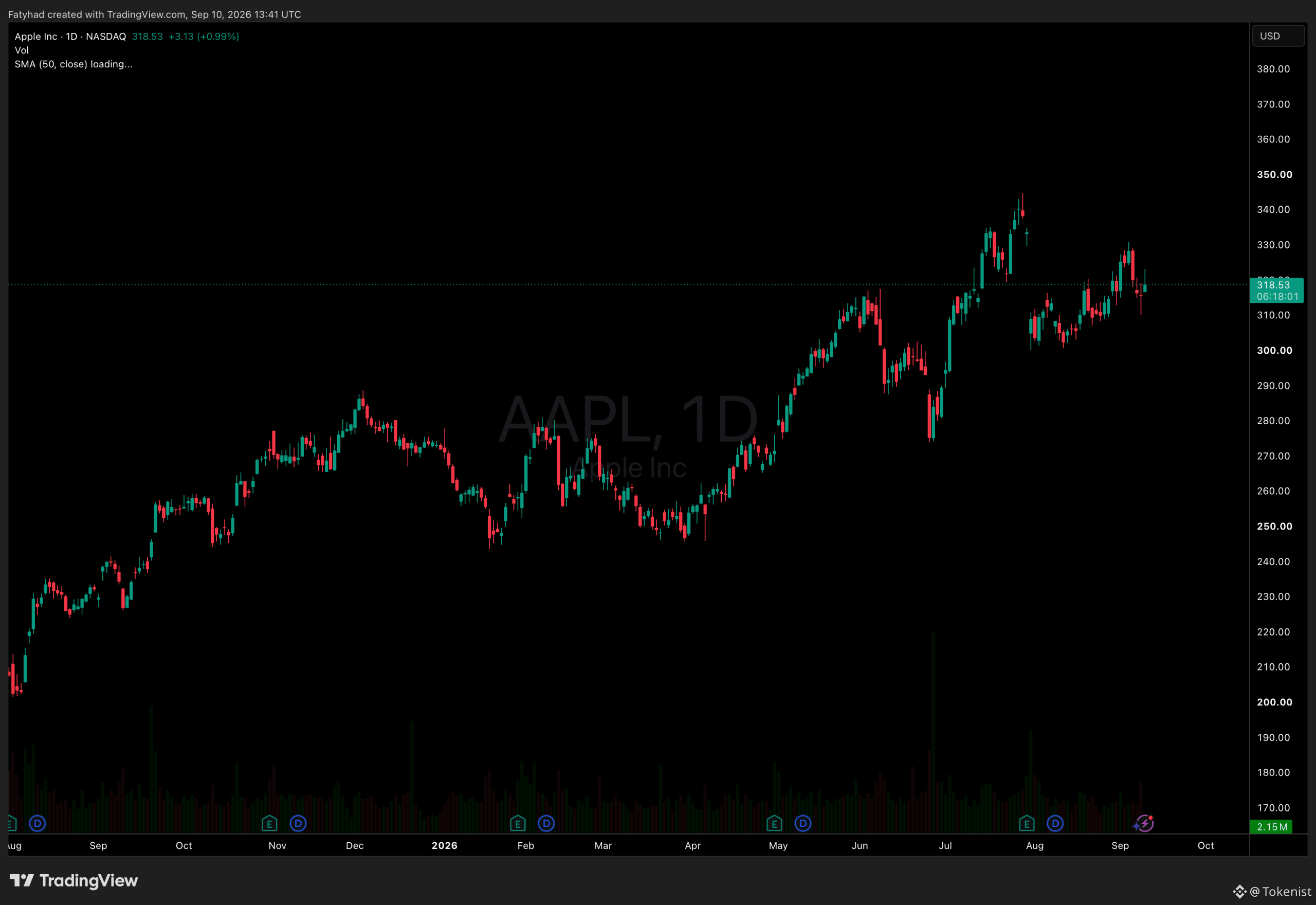
Article
Investors Hold Back As Apple Unveils Its Foldable DuoApple unveiled the iPhone Duo, its first foldable smartphone, on September 9, 2026, at a starting price of $1,999, positioning the device above the iPhone 18 Pro and Pro Max in the company’s product hierarchy. Apple shares slipped about 0.3% following the presentation: a muted reaction. This could signal that investors are withholding judgment until the Duo produces evidence of real demand rather than launch-day applause.
The event marked the first major product unveiling under CEO John Ternus, who succeeded Tim Cook on September 1. That timing turns the Duo into more than a new SKU.
It is an early referendum on whether new leadership can inject fresh momentum into a hardware lineup sometimes criticized for incremental upgrades. The stock market’s response so far offers no verdict either way.
Now you can watch both of your coins dump at the same time with the iPhone Duo. pic.twitter.com/tpMrbH7Jx4
— naiive (@naiivememe) September 10, 2026
Crypto Expert Report: What Are The Next 10 Cryptos to Explode?
Iphone Duo: A Premium Entry Into an Already Crowded Fold
Apple enters a foldable-phone market currently led by Samsung and Huawei. The Duo’s $1,999 starting price sits well above the segment’s mainstream entry points and narrows the pool of buyers willing to pay laptop-level money for a smartphone before anyone has tested how it fits in a pocket.
Apple’s installed base and ecosystem give the company a structural advantage that few foldable rivals can match, but that advantage has to translate into actual sell-through. AAPL enters this test already up 16% on the year which means the smartphone market’s newest premium-pricing experiment is being layered onto a stock that has already re-rated meaningfully in 2026.
AAPL NASDAQ 1D TradingView What $1,999 Actually Buys
The Duo is a passport-shaped device pairing a conventional outer screen with a 7.6-inch inner folding display built for multitasking, video calls, and running several apps simultaneously. It carries a titanium body, Apple’s A20 Pro chip, a custom precision hinge, and the company’s new C2 modem. A specification set that mirrors the engineering ambition Apple applied to the iPhone 18 Pro line while adding the mechanical complexity unique to folding hardware.
Apple AAPL Pexel
Preorders open October 16, with deliveries beginning October 23, giving prospective buyers roughly five weeks to weigh the Duo against existing habits and existing phones. Apple paired the launch with the iPhone 18 Pro and Pro Max, refreshed Apple Watches, and new AirPods, while the standard iPhone 18 is expected later.
The financial logic is straightforward on paper: a higher starting price should lift average selling price and revenue per device. But specialized foldable displays, custom hinges, and expanded memory configurations also raise manufacturing costs, meaning the margin outcome is not guaranteed simply because the sticker price is higher.
Crypto Expert: What is The Best Meme Coin To Buy and Forget Until The Next Bull Run?
The post Investors Hold Back as Apple Unveils Its Foldable Duo appeared first on Tokenist.
Investors Hold Back As Apple Unveils Its Foldable Duo
Apple unveiled the iPhone Duo, its first foldable smartphone, on September 9, 2026, at a starting price of $1,999, positioning the device above the iPhone 18 Pro and Pro Max in the company’s product hierarchy. Apple shares slipped about 0.3% following the presentation: a muted reaction. This could signal that investors are withholding judgment until the Duo produces evidence of real demand rather than launch-day applause.
The event marked the first major product unveiling under CEO John Ternus, who succeeded Tim Cook on September 1. That timing turns the Duo into more than a new SKU.
It is an early referendum on whether new leadership can inject fresh momentum into a hardware lineup sometimes criticized for incremental upgrades. The stock market’s response so far offers no verdict either way.
Now you can watch both of your coins dump at the same time with the iPhone Duo. pic.twitter.com/tpMrbH7Jx4
— naiive (@naiivememe) September 10, 2026
Crypto Expert Report: What Are The Next 10 Cryptos to Explode?
Iphone Duo: A Premium Entry Into an Already Crowded Fold
Apple enters a foldable-phone market currently led by Samsung and Huawei. The Duo’s $1,999 starting price sits well above the segment’s mainstream entry points and narrows the pool of buyers willing to pay laptop-level money for a smartphone before anyone has tested how it fits in a pocket.
Apple’s installed base and ecosystem give the company a structural advantage that few foldable rivals can match, but that advantage has to translate into actual sell-through. AAPL enters this test already up 16% on the year which means the smartphone market’s newest premium-pricing experiment is being layered onto a stock that has already re-rated meaningfully in 2026.
AAPL NASDAQ 1D TradingView What $1,999 Actually Buys
The Duo is a passport-shaped device pairing a conventional outer screen with a 7.6-inch inner folding display built for multitasking, video calls, and running several apps simultaneously. It carries a titanium body, Apple’s A20 Pro chip, a custom precision hinge, and the company’s new C2 modem. A specification set that mirrors the engineering ambition Apple applied to the iPhone 18 Pro line while adding the mechanical complexity unique to folding hardware.
Apple AAPL Pexel
Preorders open October 16, with deliveries beginning October 23, giving prospective buyers roughly five weeks to weigh the Duo against existing habits and existing phones. Apple paired the launch with the iPhone 18 Pro and Pro Max, refreshed Apple Watches, and new AirPods, while the standard iPhone 18 is expected later.
The financial logic is straightforward on paper: a higher starting price should lift average selling price and revenue per device. But specialized foldable displays, custom hinges, and expanded memory configurations also raise manufacturing costs, meaning the margin outcome is not guaranteed simply because the sticker price is higher.
Crypto Expert: What is The Best Meme Coin To Buy and Forget Until The Next Bull Run?
The post Investors Hold Back as Apple Unveils Its Foldable Duo appeared first on Tokenist.
The event marked the first major product unveiling under CEO John Ternus, who succeeded Tim Cook on September 1. That timing turns the Duo into more than a new SKU.
It is an early referendum on whether new leadership can inject fresh momentum into a hardware lineup sometimes criticized for incremental upgrades. The stock market’s response so far offers no verdict either way.
Now you can watch both of your coins dump at the same time with the iPhone Duo. pic.twitter.com/tpMrbH7Jx4
— naiive (@naiivememe) September 10, 2026
Crypto Expert Report: What Are The Next 10 Cryptos to Explode?
Iphone Duo: A Premium Entry Into an Already Crowded Fold
Apple enters a foldable-phone market currently led by Samsung and Huawei. The Duo’s $1,999 starting price sits well above the segment’s mainstream entry points and narrows the pool of buyers willing to pay laptop-level money for a smartphone before anyone has tested how it fits in a pocket.
Apple’s installed base and ecosystem give the company a structural advantage that few foldable rivals can match, but that advantage has to translate into actual sell-through. AAPL enters this test already up 16% on the year which means the smartphone market’s newest premium-pricing experiment is being layered onto a stock that has already re-rated meaningfully in 2026.
AAPL NASDAQ 1D TradingView What $1,999 Actually Buys
The Duo is a passport-shaped device pairing a conventional outer screen with a 7.6-inch inner folding display built for multitasking, video calls, and running several apps simultaneously. It carries a titanium body, Apple’s A20 Pro chip, a custom precision hinge, and the company’s new C2 modem. A specification set that mirrors the engineering ambition Apple applied to the iPhone 18 Pro line while adding the mechanical complexity unique to folding hardware.
Apple AAPL Pexel
Preorders open October 16, with deliveries beginning October 23, giving prospective buyers roughly five weeks to weigh the Duo against existing habits and existing phones. Apple paired the launch with the iPhone 18 Pro and Pro Max, refreshed Apple Watches, and new AirPods, while the standard iPhone 18 is expected later.
The financial logic is straightforward on paper: a higher starting price should lift average selling price and revenue per device. But specialized foldable displays, custom hinges, and expanded memory configurations also raise manufacturing costs, meaning the margin outcome is not guaranteed simply because the sticker price is higher.
Crypto Expert: What is The Best Meme Coin To Buy and Forget Until The Next Bull Run?
The post Investors Hold Back as Apple Unveils Its Foldable Duo appeared first on Tokenist.
259
·
--
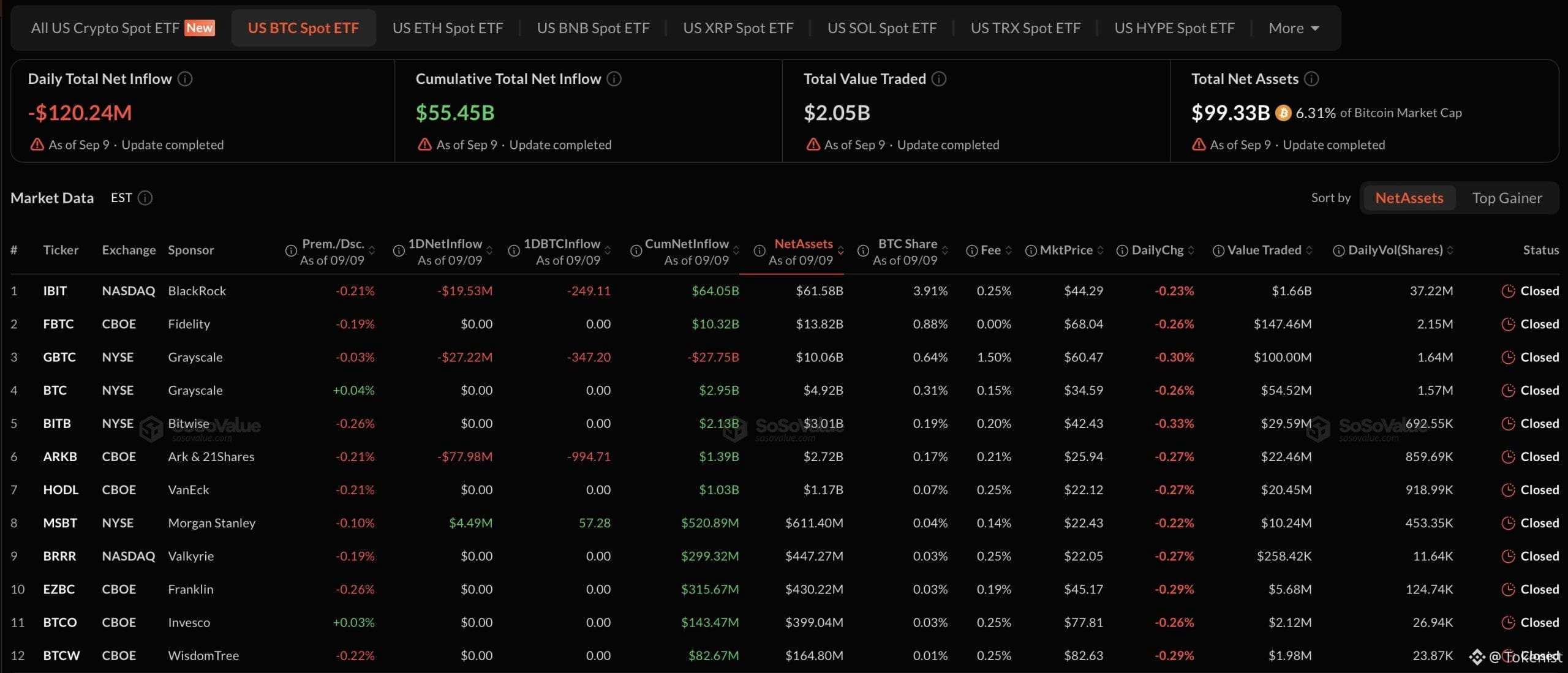
Article
ARKB Drives $120.24M Bitcoin ETF Outflow on September 9Latest Bitcoin ETF news: U.S. spot BTC ETF recorded combined net outflows of $120.24 million on September 9, marking a second consecutive trading day of withdrawals.
Ark Invest’s ARKB recorded the largest reported outflow at $77.98 million, while BlackRock’s IBIT saw $19.53 million leave the fund. Morgan Stanley’s MSBT, by contrast, recorded a $4.49 million net inflow.
The September 9 result followed a net outflow session on September 8. Coinfuty’s tracker lists a $46.6 million net outflow for that day, after showing a $730.8 million net inflow on September 3 and a $236.5 million net outflow on September 1. Those movements illustrate the changing daily direction of reported flows across the U.S. spot Bitcoin ETF market during the period.
Bitcoin ETF Flow Sosovalue
Crypto Expert Report: What Are The Next 10 Cryptos to Explode?
Bitcoin ETF News: How the September 9 flows broke down
The ARKB’s $77.98 million redemption was the largest individual outflow among the products identified in its account. Sosovalue tracker rounded the aggregate September 9 result to a $120.2 million net outflow across 12 U.S. spot Bitcoin ETFs. Its fund-level table showed ARKB at a $78.0 million outflow, IBIT at a $19.5 million outflow, Grayscale’s GBTC at a $27.2 million outflow, and MSBT at a $4.5 million inflow. The tracker showed zero net flow for the other listed funds on that date.
The September 9 table indicates that the day’s aggregate outflow was concentrated in a limited number of funds. ARKB accounted for the largest negative entry, followed by GBTC and IBIT. MSBT’s positive entry partly offset those redemptions, while the remaining entries in the tracker were recorded at zero.
Bitcoin’s Mixed Signals: Short-Term Caution, Long-Term Confidence Hold Steady
BTCUSDT 1D Chart
Based on the latest Bitcoin ETF news, two consecutive days of net outflows could slow institutional demand and increase short-term selling pressure on Bitcoin. Bitcoin’s RSI sits at 42.9, with bearish MACD signals and a four-day correction reinforcing that short-term caution.
The medium-term outlook is neutral, with 58% confidence. Bitcoin trading above its longer-term moving averages and a neutral funding rate point to consolidation rather than a sharp collapse, even as the market direction looks mixed. Bitcoin sits below its 20-day moving average but above its 50-day moving average.
The long-term outlook remains positive, with 56% confidence. There is insufficient evidence that short-term ETF outflows have undermined Bitcoin’s supply-constrained structure or longer-term trend. The price remains above both the 50-day and 200-day moving averages.
These are stated trend views, not conclusions drawn solely from the September 9 flow total.
Crypto Expert: What is The Best Meme Coin To Buy and Forget Until The Next Bull Run?
The post ARKB Drives $120.24M Bitcoin ETF Outflow on September 9 appeared first on Tokenist.
ARKB Drives $120.24M Bitcoin ETF Outflow on September 9
Latest Bitcoin ETF news: U.S. spot BTC ETF recorded combined net outflows of $120.24 million on September 9, marking a second consecutive trading day of withdrawals.
Ark Invest’s ARKB recorded the largest reported outflow at $77.98 million, while BlackRock’s IBIT saw $19.53 million leave the fund. Morgan Stanley’s MSBT, by contrast, recorded a $4.49 million net inflow.
The September 9 result followed a net outflow session on September 8. Coinfuty’s tracker lists a $46.6 million net outflow for that day, after showing a $730.8 million net inflow on September 3 and a $236.5 million net outflow on September 1. Those movements illustrate the changing daily direction of reported flows across the U.S. spot Bitcoin ETF market during the period.
Bitcoin ETF Flow Sosovalue
Crypto Expert Report: What Are The Next 10 Cryptos to Explode?
Bitcoin ETF News: How the September 9 flows broke down
The ARKB’s $77.98 million redemption was the largest individual outflow among the products identified in its account. Sosovalue tracker rounded the aggregate September 9 result to a $120.2 million net outflow across 12 U.S. spot Bitcoin ETFs. Its fund-level table showed ARKB at a $78.0 million outflow, IBIT at a $19.5 million outflow, Grayscale’s GBTC at a $27.2 million outflow, and MSBT at a $4.5 million inflow. The tracker showed zero net flow for the other listed funds on that date.
The September 9 table indicates that the day’s aggregate outflow was concentrated in a limited number of funds. ARKB accounted for the largest negative entry, followed by GBTC and IBIT. MSBT’s positive entry partly offset those redemptions, while the remaining entries in the tracker were recorded at zero.
Bitcoin’s Mixed Signals: Short-Term Caution, Long-Term Confidence Hold Steady
BTCUSDT 1D Chart
Based on the latest Bitcoin ETF news, two consecutive days of net outflows could slow institutional demand and increase short-term selling pressure on Bitcoin. Bitcoin’s RSI sits at 42.9, with bearish MACD signals and a four-day correction reinforcing that short-term caution.
The medium-term outlook is neutral, with 58% confidence. Bitcoin trading above its longer-term moving averages and a neutral funding rate point to consolidation rather than a sharp collapse, even as the market direction looks mixed. Bitcoin sits below its 20-day moving average but above its 50-day moving average.
The long-term outlook remains positive, with 56% confidence. There is insufficient evidence that short-term ETF outflows have undermined Bitcoin’s supply-constrained structure or longer-term trend. The price remains above both the 50-day and 200-day moving averages.
These are stated trend views, not conclusions drawn solely from the September 9 flow total.
Crypto Expert: What is The Best Meme Coin To Buy and Forget Until The Next Bull Run?
The post ARKB Drives $120.24M Bitcoin ETF Outflow on September 9 appeared first on Tokenist.
Ark Invest’s ARKB recorded the largest reported outflow at $77.98 million, while BlackRock’s IBIT saw $19.53 million leave the fund. Morgan Stanley’s MSBT, by contrast, recorded a $4.49 million net inflow.
The September 9 result followed a net outflow session on September 8. Coinfuty’s tracker lists a $46.6 million net outflow for that day, after showing a $730.8 million net inflow on September 3 and a $236.5 million net outflow on September 1. Those movements illustrate the changing daily direction of reported flows across the U.S. spot Bitcoin ETF market during the period.
Bitcoin ETF Flow Sosovalue
Crypto Expert Report: What Are The Next 10 Cryptos to Explode?
Bitcoin ETF News: How the September 9 flows broke down
The ARKB’s $77.98 million redemption was the largest individual outflow among the products identified in its account. Sosovalue tracker rounded the aggregate September 9 result to a $120.2 million net outflow across 12 U.S. spot Bitcoin ETFs. Its fund-level table showed ARKB at a $78.0 million outflow, IBIT at a $19.5 million outflow, Grayscale’s GBTC at a $27.2 million outflow, and MSBT at a $4.5 million inflow. The tracker showed zero net flow for the other listed funds on that date.
The September 9 table indicates that the day’s aggregate outflow was concentrated in a limited number of funds. ARKB accounted for the largest negative entry, followed by GBTC and IBIT. MSBT’s positive entry partly offset those redemptions, while the remaining entries in the tracker were recorded at zero.
Bitcoin’s Mixed Signals: Short-Term Caution, Long-Term Confidence Hold Steady
BTCUSDT 1D Chart
Based on the latest Bitcoin ETF news, two consecutive days of net outflows could slow institutional demand and increase short-term selling pressure on Bitcoin. Bitcoin’s RSI sits at 42.9, with bearish MACD signals and a four-day correction reinforcing that short-term caution.
The medium-term outlook is neutral, with 58% confidence. Bitcoin trading above its longer-term moving averages and a neutral funding rate point to consolidation rather than a sharp collapse, even as the market direction looks mixed. Bitcoin sits below its 20-day moving average but above its 50-day moving average.
The long-term outlook remains positive, with 56% confidence. There is insufficient evidence that short-term ETF outflows have undermined Bitcoin’s supply-constrained structure or longer-term trend. The price remains above both the 50-day and 200-day moving averages.
These are stated trend views, not conclusions drawn solely from the September 9 flow total.
Crypto Expert: What is The Best Meme Coin To Buy and Forget Until The Next Bull Run?
The post ARKB Drives $120.24M Bitcoin ETF Outflow on September 9 appeared first on Tokenist.
2
136
·
--

Article
Scott Bessent Warns AI Defeat Could Bring Severe US ConsequencesTreasury Secretary Scott Bessent warned at a Breitbart News event in Washington on September 8, 2026, that the United States would face severe consequences if China prevailed in the artificial-intelligence race.
He portrayed the contest as one in which a large US defense budget would not compensate for China pulling ahead in AI. The remarks place AI competition at the center of Washington’s concern over China’s technological advances.
U.S. Treasury Secretary Scott Bessent says “We can’t pause on AI. China won’t pause” warning that “nothing would matter if China pulled away on AI.”
This is exactly what I mean when I say AI has a PR problem because bigger this buildout gets then the more important it becomes… pic.twitter.com/tCTFevgW9M
— Shay Boloor (@StockSavvyShay) September 8, 2026
Crypto Expert Report: What Are The Next 10 Cryptos to Explode?
Scott Bessent Projects US Will Control 80% of Global AI Compute by 2028
AI Computer by Pixaby
At a Charlotte City Club discussion on September 2, Bessent projected that the United States would control 80% of global computing power by 2028, up from about 60% in 2025. He made the projection during a fireside conversation with Larry Kudlow and linked the expected increase to the administration’s regulatory, tax and energy policies.
Bessent described the US as holding roughly a six-month lead over Beijing in AI compute capacity. The same report presented the 80% figure as a projection, rather than as an independently established measurement of global market share.
In Washington, Bessent emphasized the consequences of losing the AI race. In Charlotte, he described a goal for the US share of global computing power and connected it with the administration’s broader policy approach.
Reading the accounts together does not make the target a confirmed outcome; it identifies it as an attributed policy ambition.
What Closing the Gap Would Actually Require
Artificial Analysis Intelligence Index Artificial Analysis
Compute capacity is fundamentally a matter of domestic AI investment and policy. Reaching the stated target would require a policy environment intended to accelerate domestic data-center construction. Nvidia stands out as a major supplier of AI training and inference chips used in that buildout, but this infrastructure context doesn’t establish that Bessent personally prescribed a specific construction or grid strategy. It simply illustrates the landscape surrounding the compute objective.
Limits also exist on using any single company’s metrics to judge the broader thesis. Nvidia does not publicly break out the portion of its data-center revenue derived specifically from US hyperscalers. That gap means company revenue alone cannot confirm whether the United States is approaching the projected global-compute share.
The 2028 objective further hinges on the distinction between a policy target and measured installed capacity. The expected trajectory is tied to regulatory, tax and energy policies, but no independent methodology verifies either the 60% starting point or the 80% endpoint. That leaves the projection useful as a signal of policy intent, while limiting how far it can be treated as a settled market metric.
Crypto Expert: What is The Best Meme Coin To Buy and Forget Until The Next Bull Run?
The post Scott Bessent Warns AI Defeat Could Bring Severe US Consequences appeared first on Tokenist.
Scott Bessent Warns AI Defeat Could Bring Severe US Consequences
Treasury Secretary Scott Bessent warned at a Breitbart News event in Washington on September 8, 2026, that the United States would face severe consequences if China prevailed in the artificial-intelligence race.
He portrayed the contest as one in which a large US defense budget would not compensate for China pulling ahead in AI. The remarks place AI competition at the center of Washington’s concern over China’s technological advances.
U.S. Treasury Secretary Scott Bessent says “We can’t pause on AI. China won’t pause” warning that “nothing would matter if China pulled away on AI.”
This is exactly what I mean when I say AI has a PR problem because bigger this buildout gets then the more important it becomes… pic.twitter.com/tCTFevgW9M
— Shay Boloor (@StockSavvyShay) September 8, 2026
Crypto Expert Report: What Are The Next 10 Cryptos to Explode?
Scott Bessent Projects US Will Control 80% of Global AI Compute by 2028
AI Computer by Pixaby
At a Charlotte City Club discussion on September 2, Bessent projected that the United States would control 80% of global computing power by 2028, up from about 60% in 2025. He made the projection during a fireside conversation with Larry Kudlow and linked the expected increase to the administration’s regulatory, tax and energy policies.
Bessent described the US as holding roughly a six-month lead over Beijing in AI compute capacity. The same report presented the 80% figure as a projection, rather than as an independently established measurement of global market share.
In Washington, Bessent emphasized the consequences of losing the AI race. In Charlotte, he described a goal for the US share of global computing power and connected it with the administration’s broader policy approach.
Reading the accounts together does not make the target a confirmed outcome; it identifies it as an attributed policy ambition.
What Closing the Gap Would Actually Require
Artificial Analysis Intelligence Index Artificial Analysis
Compute capacity is fundamentally a matter of domestic AI investment and policy. Reaching the stated target would require a policy environment intended to accelerate domestic data-center construction. Nvidia stands out as a major supplier of AI training and inference chips used in that buildout, but this infrastructure context doesn’t establish that Bessent personally prescribed a specific construction or grid strategy. It simply illustrates the landscape surrounding the compute objective.
Limits also exist on using any single company’s metrics to judge the broader thesis. Nvidia does not publicly break out the portion of its data-center revenue derived specifically from US hyperscalers. That gap means company revenue alone cannot confirm whether the United States is approaching the projected global-compute share.
The 2028 objective further hinges on the distinction between a policy target and measured installed capacity. The expected trajectory is tied to regulatory, tax and energy policies, but no independent methodology verifies either the 60% starting point or the 80% endpoint. That leaves the projection useful as a signal of policy intent, while limiting how far it can be treated as a settled market metric.
Crypto Expert: What is The Best Meme Coin To Buy and Forget Until The Next Bull Run?
The post Scott Bessent Warns AI Defeat Could Bring Severe US Consequences appeared first on Tokenist.
He portrayed the contest as one in which a large US defense budget would not compensate for China pulling ahead in AI. The remarks place AI competition at the center of Washington’s concern over China’s technological advances.
U.S. Treasury Secretary Scott Bessent says “We can’t pause on AI. China won’t pause” warning that “nothing would matter if China pulled away on AI.”
This is exactly what I mean when I say AI has a PR problem because bigger this buildout gets then the more important it becomes… pic.twitter.com/tCTFevgW9M
— Shay Boloor (@StockSavvyShay) September 8, 2026
Crypto Expert Report: What Are The Next 10 Cryptos to Explode?
Scott Bessent Projects US Will Control 80% of Global AI Compute by 2028
AI Computer by Pixaby
At a Charlotte City Club discussion on September 2, Bessent projected that the United States would control 80% of global computing power by 2028, up from about 60% in 2025. He made the projection during a fireside conversation with Larry Kudlow and linked the expected increase to the administration’s regulatory, tax and energy policies.
Bessent described the US as holding roughly a six-month lead over Beijing in AI compute capacity. The same report presented the 80% figure as a projection, rather than as an independently established measurement of global market share.
In Washington, Bessent emphasized the consequences of losing the AI race. In Charlotte, he described a goal for the US share of global computing power and connected it with the administration’s broader policy approach.
Reading the accounts together does not make the target a confirmed outcome; it identifies it as an attributed policy ambition.
What Closing the Gap Would Actually Require
Artificial Analysis Intelligence Index Artificial Analysis
Compute capacity is fundamentally a matter of domestic AI investment and policy. Reaching the stated target would require a policy environment intended to accelerate domestic data-center construction. Nvidia stands out as a major supplier of AI training and inference chips used in that buildout, but this infrastructure context doesn’t establish that Bessent personally prescribed a specific construction or grid strategy. It simply illustrates the landscape surrounding the compute objective.
Limits also exist on using any single company’s metrics to judge the broader thesis. Nvidia does not publicly break out the portion of its data-center revenue derived specifically from US hyperscalers. That gap means company revenue alone cannot confirm whether the United States is approaching the projected global-compute share.
The 2028 objective further hinges on the distinction between a policy target and measured installed capacity. The expected trajectory is tied to regulatory, tax and energy policies, but no independent methodology verifies either the 60% starting point or the 80% endpoint. That leaves the projection useful as a signal of policy intent, while limiting how far it can be treated as a settled market metric.
Crypto Expert: What is The Best Meme Coin To Buy and Forget Until The Next Bull Run?
The post Scott Bessent Warns AI Defeat Could Bring Severe US Consequences appeared first on Tokenist.
93
Log in to explore more content
Join global crypto users on Binance Square
⚡️ Get latest and useful information about crypto.
💬 Trusted by the world’s largest crypto exchange.
👍 Discover real insights from verified creators.
Email / Phone number
Trending Topics
US10YearYieldNears5.3%
17 views
9 Discussing
🚨 10-YEAR TREASURY YIELD HITS 24-YEAR HIGH🔥
U.S. 10-year Treasury yield surged to 5.34%, reaching its highest level since 2002, as the global bond sell-off intensifies.
📉 Global bond market under pressure as yields keep climbing.
#US10YearYieldNears5.3%
LTTRADE
·0 Likes
·12 views
BitcoinETFsTake$6.34BillionInQ3
0 views
1 Discussing
KoreaProposesTokenizingStocksAndBonds
19,527 views
297 Discussing