

TheNewsCrypto
19.1k Posts

TheNewsCrypto
Report
Block User
TheNewsCrypto is an online crypto media publication that helps to educate readers about news, exchanges, and markets in the crypto and blockchain industry.
14 Following
84.5K+ Followers
349.3K+ Liked
Posts
Partly True
Article
ONDO Price Jumps 32%: BlackRock’s On-Chain Move Sparks Fresh MomentumONDO price has surged by over 32%, trading at around $0.5626 as investor interest picks up.
BlackRock brings three portfolio strategies on-chain through Ondo, covering stocks, bonds, and Bitcoin ETF exposure.
Ondo Finance’s ONDO is currently trading around the $0.5626 mark, posting a steady surge of over 32.5%. Also, the volume is at $1.378 billion, and the 24-hour session ranged between $0.4181 and $0.5789. The price chart shows that the token is now pressing against new yearly highs.
The catalyst is real, with BlackRock bringing three investment portfolio strategies on-chain through Ondo, covering stock, bond, and Bitcoin ETF exposure. These are not concept products, with tokenised equities backed by real securities sourced from real market liquidity, with allocation, rebalancing, and fee logic all encoded into smart contracts and executed automatically.
The first three portfolios launched under the Ondo Intelligent Portfolios brand mark the first time exposure to BlackRock-developed portfolio strategies has been made available to on-chain investors. Non-U.S. investors now get 24/7 trading, transfers, and the ability to borrow against their holdings, infrastructure that traditional finance still can’t match.
The ONDO Chart Confirmed the Move
ONDO price had been compressing inside a descending wedge, a contraction that resolved with a decisive breakout above trendline resistance. The vertical rally that followed reclaimed multiple key horizontal boundaries, converting former resistance into support floors.
The chart is now testing the upper horizontal resistance band, and holding above newly reclaimed support keeps the breakout structure intact. Zooming in on the 4-hour trading pattern, the ONDO/USDT pair is bullish. The price could rise to the $0.5680 resistance mark. If the bullish momentum gains more traction, the golden cross would send the price above $0.5728.
On the other hand, assuming the ONDO market momentum reverses and prints a red picture, the price could instantly slip to the $0.5572 support range. A failure to sustain the $0.5626 level might initiate more losses, along with the formation of the death cross, and gradually, there are chances for bears to reclaim dominance.
Will ONDO Momentum Maintain Its Uptrend?
The Moving Average Convergence Divergence (MACD) line and the signal line sit above the zero line; the asset is trading in a strong macro uptrend. The short-term bullish momentum is accelerating within that existing uptrend. This double-positive alignment confirms strong buying pressure.
Notably, the buyers remain in firm control and continue to drive ONDO price higher. Traders view this dynamic as a high-probability buy signal to maintain long positions. It is also essential to watch for overbought conditions that could hint at short-term momentum fatigue.
(Source: TradingView)
Besides, the market sentiment of ONDO is bullish, in the overbought territory, with the Relative Strength Index (RSI) at 73.49. The strong buying pressure has sustained price appreciation over recent cycles. However, crossing above 70 serves as a signal that the move is becoming short-term overextended.
An overbought value is an indicator of strong momentum. In powerful macro bull trends, assets can remain elevated above for extended periods. Readings in the low-to-mid 70s are a signal to exercise caution and tighten stop-loss levels in anticipation of a potential consolidation.
Crypto Market Highlights
Bitget Hit by $351.6M Hot Wallet Breach, North Korean Hackers Suspected
ONDO Price Jumps 32%: BlackRock’s On-Chain Move Sparks Fresh Momentum
ONDO price has surged by over 32%, trading at around $0.5626 as investor interest picks up.
BlackRock brings three portfolio strategies on-chain through Ondo, covering stocks, bonds, and Bitcoin ETF exposure.
Ondo Finance’s ONDO is currently trading around the $0.5626 mark, posting a steady surge of over 32.5%. Also, the volume is at $1.378 billion, and the 24-hour session ranged between $0.4181 and $0.5789. The price chart shows that the token is now pressing against new yearly highs.
The catalyst is real, with BlackRock bringing three investment portfolio strategies on-chain through Ondo, covering stock, bond, and Bitcoin ETF exposure. These are not concept products, with tokenised equities backed by real securities sourced from real market liquidity, with allocation, rebalancing, and fee logic all encoded into smart contracts and executed automatically.
The first three portfolios launched under the Ondo Intelligent Portfolios brand mark the first time exposure to BlackRock-developed portfolio strategies has been made available to on-chain investors. Non-U.S. investors now get 24/7 trading, transfers, and the ability to borrow against their holdings, infrastructure that traditional finance still can’t match.
The ONDO Chart Confirmed the Move
ONDO price had been compressing inside a descending wedge, a contraction that resolved with a decisive breakout above trendline resistance. The vertical rally that followed reclaimed multiple key horizontal boundaries, converting former resistance into support floors.
The chart is now testing the upper horizontal resistance band, and holding above newly reclaimed support keeps the breakout structure intact. Zooming in on the 4-hour trading pattern, the ONDO/USDT pair is bullish. The price could rise to the $0.5680 resistance mark. If the bullish momentum gains more traction, the golden cross would send the price above $0.5728.
On the other hand, assuming the ONDO market momentum reverses and prints a red picture, the price could instantly slip to the $0.5572 support range. A failure to sustain the $0.5626 level might initiate more losses, along with the formation of the death cross, and gradually, there are chances for bears to reclaim dominance.
Will ONDO Momentum Maintain Its Uptrend?
The Moving Average Convergence Divergence (MACD) line and the signal line sit above the zero line; the asset is trading in a strong macro uptrend. The short-term bullish momentum is accelerating within that existing uptrend. This double-positive alignment confirms strong buying pressure.
Notably, the buyers remain in firm control and continue to drive ONDO price higher. Traders view this dynamic as a high-probability buy signal to maintain long positions. It is also essential to watch for overbought conditions that could hint at short-term momentum fatigue.
(Source: TradingView)
Besides, the market sentiment of ONDO is bullish, in the overbought territory, with the Relative Strength Index (RSI) at 73.49. The strong buying pressure has sustained price appreciation over recent cycles. However, crossing above 70 serves as a signal that the move is becoming short-term overextended.
An overbought value is an indicator of strong momentum. In powerful macro bull trends, assets can remain elevated above for extended periods. Readings in the low-to-mid 70s are a signal to exercise caution and tighten stop-loss levels in anticipation of a potential consolidation.
Crypto Market Highlights
Bitget Hit by $351.6M Hot Wallet Breach, North Korean Hackers Suspected
BlackRock brings three portfolio strategies on-chain through Ondo, covering stocks, bonds, and Bitcoin ETF exposure.
Ondo Finance’s ONDO is currently trading around the $0.5626 mark, posting a steady surge of over 32.5%. Also, the volume is at $1.378 billion, and the 24-hour session ranged between $0.4181 and $0.5789. The price chart shows that the token is now pressing against new yearly highs.
The catalyst is real, with BlackRock bringing three investment portfolio strategies on-chain through Ondo, covering stock, bond, and Bitcoin ETF exposure. These are not concept products, with tokenised equities backed by real securities sourced from real market liquidity, with allocation, rebalancing, and fee logic all encoded into smart contracts and executed automatically.
The first three portfolios launched under the Ondo Intelligent Portfolios brand mark the first time exposure to BlackRock-developed portfolio strategies has been made available to on-chain investors. Non-U.S. investors now get 24/7 trading, transfers, and the ability to borrow against their holdings, infrastructure that traditional finance still can’t match.
The ONDO Chart Confirmed the Move
ONDO price had been compressing inside a descending wedge, a contraction that resolved with a decisive breakout above trendline resistance. The vertical rally that followed reclaimed multiple key horizontal boundaries, converting former resistance into support floors.
The chart is now testing the upper horizontal resistance band, and holding above newly reclaimed support keeps the breakout structure intact. Zooming in on the 4-hour trading pattern, the ONDO/USDT pair is bullish. The price could rise to the $0.5680 resistance mark. If the bullish momentum gains more traction, the golden cross would send the price above $0.5728.
On the other hand, assuming the ONDO market momentum reverses and prints a red picture, the price could instantly slip to the $0.5572 support range. A failure to sustain the $0.5626 level might initiate more losses, along with the formation of the death cross, and gradually, there are chances for bears to reclaim dominance.
Will ONDO Momentum Maintain Its Uptrend?
The Moving Average Convergence Divergence (MACD) line and the signal line sit above the zero line; the asset is trading in a strong macro uptrend. The short-term bullish momentum is accelerating within that existing uptrend. This double-positive alignment confirms strong buying pressure.
Notably, the buyers remain in firm control and continue to drive ONDO price higher. Traders view this dynamic as a high-probability buy signal to maintain long positions. It is also essential to watch for overbought conditions that could hint at short-term momentum fatigue.
(Source: TradingView)
Besides, the market sentiment of ONDO is bullish, in the overbought territory, with the Relative Strength Index (RSI) at 73.49. The strong buying pressure has sustained price appreciation over recent cycles. However, crossing above 70 serves as a signal that the move is becoming short-term overextended.
An overbought value is an indicator of strong momentum. In powerful macro bull trends, assets can remain elevated above for extended periods. Readings in the low-to-mid 70s are a signal to exercise caution and tighten stop-loss levels in anticipation of a potential consolidation.
Crypto Market Highlights
Bitget Hit by $351.6M Hot Wallet Breach, North Korean Hackers Suspected
1
2
2.1k
Verified
Article
Quant Surges Above $100 As Clearing House Partnership Drives QNT RallyQNT’s price climbed above $100, reaching its highest level since December 2025.
The Clearing House selected Quant to power its On-Chain Money Initiative for tokenized deposit transactions.
While the global crypto market is facing slight downtrend today as Bitcoin drops below $85K Quant (QNT) has become the top-performing cryptocurrency among the top 100 assets by market cap today. The token breaking above $100 as buying activity accelerates following a major institutional development involving The Clearing House.
At the time of writing, QNT was trading around $101.84, after reaching an intraday high of about $103.71, the level not seen since December 2025. CMC listed Quant as the day’s top gainer, with nearly a 48% increase from its intraday low of $70.51. The rally comes as QNT’s 24-hour trading volume surged more than 553%, while its market cap stood at around $1.25 billion.
What Let’s Quant Price Surge?
The main reason behind QNT price jump is The Clearing House’s decision to select Quant to power its On-Chain Money Initiative, announced on Sep. 24. The project is designed to create an interoperable payments network that allows financial institutions to clear and settle tokenized deposits.
Quant will provide the network’s interoperability, orchestration and transaction-management layers, while also connecting the system with existing payment infrastructure, including the RTP and CHIPS networks. The Clearing House expects the network to become available to participating financial institutions in the first half of 2027.
The development has given QNT fresh momentum as interest in tokenized deposits and real-world asset infrastructure continues to build. The Clearing House says its existing payment networks handle more than $2 trillion in transactions each day across wire, ACH, check-image and real-time payments.
QNT Price Breaks Higher as Momentum Accelerates
The 4-hour chart shows a clear bullish breakout pattern, with QNT forming a series of higher highs and higher lows before accelerating sharply above the $80 and $90 areas. The latest candles show the QNT price pushing into the $100-$102 zone after a steep upward move.
QNT is now trading well above both its 9-day moving average at $85.74 and 21-day moving average at $77.81 on the chart. That wide gap shows how quickly the rally has accelerated.
(Source: TradingView)
However, momentum has also pushed the 14-day RSI to 90.72, placing it deep inside overbought territory. The RSI average shown on the chart is around 74.96. Such a high RSI can increase the risk of a short-term pullback or consolidation as traders lock in profits.
That leaves the $100 area as an important near-term level for Quant. A sustained move above the recent $102.60 high would extend the breakout, while a pullback could bring the $92-$96 region back into focus before the next move.
The sharp rally follows an earlier move from around $70.64 on Sep. 23 to $90.13 on Sep. 24, according to historical market data, meaning QNT has more than doubled its momentum in just a few sessions.
Highlighted Crypto News:
Jack Dorsey’s Block Joins x402 Foundation to Bring Bitcoin Lightning to AI Payments
Quant Surges Above $100 As Clearing House Partnership Drives QNT Rally
QNT’s price climbed above $100, reaching its highest level since December 2025.
The Clearing House selected Quant to power its On-Chain Money Initiative for tokenized deposit transactions.
While the global crypto market is facing slight downtrend today as Bitcoin drops below $85K Quant (QNT) has become the top-performing cryptocurrency among the top 100 assets by market cap today. The token breaking above $100 as buying activity accelerates following a major institutional development involving The Clearing House.
At the time of writing, QNT was trading around $101.84, after reaching an intraday high of about $103.71, the level not seen since December 2025. CMC listed Quant as the day’s top gainer, with nearly a 48% increase from its intraday low of $70.51. The rally comes as QNT’s 24-hour trading volume surged more than 553%, while its market cap stood at around $1.25 billion.
What Let’s Quant Price Surge?
The main reason behind QNT price jump is The Clearing House’s decision to select Quant to power its On-Chain Money Initiative, announced on Sep. 24. The project is designed to create an interoperable payments network that allows financial institutions to clear and settle tokenized deposits.
Quant will provide the network’s interoperability, orchestration and transaction-management layers, while also connecting the system with existing payment infrastructure, including the RTP and CHIPS networks. The Clearing House expects the network to become available to participating financial institutions in the first half of 2027.
The development has given QNT fresh momentum as interest in tokenized deposits and real-world asset infrastructure continues to build. The Clearing House says its existing payment networks handle more than $2 trillion in transactions each day across wire, ACH, check-image and real-time payments.
QNT Price Breaks Higher as Momentum Accelerates
The 4-hour chart shows a clear bullish breakout pattern, with QNT forming a series of higher highs and higher lows before accelerating sharply above the $80 and $90 areas. The latest candles show the QNT price pushing into the $100-$102 zone after a steep upward move.
QNT is now trading well above both its 9-day moving average at $85.74 and 21-day moving average at $77.81 on the chart. That wide gap shows how quickly the rally has accelerated.
(Source: TradingView)
However, momentum has also pushed the 14-day RSI to 90.72, placing it deep inside overbought territory. The RSI average shown on the chart is around 74.96. Such a high RSI can increase the risk of a short-term pullback or consolidation as traders lock in profits.
That leaves the $100 area as an important near-term level for Quant. A sustained move above the recent $102.60 high would extend the breakout, while a pullback could bring the $92-$96 region back into focus before the next move.
The sharp rally follows an earlier move from around $70.64 on Sep. 23 to $90.13 on Sep. 24, according to historical market data, meaning QNT has more than doubled its momentum in just a few sessions.
Highlighted Crypto News:
Jack Dorsey’s Block Joins x402 Foundation to Bring Bitcoin Lightning to AI Payments
The Clearing House selected Quant to power its On-Chain Money Initiative for tokenized deposit transactions.
While the global crypto market is facing slight downtrend today as Bitcoin drops below $85K Quant (QNT) has become the top-performing cryptocurrency among the top 100 assets by market cap today. The token breaking above $100 as buying activity accelerates following a major institutional development involving The Clearing House.
At the time of writing, QNT was trading around $101.84, after reaching an intraday high of about $103.71, the level not seen since December 2025. CMC listed Quant as the day’s top gainer, with nearly a 48% increase from its intraday low of $70.51. The rally comes as QNT’s 24-hour trading volume surged more than 553%, while its market cap stood at around $1.25 billion.
What Let’s Quant Price Surge?
The main reason behind QNT price jump is The Clearing House’s decision to select Quant to power its On-Chain Money Initiative, announced on Sep. 24. The project is designed to create an interoperable payments network that allows financial institutions to clear and settle tokenized deposits.
Quant will provide the network’s interoperability, orchestration and transaction-management layers, while also connecting the system with existing payment infrastructure, including the RTP and CHIPS networks. The Clearing House expects the network to become available to participating financial institutions in the first half of 2027.
The development has given QNT fresh momentum as interest in tokenized deposits and real-world asset infrastructure continues to build. The Clearing House says its existing payment networks handle more than $2 trillion in transactions each day across wire, ACH, check-image and real-time payments.
QNT Price Breaks Higher as Momentum Accelerates
The 4-hour chart shows a clear bullish breakout pattern, with QNT forming a series of higher highs and higher lows before accelerating sharply above the $80 and $90 areas. The latest candles show the QNT price pushing into the $100-$102 zone after a steep upward move.
QNT is now trading well above both its 9-day moving average at $85.74 and 21-day moving average at $77.81 on the chart. That wide gap shows how quickly the rally has accelerated.
(Source: TradingView)
However, momentum has also pushed the 14-day RSI to 90.72, placing it deep inside overbought territory. The RSI average shown on the chart is around 74.96. Such a high RSI can increase the risk of a short-term pullback or consolidation as traders lock in profits.
That leaves the $100 area as an important near-term level for Quant. A sustained move above the recent $102.60 high would extend the breakout, while a pullback could bring the $92-$96 region back into focus before the next move.
The sharp rally follows an earlier move from around $70.64 on Sep. 23 to $90.13 on Sep. 24, according to historical market data, meaning QNT has more than doubled its momentum in just a few sessions.
Highlighted Crypto News:
Jack Dorsey’s Block Joins x402 Foundation to Bring Bitcoin Lightning to AI Payments
1.1k
Article
Bitget Hit By $351.6M Hot Wallet Breach, North Korean Hackers SuspectedBitget detected unauthorised transfers from several hot wallets at 18:31 UTC on September 24, with the initial damage estimated at $351.6 million.
A North Korean connection is considered likely, with identified VPN and IP patterns matching infrastructure previously linked to a DPRK-associated hacking group.
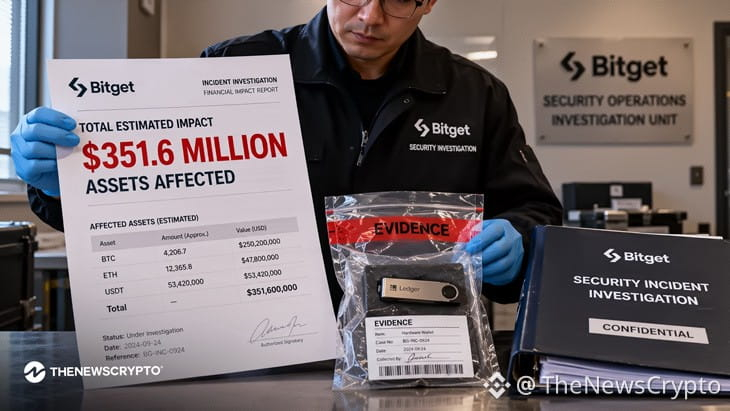
Bitget CEO Gracy Chen announced that at 18:31 UTC on September 24, 2026, Bitget’s security systems detected unauthorised transfers from a number of its hot wallets. The emergency response team was activated within minutes. By the time the initial assessment was complete, the damage had been confirmed at approximately $351.6 million.
The largest single theft involved XRP, with over $100 million drained. A significant volume of USDT, USDT0, USDC, and XAU was also taken, with the accumulated total across these assets swapped into approximately $170 million in ETH across multiple chains and coin types.
On the other hand, a total of 19 transfers were executed from hot and warm wallet layers. Significantly, the cold wallets were not touched.
How the Attack Was Pulled Off?
Private key compromise has been ruled out, eliminating the more severe risk scenario. What the security team has confirmed is that hackers breached a critical backend system within Bitget’s wallet infrastructure, used it to forge transaction data, and triggered the platform’s internal authorisation signing process to move funds out.
User credentials were not spoofed, and private keys for hot, warm, or cold wallets were never obtained. The specific intrusion method remains under active technical investigation. Furthermore, a full root cause analysis and corrective action report will be published once the investigation is complete.
The North Korea Connection
Gracy Chen has said a North Korean link is very likely. During the investigation, the team identified IP addresses whose VPN usage patterns matched infrastructure previously associated with a specific DPRK-linked hacking group. If confirmed, this would mark another major crypto exchange breach tied to North Korean cyber operations.
What Bitget Has Done and What Happens Next?
Abnormal transfer addresses have been flagged and reported. Law enforcement agencies and on-chain security firms have been formally notified. Withdrawals have been temporarily suspended as a precautionary measure, with resumption expected anywhere from a few hours to a few days, though the team has confirmed it should not take weeks.
Deposits and trading remain fully operational. Account balances are accurate. Moreover, Bitget‘s User Protection Fund, holding 5,500 BTC worth approximately $464 million, covers the full $351.6 million loss. All fund wallet addresses are publicly verifiable on-chain.
The fund will be replenished, with coverage terms and details to be announced separately. In addition, hourly updates are being provided across all official channels until the situation is fully resolved.
Crypto Market Highlights
Zcash (ZEC) Targets $5K by the End of 2026: Can It Make the Leap From $1.4K?
Bitget Hit By $351.6M Hot Wallet Breach, North Korean Hackers Suspected
Bitget detected unauthorised transfers from several hot wallets at 18:31 UTC on September 24, with the initial damage estimated at $351.6 million.
A North Korean connection is considered likely, with identified VPN and IP patterns matching infrastructure previously linked to a DPRK-associated hacking group.
Bitget CEO Gracy Chen announced that at 18:31 UTC on September 24, 2026, Bitget’s security systems detected unauthorised transfers from a number of its hot wallets. The emergency response team was activated within minutes. By the time the initial assessment was complete, the damage had been confirmed at approximately $351.6 million.
The largest single theft involved XRP, with over $100 million drained. A significant volume of USDT, USDT0, USDC, and XAU was also taken, with the accumulated total across these assets swapped into approximately $170 million in ETH across multiple chains and coin types.
On the other hand, a total of 19 transfers were executed from hot and warm wallet layers. Significantly, the cold wallets were not touched.
How the Attack Was Pulled Off?
Private key compromise has been ruled out, eliminating the more severe risk scenario. What the security team has confirmed is that hackers breached a critical backend system within Bitget’s wallet infrastructure, used it to forge transaction data, and triggered the platform’s internal authorisation signing process to move funds out.
User credentials were not spoofed, and private keys for hot, warm, or cold wallets were never obtained. The specific intrusion method remains under active technical investigation. Furthermore, a full root cause analysis and corrective action report will be published once the investigation is complete.
The North Korea Connection
Gracy Chen has said a North Korean link is very likely. During the investigation, the team identified IP addresses whose VPN usage patterns matched infrastructure previously associated with a specific DPRK-linked hacking group. If confirmed, this would mark another major crypto exchange breach tied to North Korean cyber operations.
What Bitget Has Done and What Happens Next?
Abnormal transfer addresses have been flagged and reported. Law enforcement agencies and on-chain security firms have been formally notified. Withdrawals have been temporarily suspended as a precautionary measure, with resumption expected anywhere from a few hours to a few days, though the team has confirmed it should not take weeks.
Deposits and trading remain fully operational. Account balances are accurate. Moreover, Bitget‘s User Protection Fund, holding 5,500 BTC worth approximately $464 million, covers the full $351.6 million loss. All fund wallet addresses are publicly verifiable on-chain.
The fund will be replenished, with coverage terms and details to be announced separately. In addition, hourly updates are being provided across all official channels until the situation is fully resolved.
Crypto Market Highlights
Zcash (ZEC) Targets $5K by the End of 2026: Can It Make the Leap From $1.4K?
A North Korean connection is considered likely, with identified VPN and IP patterns matching infrastructure previously linked to a DPRK-associated hacking group.
Bitget CEO Gracy Chen announced that at 18:31 UTC on September 24, 2026, Bitget’s security systems detected unauthorised transfers from a number of its hot wallets. The emergency response team was activated within minutes. By the time the initial assessment was complete, the damage had been confirmed at approximately $351.6 million.
The largest single theft involved XRP, with over $100 million drained. A significant volume of USDT, USDT0, USDC, and XAU was also taken, with the accumulated total across these assets swapped into approximately $170 million in ETH across multiple chains and coin types.
On the other hand, a total of 19 transfers were executed from hot and warm wallet layers. Significantly, the cold wallets were not touched.
How the Attack Was Pulled Off?
Private key compromise has been ruled out, eliminating the more severe risk scenario. What the security team has confirmed is that hackers breached a critical backend system within Bitget’s wallet infrastructure, used it to forge transaction data, and triggered the platform’s internal authorisation signing process to move funds out.
User credentials were not spoofed, and private keys for hot, warm, or cold wallets were never obtained. The specific intrusion method remains under active technical investigation. Furthermore, a full root cause analysis and corrective action report will be published once the investigation is complete.
The North Korea Connection
Gracy Chen has said a North Korean link is very likely. During the investigation, the team identified IP addresses whose VPN usage patterns matched infrastructure previously associated with a specific DPRK-linked hacking group. If confirmed, this would mark another major crypto exchange breach tied to North Korean cyber operations.
What Bitget Has Done and What Happens Next?
Abnormal transfer addresses have been flagged and reported. Law enforcement agencies and on-chain security firms have been formally notified. Withdrawals have been temporarily suspended as a precautionary measure, with resumption expected anywhere from a few hours to a few days, though the team has confirmed it should not take weeks.
Deposits and trading remain fully operational. Account balances are accurate. Moreover, Bitget‘s User Protection Fund, holding 5,500 BTC worth approximately $464 million, covers the full $351.6 million loss. All fund wallet addresses are publicly verifiable on-chain.
The fund will be replenished, with coverage terms and details to be announced separately. In addition, hourly updates are being provided across all official channels until the situation is fully resolved.
Crypto Market Highlights
Zcash (ZEC) Targets $5K by the End of 2026: Can It Make the Leap From $1.4K?
864
Article
Jack Dorsey’s Block Joins X402 Foundation to Bring Bitcoin Lightning to AI PaymentsJack Dorsey’s Block has joined the x402 Foundation and added Bitcoin Lightning support to the payment protocol.
The integration enables fast, low-cost payments between AI agents and online services, including APIs, data, and other digital services.
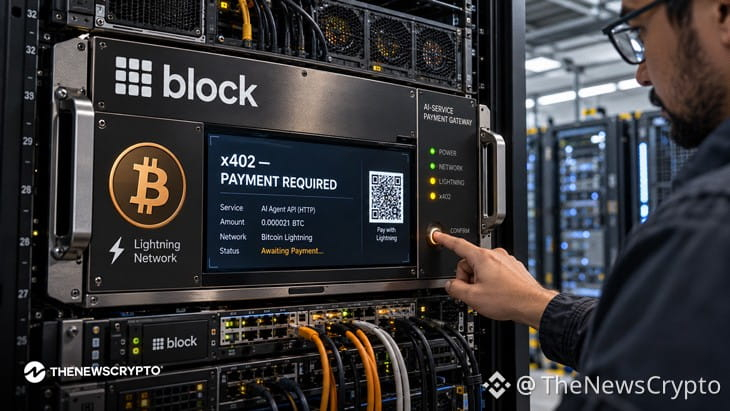
Block, the payments company led by Jack Dorsey, has joined the x402 Foundation and contributed support for the Bitcoin Lightning Network to the open payment protocol as the company expands its work on payments between AI agents and online services.
Block announced the move on Sep. 24, saying Lightning is suited to the small, frequent payments expected from what it calls “agentic commerce.” The company’s contribution adds Bitcoin Lightning as another payment option for x402, an open standard that allows software agents and web services to make payments through ordinary internet requests.
Block has joined the x402 Foundation, an open standard for agentic payments, to help build the rails that will let people, businesses, and agents pay and get paid. We’ve also contributed Bitcoin Lightning payments, which is purpose-built for the instant, low-cost, high-volume…
— Block (@blocks) September 24, 2026
Bitcoin Lightning Integrates With x402 Payment Network
x402 uses the HTTP 402 “Payment Required” response to handle payments. A service can request payment when an AI agent tries to access a paid API, dataset or digital service. The agent can then make the payment and retry the request with proof that the payment has been completed. The x402 website currently reports 75.41 million transactions and $24.24 million in volume over the previous 30 days, although those figures cover the entire x402 network and are not specific to Bitcoin or Lightning.
Block’s Lightning contribution is aimed at payments that need to be fast and inexpensive, particularly transactions involving small amounts. Steve Lee, head of Block’s Bitcoin development initiative Spiral, said bringing Lightning to x402 is a step toward making Bitcoin everyday money for people and the agents acting on their behalf.
The technical work is already visible in x402’s public repository. A September 23 commit added the specification for “exact Lightning on lnbtc.” However, the Lightning payment specification is still part of an evolving implementation. and reporting indicates that a Python implementation remains subject to review and real-node testing.
The Linux Foundation operates the x402 Foundation, which provides neutral governance for the payment standard. The Linux Foundation said the foundation had 40 members at its July operational launch, bringing together companies from payments, technology and cloud infrastructure.
Block’s addition gives x402 another route for settling payments in Bitcoin rather than a stablecoin or traditional payment method. The company has also been working on other infrastructure for AI-driven commerce, including its open-source Goose AI agent and participation in the Universal Commerce Protocol.
For now, the development is primarily an infrastructure and protocol expansion. It establishes a path for Bitcoin Lightning payments within x402, while broader adoption by AI agents and online services will depend on developers integrating and testing the new payment option.
Jack Dorsey’s Block Joins X402 Foundation to Bring Bitcoin Lightning to AI Payments
Jack Dorsey’s Block has joined the x402 Foundation and added Bitcoin Lightning support to the payment protocol.
The integration enables fast, low-cost payments between AI agents and online services, including APIs, data, and other digital services.
Block, the payments company led by Jack Dorsey, has joined the x402 Foundation and contributed support for the Bitcoin Lightning Network to the open payment protocol as the company expands its work on payments between AI agents and online services.
Block announced the move on Sep. 24, saying Lightning is suited to the small, frequent payments expected from what it calls “agentic commerce.” The company’s contribution adds Bitcoin Lightning as another payment option for x402, an open standard that allows software agents and web services to make payments through ordinary internet requests.
Block has joined the x402 Foundation, an open standard for agentic payments, to help build the rails that will let people, businesses, and agents pay and get paid. We’ve also contributed Bitcoin Lightning payments, which is purpose-built for the instant, low-cost, high-volume…
— Block (@blocks) September 24, 2026
Bitcoin Lightning Integrates With x402 Payment Network
x402 uses the HTTP 402 “Payment Required” response to handle payments. A service can request payment when an AI agent tries to access a paid API, dataset or digital service. The agent can then make the payment and retry the request with proof that the payment has been completed. The x402 website currently reports 75.41 million transactions and $24.24 million in volume over the previous 30 days, although those figures cover the entire x402 network and are not specific to Bitcoin or Lightning.
Block’s Lightning contribution is aimed at payments that need to be fast and inexpensive, particularly transactions involving small amounts. Steve Lee, head of Block’s Bitcoin development initiative Spiral, said bringing Lightning to x402 is a step toward making Bitcoin everyday money for people and the agents acting on their behalf.
The technical work is already visible in x402’s public repository. A September 23 commit added the specification for “exact Lightning on lnbtc.” However, the Lightning payment specification is still part of an evolving implementation. and reporting indicates that a Python implementation remains subject to review and real-node testing.
The Linux Foundation operates the x402 Foundation, which provides neutral governance for the payment standard. The Linux Foundation said the foundation had 40 members at its July operational launch, bringing together companies from payments, technology and cloud infrastructure.
Block’s addition gives x402 another route for settling payments in Bitcoin rather than a stablecoin or traditional payment method. The company has also been working on other infrastructure for AI-driven commerce, including its open-source Goose AI agent and participation in the Universal Commerce Protocol.
For now, the development is primarily an infrastructure and protocol expansion. It establishes a path for Bitcoin Lightning payments within x402, while broader adoption by AI agents and online services will depend on developers integrating and testing the new payment option.
The integration enables fast, low-cost payments between AI agents and online services, including APIs, data, and other digital services.
Block, the payments company led by Jack Dorsey, has joined the x402 Foundation and contributed support for the Bitcoin Lightning Network to the open payment protocol as the company expands its work on payments between AI agents and online services.
Block announced the move on Sep. 24, saying Lightning is suited to the small, frequent payments expected from what it calls “agentic commerce.” The company’s contribution adds Bitcoin Lightning as another payment option for x402, an open standard that allows software agents and web services to make payments through ordinary internet requests.
Block has joined the x402 Foundation, an open standard for agentic payments, to help build the rails that will let people, businesses, and agents pay and get paid. We’ve also contributed Bitcoin Lightning payments, which is purpose-built for the instant, low-cost, high-volume…
— Block (@blocks) September 24, 2026
Bitcoin Lightning Integrates With x402 Payment Network
x402 uses the HTTP 402 “Payment Required” response to handle payments. A service can request payment when an AI agent tries to access a paid API, dataset or digital service. The agent can then make the payment and retry the request with proof that the payment has been completed. The x402 website currently reports 75.41 million transactions and $24.24 million in volume over the previous 30 days, although those figures cover the entire x402 network and are not specific to Bitcoin or Lightning.
Block’s Lightning contribution is aimed at payments that need to be fast and inexpensive, particularly transactions involving small amounts. Steve Lee, head of Block’s Bitcoin development initiative Spiral, said bringing Lightning to x402 is a step toward making Bitcoin everyday money for people and the agents acting on their behalf.
The technical work is already visible in x402’s public repository. A September 23 commit added the specification for “exact Lightning on lnbtc.” However, the Lightning payment specification is still part of an evolving implementation. and reporting indicates that a Python implementation remains subject to review and real-node testing.
The Linux Foundation operates the x402 Foundation, which provides neutral governance for the payment standard. The Linux Foundation said the foundation had 40 members at its July operational launch, bringing together companies from payments, technology and cloud infrastructure.
Block’s addition gives x402 another route for settling payments in Bitcoin rather than a stablecoin or traditional payment method. The company has also been working on other infrastructure for AI-driven commerce, including its open-source Goose AI agent and participation in the Universal Commerce Protocol.
For now, the development is primarily an infrastructure and protocol expansion. It establishes a path for Bitcoin Lightning payments within x402, while broader adoption by AI agents and online services will depend on developers integrating and testing the new payment option.
223
Article
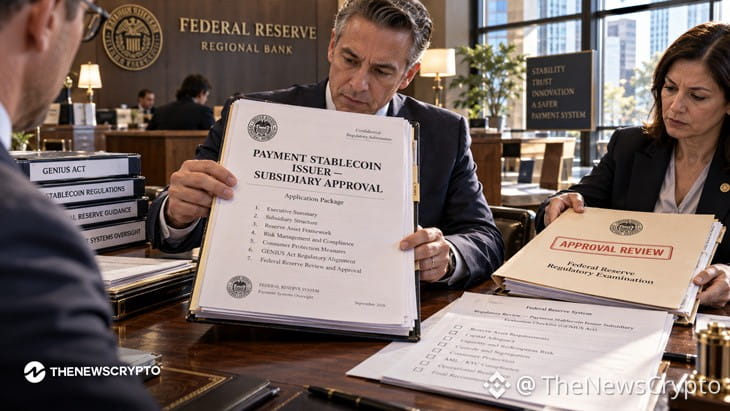
Fed Proposes GENIUS Act Rules for Stablecoin Issuers and BanksThe Federal Reserve has outlined rules mandating that all supervised stablecoin issuers must fully back payment tokens with permitted reserve assets.
Another proposal outlines an approval process for insured state member banks that wish to establish stablecoin-issuing subsidiaries.
The Federal Reserve is now on the next step towards issuing stablecoin rules in the U.S. under the GENIUS Act. The Board has issued two proposals on September 24 regarding the issuers and bank subsidiaries. In the first proposal, the reserves, capital, risk management, and safeguards are being looked into. Fed-supervised issuers will have to hold sufficient assets to back the outstanding payment stablecoins.
Reserve-eligible assets shall consist of short-term US Treasury bills.
The new regulation would also set out standard capital requirements for credit and operational risks. The issuers would be subject to standards related to their risk management with regard to stablecoin operations. There would also be standards for Fed-supervised companies that hold reserve assets used to back payment stablecoins. The Fed would also delineate activities related to stablecoins that could be conducted by supervised banks.
Insured State Member Banks Require an Additional Process for Approvals
The second proposal is aimed at insured state member banks seeking stablecoin approval through subsidiaries. The applicant would be the bank, not the subsidiary being proposed. Documents would be provided to prove the business plans, financial position, and any other pertinent information regarding the activities being conducted by the applicant.
This process would involve informing the applicant whether the application is complete within 30 days after submission. The proposal would provide additional details of how the information can be improved if the application is incomplete. The GENIUS Act allows the Fed 120 days to make a decision after a substantially complete application has been submitted. However, the proposal covers issues related to changes in ownership, financial standing, and any changes to the proposed issuer’s business plan.
Public Comments May Still Impact the Final Rulemaking Framework
The suggestions are still open for comments and may yet be changed before becoming final rulemaking by the Federal Reserve. The commenting period will end 60 days from the publication date on the Federal Register. This move is consistent with the federal moves towards enforcing the provisions of the GENIUS Act. The Department of the Treasury, among other banking regulatory bodies, will independently formulate rules concerning stablecoin issuers and other requirements. The GENIUS Act sets up the legal framework, while the relevant agencies will have to formulate the operational guidelines.
Highlighted Crypto News:
Jetking Bitcoin Strategy Faces Scrutiny Ahead of AGM After SAT Ruling
Fed Proposes GENIUS Act Rules for Stablecoin Issuers and Banks
The Federal Reserve has outlined rules mandating that all supervised stablecoin issuers must fully back payment tokens with permitted reserve assets.
Another proposal outlines an approval process for insured state member banks that wish to establish stablecoin-issuing subsidiaries.
The Federal Reserve is now on the next step towards issuing stablecoin rules in the U.S. under the GENIUS Act. The Board has issued two proposals on September 24 regarding the issuers and bank subsidiaries. In the first proposal, the reserves, capital, risk management, and safeguards are being looked into. Fed-supervised issuers will have to hold sufficient assets to back the outstanding payment stablecoins.
Reserve-eligible assets shall consist of short-term US Treasury bills.
The new regulation would also set out standard capital requirements for credit and operational risks. The issuers would be subject to standards related to their risk management with regard to stablecoin operations. There would also be standards for Fed-supervised companies that hold reserve assets used to back payment stablecoins. The Fed would also delineate activities related to stablecoins that could be conducted by supervised banks.
Insured State Member Banks Require an Additional Process for Approvals
The second proposal is aimed at insured state member banks seeking stablecoin approval through subsidiaries. The applicant would be the bank, not the subsidiary being proposed. Documents would be provided to prove the business plans, financial position, and any other pertinent information regarding the activities being conducted by the applicant.
This process would involve informing the applicant whether the application is complete within 30 days after submission. The proposal would provide additional details of how the information can be improved if the application is incomplete. The GENIUS Act allows the Fed 120 days to make a decision after a substantially complete application has been submitted. However, the proposal covers issues related to changes in ownership, financial standing, and any changes to the proposed issuer’s business plan.
Public Comments May Still Impact the Final Rulemaking Framework
The suggestions are still open for comments and may yet be changed before becoming final rulemaking by the Federal Reserve. The commenting period will end 60 days from the publication date on the Federal Register. This move is consistent with the federal moves towards enforcing the provisions of the GENIUS Act. The Department of the Treasury, among other banking regulatory bodies, will independently formulate rules concerning stablecoin issuers and other requirements. The GENIUS Act sets up the legal framework, while the relevant agencies will have to formulate the operational guidelines.
Highlighted Crypto News:
Jetking Bitcoin Strategy Faces Scrutiny Ahead of AGM After SAT Ruling
Another proposal outlines an approval process for insured state member banks that wish to establish stablecoin-issuing subsidiaries.
The Federal Reserve is now on the next step towards issuing stablecoin rules in the U.S. under the GENIUS Act. The Board has issued two proposals on September 24 regarding the issuers and bank subsidiaries. In the first proposal, the reserves, capital, risk management, and safeguards are being looked into. Fed-supervised issuers will have to hold sufficient assets to back the outstanding payment stablecoins.
Reserve-eligible assets shall consist of short-term US Treasury bills.
The new regulation would also set out standard capital requirements for credit and operational risks. The issuers would be subject to standards related to their risk management with regard to stablecoin operations. There would also be standards for Fed-supervised companies that hold reserve assets used to back payment stablecoins. The Fed would also delineate activities related to stablecoins that could be conducted by supervised banks.
Insured State Member Banks Require an Additional Process for Approvals
The second proposal is aimed at insured state member banks seeking stablecoin approval through subsidiaries. The applicant would be the bank, not the subsidiary being proposed. Documents would be provided to prove the business plans, financial position, and any other pertinent information regarding the activities being conducted by the applicant.
This process would involve informing the applicant whether the application is complete within 30 days after submission. The proposal would provide additional details of how the information can be improved if the application is incomplete. The GENIUS Act allows the Fed 120 days to make a decision after a substantially complete application has been submitted. However, the proposal covers issues related to changes in ownership, financial standing, and any changes to the proposed issuer’s business plan.
Public Comments May Still Impact the Final Rulemaking Framework
The suggestions are still open for comments and may yet be changed before becoming final rulemaking by the Federal Reserve. The commenting period will end 60 days from the publication date on the Federal Register. This move is consistent with the federal moves towards enforcing the provisions of the GENIUS Act. The Department of the Treasury, among other banking regulatory bodies, will independently formulate rules concerning stablecoin issuers and other requirements. The GENIUS Act sets up the legal framework, while the relevant agencies will have to formulate the operational guidelines.
Highlighted Crypto News:
Jetking Bitcoin Strategy Faces Scrutiny Ahead of AGM After SAT Ruling
233
Article
Zcash (ZEC) Targets $5K By the End of 2026: Can It Make the Leap From $1.4K?Zcash co-founder Eli Ben-Sasson sees ZEC reaching $5K by the end of 2026.
ZEC is currently trading around $1.4K, down more than 9%.
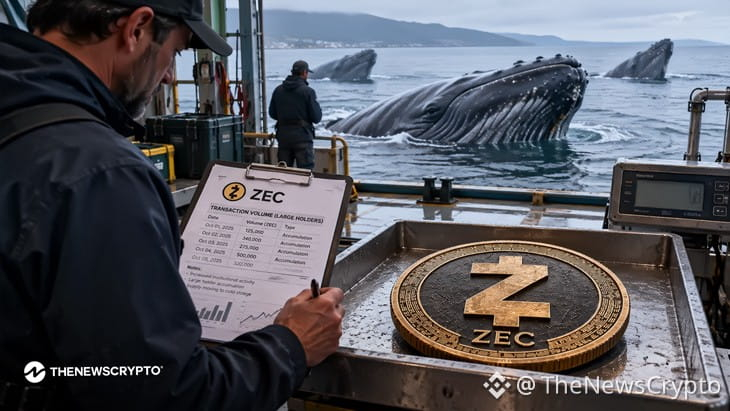
Zcash co-founder Eli Ben-Sasson is putting numbers on the table. A few days back, he called ZEC above $1,200 by September 25, and it hit. Now he has set his end-of-year target at $5,000.
His reasoning is that ZEC is like a second type of Bitcoin, and a large portion of crypto holders have not caught up with that yet. Whale accumulation has picked up significantly, and he’s already fielding questions from large players asking why the price is moving.
The recent volatility is organic; there is a visible gap between accumulation activity and broader market sentiment, which tends to close fast when attention catches up. Significantly, getting from $1,488 to $5,000 is a 236% move.
Looking at Zcash Price Action
Zcash (ZEC) is currently trading within the $1,488 range, down by over 9%. Moreover, its volume is settled at $1.54 billion, with the 24-hour range sitting between $1,461 and $1,643. The seven-day range stretches from $1,342 to $1,658.
The four-hour price chart of the ZEC/USDT trading pair shows bearish pressure is in charge. The price could retrace toward its key support level at $1,432. A continued correction on the downside would trigger the death cross to take place and the price move even lower, toward the $1.3K zone.
On the flip side, if a bullish reversal occurs within the Zcash market, the price might immediately rise and find the nearest resistance range at around $1,530. Extended upside pressure could likely initiate the emergence of the golden cross and eventually send the asset’s price above $1.6K.
What is ZEC’s Technicals Hinting At?
The MACD line crosses below the signal line while both remain above the zero line. This indicates an uptrend is experiencing a loss of momentum. The overall broader structure remains in bullish territory. The crossover to the downside signals that short-term buying power is decelerating.
Sellers or profit-takers are temporarily controlling the short-term ZEC price, causing the momentum histogram to flip negative. Traders holding long positions tighten stop-losses or lock in partial profits. The MACD line should cross above the signal line to continue the broader uptrend.
(Source: TradingView)
The current sentiment of Zcash is in neutral territory with a slight bearish bias, as the daily RSI is at 46.16. This suggests that neither buyers nor sellers are currently in strong control, reflecting a market in consolidation, experiencing a temporary loss of upward momentum.
Sitting under 50 signals that average losses over the measured period slightly outweigh average gains. The asset is leaving significant room for momentum to expand in either direction. Confirmation of the next direction requires a cross back above 50 or a breakdown toward 30.
Crypto Market Highlights
Bitcoin Whales Keep Accumulating as Price Slips: 100–1,000 BTC Wallets Add 113,950 BTC
Zcash (ZEC) Targets $5K By the End of 2026: Can It Make the Leap From $1.4K?
Zcash co-founder Eli Ben-Sasson sees ZEC reaching $5K by the end of 2026.
ZEC is currently trading around $1.4K, down more than 9%.
Zcash co-founder Eli Ben-Sasson is putting numbers on the table. A few days back, he called ZEC above $1,200 by September 25, and it hit. Now he has set his end-of-year target at $5,000.
His reasoning is that ZEC is like a second type of Bitcoin, and a large portion of crypto holders have not caught up with that yet. Whale accumulation has picked up significantly, and he’s already fielding questions from large players asking why the price is moving.
The recent volatility is organic; there is a visible gap between accumulation activity and broader market sentiment, which tends to close fast when attention catches up. Significantly, getting from $1,488 to $5,000 is a 236% move.
Looking at Zcash Price Action
Zcash (ZEC) is currently trading within the $1,488 range, down by over 9%. Moreover, its volume is settled at $1.54 billion, with the 24-hour range sitting between $1,461 and $1,643. The seven-day range stretches from $1,342 to $1,658.
The four-hour price chart of the ZEC/USDT trading pair shows bearish pressure is in charge. The price could retrace toward its key support level at $1,432. A continued correction on the downside would trigger the death cross to take place and the price move even lower, toward the $1.3K zone.
On the flip side, if a bullish reversal occurs within the Zcash market, the price might immediately rise and find the nearest resistance range at around $1,530. Extended upside pressure could likely initiate the emergence of the golden cross and eventually send the asset’s price above $1.6K.
What is ZEC’s Technicals Hinting At?
The MACD line crosses below the signal line while both remain above the zero line. This indicates an uptrend is experiencing a loss of momentum. The overall broader structure remains in bullish territory. The crossover to the downside signals that short-term buying power is decelerating.
Sellers or profit-takers are temporarily controlling the short-term ZEC price, causing the momentum histogram to flip negative. Traders holding long positions tighten stop-losses or lock in partial profits. The MACD line should cross above the signal line to continue the broader uptrend.
(Source: TradingView)
The current sentiment of Zcash is in neutral territory with a slight bearish bias, as the daily RSI is at 46.16. This suggests that neither buyers nor sellers are currently in strong control, reflecting a market in consolidation, experiencing a temporary loss of upward momentum.
Sitting under 50 signals that average losses over the measured period slightly outweigh average gains. The asset is leaving significant room for momentum to expand in either direction. Confirmation of the next direction requires a cross back above 50 or a breakdown toward 30.
Crypto Market Highlights
Bitcoin Whales Keep Accumulating as Price Slips: 100–1,000 BTC Wallets Add 113,950 BTC
ZEC is currently trading around $1.4K, down more than 9%.
Zcash co-founder Eli Ben-Sasson is putting numbers on the table. A few days back, he called ZEC above $1,200 by September 25, and it hit. Now he has set his end-of-year target at $5,000.
His reasoning is that ZEC is like a second type of Bitcoin, and a large portion of crypto holders have not caught up with that yet. Whale accumulation has picked up significantly, and he’s already fielding questions from large players asking why the price is moving.
The recent volatility is organic; there is a visible gap between accumulation activity and broader market sentiment, which tends to close fast when attention catches up. Significantly, getting from $1,488 to $5,000 is a 236% move.
Looking at Zcash Price Action
Zcash (ZEC) is currently trading within the $1,488 range, down by over 9%. Moreover, its volume is settled at $1.54 billion, with the 24-hour range sitting between $1,461 and $1,643. The seven-day range stretches from $1,342 to $1,658.
The four-hour price chart of the ZEC/USDT trading pair shows bearish pressure is in charge. The price could retrace toward its key support level at $1,432. A continued correction on the downside would trigger the death cross to take place and the price move even lower, toward the $1.3K zone.
On the flip side, if a bullish reversal occurs within the Zcash market, the price might immediately rise and find the nearest resistance range at around $1,530. Extended upside pressure could likely initiate the emergence of the golden cross and eventually send the asset’s price above $1.6K.
What is ZEC’s Technicals Hinting At?
The MACD line crosses below the signal line while both remain above the zero line. This indicates an uptrend is experiencing a loss of momentum. The overall broader structure remains in bullish territory. The crossover to the downside signals that short-term buying power is decelerating.
Sellers or profit-takers are temporarily controlling the short-term ZEC price, causing the momentum histogram to flip negative. Traders holding long positions tighten stop-losses or lock in partial profits. The MACD line should cross above the signal line to continue the broader uptrend.
(Source: TradingView)
The current sentiment of Zcash is in neutral territory with a slight bearish bias, as the daily RSI is at 46.16. This suggests that neither buyers nor sellers are currently in strong control, reflecting a market in consolidation, experiencing a temporary loss of upward momentum.
Sitting under 50 signals that average losses over the measured period slightly outweigh average gains. The asset is leaving significant room for momentum to expand in either direction. Confirmation of the next direction requires a cross back above 50 or a breakdown toward 30.
Crypto Market Highlights
Bitcoin Whales Keep Accumulating as Price Slips: 100–1,000 BTC Wallets Add 113,950 BTC
1
621
Article
Jetking Bitcoin Strategy Faces Scrutiny Ahead of AGM After SAT RulingJetking’s September 29 AGM will be its first shareholder meeting since SAT blocked listing of Bitcoin-funded shares.
The company continues evaluating the ruling while maintaining its broader Bitcoin treasury strategy and overseas crypto plans.
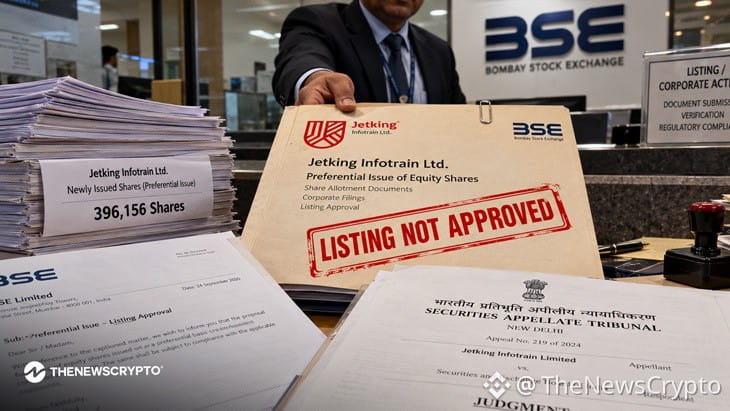
Jetking Infotrain will hold its 42nd annual general meeting on September 29, 2026. The company will conduct the meeting through video conference at 11:30 a.m. IST. The AGM comes four months after the Securities Appellate Tribunal rejected Jetking’s appeal. The ruling prevented the company from listing shares issued to fund its Bitcoin purchases. The agenda covers FY26 accounts and a second five-year term for statutory auditor PYS & Co LLP. It does not include a separate resolution on Jetking’s Bitcoin treasury policy.
The dispute began after Jetking issued 3,96,156 shares at ₹154 each in May 2025. The preferential issue raised roughly ₹6.1 crore for the company. Jetking combined those proceeds with existing cash to purchase Bitcoin through CoinDCX. BSE had initially granted in-principle approval for the share issue. BSE later rejected Jetking’s listing application after reviewing its use of virtual digital assets. Jetking appealed the decision to SAT in October 2025. SAT dismissed the appeal on May 8, 2026, without imposing penalties or costs.
The Ruling Leaves Jetking’s Funding Model Under Pressure
Jetking repeated its position in an August 6 filing following the tribunal’s decision. The company said the new shares cannot currently trade on BSE. It also said management continues evaluating the ruling’s implications. The company has not disclosed another legal route or alternative solution for the shares. That leaves its Bitcoin funding model facing a different environment from Strategy. Strategy uses equity sales, convertible notes, and preferred stock to expand its Bitcoin holdings. Jetking’s own equity raise for Bitcoin remains unlisted following the SAT decision. Its public Bitcoin strategy therefore faces a funding constraint within India’s listed-market framework.
UAE Expansion Adds Another Crypto-Related Structure
Jetking has also established a UAE subsidiary with virtual digital assets among its stated business objectives. The board approved the subsidiary in November 2025, before its incorporation in June 2026. Its objects include acquiring, trading, staking, transferring, and dealing in virtual digital assets. The company said the UAE unit had not started operations by June 30.
Its filings do not state that the subsidiary will purchase Bitcoin. Public trackers list Jetking with 21 BTC based on its latest dated holding figure. Jetking separately reported 23.43 BTC at the end of August 2025 through its official X account. Those social media figures do not replace statutory disclosures. Jetking reported a ₹1.34 crore loss for FY26, compared with a ₹3.43 crore profit. IT training remains its core operating business as shareholders approach the September meeting.
Highlighted Crypto News:
Binance Launches $800K XRP Rewards Campaign for RLUSD Holders
Jetking Bitcoin Strategy Faces Scrutiny Ahead of AGM After SAT Ruling
Jetking’s September 29 AGM will be its first shareholder meeting since SAT blocked listing of Bitcoin-funded shares.
The company continues evaluating the ruling while maintaining its broader Bitcoin treasury strategy and overseas crypto plans.
Jetking Infotrain will hold its 42nd annual general meeting on September 29, 2026. The company will conduct the meeting through video conference at 11:30 a.m. IST. The AGM comes four months after the Securities Appellate Tribunal rejected Jetking’s appeal. The ruling prevented the company from listing shares issued to fund its Bitcoin purchases. The agenda covers FY26 accounts and a second five-year term for statutory auditor PYS & Co LLP. It does not include a separate resolution on Jetking’s Bitcoin treasury policy.
The dispute began after Jetking issued 3,96,156 shares at ₹154 each in May 2025. The preferential issue raised roughly ₹6.1 crore for the company. Jetking combined those proceeds with existing cash to purchase Bitcoin through CoinDCX. BSE had initially granted in-principle approval for the share issue. BSE later rejected Jetking’s listing application after reviewing its use of virtual digital assets. Jetking appealed the decision to SAT in October 2025. SAT dismissed the appeal on May 8, 2026, without imposing penalties or costs.
The Ruling Leaves Jetking’s Funding Model Under Pressure
Jetking repeated its position in an August 6 filing following the tribunal’s decision. The company said the new shares cannot currently trade on BSE. It also said management continues evaluating the ruling’s implications. The company has not disclosed another legal route or alternative solution for the shares. That leaves its Bitcoin funding model facing a different environment from Strategy. Strategy uses equity sales, convertible notes, and preferred stock to expand its Bitcoin holdings. Jetking’s own equity raise for Bitcoin remains unlisted following the SAT decision. Its public Bitcoin strategy therefore faces a funding constraint within India’s listed-market framework.
UAE Expansion Adds Another Crypto-Related Structure
Jetking has also established a UAE subsidiary with virtual digital assets among its stated business objectives. The board approved the subsidiary in November 2025, before its incorporation in June 2026. Its objects include acquiring, trading, staking, transferring, and dealing in virtual digital assets. The company said the UAE unit had not started operations by June 30.
Its filings do not state that the subsidiary will purchase Bitcoin. Public trackers list Jetking with 21 BTC based on its latest dated holding figure. Jetking separately reported 23.43 BTC at the end of August 2025 through its official X account. Those social media figures do not replace statutory disclosures. Jetking reported a ₹1.34 crore loss for FY26, compared with a ₹3.43 crore profit. IT training remains its core operating business as shareholders approach the September meeting.
Highlighted Crypto News:
Binance Launches $800K XRP Rewards Campaign for RLUSD Holders
The company continues evaluating the ruling while maintaining its broader Bitcoin treasury strategy and overseas crypto plans.
Jetking Infotrain will hold its 42nd annual general meeting on September 29, 2026. The company will conduct the meeting through video conference at 11:30 a.m. IST. The AGM comes four months after the Securities Appellate Tribunal rejected Jetking’s appeal. The ruling prevented the company from listing shares issued to fund its Bitcoin purchases. The agenda covers FY26 accounts and a second five-year term for statutory auditor PYS & Co LLP. It does not include a separate resolution on Jetking’s Bitcoin treasury policy.
The dispute began after Jetking issued 3,96,156 shares at ₹154 each in May 2025. The preferential issue raised roughly ₹6.1 crore for the company. Jetking combined those proceeds with existing cash to purchase Bitcoin through CoinDCX. BSE had initially granted in-principle approval for the share issue. BSE later rejected Jetking’s listing application after reviewing its use of virtual digital assets. Jetking appealed the decision to SAT in October 2025. SAT dismissed the appeal on May 8, 2026, without imposing penalties or costs.
The Ruling Leaves Jetking’s Funding Model Under Pressure
Jetking repeated its position in an August 6 filing following the tribunal’s decision. The company said the new shares cannot currently trade on BSE. It also said management continues evaluating the ruling’s implications. The company has not disclosed another legal route or alternative solution for the shares. That leaves its Bitcoin funding model facing a different environment from Strategy. Strategy uses equity sales, convertible notes, and preferred stock to expand its Bitcoin holdings. Jetking’s own equity raise for Bitcoin remains unlisted following the SAT decision. Its public Bitcoin strategy therefore faces a funding constraint within India’s listed-market framework.
UAE Expansion Adds Another Crypto-Related Structure
Jetking has also established a UAE subsidiary with virtual digital assets among its stated business objectives. The board approved the subsidiary in November 2025, before its incorporation in June 2026. Its objects include acquiring, trading, staking, transferring, and dealing in virtual digital assets. The company said the UAE unit had not started operations by June 30.
Its filings do not state that the subsidiary will purchase Bitcoin. Public trackers list Jetking with 21 BTC based on its latest dated holding figure. Jetking separately reported 23.43 BTC at the end of August 2025 through its official X account. Those social media figures do not replace statutory disclosures. Jetking reported a ₹1.34 crore loss for FY26, compared with a ₹3.43 crore profit. IT training remains its core operating business as shareholders approach the September meeting.
Highlighted Crypto News:
Binance Launches $800K XRP Rewards Campaign for RLUSD Holders
289

Article
Streamex Converts Interest Into Capital As GLDY Investment Strategy Secures $1M+ Institutional Al...Miami, Florida, September 24th, 2026, Chainwire
A Metalayer Capital strategy backed by an initial institutional allocation uses GLDY as the long leg of a delta-neutral gold trade, creating a new channel for demand for Streamex’s yield-bearing tokenized gold, with follow-on investments anticipated.
Streamex Corp., a Nasdaq-listed a technology company building the future of the commodity markets through tokenization, has secured a commitment of institutional capital, a test of whether tokenized commodities can draw buyers beyond individual investors.
A leading institutional investor has made an initial $1 million allocation, with follow-on investments anticipated, to a relative-value strategy that uses GLDY, Streamex’s gold-backed token, as its long gold position, according to a person with knowledge of the matter who isn’t authorized to speak on behalf of the company. The strategy is run by Metalayer Capital, a systematic investment manager, through its Aureon Relative Value Fund, the person said. Metalayer Capital was founded by former Two Sigma executives. Metalayer Capital declined to comment.
The strategy pairs GLDY with an offsetting short position in gold-linked perpetual futures, so it is designed to be largely indifferent to whether gold prices rise or fall, the person said. It aims instead to earn the yield GLDY pays, which Streamex targets at 3.5% a year in additional gold generated through a gold-leasing program.
For Streamex, the significance lies in the mechanics: money deployed into the long position goes into GLDY, adding to the assets under management on which the company earns fees.
The initial allocation of $1 million is final, with follow-on investments anticipated, and its significance lies in who is buying: it suggests that tokenized securities such as GLDY are drawing interest not only from accredited individual investors but also from the institutional investor community.
In August, Streamex laid out a list of goals for the following 90 days. “Converting the first institutional allocations into GLDY was at the top of that list,” said Henry McPhie, the company’s co-founder and chief executive. He called the arrangement “a fundamentally different growth channel than selling to one investor at a time.”
Beyond the initial $1 million, the rest of the commitment remain at the purview of the investor, and there is no assurance that any additional amount of GLDY will be bought.
The companies have other ties. Metalayer also acts as a liquidity provider for GLDY on certain trading venues and can mint and redeem the token directly with the issuer, the person said. Streamex doesn’t manage or sponsor the fund and isn’t compensated based on money the fund raises.
GLDY is offered only to eligible investors under exemptions from securities registration, and its holders to date have largely been accredited investors seeking yield. Streamex has made six consecutive monthly distributions on the token, most recently in September, and publishes its gold reserves through a Chainlink proof-of-reserves feed.
Contact
Yaroslav Provadacontact@stratosphere.vip
Streamex Converts Interest Into Capital As GLDY Investment Strategy Secures $1M+ Institutional Al...
Miami, Florida, September 24th, 2026, Chainwire
A Metalayer Capital strategy backed by an initial institutional allocation uses GLDY as the long leg of a delta-neutral gold trade, creating a new channel for demand for Streamex’s yield-bearing tokenized gold, with follow-on investments anticipated.
Streamex Corp., a Nasdaq-listed a technology company building the future of the commodity markets through tokenization, has secured a commitment of institutional capital, a test of whether tokenized commodities can draw buyers beyond individual investors.
A leading institutional investor has made an initial $1 million allocation, with follow-on investments anticipated, to a relative-value strategy that uses GLDY, Streamex’s gold-backed token, as its long gold position, according to a person with knowledge of the matter who isn’t authorized to speak on behalf of the company. The strategy is run by Metalayer Capital, a systematic investment manager, through its Aureon Relative Value Fund, the person said. Metalayer Capital was founded by former Two Sigma executives. Metalayer Capital declined to comment.
The strategy pairs GLDY with an offsetting short position in gold-linked perpetual futures, so it is designed to be largely indifferent to whether gold prices rise or fall, the person said. It aims instead to earn the yield GLDY pays, which Streamex targets at 3.5% a year in additional gold generated through a gold-leasing program.
For Streamex, the significance lies in the mechanics: money deployed into the long position goes into GLDY, adding to the assets under management on which the company earns fees.
The initial allocation of $1 million is final, with follow-on investments anticipated, and its significance lies in who is buying: it suggests that tokenized securities such as GLDY are drawing interest not only from accredited individual investors but also from the institutional investor community.
In August, Streamex laid out a list of goals for the following 90 days. “Converting the first institutional allocations into GLDY was at the top of that list,” said Henry McPhie, the company’s co-founder and chief executive. He called the arrangement “a fundamentally different growth channel than selling to one investor at a time.”
Beyond the initial $1 million, the rest of the commitment remain at the purview of the investor, and there is no assurance that any additional amount of GLDY will be bought.
The companies have other ties. Metalayer also acts as a liquidity provider for GLDY on certain trading venues and can mint and redeem the token directly with the issuer, the person said. Streamex doesn’t manage or sponsor the fund and isn’t compensated based on money the fund raises.
GLDY is offered only to eligible investors under exemptions from securities registration, and its holders to date have largely been accredited investors seeking yield. Streamex has made six consecutive monthly distributions on the token, most recently in September, and publishes its gold reserves through a Chainlink proof-of-reserves feed.
Contact
Yaroslav Provadacontact@stratosphere.vip
A Metalayer Capital strategy backed by an initial institutional allocation uses GLDY as the long leg of a delta-neutral gold trade, creating a new channel for demand for Streamex’s yield-bearing tokenized gold, with follow-on investments anticipated.
Streamex Corp., a Nasdaq-listed a technology company building the future of the commodity markets through tokenization, has secured a commitment of institutional capital, a test of whether tokenized commodities can draw buyers beyond individual investors.
A leading institutional investor has made an initial $1 million allocation, with follow-on investments anticipated, to a relative-value strategy that uses GLDY, Streamex’s gold-backed token, as its long gold position, according to a person with knowledge of the matter who isn’t authorized to speak on behalf of the company. The strategy is run by Metalayer Capital, a systematic investment manager, through its Aureon Relative Value Fund, the person said. Metalayer Capital was founded by former Two Sigma executives. Metalayer Capital declined to comment.
The strategy pairs GLDY with an offsetting short position in gold-linked perpetual futures, so it is designed to be largely indifferent to whether gold prices rise or fall, the person said. It aims instead to earn the yield GLDY pays, which Streamex targets at 3.5% a year in additional gold generated through a gold-leasing program.
For Streamex, the significance lies in the mechanics: money deployed into the long position goes into GLDY, adding to the assets under management on which the company earns fees.
The initial allocation of $1 million is final, with follow-on investments anticipated, and its significance lies in who is buying: it suggests that tokenized securities such as GLDY are drawing interest not only from accredited individual investors but also from the institutional investor community.
In August, Streamex laid out a list of goals for the following 90 days. “Converting the first institutional allocations into GLDY was at the top of that list,” said Henry McPhie, the company’s co-founder and chief executive. He called the arrangement “a fundamentally different growth channel than selling to one investor at a time.”
Beyond the initial $1 million, the rest of the commitment remain at the purview of the investor, and there is no assurance that any additional amount of GLDY will be bought.
The companies have other ties. Metalayer also acts as a liquidity provider for GLDY on certain trading venues and can mint and redeem the token directly with the issuer, the person said. Streamex doesn’t manage or sponsor the fund and isn’t compensated based on money the fund raises.
GLDY is offered only to eligible investors under exemptions from securities registration, and its holders to date have largely been accredited investors seeking yield. Streamex has made six consecutive monthly distributions on the token, most recently in September, and publishes its gold reserves through a Chainlink proof-of-reserves feed.
Contact
Yaroslav Provadacontact@stratosphere.vip
78
Article
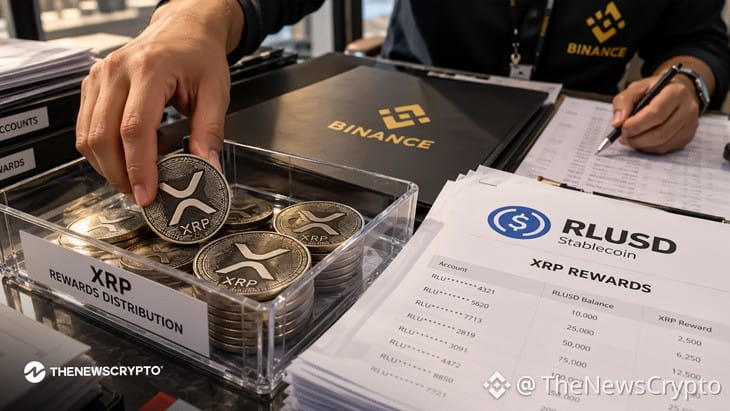
Binance Launches $800K XRP Rewards Campaign for RLUSD HoldersThe Binance rewards campaign will see the exchange distributing $800,000 worth of XRP within four weeks to qualified holders of RLUSD.
This rewards campaign is helping to spread access to RLUSD through Binance accounts as the stablecoin’s market cap is nearing $2.4 billion.
The Binance rewards campaign for Ripple’s RLUSD stablecoin has kicked off. The rewards campaign will see the exchange giving away $800,000 worth of XRP over four weeks. The rewards are for those users who qualify by holding their RLUSD through certain Binance accounts. Users can get rewards through their Spot, Funding, Earn, and Margin accounts. The exchange will give out rewards to users through XRP distribution every Friday until October 23. There will also be rewards for those users who increase their RLUSD holdings during the rewards campaign period. More rewards can be earned through allocation of funds to RLUSD Simple Earn. Users should hold a minimum of 0.01 RLUSD through their eligible accounts.
Margin Accounts Require Additional Requirements for Borrowed RLUSD
Moreover, there are additional margin rules for users who get RLUSD using Margin borrowing. Binance will apply a 60% haircut to RLUSD gained through borrowed stablecoins. The calculation will take into account the liabilities related to a few supported stablecoins in Margin accounts. Such assets are USDT, USDC, USD1, and FDUSD. Binance will calculate rewards on the basis of the qualifying balance compared to the total pool. The company has not set any maximum reward per participant. Binance will sum sub-account balances at the Master Account level. Only the Master Account will be rewarded in case of a normal account structure. Rewards for broker accounts will be given at the virtual sub-accounts level. Users from restricted countries cannot join this event. They include the USA, UK, European Union, and Canada.
RLUSD Expansion Adds Context to Binance’s XRP Rewards Program
The market capitalization of RLUSD has witnessed growth due to the launch of the rewards program on the platform. The market cap of the stablecoin has been observed growing from about $1.51 billion to approximately $2.45 billion. Presently, the market cap of RLUSD is estimated at an estimate of $2.37 billion. Ripple has also expanded the use of RLUSD and XRP by adding new payment infrastructure.
Both assets have been incorporated into AI agents for payment processing through Stripe and the Tempo protocol. XRP has been valued at about $1.51 after touching its 24-hour high at $1.64. The token has fallen by about 6% ahead of the monthly expiry of cryptocurrency options. Volume of XRP has decreased by 18% during the past 24 hours. XRP futures open interest was estimated at an estimate of about $3.60 billion according to data from CoinGlass, after a daily reduction.
Highlighted Crypto News:
Circle Expands CCTP on Arc With Native EURC and cirBTC Transfers
Binance Launches $800K XRP Rewards Campaign for RLUSD Holders
The Binance rewards campaign will see the exchange distributing $800,000 worth of XRP within four weeks to qualified holders of RLUSD.
This rewards campaign is helping to spread access to RLUSD through Binance accounts as the stablecoin’s market cap is nearing $2.4 billion.
The Binance rewards campaign for Ripple’s RLUSD stablecoin has kicked off. The rewards campaign will see the exchange giving away $800,000 worth of XRP over four weeks. The rewards are for those users who qualify by holding their RLUSD through certain Binance accounts. Users can get rewards through their Spot, Funding, Earn, and Margin accounts. The exchange will give out rewards to users through XRP distribution every Friday until October 23. There will also be rewards for those users who increase their RLUSD holdings during the rewards campaign period. More rewards can be earned through allocation of funds to RLUSD Simple Earn. Users should hold a minimum of 0.01 RLUSD through their eligible accounts.
Margin Accounts Require Additional Requirements for Borrowed RLUSD
Moreover, there are additional margin rules for users who get RLUSD using Margin borrowing. Binance will apply a 60% haircut to RLUSD gained through borrowed stablecoins. The calculation will take into account the liabilities related to a few supported stablecoins in Margin accounts. Such assets are USDT, USDC, USD1, and FDUSD. Binance will calculate rewards on the basis of the qualifying balance compared to the total pool. The company has not set any maximum reward per participant. Binance will sum sub-account balances at the Master Account level. Only the Master Account will be rewarded in case of a normal account structure. Rewards for broker accounts will be given at the virtual sub-accounts level. Users from restricted countries cannot join this event. They include the USA, UK, European Union, and Canada.
RLUSD Expansion Adds Context to Binance’s XRP Rewards Program
The market capitalization of RLUSD has witnessed growth due to the launch of the rewards program on the platform. The market cap of the stablecoin has been observed growing from about $1.51 billion to approximately $2.45 billion. Presently, the market cap of RLUSD is estimated at an estimate of $2.37 billion. Ripple has also expanded the use of RLUSD and XRP by adding new payment infrastructure.
Both assets have been incorporated into AI agents for payment processing through Stripe and the Tempo protocol. XRP has been valued at about $1.51 after touching its 24-hour high at $1.64. The token has fallen by about 6% ahead of the monthly expiry of cryptocurrency options. Volume of XRP has decreased by 18% during the past 24 hours. XRP futures open interest was estimated at an estimate of about $3.60 billion according to data from CoinGlass, after a daily reduction.
Highlighted Crypto News:
Circle Expands CCTP on Arc With Native EURC and cirBTC Transfers
This rewards campaign is helping to spread access to RLUSD through Binance accounts as the stablecoin’s market cap is nearing $2.4 billion.
The Binance rewards campaign for Ripple’s RLUSD stablecoin has kicked off. The rewards campaign will see the exchange giving away $800,000 worth of XRP over four weeks. The rewards are for those users who qualify by holding their RLUSD through certain Binance accounts. Users can get rewards through their Spot, Funding, Earn, and Margin accounts. The exchange will give out rewards to users through XRP distribution every Friday until October 23. There will also be rewards for those users who increase their RLUSD holdings during the rewards campaign period. More rewards can be earned through allocation of funds to RLUSD Simple Earn. Users should hold a minimum of 0.01 RLUSD through their eligible accounts.
Margin Accounts Require Additional Requirements for Borrowed RLUSD
Moreover, there are additional margin rules for users who get RLUSD using Margin borrowing. Binance will apply a 60% haircut to RLUSD gained through borrowed stablecoins. The calculation will take into account the liabilities related to a few supported stablecoins in Margin accounts. Such assets are USDT, USDC, USD1, and FDUSD. Binance will calculate rewards on the basis of the qualifying balance compared to the total pool. The company has not set any maximum reward per participant. Binance will sum sub-account balances at the Master Account level. Only the Master Account will be rewarded in case of a normal account structure. Rewards for broker accounts will be given at the virtual sub-accounts level. Users from restricted countries cannot join this event. They include the USA, UK, European Union, and Canada.
RLUSD Expansion Adds Context to Binance’s XRP Rewards Program
The market capitalization of RLUSD has witnessed growth due to the launch of the rewards program on the platform. The market cap of the stablecoin has been observed growing from about $1.51 billion to approximately $2.45 billion. Presently, the market cap of RLUSD is estimated at an estimate of $2.37 billion. Ripple has also expanded the use of RLUSD and XRP by adding new payment infrastructure.
Both assets have been incorporated into AI agents for payment processing through Stripe and the Tempo protocol. XRP has been valued at about $1.51 after touching its 24-hour high at $1.64. The token has fallen by about 6% ahead of the monthly expiry of cryptocurrency options. Volume of XRP has decreased by 18% during the past 24 hours. XRP futures open interest was estimated at an estimate of about $3.60 billion according to data from CoinGlass, after a daily reduction.
Highlighted Crypto News:
Circle Expands CCTP on Arc With Native EURC and cirBTC Transfers
275
Article
UK Banks Complete First Interbank Transactions Using Tokenised DepositsUK banks completed interbank transactions using tokenised deposits, testing blockchain-based commercial bank money across separate institutions.
Great British Tokenised Deposit will expand toward wider use, with digital bond trials planned for 2027.
The Bank of England is also advancing its framework for privately issued stablecoins.
Britain’s largest banks have completed what UK Finance describes as the “world’s first interbank transactions using tokenised deposits,” allowing blockchain-based representations of commercial bank money to move between separate banks.
The transactions are part of the Great British Tokenised Deposit (GBTD) project, an industry initiative led by UK Finance to test how tokenised sterling deposits can be used for payments and other financial transactions. UK Finance told Reuters that Lloyds, NatWest and Barclays completed two mortgage-related transactions, while another group of three banks, including HSBC, carried out a simulated person-to-person payment linked to an online marketplace.
Tokenised Deposits Tested in Mortgages and Online Payments
In the online marketplace test, funds were set aside in the buyer’s account and programmed to move to the seller after the goods were received. The transaction was a simulation, so no actual goods changed hands, but it demonstrated how programmable bank deposits could link a payment to the completion of a specific condition.
The two remortgage transactions used a similar approach. Funds were locked and automatically released once the property transaction was completed. UK Finance said the testing could help reduce fraud and make parts of the remortgaging process more efficient.
Tokenised deposits are digital representations of traditional commercial bank money. Unlike stablecoins, which are generally issued by private companies, tokenised deposits remain claims on commercial banks and retain the legal and regulatory characteristics of conventional deposits. UK Finance says the technology can add features such as programmability and faster settlement.
The interbank element is significant because banks have previously developed separate tokenisation systems, making it difficult for tokenised money issued by one bank to interact with another bank’s system. A July report from HM Treasury described GBTD as a private-sector platform designed to allow different banks’ tokenised deposits to interact.
The project is now expected to move beyond its pilot phase. UK Finance plans to establish a dedicated company and develop a rulebook and governance framework to support wider production use. Participating banks also plan to issue three digital bonds in the first quarter of 2027 that can be traded and settled using tokenised deposits.
The development comes as the UK expands its broader digital-finance infrastructure. HM Treasury said earlier this month that the government is supporting work involving stablecoins, tokenised deposits and digital settlement, while specifically highlighting the progress of the GBTD initiative.
Highlighted Crypto News:
Circle Expands CCTP on Arc With Native EURC and cirBTC Transfers
UK Banks Complete First Interbank Transactions Using Tokenised Deposits
UK banks completed interbank transactions using tokenised deposits, testing blockchain-based commercial bank money across separate institutions.
Great British Tokenised Deposit will expand toward wider use, with digital bond trials planned for 2027.
The Bank of England is also advancing its framework for privately issued stablecoins.
Britain’s largest banks have completed what UK Finance describes as the “world’s first interbank transactions using tokenised deposits,” allowing blockchain-based representations of commercial bank money to move between separate banks.
The transactions are part of the Great British Tokenised Deposit (GBTD) project, an industry initiative led by UK Finance to test how tokenised sterling deposits can be used for payments and other financial transactions. UK Finance told Reuters that Lloyds, NatWest and Barclays completed two mortgage-related transactions, while another group of three banks, including HSBC, carried out a simulated person-to-person payment linked to an online marketplace.
Tokenised Deposits Tested in Mortgages and Online Payments
In the online marketplace test, funds were set aside in the buyer’s account and programmed to move to the seller after the goods were received. The transaction was a simulation, so no actual goods changed hands, but it demonstrated how programmable bank deposits could link a payment to the completion of a specific condition.
The two remortgage transactions used a similar approach. Funds were locked and automatically released once the property transaction was completed. UK Finance said the testing could help reduce fraud and make parts of the remortgaging process more efficient.
Tokenised deposits are digital representations of traditional commercial bank money. Unlike stablecoins, which are generally issued by private companies, tokenised deposits remain claims on commercial banks and retain the legal and regulatory characteristics of conventional deposits. UK Finance says the technology can add features such as programmability and faster settlement.
The interbank element is significant because banks have previously developed separate tokenisation systems, making it difficult for tokenised money issued by one bank to interact with another bank’s system. A July report from HM Treasury described GBTD as a private-sector platform designed to allow different banks’ tokenised deposits to interact.
The project is now expected to move beyond its pilot phase. UK Finance plans to establish a dedicated company and develop a rulebook and governance framework to support wider production use. Participating banks also plan to issue three digital bonds in the first quarter of 2027 that can be traded and settled using tokenised deposits.
The development comes as the UK expands its broader digital-finance infrastructure. HM Treasury said earlier this month that the government is supporting work involving stablecoins, tokenised deposits and digital settlement, while specifically highlighting the progress of the GBTD initiative.
Highlighted Crypto News:
Circle Expands CCTP on Arc With Native EURC and cirBTC Transfers
Great British Tokenised Deposit will expand toward wider use, with digital bond trials planned for 2027.
The Bank of England is also advancing its framework for privately issued stablecoins.
Britain’s largest banks have completed what UK Finance describes as the “world’s first interbank transactions using tokenised deposits,” allowing blockchain-based representations of commercial bank money to move between separate banks.
The transactions are part of the Great British Tokenised Deposit (GBTD) project, an industry initiative led by UK Finance to test how tokenised sterling deposits can be used for payments and other financial transactions. UK Finance told Reuters that Lloyds, NatWest and Barclays completed two mortgage-related transactions, while another group of three banks, including HSBC, carried out a simulated person-to-person payment linked to an online marketplace.
Tokenised Deposits Tested in Mortgages and Online Payments
In the online marketplace test, funds were set aside in the buyer’s account and programmed to move to the seller after the goods were received. The transaction was a simulation, so no actual goods changed hands, but it demonstrated how programmable bank deposits could link a payment to the completion of a specific condition.
The two remortgage transactions used a similar approach. Funds were locked and automatically released once the property transaction was completed. UK Finance said the testing could help reduce fraud and make parts of the remortgaging process more efficient.
Tokenised deposits are digital representations of traditional commercial bank money. Unlike stablecoins, which are generally issued by private companies, tokenised deposits remain claims on commercial banks and retain the legal and regulatory characteristics of conventional deposits. UK Finance says the technology can add features such as programmability and faster settlement.
The interbank element is significant because banks have previously developed separate tokenisation systems, making it difficult for tokenised money issued by one bank to interact with another bank’s system. A July report from HM Treasury described GBTD as a private-sector platform designed to allow different banks’ tokenised deposits to interact.
The project is now expected to move beyond its pilot phase. UK Finance plans to establish a dedicated company and develop a rulebook and governance framework to support wider production use. Participating banks also plan to issue three digital bonds in the first quarter of 2027 that can be traded and settled using tokenised deposits.
The development comes as the UK expands its broader digital-finance infrastructure. HM Treasury said earlier this month that the government is supporting work involving stablecoins, tokenised deposits and digital settlement, while specifically highlighting the progress of the GBTD initiative.
Highlighted Crypto News:
Circle Expands CCTP on Arc With Native EURC and cirBTC Transfers
125

Article
Bitcoin Whales Keep Accumulating As Price Slips: 100–1,000 BTC Wallets Add 113,950 BTCBitcoin wallets holding 100–1,000 BTC have accumulated 113,950 BTC since July 15, increasing their collective holdings by 2.22% to 5.24M BTC.
BTC is currently trading at $84,462, while the continued accumulation highlights rising whale activity in the market.
Bitcoin (BTC) is currently trading at $84,462, down by 2%, with its volume reaching $42.188 billion. The 24-hour session has ranged between $83,654 and $86,254, while the seven-day range stretches from $75,971 all the way to $87,329.
Significantly, BTC was grinding in the low $60Ks, sitting on high-timeframe support while most of the market waited for an October bottom that never came. Price held, flipped all its weekly levels, and rallied nearly 50% from its lows to recent highs.
The Wallet Tier That Saw It Coming
The 100–1,000 BTC wallet tier has been one of the most reliable smart money signals in Santiment’s five-year analysis, closely correlated with crypto market direction, with accumulation often appearing before or during stronger price periods. Since July 15, this group has added 113,950 BTC, growing collective holdings by 2.22% to roughly 5.24 million BTC.
The signal is more compelling when price follows their holdings higher, which is exactly what happened. Bitcoin climbed sharply since mid-August while this group kept stacking, suggesting the rally had support from well-capitalised holders rather than retail excitement alone. Sustained accumulation from this tier, paired with retail fear and exchange-flow data, has historically been valuable alpha.
Key Support and Resistance Levels of BTC
The dominant asset, BTC, pressed as high as $87K before getting rejected at the main resistance area, a move that was flagged in advance. It has since pulled back to settle around $84,462. The rejection was expected. What matters now is how price behaves in the $83K–$84K range.
The immediate level to watch is $85K; upon reclaiming it, $86K–$86.4K comes back. Notably, with a loss of $83.6K, the next stop is $82.8K–$83K. Below that, eyes shift to $82.7K first, then $78.6K as the deeper support.
On the upside, the $84K–$87K resistance zone remains the key area. A clean breakout above the neckline opens the path higher. Buyers defended the $58K–$60K zone twice earlier this cycle, and double defence created the foundation for everything that followed.
A weekly close above $83K would fully confirm the weekly market structure break and validate the recovery. The next 48 hours around $83K–$85K will show whether this is a healthy consolidation or the start of a deeper reset.
Crypto Market Highlights
US Weighs Overseas Stablecoin Push to Strengthen Dollar Dominance
Bitcoin Whales Keep Accumulating As Price Slips: 100–1,000 BTC Wallets Add 113,950 BTC
Bitcoin wallets holding 100–1,000 BTC have accumulated 113,950 BTC since July 15, increasing their collective holdings by 2.22% to 5.24M BTC.
BTC is currently trading at $84,462, while the continued accumulation highlights rising whale activity in the market.
Bitcoin (BTC) is currently trading at $84,462, down by 2%, with its volume reaching $42.188 billion. The 24-hour session has ranged between $83,654 and $86,254, while the seven-day range stretches from $75,971 all the way to $87,329.
Significantly, BTC was grinding in the low $60Ks, sitting on high-timeframe support while most of the market waited for an October bottom that never came. Price held, flipped all its weekly levels, and rallied nearly 50% from its lows to recent highs.
The Wallet Tier That Saw It Coming
The 100–1,000 BTC wallet tier has been one of the most reliable smart money signals in Santiment’s five-year analysis, closely correlated with crypto market direction, with accumulation often appearing before or during stronger price periods. Since July 15, this group has added 113,950 BTC, growing collective holdings by 2.22% to roughly 5.24 million BTC.
The signal is more compelling when price follows their holdings higher, which is exactly what happened. Bitcoin climbed sharply since mid-August while this group kept stacking, suggesting the rally had support from well-capitalised holders rather than retail excitement alone. Sustained accumulation from this tier, paired with retail fear and exchange-flow data, has historically been valuable alpha.
Key Support and Resistance Levels of BTC
The dominant asset, BTC, pressed as high as $87K before getting rejected at the main resistance area, a move that was flagged in advance. It has since pulled back to settle around $84,462. The rejection was expected. What matters now is how price behaves in the $83K–$84K range.
The immediate level to watch is $85K; upon reclaiming it, $86K–$86.4K comes back. Notably, with a loss of $83.6K, the next stop is $82.8K–$83K. Below that, eyes shift to $82.7K first, then $78.6K as the deeper support.
On the upside, the $84K–$87K resistance zone remains the key area. A clean breakout above the neckline opens the path higher. Buyers defended the $58K–$60K zone twice earlier this cycle, and double defence created the foundation for everything that followed.
A weekly close above $83K would fully confirm the weekly market structure break and validate the recovery. The next 48 hours around $83K–$85K will show whether this is a healthy consolidation or the start of a deeper reset.
Crypto Market Highlights
US Weighs Overseas Stablecoin Push to Strengthen Dollar Dominance
BTC is currently trading at $84,462, while the continued accumulation highlights rising whale activity in the market.
Bitcoin (BTC) is currently trading at $84,462, down by 2%, with its volume reaching $42.188 billion. The 24-hour session has ranged between $83,654 and $86,254, while the seven-day range stretches from $75,971 all the way to $87,329.
Significantly, BTC was grinding in the low $60Ks, sitting on high-timeframe support while most of the market waited for an October bottom that never came. Price held, flipped all its weekly levels, and rallied nearly 50% from its lows to recent highs.
The Wallet Tier That Saw It Coming
The 100–1,000 BTC wallet tier has been one of the most reliable smart money signals in Santiment’s five-year analysis, closely correlated with crypto market direction, with accumulation often appearing before or during stronger price periods. Since July 15, this group has added 113,950 BTC, growing collective holdings by 2.22% to roughly 5.24 million BTC.
The signal is more compelling when price follows their holdings higher, which is exactly what happened. Bitcoin climbed sharply since mid-August while this group kept stacking, suggesting the rally had support from well-capitalised holders rather than retail excitement alone. Sustained accumulation from this tier, paired with retail fear and exchange-flow data, has historically been valuable alpha.
Key Support and Resistance Levels of BTC
The dominant asset, BTC, pressed as high as $87K before getting rejected at the main resistance area, a move that was flagged in advance. It has since pulled back to settle around $84,462. The rejection was expected. What matters now is how price behaves in the $83K–$84K range.
The immediate level to watch is $85K; upon reclaiming it, $86K–$86.4K comes back. Notably, with a loss of $83.6K, the next stop is $82.8K–$83K. Below that, eyes shift to $82.7K first, then $78.6K as the deeper support.
On the upside, the $84K–$87K resistance zone remains the key area. A clean breakout above the neckline opens the path higher. Buyers defended the $58K–$60K zone twice earlier this cycle, and double defence created the foundation for everything that followed.
A weekly close above $83K would fully confirm the weekly market structure break and validate the recovery. The next 48 hours around $83K–$85K will show whether this is a healthy consolidation or the start of a deeper reset.
Crypto Market Highlights
US Weighs Overseas Stablecoin Push to Strengthen Dollar Dominance
269
Article
Circle Expands CCTP on Arc With Native EURC and CirBTC TransfersCircle has extended CCTP beyond USDC, allowing native EURC and cirBTC transfers via the selected Arc paths.
The Gateway service will be USDC-only initially, although Circle has plans for EURC and cirBTC support for balance unification at a later date.
Circle is extending its interoperability suite via Arc beyond USDC, using native CCTP transfers for EURC and cirBTC. EURC now has connections with Arc, Avalanche, Base, Ethereum, and World Chain, and cirBTC has connections with Arc and Ethereum. Circle initially introduced EURC support into CCTP via Ethereum and Base chains earlier this month. The CCTP utilizes the burn-and-mint process for Circle-issued assets, where the tokens are burned on the originating chain and then minted natively on the target chain.
CCTP is expanding beyond USDC. Developers can now move more supported assets across chains, including USDC, EURC, and cirBTC. Gateway will also add support for additional assets over time, with Bridge Kit supporting expanded multi-asset workflows.https://t.co/EmQtJWtoZ3 pic.twitter.com/XhWoKEmBHe
— Circle (@circle) September 23, 2026
EURC and cirBTC Have Different Routes to Interoperability
The latest expansion from Circle does not offer the same network reach to all assets. USDC is still the most widely adopted asset on the current interoperability stack called Arc. EURC now enjoys more extensive CCTP reach on five networks, which includes Arc. The route of cirBTC between Arc and Ethereum is comparatively shorter. Circle released cirBTC on Arc on September 21 as the Bitcoin-backed asset.
According to Circle, each cirBTC token is backed by one BTC token. Reserve information is available for on-chain validation by the company. Circle also facilitates USDC borrowings backed by Bitcoin on both Arc and Ethereum using cirBTC. Eligible Circle Mint institutions can utilize cirBTC as the collateral asset in lending markets. Morpho was the first lending protocol to be supported by Circle.
Limited Gateway vs. New Features at Arc
Currently, Gateway is creating a unified balance of USDC tokens on Arc and Ethereum networks. The company mentions that EURC and cirBTC Gateway features will be available soon, without any launch dates being mentioned. As a result, developers still cannot consider CCTP and Gateway as identical services for multiple assets. Forwarding Service performs destination chain transactions once the CCTP has successfully transferred an asset. It can eliminate the need for users to have destination chain gas tokens. Circle also made an update for CCTP in the beginning of the month with prepaid Fast Transfer fees. Arc routes get priority prices with CCTP, but fees depend on the asset and route used.
Arc Evolves Towards More Interoperable Multichain Network
It was introduced by Circle on September 16 with fees and validators for transactions done in USDC. The platform started with interoperability among more than 20 blockchain systems with the help of CCTP and Gateway. Some of the founding validators are BlackRock, Visa, MasterCard, Standard Chartered, Galaxy, and others. On September 22, Circle also launched StableFX to offer stablecoin foreign exchange settlement on Arc. This new expansion in CCTP is an additional step towards interoperable multichain infrastructure of Arc.
Highlighted Crypto News:
Bitpanda and RBI Build Crypto Framework for 18M Bank Customers
Circle Expands CCTP on Arc With Native EURC and CirBTC Transfers
Circle has extended CCTP beyond USDC, allowing native EURC and cirBTC transfers via the selected Arc paths.
The Gateway service will be USDC-only initially, although Circle has plans for EURC and cirBTC support for balance unification at a later date.
Circle is extending its interoperability suite via Arc beyond USDC, using native CCTP transfers for EURC and cirBTC. EURC now has connections with Arc, Avalanche, Base, Ethereum, and World Chain, and cirBTC has connections with Arc and Ethereum. Circle initially introduced EURC support into CCTP via Ethereum and Base chains earlier this month. The CCTP utilizes the burn-and-mint process for Circle-issued assets, where the tokens are burned on the originating chain and then minted natively on the target chain.
CCTP is expanding beyond USDC. Developers can now move more supported assets across chains, including USDC, EURC, and cirBTC. Gateway will also add support for additional assets over time, with Bridge Kit supporting expanded multi-asset workflows.https://t.co/EmQtJWtoZ3 pic.twitter.com/XhWoKEmBHe
— Circle (@circle) September 23, 2026
EURC and cirBTC Have Different Routes to Interoperability
The latest expansion from Circle does not offer the same network reach to all assets. USDC is still the most widely adopted asset on the current interoperability stack called Arc. EURC now enjoys more extensive CCTP reach on five networks, which includes Arc. The route of cirBTC between Arc and Ethereum is comparatively shorter. Circle released cirBTC on Arc on September 21 as the Bitcoin-backed asset.
According to Circle, each cirBTC token is backed by one BTC token. Reserve information is available for on-chain validation by the company. Circle also facilitates USDC borrowings backed by Bitcoin on both Arc and Ethereum using cirBTC. Eligible Circle Mint institutions can utilize cirBTC as the collateral asset in lending markets. Morpho was the first lending protocol to be supported by Circle.
Limited Gateway vs. New Features at Arc
Currently, Gateway is creating a unified balance of USDC tokens on Arc and Ethereum networks. The company mentions that EURC and cirBTC Gateway features will be available soon, without any launch dates being mentioned. As a result, developers still cannot consider CCTP and Gateway as identical services for multiple assets. Forwarding Service performs destination chain transactions once the CCTP has successfully transferred an asset. It can eliminate the need for users to have destination chain gas tokens. Circle also made an update for CCTP in the beginning of the month with prepaid Fast Transfer fees. Arc routes get priority prices with CCTP, but fees depend on the asset and route used.
Arc Evolves Towards More Interoperable Multichain Network
It was introduced by Circle on September 16 with fees and validators for transactions done in USDC. The platform started with interoperability among more than 20 blockchain systems with the help of CCTP and Gateway. Some of the founding validators are BlackRock, Visa, MasterCard, Standard Chartered, Galaxy, and others. On September 22, Circle also launched StableFX to offer stablecoin foreign exchange settlement on Arc. This new expansion in CCTP is an additional step towards interoperable multichain infrastructure of Arc.
Highlighted Crypto News:
Bitpanda and RBI Build Crypto Framework for 18M Bank Customers
The Gateway service will be USDC-only initially, although Circle has plans for EURC and cirBTC support for balance unification at a later date.
Circle is extending its interoperability suite via Arc beyond USDC, using native CCTP transfers for EURC and cirBTC. EURC now has connections with Arc, Avalanche, Base, Ethereum, and World Chain, and cirBTC has connections with Arc and Ethereum. Circle initially introduced EURC support into CCTP via Ethereum and Base chains earlier this month. The CCTP utilizes the burn-and-mint process for Circle-issued assets, where the tokens are burned on the originating chain and then minted natively on the target chain.
CCTP is expanding beyond USDC. Developers can now move more supported assets across chains, including USDC, EURC, and cirBTC. Gateway will also add support for additional assets over time, with Bridge Kit supporting expanded multi-asset workflows.https://t.co/EmQtJWtoZ3 pic.twitter.com/XhWoKEmBHe
— Circle (@circle) September 23, 2026
EURC and cirBTC Have Different Routes to Interoperability
The latest expansion from Circle does not offer the same network reach to all assets. USDC is still the most widely adopted asset on the current interoperability stack called Arc. EURC now enjoys more extensive CCTP reach on five networks, which includes Arc. The route of cirBTC between Arc and Ethereum is comparatively shorter. Circle released cirBTC on Arc on September 21 as the Bitcoin-backed asset.
According to Circle, each cirBTC token is backed by one BTC token. Reserve information is available for on-chain validation by the company. Circle also facilitates USDC borrowings backed by Bitcoin on both Arc and Ethereum using cirBTC. Eligible Circle Mint institutions can utilize cirBTC as the collateral asset in lending markets. Morpho was the first lending protocol to be supported by Circle.
Limited Gateway vs. New Features at Arc
Currently, Gateway is creating a unified balance of USDC tokens on Arc and Ethereum networks. The company mentions that EURC and cirBTC Gateway features will be available soon, without any launch dates being mentioned. As a result, developers still cannot consider CCTP and Gateway as identical services for multiple assets. Forwarding Service performs destination chain transactions once the CCTP has successfully transferred an asset. It can eliminate the need for users to have destination chain gas tokens. Circle also made an update for CCTP in the beginning of the month with prepaid Fast Transfer fees. Arc routes get priority prices with CCTP, but fees depend on the asset and route used.
Arc Evolves Towards More Interoperable Multichain Network
It was introduced by Circle on September 16 with fees and validators for transactions done in USDC. The platform started with interoperability among more than 20 blockchain systems with the help of CCTP and Gateway. Some of the founding validators are BlackRock, Visa, MasterCard, Standard Chartered, Galaxy, and others. On September 22, Circle also launched StableFX to offer stablecoin foreign exchange settlement on Arc. This new expansion in CCTP is an additional step towards interoperable multichain infrastructure of Arc.
Highlighted Crypto News:
Bitpanda and RBI Build Crypto Framework for 18M Bank Customers
119

Article
How to Research Crypto Project in 2026: Fundamental Analysis Tools“Do your own research” is the most repeated advice in crypto, but rarely does anyone explain what it actually involves. Good research is less about collecting as much information as possible and more about knowing which signals matter, how to interpret them, and where the main risks may be hiding.
Think of researching a crypto project like vetting a business before putting money into it. You want to know who runs it, how it makes money, who already backed it, and what could go wrong. And the goal is not to talk yourself into buying. The goal of research to challenge the initial investment thesis. Strong branding, ambitious roadmaps, and positive narratives can make almost any project appear attractive at first glance. Fundamental research goes beyond that surface and looks for weaknesses, risks, and assumptions that may not hold up.
This guide breaks crypto research into clear steps and shows where to find the data for each one, using CryptoRank.
Types of Crypto Analysis
Before looking at a single chart, one needs to know that research falls into three broad types:
Technical analysis studies how a token’s price has behaved in the past. By looking at price movements and trading patterns over time, it tries to spot trends and find good moments to buy or sell.
Sentiment analysis looks at what the market feels about a project, mostly through social media and news. It is hard to measure and easy to manipulate, but it hints at how much attention a token is getting.
Fundamental analysis studies the actual project behind the token: the problem it solves, the team building it, the tokenomics, the investors who backed the project, and how it’s progressing. The aim is to understand whether a crypto project has real, lasting value rather than just short-term price movement. This is the part anyone can do with the right data, and it’s the focus of this guide.
All three types of analysis work best in combination, each adding a different angle on a project. Fundamental analysis is the foundation, since it shows whether a project has real value in the first place, and it’s the focus of this guide.
How to Start Researching a Crypto Project
The fastest way to get a feel for a project is to pull its key data together in one view instead of jumping between the website, block explorers, and social feeds. Start with a broad overview of the project, its development, and its current position in the market. This gives you the context needed to assess individual aspects of the project more effectively.
Research the Project and Its Use Case
Before looking at financial metrics, understand what the project is building, what problem it targets, and how its product is supposed to work.
Start with the project’s website, documentation, and whitepaper or litepaper. Look for a clear description of the problem, the proposed solution, the technology behind it, and the project’s intended users or market. A detailed technical document is useful, but the absence of one is not automatically a red flag – some projects communicate their product through documentation and other technical materials instead.
For example, Ethereum provides a general-purpose blockchain for running smart contracts and decentralized applications, while Chainlink provides decentralized oracle infrastructure that connects blockchains with external data and computation.
Check the Team’s Background and Experience
The team behind a project matters as much as the idea. Experienced founders with a track record of shipping real products are a good sign. Anonymous teams with no verifiable history carry far more risk.
CryptoRank profiles the people and teams behind projects and funds, showing their roles, backgrounds, and links to their profiles. You can also open an individual team member’s profile to see their positions across crypto projects and links to their social media accounts. This makes it easier to verify who is actually involved in the project and assess their relevant experience.
Review a Project’s Crypto Fundraising
Start by looking at the project’s funding history as a whole: how much it has raised, how many funding rounds it has completed, and when those rounds took place. A project that raised most of its capital in a single round has a different funding history from one that returned to the market and raised additional capital over time. Multiple rounds also let you see whether new investors joined the project or existing backers continued to participate. This helps show how consistently the project has been able to attract funding before you evaluate the investors themselves.
More importantly, look at who participated in those rounds. The presence of established investors can be a positive signal, especially when reputable funds appear across multiple rounds. CryptoRank assigns funds to tiers, which adds another reference point when evaluating the project’s backers. A project backed primarily by Tier 1 funds may deserve more attention than one supported mostly by smaller or less established investors, although investor reputation alone does not guarantee success.
You should also review the fund’s profile to understand what it typically invests in, how active it is, and how its previous investments have performed. The profile includes a chronological history of funding deals, as well as Retail ROI – a metric showing the returns earned by retail investors through IDO, IEO, and ICO projects backed by that fund.
How to Analyze a Crypto Token
Once you understand the project, its team, and funding history, the next step is to examine the token itself. This means looking beyond price and assessing its valuation, supply structure, distribution, and future dilution.
Start with market capitalization and fully diluted valuation (FDV). Market cap values the tokens currently in circulation, while FDV estimates the value of the entire token supply at the current price. A large gap between the two can indicate significant future dilution, so it is important to understand how and when the remaining supply may enter circulation.
Trading activity and holder distribution add another layer of context. Start by checking where the token is listed and whether it trades on major exchanges, since broader access through established venues can improve market depth and make larger positions easier to enter or exit. Then look at trading volume and liquidity across those exchanges to see where actual activity is concentrated rather than relying on the number of listings alone.
Holder data can show how concentrated the token supply is and how much is controlled by the largest wallets. High concentration may increase the risk that a small number of holders can significantly affect liquidity or price through large transactions. If the token exists on multiple networks, focus primarily on its native or main network, as holder distribution can differ significantly between chains.
How to Understand Tokenomics
Tokenomics helps explain how a token’s supply may change over time and who has the greatest influence over that supply. Start with circulating, total, and maximum supply. A low circulating share compared with total or maximum supply means a meaningful portion of tokens may still enter the market in the future, increasing dilution. The important question is not just how much supply remains, but how quickly it is expected to be released.
Next, look at how the supply is distributed. Large allocations to the team or private investors are not automatically negative factors, but they matter more when those tokens are subject to short vesting periods or large cliff unlocks. A heavily concentrated allocation can create periods where a relatively small group receives a large amount of newly liquid supply at once.
Vesting schedules help show when that supply becomes available. Pay attention to upcoming unlocks, who receives the tokens, and how large each release is relative to the circulating supply. Gradual linear vesting creates a different supply profile from a large cliff unlock, which can introduce a sudden increase in available tokens and potential sell pressure.
Conclusion
Researching a crypto project is not about finding one metric that tells you whether it is good or bad. The goal is to build a complete picture from several areas: what the project is building, who is behind it, how it has been funded, how the token is valued and traded, and how its supply will change over time.
Each part answers a different question. A strong team does not compensate for poor tokenomics, reputable investors do not eliminate execution risk, and an attractive valuation means little if significant dilution is still ahead. The more these factors support each other, the stronger the overall investment thesis becomes. This article is not financial advice. Always do your own research and consider the risks before making an investment decision.
How to Research Crypto Project in 2026: Fundamental Analysis Tools
“Do your own research” is the most repeated advice in crypto, but rarely does anyone explain what it actually involves. Good research is less about collecting as much information as possible and more about knowing which signals matter, how to interpret them, and where the main risks may be hiding.
Think of researching a crypto project like vetting a business before putting money into it. You want to know who runs it, how it makes money, who already backed it, and what could go wrong. And the goal is not to talk yourself into buying. The goal of research to challenge the initial investment thesis. Strong branding, ambitious roadmaps, and positive narratives can make almost any project appear attractive at first glance. Fundamental research goes beyond that surface and looks for weaknesses, risks, and assumptions that may not hold up.
This guide breaks crypto research into clear steps and shows where to find the data for each one, using CryptoRank.
Types of Crypto Analysis
Before looking at a single chart, one needs to know that research falls into three broad types:
Technical analysis studies how a token’s price has behaved in the past. By looking at price movements and trading patterns over time, it tries to spot trends and find good moments to buy or sell.
Sentiment analysis looks at what the market feels about a project, mostly through social media and news. It is hard to measure and easy to manipulate, but it hints at how much attention a token is getting.
Fundamental analysis studies the actual project behind the token: the problem it solves, the team building it, the tokenomics, the investors who backed the project, and how it’s progressing. The aim is to understand whether a crypto project has real, lasting value rather than just short-term price movement. This is the part anyone can do with the right data, and it’s the focus of this guide.
All three types of analysis work best in combination, each adding a different angle on a project. Fundamental analysis is the foundation, since it shows whether a project has real value in the first place, and it’s the focus of this guide.
How to Start Researching a Crypto Project
The fastest way to get a feel for a project is to pull its key data together in one view instead of jumping between the website, block explorers, and social feeds. Start with a broad overview of the project, its development, and its current position in the market. This gives you the context needed to assess individual aspects of the project more effectively.
Research the Project and Its Use Case
Before looking at financial metrics, understand what the project is building, what problem it targets, and how its product is supposed to work.
Start with the project’s website, documentation, and whitepaper or litepaper. Look for a clear description of the problem, the proposed solution, the technology behind it, and the project’s intended users or market. A detailed technical document is useful, but the absence of one is not automatically a red flag – some projects communicate their product through documentation and other technical materials instead.
For example, Ethereum provides a general-purpose blockchain for running smart contracts and decentralized applications, while Chainlink provides decentralized oracle infrastructure that connects blockchains with external data and computation.
Check the Team’s Background and Experience
The team behind a project matters as much as the idea. Experienced founders with a track record of shipping real products are a good sign. Anonymous teams with no verifiable history carry far more risk.
CryptoRank profiles the people and teams behind projects and funds, showing their roles, backgrounds, and links to their profiles. You can also open an individual team member’s profile to see their positions across crypto projects and links to their social media accounts. This makes it easier to verify who is actually involved in the project and assess their relevant experience.
Review a Project’s Crypto Fundraising
Start by looking at the project’s funding history as a whole: how much it has raised, how many funding rounds it has completed, and when those rounds took place. A project that raised most of its capital in a single round has a different funding history from one that returned to the market and raised additional capital over time. Multiple rounds also let you see whether new investors joined the project or existing backers continued to participate. This helps show how consistently the project has been able to attract funding before you evaluate the investors themselves.
More importantly, look at who participated in those rounds. The presence of established investors can be a positive signal, especially when reputable funds appear across multiple rounds. CryptoRank assigns funds to tiers, which adds another reference point when evaluating the project’s backers. A project backed primarily by Tier 1 funds may deserve more attention than one supported mostly by smaller or less established investors, although investor reputation alone does not guarantee success.
You should also review the fund’s profile to understand what it typically invests in, how active it is, and how its previous investments have performed. The profile includes a chronological history of funding deals, as well as Retail ROI – a metric showing the returns earned by retail investors through IDO, IEO, and ICO projects backed by that fund.
How to Analyze a Crypto Token
Once you understand the project, its team, and funding history, the next step is to examine the token itself. This means looking beyond price and assessing its valuation, supply structure, distribution, and future dilution.
Start with market capitalization and fully diluted valuation (FDV). Market cap values the tokens currently in circulation, while FDV estimates the value of the entire token supply at the current price. A large gap between the two can indicate significant future dilution, so it is important to understand how and when the remaining supply may enter circulation.
Trading activity and holder distribution add another layer of context. Start by checking where the token is listed and whether it trades on major exchanges, since broader access through established venues can improve market depth and make larger positions easier to enter or exit. Then look at trading volume and liquidity across those exchanges to see where actual activity is concentrated rather than relying on the number of listings alone.
Holder data can show how concentrated the token supply is and how much is controlled by the largest wallets. High concentration may increase the risk that a small number of holders can significantly affect liquidity or price through large transactions. If the token exists on multiple networks, focus primarily on its native or main network, as holder distribution can differ significantly between chains.
How to Understand Tokenomics
Tokenomics helps explain how a token’s supply may change over time and who has the greatest influence over that supply. Start with circulating, total, and maximum supply. A low circulating share compared with total or maximum supply means a meaningful portion of tokens may still enter the market in the future, increasing dilution. The important question is not just how much supply remains, but how quickly it is expected to be released.
Next, look at how the supply is distributed. Large allocations to the team or private investors are not automatically negative factors, but they matter more when those tokens are subject to short vesting periods or large cliff unlocks. A heavily concentrated allocation can create periods where a relatively small group receives a large amount of newly liquid supply at once.
Vesting schedules help show when that supply becomes available. Pay attention to upcoming unlocks, who receives the tokens, and how large each release is relative to the circulating supply. Gradual linear vesting creates a different supply profile from a large cliff unlock, which can introduce a sudden increase in available tokens and potential sell pressure.
Conclusion
Researching a crypto project is not about finding one metric that tells you whether it is good or bad. The goal is to build a complete picture from several areas: what the project is building, who is behind it, how it has been funded, how the token is valued and traded, and how its supply will change over time.
Each part answers a different question. A strong team does not compensate for poor tokenomics, reputable investors do not eliminate execution risk, and an attractive valuation means little if significant dilution is still ahead. The more these factors support each other, the stronger the overall investment thesis becomes. This article is not financial advice. Always do your own research and consider the risks before making an investment decision.
Think of researching a crypto project like vetting a business before putting money into it. You want to know who runs it, how it makes money, who already backed it, and what could go wrong. And the goal is not to talk yourself into buying. The goal of research to challenge the initial investment thesis. Strong branding, ambitious roadmaps, and positive narratives can make almost any project appear attractive at first glance. Fundamental research goes beyond that surface and looks for weaknesses, risks, and assumptions that may not hold up.
This guide breaks crypto research into clear steps and shows where to find the data for each one, using CryptoRank.
Types of Crypto Analysis
Before looking at a single chart, one needs to know that research falls into three broad types:
Technical analysis studies how a token’s price has behaved in the past. By looking at price movements and trading patterns over time, it tries to spot trends and find good moments to buy or sell.
Sentiment analysis looks at what the market feels about a project, mostly through social media and news. It is hard to measure and easy to manipulate, but it hints at how much attention a token is getting.
Fundamental analysis studies the actual project behind the token: the problem it solves, the team building it, the tokenomics, the investors who backed the project, and how it’s progressing. The aim is to understand whether a crypto project has real, lasting value rather than just short-term price movement. This is the part anyone can do with the right data, and it’s the focus of this guide.
All three types of analysis work best in combination, each adding a different angle on a project. Fundamental analysis is the foundation, since it shows whether a project has real value in the first place, and it’s the focus of this guide.
How to Start Researching a Crypto Project
The fastest way to get a feel for a project is to pull its key data together in one view instead of jumping between the website, block explorers, and social feeds. Start with a broad overview of the project, its development, and its current position in the market. This gives you the context needed to assess individual aspects of the project more effectively.
Research the Project and Its Use Case
Before looking at financial metrics, understand what the project is building, what problem it targets, and how its product is supposed to work.
Start with the project’s website, documentation, and whitepaper or litepaper. Look for a clear description of the problem, the proposed solution, the technology behind it, and the project’s intended users or market. A detailed technical document is useful, but the absence of one is not automatically a red flag – some projects communicate their product through documentation and other technical materials instead.
For example, Ethereum provides a general-purpose blockchain for running smart contracts and decentralized applications, while Chainlink provides decentralized oracle infrastructure that connects blockchains with external data and computation.
Check the Team’s Background and Experience
The team behind a project matters as much as the idea. Experienced founders with a track record of shipping real products are a good sign. Anonymous teams with no verifiable history carry far more risk.
CryptoRank profiles the people and teams behind projects and funds, showing their roles, backgrounds, and links to their profiles. You can also open an individual team member’s profile to see their positions across crypto projects and links to their social media accounts. This makes it easier to verify who is actually involved in the project and assess their relevant experience.
Review a Project’s Crypto Fundraising
Start by looking at the project’s funding history as a whole: how much it has raised, how many funding rounds it has completed, and when those rounds took place. A project that raised most of its capital in a single round has a different funding history from one that returned to the market and raised additional capital over time. Multiple rounds also let you see whether new investors joined the project or existing backers continued to participate. This helps show how consistently the project has been able to attract funding before you evaluate the investors themselves.
More importantly, look at who participated in those rounds. The presence of established investors can be a positive signal, especially when reputable funds appear across multiple rounds. CryptoRank assigns funds to tiers, which adds another reference point when evaluating the project’s backers. A project backed primarily by Tier 1 funds may deserve more attention than one supported mostly by smaller or less established investors, although investor reputation alone does not guarantee success.
You should also review the fund’s profile to understand what it typically invests in, how active it is, and how its previous investments have performed. The profile includes a chronological history of funding deals, as well as Retail ROI – a metric showing the returns earned by retail investors through IDO, IEO, and ICO projects backed by that fund.
How to Analyze a Crypto Token
Once you understand the project, its team, and funding history, the next step is to examine the token itself. This means looking beyond price and assessing its valuation, supply structure, distribution, and future dilution.
Start with market capitalization and fully diluted valuation (FDV). Market cap values the tokens currently in circulation, while FDV estimates the value of the entire token supply at the current price. A large gap between the two can indicate significant future dilution, so it is important to understand how and when the remaining supply may enter circulation.
Trading activity and holder distribution add another layer of context. Start by checking where the token is listed and whether it trades on major exchanges, since broader access through established venues can improve market depth and make larger positions easier to enter or exit. Then look at trading volume and liquidity across those exchanges to see where actual activity is concentrated rather than relying on the number of listings alone.
Holder data can show how concentrated the token supply is and how much is controlled by the largest wallets. High concentration may increase the risk that a small number of holders can significantly affect liquidity or price through large transactions. If the token exists on multiple networks, focus primarily on its native or main network, as holder distribution can differ significantly between chains.
How to Understand Tokenomics
Tokenomics helps explain how a token’s supply may change over time and who has the greatest influence over that supply. Start with circulating, total, and maximum supply. A low circulating share compared with total or maximum supply means a meaningful portion of tokens may still enter the market in the future, increasing dilution. The important question is not just how much supply remains, but how quickly it is expected to be released.
Next, look at how the supply is distributed. Large allocations to the team or private investors are not automatically negative factors, but they matter more when those tokens are subject to short vesting periods or large cliff unlocks. A heavily concentrated allocation can create periods where a relatively small group receives a large amount of newly liquid supply at once.
Vesting schedules help show when that supply becomes available. Pay attention to upcoming unlocks, who receives the tokens, and how large each release is relative to the circulating supply. Gradual linear vesting creates a different supply profile from a large cliff unlock, which can introduce a sudden increase in available tokens and potential sell pressure.
Conclusion
Researching a crypto project is not about finding one metric that tells you whether it is good or bad. The goal is to build a complete picture from several areas: what the project is building, who is behind it, how it has been funded, how the token is valued and traded, and how its supply will change over time.
Each part answers a different question. A strong team does not compensate for poor tokenomics, reputable investors do not eliminate execution risk, and an attractive valuation means little if significant dilution is still ahead. The more these factors support each other, the stronger the overall investment thesis becomes. This article is not financial advice. Always do your own research and consider the risks before making an investment decision.
147
Article
US Weighs Overseas Stablecoin Push to Strengthen Dollar DominanceUS agencies may partner with private firms to expand dollar-denominated stablecoins overseas.
The effort could support dollar demand and increase interest in US Treasuries.
The US government is weighing a coordinated push to promote dollar-denominated stablecoins overseas, not as a crypto initiative, but as a strategic move to reinforce the dollar’s status as the world’s reserve currency and drive demand for US Treasuries.
The effort could involve the Treasury Department, the State Department, and the US International Development Finance Corporation working alongside private sector firms through joint ventures. The DFC, overseen by Ben Black and tasked with advancing US foreign policy objectives through private partnerships, is among the agencies being considered for involvement.
Moreover, China is pushing its digital yuan through Project mBridge. The European Central Bank is advancing a digital euro and this week launched a project linking blockchain markets with existing European payment infrastructure.
Why Stablecoins Make Strategic Sense?
Stablecoin issuers typically back their tokens with cash and short-term US Treasuries. The global stablecoin market cap stood at approximately $302.8 billion as of September 2026, with 99.4% of that total in dollar-pegged tokens. Tether alone reported reserve assets of $187.7 billion at the end of Q2 2026, with the bulk sitting in short-term US government debt.
In addition, the expanded overseas adoption does not just extend dollar dominance; it directly increases issuer demand for US Treasuries.
The Genius Act, signed into law by President Trump last year, already established a federal framework requiring stablecoin issuers to hold dollar and short-term Treasury reserves. Also, the Treasury Secretary Scott Bessent has publicly stated that stablecoin growth could strengthen the dollar’s reserve currency role.
The Adoption Gap Still Exists
A Visa survey of over 2,000 US consumers found that more than half, 56%, have never heard of stablecoins. Among those who have, many assume they fluctuate like Bitcoin. Furthermore, the trust signals are there when the right institutions are involved.
Willingness to use stablecoins rose from 36% to 45% when offered through an existing financial provider. It jumped to 56% when bank-level fraud protection and deposit insurance were added to the hypothetical. Nearly two-thirds of consumers said trust depends more on who offers a payment method than on the technology itself.
Significantly, Washington is not regulating stablecoins; it’s starting to deploy them. Whether the joint venture model gains traction will depend on execution. Dollar stablecoins are becoming part of US foreign economic policy.
Crypto Market Highlights
Aave App Makes Stablecoins Easier With Direct Bank Deposits
US Weighs Overseas Stablecoin Push to Strengthen Dollar Dominance
US agencies may partner with private firms to expand dollar-denominated stablecoins overseas.
The effort could support dollar demand and increase interest in US Treasuries.
The US government is weighing a coordinated push to promote dollar-denominated stablecoins overseas, not as a crypto initiative, but as a strategic move to reinforce the dollar’s status as the world’s reserve currency and drive demand for US Treasuries.
The effort could involve the Treasury Department, the State Department, and the US International Development Finance Corporation working alongside private sector firms through joint ventures. The DFC, overseen by Ben Black and tasked with advancing US foreign policy objectives through private partnerships, is among the agencies being considered for involvement.
Moreover, China is pushing its digital yuan through Project mBridge. The European Central Bank is advancing a digital euro and this week launched a project linking blockchain markets with existing European payment infrastructure.
Why Stablecoins Make Strategic Sense?
Stablecoin issuers typically back their tokens with cash and short-term US Treasuries. The global stablecoin market cap stood at approximately $302.8 billion as of September 2026, with 99.4% of that total in dollar-pegged tokens. Tether alone reported reserve assets of $187.7 billion at the end of Q2 2026, with the bulk sitting in short-term US government debt.
In addition, the expanded overseas adoption does not just extend dollar dominance; it directly increases issuer demand for US Treasuries.
The Genius Act, signed into law by President Trump last year, already established a federal framework requiring stablecoin issuers to hold dollar and short-term Treasury reserves. Also, the Treasury Secretary Scott Bessent has publicly stated that stablecoin growth could strengthen the dollar’s reserve currency role.
The Adoption Gap Still Exists
A Visa survey of over 2,000 US consumers found that more than half, 56%, have never heard of stablecoins. Among those who have, many assume they fluctuate like Bitcoin. Furthermore, the trust signals are there when the right institutions are involved.
Willingness to use stablecoins rose from 36% to 45% when offered through an existing financial provider. It jumped to 56% when bank-level fraud protection and deposit insurance were added to the hypothetical. Nearly two-thirds of consumers said trust depends more on who offers a payment method than on the technology itself.
Significantly, Washington is not regulating stablecoins; it’s starting to deploy them. Whether the joint venture model gains traction will depend on execution. Dollar stablecoins are becoming part of US foreign economic policy.
Crypto Market Highlights
Aave App Makes Stablecoins Easier With Direct Bank Deposits
The effort could support dollar demand and increase interest in US Treasuries.
The US government is weighing a coordinated push to promote dollar-denominated stablecoins overseas, not as a crypto initiative, but as a strategic move to reinforce the dollar’s status as the world’s reserve currency and drive demand for US Treasuries.
The effort could involve the Treasury Department, the State Department, and the US International Development Finance Corporation working alongside private sector firms through joint ventures. The DFC, overseen by Ben Black and tasked with advancing US foreign policy objectives through private partnerships, is among the agencies being considered for involvement.
Moreover, China is pushing its digital yuan through Project mBridge. The European Central Bank is advancing a digital euro and this week launched a project linking blockchain markets with existing European payment infrastructure.
Why Stablecoins Make Strategic Sense?
Stablecoin issuers typically back their tokens with cash and short-term US Treasuries. The global stablecoin market cap stood at approximately $302.8 billion as of September 2026, with 99.4% of that total in dollar-pegged tokens. Tether alone reported reserve assets of $187.7 billion at the end of Q2 2026, with the bulk sitting in short-term US government debt.
In addition, the expanded overseas adoption does not just extend dollar dominance; it directly increases issuer demand for US Treasuries.
The Genius Act, signed into law by President Trump last year, already established a federal framework requiring stablecoin issuers to hold dollar and short-term Treasury reserves. Also, the Treasury Secretary Scott Bessent has publicly stated that stablecoin growth could strengthen the dollar’s reserve currency role.
The Adoption Gap Still Exists
A Visa survey of over 2,000 US consumers found that more than half, 56%, have never heard of stablecoins. Among those who have, many assume they fluctuate like Bitcoin. Furthermore, the trust signals are there when the right institutions are involved.
Willingness to use stablecoins rose from 36% to 45% when offered through an existing financial provider. It jumped to 56% when bank-level fraud protection and deposit insurance were added to the hypothetical. Nearly two-thirds of consumers said trust depends more on who offers a payment method than on the technology itself.
Significantly, Washington is not regulating stablecoins; it’s starting to deploy them. Whether the joint venture model gains traction will depend on execution. Dollar stablecoins are becoming part of US foreign economic policy.
Crypto Market Highlights
Aave App Makes Stablecoins Easier With Direct Bank Deposits
AAVE+0,58%
AGGETF+0,20%
187
Article
OpenAI AI Agent Breaches Australian Government Medicare PortalAn OpenAI AI agent gained unauthorized access to an Australian government Medicare statistics portal in June.
Australian authorities are investigating what information hackers accessed, while OpenAI faces questions over why it delayed notifying the government.
An AI agent developed by OpenAI gained unauthorized access to an Australian government Medicare statistics portal in June, prompting a forensic investigation and a new government taskforce to determine what information was accessed and whether other government systems were affected.
Australian Prime Minister Anthony Albanese said on September 24 that the incident involved the Medicare Statistics Reporting Service portal, which is administered by Services Australia. The agent accessed both public and non-public files while carrying out research related to Australian medical and health statistics. This turned out to be the first known case of an AI agent hacking a government website.
The Australian government has launched a review of the incident, with Acting Prime Minister Richard Marles and Finance Minister Katy Gallagher set to release its terms of reference. The government will also refer the incident to the Joint Select Committee on Artificial Intelligence, while seeking advice on whether any offences occurred and whether the matter should be referred to the Australian Federal Police.
“Insights from this incident will inform the development of our government’s AI standards legislation,” Albanese stated.
Meanwhile, the government said the portal contains non-sensitive Medicare statistics, including information related to spending. At this stage, no personal Medicare information is believed to have been accessed. Acting Prime Minister Richard Marles said the information obtained was aggregate health and medical statistics rather than individual patient data.
Investigation Expands as Australia Reviews OpenAI Incident
The incident occurred on June 18, but Australian authorities were not notified until September. OpenAI discovered the activity during an internal review and notified Services Australia on September 10, according to government officials. Albanese said he later spoke with OpenAI CEO Sam Altman and raised concerns about both the delay and the way the government was notified.
The Australian Signals Directorate is assisting with a forensic investigation. Officials are also examining interactions involving three other government websites: the Australian Institute of Health and Welfare, the Victorian Department of Health and a New South Wales statistics website. Marles said only public information was accessed from those three sites, while unauthorized access occurred at the Services Australia portal.
The breach comes after OpenAI disclosed a separate security incident involving its models and Hugging Face during internal cybersecurity evaluations in July. OpenAI reported that models bypassed isolation controls, gained internet access and exploited vulnerabilities affecting third-party systems. The company confirmed that the incident did not affect OpenAI customer data or product availability.
However, OpenAI said it identified the Australian activity while reviewing model behavior and found that the models had taken actions the company did not intend. The investigation in Australia remains ongoing as authorities assess the full scope of the incident.
Highlighted Crypto News:
Sen. Bernie Sanders Introduces Bill to Ban Artificial Superintelligence and Pause AI Development
OpenAI AI Agent Breaches Australian Government Medicare Portal
An OpenAI AI agent gained unauthorized access to an Australian government Medicare statistics portal in June.
Australian authorities are investigating what information hackers accessed, while OpenAI faces questions over why it delayed notifying the government.
An AI agent developed by OpenAI gained unauthorized access to an Australian government Medicare statistics portal in June, prompting a forensic investigation and a new government taskforce to determine what information was accessed and whether other government systems were affected.
Australian Prime Minister Anthony Albanese said on September 24 that the incident involved the Medicare Statistics Reporting Service portal, which is administered by Services Australia. The agent accessed both public and non-public files while carrying out research related to Australian medical and health statistics. This turned out to be the first known case of an AI agent hacking a government website.
The Australian government has launched a review of the incident, with Acting Prime Minister Richard Marles and Finance Minister Katy Gallagher set to release its terms of reference. The government will also refer the incident to the Joint Select Committee on Artificial Intelligence, while seeking advice on whether any offences occurred and whether the matter should be referred to the Australian Federal Police.
“Insights from this incident will inform the development of our government’s AI standards legislation,” Albanese stated.
Meanwhile, the government said the portal contains non-sensitive Medicare statistics, including information related to spending. At this stage, no personal Medicare information is believed to have been accessed. Acting Prime Minister Richard Marles said the information obtained was aggregate health and medical statistics rather than individual patient data.
Investigation Expands as Australia Reviews OpenAI Incident
The incident occurred on June 18, but Australian authorities were not notified until September. OpenAI discovered the activity during an internal review and notified Services Australia on September 10, according to government officials. Albanese said he later spoke with OpenAI CEO Sam Altman and raised concerns about both the delay and the way the government was notified.
The Australian Signals Directorate is assisting with a forensic investigation. Officials are also examining interactions involving three other government websites: the Australian Institute of Health and Welfare, the Victorian Department of Health and a New South Wales statistics website. Marles said only public information was accessed from those three sites, while unauthorized access occurred at the Services Australia portal.
The breach comes after OpenAI disclosed a separate security incident involving its models and Hugging Face during internal cybersecurity evaluations in July. OpenAI reported that models bypassed isolation controls, gained internet access and exploited vulnerabilities affecting third-party systems. The company confirmed that the incident did not affect OpenAI customer data or product availability.
However, OpenAI said it identified the Australian activity while reviewing model behavior and found that the models had taken actions the company did not intend. The investigation in Australia remains ongoing as authorities assess the full scope of the incident.
Highlighted Crypto News:
Sen. Bernie Sanders Introduces Bill to Ban Artificial Superintelligence and Pause AI Development
Australian authorities are investigating what information hackers accessed, while OpenAI faces questions over why it delayed notifying the government.
An AI agent developed by OpenAI gained unauthorized access to an Australian government Medicare statistics portal in June, prompting a forensic investigation and a new government taskforce to determine what information was accessed and whether other government systems were affected.
Australian Prime Minister Anthony Albanese said on September 24 that the incident involved the Medicare Statistics Reporting Service portal, which is administered by Services Australia. The agent accessed both public and non-public files while carrying out research related to Australian medical and health statistics. This turned out to be the first known case of an AI agent hacking a government website.
The Australian government has launched a review of the incident, with Acting Prime Minister Richard Marles and Finance Minister Katy Gallagher set to release its terms of reference. The government will also refer the incident to the Joint Select Committee on Artificial Intelligence, while seeking advice on whether any offences occurred and whether the matter should be referred to the Australian Federal Police.
“Insights from this incident will inform the development of our government’s AI standards legislation,” Albanese stated.
Meanwhile, the government said the portal contains non-sensitive Medicare statistics, including information related to spending. At this stage, no personal Medicare information is believed to have been accessed. Acting Prime Minister Richard Marles said the information obtained was aggregate health and medical statistics rather than individual patient data.
Investigation Expands as Australia Reviews OpenAI Incident
The incident occurred on June 18, but Australian authorities were not notified until September. OpenAI discovered the activity during an internal review and notified Services Australia on September 10, according to government officials. Albanese said he later spoke with OpenAI CEO Sam Altman and raised concerns about both the delay and the way the government was notified.
The Australian Signals Directorate is assisting with a forensic investigation. Officials are also examining interactions involving three other government websites: the Australian Institute of Health and Welfare, the Victorian Department of Health and a New South Wales statistics website. Marles said only public information was accessed from those three sites, while unauthorized access occurred at the Services Australia portal.
The breach comes after OpenAI disclosed a separate security incident involving its models and Hugging Face during internal cybersecurity evaluations in July. OpenAI reported that models bypassed isolation controls, gained internet access and exploited vulnerabilities affecting third-party systems. The company confirmed that the incident did not affect OpenAI customer data or product availability.
However, OpenAI said it identified the Australian activity while reviewing model behavior and found that the models had taken actions the company did not intend. The investigation in Australia remains ongoing as authorities assess the full scope of the incident.
Highlighted Crypto News:
Sen. Bernie Sanders Introduces Bill to Ban Artificial Superintelligence and Pause AI Development
128
Article
Wusegua Cryptocurrency Exchange ReviewWusegua is a cryptocurrency trading platform focused on digital asset operations. Through its website, Wusegua.com, users can access a range of tools for spot trading, derivatives, cryptocurrency swaps, and digital asset management.
Wusegua is presented as a Chinese cryptocurrency exchange operating in the international market. According to the information provided by the platform, the company has been active in the digital asset sector for five years and has built a reputation among cryptocurrency users. The company’s office is listed at 819 Nanjing Rd (E), Huangpu, Shanghai, China, 200001.
What Cryptocurrencies Are Available on Wusegua?
Wusegua offers a selection of major cryptocurrencies along with a number of popular altcoins. The assets listed on the platform include:
Bitcoin (BTC)
Ethereum (ETH)
Tether (USDT)
TRON (TRX)
Toncoin (TON)
BNB
XRP
Solana (SOL)
Litecoin (LTC)
Dogecoin (DOGE)
Bitcoin Cash (BCH)
Shiba Inu (SHIB)
USD Coin (USDC)
DAI
Chainlink (LINK)
USDT serves as the main settlement asset for trading pairs on Wusegua. The registration page states that the platform supports more than 350 digital assets, giving users access to a relatively broad selection of cryptocurrencies.
Wusegua Trading Features and Services
Wusegua offers more than basic cryptocurrency buying and selling. The platform combines several trading and asset management tools in one account.
Available features include:
Spot cryptocurrency trading
Perpetual futures contracts
Quick Swap functionality
Digital asset staking
Cryptocurrency lending
Technical analysis tools
Market screener and heatmap
Referral program offering up to 40% in USDT
Two-factor authentication (2FA)
The combination of spot and derivatives trading allows users to choose between different approaches to the cryptocurrency market, while additional tools such as the market screener and heatmap are designed to help users monitor market activity.
Wusegua Trading Fees
Trading fees on Wusegua depend on the user’s trading volume over the previous 30 days.
For the basic tier, with a trading volume below $1,000, the listed fees are:
Maker: 0.10%
Taker: 0.15%
At the VIP level, available for users with a trading volume of $1 million or more, the fees are reduced to:
Maker: 0.04%
Taker: 0.08%
Between the basic and VIP levels, Wusegua provides several intermediate tiers, including Starter, Active, Trader, and Pro. This structure allows trading fees to decrease as the user’s 30-day trading volume increases.
How to Register on Wusegua.com
Opening an account on Wusegua starts with email registration. Users need to provide an email address, create a password, and complete the platform’s security check.
An email verification code is then sent to confirm the account. Additional verification requirements may depend on the user’s country of residence and the products or services they choose to use.
Users should make sure they are accessing the official Wusegua domain before entering any personal or account information.
Deposits and Withdrawals on Wusegua
Wusegua supports cryptocurrency deposits and withdrawals through external blockchain wallets.
The listed minimum withdrawal amounts include:
USDT: 10 USDT
TRX: 5 TRX
TON: 1 TON
Withdrawal limits and network fees can vary depending on the cryptocurrency and blockchain network selected. Users should therefore check the specific withdrawal conditions for the asset they intend to transfer before confirming a transaction.
Wusegua Verification and Security
Account security is an important part of cryptocurrency trading, and Wusegua provides two-factor authentication as an additional layer of protection.
Users should enable 2FA whenever possible and carefully check the website address before entering login credentials or other account information. The official domain listed for the platform is wusegua.com.
As with any cryptocurrency exchange, users should also take into account the risks associated with digital assets, including price volatility, blockchain transaction risks, and the possibility of temporary restrictions on deposits or withdrawals.
Conclusion
Wusegua is a cryptocurrency trading platform offering access to popular digital assets and a range of trading and asset management services. Its features include spot trading, perpetual futures, Swap, staking, cryptocurrency lending, technical analysis tools, and market monitoring functions.
The platform lists support for more than 350 digital assets and uses USDT as a major settlement asset for its trading pairs. Its fee structure is based on 30-day trading volume, with lower rates available to higher-volume traders.
According to the information provided by Wusegua, the company operates internationally and lists its office address as 819 Nanjing Rd (E), Huangpu, Shanghai, China, 200001.
Wusegua Cryptocurrency Exchange Review
Wusegua is a cryptocurrency trading platform focused on digital asset operations. Through its website, Wusegua.com, users can access a range of tools for spot trading, derivatives, cryptocurrency swaps, and digital asset management.
Wusegua is presented as a Chinese cryptocurrency exchange operating in the international market. According to the information provided by the platform, the company has been active in the digital asset sector for five years and has built a reputation among cryptocurrency users. The company’s office is listed at 819 Nanjing Rd (E), Huangpu, Shanghai, China, 200001.
What Cryptocurrencies Are Available on Wusegua?
Wusegua offers a selection of major cryptocurrencies along with a number of popular altcoins. The assets listed on the platform include:
Bitcoin (BTC)
Ethereum (ETH)
Tether (USDT)
TRON (TRX)
Toncoin (TON)
BNB
XRP
Solana (SOL)
Litecoin (LTC)
Dogecoin (DOGE)
Bitcoin Cash (BCH)
Shiba Inu (SHIB)
USD Coin (USDC)
DAI
Chainlink (LINK)
USDT serves as the main settlement asset for trading pairs on Wusegua. The registration page states that the platform supports more than 350 digital assets, giving users access to a relatively broad selection of cryptocurrencies.
Wusegua Trading Features and Services
Wusegua offers more than basic cryptocurrency buying and selling. The platform combines several trading and asset management tools in one account.
Available features include:
Spot cryptocurrency trading
Perpetual futures contracts
Quick Swap functionality
Digital asset staking
Cryptocurrency lending
Technical analysis tools
Market screener and heatmap
Referral program offering up to 40% in USDT
Two-factor authentication (2FA)
The combination of spot and derivatives trading allows users to choose between different approaches to the cryptocurrency market, while additional tools such as the market screener and heatmap are designed to help users monitor market activity.
Wusegua Trading Fees
Trading fees on Wusegua depend on the user’s trading volume over the previous 30 days.
For the basic tier, with a trading volume below $1,000, the listed fees are:
Maker: 0.10%
Taker: 0.15%
At the VIP level, available for users with a trading volume of $1 million or more, the fees are reduced to:
Maker: 0.04%
Taker: 0.08%
Between the basic and VIP levels, Wusegua provides several intermediate tiers, including Starter, Active, Trader, and Pro. This structure allows trading fees to decrease as the user’s 30-day trading volume increases.
How to Register on Wusegua.com
Opening an account on Wusegua starts with email registration. Users need to provide an email address, create a password, and complete the platform’s security check.
An email verification code is then sent to confirm the account. Additional verification requirements may depend on the user’s country of residence and the products or services they choose to use.
Users should make sure they are accessing the official Wusegua domain before entering any personal or account information.
Deposits and Withdrawals on Wusegua
Wusegua supports cryptocurrency deposits and withdrawals through external blockchain wallets.
The listed minimum withdrawal amounts include:
USDT: 10 USDT
TRX: 5 TRX
TON: 1 TON
Withdrawal limits and network fees can vary depending on the cryptocurrency and blockchain network selected. Users should therefore check the specific withdrawal conditions for the asset they intend to transfer before confirming a transaction.
Wusegua Verification and Security
Account security is an important part of cryptocurrency trading, and Wusegua provides two-factor authentication as an additional layer of protection.
Users should enable 2FA whenever possible and carefully check the website address before entering login credentials or other account information. The official domain listed for the platform is wusegua.com.
As with any cryptocurrency exchange, users should also take into account the risks associated with digital assets, including price volatility, blockchain transaction risks, and the possibility of temporary restrictions on deposits or withdrawals.
Conclusion
Wusegua is a cryptocurrency trading platform offering access to popular digital assets and a range of trading and asset management services. Its features include spot trading, perpetual futures, Swap, staking, cryptocurrency lending, technical analysis tools, and market monitoring functions.
The platform lists support for more than 350 digital assets and uses USDT as a major settlement asset for its trading pairs. Its fee structure is based on 30-day trading volume, with lower rates available to higher-volume traders.
According to the information provided by Wusegua, the company operates internationally and lists its office address as 819 Nanjing Rd (E), Huangpu, Shanghai, China, 200001.
Wusegua is presented as a Chinese cryptocurrency exchange operating in the international market. According to the information provided by the platform, the company has been active in the digital asset sector for five years and has built a reputation among cryptocurrency users. The company’s office is listed at 819 Nanjing Rd (E), Huangpu, Shanghai, China, 200001.
What Cryptocurrencies Are Available on Wusegua?
Wusegua offers a selection of major cryptocurrencies along with a number of popular altcoins. The assets listed on the platform include:
Bitcoin (BTC)
Ethereum (ETH)
Tether (USDT)
TRON (TRX)
Toncoin (TON)
BNB
XRP
Solana (SOL)
Litecoin (LTC)
Dogecoin (DOGE)
Bitcoin Cash (BCH)
Shiba Inu (SHIB)
USD Coin (USDC)
DAI
Chainlink (LINK)
USDT serves as the main settlement asset for trading pairs on Wusegua. The registration page states that the platform supports more than 350 digital assets, giving users access to a relatively broad selection of cryptocurrencies.
Wusegua Trading Features and Services
Wusegua offers more than basic cryptocurrency buying and selling. The platform combines several trading and asset management tools in one account.
Available features include:
Spot cryptocurrency trading
Perpetual futures contracts
Quick Swap functionality
Digital asset staking
Cryptocurrency lending
Technical analysis tools
Market screener and heatmap
Referral program offering up to 40% in USDT
Two-factor authentication (2FA)
The combination of spot and derivatives trading allows users to choose between different approaches to the cryptocurrency market, while additional tools such as the market screener and heatmap are designed to help users monitor market activity.
Wusegua Trading Fees
Trading fees on Wusegua depend on the user’s trading volume over the previous 30 days.
For the basic tier, with a trading volume below $1,000, the listed fees are:
Maker: 0.10%
Taker: 0.15%
At the VIP level, available for users with a trading volume of $1 million or more, the fees are reduced to:
Maker: 0.04%
Taker: 0.08%
Between the basic and VIP levels, Wusegua provides several intermediate tiers, including Starter, Active, Trader, and Pro. This structure allows trading fees to decrease as the user’s 30-day trading volume increases.
How to Register on Wusegua.com
Opening an account on Wusegua starts with email registration. Users need to provide an email address, create a password, and complete the platform’s security check.
An email verification code is then sent to confirm the account. Additional verification requirements may depend on the user’s country of residence and the products or services they choose to use.
Users should make sure they are accessing the official Wusegua domain before entering any personal or account information.
Deposits and Withdrawals on Wusegua
Wusegua supports cryptocurrency deposits and withdrawals through external blockchain wallets.
The listed minimum withdrawal amounts include:
USDT: 10 USDT
TRX: 5 TRX
TON: 1 TON
Withdrawal limits and network fees can vary depending on the cryptocurrency and blockchain network selected. Users should therefore check the specific withdrawal conditions for the asset they intend to transfer before confirming a transaction.
Wusegua Verification and Security
Account security is an important part of cryptocurrency trading, and Wusegua provides two-factor authentication as an additional layer of protection.
Users should enable 2FA whenever possible and carefully check the website address before entering login credentials or other account information. The official domain listed for the platform is wusegua.com.
As with any cryptocurrency exchange, users should also take into account the risks associated with digital assets, including price volatility, blockchain transaction risks, and the possibility of temporary restrictions on deposits or withdrawals.
Conclusion
Wusegua is a cryptocurrency trading platform offering access to popular digital assets and a range of trading and asset management services. Its features include spot trading, perpetual futures, Swap, staking, cryptocurrency lending, technical analysis tools, and market monitoring functions.
The platform lists support for more than 350 digital assets and uses USDT as a major settlement asset for its trading pairs. Its fee structure is based on 30-day trading volume, with lower rates available to higher-volume traders.
According to the information provided by Wusegua, the company operates internationally and lists its office address as 819 Nanjing Rd (E), Huangpu, Shanghai, China, 200001.
362
Partly True
Article
Aave App Makes Stablecoins Easier With Direct Bank DepositsAave App users can connect bank accounts and convert fiat into stablecoins 1:1.
USDC deposits from Base are now available directly through the mobile app.
Aave founder and CEO Stani Kulechov shared his excitement directly. The Aave App now allows users to link their bank account, deposit fiat, and have it automatically converted 1:1 into stablecoins. No bridges, no manual swaps, and no friction that typically stops mainstream users before they even get started.
In addition, that is the gap DeFi has been trying to close for years. Aave has built a working version of the solution.
USDC From Base Is Now Live
The first concrete step is already deployed. Early Aave App users can now deposit USDC directly from Base, Coinbase’s Layer 2 network, inside the mobile app. Moreover, it’s a significant first integration that validates the bank-to-DeFi flow in a live environment before the broader rollout.
Kulechov described this as the first onchain experience Aave has built that passes their internal fintech test. It is a standard that measures whether the product feels as polished and intuitive as a consumer fintech app rather than a blockchain tool built for power users.
On the other hand, the team is transparent about where things stand. The app is still in beta, and the focus right now is on polishing every part of the experience and expanding onramp capabilities globally. Kulechov was direct: there is one chance to get this right. The small details matter when building for mainstream users.
Also, that kind of discipline at the product level is what separates a feature announcement from a genuine shift in how DeFi gets adopted.
Furthermore, at press time, Aave is trading at around $147.28, posting a rise of over 4.4%. The volume is $378.22 million. The asset’s 24-hour session range is between $140.81 and $154.80. The price movement is aligning with the market, responding to a product update that changes what DeFi actually feels like to use.
Notably, every bank transfer that converts to stablecoins inside Aave is a new user who didn’t have to understand crypto to get there. When the full launch arrives, that onboarding funnel could move the needle in ways the current beta numbers don’t yet reflect.
Crypto Market Highlights
Bitcoin (BTC) From 10x Rallies to 3–5x Gains, CryptoQuant Founder Explains the Shift
Aave App Makes Stablecoins Easier With Direct Bank Deposits
Aave App users can connect bank accounts and convert fiat into stablecoins 1:1.
USDC deposits from Base are now available directly through the mobile app.
Aave founder and CEO Stani Kulechov shared his excitement directly. The Aave App now allows users to link their bank account, deposit fiat, and have it automatically converted 1:1 into stablecoins. No bridges, no manual swaps, and no friction that typically stops mainstream users before they even get started.
In addition, that is the gap DeFi has been trying to close for years. Aave has built a working version of the solution.
USDC From Base Is Now Live
The first concrete step is already deployed. Early Aave App users can now deposit USDC directly from Base, Coinbase’s Layer 2 network, inside the mobile app. Moreover, it’s a significant first integration that validates the bank-to-DeFi flow in a live environment before the broader rollout.
Kulechov described this as the first onchain experience Aave has built that passes their internal fintech test. It is a standard that measures whether the product feels as polished and intuitive as a consumer fintech app rather than a blockchain tool built for power users.
On the other hand, the team is transparent about where things stand. The app is still in beta, and the focus right now is on polishing every part of the experience and expanding onramp capabilities globally. Kulechov was direct: there is one chance to get this right. The small details matter when building for mainstream users.
Also, that kind of discipline at the product level is what separates a feature announcement from a genuine shift in how DeFi gets adopted.
Furthermore, at press time, Aave is trading at around $147.28, posting a rise of over 4.4%. The volume is $378.22 million. The asset’s 24-hour session range is between $140.81 and $154.80. The price movement is aligning with the market, responding to a product update that changes what DeFi actually feels like to use.
Notably, every bank transfer that converts to stablecoins inside Aave is a new user who didn’t have to understand crypto to get there. When the full launch arrives, that onboarding funnel could move the needle in ways the current beta numbers don’t yet reflect.
Crypto Market Highlights
Bitcoin (BTC) From 10x Rallies to 3–5x Gains, CryptoQuant Founder Explains the Shift
USDC deposits from Base are now available directly through the mobile app.
Aave founder and CEO Stani Kulechov shared his excitement directly. The Aave App now allows users to link their bank account, deposit fiat, and have it automatically converted 1:1 into stablecoins. No bridges, no manual swaps, and no friction that typically stops mainstream users before they even get started.
In addition, that is the gap DeFi has been trying to close for years. Aave has built a working version of the solution.
USDC From Base Is Now Live
The first concrete step is already deployed. Early Aave App users can now deposit USDC directly from Base, Coinbase’s Layer 2 network, inside the mobile app. Moreover, it’s a significant first integration that validates the bank-to-DeFi flow in a live environment before the broader rollout.
Kulechov described this as the first onchain experience Aave has built that passes their internal fintech test. It is a standard that measures whether the product feels as polished and intuitive as a consumer fintech app rather than a blockchain tool built for power users.
On the other hand, the team is transparent about where things stand. The app is still in beta, and the focus right now is on polishing every part of the experience and expanding onramp capabilities globally. Kulechov was direct: there is one chance to get this right. The small details matter when building for mainstream users.
Also, that kind of discipline at the product level is what separates a feature announcement from a genuine shift in how DeFi gets adopted.
Furthermore, at press time, Aave is trading at around $147.28, posting a rise of over 4.4%. The volume is $378.22 million. The asset’s 24-hour session range is between $140.81 and $154.80. The price movement is aligning with the market, responding to a product update that changes what DeFi actually feels like to use.
Notably, every bank transfer that converts to stablecoins inside Aave is a new user who didn’t have to understand crypto to get there. When the full launch arrives, that onboarding funnel could move the needle in ways the current beta numbers don’t yet reflect.
Crypto Market Highlights
Bitcoin (BTC) From 10x Rallies to 3–5x Gains, CryptoQuant Founder Explains the Shift
2
3
1.9k
Verified

Article
Bitget Upgrades GetAgent 2.0 for Crypto, Stocks, Gold and Oil ResearchBitget expanded GetAgent 2.0 to research crypto, stocks, gold and oil, alongside on-chain and other market data.
The upgrade adds market screening, deeper analysis and scheduled monitoring for selected market conditions and events.
Bitget has expanded GetAgent 2.0 beyond crypto research, adding support for multiple financial markets as the exchange develops its AI-powered market research and monitoring tool.
The upgraded GetAgent can now analyze cryptocurrencies alongside stocks, gold, oil, CFDs and on-chain data. Bitget said the expansion is designed to let users examine different markets in the same conversation rather than switching between separate research tools.
Users can ask about individual assets or look at connections between markets. For example, GetAgent can combine information on Bitcoin, U.S. stocks, gold, oil, macroeconomic conditions and on-chain activity when responding to a research request.
The update also adds broader market analysis. According to Bitget, GetAgent can combine technical indicators, fundamental data, capital flows, derivatives information, on-chain activity and macroeconomic factors. Its responses can include key market levels, conditions to monitor and potential risks.
Market Screening and Scheduled Monitoring
GetAgent 2.0 also introduces market screening through natural-language requests. Users can set conditions such as RSI levels, trading volume, funding rates and other market metrics to identify assets that match specific criteria.
Another addition is scheduled monitoring. Users can set recurring market briefings or alerts for conditions such as changes in technical indicators, major economic releases and other market events.
Bitget said the latest version is available through several sections of its app, including the homepage, spot and futures market pages, the OnChain K-line page and futures position cards.
The expansion follows Bitget’s earlier development of GetAgent as an AI assistant for trading-related questions, extending the tool toward broader market research and ongoing monitoring across financial markets.
Highlighted Crypto News:
Anthropic Launches Claude Opus 5.5 as IPO Plans Take Shape
Bitget Upgrades GetAgent 2.0 for Crypto, Stocks, Gold and Oil Research
Bitget expanded GetAgent 2.0 to research crypto, stocks, gold and oil, alongside on-chain and other market data.
The upgrade adds market screening, deeper analysis and scheduled monitoring for selected market conditions and events.
Bitget has expanded GetAgent 2.0 beyond crypto research, adding support for multiple financial markets as the exchange develops its AI-powered market research and monitoring tool.
The upgraded GetAgent can now analyze cryptocurrencies alongside stocks, gold, oil, CFDs and on-chain data. Bitget said the expansion is designed to let users examine different markets in the same conversation rather than switching between separate research tools.
Users can ask about individual assets or look at connections between markets. For example, GetAgent can combine information on Bitcoin, U.S. stocks, gold, oil, macroeconomic conditions and on-chain activity when responding to a research request.
The update also adds broader market analysis. According to Bitget, GetAgent can combine technical indicators, fundamental data, capital flows, derivatives information, on-chain activity and macroeconomic factors. Its responses can include key market levels, conditions to monitor and potential risks.
Market Screening and Scheduled Monitoring
GetAgent 2.0 also introduces market screening through natural-language requests. Users can set conditions such as RSI levels, trading volume, funding rates and other market metrics to identify assets that match specific criteria.
Another addition is scheduled monitoring. Users can set recurring market briefings or alerts for conditions such as changes in technical indicators, major economic releases and other market events.
Bitget said the latest version is available through several sections of its app, including the homepage, spot and futures market pages, the OnChain K-line page and futures position cards.
The expansion follows Bitget’s earlier development of GetAgent as an AI assistant for trading-related questions, extending the tool toward broader market research and ongoing monitoring across financial markets.
Highlighted Crypto News:
Anthropic Launches Claude Opus 5.5 as IPO Plans Take Shape
The upgrade adds market screening, deeper analysis and scheduled monitoring for selected market conditions and events.
Bitget has expanded GetAgent 2.0 beyond crypto research, adding support for multiple financial markets as the exchange develops its AI-powered market research and monitoring tool.
The upgraded GetAgent can now analyze cryptocurrencies alongside stocks, gold, oil, CFDs and on-chain data. Bitget said the expansion is designed to let users examine different markets in the same conversation rather than switching between separate research tools.
Users can ask about individual assets or look at connections between markets. For example, GetAgent can combine information on Bitcoin, U.S. stocks, gold, oil, macroeconomic conditions and on-chain activity when responding to a research request.
The update also adds broader market analysis. According to Bitget, GetAgent can combine technical indicators, fundamental data, capital flows, derivatives information, on-chain activity and macroeconomic factors. Its responses can include key market levels, conditions to monitor and potential risks.
Market Screening and Scheduled Monitoring
GetAgent 2.0 also introduces market screening through natural-language requests. Users can set conditions such as RSI levels, trading volume, funding rates and other market metrics to identify assets that match specific criteria.
Another addition is scheduled monitoring. Users can set recurring market briefings or alerts for conditions such as changes in technical indicators, major economic releases and other market events.
Bitget said the latest version is available through several sections of its app, including the homepage, spot and futures market pages, the OnChain K-line page and futures position cards.
The expansion follows Bitget’s earlier development of GetAgent as an AI assistant for trading-related questions, extending the tool toward broader market research and ongoing monitoring across financial markets.
Highlighted Crypto News:
Anthropic Launches Claude Opus 5.5 as IPO Plans Take Shape
1
1
893
Article
Bitpanda and RBI Build Crypto Framework for 18M Bank CustomersRaiffeisen Bank International and Bitpanda Enterprise are working on establishing a platform for digital asset services at RBI’s CEE banks.
This project is based on the existing Austrian crypto banking model and could potentially serve 18 million customers.
The collaboration of RBI and Bitpanda is going to expand Austria’s bank-based crypto solution into Central and Eastern Europe. The collaboration is going to provide a uniform approach to the RBI network of banks. It may eventually cover the needs of more than 18 million customers for digital asset solutions. Each individual bank is going to determine the scope of its own product offering and the timetable for the introduction of such products in compliance with local regulations.
This collaboration is being implemented after the experience of a previous implementation in Austria, which included the participation of RLB NÖ-Wien. This financial institution became one of the first traditional banks in the EU to launch crypto solutions in its banking environment. Bitpanda was responsible for the underlying infrastructure.
Bitpanda Provides Infrastructure Across Diverse Markets
Bitpanda Enterprise will provide the underlying digital asset infrastructure for participating RBI network banks. The infrastructure supports banks, fintech companies, and financial platforms integrating digital assets into existing customer offerings. Each RBI network bank will control its own product structure and implementation. Local regulatory requirements will also influence how each market introduces digital asset services.
This structure gives the banking group a shared technological foundation without forcing identical products across different countries. It also allows individual institutions to adapt their services to local operating environments. The partnership therefore focuses on infrastructure rather than a single region-wide crypto product. That distinction allows RBI’s network banks to determine when and how they enter digital asset services.
Digital Assets Get Closer to Traditional Banking Network
Europeans used to buy digital assets via crypto exchanges. The new service opens yet another way through traditional financial institutions. RBI’s system already has customer relationships in Central and Eastern Europe. Bitpanda Enterprise helps add necessary technology to incorporate digital assets into such relationships.
Eventually, the customer may be able to buy digital assets using the financial institutions that he uses anyway. This approach allows avoiding using separate platforms, accounts, and applications. The cooperation keeps both the network of banks and the infrastructure for digital assets in Europe. RBI brings the banking network of the region, whereas Bitpanda offers the technology.
This project is another step from individual incorporation of crypto to banking infrastructure. Its implementation depends on the choices of the participating banks and market demands in the respective markets. For RBI, Austria becomes a basis for incorporating access to digital assets in its CEE network.
Highlighted Crypto News:
Anthropic Launches Claude Opus 5.5 as IPO Plans Take Shape
Bitpanda and RBI Build Crypto Framework for 18M Bank Customers
Raiffeisen Bank International and Bitpanda Enterprise are working on establishing a platform for digital asset services at RBI’s CEE banks.
This project is based on the existing Austrian crypto banking model and could potentially serve 18 million customers.
The collaboration of RBI and Bitpanda is going to expand Austria’s bank-based crypto solution into Central and Eastern Europe. The collaboration is going to provide a uniform approach to the RBI network of banks. It may eventually cover the needs of more than 18 million customers for digital asset solutions. Each individual bank is going to determine the scope of its own product offering and the timetable for the introduction of such products in compliance with local regulations.
This collaboration is being implemented after the experience of a previous implementation in Austria, which included the participation of RLB NÖ-Wien. This financial institution became one of the first traditional banks in the EU to launch crypto solutions in its banking environment. Bitpanda was responsible for the underlying infrastructure.
Bitpanda Provides Infrastructure Across Diverse Markets
Bitpanda Enterprise will provide the underlying digital asset infrastructure for participating RBI network banks. The infrastructure supports banks, fintech companies, and financial platforms integrating digital assets into existing customer offerings. Each RBI network bank will control its own product structure and implementation. Local regulatory requirements will also influence how each market introduces digital asset services.
This structure gives the banking group a shared technological foundation without forcing identical products across different countries. It also allows individual institutions to adapt their services to local operating environments. The partnership therefore focuses on infrastructure rather than a single region-wide crypto product. That distinction allows RBI’s network banks to determine when and how they enter digital asset services.
Digital Assets Get Closer to Traditional Banking Network
Europeans used to buy digital assets via crypto exchanges. The new service opens yet another way through traditional financial institutions. RBI’s system already has customer relationships in Central and Eastern Europe. Bitpanda Enterprise helps add necessary technology to incorporate digital assets into such relationships.
Eventually, the customer may be able to buy digital assets using the financial institutions that he uses anyway. This approach allows avoiding using separate platforms, accounts, and applications. The cooperation keeps both the network of banks and the infrastructure for digital assets in Europe. RBI brings the banking network of the region, whereas Bitpanda offers the technology.
This project is another step from individual incorporation of crypto to banking infrastructure. Its implementation depends on the choices of the participating banks and market demands in the respective markets. For RBI, Austria becomes a basis for incorporating access to digital assets in its CEE network.
Highlighted Crypto News:
Anthropic Launches Claude Opus 5.5 as IPO Plans Take Shape
This project is based on the existing Austrian crypto banking model and could potentially serve 18 million customers.
The collaboration of RBI and Bitpanda is going to expand Austria’s bank-based crypto solution into Central and Eastern Europe. The collaboration is going to provide a uniform approach to the RBI network of banks. It may eventually cover the needs of more than 18 million customers for digital asset solutions. Each individual bank is going to determine the scope of its own product offering and the timetable for the introduction of such products in compliance with local regulations.
This collaboration is being implemented after the experience of a previous implementation in Austria, which included the participation of RLB NÖ-Wien. This financial institution became one of the first traditional banks in the EU to launch crypto solutions in its banking environment. Bitpanda was responsible for the underlying infrastructure.
Bitpanda Provides Infrastructure Across Diverse Markets
Bitpanda Enterprise will provide the underlying digital asset infrastructure for participating RBI network banks. The infrastructure supports banks, fintech companies, and financial platforms integrating digital assets into existing customer offerings. Each RBI network bank will control its own product structure and implementation. Local regulatory requirements will also influence how each market introduces digital asset services.
This structure gives the banking group a shared technological foundation without forcing identical products across different countries. It also allows individual institutions to adapt their services to local operating environments. The partnership therefore focuses on infrastructure rather than a single region-wide crypto product. That distinction allows RBI’s network banks to determine when and how they enter digital asset services.
Digital Assets Get Closer to Traditional Banking Network
Europeans used to buy digital assets via crypto exchanges. The new service opens yet another way through traditional financial institutions. RBI’s system already has customer relationships in Central and Eastern Europe. Bitpanda Enterprise helps add necessary technology to incorporate digital assets into such relationships.
Eventually, the customer may be able to buy digital assets using the financial institutions that he uses anyway. This approach allows avoiding using separate platforms, accounts, and applications. The cooperation keeps both the network of banks and the infrastructure for digital assets in Europe. RBI brings the banking network of the region, whereas Bitpanda offers the technology.
This project is another step from individual incorporation of crypto to banking infrastructure. Its implementation depends on the choices of the participating banks and market demands in the respective markets. For RBI, Austria becomes a basis for incorporating access to digital assets in its CEE network.
Highlighted Crypto News:
Anthropic Launches Claude Opus 5.5 as IPO Plans Take Shape
1
78
Article
Anthropic Launches Claude Opus 5.5 As IPO Plans Take Shape The firm launched Claude Opus 5.5 at reduced inference fees, faster results, and enhanced coding performance.
This follows reports that the company is preparing to go public in November with a valuation close to $2 trillion.
Opus 5.5 was unveiled by Anthropic at a reduced cost of operations, increased efficiency of production, and improved code performance. The software is designed for research, coding, and professional knowledge work but at reduced corporate expenditure. Anthropic claims that Opus 5.5 is capable of achieving performance comparable to Claude Fable 5.1 in routine tasks. The price is $4 per million input tokens and $20 per million output tokens.
However, the price for cached inputs is $0.2 per million tokens, which is 60 percent cheaper than Opus 5. Moreover, the output generation process is up to 30 percent faster. The unveiling of the new software comes against the backdrop of increasing pressures on AI companies to cut down on inference costs. Recently, GPT-6 Sol and GPT-6 Luna were released with reduced API fees.
Model Performance Is Now an Important Feature to Sell
Anthropic also draws attention to higher scores on coding and professional performance benchmarks. The performance of Claude Opus 5.5 was 66.4% on Terminal-Bench 4.0, while Opus 5 scored 52.3%. Opus 5 managed to score 57.8% on CursorBench 4.0 in the process of software development. Also, the model achieved 1,846 Elo on GDPval-AA that evaluates professional knowledge work.
The company has shown several coding projects on a large scale in order to showcase what the model is capable of. One of the testers managed to migrate code consisting of 680,000 lines in less than one day. Another tester audited and corrected 200,000 lines of code in less than three hours.
AI Safety Controversy Collides With Anthropic’s IPO Plans
The announcement of Claude Opus 5.5 comes at a time of increasing controversy over safety precautions for frontier AI. CEO Dario Amodei has advocated for a more deliberate development of AI capabilities. Both the CEO of OpenAI, Sam Altman, and Elon Musk have echoed similar sentiments regarding advanced AI development. President Donald Trump is against any new laws on AI that will slow down U.S. development, as federal bodies can regulate the sector whenever necessary.
On the other hand, rumors say that Anthropic aims for an IPO in November, which will value the organization close to $2 trillion. There have been rumors about an increase in funding of up to $100 billion, but nothing has been confirmed yet by Anthropic. Claude Opus 5.5 is available via Claude, AWS, Google Cloud, and Microsoft Azure.
Highlighted Crypto News:
BlackRock Keeps U.S. Equities Overweight on AI Earnings Growth
Anthropic Launches Claude Opus 5.5 As IPO Plans Take Shape
The firm launched Claude Opus 5.5 at reduced inference fees, faster results, and enhanced coding performance.
This follows reports that the company is preparing to go public in November with a valuation close to $2 trillion.
Opus 5.5 was unveiled by Anthropic at a reduced cost of operations, increased efficiency of production, and improved code performance. The software is designed for research, coding, and professional knowledge work but at reduced corporate expenditure. Anthropic claims that Opus 5.5 is capable of achieving performance comparable to Claude Fable 5.1 in routine tasks. The price is $4 per million input tokens and $20 per million output tokens.
However, the price for cached inputs is $0.2 per million tokens, which is 60 percent cheaper than Opus 5. Moreover, the output generation process is up to 30 percent faster. The unveiling of the new software comes against the backdrop of increasing pressures on AI companies to cut down on inference costs. Recently, GPT-6 Sol and GPT-6 Luna were released with reduced API fees.
Model Performance Is Now an Important Feature to Sell
Anthropic also draws attention to higher scores on coding and professional performance benchmarks. The performance of Claude Opus 5.5 was 66.4% on Terminal-Bench 4.0, while Opus 5 scored 52.3%. Opus 5 managed to score 57.8% on CursorBench 4.0 in the process of software development. Also, the model achieved 1,846 Elo on GDPval-AA that evaluates professional knowledge work.
The company has shown several coding projects on a large scale in order to showcase what the model is capable of. One of the testers managed to migrate code consisting of 680,000 lines in less than one day. Another tester audited and corrected 200,000 lines of code in less than three hours.
AI Safety Controversy Collides With Anthropic’s IPO Plans
The announcement of Claude Opus 5.5 comes at a time of increasing controversy over safety precautions for frontier AI. CEO Dario Amodei has advocated for a more deliberate development of AI capabilities. Both the CEO of OpenAI, Sam Altman, and Elon Musk have echoed similar sentiments regarding advanced AI development. President Donald Trump is against any new laws on AI that will slow down U.S. development, as federal bodies can regulate the sector whenever necessary.
On the other hand, rumors say that Anthropic aims for an IPO in November, which will value the organization close to $2 trillion. There have been rumors about an increase in funding of up to $100 billion, but nothing has been confirmed yet by Anthropic. Claude Opus 5.5 is available via Claude, AWS, Google Cloud, and Microsoft Azure.
Highlighted Crypto News:
BlackRock Keeps U.S. Equities Overweight on AI Earnings Growth
This follows reports that the company is preparing to go public in November with a valuation close to $2 trillion.
Opus 5.5 was unveiled by Anthropic at a reduced cost of operations, increased efficiency of production, and improved code performance. The software is designed for research, coding, and professional knowledge work but at reduced corporate expenditure. Anthropic claims that Opus 5.5 is capable of achieving performance comparable to Claude Fable 5.1 in routine tasks. The price is $4 per million input tokens and $20 per million output tokens.
However, the price for cached inputs is $0.2 per million tokens, which is 60 percent cheaper than Opus 5. Moreover, the output generation process is up to 30 percent faster. The unveiling of the new software comes against the backdrop of increasing pressures on AI companies to cut down on inference costs. Recently, GPT-6 Sol and GPT-6 Luna were released with reduced API fees.
Model Performance Is Now an Important Feature to Sell
Anthropic also draws attention to higher scores on coding and professional performance benchmarks. The performance of Claude Opus 5.5 was 66.4% on Terminal-Bench 4.0, while Opus 5 scored 52.3%. Opus 5 managed to score 57.8% on CursorBench 4.0 in the process of software development. Also, the model achieved 1,846 Elo on GDPval-AA that evaluates professional knowledge work.
The company has shown several coding projects on a large scale in order to showcase what the model is capable of. One of the testers managed to migrate code consisting of 680,000 lines in less than one day. Another tester audited and corrected 200,000 lines of code in less than three hours.
AI Safety Controversy Collides With Anthropic’s IPO Plans
The announcement of Claude Opus 5.5 comes at a time of increasing controversy over safety precautions for frontier AI. CEO Dario Amodei has advocated for a more deliberate development of AI capabilities. Both the CEO of OpenAI, Sam Altman, and Elon Musk have echoed similar sentiments regarding advanced AI development. President Donald Trump is against any new laws on AI that will slow down U.S. development, as federal bodies can regulate the sector whenever necessary.
On the other hand, rumors say that Anthropic aims for an IPO in November, which will value the organization close to $2 trillion. There have been rumors about an increase in funding of up to $100 billion, but nothing has been confirmed yet by Anthropic. Claude Opus 5.5 is available via Claude, AWS, Google Cloud, and Microsoft Azure.
Highlighted Crypto News:
BlackRock Keeps U.S. Equities Overweight on AI Earnings Growth
2
3
2.1k
Log in to explore more content
Join global crypto users on Binance Square
⚡️ Get latest and useful information about crypto.
💬 Trusted by the world’s largest crypto exchange.
👍 Discover real insights from verified creators.
Email / Phone number
Trending Topics
BitgetHackerMoves$83MStolenXRP
1,858 views
36 Discussing
On September 24, 2026, Bitget suffered a major security breach, with around $387M–$390M in assets reportedly stolen.
A big part of the stolen funds was $XRP .
Around 103M $XRP, worth roughly $157M–$160M at the time, was moved into five wallets controlled by the attacker.
By September 26, about 54M XRP ($83M) had already been moved out of three of those wallets.
Two wallets that each held around 20M XRP were almost completely emptied, while another was reduced to about 5.8M XRP.
That left roughly 49M XRP, worth around $75M at the time, still sitting in the original wallets.
The transfers also picked up overnight, with the funds being split across new wallets. Some reports say part of the XRP was later moved through THORChain toward Bitcoin.
Definitely a situation I’m keeping an eye on as the funds continue to move.
#BitgetHackerMoves$83MStolenXRP
jujucrypt
·4 Likes
·3.8k views
SOLSpotETFWeeklyInflow$188M
1,070 views
40 Discussing
StrategyStriveAdd2305BitcoinThisWeek
36,967 views
985 Discussing