


老腊肉-kevin
 Square Verified+
美股交易,加密货币|红薯🍠和X:@cryptokevin1688|邀请码|Bind invite code :KEVIN1688|找到学习和可落地的路径,比拼执行力,千万别欺负正在努力和弱小时的你
Open Trade
High-Frequency Trader
11.9 Months
164 Following
46.6K+ Followers
26.2K+ Liked
Posts
Portfolio
All
Quotes
Videos
PINNED

老腊肉-kevin
·
--
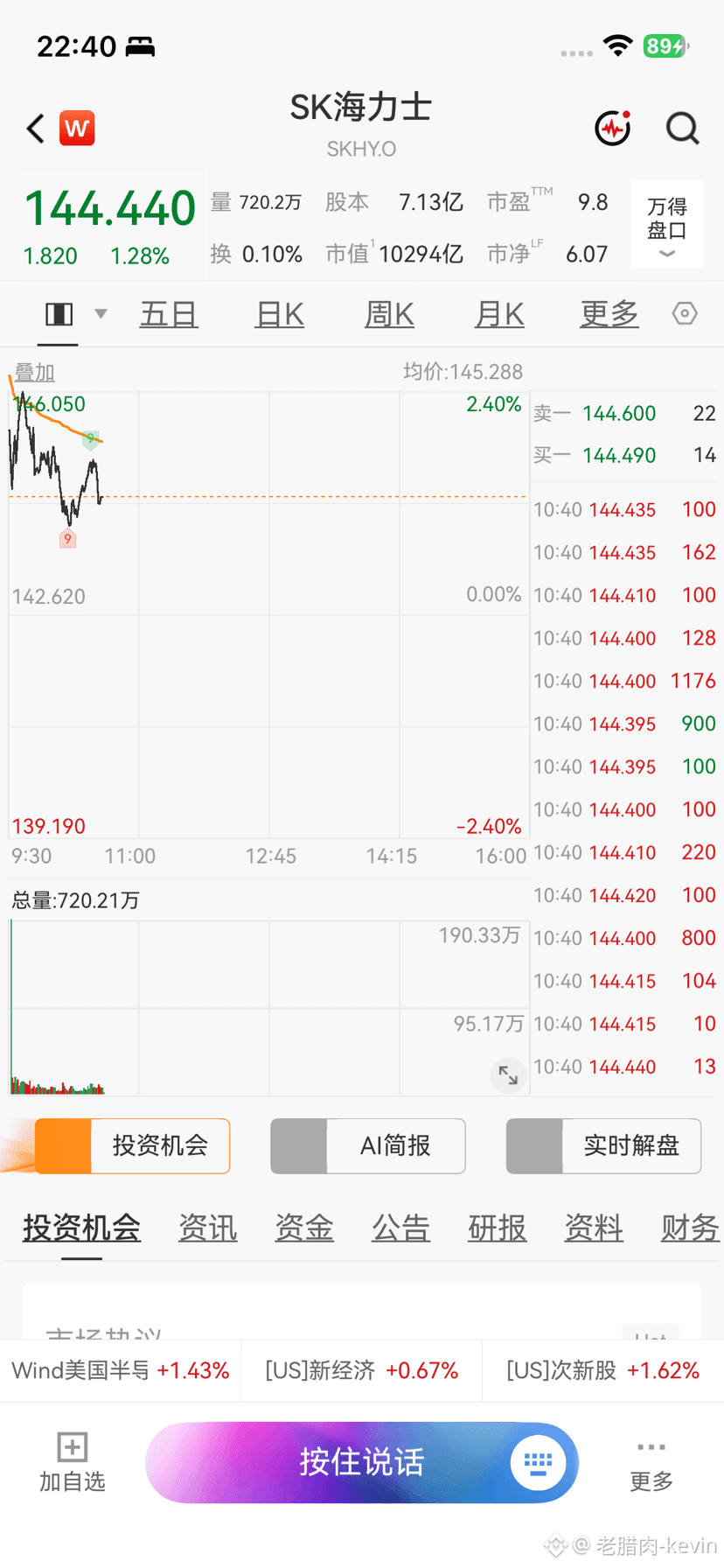
Hynix is making a killing—but the market isn’t buying it?
Guys, SK Hynix’s Q3 results are out. Revenue came in at 104.6 trillion won and operating profit at 83.3 trillion, both crushing expectations. The average DRAM price rose more than 20% quarter over quarter, while NAND prices climbed by the mid-20% range—a pure price-hike story.
But net profit was a major miss: 39.5 trillion won versus expectations of 60.7 trillion, a full 21 trillion short. In other words, operating profits were through the roof, but taxes, foreign exchange, one-off items, and the accounting treatment of shareholder returns ate into net profit.
The shareholder returns are seriously massive. 100 trillion won for the full year: 30 trillion in cash dividends plus 60 trillion in share buybacks and cancellations. Q3’s dividend is 20,000 won per share, including a special 10,000-won dividend from investment gains in Kioxia. That’s seven times last year’s total, and puts Hynix in a race with Samsung for the title of “Korea’s biggest shareholder return.”
Highlights from the earnings call: the company said outright that the memory shortage will last until 2030, quarterly earnings haven’t peaked, and the uptrend won’t reverse before 2027. DRAM demand is expected to grow in the mid-20% range next year, while NAND is forecast to grow at a high-teens rate. Translation: don’t panic—the price hikes aren’t over yet.
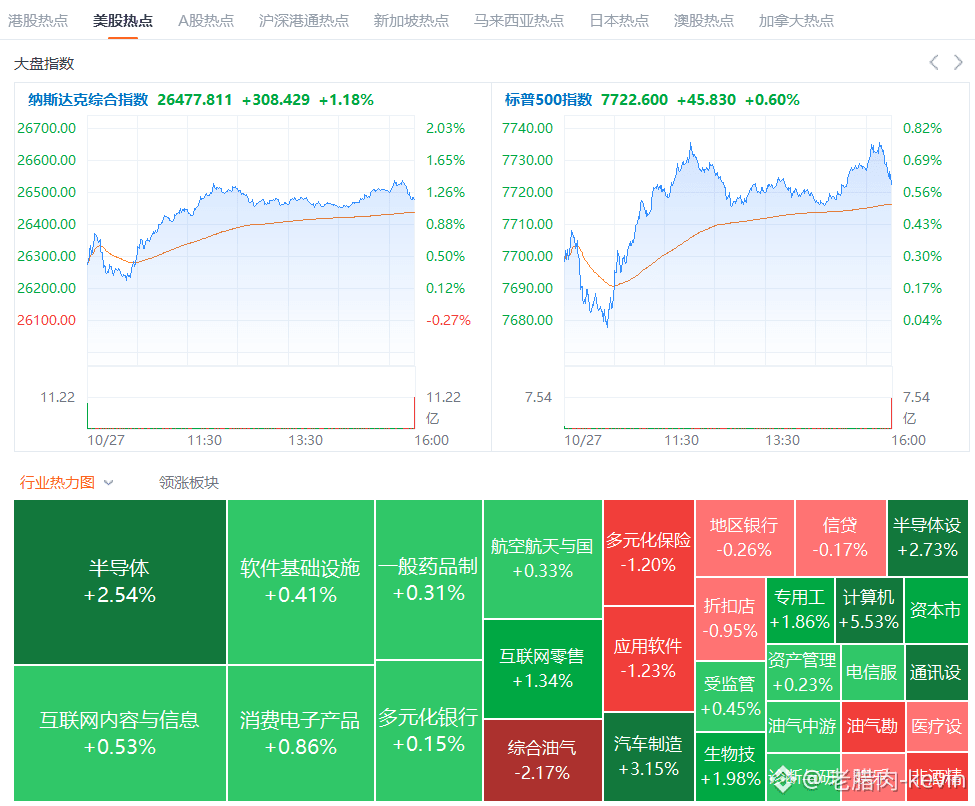
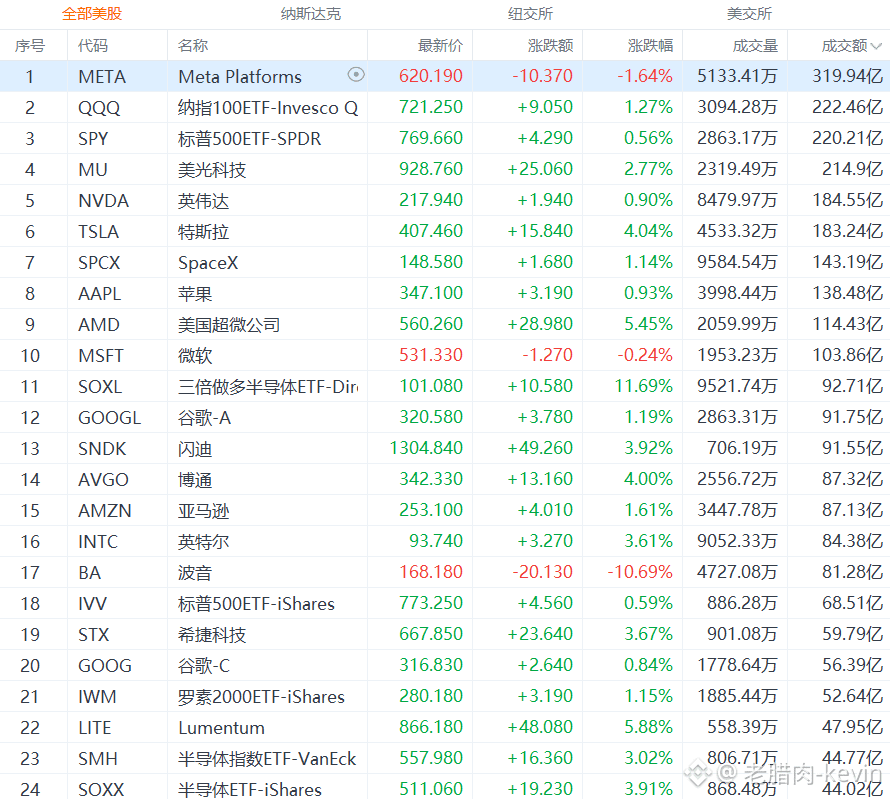
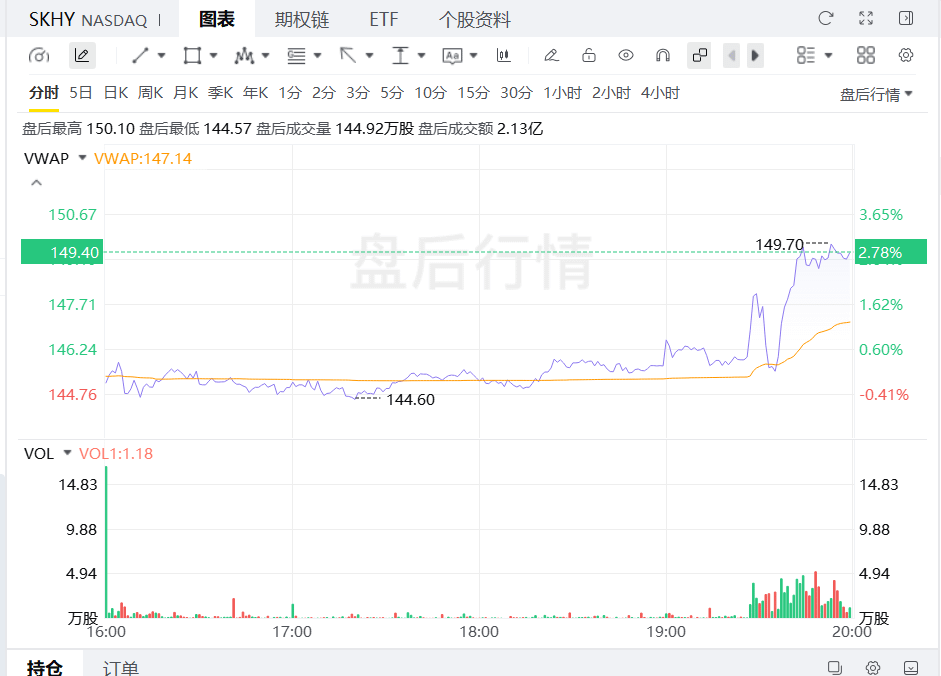
Is the AI trade back? ADRs were up only around 3% premarket. Despite blockbuster results, the stock’s modest gains suggest the market is waiting for tonight’s Fed news and earnings from Microsoft and Google. The money hasn’t left, but it hasn’t gone wild either. $SKHYNIX $SKHY $KORU
Guys, SK Hynix’s Q3 results are out. Revenue came in at 104.6 trillion won and operating profit at 83.3 trillion, both crushing expectations. The average DRAM price rose more than 20% quarter over quarter, while NAND prices climbed by the mid-20% range—a pure price-hike story.
But net profit was a major miss: 39.5 trillion won versus expectations of 60.7 trillion, a full 21 trillion short. In other words, operating profits were through the roof, but taxes, foreign exchange, one-off items, and the accounting treatment of shareholder returns ate into net profit.
The shareholder returns are seriously massive. 100 trillion won for the full year: 30 trillion in cash dividends plus 60 trillion in share buybacks and cancellations. Q3’s dividend is 20,000 won per share, including a special 10,000-won dividend from investment gains in Kioxia. That’s seven times last year’s total, and puts Hynix in a race with Samsung for the title of “Korea’s biggest shareholder return.”
Highlights from the earnings call: the company said outright that the memory shortage will last until 2030, quarterly earnings haven’t peaked, and the uptrend won’t reverse before 2027. DRAM demand is expected to grow in the mid-20% range next year, while NAND is forecast to grow at a high-teens rate. Translation: don’t panic—the price hikes aren’t over yet.
Is the AI trade back? ADRs were up only around 3% premarket. Despite blockbuster results, the stock’s modest gains suggest the market is waiting for tonight’s Fed news and earnings from Microsoft and Google. The money hasn’t left, but it hasn’t gone wild either. $SKHYNIX $SKHY $KORU
Verified
老腊肉-kevin
·
--
#微软财报能否兑现ai红利 Microsoft reports after the close—can Azure keep its foot on the gas?
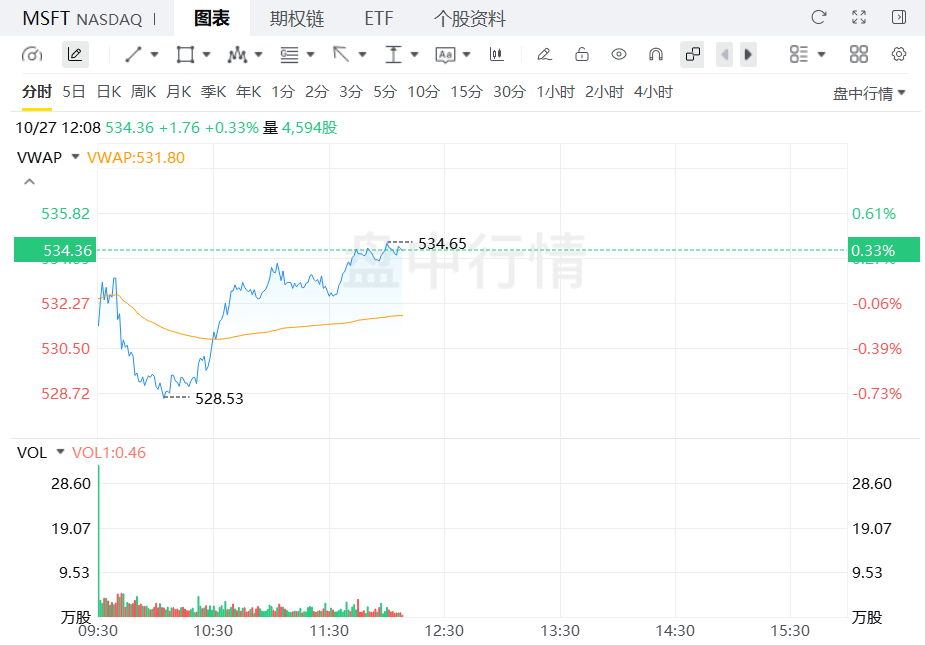
Hey everyone, Microsoft releases its Q1 earnings after the close on the 28th. It’s currently at 532.6, with overnight trading dipping slightly to around 529. Here’s the takeaway: beating expectations shouldn’t be hard; the real question is whether the market will be impressed.
The market expects EPS of 4.71, revenue of $90.6 billion, and Azure growth guidance of 44–45%. But Morgan Stanley has already raised its expectation to 47%, which means 45% is merely the pass mark.
If Azure growth doesn’t top 46%, the stock will probably take a hit after hours. Copilot’s 30 million paid seats are a strong card, but quarterly capex is over $50 billion, gross margins are still declining, and AI gains are being realized more slowly than the money is being spent. That’s the real risk.
How are the options traders positioning? Clearly bearish.
A couple of days ago, someone sold $1.56 million worth of out-of-the-money 540 calls, while someone else used a $9.63 million bear call spread to cap gains between 555 and 575. The call/put volume ratio looks like 1.55, but the big trades are all selling upside.
In other words, institutions don’t think it’ll break through the 535–550 range. Implied volatility is pricing in a move of about 5.3%, so there’s opportunity on either side—but the big money is collecting premium, not chasing the rally.
My take: if Azure growth tops 46%, the stock could touch 550 after hours; if it comes in at just 44–45%, even holding 535 is an open question. $MSFTB $MSFT $SOXL
Hey everyone, Microsoft releases its Q1 earnings after the close on the 28th. It’s currently at 532.6, with overnight trading dipping slightly to around 529. Here’s the takeaway: beating expectations shouldn’t be hard; the real question is whether the market will be impressed.
The market expects EPS of 4.71, revenue of $90.6 billion, and Azure growth guidance of 44–45%. But Morgan Stanley has already raised its expectation to 47%, which means 45% is merely the pass mark.
If Azure growth doesn’t top 46%, the stock will probably take a hit after hours. Copilot’s 30 million paid seats are a strong card, but quarterly capex is over $50 billion, gross margins are still declining, and AI gains are being realized more slowly than the money is being spent. That’s the real risk.
How are the options traders positioning? Clearly bearish.
A couple of days ago, someone sold $1.56 million worth of out-of-the-money 540 calls, while someone else used a $9.63 million bear call spread to cap gains between 555 and 575. The call/put volume ratio looks like 1.55, but the big trades are all selling upside.
In other words, institutions don’t think it’ll break through the 535–550 range. Implied volatility is pricing in a move of about 5.3%, so there’s opportunity on either side—but the big money is collecting premium, not chasing the rally.
My take: if Azure growth tops 46%, the stock could touch 550 after hours; if it comes in at just 44–45%, even holding 535 is an open question. $MSFTB $MSFT $SOXL
老腊肉-kevin
·
--
#谷歌财报能否守住基本盘 Google reports after the bell—how much real money are options traders putting on this time?
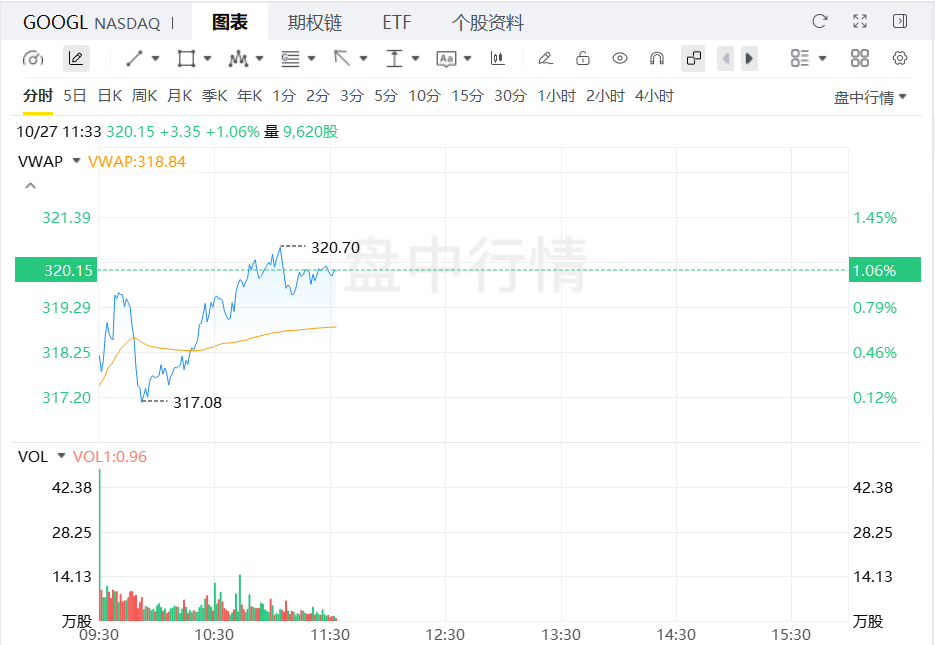
Guys, Google reports Q3 after the market closes on the 28th. It’s currently at 316.8, bringing up the rear among the Mag7 this year, up just 2%. But the options market has already voted with its feet.
Will it beat expectations? Revenue probably won’t be an issue. The market expects $127.8 billion, up 25% year over year, with cloud growth heading toward 90% or more.
But remember the lesson from Q2: the results beat expectations, yet the stock still got hammered 7% because capex exploded and free cash flow turned negative for the first time since the company went public. This time, the focus isn’t revenue—it’s whether the capex guidance gets raised again, and how big the cash-flow hole will be.
How are options traders betting?
Bullish, but hedged. The weekly call/put ratio has hit 2.6 to 1, and the put/call open-interest ratio is 0.72, so calls are clearly in the lead. But don’t get carried away—the 25-delta skew has surged to 13, and put premiums are rising. That means bulls are buying upside while also paying for downside protection. Implied volatility is pricing in a roughly 6% one-day move, putting the range at 303 to 338.
My take: options traders are betting that “cloud can hold up and Search won’t crack.” But the real risk is on the earnings call—Pichai has already said computing resources are being allocated to DeepMind, while Google’s own people are putting a ceiling on the cloud business. The bias is bullish, but don’t chase the rally.$GOOGL $GOOGLB $SOXL
Guys, Google reports Q3 after the market closes on the 28th. It’s currently at 316.8, bringing up the rear among the Mag7 this year, up just 2%. But the options market has already voted with its feet.
Will it beat expectations? Revenue probably won’t be an issue. The market expects $127.8 billion, up 25% year over year, with cloud growth heading toward 90% or more.
But remember the lesson from Q2: the results beat expectations, yet the stock still got hammered 7% because capex exploded and free cash flow turned negative for the first time since the company went public. This time, the focus isn’t revenue—it’s whether the capex guidance gets raised again, and how big the cash-flow hole will be.
How are options traders betting?
Bullish, but hedged. The weekly call/put ratio has hit 2.6 to 1, and the put/call open-interest ratio is 0.72, so calls are clearly in the lead. But don’t get carried away—the 25-delta skew has surged to 13, and put premiums are rising. That means bulls are buying upside while also paying for downside protection. Implied volatility is pricing in a roughly 6% one-day move, putting the range at 303 to 338.
My take: options traders are betting that “cloud can hold up and Search won’t crack.” But the real risk is on the earnings call—Pichai has already said computing resources are being allocated to DeepMind, while Google’s own people are putting a ceiling on the cloud business. The bias is bullish, but don’t chase the rally.$GOOGL $GOOGLB $SOXL
老腊肉-kevin
·
--
#fomc会议 FOMC29 early morning decision, how long can Waller keep up that hawkish tone? How should AI and BTC be positioned?
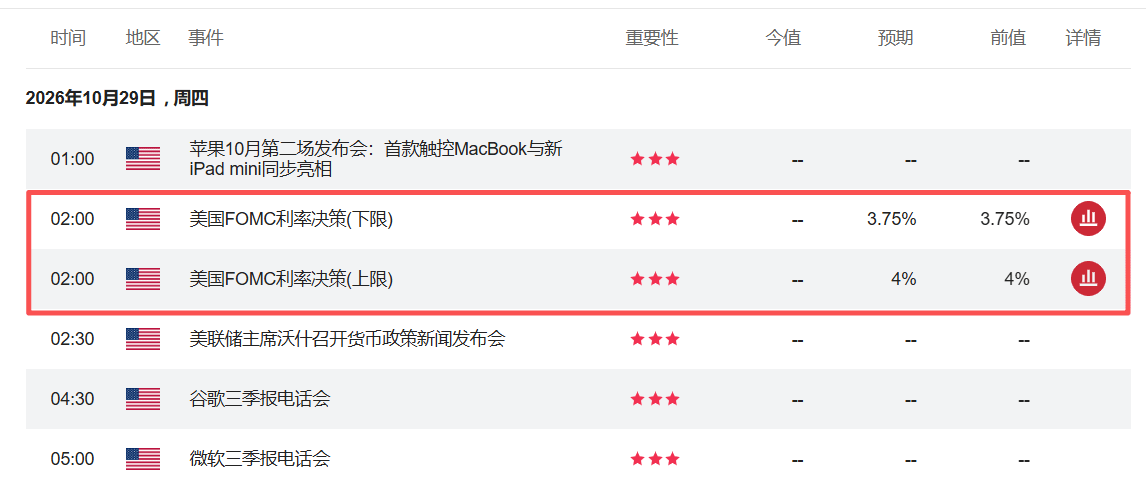
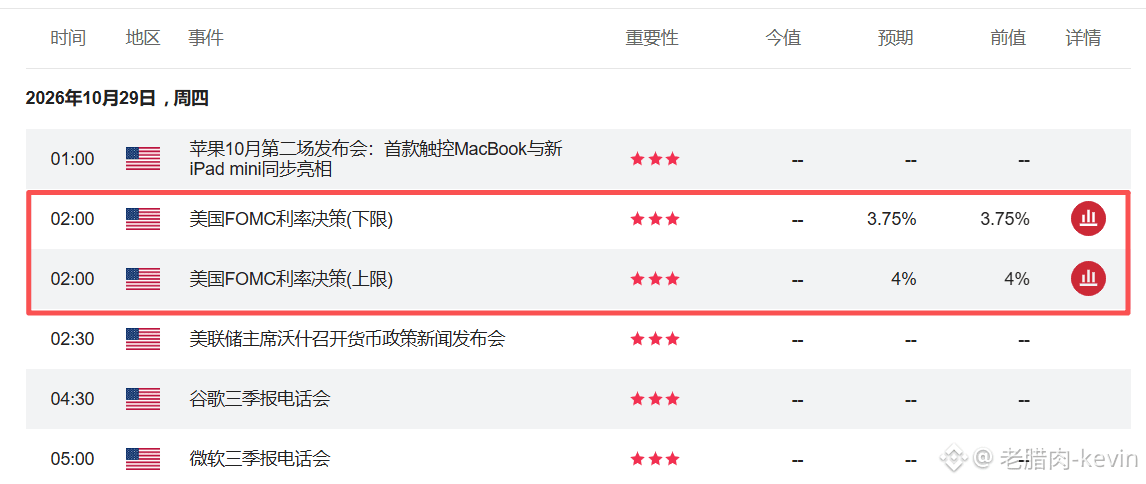
Brothers, at 2 a.m. on the 29th, FOMC is coming, and the market has already priced in a “hold” — interest rate futures are putting the probability of no move in October above 90%. But the real action is not in the decision, it’s in Waller’s mouth at 2:30.
Is Waller hawkish? Most likely, yes.
The guy was famously hawkish back when he was at the Fed, and although he’s sounded softer lately, inflation expectations have jumped to 4.7%, so there’s no way he’s going to sound dovish right now. Bloomberg put it bluntly: Waller’s challenge is to reassure the market that “we’re still fighting inflation” while also explaining why they’re not hiking this time. In plain English: hawkish words, steady hands, and the script is another hike in December.
How to position for AI?
The Nasdaq closed yesterday at 26,169, up 0.82%. But if Waller stays tough on the 29th, tech stocks, as long-duration assets, will be the first to get hit. My approach: don’t chase before the meeting; wait for the dip after the 2:30 speech. The AI narrative isn’t broken — what’s broken is the valuation’s sensitivity to rates.
What about BTC?
Current price is 79,756, and it still can’t get back above 80k. Classic “playing dead before the meeting.” BTC is basically the dog most sensitive to macro liquidity right now: if Waller sounds hawkish, 78k is in play; if he sounds softer, 82k gets tested. But don’t bet on direction — wait until he’s done speaking before acting. $SOXL $SKHY $BTC
The decision itself is not the big move; the press conference is the real landmine.
Brothers, at 2 a.m. on the 29th, FOMC is coming, and the market has already priced in a “hold” — interest rate futures are putting the probability of no move in October above 90%. But the real action is not in the decision, it’s in Waller’s mouth at 2:30.
Is Waller hawkish? Most likely, yes.
The guy was famously hawkish back when he was at the Fed, and although he’s sounded softer lately, inflation expectations have jumped to 4.7%, so there’s no way he’s going to sound dovish right now. Bloomberg put it bluntly: Waller’s challenge is to reassure the market that “we’re still fighting inflation” while also explaining why they’re not hiking this time. In plain English: hawkish words, steady hands, and the script is another hike in December.
How to position for AI?
The Nasdaq closed yesterday at 26,169, up 0.82%. But if Waller stays tough on the 29th, tech stocks, as long-duration assets, will be the first to get hit. My approach: don’t chase before the meeting; wait for the dip after the 2:30 speech. The AI narrative isn’t broken — what’s broken is the valuation’s sensitivity to rates.
What about BTC?
Current price is 79,756, and it still can’t get back above 80k. Classic “playing dead before the meeting.” BTC is basically the dog most sensitive to macro liquidity right now: if Waller sounds hawkish, 78k is in play; if he sounds softer, 82k gets tested. But don’t bet on direction — wait until he’s done speaking before acting. $SOXL $SKHY $BTC
The decision itself is not the big move; the press conference is the real landmine.
老腊肉-kevin
·
--
Before the U.S. market opens today, Coca-Cola, Corning, and Boeing report earnings. How is the options market betting?
Guys, these three earnings reports before tonight’s market open may be from the same old names, but the options market has already made its stance clear.
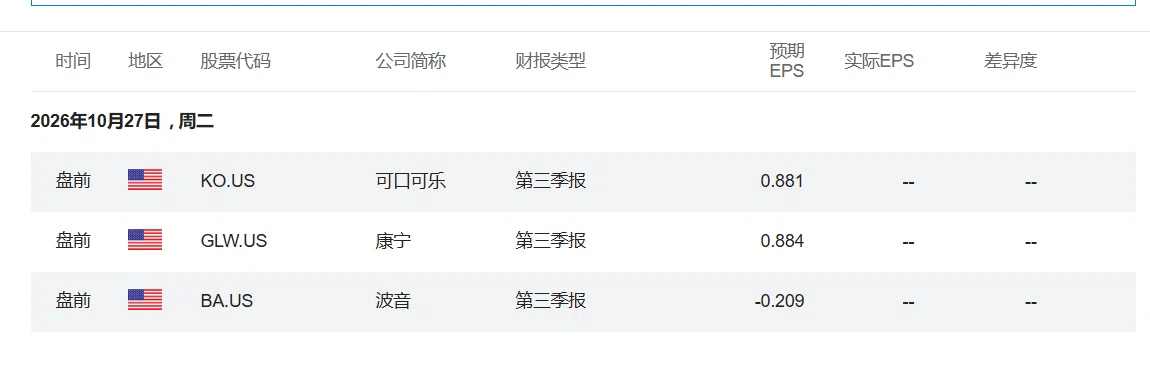
Coca-Cola: EPS is expected at 0.88, with revenue of 129 billion. But the stock is already up 35% this year, and its options Put/Call ratio is 0.99—dead neutral, with neither bulls nor bears willing to make a big bet. What the market is really watching isn’t EPS, but whether things can improve after Asia-Pacific sales rose while price mix fell 9%. More volume, lower prices: lots of sales, but not much profit.
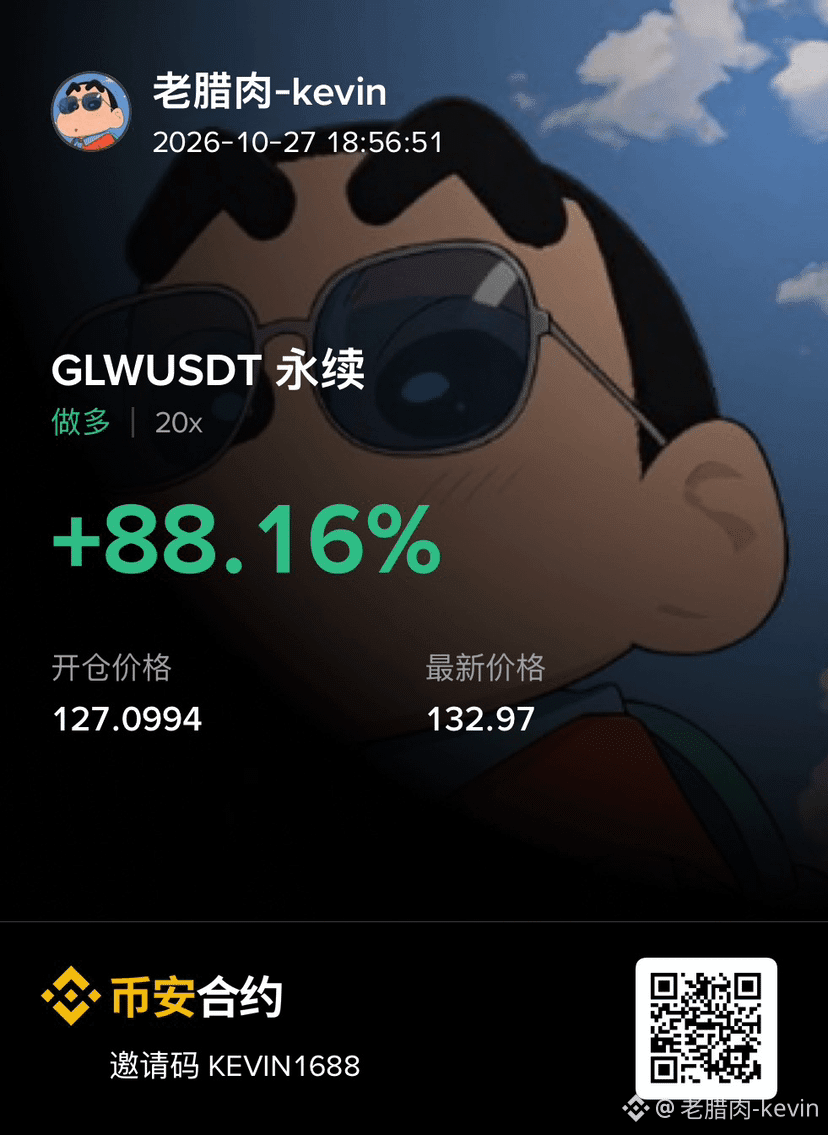
Corning: EPS is expected at 0.88, with revenue of 5 billion. Its options Call/Put ratio is 1.3, tilting bullish. The thesis is solid: demand for fiber optics in AI data centers, plus contracts with Amazon, Nvidia, and Meta. The Zacks model has also tagged it as “likely to beat expectations.” But remember, the stock fell 12% the day after its last earnings report. This one can get hammered even when results are good.
Boeing: a loss of 0.21 is expected, with revenue of 23.8 billion. Options are pricing in a 5.73% move in either direction, well above the 4% average over the past four reports. Betting up or down? Hard to say, but the direction is clear: the market is betting on a big move. The 737 MAX 10 just got certified, but cash-flow guidance is the real make-or-break issue, and the stock is just a step away from its 52-week low.
For Coke, it’s about whether margins can hold up. For Corning, it’s whether the AI story can deliver. For Boeing, it’s whether its cash-flow outlook will make any sense. Options traders are the most honest of all: nobody’s betting on Coke, Corning is leaning bullish but wary of a sell-off, and Boeing is simply a bet on a wild ride. $GLW $KO #美股财报季 #Ondo下周开放OpenAI上市前代币化票据认购
Guys, these three earnings reports before tonight’s market open may be from the same old names, but the options market has already made its stance clear.
Coca-Cola: EPS is expected at 0.88, with revenue of 129 billion. But the stock is already up 35% this year, and its options Put/Call ratio is 0.99—dead neutral, with neither bulls nor bears willing to make a big bet. What the market is really watching isn’t EPS, but whether things can improve after Asia-Pacific sales rose while price mix fell 9%. More volume, lower prices: lots of sales, but not much profit.
Corning: EPS is expected at 0.88, with revenue of 5 billion. Its options Call/Put ratio is 1.3, tilting bullish. The thesis is solid: demand for fiber optics in AI data centers, plus contracts with Amazon, Nvidia, and Meta. The Zacks model has also tagged it as “likely to beat expectations.” But remember, the stock fell 12% the day after its last earnings report. This one can get hammered even when results are good.
Boeing: a loss of 0.21 is expected, with revenue of 23.8 billion. Options are pricing in a 5.73% move in either direction, well above the 4% average over the past four reports. Betting up or down? Hard to say, but the direction is clear: the market is betting on a big move. The 737 MAX 10 just got certified, but cash-flow guidance is the real make-or-break issue, and the stock is just a step away from its 52-week low.
For Coke, it’s about whether margins can hold up. For Corning, it’s whether the AI story can deliver. For Boeing, it’s whether its cash-flow outlook will make any sense. Options traders are the most honest of all: nobody’s betting on Coke, Corning is leaning bullish but wary of a sell-off, and Boeing is simply a bet on a wild ride. $GLW $KO #美股财报季 #Ondo下周开放OpenAI上市前代币化票据认购
老腊肉-kevin
·
--
Before the U.S. market opens today, Coca-Cola, Corning, and Boeing report earnings. How is the options market betting?
Guys, these three earnings reports before tonight’s market open may be from the same old names, but the options market has already made its stance clear.
Coca-Cola: EPS is expected at 0.88, with revenue of 129 billion. But the stock is already up 35% this year, and its options Put/Call ratio is 0.99—dead neutral, with neither bulls nor bears willing to make a big bet. What the market is really watching isn’t EPS, but whether things can improve after Asia-Pacific sales rose while price mix fell 9%. More volume, lower prices: lots of sales, but not much profit.
Corning: EPS is expected at 0.88, with revenue of 5 billion. Its options Call/Put ratio is 1.3, tilting bullish. The thesis is solid: demand for fiber optics in AI data centers, plus contracts with Amazon, Nvidia, and Meta. The Zacks model has also tagged it as “likely to beat expectations.” But remember, the stock fell 12% the day after its last earnings report. This one can get hammered even when results are good.
Boeing: a loss of 0.21 is expected, with revenue of 23.8 billion. Options are pricing in a 5.73% move in either direction, well above the 4% average over the past four reports. Betting up or down? Hard to say, but the direction is clear: the market is betting on a big move. The 737 MAX 10 just got certified, but cash-flow guidance is the real make-or-break issue, and the stock is just a step away from its 52-week low.
For Coke, it’s about whether margins can hold up. For Corning, it’s whether the AI story can deliver. For Boeing, it’s whether its cash-flow outlook will make any sense. Options traders are the most honest of all: nobody’s betting on Coke, Corning is leaning bullish but wary of a sell-off, and Boeing is simply a bet on a wild ride. $GLW $KO #美股财报季 #Ondo下周开放OpenAI上市前代币化票据认购
Guys, these three earnings reports before tonight’s market open may be from the same old names, but the options market has already made its stance clear.
Coca-Cola: EPS is expected at 0.88, with revenue of 129 billion. But the stock is already up 35% this year, and its options Put/Call ratio is 0.99—dead neutral, with neither bulls nor bears willing to make a big bet. What the market is really watching isn’t EPS, but whether things can improve after Asia-Pacific sales rose while price mix fell 9%. More volume, lower prices: lots of sales, but not much profit.
Corning: EPS is expected at 0.88, with revenue of 5 billion. Its options Call/Put ratio is 1.3, tilting bullish. The thesis is solid: demand for fiber optics in AI data centers, plus contracts with Amazon, Nvidia, and Meta. The Zacks model has also tagged it as “likely to beat expectations.” But remember, the stock fell 12% the day after its last earnings report. This one can get hammered even when results are good.
Boeing: a loss of 0.21 is expected, with revenue of 23.8 billion. Options are pricing in a 5.73% move in either direction, well above the 4% average over the past four reports. Betting up or down? Hard to say, but the direction is clear: the market is betting on a big move. The 737 MAX 10 just got certified, but cash-flow guidance is the real make-or-break issue, and the stock is just a step away from its 52-week low.
For Coke, it’s about whether margins can hold up. For Corning, it’s whether the AI story can deliver. For Boeing, it’s whether its cash-flow outlook will make any sense. Options traders are the most honest of all: nobody’s betting on Coke, Corning is leaning bullish but wary of a sell-off, and Boeing is simply a bet on a wild ride. $GLW $KO #美股财报季 #Ondo下周开放OpenAI上市前代币化票据认购
老腊肉-kevin
·
--
Before the U.S. market opens today, Coca-Cola, Corning, and Boeing report earnings. How is the options market betting?
Guys, these three earnings reports before tonight’s market open may be from the same old names, but the options market has already made its stance clear.
Coca-Cola: EPS is expected at 0.88, with revenue of 129 billion. But the stock is already up 35% this year, and its options Put/Call ratio is 0.99—dead neutral, with neither bulls nor bears willing to make a big bet. What the market is really watching isn’t EPS, but whether things can improve after Asia-Pacific sales rose while price mix fell 9%. More volume, lower prices: lots of sales, but not much profit.
Corning: EPS is expected at 0.88, with revenue of 5 billion. Its options Call/Put ratio is 1.3, tilting bullish. The thesis is solid: demand for fiber optics in AI data centers, plus contracts with Amazon, Nvidia, and Meta. The Zacks model has also tagged it as “likely to beat expectations.” But remember, the stock fell 12% the day after its last earnings report. This one can get hammered even when results are good.
Boeing: a loss of 0.21 is expected, with revenue of 23.8 billion. Options are pricing in a 5.73% move in either direction, well above the 4% average over the past four reports. Betting up or down? Hard to say, but the direction is clear: the market is betting on a big move. The 737 MAX 10 just got certified, but cash-flow guidance is the real make-or-break issue, and the stock is just a step away from its 52-week low.
For Coke, it’s about whether margins can hold up. For Corning, it’s whether the AI story can deliver. For Boeing, it’s whether its cash-flow outlook will make any sense. Options traders are the most honest of all: nobody’s betting on Coke, Corning is leaning bullish but wary of a sell-off, and Boeing is simply a bet on a wild ride. $GLW $KO #美股财报季 #Ondo下周开放OpenAI上市前代币化票据认购
Guys, these three earnings reports before tonight’s market open may be from the same old names, but the options market has already made its stance clear.
Coca-Cola: EPS is expected at 0.88, with revenue of 129 billion. But the stock is already up 35% this year, and its options Put/Call ratio is 0.99—dead neutral, with neither bulls nor bears willing to make a big bet. What the market is really watching isn’t EPS, but whether things can improve after Asia-Pacific sales rose while price mix fell 9%. More volume, lower prices: lots of sales, but not much profit.
Corning: EPS is expected at 0.88, with revenue of 5 billion. Its options Call/Put ratio is 1.3, tilting bullish. The thesis is solid: demand for fiber optics in AI data centers, plus contracts with Amazon, Nvidia, and Meta. The Zacks model has also tagged it as “likely to beat expectations.” But remember, the stock fell 12% the day after its last earnings report. This one can get hammered even when results are good.
Boeing: a loss of 0.21 is expected, with revenue of 23.8 billion. Options are pricing in a 5.73% move in either direction, well above the 4% average over the past four reports. Betting up or down? Hard to say, but the direction is clear: the market is betting on a big move. The 737 MAX 10 just got certified, but cash-flow guidance is the real make-or-break issue, and the stock is just a step away from its 52-week low.
For Coke, it’s about whether margins can hold up. For Corning, it’s whether the AI story can deliver. For Boeing, it’s whether its cash-flow outlook will make any sense. Options traders are the most honest of all: nobody’s betting on Coke, Corning is leaning bullish but wary of a sell-off, and Boeing is simply a bet on a wild ride. $GLW $KO #美股财报季 #Ondo下周开放OpenAI上市前代币化票据认购
老腊肉-kevin
·
--
#比特币再度跌破8万美元 Bitcoin has fallen to its knees again. MicroStrategy has stopped buying, ETFs have gone soft, and where will the fresh capital come from?
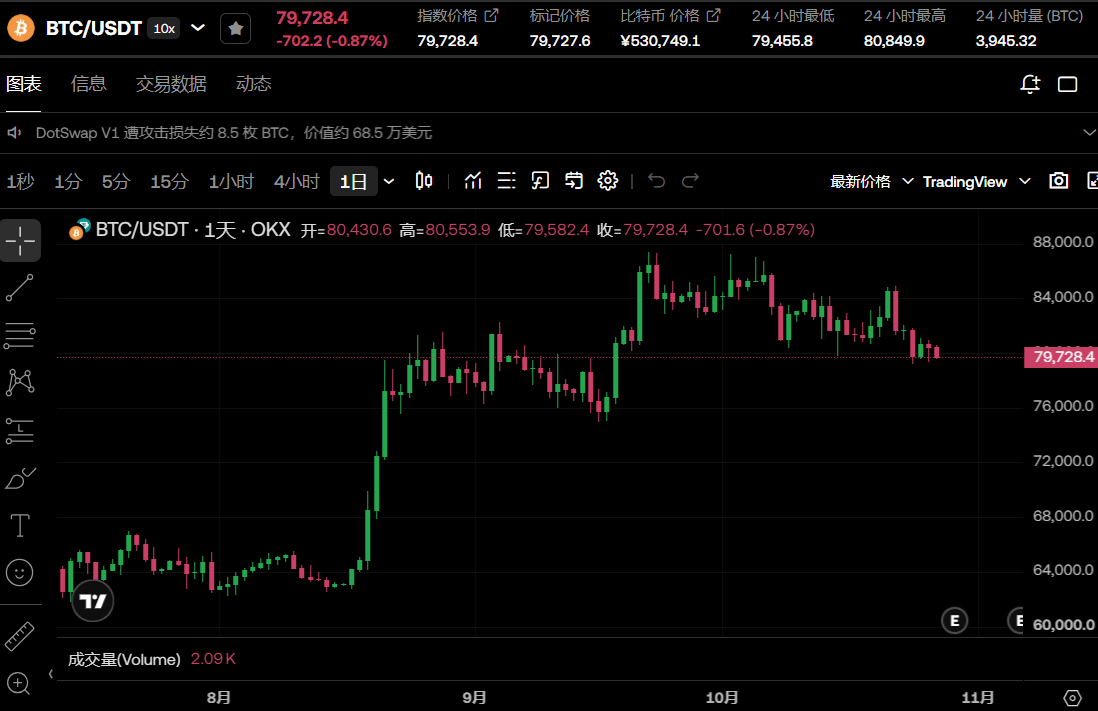
Guys, BTC is currently at 80,129. It still looks like it’s holding above 80K, but something feels off in the market. Over the past 24 hours, $154 million in positions were liquidated across the crypto market, including $118 million in longs. Everyone betting on a rally got wiped out. The 79,400–79,600 range is this week’s last line of defense: buyers have stepped in every time the price has dipped there, but each rebound has stalled at 80,800.
Two longtime bulls have hit the brakes at the same time.
MicroStrategy didn’t buy a single BTC last week, ending its five-week buying streak. Instead, it spent $205 million on preferred stock buybacks. Its cash balance dropped from $447 million to $242 million, and its ammunition is visibly running low.
The ETF picture is even messier. They posted net inflows of $301 million for the week, but $773 million flowed out on Thursday and Friday. Thursday’s $636 million outflow was the largest single-day outflow since October. The Coinbase Premium Index has been negative for 33 consecutive days. U.S. spot buying is genuinely exhausted.
Where will the fresh capital come from?
Honestly, there’s no sign of it right now. The Fed’s decision is due early Thursday, and the market is betting it will hold steady, but expectations of a December rate hike have already surged to nearly 80%. Earnings reports from the tech giants are dropping one after another this week, and the AI narrative is sucking up a lot of risk appetite. Investors would rather bet on Nvidia than touch crypto. The risk of MicroStrategy being dropped from the MSCI index is still hanging over it; we’ll know on November 11, and passive funds could pull out in another wave.
80K is a cover-up, not a bottom. With MicroStrategy pausing its buying, ETFs acting erratically, and macro pressures mounting, don’t expect big money to come in and lift the market anytime soon. If you’re waiting for fresh capital, watch for two signals: the Fed softening its tone, or MicroStrategy pulling the trigger again. $BTC $ETH $MSTR #Strategy未购比特币斥资2.05亿美元回购STRC
Guys, BTC is currently at 80,129. It still looks like it’s holding above 80K, but something feels off in the market. Over the past 24 hours, $154 million in positions were liquidated across the crypto market, including $118 million in longs. Everyone betting on a rally got wiped out. The 79,400–79,600 range is this week’s last line of defense: buyers have stepped in every time the price has dipped there, but each rebound has stalled at 80,800.
Two longtime bulls have hit the brakes at the same time.
MicroStrategy didn’t buy a single BTC last week, ending its five-week buying streak. Instead, it spent $205 million on preferred stock buybacks. Its cash balance dropped from $447 million to $242 million, and its ammunition is visibly running low.
The ETF picture is even messier. They posted net inflows of $301 million for the week, but $773 million flowed out on Thursday and Friday. Thursday’s $636 million outflow was the largest single-day outflow since October. The Coinbase Premium Index has been negative for 33 consecutive days. U.S. spot buying is genuinely exhausted.
Where will the fresh capital come from?
Honestly, there’s no sign of it right now. The Fed’s decision is due early Thursday, and the market is betting it will hold steady, but expectations of a December rate hike have already surged to nearly 80%. Earnings reports from the tech giants are dropping one after another this week, and the AI narrative is sucking up a lot of risk appetite. Investors would rather bet on Nvidia than touch crypto. The risk of MicroStrategy being dropped from the MSCI index is still hanging over it; we’ll know on November 11, and passive funds could pull out in another wave.
80K is a cover-up, not a bottom. With MicroStrategy pausing its buying, ETFs acting erratically, and macro pressures mounting, don’t expect big money to come in and lift the market anytime soon. If you’re waiting for fresh capital, watch for two signals: the Fed softening its tone, or MicroStrategy pulling the trigger again. $BTC $ETH $MSTR #Strategy未购比特币斥资2.05亿美元回购STRC
老腊肉-kevin
·
--
#比特币再度跌破8万美元 Bitcoin has fallen to its knees again. MicroStrategy has stopped buying, ETFs have gone soft, and where will the fresh capital come from?
Guys, BTC is currently at 80,129. It still looks like it’s holding above 80K, but something feels off in the market. Over the past 24 hours, $154 million in positions were liquidated across the crypto market, including $118 million in longs. Everyone betting on a rally got wiped out. The 79,400–79,600 range is this week’s last line of defense: buyers have stepped in every time the price has dipped there, but each rebound has stalled at 80,800.
Two longtime bulls have hit the brakes at the same time.
MicroStrategy didn’t buy a single BTC last week, ending its five-week buying streak. Instead, it spent $205 million on preferred stock buybacks. Its cash balance dropped from $447 million to $242 million, and its ammunition is visibly running low.
The ETF picture is even messier. They posted net inflows of $301 million for the week, but $773 million flowed out on Thursday and Friday. Thursday’s $636 million outflow was the largest single-day outflow since October. The Coinbase Premium Index has been negative for 33 consecutive days. U.S. spot buying is genuinely exhausted.
Where will the fresh capital come from?
Honestly, there’s no sign of it right now. The Fed’s decision is due early Thursday, and the market is betting it will hold steady, but expectations of a December rate hike have already surged to nearly 80%. Earnings reports from the tech giants are dropping one after another this week, and the AI narrative is sucking up a lot of risk appetite. Investors would rather bet on Nvidia than touch crypto. The risk of MicroStrategy being dropped from the MSCI index is still hanging over it; we’ll know on November 11, and passive funds could pull out in another wave.
80K is a cover-up, not a bottom. With MicroStrategy pausing its buying, ETFs acting erratically, and macro pressures mounting, don’t expect big money to come in and lift the market anytime soon. If you’re waiting for fresh capital, watch for two signals: the Fed softening its tone, or MicroStrategy pulling the trigger again. $BTC $ETH $MSTR #Strategy未购比特币斥资2.05亿美元回购STRC
Guys, BTC is currently at 80,129. It still looks like it’s holding above 80K, but something feels off in the market. Over the past 24 hours, $154 million in positions were liquidated across the crypto market, including $118 million in longs. Everyone betting on a rally got wiped out. The 79,400–79,600 range is this week’s last line of defense: buyers have stepped in every time the price has dipped there, but each rebound has stalled at 80,800.
Two longtime bulls have hit the brakes at the same time.
MicroStrategy didn’t buy a single BTC last week, ending its five-week buying streak. Instead, it spent $205 million on preferred stock buybacks. Its cash balance dropped from $447 million to $242 million, and its ammunition is visibly running low.
The ETF picture is even messier. They posted net inflows of $301 million for the week, but $773 million flowed out on Thursday and Friday. Thursday’s $636 million outflow was the largest single-day outflow since October. The Coinbase Premium Index has been negative for 33 consecutive days. U.S. spot buying is genuinely exhausted.
Where will the fresh capital come from?
Honestly, there’s no sign of it right now. The Fed’s decision is due early Thursday, and the market is betting it will hold steady, but expectations of a December rate hike have already surged to nearly 80%. Earnings reports from the tech giants are dropping one after another this week, and the AI narrative is sucking up a lot of risk appetite. Investors would rather bet on Nvidia than touch crypto. The risk of MicroStrategy being dropped from the MSCI index is still hanging over it; we’ll know on November 11, and passive funds could pull out in another wave.
80K is a cover-up, not a bottom. With MicroStrategy pausing its buying, ETFs acting erratically, and macro pressures mounting, don’t expect big money to come in and lift the market anytime soon. If you’re waiting for fresh capital, watch for two signals: the Fed softening its tone, or MicroStrategy pulling the trigger again. $BTC $ETH $MSTR #Strategy未购比特币斥资2.05亿美元回购STRC
Log in to explore more content