
Addy_ incrypto
201 Posts

Addy_ incrypto
Report
Block User
死磕SpaceX,Tesla,挑战500U做到10000U。
12 Following
39 Followers
160 Liked
Posts
All
Quotes
Videos
This Crypto Market Crash: Whales Exit—Is It All North Korean Hackers’ Fault?
From late October to mid-November 2026, Bitcoin fell from $81,000–$86,000 to around $62,000, a drawdown of nearly 50%. Many whales and long-term holders began reducing their positions, market sentiment plunged into extreme fear, and some even started saying “crypto is finished.” Some people pinned all the blame on a North Korean hacker attack on Binance.
Hackers Are a Real Threat, but Not the Main Cause
On October 29, approximately $6.3 billion was stolen from Binance in an attack linked to a North Korea-related hacking group. State-backed hackers can undermine trust, trigger panic, and cause liquidations. But the crypto market now has a distributed structure and ETF channels, Binance has pledged to cover the losses, and some assets have been frozen—making it difficult for a single attack to bring the market down. The prolonged decline cannot be explained by the hacking incident alone.
The Real Drivers: Multiple Factors Converging
1. Tightening macro conditions: Strong inflation and employment data fueled expectations of further rate hikes, Treasury yields topped 5%, and the dollar strengthened.
2. Institutional outflows: Spot Bitcoin ETFs saw cumulative net redemptions of nearly $3 billion.
3. Pressure across risk assets: The Nasdaq and AI stocks pulled back.
4. Leveraged liquidations amplified volatility: Stablecoin supply contracted sharply, and highly leveraged long positions were liquidated en masse.
The Binance incident was mainly a catalyst for market sentiment; the subsequent selling pressure came from macroeconomic conditions and capital flows. This is a significant correction, not the end of the industry. Decentralized protocols and institutional channels are still operating. Blaming the crash solely on North Korea is an oversimplification. What will truly determine the market’s direction is the macro environment, capital flows, and the industry’s ability to adapt.
$BTC $ETH
{future}(ETHUSDT)
{future}(BTCUSDT)
This Crypto Market Crash: Whales Exit—Is It All North Korean Hackers’ Fault?
From late October to mid-November 2026, Bitcoin fell from $81,000–$86,000 to around $62,000, a drawdown of nearly 50%. Many whales and long-term holders began reducing their positions, market sentiment plunged into extreme fear, and some even started saying “crypto is finished.” Some people pinned all the blame on a North Korean hacker attack on Binance.
Hackers Are a Real Threat, but Not the Main Cause
On October 29, approximately $6.3 billion was stolen from Binance in an attack linked to a North Korea-related hacking group. State-backed hackers can undermine trust, trigger panic, and cause liquidations. But the crypto market now has a distributed structure and ETF channels, Binance has pledged to cover the losses, and some assets have been frozen—making it difficult for a single attack to bring the market down. The prolonged decline cannot be explained by the hacking incident alone.
The Real Drivers: Multiple Factors Converging
1. Tightening macro conditions: Strong inflation and employment data fueled expectations of further rate hikes, Treasury yields topped 5%, and the dollar strengthened.
2. Institutional outflows: Spot Bitcoin ETFs saw cumulative net redemptions of nearly $3 billion.
3. Pressure across risk assets: The Nasdaq and AI stocks pulled back.
4. Leveraged liquidations amplified volatility: Stablecoin supply contracted sharply, and highly leveraged long positions were liquidated en masse.
The Binance incident was mainly a catalyst for market sentiment; the subsequent selling pressure came from macroeconomic conditions and capital flows. This is a significant correction, not the end of the industry. Decentralized protocols and institutional channels are still operating. Blaming the crash solely on North Korea is an oversimplification. What will truly determine the market’s direction is the macro environment, capital flows, and the industry’s ability to adapt.
$BTC $ETH
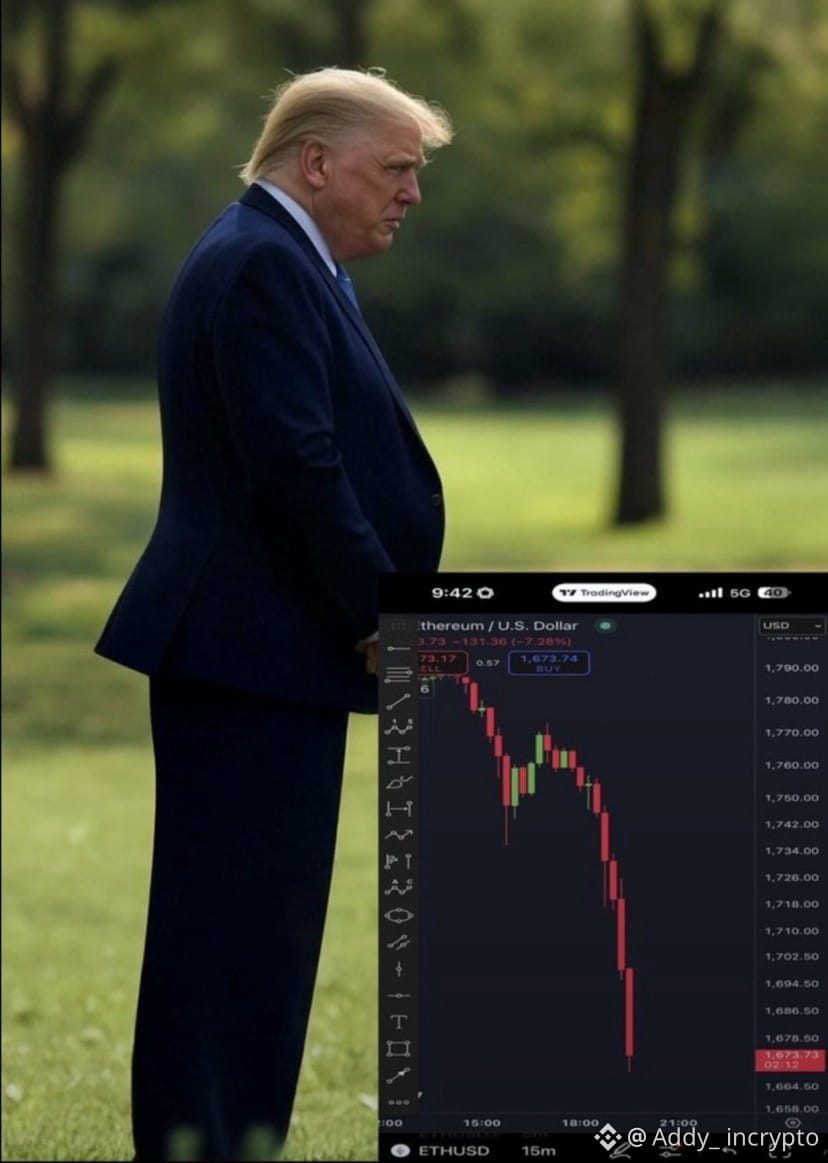
287
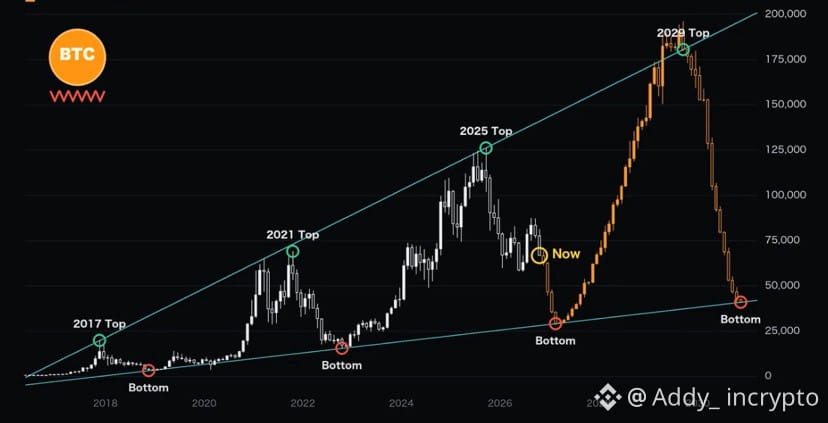
$BTC Trend Prediction
Ready to buy the dip and go all in?
{future}(BTCUSDT)
$BTC Trend Prediction
Ready to buy the dip and go all in?
Ready to buy the dip and go all in?
352
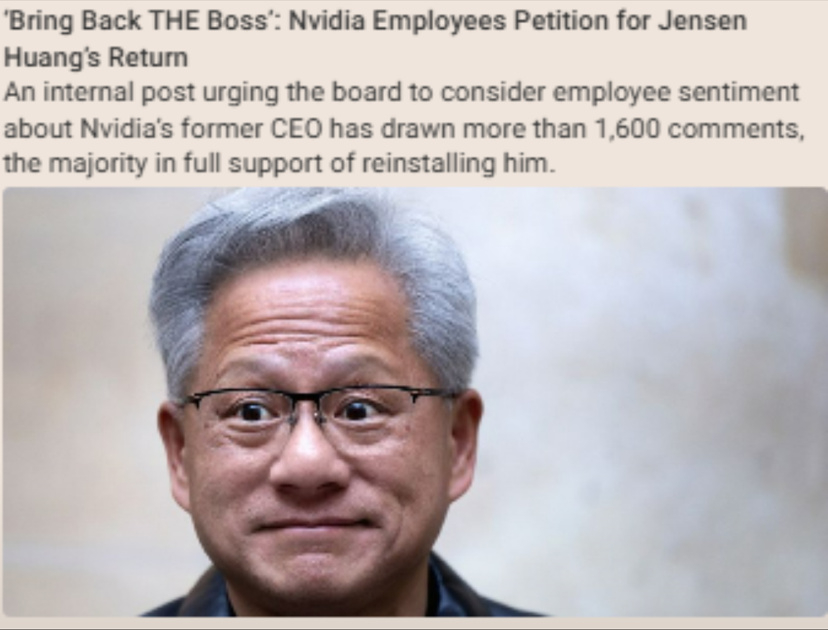
Do you think Jensen Huang will make a comeback like Sam Altman (the founder of OpenAI) and Steve Jobs?
$NVDA #英伟达正物色新CEO,谁会接替黄仁勋?
{stock_us}(NVDA.US)
Do you think Jensen Huang will make a comeback like Sam Altman (the founder of OpenAI) and Steve Jobs?
$NVDA #英伟达正物色新CEO,谁会接替黄仁勋?
$NVDA #英伟达正物色新CEO,谁会接替黄仁勋?
会
不会
吃瓜
28 min(s) left
NVDA+0,53%
NVDAUS-1,05%
1.4k
Will Jensen Huang return like Sam Altman and Steve Jobs? I think that’s unlikely.
The returns of Jobs and Altman were both driven by internal power struggles and companies immediately descending into chaos, with employees and shareholders pushing back strongly and the boards forced to compromise.
Huang’s situation is different:
• The trigger was a personal scandal (including a relationship with a subordinate) coupled with national security concerns—not simply an internal power struggle.
• He has completely left the board, and the company has directly appointed a chair and launched a formal search. The break has been very clean.
• Nvidia’s performance and product lineup are still strong, so there’s no immediate pressure from the company “losing control.”
• The investigation is ongoing. Even if some matters are later clarified, governance and reputational risks will remain.
Employee support is very strong, which is somewhat like the situation with Altman at the time. But the board has publicly committed to proving that the company can do without him, leaving almost no room to turn back in the short term. Unless the new leadership clearly falters and the stock price and customer relationships come under sustained pressure, the bar for asking him to return is considerably higher than it was in the previous two cases.
$NVDA
{future}(NVDAUSDT)
Will Jensen Huang return like Sam Altman and Steve Jobs? I think that’s unlikely.
The returns of Jobs and Altman were both driven by internal power struggles and companies immediately descending into chaos, with employees and shareholders pushing back strongly and the boards forced to compromise.
Huang’s situation is different:
• The trigger was a personal scandal (including a relationship with a subordinate) coupled with national security concerns—not simply an internal power struggle.
• He has completely left the board, and the company has directly appointed a chair and launched a formal search. The break has been very clean.
• Nvidia’s performance and product lineup are still strong, so there’s no immediate pressure from the company “losing control.”
• The investigation is ongoing. Even if some matters are later clarified, governance and reputational risks will remain.
Employee support is very strong, which is somewhat like the situation with Altman at the time. But the board has publicly committed to proving that the company can do without him, leaving almost no room to turn back in the short term. Unless the new leadership clearly falters and the stock price and customer relationships come under sustained pressure, the bar for asking him to return is considerably higher than it was in the previous two cases.
$NVDA
427
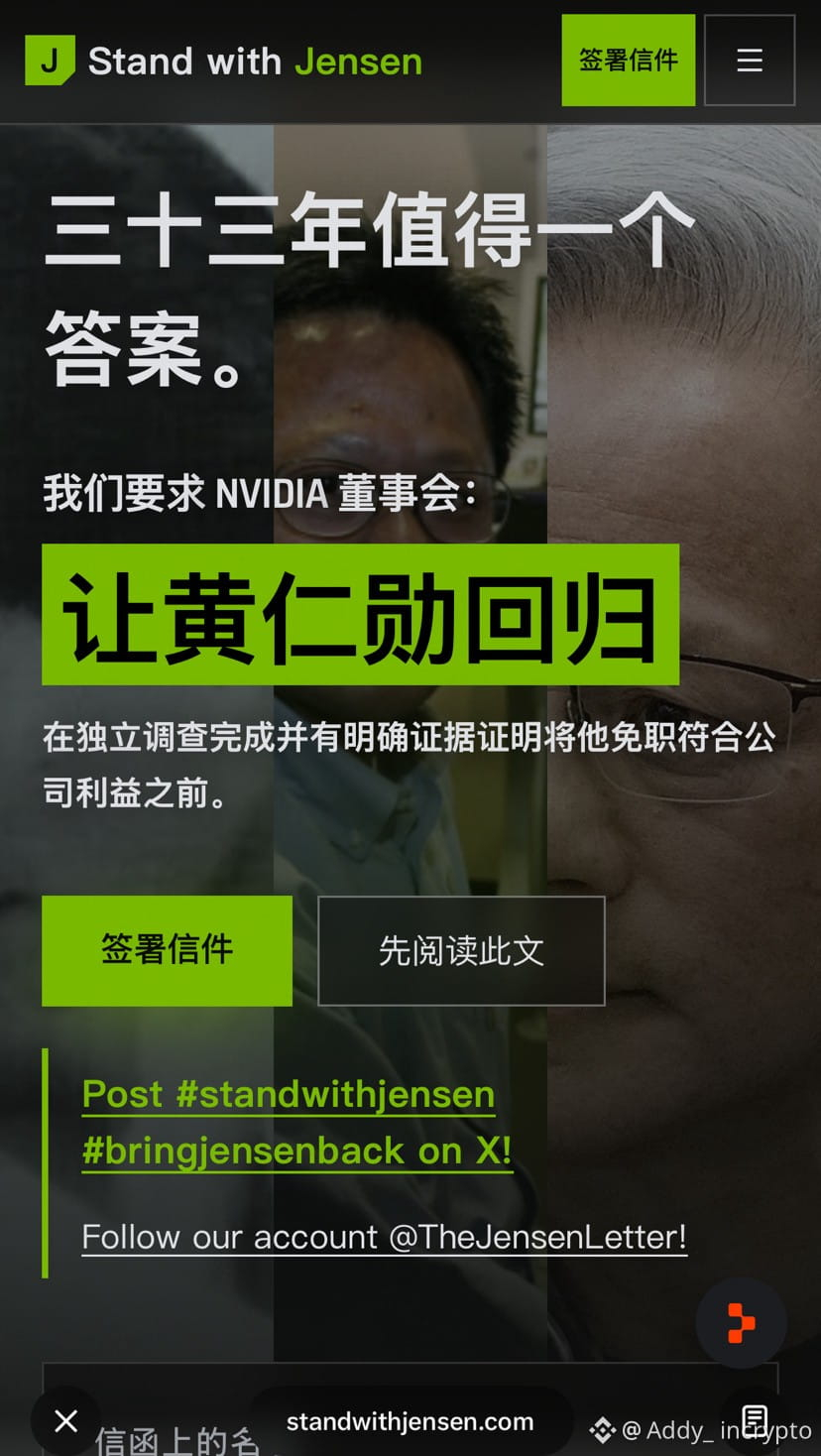
‼️Absolutely stunning‼️ Over 96,000 people rally around an open petition to NVIDIA’s board: Stand with Jensen and support Jensen Huang!
The petition website calling for Jensen Huang’s reinstatement (standwithjensen.com), whose signature drive was sparked by Elon Musk’s public announcement, is gaining explosive momentum. Titled “33 Years of Dedication Deserve a Response,” it delivers a direct message to the board.
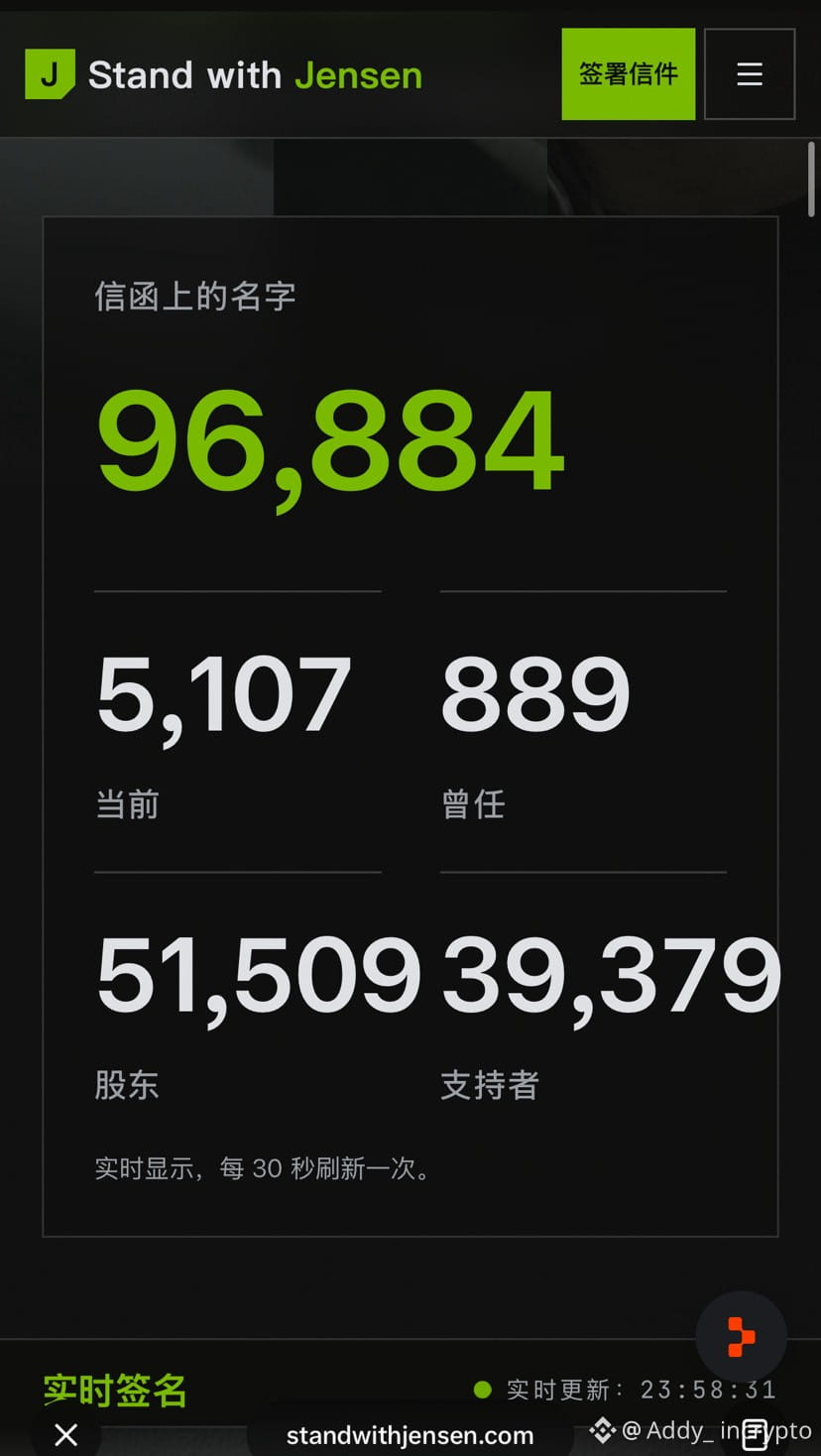
1. Signatures are surging rapidly (now surpassing 96,884)
This is more than just a fan movement. A total of 5,107 current NVIDIA employees, 889 former employees, 51,509 shareholders, and 39,379 supporters have signed on. Even current lead directors and chief engineers have joined under their real names, suggesting that internal dissent is becoming increasingly organized.
2. Support from Silicon Valley heavyweights
Led by Elon Musk (Tesla and SpaceX), prominent figures from across the industry and Wall Street—including Tim Sweeney (Epic Games), Garry Tan (Y Combinator), Amjad Masad (Replit), and Gavin Baker (Atreides)—have joined in their capacity as shareholders.
3. Three key demands addressed to the board
First, reinstate Jensen Huang as CEO immediately, unless and until an independent investigation produces clear evidence. Second, disclose the scope and timeline of the investigation and give Jensen a fair opportunity to respond. Third, don’t hide behind confidentiality agreements; publicly explain how the interests of shareholders and employees are being considered.
4. “Hold people accountable, but follow due process”
The petition states that 33 years of contributions do not grant immunity, but removing a founder based on mere suspicion amounts to nothing more than a “trial by public opinion.” With internal message boards and Musk’s involvement drawing attention, many are watching to see whether collective pressure from nearly 100,000 people can break the board’s silence.
$NVDA
{future}(NVDAUSDT)
‼️Absolutely stunning‼️ Over 96,000 people rally around an open petition to NVIDIA’s board: Stand with Jensen and support Jensen Huang!
The petition website calling for Jensen Huang’s reinstatement (standwithjensen.com), whose signature drive was sparked by Elon Musk’s public announcement, is gaining explosive momentum. Titled “33 Years of Dedication Deserve a Response,” it delivers a direct message to the board.
1. Signatures are surging rapidly (now surpassing 96,884)
This is more than just a fan movement. A total of 5,107 current NVIDIA employees, 889 former employees, 51,509 shareholders, and 39,379 supporters have signed on. Even current lead directors and chief engineers have joined under their real names, suggesting that internal dissent is becoming increasingly organized.
2. Support from Silicon Valley heavyweights
Led by Elon Musk (Tesla and SpaceX), prominent figures from across the industry and Wall Street—including Tim Sweeney (Epic Games), Garry Tan (Y Combinator), Amjad Masad (Replit), and Gavin Baker (Atreides)—have joined in their capacity as shareholders.
3. Three key demands addressed to the board
First, reinstate Jensen Huang as CEO immediately, unless and until an independent investigation produces clear evidence. Second, disclose the scope and timeline of the investigation and give Jensen a fair opportunity to respond. Third, don’t hide behind confidentiality agreements; publicly explain how the interests of shareholders and employees are being considered.
4. “Hold people accountable, but follow due process”
The petition states that 33 years of contributions do not grant immunity, but removing a founder based on mere suspicion amounts to nothing more than a “trial by public opinion.” With internal message boards and Musk’s involvement drawing attention, many are watching to see whether collective pressure from nearly 100,000 people can break the board’s silence.
$NVDA
2
2.9k
$BNB broke below 610, and it feels like this move hasn’t caught its breath yet.
The short-term outlook is definitely weak. It could keep drifting toward 500+, but that’s not a sure thing. It’s hovering around 610 now, and the RSI is already oversold. The key level below is 600–605. If that breaks, 580–550 could easily be tested. The broader market is weak too, sentiment is still bearish, and selling pressure hasn’t fully eased.
If 600 holds and we get another high-volume rebound, the first recovery targets are 630–650. But if it breaks decisively below that level, 500+ really is in play.
Either way, volatility is high, so don’t rush to buy the dip. Just keep an eye on support and follow BTC.
{future}(BNBUSDT)
$BNB broke below 610, and it feels like this move hasn’t caught its breath yet.
The short-term outlook is definitely weak. It could keep drifting toward 500+, but that’s not a sure thing. It’s hovering around 610 now, and the RSI is already oversold. The key level below is 600–605. If that breaks, 580–550 could easily be tested. The broader market is weak too, sentiment is still bearish, and selling pressure hasn’t fully eased.
If 600 holds and we get another high-volume rebound, the first recovery targets are 630–650. But if it breaks decisively below that level, 500+ really is in play.
Either way, volatility is high, so don’t rush to buy the dip. Just keep an eye on support and follow BTC.
1.2k
Verified
$WLD fell from around 0.5 to approximately 0.28, down about 40% over 30 days. This selling pressure is not a one-off event.
Since July, around 2.9 million tokens have been unlocked daily, with nearly 100 million still being released each month. Demand for World ID from paying enterprise customers has not kept pace, leaving the price sensitive to new supply.
Deposits to associated addresses do not necessarily trigger immediate selling, but under the pressure of unlocks, they amplify expectations of selling;
Transfers by whales and dormant addresses add to short-term anxiety;
Weakness in the broader market and AI sector also makes WLD, with its identity + AI narrative, more likely to fall in tandem.
The earlier view that “banking and financial use cases are a positive catalyst, but need to be implemented in reality to offset unlocks” still holds: design partners remain, but publicly confirmed cases of banks paying for the product are absent. The price continues to absorb supply, and the narrative cannot withstand sustained selling pressure.
The price has returned to relatively low levels. Short-term support is around 0.26–0.28; a break below that could lead to a test of lower levels. The positive long-term factors are unchanged: the scale of real-person IDs remains substantial, and the direction toward practical tools (Zoom, agents, and banking use cases) is clear. Once the first enterprise customers are paying in practice, demand will be healthier than token issuance alone. The pace of unlocks has slowed, so the price could be more responsive once demand picks up.
This remains a highly volatile asset. Keep monitoring the arrival of real banking and financial customers, as well as how much of the daily and monthly unlocks is being absorbed. Without progress, the price is more likely to be driven by supply; with progress, room for a rebound opens up again. The October selling-pressure thesis is clear, and the subsequent decline is a continuation of it. The fundamental transformation story is still intact, but delivery is lagging behind supply releases, so the price is falling first. Tracking implementation progress is more valuable than looking at price alone.
$WLD
{future}(WLDUSDT)
$WLD fell from around 0.5 to approximately 0.28, down about 40% over 30 days. This selling pressure is not a one-off event.
Since July, around 2.9 million tokens have been unlocked daily, with nearly 100 million still being released each month. Demand for World ID from paying enterprise customers has not kept pace, leaving the price sensitive to new supply.
Deposits to associated addresses do not necessarily trigger immediate selling, but under the pressure of unlocks, they amplify expectations of selling;
Transfers by whales and dormant addresses add to short-term anxiety;
Weakness in the broader market and AI sector also makes WLD, with its identity + AI narrative, more likely to fall in tandem.
The earlier view that “banking and financial use cases are a positive catalyst, but need to be implemented in reality to offset unlocks” still holds: design partners remain, but publicly confirmed cases of banks paying for the product are absent. The price continues to absorb supply, and the narrative cannot withstand sustained selling pressure.
The price has returned to relatively low levels. Short-term support is around 0.26–0.28; a break below that could lead to a test of lower levels. The positive long-term factors are unchanged: the scale of real-person IDs remains substantial, and the direction toward practical tools (Zoom, agents, and banking use cases) is clear. Once the first enterprise customers are paying in practice, demand will be healthier than token issuance alone. The pace of unlocks has slowed, so the price could be more responsive once demand picks up.
This remains a highly volatile asset. Keep monitoring the arrival of real banking and financial customers, as well as how much of the daily and monthly unlocks is being absorbed. Without progress, the price is more likely to be driven by supply; with progress, room for a rebound opens up again. The October selling-pressure thesis is clear, and the subsequent decline is a continuation of it. The fundamental transformation story is still intact, but delivery is lagging behind supply releases, so the price is falling first. Tracking implementation progress is more valuable than looking at price alone.
$WLD
4
2.6k
Partly True
Old news today‼️
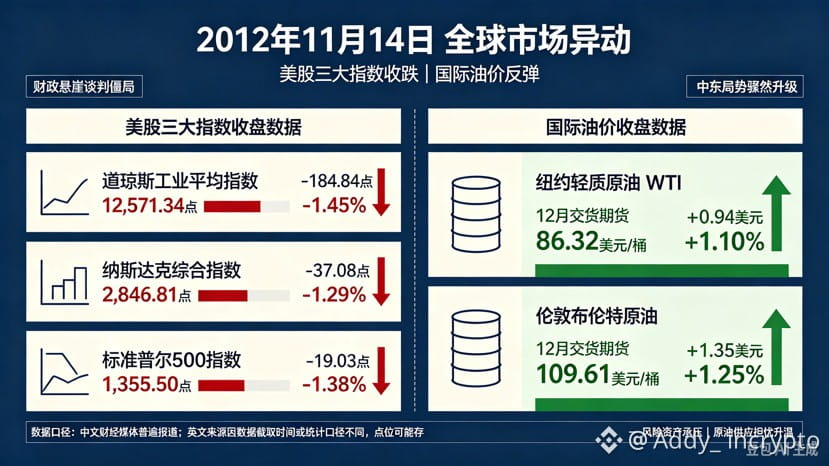
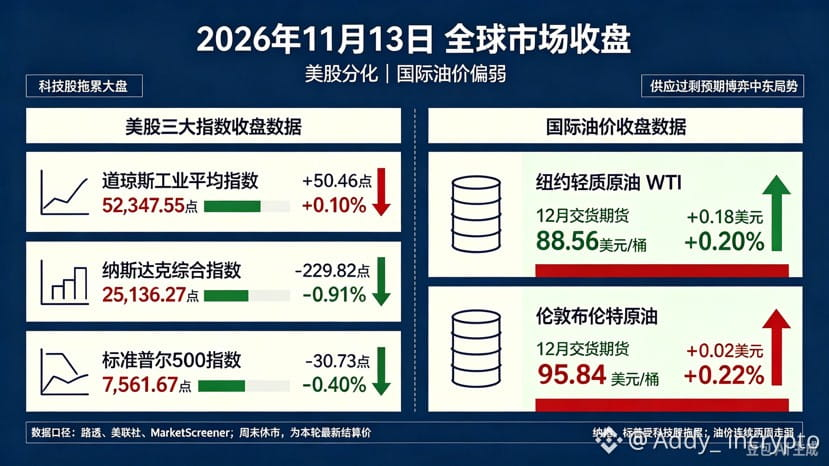
On November 14, 2012, all three major U.S. stock indexes closed lower amid a stalemate in “fiscal cliff” negotiations and a sudden escalation of tensions in the Middle East, while international oil prices rose in response.
Here are the closing figures:
📉 Details of the three major U.S. stock indexes
· Dow Jones Industrial Average: fell 184.84 points to close at 12,571.34, down 1.45%.
· Nasdaq Composite: fell 37.08 points to close at 2,846.81, down 1.29%.
· S&P 500: fell 19.03 points to close at 1,355.50, down 1.38%.
🛢️ International oil price details
Israel’s military operation in Gaza heightened market concerns about disruptions to Middle Eastern oil supplies. After falling for two consecutive days, international oil prices rebounded:
· New York light sweet crude (WTI): December futures rose 94 cents to close at $86.32 per barrel, up 1.10%.
· London Brent crude: December futures rose $1.35 to close at $109.61 per barrel, up 1.25%.
The image below compares today with this day in the past. Take a look 👀 By the way, do you remember the price of $BTC in 2012? Share the price of your first buy-in in the comments 👀
$BTC
{future}(BTCUSDT)
Old news today‼️
On November 14, 2012, all three major U.S. stock indexes closed lower amid a stalemate in “fiscal cliff” negotiations and a sudden escalation of tensions in the Middle East, while international oil prices rose in response.
Here are the closing figures:
📉 Details of the three major U.S. stock indexes
· Dow Jones Industrial Average: fell 184.84 points to close at 12,571.34, down 1.45%.
· Nasdaq Composite: fell 37.08 points to close at 2,846.81, down 1.29%.
· S&P 500: fell 19.03 points to close at 1,355.50, down 1.38%.
🛢️ International oil price details
Israel’s military operation in Gaza heightened market concerns about disruptions to Middle Eastern oil supplies. After falling for two consecutive days, international oil prices rebounded:
· New York light sweet crude (WTI): December futures rose 94 cents to close at $86.32 per barrel, up 1.10%.
· London Brent crude: December futures rose $1.35 to close at $109.61 per barrel, up 1.25%.
The image below compares today with this day in the past. Take a look 👀 By the way, do you remember the price of $BTC in 2012? Share the price of your first buy-in in the comments 👀
$BTC
527
Bitcoin: From a “Brutal Cycle” to a “Milder Cycle”
The roller coaster is over; the era of waves has begun.
👉🏻Key comparison
The previous three cycles:
Surged severalfold to dozens of times after the halving → plunged 70%–85% → endured a prolonged bear market.
This cycle:
Rose from $65,000 to $126,000, a gain of less than 1x;
Fell back to around $59,000, a drop of about 54%;
In November 2026, still fluctuating around $69,000, about 45% below the peak.
The timing still holds: the peak came about 18 months after the halving; but the swings have narrowed significantly.
Why has it become milder?
• Institutions are now the main players: ETFs and corporate treasuries hold for the long term, reducing extreme sell-offs
• The supply shock is smaller: the halving cuts daily supply by about 450 BTC, with limited impact on a trillion-dollar market cap
• The market is more mature: liquidity is better and expectations are more fully priced in
• Macro factors dominate: interest rates and liquidity now have a greater impact than the halving itself
Overall, the four-year cycle framework is still in place, but the brutal version is over.
Going forward, we’re more likely to see lower volatility, a steadier bull market, shallower bear markets, and institutional and macro-driven trends. Bitcoin is still in a cycle, but it’s gone from a roller coaster to a series of waves.
$BTC
{future}(BTCUSDT)
Bitcoin: From a “Brutal Cycle” to a “Milder Cycle”
The roller coaster is over; the era of waves has begun.
👉🏻Key comparison
The previous three cycles:
Surged severalfold to dozens of times after the halving → plunged 70%–85% → endured a prolonged bear market.
This cycle:
Rose from $65,000 to $126,000, a gain of less than 1x;
Fell back to around $59,000, a drop of about 54%;
In November 2026, still fluctuating around $69,000, about 45% below the peak.
The timing still holds: the peak came about 18 months after the halving; but the swings have narrowed significantly.
Why has it become milder?
• Institutions are now the main players: ETFs and corporate treasuries hold for the long term, reducing extreme sell-offs
• The supply shock is smaller: the halving cuts daily supply by about 450 BTC, with limited impact on a trillion-dollar market cap
• The market is more mature: liquidity is better and expectations are more fully priced in
• Macro factors dominate: interest rates and liquidity now have a greater impact than the halving itself
Overall, the four-year cycle framework is still in place, but the brutal version is over.
Going forward, we’re more likely to see lower volatility, a steadier bull market, shallower bear markets, and institutional and macro-driven trends. Bitcoin is still in a cycle, but it’s gone from a roller coaster to a series of waves.
$BTC
220
Buying #BTC in 2014 made millionaires.
Buying #ETH in 2018 made millionaires.
Buying #SOL in 2022 made millionaires.
In 2026…Show more
$BTC
{future}(BTCUSDT)
Buying #BTC in 2014 made millionaires.
Buying #ETH in 2018 made millionaires.
Buying #SOL in 2022 made millionaires.
In 2026…Show more
$BTC
Buying #ETH in 2018 made millionaires.
Buying #SOL in 2022 made millionaires.
In 2026…Show more
$BTC
7
70
23.1k
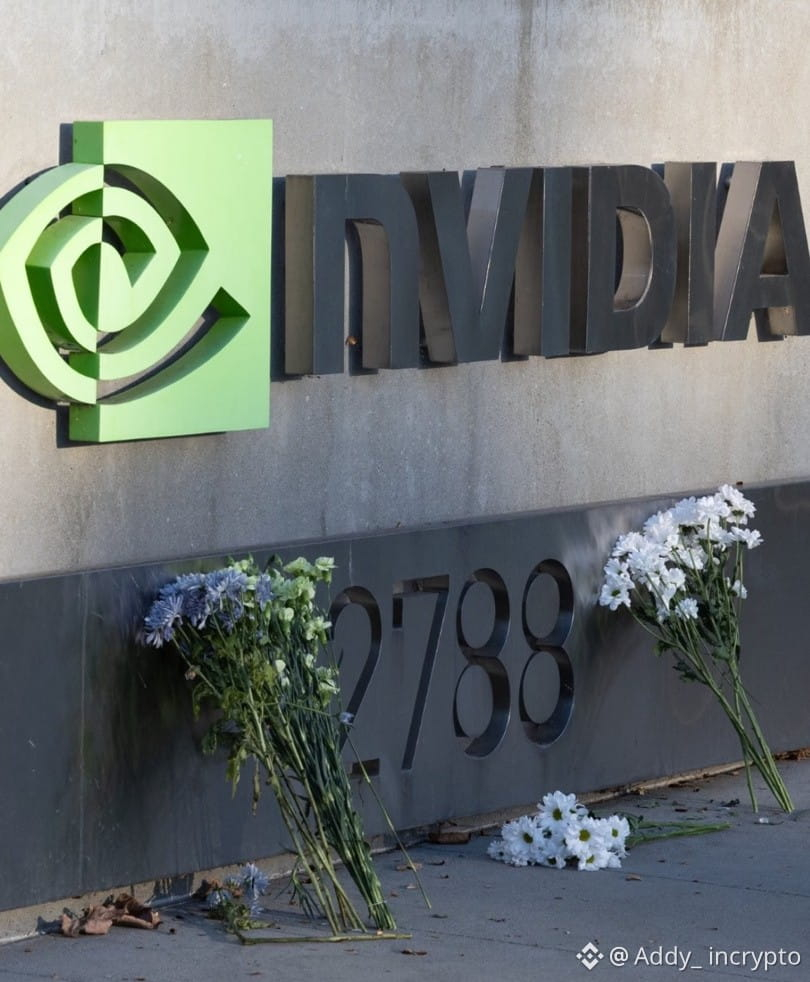
After Jensen Huang's departure, flowers and candles appeared at Nvidia headquarters
$NVDA
{future}(NVDAUSDT)
After Jensen Huang's departure, flowers and candles appeared at Nvidia headquarters
$NVDA
$NVDA

593
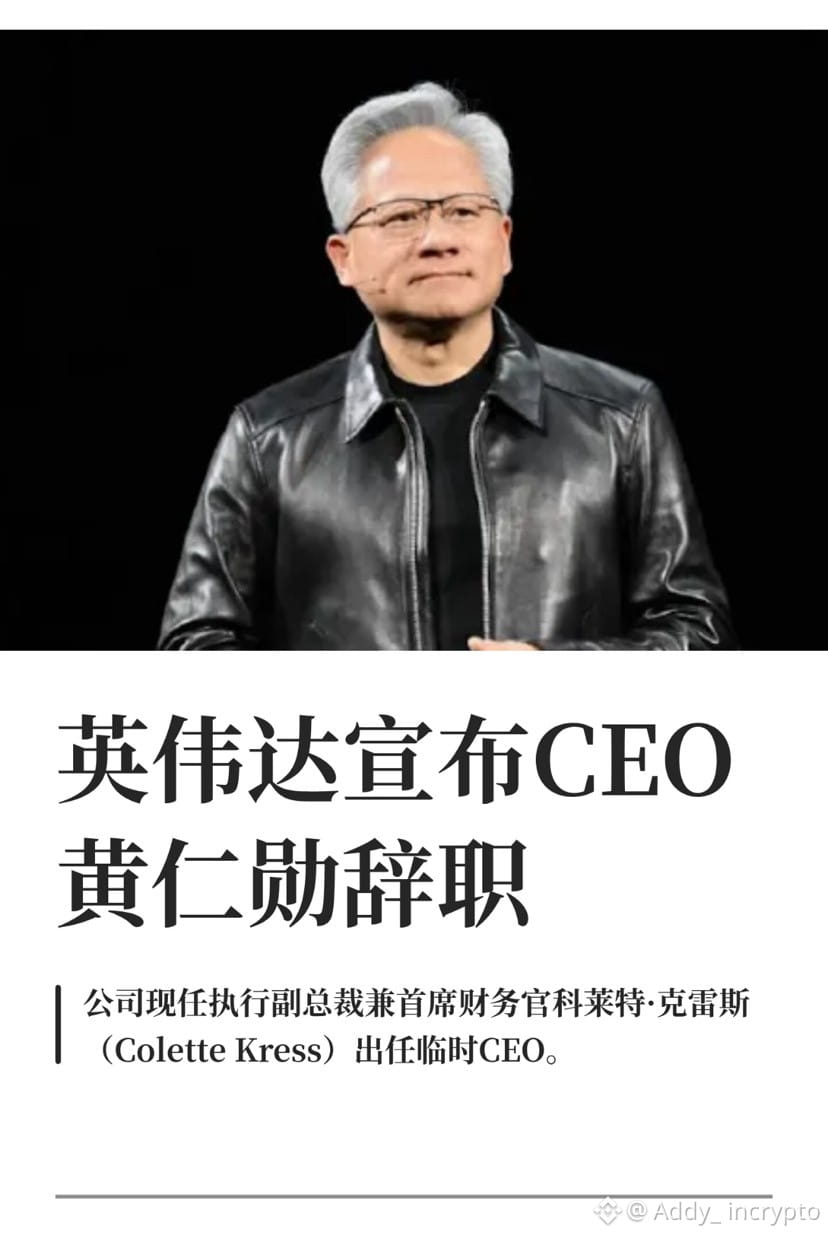
Who can ever get past the trials of love?
But then again,
With all the bad news out of the way, time to go long, my friends 😌
$NVDA
{future}(NVDAUSDT)
Who can ever get past the trials of love?
But then again,
With all the bad news out of the way, time to go long, my friends 😌
$NVDA
But then again,
With all the bad news out of the way, time to go long, my friends 😌
$NVDA
933
Can monthly volume stay above $3 billion? The latest on NEAR Intents
Cumulative volume has reached around $38.3 billion (including Confidential), moving up from the previous $37 billion. 30-day volume is roughly $3.7–3.8 billion.
After setting a record of $4.8 billion in September, volume returned to around $4 billion in October. The daily average for the first ten days of November is still around $130 million. Overall, it continues to fluctuate in the $3–5 billion range. It hasn’t accelerated further, but it hasn’t fallen off either.
Compared with competitors
In cumulative volume, NEAR Intents is now at around $37.3–38.3 billion, while Relay and Across are still at $48–50 billion, and THORChain is far ahead.
NEAR is a later entrant, but it’s growing faster. In particular, in the intent-based space—where users simply say what they want to swap and the protocol finds the best route—it has consistently ranked among the top three.
Coverage of nearly 40 chains and 200+ assets is an advantage of the solver model over traditional bridges.
Fees and buybacks
Real transaction volume continues to generate fees. Cumulative fees have exceeded $52 million, of which more than $8 million has been captured for buybacks.
The capture rate has improved compared with the early days and has been higher over the past 30 days.
Buybacks don’t follow a fixed percentage, and tokens aren’t directly burned. Instead, they’re bought and then locked or staked, with the timing determined by governance.
This provides an additional source of support beyond sentiment alone, but its scale and sustainability still need to be monitored.
Price and expectations
After gaining more than 150% this year, the token has been consolidating, and the consolidation period has lasted longer than many expected.
If monthly volume can stay above $3 billion, with fees continuing to flow back and buybacks continuing, the fundamentals will remain supportive, and there’s still a chance of a rebound over the next 1–2 quarters.
But if volume falls below $3 billion and stays there, the narrative will weaken again.
So far in 2026, volume has already reached nearly $30 billion, so the baseline scenario of reaching $38B for the full year is still possible. The next thing to watch is whether November and December can maintain the pace.
Do you think this level of volume means it has already taken off, or does it still need another acceleration?
$NEAR
{future}(NEARUSDT)
Can monthly volume stay above $3 billion? The latest on NEAR Intents
Cumulative volume has reached around $38.3 billion (including Confidential), moving up from the previous $37 billion. 30-day volume is roughly $3.7–3.8 billion.
After setting a record of $4.8 billion in September, volume returned to around $4 billion in October. The daily average for the first ten days of November is still around $130 million. Overall, it continues to fluctuate in the $3–5 billion range. It hasn’t accelerated further, but it hasn’t fallen off either.
Compared with competitors
In cumulative volume, NEAR Intents is now at around $37.3–38.3 billion, while Relay and Across are still at $48–50 billion, and THORChain is far ahead.
NEAR is a later entrant, but it’s growing faster. In particular, in the intent-based space—where users simply say what they want to swap and the protocol finds the best route—it has consistently ranked among the top three.
Coverage of nearly 40 chains and 200+ assets is an advantage of the solver model over traditional bridges.
Fees and buybacks
Real transaction volume continues to generate fees. Cumulative fees have exceeded $52 million, of which more than $8 million has been captured for buybacks.
The capture rate has improved compared with the early days and has been higher over the past 30 days.
Buybacks don’t follow a fixed percentage, and tokens aren’t directly burned. Instead, they’re bought and then locked or staked, with the timing determined by governance.
This provides an additional source of support beyond sentiment alone, but its scale and sustainability still need to be monitored.
Price and expectations
After gaining more than 150% this year, the token has been consolidating, and the consolidation period has lasted longer than many expected.
If monthly volume can stay above $3 billion, with fees continuing to flow back and buybacks continuing, the fundamentals will remain supportive, and there’s still a chance of a rebound over the next 1–2 quarters.
But if volume falls below $3 billion and stays there, the narrative will weaken again.
So far in 2026, volume has already reached nearly $30 billion, so the baseline scenario of reaching $38B for the full year is still possible. The next thing to watch is whether November and December can maintain the pace.
Do you think this level of volume means it has already taken off, or does it still need another acceleration?
$NEAR
323
Apple Support Communities Announces Permanent Closure
Apple is shutting down another long-running service.
On November 11, Apple Support Communities posted an announcement confirming that it will permanently close on November 20, 2026.
The community is now in read-only mode. Users can no longer post new questions or replies, but they can still browse existing discussions.
Notably, Apple’s Simplified Chinese Support Community posted the same closure announcement, so the shutdown is not limited to overseas communities.
The community dates back to 1998 and was relaunched in 2011 under the name Apple Support Communities. Over the years, many Apple users have discussed device issues and shared solutions there.
However, it is the user community that is closing—not Apple’s official after-sales or technical support services. Users can still get help through the Apple Support website.
Apple has not explained the specific reason for the closure or clarified what will happen to historical posts.
Have you ever used Apple Support Communities?
$AAPL
{future}(AAPLUSDT)
Apple Support Communities Announces Permanent Closure
Apple is shutting down another long-running service.
On November 11, Apple Support Communities posted an announcement confirming that it will permanently close on November 20, 2026.
The community is now in read-only mode. Users can no longer post new questions or replies, but they can still browse existing discussions.
Notably, Apple’s Simplified Chinese Support Community posted the same closure announcement, so the shutdown is not limited to overseas communities.
The community dates back to 1998 and was relaunched in 2011 under the name Apple Support Communities. Over the years, many Apple users have discussed device issues and shared solutions there.
However, it is the user community that is closing—not Apple’s official after-sales or technical support services. Users can still get help through the Apple Support website.
Apple has not explained the specific reason for the closure or clarified what will happen to historical posts.
Have you ever used Apple Support Communities?
$AAPL


2.5k
$INIT has risen again, and this time it’s risen even more sharply.
According to the latest data:
- The current price is around $0.25–$0.26
- The 24-hour gain is approximately +90% to +100%+
- The 24-hour range is roughly $0.13–$0.28, with some platforms even showing a spike to around $0.33
- Futures trading volume has surged to over $1.6 billion, while spot volume is nowhere near as high
- Funding rates are extremely negative (short sellers are paying heavily)
- Short liquidations are continuing, and open interest (OI) has also risen sharply
It has climbed noticeably higher since the last time we checked. This is a typical case of momentum combined with an ongoing short squeeze.
In short
The sentiment from the previous “relaunch after the exploit + price rally despite the Rollup pause” hasn’t faded yet. Money is still pouring in, especially on the derivatives side. This kind of move can easily accelerate further, but it can also reverse sharply without warning (since most of the activity is driven by leverage and speculation).
As mentioned before, it’s still a long way from its all-time high (around $1.44). The fundamentals (TVL and actual usage) haven’t improved significantly in tandem; the move is still mainly trading-driven.
Watch your position size and risk. In this kind of volatility, it’s easy to get whipsawed.
{future}(INITUSDT)
$INIT has risen again, and this time it’s risen even more sharply.
According to the latest data:
- The current price is around $0.25–$0.26
- The 24-hour gain is approximately +90% to +100%+
- The 24-hour range is roughly $0.13–$0.28, with some platforms even showing a spike to around $0.33
- Futures trading volume has surged to over $1.6 billion, while spot volume is nowhere near as high
- Funding rates are extremely negative (short sellers are paying heavily)
- Short liquidations are continuing, and open interest (OI) has also risen sharply
It has climbed noticeably higher since the last time we checked. This is a typical case of momentum combined with an ongoing short squeeze.
In short
The sentiment from the previous “relaunch after the exploit + price rally despite the Rollup pause” hasn’t faded yet. Money is still pouring in, especially on the derivatives side. This kind of move can easily accelerate further, but it can also reverse sharply without warning (since most of the activity is driven by leverage and speculation).
As mentioned before, it’s still a long way from its all-time high (around $1.44). The fundamentals (TVL and actual usage) haven’t improved significantly in tandem; the move is still mainly trading-driven.
Watch your position size and risk. In this kind of volatility, it’s easy to get whipsawed.
570
Verified
$INIT surged about 60–70% over the past 24 hours, with the price currently around $0.20–$0.21 (slight differences across platforms). Trading volume has also jumped to several times its usual level.
Why has it risen so much?
The main reason isn’t a sudden improvement in fundamentals, but a typical rebound driven by risk being priced in and a short squeeze:
1. The network restarted after the $2.7M exploit on October 23
A zero-day vulnerability was found in MoveVM. The attacker minted unbacked assets and bridged out about $2.7 million (mainly bridged assets such as AUSD, ETH, and USDC; native INIT was unaffected). The network was down for more than nine days and restarted on November 2. The foundation also pledged to cover the losses in full. The market took this as a sign that “the worst was over” and began buying the dip, sparking a rebound.
2. Rollups were paused again on November 9, but the price continued to surge
The team temporarily paused the relevant Rollups due to infrastructure issues (the L1 continued operating normally, and user funds were unaffected). Normally, this would be expected to trigger a sell-off. Instead, trading volume jumped to around eight times its 30-day average, and the price continued to rally. This kind of “good news from bad news being fully priced in” is common among small-cap coins.
3. The short squeeze in the futures market is clear
- Futures trading volume far exceeds spot volume (by more than 20 times)
- Funding rates are extremely negative (shorts are paying longs)
- Open interest (OI) has risen sharply
- Large numbers of shorts have been liquidated
This is a classic short-squeeze-driven move, not a major increase in genuine spot demand.
Risks to keep in mind
- The price is still more than 85% below its all-time high of about $1.44, and remains in a deep correction.
- The project has run into Rollup issues again shortly after restarting, raising continued concerns about stability.
- The circulating supply is only about 22% of the total supply, so future token unlocks may create selling pressure.
- This rally is driven more by speculative capital and short covering than by a sudden boom in ecosystem metrics (TVL, actual usage).
In short: this is a classic small-cap coin rebound driven by “incident → pause → restart → the market sees the risk as priced in,” compounded by a squeeze caused by crowded short positions. Whether it can continue depends on how quickly the Rollup can recover, whether spot buying can keep up, and how the market absorbs future token unlocks.
Price volatility is extremely high. Be aware of the risks.
{future}(INITUSDT)
$INIT surged about 60–70% over the past 24 hours, with the price currently around $0.20–$0.21 (slight differences across platforms). Trading volume has also jumped to several times its usual level.
Why has it risen so much?
The main reason isn’t a sudden improvement in fundamentals, but a typical rebound driven by risk being priced in and a short squeeze:
1. The network restarted after the $2.7M exploit on October 23
A zero-day vulnerability was found in MoveVM. The attacker minted unbacked assets and bridged out about $2.7 million (mainly bridged assets such as AUSD, ETH, and USDC; native INIT was unaffected). The network was down for more than nine days and restarted on November 2. The foundation also pledged to cover the losses in full. The market took this as a sign that “the worst was over” and began buying the dip, sparking a rebound.
2. Rollups were paused again on November 9, but the price continued to surge
The team temporarily paused the relevant Rollups due to infrastructure issues (the L1 continued operating normally, and user funds were unaffected). Normally, this would be expected to trigger a sell-off. Instead, trading volume jumped to around eight times its 30-day average, and the price continued to rally. This kind of “good news from bad news being fully priced in” is common among small-cap coins.
3. The short squeeze in the futures market is clear
- Futures trading volume far exceeds spot volume (by more than 20 times)
- Funding rates are extremely negative (shorts are paying longs)
- Open interest (OI) has risen sharply
- Large numbers of shorts have been liquidated
This is a classic short-squeeze-driven move, not a major increase in genuine spot demand.
Risks to keep in mind
- The price is still more than 85% below its all-time high of about $1.44, and remains in a deep correction.
- The project has run into Rollup issues again shortly after restarting, raising continued concerns about stability.
- The circulating supply is only about 22% of the total supply, so future token unlocks may create selling pressure.
- This rally is driven more by speculative capital and short covering than by a sudden boom in ecosystem metrics (TVL, actual usage).
In short: this is a classic small-cap coin rebound driven by “incident → pause → restart → the market sees the risk as priced in,” compounded by a squeeze caused by crowded short positions. Whether it can continue depends on how quickly the Rollup can recover, whether spot buying can keep up, and how the market absorbs future token unlocks.
Price volatility is extremely high. Be aware of the risks.
254
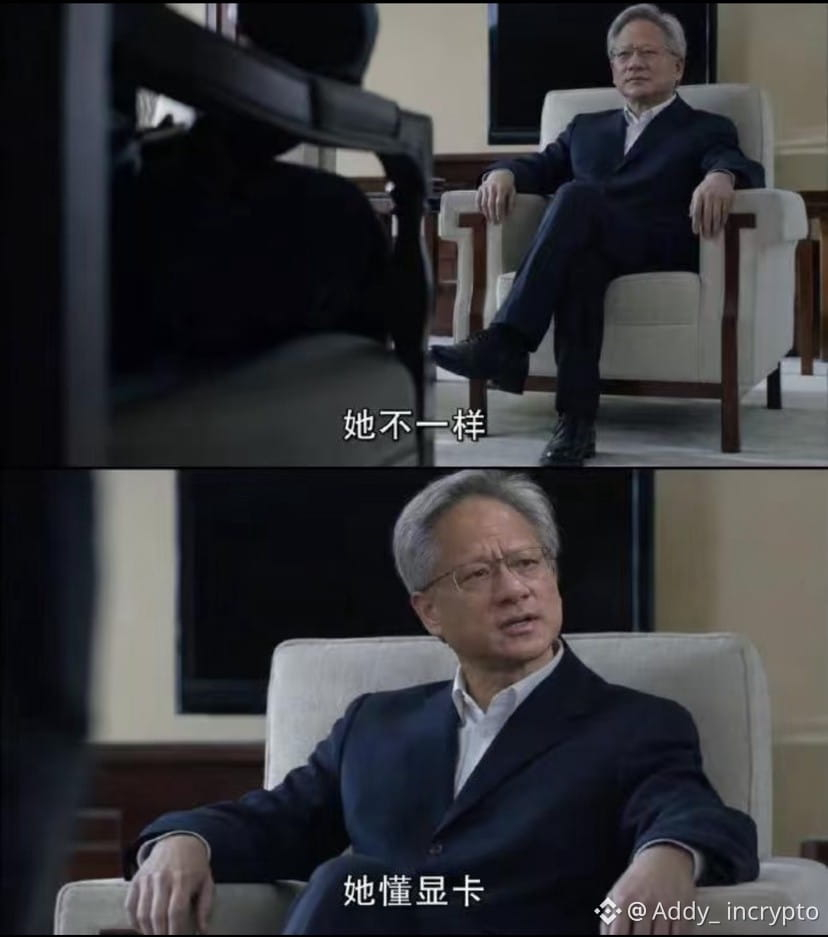
People online these days really have a picture for everything. I'm dying 😂
At this point, I'll leave him hanging for now, in the name of the graphics card:
$NVDA
{future}(NVDAUSDT)
People online these days really have a picture for everything. I'm dying 😂
At this point, I'll leave him hanging for now, in the name of the graphics card:
$NVDA
At this point, I'll leave him hanging for now, in the name of the graphics card:
$NVDA
793
Jensen Huang’s rule-breaker — Huang Le (Alice Huang / Huang Le).
On November 8, 2026, Jensen Huang sent an internal letter to all Nvidia employees, admitting that he had been unfaithful to his wife and apologizing, saying, “There is no excuse.” He did not name the other person, but media outlets including The New York Times and the Financial Times have clearly identified the woman.
Who is Huang Le?
- Identity: A Chinese businesswoman with no family relationship to Jensen Huang. She previously held executive positions, including managing director, at Megaspeed, a Singaporean data center company. The company is an important Nvidia customer in Southeast Asia and purchased a large volume of AI equipment containing Nvidia GPUs from June 2024 to early 2026 (reports put the amount at at least around $4.8 billion).
- Background: Publicly available biographies show that she has worked in media (as a reporter for Hunan TV and CCTV) and finance (at HSBC, CITIC Securities, Shanghai Hexi Investment, and others), before moving into semiconductor and AI investment and computing-power leasing.
- Relationship with Jensen Huang: Media reports say the two had an intimate/romantic relationship. The earliest publicly verifiable appearance of the two together was at a bar gathering during Computex Taipei in June 2024. Photos of them together at events including the Taipei San Liu Shi Fu in May 2025 later surfaced, showing interactions such as an arm around her shoulder.
U.S. intelligence agencies have assessed that Huang Le may be an “asset” relaying information to Beijing (involving Jensen Huang himself and the U.S. AI chip industry). Related investigations have also prompted scrutiny of whether Megaspeed was involved in circumventing export controls. This has led to an independent investigation by Nvidia’s board and attention from relevant congressional committees, among other developments. Huang has long advocated relatively permissive chip export policies toward China, which has also put him in the spotlight. The allegations have not yet resulted in formal charges or been publicly substantiated, and Nvidia has previously said that the two’s interactions were part of normal customer relations.
Jensen Huang met his wife, Lori, at Oregon State University. They have been married for more than 40 years and have long presented themselves as a family-oriented couple. This episode has indeed shattered the public image he maintained for many years. The story continues to develop, and the short-term effects on Nvidia’s governance, its China business, and Huang’s personal reputation remain to be seen.
$NVDA
{future}(NVDAUSDT)
Jensen Huang’s rule-breaker — Huang Le (Alice Huang / Huang Le).
On November 8, 2026, Jensen Huang sent an internal letter to all Nvidia employees, admitting that he had been unfaithful to his wife and apologizing, saying, “There is no excuse.” He did not name the other person, but media outlets including The New York Times and the Financial Times have clearly identified the woman.
Who is Huang Le?
- Identity: A Chinese businesswoman with no family relationship to Jensen Huang. She previously held executive positions, including managing director, at Megaspeed, a Singaporean data center company. The company is an important Nvidia customer in Southeast Asia and purchased a large volume of AI equipment containing Nvidia GPUs from June 2024 to early 2026 (reports put the amount at at least around $4.8 billion).
- Background: Publicly available biographies show that she has worked in media (as a reporter for Hunan TV and CCTV) and finance (at HSBC, CITIC Securities, Shanghai Hexi Investment, and others), before moving into semiconductor and AI investment and computing-power leasing.
- Relationship with Jensen Huang: Media reports say the two had an intimate/romantic relationship. The earliest publicly verifiable appearance of the two together was at a bar gathering during Computex Taipei in June 2024. Photos of them together at events including the Taipei San Liu Shi Fu in May 2025 later surfaced, showing interactions such as an arm around her shoulder.
U.S. intelligence agencies have assessed that Huang Le may be an “asset” relaying information to Beijing (involving Jensen Huang himself and the U.S. AI chip industry). Related investigations have also prompted scrutiny of whether Megaspeed was involved in circumventing export controls. This has led to an independent investigation by Nvidia’s board and attention from relevant congressional committees, among other developments. Huang has long advocated relatively permissive chip export policies toward China, which has also put him in the spotlight. The allegations have not yet resulted in formal charges or been publicly substantiated, and Nvidia has previously said that the two’s interactions were part of normal customer relations.
Jensen Huang met his wife, Lori, at Oregon State University. They have been married for more than 40 years and have long presented themselves as a family-oriented couple. This episode has indeed shattered the public image he maintained for many years. The story continues to develop, and the short-term effects on Nvidia’s governance, its China business, and Huang’s personal reputation remain to be seen.
$NVDA

189
Does even the richest person in the world get emo and open NetEase Cloud Music in the middle of the night?
Ma, it’s okay to be sad, but don’t hurt my wallet!
$TSLA $SPCX
{future}(TSLAUSDT)
Does even the richest person in the world get emo and open NetEase Cloud Music in the middle of the night?
Ma, it’s okay to be sad, but don’t hurt my wallet!
$TSLA $SPCX
Ma, it’s okay to be sad, but don’t hurt my wallet!
$TSLA $SPCX

2
624
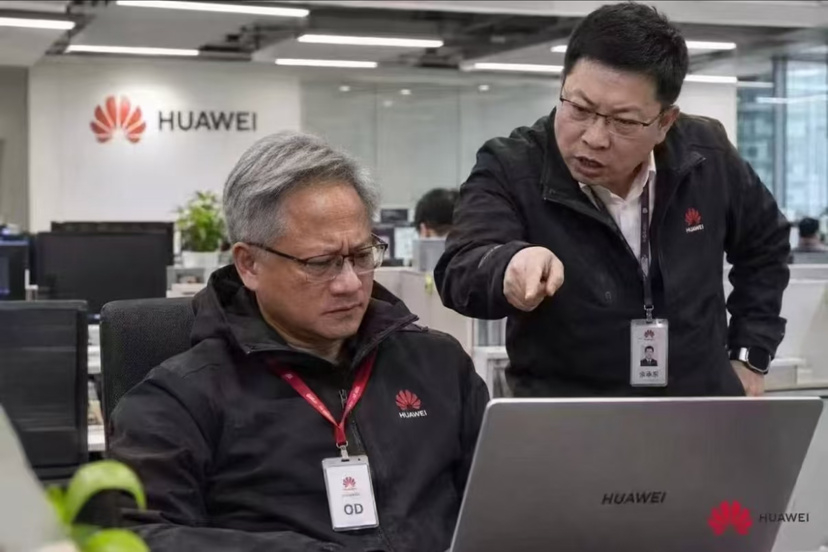
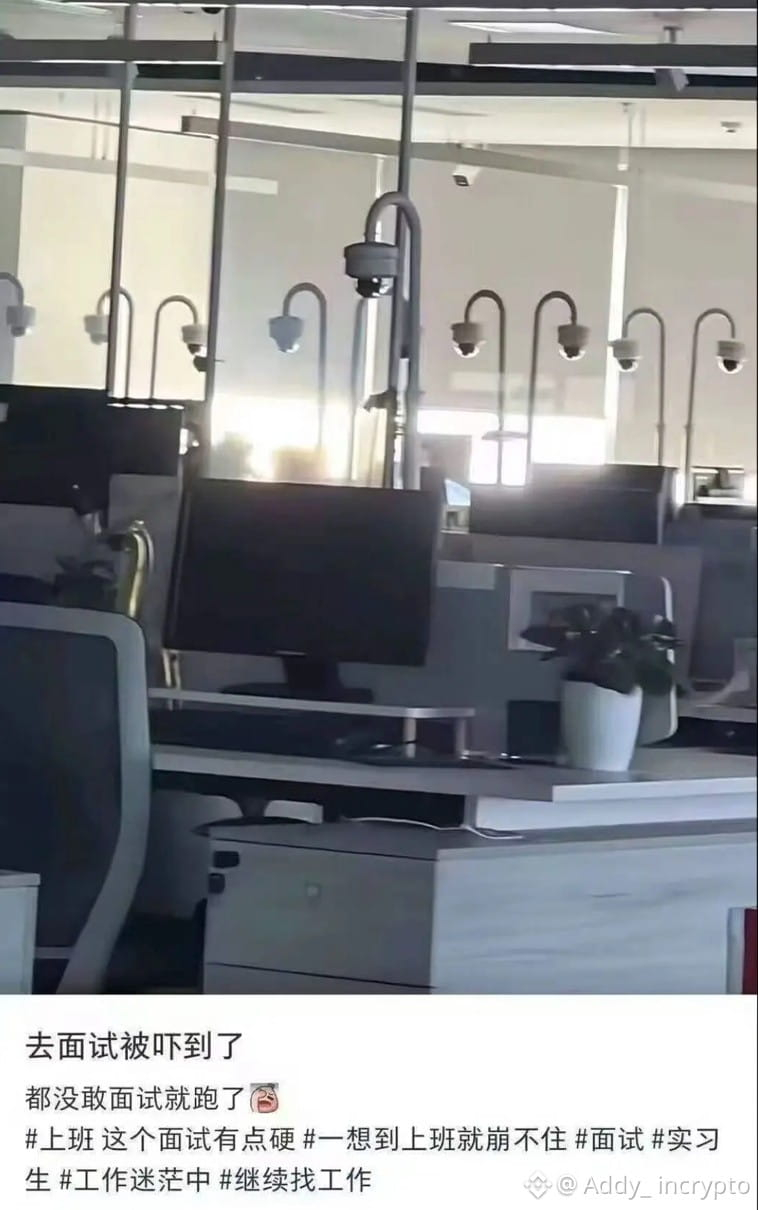
Supposedly from a domestic security company, this office environment gives you complete peace of mind.
$TSLA
{future}(TSLAUSDT)
Supposedly from a domestic security company, this office environment gives you complete peace of mind.
$TSLA
$TSLA
54
Log in to explore more content
Join global crypto users on Binance Square
⚡️ Get latest and useful information about crypto.
💬 Trusted by the world’s largest crypto exchange.
👍 Discover real insights from verified creators.
Email / Phone number
Trending Topics
A Packed Week of Earnings and Data Tests Markets
5,009 views
88 Discussing
🚨🇺🇸 BIG WEEK AHEAD FOR THE MARKETS!
Markets are pricing in a Fed rate hike in December and $BTC could see some big moves next week.
Here's what's coming:
• Monday: Fed Chair Warsh speaks
• Tuesday: US Retail Sales + $NVDA earnings
• Wednesday: FOMC Minutes
• Thursday: Jobless Claims + Philly Fed Index
• Friday: Consumer Sentiment + Fed speeches
All eyes on $BTC as another important week begins.
#bitcoin
Mookie
·6 Likes
·2.8k views
AnthropicIPOTestsInvestorAppetiteForAI
2,081 views
77 Discussing
HuangReportedlyConsidersReturnToNvidia
20,775 views
311 Discussing