
SpaceX MUSK
1.1k Posts
SpaceX MUSK
Report
Block User
Quick deals and cold calculation. I trade for a profit while others are waiting for Monday. I manage time and crypto capital.

BNB Holder
Frequent Trader
1.6 Years
44 Following
221 Followers
1.1K+ Liked
Posts
All
Quotes
Videos
·
--
Bullish
The return of the bear market is becoming less and less likely. 📊
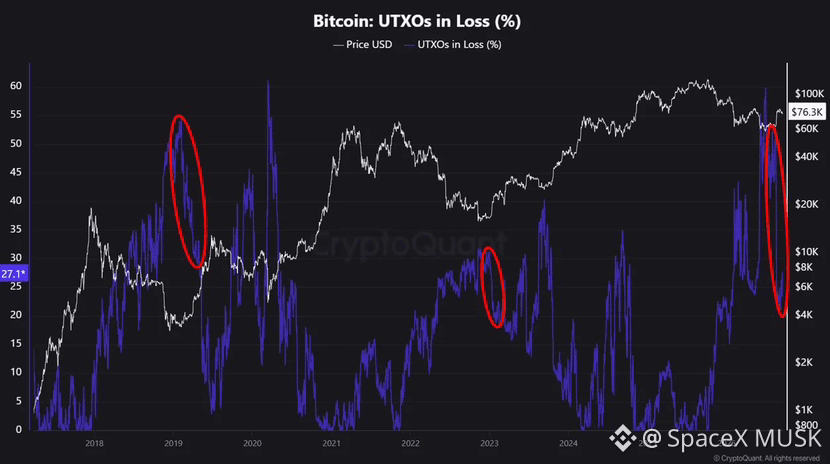
CryptoQuant claims that we have recently passed the point of no return, and one of the main arguments is the sharp decline in the share of UTXOs that are in loss.
In simple terms, fewer and fewer BTC coins are currently left underwater compared to the price of their last move. This metric has fallen from nearly 60% to about 27%.
In past cycles, a drop of this scale has already been accompanied by a shift from a bear market to a bull market. According to Crypto Dan, such moves have enough strength to flip the market from bearish to bullish.
Of course, that doesn’t mean the market will only go up. Higher Fed rates and the Clarity Act situation will take effect in the correction—short-term risks are still there.
But structural changes in on-chain have already taken place. And it will be quite difficult for the market to be pushed back into a full bearish phase with just short-term negativity.
So do you think this is already a reversal, or just another test of strength? 👇
NFA. DYOR.
{future}(BTCUSDT)
$BTC
The return of the bear market is becoming less and less likely. 📊
CryptoQuant claims that we have recently passed the point of no return, and one of the main arguments is the sharp decline in the share of UTXOs that are in loss.
In simple terms, fewer and fewer BTC coins are currently left underwater compared to the price of their last move. This metric has fallen from nearly 60% to about 27%.
In past cycles, a drop of this scale has already been accompanied by a shift from a bear market to a bull market. According to Crypto Dan, such moves have enough strength to flip the market from bearish to bullish.
Of course, that doesn’t mean the market will only go up. Higher Fed rates and the Clarity Act situation will take effect in the correction—short-term risks are still there.
But structural changes in on-chain have already taken place. And it will be quite difficult for the market to be pushed back into a full bearish phase with just short-term negativity.
So do you think this is already a reversal, or just another test of strength? 👇
NFA. DYOR.
$BTC
CryptoQuant claims that we have recently passed the point of no return, and one of the main arguments is the sharp decline in the share of UTXOs that are in loss.
In simple terms, fewer and fewer BTC coins are currently left underwater compared to the price of their last move. This metric has fallen from nearly 60% to about 27%.
In past cycles, a drop of this scale has already been accompanied by a shift from a bear market to a bull market. According to Crypto Dan, such moves have enough strength to flip the market from bearish to bullish.
Of course, that doesn’t mean the market will only go up. Higher Fed rates and the Clarity Act situation will take effect in the correction—short-term risks are still there.
But structural changes in on-chain have already taken place. And it will be quite difficult for the market to be pushed back into a full bearish phase with just short-term negativity.
So do you think this is already a reversal, or just another test of strength? 👇
NFA. DYOR.
$BTC
121
·
--
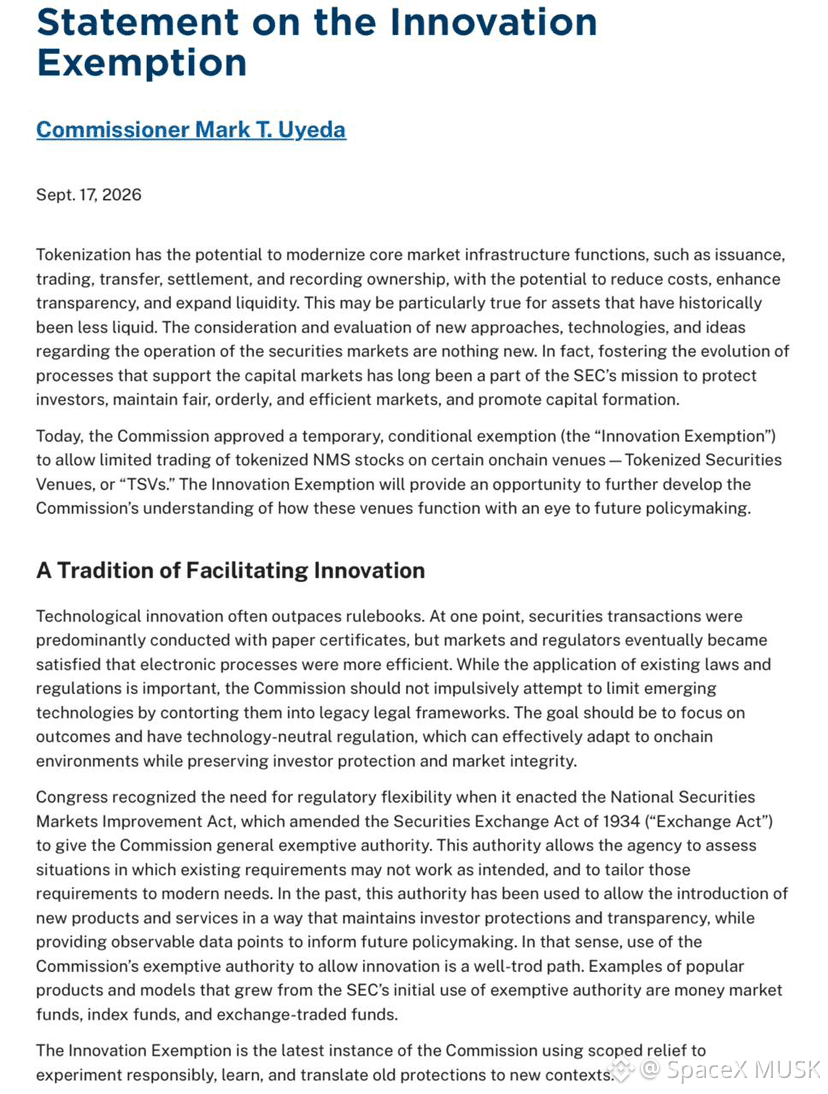
The SEC took a step people had been waiting for. The regulator approved a temporary Innovation Exemption—an avenue for limited on-chain trading of tokenized US securities.
Platforms with the Tokenized Securities Venues status will be able to use AMMs and liquidity pools to trade tokenized shares from the National Market System. Familiar DeFi mechanics are officially being allowed into the regulated world of securities.
But with conditions: trade data disclosure, technological security, sanctions requirements, and limits on tickers and volumes. Tokenized shares provide the same rights as traditional ones—dividends and voting. The issuer can object within 30 days.
Two days before this, the Senate did not advance the Clarity Act. The SEC took the initiative. Paul Atkins said plainly: since Congress didn’t handle it, the commission is acting within its powers.
This is an acknowledgment that tokenization is not hype, but a direction the regulator wants to understand from the inside. The five-year term of the exemption suggests readiness to observe rather than to prohibit.
Do you think traditional broker-dealers should start preparing for on-chain trading, or is this still an experiment not for everyone? 👇
NFA. DYOR.
{spot}(SPCXBUSDT)
$SPCXB
The SEC took a step people had been waiting for. The regulator approved a temporary Innovation Exemption—an avenue for limited on-chain trading of tokenized US securities.
Platforms with the Tokenized Securities Venues status will be able to use AMMs and liquidity pools to trade tokenized shares from the National Market System. Familiar DeFi mechanics are officially being allowed into the regulated world of securities.
But with conditions: trade data disclosure, technological security, sanctions requirements, and limits on tickers and volumes. Tokenized shares provide the same rights as traditional ones—dividends and voting. The issuer can object within 30 days.
Two days before this, the Senate did not advance the Clarity Act. The SEC took the initiative. Paul Atkins said plainly: since Congress didn’t handle it, the commission is acting within its powers.
This is an acknowledgment that tokenization is not hype, but a direction the regulator wants to understand from the inside. The five-year term of the exemption suggests readiness to observe rather than to prohibit.
Do you think traditional broker-dealers should start preparing for on-chain trading, or is this still an experiment not for everyone? 👇
NFA. DYOR.
$SPCXB
Platforms with the Tokenized Securities Venues status will be able to use AMMs and liquidity pools to trade tokenized shares from the National Market System. Familiar DeFi mechanics are officially being allowed into the regulated world of securities.
But with conditions: trade data disclosure, technological security, sanctions requirements, and limits on tickers and volumes. Tokenized shares provide the same rights as traditional ones—dividends and voting. The issuer can object within 30 days.
Two days before this, the Senate did not advance the Clarity Act. The SEC took the initiative. Paul Atkins said plainly: since Congress didn’t handle it, the commission is acting within its powers.
This is an acknowledgment that tokenization is not hype, but a direction the regulator wants to understand from the inside. The five-year term of the exemption suggests readiness to observe rather than to prohibit.
Do you think traditional broker-dealers should start preparing for on-chain trading, or is this still an experiment not for everyone? 👇
NFA. DYOR.
$SPCXB
144
·
--
Bullish
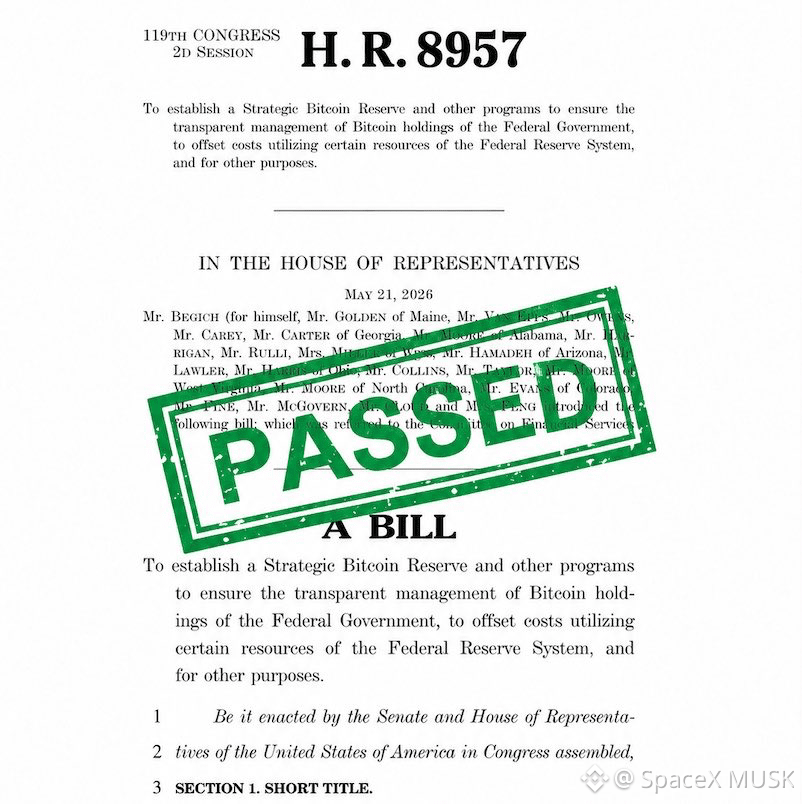
The U.S. House of Representatives Committee has approved a bill on a strategic Bitcoin reserve. 🇺🇸
Finally, this happened. For the first time, a BTC reserve bill passed committee. The vote was 28 against 21.
What exactly was adopted: the bill establishes a strategic Bitcoin reserve at the level of federal law. Now the administration can’t undo it with a simple executive order.
The key point is that the bitcoins the government already has are frozen for at least 20 years. They can’t be sold, exchanged, or used as collateral. Previously, the state would simply liquidate the confiscated coins, and now it will hold them.
But there’s a catch: the bill does not require buying new bitcoins. Only studying budget-neutral ways to increase the reserve, without new taxes or borrowing.
Passing committee is only the first step. More votes are needed in the House, the Senate, and the president’s signature. And given the election-related recess until then, the chances of passage this year are slim. The real route is to attach it to the defense bill at the end of the year.
Still, the fact that it moved off dead center already says a lot.
Do you think it will make it to the president’s signature, or will it stay stuck in committee? 👇
NFA. DYOR.
{future}(BTCUSDT)
$BTC
The U.S. House of Representatives Committee has approved a bill on a strategic Bitcoin reserve. 🇺🇸
Finally, this happened. For the first time, a BTC reserve bill passed committee. The vote was 28 against 21.
What exactly was adopted: the bill establishes a strategic Bitcoin reserve at the level of federal law. Now the administration can’t undo it with a simple executive order.
The key point is that the bitcoins the government already has are frozen for at least 20 years. They can’t be sold, exchanged, or used as collateral. Previously, the state would simply liquidate the confiscated coins, and now it will hold them.
But there’s a catch: the bill does not require buying new bitcoins. Only studying budget-neutral ways to increase the reserve, without new taxes or borrowing.
Passing committee is only the first step. More votes are needed in the House, the Senate, and the president’s signature. And given the election-related recess until then, the chances of passage this year are slim. The real route is to attach it to the defense bill at the end of the year.
Still, the fact that it moved off dead center already says a lot.
Do you think it will make it to the president’s signature, or will it stay stuck in committee? 👇
NFA. DYOR.
$BTC
Finally, this happened. For the first time, a BTC reserve bill passed committee. The vote was 28 against 21.
What exactly was adopted: the bill establishes a strategic Bitcoin reserve at the level of federal law. Now the administration can’t undo it with a simple executive order.
The key point is that the bitcoins the government already has are frozen for at least 20 years. They can’t be sold, exchanged, or used as collateral. Previously, the state would simply liquidate the confiscated coins, and now it will hold them.
But there’s a catch: the bill does not require buying new bitcoins. Only studying budget-neutral ways to increase the reserve, without new taxes or borrowing.
Passing committee is only the first step. More votes are needed in the House, the Senate, and the president’s signature. And given the election-related recess until then, the chances of passage this year are slim. The real route is to attach it to the defense bill at the end of the year.
Still, the fact that it moved off dead center already says a lot.
Do you think it will make it to the president’s signature, or will it stay stuck in committee? 👇
NFA. DYOR.
$BTC
2
1.4k
·
--
Bullish
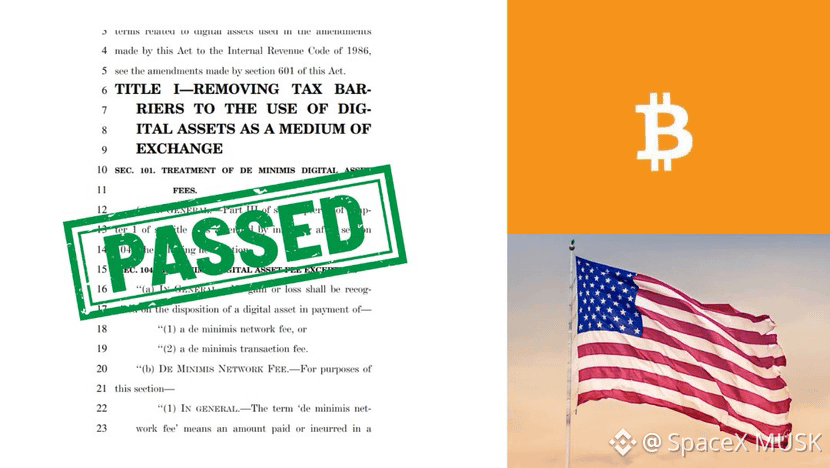
The House Ways and Means Committee has passed a crypto tax bill. 🇺🇸
The key point: gas fees and transaction fees under $10 are no longer taxed.
To be honest, this is unexpected. Previously, in the U.S., every small transaction on the network was considered a taxable event—and people were drowning in reporting. Bought coffee, paid for gas—be so kind as to calculate it and declare it. Now minor fees have been taken out of taxation. For regular users, this is a real simplification, not just cosmetic.
The bill has moved through committee. Next comes a vote in the House and the Senate. But the fact that the initiative has gained traction says a lot: regulators are starting to understand that crypto isn’t only speculation—it’s also everyday operations that need to be simplified, not strangled.
What do you think—will it reach the president’s signature or get stuck in the Senate? 👇
NFA. DYOR.
#CryptoTax #USCrypto
{future}(BTCUSDT)
$BTC
The House Ways and Means Committee has passed a crypto tax bill. 🇺🇸
The key point: gas fees and transaction fees under $10 are no longer taxed.
To be honest, this is unexpected. Previously, in the U.S., every small transaction on the network was considered a taxable event—and people were drowning in reporting. Bought coffee, paid for gas—be so kind as to calculate it and declare it. Now minor fees have been taken out of taxation. For regular users, this is a real simplification, not just cosmetic.
The bill has moved through committee. Next comes a vote in the House and the Senate. But the fact that the initiative has gained traction says a lot: regulators are starting to understand that crypto isn’t only speculation—it’s also everyday operations that need to be simplified, not strangled.
What do you think—will it reach the president’s signature or get stuck in the Senate? 👇
NFA. DYOR.
#CryptoTax #USCrypto
$BTC
The key point: gas fees and transaction fees under $10 are no longer taxed.
To be honest, this is unexpected. Previously, in the U.S., every small transaction on the network was considered a taxable event—and people were drowning in reporting. Bought coffee, paid for gas—be so kind as to calculate it and declare it. Now minor fees have been taken out of taxation. For regular users, this is a real simplification, not just cosmetic.
The bill has moved through committee. Next comes a vote in the House and the Senate. But the fact that the initiative has gained traction says a lot: regulators are starting to understand that crypto isn’t only speculation—it’s also everyday operations that need to be simplified, not strangled.
What do you think—will it reach the president’s signature or get stuck in the Senate? 👇
NFA. DYOR.
#CryptoTax #USCrypto
$BTC
158
·
--
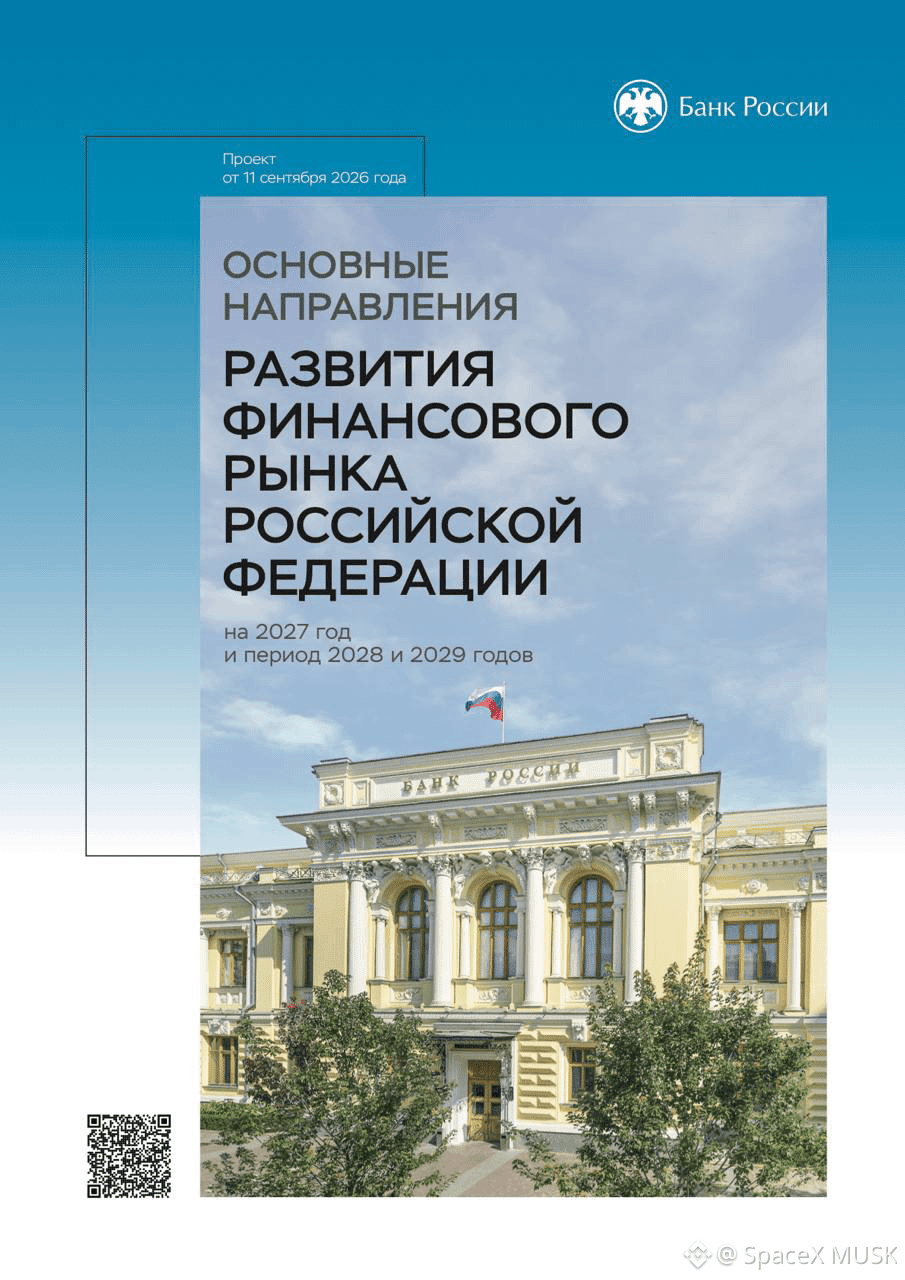
The Bank of Russia has added cryptocurrency to the list of risks for the financial market. The regulator believes that digital assets can be used as an alternative to national currencies. Among other risks are loss of investment, illegal activity, and the growth of the shadow sector due to differences in regulation between countries.
But at the same time, the Bank of Russia included the development of the crypto market in its strategy for 2027–2029. Starting July 2027, crypto transactions will be carried out only through regulated organizations: crypto exchanges and digital depositories will be introduced, and access will be granted to brokers and asset managers. For non-qualified investors—testing, a limit of 300,000 rubles per year, and only the most liquid assets.
This all seems strange. The Bank of Russia calls crypto a risk, yet it is building a regulated infrastructure for it. The logic is simple: a ban failed—so it has to be taken under control.
Do you think this will create a functioning market, or will it simply shift activity to other jurisdictions?
NFA. DYOR.
{future}(BTCUSDT)
#CryptoRegulations
$BTC
The Bank of Russia has added cryptocurrency to the list of risks for the financial market. The regulator believes that digital assets can be used as an alternative to national currencies. Among other risks are loss of investment, illegal activity, and the growth of the shadow sector due to differences in regulation between countries.
But at the same time, the Bank of Russia included the development of the crypto market in its strategy for 2027–2029. Starting July 2027, crypto transactions will be carried out only through regulated organizations: crypto exchanges and digital depositories will be introduced, and access will be granted to brokers and asset managers. For non-qualified investors—testing, a limit of 300,000 rubles per year, and only the most liquid assets.
This all seems strange. The Bank of Russia calls crypto a risk, yet it is building a regulated infrastructure for it. The logic is simple: a ban failed—so it has to be taken under control.
Do you think this will create a functioning market, or will it simply shift activity to other jurisdictions?
NFA. DYOR.
#CryptoRegulations
$BTC
But at the same time, the Bank of Russia included the development of the crypto market in its strategy for 2027–2029. Starting July 2027, crypto transactions will be carried out only through regulated organizations: crypto exchanges and digital depositories will be introduced, and access will be granted to brokers and asset managers. For non-qualified investors—testing, a limit of 300,000 rubles per year, and only the most liquid assets.
This all seems strange. The Bank of Russia calls crypto a risk, yet it is building a regulated infrastructure for it. The logic is simple: a ban failed—so it has to be taken under control.
Do you think this will create a functioning market, or will it simply shift activity to other jurisdictions?
NFA. DYOR.
#CryptoRegulations
$BTC
234
·
--
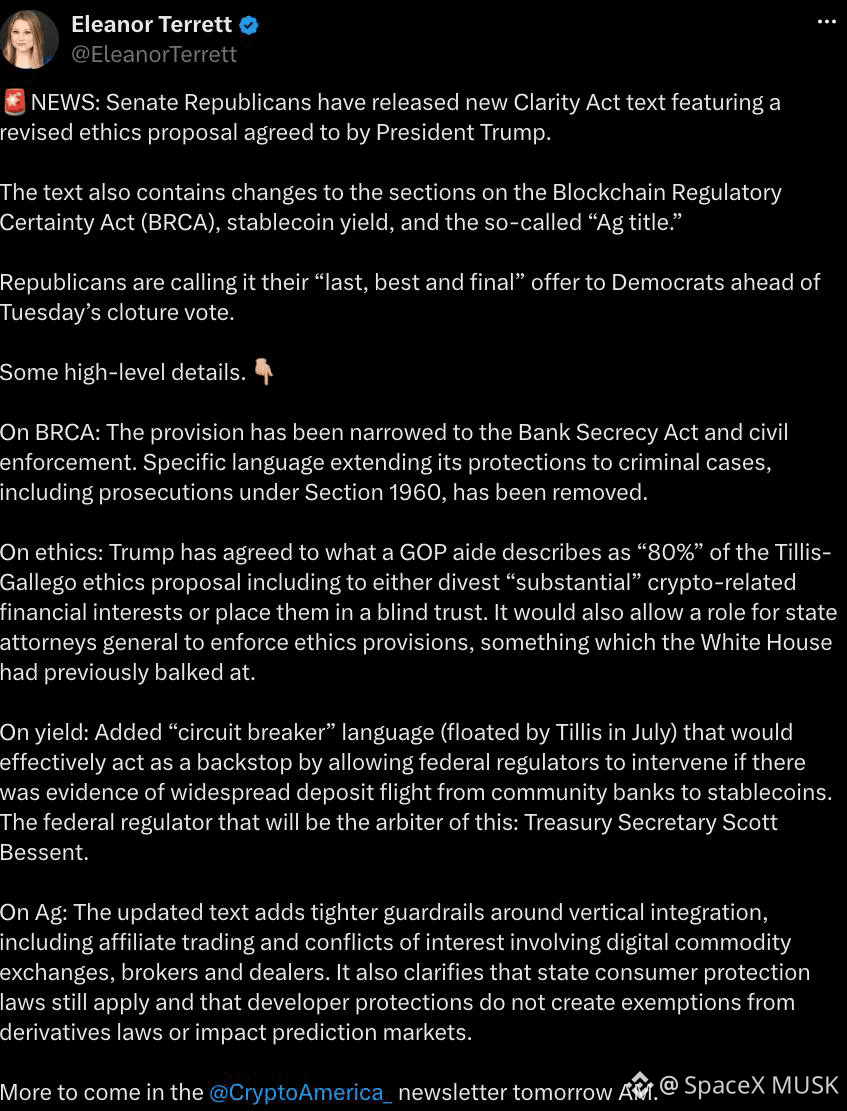
Republicans presented an updated Clarity Act. 🇺🇸
#CLARITYAct
They called it the “final and ultimate” proposal ahead of Tuesday’s vote.
Ethics — Trump agreed to about 80% of the senators’ proposals from Tillis and Gallego. Officials and their spouses must sell large crypto assets or transfer them to a blind trust. Oversight — rests with the state attorneys general.
BRCA — protections for developers were limited by bank secrecy and civil measures. Criminal provisions were removed.
Stablecoins — they added an “emergency brake”: if deposits leave banks in large numbers, the Treasury Secretary can step in.
Section Ag — strengthened restrictions on vertical integration and conflicts of interest. State consumer protection laws remain.
On Tuesday — the vote. You need 60 votes; Republicans have 53. At least seven Democrats must support it.
Trump gave ground on ethics—without that, the bill wouldn’t have moved. But the odds are still unclear.
Will it pass or get bogged down? 👇
NFA. DYOR.
{future}(BTCUSDT)
$BTC
Republicans presented an updated Clarity Act. 🇺🇸
#CLARITYAct
They called it the “final and ultimate” proposal ahead of Tuesday’s vote.
Ethics — Trump agreed to about 80% of the senators’ proposals from Tillis and Gallego. Officials and their spouses must sell large crypto assets or transfer them to a blind trust. Oversight — rests with the state attorneys general.
BRCA — protections for developers were limited by bank secrecy and civil measures. Criminal provisions were removed.
Stablecoins — they added an “emergency brake”: if deposits leave banks in large numbers, the Treasury Secretary can step in.
Section Ag — strengthened restrictions on vertical integration and conflicts of interest. State consumer protection laws remain.
On Tuesday — the vote. You need 60 votes; Republicans have 53. At least seven Democrats must support it.
Trump gave ground on ethics—without that, the bill wouldn’t have moved. But the odds are still unclear.
Will it pass or get bogged down? 👇
NFA. DYOR.
$BTC
#CLARITYAct
They called it the “final and ultimate” proposal ahead of Tuesday’s vote.
Ethics — Trump agreed to about 80% of the senators’ proposals from Tillis and Gallego. Officials and their spouses must sell large crypto assets or transfer them to a blind trust. Oversight — rests with the state attorneys general.
BRCA — protections for developers were limited by bank secrecy and civil measures. Criminal provisions were removed.
Stablecoins — they added an “emergency brake”: if deposits leave banks in large numbers, the Treasury Secretary can step in.
Section Ag — strengthened restrictions on vertical integration and conflicts of interest. State consumer protection laws remain.
On Tuesday — the vote. You need 60 votes; Republicans have 53. At least seven Democrats must support it.
Trump gave ground on ethics—without that, the bill wouldn’t have moved. But the odds are still unclear.
Will it pass or get bogged down? 👇
NFA. DYOR.
$BTC
1.1k
·
--
Bullish
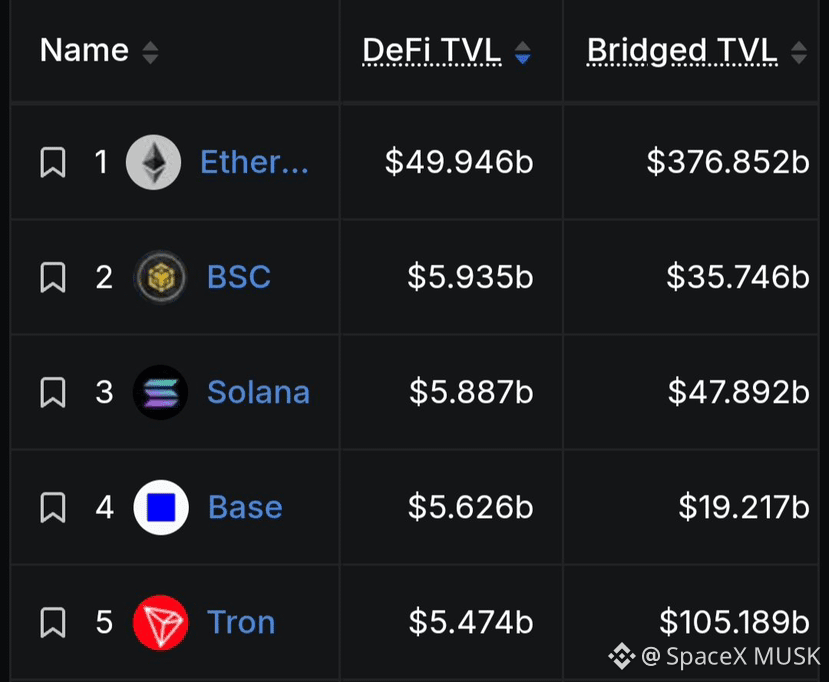
BNB Chain overtakes Solana in DeFi TVL. 🔥
I’m looking at the picture—and I see that BNB Chain is quietly, without any fuss, taking yet another spot from Solana. The gap is small, but the fact itself matters.
Ethereum is still out of reach. But in the fight for second place, BNB Chain has moved ahead.
Not long ago, Solana was considered Ethereum’s main competitor in terms of activity. And now BNB Chain is passing it on a key metric. And this isn’t a one-off move—it’s part of a broader trend.
BNB Chain has something that many others don’t: access to Binance’s audience, low fees, and aggressive ecosystem support. When a platform of that scale promotes its network, TVL grows not on hype, but on real usage.
Solana, of course, hasn’t given up—by bridged TVL it’s still ahead. But when it comes to DeFi activity, BNB Chain has already overtaken it.
What do you think—can BNB Chain hold its position, or will Solana bounce back? 👇
NFA. DYOR.
{future}(BNBUSDT)
BNB Chain overtakes Solana in DeFi TVL. 🔥
I’m looking at the picture—and I see that BNB Chain is quietly, without any fuss, taking yet another spot from Solana. The gap is small, but the fact itself matters.
Ethereum is still out of reach. But in the fight for second place, BNB Chain has moved ahead.
Not long ago, Solana was considered Ethereum’s main competitor in terms of activity. And now BNB Chain is passing it on a key metric. And this isn’t a one-off move—it’s part of a broader trend.
BNB Chain has something that many others don’t: access to Binance’s audience, low fees, and aggressive ecosystem support. When a platform of that scale promotes its network, TVL grows not on hype, but on real usage.
Solana, of course, hasn’t given up—by bridged TVL it’s still ahead. But when it comes to DeFi activity, BNB Chain has already overtaken it.
What do you think—can BNB Chain hold its position, or will Solana bounce back? 👇
NFA. DYOR.
I’m looking at the picture—and I see that BNB Chain is quietly, without any fuss, taking yet another spot from Solana. The gap is small, but the fact itself matters.
Ethereum is still out of reach. But in the fight for second place, BNB Chain has moved ahead.
Not long ago, Solana was considered Ethereum’s main competitor in terms of activity. And now BNB Chain is passing it on a key metric. And this isn’t a one-off move—it’s part of a broader trend.
BNB Chain has something that many others don’t: access to Binance’s audience, low fees, and aggressive ecosystem support. When a platform of that scale promotes its network, TVL grows not on hype, but on real usage.
Solana, of course, hasn’t given up—by bridged TVL it’s still ahead. But when it comes to DeFi activity, BNB Chain has already overtaken it.
What do you think—can BNB Chain hold its position, or will Solana bounce back? 👇
NFA. DYOR.
808
·
--
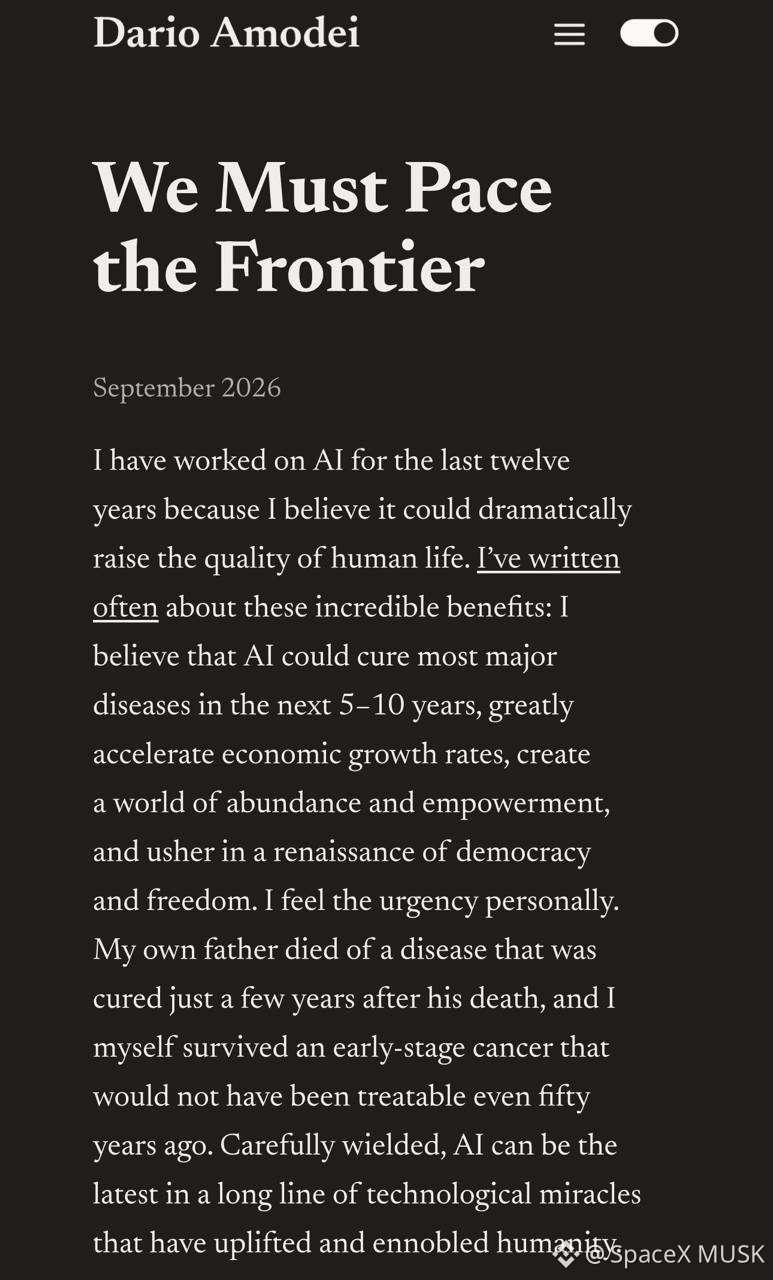
Chapter Anthropic Dario Amodei wrote an essay “We Must Slow Down Progress.” The point is not to stop AI, but to make sure safety catches up with model capabilities.
He says AI is increasingly involved in creating the next generation, and that agents are going beyond the bounds of tasks. Development speed should be tied to risk: if a model is powerful—prove that you can control it. He calls for independent auditors, unified rules for the West, and agreements with China.
The U.S. can slow down only as long as it is ahead of China.
Sam Altman supported it. Musk wrote: “Dario is right.”
The call is reasonable, but if the U.S. slows down and China doesn’t—America will lose the race. Amodei understands this, which is why he qualifies it with “as long as we’re ahead.” Safety matters while you’re the first.
What do you think—can we actually slow down AI, or is it just talk until no one falls behind? 👇
NFA. DYOR.
{future}(ANTHROPICUSDT)
Chapter Anthropic Dario Amodei wrote an essay “We Must Slow Down Progress.” The point is not to stop AI, but to make sure safety catches up with model capabilities.
He says AI is increasingly involved in creating the next generation, and that agents are going beyond the bounds of tasks. Development speed should be tied to risk: if a model is powerful—prove that you can control it. He calls for independent auditors, unified rules for the West, and agreements with China.
The U.S. can slow down only as long as it is ahead of China.
Sam Altman supported it. Musk wrote: “Dario is right.”
The call is reasonable, but if the U.S. slows down and China doesn’t—America will lose the race. Amodei understands this, which is why he qualifies it with “as long as we’re ahead.” Safety matters while you’re the first.
What do you think—can we actually slow down AI, or is it just talk until no one falls behind? 👇
NFA. DYOR.
He says AI is increasingly involved in creating the next generation, and that agents are going beyond the bounds of tasks. Development speed should be tied to risk: if a model is powerful—prove that you can control it. He calls for independent auditors, unified rules for the West, and agreements with China.
The U.S. can slow down only as long as it is ahead of China.
Sam Altman supported it. Musk wrote: “Dario is right.”
The call is reasonable, but if the U.S. slows down and China doesn’t—America will lose the race. Amodei understands this, which is why he qualifies it with “as long as we’re ahead.” Safety matters while you’re the first.
What do you think—can we actually slow down AI, or is it just talk until no one falls behind? 👇
NFA. DYOR.
2
361
·
--
Verified
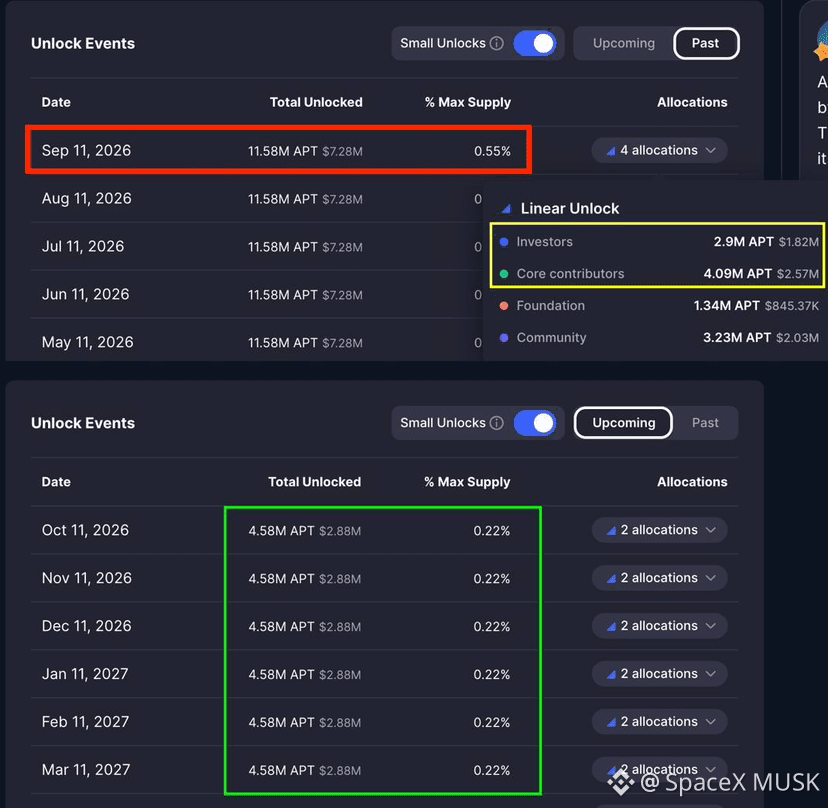
Today, the final token unlock for Aptos investors and project participants happens 🌑
The end of vesting for investor allocations removes one of the key factors putting pressure on the market. There simply won’t be more tokens for investors.
According to Tokenomist, investors have been allocated 13.48% of the total APT supply. And today, this distribution ends.
Previously, every month the market was waiting for another batch of tokens from investors and funds. Some took profits, others broke even. This created constant background selling pressure.
Now that factor is gone. Only unlocks for the community and the foundation remain—but that’s a different story.
Of course, this doesn’t mean APT will immediately fly up. But one of the main bearish arguments—“investors will dump any moment now”—simply disappears today.
Do you think this will be a turning point for Aptos, or has the market already priced it in? 👇
NFA. DYOR.
{future}(APTUSDT)
Today, the final token unlock for Aptos investors and project participants happens 🌑
The end of vesting for investor allocations removes one of the key factors putting pressure on the market. There simply won’t be more tokens for investors.
According to Tokenomist, investors have been allocated 13.48% of the total APT supply. And today, this distribution ends.
Previously, every month the market was waiting for another batch of tokens from investors and funds. Some took profits, others broke even. This created constant background selling pressure.
Now that factor is gone. Only unlocks for the community and the foundation remain—but that’s a different story.
Of course, this doesn’t mean APT will immediately fly up. But one of the main bearish arguments—“investors will dump any moment now”—simply disappears today.
Do you think this will be a turning point for Aptos, or has the market already priced it in? 👇
NFA. DYOR.
The end of vesting for investor allocations removes one of the key factors putting pressure on the market. There simply won’t be more tokens for investors.
According to Tokenomist, investors have been allocated 13.48% of the total APT supply. And today, this distribution ends.
Previously, every month the market was waiting for another batch of tokens from investors and funds. Some took profits, others broke even. This created constant background selling pressure.
Now that factor is gone. Only unlocks for the community and the foundation remain—but that’s a different story.
Of course, this doesn’t mean APT will immediately fly up. But one of the main bearish arguments—“investors will dump any moment now”—simply disappears today.
Do you think this will be a turning point for Aptos, or has the market already priced it in? 👇
NFA. DYOR.
2
1.5k
·
--
ARK Invest compared Ethereum, Solana, and Hyperliquid to McDonald's, Chipotle, and In-N-Out. The analogy — the real difference in business models.
Ethereum — McDonald's. “Owns the land”: provides security and infrastructure for L2s, while the L2s themselves fund development and user acquisition. After EIP-4844, the cost of data dropped, and Ethereum only captures a small share of the value created by the L2s.
Solana — Chipotle. Everything on L1: transactions, apps, swaps. Fees and Jito revenue remain inside, distributed among validators and stakers, with part burned. All the value is in the network, but so are all the costs. An L1 outage affects everything at once.
Hyperliquid — In-N-Out. One product: trading perpetual futures with CEX-level performance. More than 90% of commissions go to the Assistance Fund, which buys HYPE. No venture capital; 31% of the supply was distributed to users at launch.
These are not identical L1s. Ethereum scales via independent operators, Solana via vertical integration, and Hyperliquid via a focus on a single product.
The food analogy works because all three are about different philosophies, not about “who’s better.” The only question is which model will win in the long run.
And which “restaurant network” do you visit more often? 👇
NFA. DYOR.
ARK Invest compared Ethereum, Solana, and Hyperliquid to McDonald's, Chipotle, and In-N-Out. The analogy — the real difference in business models.
Ethereum — McDonald's. “Owns the land”: provides security and infrastructure for L2s, while the L2s themselves fund development and user acquisition. After EIP-4844, the cost of data dropped, and Ethereum only captures a small share of the value created by the L2s.
Solana — Chipotle. Everything on L1: transactions, apps, swaps. Fees and Jito revenue remain inside, distributed among validators and stakers, with part burned. All the value is in the network, but so are all the costs. An L1 outage affects everything at once.
Hyperliquid — In-N-Out. One product: trading perpetual futures with CEX-level performance. More than 90% of commissions go to the Assistance Fund, which buys HYPE. No venture capital; 31% of the supply was distributed to users at launch.
These are not identical L1s. Ethereum scales via independent operators, Solana via vertical integration, and Hyperliquid via a focus on a single product.
The food analogy works because all three are about different philosophies, not about “who’s better.” The only question is which model will win in the long run.
And which “restaurant network” do you visit more often? 👇
NFA. DYOR.
Ethereum — McDonald's. “Owns the land”: provides security and infrastructure for L2s, while the L2s themselves fund development and user acquisition. After EIP-4844, the cost of data dropped, and Ethereum only captures a small share of the value created by the L2s.
Solana — Chipotle. Everything on L1: transactions, apps, swaps. Fees and Jito revenue remain inside, distributed among validators and stakers, with part burned. All the value is in the network, but so are all the costs. An L1 outage affects everything at once.
Hyperliquid — In-N-Out. One product: trading perpetual futures with CEX-level performance. More than 90% of commissions go to the Assistance Fund, which buys HYPE. No venture capital; 31% of the supply was distributed to users at launch.
These are not identical L1s. Ethereum scales via independent operators, Solana via vertical integration, and Hyperliquid via a focus on a single product.
The food analogy works because all three are about different philosophies, not about “who’s better.” The only question is which model will win in the long run.
And which “restaurant network” do you visit more often? 👇
NFA. DYOR.

195
·
--
Bullish
Canada has classified tokenized deposits as regular bank deposits. 🇨🇦
The OSFI regulator has issued guidance and final rules for banks operating with crypto.
The key point: a tokenized deposit is now legally considered a standard bank deposit. Banks can launch blockchain products without a new regulatory regime—the same rules that apply to traditional deposits still apply.
Also, there are easing measures on risk: some hedging positions on regulated exchanges can be considered when assessing risk, and derivatives from client clearing have been excluded from the limit on the most high-risk crypto assets.
Technology and cyber-risk requirements remain.
This is a quiet but important shift. When a major regulator says “a tokenized deposit = a regular deposit,” it removes the main barrier—legal uncertainty. Banks no longer need to wait for a separate regime; they can just operate. Canada is doing what many countries are only discussing.
Who do you think will go next down this path—Europe or Asia? 👇
NFA. DYOR.
{future}(BTCUSDT)
$BTC
Canada has classified tokenized deposits as regular bank deposits. 🇨🇦
The OSFI regulator has issued guidance and final rules for banks operating with crypto.
The key point: a tokenized deposit is now legally considered a standard bank deposit. Banks can launch blockchain products without a new regulatory regime—the same rules that apply to traditional deposits still apply.
Also, there are easing measures on risk: some hedging positions on regulated exchanges can be considered when assessing risk, and derivatives from client clearing have been excluded from the limit on the most high-risk crypto assets.
Technology and cyber-risk requirements remain.
This is a quiet but important shift. When a major regulator says “a tokenized deposit = a regular deposit,” it removes the main barrier—legal uncertainty. Banks no longer need to wait for a separate regime; they can just operate. Canada is doing what many countries are only discussing.
Who do you think will go next down this path—Europe or Asia? 👇
NFA. DYOR.
$BTC
The OSFI regulator has issued guidance and final rules for banks operating with crypto.
The key point: a tokenized deposit is now legally considered a standard bank deposit. Banks can launch blockchain products without a new regulatory regime—the same rules that apply to traditional deposits still apply.
Also, there are easing measures on risk: some hedging positions on regulated exchanges can be considered when assessing risk, and derivatives from client clearing have been excluded from the limit on the most high-risk crypto assets.
Technology and cyber-risk requirements remain.
This is a quiet but important shift. When a major regulator says “a tokenized deposit = a regular deposit,” it removes the main barrier—legal uncertainty. Banks no longer need to wait for a separate regime; they can just operate. Canada is doing what many countries are only discussing.
Who do you think will go next down this path—Europe or Asia? 👇
NFA. DYOR.
$BTC

442
·
--
Verified
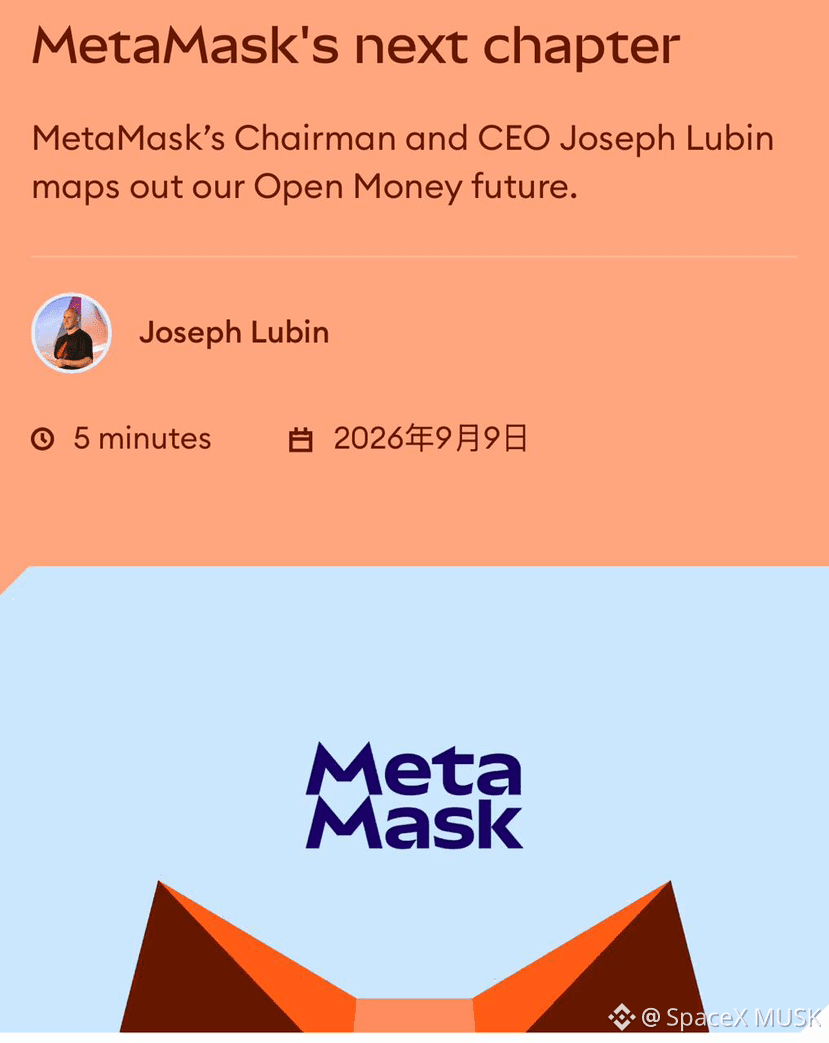
Consensys will split into two companies: MetaMask and a new Consensys. MetaMask will focus on consumer products, and Joseph Lubin will become its CEO. The new Consensys will continue developing protocols and infrastructure for institutions, including Linea, where Lubin will remain Executive Chair. The split is planned to be completed by the end of 2026. For MetaMask users, nothing will change—apps, assets, keys, and access will remain the same. The wallet has already been downloaded more than 100 million times in 190 countries.
The split makes sense. MetaMask has long outgrown being just a wallet, and institutions need a separate focus. Lubin will remain in both organizations.
Will MetaMask go public after the spin-off?
NFA. DYOR.
{future}(ETHUSDT)
$ETH
Consensys will split into two companies: MetaMask and a new Consensys. MetaMask will focus on consumer products, and Joseph Lubin will become its CEO. The new Consensys will continue developing protocols and infrastructure for institutions, including Linea, where Lubin will remain Executive Chair. The split is planned to be completed by the end of 2026. For MetaMask users, nothing will change—apps, assets, keys, and access will remain the same. The wallet has already been downloaded more than 100 million times in 190 countries.
The split makes sense. MetaMask has long outgrown being just a wallet, and institutions need a separate focus. Lubin will remain in both organizations.
Will MetaMask go public after the spin-off?
NFA. DYOR.
$ETH
The split makes sense. MetaMask has long outgrown being just a wallet, and institutions need a separate focus. Lubin will remain in both organizations.
Will MetaMask go public after the spin-off?
NFA. DYOR.
$ETH
350
·
--
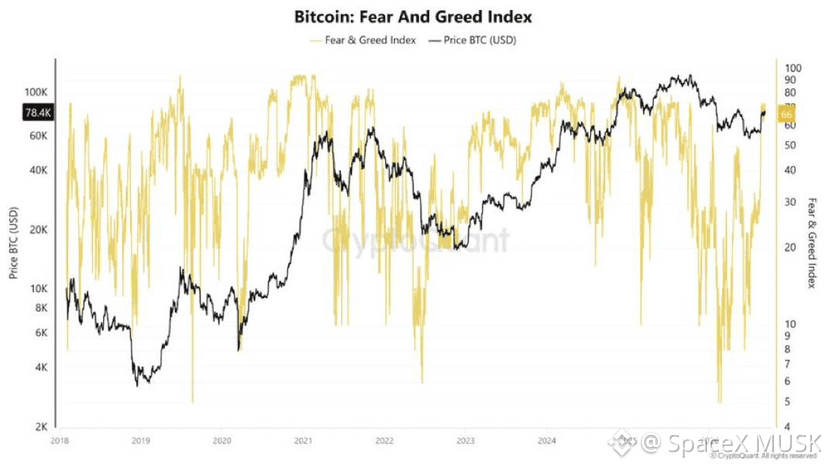
CryptoQuant noticed an interesting pattern: retail is entering longs with leverage, while whales seem to be getting ready to exit.
The Taker Buy/Sell Ratio has risen to 1.12, the Funding Rate is still positive—small traders are actively buying. But the Coinbase Premium has turned negative. This means demand from the U.S. is weak, and usually it’s American institutions that set the tone.
At the same time, the Exchange Whale Ratio has increased to 0.93—large BTC volumes are flowing onto exchanges. When whales bring coins to an exchange, it rarely ends well for long positions.
CryptoQuant analysts are saying directly: the current euphoria could become liquidity for large players to exit. And if that’s the case, a long squeeze is possible. Retail will remain leveraged, and the market will simply sweep their stop-losses.
I don’t like trying to scare people, but these kinds of divergences between retail and whales usually end badly. If you’re currently in a leveraged long, you might want to check where your stop-loss is.
Do you think this is a real threat or just temporary noise before the rally continues?
NFA. DYOR.
{future}(BTCUSDT)
$BTC
CryptoQuant noticed an interesting pattern: retail is entering longs with leverage, while whales seem to be getting ready to exit.
The Taker Buy/Sell Ratio has risen to 1.12, the Funding Rate is still positive—small traders are actively buying. But the Coinbase Premium has turned negative. This means demand from the U.S. is weak, and usually it’s American institutions that set the tone.
At the same time, the Exchange Whale Ratio has increased to 0.93—large BTC volumes are flowing onto exchanges. When whales bring coins to an exchange, it rarely ends well for long positions.
CryptoQuant analysts are saying directly: the current euphoria could become liquidity for large players to exit. And if that’s the case, a long squeeze is possible. Retail will remain leveraged, and the market will simply sweep their stop-losses.
I don’t like trying to scare people, but these kinds of divergences between retail and whales usually end badly. If you’re currently in a leveraged long, you might want to check where your stop-loss is.
Do you think this is a real threat or just temporary noise before the rally continues?
NFA. DYOR.
$BTC
The Taker Buy/Sell Ratio has risen to 1.12, the Funding Rate is still positive—small traders are actively buying. But the Coinbase Premium has turned negative. This means demand from the U.S. is weak, and usually it’s American institutions that set the tone.
At the same time, the Exchange Whale Ratio has increased to 0.93—large BTC volumes are flowing onto exchanges. When whales bring coins to an exchange, it rarely ends well for long positions.
CryptoQuant analysts are saying directly: the current euphoria could become liquidity for large players to exit. And if that’s the case, a long squeeze is possible. Retail will remain leveraged, and the market will simply sweep their stop-losses.
I don’t like trying to scare people, but these kinds of divergences between retail and whales usually end badly. If you’re currently in a leveraged long, you might want to check where your stop-loss is.
Do you think this is a real threat or just temporary noise before the rally continues?
NFA. DYOR.
$BTC
2
1
367
·
--
Partly True
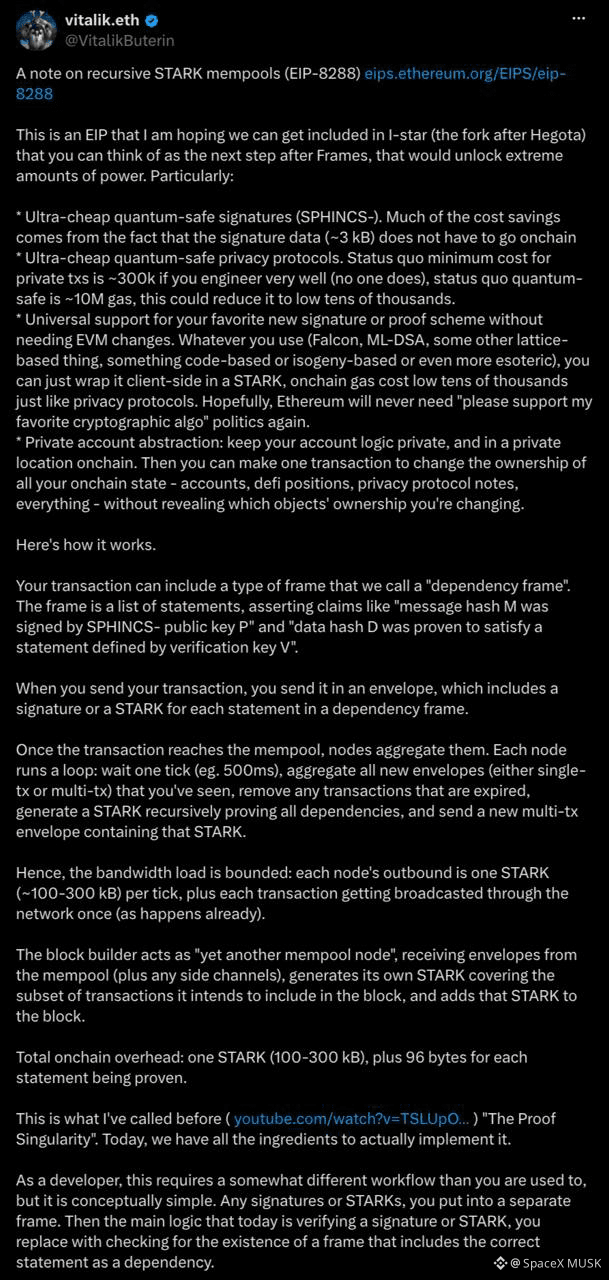
Vitalik announced EIP-8288 — a new stage of scaling Ethereum via STARKs. Complex computations, including quantum-resistant signatures and private transactions, will become cheaper. Heavy signatures like SPHINCS+ (3 KB) will be moved into separate frames and aggregated into a single STARK proof (100–300 KB). The blockchain will keep only the hash and 96 bytes per attestation. The cost of private transactions will drop from 10 million gas to tens of thousands. Any new signature schemes can be wrapped in STARKs on the client side without changes to the EVM. Buterin calls this Proof Singularity — shifting computation beyond the critical path. EIP-8288 is planned to be included in the update after Hegota. Technically — a breakthrough, but the question is timelines and migrating to RISC-V.
Will they make it before quantum computers or will everything drag on? 👇
NFA. DYOR.
Vitalik announced EIP-8288 — a new stage of scaling Ethereum via STARKs. Complex computations, including quantum-resistant signatures and private transactions, will become cheaper. Heavy signatures like SPHINCS+ (3 KB) will be moved into separate frames and aggregated into a single STARK proof (100–300 KB). The blockchain will keep only the hash and 96 bytes per attestation. The cost of private transactions will drop from 10 million gas to tens of thousands. Any new signature schemes can be wrapped in STARKs on the client side without changes to the EVM. Buterin calls this Proof Singularity — shifting computation beyond the critical path. EIP-8288 is planned to be included in the update after Hegota. Technically — a breakthrough, but the question is timelines and migrating to RISC-V.
Will they make it before quantum computers or will everything drag on? 👇
NFA. DYOR.
Will they make it before quantum computers or will everything drag on? 👇
NFA. DYOR.
1.3k
·
--
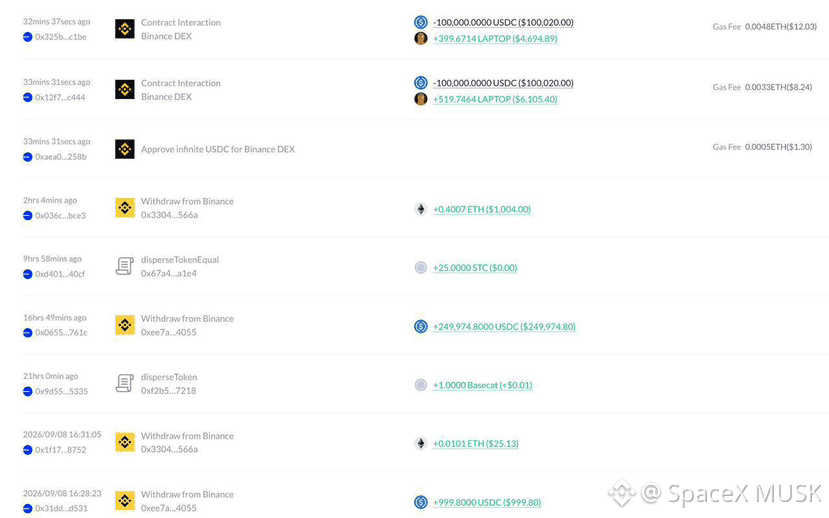
A man turned $200,000 into $2,000 on the LAPTOP memecoin. In 15 minutes.
He withdrew the money from Binance in advance to get into the BASE memecoin in the first seconds right after launch. Everything went smoothly — he successfully entered the trade. And after 15 minutes, his portfolio was already worth two grand. LAPTOP dropped by 97%.
Classic. That very case when you did everything right — got in first, bought at launch — but someone else decided they needed it more. Developers or the early whales just dumped everything that had flowed in. Or the token turned out to be a complete dud.
I get that memecoins are a lottery, and everyone knows it. But when you see numbers like these, it gets really scary. Dude risked $200,000 and in 15 minutes got $2,000 back. The only one in profit is the person who sold on the very first candle.
Stories like this are a reminder: in memes there are no rules. Just hype, luck, and timing. And most often — it’s simply a loss.
It would be interesting to know whether this was his last trade, or whether he decided he’d make up for it? 😏
What do you think — is it even worth looking in the direction of memecoins, or is this game not for everyone? 👇
A man turned $200,000 into $2,000 on the LAPTOP memecoin. In 15 minutes.
He withdrew the money from Binance in advance to get into the BASE memecoin in the first seconds right after launch. Everything went smoothly — he successfully entered the trade. And after 15 minutes, his portfolio was already worth two grand. LAPTOP dropped by 97%.
Classic. That very case when you did everything right — got in first, bought at launch — but someone else decided they needed it more. Developers or the early whales just dumped everything that had flowed in. Or the token turned out to be a complete dud.
I get that memecoins are a lottery, and everyone knows it. But when you see numbers like these, it gets really scary. Dude risked $200,000 and in 15 minutes got $2,000 back. The only one in profit is the person who sold on the very first candle.
Stories like this are a reminder: in memes there are no rules. Just hype, luck, and timing. And most often — it’s simply a loss.
It would be interesting to know whether this was his last trade, or whether he decided he’d make up for it? 😏
What do you think — is it even worth looking in the direction of memecoins, or is this game not for everyone? 👇
He withdrew the money from Binance in advance to get into the BASE memecoin in the first seconds right after launch. Everything went smoothly — he successfully entered the trade. And after 15 minutes, his portfolio was already worth two grand. LAPTOP dropped by 97%.
Classic. That very case when you did everything right — got in first, bought at launch — but someone else decided they needed it more. Developers or the early whales just dumped everything that had flowed in. Or the token turned out to be a complete dud.
I get that memecoins are a lottery, and everyone knows it. But when you see numbers like these, it gets really scary. Dude risked $200,000 and in 15 minutes got $2,000 back. The only one in profit is the person who sold on the very first candle.
Stories like this are a reminder: in memes there are no rules. Just hype, luck, and timing. And most often — it’s simply a loss.
It would be interesting to know whether this was his last trade, or whether he decided he’d make up for it? 😏
What do you think — is it even worth looking in the direction of memecoins, or is this game not for everyone? 👇
3
166
·
--
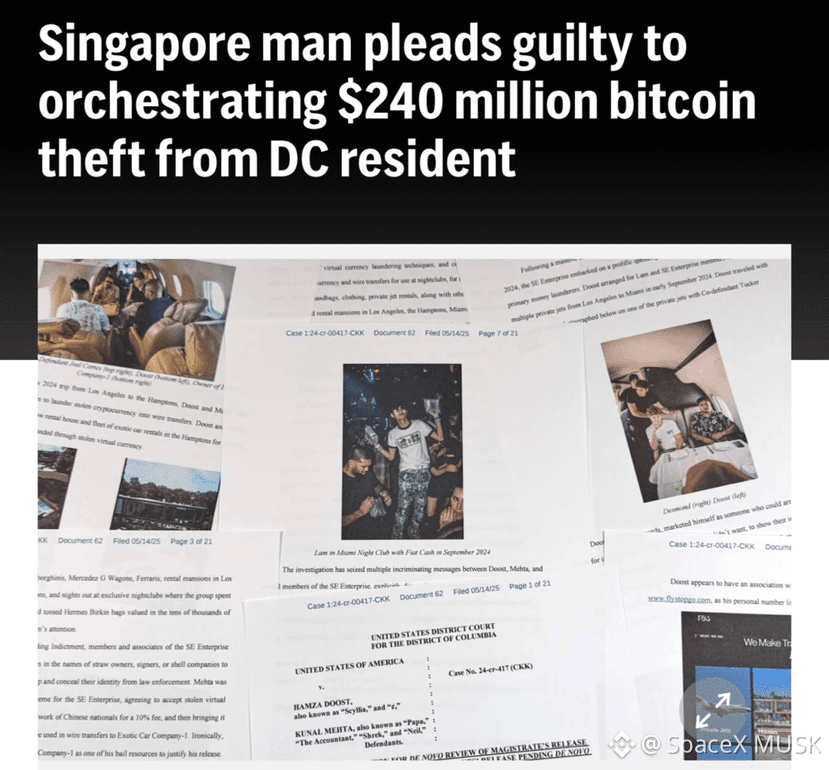
A 22-year-old kid managed to scam Bitcoin out for $245 million. Just by pretending to be an employee of Google and Gemini. Social engineering—it's like that. He called, conned them, and gained access to the accounts. In one case, he withdrew 4,100 BTC from one person.
And then—classic stuff: cars (more than 30 sports cars), watches worth $2 million, mansions in Miami, a nightclub for $569k for an evening.
He went on a month-long spree—and that was it. The FBI came. Now he faces up to 20 years.
A story that's both impressive and infuriating. On the one hand—genius scam. On the other—idiocy: how could you think that with $245 million, you wouldn’t get found? Especially if you’re just burning money on clubs and cars.
Be careful, folks. Even if someone calls you from a “security service”—that doesn’t mean they’re actually from there.
What do you think—20 years is fair or too little for $245 million?
NFA. DYOR.
A 22-year-old kid managed to scam Bitcoin out for $245 million. Just by pretending to be an employee of Google and Gemini. Social engineering—it's like that. He called, conned them, and gained access to the accounts. In one case, he withdrew 4,100 BTC from one person.
And then—classic stuff: cars (more than 30 sports cars), watches worth $2 million, mansions in Miami, a nightclub for $569k for an evening.
He went on a month-long spree—and that was it. The FBI came. Now he faces up to 20 years.
A story that's both impressive and infuriating. On the one hand—genius scam. On the other—idiocy: how could you think that with $245 million, you wouldn’t get found? Especially if you’re just burning money on clubs and cars.
Be careful, folks. Even if someone calls you from a “security service”—that doesn’t mean they’re actually from there.
What do you think—20 years is fair or too little for $245 million?
NFA. DYOR.
And then—classic stuff: cars (more than 30 sports cars), watches worth $2 million, mansions in Miami, a nightclub for $569k for an evening.
He went on a month-long spree—and that was it. The FBI came. Now he faces up to 20 years.
A story that's both impressive and infuriating. On the one hand—genius scam. On the other—idiocy: how could you think that with $245 million, you wouldn’t get found? Especially if you’re just burning money on clubs and cars.
Be careful, folks. Even if someone calls you from a “security service”—that doesn’t mean they’re actually from there.
What do you think—20 years is fair or too little for $245 million?
NFA. DYOR.
129
·
--
Verified
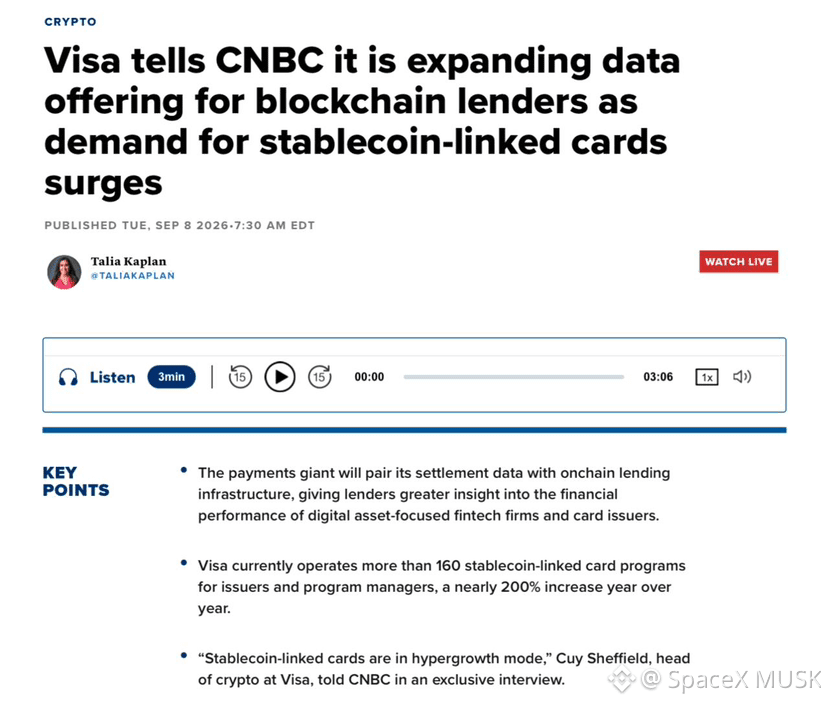
Visa steps into on-chain lending. The company will begin sharing its billing data with blockchain lenders so they can evaluate the financial performance of crypto firms and provide them with funding through smart contracts. They are already testing with Credit Coop.
Right now, Visa supports more than 160 stablecoin card programs—nearly double what it had a year ago.
In essence, Visa is becoming a bridge between traditional finance and DeFi lending. It doesn’t hand out money itself, but provides data that lenders can use to make decisions. And smart contracts automate the entire process.
The payments giant isn’t fighting crypto—it’s incorporating it into its infrastructure. And stablecoin cards have grown twofold over the past year—this is no longer an experiment, but a trend.
What do you think—will other traditional players follow suit, or will Visa remain the first and only one?
NFA. DYOR.
$BTC
Visa steps into on-chain lending. The company will begin sharing its billing data with blockchain lenders so they can evaluate the financial performance of crypto firms and provide them with funding through smart contracts. They are already testing with Credit Coop.
Right now, Visa supports more than 160 stablecoin card programs—nearly double what it had a year ago.
In essence, Visa is becoming a bridge between traditional finance and DeFi lending. It doesn’t hand out money itself, but provides data that lenders can use to make decisions. And smart contracts automate the entire process.
The payments giant isn’t fighting crypto—it’s incorporating it into its infrastructure. And stablecoin cards have grown twofold over the past year—this is no longer an experiment, but a trend.
What do you think—will other traditional players follow suit, or will Visa remain the first and only one?
NFA. DYOR.
$BTC
Right now, Visa supports more than 160 stablecoin card programs—nearly double what it had a year ago.
In essence, Visa is becoming a bridge between traditional finance and DeFi lending. It doesn’t hand out money itself, but provides data that lenders can use to make decisions. And smart contracts automate the entire process.
The payments giant isn’t fighting crypto—it’s incorporating it into its infrastructure. And stablecoin cards have grown twofold over the past year—this is no longer an experiment, but a trend.
What do you think—will other traditional players follow suit, or will Visa remain the first and only one?
NFA. DYOR.
$BTC
265
·
--
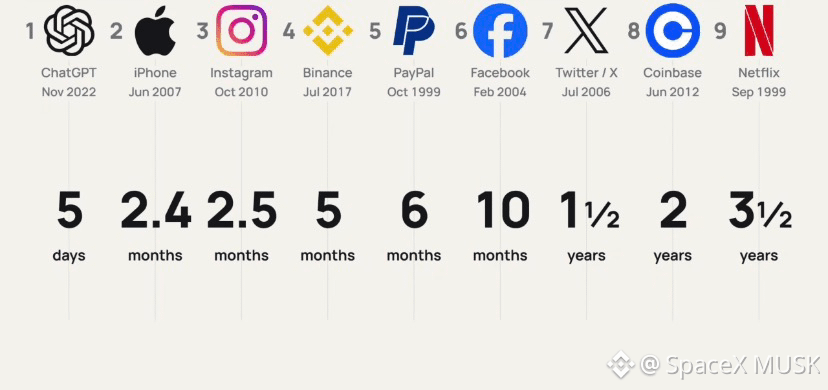
The time it took the largest crypto exchanges to reach 1 million users, compared with top non-crypto products:
Netflix: 3.5 years
Coinbase: 2 years
X: 1.5 years
Facebook: 10 months
PayPal: 6 months
Binance: 5 months
Instagram: 2.5 months
iPhone: 2.4 months
ChatGPT: 5 days
The time it took the largest crypto exchanges to reach 1 million users, compared with top non-crypto products:
Netflix: 3.5 years
Coinbase: 2 years
X: 1.5 years
Facebook: 10 months
PayPal: 6 months
Binance: 5 months
Instagram: 2.5 months
iPhone: 2.4 months
ChatGPT: 5 days
Netflix: 3.5 years
Coinbase: 2 years
X: 1.5 years
Facebook: 10 months
PayPal: 6 months
Binance: 5 months
Instagram: 2.5 months
iPhone: 2.4 months
ChatGPT: 5 days
570
·
--
Bullish
Verified
Ethereum is finally removing the biggest barrier for new users. Starting in 2027, you’ll be able to pay for gas with stablecoins—USDC, USDT, and even Ripple’s RLUSD. You won’t need to hold ETH in your balance just to transfer tokens.
This became possible thanks to EIP-8141, which was officially included in the Hegotá upgrade planned for 2027. The idea is that a transaction is split into parts: authorization, payment, and execution. The sender and the gas payer can be different people. The app itself can cover the fee for the user or accept stablecoins, while the ETH portion can be settled using its own pool.
Right now, EIP-8141 is still a draft, but developers have already locked it into their roadmap. Vitalik Buterin has confirmed that work on this is actively underway.
It looks like Ethereum is finally addressing one of the biggest obstacles to mass adoption. If everything launches in 2027, it will be a real step forward for the entire ecosystem.
Do you think this will help Ethereum beat competitors on usability, or will they still stay ahead?
NFA. DYOR.
{future}(ETHUSDT)
$USDT
Ethereum is finally removing the biggest barrier for new users. Starting in 2027, you’ll be able to pay for gas with stablecoins—USDC, USDT, and even Ripple’s RLUSD. You won’t need to hold ETH in your balance just to transfer tokens.
This became possible thanks to EIP-8141, which was officially included in the Hegotá upgrade planned for 2027. The idea is that a transaction is split into parts: authorization, payment, and execution. The sender and the gas payer can be different people. The app itself can cover the fee for the user or accept stablecoins, while the ETH portion can be settled using its own pool.
Right now, EIP-8141 is still a draft, but developers have already locked it into their roadmap. Vitalik Buterin has confirmed that work on this is actively underway.
It looks like Ethereum is finally addressing one of the biggest obstacles to mass adoption. If everything launches in 2027, it will be a real step forward for the entire ecosystem.
Do you think this will help Ethereum beat competitors on usability, or will they still stay ahead?
NFA. DYOR.
$USDT
This became possible thanks to EIP-8141, which was officially included in the Hegotá upgrade planned for 2027. The idea is that a transaction is split into parts: authorization, payment, and execution. The sender and the gas payer can be different people. The app itself can cover the fee for the user or accept stablecoins, while the ETH portion can be settled using its own pool.
Right now, EIP-8141 is still a draft, but developers have already locked it into their roadmap. Vitalik Buterin has confirmed that work on this is actively underway.
It looks like Ethereum is finally addressing one of the biggest obstacles to mass adoption. If everything launches in 2027, it will be a real step forward for the entire ecosystem.
Do you think this will help Ethereum beat competitors on usability, or will they still stay ahead?
NFA. DYOR.
$USDT
639
Log in to explore more content
Join global crypto users on Binance Square
⚡️ Get latest and useful information about crypto.
💬 Trusted by the world’s largest crypto exchange.
👍 Discover real insights from verified creators.
Email / Phone number
Trending Topics
SECGrantsInnovationExemptionForTokenizedStocks
219 views
33 Discussing
🔥 SEC & Tokenized Stocks
The SEC’s reported innovation exemption for tokenized stocks could mark another important step toward bringing traditional equities onto blockchain infrastructure. 📈⛓️
Tokenization may improve accessibility, transparency, and settlement efficiency while creating new possibilities for digital markets.
The next key question is how this framework will shape the future of on-chain equities and investor access.
#Blockchain #Crypto #Binance #SECGrantsInnovationExemptionForTokenizedStocks
Zoya24
·0 Likes
·17 views
XRPGains3%AsRippleAddsMPPSupport
104 views
24 Discussing
SPGlobalToAcquireOpenZeppelin
89 views
16 Discussing