
imayday
267 Posts

imayday
Report
Block User
空投Alpha博主 BP-4DE76C521BE2
High-Frequency Trader
5.7 Years
35 Following
570 Followers
182 Liked
Posts
All
Quotes
·
--
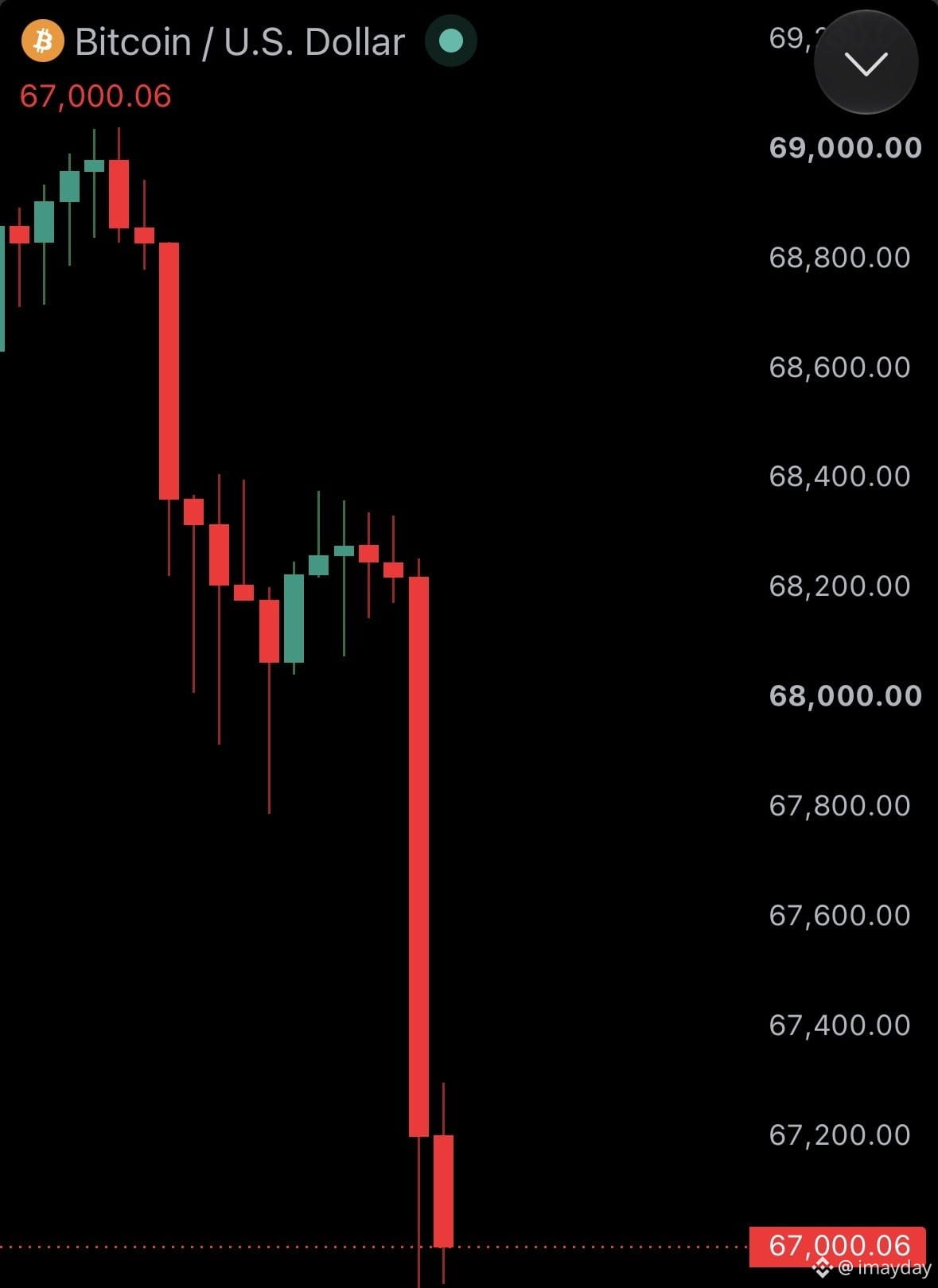
Just now: Bitcoin plunges to $67,000, with $250 million liquidated in the crypto market within 10 minutes.
$BTC
Just now: Bitcoin plunges to $67,000, with $250 million liquidated in the crypto market within 10 minutes.
$BTC
$BTC
342
·
--
Bearish
$AKE
{future}(AKEUSDT)
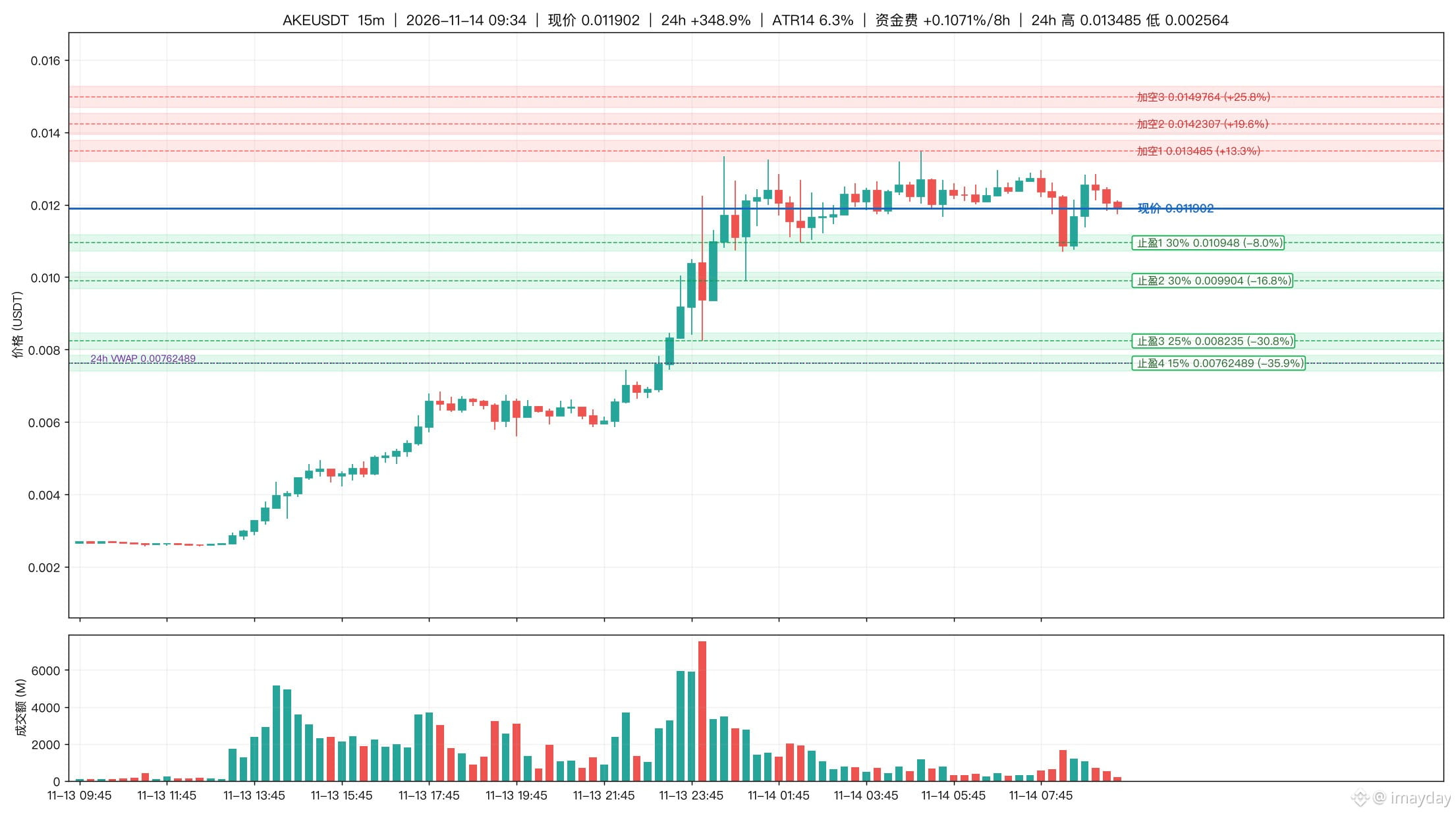
Performance over the past 8 hours
1. Shifted from a rally to consolidation at the highs.
Over the past 8 hours, price has moved sideways between 0.0099~0.0135, while ATR has contracted from 12.6% to 6.3%, indicating compressed volatility.
2. OI +14.3% while price is flat — 3.78B → 4.32B contracts.
Both longs and shorts are adding positions, creating a two-sided buildup. Once this pattern breaks, the move is usually significant. An upside breakout is quite possible (price just made a new high + OI is rising).
3. Funding remains +0.107%/8h → shorts earn about 0.32% per day.
Short entry levels (based on current price 0.011902)
Red = short-entry order zones (place limit orders)
Add short 1 0.01319 ~ 0.01378 midpoint 0.013485 +13.3% 35%
Add short 2 0.01393 ~ 0.01453 midpoint 0.014231 +19.6% 30%
Add short 3 0.01468 ~ 0.01527 midpoint 0.014976 +25.8% 35%
Green = scale-out take-profit zones
TP1 0.01072 ~ 0.01117 midpoint 0.010948 −8.0% 30%
TP2 0.00968 ~ 0.01013 midpoint 0.009904 −16.8% 30%
TP3 0.00801 ~ 0.00846 midpoint 0.008235 −30.8% 25%
TP4 0.00740 ~ 0.00785 midpoint 0.007625 −35.9% 15% ← 24h VWAP
Structure invalidation level = 15m close above 0.01360 (with a one-candle buffer above the previous high of 0.013485)
→ Risk +12.4%, versus TP2 at −18.1%, risk/reward ratio 1.46
The 0.01498 level (Add short 3) is not a stop-loss level; it is an add-to-position level. It only becomes a reasonable stop-loss level again after price actually pushes higher, you add to the position at a higher level, and your average entry price rises.
Key points
· Place limit orders for Add short 1/2/3 within the red zones; don't chase the price at market.
· Take profits in batches of 30/30/25/15. The final 15% at TP4 is reserved for a “full reversion to VWAP”—don't close it early.
· Compressed volatility + rising OI = a market move is approaching. A stop-loss must be in place. Use 7.5~9% (1.2×ATR), not 10%—ATR is only 6.3% now, so 10% is too wide, and even a 20% wick could slip past it.
· Note that 0.013485 is the high just set within the past 8 hours. There is a cluster of short stops above it, so a breakout could accelerate price instantly. Don't stubbornly hold on at 0.0134-0.0135.
$AKE
Performance over the past 8 hours
1. Shifted from a rally to consolidation at the highs.
Over the past 8 hours, price has moved sideways between 0.0099~0.0135, while ATR has contracted from 12.6% to 6.3%, indicating compressed volatility.
2. OI +14.3% while price is flat — 3.78B → 4.32B contracts.
Both longs and shorts are adding positions, creating a two-sided buildup. Once this pattern breaks, the move is usually significant. An upside breakout is quite possible (price just made a new high + OI is rising).
3. Funding remains +0.107%/8h → shorts earn about 0.32% per day.
Short entry levels (based on current price 0.011902)
Red = short-entry order zones (place limit orders)
Add short 1 0.01319 ~ 0.01378 midpoint 0.013485 +13.3% 35%
Add short 2 0.01393 ~ 0.01453 midpoint 0.014231 +19.6% 30%
Add short 3 0.01468 ~ 0.01527 midpoint 0.014976 +25.8% 35%
Green = scale-out take-profit zones
TP1 0.01072 ~ 0.01117 midpoint 0.010948 −8.0% 30%
TP2 0.00968 ~ 0.01013 midpoint 0.009904 −16.8% 30%
TP3 0.00801 ~ 0.00846 midpoint 0.008235 −30.8% 25%
TP4 0.00740 ~ 0.00785 midpoint 0.007625 −35.9% 15% ← 24h VWAP
Structure invalidation level = 15m close above 0.01360 (with a one-candle buffer above the previous high of 0.013485)
→ Risk +12.4%, versus TP2 at −18.1%, risk/reward ratio 1.46
The 0.01498 level (Add short 3) is not a stop-loss level; it is an add-to-position level. It only becomes a reasonable stop-loss level again after price actually pushes higher, you add to the position at a higher level, and your average entry price rises.
Key points
· Place limit orders for Add short 1/2/3 within the red zones; don't chase the price at market.
· Take profits in batches of 30/30/25/15. The final 15% at TP4 is reserved for a “full reversion to VWAP”—don't close it early.
· Compressed volatility + rising OI = a market move is approaching. A stop-loss must be in place. Use 7.5~9% (1.2×ATR), not 10%—ATR is only 6.3% now, so 10% is too wide, and even a 20% wick could slip past it.
· Note that 0.013485 is the high just set within the past 8 hours. There is a cluster of short stops above it, so a breakout could accelerate price instantly. Don't stubbornly hold on at 0.0134-0.0135.
507
·
--
Just now: 🇺🇸 U.S. PPI rose to 6.5%, below expectations.
$BTC
Just now: 🇺🇸 U.S. PPI rose to 6.5%, below expectations.
$BTC
$BTC

117
·
--
Bearish
Wintermute's short exposure on Hyperliquid increased to $90.71 million
$BTC
{future}(BTCUSDT)
Wintermute's short exposure on Hyperliquid increased to $90.71 million
$BTC
$BTC
90
·
--
Bearish
An Ethereum Foundation-linked address has sold another 2,000 ETH; a 2015 ICO whale sold 16,700 ETH
{future}(ETHUSDT)
An Ethereum Foundation-linked address has sold another 2,000 ETH; a 2015 ICO whale sold 16,700 ETH
126
·
--
Breaking: Amazon $AMZN will collect sales data for almost every product sold on Earth to compete with Google $GOOGL and AI shopping tools.
Breaking: Amazon $AMZN will collect sales data for almost every product sold on Earth to compete with Google $GOOGL and AI shopping tools.


1
235
·
--
Just now: Billionaire Nvidia $NVDA shareholder Leo KoGuan says he will not invest any more money in the company without Jensen Huang.
Nvidia employees petition for Huang to return.
Just now: Billionaire Nvidia $NVDA shareholder Leo KoGuan says he will not invest any more money in the company without Jensen Huang.
Nvidia employees petition for Huang to return.
Nvidia employees petition for Huang to return.


222
·
--
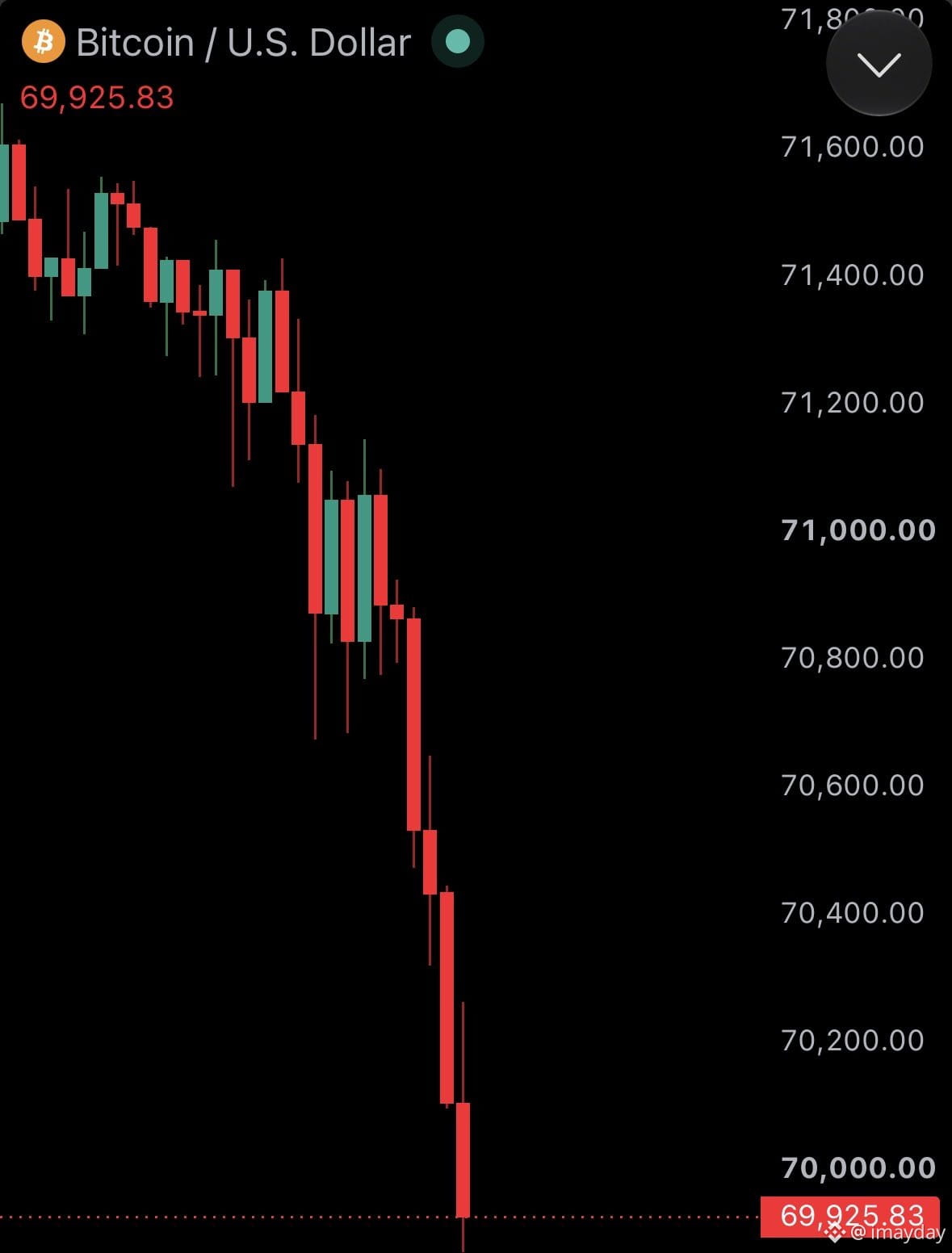
Breaking: Bitcoin falls below $70,000.
- It's in the $60Ks now.
$BTC
Breaking: Bitcoin falls below $70,000.
- It's in the $60Ks now.
$BTC
- It's in the $60Ks now.
$BTC
2
1
777
·
--
BOT did two big things early this morning:
1️⃣ It was supposed to open short positions on $RECALL $PRL (it picked up a signal saying Binance had triggered a cooldown), but it didn’t open them for me 😤
2️⃣ It sent an alert for $BARD , which it wasn’t supposed to open. I manually opened it myself, and ended up stuck holding the position 🤡
Sometimes I feel like dragging BOT outside and giving it a beating!
346
·
--
Just now: 🇺🇸 Senator Warren says that despite CEO Jensen Huang’s resignation, Nvidia $NVDA still owes Congress an explanation.
Reason: Congress is still seeking further clarification on chip shipments and compliance issues.
Just now: 🇺🇸 Senator Warren says that despite CEO Jensen Huang’s resignation, Nvidia $NVDA still owes Congress an explanation.
Reason: Congress is still seeking further clarification on chip shipments and compliance issues.
Reason: Congress is still seeking further clarification on chip shipments and compliance issues.
191
·
--
Just now: Colette Kress will succeed Jensen Huang as Nvidia's $NVDA interim CEO.
Just now: Colette Kress will succeed Jensen Huang as Nvidia's $NVDA interim CEO.


487
·
--
Bearish
Their jeers were so loud back then, they almost drowned out my resolve…
$BTC
{future}(BTCUSDT)
Their jeers were so loud back then, they almost drowned out my resolve…
$BTC
$BTC
imayday
·
--
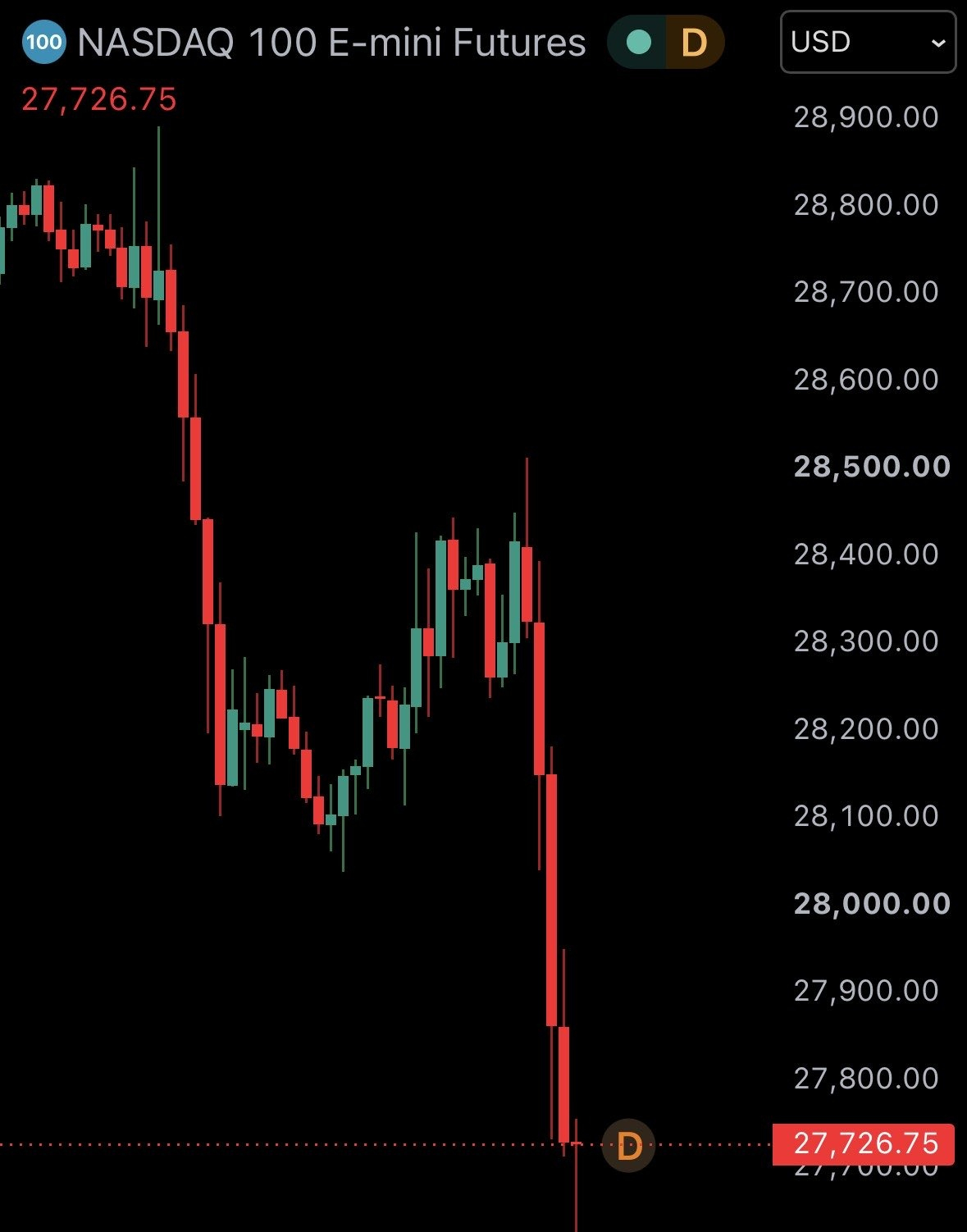
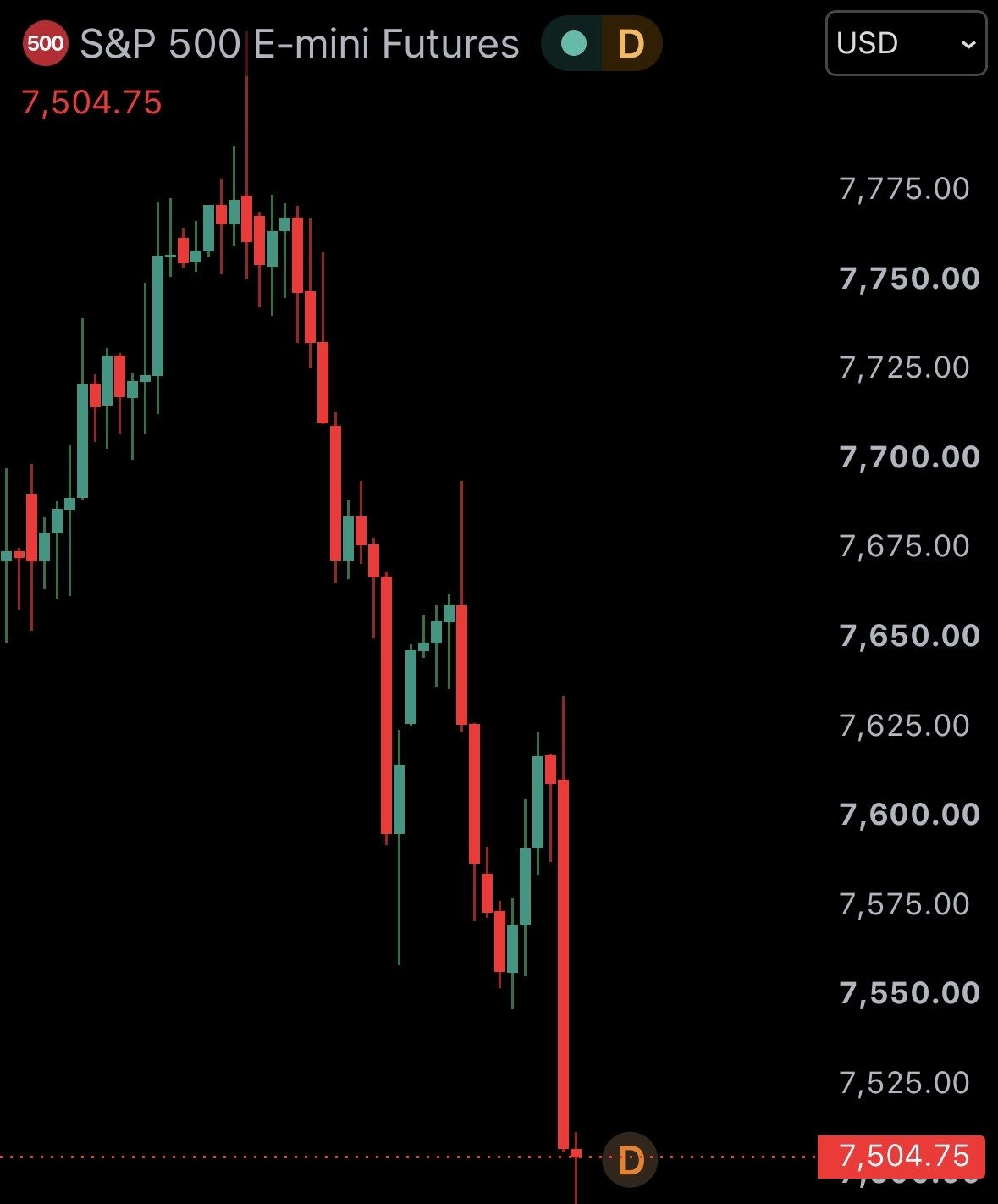
Next,
will we be able to see a $BTC price starting with 6
?
🇺🇸🇺🇸🇺🇸🗽🗽🗽🇺🇸🇺🇸🇺🇸
will we be able to see a $BTC price starting with 6
?
🇺🇸🇺🇸🇺🇸🗽🗽🗽🇺🇸🇺🇸🇺🇸
1
1
472
·
--
Bearish
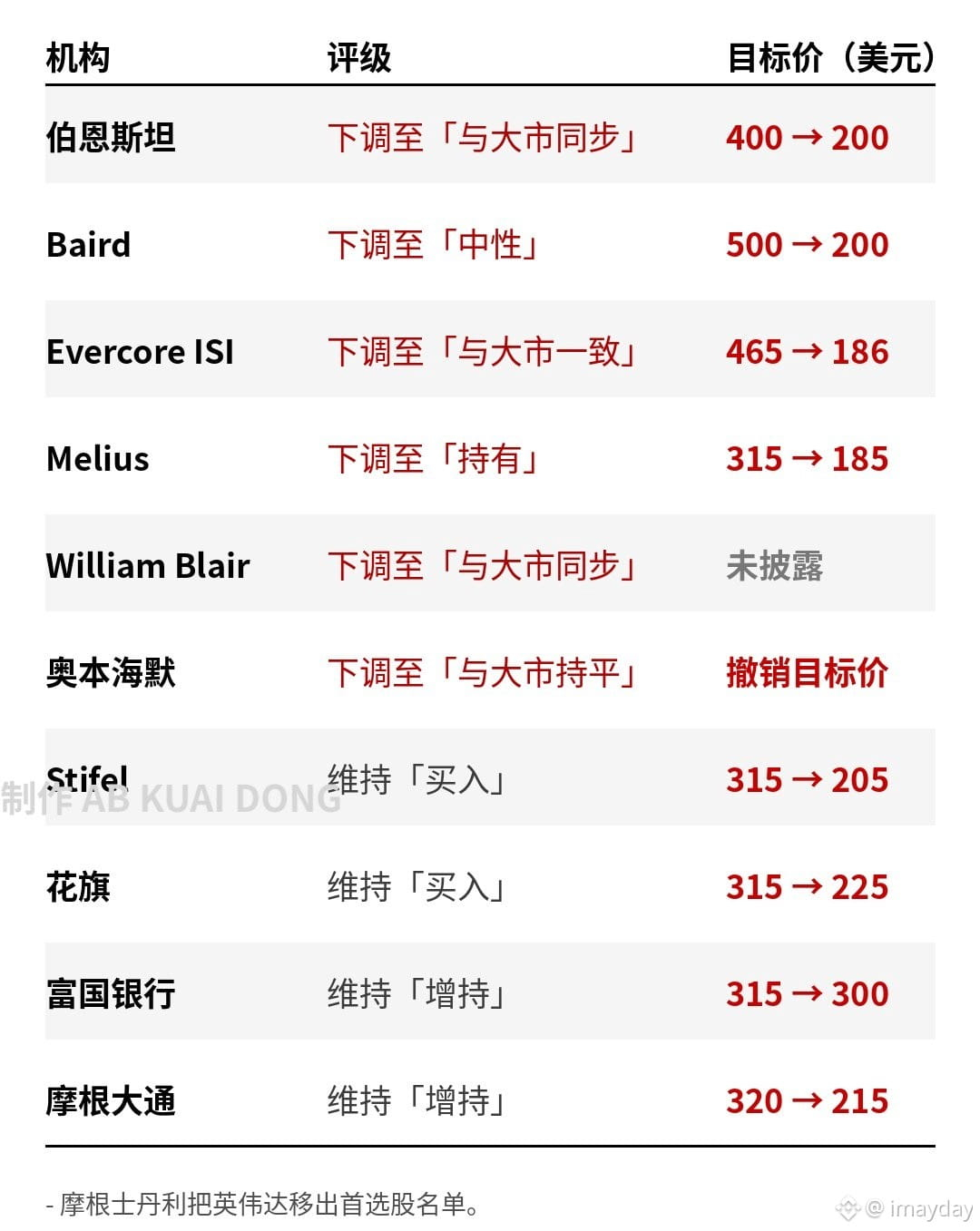
Several investment banks lowered their price targets for Nvidia today, citing the potentially far-reaching negative impact of founder Jensen Huang's resignation.
Wall Street is broadly betting against the stock.
$NVDA
{future}(NVDAUSDT)
Several investment banks lowered their price targets for Nvidia today, citing the potentially far-reaching negative impact of founder Jensen Huang's resignation.
Wall Street is broadly betting against the stock.
$NVDA
Wall Street is broadly betting against the stock.
$NVDA
500
·
--
Bearish
$ARX ranked second among the top gainers
Officially, there is a 12-month cliff starting from the June 22 TGE, with the next major unlock around June 22, 2027.
On BSC, from October 7 to around 18:04, there were 409,755 transfers, covering 100%.
Over the same period, Infinity recorded 319,777 trades, with about $22.03 million on the USDT side, but net flows were small (the period saw a slight net sell of about 10,300 tokens).
Today: 6,837 trades, about $340,000, and net buying of about 47,000 tokens—without the volume surge seen in KGEN.
{future}(ARXUSDT)
$ARX ranked second among the top gainers
Officially, there is a 12-month cliff starting from the June 22 TGE, with the next major unlock around June 22, 2027.
On BSC, from October 7 to around 18:04, there were 409,755 transfers, covering 100%.
Over the same period, Infinity recorded 319,777 trades, with about $22.03 million on the USDT side, but net flows were small (the period saw a slight net sell of about 10,300 tokens).
Today: 6,837 trades, about $340,000, and net buying of about 47,000 tokens—without the volume surge seen in KGEN.
258
·
--
Bearish
Verified
$ERA
Next unlock: November 17
CoinGlass lists 23.8 million tokens (2.38% of the total supply; worth about $2.34 million at the price shown on the page, or about $2.27 million at the 18:19 price). The allocation is mainly for early investors and the core team. The official rules specify a 12-month cliff followed by linear release, with monthly unlocks of a similar size scheduled through at least April 2027.
Total supply is 1 billion, with about 344 million unlocked so far.
Spot trading is almost entirely on exchanges; known DEX liquidity is very thin.
276
·
--
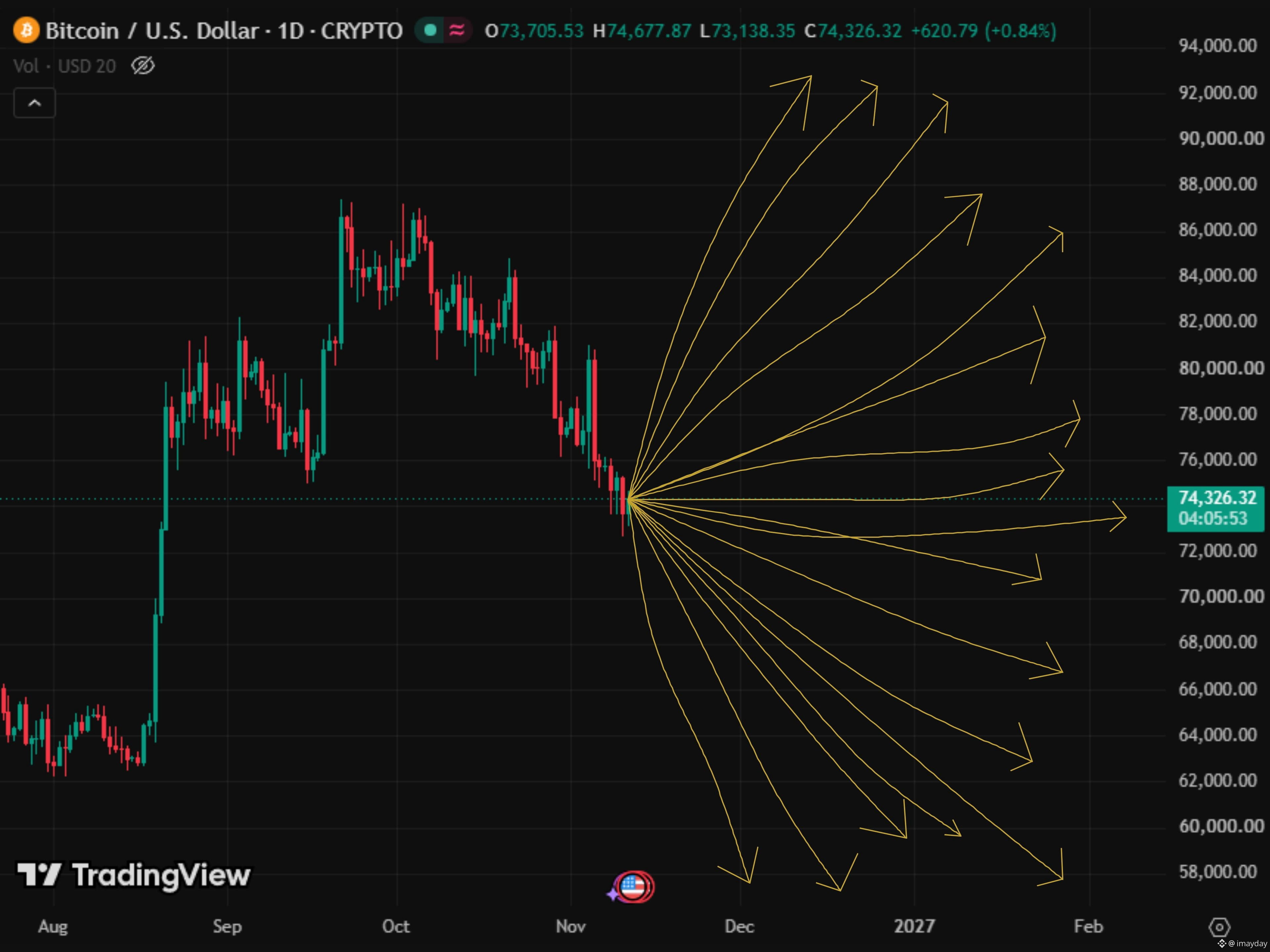
There are 293 different scenarios that could cause Bitcoin to rise
If any of them happen, remember I was the first to predict it 😎
$BTC
There are 293 different scenarios that could cause Bitcoin to rise
If any of them happen, remember I was the first to predict it 😎
$BTC
If any of them happen, remember I was the first to predict it 😎
$BTC
215
·
--
Bearish
It is already visibly declining. Even though it is still fluctuating, selling pressure remains.
$MSTR
{future}(MSTRUSDT)
It is already visibly declining. Even though it is still fluctuating, selling pressure remains.
$MSTR
$MSTR
imayday
·
--
Just in: MSCI will officially remove Michael Saylor’s Strategy $MSTR from its indexes at the end of this month
Analysis: Under MSCI’s new rules, companies that primarily hold non-operating assets such as Bitcoin are considered non-operating companies. As a result, Strategy will be removed from the relevant indexes, effective at the close on November 30. Passive funds tracking MSCI will be forced to sell their holdings, potentially creating an estimated $1.5–2.8 billion in selling pressure that could weigh on MSTR’s share price in the short term. This does not require the company to sell any Bitcoin or affect its Nasdaq listing; it simply reduces the buying support from passive funds.
Analysis: Under MSCI’s new rules, companies that primarily hold non-operating assets such as Bitcoin are considered non-operating companies. As a result, Strategy will be removed from the relevant indexes, effective at the close on November 30. Passive funds tracking MSCI will be forced to sell their holdings, potentially creating an estimated $1.5–2.8 billion in selling pressure that could weigh on MSTR’s share price in the short term. This does not require the company to sell any Bitcoin or affect its Nasdaq listing; it simply reduces the buying support from passive funds.

125
·
--
Verified
Just in: MSCI will officially remove Michael Saylor’s Strategy $MSTR from its indexes at the end of this month
Analysis: Under MSCI’s new rules, companies that primarily hold non-operating assets such as Bitcoin are considered non-operating companies. As a result, Strategy will be removed from the relevant indexes, effective at the close on November 30. Passive funds tracking MSCI will be forced to sell their holdings, potentially creating an estimated $1.5–2.8 billion in selling pressure that could weigh on MSTR’s share price in the short term. This does not require the company to sell any Bitcoin or affect its Nasdaq listing; it simply reduces the buying support from passive funds.
Analysis: Under MSCI’s new rules, companies that primarily hold non-operating assets such as Bitcoin are considered non-operating companies. As a result, Strategy will be removed from the relevant indexes, effective at the close on November 30. Passive funds tracking MSCI will be forced to sell their holdings, potentially creating an estimated $1.5–2.8 billion in selling pressure that could weigh on MSTR’s share price in the short term. This does not require the company to sell any Bitcoin or affect its Nasdaq listing; it simply reduces the buying support from passive funds.

1
1
1
859
·
--
Latest news: The Wall Street Journal reports that Nvidia $NVDA is preparing to fire CEO Jensen Huang.
Latest news: The Wall Street Journal reports that Nvidia $NVDA is preparing to fire CEO Jensen Huang.

10
2
5.6k
·
--
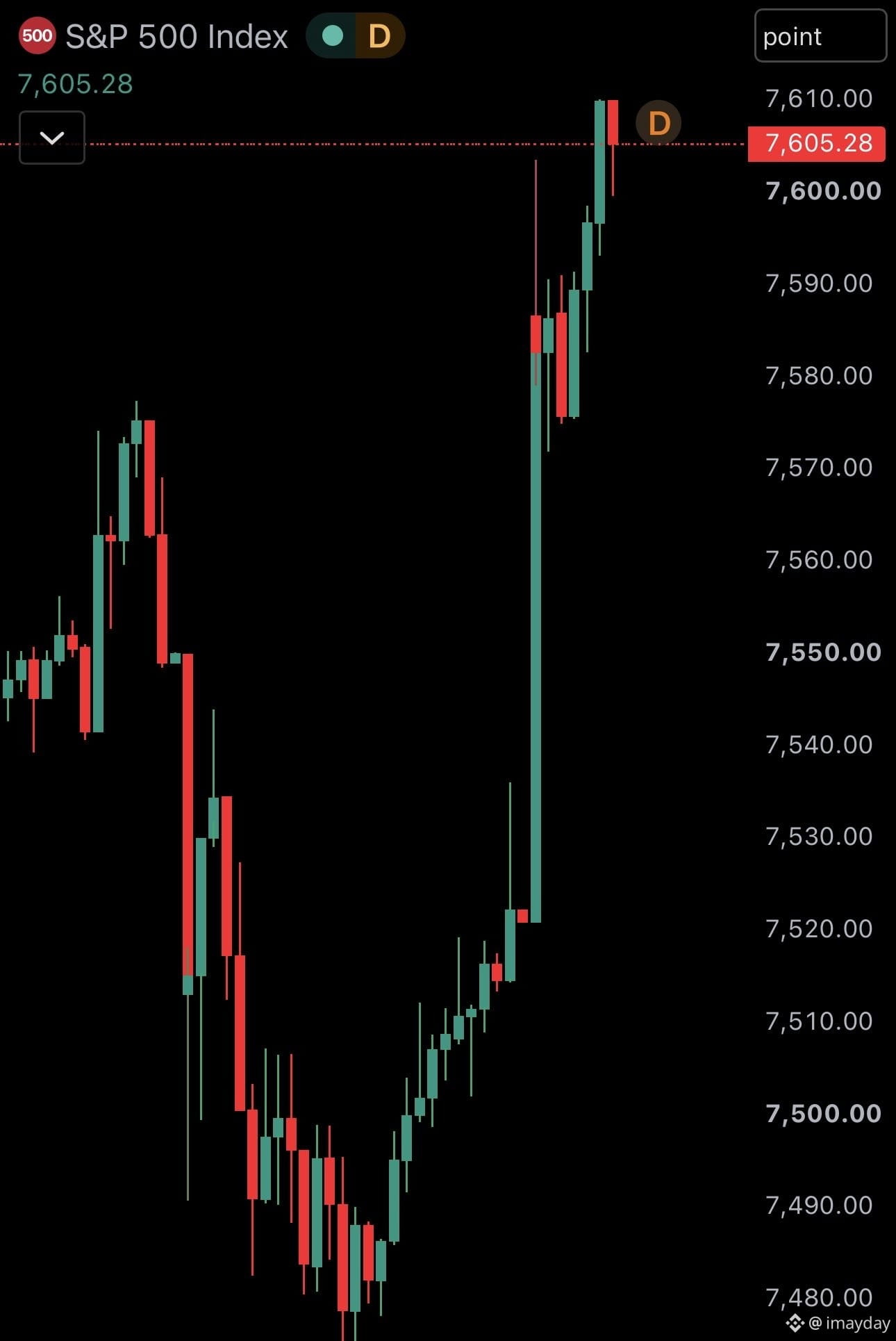
Just now: 🇺🇸 $845 billion was added to the U.S. stock market in the first two hours of trading today.
Crypto is also starting to heat back up.
$BTC
Just now: 🇺🇸 $845 billion was added to the U.S. stock market in the first two hours of trading today.
Crypto is also starting to heat back up.
$BTC
Crypto is also starting to heat back up.
$BTC
201
Log in to explore more content
Join global crypto users on Binance Square
⚡️ Get latest and useful information about crypto.
💬 Trusted by the world’s largest crypto exchange.
👍 Discover real insights from verified creators.
Email / Phone number
Trending Topics
USPPIMissMayEaseBTCPressure
103,956 views
1,296 Discussing
US PPI Rises 6.5% a Year in October, Slightly Below 6.6% Forecast
Binance News
·18 Likes
·20.8k views
MANTRAPausesUnstakingFor7DaysAfterKeplrSecurityIncident
1,011 views
19 Discussing
BitcoinCoreDisclosesTorTrafficVulnerability
49,496 views
764 Discussing